ABSTRACT
BACKGROUND AND OBJECTIVES:Pregnancy is characte-rized by a period when women’s body sufers diferent changes. Between 50 and 80% of pregnant women refer low back pain, which may directly interfere with their quality of life. his study aimed at determining the prevalence of low back pain and its interference with quality of life of pregnant women assisted in the Family Health Strategy of the City of Cabo Frio.
METHODS: Field cross-sectional study with pregnant women between the 13th and 36th week of gestation, with low back pain,
assisted in a low risk pre-natal program. A demographic questio-nnaire, Roland Morris and WHOQOL-bref questionnaires were applied to evaluate low back pain and quality of life, respectively. Descriptive statistics and Spearman correlation tests were used and p<0.05 was considered statistically signiicant.
RESULTS:Participated in the study 139 pregnant women assis-ted by the pre-natal assistance program. Mean age of 24.4±7.65 years. here has been signiicant correlation between quality of life domains questionnaire (physical domain p<0.000, psycho-logical domain p<0.004, environmental domain p<0.022; social relations domain p<0.0025 and overall quality of life p<0.000 and Roland Morris questionnaire. here has been correlation between weeks of gestation and Roland Morris questionnaire (p<0.005). As to weeks of gestation and quality of life questio-nnaire there has only been correlation in the social relation do-main (p<0.025).
CONCLUSION:Low back pain interferes with quality of life of studied pregnant women.
Keywords: Low back pain, Pregnant women, Quality of life.
Prevalence of low back pain and interference with quality of life of
pregnant women
Prevalência de lombalgia e a interferência na qualidade de vida de gestantes
Ana Carolina do Nascimento Lima1, Flavio Boechat de Oliveira1,2, Gabriela Pereira Avolio1, Giselly Dias da Silva1, Paula Soares da
Silva1, Rodrigo Gomes de Souza Vale1,2
1. Universidade Estácio de Sá, Departamento de Fisioterapia, Cabo Frio, RJ, Brasil. 2. Universidade do Estado do Rio de Janeiro, Rio de Janeiro, RJ, Brasil. Submitted in November 21, 2016.
Accepted for publication in April 11, 2017. Conlict of interests: none – Sponsoring sources: none.
Correspondence to:
R. General Alfredo Bruno Gomes Martins, s/n - Manoel Corrêa 28909-800 Cabo Frio, RJ, Brasil.
E-mail: [email protected]
© Sociedade Brasileira para o Estudo da Dor
RESUMO
JUSTIFICATIVA E OBJETIVOS: A gravidez é caracterizada por um período em que o organismo da mulher sofre diversas altera-ções. Entre 50 e 80% das gestantes referem dor na região lombar, podendo interferir diretamente sobre a sua qualidade de vida. O objetivo deste estudo foi determinar a prevalência de lombalgia e a interferência na qualidade de vida de gestantes atendidas na Estra-tégia de Saúde da Família da Cidade de Cabo Frio.
MÉTODOS: Pesquisa de campo, transversal realizada com ges-tantes, entre a 13ª e 36ª semana de gestação, que apresentavam dor na região lombar, assistidas em um programa de pré-natal de baixo risco. Foi aplicado um questionário sócio demográico, questionários de Roland Morris e WHOQOL-bref, para avaliar a lombalgia e a qualidade de vida, respectivamente. Foi utilizada estatística descritiva e o teste de correlação de Spearman e o valor de p<0,05 foi considerado para signiicância estatística.
RESULTADOS: Participaram do estudo 139 gestantes assis-tidas no programa de atendimento pré-natal. Idade média de 24,4±7,65 anos. Houve correlação signiicativa entre os do-mínios do questionário de qualidade de vida (domínio físico p<0,000; domínio psicológico p<0,004 domínio meio ambiente p<0,022; domínio relação social p<0,0025 e qualidade devida geral p<0,000) com o questionário Roland Morris. Houve corre-lação entre as semanas de gestação e o questionário Roland Mor-ris (p<0,005). Quanto as semanas de gestação e o questionário de qualidade de vida só houve correlação com o domínio relação social (p<0,025).
CONCLUSÃO: A lombalgia interfere na qualidade de vida das gestantes pesquisadas.
Descritores: Dor lombar, Gestantes, Qualidade de vida.
INTRODUCTION
Pregnancy is characterized by a period in which the woman’s organism undergoes several hormonal, metabolic and muscu-loskeletal changes to adapt the body to her new condition of pregnant woman1. Changes during pregnancy are visible, like
weight gain, luid accumulation, breasts enlargement, abdo-minal circumference enlargement, greater anterior pelvic tilt and greater joint instability2. herefore, approximately 50 to
80% of pregnant women report pain in the low back region at some moment during pregnancy3.
Low back pain complaints are also related to other factors, such as postural changes, which are often factors responsible for
nerating an irregular biomechanical and compensatory process. In the period between the 13th and 36th week of pregnancy,
the woman begins to change her ambulation, which changes the center of gravity, causing an overload on muscles and liga-ments. As a result, there may be a degree of discomfort, causing partial or total impairment for daily activities4.
Low back pain means a symptom of pain, located between the lower region of the last coastal arc and the gluteal fold, that may radiate to the lower limbs. If not properly treated, it can preclude a pregnant woman from having a normal life, causing insomnia, depression, functional disability, and may interfere directly with her quality of life (QOL)5.6.
QOL is deined as an individual’s understanding in the face of his/her socio-cultural life condition, considering their expecta-tions, objectives, standards and responsibilities. he personal well-being is related to aspects of personal fulillment, habits, health, lifestyle and leisure and is related to the conditions of the individual’s way of life7.8.
he Family Health Program (Programa Saúde da Família - PSF) was created in 1994, as a strategy of the Ministério da Saúde (MS) to redirect the care model of the Uniied Health System (Sistema Único e Saúde - SUS), from the basic care approach9. In
2006, the PSF was called the Family Health Strategy (Estratégia da Saúde da Família - ESF) and aimed to expand people’s access to healthcare services, providing full service, encouraging popu-lar participation and creating intersectoral partnerships10.
ESF is composed of a multidisciplinary team, with the goal of favoring a greater advance to the health of the population, deve-loping a relationship of co-responsibility with the professionals of the sector, simplifying the identiication and the solution of the community’s health problems11.12.
he Family Health Support Centers (Núcleos de Apoio à Saúde da Família - NASF) aim to expand basic care actions, provide broader assistance, have better results and full individual service to SUS, identifying the needs of each person in their territory of basic care, supporting ESF and increasing the responsibility of community health agents (Agentes Comunitários de Saúde - ACS) in creating links between the community and the healthcare system13
.
NASF is composed of professionals from diferent health iel-ds, and their actions are based on reciprocity of experiences and knowledge, through technical support and pedagogical practices of the teams relevant to the selected population14.
he inclusion of physiotherapy in basic care is a recent fact15. he
physiotherapist develops diferent actions in basic care. One of these actions is to work with groups of pregnant women. In this setting, they learn about body postures, stretching exercises, re-laxation, aid to venous return, breathing exercises and incentives to breastfeeding and baby care guidelines16. Based on actions for
disease prevention and health promotion, and when necessary, refer to the secondary and tertiary care services17.
Based on the presented assumption, it turns out that low back pain is an important cause of disability that impacts the QOL of pregnant women.
Based on the above, the objective of this study was to determine the prevalence of low back pain, and its impact on the QOL of pregnant women cared for in the ESF of the municipality of Cabo Frio.
METHODS
Field cross-sectional study, with data collection held in the 1st
District of the city of Cabo Frio, speciically in the primary care network registered at DATASUS. he total number of pregnant women registered in this district was 267 patients. In this way, the sample size was estimated in an amount exceeding 20% of the population, since this size is enough to represent the popula-tion18. However, after visiting the participating units, the sample
size was greater than this value (52% of all pregnant women). hus, the sample was composed of women in their gestational period participating in the low-risk prenatal care program. he inclusion criteria were pregnant women in the 13th to 36th week
of gestation, with a report of low back pain (LBP), literate and orien-ted as to time and place. he exclusion criteria were a history of frac-ture, spine surgery, gynecological and urinary diseases, amputations, mental disability, and non-attendance to the interview.
Pregnant women who were awaiting the prenatal appointment were informed about the purpose of the study and invited to par-ticipate. Pregnant women who agreed to participate in the study signed an Free and Informed Consent Term (FICT) as provided for in resolution 466/12.
In order to obtain the socio-demographic data, it was used a structured questionnaire, prepared by the researchers, with ques-tions about weeks of gestation, age, race, marital status, educa-tion and profession/occupaeduca-tion of every pregnant woman. To evaluate functional impairment of the individual with low back pain, we used the Roland Morris Disability Questionnaire (RMDQ), validated in Brazil in 200119. he questionnaire is easy to apply and
used in evaluations of low back pain. It consists of 24 closed self--report questions, the sum of the yes answers given by the individual can be from zero to 24, being zero without complaints and 24 the maximum value, which represents more severe limitations20.21.
To inalize data collection pregnant women were subjected to the WHOQOL-bref, a short questionnaire of quick application, validated in Brazil in 2006. It consists of four QOL domains. he purpose of each domain is to verify the physical domain (DomFis) – seven questions, psychological domain (DomPsic) – six questions, social relationships domain (DomRS) – three questions and the environmental domain (DomMA) – eight questions, totaling 24 questions and two more questions about global QOL. Assessment scores are calculated for each of the four domains. he minimum value of the scores for each domain is four and the maximum twenty. he score of each domain is obtained on a positive scale, that is, the higher the score, the better the QOL in that domain22.23.
he study was authorized by the City Department of Health of Cabo Frio and accepted by the Ethics and Research Committee of the Universidade Estácio de Sá, with CAAE registry number 47922515.1.0000.5284.
Statistical analysis
Table 2. Descriptive analysis of the study variables
Mean Standard deviation Minimum Maximum
DomFis 12.46 2.23 7.43 18.86
DomPsic 14.35 2.4 5.6 20
DomRS 14.44 3.18 6.67 20
DomMA 12.88 2.14 6.5 17.5
General QOL 14.75 2.57 8 20
Roland Morris 7.23 5.04 0 20
Weeks of gestation
24.3 7.65 13 36
DomFis = physical domain; DomPsic = psychological domain; DomRS = social relationship domain; DomMA = environmental domain; General QOV = general quality of life.
Table 1. Demographic characteristics
Characteristics N %
Race
White 37 26.60
Pardo 68 48.90
Black 34 24.50
Marital Status
Single 65 46.80
Married 70 50.40
Divorced 4 2.90
Educational Level
Elementary school 57 41.00
High School 67 48.20
Higher Education 15 10.80
Employed
Yes 54 38.80
No 85 61.20
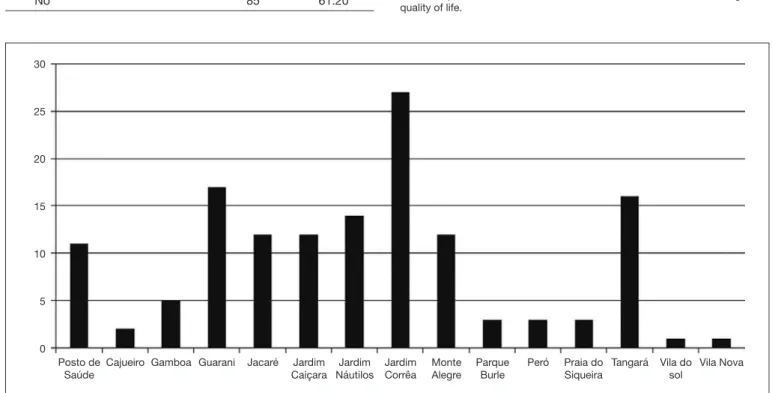
Figure 1. Health Units included in the study and number of pregnant women in each unit
30
25
20
15
10
5
0
Posto de Saúde
Cajueiro Gamboa Guarani Jacaré Jardim Caiçara
Jardim Náutilos
Jardim Corrêa
Monte Alegre
Parque Burle
Peró Praia do Siqueira
Tangará Vila do sol
Vila Nova he average age of pregnant women was 24.4±5.88 years, being the youngest 13 years old and the oldest 41. As for gestation period, the average was 24.3±7.65 weeks.
Table 1 shows a higher number of Pardo Brazilians (mixed-race), pregnant women. here is a balance between single and married women and with elementary and high school educational level. It should be noted that most of these pregnant women do not have professional activity.
Figure 1 Refers to the number of pregnant women who were included in this study. Notice that Manoel Corrêa, Jacaré, and Tangará Health Centers have the highest number of registered pregnant women since they are the most populous neighborhoo-ds in the city of Cabo Frio.
In the QOL questionnaire, there was uniformity among the res-pondents. he lowest score was in the physical domain, and all domains showed a satisfactory score (Table 2).
Observing table 3 we see that there is a signiicant correlation between the analyzed variables, except for weeks of gestation, with the physical, psychological and general QOL domains. between the variables low back pain, time of gestation and QOL
of pregnant women. he value of p<0.05 was considered statis-tically signiicant.
RESULTS
DISCUSSION
In this study, we could see that low back pain interferes negati-vely on the QOL of pregnant women, and in all domains of the WHOQOL bref questionnaire.
In a performed study24, half of the pregnant women reported
that the intensity of pain increased as weeks went by, especially between the 8th and the 9th months, with a range between ‘little
pain’ and ‘reasonable pain.’ At the 7th month of pregnancy (week
29th) the uterus of the woman enlarges, producing peaks of pain
due to the overload on the lumbar spine, but according to ano-ther study23, the scale can remain between ‘little pain’ and
‘rea-sonable pain.’ In this study, however, as the gestational period progressed, pain intensity increased.
In a previous study25 on low back pain in pregnant women,
it was used the epidemiological questionnaire, validated and adapted from the Quebec Back Pain Disability Scale (QBPDS) to assess the level of functional impairment of pregnant wo-men, emphasizing questions about LBP in the gestation period. he result shows that the pain interferes with the daily life of pregnant women, causing some limitations in their activities. In this study, however, it was used the RM questionnaire to evaluate functional impairment of pregnant women, obtaining the same result. It is believed that the prevalence of painful symptoms in the lower back region is still present in this seg-ment of the population in the gestation period and, depending on the degree of pain, it can persist a few years after delivery if treatment is not provided26.
In this regard, treatment and guidelines for four weeks during the pregnancy period proved to be efective to improve the func-tionality of pregnant women27.
In a study28 with 21 pregnant women to determine the presence
of pain and the types of LBP in a health unit in the city of Petro-lina, the authors observed that 92.23% of pregnant women had LBP during pregnancy and, in 66.65% of the cases a combina-tion of LBP and pelvic pain. In another paper29 of similar design,
45 pregnant women assisted in a Prenatal Program, were
evalu-ated using a numerical visual scale of pain. he results showed that the prevalence of LBP was 73%. In both studies, the charac-teristics of the sample were similar to those of this current work. Despite no speciic test to determine pain having been applied, Roland Morris questionnaire is a valid measure of good reliabili-ty for chronic pain in the Brazilian population30.
In some units, not 100% of the sample was surveyed. Many pregnant women were impatient and uncomfortable about the size of the questionnaires and intimate questions about their life.
CONCLUSION
From the results found in this study, we notice that in the group of pregnant women of the Health Units of the city of Cabo Frio, there is a correlation between the LBP and general QOL.
REFERENCES
1. Santos AL, Radovanovic CA, Marcon SS. Assistência pré-natal: Satisfação e Expecta-tivas. Revista Rene. 2010;11(n. esp):61-71.
2. Moreira LS, Andrade SR, Soares V, Avelar IS, Amaral WN, Vieira MF. Alterações pos-turais, de equilíbrio e dor lombar no período gestacional. Femina. 2011;39(5):241-4. 3. Côrrea TC, Angeli RB, Cancian BA, Silvério CP, Galli N, Digiovani RA. Efeitos da
isioterapia na qualidade de vida e lombalgia de paciente gestante. Colloquium Vitae. 2012;4(n. esp.):151-8.
4. Quimelli MA. Acupuntura Sistêmica para Lombalgias de Gestantes. Silvério-Lopes (Ed.). 2013.
5. Sousa VP, Ribeiro SO, Aquino CM, Viana ES. Análise da relação entre dor lombar, idade gestacional e qualidade de vida durante a gravidez. Ter Man. 2011;9(46):769-73. 6. Madeira HG, Garcia JB, Lima MV, Serra HO. Incapacidade e fatores associados à
lombalgia durante a gravidez. Rev Bras Ginecol Obstetr. 2013;35(12):541-8. 7. Buss PM. Promoção da saúde. Cien Saúde Colet. 2000;5(1):163-77.
8. Pucci GC, Rech CR, Fermino RC, Reis RS. [Association between physical activity and quality of life in adults]. Rev Saúde Pública. 2012;46(1):166-79. English, Portuguese. 9. Rocha DM, Carvalho EL, Cruz MA. Benefícios do Programa de Saúde da Família
– PSF para a melhoria da qualidade de vida dos moradores do bairro São Pedro, em Teresina – PI. Rev Inova Ação. 2012;1(1):1-14.
10. Alves GG, Aerts D. [Health education practices and Family Health Strategy]. Cien Saude Colet. 2011;16(1):319-25. Portuguese.
11. de Rezende M, Moreira MR, Amâncio Filho A, Tavares Mde F. [‘Family health’ mul-tiprofessional teams: a relection on the physiotherapist’s role]. Cien Saude Colet. 2009;14(1):1403-10. Portuguese.
12. Santos KT, Saliba NA, Moimaz SA, Arcieri RM, Carvalho ML. [Community He-alth Agent: status adapted with Family HeHe-alth?] Cien Saude Colet. 2011;16(Suppl 1):1023-8. Portuguese.
Table 3. Spearman’s correlation among variables: low back pain, week of pregnancy and quality of life of the sample
Dom1 Dom2 Dom3 Dom4 GQOL RM
Dom2 r 0,383
p-value 0.000
Dom3 r 0.389 0.416
p-value 0.000 0.000
Dom4 r 0.445 0.417 0.345
p-value 0.000 0.000 0.000
GQOL r 0.380 0.327 0.220 0.346
p-value 0.000 0.000 0.009 0.000
RM r -0.430 -0.243 -0.194 -0.190 -0.319
p-value 0.000 0.004 0.022 0.025 0.000
Weeks of gestation r -0.147 -0.028 -0.190 -0.095 -0.034 0.236
p-value 0.083 0.742 0.025 0.267 0.689 0.005
13. Ribeiro MD, Bezerra EM, Silva JC, Campelo GO, Freitas CA. A visão do Agente Comunitário de Saúde (ACS) acerca do serviço de isioterapia no núcleo de apoio à saúde da família (NASF) em Parnaíba, Piauí. SANARE. 2013;12(2):14-20. 14. Santos SF, Benedetti TR. Cenário de implantação do Núcleo de Apoio a Saúde da
Família e a inserção do proissional de Educação Física. Rev Bras Ativ Fís Saúde. 2012;17(3):188-94.
15. Souza MC, Bomim AS, Souza JN, Franco TB. Fisioterapia e Núcleo de Apoio à Saúde da Família: conhecimento, ferramentas e desaios. O Mundo da Saúde. 2013;37(2):176-84.
16. Bispo Júnior JP. [Physiotherapy and collective health: challenges and new professional responsabilities]. Cien Saude Colet. 2010;15(Suppl 1):1627-36. Portuguese. 17. Linhares JH, Albuquerque IM, Freitas CA. Análise das ações da isioterapia do NASF
através do Sinai no município de Sobral – CE. Cad Esc Saúde Pública. 2010;4(2):32-41. 18. Triola MF. Introdução à estatística. 11ª ed, Rio de Janeiro: Livros Técnicos e
Cientíi-cos Editora; 2013.
19. Monteiro J, Faísca L, Nunes O, Hipólito J. [Roland Morris disability questionnaire – adaptation and validation for the Portuguese speaking patients with back pain]. Acta Med Port. 2010;23(5):761-6. Portuguese.
20. Stefane T, Santos AM, Marinovic A, Hortense P. Dor lombar crônica: intensidade de dor, incapacidade e qualidade de vida. Acta Paul Enferm. 2013;26(1):14-20. 21. Falavigna A, Teles RA, Braga GL, Barazzetti DO, Lazzaretti L, Tregnago AC.
Ins-trumentos de avaliação clínica e funcional em cirurgia da coluna vertebral. Coluna/
Columna. 2011;10(1):62-7.
22. Kluthcovsky AC, Kluthcovsky FA. O WHOQOL-bref, um instrumento para avaliar qualidade de vida: uma revisão sistemática. Rev Psiquiatr Rio Gd Sul. 2009;31(3):1-12. 23. Chazan AC, Campos MR, Portugal FB. Quality of life of medical students at the State University (UERJ), measured using Whoqol-bref: a multivariate analysis. Cien Saude Colet. 2015;20(2):547-56. English, Portuguese.
24. Nakawatase D, Alves VL, Filoni E. Prevalência de dor lombar e qualidade de vida no terceiro trimestre de gestação Rev Bras Qual Vida. 2014;7(2):89-102.
25. Rodrigues WF, Giani TS, Figueiredo NM, Porto F, Dantas EH. Lombalgia na gravidez: impacto nas atividades de vida diárias. Rev Pesq Cuid Fundam. 2012;4(2):2921-6. 26. Mota MJ, Cardoso M, Carvalho A, Marques A, Sá-Couto P, Demain S. Women’s
experiences of low back pain during pregnancy. J Back Musculoskelet Rehabil. 2015;28(2):351-7.
27. Ozdemir S, Bebis H, Ortabag T, Acikel C. Evaluation of the eicacy on an exercise program for pregnant women with low back and pelvic pain: a prospective randomi-zed controlled trial. J Adv Nurs. 2015;71(8):1926-39.
28. Gomes MR, Araújo RC, Lima AS, Pitangui AC. Lombalgia gestacional: prevalência e características clínicas em um grupo de gestantes. Rev Dor. 2013;14(2):114-7. 29. Santos MM, Gallo AP. Lombalgia gestacional: prevalência e características de um
pro-grama pré-natal. Arq Bras Ciên Saúde. 2010;35(3):174-9.