Juliana Gonçalves Pereira
Janeiro de 2013
Anticancer Potential of the Triterpenic
Fraction of Eucalyptus Bark Extracts in
Colorectal Cancer Cells
UMinho|20 13 Juliana Gonçalves P er eira Anticancer P otential of t he T riterpenicF raction of Eucalyp
tus Bark Extracts in Colorect
Juliana Gonçalves Pereira
Janeiro de 2013
Dissertação de Mestrado
Mestrado em Biotecnologia e Bioempreendedorismo
em Plantas Aromáticas e Medicinais
Anticancer Potential of the Triterpenic
Fraction of Eucalyptus Bark Extracts in
Colorectal Cancer Cells
Trabalho realizado sob a orientação do
Doutor Cristóvão Lima
e co-orientação da
Universidade do Minho, ___/___/______
iii “Learn from yesterday, live for today, hope for tomorrow. The important thing is to not stop questioning.”
Albert Einstein, Relativity.
Firstly, I would like to thank Doctor Cristóvão Lima, my main supervisor, for the opportunity of working in this project, as well as for all his support and time and the privilege to share his scientific knowledge with me.
Also a special thanks to Doctor Cristina Pereira-Wilson, my co-supervisor, for this opportunity and for her support throughout this work.
I would also like to thank Doctor Armando Silvestre and Doctor Fátima Duarte for providing extracts and compounds used in this work.
To the support of the project AFORE: Forest biorefineries: Added-value from chemicals and polymers by new integrated separation, fractionation and upgrading technologies”, from the Seventh Framework Programme FP7/2007-2013, with the referece CP-IP 228589-2 AFORE. To my laboratory colleagues, Dalila, Cristina, Cecília, Carla and Alice for all their help and conversations.
To Cláudia Silva and Joana Silvestre as well as Artur Oliveira and Filipe Pinto, for all their support, friendship and invaluable help.
To all my friends for just being there, for the good moments.
To my parents, sister, aunt and grandparents a very special thanks for always believing in me and for all the care, support and opportunities.
v
ABSTRACT
Cancer is one of the leading causes of death worldwide, being the colorectal cancer the third most occurring cancer in developed countries. The search for promising natural anticancer compounds is exponentially increasing, with the exploitation of new sources that were disregarded. Eucalyptus nitens crops are used in Portugal mainly by the pulp and paper industries, which produce substantial bark residues with no add-value use. They can, however, be an interesting source of triterpenic compounds. In this study, the potential anticancer effect of a lipophilic crude extract (CE) of E. nitens, a fraction of this more enriched in triterpenoids (F2),
as well as their main isolated compounds, betulinic acid (BiA) and betulonic acid (BoA), was studied in the colorectal cancer cells. All test extracts/compounds showed potent anticancer effects based on cell viability, colony forming and migration assays. The F2 extract was shown to
be two times more potent than the CE (IC50s of 1.3 µg/ml and 2.2 µg/ml, respectively), whereas
BoA was about four times more potent than BiA (IC50s of 0.8 µM and 3.9 µM, respectively). The
anticancer effects of the extracts/compounds were shown to be dependent both on inhibition of cell proliferation, as shown by the induction of cell cycle arrest assessed by flow cytometry, and on induction of cell death, as measures by the PI staining. At the higher concentrations tested, apoptosis was a contributor to the cell death. Interestingly, contrarily to their IC50s, BiA was a
more potent inducer of apoptosis than BoA. Apoptosis was triggered by the intrinsic mitochondria pathway, probably through JNK activation but not through p53, since its levels were remarkably decreased by all the extracts/compounds. At lower doses of E. nitens extracts and tested triterpenoids, a non-apoptotic cell death was present, which could be mediated through a metabolic crisis, due to the significant activation of the AMPK energy-sensing regulator. This work shows the potential use of the wasted bark of E. nitens as an interesting source of potent natural anticancer triterpenoids against colorectal cancer cells.
vii
RESUMO
O cancro é uma das maiores causas de morte mundial, sendo o cancro colorectal o terceiro tipo de cancro com maior ocorrência nos países desenvolvidos. A procura de compostos anticancerígenos naturais promissores está a aumentar exponencialmente, com a exploração de novas fontes que eram desconsideradas. Em Portugal as plantações de eucalipto são sobretudo utilizadas pelas indústrias de polpa e papel, e uma vez que a casca desta árvore não é utilizada no processo, produzem-se quantidades substanciais de resíduos que não são utilizados para fins com alto valor económico. Estes resíduos podem, no entanto, ser uma fonte interessante de compostos triterpénicos. Neste estudo, o potencial efeito anticancerígeno de extratos lipofílicos de Eucalyptus nitens, um bruto (CE) e um fraccionado (F2) mais enriquecido em triterpenóides, bem como os seus
compostos principais ácido betulínico (BiA) e ácido betulónico (BoA), foram estudados nas células HCT116 do carcinoma colorectal. Todos os extratos/compostos testados demonstraram possuir efeitos anticancerígenos potentes, tal como observado nos ensaios de viabilidade celular, de formação de colónias e de migração celular. Foi demonstrado que o extrato F2 é duas vezes mais
potente que o CE (IC50s de 1.3 µg/ml e 2.2 µg/ml, respectivamente), enquanto que o BoA foi cerca
de quatro vezes mais potente que o BiA (IC50s de 0.8 µM e 3.9 µM, respectivamente). Também se verificou que os efeitos anticancerígenos dos extratos/compostos são dependentes quer da inibição da proliferação celular, como demonstrado pela indução de interrupção no ciclo celular avaliado por citometria de fluxo, quer da indução da morte celular, medido pela marcação por iodeto de propídio. Nas concentrações mais altas testadas, houve uma contribuição da apoptose para a morte celular encontrada. Contrariamente aos valores de IC50s, o BiA foi um indutor de apoptose mais potente que
o BoA. A apoptose foi desencadeada pela via de sinalização intrínseca mitocondrial, provavelmente através da ativação da via JNK mas não através do p53, visto que os seus níveis foram marcadamente diminuídos pelos extratos/compostos. A doses mais baixas dos extratos de E. nitens
e dos triterpenóides testados, também ocorreu morte celular mas de uma forma independente de apoptose, a qual pode ter sido mediada por uma crise metabólica, em virtude da ativação significativa observada da via AMPK. Os resultados deste trabalho sugerem uma potencial utilização valorizada da casca de E. nitens como uma fonte de potentes triterpenóides naturais com atividade anticancerígena contra células do carcinoma colorectal.
ix
Acknowledgments ………..iii
Abstract ………v
Resumo ………..vii
Abbreviations ………xi
List of Figures and Tabels….………..xv
Introduction ………1
1. Cancer ……….3
1.1. Colorectal Cancer ……….4
2. Cancer Cell Signaling ………6
2.1. MAP Kinase Pathways ……….7
2.1.1. ERK Pathway ………7
2.1.2. JNK and p38 Pathways ………..8
2.2. Apoptosis ………..9
2.2.1. The Intrinsic Mitochondrial Pathway ………..9
2.2.2. The Extrinsic Death Receptors Pathway ……….10
2.2.3. Role of p53 in Apoptosis ………11
3. Eucalyptus spp. ……….12
3.1. Eucalyptus nitens ………12
3.2. Eucalyptus Pulp Residues Exploitation ………..13
4. Natural Compounds ………14 4.1. Terpenic Compounds ………15 4.1.1. Triterpenic Compounds ………15 4.1.1.1. Betulinic Acid ………..16 4.1.1.2. Betulonic Acid ……….19 4.1.1.3. Ursolic Acid ………..20 4.1.1.4. Oleanolic Acid ……….20
x
Materials and Methods ………..23
1. Chemicals ………25
2. Eucalyptus nitens Extracts and Triterpenoids ………..25
3. Antibodies ………25
4. Cell Culture ……….26
5. MTT Reduction Assay ……….26
6. Anchorage-Dependent Colony Forming ………..27
7. Cell Death Analysis by Propidium Iodide (PI) Staining ………..27
8. Nuclear Condensation ………28
9. Cell Cycle Analysis ………..29
10. Migration Assay (Wound Healing) ……….29
11. Western Blotting ………30
12. Statistics ………..30
Results and Discussion ………31
1. Triterpenic Acids-Enriched Extracts from E. nitens Possess Anticancer Activity Against HCT116 Cells ………34
2. Apoptosis Contributes to the Cell Death Induced by E. nitens Extracts and their Main Lupane Acids in HCT116 Cells ………..42
3. Eucalyptus nitens Extracts and their Main Lupane Acids Induce JNK and AMPK Siganlling in HCT116 Cells ………..47
4. Eucalyptus nitens Extracts and their Main Lupane Acids Induce Cell Cycle Arrest in HCT116 Cells ………...49
Conclusions and Future Perspectives ………..51
1. Conclusions ………53
2. Future Perspectives ……….55
xi
5-FU 5-Fluorouracil
AIF Apoptosis-inducing factor
Akt Protein kinase B
AMPK 5’ adenosine monophosphate-activated protein kinase
ANOVA Analysis of variance
Apaf-1 Apoptotic protease activating factor 1
APC Antigen-presenting cell
β-TrcP Beta-transducin repeat containing E3 ubiquitin protein ligase
BAD Bcl-2-associated death promoter
BAK Bcl-2 homologous antagonist killer
BAX Bcl-2-associated protein
Bcl-2 B-cell lymphoma 2
Bcl-Xl B-cell lymphoma-extra large
BH3 Bcl-2 homology 3
BiA Betulinic acid
Bid BH3 interacting-domain death agonist
Bik Bcl-2-interacting killer
BoA Betulonic acid
BRAF V-raf murine sarcoma viral oncogene homolog B1
BSA Bovine serum albumin
CD95 Cluster of differentiation 95
CE Crude extract
COX2 Cyclooxygenase
CRC Colorectal cancer
DCC Deleted in colorectal cancer
DMSO Dimethyl sulfoxide
DNA Deoxyribonucleic acid
DR Death receptor
ERK Extracellular-signal-regulated kinase
xii
FBS Fetal bovine serum
HDM2 Human double minute 2 homolog
HIV Human immunodeficiency virus
HNPCC Hereditary nonpolyposis colorectal cancer
IAP Inhibitor of apoptosis
JNK c-Jun N-terminal kinase
KRAS V-Ki-ras2 Kirsten rat sarcoma viral oncogene homolog
LT Lupane triterpenoids
MAPK Mitogen-activated protein kinase
MAPKK MAPK kinase
MAPKKK MAPKK kinase
MCC Mutated in colorectal cancer
MMP Mitochondrial membrane permeabilization
NF-kB Nuclear factor kappa-light-chain-enhancer of activated B cells Noxa Phorbol-12-myristate-13-acetate-induced protein 1
OA Oleanolic acid
OMM Outer mitochondrial membrane
p53 Protein 53
PARP1 Poly (ADP-ribose) polymerase 1
PBS Phosphate-buffered saline
PI Propidium iodide
PI3K Phosphoinositide 3-kinase
PMSF Phenylmethylsulfonyl fluoride
PTEN Phosphatase and tensin homolog
Puma p53 upregulated modulator of apoptosis
RIPA Radioimmunoprecipitation assay
RPMI Roswell park memorial institute medium
RTK Receptor tyrosine kinase
SAPK Stress activated protein kinases
xiii
SMAD4 SMAD family member 4
TGFβ-RII Transforming growth factor beta receptor II
TRAIL TNF-related apoptosis-inducing ligand
TREN Triterpenic-enriched E. nitens extracts
xv
Figure 1. APC/β-catenin signalling in colorectal cancer. ...5
Figure 2. Schematic representation of MAPK/ERK and PI3K/Akt pathways in relation with cell proliferation and apoptosis. ……….………6
Figure 3. Schematic representation of the ERK pathway. ……….7
Figure 4. Scheme of the intrinsic mitochondrial pathway of apoptosis, with release of cytochrome c ……….10
Figure 5. Scheme of the extrinsic death receptor pathway of apoptosis ……….11
Figure 6. E. nitens in an industrial plantation in Australia. ………..…13
Figure 7. Chemical structure of betulinic acid. ……….16
Figure 8. Chemical structure of betulonic acid. ………...19
Figure 9. Chemical structure of ursolic acid. ……….20
Figure 10. Chemical structure of oleanolic acid. ……….21
Figure 11. Representative images of the flow cytometry for cell death measurement ………….28
Figure 12. Effect of tested extracts and compounds in HCT116 cells viability ………35
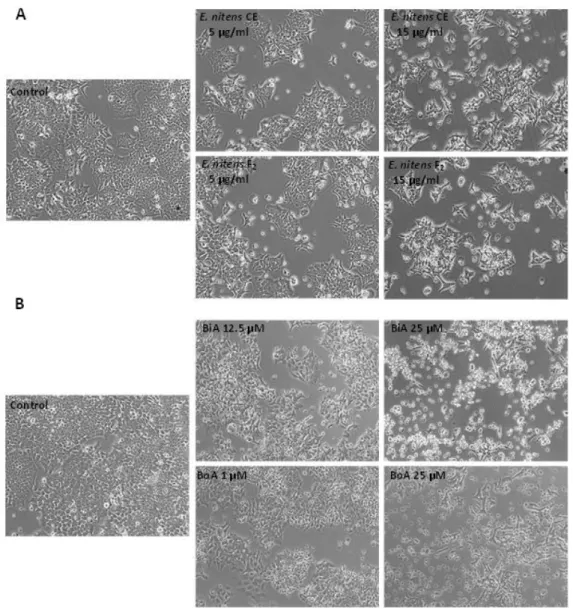
Figure 13. Representative images of the effect of different concentrations of tested extracts and compounds on the morphology of HCT116 cells ………36
Figure 14. Effect of tested extracts and compounds in HCT116 cell viability and cell death along the time of incubation ………..….38
Figure 15. Effect of tested extracts and compounds in the ability to inhibit colony forming in HCT116 cells ……….40
xvi
Figure 18. Effect of tested extracts and compounds on the levels of apoptosis and kinases markers using western blot ………..46 Figure 19. Effect of tested extracts and compounds in the cell cycle of HCT116 cells …………50 Figure 20. Scheme representing the possible mechanisms of action of the anticancer effect of
tested extracts and compounds in HCT116 cells ………54
Table 1. Chemical composition of the E. nitens crude extract and of the triterpenic enriched fraction 2 ……….…26
3 1. CANCER
Cancer is one of the leading causes of death in the world. In 2005, the global cancer incidence was of 11 million with over than 7.6 million of deaths, and it is prospected that by 2030 the incidence grows to 15.5 million with 11.5 million of deaths (Amin et al., 2009).
Although being a very common disease, cancer is mainly preventable (Amin et al., 2009). Only 5 to 10% of all cancers are completely hereditary, while several external and environmental factors are known to increase significantly the risk of this disease, such as smoking, poor diet (fatty foods and alcohol), exposure to radiation, obesity, excessive sunlight exposure, viruses, environmental pollutants and certain infections (Anand et al., 2008).
Cancer is a complex disease that can develop in human beings over a number of years (Dzubak et al., 2005). In the development of cancer a normal cell is transformed in a cancer cell through a process called carcinogenesis. During this process it is necessary that the genes regulating cell differentiation and growth undergo failure or alteration (Dzubak et al., 2005). These genes are divided into oncogenes, which are responsible for the promotion of cell growth and proliferation; and into tumour suppressor genes, like p53, that inhibit cell division and survival. The carcinogenic process is characterized by three phases of development, which ultimately leads to cancer formation and growth. These steps are initiation/mutation, promotion and progression/metastasis. The normal cell suffers damage, leading to mutation of DNA which no longer undergoes DNA repair or undergoes defective DNA repair resulting in unrestrained proliferation (initiation) (Dzubak et al., 2005). The continuous proliferation facilitates the occurrence of even more mutations originating a mass of cells that no longer have their normal abilities and only proliferate (promotion). The growth of the tumour is aided by angiogenesis, which not only provides nutritients to the tumour, but also allows cancerous cells to migrate to other tissues via the circulatory system, metastasizing the tumour (progression), which normally is lethal. The most noticeable change in these cells is their ability to avoid programmed cell death (apoptosis), leading to the tumour growth (Dzubak et al., 2005). Besides the resistance to apoptosis, sustainable cell proliferation without stimulating signals, promotion of angiogenesis as well as the ability to tissue invasion and establishment of metastasis, other characteristics (“hallmarks”) of cancer include evasion to growth suppressors, limitless proliferative potential, local promotion of inflammation, genome instability and mutation, evasion of immune system
4
and deregulation of metabolic pathways (Hanahan and Weinberg, 2000; Hanahan and Weinberg, 2011).
Chemotherapy is a standard treatment to cancer, especially after surgical tumour removal (Saxena et al., 2006; Drag et al., 2009). Considering that chemotherapy’s main aim is to eliminate the remaining cancer cells present in the organism, most of the times the success of this treatment determines the final success of the recovery (Drag et al., 2009). The efficacy of this treatment has improved greatly in the last decade, but the treatment for this disease still faces a very high mortality rate (Santos et al., 2011). Also, the toxic adverse effects of the used drugs lead to severe life quality threats and 80% of the patients undergoing this treatment die due to the resistance of cancer cells to drugs. Therefore, the development of new potent, non-toxic and non-resistant anticancer agents is crucial to more effective therapies (Fulda and Debatin, 2000;Jung et al., 2007; Drag et al., 2009; Santos et al., 2011).
1.1. COLORECTAL CANCER (CRC)
Colorectal cancer (CRC) is the third most occurring cancer (8.5% of all cancers (Jung et al., 2007)) in the world and one of the leading causes of death in the developed countries (with 65.500 deaths worldwide (Rajendran et al., 2008)), being uncommon in most non-developed countries (Jung et al., 2007; Rajendran et al.; 2008; Xavier et al., 2009a; Chintharlapalli et al., 2011). Therefore, the incidence rates of CRC are highly variable in different regions of the world and the differences of the occurrence of this disease in migrants suggests that environmental factors and diet play a major role in the development of this cancer (Chintharlapalli et al., 2011).
CRC can be divided into sporadic, familial and inherited. The sporadic represents 50 to 60% of CRC and there is no evidence of the disease in family history, being more common in individuals with age over 50. The familial account for 30 to 40% of all the cases, and normally the patient has a history of CRC in the family (Souglakos, 2007). The inherited CRC represents 4 to 6% and can be further divided depending on whether there are or not colonic polyps: familial adenomatous polyposis (FAP) on the presence of those and hereditary nonpolyposis colorectal cancer (HNPCC) or Lynch Syndrome on their absence (Rustki, 2007).
5 The initial event of
carcinogenesis in the colon epithelium is mostly the accumulation of a genetic alteration in the antigen-presenting cell (APC) gene, which is part of the Wnt signalling pathway (Fig.1). This mutation disables the production of the APC protein leading to accumulation of the β-catenin protein, which translocate to the nucleus, leading to the activation of transcription of genes that, at high levels, cause cancer (Souglakos, 2007). However, mutation in this pathway are not the only ones necessary for the cell to become cancerous; other mutations must take place, such as in the TP53 gene that is responsible for killing the
cell if there is any defect in the Wnt pathway. Genetic alteration in the transforming growth factor
β receptor II (TGFβ-RII), phosphatase and tensin homologue (PTEN), cyclooxygenase 2 (COX2),
deleted in colorectal cancer (DCC), mutated in colorectal cancer (MCC), SMAD4, phosphoinositide 3-kinase (PI3K), v-raf murine sarcoma viral oncogene homolog 1 (BRAF), v-Ki-ras2 Kirsten rat sarcoma viral oncogene homolog (KRAS) and Bcl-2-associated x protein (BAX) genes have also been found to play a role in CRC (Takami et al., 1995; Soreide et al., 2006; Souglakos, 2007).
Complete remission of CRC by sirurgical removal is possible. Nevertheless, approximately 50% of the cases eventually develops incurable metastesis, normally in the liver, even when coupled with adjuvant treatment (Jung et al., 2007; Rajendran et al., 2008). Therapies for gastrointestinal cancers have many defficiencies since the general response to treatment is low to moderate, the life extension is, on most cases, only of two to three months, there is a high toxicity to normal cells, high percentages of relapse cases and multiple drug resistances observed (Rajendran et al., 2008). Chemotherapy based on 5-fluorouracil (5-FU) is the standard treatment over the last forty years to extend patients survival when the CRC is
Figure 1 – APC/β-catenin signalling in CRC. (OFF) The APC
protein is synthesised, β-catenin is phosphorylated and occurs ubiquitin-mediated degradation of β-catenin by the beta-transducin repeat containing E3 ubiquitin protein ligase (
β-Trc)P. (ON) The APC protein is not produced, occurring accumulation of β-catenin which enters the nucleus, enabling transcription. [http://www.umcutrecht.nl]
6
metastasized. However, the response rate of CRC metastasis to 5-FU is only of approximately 20% mainly due to cancer cell resistance to this drug (Jung et al., 2007; Rajendran et al., 2008; Xavier et al., 2011). To overcome this resistance two new drugs were developed, Irinotecan and Oxalipatin, that, combined with 5-FU, are able to overcome some of the drug resistance, increasing the survival of the patients (Rajendran et al., 2008; Xavier et al., 2011). Nevertheless, this improvement of efficiency is not observed in all patients (Xavier et al., 2011).
2. CANCER CELL SIGNALING
The process of carcinogenesis encompasses a series of genetic mutations that leads to modifications in very important biological pathways related with cell proliferation, survival and cell death, leading to dramatic changes in the cell.
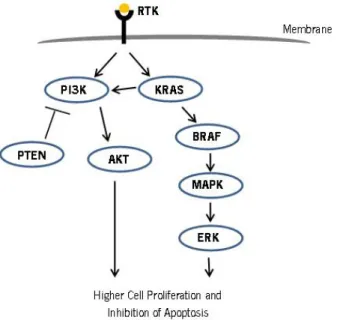
Some of them that are frequently activated in CRC are the MAPK/ERK and PI3K/Akt signalling pathways (Fig.2) which also
determine treatment response. These pathways are usually activated by mutations either on KRAS or BRAF genes. Mutation on KRAS gene can lead to the activation of MAPK/ERK and/or PI3K/Akt pathways, whereas mutations on BRAF gene activates MAPK/ERK pathway only. These mutations are found in over 50% of CRC cases and occur alternately with 32% of cases being due to KRAS gene mutation and 14% due to BRAF gene mutation (Xavier et al., 2009a; Xavier et al., 2009b; Xavier et al., 2012).
Figure 2 – Schematic representation of MAPK/ERK and PI3K/Akt pathways in relation with cell proliferation and apoptosis. RTK – receptor tyrosine kinases
7
2.1 MAPKINASE PATHWAYS
Mitogen-activated protein kinases (MAPK) are a family of ubiquitous proline-directed, protein-serine/threonine kinases, which participate in signal transduction pathways that control several intracellular events (Pearson et al., 2001), including embryogenesis, inflammatory response, cell differentiation, cell proliferation and cell death (Chen et al., 2001). They help mediate diverse processes from transcription of proto-oncogenes to programmed cell death (Cobb, 1999). The three major and best-known subfamilies of MAPKs are the extracellular-signal-regulated kinase (ERK) 1/2, which conveys growth signals from the RAS/RAF pathway and receptor kinases, and the c-Jun N-terminal kinase (JNK) 1/2/3 and the p38 MAP kinase (p38) α/β/γ/δ, which relay various stress signals.
The MAPK are catalytically inactive in their base form, and require, in order to become active, phosphorylation events in their activation loops. The activity is regulated by a cascade of activations where MAPKs are phosphorylated by the MAPK kinase (MAPKK), which is, in turn, phosphorylated by MAPKK kinase (MAPKKK) (Cobb, 1999; Chen et al., 2001; Pearson et al., 2001; Cuevas et al., 2007). The MAPKKK are not specific to one MAPKK, being able to regulate multiples MAPKKs, and leading to the activation of different subfamilies of MAPK, like the mentioned ERK, JNK and p38 (Cuevas et al., 2007).
2.1.1. ERKPATHWAY
The MAPK/RAF/ERK pathway is one of the most important signalling networks that control proliferation, differentiation and cell survival (Kolch, 2000), and this cascade is activated by a variety of receptors involved in growth and differentiation (McCubrey et al., 2006). When ERK is improperly activated it contributes to malignant transformation.
Raf is a serine/threonine protein that can be found in three forms: a-Raf, b-Raf and c-Raf, that are
8
subjected to phosphorylations and dephosphorylations promoting the activation of Raf. After Ras activation, a MAPKKK phosphorylates two MAPKK proteins, MAPK 1 and 2, which activates the MAPK ERK 1 and 2 (Fig.3). The activated ERK acts on cytosol by activating NF-kB, and on the nucleus by promoting the phosphorylation of several transcription factors.
2.1.2. JNK AND P38PATHWAYS
JNK and p38 are protein kinases (also called stress-activated protein kinases – SAPKs) that are activated by environmental stresses, inflammatory cytokines, growth factors, mitogens, oncogenes and inducers of cell differentiation and morphogenesis (Bogoyevitch et al., 2010). These two pathways are frequently deregulated in cancer, including in CRC (Xavier et al., 2012). They function in a cell context-specific and cell type-specific manner to integrate signals that affect proliferation, differentiation, survival and migration (Wagner and Nebreda, 2009).
The JNK protein kinase play a critical role in the extrinsic as well as in the intrinsic (mitochondrial) apoptotic pathways, by upregulating pro-apoptotic genes (Dhanasekaram and Reddy, 2011; Xavier et al., 2013). They are encoded by three genes: JNK1, JNK2 and JNK3. The transcripts of these genes are alternatively spliced to yield four JNK1 isoforms, four JNK2 isoforms and two JNK3 isoforms. JNK1 and JNK2 are products of alternative splicing of a single gene and so are expressed in several tissues, while JNK3 is specifically expressed in the brain (Wagner and Nebreda, 2009). The three JNKs play a vital regulatory role in the responses to several stresses, neural development, inflammation and apoptosis (Dhanasekaram and Reddy, 2011).
The p38 MAPK subfamily is involved in cell differentiation, cell migration inhibition of cell cycle progression, apoptosis and autophagy (Zarubin and Han, 2005; Ashwell et al., 2006). It has been identified four p38 MAPK: p38-α, p38-β, p38-γ and p38-δ, which are encoded by MAPK14, MAPK11, MAPK12 and MAPK13, respectively. The p38-α is the most abundant one, being present in most cell types (Wagner and Nebreda, 2009).
9
2.2. APOPTOSIS
Apoptosis, which in Greek literally means “falling away”, is an intrinsic programmed cell death process highly conserved in different species, that occurs in multicellular organisms as a natural and organized process, which plays an important role in the embryonic development and in the balance of human tissues by adjusting the involved physiologic processes (Fulda, 2008; Fulda and Kroemer, 2009; Wu et al., 2010; Yadav et al., 2010). Through apoptosis, the organism is able to maintain homeostasis, by the elimination of damaged or unnecessary cells without local inflammation due to leakage of cells’ contents. Therefore, any cell that has abnormalities such as DNA damage, oncogene activation, nutrition deficiency or hypoxia, can be eliminated without damage to the surrounding cells (Yadav et al., 2010). Apoptosis is characterized by distinct morphological characteristics such as cellular shrinkage, chromatin condensation, plasmatic membrane blebbing, oligonucleosomal DNA fragmentation and collapse of the cell in smaller units (formation of apoptotic bodies) (Liu et al., 2004; Santos et al., 2011).
Since apoptosis is involved in the regulation of many physiological processes, a deficient apoptosis signalling may contribute to a variety of different pathological conditions (Fulda and Kroemer, 2009). Cancer is one of such pathologies, since cancer cells are able to escape apoptosis, allowing tumours to grow rapid and uncontrollably (Yadav et al., 2010).
There are two different pathways through which apoptosis can be initiated: the intrinsic pathway that involves the mitochondria and the extrinsic pathway that involves the plasmatic membrane via death receptors (DR), both of them inducing activation of proteolytic enzymes called cysteine aspartic acid specific proteases (caspases) (Fulda, 2008; Fulda and Kroemer, 2009).
2.2.1. THE INTRINSIC MITOCHONDRIAL PATHWAY
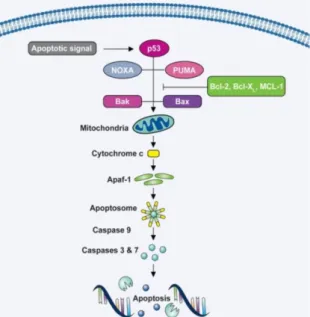
The intrinsic pathway (Fig.4) can be activated by different stress stimuli, such as heat shock, ultraviolet radiation or DNA damage. The permeabilization of the mitochondrial membranes is frequently the decisive event that delimits the boundary between survival and death (Fulda et al., 1997; Fulda and Debatin, 2000; Liu et al., 2004; Fulda and Kroemer, 2009). The B-cell lymphoma 2 (Bcl-2) family proteins are regulators of apoptosis and comprise both
anti-10
apoptotic members, such as Bcl-2, Bcl-Xl and McH that inhibits the permeabilization of the mitochondrial membrane, and pro-apoptotic member, such as BAX, BAK, BAD, Bik, Bid, Puma, Noxa and BH3 that permeabilize the mitochondrial membrane (Fulda et al., 1997; Yadav et al., 2010). Bax and Bak proteins can be upregulated by the tumour suppressor protein p53 (Yadav et al., 2010), be inserted in the outer
mitochondrial membrane (OMM), permeabilizing it and causing the release of cytochrome c, apoptosis inductor factor (AIF) and second mitochondria derived activator of caspases (SMACs) (Fulda and Debatin, 2000; Dzubak et al., 2005; Fulda, 2008; Fulda and Kroemer, 2009; Yadav et al., 2010). Imbalances in the ratio of the anti-apoptotic versus pro-apoptotic Bcl-2 proteins regulate the permeabilization of the OMM (Fulda et al., 1997; Rzeski et al., 2006; Fulda and Kroemer, 2009; Wu et al., 2010).
After its release, cytochrome c interacts with the apoptotic protease activating factor-1 (Apaf-1) and recruits pro-caspase-9 to stimulate the formation of the apoptosome, which will lead to the cleavage and activation of caspases 9 that will mediate the activation of caspases 3, 6 and 7 to promote apoptosis (Fig.4). The SMAC promotes activation of caspases by deactivating inhibitors of apoptosis proteins (IAPs), allowing apoptosis to continue; and the AIF induces apoptosis without caspases involvement (Fulda, 2008; Fulda and Kroemer, 2009; Yadav et al., 2010).
2.2.2. THE EXTRINSIC DEATH RECEPTORS PATHWAY
In the extrinsic pathway (Fig.5), apoptosis is triggered by activation of pro-apoptotic death receptors, such as CD95 or TNF-related apoptosis-inducing ligand (TRAIL) receptors through its ligands cognate. The stimulation of the DR leads to receptor trimerization, recruitment of adaptor molecules, such as fas-associated protein with death domain (FADD), and activation of caspase 8
Figure 4 – Scheme of the Intrinsic Mitochondrial Pathway, with release of cytochrome c. [Image from http://www.biooncology.com]
11 initiator, which spreads the death signal to effector caspases like caspases 3, 6 and 7 (Fulda, 2008; Yadav et al., 2010).
At this point, both intrinsic and extrinsic pathways converge with the activation of the same caspases. Also, caspase 8, through its mediated cleavage, activates the BH3 interacting-domain death agonist (Bid) which is translocated to the mitochondria to promote cytochrome c release (Fulda, 2008).
2.2.3.ROLE OF P53 IN APOPTOSIS
The protein 53 (p53) is a tumour suppressor protein whose activity stops the formation of tumours, being considered the “guardian of the genome”. It mediates critical functions in cells, such as inhibition of proliferation by induction of cell cycle arrest and induction of apoptotic cell death. In normal cells, p53 is usually present at very low levels and it can be activated in response to stress, like hypoxia, heat shock and DNA damage agents. Its stability is regulated by the E3 ubiquitin ligase and human double minute 2 homolog (HDM2), which mediates the ubiquitination of p53 and allows its degradation by the proteosome, maintaining the p53 levels low (Chari et al., 2009).
When activated, p53 translocates to the nucleus where it binds to specific DNA sequences elements within the regulatory regions of target gene promoters regulating the transcription of several genes related with apoptosis and/or cell cycle (Chari et al., 2009). Furthermore, this protein can also activate the apoptotic mechanism through interaction with the members of the anti- and pro-apoptotic Bcl-2 family proteins to induce the intrinsic mitochondrial pathway (Vaseva and Moll, 2009).
Figure 5 – Scheme of the Extrinsic Death Receptor Pathway. [Image from http://www.biooncology.com]
12
3. EUCALYPTUS SPP.
Eucalyptus spp., from the family Myrtaceae, are evergreen flowering trees (Russell et al., 1997). This genus consists of approximately 600 species and has a physiological plasticity (it supports tropical and temperate climes) that allows some species to propagate in different regions of the world (Moura et al., 2012). In spite of this, only fifteen species occur outside Australia, and only nine do not occur there, thus eucalyptus is mostly native to Australia. The eucalyptus tree has high value mainly because it is a major source of cellulose for paper manufacture, being the most common short fibre source for pulpwood in Portugal, Spain, Brazil, Chile, South Africa, Japan, among other countries (Pereira et al., 2005; Domingues et al., 2010; Domingues et al., 2011b; Moura et al., 2012). It is also very sought for its essential oil, which, despite being highly toxic if ingested pure, is a good antiseptic, anti-malarial, industrial solvent and insect repellent as well as used as additive for food industry (Russell et al., 1997; Pereira et al., 2005; Moura et al., 2012). Eucalyptuses are also valuable for apiculture and the resulting honey being studied for their antibacterial activity (Irish et al., 2011). Furthermore, the lipophilic extracts from the bark of some eucalyptus (namely Eucalyptus globulus, Eucalyptus camaldulensis var. obtusa, Eucalyptus grandis, Eucalyptus maidenii, Eucalyptus urograndis and Eucalyptus nitens) are profoundly rich in triterpenic compounds, specially triterpenic acids like oleanolic, 3-acetyloleanolic, ursolic, 3-acetyl-ursolic, betulinic, 3-acetylbetulinic and betulonic acids, that are valuable bioactive compounds (Siddiqui et al., 2000; Kibblewhite et al., 2001; Pereira et al., 2005; Domingues et al., 2010; Domingues et al., 2011a;Domingues et al., 2011b; Santos et al., 2011b; Domingues et al., 2012).
3.1. EUCALYPTUS NITENS
Eucalyptus nitens (Fig. 6) is a species of fast growth and great development, with a natural distribution in small and normally isolated populations. It is a tall to very tall forest tree, normally with heights between 40 to 70 meters being able to reach 90 meters and diameter of 1 to 2 meters. Its juvenile leaves are smooth, orbicular and very fragrant; adult leaves are alternate, long, curved, flexible and they set up a high silvery crown when grown in plantations (Tibbits et al., 1997). Eucalyptus nitens is also known as Shining Gum, since nitens in Latin means shining/bright and this refers to their leaves, buds, bark and fruits that have a distinct glossy.
13 Eucalyptus nitens is mostly planted for industrial
purposes, given that most of their crops are used to the pulp and paper industry (Domingues et al., 2011) due to its final pulp properties (Domingues et al., 2011a). The most meaningful plantations are in Chile (45%), Australia (30%) and South Africa (17%) and can be also found in New Zealand, Northern Spain and Portugal. This species is normally planted in unsuitable sites for E. globulus (the leading eucalyptus planted for the pulp and paper industry), because it can tolerate a climate much colder and also grows very well at high altitudes, two characteristics that E. globulus does not have (Tibbits et al., 1997).
It has been reported that the outer bark of E. nitens contains significant quantities of triterpenoids and acetyl derivatives, like ursolic, acetylursolic, betulinic, oleanolic, 3-acetyloleanolic and betulonic acids (Domingues et al., 2011a; Domingues et al., 2012).
3.2. EUCALYPTUS PULP RESIDUES EXPLOITATION
There is a growing interest of performing an integrated exploitation of plant biomass as a source of materials, chemicals, fuels and energy in the concept of biorefinery. This approach has attracted the interest of agro-forest industries in order to take the maximum value out of their crops. In particular to the pulp and paper industries, because it produces substantial quantities of residues, especially bark, leaves and fruits, which are simply burned to energy production or left behind, this is an example where this biorefinery concept may reach a big success (Pereira et al., 2005; Domingues et al., 2010; Domingues et al., 2011b).
These byproducts of the pulp and paper industries may have high valuable compounds in their composition and they can be exploited without affecting the industry production and minimizing residues formation, being promising sources of bioactive natural chemicals (Domingues et al., 2010; Domingues et al., 2011b). So, a more profound study of these non-used byproducts can contribute to increase the economic value of crops and retrieving valuable
Figure 6 – E. nitens in an industrial
plantation in Australia. [Adapted from CSIRO Forestry and Forest Products]
14
compounds that would be otherwise discarded (Pereira et al., 2005; Domingues et al., 2011b; Santos et al., 2011b). The exploitation of high value low molecular mass compounds, such as phytosterols (namely β-sitosterol), lignans and triterpenoids, from industrial byproducts is a
strategy already implemented in some pulp industries (Domingues et al., 2010), as some of these compounds, specially triterpenoids, can be of great interest as anticancer agents.
The bark of eucalyptus species is among the residues with most interest (Domingues et al., 2011b). The bark of different eucalyptus residues left behind by pulp and paper industries contains very valuable compounds, namely triterpenoids with great biological activities. The compounds extracted from these different species are basically the same, although with different proportions. So, E. camaldulensis var. obtusa, E. nitens, E. globulus, E. maidenii, E. urograndis and E. grandis are highly rich in triterpenic acids with lupane, ursane and oleane skeletons namely ursolic, 3-acetylursolic, oleanolic, 3-acetyloleanolic, betulinic and betulonic acids (Kibblewhite et al., 2000; Siddiqui et al., 2000; Pereira et al., 2005; Domingues et al., 2010; Domingues et al., 2011a; Domingues et al., 2011b; Santos et al., 2011). Besides triterpenic compounds, it can also be found small quantities of fatty acids, fatty alcohols and aromatic compounds (Domingues et al., 2011b).
4. NATURAL COMPOUNDS
Traditional medicine and diet have been serving humanity throughout the centuries as a means of preventing and treating most of chronic diseases (Fulda, 2008; Fulda and Kroemer, 2009; Yadav et al., 2010; Yi et al., 2010). Natural compounds have been extensively used in the treatment of multiple diseases and are of great value for the scientific community, either in its natural form or as models to synthetic modification (Rajendran et al., 2008; Yadav et al., 2010). These compounds used nowadays in modern medicine exhibit a great chemical diversity and, along with its analogues and many others natural products, show the great importance of these compounds in the efforts of discovering new drugs (Fulda, 2008; Fulda and Kroemer, 2009; Yadav et al., 2010; Yi et al., 2010). The interest in natural compounds has increased over the last few years, due to concerns about drug costs and, mainly, due to their security, as natural compounds have usually low toxicity. Furthermore, they have high yield, easy obtainment, favourable physiological functions, antioxidant activity and are generally accepted as dietetic
15 supplements (Amin et al., 2009; Yadav et al., 2010; Yi et al., 2010), being considered a fascinating strategy as therapeutic agents (Bishayee et al., 2011). Over the last decade, many bioactive compounds have been identified in plants and human diet and are being developed as chemopreventive agents to inhibit, slow down or even reverse the progression of several cancers (Amin et al., 2009; Yadav et al., 2010; Bishayee et al., 2011). In fact, the great majority of anticancer agents are derived from natural compounds or their analogues (Fulda, 2008; Fulda and Kroemer, 2009; Santos et al., 2011). The anticancer activity of natural compounds has been partially explained by its ability in triggering cellular death pathways, including apoptosis (Fulda and Kroemer, 2009).
4.1. TERPENIC COMPOUNDS
One of the groups of natural compounds are terpenes (or terpenoids or isoprenoides) that can be divided, according with the number of structural molecules of isoprenes, into mono-, sesqui-, di-, sester-, tri-, tetra- and poly-terpenes which create extensive isoprenoides groups. With almost 40.000 different terpenes isolated from plants, animals and microbial species they are widely found in Nature. They are the biggest natural compound group found in plants (Dzubak et al., 2005; Bishayee et al., 2011). Terpenes and its metabolites play a very important role in plants defence mechanisms; they protect plants from the constitutive and induced defensive responses against insects and environmental stress (Yadav et al., 2010). Among terpenes, the triterpenes have recently emerged as an unique group of phytochemicals with multi-functional activities (Bishayee et al., 2011).
4.1.1. TRITERPENIC COMPOUNDS
Triterpenes, or triterpenoids, are isopentenyl pyrophosphate oligomers metabolites that are chemically related to squalene, which is a big group of compounds that have thirty carbon atoms arranged in five rings with several oxygen atoms connected. Triterpenes are part of the biggest plants compounds group, the Saponins (Yadav et al., 2010; Bishayee et al., 2011). It is estimated that there are over 20.000 triterpenes in Nature, and they are predominantly found in plants and fruits, being considered one of the most important natural compounds’ class (Dzubak
16
et al., 2005; Kommera et al., 2011; Bishayee et al., 2011; Csuk et al., 2011). Thousands of new structures have been described with hundreds of new derivatives being found each year (Cichewicz and Kouzi, 2004). The variability of triterpenes in Nature is the result of the evolution of a big family of terpene synthase (Yadav et al., 2010). The triterpenes can be subclassified in diverse groups including the cucurbitanes, cycloartanes, dammaranes, euphanes, friedelanes, holostanes, hopanes, isomalabaricanes, lanostanes, limonoids, lupanes, oleananes, protostanes, squalenes, tirucallanes, ursanes and other compounds (Bishayee et al., 2011). In a biological perspective the most important triterpenoids structures are the oleananes, ursanes, lupanes, dammaranes and euphanes (Dzubak et al., 2005), emphasizing the lupane group that are recognized as promising compounds for the development of new bioactive agents (Cichewicz and Kouzi, 2004; Kommera et al., 2011; Domingues et al., 2011b).
Even though for a long time the triterpenes were considered biologically inactive, the accumulating evidences of its wide pharmacological activities spectrum along with its low toxicity aroused a new interest about its potential (Bishayee et al., 2011). The triterpenes, widely used in medicine in Asian countries, have a range of unique biological effects and have been studied for its anti-inflammatory, hepatoprotector, analgesic, antimicrobial, antimicotic, virostatic, immunomodulatory, tonic, anticancer, antiangiogenesis, analgesic, antipyretic, antioxidant, antiallergic, spasmolytic, anti-HIV and antimalarial effects (Dzubak et al., 2005; Kommera et al., 2011; Yadav et al., 2010; Bishayee et al., 2011). Therefore, they can be considered a promising and expanding platform to biological active natural compounds whose potential is only partially explored by the pharmaceutical industry.
4.1.1.1. BETULINIC ACID
Betulinic acid (BiA), 3β,hydroxy-lup-20(29)-en-28-oic acid (Fig.7) is part of the lupane group, a pentacyclic triterpene, and it can be found in several plants throughout the world like in Ziziphus spp., Amenone spp., Lycopodium spp., Syzygium spp., Betula spp., Tryphyllum spp., Ancistrocladus spp., Eucalyptus
17 being highly available in the white-barked birch tree (from the genus Betula) (Cjowdhury et al., 2002; Amin et al., 2009; Drag et al., 2009; Kommera et al., 2010a; Kim et al., 2011; Soica et al., 2011). Betulinic acid is the oxidized derivative of its precursor betulin, which was one of the first natural compounds to be isolated from plants more than two centuries ago (Cichewicz and Kouzi, 2004; Fulda and Kroemer, 2009). Depending on the extraction method, betulin comprehends over than 90% of the total isolated products and BiA around 1 to 5% (Drag et al., 2009).
Betulinic acid, a white crystalline solid, is a bioactive compound that possess a wide range of pharmacological effects like anti-inflammatory, antimicrobial, antiplasmodial, anti-HIV, anti-diabetic, cardiovascular, anti-atherosclerosis, anti-obesity, anti-proliferative, anti-angiogenic, cytotoxic, anticancer, antiparasitic, antimalarial, viral, antioxidant, hepatoprotector, anti-allergic and anti-tuberculosis effects as well as spasmogenic, anthelmintic and antinociceptive activities (Ryu et al., 1994; Cichewicz and Kouzi, 2004; Dzubak et al., 2005; Fulda and Kroemer, 2009; Wu et al., 2010; Bishayee et al., 2011). It has been postulated that many of these effects may be due to its ability to modulate immune functions, being an important immunomodulator (Yi et al., 2010).
The Native Americans used the bark of white birch tree (rich in BiA) as a potent folk medicine to treat skin diseases and as an anti-inflammatory (Fulda and Kroemer, 2009). The cytotoxic activity of BiA was first described in 1976 by Trumbull and collaborators, but it was only in 1995 that Pisha et al. published an important paper reporting the cytotoxic effects of BiA in a human melanoma cell line, causing an increasing interest in this compound. It was first thought that this compound was cytotoxic specifically to melanoma cell lines (Fulda, 2008; Fulda and Kroemer, 2009), but since then its anticancer activity has been reported against several other human cancers, including neuroblastoma, glioblastoma, colon, breast, liver, lungs and prostate carcinomas, among others (Cichewicz and Kouzi, 2004; Ehrardt et al., 2004; Fulda, 2008; Amin et al., 2009; Eichenmuller et al., 2009; Fulda and Kroemer, 2009; Chintharlapalli et al., 2011).
Many mechanisms of action have been published for explaining its anticancer effect. One of them is the ability of BiA to induce cell death by apoptosis (Drag et al., 2009; Eichenmuller et al., 2009; Santos et al., 2011), which is suggested to be mediated by the increase of mitochondrial membrane permeability, meaning through the intrinsic mitochondrial apoptosis pathway (Fulda et al., 1997; Dzubak et al., 2005; Fulda and Debatin, 2000; Zuco et al., 2001;
18
Ehrhardt et al., 2004; Liu et al., 2004; Jung et al., 2007; Fulda, 2008; Eichenmuller et al., 2009; Fulda and Kroemer, 2009; Wu et al., 2010; Bishayee et al., 2011; Kommera et al., 2011; Santos et al., 2011). Betulinic acid has also been proven to be a topoisomerase I and II inhibitor (Chowdhury et al., 2002; Wada and Tanaka, 2005) as well as being responsible by the downregulation of the transcription factors specificity protein 1 (Sp1), 3 (Sp3) and 4 (Sp4) (Drag et al., 2009; Chintharlapalli et al., 2011), which regulates the expression of a vast number of genes involved in many cellular functions from differentiation, proliferation and apoptosis (Deniaud et al., 2009). An interesting and clinically important fact is that BiA has a higher effect in an environment with pH lower than 6.8, which is the pH at which almost every tumours develops (Cichewicz and Kouzi, 2004; Dzubak et al., 2005).
A very important characteristic that has been reported for this compound is its ability to trigger apoptosis in cancer cells resistant to drugs, suggesting that BiA may circumvent some forms of resistance in cancer patients that show resistance to chemotherapy (Fulda and Debatin, 2000; Jung et al., 2007; Drag et al., 2009). Furthermore, despite its cytotoxicity against a variety of cancers, normal cells and tissues appear relatively resistant to BiA, taking up to 100 mg/kg in animal studies without showing great toxicity, which points to a very good therapeutic window (Zuco et al., 2002; Dzubak et al., 2005; Rzeski et al., 2006; Csuk et al., 2011). So, due to its low toxicity against normal tissues and cells, its remarkable anticancer activity and the fact that it can bypass drug resistance cancers, it can be expected that BiA will eventually be accepted as an adjuvant therapeutic in the treatment of cancer cells. However, BiA is a highly lipophilic molecule with limited water solubility (being limitedly soluble in organic alcohols and highly soluble in pyridine and acetic acid) which can lower its in vivo uptake. So, developing specialized formulations/carriers, such as liposomes, may help to augment its in vivo efficiency as an anticancer agent (Cichewicz and Kouzi, 2004;).
Tough BiA is widely available in Nature, their sources may not be enough to a possible increase in the demand of this compounds. But, fortunately, the BiA’s precursor betulin is highly available in several species of plants with significant yields over 20%, and BiA is easily prepared from betulin in a simple two-step process (Chintharlapalli et al., 2011; Soica et al., 2011). Also, due to its outstanding characteristics, a number of new BiA derivatives are being synthetized (Kim et al., 2001; Liu et al., 2004; Rajendran, 2008; Kommera et al., 2010a; Nakagawa-Goto et al., 2010; Kommera et al., 2011; Santos et al., 2011).
19 4.1.1.2. BETULONIC ACID
Betulonic acid (BoA), 3-oxolup-20(29)-en-28-oic-acid (Fig.8), is also part of the lupane group and a pentacyclic triterpene, which can be found in Syzigium spp, Eucalyptus spp., Prunella spp., Ziziphus spp. and Betula spp. (Ryu et al., 1994; Symon et al., 2005; Domingues et al., 2010; Kommera et al., 2010a). Betulonic acid can also be obtained from betulinol or from betulin. The yield obtained from the extraction of BoA from betulinol is aroun 90%, whereas from betulin is only about 60% (Saxena et al., 2 006).
Betulonic acid is a white crystalline solid, which, until the year 2000, was only focus of interest as a precursor of BiA (Melinokova et al., 2012). However, it was discovered that it was by itself a very valuable bioactive compound with great pharmacological activities such as viral, anticancer, anti-inflammatory, anti-malarial, anti-angiogenic, anti-HIV, cytotoxic, hepatoprotector, antioxidant, antimicrobial, and immunomodulatory (Pavlova et al., 2003; Sorokina et al., 2004; Sorokina et al., 2006; Vabilevsky et al., 2009; Melinokova et al., 2012; Semenov et al., 2012). In fact, it has been reported that in many of its effects, BoA is much more active and potent inhibitor than BiA, being immensely potent against several tumour cell lines (Symon et al., 2005; Wada and Tanaka, 2005). Betulonic acid is also known for being a powerful topoisomerase II inhibitor (Ryu et al., 1994).
As mentioned, BoA has a remarkable cytotoxic activity against cancers such as melanoma and prostate, neck and head, ovary/cervix, lung, colon, breast, thyroid and liver carcinomas (Saxena et al., 2006; Shintyapina et al., 2007; Kommera et al., 2010a).
Due to its very low solubility in aqueous medium (being only soluble in organic solvents), it has not been yet possible to determine in all its extent BoA’s powerful activity (Saxena et al., 2006). Also because of this, there is not yet literature that clarifies exactly the mechanisms of action of the anticancer activity of BoA, but it has been reported that it may up-regulate p53 activity (Zhang et al., 2008). Also, it has been reported that BoA may be a powerful agent that
Figure 8 – Chemical structure of betulonic acid.
20
improves cytostatic effects of drugs (as a bioregulator to decrease the organism resistance to toxic cytostatic effects) (Sorokina et al., 2004).
As with BiA, BoA seems to be little toxic to normal fibroblast cells (Saxena et al., 2006). There has been also a number of BoA derivatives that are being synthesized (Vabilevsky et al., 2009; Semenov et al., 2012).
4.1.1.3. URSOLIC ACID
Ursolic acid (UA), 3β-hydroxy-urs-12-en-28-oic acid, (Fig. 9) is a natural pentacyclic triterpene carboxylic acid. It is widely present in several medicinal plants like sage, olive and rosemary as well as in some fruits, such as some berries and apples, and in eucalyptus (Liu, 1995; Domingues et al., 2010).
UA is also a bioactive compound and has numerous effects such as anti-inflammatory, anticancer and hepatoprotective effects (Liu, 1995; Xavier et al., 2009b; Xavier et al., 2013), as well as it is able to provide protection against oxidative damage in DNA (Ramos et al., 2008; Ramos et al., 2010). It also presents low toxicity to normal cells (Xavier et al., 2009b). It has been reported that UA’s anticancer effect is due to its capacity of modulating important signalling pathways, such as PI3K, inhibiting cell proliferation and inducing apoptosis (Liu, 1995 Xavier et al., 2009b; Xavier et al., 2012).
4.1.1.4. OLEANOLIC ACID
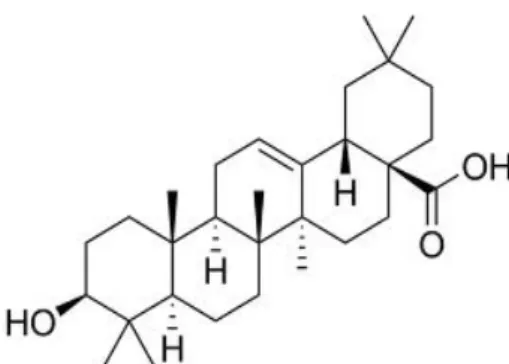
Oleanolic acid (OA), 3β-hydroxy-olea-12-en-28-oic acid, (Fig.10) is a natural occurring triterpenoids that is found in Phytolacca spp., Syzygium spp., Eucalyptus spp., in garlic and other medicinal plants (Liu, 1995; Domingues et al., 2010).
21 OA is a bioactive compound and possesses interesting effects such as hepatoprotector, anticancer, anti-HIV and antiviral activities, being little toxic to normal cells and tissues (Liu, 1995). It has been reported that, besides being less potent in inducing cell death than UA, it may be used in cancer treatment in specific physiological conditions, such as under metabolic stress (Duarte, 2012).
Figure 10 – Chemical structure of oleanolic. id
22
OBJECTIVES OF THE WORK
Portugal is one of the leading countries in the production of eucalyptus for the pulp and paper industry. However, this sector is responsible for the production of tons of bark residues that does not have a valuable use. The present work intends to give a contribution to the exploitation of this byproduct of the pulp and paper industry as possible source of high-added-value bioactive compounds, a study that is under the scope of the European project AFORE (FP7: CP-IP 228589-2 AFORE) that intends to develop novel applications for forest residues.
Therefore, the objective of this work was to study the potential anticancer effect of the triterpenic fraction of extracts obtained from the bark of E. nitens in colorectal cancer cells. An enriched triterpenic fraction (F2) in BiA and BoA was also tested and, in addition, these two
isolated compounds.
For that, the anticancer potential of the triterpenic extracts/compounds was studied by the MTT assay, the anchorage-dependent colony forming assay and by the cell migration assay (wound healing). Induction of cell death and apoptosis was studied by the PI staining and the presence of nuclear condensation, respectively. In addition, effects on cell cycle were studied by flow cytometry. Finally, the involvement of several signalling pathways, related with proliferation and death, in the effects of the triterpenic extracts/compounds were analysed by western blot.
With this work we intend not only to establish the importance of triterpenoids compounds as anticancer agents, but also to test an important source of these compounds that are being disregarded as residues from crops used in the pulp and paper industry.
25
1.CHEMICALS
Propidium iodide (PI), quercetin, RNAse A, 3-(4,5-Dimethylthiazolyl-2)-2,5-diphenyltetrazolium bromide (MTT), RPMI 1640, antibiotic/antimicotic solution, bovine serum albumin (BSA), N-(2-Hydroxyethyl)piperazine-N'-(2-ethanesulfonic acid) (HEPES), were purchased from Sigma-Aldrich (St. Louis, MO, USA). Fetal bovine serum (FBS) was bought from Biochrom AG (Berlin, Germany). All the other compounds were of analytical grade.
2.EUCALYPTUS NITENS EXTRACTS AND TRITERPENOIDS
Betulinic acid and betulonic acid were purchased from Molekula Ltd (Gillingham, Dorset, United Kingdom) and Chemos GmbH (Regenstauf, Germany), respectively. Eucalyptus nitens crude extract (E. nitens CE) and the triterpenic enriched fraction 2 (E. nitens F2) were kindly
provided by Professor Armando Silvestre from the Department of Chemistry, University of Aveiro. The extracts were prepared by Domingues et al. through extraction of E. nitens bark with dichlorometane as previously described (Domingues et al., 2011). The CE and F2 extracts of E.
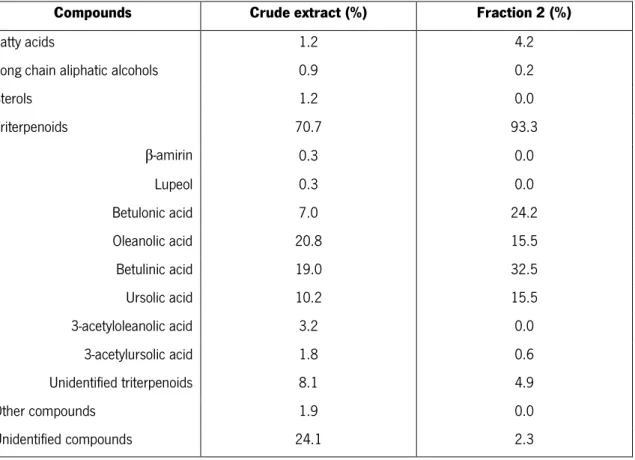
nitens were then analysed by GC-MS and the main chemical composition present in Table 1 (Domingues et al., 2012, unpublished data). Extracts and isolated compounds were dissolved in dimethyl sulfoxide (DMSO) in stock solutions, in order that DMSO concentration in cell culture was no higher than 0.5% (v/v). Controls received vehicle only.
3.ANTIBODIES
The primary antibodies were purchased from the following sources: anti-phospho-ERK, anti-PARP-1, anti-phospho-JNK, anti-Bcl-2 and anti-p53 from Santa Cruz Biotechnology, Inc. (Santa Cruz, CA, USA); anti-caspase 9, p38 MAPK (Thr180/Tyr182), phospho-AMPKα (Thr172) and phospho-Akt (Ser473) from Cell Signalling (Danvers, MA, USA); anti-caspase 3 from Calbiochem (San Diego, CA, USA); and anti-β-actin from Sigma-Aldrich. Secondary antibodies anti-rabbit and anti-mouse were purchased from Santa Cruz Biotechnology.
26
Table 1 – Chemical composition (based on % of weight from the total extract weight) of the E. nitens crude extract
and of the triterpenic enriched fraction 2 (Domingues et al., 2012, unpublished data).
Compounds Crude extract (%) Fraction 2 (%)
Fatty acids 1.2 4.2
Long chain aliphatic alcohols 0.9 0.2
Sterols 1.2 0.0 Triterpenoids 70.7 93.3 β-amirin 0.3 0.0 Lupeol 0.3 0.0 Betulonic acid 7.0 24.2 Oleanolic acid 20.8 15.5 Betulinic acid 19.0 32.5 Ursolic acid 10.2 15.5 3-acetyloleanolic acid 3.2 0.0 3-acetylursolic acid 1.8 0.6 Unidentified triterpenoids 8.1 4.9 Other compounds 1.9 0.0 Unidentified compounds 24.1 2.3 4.CELL CULTURE
HCT116 cells (human colorectal carcinoma cell line) were kindly provided by Professor Raquel Seruca from IPATIMUP, Porto. The cell line was maintained in culture in 25 cm2
polystyrene flasks (TPP, Switzerland) with RPMI 1640 medium, containing 6% FBS, 1% antibiotic– antimicotic solution, 0.1 mM sodium pyruvate, 10 mM HEPES and 2 g/L sodium bicarbonate under an atmosphere of 5% CO2 and 95% air at 37°C.
5.MTTREDUCTION ASSAY
MTT reduction assay was performed to evaluate the potential of the tested compounds/extracts to decrease the number of viable cells as previously described (Lima et al., 2011). Briefly, HCT116 cells were plated in 24-multiwell culture plates at 8x10⁴ cells per ml and
allowed to grow for two day. Cells were incubated with test compounds/extracts at different concentrations and for different time periods. One hour before the end of incubation, 50µL of
27 MTT (final concentration of 0.5mg/ml) was added to each well. When the incubation time ended, the medium was removed and discarded, and the formazan crystals (formed by the cell’s capacity to reduce MTT) were dissolved with a 50:50 (v/v) DMSO:ethanol solution. The absorbance was measured at 570nm, with background subtraction at 690nm. The results were expressed as percentage relative to the control. The concentration of each test compound/extract that decreases the number of viable cells to half (IC50) was calculated using mathematical
modelling with the program GraphPad Prism 5 (GraphPad Software, Inc., La Jolla, CA, USA).
6.ANCHORAGE-DEPENDENT COLONY FORMING
The anticancer potential of tested compounds/extracts was also tested by their ability to inhibit the formation of cell colonies. HCT116 cells were plated in 6-multiwell culture plates at 500 cells per ml for two days for cell attachment. Cells were then incubated with different concentration of test compounds/extracts dissolved in new culture medium for six days (without changing the medium). After this incubation time, medium was removed from the wells, washed with PBS and cells fixed with ice cold absolute ethanol for 15 minutes. Then, cells were stained with Giemsa working solution (0.4% w/v) for 5 minutes and the wells washed with tap water. The plate wells were photographed and colony forming ability estimated by quantifying colony area intensity using appropriate image analysis system (Adobe Photoshop CS3 Adobe Systems Incorporated, San Jose, CA, USA).
7.CELL DEATH ANALYSIS BY PROPIDIUM IODIDE (PI)STAINING
PI staining was performed to evaluate cell death induced by the tested compounds/extracts. This DNA fluorophore is impermeable to live cells, but will stain strongly the DNA of dying and death cells due to their compromised or permeabilized plasma membranes (Rieger et al., 2011) The HCT116 cells were plated in 6-multiwell culture plates at 8x10⁴ cells per
ml, for two days for cell attachment and growth, before incubating them with test compounds/extracts dissolved in new culture medium. After treatment with different concentrations and incubation times, cells were collected (both floating and attached cells) washed with cold PBS containing 6% (v/v) FBS, and incubated with PI added to a final
28
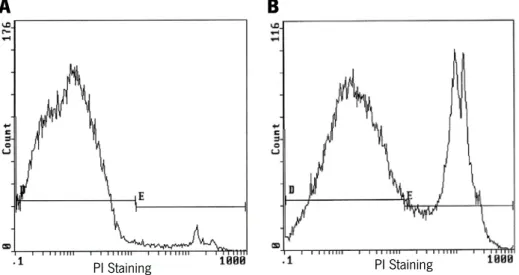
concentration of 0.25mg/ml for 10 minutes. The percentage of cells positive for PI (death cells) was quantified by flow cytometry using a Coulter Epics XL Flow Cytometer (Beckman Coulter Inc., Miami, FL, USA) counting at least 40,000 cells per sample. An example of quantification of cell death by flow cytometry with PI staining is given in the Figure 11.
8.NUCLEAR CONDENSATION
Nuclear condensation was performed in order to estimate cell death by apoptosis. The HCT116 cells were plated in 12-multiwell culture plates at 8x10⁴ cells per ml, for two days before
incubating them with different concentrations of test compounds/extracts dissolved in new culture medium. After 48h of treatment, cells were collected (both floating and attached cells) and washed with PBS. Cells were then fixed resuspending them in paraformaldehyde (PFA) 4% (w/v) in PBS for 20 minutes, and washed again with PBS. Cells were attached into a polylysine treated slide using a Shandon Cytospin 4 (Thermo Scientific, Waltham, MA, USA), and incubated with Hoechst (final concentration of 5µg/ml) for DNA staining. Nuclear morphology was visualized on a fluorescent microscope and photos taken from different fields of each sample. The percentage of apoptotic cells were calculated from the ratio between cells with nuclear
Figure 11 – Representative images of flow cytometry for analysing cell death by PI staining, of a control sample (A) and a treatment condition with induction of cell death (B). Represented in the plots are life cells – cells at gate D with red autofluorescence (PI negative), and dead cells – cells at gate E with PI red fluorescence (PI positive). The percentage of cell death is given by the formula 𝐃+𝐄 𝐄 × 𝟏𝟏𝟏.
PI Staining PI Staining
29 condensation typical of apoptosis and the total number of cells, from a count higher than 500 cells per sample.
9.CELL CYCLE ANALYSIS
The analysis of cell cycle was done by flow cytometry using PI for staining DNA of permeabilized cells. For that, HCT116 cells were plated in 6-multiwell culture plates at 8x10⁴
cells per ml for two days for cell attachment and growth, before incubating them with the test compounds/extracts dissolved in new culture medium. After treatment for 48h with different concentrations of compounds/extracts, cells were collected (both floating and attached cells) and washed with cold PBS. Then, cells were fixed and permeabilized in ice cold ethanol 70% (v/v) for 15 minutes and washed again with PBS. Finally, cells were incubated with staining solution (50 µg/ml PI and 20 µg/ml RNase A in PBS) at 37ºC for 15 minutes. Analysis of cell cycle progression by flow cytometry was done using a Coulter Epics XL Flow Cytometer (Beckman Coulter Inc.) counting at least 40,000 single cells per sample. Phases of cell cycle were fitted using the mathematical Watson Pragmatic model with the FlowJo Analysis Software (Tree Star, Inc., Ashland, OR, USA).
10.MIGRATION ASSAY (WOUND HEALING)
Migration assay was performed to evaluate the effect of tested compounds/extracts to affect the extent of wound closure. For that, HCT116 cells were plated in 12-multiwell culture plates at 2.5x10⁵ cells per ml, and allowed to grow for two days until cell confluence was
reached. Cell layer was then wounded in an x shape with an 100 µl tip, and a photo of the wound site was taken. Cells were incubated with the test compounds/extracts for 24h and a new photo in the central wound site taken. The extend of wound closure was given as the percentage of covered area after 24h in relation to the initial uncovered area, using the following formula: Extent of wound closure = �Initial uncovered area-Final uncovered areaInitial uncovered area �×100
30
11.WESTERN BLOTTING
To measure the expression of different proteins involved in cell signalling and apoptosis western blot was used using total cell homogenates. HCT116 cells were plated in 6-multiwell culture plates at 8x10⁴ cells per ml for two days for cell attachment and growth. Cells were
treated with different concentrations of tested compounds/extracts for 24h or 48h and a total cell homogenate obtained incubating cells for 15 minutes at 4ºC with ice cold RIPA buffer (1% NP-40 in 150mM NaCl, 50mM Tris-HCl (pH 8), 2mM EDTA) containing 1mM PMSF, phosphatase inhibitors (20mM NaF, 20mM Na2V3O4) and protease inhibitor cocktail (Roche,
Mannheim, Germany). Protein concentration was quantified by Bio-Rad DC protein assay (Bio-Rad Laboratories, Hercules, CA, USA) and BSA used as protein standard. For Western Blot, 20 µg of protein was resolved in SDS-polyacrilamide gel and then electroblotted to a polyvinylidene difluoride membrane (Millipore, Billerica, MA, USA). Membranes were blocked in TPBS (PBS with 0.05% of Tween-20) containing 5% (w/v) of non-fat dry milk, washed in TPBS and incubated with primary antibody overnight. After washing, membranes were incubated with the secondary antibody for 1h, and membranes washed again. The immunoreactive bands were detected using the Immobilon solutions (Millipore) under a chemiluminescence detection system, the Chemidoc XRS (Bio-Rad Laboratories). Band area intensity was quantified using the Quantity One software from Bio-Rad. β-actin was used as loading control.
12.STATISTICS
Data expressed as the mean ± SEM of at least 3 independent experiments. Statistical significances among data groups were analysed by one-way ANOVA followed by the Dunnett’s multiple comparison test, or by the Student’s t-test, as appropriate, using GraphPad Prism 5.0 software (San Diego, CA, USA). Differences between groups were considered statistically significant when P≤0.05.
33 The pulp and paper industries are one of the most important industries in Portugal contributing positively to the country’s export (Pereira et al., 2005; Domingues et al., 2010; Domingues et al., 2011b; Moura et al., 2012). Eucalyptus wood is the main source of fibbers for the production of paper. However, it generates large amounts of residues, mainly bark, which can be a source of valuable compounds of otherwise burned or discarded material (Doningues et al., 2011). Therefore, the exploitation of this byproduct for the production of interesting added-value new products is being viewed by the pulp and paper industry as a way to increase their revenue and to implement the biorefinery concept in their production chain (Domingues et al., 2011a; Mota et al., 2012). Previously, it was reported that lipophilic extracts from the bark of Eucalyptus species can be an important source of high-value triterpenic compounds in view of their high content and attributed bioactive properties (Domingues et al., 2011a).
In the present work, the potential anticancer effect of lipophilic extracts enriched in triterpenic acids obtained from the bark of E. nitens was studied in the colorectal HCT116 cancer cells. Although E. nitens is not the main species of eucalyptus in Portugal, it possess high content of triterpenic acids like the most abundant species E. globulus, but contrarily to this one, where ursane acids dominates, it is the richest in oleanane and lupane acids (Domingues et al., 2011a).
For this work, two extracts of E. nitens were used (see Table 1, in Materials section): a lipophilic crude extract (CE) with about 70% (w/w) of triterpenoids, where the main ones are oleanolic acid (20.8%) followed by betulinic acid (19%), ursolic acid (10.2%) and betulonic acid (7%); and, a fraction (F2) of the CE more enriched in triterpenoids (about 93% of total weight),
specially in lupane acids, since the main ones are betulinic acid (32.5%) followed by betulonic acid (24.2%), ursolic acid (15.5%) and oleanolic acid (15.5%). In addition, the above lupane acids were also tested alone for comparison.

![Figure 5 – Scheme of the Extrinsic Death Receptor Pathway. [Image from http://www.biooncology.com]](https://thumb-eu.123doks.com/thumbv2/123dok_br/17775314.837448/28.892.172.406.112.416/figure-scheme-extrinsic-death-receptor-pathway-image-biooncology.webp)
![Figure 6 – E. nitens in an industrial plantation in Australia. [Adapted from CSIRO Forestry and Forest Products]](https://thumb-eu.123doks.com/thumbv2/123dok_br/17775314.837448/30.892.548.801.113.431/figure-industrial-plantation-australia-adapted-forestry-forest-products.webp)