Maria del Carmen Lavilla Gomez
Licenciada em Bioquímica
Synthesis and Characterization of pH
Stimuli-Responsive Mesoporous Silica Nanoparticles
Dissertação para obtenção do Grau de Mestre em
Genética Molecular e Biomedicina
Orientador: José Paulo Farinha, Professor Doutor, IST-UL.
Co-orientador: Carlos Baleizão, Doutor, IST-UL.
Presidente: Prof. Doutora Paula Maria Theriaga Mendes Bernardo Gonçalves
Arguente: Prof. Doutor Frederico Castelo Ferreira
Vogal: Prof. Doutor José Paulo Sequeira Farinha
III
UNIVERSIDADE NOVA DE LISBOA
FACULDADE DE CIÊNCIAS E TECNOLOGIA
DEPARTAMENTO DE CIÊNCIAS DA VIDA
Maria del Carmen Lavilla Gomez
Synthesis and Characterization of pH Stimuli-Responsive
Mesoporous Silica Nanoparticles
Dissertação apresentada para a obtenção do Grau de Mestre em Genética Molecular e Biomedicina, pela Universidade Nova de Lisboa, Faculdade de Ciências e Tecnologia
Orientador:
Professor Doutor José Paulo Farinha
V
Synthesis and Characterization of pH Stimuli-Responsive Mesoporous Silica NanoparticlesCopyright © Maria del Carmen Lavilla Gomez, Faculdade de Ciências e Tecnologia, Universidade Nova de Lisboa.
VII
Acknowledgements
First and foremost, I would like to express my heartfelt gratitude and indebtedness to my
supervisor Prof. José Paulo Farinha for accepting me in his laboratory and for his valuable
guidance, encouragement, patience, critical review and worthy suggestions for this project,
without which this work would not have materialized. Likewise, I would like to thank my
co-Supervisor, Dr. Carlos Baleizão for his moral support and valuable advice.
For all the trust, advice, orientation and support in the lab and in this last year I would like to
express my appreciation to Carina Crucho. Her expertise and experience as well as her
willingness to teach others have been of great value to my current knowledge. There will be no
organic laboratory that does not remind me of her.
I would like to thank to all the members of this group and from the Centro de Química-Física
Molecular, Instituto Superior Técnico for their constant guidance, encouragement, patience and
help given when needed as well as for the good moments offered. Especially, to Ana Sofia,
Elizabete, Ines and Tânia for the good moments in the office. Moreover, I would like to express
my gratitude to Bruno, Gema, Laurinda, Ritu and Susana, with whom I have shared my scientific
and personal doubts, for all they have done for me. For all the patience, help and for the countless
coffees shared I will never forget Ana Catarina, Filipa and Tiago.
Also, I could not forget Catarina, Cascão, Rita and Tiago for all the good moments, talks and
laughs during the college. They have been always a constant encouragement for me in thick and
thin. I am overwhelmed that life has enabled our paths to cross, their never ending support and
advice brought out the best of me. I would also like to thank to my flat mates for all the great time
together, for taking care of me and for reminding me that there is life outside from work.
Six years ago I undertook a knowledge adventure, it was not an easy pathway, and I could not
be here without the support and trust of my loving parents and brother. I will always be grateful to
them for the way they raised me, the moral values that they have taught me and for the way they
always presented themselves available for any problem I had. To them and to my good friends
that had given me the strength to never stop walking, I will always be grateful.
Finally, I could not forget to mention my sister Bárbara, that even if she left us a long time ago,
she always had been next to me to remind me who I am and where I want to go. Because, life is
IX
Resumo
No campo da bionanotecnologia tem sido crescente o interesse em desenvolver dispositivos
médicos pelas suas possíveis aplicações na monitorização de doenças, terapia e diagnóstico.
Nanopartículas mesoporosas de sílica (MSNs) têm sido usadas em sistemas de libertação de
fármacos como veículos de transporte pela sua excelente biocompatibilidade, pela uniformidade
e adaptabilidade do tamanho dos poros e pela grande diversidade de funcionalização da
superfície. O revestimento das MSNs com um polímero stimuli-responsive permite o controlo
sobre a libertação de fármaco como resposta a uma condição fisiológica específica, e/ou como
resposta a um estímulo externo. Desta forma, é possível proteger o agente terapêutico de ser
metabolizado pelo organismo e aumentar a sua eficiência e biodisponibilidade no sangue, ao
mesmo tempo que são reduzidos os seus efeitos adversos.
O objectivo deste trabalho consistiu em desenvolver MSN híbridas núcleo-coroa, contendo um
composto fluorescente no núcleo, e com uma coroa polimérica que apresenta uma mudança
conformacional entre expandido e colapsado induzida por alteração do pH, combinando num
único vector capacidades terapêuticas e de diagnóstico. A coroa polimérica foi preparada por
polimerização RAFT (Reversible Addition-Fragmentation Chain Transfer) de forma a obter uma
coroa homogénea e bem definida.
A distribuição de tamanhos do sistema híbrido foi determinada por microscopia de transmissão
electrónica (TEM) e por dispersão de luz dinâmica (DLS), tendo sido obtidos diâmetros de
aproximadamente 150 nm. A caracterização da coroa polimérica foi realizada por espectroscopia
de Ressonância Magnética Nuclear de protão (1H NMR), Infravermelho (FT-IR) e mobilidade electroforética (potencial zeta). A resposta ao pH foi comprovada por Potencial-Zeta tendo sido
estimado o pH ao qual ocorre a transição conformacional de aproximadamente 6.2 – 6.5.
As nanopartículas híbridas indicam ser biocompatíveis após ensaios em células de
adenocarcinoma pulmonar humano (MCF-7), em que para uma concentração de 125 µg/mL a
viabilidade celular é superior a 70 %.
Palavras Chave: coroa polimérica, nanopartículas mesoporosas de sílica, nanopartículas
XI
Abstract
In the field of bionanotechnology, the interest in the development of healthcare devices has
increased due to their applications on diagnostics and therapeutics. Mesoporous silica
nanoparticles (MSNs) have been used in drug delivery systems (DDSs) as nanocarriers due their
excellent biocompatibility, high surface areas, large pore volumes, high payload, uniform and
tunable pore sizes, and versatile of surface functionalization. The incorporation of a
stimuli-responsive polymeric shell allows the drug release control response through a
disease-specific physiological conditions, and/or from external applied stimuli. Additionally, it will
protect the therapeutic molecules from physiological metabolization and enhance its efficiency
and bioavailability in the bloodstream, as well as reduce the side effects. The goal of this work
was to prepare a fluorescent core-shell MSNs, coated with a pH-responsive polymeric shell,
combining diagnostic and therapeutic properties in a single vector. Reversible
Addition-Fragmentation Chain Transfer (RAFT) polymerization was used to obtain a homogeneous
polymeric shell with a well-defined structure.
The hybrid nanoparticles were characterized by Transmission Electronic Microscopy (TEM) and
Dynamic Light Scattering (DLS), allowing diameters around 150 nm. The polymeric shell was
characterized by Proton Nuclear Magnetic Resonance spectroscopy (1H NMR), Fourier Transform Infrared Spectroscopy (FT-IR) and electrophoretic mobility (ζ-potential). The pH
responsive behavior was proven by ζ-Potential with an estimated conformational transition at pH
between 6.2 – 6.5.
The hybrid nanoparticles indicate being biocompatible tested by cell viability assays in human
breast adenocarcinoma (MCF-7), which showed that for a concentration of 125 µg/mL the cell
viability is over 70 %.
Key-Words: hybrid nanoparticles, mesoporous silica nanoparticles, RAFT, pH-response,
XIII
General Contents
Figure Index ... XV
Scheme Index... XIX
Table Index ... XXI
Abbreviation List ... XXIII
Unit List ... XXV
Symbol List ... XXVII
1. Introduction... 1
1.1. Mesoporous Silica Nanoparticles ... 2
1.2. Silica Nanoparticle Synthesis ... 3
1.2.1. Sol-Gel Synthesis ... 3
1.2.2. Surface Modification ... 6
1.3. Polymer-based Controlled Release Systems ... 8
1.4. Hybrid Nanoparticles ... 10
1.5. Control Radical Polymerization ... 11
1.6. Objective ... 14
2. Materials and Methods ... 17
2.1. Materials ... 17
2.2. Equipment ... 18
2.2.1. Centrifuge ... 18
2.2.2. Transmission Electronic Microscopy (TEM) ... 18
2.2.3. Dynamic Light Scattering (DLS) and ζ-potential ... 18
2.2.4. Rotary Evaporator ... 19
2.2.5. UV-Vis Spectroscopy ... 19
2.2.6. 1H NMR ... 19
2.2.7. FT-IR Spectroscopy ... 19
2.3. Methods ... 19
2.3.1. Mesoporous Silica Nanoparticles Synthesis ... 19
2.3.2. Mesoporous Silica Nanoparticles Surface Modification ... 20
XIV
2.3.4. Grafting from: RAFT Polymerization at the MSN Surface ... 21
2.3.5. Grafting to: Polymer immobilization at the MSN Surface ... 21
3. Results and Discussion ... 22
3.1. MSN Size Distribution ... 22
3.1.1. Transmission Electronic Microscopy (TEM) ... 22
3.1.2. Dynamic Light Scattering (DLS) ... 24
3.2. MSN Surface Modification Analysis ... 25
3.2.1. 1H NMR ... 25
3.2.2. UV-Vis Spectroscopy ... 26
3.2.3. ζ-potential Determination ... 27
3.3. Monomer and Polymer Characterization ... 28
3.3.1. 1H NMR ... 28
3.3.2. UV-Vis Spectroscopy ... 30
3.4. Hybrid Nanoparticles ... 31
3.4.1. Size Distribution ... 31
3.4.2. 1H NMR ... 34
3.4.3. FT-IR Spectroscopy ... 36
3.4.4. ζ-Potential ... 37
3.5. Cell Viability ... 39
4. Conclusion and Future Perspectives ... 40
5. References ... 42
Appendix A ... a
XV
Figure Index
Figure 1.1. Examples of different organic, inorganic and hybrid nanocarriers. ... 2
Figure 1.2. The different pore structure of mesoporous silica materials. ... 2
Figure 1.3. Chemical formula for silica precursor tetraethyl orthosilicate (TEOS). ... 4
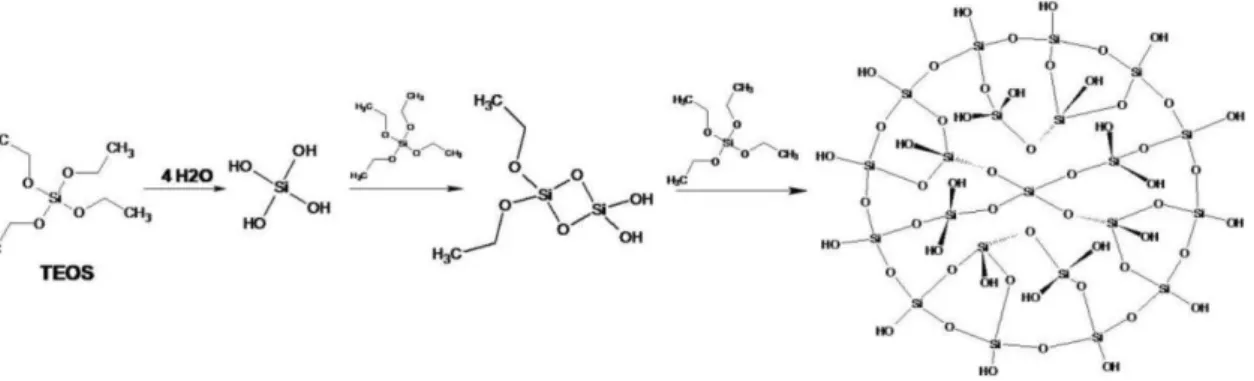
Figure 1.4. Hydrolysis and condensation reaction of TEOS described for Stöber method. ... 5
Figure 1.5. Illustration of mesoporous material formation (Adapted from Beck et al., 1992). ... 6
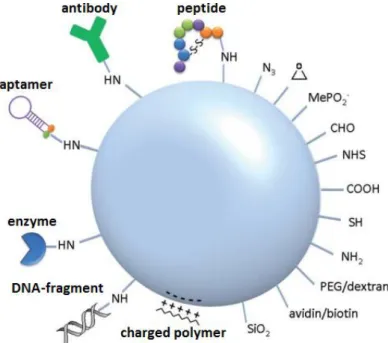
Figure 1.6.Schematic illustration of silica nanoparticles’ surface functionalization with various functional groups and (bio)molecules (Adapted from Schulz et al., 2012). ... 7
Figure 1.7. Functionalization in different regions of MSN: (a) at the external surface, (b) at the pore entrances, or (c) within the walls (Slowing et al., 2010). ... 7
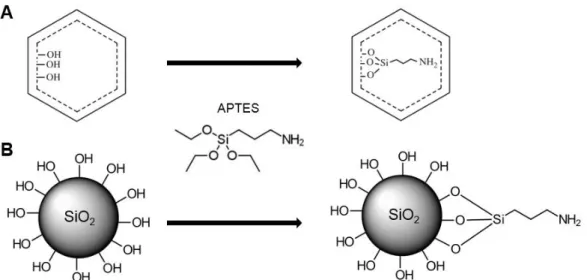
Figure 1.8. Schematic amine internal (A) and external (B) surface functionalization with APTES molecule. ... 8
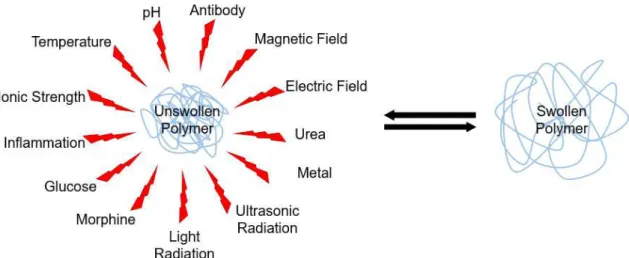
Figure 1.9. Stimuli that can induce polymeric conformational transitions. ... 9
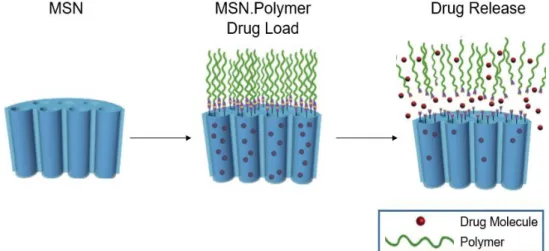
Figure 1.10. Adaptation of the schematic illustration of drug loading and release by core-shell mesoporous silica nanoparticle coated with a polymer (Adapted from Wang et al., 2009). ... 11
Figure 1.11. General structure of RAFT agent (A), trithiocarbonate (B) and dithioester (C). .... 12
Figure 1.12.2,2′-Azobis(2-methylpropionitrile) AIBN decomposition reaction. ... 12
Figure 1.13. Schematic illustration for hybrid mesoporous silica nanoparticles prepared during this project. ... 14
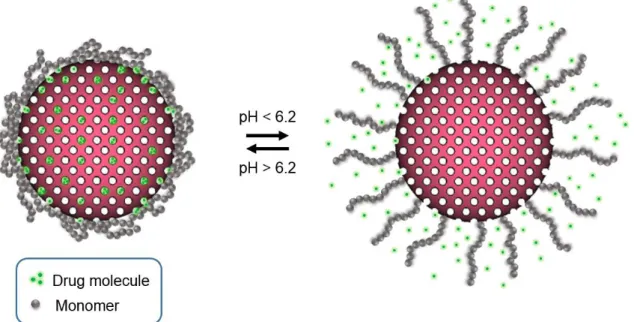
Figure 1.14. Schematic illustration of controlled drug release by MSN.P(DPAEM). ... 16
Figure 2.1. APTES surface modification scheme. ... 20
Figure 2.2. CTA Immobilization scheme on MSN surface. ... 20
Figure 2.3. Condensation reaction. ... 21
XVI
Figure 3.2. TEM images obtained for MSN.PDI D with surfactant (A) and for MSN.PDI D withsurfactant removed (B) with a “zoom in” for better visualization of mesostructure. ... 24
Figure 3.3. UV-Vis Spectrum for MSN.NH2 adjusted (grey) and for MSN.RAFT (on green). ... 26
Figure 3.4. 1H NMR spectra recorded at 400 MHz of DPAEM in chloroform. ... 28
Figure 3.5. The 1H NMR spectra recorded at 400 MHz of P(DPAEM) II prepared in chloroform. ... 29
Figure 3.6. Transmittance spectrum for P(DPAEM) I sample at different pH. ... 30
Figure 3.7. Transmittance at 500 nm of P(DPAEM) as a function of pH. The pH was increased
by adding 1 M NaOH (●) and decreased by adding 0.1 M HCl (▲). ... 31
Figure 3.8. TEM images obtained for MSN D.P(DPAEM) I (A), MSN E.P(DPAEM) II b (B),
MSN E.P(DPAEM) III a (C), MSN C.G P(DPAEM) I (D) and MSN F.G P(DPAEM) I (E). ... 33
Figure 3.9. 1H NMR spectrum for P(DPAEM) I grafting from polymerization on MSN B (MSN D.P(DPAEM) I). ... 34
Figure 3.10. 1H NMR spectra of P(DPAEM) I grafting to on MSN F surface (MSN F.G P(DPAEM) I). ... 35
Figure 3.11. FT-IR spectra of MSN.RAFT (a), MSN.P(DPAEM) I (b) and free P(DPAEM) I (c)
samples. ... 36
Figure 3.12. Electrokinetic charge expected for the hybrid systems at different pH values... 37
Figure 3.13. ζ-potential titrations for MSN (♦), MSN.APTES (■), MSN.RAFT(▲) and
MSN.P(DPAEM) II b (●). ... 38
Figure 3.14. ζ-potential titrations for MSN (♦), MSN.APTES(■) and MSN.G P(DPAEM) I (●). .. 38
Figure 3.15. Cell viability obtained by MTT assay for MSN.P(DPAEM) II b (dark grey) and
MSN.G P(DPAEM) I (light grey) with different concentrations during 24 h. ... 39
Figure a.1. Size distribution by intensity obtained by DLS for MSN D.P(DPAEM) I (red),
MSN E.P(DPAEM) II a (green) and MSN E.P(DPAEM) II b (blue)………a
Figure a.2. Size distribution by number obtained by DLS for MSN D.P(DPAEM) I (red),
MSN E.P(DPAEM) II a (green) and MSN E.P(DPAEM) II b (blue)………a
Figure a.3. Correlogram obtained by DLS for MSN D.P(DPAEM) I (red),
XVII
Figure a.3. Cumulants fit obtained by DLS for MSN D.P(DPAEM) I (red),MSN E.P(DPAEM) II a (green) and MSN E.P(DPAEM) II b (blue)………b
Figure b.1. Size distribution by intensity obtained by DLS for MSN E.P(DPAEM) III a (red) and
MSN E.P(DPAEM) III b (green), MSN C.G P(DPAEM) I (blue),
MSN F.G P(DPAEM) I (black) and MSN E.P(DPAEM) III a (pink)………c
Figure b.2. Size distribution by number obtained by DLS for MSN E.P(DPAEM) III a (red) and MSN E.P(DPAEM) III b (green), MSN C.G P(DPAEM) I (blue), MSN F.G P(DPAEM) I (black)
and MSN E.P(DPAEM) III a (pink)……….c
Figure b.3. Correlogram obtained by DLS for MSN E.P(DPAEM) III a (red) and MSN
E.P(DPAEM) III b (green), MSN C.G P(DPAEM) I (blue), MSN F.G P(DPAEM) I (black) and
MSN E.P(DPAEM) III a (pink)………d
Figure b.4. Cumlants fit obtained by DLS for MSN E.P(DPAEM) III a (red) and MSN E.P(DPAEM)
III b (green), MSN C.G P(DPAEM) I (blue), MSN F.G P(DPAEM) I (black) and
XIX
Scheme Index
Scheme 1.1. General scheme for hydrolysis (A) and condensation (B) and (C) in sol-gel. ... 4
XXI
Table Index
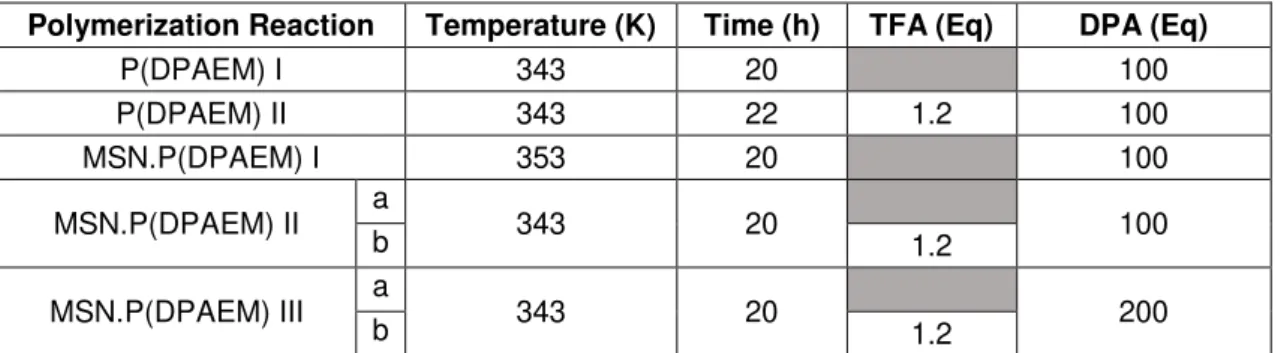
Table 2.1. Temperature, time and TFA equivalent used for the different polymerization
reactions ... 21
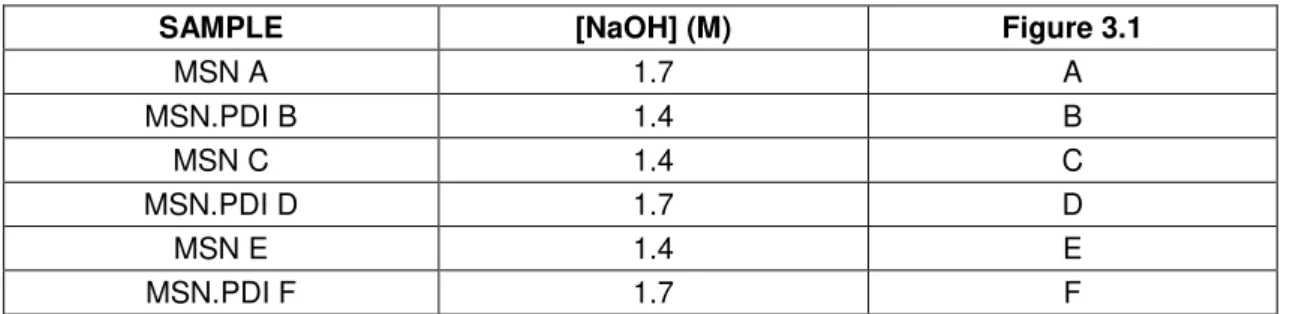
Table 3.1. Catalyst concentration (NaOH) used for the synthesis of each sample and its correspondent TEM image in figure 17. ... 22
Table 3.2. MSN diameter average and its standard deviation obtained by DLS and TEM. ... 25
Table 3.3. APTES concentration on the MSN surface, calculated by 1H NMR. ... 26
Table 3.4. RAFT concentration calculated through the Lambert-Beer equation. ... 27
Table 3.5. ζ-potential of MSN samples on every step of its surface modification measure at pH=5. ... 27
Table 3.6. Monomer and CTA molecular weight used for calculate Mn,NMR ... 29
XXIII
Abbreviation List
Abs Absorbance
AIBN 2,2′-Azobis(2-methylpropionitrile)
APTES (3-Aminopropyl) triethoxysilane
ATRP Atom Transfer Radical Polymerization
CMC Critical Micellar Concentration
CP Chain Polymerization
CRP Controlled Radical Polymerization
CSIRO Commonwealth Scientific and Industrial Research Organisation
CTA Chain Transfer Agent
CTAB Hexadecyltrimethylammonium Bromide
DH Hydrodynamic Diameter
DI Deionized
DLS Dynamic Light Scattering
DPAEM 2-(diisopropylamino)ethyl methacrylate
DTEM Diameter obtained by Transmission Electronic Microscopy
EDC N-(3-dimethylaminopropyl) -N′-ethylcarbodiimide
FT-IR Fourier Transform Infrared
H1 NMR Pronton Nuclear Magnetic Resonance
MCM-41 Mobil Composition of Matter Number 41
MSN Mesoporous Silica Nanoparticles
MSN.APTES Mesoporous Silica Nanoparticles Surface Modified with APTES
MSN.RAFT MSN.APTES linked to RAFT Agent
XXIV
MSN.G P(DPAEM) MSN coated with DPAEM polymer obtained by grafting toMW Molecular Weight
NMP Nitroxide-Mediated Polymerization
NNI National Nanotechnology Initiative
P(DPAEM) Poly (2-(diisopropylamino)ethyl methacrylate)
PBS Phosphate Buffered Saline
PDI Perylenediimide
IEP Isoelectric Point
pKa Acid Dissociation Constant
RAFT Reversible Addition-Fragmentation Chain Transfer
RP Radical Polymerization
TEM Transmission Electronic Microscopy
TEOS Tetraethyl Orthosilicate
TFA Tetrahydrofuran
THF Tetrahydrofuran
UV Ultraviolet
XXV
Unit List
Da Dalton
Eq Equivalent
g; mg Grams; milligrams (10-3 g)
h; min; s hours; minutes; seconds
K Kelvin
kV; mV Kilovolts (103 V); millivolts (10-3 V)
L; mL Litre; millilitre (10-3 L)
M Molar
m, cm, μm, nm meter; centimeter (10-2 m); micrometer (10-6 m); nanometer (10-9 m)
MHz Megahertz
mol; mmol Mol; millimol (10-3 mol)
MΩ Megaohm
ppm Parts per million
rpm Rotations per minute
XXVII
Symbol List
[AIBN] AIBN concentration
[APTES] APTES concentration
δ Bending vibration
c Concentration
ρ Conversion
MCTA CTA MW
[CTA]0 Initial CTA concentration
[M]0 Initial Monomer concentration
l Length
ε Molar Absorptivity
Mmon Monomer MW
[NaOH] NaOH concentration
Mn Polymer MW
Ν Stretching vibration
Λ Wavelength
1
1. Introduction
The nanotechnology concept appears in 1959 with the physicist Richard Feynman in a lecture
entitled “There’s Plenty of Room at the Bottom”, where he refers for the first time the possibility of handling materials in a nanoscale by using atomic and molecular units (Feynman, 1959;
Goodsell, 2004; “National Nanotechnology Initiative”, 2015; Singh, 2010). Nowadays,
nanotechnology is known as a multidisciplinary scientific field that involves the manipulation of
matter to design and engineer devices at the nanoscale, according to the National
Nanotechnology Initiative (NNI) between 1 and 100 nm range at least in one dimension (Ferrari,
2005; Jain, 2005; “National Nanotechnology Initiative”, 2015). The interest in those materials lies
in their great potential applications in several disciplines due to their unique physical and chemical
properties derived from their nano size (Ferrari, 2005; Jain, 2005; Mousa et al., 2011; Singh, 2010).
In bio-nanotechnology, the development of healthcare devices has a great impact for its
applications in diagnostics and therapeutics, by mimicking the “magic bullet concept”, proposed
by Paul Ehrlich (Strebhardt et al., 2008; Li et al., 2012). This idea arises from the concern about low specificity and effectiveness due to the difficulties displayed by drugs in order to overcome
the biological hurdles until reaching their target. Nevertheless, it is possible to overcome those
pharmacokinetic and pharmacodynamics issues with selective and effective delivery systems by
using nanocarriers, enhancing the efficiency and reducing the side effects (Argyo et al., 2013; Cuenca et al., 2006; Ferrari, 2005; Jain, 2005; Li, 2012; Mousa et al., 2011; Singh, 2010; Tan et al., 2004). Besides avoiding adverse side effects and increasing selectivity and specificity, drug delivery systems (DDS) have a great potential for personalized medicine on behalf of
eradicating complex diseases, such as cancer, by integrating on the same dispositive detection,
treatment, and monitoring of the disease in real time. These bionanotechnological devices are
meant to replace invasive conventional methods used to track and treat diseases (Ferrari, 2005;
Mousa et al., 2011; Singh, 2010).
Several nanocarriers (Figure 1.1) have been developed in the field of nanomedicine classified as
organic (liposomes, biodegradable polymers, dendrimers, carbon nanotubes, etc.), inorganic
(quantum dots, inorganic nanoparticles, etc.) or hybrid (with two different compounds). These
systems are able to improve the methods used for diagnostics and therapeutics by having in mind
biocompatibility and biodegradability of the materials used in nanocarriers fabrication (Cuenca et al., 2006; Mousa et al., 2011; Singh, 2010).
Nanoparticles have shown a great potential in medicine not only due to its unique chemical and
physical properties derived from their nano size, but also due to its maximum surface to volume
ratio that allowing surface functionalization as well as the incorporation of a therapeutics load. All
these features enable better access to the target as compared to conventional nanocarriers.
Therefore, the use of nanoparticles as DDS improves tissue selectivity uptake and provides drugs
2
Figure 1.1. Examples of different organic, inorganic and hybrid nanocarriers.1.1. Mesoporous Silica Nanoparticles
The importance of silica nanoparticles rises from its unique properties such as mechanical
strength, permeability, thermal and chemical stability, low refractive index, high surface area as
well as its versatile surface chemistry. The last two properties allow bioconjugation with other
molecules through surface modification, either by the reaction the silanols groups (at the surface
of the nanoparticle) or by adsorption on the surface. Apart from the previously mentioned
characteristics, size, shape, and inner structure can be tuned accordingly to the desired
application (Ahmadi et al., 2014; Argyo et al., 2013; Huh et al., 2003; Li et al., 2012; Schulz et al., 2012; Slowing et al., 2006; Trewyn et al., 2007; Vallet-Regí, 2012; Wang et al., 2009). This discovery was made by Mobil Oil Corporation in 1992 through the development of highly ordered
mesoporous silica materials known as Mobil Composition of Matter Number 41 (MCM-41) (Argyo
et al., 2013; Trewyn et al., 2007; Vallet-Regí, 2012). Those materials are characterized by uniform cylindrical pores with tuneable diameters (between 2 and 50 nm) which result in a large pore
volume and high surface area (700–1500 m2/g) and large pore volume (1 mL/g). All these features make them ideal materials for DDS, making possible to host several molecules inside the pores,
regardless of their nature (Argyo et al., 2013; Trewyn et al., 2007; Vallet-Regí, 2012).
Mesoporous silica nanoparticles for DDs requires controlling the diameter of the nanoparticles,
as well as the volume, shape and organization of the mesopores, depending on its application
(Figure 1.2). These modifications can be performed by tuning different parameters, such as the
template, temperature, pH, etc. (Argyo et al., 2013; Trewyn et al., 2007; Vallet-Regí, 2012).
3
It is worth mentioning that the tridimensional network that constitutes these particles is formed bysilanol groups (Si-OH) throughout the whole particle surface (including the surface of the pores)
and by siloxane groups (≡Si-O-Si≡) inside the network, rendering these particles a hydrophilic behaviour (Ahmadi et al., 2014; Tan et al., 2004; Vallet-Regí, 2012).
The thermal and chemical stability, controllable morphology, easiness of synthesis and
functionalization, low toxicity, biodegradability and biocompatibility, combined with high loading
capacity, make these materials perfect candidates for application in therapy and diagnosis
(theranostics) (Ahmadi et al., 2014; Argyo et al., 2013; Vallet-Regí, 2012). For particle sizes between 50-160 nm, the cellular uptake efficiency has been proven to supports, even more, the
evidence of the capacity of these materials for the referred purposes
(Zhu et al., 2013).
1.2.
Silica Nanoparticle Synthesis
The several methods that have been developed to obtain nanoparticles can be categorized into
two main approaches: top-down and bottom-up. The top-down approach, also known as physical
approach, is based on reducing the dimension of the original material by using physical
techniques. On the other side, the bottom-up or chemical approach involves the decomposition
of the precursor into atoms or molecules which nucleate and grow producing a colloid solution
(Cunningham et al., 2013; Chaudhuri et al., 2011; Storhoff et al., 1997).
The bottom-up approach is becoming widely used since this versatile technique allows the
production of structures on a small-scale and complex architecture, never achieved before with
the top-down approach. Moreover, unlike the top-down approach, such technique permits large
scale and faster production without requiring expensive equipment. The most common methods
based on bottom-up approach are: flame synthesis, reverse microemulsion, and sol-gel process
(Chaudhuri et al., 2011; Tan et al., 2004).
1.2.1. Sol-Gel Synthesis
The sol-gel is the best technique to obtain more efficiently organized structures, control size
distribution and morphology. It uses liquid solutions of synthetic raw materials with low viscosity,
allowing high purity, great homogenization at the molecular level, and requires lower
temperatures than other procedures, avoiding vaporization losses and phase transformations.
The production of homogenous structures by controlling physical-chemical variability is the goal
of the sol-gel processing in order to control the surface and interface characteristics of the material
4
The synthesis of silica nanoparticles is usually based on this procedure due to its ability to easilycontrol particle size, size distribution, and morphology by simply monitoring the reaction
parameters. The sol-gel synthesis can be performed using either acidic (hydrochloric acid, nitric
acid, etc.) or basic conditions (sodium or ammonium hydroxide) to catalyse the hydrolysis of the
silica precursor, yielding a colloidal solution (sol) constituted by silanol groups (Scheme 1.1 - A). Two types of silica precursors are usually used for silica nanoparticles synthesis: inorganic salts
(sodium silicates) or metal alkoxides (tetra-alkyl oxide of silane). Afterwards, the condensation
between the silanol groups (Scheme 1.1 - B) or between silanol groups and ethoxy groups
(Scheme 1.1 - C) originates siloxane bridges (Si-O-Si) that establish the silica network (gel) (Green et al., 2003).
Scheme 1.1. General scheme for hydrolysis (A) and condensation (B) and (C) in sol-gel.
Great efforts have been made to synthesise monodispersed and well define size and shape silica
nanoparticles for research applications, offering experimental and theoretical advantages by
simplifying data analyses and understand physiochemical properties and physiopathological
effects of those particles (Stöber et al., 1968).
1.2.1.1.
Stöber MethodA pioneering method for the synthesis of monodispersed spherical silica particles was reported
for the first time by Stöber et al. This method allows a controlled synthesis, obtaining spherical silica nanoparticles by using aqueous alcohol solutions of silica alkoxides, such as tetraethyl
orthosilicate (TEOS, see figure 1.3), as silica precursor and ammonia as basic catalyst, producing
particles with diameter from 5 to 2000 nm. The silica particle size is a function of the initial
concentration of water and ammonia, the type of silicon alkoxides and alcohol used and reactant
temperature (Stöber et al., 1968; Tan et al., 2004)
Figure 1.3. Chemical formula for silica precursor tetraethyl orthosilicate (TEOS). A. Hydrolysis ≡ Si – OR + H2O ↔≡ Si – OH + ROH
B. Alcohol condensation ≡ Si – OR + HO –Si ≡ ↔ ≡ Si – O –Si ≡ + ROH
5
As mentioned above, the mechanism of reactions to synthesize silica particles involves thehydrolysis and condensation of the silica precursor. In the Stöber method (Figure 1.4), an ethanol
solution of TEOS hydrolises in the presence of ammonium hydroxide and water followed by the
water and alcohol condensation between silanol groups or between silanol groups and ethoxy
groups, respectively. This condensation gives place to siloxane bridges which establish the silica
network (Green et al., 2003).
Figure 1.4. Hydrolysis and condensation reaction of TEOS described for Stöber method.
Indeed, the approaches used in the synthesis of monodispersed silica nanoparticles evolved from
the Stöber method, by varying the silica alkoxides, the catalyst, temperature, etc.
1.2.1.2.
Mesoporous Silica Nanoparticles SynthesisIn order to obtain monodispersed mesoporous silica nanoparticles (MSN) Grün et al. (Grün et al., 2000) developed a synthesis procedure based on the Stöber method, by modifying the Stöber
synthetic compositions through adding a cationic surfactant to the reaction mixture, reaching to
submicrometer-scaled MCM-41 spherical particles (Huh et al., 2003; Soler-Illia et al., 2011; Trewyn et al., 2007; Vallet-Regí, 2012).
Since then, the synthesis of mesoporous silica nanoparticles has been performed by using a
surfactant in aqueous solution on order to take place the micelle’s assembly (Figure 1.5 - A).
When the surfactant concentration is higher than the critical micellar concentration (CMC), the
surfactant molecules associate spontaneously, originating molecular aggregates, known as
micelles, with several structures such as cylinders (Figure 1.5 - B). The formation and the
dispersion of those structures in solution provide a template for the condensation of silica (Figure
1.5 - C). The addition of the catalyst and silica precursor to the solution originates the hydrolysis
of the silica precursor and its condensation around the template (Figure 1.5 - D). Once removed
the surfactant by calcination or acid extraction, the resultant particles are characterized by a
6
Figure 1.5. Illustration of mesoporous material formation (Adapted from Beck et al., 1992).Several synthetic methods have been reported in order to control nucleation and growth
mechanism, to achieve an efficient synthesis of monodisperse MSN sizes and shape with
well-defined mesostructures. The difference between the used methods lies on the variation of
some parameters such as pH, temperature, solvents or catalysts and precursors. Yet, several
compounds can be used as surfactant agents, all constituted by a hydrophobic head and a
hydrophilic tail, exhibiting an amphiphilic behavior. Through the management of the surfactant
structure, concentration or conditions of the solution it is possible to tune the shape and size of
those nanoparticles’ mesostructure (Argyo et al., 2013; Soler-Illia et al., 2011; Tang et al., 2012; Trewyn et al., 2007; Zhao et al., 2009).
1.2.2. Surface Modification
The interest on MSNs applications in biomedicine, namely as drug delivery systems, drug
targeting, gene transfection, tissue engineering or cell tracking, requires controlling the surface
properties, improving drug uptake as well as enhancing its biocompatibility (Ahmadi et al., 2014; Argyo et al., 2013; Popat et al., 2011; Schulz et al., 2012; Slowing et al., 2006; Tan et al., 2004; Trewyn et al., 2007; Vallet-Regí, 2012). In this way, it is possible to take advantage of its unique structure distinguished by high internal volume, narrow channels and a large surface area,
characterized by the presence of silanol groups. This surface chemistry allows the
functionalization with coupling groups (amine, carboxylic or thiol groups) providing active sites for
attaching other molecules of interest (Figure 1.6) to MSN surface (Ahmadi et al., 2014; Argyo et al., 2013; Tan et al., 2004; Trewyn et al., 2007).
The functionalization of MSN’s surface is attained using a modifying agent, usually an organo -substituted trialkoxysilane RSi(OR´)3. The hydrolyzable group (OR’) reacts with the silanol groups
located on the nanoparticle surface, anchoring the molecule covalently to the MSN surface. On
the other hand, the R group brings new physicochemical properties to the MSN surface, providing
it with new functionalities (Zou et al., 2008). The modifying agent can be assembled to MSN surface by two different approaches, by co-condensation while the MSN is synthesized or by
post-synthesis grafting. The co-condensation approach is characterized by a homogeneous
distribution of the functional groups throughout the entire material, while with the grafting method
approach the functional groups are mostly located on the external surface or at the proximities of
7
Figure 1.6.Schematic illustration of silica nanoparticles’ surface functionalization with various functionalgroups and (bio)molecules (Adapted from Schulz et al., 2012).
The grafting approach provides MSN with different regions of functionalization (Figure 1.7). The
external surface (Figure 1.7 – a), as well as the pore entrance (Figure 1.7 – b), can be
functionalized, while the surfactant is inside of the pores avoiding the internal functionalization,
with moieties that improve biocompatibility, colloidal stability, and cellular uptake, allowing the
detection and control drug release or even carry therapeutics. After the external surface
modification, the surfactant can be removed, turning the pores available to host molecules or to
internal functionalization (Figure 1.7 - c), increasing drug uptake by modifying interactions
between the hosted molecules and the mesoporous silica nanoparticles medium (Argyo et al., 2013; Slowing et al., 2010; Vallet-Regí, 2012).
8
It is known that the uptake and release of drugs are dependent on the type of functional groupsfound at MSN surface and consequently to the of interaction between this groups and the drug
molecules. Therefore, the aim of MSN’s functionalization on biomedicine field is to ensure better
drug delivery, higher adsorption of the drug as well as retain the drug release until it reaches the
target,improving effectiveness and minimizing drug adverse effects. In addition, the versatility of
the silica surface has been used to immobilize different functional groups as needed for
biosensing, bioimaging applications and to improve cellular uptake (Ahmadi et al., 2014; Argyo et al., 2013; Natarajan et al., 2014; Popat et al., 2011; Slowing et al.,2006; Tan et al., 2004; Trewyn et al., 2007).
Amine functionalized mesoporous silica materials have been largely studied for its high
adsorption capacity, turning it into an ideal drug delivery medium (Ahmadi et al., 2014; Slowing et al., 2010; Vallet-Regí, 2012). A good example of an amine modifying agent is (3-Aminopropyl) triethoxysilane (APTES), allowing the amine group to cover MSNs surface (Figure 1.8), allowing
the subsequent drug loading or even the incorporation of other organic molecules, such as
polymers (Ahmadi et al., 2014).
Figure 1.8. Schematic amine internal (A) and external (B) surface functionalization with APTES molecule.
1.3.
Polymer-based Controlled Release Systems
Originally, polymers’ application in the field of pharmacology intended to stabilize drugs and turn
them soluble in physiological conditions (Kim et al., 2009). Nevertheless, the development of new monomers and the better understanding of polymers’ behavior have increased interest for its
applications as controlled release systems due to its solubility, biocompatibility and capacity of
modulating its structure as a response to determine metabolic states or physiological variations.
Slight variations in the surrounding environment (pH, temperature, ionic strength, light and redox
potential) cause extreme changes in the polymers’ microstructure (Figure 1.9), modifying its
9
Figure 1.9. Stimuli that can induce polymeric conformational transitions.Usually, polymer response is based on the formation/breaking of hydrogen bonds or/and
electrostatic interactions or acid-base equilibria, leading to chain modifications on its size,
secondary structure, solubility or intermolecular association (Cabane et al., 2012; Dai et al., 2008; Gupta et al., 2002).
More specifically, the pH-responsive polymers’ behavior is related with the ionizable groups
present on its structure, which are able to accept and donate protons in response to pH
environmental changes. When a specific pH (pKa) is achieved, a dramatic transformation of the
net charge occurs which causes a change of the hydrodynamic volume of the polymer chains.
The osmotic pressure exerted by mobile counter ions that neutralize the network charges is
responsible for the transition from collapsed to the expanded structure (Bawa et al., 2009; Cabane et al., 2012; Dai et al., 2008; Gil et al., 2004; Gupta et al., 2002; Huh et al., 2012; Schmaljohann, 2006).
There are four main types of pH-responsive polymers (Gil et al., 2004):
A) Polyacids: their carboxylic pendant groups accept protons at low pH and release them at
high pH. Therefore, they are converted into polyelectrolytes at high pH with electrostatic
repulsion forces between the molecular chains. At that pH, a transition from hydrophilic
(swollen) polymers into hydrophobic (unswollen) polymers occurs.
B) Polybases:The amine groups in their side chains are responsible for its sensitive pH
response, which accept protons under acidic condition and loose them under basic
condition.
C) pH -responsive degradable polymers: under specific pH (normally mildly acidic
conditions) show fast degradation kinetics, while they are stable at physiological pH.
D) Biopolymers and artificial polypeptides: weakly ionizable polysaccharides, such as
alginate and chitosan, show pH-responsive phase transition.
The critical pH (pKa) where reversible conformation changes happen can be adjusted depending
on polymer application, by the incorporation of a hydrophobic moiety into the polymer backbone
10
The use of these polymers as drug delivery systems increases drug efficiency since they arereleased in specific conditions enhancing the therapeutic effect. Furthermore, as mentioned
before, the use of polymers improves the solubility and biocompatibility of the drug or the material
inside its structure (Cabane et al., 2012; Gupta et al., 2002; Kim et al., 2009).
Regarding biomedical applications, pH is an important environmental parameter, since pH
changes occur in many specific or pathological compartments. More precisely, extracellular
tumour tissue has shown a pH decrease (6.5 ~ 7.2) compared with healthy tissue. This enables
the possibility to develop smart polymeric devices to carry anti-cancer treatment which respond
to acidic conditions that characterize the tumour tissue (Bawa et al., 2009; Cabane et al., 2012; Dai et al., 2008; Huh et al., 2012; Kim et al., 2009).
1.4.
Hybrid Nanoparticles
Despite the fact that nanoparticles have been frequently used in the field of biomedicine through
many years, they present some restrictions that can be overcome through the conjugation with
another type of material (hybrid nanoparticles). Core-shell nanoparticles have been extensively
studied due to their wide range of possible combinations (inorganic – inorganic, inorganic –
organic, organic – inorganic and organic – organic) that yield hybrid materials with improved
properties (Singh et al., 2011).
As mentioned before, mesoporous silica nanoparticles exhibit some interesting properties
regarding its application in biomedicine (See 1.1). However, the hydrophilic groups (silanol
groups) located on the silica surface interact with cell membranes and promote reaction between
particles through hydrogen bonds, inducing aggregation and disturbing nanoparticles’
physicochemical properties behavior (Singh et al., 2011). It is possible to overcome this pitfall by coating silica with a polymer, bringing not only the needed stability as well as improving
biocompatibility and some other properties very useful for the biomedical applications (Argyo et al., 2013; Liu et al., 2009; Singh et al., 2011; Zhao et al., 2009).
Hybrid nanoparticles composed by silica-polymer core-shell are hard to obtain, due to the
incompatibility between inorganic-organic materials. Usually, the synthesis of these hybrid
nanoparticles is assisted by functionalization of silica surface (as described on 1.2.2), increasing
compatibility as well as interactions between the two phases (Santiago et al., 2015; Singh et al., 2011).
Core-shell mesoporous silica nanoparticles coated with a polymer (Figure 1.10) have a great
potential as drug delivery systems by combining drug hosting inside mesoporous silica structure
with simultaneous higher biocompatibility, system stability and control the drug release
11
Figure 1.10. Adaptation of the schematic illustration of drug loading and release by core-shell mesoporoussilica nanoparticle coated with a polymer (Adapted from Wang et al., 2009).
1.5.
Control Radical Polymerization
In the last two decades, great efforts have been made in order to obtain (co)polymers with
well-defined weight and low polydispersity, as the polymers obtained by ionic chain
polymerization, in relatively simple conditions that radical polymerization approach offers.
Controlled Radical Polymerization (CRP) rises as the ideal approach to obtain polymers with a
controlled structure in quite simple conditions by using the intermittent formation of active
propagation species (Favier et al., 2006; Gaynor et al., 1994; Matyjaszewski, 1996; Odian, 2004; Vega-Rios et al., 2011).
There are three main CRP techniques, namely atom transfer radical polymerization (ATRP),
nitroxide-mediated polymerization (NMP) and reversible addition-fragmentation chain transfer
(RAFT) (Moad et al., 2005; Odian, 2004).
Reversible addition fragmentation chain transfer (RAFT) polymerization was first reported by
CSIRO group in 1998 and it has been shown to be a highly effective and versatile method of
controlled radical polymerization. Unlike other CRP, this technique is able to induce living
behavior on a wide range of monomers in the same conditions as used in radical polymerization
reaction (initiators, solvents, and reaction temperature) by adding an appropriate RAFT agent,
leading to the synthesis of several polymers with a controlled MW and well-defined structure
(Favier et al., 2006; Moad et al., 1998; Odian, 2004; Vega-Rios et al., 2011).
This method provides living characteristics to radical polymerization through a reversible addition-fragmentation reaction mediated by chain transfer agents (CTAs), as thiocarbonylthio groups
(S=C-S). CTAs, unlike radical polymerization, are capable of reversibly deactivate propagation
radicals, maintaining the majority of the living chain in dormant form, providing living character to
this kind of reaction. It is important to achieve the right conditions to support a fast equilibrium
12
The importance of the living character of RAFT technique lies in the slight polydispersity betweenpolymers obtained, the linear MW conversion profile, the MW predictability
(Equation 1.1) and the capacity of producing blocks or higher MW polymers merely by adding
more monomer (Favier et al., 2006; Moad et al., 1998; Odian, 2004; Vega-Rios et al., 2011).
M
n≅
[M]0 × M[CTA]mon0 × ρ+ M
CTA(1.1)
Where [M]0 is the initial monomer concentration, Mmon is the molecular weight of the monomer, ρ is the conversion, MCTA is the molecular weight of the CTA, and [CTA]0 is the initial concentration of the CTA (Vega-Rios et al., 2011).
According to the monomers, as well as the conditions used in the polymerization, it is important
to choose the right CTA to obtain the desired polymeric architecture. The CTA molecular structure
is composed by a trithiocarbonate and dithioester (figure 1.11), providing specific characteristics
to the CTA agent and controlling reaction kinetics. Free radical leaving group (R) must be able to
reinitiate polymerization and the bond between R and S should be weak. The rate of radical
addition and fragmentation depends on C=S reactive bond that is controlled by the Z group. Since
Sigma-Aldrich started selling different CTAs, research on this field has increased significantly
(Favier et al., 2006; Moad et al., 1998; Odian, 2004; Vega-Rios et al., 2011).
Figure 1.11. General structure of RAFT agent (A), trithiocarbonate (B) and dithioester (C).
This reaction is characterized by three events: initiation, propagation, and termination. The
initiator 2,2′-Azobis(2-methylpropionitrile) (AIBN) is highly used in RAFT polymerization, being decomposed by UV irradiation or thermally, giving rise to a nitrogen molecule and two free
radicals (2R*) (figure 1.12) (Moad et al., 2005).
13
The radical obtained in the first step of initiation (R*) reacts with a monomer, producingpropagation radicals (Pn∙) (Scheme 1.3 – A). The particularity of RAFT polymerization is found in
the propagation step, where chain activation/deactivation equilibrium takes place. In this case,
the propagation radical (Pn∙) binds to RAFT agent by its addition into the thiocarbonyl group of
the dithioester (Scheme 1.3 – B.1), generating intermediate radicals (Scheme 1.3 – B.2). The
decomposition of the intermediate radicals yields a polymeric dithioester and the R group release
(Scheme 1.3 – B.3). Then, the R group reinitiates the cycle by reacting with a monomer molecule,
originating a new propagation radical (Pm∙) (Scheme 1.3 – C). At this point, an equilibrium between
propagating radicals (Pn∙ and Pm∙) and the dormant forms (Scheme 1.3 – D.4) is established,
allowing an excellent control over the polymeric chain growth, leading to a very narrow MW
distribution. Finally, the termination occurs by the deactivation of the propagating chain without
the formation of a new radical (Scheme 1.3 – E) (Favier et al., 2006; Moad et al., 2005; Odian, 2004; Vega-Rios et al., 2011).
Some disadvantages can be identified in this procedure, since the polymers obtained by RAFT
polymerization have the dithioester as end group which can be related with odors and colour.
Several methods have been used in order to remove/transform the dithioester end group by
hydrolysis, radical-induced reactions, thermal elimination or even UV radiation. Those
transformations can be used in order to improve the obtained polymer properties according to its
future application. Therefore, block copolymers and end functional polymers synthesis is possible
by this method (Favier et al., 2006; Moad et al., 2005; Odian, 2004).
14
RAFT polymerization is of great interest due to the possibility of anchoring the CTA ontonanoparticle surface. This allows the polymers chains to grow from the core nanoparticles
(grafting from method), obtaining polymer brushes grafted on the nanoparticle surface, with controlled thickness and high grafting polymeric density (Huang et al., 2011; Santiago et al., 2015).
1.6.
Objective
The aim of this work was to develop and characterize hybrid mesoporous silica nanoparticles with
silica nanostructured core and a shell of pH-responsive polymer. The biocompatible polymer used
is based on a polybase tertiary amine methacrylate monomer known as 2-(diisopropylamino)ethyl
methacrylate (DPAEM or DPA). A high quantum yield fluorescent perylenediimide (PDI) dye was
incorporated into the MSN pore structure, for monitoring the MSNs, combining diagnostic and
therapeutic properties on a single vector (Ribeiro et al., 2013; Santiago et al., 2015).
15
The MSNs were synthesized, as described in figure 1.13, by the hydrolysis and condensation oftetraethoxysilane (TEOS) around hexadecyltrimethylammonium bromide (CTAB), used as
surfactant, micelles with perylenediimide (PDI) adsorbed in its structure, obtaining fluorescent
MSNs (Rodrigues et al., 2013; Zhao et al., 2009). Then, an amino surface modification was performed with (3-Aminopropyl) triethoxysilane (APTES) (Rodrigues et al., 2013; Santiago et al., 2015), followed by surfactant removal, ensuring the availability of the porous for later molecule
incorporation (Ahmadi et al., 2014; Rodrigues et al., 2013; Vallet-Regí, 2012).
After that, CTA immobilization on MSNs surface was executed by attaching the carboxylic group
of the CTA to the amine group located on MSN surface covalently, using a specific CTA
(3- (benzylsulfanylthiocarbonylsulfanyl) propionic acid) in order to initiate a controlled
2-(diisopropylamino)ethyl methacrylate (DPAEM) monomer polymerization from the surface. This
procedure is known as grafting from. This process allows hybrid MSNs synthesis with great polymeric density, distribution and controlled thickness, obtaining MSN.P(DPAEM) (Gao et al., 2009; Ma et al., 2014; Santiago et al., 2015).
In order to characterize and verify the efficiency of grafting from procedure, some modifications of the procedure of polymer attachment to MSNs surface were performed.
2-(diisopropylamino)ethyl methacrylate RAFT polymerization was accomplished without
nanoparticles on the same conditions and attached, posteriorly, to the MSNs surface. Such
procedure is known as grafting to approach. The same CTA composed by a reactive group on its end chain that links covalently to the MSNs surface was also used. The polymer used for coating
MSN, poly(2-(diisopropylamino)ethyl methacrylate) (PDPAEM), is highly biocompatible and pH
sensitive, with pKa around 6.5.
This hybrid system is a perfect candidate as drug delivery system with interesting applications on
cancer treatment. It is known that tumor tissues present an acidic pH (around 6.5) contrasting to
the normal tissues which pH is around 7.2. This type of systems are able to take advantage of
the conformational transition of this polymer since its transition occurs in between these pH
values. The mechanism expected for controlled drug release is illustrated in figure 1.14. In a
basic/neutral medium (pH > 6.2), the polymeric shell exhibits hydrophobic behaviour due to its
deionization, allowing a collapsed (unswollen) conformation that protects the drug loaded inside
the MSN pores from diffusion. On the other hand, when the medium turns acidic (pH < 6.2), the
polymer ionizes turning into a cationic soluble polyelectrolyte due to the protonation of its amine,
showing an extended (swollen) conformation, that allows a gradual diffusion of the drug molecule
16
Figure 1.14. Schematic illustration of controlled drug release by MSN.P(DPAEM).Transmission Electronic Microscopy (TEM) and Dynamic Light Scattering (DLS) techniques were
used to characterize MSN and MSN.P(DPAEM) dimension and polydispersity. H1 NMR was performed in order to verify and quantify APTES functionalization, to characterize the synthesized
monomer and polymer as well as to verify its presence after being attached to the particles.
UV-Visible Spectroscopy was necessary to quantify CTA as well as to determine P(DPAEM) pH
response behaviour. FT-IR Spectroscopy was analyzed for qualitative characterization of the
hybrid system. Lastly, ζ-Potential (ZP) technique was used, not only to determine surface charge
changes along the surface modification process, but also to understand the charge transition with
17
2. Materials and Methods
2.1. Materials
Absolute Ethanol (99.9 % EtOH, Scharlau, Barcelona, Spain), hexadecyltrimethylammonium
bromide (99 % CTAB, Sigma, St. Louis, MO, USA), sodium hydroxide (Pure NaOH, EKA Pellets,
Bohus, Sweden) and tetraethoxysilane (99 % TEOS, Aldrich, St. Louis, MO, USA) were all used
as received for synthesis of mesoporous silica nanoparticles (MSNs). The deionized (DI) water
was generated using a Millipore Milli-Q system (≥18 MΩcm, Merck, NJ, USA). The dye
incorporated into MSNs, PDI derivative, was synthesized according to the literature (Luo & Lin,
2006).
(3-Aminopropyl) triethoxysilane (98 % APTES, Sigma-Aldrich), without any treatment, was used
for surface modification in dry toluene which was distilled over calcium hydride before use. The
surfactant templates were removed using a 0.5 M hydrochloric acid solution (37 % HCl, AnalaR
NORMAPUR - VWR, Radnor, Pennsylvania) in absolute EtOH.
For chain transfer agent (CTA) immobilization N-(3-dimethylaminopropyl) -N′-ethylcarbodiimide
(98 % EDC, Sigma-Aldrich) in commercial distilled dichloromethane and 3-
(benzylsulfanylthiocarbonylsulfanyl) propionic acid as CTA, synthesized according to the
literature (Stenzel et al., 2003), were used.
In order to synthesize the monomer 2–(diisopropylamino) ethyl methacrylate, hydroquinone
(99 %, Aldrich Chemistry), methacryloyl chloride (97 %, Aldrich), and 2–(diisopropylamino)
ethanol (98 %, Aldrich Chemistry) were all used as received. Also, tetrahydrofuran
(99 % THF, Aldrich) distilled with sodium and dry triethylamine distilled over calcium hydride were
used.
Lastly, for 2–(diisopropylamino) ethyl methacrylate (DPAEM) RAFT polymerization
tetrahydrofuran (99.9 % TFA, Aldrich), azobisisobutyronitrile (AIBN pure) synthesized as
described in the literature and 1,4 - Dioxane previously dried with sodium and distilled were used.
The samples preparation for DLS and ζ-Potential measurement required 3 mL plastic syringes
(B-BRAUN, Germany), sodium dodecyl sulphate (98 % SDS, Aldrich) and cellulose 0.45 μm
cellulose filters (VWR). Disposable capillary cells (DTS1070) (Malvern Instruments,
Worcestershire, UK) were used for ζ-Potential measurements and disposable polystyrene
cuvettes (Brand GMBH, Germany) for DLS measurement. TEM images were acquired by
preparing well-dispersed MSNs and MSN.P(DPAEM) samples and placed in carbon grid (Ted
Pella, USA) by using iTEM software.
For pH-response assays phosphate buffer solution (PBS) was prepared with sodium phosphate
monobasic (98 % NaH2PO4, PanReac AppliChem, Barcelona, Spain) and sodium hydroxide
18
Chloroform-D (99.8 %, Cambridge Isotope Laboratories, MA, USA) and deuterium oxide (D2O99.9 %, Cambridge Isotope Laboratories), supplemented with NaOH and 1,3,5-trioxane (99.0 %,
Fluka, Germany) or PBS, were used for quantitative and qualitative characterization by H1 NMR. UV- Visible Spectroscopy was performed using MSN sample dispersion in quartz cuvettes
(Hellma Analytics, Müllheim, Germany) with 1 cm x 1 cm dimension. Potassium bromide
(KBr 99 %, Aldrich) was used to prepare pellet for FT-IR Spectroscopy.
For in vitro studies human mammary carcinoma cell line MCF-7 from European Collection of Authenticated Cell Cultures (ECACC), Dulbecco's Modified Eagle's medium (DMEM, Thermo
Fisher Scientific, Massachusetts, USA), Fetal Bovine Serum (FBS, Thermo Fisher Scientific),
Penicillin-Streptomycin (Thermo Fisher Scientific) and Thiazolyl Blue Tetrazolium Bromide (MTT,
Sigma-Aldrich) were used. HCl (PanReac AppliChem), 2-propanol (PanReac AppliChem),
Nonidet P-40 (NP40, Sigma) and Dulbecco's phosphate-buffered saline (DPBS, Thermo Fisher
Scientific) were needed to prepare MTT solution and MTT solvent. For cell viability assay cells
were seeded onto the 96 well plates (Corning, New York, USA).
2.2. Equipment
2.2.1. Centrifuge
Avanti J – 30I Centrifuge (Beckman Coulter, California, USA), rotor JA – 30.50 Ti, was used for
washing MSNs. For the centrifugations, 50 mL centrifuge tubes from the same manufacturer were
used. Centrifugal Refrigerator (3-16K) (Sigma Zentrifugen, Osterode am Harz Germany), rotor
12141, was used for washing MSN.PDPAEM. Disposable 10 mL polypropylene tubes were used
for the centrifugations. At the end of the washing process of every MSNs modification procedure,
a sample was taken into a 1.5 mL eppendorf for posterior.
2.2.2. Transmission Electronic Microscopy (TEM)
TEM images were obtained on a Hitachi transmission electron microscope (Hitachi High –
technologies, Tokyo, Japan), model H-8100, with a LaB6 filament (Hitachi) complemented with an
accelerator voltage of 200 kV. A camera KeenView (Soft Imaging System, Münster, Germany)is
incorporated in this equipment, which through iTEM software, allows acquiring TEM images. The
size/dimension, polydispersity, and morphology of the particles were estimated by evaluating at
least 100 nanoparticles by Image J software.
2.2.3. Dynamic Light Scattering (DLS) and
ζ
-potential
Zetasizer Nano ZS (Malvern Instruments, UK), model ZEN3600, with 173º and 90º detector was
used in order to determine hydrodynamic particle radii in solution. The estimation of the
nanoparticles size is based on the dynamic light scattering (DLS) assuming a Brownian
19
2.2.4. Rotary Evaporator
In order to evaporate the solvent on DPA synthesis a Heidolph – Laborota 4000 – Efficient
(Sigma- Aldrich) was used at 313 K and 150 rpm.
2.2.5. UV-Vis Spectroscopy
UV-660 UV-VIS Spectrophotometer (JASCO International, Tokyo, Japan), supplied with a double
monochromator and a photomultiplier detector for higher resolution, was employed for UV-Vis
spectroscopy assays and cell viability assays.
2.2.6.
1H NMR
Proton Nuclear Magnetic Resonance (1H NMR) (δH) spectra were recorded on an AMX-400 instrument (Bruker, MA, USA).
2.2.7. FT-IR Spectroscopy
The Nicolet Impact 400D FT-IR Infrared Spectrophotometer (LabX, Midland, Canada) was used for FT-IR spectroscopy assays.
2.3. Methods
2.3.1. Mesoporous Silica Nanoparticles Synthesis
MSNs were synthesized by a sol–gel modified process. In a 500 mL polypropylene flask, 0.5 g of
CTAB were dissolved in 240 mL of deionized water. Then, 1.75 mL NaOH with the desired
concentration (1.40 M or 1.70 M) and 2.5 mL TEOS (0.88 M) were added dropwise under vigorous
stirring at 353 K and left aged for 2 h. The MSNs were recovered by centrifugation at 30,000 x g
for 10 min at 288 K, and washed three times with distilled water, discarding each time the
supernatant. The solid product obtained by centrifugation was dried at 323 K overnight.
For perylenediimide (PDI) incorporated mesoporous silica nanoparticles (MSN.PDI), a solution of
CTAB (0.5 g) and PDI (6 mg) in 2.5 mL THF was prepared in a 15 mL polypropylene flask and
was left stirring at room temperature until THF be evaporated (approximately 24 h). The obtained
solid was transferred to a 500 mL polypropylene flask and the same protocol described before
20
2.3.2. Mesoporous Silica Nanoparticles Surface Modification
Amino modification of the silica surface was performed by suspending the obtained nanoparticles
in dry toluene (10 mL toluene per 200 mg of MSN) and sonicating it for 15 min. Afterwards,
(3-aminopropyl) triethoxysilane (APTES) was added dropwise (0.468 mL per 200 mg of MSN). The
resulting dispersion was heated at 398 K under reflux for 24 h in an argon atmosphere. Finally,
the MSN.APTES were recovered by centrifugation at 30,000 x g for 10 min at 288 K, and washed
one time with dichloromethane and three times with absolute ethanol, discarding each time the
supernatant. The solid product obtained by centrifugation was dried at 323 K overnight.
Figure 2.1. APTES surface modification scheme.
An acidic ethanol solution (0.5 M HCl, 20 mL of acidic solution for each 500 mg of MSN) was used
to remove surfactant template, by re-suspending MSN.APTES on this solution and sonicating it.
Subsequently, it was left under stirring at 313 K for 24 h. MSN were recovered by centrifugation
at 30,000 x g for 10 min at 288 K, and washed four times with absolute ethanol, discarding each
time the supernatant. The solid product obtained by centrifugation was dried at 323 K overnight.
In order to immobilize CTA on the nanoparticles’ surface 10 mL of dry dichloromethane was added
for each 500 mg of MSN into a 25 mL flask under the argon atmosphere and sonicated for 20
min. Then, 0.136 g of 3-(benzylsulfanylthiocarbonylsulfanyl) propionic acid (1 Eq APTES) and
0.106 mL of EDC (1.2 Eq APTES) were added to the mixture at 273 K, which was left under
stirring with ice at room temperature for 24 h. MSN.RAFT were recovered by centrifugation at
30,000 x g for 10 min at 288 K, and washed three times with absolute ethanol, discarding each
time the supernatant. The solid product obtained by centrifugation was dried at 323 K overnight.
Figure 2.2. CTA Immobilization scheme on MSN surface.
2.3.3. 2
–
(Diisopropylamino) ethyl methacrylate Monomer Synthesis
To a solution of hydroquinone (40 mg) in THF (40 mL) under argon atmosphere was added dry
triethylamine (4 mL, 28 mmol, 1 Eq) and 2- (diisopropylamino) ethanol (4.8 mL, 28 mmol, 1 Eq)
and stirred on ice. Afterwards, methacryloyl chloride (2.8 mL, 28 mmol, 1 Eq) was added dropwise
and the mixture was left under stirring on ice at room temperature for 24 h. The product of the
reaction was filtered on vacuum and the solvent was evaporated until an oil was obtained. Lastly,
in order to separatethe reaction intermediates from the monomer, the oil was distilled at 387 K