Major Article
INTRODUCTION
Corresponding author: Prof. Dr. Bekir Kocazeybek. Cerrahpasa Faculty of Medicine/Department of Medical Microbiology/Istanbul University. Basic Sciences Building, Floor 2, Cerrahpasa Street, 34098 Istanbul, Turkey. Phone: 90 212 414-3000/22417; Fax: 90 212 586-1547
e-mail: [email protected] Received 26 January 2015 Accepted 24 April 2015
Antimicrobial resistance of
Helicobacter pylori
strains to fi ve antibiotics, including levofl oxacin,
in Northwestern Turkey
Reyhan Caliskan
[1],
Hrisi Bahar Tokman
[1],
Yusuf Erzin
[2],
Suat Saribas
[1],
Pelin Yuksel
[1],
Bora Kazim Bolek
[3],
Ecehan Ozge Sevuk
[4],
Mehmet Demirci
[1],
Ozge Yılmazli
[1],
Ozer Akgul
[1],
Fatma Kalayci
[1],
Huseyin Cakan
[5],
Barik Salih
[6],
Kadir Bal
[2]and Bekir Kocazeybek
[1][1]. Cerrahpasa Faculty of Medicine, Department of Medical Microbiology, Istanbul University, Istanbul, Turkey. [2]. Cerrahpasa Faculty of Medicine, Department of Gastroenterology, Istanbul University, Istanbul, Turkey. [3]. Medical Laboratory Techniques Program, Vocational School of Health Services, Istanbul Esenyurt University, Istanbul, Turkey. [4]. Faculty of Arts and Sciences, Department of Biology, Fatih University, Instanbul, Turkey. [5]. Institute of Forensic Sciences, Department of Microbiology, Istanbul University, Istanbul, Turkey. [6]. Faculty of Arts and Sciences, Department of Biology, Fatih University, Istanbul, Turkey.
ABSTRACT
Introduction: Antibiotic resistance is the main factor that affects the effi cacy of current therapeutic regimens against
Helicobacter pylori. This study aimed to determine the rates of resistance to effi cacy clarithromycin, amoxicillin, tetracycline,
levofl oxacin and metronidazole among H. pylori strains isolated from Turkish patients with dyspepsia. Methods: H. pylori was cultured from corpus and antrum biopsies that were collected from patients with dyspeptic symptoms, and the antimicrobial susceptibility of
H. pylori was determined using the E-test (clarithromycin, amoxicillin, tetracycline, metronidazole and levofl oxacin) according to
the EUCAST breakpoints. Point mutations in the 23S rRNA gene of clarithromycin-resistant strains were investigated using real-time PCR. Results: A total of 98 H. pylori strains were isolated, all of which were susceptible to amoxicillin and tetracycline. Of
these strains, 36.7% (36/98) were resistant to clarithromycin, 35.5% (34/98) were resistant to metronidazole, and 29.5% (29/98) were resistant to levofl oxacin. Multiple resistance was detected in 19.3% of the isolates. The A2143G and A2144G point mutations in the 23S rRNA-encoding gene were found in all 36 (100%) of the clarithromycin-resistant strains. Additionally, the levofl oxacin MIC values
increased to 32 mg/L in our H. pylori strains. Finally, among the clarithromycin-resistant strains, 27.2% were resistant to levofl oxacin,
and 45.4% were resistant to metronidazole. Conclusions: We conclude that treatment failure after clarithromycin- or levofl oxacin-based triple therapy is not surprising and that metronidazole is not a reliable agent for the eradication of H. pylori infection in Turkey.
Keywords: Helicobacter pylori. Levofl oxacin. Clarithromycin. Amoxicillin. Tetracycline. Metronidazole.
Helicobacter pylori is thought to be involved in the pathogenesis of gastritis, peptic ulcer disease, gastric cancer, mucosa-associated lymphoid tissue lymphoma and various
extra-gastrointestinal manifestations(1) (2) (3). Unfortunately, emerging bacterial resistance causes treatment problems, leading to a search for new treatment regimens.
Helicobacter pylori antibiotic resistance is associated with
both genetic alterations and biofi lm formation(4) (5) (6). A number
of recent studies have claimed that sub-inhibitory antibiotic concentrations or impermeable environmental conditions in the body stimulate the transformation of H. pylori into a viable but nonculturable coccoid form. These circumstances occur more
frequently in biofi lms, causing bacterial cells to remain in their
inactivated form, which is less susceptible to antibiotics (5) (6) (7). A polymerase chain reaction (PCR) method has been developed for the detection of clarithromycin resistance(8). This technique detects clarithromycin resistance-conferring mutations in the peptidyl transferase region, which is encoded within domain V of the H. pylori 23S ribosomal ribonucleic
acid (RNA) gene. The A2143G, A2142G and A2142C mutations
are responsible for 90% of the cases of primary clarithromycin resistance in western countries(9).The major reason for H. pylori
METHODS
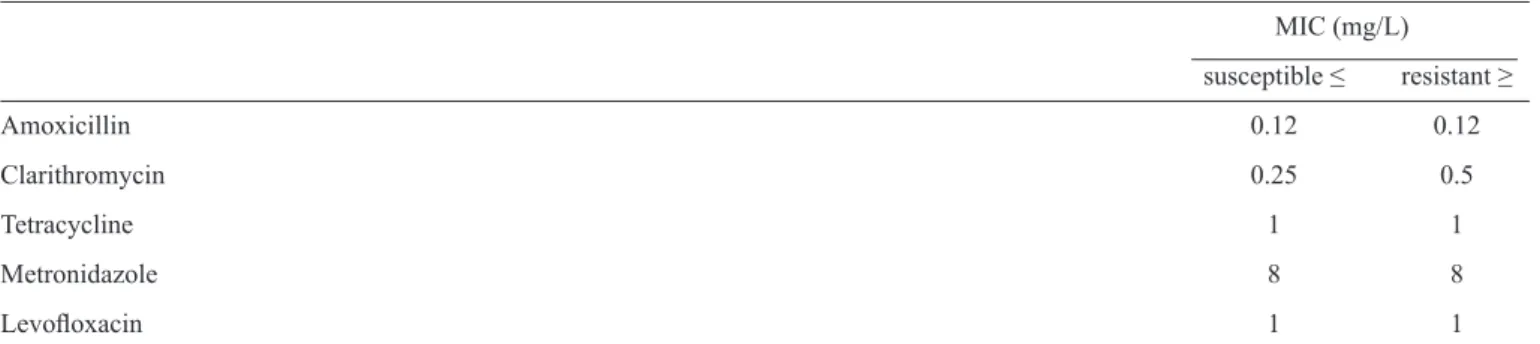
TABLE 1 - The EUCAST(14) (2014) breakpoints used for Helicobacter pylori isolates.
MIC (mg/L)
susceptible ≤ resistant ≥
Amoxicillin 0.12 0.12
Clarithromycin 0.25 0.5
Tetracycline 1 1
Metronidazole 8 8
Levofl oxacin 1 1
MIC: minimal inhibitory concentration. EUCAST: European Comm�ttee on Ant�m�crob�al Suscept�b�l�ty Test�ng. of metronidazole resistance(10).With respect to H. pylori
resistance surveillance, many studies determining minimum
inhibitory concentration (MIC) levels or resistance genes
have been published from different geographic regions. Some national studies have reported the clarithromycin resistance of H. pylori strains, but few data about metronidazole and
levofl oxacin resistance are available, especially for northwestern
Turkey(2) (4) (11). The prevalence of clarithromycin-resistant
H. pylori isolates is increasing over time, and their prevalence is higher in developing countries than in developed countries(12). Therefore, to apply effective treatment, it is particularly important to know the antibiotic resistance patterns of local
H. pylori strains, particularly in developing countries such as
Turkey. Levofl oxacin, a fl uoroquinolone, has remarkable in
vitro activity against H. pylori, and it has been mainly evaluated as a second-line therapy for use after one or more H. pylori
eradication failures. Unfortunately, a progressive increase in the
in vitro resistance of H. pylori to this quinolone has developed in recent years(3).
The aim of this study was to assess the prevalence of
clarithromycin, amoxicillin, tetracycline, and metronidazole resistance and also to assess the prevalence of levofl oxacin
resistance among H. pylori strains isolated from Turkish patients
with dyspepsia in northwestern Turkey. In light of our fi ndings,
we hope to guide the development of an H. pylori eradication program in this region that takes resistance rates into account.
Study design
The present work was designed as a prospective randomized study between February 2012 and January 2013. Ninety-eight patients with dyspeptic symptoms who were admitted to the endoscopy unit of Istanbul University in the Cerrahpasa Faculty of Medicine in the Department of Internal Medicine and the Division of Gastroenterology were enrolled during this period. The inclusion criterion was the indication of endoscopy for the
examination of dyspeptic symptoms. The exclusion criteria were
as follows: age under 18; previous gastric surgery and H. pylori
eradication treatment; consumption of antibiotics in the previous month; or consumption of antisecretory drugs, bismuth salts, or
sucralfate in the previous 2 weeks. A history of bleeding or a coagulation disorder that contraindicated biopsy sampling were
also reasons for exclusion. Two biopsies from each subject, from
the antrum and the corpus of the stomach, were obtained. The biopsies were separately transferred into sterile Eppendorf tubes
fi lled with Brucella broth containing 20% glucose and were then immediately sent to the laboratory on dry ice.
Helicobacter pylori isolation and antimicrobial susceptibility testing
Helicobacter pylori culture was performed using Columbia
agar plates supplemented with 10% (v/v) defi brinated horse
blood and an H. pylori-selective antibiotic supplement
(Becton Dickinson GmbH, Heidelberg, Germany) containing vancomycin (10mg/L), cefsulodin (5mg/L), trimethoprim (5mg/L) and amphotericin B (5mg/L). The plates were
incubated for 3-5 days at 37°C in a Campy Gen Gas Pak (Becton
Dickinson). Helicobacter pylori was identifi ed based on colony
and cellular morphology (i.e., Gram-negative and helix-shaped under the microscope, forming circular convex and translucent colonies) and based on positive urease, catalase and oxidase tests.
Some of the colonies were stored in Brucella broth containing 20% glycerol at -80°C(13). Duplicate biopsy materials from the corpus and antrum were stored in PBS at -80°C in Eppendorf tubes for the detection of clarithromycin resistance via PCR.
The antimicrobial susceptibility of the H. pylori isolates
was determined using the E-test (BioMerieux, Marci L’étoile France) on Mueller-Hinton agar supplemented with 10%
horse blood. The H. pylori strain ATCC 43504 was used as a standard control. The Table 1 shows that resistance of all isolates was determined according to the European Committee
on Antimicrobial Susceptibility Testing (EUCAST)(14). Detection of clarithromycin susceptibility
using PCR
Biopsies from the antrum and corpus were homogenized using a Magna Lyser Homogenizer (Roche Diagnostic, Basel,
Switzerland) and genomic deoxyribonucleic acid (DNA) was extracted using the QIAamp DNA Mini Kit (Qiagen GmbH, Hilden, Germany) according to the manufacturer’s
RESULTS
DISCUSSION
TABLE 2 - Antimicrobial susceptibilities of 98 Helicobacter pylori isolates.
Susceptible Resistant
Antibiotic MIC range (mg/L) MIC50 (mg/L) MIC90 (mg/L)
n % n %
Amoxicillin <0.016 - 0.032 0.016 0.032 98 100.0 0 0.0
Tetracycline <0.016 - 0.032 0.016 0.032 98 100.0 0 0.0
Clarithromycin <0.016 - >256 0.016 256 62 63.2 36 36.7
Metronidazole <0.016 - >256 0.250 256 64 64.5 34 35.5
Levofl oxacin <0.008 - >32 0.060 <32 69 70.4 29 29.5
MIC: minimal inhibitory concentration.
ribosomal ribonucleic acid (rRNA) gene were investigated using the H. pylori & Clarithromycin Resistance Real-Time PCR Kit
(AndiaTec GmbH, Kornwestheim, Germany). In this method,
the H. pylori 23S rRNA gene sequence was amplifi ed, and the
melting curve of the amplicon was then analyzed using real-time PCR. Thus, clarithromycin-resistant strains were determined based on the detection of A2143G and A2144G mutations. PCR and hybridization reactions were conducted using a Light
Cycler 2.0 (Roche Diagnostics GmbH, Mannheim, Germany) according to the manufacturer’s instructions.
Real-time PCR amplification consisted of an initial denaturation step at 95°C for 10 min that was followed by
45 amplifi cation cycles (with a temperature transition rate of 20°C/s) consisting of 95°C for 0 s, annealing at 55°C for 10 s, and extension at 72°C for 15 s. After amplifi cation, a melting
step was performed, which consisted of 95°C for 0 s, cooling
to 55°C for 5 s (with a temperature transition rate of 20°C/s), and fi nally a slow rise in the temperature to 80°C at a rate of 0.1°C/s, with continuous acquisition of the fl uorescence decline.
Ethical considerations
The study was approved by the Clinical Research Ethics Board of Istanbul University, Cerrahpasa Faculty of Medicine, and all patients gave their informed consent before participating in the study. Ethical approval: 4548/9 February 2012.
A total of 98 H. pylori strains were isolated from the patients.
The mean patient age was 46 (range, 20-70); 57% (n=56) of the patients were female, and 43% (n=42) were male. According
to the EUCAST breakpoints, all of the tested isolates were
susceptible to amoxicillin (MIC range, <0.016 – 0.032mg/L) and tetracycline (MIC range, <0.016 – 0.032mg/L). However, the
Table 2 shows that clarithromycin resistance was observed in
36.7% (36/98) of the isolates (MIC range, <0.016 –> 256mg/L); metronidazole resistance was observed in 35.5% (34/98) of the isolates (MIC range, <0.016 –>256mg/L) and levofl oxacin resistance was found in 29.5% (29/98) of the isolates (MIC range, <0.008 – 32mg/L).
Point mutations were detected at nucleotide positions 2143
(A2143G) and 2144 (A2144G) of the 23S rRNA gene in all
of the 36 clarithromycin-resistant H. pylori strains. Multiple resistance was detected in 19.3% of the total isolates and in
52.7% (19/36) of the 36 clarithromycin-resistant isolates.
The most frequent multiple resistance phenotypes were
clarithromycin/metronidazole and clarithromycin/levofl oxacin,
with rates of 45.4% and 27.2%, respectively. Additionally,
the prevalence of clarithromycin/metronidazole/levofl oxacin
multiple resistance was 18.1%.
The success rate of standard clarithromycin-amoxicillin-proton pump inhibitor (PPI) triple therapy has declined to
less than 70% from an initial rate of 90%. Resistance to clarithromycin, which is the key antibiotic in triple therapies for
H. pylori infections, is primarily responsible for this decrease(15). As an alternative to clarithromycin, new second-line treatment
regimens that contain levofl oxacin have been disappointing due to emerging levofl oxacin resistance(2) (3) (4). As in the case of the high clarithromycin resistance rate in Turkey, a sequential regimen is currently used, namely a simple dual therapy of PPI
2x1 + amoxicillin 1g 2x1 (fi rst 7 days) and PPI 2x1, tetracycline 500mg 4x1 + metronidazole 500mg 3x1 (for the remaining 7 days), for the eradication of H. pylori infections(16).
High clarithromycin and metronidazole resistance rates
have been reported in most studies. For example, among
countries neighboring Northwestern Turkey, the clarithromycin and metronidazole resistance rates in untreated patients in Greece were reported to be 31% and 43%, respectively, by Georgopoulos et al.(17); in Bulgaria, the corresponding rates were and 20.8% and 31.2%, as reported by Boyanova et al.(18) (Table 3). In a 2008-2009 multicenter study that included 32 centers in 18 European countries, the H. pylori clarithromycin resistance rates were 21.5%, 18.7% and 7.7% in Southern Europe, central Europe and Northern Europe, respectively. The metronidazole resistance rates were 29.7%, 43.8% and 28.6% for the same regions(19). According to this multicenter study, the H. pylori resistance rates to clarithromycin and levofl oxacin were
(>20%) than in Northern European countries (<10%)(19). The main results of the multicenter survey showed a steady increase in clarithromycin resistance when compared to a similar 1998
survey and revealed the rapid emergence of levofl oxacin
resistance in H pylori. It also reported that the prevalence of clarithromycin resistance almost doubled over the past 10 years, from 9.8% to 17.5%, but that metronidazole resistance
remained at the same high level (34.9%) over the past decade,
with no major changes in regional distribution. Megraud et al.(19) suggested that the impact of metronidazole resistance on the eradication rate is limited relative to clarithromycin
and levofl oxacin resistance and that metronidazole resistance
can be overcome in a majority of cases by increasing the length of treatment or by prescribing bismuth-containing quadruple therapy that includes metronidazole. Similarly high clarithromycin resistance rates have been reported in Italy and Germany, at 53% and 67.1%, respectively(9) (20).
A contrasting example is Norway, where macrolides are
rarely selected as a treatment option; there, the prevalence of clarithromycin resistance was reported to be 5.9%(21). In East
Asian countries such as Japan (27.2%), South Korea (23.7%) and China (65.4%), high clarithromycin resistance rates have
been reported. In Southeast Asian countries, clarithromycin
resistance rates are low, as in Thailand (3.7%) and Singapore (6%). Moreover, in Bhutan and Malaysia, no clarithromycin
resistance has been reported (22).
The overall clarithromycin resistance prevalence in
Latin America (13%) is below 15-20%, and the rates range from 8%-18% in Brazil. Peru (50%) reports the highest prevalence, whereas Paraguay (2%) reports the lowest.
Camargo et al.(23) suggest in their meta-analysis that the empirical use of clarithromycin may be inappropriate in
Peru and Colombia(23). In Brazil, H. pylori clarithromycin resistance shows high prevalence, with rates of 7-16% in adults and 27% in children(24). The metronidazole resistance of
H. pylori is closely related to geographic location and to the use of this drug for its antiparasitic activity. In African countries, the prevalence of metronidazole resistance is approximately 90%; however, this rate decreases to 45% in Spain and 22.5% in Norway(19) (21) (25) (26) (27).
In East Asia, China has the highest prevalence of metronidazole resistance (56.6%-95.4%), and metronidazole resistance is also high in Hong Kong and South Korea. However, the metronidazole resistance rate in Japan is only 3.3%-4.9%. In Southeast Asia, only Thailand and Malaysia have metronidazole resistance rates below 40%. Bhutan (82.9%) and Indonesia (100%) have the highest metronidazole resistance in this region. High prevalences of metronidazole resistance have also been reported in western and southern Asia(22). Camargo et al.(23) found that metronidazole resistance in Latin American populations was high and stable over the study period and showed no remarkable trends within individual countries, with the lowest resistance rate occurring in Argentina (30%) and the highest in Colombia (83%). The metronidazole resistance rate is 54% in Brazil, but in contrast to clarithromycin resistance, metronidazole resistance is not of great clinical relevance(23). The clarithromycin resistance rates are 41% and 28.5% in Northwestern and Central Turkey, respectively, and were 18.2% in 2012 and 8.9% in 2013 in Southern Turkey(4) (11) (28). On the other hand, metronidazole resistance rates were 39.2% and 45.5% in central and Southern Turkey, respectively(4) (11); in Northwestern Turkey, the rate was 41.9% in 2009(29) (Table 3). Based on these data, the Turkish clarithromycin resistance rate (36.7%) was higher than that the rates in Latin America (except for Peru), in East Asian countries (except China)
TABLE 3 - Distributions of amoxicillin, clarithromycin, metronidazole, tetracycline and levofl oxacin resistance rates in Helicobacter pylori
isolates from different regions of Turkey and neighboring countries.
Region of Turkey
Years AMO (%) CLA (%) Method MTZ (%) TET (%) LEV (%) Reference
Central Turkey
2012 0 28.5 ET 39.2 - - 11
Southern Turkey - - -
2013 - 8.8 PCR-RFLP/AD - - - 28
2012 0 18.2 ET 45.5 9.1 18.2 4
Northwestern Turkey
2014 0 36.7 ET/PCR* 35.5 0 29.5 Present study
2009 3.2 41.9 ET/FISH* 41.9 3.2 - 29
Western Neighbor Countries
2014/Bulgaria 0 20.8 ET/BST 31.2 2.1 16.7 18
2013/Greece 0 31 ET 43.7 0 10 17
and in the above studies (except Italy and Germany), and it was only lower than the rate in northwestern Turkey. Clarithromycin resistance is commonly caused by point mutations in the 23S rRNA gene of H. pylori(9). In Turkey, elderly patients are more likely to have respiratory tract infections, for which macrolides are commonly prescribed. Previous macrolide use may have caused clarithromycin resistance in the H. pylori strains
analyzed in our study. Our observed metronidazole resistance rate (35.5%) was higher than that in Norway, southern Europe
and northern Europe but lower than that in Latin America, Western and Southern Asia, African countries, China, Spain, Brazil and Central Europe and also lower than that in Central, Southern and Northwestern Turkey. The high metronidazole resistance rates in other regions might be due to the common use of drugs for parasitic infestations in these areas.
After detecting a high clarithromycin resistance rate among our H. pylori strains, we used a real-time PCR kit to detect point mutations in the 23S rRNA gene of our clarithromycin-resistant H. pylori strains to understand the etiology of their clarithromycin resistance. International and national studies of point mutations related to clarithromycin resistance have been published. Momynaliev et al.(30) reported that in 10 analyzed clarithromycin-resistant clinical isolates of H. pylori obtained in Russia, resistance was found to be mediated solely by the A2144G mutation in the 23S rRNA gene. The prevalence of each point mutation varies according to geographical area. Versalovic et al.(31) and Raymond et al.(32) reported 52.5% and
90% A2143G (previously A2144G) mutations among American
and French H. pylori isolates, respectively. Alvarez et al.(33) also
confi rmed the existence of A2143G mutations among patients from Colombia. In a review by Mégraud et al.(19) the most common
mutation was A2143G, which occurred in approximately 69.8%
of clarithromycin-resistant strains. The A2143G mutation was found in 42.9% of clarithromycin-resistant H. pylori strains by Klesiewicz et al.(34). In Turkey, Yula et al.(28) and Sezgin et al.(35) found A2143G mutations in 6.6% and 40.5% of H. pylori strains, respectively. However, we detected point mutations at nucleotide
positions 2143 (A2143G) and 2144 (A2144G) of the 23S rRNA
gene in 100% of our H. pylori strains. A limitation of our study is that the real-time PCR kit we used, does not discriminate between
point mutations at nucleotide positions 2143 (A2143G) and 2,144 (A2144G) of the 23S rRNA gene in H. pylori strains.
When we evaluated two other antibiotics (amoxicillin and tetracycline) used for the treatment of H. pylori infections, we found lower resistance rates. In 2013, Megraud et al.(19)
reported 0.7% and 0.9% amoxicillin and tetracycline resistance
rates, respectively. Wueppenhorstet al.(20) and Larsen et al.(21) in Norway reported H. pylori amoxicillin and tetracycline
resistance rates of 1.4% and 0% in Germany and 10% and 0% in Norway, respectively. Cuadrado-Lavínet al.(27) in Spain and Georgopoulos et al.(17) in Greece reported no amoxicillin resistance. Boyanova et al.(18) reported 2% tetracycline resistance. Most studies have indicated that the rates of resistance to
amoxicillin are < 1% in China, Bahrain, Malaysia, Bhutan and Vietnam but are >10% in Japan. Higher amoxicillin resistance rates have also been detected in South Korea (7.1%-18.5%).
India (72.5%) and Pakistan (37%) also have high rates of amoxicillin resistance. In Southeast Asia, only Indonesia (19.4%) has high resistance rates(22). The relatively low overall
prevalence of amoxicillin resistance in Latin America is similar to that of other regions. Amoxicillin resistance rates range
from 0-15% in Latin America and are 2% in Brazil. Thus, the inclusion of this antibiotic in empirical eradication regimens is still appropriate worldwide(23). Zhang et al.(36) reported that
H. pylori isolates were relatively susceptible to tetracycline, with an overall resistance rate of 4.9%-7.3%, thus suggesting that tetracycline can be used in the initial treatment of H. pylori
infections in China. Resistance to tetracycline is very low, or even absent, in most Asian countries. Resistance rates in Saudi Arabia, Thailand, and Vietnam are also reportedly low, and resistance is absent in Taiwan, Bahrain, Malaysia, and Bhutan. In contrast, higher values have been reported in South Asia,
for example in South Korea (35.2%)(22). Primary resistance to tetracycline was evaluated in 20 Latin American studies,
and the study-specifi c prevalence values ranged from 0% to
86%. The overall prevalence was 6%. The highest resistance was reported in Colombia, and 2% resistance was reported in Brazil(23). Similar to the rates reported for Central Europe, the
amoxicillin resistance rate was 0% in Central and Southern Turkey. In contrast, in Northwestern Turkey, the amoxicillin
resistance rate was reported to be 3.2% in 2009(29). In Southern and Northwestern Turkey, the tetracycline resistance rates were reported to be 9.1% and 3.2%, respectively(4) (29). In contrast, in the present study, which was performed in Istanbul, no
tetracycline resistance was detected. We detected no amoxicillin
or tetracycline resistance in our study, and our results are in accord with those of Georgopoulos et al.(17) and Boyanova et al.(18) for amoxicillin resistance.
Although the eradication success of the new regimen
containing levofl oxacin is as high as 90%, emerging studies
are reporting increasing quinolone resistance rates(27) (37) (38). In
Europe, levofl oxacin resistance rates have reached 18%(19) (21). Karczewska et al.(39) reported levofl oxacin resistance rates of
12% and 38% in treatment-naïve and previously levofl
oxacin-treated patients, respectively, in 2012. The rate of resistance to
levofl oxacin was reported to be 18.8% in Germany in 2013(20).
Fluoroquinolone resistance rates are low (8.8%) in Taiwan, but
they are higher in the southeast coastal region of China and in
Beijing. The levofl oxacin and moxifl oxacin resistance rates in
South Korea increased to 34.6% over the 2009-2012 period.
In Western and Southern Asia, strains show low levofl oxacin resistance rates, whereas high levofl oxacin and ciprofl oxacin resistance rates have been reported in Iran (72.5%) and India (50%). The levofl oxacin resistance rates in Southeast Asia are otherwise low except in Vietnam (18.4%)(22). The overall
prevalence of fl uoroquinolone resistance in Latin America is higher than the overall levofl oxacin resistance rates reported for Europe (14.1%) and Asia (11.6%)(23). Eisig et al.(40) reported a
levofl oxacin resistance rate of 23% in Brazil. In Turkey, Cagdas
et al.(4) reported that the levofl oxacin resistance rate in southern
FINANCIAL SUPPORT
REFERENCES
This work was supported by the Istanbul University Research Fund under project number 20594. We are grateful for this support.
1. Georgopoulos SD, Papasterg�ou V, Karatapan�s S. Current opt�ons for the treatment of Hel�cobacter pylor�. Expert Op�n Pharmacother 2013; 14:211-223.
2. Ayd�n A, Oruc N, Turan I, Ozutem�z O, Tuncyurek M, Musoglu A. The mod�f�ed sequent�al treatment reg�men conta�n�ng levofl oxac�n for Hel�cobacter pylor� erad�cat�on �n Turkey. Hel�cobacter2012; 14:520-524.
3. Cuadrado-Lavín A, Salc�nes-Cav�edes JR, Carrascosa MF, D�erssen-Sotos T, Cobo M, Campos MR, et al. Levofl oxac�n versus clar�thromyc�n �n a 10 day tr�ple therapy reg�men for f�rst-l�ne Hel�cobacter pylor� erad�cat�on: a s�ngle-bl�nd random�zed cl�n�cal tr�al.J Ant�m�crob Chemother 2012; 67: 2254-2259. 4. Cagdas U, Otag F, Tezcan S, Sezg�n O, Aslan G, Emekdas G.
Detect�on of Hel�cobacter pylor� and ant�m�crob�al res�stance �n gastr�c b�opsy spec�mens. M�krob�yol Bul 2012; 46:398-409. 5. Cammarota G, Sangu�nett� M, Gallo A, Posteraro B. Rev�ew
art�cle: b�of�lm format�on by Hel�cobacter pylor� as a target for erad�cat�on of res�stant �nfect�on. Al�ment Pharmacol Ther 2012; 36:222-230.
6. Cole SP, Harwood J, Lee R, She R, Gu�ney DG. Character�zat�on of monospec�es b�of�lm format�on by Hel�cobacter pylor�. J Bacter�ol 2004; 186:3124-3132.
7. Carron MA, Tran VR, Sugawa C, Cot�cch�a JM. Ident�f�cat�on of Hel�cobacter pylor� b�of�lms �n human gastr�c mucosa. J Gastro�ntest Surg2006;10:712-717.
8. de Francesco V, Margiotta M, Zullo A, Hassan C, Valle ND, Burattini O, et al. Primary clarithromycin resistance in Italy assessed on
Helicobacter pylori DNA sequences by TaqMan real-time polymerase
chain reaction. Aliment Pharmacol Ther 2006; 23:429-435.
9. Mono R, Giorgio F, Carmine P, Soleo L, Cinquepalmi V, Ierardi E. Helicobacter pylori clarithromycin resistance detected by Etest and TaqMan real-time polymerase chain reaction: a comparative study. APMIS 2012; 120:712-717.
10. Dore MP, Leandro G, Realdi G, Sepulveda AR, Graham DY. Effect of pre-treatment antibiotic resistance to metronidazole and clarithromycin on outcome of H. pylori therapy: a meta-analytical approach. Dig Dis Sci 2000; 45: 68-76.
11. Kalem F, Ozdemir M, Basaranoglu M, Toy H, Baysal B.
Helicobacter pylori isolates recovered from antral gastric biopsies
of patients with dyspeptic symptoms: Antimicrobial resistance of metronidazole, clarithromycin and amoxicillin. Anatol J Clin Investig 2012; 6:37-40.
12. Hu C, Wu C, Lin C, Cheng CC, Su SC, Tseng YH, et al. Resistance rate to antibiotics of Helicobacter pylori isolates in eastern Taiwan. J Gastroenterol Hepatol 2007;22:720-733.
13. Ansorg R, von Recklinghausen G, Pomarius R, Schmid EN. Evaluation of techniques for isolation, subcultivation, and preservation of Helicobacter pylori. J Clin Microbiol 1991; 29:51-53. 14. The European Comm�ttee on Ant�m�crob�al Suscept�b�l�ty Test�ng.
Breakpo�nt tables for �nterpretat�on of MICs and zone d�ameters. Vers�on 3.1. 2014. (C�ted 2015 January 26). Available at http:// www.eucast.org
15. Graham DY, Fischbach L. Helicobacter pylori treatment in the era of increasing antibiotic resistance. Gut 2010;59:1143-1153. 16. Şimşek İ, Binicier ÖB. Helicobacter pylori. İç Hastalıkları Dergisi.
Turkish J Int Med 2011; 18:13-26. (In Turkish).
17. Georgopoulos SD, Xirouchakis E, Martinez-Gonzalez B, Sgouras DN, Spiliadi C, Mentis AF, et al. Clinical evaluation of a ten-day regimen with esomeprazole, metronidazole, amoxicillin, and prevalence of levofl oxacin resistance to be 29.5%, and the
MIC90 value was > 32mg/L (breakpoint MIC ≥ 1mg/L). Our result is higher than the results of Georgopoulos et al.(17) (16%) and Boyanova et al.(18) (10%) for levofl oxacin resistance rates. This difference could be due to the crowded population, to the geographic location of Istanbul or to the frequent use of this antibiotic for respiratory and/or urinary infections in this area.
However, we believe that levofl oxacin resistance rates might
be increasing due to more frequent use of quinolones. There
has been an increasing trend in levofl oxacin resistance over time, and after eradication failures with levofl oxacin, multiple
resistant H. pylori strains have gained importance. Boyanova et al.(41) reported an 8% metronidazole/clarithromycin resistance rate in H. pylori strains. In a study performed in 2012 in Spain, the authors reported an 18.1% multidrug resistance rate, with the metronidazole/quinolone resistant phenotype as the predominant phenotype(3). In the present study, multiple resistance was
observed in 52.7% (19/36) of the 36 clarithromycin-resistant
strains. The most common dual-resistance phenotypes were
clarithromycin/metronidazole (45.4%) and clarithromycin/ levofl oxacin (27.2%). In addition, 18.1% of the study strains were found to harbor clarithromycin/metronidazole/levofl oxacin
multidrug resistance.
Our study is the fi rst study in Turkey to report levofl oxacin MIC values of > 32mg/L in H. pylori and to report 27.2%
levofl oxacin resistance rates in clarithromycin-resistant strains
using the EUCAST(14) breakpoint (≥ 1mg/L) recommendations. As a result, the resistance rates we detected for clarithromycin
(36.7%), metronidazole (35.5%) and levofl oxacin (29.5%) are
higher and may be associated with treatment failures in Turkish patients. To effectively treat H. pylori infections, it is particularly important to know the antibiotic resistance patterns of local H. pylori
strains. The creation of an H. pylori resistance map using actual data from different regions of the world is crucial for the development of appropriate eradication treatment alternatives. Without new treatment alternatives, we believe that H. pylori eradication may become an important problem in our country in the future. The increasing antimicrobial resistance of H. pylori and the emergence of multidrug-resistant strains are important issues that require the
identifi cation of new, more effective treatment alternatives.
CONFLICT OF INTEREST
I declare on behalf of all authors that there is no confl ict of
interest related to this manuscript. This study was presented as a poster presentation at the ‘XXVIth International Workshop
on Helicobacter and related bacteria in chronic digestive
clarithromycin for the eradication of Helicobacter pylori in a high clarithromycin resistance area. Helicobacter 2013; 18:459-467. 18. Boyanova L, Davidkov L, Gergova G, Kandilarov N, Evstatiev I,
Panteleeva E, et al. Helicobacter pylori susceptibility to fosfomycin, rifampin, and 5 usual antibiotics for H. pylori eradication. Diagn Microbiol Infect Dis 2014; 79:358-361.
19. Megraud F, Coenen S, Versporten A, Kist M, Lopez-Brea M, Hirschl AM, et al. Study Group participants: Helicobacter pylori
resistance to antibiotics in Europe and its relationship to antibiotic consumption. Gut 2013; 62:34-42.
20. Wueppenhorst N, Stueger HP, Kist M, Glocker EO. High secondary resistance to quinolones in German Helicobacter pylori clinical isolates. J. Antimicrob Chemother 2013; 68:1562-1566.
21. Larsen AL, Ragnhildstveit E, Moayeri B, Eliassen L, Melby KK. Resistance rates of metronidazole and other antibacterials in
Helicobacter pylori from previously untreated patients in Norway.
APMIS 2013; 121:353-358.
22. Miftahussurur M, Yamaoka Y. Appropriate First-Line Regimens to Combat Helicobacter pylori Antibiotic Resistance: An Asian Perspective. Molecules 2015; 20:6068-6092.
23. Camargo MC, García A, Riquelme A, Otero W, Camargo CA, Hernandez-García T, et al. The problem of Helicobacter pylori
resistance to antibiotics: a systematic review in Latin America. Am J Gastroenterol 2014; 109:485-495.
24. Suzuki RB, Lopes RA, da Câmara Lopes GA, Hung Ho T, Sperança MA. Low Helicobacter pylori primary resistance to clarithromycin in gastric biopsy specimens from dyspeptic patients of a city in the interior of São Paulo, Brazil. BMC Gastroenterol 2013; 13:164. 25. Francesco V, Zullo A, Hassan C, Giorgio F, Rosania R, Ierardi
E. Mechanisms of Helicobacter pylori antibiotic resistance: an updated appraisal. World J Gastrointest Pathophysiol 2011; 2:35-41.
26. de Francesco V, Giorgio F, Hassan C, Manes G, Vannella L, Panella C, et al. Worldwide Helicobacter pylori antibiotic resistance: a systematic review. J Gastrointestin Liver Dis 2010; 19:409-414. 27. Cuadrado-Lavín A, Salc�nes-Cav�edes JR, Carrascosa MF, Mellado
P, Monteagudo I, Llorca J, et al. Ant�m�crob�al suscept�b�l�ty of
Hel�cobacter pylor� to s�x ant�b�ot�cs currently used �n Spa�n. J Antimicrob Chemother 2012; 67:170-173.
28. Yula E, Nagiyev T, Kaya OA, Inci M, Celik MM, Köksal F. Detection of primary clarithromycin resistance of Helicobacter pylori and association between cagA (+) and clinical outcome.
Folia Microbiol (Praha) 2013; 58:141-146.
29. Ozbey SB, Cuneyt O, Murat K. Ant�b�ot�c res�stance rates of
Hel�cobacter pylor� �solates and the compar�son of E-Test and fl uorescent �n s�tu hybr�d�zat�on methods for the detect�on of clar�thromyc�n res�stant stra�ns. M�krob�yol Bul 2009; 43:227-234.
30. Momynaliev KT, Selezneva OV, Kozlova AA, Vereshchagin VA, Il'ina E, Govorun VM. A2144G is the main mutation in the 23S rRNA gene of Helicobacter pylori associated with clarithromycin resistance. Genetika 2005; 41:1338-1344.
31. Versalovic J, Osato MS, Spakovsky K, Dore MP, Reddy R, Stone GG, et al. Point mutations in the 23S rRNA gene of Helicobacter pylori associated with different levels of clarithromycin resistance. J Antimicrob Chemother 1997; 40:283-286.
32. Raymond J, Burucoa C, Pietrini O, Bergeret M, Decoster A, Wann A, et al. Clarithromycin resistance in Helicobacter pylori strains isolated from French children: prevalence of the different mutations and coexistence of clones harboring two different mutations in the same biopsy. Helicobacter 2007; 12:157-163.
33. Alvarez A, Moncayo JI, Santacruz JJ, Santacoloma M, Corredor LF, Reinosa E. Antimicrobial susceptibility and mutations involved in clarithromycin resistance in Helicobacter pylori isolates from patients in the western central region of Colombia. Antimicrob Agents Chemother 2009; 53:4022-4024.
34. Klesiewicz K, Nowak P, Karczewska E, Skiba I, Wojtas-Bonior I, Sito E, et al. PCR-RFLP detection of point mutations A2143G and A2142G in 23S rRNA gene conferring resistance to clarithromycin
in Helicobacter pylori strains. Acta Biochim Pol 2014;
61:311-315.
35. Sezgin O, Aslan G, Altintaş E, Tezcan S, Serin MS, Emekdaş G. Detection of point mutations on 23S rRNA of Helicobacter
pylori and resistance to clarithromycin with PCR-RFLP in gastric
biopsy specimens in Mersin, Turkey. Turk J Gastroenterol 2008; 19:163-167.
36. Zhang YX, Zhou LY, Song ZQ, Zhang JZ, He LH, Ding Y. Primary antibiotic resistance of Helicobacter pylori strains isolated from patients with dyspeptic symptoms in Beijing: A prospective serial study. World J Gastroenterol 2015; 21:2786-2792.
37. O’Connor A, Gisbert J, O’Morain C. Treatment of Helicobacter pylori infection. Helicobacter2009; 14: 46-51.
38. Glocker E, Stueger HP, Kist M. Quinolone resistance in
Helicobacter pylori isolates in Germany. Antimicrob Agents
Chemother 2007; 51:346-349.
39. Karczewska E, Klesiewicz K, Skiba I, Wojtas-Bonior I, Sito E, Czajecki K, et al. Variability in prevalence of Helicobacter pylori
strains resistant to clarithromycin and levofl oxacin in southern Poland. Gastroenterol Res Pract 2012; 2012:418010.
40. Eisig JN, Silva FM, Barbuti RC, Navarro-Rodriguez T, Moraes-Filho JP, Pedrazzoli Jr J. Helicobacter pylori antibiotic resistance in Brazil: clarithromycin is still a good option. Arq Gastroenterol 2011; 48:261-264.