http://dx.doi.org/10.1590/0037-8682-0040-2015
Major Article
INTRODUCTION
Corresponding author: Dra. Solange Maria Gennari. Depto. de Medicina Veterinária Preventiva e Saúde Animal/FMVZ/USP. Av. Professor Orlando M. de Paiva 87, Cidade Universitária, 05508-270 São Paulo, Brasil.
Phone: 55 11 3091-7654; Fax: 55 11 3091-7928
e-mail: [email protected]
Received 6 February 2015
Accepted 24 April 2015
Epidemiological aspects of Toxoplasma gondii
infection in riverside communities in the
Southern Brazilian Amazon
Sérgio Neto Vitaliano
[1],[2],
Gabriel Maciel de Mendonça
[3],
Felipe Amsterdam Maia de Sandres
[3],
Juliana de Souza Almeida Aranha Camargo
[3],
Paulo de Tarso
[3],
Sérgio de Almeida Basano
[3],[4],
Jéssica Carolinne Damasceno e Silva
[3],
Viviane Krominski Graça de Souza
[3],
Glenci Cartonilho
[5],
Alexandre Thomé da Silva de Almeida
[3],
Solange Maria Gennari
[2]and Luís Marcelo Aranha Camargo
[3],[6][1]. Curso de Medicina Veterinária, Faculdades Metropolitanas Unidas, São Paulo, São Paulo, Brasil. [2]. Faculdade de Medicina Veterinária e Zootecnia, Universidade de São Paulo, São Paulo, São Paulo, Brasil. [3]. Faculdade São Lucas, Porto Velho, Rondônia, Brasil. [4]. Secretaria de Estado da Saúde de Rondônia, Hospital Cemetron, Porto Velho, Rondônia, Brasil. [5]. Laboratório Central de Saúde Pública, Secretaria Municipal de Saúde de Porto Velho, Porto Velho, Rondônia, Brasil. [6]. ICB5/USP - Unidade Avançada de Pesquisa, Universidade de São Paulo em Rondônia, Monte Negro, Rondônia, Brasil.
ABSTRACT
Introduction: Toxoplasma gondii infection is widely prevalent in humans and other animals worldwide. Information on the prevalence of T. gondii infection is scarce in some regions of Brazil, including riverside communities along the Amazon River basin. Methods: The prevalence of T. gondii in 231 people, aged 1-85 years, who were living in four riverside communities along the Purus River, Lábrea, State of Amazonas, Brazil, was determined. Antibodies against T. gondii were assayed using a commercial enzyme-linked immunosorbent assay (ELISA) kit. The hearts and brains of 50 chickens, which were raised free-range in the communities, were pooled according to the community of origin and bioassayed in mice. The isolates were genotyped using polymorphisms at 12 nuclear markers (SAG1, 5’ and 3’-SAG2, alt.SAG2, SAG3, BTUB, GRA6, c22–8, c29–2, L358, PK1, Apico and CS3). Results: The overall seroprevalence of T. gondii was 56.7% (131/231). IgG antibodies were presented by 117 (89.3%) and IgM by 14 (10.7%) of the 131 positive individuals. No association between age group and gender with prevalence was observed (chi-square test, p > 0.05); however, the comparison between localities showed that the seroprevalence
of T. gondii was signifi cantly lower among the individuals living in the Boca do Ituxi (p < 0.05) community. Five isolates of
T. gondii were obtained in the mouse bioassay, and genotyping revealed two complete genotypes that had not been described
previously and three mixed isolates. Conclusions: These results support previous fi ndings that T. gondii population genetics are highly diverse in Brazil and that T. gondii infection is active in these riverside communities.
Keywords:Toxoplasma gondii. Riverside communities. Amazon. Purus River. Epidemiology.
Toxoplasma gondii infection is widely prevalent in humans
and other animals worldwide(1).In Brazil, the burden of clinical
toxoplasmosis in humans is considered to be very high, as up to
50% of elementary school children and 50-80% of women of childbearing age show antibodies against T. gondii(2). Despite the
large number of studies that have investigated the epidemiology of this agent in human beings and animals, information on
the prevalence of T. gondii infection is scarce in some regions
of Brazil. As a result, it is diffi cult to establish the distribution
of the agent and to implement control measures in these regions.
The Brazilian Amazon region is geographically, socially and ecologically different from other parts of the world, yet there are few studies on T. gondii in this region. Cavalcante et al.(3) ( 4) found a prevalence of 73.3% in humans, 87.3% in cats and 37.5% in pigs on 71 farms in the municipality of Monte Negro, Rondônia, in the western Amazon region. From the same area, T. gondii
was isolated in free-range chickens and, based on restriction fragment length polymorphism (RFLP), 24 isolates were genotyped(5), and seven different genotypes were found(6), thus
confi rming the high diversity of T. gondii isolates in Brazil(7) (8). Furthermore, the pathogenicity of Brazilian strains, based on mouse bioassays, suggested that they carry a higher virulence than isolates from other regions of the world(7).
In the Amazon region of French Guiana, from 1998 to 2006,
RESULTS METHODS
were observed in immunocompetent adults(9). Mercier et al.(10), also in French Guiana, compared T. gondii isolates originating
from anthropized suburban areas and from the wild environment and observed that the two environmental populations, wild and
anthropized, were genetically well differentiated.
The aim of the current study was to determine the prevalence
of T. gondii in humans living in riverside communities in the
Amazon region of Brazil and to biologically and genetically characterize the T. gondii isolates from chickens that were raised in the same communities using 12 polymerase chain reaction-restriction fragment length polymorphism (PCR-RFLP) markers.
Human and animal ethics
This study was approved by the Research Ethics Committee of São Lucas College, Porto Velho, Rondônia (protocol number AP/CEP/538/10 06/12/2010). The use of animals was in accordance with the Ethical Principles for Animal Research
adopted by the Brazilian College of Animal Experimentation.
After processing the serological data and identifying the positive patients, the team returned to the communities, and the
patients underwent medical examinations.
Location and sampling
The municipality of Lábrea (07º 15' 34" S and 64º 47' 59" W), located in the State of Amazonas, Brazil, has a population of
approximately 38,000 inhabitants, of whom 5,000 live in 112
riverside communities along the Purus River. From these 112 communities, four were chosen for convenience in the present study:
Boca do Ituxi, with a population of approximately 80 inhabitants (07º 18' 40.3" S; 64 º 50' 52.2" W); Maciari, with approximately
100 inhabitants (07º 16’ 56" S; 64º 51' 03.5" W); Cassianã, with
approximately 80 people (07º 17' 27.3" S; 64º 55' 19.2" W); and
Bosque, with 90 people (07º 16' 53.1" S; 64º 51' 0.56" W). These communities are located to the West of Lábrea, towards the Purus headwaters, 50km away from the center of the municipality.
By making the assumption that the seroprevalence of
T. gondii would be 30% and using a margin of statistical error
of less than 5%, the minimum sample from the total population was estimated to be 60 individuals.
Blood samples were collected from 231 individuals aged 1-85 years and living in 67 households. A signed consent form was obtained from all the adults and from the parents or legal guardians of the minors who participated in this survey. Serum
was obtained, identifi ed and stored at -20°C prior to analysis.
Fifty chickens living in the areas around the human dwellings were acquired by means of random collection: 15 from Cassianã,
15 from Maciari, 15 from Boca do Ituxi and 5 from the Bosque community. The animals were sacrifi ced, and the brain and heart of each bird were harvested aseptically, identifi ed, kept
refrigerated (4ºC) and sent, by air, to the Faculty of Veterinary Medicine of the University of São Paulo, in São Paulo, for the isolation of T. gondii by means of a mouse bioassay.
During the visits to each home, a questionnaire was administered. The independent variables studied included the presence of cats, meat consumption, hunted meat consumption, drinking water origin, water storage, presence of filtered water, water treatment and, for the women older than 15 years, reproductive problems.
Diagnosis of anti-Toxoplasma gondii antibodies in serum
The human serum samples were sent to the Central Laboratory of Public Health [Laboratório Central de Saúde
Pública (LACEN)], located in the City of Porto Velho,
Rondônia, for the determination of immunoglobulin M (IgM) and immunoglobulin G (IgG) antibodies by means of enzyme-linked immunosorbent assay (ELISA), using the TSI-TOXOK-M® commercial kit(DiaSorin, Saluggia, Italy)
according to the manufacturer's recommendations.
Mouse bioassay
For the mouse bioassay, the chickens were divided into
groups, with fi ve birds per group, according to the community
of origin. The chickens from Cassianã, Maciari and Boca
do Ituxi were pooled into three groups each, and those from
Bosque were pooled into one group. The tissue fragments
from the fi ve chickens (brain and heart) were pooled together,
homogenized, digested in acidic pepsin and washed. Aliquots
of the homogenates were inoculated subcutaneously into fi ve
outbred Swiss Webster mice. Tissue imprints of the lungs and
brains of the inoculated mice that died were examined for
T. gondii tachyzoites or tissue cysts. The survivors were bled on
day 45 post-infection, and a 1:25 dilution of the serum was tested
for T. gondii antibodies by means of the modifi ed agglutination
test (MAT), as described by Dubey and Desmonts(11). The mice
were sacrifi ced on day 60 post-infection, and the brains of all the mice were examined for tissue cysts. The inoculated mice
were considered to have become infected by T. gondii when tachyzoites or tissue cysts were found in their tissues.
Genetic characterization of the Toxoplasma gondii isolates
Toxoplasma gondii deoxyribonucleic acid (DNA) was
extracted from the lungs and brains of infected mice. Strain
typing was performed using the genetic markers SAG1, 5’ and 3’-SAG2, alt.SAG2, SAG3, BTUB, GRA6, c22–8, c29–2, L358, PK1, Apico and CS3, as described previously(7) (12). Reference
strains, including Type I (RH), Type II (PTG) and Type III (CTG), and other strains (TgCgCa1 MAS and TgCatBr5) were used in the genotyping assays as positive controls.
Statistical analyses
Associations between gender, age group and locality were determined by means of the chi-square test using R software
(R Core Team, 2014). The level of signifi cance was fi xed at 0.05.
DISCUSSION
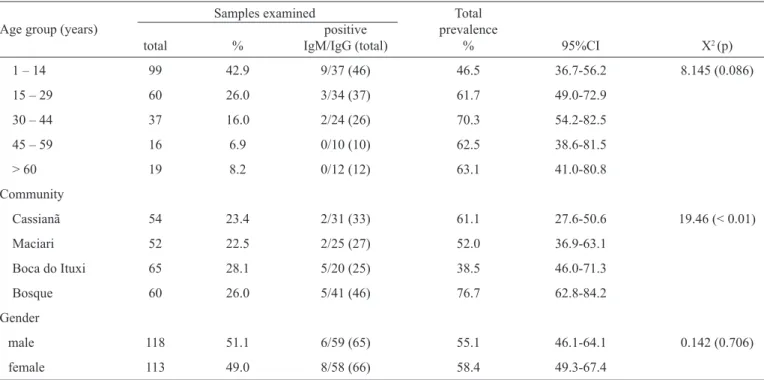
TABLE 1 - The prevalence of anti-Toxoplasma gondii IgM and IgG antibodies in humans (n=231) in the riverside communities, according to the age group, community and gender. Lábrea, State of Amazonas, Brazil.
Samples examined Total
positive prevalence
Age group (years)
total % IgM/IgG (total) % 95%CI X2 (p)
1 – 14 99 42.9 9/37 (46) 46.5 36.7-56.2 8.145 (0.086)
15 – 29 60 26.0 3/34 (37) 61.7 49.0-72.9
30 – 44 37 16.0 2/24 (26) 70.3 54.2-82.5
45 – 59 16 6.9 0/10 (10) 62.5 38.6-81.5
> 60 19 8.2 0/12 (12) 63.1 41.0-80.8
Community
Cassianã 54 23.4 2/31 (33) 61.1 27.6-50.6 19.46 (< 0.01)
Maciari 52 22.5 2/25 (27) 52.0 36.9-63.1
Boca do Ituxi 65 28.1 5/20 (25) 38.5 46.0-71.3
Bosque 60 26.0 5/41 (46) 76.7 62.8-84.2
Gender
male 118 51.1 6/59 (65) 55.1 46.1-64.1 0.142 (0.706)
female 113 49.0 8/58 (66) 58.4 49.3-67.4
IgM: immunoglobulin M; IgG: immunoglobulin G; CI: confi dence interval. all with free access to the external area. River water was used
for drinking and food preparation by all of the families that answered the questionnaire (8 out of the 67 families did not answer this question). Only 15% of the families used chlorine in the drinking water; however, its use depended on the distribution by the local health board, which only occurred at irregular intervals. It was not possible to analyze some of the variables, including the presence of cats, meat consumption, hunted meat consumption and drinking water source, because all the communities that were analyzed presented the same
profi le. Only gender, age and location of the samples were
statistically analyzed.
Table 1 presents the seroprevalence of T. gondii in humans, according to age group, community and gender.
Out of the total of 67 homes, 19 (28.3%) were in Cassianã,
23 (34.3%) in Maciari, 13 (19.4%) in Boca do Ituxi, and
12 (18%) in Bosque. Of the 360 total inhabitants, 231 (64.1%) were present and consented to sample collection. These individuals comprised 118 (51%) males and 113 (49%) females. The ages of the sampled individuals ranged from 1 to 85 years,
and approximately 43% of the subjects were children.
The overall seroprevalence of anti- T. gondii antibodies was 56.7% (131/231). Among the positive individuals, 14 (10.7%) presented IgM antibodies and 117 (89.3%) presented IgG antibodies.
No associations between age group, gender and prevalence were observed (p > 0.05). However, the comparisons between
localities showed that there was a signifi cantly lower T. gondii
seroprevalence among those living in Boca do Ituxi (p = 0.0002).
Of the total of 113 females examined, 62 (55%) were of
childbearing age (12-44 years), and 19 (30.6%) reported having suffered a spontaneous miscarriage during the 12-month period before the study. Among these 19 women, seven (36.8%) presented IgG antibodies against T. gondii, and they lived in the
communities of Cassianã (4), Boca do Ituxi (1) and Bosque (2).
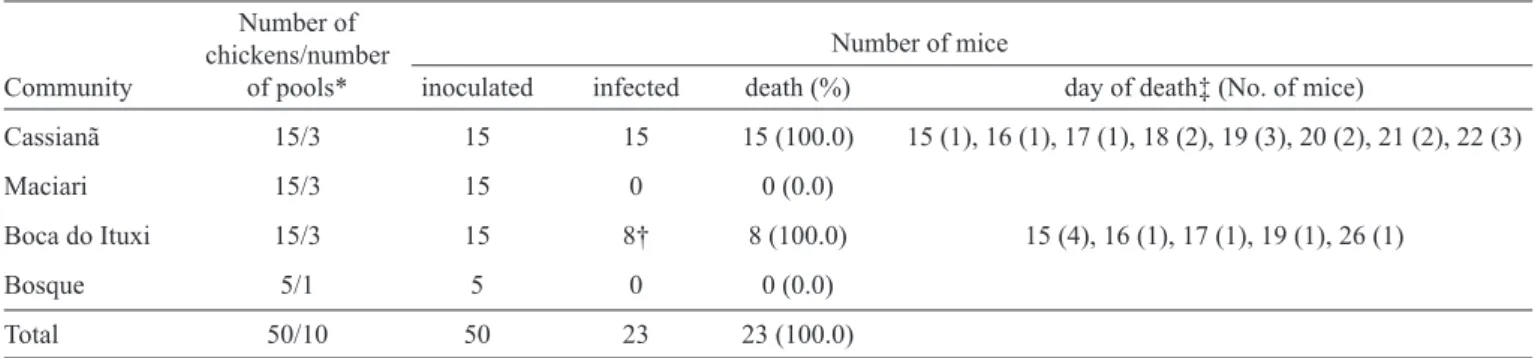
Table 2 presents the results from the mouse bioassays for isolating T. gondii from the chicken tissues, and Table 3 presents the genotyping of the T. gondii isolates. Five isolates were obtained by means of the mouse bioassay from the chickens
from Boca do Ituxi (2) and Cassianã (3); however, the complete
genotype was only obtained from two isolates from Boca do
Ituxi; the other three isolates were mixed genotypes. All of the
infected mice died during the bioassay, at times ranging from day 15 to 26 post-infection.
This study evaluated riverside communities along the Purus River in the Amazon River basin that represent a typical population with the peculiar characteristics and habits of the inhabitants of the riverside areas of the Amazon region.
The individuals examined had been living in their communities for at least fi ve years. The rainfall characteristics
this season is the main source of animal protein because fi shing is more diffi cult during the rainy season.
In all the dwellings surveyed, there was at least one domestic
animal, and 43.2% were cats, which serve as the defi nitive host
of T. gondii. The majority of these animals had contact with each
other and also with humans, especially during the rainy season. Wild felids are also present nearby these communities, and they may also be involved in the wild life cycle of T. gondii(13) (14).
One important feature of these communities was the large number of young people in this population: 42.9% were children (1-14 years old), and 42% were between 15 and 44 years, i.e., of reproductive age. Among the children, 46.5% (46 out of 99) would reach childbearing age having already had contact with this parasite. Among the total of 14 IgM-positive individuals, nine (64.3%) ranged in age from 1-14 years, indicating that contact with this parasite occurs early in life. Consistent with this high prevalence, 30.4% (19) of the women who had been pregnant in
the previous six months reported having suffered a spontaneous
miscarriage without any defined cause, and seven of them presented IgG antibodies against the parasite, thus indicating that
T. gondii might have been involved in the abortion.
In these communities, there was a lack of medical and prenatal care. Because of the high prevalence and low level of knowledge regarding the epidemiology of this parasite, vertical transmission can certainly be presumed to occur. In particular, the high rate of IgM-positive individuals, associated with the high number of women of childbearing age, serves to alert the authorities to the need to improve the prenatal program in
TABLE 3 -Multilocus genotyping of Toxoplasma gondii isolates from free-range chickens from Boca do Ituxi, a riverside community along the Purus River, municipality of Lábrea, State of Amazonas, Brazil, by means of PCR-RFLP analysis.
PCR-RFLP genotype ToxoDB
Sample ID SAG1 3’5’ SAG2 SAG2 SAG3 BTUB GRA6 c22-8 c29-2 L358 PK1 Apico CS3 PCR-RFLP genotype
TgCkBr282 I I I I III III I III III u-1 I u-1 #257*
TgCkBr283 I I II I I III II III I III I NA #258*
PCR-RFLP: polymerase chain reaction-restriction fragment length polymorphism; ID: Identifi cation; ToxoDB: Toxoplasma gondii genome database
(http://www.toxodb.org/toxo); NA: not available , #: number; *fi rst described in the present study.
TABLE 2 - The results from the mouse bioassays using pooled chicken tissue (brain and heart), according to the community from which the birds originated. Lábrea, State of Amazonas, Brazil.
Number of
chickens/number Number of mice
Community of pools* inoculated infected death (%) day of death‡ (No. of mice)
Cassianã 15/3 15 15 15 (100.0) 15 (1), 16 (1), 17 (1), 18 (2), 19 (3), 20 (2), 21 (2), 22 (3)
Maciari 15/3 15 0 0 (0.0)
Boca do Ituxi 15/3 15 8† 8 (100.0) 15 (4), 16 (1), 17 (1), 19 (1), 26 (1)
Bosque 5/1 5 0 0 (0.0)
Total 50/10 50 23 23 (100.0)
*pooled tissue from fi ve chickens per group of fi ve mice; †: positive mice from two of the three pools; ‡: days after the inoculation.
these communities, given that T. gondii infection is active in these locations.
The overall prevalence of anti-T. gondii antibodies found in this study was 55.7%, and this percentage is within the range found in other Brazilian regions and in the Amazon region(2).
However, the present study was the fi rst to be conducted among
riverside communities, which present peculiar habits related to the
environment. For instance, the system of fl ood and drought that
is seen in the Purus River most likely dilutes the environmental
contamination by oocysts and therefore the exposure of the inhabitants. Recently, toxoplasmosis has acquired special
importance as a waterborne disease(13). Moreover, the parasite has
also been reported in marine mammals, thus suggesting that the infection can occur through the contamination of seawater with oocysts. Important aquatic mammals (Trichechus inunguis) are also found in the Amazon basin, and they have been found to be
T. gondii-seropositive(15). Although the studied animals were from
captivity, the high prevalence of T. gondii infection found in the riverside populations as well as chickens from these communities indicates that contamination of the rivers with oocysts can be presumed to occur.
Despite the lack of an association observed between age and the presence of T. gondii antibodies, an increasing prevalence rate with age was observed; whereas the children (1 to 14 years old) presented a rate of 46.5%, the adults showed a prevalence rate of more than 60%. This higher prevalence with increasing age is associated with a greater chance of acquiring infection due
to increased exposure to the various transmission factors over time. It is diffi cult to explain the lowest prevalence observed in Boca do Ituxi because the living conditions were very similar in
all the communities analyzed. However, it should be noted that this locality is the closest of the four communities to the urban area of Lábrea, which may indicate that this area has different sources of food and a better quality of water provided by the local health system.
Corroborating the data obtained in this study, previous studies have shown a relationship between T. gondii infection and socioeconomic factors(16) (17), with higher socioeconomic
status correlated with a lower T. gondii seroprevalence. The relatively high prevalence found in the present study is consistent with the results of previous studies and is related to the low socioeconomic status of the communities evaluated here. According to Dubey et al.(5), domestic chickens are a good
indicator of environmental contamination with T. gondii oocysts, such that they are used as sentinel animals in many studies around the world. In the present study, the results obtained for chickens provide information on the state of environmental contamination and warn about the care that must be taken in preparing the meat of such animals for human consumption. All riverines raise chickens and other domestic animals, such as pigs and ducks, for consumption, especially during the rainy
season when fi shing is more diffi cult.
All the chickens included in this study were used for the mouse bioassays, regardless of knowledge of the birds’
serostatus. Out of the ten pools, fi ve presented positive animals,
and all the infected mice died. However, although all the isolates were virulent and lethal to the infected mice, conclusions regarding the virulence of these isolates cannot be made without knowing the dosage of the inoculum(18). Nevertheless,
the pathogenic profi le observed here is indicative of a high virulence, as observed with the majority of Brazilian isolates(2) (8).
Complete genetic characterization was successful in only two isolates from birds living in the same community. These isolates showed distinct and atypical genotypes, and neither has been described previously. Although T. gondii infection is asymptomatic in most immunocompetent hosts, severe cases
of toxoplasmosis caused by atypical genotypes have been
described in the Amazon region of French Guiana(19) (20) (21).
Another interesting observation in our study was the presence
of mixed genotypes in three pools of chicken tissue from the
same community, indicating a very high genetic diversity in the localities studied. Nevertheless, additional chickens from these communities should be bioassayed to provide more details about the genetic diversity of T. gondii in this important region. However, the use of pooled tissue is not recommended because of the distinct genotypes of T. gondii found in the same small geographical area.
ACKNOWLEDGMENTS
We thank Mr. Oscar Brito, the boat pilot; Dr. Raimundo Nonato, who is in charge of the local health system; and the riverside communities of Lábrea. We also thank the Research Foundation of the State of São Paulo [Fundação de Amparo
à Pesquisa do Estado de São Paulo (FAPESP)], Brazil, for
fi nancial support. SMG and LMAC received scholarships from
the BrazilianNational Research Council [Conselho Nacional de
Desenvolvimento Científi co e Tecnológico (CNPq)].
REFERENCES
The authors declare that there is no confl ict of interest. CONFLICT OF INTEREST
1. Dubey JP. Toxoplasmosis of Animals and Humans. 2nd. ed. Boca
Raton: CRC Press; 2010.
2. Dubey JP, Lago EG, Gennari SM, Su C, Jones JL. Toxoplasmosis in humans and animals in Brazil: high prevalence, high burden of disease, and epidemiology. Parasitol 2012; 139:1375-1424.
3. Cavalcante GT, Aguiar DM, Camargo LMA, Labruna MB, de Andrade HF, Meireles LR, et al. Seroprevalence of Toxoplasma gondii Antibodies in Humans From Rural Western Amazon, Brazil. J Parasitol 2006a; 92:647-649.
4. Cavalcante GT, Aguiar DM, Chiebao D, Dubey JP, Ruiz VLA, Dias RA, et al. Seroprevalence of Toxoplasma gondii Antibodies in Cats and Pigs from Rural Western Amazon, Brazil. J Parasitol 2006b; 92:863-864.
5. Dubey JP, Gennari SM, Labruna MB, Camargo LMA, Vianna MCB, Marcet PL. Characterization of Toxoplasma gondii isolates in free-range chickens from Amazon, Brazil. J Parasitol 2006; 92:36-40.
6. Dubey JP, Velmurugan GV, Chockalingam A, Pena HFJ, Oliveira LN, Leifer CA, et al. Genetic diversity of Toxoplasma gondii
isolates from chickens from Brazil. Vet Parasitol 2008; 157: 299-305.
7. Pena HFJ, Gennari SM, Dubey JP, Su C. Population structure and mouse-virulence of Toxoplasmagondii in Brazil. Int J Parasitol 2006; 38:561-569.
8. Shwab EK, Zhu XQ, Majumdar D, Pena HFJ, Gennari SM, Dubey JP, et al. Geographical patterns of Toxoplasma gondii genetic diversity revealed by multilocus PCR-RFLP genotyping. Parasitol 2014; 141:453-461.
9. Carme B, Demar M, Ajzenberg D, Dardé ML. Severe acquired
toxoplasmosis caused by wild cycle of Toxoplasma gondii, French Guiana. Emerg Infect Dis 2009; 15:656-658.
10. Mercier A, Ajzenberg D, Devillard S, Demar MP, de Thoisy B, Bonnabau H, et al. Human impact on genetic diversity of
Toxoplasma gondii: example of the antropized environment from
French Guiana. Inf Gen Evol 2011; 11:1378-1387.
11. Dubey JP, Desmonts G. Serological responses of equids fed
Toxoplasma gondii oocysts. Equine Vet J 1987; 19:337-339. 12. Su C, Shwab EK, Zhou P, Zhu XQ, Dubey JP. Moving towards
an integrated approach to molecular detection and identifi cation of
13. Jones JL, Dubey JP. Waterborne toxoplasmosis – Recent
developments. Exp Parasitol 2010; 124:10-25.
14. Cañón-Franco WA, Araújo FA, López-Orozco N, Jardim MM, Keid LB, Dalla-Rosa C, et al. Toxoplasma gondii in free-ranging wild small felids from Brazil: Molecular detection and genotypic characterization. Vet Parasitol 2013; 197:462-469.
15. Mathews PD, Silva VMF, Rosas FCW, d’Affonseca Neto JA, Lazzarini SM, Ribeiro DC, et al. Occurrence of antibodies to
Toxoplasma gondii and Leptospira spp in Manatees (Trichechus inunguis) of the Brazilian Amazon. J Zoo Wild Med 2012; 43:85-88. 16. Bahia-Oliveira LMG, Jones JL, Azevedo-Silva J, Alves CCF,
Oréfi ce F, Addiss DG. Highly endemic, waterborne toxoplasmosis
in north Rio de Janeiro State, Brazil. Emer Inf Dis2003; 9:55-62. 17. Garcia CAA, Oréfi ce F, Lyra CO, Gomes AB, França M, Garcia
Filho CCA. Socioeconomic conditions as determining factor in the
prevalence of systemic and ocular toxoplasmosis in Northeastern
Brazil. Ophthal Epid 2004; 11:301-317.
18. Vitaliano SN, Soares HS, Minervino AHH, Santos ALQ, Werther K, Marvulo MFV, et al. Genetic characterization of Toxoplasma gondii from Brazilian wildlife revealed abundant new genotypes. Int J Parasitol: Paras Wild 2014; 3:276-283.
19. Ajzenberg D, Bañuls AL, Su C, Dumètre A, Demar M, Carme B,
et al. Genetic diversity, clonality and sexuality in Toxoplasma gondii. Int J Parasitol 2004; 34:1185-1196.
20. Carme B, Bissuel F, Ajzenberg D, Bouyne R, Aznar C, Demar M,
et al. Severe acquired toxoplasmosis in immunocompetent adult
patients in French Guiana. J Clin Microb 2002; 40:4037-4044. 21. Wendte JM, Gibson AK, Grigg ME. Population genetics of