CHEMOTHERAPY OF EXPERIMENTAL BRUCELLA ABORTUS INFECTION IN THE GUINEA PIG
(A Preliminary Report)*
Since the advent of the sulfa drugs and more recently of the anti- biotics, many reports have appeared on the treatment of experimental brucella infections in animals. The failure to culture brucella organisms from the spleen has been used by some authors as the sole criterion of cure or of the effectiveness of treatment.
This preliminary study has been undertaken in order to find out: (1) If spleen cultures alone are a reliable criterion of the efficacy of treatment. (2) To test the effect of different drugs and combination of drugs on experimental Bucella abortus infection in small groups of animals in order to obtain information upon which to base a large scale study. The results of this pilot experiment constitute the subject of this preliminary report.
MATERIALS AND METHODS
Infecting strains and dose.-A typical strain of BrucelEa abortus obtained from Dr. 1. F. Huddlesonl and a Br. abortus strain obtained by us from the blood of an acute case of brucellosis (Strain Sablín2) were used. The organisms were grown on tryptose agar for 48 hours and suspensions in sterile 0.9% saline were prepared which matched tube No. 1 of the barium sulphate standard. Guinea pigs were inoculated subcutaneously in the right lower abdomen with 0.1 CC of a freshly prepared suspension.
Diet.-The animals were maintained on a diet of powdered Rockland rabbit feed and water.
Drugs used, dosage and method of administration.-The following drugs were used: Sulfadiazine (Abbott, list number 3452), dihydro- streptomycin sulfate (Abbott, list number 3833), aureomycin hydro- chloride (Lederle, capsules for oral administration), chloromycetin (Cap- sules, Parke, Davis and Co., Lot No. 379) and dimazol or NU 4453
(Control number N 6lT- 62). The sulfadiazine and dimazol tablets were ground to a fine powder and thoroughly mixed with the powdered feed to give a drug concentration of one per cent.
Dihydrostreptomycin, aureomycin and chloromycetin were given four times a day (7:00 AM, 10:00 AM, 1:00 PM and 4:OO PM) as follows:
(1) Dihydrostreptomycin in aqueous solution, four thousand units in * With the technical assistance of Carlos Fernández, from the Department of Bacteriology, School of Tropical Medicine of the University of Puerto Rico.
1 Br. abortus g1489 of Huddleson.
2 Strain Sablín was obtained by the author from the blood of a case of acute brucellosis. Upon isolation this organism grew only in the presente of 16% COZ, but after severa1 transplants to tryptose agar it grew easily aerobically.
3 Dimazol is a drug of the sulfonamide group. It was sent to us by Dr. Elmer L. Sevringhaus of the Hoffmann LaRoche Laboratories.
April 19601 BRUCELLA ABORTUS 401 each injection, subcutaneously. (2) Aureomycin in aqueous solution, four milligrams in each feeding. (3) Chloromycetin suspended in water, ten milligrams in each feeding. Aureomycin and chloromycetin were fed to the animals with great facility using a 1 CC tuberculine syringe without needle.
Method of cultivation and culture media.-The animals were bled to death or were killed by a heavy blow on the head. Blood cultures were made using the medium and technique recommended by Casta- ííeda4. At the beginning of this work a quantitative method was used to determine the approximate number of bacteria per gram of tissue, but the procedure was too elaborate and time consuming and it was substituted by a simpler and easier method after a comparison of both convinced us that the latter gave results which were sufEciently accurate. The tissues were macerated with sterile sand or cut with scissors and cultures made either by making one streak on the surface of a tryptose agar plate or slant with a loopful of the macerated pulp or with the cut surface of the tissue as the case might be. The inoculated medium was incubated for four days to one week and the amount of growth was recorded. The blood cultures were incubated during two weeks before being discarded. Tryptose agar slants were used to cultivate urine and bile.
EXPERIMENTAL INFECTION WITH BRUCELLA ABORTUS IN NORMAL GUINEA PIGS
Twenty-four normal guinea pigs were inoculated, twelve with Br. abortus 1489 and twelve with Br. abortus strain Sablfn. The animals were killed at different intervals and the blood, mine, bile and the different organs and tissues cultured for brucellae. The results are summarized in Table 1. Si animals that died of other infections are not included in this table.
Table 1 does not show marked differences in the infectivity of the aerobic (Sablín) and anaerobic (1489) strains for the different tissues of the guinea pig in this experiment.
The organisms were cultured from the blood from five to seventy-five days after inoculation but not two days after inoculation. Positive cultures were obtained from the lymph nodes in all animals and from the spleen in all except in the two guinea pigs killed two days after inoculation. After the lymph nodes, spleen and blood the bone marrow was the tissue from which the organisms were more frequently culti- vated. It must be noted that only the mine from two animals and the bile from one were found positive.
The inguinal, retroperitoneal (lumbar) and axillary lymph nodes were cultured. Cultures from one node could give abundant growth when very few colonies or no growth was obtained from other lymph nodes of the same animal. This fact is important when lymph node
TABLE 1
Brucella abortus Infection of Diferent Organs and Tissues of Untreated Guinea pigs
I
I
Growth from different or.wns and tissues slrains Sablh (áerobic)% 1489 (anaerobic)
Blood Br& Lung Heart Liver Spleen AdIl?llC4 Eidney Lymph nodes Bone mamw Urine Bile
-- _I_-~___ -- --
28 2 0 0 0 0 0 0 0 0 +++++ 0 0 0
m-- ---- --
16 2 0 0 0 0 0 0 0 0 ++-f--f--k 0 0 0
-__I ---- -- --
19 5 Pos. ---- 0 -t-++ +++ +++++++++f-t- -- 0 +++ S+++++ ++++ -- + 0
17 7 Cont . +-J-+ +++ +-k-l- -t--l-++ -t--!-+-H+++++ +++ +++++ ++++ 0 0
-- --- -Y--w- ---
5 8 Pos. _~___ +i- ++ +-l- ++++ ++++++ -- 0 + +++++ ++ --- 0 x
None
-- --- --- --
None
____--L_- ---PP _I-
15 13 Pos. 0 +-l-+ +i- ++ ++++++ ++ + ++++ ++++ 0 x
-- -_I____~ ---...- ----
6 15 Pos. 0 ++i- 0 0 +++++ 0 0 4++-l-+ + 0 0
p-v-- -- - ___-
None
-- __I-____-- ----___--__-
13 18 -__----~ Pos. 0 0 0 0 -Í-++ -- 0 0 -f-+-i- X -- 4 0
27 25 Pos. +++ ++++ 0 ++++ T-t-++++ 0 +++ +++++ -i-t++ x 0
-- PP- --- -~
12 27 0 0 +-f--f- 0 0 f-k-k+++ 0 + +++++ + x +
-~---____--- ~~ ---
23 28 Cont. 0 + 0 0 +++ 0 0 +++ +++ cl 0
---___-- -- --
24 28 Pos. ---- +++ + 0 0 -l-+-l-+ -- 0 0 +++++ -f-+-t-+++ -- 0 0
X = Not done 0 = No gro.$h pon, = Posltlw?.
. = Contaminated
+ = Very few colonies (one to five). ++ = Few oolonies (six to fifteen). -l-++ = Some colonies (fifteen to thirty). ++++ = Many colonies (thirty to seventy-five).
404 BULLETIN OF THE PAN AMERICAN SANITARY BUREAU cultures are used to evaluate the efficacy of treatment. The results recorded in Table 1 are based on cultures of pooled macerated nodes.
TREATMENT OF INFECTED ANIMALS
Eighty-eight guinea pigs were inoculated with a fresh saline suspen- sion of Br. abortus 1489. The animals were divided into twenty-two
groups of four guinea pigs each and treated as follows: Treatments
Group No. 1 2 3 4 5 6 7 8 9 10 ll 12 13 14 15 16 17 18 19 20 21 22
None. Normal diet.
Streptomycin alone. Started one week after inoculation. Streptomycin started one week after inoculation and sulfadia-
sine two weeks after inoculation.
Sulfadiazme started one week after inoculation and strepto- mycin two weeks after inoculation.
Sulfadiazine alone. Began one week after inoculation.
Began at the same time one week after inoculation with sulfa- diazine and streptomycin.
Streptomycin started one week after inoculation and dimezol two weeks after inoculation.
Dimaeol started one week after inoculation and streptomycin two weeks after inoculation.
Dimazol and streptomycin started at the same time one week after inoculation.
Dimaaol started one week after inoculation.
Aureomycm started one week after inoculation and sulfadiazine two weeks after inoculation.
Sulfadiazine started one week after inoculation and aureomycin two weeks after inoculation.
Aureomycm and sulfadiazine started at the same time one week after inoculation.
Aureomycin began one week after inoculation and strepto- mycin two weeks after inoculation.
Streptomycm began one week after inoculation and aureomycin two weeks after inoculation.
Aureomycin and streptomycin started at the same time one week after inoculation.
Aureomycin, streptomycin and sulfadiazine started at the same time one week after inoculation.
Aureomycin, streptomycin and dimazol started one week after inoculation.
Chloromycetin alone started one week after inoculation. Chloromycetin and sulfadiazine started at the same time one
week after inoculation.
Chloromycetin and aureomycin started at the same time one week after inoculation.
Chloromycetin and streptomycin started at the same time one week after inoculation.
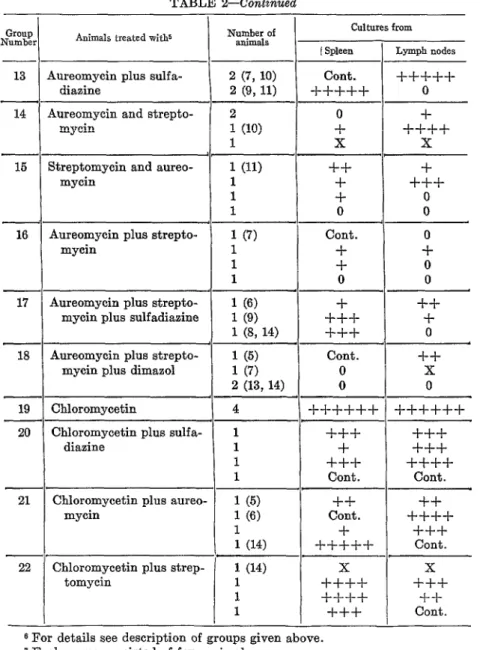
TABLE 2
Results of Cultures from Spleen and Lymph Nodes
of
Normal Controls and Treated Guinea Pigs. (Animals were infected 6-14-49. Treatment started one week after infection. Duration of experiment was three weeks. Cultures taken two days after cessation
of treatment.)
-
I
- r -. -_ -- -- ti- -- -- -- -- .- .- -- - -- -- -- -r -c -- +- d- -- I -c -c -c -Number of animals
cultures from
Spleen Lyrnph nodes
+-l-++++ +++ +++++ +++++ 0 +++ ++++ ++++ 1 ++++ I ++++++ ++++ +++ f+++ ++ +++ +++ +++ ++++ ++ + ++++ +++ +++++ +++ X 0 ++++ +++++i- +-l-+++ ++++++ 0 + 0 + ++++ +-!-++ + f++ -- -- d- --
. ..-L
-- -- -- -- -- -- -7 -
Normal controls. Not
treated 4 ++++++
2 Streptomycin 2
1 1 1 1 1 1 (718 +++ +++++ ++ 0 0 0 + 0
3 Streptomycin and sulfa- diazine
4
4 Sulfadiazine and strepto- mycin
5 Sulfadiazine
+I+
+++
++++
+
+++
++
2 1 16 Sulfadiazine plus strepto- mycin
7 Streptomycin and dimazol -t++
f+++ ++ ++ 1 1 1 1 1 1 1 1 2 1 1
8 +++
+ +++++-t- 0
Dimazol and streptomycin
9 Dimazol plus streptomycin X
+ 0 ++ +++++ -l-f++
Dimazol 2
1 1 10
11 1
1 (7) 1 (11) 1 Aureomycin and sulfa-
diazine +++++i- +++++
+ ++ 0 +++ +++++ X
Sulfadiazine and aureo- mycin
12 1 (9)
TABLE 2-Continued
13 Aureomycin plus sulfa- 2 (7, 10) Cont. ++-t-++
diazine 2 (9, 1u +++++ 0
14 Aureomycin and strepto- 2 0
mycin 1 (10) +zt+
1 x X
15 Streptomycin and aureo- 1 (11) ++
mycin 1 + +:+
1 + 0
1 0 0
16 Aureomycin plus strepto- 1 (7) Cont. 0
mycin 1 + -l-
1 + 0
1 0 0
17 Aureomycin plus strepto- 1 (6) + ff
mycin plus sulfadiazine 1 (9) +++ f
1 (3, 14) -l-S-+ 0
18 Aureomycin plus strepto- 1 (5) Cont. 4-f
mycin plus dimazol 1 (7) 0 X
2 (13, 14) 0 0
19 Chloromycetin 4 ++++++ ++++++
-
20 Chloromycetin plus sulfa- 1 -!-++ +++
diazine 1 + +++
1 i-++ ++++
1 Cont. Cont.
21 Chloromycetin plus aureo- 1 (5) ++ +-l-
mycin 1 (6) Cont. f+++
1 + +++
1 (14) +++++ Cont.
22 Chloromycetin plus strep- 1 (14) X X
tomycin 1 ++++ +++
1 ++++ -t+
1 -t++ Cont.
6 For details see description of groups given above. 7 Each group consisted of four animals.
8 The parentheses indicate that the animals died before the completion of the experiment. The figures inside the parenthesis refer to the number of days of treatment at the time of death. Most of the animals that died before the comple- tion of the experiment were being treated with aureomycin. The majority of these deaths were most probably due to the fact that we gave, at the beginning of the experiment, severa1 subcutaneous injections of an aureomycin supplied to us by Lederle (aureomycin hydrochloride parenteral, Lab. No. 7-9315) which was to be administered exclusively by the intravenous route. This preparation is toxic and causes marked destruction of tissue when given subcutaneously. After we became aware of this, oral aureomycin was used.
A pril
19501BRUCELLA ABORTUS
407
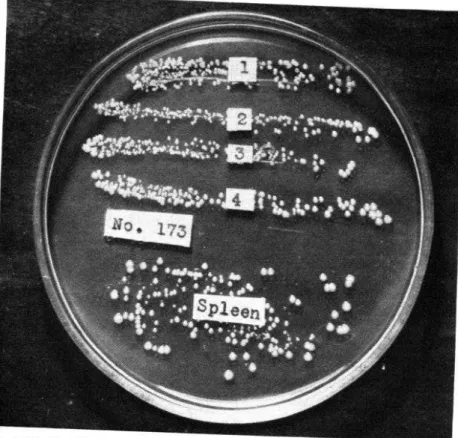
FIG. 1 “A”.-G.P. SO. li3: Sormal control. So trestment. Killed 23 d
lympb nodes of the side of inoculation. (2) Inguinal lymph nodes of side opposite that of’inooulation. (3) -4xillary lymph nodes. (4) Retroperitoneal (lumbar) lymph node.
ays after inoculation (1) Inguinal
FIG. 1. “II’ .-b.1~. 0. 1%:
408
BULLETIN
OF THE PAN AMERICAN
SANITARY
BUREAU
FIG. 2.-G.P. KO. 150: Sulfadinzine + Strepto~myc.zn (Group 4). Treatnlent with sulfadiazine started
one week after inoculation and with streptomycin two weeks after inoculation. Animal killed 2 days after cessation of treatment. Experiment lasted three weeks. (1) Inguinal lymph nodes of the side of brucella inoculation. (2) Axillary lymph nodes of the F;ide of brucella inoculation. (3)
side opposite that of brucella inoculation. (4) Retroperitoneal lymph nodes. Axillary lymph nodes of the
A pril 19501
BRUCELLA
ABORTUS
409
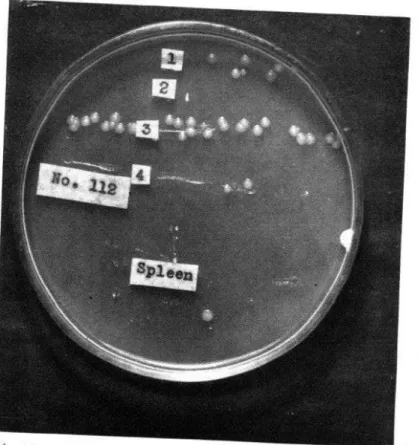
FIG. 4.-G.P. IIZ: ötreptomycin + A aft,er inoculation and lasted 2 weeks. Treatment with lasted one week. Animal killed 2 d
ureomycin. Treatment with streptomycin began one week
side opposite that of brucella inoculation (2) A
aureomycm started 2 weeks after inoculation and aYs after the cessatron of trestment. (1) Axillary lymph node of the
XI ‘II
guinal lymph node of side of brucella inoculation. (4) ary lymph node of side of brucella inoculation. (3) In- R t e roperitoneal lymph node (lumbar).
The animals mere killed two days after cessation of treatment and
the spleen and lyrnph nodes were cultured for
Brucella.
The results are
given in Table
2.
We lvould like to cal1 the attention of the reader to some of the
observations made under the conditions of this preliminary experiment.
(1) Chloromycetin failed completely to decrease the number of bru-
cella organisms in the spleen and lymph nodes of the infected guinea
pigs, under the conditions of this experiment (See Fig. 1 “a” and Clb7Y)S
(2) In group
4
(trea ment mith sulfadiazine started one week after
tBmcella
inoculation and continued during two weeks. Treatment Ivith
streptomycin
start.ed two weeks after inoculation and continued for
one week. Cultures made two days after cessation of t,reatment.) It
is interesting to observe that the four animals gave negative spleen
cultures but good growth was obt,ained from the lymph nodes. Figure 2
is illustrative of these findings. It must be noted also in Fig. 2 that
cultures of the inguinal lymph nodes on the side of
Bruce&
inoculation
and of the asillary lymph nodes on the side opposit’e t’hat of
BmceZZu
410 BULLETIN OF THE PAN AMERICAN SANITARY BUREAU (3) The combination of aureomycin plus streptomycin (groups 14, 15 and 16) was effective in decreasing markedly the number of organisms in the spleen and lymph nodes. Figs. 3 and 4 illustrate two representative cases. Al1 these combinations are being re-tested at present on a large num- ber of animals and at different stages of the infection.
SUMMARY AND CONCLUSIONS
The results of a pilot experiment on the chemotherapy of Br. abortus infection in the guinea pig have been presented.
There were no marked differences between one aerobic Br. abortus strain (Strain Sablín) and one anaerobic strain (KO. 1489) in their infectivity for the different organs and tissues of normal guinea pigs. The splenic pulp and lymph nodes were the only t’issues from which Brucella were consistently isolated. Therefore only spleen and lymph nodes were cultured for the evaluation of treatment.
The treatment with chloromycetin was completely ineffective when administered orally to guinea pigs. There is the possibility of deficient absorbtion. Blood levels of the drug were not determined.
Streptomycin dimazol (NU-445) and sulfadiazine when given alone caused only a slight decrease in the number of organisms in the spleen ancl lymph nodes. However, a combined treatment of streptomycin and sulfadiazine was effective in eliminating the brucellae from the spleen but not from the lymph nodes. This emphasizes the need of culturing both the lymph nocles and the spleen for the evaluation of treatment.
The combined treatmcnt with aureomycin plus streptomycin re- sulted in a marked decrease or complete elimination of brucellae from the spleen and/or the lymph nodes.
h large scale experiment is already in progress in an attempt to corroborate these preliminary findings and these different drugs and combinations of drugs are being tested at different stages of the experi- mental brucella infection.
QUIMIOTERAPIA DE LA INFECCI6N EXPERIMENTAL DE BRUCELLA ABORTUS EN EL COBAYO (Sumario)
Se presentan los resultados de un experimento tipo sobre la quimioterapia de la infección de Brucella abortus en el cobayo.
April 1954 BRUCELLA ABORTUS 411 El tratamiento con cloromicetina resultó ineficaz bajo las condiciones del experimento. La administración de estreptomicina, dimazol (NU-445) y sul- fadiazina por separado, produjo ~610 una pequeña disminuci6n en el número de microorganismos presentes en estos nódulos. Sm embargo, el tratamiento combi- nado de estreptomicina y sulfadiazina resultó eficaz para eliminar las Brucellas del bazo, aunque no de los nódulos linfaticos. Tal hecho recalca la necesidad de cultivar ambos nódulos para la evaluación de la terapia.
El tratamiento combinado de aureomicina, estreptomicina y dímazol fu6 el más eficaz.
LIST OF DRUGS SCHEDULED TO APPEAR
Latin Names
Acetarsolum
Acidum Acetylsalicylicum Acidum Ascorbicum Acidum Benzoicum Acidum Hydrochloricum
Acidum Hydrochloricum Dilutum Acidum Nicotinicum
Aconitinum Aconiti Tuber
Adrenalinum (Syn. Epinephrina) Aether Anaethesicus
Aether Vinylicus Aetheroleum Chenopodi Aethisteronum
Aethylis Aminobenzoas Aethylis Chloridum Amidopyrinum Aminophyllinum Amphetaminum Amphetamini Sulfas Amyleni Hydras Amylis Nitris
Apomorphini Hydrochloridum Argenti Nitras
Argentum Proteinicum Arseni Trioxydum Atropini Sulfas Atropinum Barbitalum
Barbitalum Natricum Barii Sulfas
Belladonnae Herba Belladonnae Radix Benzylis Benzoas Bismuthi Subcarbonas
Engli’sh Index
Acetarsol
Acetylsalicylic Acid Ascorbic Acid Benzoic Acid Hydrochloric Acid Dilute Hydrochloric Acid Nicotinic Acid
Aconitine Aconite Root
Adrenaline (Syn. Epinephrine) Anaesthetic Ether
Vinyl Ether Chenopodium Oil Ethisterone
Ethyl Aminobenzoate Ethyl Chloride Amidopyrine Aminophylline Amphetamine Amphetamine Sulfate Amylene Hydrate Amyl Nitrite
Apomorphine Hydrochloride Silver Nitrate
Silver Protein Arsenic Trioxide Atropine Sulfate Atropine Barbital
Barbital Sodium Barium Sulfate Belladonna Herb Belladonna Root Benzyl Benzoate Bismuth Subcarbonate Bismuthi Subsalicylas (Syn.
Salicylas) Bromof ormium Butacaini Sulfas Butylis Aminobenzoas Calciferolum
Calcii ‘Gluconas Calcii Lactas Carbacholum Carbarsonum Carbonei Dioxydum Carbonei Tetrachloridum Cascara Sagrada
Bismuthi Bismuth Subsalicylate Bromoform
Butacaine Sulfate Butyl Aminobenzoate Calciferol