363
REVIEW ARTICLE
EXERCISE AND SPORTS MEDICINE CLINIC
Exercise Maximum Capacity Assessment: A Review
on the Traditional Protocols and the Evolution to
Individualized Models
Sidney Cavalcante da Silva1,2
Walace David Monteiro2,3
Paulo de Tarso Veras Farinatti2,3
1. Post-Graduation Program in Physical Education – Gama Filho University (UGF).
2. Laboratory of Physical Activity and Health Promotion – State University of Rio de Janeiro (LABSAU/UERJ). 3. Post-Graduation Program in Physical Activity Sciences – Salgado de Oliveira University (Universo).
Mailing address:
Paulo de Tarso Veras Farinatti Laboratório de Atividade Física e Promoção da Saúde (LABSAU), Instituto de Educação Física e Desportos, Universidade do Estado do Rio de Janeiro
Rua São Francisco Xavier, 524, 8o
andar, salas 8.121-F e 8.133-F 20550-013 – Rio de Janeiro, RJ, Brazil. E-mail: [email protected]
ABSTRACT
The physiological adjustments to exercise have been extensively investigated. Despite the agreement on the importance of cardiopulmonary exercise testing to assess the maximal oxygen uptake capacity ( O2max), expressive differences within the available protocols may compromise
the comparison between studies as well as their clinical or functional utilization. The pres-ent study analyzed the most frequpres-ently used exercise testing protocols to assess the O2max
highlighting their pros and cons. Furthermore, the characteristics of staggered protocols were compared to those of individualized models, generally referred as ramp protocols. 102studies published between 1955 and 2009 were revised. The available studies suggest that ramp pro-tocols would produce better results compared to more traditional staggered tests. However, there is clearly a lack of recommendations regarding the application of such individualized protocols. Very few studies investigated the influence of the testing variables on the main expected results, as O2max and metabolic transition thresholds. It is not clear yet which is the
best strategy to determine the maximal exercise capacity, the initial speed of the test, increment ratio, interaction between speed and treadmill inclination, and total duration of the protocol. In conclusion, exercise ramp protocols have been elaborated based on the evaluator experi-ence, since precise recommendations that would define a real ‘protocol’ do not exist. Studies that contribute to the development of formal and precise criteria for exercise testing ramp protocols design are therefore necessary.
Keywords: ergometry, aerobic power, physical fitness, health.
INTRODUCTION
Specific tests valid to different physical effort demands are necessary, since clinical and functional variables measured at rest are not able to accurately predict the capacity of an indi-vidual to perform physical work(1,2). However, in order to have
the tests providing suitable information, it is necessary have the resources able to accurately record and measure the studied variables. Moreover, these variables should be presented so that they can be analyzed in relation to several aspects such as age, sex, body dimensions, and physical fitness level, to name some.
Concerning the application of tests for evaluation of the aero-bic metabolism, the most used variable is the maximal oxygen consumption ( O2max), considered by many authors one of the
best indicators of the cardiorespiratory function(3,4). The O 2max
can be defined as the highest oxygen rate uptake, transported and used by the muscles during work as hard as possible(1,5,6).
It is obtained by the application of an exercise cardiorespiratory test consisted of a non-invasive measurement strictly associated with the functional conditions(7-9). It is also a clinical variable of
epidemiological exposure able of diagnosis and prognostics of cardiovascular disease(8,10-14).
The clinical use of the functional capacity test has a long story. Willem Einthoven was the first to describe in 1908 that exercise produced depression of the ST segment(15). Since then,
exercise as a way of stressing the cardiovascular system in
diagnostic situations has played a central role in the evaluation of patients with coronary arterial disease. The exercise test also provides important information for the prevention and treatment of other pathological conditions, such as pulmonary disorders, effort intolerance, dyspnea of cardiocirculatory primary origin, dyspnea of ventilatory pulmonary etiology or of gas exchange(16-22). Likewise, it is
an important strategy in the diagnosis and follow-up of individuals involved in physical activities programs. Such fact occurs the O2max
knowledge through the application of exercise tests aids in the detection of the functional capacity and prescription of the effort intensity in populations with varied needs(6,23,24).
Despite the consensus on the importance of the ergometric test and the quantification of the O2max, the protocols used
with this aim present expressive differences, which can com-promise the interpretation of the results obtained in the clini-cal and functional contexts(10,12,25,26). Froelicher et al.(27), when
compared the reproducibility and the physiological responses of three maximal protocols, showed that, although the O2max
in 25 sedentary and 12 trained individuals and did not observe significant alterations in the O2max for the sedentary ones,
des-pite the difference verified in the test times. These expressive differences between protocols may compromise the analysis of the obtained results in a comparative perspective.
In the beginning of the 1990 decade, Myers et al.(10) presented
the ramp protocol as a means of overcome limitations imposed by the scale protocols which were a priority application until that time. Such fact would occur because the ramp protocol considers the individual maximal exercise capacity in its designing, presen-ting constant and continuous increase of the applied load. The result would be greater linearity between oxygen consumption and the load ratio, compared to protocols with high and uneven increment load(10,11,25). Previous studies indicate that scale
proto-cols with strong load increment variations would result in lower estimation of the exercise capacity, especially in individuals with cardiovascular diseases(13,24,29-31). On the other hand, ramp
proto-cols would induce more uniform hemodynamic and respiratory responses, facilitating information at submaximal intensities as the ventilatory threshold(11,23,32).
Despite these advantages, the application of ramp protocols is curious when the criteria adopted in their designing are exami-ned. For example, although the main test closing is the estimated maximal exercise capacity, there is not consensus in the literature concerning the manner it is determined. The same situation oc-curs concerning the initial velocity of the test, which does not present a clear criterion for its definition, ranging between the use of prediction equations, the use of the metabolic equivalent (MET) or the application of a previous maximal exercise test, making use hence of the maximal power generated divided by the test time. The load increment during the protocols is also ob-ject of confusion, especially on treadmill tests: it was not possible to find a consensual description for a gentle variation in velocity and treadmill inclination, despite this aspect being crucial in the designing of ramp protocols.
In fact, the recommendations for the ramp protocols appli-cation for cardiorespiratory exercise test tend to be too generic
(6,13,33,34). Generally, they limit to propose that small and
conti-nuous increment in the work power, velocity and /or ramp incli-nation, in a time interval between eight and 12 minutes is used. On the other hand, in more traditional scale protocols, detailed information is provided, as can be seen in the Bruce, Balke-Ware and Naughton tests, among others(6,33). It can be stated hence
that a real ‘protocol’ is missing for ramp tests, which makes its application and results comparison difficult in distinct popula-tions and training situapopula-tions.
Thus, the aim of the present study is to assess the aspects of the main protocols used in the determination of maximal exer-cise capacity with emphasis on the ramp protocol, highlighting its limitations and proposing alternatives which can be used in more accurate outlining of this kind of protocol. Therefore, the text is divided in three parts. on the first, the use of protocols for the determination of the maximal exercise capacity. The second part analyses the criteria used in the literature for determination of initial and final velocities, as well as the load increment ratio in the ramp protocols, pointing its deficiencies. Finally, considera-tions to raise issues to be investigated in studies with the aim to improve designing and application of ramp protocols are made.
Traditional protocols
The first treadmill exercise protocol for measurement of VO2max consisted of the use of intermittent, progressive work
loads separated by days, designated for healthy individuals(27).
According to Taylor et al.(35), the procedure would be justified as long as the loads were close to maximal and could influence the subsequent efforts. The aim of the protocol was that the indivi-dual ended in a load in which increase of oxygen consumption cold not be verified any longer, being hence it considered the O2max. According to Froelicher et al.(27), this situations would go
on for many days, making the test inconvenient and impractical. Perhaps for this reason, Mitchell et al.(36) have chosen to adapt the
protocol by Taylor, separating its stages in 10-minute intervals. It was demonstrated that the O2max, reproducibility in comparison
to the original protocol was the same, which would make its application much easier.
Nevertheless, other investigators believed that the conti-nuous protocol was the most convenient proposal. In this flow of thinking, the treadmill protocol by Balke represented an evo-lution. Balke justified his concern with physical fitness due to the alterations which were occurring with the onset of work automa-tion, in the means of transportation and in many daily activities, leading to significant reduction of effort and consequently of physical exercise performance. Published in the end of the 1950 decade(37), the test protocol consisted of warm-up corresponding
to approximately 4METs and, from that point, the individuals walked at 3.3mph velocity, having the work load intensified at every minute by the increase of the treadmill inclination in 1% degree. The adopted criterion for test interruption was based on the heart rate, in 180bpm. According to Balke and Ware(37), tests in
which this criterion could not be adopted were rare, although in some occasions respiratory limitations, even in reduced heart ra-tes, were sued as indicators for interruption. We understand from this, that despite the Balke protocol had produced interesting data, offering a classification for work capacity in relation to the oxygen consumption regarding weight, age or training status, it was still far from being a test with maximal characteristics.
According to principles similar to Balke’s, another protocol which proposed to evaluate the cardiovascular function was developed by Bruce et al.(38). In it, it was tried to isolate the
car-diovascular influence on the O2max, classifying the individuals
365
Subsequently, Ellestad et al.(40) proposed a maximum stress test as standard for the cardiovascular evaluation. Tests perfor-med by 1,000 individuals aged between seven and 83 years, chosen out of 4,028 previously applied by the clinical physiology division of the Long Beach Memorial Hospital were analyzed. De-signed for treadmill, the protocol was divided in four stages and the load imposed presented inclination of 10% degree, steady for all stages, with the first one having duration of three minutes at 1.7mph velocity. The second stage presented decrease of one mi-nute in time, with increase of 1.3mph of initial velocity. From that moment, time was kept in two minutes and velocity increased to 4mph and 5mph, successively. The protocol was considered over when the individual reached exhaustion, presented signifi-cant decrease of blood pressure, signifisignifi-cant alteration of the ST segment (infra or supra unlevelling), precordial pain, premature multiple ventricular contractions or ventricular tachycardia. In case none of these signs or symptoms occurred, the individuals were persuaded to continue until reaching 95% of maximal heart rate predicted for their age.
Although these protocols were presented as tests aiming to determine the O2max, in fact all of them presented
characteris-tics which compromised their measurement. The Balke proto-col, despite have been the most coherent concerning the test evolution, was normally too long, leading the individual to early fatigue due to velocity and increase in inclination, especially in the individuals with reduced physical conditioning. Additionally, in case no problem compromised the test, its end was associated to heart rate at around 180bpm, which could underestimate or overestimate the determination of the maximum oxygen con-sumption. Thus, the characteristic of maximal test was lost, since a pre-determined heart rate was used as base. The Bruce pro-tocol, despite having as one of its interruption criteria maximal voluntary exhaustion, in case no problem led to its interruption, presented sudden increase in load. Therefore, fatigue of lower limbs could be anticipated, contributing to underestimate the O2max. The proposal by Ellestad et al.(40) was very similar to the
Bruce protocol. However, although the inclination (10% degree) after the first stage did not increase again during the entire test, as the velocity increased, difficulties were observed to the un-trained individuals, who presented discomfort in the calf mus-culature(40). Moreover, the test was finished when the individual
reached 95% of maximal heart rate predicted for the age, which goes against a basic principle of the maximal cardiorespiratory exercise, that is, voluntary exhaustion.
Summing up, these initial protocols had as common charac-teristic the aim to quantify the maximal exercise capacity through the maximum oxygen consumption. However, differences in the increment ratio, time of remaining in each load, inclination or to-tal test time compromised the data comparison between indivi-duals, and even in a set of tests for the same individual(27,28,37,39-42).
Ramp protocol
The technological advances enabled that the ramp protocol came out as a new proposal since it could work elements which constitute a protocol (increment ratio, time remaining on each load, velocity, inclination and total time of the test) in a more har-monious manner(10,14,32,43,44). Such situation occurs because from
the moment it is possible to determine initial and final velocities,
test time and increment and inclination ratios, it is possible to individualize the test. Thus, if no alteration in the maximal oxygen uptake occurs – despite the adaptations being able to occur in the mechanical efficiency in submaximal loads(27) –, the
altera-tions occurred in the test time probably would not be significant. Therefore, there would be more accuracy in the analysis of the cardiorespiratory conditioning when associated with the time of remaining in the test, as it is done with the continuous protocols. Additionally, the data comparison between individuals would be facilitated, regardless of the initial and final velocities, test time and increment and inclination ratio, since the designing criteria adopted for the overload evolution would be the same.
Ramp protocols refer to incremental exercise tests in which the applied power is continuously and constantly increased in a given time interval(2,6,10). On a treadmill, for instance, this would
occur through velocity, inclination or the combination of both variables. The first study proposing the use of an exercise test pro-tocol with these characteristics was performed by Whipp et al.(32).
The test was carried out in a cycle ergometer, with duration of four to eight minutes. The results revealed that the ramp protocol reliably reproduced the parameters used in many procedures for maximal functional capacity acquisition, which led the authors to recommend its use.
However, the first specific proposal of a ramp protocol was presented by Myers et al.(10). The authors compared tests in a cycle ergometer and treadmill to the most common protocols of clinical use. 10 patients with chronic cardiac insufficiency, 11 with coronaropathy limited by angina during exercise, 10 asymp-tomatic with coronaropathy during exercise and 10 healthy individuals paired by age were observed. The subjects perfor-med three bicycle tests (25W by two-min stage, 50W by two-min stage and ramp) and three on treadmill (Bruce, Balke and ramp), in random order and on different days. The ramp tests had the increment ratios for bicycle and treadmill individualized, in order to create tests with approximate duration of 10 minutes.
Some aspects related to the use of a ramp protocol could be highlighted from the results obtained by Myers et al.(10): Firstly,
the errors associated with the O2max from high load increments
would have been minimized. Additionally, the ramp protocols would produce better linear relation between the oxygen con-sumption and the load ratio applied, besides better relation be-tween the consumption reduction and the load ratio due to the coronary disease. The study also proposes that although short exercise tests cause discrepancy between the O2max and the
load ratio, protocols with approximate duration of 10 minutes would minimize this problem, acting as a good option for the ramp tests. Finally, the O2max would be more accurately
deter-mined by short protocols low load increment.
Although the results of the study have opened a new pers-pective for the application of exercise tests, the authors stressed that the great limitation in the use of the ramp protocol was as-sociated with the development of software and treadmills which would allow its wide application(10). Subsequently, Myers et al.(25),
as a fast way of estimation of the exercise capacity, obtaining parameters for the protocol designing with no need of previous application of maximum exercise test.
The technological advance in the manufacturing of tread-mills and development of software spread and allowed the use of ramp protocols more easily(11,14,23,25,43-46). This spread reflected
on the recommendations of documents published by normative agencies, dedicated to the application of tests and prescription of exercises in general(6,13,33,34). Nevertheless, these
recommen-dations remain excessively generic, making their application in specific situations difficult. In other words, it is difficult to state that there is actually protocol indication for ramp tests in the formats found for more traditional tests, such as Bruce, Ellestad, or Balke-Ware’s.
Perhaps it is more correct to state that the ‘ramp protocols’ terminology translates a set of principles which physiologically ground some approach for the outlining of exercise tests – once these principles are respected, each evaluator designs his/hers, based on his/her experience and knowledge. If, sometimes this fact adds certain flexibility in the designing of tests, it also cau-ses problems. Inexperienced evaluators, for instance, have great chance to make wrong choices for the load increment ratios, initial velocity and test time, considering the level of physical conditioning of the subject tested or the aims of the evaluation. Moreover, the lack of standardized procedures makes the com-parisons between tests results difficult. In fact, it explains the popularity kept by protocols such as Bruce’s, whose results are easily comparable and count with extensive database in many evaluation centers. The next section is dedicated hence to the analysis of the problems for the designing of ramp protocols and as the available studies have been treating them.
Problems associated with the ramp protocols designing
Despite its spread, the ramp protocol presents characte-ristics which are not well-defined and which are, on the other hand, crucial for its application. Among them, we highlight: which initial velocity should be applied? Which is the best way to determine the maximum exercise capacity to be used as criterion in the protocol’s design? Which is the best load in-crement ratio? Which inclination degree is the most suitable? How long should the test last?
Table 1 presents the recommendations of some guiding do-cuments, published by normative agencies, for performance of one treadmill exercise test based on the ramp protocol. Obser-ving the recommendations supported by the normative agen-cies mentioned in table 1, it can be seen that the only criterion that somehow provides standardization refers to the test time, which should be kept between six and 12 minutes. Except for the recommendations by the American Heart Association, a little more detailed, but still insufficient, the documents are unable to translate the magnitude of the initial/final velocity ratio, incre-ment ratio,inclination degree and test time in the determination of the O2max. In other words, a real ‘protocol’ for outlining of a
test on ramp is scarce.
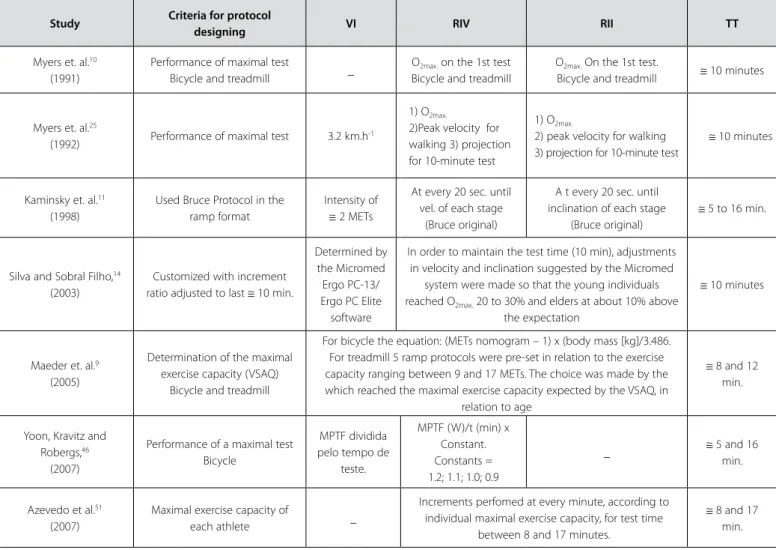
Table 2 presents the results of research on the guiding prin-ciples of elaboration of ramp protocols, extracted from some studies which made use of this kind of test, from the initial pro-posal by Myers et al.(10).
Examining the selected articles, the only characteristic which seems common to the all – despite having been presented in many formats – is the determination of the maximal exercise capa-city (Table 2). Although Myers et al.(10,25) made use of the maximal test for this aim, in 1992 they proposed the use of a questionnaire. Subsequently, Myers et al.(47) presented a nomogram to predict
the exercise capacity from specific activities. However, despite the good results by the authors, the studied sample was extremely specific – individuals with cardiac problems, hypertensive and overweighed (BMI= 28 ± 5kg/m2). Moreover, no standard system
was used for measurement of the maximal oxygen consump-tion and a subsequent correlaconsump-tion between predicted values by the questionnaire and those directly measured was found. Even though, the questionnaire remained being widely used, validated only seven years after it had come out(48).
Analyzing further investigation which made use of ramp pro-tocols, it is observed that in the majority, the adopted criterion to design them was the previous application of a maximal exer-cise test (Table 2)(9,11,14,43,46,49-51). The choice of a protocol greatly
occurs due to its applicability. For evident reasons, an evaluation in which the subject needs to perform two maximal tests is not practical. On the other hand, how to make use of a question-naire which even after having been validated and reviewed(48,52),
continues to be specific to a given population? The literature is not scarce on articles which show the importance of the deter-mination of the maximal exercise capacity in the designing of an individualized protocol; however, the manner how it is done is hardly clearly described.
Another important element is the load increment during the test. Despite being crucial for its outlining, this variable has been little studied. Great part of the research worked with steady velocities, promoting increment in the treadmill inclination. The curiosity is that this inclination ranged in some studies from 0 to 29% degree(11,26,43,47-49,53). Midgley et al.(26), in a study assessing
the use of the exercise test time between eight and 12 minutes, recommend that the treadmill tests do not surpass 15% degree in inclination. However, once again it is not clear the reason for this recommendation.
The criticism made about the Bruce protocol(38) is exactly
about the increment ratio applied in the test, which can influence on the pattern of the physiological responses. Protocols with this nature frequently overestimate the maximal oxygen capacity when it is estimated from the exercise time or work load reached. There is higher chance that early fatigue of lower limbs occurs due to great load increments(6,10). It is logical to assume that,
in a ramp protocol the increments should be continuous and with constant increase, differently from protocols similar to the traditional by Bruce. However, it is perfectly possible that high in-clination harms the test performance, leading to load increments equally rough and remarkable, especially concerning sedentary individuals. In that case, if the adopted criterion for determination of initial velocity is not clear (figure 2), is can possibly influence on the adopted increment ratio, especially if it combines velocity and inclination.
Jones and Doust(54) verified the energetic cost of outdoor
367
Table 1. Recommendations to the tests performance for measurement of maximal exercise capacity using a treadmill ramp protocol
Document Criteria for
protocol designing Initial velocity
Velocity increment ratio
Inclination
increment ratio Test time Observations
American Heart Association (2001)(33)
Estimates functional capacity (FC) from a scale of activities, but does
not present it
Low
Gradual increase until the individual is running at wide steps
(good stride)
Beginning at 0 degree, with progressive increase at steady time (10 to
60 seconds)
6 – 12 min.
- Occasionally the test can be shortened or extended due to the FC
prediction errors, compromising the results.
American College of Cardiology e a American Heart Association (2002)(13)
_ _ _ _ 6 – 12 min.
- The advantage in customizing the protocol is to perform it between six
and 12 minutes. - The ramp protocol allows gradual load increase, improving hence the
determination of of. American Thoracic
Society/American College of Chest Physicians (2003)(34)
_ 1.0 to 1.6
km.h-1 Regular intervals Regular intervals _
- The treadmill protocol can be monitored similarly to the ramp
protocol in bicycle.
American College of Sports Medicine
(2009)(6)
Predict the FC _ Continuous and progressive
Continuous and
progressive 8 – 12 min.
- The ramp protocol is a test model which works with continuous and
progressive loads. - Increase of 1 to 3% per minute in inclination degree at constant velocity
(2.4 to 4.0km/h) can be used in the ramp protocol for deconditioned
individuals.
Table 2. Principles used for the designing of ramp protocols for determination of the maximal oxygen consumption (O2max) in many studies: criteria for protocol designing,
initial velocity (IV), velocity increase ratio (VIR), inclination increase ratio (IIR), final velocity (FV) and test time (TT).
Study Criteria for protocol
designing VI RIV RII TT
Myers et. al.10
(1991)
Performance of maximal test
Bicycle and treadmill _
O2max. on the 1st test
Bicycle and treadmill
O2max. On the 1st test.
Bicycle and treadmill ≅ 10 minutes
Myers et. al.25
(1992) Performance of maximal test 3.2 km.h-1
1) O2max.
2)Peak velocity for walking 3) projection for 10-minute test
1) O2max.
2) peak velocity for walking 3) projection for 10-minute test
≅ 10 minutes
Kaminsky et. al.11
(1998)
Used Bruce Protocol in the ramp format
Intensity of ≅ 2 METs
At every 20 sec. until vel. of each stage
(Bruce original)
A t every 20 sec. until inclination of each stage
(Bruce original)
≅ 5 to 16 min.
Silva and Sobral Filho,14
(2003)
Customized with increment ratio adjusted to last ≅ 10 min.
Determined by the Micromed Ergo PC-13/ Ergo PC Elite
software
In order to maintain the test time (10 min), adjustments in velocity and inclination suggested by the Micromed
system were made so that the young individuals reached O2max. 20 to 30% and elders at about 10% above
the expectation
≅ 10 minutes
Maeder et. al.9
(2005)
Determination of the maximal exercise capacity (VSAQ)
Bicycle and treadmill
For bicycle the equation: (METs nomogram – 1) x (body mass [kg]/3.486. For treadmill 5 ramp protocols were pre-set in relation to the exercise capacity ranging between 9 and 17 METs. The choice was made by the which reached the maximal exercise capacity expected by the VSAQ, in
relation to age
≅ 8 and 12 min.
Yoon, Kravitz and Robergs,46
(2007)
Performance of a maximal test Bicycle
MPTF dividida pelo tempo de
teste.
MPTF (W)/t (min) x Constant. Constants = 1.2; 1.1; 1.0; 0.9
_ ≅ 5 and 16
min.
Azevedo et al.51
(2007)
Maximal exercise capacity of
each athlete _
Increments perfomed at every minute, according to individual maximal exercise capacity, for test time
between 8 and 17 minutes.
occur as long as the running velocity outdoors is between 2.9 and 5.0m.s-1 and duration above five minutes, being equal to a
race between 10.5 and 18.0km.h-1. Åstrand and Rodahl(55) advert
that not even exceptional athletes were able to run at velocity close to the maximum running velocity longer than seven minu-tes, with approximate inclination of 2.67% degree at every three minutes. Thus, one could ask: is it possible that all sedentary on non-individuals or non-athletes support increments of this nature (per minute) until the end of a ramp protocol with approximately 10 minutes of duration? Probably not.
As a matter of fact, the test tiem is another factor to be dis-cussed. Although this is the variable which presents greatest consensus in the literature, many studies showed as optimum time for a maximal exercise test a 10-minute threshold (table 2). A classic study, considered as reference in the time of the protocol issue, was published by Buchfuhrer et al.(49). The authors tested 20
healthy individuals in five different protocols in it. These protocols made use of two velocities (3.4mph and 4.5mph) for distinct inclination variations per minute (0.8%, 1.7%, 2.5%, 4.2%, 1.7%, 4.2%). The authors divided the tests in short, intermediate and long, showing that the results between eight and 17 minutes were the ones which produced the highest O2max.values. They
suggested hence that the protocols were designed so that the maximal tolerance to effort occurred in 10 minutes. Billat et al.(56),
in a study verifying the protocol effect in the determination of the O2max velocity ( O2max) and exhaustion time in long-distance
running athletes reported test time for O2max between 5.45 ±
2.00 min and 6.13 ± 2.49 min. In another study, Astorino et al.(50)
did not find significant difference for the O2max between short
and medium protocols (7.38 ± 0.60 min and 10.50 ± 0.87 min, respectively). Additionally, optimum time for O2max acquisition
suggested was a range between seven to 10 minutes.
More recently, Yoon et al.(46) criticized the study by Buchfuhrer
et al.(49), highlighting methodological problems which would
make the verification of the protocol time influence in the de-termination of the O2max.impossible. As an illustration, it was
argued that although Buchfuhrer et al.(49) have used a sample with 12 subjects, they made use of only five individuals to deter-mine the influence of the protocol duration time in the O2max
determination. Moreover, the highest O2max for the evaluated
sample was reached with eight minutes of test and 88% of the subjects were able to reproduce for this time the O2max reached
in the initial evaluation.
Midgley et al.(26) performed a compilation with 12 studies
which assessed the O2max determination from incremental tests
for different test times in cycle ergometer and treadmill (five and nine studies, respectively). In their conclusions, the authors report that the study by Buchfuhrer et al.(49) was used to have a
dogmatic view that the test time of incremental exercise should last between eight and 12 minutes. On the other hand, more updated evidence suggested that in order to obtain the O2max
in cycle ergometer and treadmill, it should oscillate, respectively between seven and 26 and five and 26 minutes. Furthermore, Midgley et al.(26) called attention to the fact that the efficiency
of short-duration tests would be associated with the quality of the warm-up performed before the test.
In fact, research in the literature does not lead to conclusions this peremptory. Firstly, it was not possible to identify a dogma relation in the test time use for incremental exercise test be-tween eight and 12 minutes. The study by Buchfuhrer et al.(49) already pointed out that possible factors associated with the
O2max reduction due to longer test time, could include high
body temperature, higher dehydration, difference in the use of substrates or ventilatory muscular fatigue. This scenario led to the recommendation of a duration range for the incremental tests of 10 ± 2 minutes. Further studies reported that lower O2max due
to the time could be related to alterations in the muscle tempe-rature, O2 offer and acid-base balance, recommending the use
of a range between eight and 12 minutes for the performance of exercise test in active individuals and long-distance athletes(46,50).
Secondly, when the available studies are analyzed, it is obser-ved that the highest test times are associated with low velocities (< 6.0km/h) and inclination ratios (0.8%/1min). The opposite is also true, either by the activity of the velocity/inclination asso-ciation, or by the increase in only one of these variables. It is true that is does not seem to lead to significant differences in the O2max. determination. However, the question remains: would
differences this big in the velocity/inclination ratio influence on the determination of secondary variables, such as the oxygen consumption ratio to submaximal loads and ventilatory threshol-ds? Unfortunately, this fact is not clear in the literature yet.
In conclusion, there is shortness of objective criteria which favor the designing of ramp protocols. Protocols which only de-pend on the evaluator’s experience for its optimum application do not seem to be suitable. As long as the protocols outlining considers aspects such as the test time, test velocity and incli-nation percentage in isolation, accurate and reproducible outli-ning could not be established. Thus, perhaps the best protocol is the one which is able to combine all the ramp variables in an integrated manner, making a better O2max. determination
possible. Studies which may contribute to the definition of more formal and accurate criteria for the designing of ramp tests are very rare. Therefore, bolder investment in research on this field becomes necessary.
CONCLUSION
The literature review reveals that the available documents and studies propose recommendations which allow that any evaluator, regardless of his/her experience in conducting car-diorespiratory exercise tests, can safely elaborate ramp proto-cols. In other words, as previously mentioned, in the simple acceptance of the term, there is not a defined protocol for designing of these ramp exercise tests, at least in the format that is found for tests such as the Bruce, Balke, Naughton, Ellestad’s and many others.
In practical terms, there is a strong probability that exams are misapplied or simply lost, since inadequate definition of the maximal exercise capacity, a crucial variable in prediction of initial velocity, final velocity, increment ratio (treadmill: ve-locity and inclination; cycle ergometer: load in watts) and, therefore, test time. Moreover, the lack of more formal recom-mendations for the variables involved in the test reduces its reproducibility, making it extremely difficult to compare the results obtained by different protocols.
deter-369
mining the maximal exercise capacity will represent a great step in the direction of creating criteria for ramp protocols design-ing. Moreover, research which focus on the velocity/inclination in-teraction and test time is crucial to establish criteria which will be respected when a ramp protocol is designed, keeping its main char-acteristics, that is, the customization of the protocol with no harm to the analysis and comparison of the results obtained as a whole.
ACKNOWLEDGEMENTS
This study was sponsored by FAPERJ (file E-26/150.751/2007) and by CNPq (file 305729/2006-3).
All authors have declared there is not any potential conflict of interests concerning this article.
REFERENCES
1. Noakes TD. Physiological models to understand exercise fatigue and the adaptations that predict or enhance athletic performance. Scand J Med Sci Sports 2000;10:123-45.
2. Neder JA, Nery LE. Fisiologia Clinica do Exercício – teoria e prática. Artes Médicas: São Paulo, 2003. 3. Basset DR, Howley ET. Limiting factors for maximum oxygen uptake and determinants of
endurance performance. Med Sci Sports Exerc 2000;32:70-84.
4. Snell PG, Stray-Gundersen J, Levine BD, Hawkins MN. Maximal oxygen uptake as a parametric measure of cardiorespiratory capacity. Med Sci Sports Exerc 2007;39:103-7.
5. Howley ET, Basset DR, Welch HG. Criteria for maximal oxygen uptake: review and commentary. Med Sci Sports Exerc 1995; 27:1292-301.
6. American College of Sports Medicine (ACSM). Guidelines of exercise testing and exercise prescrip-tion. 8th ed. Philadelphia: Lea & Febiger, 2009.
7. Carter H, Jones AM, Barstow TJ, Burnley M, Williams GA, Doust JH. Oxygen uptake kinetics in treadmill running and cycle ergometry: a comparison. J Appl Physiol 2000;89:899-907. 8. Peterson MJ, Pieper CF, Morey MC. Accuracy of VO2máx prediction equations in older adults.
Med Sci Sports Exerc 2003;35:145-9.
9. Maeder M, Wolber T, Atefy R, Gadza M, Ammann P, Myers J, et al. Impact of the exercise mode on exercise capacity: bicycle testing revisited. Chest 2005;128:2804-11.
10. Myers J, Buchanan N, Walsh D, Kraemer M, McAuley P, Hamilton-Wessler M, Froelicher VF. Comparison of the ramp versus standard exercise protocols. J Am Coll Cardiol 1991;17:1334-42. 11. Kaminsky LA, Whaley MH. Evaluation of a new standardized ramp protocol: the BSU/Bruce
ramp protocol. J Cardiopulmonary Rehabil 1998;18:438-44.
12. Ashley EA, Myers J, Froelicher V. Exercise testing in clinical medicine. Lancet 2000;356:1592-7. 13. Gibbons RJ, Balady GJ, Bricker JT, Chaitman BR, Fletcher GF, Froelicher VF, et al. ACC/AHA
Guideline update for exercise testing: a report of the American College of Cardiology/American Heart Association Task Force on Pratice Guidelines (Committee on Exercise Testing). 2002. 14. Silva OB, Sobral Filho DC. A new to guide velocity and inclination in the ramp protocol for the
treadmill ergometer. Arq Bras Cardiol 2003;81:48-53.
15. Ashley EA, Myers J, Raxwal V, Froelicher V. Advances in exercise testing. International Journal of Bioelectromagnetism 2000; 1 (2) <http://ijbem.k.hosei.ac.jp/volume2/number1/art7.htm> . 16. Schrijen F, Ferrara G, Romero CP, Sadoul P. Is it possible to predict pulmonary arterial
hyperten-sion from an exercise test? G Ital Cardiol 1984;14 Suppl 1:50-60.
17. Martinez, FJ, Stanopoulos I, Acero R, Becker FS, Pickering R, Beamis JF. Graded comprehensive cardiopulmonary exercise testing in the evaluation of dyspnea unexplained by routine evalu-ation. Chest 1994;105:168-74.
18. Carone M, Patessio A, Appendini L, Purro A, Czernicka E, Zanaboni S, et al. Comparision of invasive and noninvasive saturation monitoring in prescribing oxygen during exercise in COPD patients. Eur Respir J 1997;10:446-51.
19. European Respiratory Society (ERS) Task Force. Clinical exercise testing with reference to lung diseases: indications, standardization an interpretation strategies. Eur Respir J 1997;10:2662-89. 20. Hansen JE, Wasserman K. Exercise testing in patients with interstitial lung disease. Chest
1998;113:1148-9.
21. Myers J, Gullestad L, Vagelos R, Do D, Bellini D, Ross H, Fowler MB. Clinical, hemodynamic, and cardiopulmonary exercise test determinants of survival in patients referred for evaluation of heart failure. Ann Intern Med 1998;129:286-93.
22. Myers J, Gullestad L, Vagelos R, Do D, Bellini D, Ross H, Fowler MB. Cardiopulmonary exercise testing and prognosis in severe heart failure: 14 mL/kg/min revisited. Am Heart J 2000;139:78-84. 23. Myers J, Bellin D. Ramp exercise protocols for clinical and cardiopulmonary exercise testing. Sports
Med 2000;30:23-9.
24. Froelicher VF, Myers JN. Exercise and the heart. 4th ed. Philadelphia: Saunders Company, 2000.
25. Myers J, Buchanan N, Smith D, Neutel J, Bowes E, Walsh D, Froelicher VF. Individualized ramp treadmill: observations on a new protocol. Chest 1992;101:236-41.
26. Midgley AW, Bentley DJ, Luttikholt H, McNaugton LR, Millet GP. Challenging a dogma of exercise physiology: does an incremental exercise test for valid VO2max determination really need to last
between 8 and 12 minutes? Sports Med 2008;6:441-7.
27. Froelicher VF, Jr. Brammell H, Davis G, Noguera I, Stewart A, Lancaster MC. A comparison of the reproducibility and physiologic to three maximal treadmill exercise protocols. Chest 1974;65:512-7. 28. Kang J, Chaloupka EC, Mastrangelo MA, Biren GB, Robertson RJ. Physiological comparisons among three
maximal treadmill exercise protocols in trained and untrained individuals. Eur J Appl Physiol 2001;84:291-5.
29. Redwood DR, Rosing DR, Goldstein RE, Beiser GD, Epstein SE. Importance of the design of an exercise protocol in the evaluation of patients with angina pectoris. Circulation 1971;43:618-28. 30. Webster MWI, Sharpe DN. Exercise testing in angina pectoris: the importance of protocol design in
clinical trials. Am Heart J 1989;117:505-8.
31. Working Group Report (WGR). Recommendations for exercise testing in chronic heart failure patients. Eur Heart J 2001;22:37-45.
32. Whipp BJ, Davis JA, Torres F, Wasserman K. A test to determine parameters of aerobic function during exercise. J Apply Physiol 1981;50:217-21.
33. Fletcher GF, Balady GJ, Amsterdam EA, Chaitman B, Eckel R, Fleg J, et al. Exercise standards for testing and training: a statement for healthcare professionals from the American Hear Association. Circula-tion 2001;104:1694-740.
34. American Thoracic Society (ATS)/American College of Chest Physicians (ACCP). ATS/ACCP Statement on cardiopulmonary exercise testing. Am J Respir Crit Care Med 2003;167:211-77.
35. Taylor HL, Buskirt E, Henschel A. Maximal oxygen intake as an objective measurement of cardiorespira-tory performance. J Appl Physiol 1955;8:73-80.
36. Mitchell JH, Sproule BJ, Chapman CB. The physiological meaning of the maximal oxygen intake test. J Clin Invest 1958;538-47.
37. Balke B, Ware RW. An experimental study of “Physical Fitness” of air force personnel. US Armed Forces Med J 1959;10:675-88.
38. Bruce RA, Blackman JR, Jones JW. Exercise testing in adult normal subjects and cardiac patients. Pediatrics 1963;32:742-55.
39. Bruce RA. Exercise testing of patients with coronary heart disease, principles and normal standards for evaluation. Ann Clin Res 1971;3:323-32.
40. Ellestad MH, Allen W, Wan MCK, Kemp GL. Maximal treadmill stress testing for cardiovascular evalu-ation. Circulation 1969;39:517-22.
41. Froelicher VF Jr, Thompson AJ, Davis G, Stewart AJ, Triebwasser JH. Prediction of maximal oxygen consumption. Comparison of the Bruce and Balke treadmill protocols. Chest 1975;68:331-6. 42. Pollock ML, Bohannon RL, Cooper KH, Ayres JJ, Ward A, White SR, et al. A comparative analysis of four
protocols for maximal treadmill stress testing. Am Heart J 1976;92:39-46.
43. Will PM, Walter JD. Exercise testing: Improving performance with a ramped Bruce protocol. Am Heart J 1999;138:1033-7.
44. Bentley DJ, Newll J, Bishop D. Incremental exercise test design and analysis. Sports Med 2007;37:575-86. 45. Tebexreni AS, Lima EV, Tambeiro VL, Barros Neto TL. Protocolos tradicionais em ergometria, suas
aplicações práticas “versus” protocolo de rampa. Rev Soc Cardiol Estado de São Paulo 2001;3:519-28. 46. Yoon B, Kravitz L, Robergs R. VO2max, protocol duration, and the VO2 Plateau. Med Sci Sports Exerc
2007;39:1186-92.
47. Myers J, Do D, Herbet W, Ribisl P, Froelicher VF. A nomogram to predict exercise capacity from a specific activity questionnaire and clinical data. Am J Cardiol 1994;73:591-6.
48. Myers J, Bader D, Madhavan R, Froelicher VF. Validation of a specific activity questionnaire to estimate exercise tolerance in patients referred for exercise testing. Am Heart J 2001;142:1041-6. 49. Buchfuhrer MJ, Hansen JE, Robinson TE, Sue DY, Wasserman K, Whipp B. Optimizing the exercise
protocol for cardiopulmonary assessment. J Appl Physiol 1983;55:1558-64.
50. Astorino TA, Rietschel JC, Tam PA, Taylor K, Johnson SM, Freedman TP, et al. Reinvestigation of optimal duration of VO2max testing. JEPonline 2004;7:1-8.
51. Azevedo LF, Brum PC, Rosemblatt D, Perlingeiro P de S, Barreto ACP, Negrão CE, et al. Características cardíacas e metabólicas de corredores de longa distância do ambulatório de cardiologia do esporte e exercício, de um hospital terciário. Arq Bras Cardiol 2007;88:17-25.
52. McAuley P, Myers J, Abella J, Froelicher VF. Evaluation of a specific activity questionnaire to predict mortality in men referred for exercise testing. Am Heart J 2006;151:890.e1-e7.
53. Maeder M, Wolber T, Atefy R, Gadza M, Ammann P, Myers J, et al. A nomogram to select the optimal treadmill ramp protocol in subjects with high exercise capacity – validation and comparison with the Bruce protocol. J Cardiopulm Rehabil 2006;26:16-23.
54. Jones AM, Doust J. A 1% treadmill grade most accurately reflects the energetic cost of outdoor running. J Sports Sci 1996;14:321-7.
55. Åstrand P, Rodahl K. Textbook of work physiology. New York: McGraw-Hill, 1986.