Address to: Ms. Thiago Galvão da Silva Paim. Universidade Federal de Ciências da Saúde de Porto Alegre. Rua Sarmento Leite 245, 90050-170 Porto Alegre, RS, Brasil.
Phone: 55 51 3303-8742; Fax: 55 51 3303-8810 e-mail: [email protected]
Received 12 June 2013 Accepted 19 November 2013
Performance of the Vitek 2 system software version
5.03 in the bacterial identifi cation and antimicrobial
susceptibility test: evaluation study of clinical and
reference strains of Gram-positive cocci
Thiago Galvão da Silva Paim
[1],
Vlademir Vicente Cantarelli
[1]and Pedro Alves d’Azevedo
[1][1]. Laboratório de Cocos Gram-Positivos, Universidade Federal de Ciências da Saúde de Porto Alegre, Porto Alegre, RS.
ABSTRACT
Introduction. The genera Enterococcus, Staphylococcus and Streptococcus are recognized as important Gram-positive human pathogens. The aim of this study was to evaluate the performance of Vitek 2 in identifying Gram-positive cocci and their antimicrobial susceptibilities. Methods. One hundred four isolates were analyzed to determine the accuracy of the automated system for identifying the bacteria and their susceptibility to oxacillin and vancomycin. Results. The system correctly identifi ed 77.9% and 97.1% of the isolates at the species and genus levels, respectively. Additionally, 81.8% of the Vitek 2 results agreed with the known antimicrobial susceptibility profi les. Conclusion. Vitek 2 correctly identifi ed the commonly isolated strains; however, the limitations of the method may lead to ambiguous fi ndings.
Keywords: Gram-positive cocci. Vitek 2 automated system.
Gram-positive cocci are widely distributed as part of the normal fl ora in humans; however, some species are recognized as major human pathogens and cause a large variety of infections worldwide. These microorganisms are frequently isolated from bloodstream infections, skin and soft tissue infections, sepsis, urinary tract infections and lower respiratory tract infections1.
Automated bacterial identifi cation in the clinical laboratory provides a rapid and reliable diagnosis for most pathogens involved in infectious diseases. A previous study demonstrated the satisfactory performances of the automated methodologies, resulting in their use in routine practice with a highly acceptable level of identification accuracy; additionally, automated identification enabled the interpretation of antimicrobial susceptibility tests for the correct treatment of patients2.
The aim of the present study was to evaluate the performance of the Vitek 2 automated system in the identifi cation of bacteria and antimicrobial susceptibilities of Gram-positive cocci isolates recovered from clinical samples and reference strains.
The study was performed at Laboratório de Cocos Gram-Positivos (LCGP) of the Universidade Federal de Ciências da Saúde de Porto Alegre (UFCSPA) and Laboratório Qualità,
Paim TGS et al - Vitek 2 evaluation of Gram-positive cocci isolates
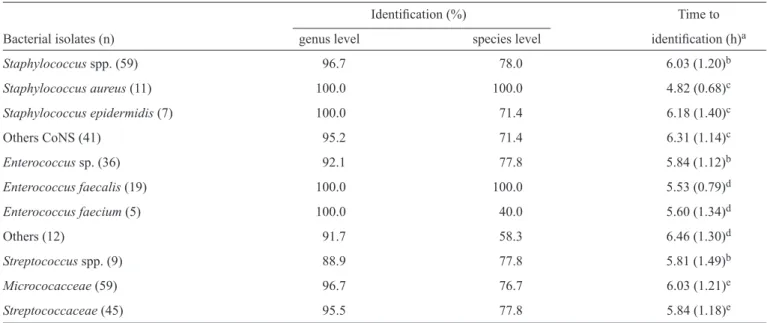
TABLE 1 - Descriptive measures from the automated system Vitek 2 compact.
Identifi cation (%) Time to Bacterial isolates (n) genus level species level identifi cation (h)a
Staphylococcus spp. (59) 96.7 78.0 6.03 (1.20)b
Staphylococcus aureus (11) 100.0 100.0 4.82 (0.68)c
Staphylococcus epidermidis (7) 100.0 71.4 6.18 (1.40)c
Others CoNS (41) 95.2 71.4 6.31 (1.14)c
Enterococcus sp. (36) 92.1 77.8 5.84 (1.12)b
Enterococcus faecalis (19) 100.0 100.0 5.53 (0.79)d
Enterococcus faecium (5) 100.0 40.0 5.60 (1.34)d
Others (12) 91.7 58.3 6.46 (1.30)d
Streptococcus spp. (9) 88.9 77.8 5.81 (1.49)b
Micrococacceae (59) 96.7 76.7 6.03 (1.21)e
The comparative analysis of the bacterial identifi cation by Vitek 2 and the conventional methods was performed, and the accuracy (percentage of matched identifi cation) was characterized. The AST results evaluated using the Vitek 2 automated system were compared to those obtained using the reference method, and the agreement rates were analyzed. The type of error was evaluated using the following criteria: I) very major error (VME) defi ned as a resistant bacterial isolate appearing susceptible by Vitek 2; II) major error (ME) defi ned as a susceptible isolate displaying a resistant profi le by Vitek 2; or III) minor error (MiE) defi ned as microorganisms for which the AST reference indicated intermediate resistance and susceptibility or resistance by an automated AST test.
The Vitek 2 system correctly identifi ed 81 (77.9%) and 101 (97.1%) of the 104 bacterial isolates at the species and genus levels, respectively. Additionally, Staphylococcus aureus was identifi ed more quickly than the other staphylococcal isolates (p<0.05) (Table 1).
The Vitek 2 automated method was accurate for species-level identifi cation of the commonly isolated Gram-positive cocci. All of the clinical isolates of S. aureus and Enterococcus faecalis were correctly identified. The bacterial isolates were misidentified or showed low-level discrimination in the clinical samples of Staphylococcus epidermidis (25%), Staphylococcus haemolyticus (66.7%), Staphylococcus hominis (16.7%), Staphylococcus saprophyticus and Staphylococcus warneri (both 20%). In the Enterococcus strains, Enterococcus avium and Enterococcus durans were misidentifi ed as other enterococcal isolates, and the discordant results were found 50% of Enterococcus casseliflavus, 75% of Enterococcus faecium and 25% of Enterococcus gallinarum isolates. Among the 29 reference strains, a defi nitive species identifi cation was
provided by the automated system for 22 (75.9%) strains. The
incorrect identifi cation or low-level discrimination results
are listed in Table 2. The minimal inhibitory concentrations (MICs) of oxacillin and vancomycin generated by the automated system were compared according to the error type, and the results are shown in the Table 3. In total, 45 of the 55 (81.8%)
bacterial isolates agreed with the identifi cations made using the conventional antimicrobial susceptibility profi le.
At the species level, the automated Vitek 2 system was able to identify the commonly isolated staphylococci and enterococci strains, such as S. aureus and E. faecalis, respectively, and all of these isolates, as well as the streptococci reference strains,
were correctly identifi ed. These results were in agreement with
those reported by Chatzigeorgiou7 et al., who evaluated the
performance of the Vitek 2 system in comparison with other automated systems7. However, in the present study, the Vitek
2 version 5.03 software was not able to correctly identify all of the S. epidermidis isolates, with only 71.4% of the isolates matched at the species level.
S. haemolyticus is frequently isolated from blood cultures and has a tendency to develop resistance to multiple antimicrobial drugs8, similar to S. warneri, which is another CoNS that can
cause catheter-related bacteremia and native and prosthetic valve endocarditis9.Two isolates of this bacterial species were
misclassifi ed as S. warneri by the Vitek 2 system.
Two S. saprophyticus were misidentifi ed as S. warneri
and S. cohnii subs. urealyticus by the Vitek 2 automated
system. According to the biochemical profi le of these isolates, major error in the bacterial identifi cation can be evaluated by
novobiocin susceptibility, as S. saprophyticus and S. cohnii
TABLE 2 - Bacterial species reported by the Vitek 2 System that were misidentifi ed or showed low discrimination.
Reference bacterial identifi cation (no. isolates) Vitek 2 identifi cation (% probability)
Staphylococcus caprae ATCC 35538 (1) Staphylococcus cohnii subs. urealyticus (99%)
Staphylococcus epidermidis (1) Staphylococcus hominis subs. hominis (51%)
Staphylococcus hominis subs. novobiosepticus (49%)
Staphylococcus epidermidis ATCC 12228 (1) Staphylococcus epidermidis (50%)
Staphylococcus hominis subs. hominis (50%)
Staphylococcus haemolyticus (1) Staphylococcus warneri (50%)
Staphylococcus hominis subs. hominis (50%)
Staphylococcus haemolyticus (2) Aerococcus viridans (50%)
Staphylococcus hominis subs. hominis (50%)
Staphylococcus haemolyticus (1) Aerococcus viridans (33%)
Staphylococcus haemolyticus (33%)
Staphylococcus hominis subs. hominis (33%)
Staphylococcus haemolyticus ATCC 29970 (1) Staphylococcus warneri (95%)
Staphylococcus hominis subs. hominis (1) Staphylococcus auricularis (50%)
Staphylococcus hominis subs. hominis (50%)
Staphylococcus intermedius ATCC 29663 (1) Staphylococcus chromogenes (89%)
Staphylococcus saprophyticus (1) Staphylococcus warneri (93%)
Staphylococcus saprophyticus ATCC 15305 (1) Staphylococcus cohnii subs.urealyticus (89%)
Staphylococcus warneri (1) Staphylococcus hominis subs. hominis (50%)
Staphylococcus warneri (50%)
Enterococcus avium (1) Enterococcus faecalis (99%)
Enterococcus casselifl avus (1) Enterococcus casselifl avus (50%)
Enterococcus gallinarum (50%)
Enterococcus durans (1) Enterococcus hirae (99%)
Enterococcus durans (1) Pediococcus acidilactici (91%)
Enterococcus faecium (1) Enterococcus durans (50%)
Enterococcus faecium (50%)
Enterococcus faecium (1) Enterococcus gallinarum (99%)
Enterococcus faecium (1) Enterococcus faecalis (98%)
Enterococcus gallinarum (1) Enterococcus faecium (51%)
Enterococcus gallinarum (49%)
Streptococcus equi subs. equi ATCC 9528 (1) Enterococcus faecalis (98%)
TABLE 3 - Agreement of the antimicrobial susceptibility tests and the type of error among the staphylococci and enterococci isolates.a
Agreements Errors Type of error (n)
Isolates (n) n % n % VME ME MiE
Staphylococci (33)b 28 84.8 5 15.2 3 2 0
Enterococci (22)c 17 77.3 5 22.7 1 4 0
aStreptococci reference strains were not tested. bSusceptibility to oxacillin. cSusceptibility to vancomycin. VME: very major error; ME: major error; MiE: minor error.
phenotypic profi les and exhibit low discriminatory power in bacterial identifi cation; both species are urease positive and
novobiocin resistant. The clinical laboratory exams should be able to differentiate these strains, as S. cohnii subs. urealyticus
is recognized as a pathogen in infectious diseases, such as endocarditis, septicemia and urinary tract infections; however,
previous study have reported diffi culty in routinely identifying
this microorganism10.
In the present study, the agreement identifi cation rate of the
enterococci isolates was similar to a previous study, and all of the E. faecalis isolates were correctly identifi ed11. However,
3 of the 5 E. faecium strains were misclassifi ed or showed low-level discrimination. The bacterial identifi cation of the Enterococcus isolates is important because this genus includes some of the most important multidrug-resistant organisms in healthcare-associated infections. These isolates usually affect patients who are debilitated by other concurrent illnesses or are undergoing prolonged hospitalization. Including the
E. faecium strains, these pathogens have the ability to succeed in the hospital environment12.
The automated system was able to identify 11 Enterococcus, 26 Staphylococcus and 37 Streptococcus species and subspecies using the Gram-Positive Card (GP-Card - bioMeriéux). New
Gram-positive cocci species have been identifi ed from clinical
specimens in recent years, and these species exhibit phenotypic
profi les similar to other staphylococcal strains13. Although
these species were not included in our study, the tested strains allowed us to evaluate the accuracy of the automated system in identifying the common species isolated in the clinical setting.
Our data indicated that the Vitek 2 system provided inaccurate susceptibility test results for oxacillin and vancomycin, as the agreement rate with the reference method was very low, and the error rates, mainly VMEs and MEs, were higher compared to other studies14.Although our study has evaluated
the antimicrobial susceptibility of commonly isolated strains, such as S. aureus and E. faecalis, most of the isolates were microorganisms that belong to coagulase-negative staphylococci (CoNS) and non-faecalis enterococci. A previous meta-analysis
reported that the discordant results in bacterial identifi cation
could be explained by the metabolic rate of the bacterial isolates, as slow metabolism can lead to ambiguous reactions during the
In conclusion, the Vitek 2 Compact system software version 5.03 correctly identifi ed the commonly isolated Gram-positive cocci; however, the limitations of the method may lead to ambiguous fi ndings and the inability to identify uncommon microorganisms. Therefore, additional phenotypic tests may be necessary to identify some strains at the species level. Additionally, critical inquiry of the AST results reported by the automated method showed discrepancies in the antimicrobial susceptibilities that might occur in uncommon isolated pathogens.
ACKNOWLEDGMENTS
The authors declare that there is no confl ict of interest.
CONFLICT OF INTEREST
FINANCIAL SUPPORT
REFERENCES
We are thankful to bioMeriéux for the opportunity to work with the Vitek 2 Compact system technology.
This work was supported by Conselho Nacional de
Desen-volvimento Científi co e Tecnológico (CNPq) and Fundação
de Amparo à Pesquisa do Estado do Rio Grande do Sul (FAPERGS) (Edital Programa de Apoio a Núcleos Emergentes - PRONEM 03/2011 number 11/2058-5).
1. Landrum ML, Neumann C, Cook C, Chukwuma U, Ellis MW, Hospenthal DR, et al. Epidemiology of Staphylococcus aureus blood and skin and soft tissue infections in the US military health system, 2005-2010. JAMA 2012; 308:50-59.
2. Wallet F, Loïez C, Renaux E, Lemaitre N, Courcol RJ. Performances of
VITEK 2 colorimetric cards for identifi cation of positive and
gram-negative bacteria. J Clin Microbiol 2005; 43:4402-4406.
3. Bannerman TL, Peacock SJ. Staphylococcus, Micrococcus and other catalase-positive cocci. In: Murray PR, Baron EJ, Jorgensen J, Pfaller M,
5. Clinical and Laboratory Standards Institute (CLSI). Methods for Dilution Antimicrobial Susceptibility Tests for Bacteria That Grow Aerobically; Approved Standard - Sixth edition. document M07-A6. Wayne, PA: CLSI; 2003.
6. Clinical and Laboratory Standards Institute (CLSI). Performance standards
for antimicrobial susceptibility testing - Twenty-fi rst informational
supplement. document M100-S21 Wayne, PA: CLSI; 2011.
7. Chatzigeorgiou KS, Siafakas N, Petinaki E, Argyropoulou A, Tarpatzi A, Bobola M, et al. Identifi cation of staphylococci by Phoenix: validation of a new protocol and comparison with Vitek 2. Diagn Microbiol Infect Dis 2010; 68:375-381.
8. Barros EM, Ceotto H, Bastos MC, Santos KR, Giambiagi-Demarval M. Staphylococcus haemolyticus as an important hospital pathogen and carrier of methicillin resistance genes. J Clin Microbiol 2012; 50:166-168.
9. Arslan F, Saltoglu N, Mete B, Mert A. Recurrent Staphylococcus warnerii prosthetic valve endocarditis: a case report and review. Ann Clin Microbiol Antimicrob 2011; 23:14.
10. d’Azevedo PA, Antunes AL, Martino MD, Pignatari AC. Staphylococcus cohnii spp urealyticus: case report on an uncommon pathogen. Rev Soc Bras Med Trop 2008; 41:197-199.
11. d’Azevedo PA, Siquiera I, Gugel J, Antunes AL, Secchi C, Pasternak J,
et al. Evaluation of the automated system Vitek 2 for identifi cation and
antimicrobial susceptibility testing of Brazilian Gram-positive cocci strains. Braz J Infect Dis 2009; 13:107-110.
12. Arias CA, Murray BE. The rise of the Enterococcus: beyond vancomycin resistance. Nat Rev Microbiol 2012; 16:266-178.
13. d’Azevedo PA. Comin G, Cantarelli V. Characterization of a new coagulase-negative Staphylococcus species (Staphylococcus pettenkoferi) isolated from blood cultures from a hospitalized patient in Porto Alegre, Brazil. Rev Soc Bras Med Trop 2010; 43:331-332.
14. Gherardi G, Angeletti S, Panitti M, Pompilio A, Di Bonaventura G, Crea F, et al. Comparative evaluation of the Vitek-2 Compact and Phoenix systems
for rapid identifi cation and antibiotic susceptibility testing directly from
blood cultures of Gram-negative and Gram-positive isolates. Diagn Microbiol Infect Dis 2012; 72:20-31.
15. Chatzigeorgiou KS, Sergentanis TN, Tsiodras S, Hamodrakas SJ, Bagos PG.
Phoenix 100 versus Vitek 2 in the identifi cation of gram-positive and