Resonane Eet in Isotropi Phase of
Lyotropi Liquid Crystal
D.A. de Oliveira 1
and P.R.G. Fernandes 2
1
CEFET,CampoMour~ao,Parana, Brazil
2
Departamentode Fsia,UniversidadeEstadual deMaringa
Av. Colombo, 5790,Maringa, Parana,Brazil,87020-900
Reeivedon15November,2001
Inthis workwe present experimental results that showa resonane eet inthe isotropi phase
of alyotropi liquid rystal. Thelyotropi mixtureis made up of PotassiumLaurate (KL),
De-anol (DeOH)and water with threedierent relative onentrations: 2.62, 2.79 and 2.90 (C =
[KL℄/[DeOH℄, [KL℄ and[DeOH℄in %molar). These mixtureshave anisotropi (ISO) phase
be-tweentwolamellarphasesasafuntionofthetemperature. Fromthetransmittaneofthesample
(I)asafuntionofthefrequeny(f)itwaspossibletoevaluateaharateristi time()inorder
ofmagnitudeasafuntionofthetemperature(T). Theexisteneofamaximumin vs. T around
30 o
C indiates the possibility ofemploying lyotropi liquid rystals inmehanial vibration
sen-sors. We areproposingamehanialvibrationsensorable tomeasurelowmehanialfrequenies
(f200Hz).
I Introdution
Liquidrystalshaveaomplexowregimebeausethe
translational motions are oupled to the orientational
motionsof theirbasistrutures[1℄. Theombination
of uid mobilitywith theanisotropyof physial
prop-erties has made them an interesting objet for
sien-ti researh and tehnial appliations. Nemati
liq-uidrystal hasalargerangeof appliations,from
dis-plays(LCDs) topressureand temperaturesensors [2℄.
In partiular, liquid rystal sensors for pressure
mea-surements have reently been made using a
polariza-tion eetaused bythestrong rotatorypowerof
hi-ralnematiliquidrystal[3℄ andthelightpolarization
modulation eet in nemati liquid rystal [4℄. From
a tehnologial point of view lyotropi liquid rystals
do not have as many appliations as thermotropi [5℄
or polymeri liquid rystals [6℄. Byonsulting patent
data bases we have found few tehnologial
applia-tionsusing lyotropis. Among themthereis oneusing
a quaternarymixture to obtainthermally, eletrially
or magnetiallyontrollableoptial devies [7℄. Some
eorts havebeenmade to understand the behaviorof
omplex uids under ow [8,9℄ and miellar omplex
uidsareonlybeginningtobeinvestigated[10-12℄.
Lyotropiliquid rystals(LLCs) are very
interest-ing, showing as they do rih phase diagrams [13℄ as
a funtion of temperature and of the relative
onen-tration of eah ompound in the mixture. The
ne-ally surrounded by isotropi domains. The isotropi
phase(ISO)ofourlyotropimixtureofpotassium
lau-rate(KL),deanol(DeOH)andwaterisfoundbetween
two lamellar phases. In the ISO phase of this
mix-tureitis possibleto indue birefringene[14℄ byow,
and this eet is also observed in optially isotropi
lyotropi sponge phases [15℄ and thermotropi liquid
rystals[16℄. Reently,wehavepresentedexperimental
resultsandatheoretialstudy[17℄oftheow-indued
birefringene in the ISO phase of a lyotropi liquid
mixture to explain the experimental results obtained
in referene [14℄. One the shear ow has vanished,
the magnitude of the diretor relaxes and the sample
omesbaktotheISO phasewithatypialrelaxation
time 10 2
s. From atheoretial pointof view this
problem wastreatedin referene[17℄ as a diusion of
the tensor order parameter inside the sample, and a
harateristilength,l10 4
m, wasobtained. Using
Langevin'sequation, Sim~oes etal[18℄ showedthatthe
induedorderanbeunderstoodasaresultoftwo
dis-tintompetingauses: theoherenttorquesausedby
theexternal elds and theBrownianaleatory
utua-tionsthat lookforthedestrution ofanyuniformity.
In this work we present an experimental study of
indued birefringene by mehanial stresses in the
isotropi phase of lyotropi liquid rystals. Using a
bandwidth approah it was possible to determine a
harateristitime()thatis assoiatetotheresponse
fre-vibrationliquidrystalsensoratroomtemperature(
25 o
C)[20℄ using LLCs. This sensor an measure low
mehanial frequenies ( f 200 Hz) and paves the
wayforthefuture appliation of lyotropiliquid
rys-talsinlowfrequenyontrollabletehnologialdevies.
II Experimental
Thelyotropiliquidrystals(M1,M2andM3)usedin
this work aremixtures ofpotassiumlaurate(KL),
de-anol(DeOH)andwater. TherelativeonentrationsC
= [KL℄/[DeOH℄, where [KL℄ and [DeOH℄ are given in
%molar,ofeahmixtureareshowinTable1.
Table 1 - Relative onentrations C = [KL℄/[DeOH℄
([KL℄and[DeOH℄in %molar)ofeahmixture
Mixture C=[KL℄/[DeOH℄
M1 2.62
M2 2.79
M3 2.90
Thephase sequenes as afuntion of temperature
(T), determined by optial and X-raysattering
teh-niques, are given in Table 2, where ISO is isotropi
phase, L
1 andL
2
are lamellarphasesat lowand high
temperaturesrespetively.
Table2-Phasesequeneasafuntion oftemperature
of eah mixture; L
1 and L
2
are lamellarphases;ISO is
isotropiphase.
Mixture T
C (
o
C) T
C (
o
C)
M1 L
1
9.5 ISO 54.0 L
2
M2 L
1
8.5 ISO 49.0 L
2
M3 L
1
9.5 ISO 52.0 L
2
Thesetuptomeasurethetransmittaneofthe
sam-pleasafuntionoffrequenywhenitundergoesan
ex-ternal mehanialvibrationisskethed inFig. 1. The
lyotropimixture(V=1ml)isenapsulatedinasample
holderglass(Hellma)witharetangularsetionshape.
Theellisarefullysealedtoavoidonentration
gradi-entsinthesampleduetolossesofwaterordeanol. A
polarizedlightbeam(He-Nelaser,=632.8nm)
illu-minatesthesampleinthexdiretion. Afuntion
gener-ator(StanfordDS335)isoupledtoaloud-speakerand
toanironwire. Thewiretouhestheellandpromotes
themovementofthesample. Theexternalosillations
are always perpendiular to the laser beam diretion.
Theosillationsareparalleltothez-axisofthe
labora-tory frame (see Fig. 1). Beyond theanalyzer, a
pho-todiode detets the light intensity that omes mainly
from theinduedbirefringene,andalok-inamplier
(StanfordSR830)isusedtoanalysethesignal. Theell
is plaedon a temperature ontrolled devie (0:2 0
C
stability). The external fore applied to the ell is a
squarewaveof5.0V
rms
withfrequeniesbetween0Hz
to 200 Hz. The whole set up is plaed on an optial
table isolatedfrom spuriousvibrations.
Figure1. Experimentalsetuptomeasurethesampletransmittaneasafuntionoftime.
The methodology of the experiment is as follows:
taking a sample (from Table 1) and xing the
tem-peratureandfrequenyweintroduetheosillationsin
thez-diretion(vertialaxis); simultaneouslythelaser
diretion of theiniding polarization is parallel to the
z-axis. A photodiode onneted to a lok-in amplier
detetsthetransmittedlightasafuntionoffrequeny
III Results and disussions
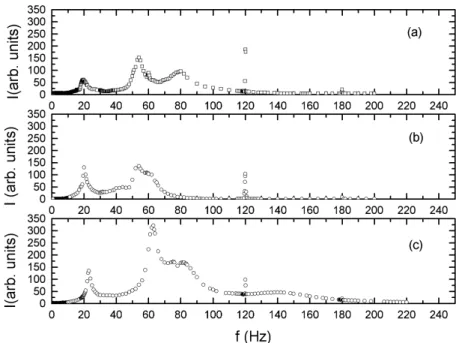
Figure 2 shows plots of transmittane (I) as a
fun-tion of frequeny (f) with M1, M2 and M3 mixtures
at 20 o
C. By hanging the temperature we have seen
that I inreaseinthemiddleof theISOphase(30 o
C)
and derease near the lamellar phases. The present
experimental study onentratedonthe lowfrequeny
range (f 200Hz) but morevibrational modes were
observed between 0 Hz and 1 kHz. The errors were
evaluatedtakingintoaountthereproduibilityofthe
experiments. Theexperimental errorwas0:3%in eah
bit ofdatain Fig. 2. Inaddition,someutuationsin
the maximum value of I where observed. These
u-tuationswereabout10%around30 o
Candabout1:0%
near the lamellarphases. Suh utuations in I may
bereetingtheinstabilityoftheinduedorderin the
ISO phase. Fig. 2showssharppeaks in somespei
frequenies. We identify suh frequenies (resonane
frequenies)aspossibleonestoindueorderintheISO
phaseofthemixturesinTable1. Thevaluesofthe
res-onanefrequenies,f anditsdeviation, f havebeen
found as: (202)Hz, (1201) Hzand(1801) Hz.
These frequeniespresentedthe samevalueswhen the
temperature or relative onentration of the mixture
washanged. Inaddition, Fig. 2shows abroadpeak
around60Hz,whihwasnotinvestigatedinthiswork.
In order to evaluate the magnitude of the
hara-teristi time () of indued birefringene by
mehan-ial stresses in the ISO phase we take the resonane
approah [19℄ where the bandwidth of the maximum
transmittane peak of Fig. 2 represents the response
ofthemiellestothedrivingfore,onsideringthelow
visosity of the system [17℄. This way, taking the
in-verse of bandwidth of the transmittanespetrum we
evaluated inorderofmagnitude. Fig. 3shows asa
funtionoftemperature(T)usingthemixtureM3and
120Hz. ThemixtureM3showedthebestexperimental
resultswhere isseonds in orderof magnitude. The
errorin showedin Fig. 3was 5%. By hangingthe
temperatureweanseeaninreasein nearthe
lamel-larphasesandaround30 o
C(middleof theISOphase).
Theinreasein neartolamellarphasesandthepeak
at30 o
Cindiatesthatisotropiphasehasdierent
or-relation properties. We have been observed that the
graphof the harateristi time as afuntion of
tem-peraturepresentsthesametopologywhenweompare
vs. T using a steady-state with another one using
a transient regime [14℄ with the same mixture. This
topologial similarity indiates that the inrease of
near to ordered phases independs of the frequenies.
Theinreasein near 30 o
Conrmsthepossibilityof
employinglyotropiliquidrystalsin tehnologial
ap-pliations asamehanialvibrationsensors. Wehave
developedadevietodetetlowmehanialvibrations
( f 200 Hz) [20℄ using the mixtures of the Table
1. Thestabilityofthelyotropimixtureshasbeenthe
main problem to ourmehanialvibrationsensor. To
overome these problems other mixturesare being
in-vestigated. The mehanial vibration sensor we have
developed paves the way for the use of lyotropi
liq-uidrystalsinlowfrequenyontrollabletehnologial
devies.
Figure2. Transmittane(I)inarbitraryunitsasafuntionoffrequenyforthreerelativeonentrations,C=[KL℄/[DeOH℄:
Figure3.Charateristi timeasafuntionoftemperature;
C=2.90;f=(1201)Hz;Thedotlineisonlyaguideof
eyes.
IV Conlusion
A resonane eet was experimentally veried in the
isotropi phase of KL/DeOH/watermixture in three
dierent onentrations. This eet independs of the
relativeonentrationofmixturesand oftemperature.
Usingabandwidthapproahitwaspossibletoevaluate
theharateristitime ()in orderof magnitude that
wasassoiatetotheresponseofthemiellestothe
driv-ingfore. Theexisteneof amaximumin the vs. T
around30 o
Cindiates the possibilityof employing
ly-otropiliquidrystalsinmehanialvibrationsensors.
As far aswe know we are proposing the rst
applia-tionforlyotropiliquidrystalto measuremehanial
vibrations.
Aknowledgments
WethankPADCTandCNPqfornanialsupport.
Referenes
[1℄ P.G. deGennes andA.J. Prost, The Physisof Liquid
[2℄ Cerwin, Stephen A., USPatent, Appl. No. 911216,
November,16(1999).
[3℄ T.R. Wolinski, A. Jarmolik, and W. J. Bok, IEEE
Transations on Instrumentation and Measurements,
48,1(1999).
[4℄ O.A.Kapustina etal.,Mol. Cryst.Liq.Cryst.209, 19
(1991).
[5℄ M.KawamuraandS.Sato,Jpn.J.Appl.Phys.37,5669
(1998);Y.V.Boharovetal.,SensorsandAtuatorsA,
28,179(1991).
[6℄ R.A.M. Hikmetand H. Kemperman,Nature 392, 476
(1998).
[7℄ James Tabony,USPatent, Appl. No.113, 288,
Novem-ber,8(1988).
[8℄ A.D.ReyandM.M.Denn,Mol.Cryst.Liq.Cryst.153,
301(1987);Liq.Cryst.4,53(1989).
[9℄ P.D.Olmstedand C.-Y.D. Lu,Phys.Rev.E 56,R55
(1997).
[10℄ S.Q.Wang,J.Phys.Chem.94,8382 (1990).
[11℄ K.A.Coppi,M.Tirrel,andF.S.Bates,Phys.Rev.Lett.
70,1449(1993).
[12℄ E.PeuvrelandP.Navard,LiquidCrystal7,95(1990).
[13℄ L.J.YuandSaupe,Phys.Rev.Lett.45,1000(1980).
[14℄ P.R.G. Fernandes and A.M. Figueiredo Neto, Phys.
Rev.E51,567(1995).
[15℄ G.Porte,J.Appell,P.Bassereau,andJ.Marignan,J.
Phys.Frane50,1335 (1989).
[16℄ P. Martinoty and M. Bader, J. Phys.(Paris) Colloq.
42,1097(1981).
[17℄ P.R.G. Fernandes and A.M. Figueiredo Neto, Phys.
Rev.E56,6185 (1997).
[18℄ M. Sim~oes, P.R.Fernandes, A.J.Palangana, andS.M.
Domiiano,Phys.Rev.E64,021707(2001).
[19℄ I. G. Main, Vibrations and waves in physis,
Cam-bridgeUniversityPress(1978)
[20℄ P.R.G. Fernandes, Brazilian Patent, PI 9805500-3,