Original article (full paper)
Space protection dynamics in basketball:
Validation and application to the evaluation of
offense-defense patterns
Felipe L. Santana
University of São Paulo, São Paulo, SP, Brazil
Eduardo Rostaiser
German Sport University Cologne, Cologne, Germany
Eran Sherzer
Paulistano Athletic Club, São Paulo, SP, Brazil
Carlos Ugrinowitsch Junior Barrera
University of São Paulo, São Paulo, SP, Brazil
Leonardo Lamas
University of Brasília, Brasília, DF, Brazil
Abstract—The aims of this study were twofold: i) to validate classes of defensive actions (i.e., space protection dyna-mics - SPDs) for containing offense in basketball; and ii) to propose a novel approach to analyze matches based on the interaction of a space creation dynamic (SCD) and a respective SPD. Kappa statistics revealed high intra- and inter-raters
values, supporting the reliability of the deined SPDs. Six matches of the Spanish professional basketball inals were
analyzed to achieve the second purpose of the present study. The SCD-SPD couples of actions were analyzed regarding their frequency of occurrence and variety until a scoring attempt. Teams’ utilization of sequences of SCDs and SPDs
was similar and short in length. Additionally, combining a second action with the irst seemed to positively impact on
offense success. The analysis of SCDs-SPDs interactions comprehend an innovative approach to the tactical evaluation of matches and may be helpful to interpret teams playing patterns.
Keywords: strategy, tactical patterns, performance analysis, teams’ interactions
Resumo—“Dinâmicas de proteção do espaço no basquetebol: validação e aplicação para a avaliação de padrões ataque-defesa.” O estudo teve dois objetivos: i) validar classes de ações defensivas para contenção do ataque no basquetebol (i.e. dinâmicas de proteção de espaço - DPEs); ii) propor uma nova abordagem para analisar partidas de basquetebol baseada nas interações entre uma dinâmica de criação de espaço (DCE) e a respectiva DPE. A estatística Kappa revelou
elevada concordância intra- e inter avaliadores, conirmando a reprodutibilidade das DPEs deinidas. Seis partidas das inais do campeonato espanhol de basquetebol foram analisadas. DCEs-DPEs foram analisadas quanto a sua frequência de ocorrência e diversidade de ações até a realização de uma inalização. A utilização de DCEs-DPEs foi semelhante entre as equipes e de pequeno comprimento. Além disso, a combinação de uma segunda ação com a primeira pareceu
ter um impacto positivo no sucesso do ataque. A análise das interações entre DCEs-DPEs constitui uma abordagem inovadora para a avaliação tática das partidas e pode contribuir para a interpretação dos padrões de jogo das equipes.
Palavras-chave: estratégia, padrões táticos, análise de desempenho, interação
Resumen—“Dinámicas de protección del espacio en el baloncesto: validación e aplicación para evaluación de patrones ataque-defensa.” Los objetivos del presente estudio fueron dos: i) validar clases de acciones defensivas para contención ofensiva en baloncesto (i.e. dinámicas de protección del espacio – DPEs); y ii) proponer un nuevo abordaje para analizar partidos de baloncesto basado en la interacción entre una dinámica de creación del espacio (DCE) y una respectiva DPE.
La estadística Kappa reveló grande concordancia intra- e inter-evaluadores, conirmando la reproductibilidad de las DPEs. Seis partidos de las inales del campeonato de baloncesto de España fueron analizadas para alcanzar el segundo
Introduction
In a basketball match, defensive and offensive teams organize their plays to minimize scoring opportunities of the adversary
and to maximize the chances of scoring points, respectively.
A coach conceives each team play as a sequence of intercon-nected individual actions aiming at supporting the collective performance. The set of planned sequences of interconnected
actions (i.e., team plays) deines a team strategy (Lamas, Bar -rera, Otranto, & Ugrinowitsch, 2014), which seems to be a determinant factor of team success in a match (Collet, 2013).
Match analysts assess team strategy from tactical data (i.e., plays) gathered along several matches of the team. Then, the
most recurrent plays can be identiied and assumed as part of
the team’s strategy. In contrast, low-frequency plays are consi-dered as part of occasional opposition circumstances. However, an analytical framework should be developed to consistently evaluate the sequence of actions that characterize a play.
Scientiic evidences corroborate with this perspective and
suggest the assessment of sequences of team actions instead of discrete variables focused on plays outcome only (Correia, Araújo, Vilar, & Davids, 2013). In most of these studies, analy-ses performed have been capturing the result of displacements of the whole team (Collet, 2013; Grehaigne & Caty, 2010; Pfeiffer, & Perl, 2006; Seabra & Dantas, 2006) . Analysis of information such as ball circulation and occupation areas in the
match ield aimed at identifying the most recurrent patterns. The
relationship between the most recurrent tactical patterns, whose greater frequency may be attributed to their strategic nature, and related outcomes (e.g., score attempt, turnover) enables
evaluating the eficiency of the team strategy (Grehaigne &
Caty, 2010; Seabra & Dantas, 2006).
Studies dealing with the dynamical analyzes of a team’s tactical patterns have not systematically addressed the players’
actions that deine the patterns of ball circulation and occupation of areas in the match ield. The discrimination of the tactical
meaning of the actions performed by the team players in the analyzed sequences of displacements can unravel how players
organize the collective actions of the team, deining with high
accuracy how an outcome was obtained. In this regard, Lamas
et al. (2011) investigated the performance of small groups of players in basketball and proposed equivalence classes1 for the
set of offensive actions players may perform. For instance, a pick was deined as an equivalence class for all actions involving two
team players, in which player 1 obstructs the trajectory of the 1 An equivalence class is a mathematical concept according to which
when a set has an equivalence relation deined on its elements, there
is a grouping of elements that are related to one another, forming an equivalence class.
defender of the player 2 (theball player) to free his teammate.
Space creation dynamics (SCDs) was the selected term to deine
these actions.
The SCDs, deined as equivalence classes, generalize all pos -sible actions players may perform to create space in basketball
offense. Consequently, any strategic speciication a coach may
design should use elements of this set of SCDs. In the tactical analysis of a match, among the annotated SCDs, those with
greater recurrence may be related to the pre-deined strategy
of the team. The possibility of assessing frequencies of SCDs provides greater accuracy in the interpretation of the reasons of
the strategy eficiency than analysis based on general tactical
patterns only (e.g., patterns of ball circulation).
To increase the resolution of basketball match analysis, not only the SCDs should be considered, but also the tactical meaning of their respective defensive actions. The development of observational methods encompassing sequences of both offensive and defensive behavioral patterns should lead to a
better comprehension of the context in which players executed
the team strategy and the reasons for the achievement of a given
inal result in the ball possession. This integrative perspective of offensive and defensive actions should extend the previous
contributions of Lamas et al. (2011), providing indices of prefe-rential patterns in terms of the number of actions in a sequence a team may use (i.e., shorter or longer sequences) and prefered actions in these sequences.
Therefore, the present study had two goals: i) to validate a
set of classes of actions that can be strategically speciied and
tactically performed by defense to impair offense from creating space and scoring in basketball; ii) to apply these defensive classes and the SCDs to investigate sequences of actions along ball possessions in basketball.
Methods
Approach to the problem
Lamas et al. (2011) presented a set of basketball offensive
classes corresponding to the possible offensive speciications
to create space in the adversary defensive system, which leads to scoring opportunities, the SCDs. The logical corollary of the work developed by Lamas et al. (2011) is the deinition of a set of
actions that can be strategically speciied to counteract the SCDs.
Hence, the SCDs were used as a reference to conceive and validate their correspondent defensive classes, the space protection dyna-mics (SPDs). The Ethical Committee of the School of Physical Education and Sport of the University of Sao Paulo approved all
experimental procedures (protocol: 2009-10).
variedad hasta el momento de la inalización. La utilización de DCEs-DPEs por los equipos fue similar y con secuencias cortas. Además, una segunda acción combinada con la primera pareció tener un impacto positivo en el éxito del ataque.
El análisis de la interacción DCEs-DPEs consiste un abordaje innovador para la evaluación táctica de los partidos y puede contribuir para interpretar patrones de juego.
For simplicity sake, the SCDs were revisited and two of the original classes proposed by Lamas and colleagues (2011),
one versus one situation in the perimeter, both with or without dribbles, were combined in one class. Then, the resultant offen-sive classes were the following: i) one versus one situation in the perimeter2; ii) one versus one situation in the post3; iii) on
ball screens4; iv) space creation without the ball: iv
a) staying
in open space (spot-up); ivb) cutting for the open space (e.g.,
back-door cut, front-door cut); v) out of ball screens3. Reviewing
the SCD classes was important to the process of developing and validating the SPDs as the defensive actions are usually reactive to the offensive actions during basketball matches.
After validating the SPDs, we analyzed basketball matches looking at the sequences of SCDs and SPDs that occurred in each ball possession up to a scoring attempt. Analyzing each SCD-SPD couple is important to unravel if a given SCD leads
to a speciic SPD and how the sequence of SCD-SPD couples
unfolds up to the scoring attempt. The number of SCD-SPD cou-ples performed up to a scoring attempt was assessed to determine the team preferences regarding how to disrupt the defensive system. For instance, counting the number of SCD-SPD couples enabled to analyze if very organized professional teams perform a high number of SCD-SPD couples up to a scoring attempt, as the team may attempt to create a clear space advantage.
Validation process
The validation of the SPDs followed a seven step approach, according to the guidelines presented by Fonseca, Salles, and Parente (2008): i) construction of a preliminary version of the
instrument, founded on empirical experience of the researchers
involved with the work, opinion of high-level coaches, and literature research; ii) blind judges’ analyses: an analysis of the adequacy of the inclusion of each element in the instrument, considering the assessed construct and the instrument’s goal; iii) reformulation of the instrument; iv) semantic analysis of the items; v) analysis of the instrument (i.e., three blinded specia-lists, other than those of step i, judge the instrument); vi) pilot
study and inal version, and vii) application. The seven steps to the validation of the SPDs are explained below:
First, we conducted the construction of a preliminary ver-sion of the set of SPDs considering the empirical knowledge
of the researchers (six academics with more than 10 years of experience in match analysis investigations) and other two
specialists in team sports match analysis, discussions with
high-level basketball coaches and extensive review of the litera -ture. Two criteria previously used to classify a certain behavior in one of the SCDs (Lamas et al., 2011) were applied for the
preliminary classiication of the defensive actions as a given
SPD: i) the type of technical skill performed, which describes
the chosen motor solution in a given context (e.g., the defense
2 Perimeter designates the court area outside from the three-point line. 3 Post designates the court painted area close to the basket, with a trapezoidal shape.
4 Screen designates the action in which an offensive player obstructs the path of the defender of his teammate aiming to create space.
of 1 on 1 in the perimeter can involve an oriented to a side or a neutral positioning); ii) the number of players involved, which represents an objective measure of players inter-dependency in a given action (e.g., two defensive players guard the offensive action of a pick). Once we deined the set of SPDs, several match
analysis experiments were performed to test the coherence of
the conceived SPDs.
Second, the logic and accuracy of the criteria deining each
SPD was evaluated through blind judges’ analyzes. Judges were three high-level basketball coaches, with more than 15
years of experience in international basketball. Interestingly,
even high-level basketball coaches were not well familiarized with the process of formally analyzing strategic-tactical
con-tents. This circumstance led the authors to organize extensive
video documentation to the analysis of concepts and criteria related to the SPDs. The procedure involved the selection of
70 defensive actions representative of the pre-deined SPDs.
We obtained these defensive actions from 20 matches of the Olympic Games (2008) and World Championship (2010)
basketball male tournaments. Each pre-deined SPD had at least
three representative video-clips. Each video-clip comprised a complete ball possession in which arrows or circles indicated the players involved in the SPD of interest. SPDs were organized in a timeline and presented to the three high-level coaches, who blindly analyzed the video-clips. The reports provided by the
high-level coaches included the assignment of a speciic SPD
for each action whose evaluation was required according to the indication in each video-clip. These assignments of SPDs to actions were used to improve SPD criteria in the subsequent step of the validation process.
Third, in the case a defensive action assigned in one of the
video-clips did not suit one of the pre-deined SPDs this was
pointed out by the high-level coaches, who also suggested the SPD that could contemplate the action. Assignments of each coach were compared with the ones of the other two coaches. Additionally, coaches’ assignments were compared to the
researchers’ classiication, which was performed based on
the actions selected from matches to generate the video-clips. Reliability evaluation encompassed the agreements within the three high-level coaches and between high-level coaches and researchers for each video-clip. Multiple-rater analysis of reproducibility was applied to compare between raters (i.e., coaches and researchers) the similarity of the SPD assigned in each video-clip. Reliability ratios were evaluated according
to the Landis and Koch (1977) levels of agreement for the
Kappa value: < 0 less than the chance agreement, .01 - .20 slight agreement, .21 - .40 fair agreement, .41 - .60 moderate
agreement, .61 - .80 substantial agreement and .81 - .99 almost perfect agreement. Kappa coeficients ≤ .85 of concordance
within coaches or between coaches and researchers indicated
the necessity to reformulate the classiication criteria of that SPD. The analyzes of expert coaches resulted in modiications and additions in the criteria used to deine the SPDs. Intra-rater
reliability indicated almost perfect agreement, suggesting that each coach captured the conceptual relation between a SPD and
1. SPD for 1x1 situations in the Perimeter (non-ordered categories) 1.1 Oriented
1.1.1 Baseline: here is a strategic preferential side for the penetration of the attacker. he defender orients the attacker to baseline. Defender´s body rotation and feet direction are diagonally blocking the progression of the attacker to the middle toward the basket.
1.1.2 Middle: here is a strategic preferential side for the penetration of the attacker. he defender orients the attacker toward the middle of the court. Defender´s body rotation and feet direction are diagonally blocking the progression of the attacker to the baseline.
1.2 Non-oriented
1.2.1 Neutral: here is not a preferential side for penetration of the attacker. From the top of the key until the wing, the defender keeps his back aligned in parallel with the basket. In the corner area (i.e. ater the imaginary free-throw line extended, following to baseline) the body rotation is perpendicular to the basket and the feet orientation is perpendicular to the three points line.
2. SPDs for 2x2 situations in the Post
2.1 Defense of the Passer – Before the entry pass 2.1.1 Oriented
2.1.1.1 Baseline: here is a strategic preferential side for the penetration of the attacker. he defender orients the attacker to baseline. Defender´s body rotation and feet direction are diagonally blocking the progression of the attacker to the middle toward the basket.
2.1.1.2 Middle: here is a strategic preferential side for the penetration of the attacker. he defender orients the attacker to the middle of the court. Defender´s body rotation and feet direction are diagonally blocking the progression of the attacker to the baseline and to the key.
2.1.2 Non-oriented
2.1.2.1 Neutral: here is not a preferential side for penetration of the attacker. From the top of the key until the wing, the defender keeps his back always aligned in parallel with the basket. In the corner area (i.e. a polygonal area delimited by: i) an imaginary extension of the free-throw line until the sideline, ii) paint line, iii) baseline, iv) sideline) the body rotation is perpendicular to the basket and the feet orientation is perpendicular to the three points line.
Table 1. SPD classes for offense versus defense interactions involving 1x1, 2x2 and 3x3 players. substantial and almost perfect agreement. Moreover, in most
of the divergent cases between researchers and coaches, all three coaches converged in their assignments. The preliminary criteria (i.e., number of players involved; type of technical
skill performed) were modiied to: i) the SCD performed by offense, which deines the number of players involved in an
offensive action and the respective number of players involved in the defensive action; ii) the relative body orientation (e.g. oriented defense in 1x1 situation in the perimeter, see Table 1) or displacement performed by the defender in relation to the attacker (e.g., defensive action “show” against the offensive action “pick,” see Table 1).
Fourth, researchers and coaches had another round of dis-cussions to implement semantic corrections to the SPDs deno-mination, in the case of some divergence between the coaches regarding the terminology to classify the analyzed actions. For instance, pick was deined as the most appropriate term to des -cribe the action that is alternatively denominated on ball screen,
screen or pick (see Figure 1 for an illustration of the pick).
Fifth, another set of three experienced high-level basketball coaches than those of step i conducted a inal analysis to gua
-rantee the accuracy of the SPD deined criteria. Reliability es
-timates of SPDs’ identiication were performed as follow. First, the researcher drew a sample of 85 ball possessions from 996
ball possessions obtained from 12 matches. The matches were
from the NBA conferences’ inal play-offs (2011), Euro-league’s semi-inals (2011) and World Championship (2010) semi-inals.
The 85 ball possessions were organized in a randomized video sequence, containing a similar number of actions for each of
the SPDs. To identify the exact SPD of interest in each ball
possession, a legend indicated the correspondent offensive class (i.e., SCD). Each coach performed a blind analysis of the SPDs in each ball possession. Coaches repeated the analysis on three different occasions, one week apart from each other, for wash -out purposes, and the results were used to evaluate intra- and inter-raters reliability. The plays were presented to the coaches in a random order between and within analysis-day(s). Coaches were allowed to watch the plays as many times as necessary, to increase the precision of their judgment regarding the SPD they were asked to assign to each action indicated for analysis in the video-clips. Once again, researchers applied the Kappa test and, similarly to the previous time, the variable submitted to analysis was the SPD assigned to the action indicated in the
video-clip for the analysis. Only SPDs with Kappa coeficients ≥ .85 of concordance between coaches were maintained and resulted in the inal set of SPDs. Table 1 displays the obtained
SPDs for offense versus defense interactions involving 1x1,
2.2 Defense of the Post Player - Before Entry Pass 2.2.1 Oriented
2.2.1.1 Baseline: Body rotation guarding “¾” of the ofensive player and blocking baseline displacement or passing line. 2.2.1.2 Middle: Body rotation guarding “¾” of the ofensive player and blocking penetrations in the middle (painted area) or passing line to the middle.
2.2.2 Non-oriented
2.2.2.1 Neutral: In the front or in the back of the ofensive player. he term neutral does not refer to a lack of aggressiveness in the defense but to the absence of a side preference.
2.3 Defense of the Passer - Ater Entry Pass
2.3.1 Oriented or Non-oriented: Baseline, Middle or Neutral: identical to the criteria of “Defense of the Passer – Before the entry pass” 2.4 Defense of the Post Player - Ater Entry Pass
2.4.1 Oriented or Non-oriented: Baseline, Middle or Neutral: identical to the criteria of “Defense of the Passer – Before the entry pass” and “Defense of the Passer – Ater the entry pass”
3. SPD for space creation without the ball situations 3.1 Defense of the Passing Player
3.1.1 Oriented (baseline; middle) or Non-oriented (neutral): identical to the defense of 1x1 in the perimeter. he same criteria are applied.
3.2 Defense of the Receiver Player (attacker without the ball)
3.2.1 Close: Passing line and displacement trajectory are blocked by the defender.
3.2.2 Away: he defender does not constraint the attacker displacement as a consequence of a help defense or positioning error.
4. SPD for 2x2 situations of on ball screen 4.1 Defense of the ball player
4.1.1 Second (Fight-thru): Defender passes over the screen with his defensive posture preserved and conserves himself between the attacker and the basket.
4.1.2 Second (Follower): Defender passes over the screen but loses his defensive posture and is either delayed or side-by-side with the attacker in relation to the basket.
4.1.3 hird: Defender of the ball player passes between the screener and the defender of the screener in order to follow the attacker that received the screen.
4.1.4 Fourth (Behind): Defender of the ball player passes behind the defender of the screener in order to follow the attacker that received the screen.
4.1.5 2x1 (Trap): he defender of the ball player and the defender of the screener momentarily guard (i.e. double guard with pressure) the ball player.
4.1.6 Switch: he defender of the ball player and the defender of the screener switch players being guarded.
4.1.7 Deny: he defender of the ball player rotates his body obstructing the attacker’s displacement toward the screen set by the screener.
4.2 Defense of the screener player
4.2.1 Vertical show: Defender displacement aligned with the screener’ shoulders 4.2.2 Horizontal show: Defender displacement perpendicular to the screener’ shoulders 4.2.3 Open: Defender step aside and returns to the proximity of the attacker.
4.2.4 Fluctuate: Defender steps aside and keeps the distance from the screener.
4.2.5 Push: Sustain the position close to the attacker, with physical contact imposing some positional constraint to the screener. 4.2.6 Switch: he defender of the screener and the defender of the ball player switch their positions.
4.2.7 2x1 (Trap): he defender of the screener and the defender of the ball player momentarily guard (i.e. double guard with pressure) the ball player.
5. SPD for 3x3 situations of out of the ball screen 5.1 Defense of the passing player
5.1.1 Oriented (baseline; middle) or Non-oriented (neutral): identical to the defense of 1x1 in the perimeter. he same criteria are applied.
Figure 1 displays diagrams with the SCDs-SPDs couples. Diagrams 1-3: 1x1 interactions in the perimeter, where: 1:
neutral; 2: oriented to the middle; 3: oriented to the baseli-ne; 4-7: 2x2 interactions in the post, before the entry pass, where: 4: neutral - front; 5: neutral - back; 6: ¾ under; 7: ¾ over; 8-10: 2x2 interactions in the post, after the entry pass, where: 8: neutral; 9: oriented to the middle; 10: oriented to the baseline; 11-12: interactions based on the space creation
without ball, where: 11: close; 12: away. In this case, the classes of defensive actions for the passer player are the same of 1x1 situations; 13-16: actions for the defender of the ball player in the on ball screen, where: 13w: second (ight-thru), 13x: second (follower), 13y: third (middle), 13z:
fourth (under); 14: trap; 15: switch; 16: deny; 17-24: actions of the defender of the screener in the on ball screen, where: 17: vertical show; 18: horizontal show; 19: open; 20: away; 21: sustain; 22: push; 23: switch; 24: trap; 25-27: actions for the defender of the receiver of the out of ball screen, where: 25w: second (ight thru), 25x: second (follower), 25y: third (middle), 25z: fourth (under); 26: switch; 27: deny; 28-34: defender of the screener of the out of ball screen, where: 28:
show; 29: open; 30: away; 31: sustain; 32: push; 33: switch; 34: bump.
Sixth, a pilot study was designed to apply the inal version of the SPDs. In this experiment, matches from tournaments involving different age groups, sex and competition level
were analyzed to check the generality of the conceived clas-ses to describe the defensive actions performed in the match. Seventh, the SPDs conjointly with the SCDs were applied to infer strategy characteristics of high-level basketball teams.
The next sub-section describes the experiment for strategy
inference.
Application to match analysis
Sample
The resultant SCD-SPD couples were applied to match
analysis. The sample was comprised of six consecutive matches
from the same team (Barcelona F.C.), in the same tournament (Liga ACB – Spanish championship, 2010-2011), against
semi-inal and inal adversaries (i.e., Caja Laboral and Bilbao
Biskaia).
In a ball possession, the match analyst annotated the event every time that a SCD-SPD couple occurred. Actions not related to creating space or protecting space (e.g., standing, walking) were not considered for analysis. The analysis of the matches took in consideration the following variables: i)
teams involved and competition phase (i.e. semi-inal or i -nal); ii) SCD; iii) SPD; iv) SCD-SPD interaction patterns. The playoff system is appropriate to investigate the recurrence of tactical patterns as Barcelona confronted both Caja Laboral and Bilbao Biskaia three times in a row. This competition system increases the probability of occurrence of each of the
SCD-SPD couples and enables the identiication of changes
in strategy when playing against a different opponent (i.e., playoff winner).
Analysis considered the frequency of SCD-SPD couples of actions along a ball possession for each team against each 5.2 Defense of the screener
5.2.1 Vertical show: Defender displacement aligned with the screener’ shoulders. 5.2.2 Open: Defender step aside and returns to the proximity of the attacker. 5.2.3 Fluctuate: Defender step aside and keeps the distance from the screener.
5.2.4 Push: Sustain the position close to the attacker, with physical contact imposing some positional constraint to the screener. 5.2.5 Bump: Defender step aside and briely attempts to change the trajectory of the screen receiver by performing successive body contacts
5.2.6 Switch: he defender of the screener and the defender of the ball player switch positions.
5.2.7 2x1 (Trap): he defender of the screener and the defender of the ball player momentarily guard (i.e. double guard with pressure) the ball player.
5.3 Defense of the receiver of the screen
5.3.1 Second (Fight-thru): Defender passes over the screen with his defensive posture preserved and staying between the attack-er and the basket.
5.3.2 Second (Follower): Defender passes over the screen but loses his defensive posture and is either behind or side-by-side with the attacker in relation to the basket.
5.3.3 hird (Middle): Defender passes between the screener and the defender of the screener in order to follow the attacker that received the screen.
5.3.4 Fourth (Behind): Defender passes behind the defender of the screener in order to follow the attacker that received the screen. 5.3.5 Switch: he defender of the ball player and the defender of the screener switch players being guarded.
5.3.6 Deny: he defender of the ball player rotates his body obstructing the attacker’s displacement in direction to the screen set by the screener.
ball possessions from different basketball matches. In this
experiment, complete agreement was found. Frequencies of
SCD-SPD couples and the respective outcomes were manually annotated based on visual observation of videos of the matches.
Finally, the speciic SCDs-SPDs with greatest frequency were
discriminated. Spanish professional league appeared to favor the assessment of the recurrence of SCD-SPD couples as its teams are recognized by their collective organization and adherence to the team strategy.
Data analysis
Data analysis comprehended three stages. In the irst stage,
it was evaluated the number of concatenated SCD-SPD couples in a ball possession. A SCD-SPD concatenation occurred every time a SCD-SPD couple was followed by another one without discontinuing or interrupting the offensive actions. SCD-SPD
concatenation deined a measure of the interactions length5 in
a ball possession. For this purpose, a speciic notational syn
-tax was developed in which pairs of numbers represented the length of the employed SCD-SPD couples. The irst number indicates the irst SCD-SPD couple and the second number speciies the number of concatenated couples. For instance,
a ball possession had two concatenated SCD-SPD couples.
Then, number 1 was annotated for the irst SCD-SPD couple,
and the second number 1 was assigned for the concatenated subsequent couple (i.e., ‘11’, one and one). In the case of three concatenated actions, the notation would be ‘12’ (i.e.,
irst SCD-SPD couple and two concatenated ones), and so
on. If there were two or more non-concatenated SCD-SPD couples in an offense, new couples would be annotated. For
example, ‘101010’ were annotated to assign three indepen -dent SCD-SPD couples in a given ball possession. In the second stage, the outcomes related to the concatenations of SCDs-SPDs were considered. Finally, in the third stage, the proportions of SCDs-SPDs for the most recurrent interaction patterns were summarized.
Statistical analysis
The calculation of Kappa coeficient enabled the analysis of the expert judges’ annotations of SPDs in two different moments
of the validation process. First, it was used to estimate the agree-ment within high-level coaches and between high-level coaches
and the researchers regarding the SPDs deining criteria. In a second moment, with the established criteria, Kappa coeficient
was applied to determine intra- and inter-rater reliability scores of the ability of the second set of specialists to classify SPDs. In this second case, intra- and inter-observer rates were estimated between and within days. Researchers used SAS® 9.2 for all of
the statistical analyzes.
5 Herein, length comprehends the extension of a sequence of offen -se-defense interactions, in terms of the number of SCD-SPD pairs combined in the sequence.
Figure 1. Basketball court diagrams with patterns of SCDs-SPDs couples in 1x1, 2x2 and 3x3 interactions, where: continuous arrows: displacements without ball; zigzag arrows: displacements with ball; dotted arrows: pass action; T-shape straight line: screen. In diagrams
13 and 25: ‘w’: follow thru; ‘x’: follower; ‘y’: third; ‘z’: fourth.
adversary. This information was used to evaluate strategic trends of teams regarding the number of SCD-SPD couples performed in a ball possession and the diversity of SCD and SPD classes observed. Related outcomes to the sequences of
SCD-SPD couples were deined as follow: i) space created -
offense is able to disrupt the defense and create an adequate situation to score; ii) space protected - defense contains the offense and keeps an adequate positioning to protect the basket; iii) delay - defense has a dynamical disadvantage in relation to the offense, leading to a non-optimal defensive positioning, but is able to perform partial contestation of the
offensive action. Inter-raters reliability of the deining criteria
of each outcome category was assessed by the researchers,
Results
Intra and inter-rater reliability test
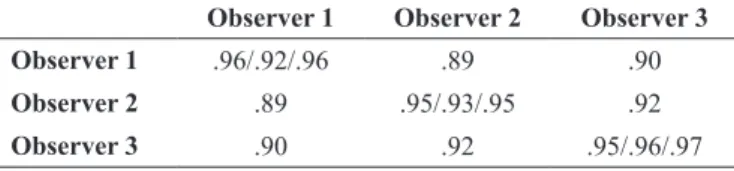
Table 2 displays the results of intra- and inter-rater reliability
tests for checking the SPDs criteria described in the ifth stage of
the validation process with the second set of high-level baske-tball coaches. The Kappa level of agreement was greater than .88 indicating an almost perfect intra- and inter-rater agreement
(Landis & Koch, 1977) by the end of the criteria reinement.
Moreover, symmetry test of the Kappa values indicated no
differences within and between ratios in the identiication of
the SPDs (p > .05).
In regard of the interaction outcomes, assuming both space created and delays as positive offensive outcomes, offensive success overcame defensive success for all of the sequence
lengths presented. Speciically, 10 and 11 sequences produced more space created outcomes than other sequences with greater lengths. The length of the sequence did not affect the occur-rence of delays, while long sequences seemed to favor space protection conditions.
Table 4 presents the two most frequent patterns of sequence length described above (i.e., 10 and 11), the related SCD-SPD interaction contents and their respective relative frequencies. For both 10 and 11 lengths, the table displays the results only for interaction patterns with frequencies greater than 5% for each sequence length. Lower frequencies indicate rare events, whose
execution may be consequence of occasional contingencies of
confront and, consequently, not relevant for unraveling strategic features of the team.
Observer 1 Observer 2 Observer 3
Observer 1 .96/.92/.96 .89 .90
Observer 2 .89 .95/.93/.95 .92
Observer 3 .90 .92 .95/.96/.97
Table 2. Reliability ratios for inter- and intra-observers. Where for each
intra-observer comparison: irst rate: time1 versus time2; second rate: time 1 versus time3; third rate: time2 versus time3.
Application to match analysis
Short sequences of concatenated SCD-SPDs (i.e., 10 and 11) were more frequent than longer ones (i.e., 12; 1010; 101010), among teams and competition phases (Table 3). Sequences with no re-start of the offense (e.g., 10, 11) represented 71% of the total SCD-SPDs couples, for all of the teams. A single re-start (e.g., 1010, 1111) occurred in 18% of the offenses, whilst se-quences with two and three re-starts corresponded to 3% and 2%, respectively. Sequences with four re-starts presented a very low frequency of occurrence (i.e., ~.5%).
Semiinals
Barcelona Caja Laboral
SL % SC D SP SL % SC D SP
10 47 33 35 32 10 52 22 43 35
11 27 42 49 9 11 18 27 63 10
1010 8 18 44 38 1010 13 23 30 47
12 5 10 60 30 101010 5 0 50 50
Finals
Barcelona Bilbao Biskaia
SL % SC D SP SL % SC D SP
10 50 36 30 34 10 51 35 27 38
11 21 23 50 27 11 19 17 48 35
1010 7 18 44 38 1010 11 19 27 54
12 5 17 50 33 12 5 18 37 45
Table 3. SCD-SPD sequence lengths in the semi-inal and inal series, where: irst, third and ifth numbers in the sequence indicate the be
-ginning of a new action. Second, fourth and sixth numbers indicate
the subsequent concatenated actions in regards to the action indicated in the previous number. Sequence length: SL; percentage: %; space created: SC; delay: D; space protected: SP.
Semiinals
Barcelona
10 on ball screen – second + away (14%); ball dribbling – oriented (14%); ball dribbling – not oriented (13%); on ball screen – second + show (8%); without ball – luctuation (6%)
11 [ball dribbling – not oriented; without ball – luctuation] (12%); [On ball screen –second + show; without ball – luctuation] (10%); [on ball screen – second + away; without ball – luc -tuation] (7%)
Caja Laboral
10 on ball screen – second + away (12%); ball dribbling – not oriented (12%); ball dribbling – oriented (9%); on ball screen– switch+ switch (6%); out of ball screen – second + away (6%) 11 [out of ball screen – second + sustain; on ball screen – second
+ away] (10%); [on ball screen – second +away; on ball scre-en – second + away] (8%); [on ball screen – third + away; on ball screen – second + away] (8%)
Finals
Barcelona
10 ball dribbling – oriented (12%); ball dribbling – not oriented (11%); on ball screen – second + away (7%); out of ball screen – second + sustain (7%)
11 [on ball screen – second + show; without ball – out of position] (8%); [out of ball screen – second + sustain; ball dribbling – oriented] (8%); [ball dribbling – not oriented; without ball – luctuation] (6%)
Bilbao Biskaia
10 ball dribbling – not oriented (15%); ball dribbling oriented (14%); out of ball screen – second + sustain (10%); on ball screen – second + away (7%)
11 [ball dribbling – oriented; without ball – out of position] (14%); [on ball screen – second + show; without ball – luctuation (12%); [on ball screen – second + away; without ball – out of position] (7%); [out of ball screen – second + sustain; without ball – luctuation] (7%)
Table 4. SCDs-SPDs for the two most recurrent interaction patterns
In sequences of 10 length, three patterns were more frequent for all of the teams: i) ball dribbling – oriented; ii) ball dribbling – not oriented; and iii) on ball screen – second + away. There is a great variety of possible SPD combinations for the defense of the on ball screen and the recurrence of on ball screen – second + away indicates a consistent pattern of interaction for this 2x2
situation. In sequences of 11 length, two other patterns presented high frequencies of occurrence: i) sequences initiated with on ball screen actions, mainly defended by “second + away”; ii)
concatenation of a irst offensive action with a space creation without ball or another on ball screen.
In an offensive perspective, Barcelona performed on ball screens on 22% of the actions in pattern 10 during the
semi-inals. Moreover, pattern 11 was initiated with an on ball screen on 17% of the occasions. On the other hand, during the inals, on ball screen corresponded to only 7% of the actions in pattern
10. Pattern 11 was initiated with on ball screen on 16% of the occasions.
Discussion
The aims of the present study were to validate a set of SPDs and to analyze matches based on SCD-SPD couples. SPDs were
successfully created and validated based on well-deined criteria
and high agreement scores. After validated, the SPDs together with the SCDs (i.e., SCDs-SPDs couples) enabled to identify offense-defense interaction patterns in basketball games of the Spanish professional league. The analyzes of the interactions revealed that short sequences were more frequent than long ones. Additionally, the most recurrent concatenated patterns were similar among teams whilst less frequent concatenation patterns presented a great diversity among teams.
SPDs validation
Validation of the SPDs followed the procedures described by Lamas et al. (2011), while reliability procedures followed James, Taylor, and Stanley (2002) and O’Donoghue (2007)
recommendations. The criteria applied to deine each SPD were exhaustively tested (Table 1) and the intra- and inter-ra -ter reliability scores revealed high accuracy in distinguishing the classes (Table 2). Accordingly, the intra- and inter-rater
reliability ranged between .92 – .97 and .88 – .97, respectively (Landis & Koch, 1977).
The SPDs developed herein are a logical complement to
the previously deined SCDs in (Lamas et al., 2011) because Lamas and colleagues did not consider a fundamental element to the analysis of tactical patterns, the adversary’s defense. Hence, the present work introduces a more discriminative approach to the investigation of interaction patterns than the previous one, which can be generalized to other team sports. Based on this approach, researchers can assess not only the
tactical patterns of both teams but also the possible inluence
of the obtained outcomes on the frequency of occurrence of the tactical patterns.
Indeed, interaction patterns in team sports have been previously investigated in a different perspective (Vilar, Araujo, Davids, & Button, 2012), in which the formation of playing patterns was analyzed through the dynamics of both single (Correia et al., 2012; Esteves et al., 2012) and
multiple offensive-defensive couples of players (Corrêa, Vi -lar, Davids, & Renshaw, 2012; Duarte et al., 2012). In these studies, the assessment of offense-defense dynamics was used as a framework to determine players’ decision process. Both approaches to interaction patterns seem to be complementary, as SCD-SPD couples represent a framework regarding the technical-tactical meaning of the interaction behaviors for a
speciic sport in which spatiotemporal dynamics are worth to
be further investigated to depict the patterns of play among players with greater contribution for offensive or defensive success.
For instance, the results of the present study reinforced that on ball screen and second+away are highly recurrent behavioral patterns in basketball offense and defense, respectively (Table 4). This SPD characterizes a defensi-ve alternatidefensi-ve that imposes defensi-very limited space to the ball player displacement, in which the defender tries to stay as close as possible to him and, at the same time, the defender of the screener stays away from the screen with the aim of protecting the area closer to the basket as the screener often displaces in that direction, after the screen. When this action is well concatenated by the two defenders, it neutralizes the offensive action and forces the offense to plan another play. Nonetheless, the concatenation of actions between team players, or even the concatenation established in relation to the adversary, involves several subtle regulatory processes. Thus, to investigate offense-defense interaction patterns ga-thering the approaches of classes of actions and its inherent dynamics may represent an auspicious framework. Classes of
actions (i.e., SCD-SPD couples) may deine an observational
set-up in which the success or failure of a single player or a group of players can be interpreted by a set of variables sensitive to the players’ dynamics.
The highly diverse defensive alternatives (Table 1) are
compatible with progressively more complex defensive strategies with speciic actions planned to respond to par -ticular offensive behaviors. The approach provided by the SCD-SPD couples allows differentiating strategic behaviors (i.e., previously planned) from those that emerge during the match. Behaviors with higher frequencies of occurrence may be related to the strategy of the teams. Moreover, the analysis
of SCD-SPD couples helps to explain the causative processes
that affect the outcomes. This analysis is supported by the literature, which reinforces the importance of shifting from a discrete action analysis to a continuous goal-directed behavior
analysis (Correia et al., 2013; Glazier, 2010; McGarry, 2009).
A possible limitation of the methodology is that to accomplish demands of describing the actions’ semantics, it necessarily
requires the identiication of specialized tactical patterns
Dynamical analysis of interaction patterns
Lengthwise, the most frequent interaction patterns of the SCDs-SPDs couples in the annotated sequences were very simi-lar among teams, and the sequences presented a small number of concatenated SCDs-SPDs couples (Table 3). On average,
10 and 11 sequences accounted for 71.2% of the interaction patterns, on each confront. Yet, 1010 and 12 sequences occurred in Barcelona and Bilbao Biskaia matches, while Caja Laboral presented the pattern 101010, instead of 12. However, these patterns accounted for only ~15% of the interaction patterns on each confront.
Spanish basketball teams seems to have highly elaborated strategies, which would lead to longer offensive interactions until one of the teams can overcome the adversary. However,
the present indings do not support this empirical notion as short
sequences of offensive-defensive interactions were
predomi-nant. A possible explanation for these indings relates to the
defensive improvement in basketball teams. As a consequence
of defensive development, teams have become more eficient in
moving the offense away from the location in which the attackers planned to perform the SCDs. Therefore, the concatenation of two offensive actions (i.e., interaction patterns 11) was frequent and successful (on average, 21% of total frequency of length patterns; 40% of space created and delays generated). However, longer sequences than 11 seem to be neutralized by defense, as indicated by the considerably lower frequency of 12 pattern (5%, on average).
In sequences as 1010 (10%, on average), the third most frequent, there is a re-set of the offense between interactions, indicating defensive capability to protect the basket. The lower recurrence of these actions is aligned with the previous idea that the offensive team struggles to get in the appropriate
position to run the offense. Furthermore, if the irst trial is not
well succeeded, the offense may not have enough time for a second attempt. Longer sequences than 1010 had frequencies of occurrence < 3% of the total of the patterns. Hence, the analysis of the interactions considering both teams unraveled that the actions of space creation and protection were short in length.
Offensively, Barcelona F.C., the team analyzed against two different adversaries, presented distinct frequencies of SCDs
between playoff series (e.g., on ball screen, in the semiinals (inals), corresponded to: 22% (7%) of the actions in pattern 10
and 17%(16%) of the actions in pattern 11. It suggests that the methodological approach herein applied was sensitive enough to capture the strategic adjustments performed by a team to play against each of the adversaries. Defensively, teams presented few preferential defensive actions, despite the great number
of possible SPD patterns (Table 4). Indeed, in the semi-inals
Barcelona defended Caja Laboral’s on ball screen mainly with: i) second + away; ii) switch + switch. Additionally, it defended the out of ball screen with: i) second + away. In the inals, Bar -celona defended Bilbao Biskaia on ball screen mainly with: i)
second + away. However, there was a modiication in the most
frequent SPD to defend out of ball screen, performing the second + sustain (data not shown). Unfortunately, there is a paucity of data in the literature to enable comparisons.
The diversity of interaction patterns was higher for long se-quences (e.g., 12, 13, 1211), which may have occurred due to the fact that during the sequence of interactions the adherence to the strategy may progressively decrease. The observed actions result
from both the attempt to execute the strategy and the constraints
imposed by the adversary, leading to several unpredictable adjustments based on the emergent situations in the confront. In cases when sequences are intermediated by a re-start of the offense, for instance 1010, patterns were similar to those found in 10, which indicates the preference to perform according to
team’s strategy, as another planned action can be executed in
the second part of the sequence (i.e., non-concatenated). For instance, (on ball screen - second + away_ball dribbling - not oriented) had a proportion of 25% for 1010, corroborating the data found in 10 that on ball screen and ball dribbling were the preferred SCDs to start the offense. The offensive prevalence of on ball screen and ball dribbling, which corroborates with Lamas et al. (2011), suggests a strategic trend of inducing the
execution of SCDs that can produce at least short defensive
delays, which can be enough to create scoring opportunities. Sequences of actions 10 and 11 presented high success ra-tes in creating space either by unequivocally creating space or producing a delay for all of the teams analyzed. The occurrence
of a second action concatenated with the irst (i.e., 11) seemed to have a positive impact on offense success, especially in the
semiinals. Barcelona and Caja Laboral presented 91% and 90%
of success in 11 actions, respectively, whilst 68% and 65% in 10 actions. In the inals, the values did not follow the same pattern
as Barcelona and Bilbao Biskaia presented 66% and 62% of success in 10 and 73% and 65% in 11 actions, respectively. Sequences with longer concatenations (e.g., 12, 13) did not differ in terms of the obtained positive outcomes. Even though
concatenations seem to be beneicial for offense as they allow
to progressively increasing the space created, defense may also be able to recover, to reestablish its organization.
In conclusion, the analysis of offense-defense interaction, instead of the actions of a single team, may add relevant infor-mation for interpreting teams playing features and outcomes achieved. Although applied to basketball, both contributions presented (i.e., SPDs and SCDs-SPDs couples) may be gene-ralized and used to investigate other team sports.
References
Collet, C. (2013). The possession game? A comparative analysis of ball retention and team success in European and international football, 2007-2010. Journal of Sports Sciences, 31, 123-136.
Corrêa, U.C., Vilar, L., Davids, K., & Renshaw, I. (2012). Informational
constraints on the emergence of passing direction in the team sport of futsal. European Journal of Sports Sciences, 6, 1-8.
Correia, V., Araújo, D., Duarte, R., Travassos, B., Passos, P., & Davids, K. (2012). Changes in practice task constraints shape decision -making behaviours of team games players Journal of Science and Medicine in Sport, 15, 244-249.
Duarte, R., Araújo, D., Freire, L., Folgado, H., Fernandes, O. ,& Davids, K. (2012). Intra- and inter-group coordination patterns reveal collective behaviors of football players near the scoring zone. Human Movement Science, 31, 1639-1651.
Esteves, P.T., Araújo, D., Davids, K., Vilar, L., Travassos, B., & Este-ves, C. (2012). Interpersonal dynamics and relative positioning to scoring target of performers in 1 vs. 1 sub-phases of team sports. Journal of Sports Sciences, 30, 1285-1293.
Fonseca, R.P., Salles, J.F., & Parente, M.A.M.P. (2008). Development and content validity of the Brazilian Brief Neurophysiological As-sessment Battery Neupsilin. Psychology and Neuroscience, 1, 55-62. Glazier, P.S. (2010). Game, Set and Match? Substantive Issues and Future
Directions in Performance Analysis. Sports Medicine, 40, 625-634. Grehaigne, J.F., & Caty, D.G.P. (2010). Modelling ball circulation in
invasion team sports: a way to promote learning games through un-derstanding. Physical Education and Sport Pedagogy, 15, 257-270. James, N., Taylor, J., & Stanley, S. (2002). Reliability procedures for
categorical data in performance analysis. International Journal of Performance Analysis in Sport, 7, 1-11.
Lamas, L., Barrera, J., Otranto, G., & Ugrinowitsch, C. (2014). Invasion team sports: strategy and match modeling International Journal of Performance Analysis in Sport, 14, 307-329.
Lamas, L., De Rose Jr., D., Santana, F., Rostaiser, E., Negretti, L., & Ugrinowitsch, C. (2011). Space creation dynamics in basketball offence: validation and evaluation of elite teams International Journal of Performance Analysis in Sports, 11, 71-84.
Landis, J.R. & Koch, G.G. (1977). The measurement of observer
agreement for categorical data. Biometrics, 33, 159–174. McGarry, T. (2009). Applied and theoretical perspectives of performan
-ce analysis in sport: scientiic issues and challenges. International Journal of Performance Analysis in Sports, 9, 128-140.
O’Donoghue, P. (2007). Reliability Issues in Performance Analyis. International Journal of Performance Analysis in Sports, 7, 20-27. Pfeiffer, M., & Perl, J. (2006). Analysis of tactical structures in team
handball by means of artiicial neural networks. International Journal of Computer Science in Sport, 5, 4-14.
Seabra, A., & Dantas, L. E. P. B. T. (2006). Space deinition for match
analysis in soccer International Journal of Performance Analysis in Sports, 6, 97-113.
Vilar, L., Araujo, D., Davids, K. & Button, C. (2012). The role of ecological dynamics in analysing performance in team sports. Sports Medicine, 42, 1-10.
Authors’ note
Felipe L. Santana and Carlos Ugrinowitsch are afiliated with the
School of Physical Education and Sport, University of São Paulo. Av. Professor Mello Moraes, n. 65, Cidade Universitaria. Sao Paulo, 05508-030, SP, Brazil.
Eduardo Rostaiseris afiliated with the German Sport University Co
-logne. Am Sportpark Müngersdorf, n. 6., Cologne, 50933, Germany.
Eran Sherzer is afilaited with the Clube Atlético Paulistano, Rua Honduras, n. 1400, São Paulo, 01428-900, SP, Brazil.
Junior Barrerais afiliated with the Institute of Mathematics and Statistics, University of São Paulo. Rua do Matão, n. 1010, Cidade
Universitaria. São Paulo, 05508-090, SP, Brazil.
Leonardo Lamas is afiliated with the Faculty of Physical Education,
University of Brasília. Campus Darcy Ribeiro, Asa Norte, Brasília,
70910-970, DF, Brazil.
Acknowledgements
LL was supported by Fundação de Amparo à Pesquisa do Estado de São
Paulo, grant: 2012/19164-0. CU is supported by Conselho Nacional de Pesquisa, grant 304205/2011-7. JB is supported by Conselho Nacional de Pesquisa, grant: 306442/2011-6.
Corresponding author
Leonardo Lamas
University of Brasilia, Campus Darcy Ribeiro, Asa Norte, Brasília
(DF), Brazil, 70910-970
email: [email protected]; phone: 00-55-61-31072510
Manuscript submitted on January 28, 2014 Manuscript accepted on on January 24, 2015
Motriz. The Journal of Physical Education. UNESP. Rio Claro, SP, Brazil