Content validation of an instrument to assess the
impact of neurocognitive disorders in the family
Validação de conteúdo de um instrumento de avaliação do impacto do
trans-torno neurocognitivo na família
Validación del contenido de un instrumento de evaluación del impacto del
trastorno neurocognitivo en la familia
Mafalda Sofia Gomes Oliveira da Silva 1
https://orcid.org/0000-0002-2509-5566
Luís Octávio de Sá 2
https://orcid.org/0000-0001-9687-413X
1 Santa Maria School of Health.
Universi-dade Católica Portuguesa, Health Sciences Institute, Center for Interdisciplinary Research in Health, Porto, Portugal
2 Universidade Católica Portuguesa, Health
Sciences Institute, Center for Interdiscipli-nary Research in Health, Porto, Portugal
Corresponding author:
Mafalda Sofia Gomes Oliveira da Silva E-mail: [email protected]
Received: 15.10.19 Accepted: 20.04.20 ISSNe: 2182.2883
ARTIGO DE INVESTIGAÇÃO (ORIGINAL)
How to cite this article: Silva, M. S. G. O., & Sá, L. O. (2020). Content validation of an instrument to
assess the impact of neurocognitive disorders in the family. Revista de Enfermagem Referência, 5(2), e19074. doi:10.12707/RIV19074
Abstract
Background: The diagnosis of a chronic and disabling disease implies profound changes in family dynamics, with increased demands for the provision of nursing care to the family.
Objectives: To validate the content of the scale to assess the impact of neurocognitive disorder on the family through the Delphi panel.
Methodology: The methodology used was the Delphi method, using a panel of 42 experts in the area to gather consensus about the pertinence and content of a set of items. Data collection and analysis in the first round took place at the beginning of April and the second round at the end of June 2018.
Results: Of the 86 items presented to experts, adaptations in 10 items were suggested to make them clearer and easier to understand. The final version consists of 68 items.
Conclusion: The results of the study made it possible to find, among experts, the consensus that allows validating the content of the proposal for an instrument to assess the impact of neurocognitive disorders in the family.
Keywords: peer review; dementia; family relations; nursing care; Delphi study
Resumo
Enquadramento: O diagnóstico de uma doença crónica e incapacitante implica mudanças profundas na dinâmica familiar, com exigências acrescidas para a prestação dos cuidados de enfermagem à família.
Objetivo: Validar o conteúdo da escala de avaliação do impacto do transtorno neurocognitivo na família através de painel Delphi.
Metodologia: Foi utilizada a metodologia Delphi, recorrendo-se a um painel de 42 peritos para reunir consensos acerca da pertinência e do conteúdo de um conjunto de itens. A recolha e análise de dados da 1ª ronda decorreu em abril e a 2ª ronda em junho de 2018.
Resultados: Dos 86 itens submetidos ao consenso, foram sugeridas adaptações em 10 itens para que ficassem mais claros e de fácil compreensão. A versão final ficou constituída por 68 itens.
Conclusão: Os resultados do estudo permitiram encontrar, entre peritos, um consenso que nos permite validar o conteúdo de uma proposta de instrumento de avaliação do impacto do transtorno neurocognitivo na família.
Palavras-chave: revisão por pares; demência; relações familiares; cuidados de enfermagem; estudo Delphi
Resumen
Marco contextual: El diagnóstico de una enfermedad crónica e incapacitante implica profundos cambios en la dinámica familiar y demanda más cuidados de enfermería para la familia.
Objetivo: Validar el contenido de la escala de evaluación del impacto del trastorno neurocognitivo en la familia a través del método Delphi.
Metodología: Se utilizó la metodología Delphi y se recurrió a un panel de 42 expertos para lograr un consenso sobre la pertinencia y el contenido de un conjunto de ítems. La recopilación y el análisis de los datos de la primera ronda se llevó a cabo en abril y de la segunda ronda en junio de 2018.
Resultados: De los 86 puntos presentados al consenso, se sugirieron adaptaciones en 10 ítems para hacerlos más claros y fáciles de entender. La versión final consistió en 68 ítems.
Conclusión: Los resultados del estudio permitieron encontrar, entre los expertos, un consenso que permite validar el contenido de una propuesta de instrumento de evaluación del impacto del trastorno neurocognitivo en la familia.
Palabras clave: revisión por expertos; demencia; relaciones familiares; atención de enfermería; estudio de Delphi
Introduction
Population aging has been increasing in recent years, re-sulting in situations of dependency in self-care and basic activities of daily living (Instituto Nacional de Estatística, 2017). The increase in average life expectancy, the existing comorbidities, and the lack of support structures have determined the increase of the needs in different areas of care. Health policies and necessary responses usually adapt to this new reality and the demands of sick people and their families. The neurocognitive disorder (NCD) is a syndrome that affects memory, thinking, behavior, and the ability to perform daily activities. The lack of awareness and understanding worldwide leads to stigmatization and barriers to diagnosis and treatment, impacting sick people, caregivers, their families, and societies physically, psychologically, and economically. The family is a com-plex system that influences the individual and collective health of the different members of the household. The onset of a chronic and incapacitating illness causes deep consequences in family dynamics and, thus, the family context should be considered an object of attention in health care. When regarding the family as an entity to be involved in nursing care delivery, it is important to adopt strategies to better understand the impact of the onset of the NCD in one of its members. It is known that studying the phenomena associated with the process of care is complex. Considering the need to know the involvement of the different members who live with the caregiver and the sick person, this study aims to construct an instrument to assess the impact of NCD in the family that cohabits with the sick person.
The results of this study may constitute a valuable con-tribution to the clinical practice of nursing, with a view to identifying the needs of the caregivers and family members who live daily with people with NCD, allowing the development of more effective nursing interventions for the adaptation needs of each family as a whole and of each member in particular, adopting an evidence-based nursing practice.
The objective of this study was to validate the content of the tool to assess the impact of NCD in the family by means of a Delphi panel.
Background
The assessment of and nursing intervention in the family should focus on the reciprocity between health-disease and family. In this continuous process of care delivery, the needs of the different actors, the caregiver, the sick person, and the family, need to be managed. Nursing, as a systemic discipline, focusing on the balances and imbalances generated in the family, targets simultaneously the family system, individual subsystems, and also parallel systems: in the community, in health services, or in society. Families, being an assistance unit, should be involved in health care in the various domains of nursing practice. Interactions, as well as relationship patterns between the members of the family, make families unique (Araújo,
2015). From a systemic perspective, the conceptions of family and of organization of the life of the various members have changed deeply.
The family is a social system consisting of one or more persons that coexist within a organization and have expec-tations of mutual affection and responsibility. It represents commitment, decision-making, and different objectives, including new family reconfigurations in current society (Araújo, 2015). When looking at the family as a whole, the interactions between its members can be understood, with a view to exploring and trying to explain the functioning of each individual and the relationships between them. A family is better perceived when its overall functioning and the functioning of its components, the structure, the communication, functions and processes of each one are understood. The changes in one of the family members affect everyone in different ways, diverting the family toward a new position of balance or imbalance. The family usually reorganizes themselves in a different mode from the previous organization. As the family is the main resource and support in the provision of necessary care to the sick person, it appoints among its members the person responsible for providing the care. This person takes on the role of main caregiver. These three types of caregiver according to their role and functions: primary caregiver; secondary caregiver, and tertiary caregiver. The main difference between the three is related to the caregiver’s responsibility in the care process and the degree of their involvement: a) the primary caregiver, in whom lies the total responsibility in providing assistance to the depen-dent person; b) the secondary caregiver, who is involved in the care process occasionally or regularly, but does not have the responsibility of caring, because the family pro-vides support to the primary caregiver; and c) the tertiary caregiver, who helps sporadically when requested or in emergencies. This collaboration can occur in provision of direct care, economic support, leisure and social activities, which can replace the caregiver in absence or emergency situations (Sequeira, 2018). In interpersonal systems, es-pecially in the family, it is noted that the behavior of the sick person influences and is influenced by the behavior of the other members of the system. On a regular basis, the caregiver has contradictory and antagonistic feelings regarding the associated stress, responsibility, and con-flicts. In their experience with the illness, the caregiver, family members, and the social network perceive, live, and overcome the physical and psychosocial challenges. How they respond to the situation is based on the rules, beliefs, and values of each family member.
The different members of a family assume different roles throughout the life cycle of each one and the family (Araú-jo, 2015). Scientific research suggests that the emerging needs of family caregivers are based on the need to learn alone, need for time to maintain the roles, the need for a support network, the resilience in family imbalances and the care resources (Fernandes, Margareth, & Mar-tins, 2018). Caring for a person with NCD can be both satisfactory and give meaning to life, and it can be a burden and surpass the limits tolerated by the caregiver or family, which can generate conflicts and breakdowns
in the family structure. In many cases, the difficulties of the family as a whole when adapting to the onset of an NCD are responsible for the institutionalization of the sick person. These family relationships are different from other relationships of social support, due to the emotional dimension based on bond, loyalty, reciprocity, and soli-darity. The members of the family become apart, causing painful experiences to the caregiver. The dimensions related to the practice of the role of informal caregivers are limited to the associated negative responses, such as overload, presence of depressive symptoms, stress, and the time spent in the provision of care. The impact of this overload will depend on the resources of the family, on the available health care, and the capacity for resilience of the different members of the family and the sick per-son to adapt to the constant changes. This study may be relevant to understand the human responses to processes of adaptation of families in the face of a chronic illness. According to Walsh (2012), the fundamental processes in family resiliency are family cohesion; coping strategies of the caregiver; relationships of mutual support; family or-ganization and communication processes. In turn, research shows that reducing the family risk factors has relevant consequences like conflict, criticism, psychological trauma associated with the illness, family isolation, disruption of family chores due to the illness and inflexibility or perfectionism (Moreno-Cámara, Palomino-Moral, Mor-al-Fernández, Frías-Osuna, & del-Pino-Casado, 2016). The functioning of a family is a good predictor of how the family will adapt to the illness, and it is extremely important to assess the family dynamics, the changes in roles to understand better the impact of the illness on the person and family members who live with him/ her. Nurses have a special interest in understanding the essential processes, so as to enable the families in this transition process. It is crucial to obtain knowledge and skills for the promotion of autonomy and perception of self-efficacy in the care provided.
Several factors can influence positively and negatively affect the care to people with NCD: some are directly related to the sick person, others to the caregivers, and others, still, to the context of care. There is a lack of studies that demonstrate the impact of these factors on the different members who live with the sick person. It is a complex process for nurses to look at the family and its members and their relationships as a focus of their attention. Nurses need to develop their diagnoses based on evidence resulting from the application of validated models, which allowed searching for results by means of a scoping review, in which six dimensions of the problem were identified (Silva, Sá, & Marques, 2019), summa-rized below.
The direct and indirect costs related to the illness are huge and usually increase as the illness advances. According to the community project “CuiDem” conducted in Portugal, the economic cost reached the value of 203 euros per week. In a total of 384 caregivers, mostly women (84%), with a mean age of 59 years, mostly pensioners (40%) or unemployed (36%) who have been caring for an elderly dependent (mean age of 86 years) for more than two
years (50%) and with whom they reside (66%), it was possible to determine that the costs are around 87 eu-ros/day, representing a weekly cost of 608 euros (Pires, 2016). For this assessment, the value corresponding to the time spent caring for the person was considered. However, other values should be considered, like medical expenses (health resources, consultations and treatments), home improvement, giving up work to care for others, among others. Within the context of care for relatives of people with NCD, there are several interventions, such as case management, psychoeducational groups, psycho-therapeutic approaches, multi-component approaches, and mutual help groups. Spirituality is a key element of life and is part of the physical, psychological, and social development of the human being. Spiritual needs can arise from the difficulty in finding an explanation for the situation. When the family member does not find an explanation or a direction in life, spiritual needs arise. Without spiritual support, desperation can lead to loss of hope in the future and, consequently, difficulty in imagining a future for the sick person (Roldão, 2014). This topic is of special relevance to health profession-als because the transition and adaptation of the family fall within the domain of nursing when the reactions to transitions are reflected in health-related behaviors. Considering the challenges of family readaptation caused by the onset of the NCD, nurses need to deepen their knowledge about the implications in different house-hold members, contributing to the development of an evidence-based practice.
This study presents the results of the process of validation of content by experts, of the items organized in the six identified dimensions: emotional, family relationships, economic, information and health care seeking, and social and spiritual.
Research question
Which content should take part in the assessment of the impact of an NCD in the family?
Methodology
The method selected for this study was the Delphi tech-nique, and the five steps described by Justo (2005) for this method were followed. This technique consists of a structured process of collection and synthesis of knowledge about a particular topic to reach a consensus of opinions, encouraging the discussion of the most relevant aspects to Nursing (Scarparo et al., 2012). The questionnaire was composed of three parts: the first included instructions for filling in the questionnaire and ensured of anonym-ity of the answers provided, as well as the identification of the experts; the second was composed of questions regarding the sociodemographic characterization of the experts; and the third was the list of selected items for each dimension, distributed according to the analysis of their content by the team of researchers. 42 experts were
reached through the snowball sampling technique, who met the following criteria: being a professional working in a health or education institution; being a psychiatrist or nurse specialist in mental health and psychiatry with experience exceeding two years with people/families with NCD, and, cumulatively, experience as a researcher with scientific publications in the area, They were contacted by email, in which the participants were asked their opin-ion on the content of the items and their adequacy to the selected dimension, by responding to an electronic questionnaire in Google Docs. There were two survey rounds. The feedback, the opinions provided, and the suggestions supplied were analyzed and summarized in this article. The query took place between April and July 2018 and allowed achieving consensus on the majority of items proposed for the six dimensions. In the first round, 19 experts replied to the electronic questionnaire (45.2%
response rate), and in the second round, 21 answers out of the 42 sent were obtained (50% response rate), according to the data presented in Table 1.
In the questionnaire, the experts were asked to provide their response regarding the relevance of the items in the dimensions emerged and their content. The answer was provided through a Likert scale as follows: 1 - not
relevant, 2 - a little relevant; 3 - very relevant, and 4 - ex-tremely relevant. This Delphi study adopted for the level
of consensus the percentage value of 75% of responses as agreement and 100% as perfect consensus (Scarparo et al., 2012). In this sense, the positive concordance is defined by the sum of the percentage of responses indicated as
very relevant and extremely relevant.
As a consensus of 75% among experts was reached in the 2nd round, in all items, there was no need for a 3rd round.
Table 1
Steps throughout the study
Steps Description
1 – Construction of the group of items based on the literature review
A scoping review was conducted to identify the dimensions of family adaptation to the onset of this chronic illness and build a set of items grouped into these dimensions according to the analysis of their content.
2 – Construction of the instru-ment
An instrument was built, composed of 86 items generated by the first step and distributed by six dimensions: emotional, family relations, economical, healthcare and information seeking, and social and spiritual.
3 – Definition of the expert selec-tion criteria
Psychiatrists and nurse specialists in mental health and psychiatry who have been working with people/families with NCD for more than 2 years.
Experience as researcher with scientific publications in the area.
4 – Identification and contact with the experts
Email contact with health professionals with acclaimed expertise in the area and request for names of other experts;
Contact information obtained through consultation of published scientific articles; 42 experts were identified between April and May 2018.
5 – first round of survey
Google Docs link of the questionnaire sent by email between 22 April and 05 May to the 42 ex-perts identified, requesting responses until 21 May 2018;
19 valid responses to the submitted questionnaire were received until the deadline.
6 – Statistical analysis of the
re-sponses to the instrument The responses were selected through the agreement criteria defined (Scarparo et al., 2012): only the items with “positive agreement” were included (agreement between experts ≥ 75%)
7 – second round of survey
It was sent between 13 and 26 June to the 42 identified experts, establishing a response deadline until 15 July 2018. There was a 50% adherence, which justified sending an email to each expert, before the deadline, requesting their participation and including the link to the questionnaire. 21 responses were obtained at the deadline.
The instrument was composed of 86 items distributed by six dimensions: the first one, the emotional dimension, was composed of 35 items; the second, family relations, is composed of 8; the third and fourth dimensions, 7
items each, were respectively, the economic dimension and the information and health care seeking dimension; the fifth, the social dimension, is composed of 6 items; and the sixth was the spiritual dimension, with 5 items.
Results
In relation to the characteristics of the experts, they were mostly female, with a mean age of 46.3 years (SD = 9.55), married, nurse specialists in mental health and psychiatry, and
have been working with people with NCD and their families for an average of 5.25 years (SD = 4.19). The professionals develop their expertise both in the provision of direct care and training of professionals. Table 2 shows a summary of the sociodemographic characterization of the experts. Table 2
Characterization of the group of experts
Variables Results (Number of responses) %
Gender (n = 14) 66.6% Women(n = 7) 33.3% Men
Area of professional training (n = 19) 90.5% Nurse specialist in mental health and psychiatry(n = 2) 9.5% Psychiatrist
Years of experience with families
(n = 1) 4.7% 2 to 5 years (n = 4) 19% 6 to 10 years (n = 5) 23.8% 11 to 15 years (n = 11) 52.3% more than 15 years
Experience as researcher (n = 19) Nurse specialist in publications on the topic(n = 2) Psychiatrist with publications on the topic
Area of professional activity 52.3% (11) Working in hospitals 47.6% (10) Working in academia
In the second part of the questionnaire, the experts were to mark the answer that best expresses their level of agreement regarding the relevance and the content of the items in the dimensions emerged.
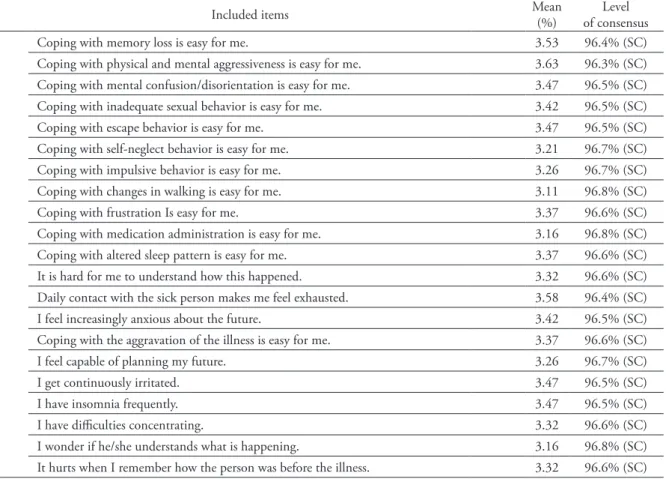
Table 3 shows the items that were selected after the 1st and the 2nd round of the Delphi study, the mean
rate of agreement, and the corresponding levels of consensus (LC).
Table 3
Results of the Delphi Study: Selected items by size
Included items Mean(%) of consensusLevel
Emotional D
imension
Coping with memory loss is easy for me. 3.53 96.4% (SC)
Coping with physical and mental aggressiveness is easy for me. 3.63 96.3% (SC) Coping with mental confusion/disorientation is easy for me. 3.47 96.5% (SC)
Coping with inadequate sexual behavior is easy for me. 3.42 96.5% (SC)
Coping with escape behavior is easy for me. 3.47 96.5% (SC)
Coping with self-neglect behavior is easy for me. 3.21 96.7% (SC)
Coping with impulsive behavior is easy for me. 3.26 96.7% (SC)
Coping with changes in walking is easy for me. 3.11 96.8% (SC)
Coping with frustration Is easy for me. 3.37 96.6% (SC)
Coping with medication administration is easy for me. 3.16 96.8% (SC)
Coping with altered sleep pattern is easy for me. 3.37 96.6% (SC)
It is hard for me to understand how this happened. 3.32 96.6% (SC)
Daily contact with the sick person makes me feel exhausted. 3.58 96.4% (SC)
I feel increasingly anxious about the future. 3.42 96.5% (SC)
Coping with the aggravation of the illness is easy for me. 3.37 96.6% (SC)
I feel capable of planning my future. 3.26 96.7% (SC)
I get continuously irritated. 3.47 96.5% (SC)
I have insomnia frequently. 3.47 96.5% (SC)
I have difficulties concentrating. 3.32 96.6% (SC)
I wonder if he/she understands what is happening. 3.16 96.8% (SC)
Emotional D
imension
I think a lot about the time I spent with the person before the illness. 3.26 96.7% (SC)
I feel lonely. 3.53 96.4% (SC)
I feel sad. 3.42 96.5% (SC)
I feel guilty for not understanding the symptoms sooner. 3 97% (SC)
I fear others may censure and reject the behavior of the sick person. 3 97% (SC)
I feel angry and frustrated. 3.21 96.7% (SC)
I feel guilty for thinking about putting him/her in a nursing home. 3.47 96.5% (SC)
I feel guilty for not always being present. 3.32 96.6% (SC)
I need to talk about my feelings. 3.42 96.5% (SC)
I feel distressed continuously. 3.16 96.8% (SC)
I feel grateful for being able to care for him/her. 3.26 96.7% (SC)
The stress at home is frequent. 3.26 96.7% (SC)
Sometimes I feel less understanding and patient. 3.05 96.9% (SC)
I feel a lack of emotional support. 3.21 96.7% (SC)
D
imensão
Relações familiar
es
I was able to prepare myself for the change of roles. 3,53 96,4% (CF)
I feel like the illness helped my relationship with my sick relative. 3,32 96,6% (CF) I feel like there is more family conflict since before the illness. 3,58 96,4% (CF)
I feel like the illness has brought the family closer. 3,26 96,7% (CF)
I feel like the illness has led to a change in family roles. 3,74 96,2% (CF) Since the illness appeared, I have not recognize the sick person. 3,26 96,7% (CF)
It is easy for me to communicate with my relative. 3,47 96,5% (CF)
I dedicate more time to him/her since the onset of the illness. 3,58 96,4% (CF)
D
imensão
Económica
Family income has decreased. 3,11 96,8% (CF)
Medication expenses have increased. 3,53 96,4% (CF)
Home care professional hiring expenses have increased. 3,37 96,6% (CF)
Medical equipment expenses have increased. 3,26 96,7% (CF)
Travel expenses (treatments, appointments, etc) have increased. 3,26 96,7% (CF) The illness has led to an increase in remodeling expenses (bathroom work, bedroom work,
among others). 3,42 96,5% (CF)
The support provided by the national health system (or any other subsystem) is sufficient to
cope with the illness. 3,16 96,8% (CF)
D
imensão
Pr
ocura de informação e de cuidados de saúde
I feel like I need to know more about the illness. 3,58 96,4% (CF)
My main sources of information are the doctors. 2,89 97,1% (CF)
My main sources of information are the nurses. 3,05 96,9% (CF)
My main source of information is the internet. 3,05 96,9% (CF)
My main sources of information are the family members of other people with the same problems. 3 97% (CF)
My main sources of information are social workers. 2,84 97,1% (CF)
The health services (hospital, health care center, among others) have provided me with the
necessary information. 3,37 96,6% (CF)
D
imensão Social
I feel like I am less involved in social activities. 3,79 96,2% (CF)
I feel like I abandoned some of my personal projects. 3,63 96,3% (CF)
I feel like I abandoned some of my professional projects. 3,63 96,3% (CF)
I no longer take a vacation. 3,53 96,4% (CF)
I had to stop working. 3,58 96,4% (CF)
I lack social support. 3,63 96,3% (CF)
D
imensão Espiritual
I think it will be hard, if not impossible, to create a new life. 3,15 96,8% (CF)
I did not deserve this. 3 97% (CF)
Religion helps me to cope with the situation. 3,47 96,5% (CF)
I wonder about the meaning of life. 3,42 96,5% (CF)
I wonder about the meaning of companionship. 3,36 96,6% (CF)
Discussion
The use of the Delphi technique was essential to achieve the objective. In nursing, the conduction of studies of this nature allows gathering opinions about complex and comprehensive topics from experts in this area. This allows the study and understanding of phenomena, facilitating the process of informed decision-making. Over the two rounds, it was possible to achieve consensus among ex-perts on what was found in the literature review, a set of items distributed beforehand by six dimensions: emo-tional, family relationships, economic, health care and information seeking, and social and spiritual. Of the 86 items presented to the experts, 10 were eliminated in the 1st round and eight in the 2nd. The suggestions for change
focused on the clarity of 10 items, to make them easier to understand. The final version of the instrument included 68 items. Nowadays, the reorganization of health care has led to an increase in the care provided by the family, increasing the burden in the various family members, particularly in situations of health promotion and/or treatment of illness. The family plays a key and active role in the guidance and collaboration in the provision of nursing care. In this sense, the assessment of the po-tential of the family to care for the sick person and the identification of dimensions needing intervention are important steps for an accurate and effective management of health resources and care. In the emotional dimension, the items deleted by the experts consist of the feeling of guilt for not being able to assist in the care and avoid dramatizing the situations. The emotional needs relate to the feeling of discomfort of the person in a specific moment of his/her life to cope with the illness situation and its repercussions and with the behavior of the sick person. According to the study conducted by Carvalho, Araújo, and Veríssimo (2019), the family experiences fear, sadness, insecurity, and difficulty in imagining a future for the sick person and for himself/herself. Thus, it is important to identify strategies that allow the family to deal daily with the person with NCD through training, information, support, and a more individualized service in the provision of health care and social support. The use of care technology in mutual help groups has been widely used by nurses along with the multidisciplinary team that provides care to dependent persons and their families, being considered a strategy of family reorga-nization (Ilha et al., 2015). With respect to the family relationships dimension, several national and international studies demonstrate the need to manage the interventions that provide the necessary support to improve the health conditions of the caregiver with the creation of coping strategies to reduce overload and depressive sympto-matology and mobilize the support of existing family networks, delaying the process of institutionalization of the person with NCD. The literature indicates that, in addition to the psychoeducational model, there are psychosocial actions that serve as a tool to support the caregiver, focusing on how to encourage the caregiver to mobilize the family members, to know and understand the resources available within the community for people
with NCD and caregivers, contributing to a network of formal and informal support. Considering these studies, caregivers urgently need to encourage family members and friends to participate in the care process, decreasing the person’s overload and neuropsychiatric symptoms and delaying the process of institutionalization.
According to the items presented in the economic di-mension, it was found that the experts do not consider relevant the increase in food, cleaning, hygiene and clo-thing expenses, and free time occupation. These healthcare costs will vary according to the severity of the problem of the cared-for person and the conditions of the caregiver. According to the studies of Santana, Farinha, Freitas, Ro-drigues, and Carvalho (2015) and Tobias (2017), financial problems are greater in the cases of people with NCD, because the home structure, for example, can be 1.2 times more costly. A study on the costs of Alzheimer disease in the EU 27 (Gervès, Chauvin, & Bellanger, 2014) showed that 60% of them are related to informal care. A study was carried out in Spain that showed values between 612 to 1015 euros per week (Peña-Longobardo & Oliva-Moreno, 2015). The great heterogeneity of informal care hinders their economic assessment. Nevertheless, it is becoming increasingly evident that it is important to quantify the informal care provided, allowing the identification of
hidden values in the homes of families, many of them
contributing to the economic health of our country. In accordance with deleted items in the dimension of information and health care seeking, it is important to show that the mutual help groups allow people who are experiencing similar problems to develop communication skills, practice their mutual help activity, seek knowledge about the health problem. These groups are therapeutic spaces, where people can speak about their feelings about daily care. Several studies show the positive and low-cost effects in knowledge, skills, well-being of family caregi-vers, overload relief, promotion of confidence, self-este-em, social inclusion, and coexistence of their members (Schuz et al., 2015). The most recent literature shows the implementation of multidisciplinary/interdisciplinary interventions as a more effective model in the control of cognitive and functional decline and in improving the quality of life of people with NCD and their families, through the participation of different groups of health professionals like a psychologist, social worker, nurse, occupational therapist, neurologist, physiotherapist, and gerontologist (Bertazone et al., 2016). Psychologists aim to alleviate the suffering of the sick person and informal caregivers. The purpose is not to heal, nor advise, but to minimize the obstacles in the person’s life. The intervention in people with NCD focuses on the inclusion of moti-vational, social, and psychological aspects to encourage the patient and his/her family to participate the process, which can only be performed by a multidisciplinary team (Bertazone et al., 2016). The study conducted by Mockford (2015) shows the dissatisfaction of family members with the available information and the difficulty in managing the communication between families and health professionals. Thus, it becomes important to promote information and the link with the different institutional partners, so as to
facilitate the adaptation to the new reality and minimize the needs (Tobias, 2017). The spiritual dimension has been a neglected area. In health, spirituality is a therapeutic component widely used as a strategy to deal with situations that can lead to an increase in overload. The instrument submitted to experts excluded a set of items that are in line with several studies that explain that spirituality pro-motes a better understanding about the significance and meaning of life and helps to deal with the uncertainties of the future more effectively (Roldão, 2014). According to the study conducted by Roldão (2014), nurses recognize the importance of providing spiritual care to people who need it. The adoption of non-pharmacological strategies is fundamental to improve the levels of spiritual well-being, satisfaction with life, and to promote more positive rela-tionships (Roldão, 2014). This instrument will be useful for the identification of needs, the diagnosis and planning of more adequate nursing interventions for the different members of the household. It should be noted that the final instrument would have been more comprehensive if the participation of the experts had been higher.
Conclusion
The goal of this study was to reach a consensus among experts on the content of the instrument to assess the impact of the onset of an NCD in the family. The com-plexity of the phenomenon required using an appropriate methodology for this step, justified in a previous step of literature review. This course of research has been used in the area of nursing for the construction of assessment tools. Querying and searching for consensus among ex-perts allowed validating the content of a set of items and dimensions proposed as an instrument for the evaluation of a focus of attention in nursing care: the impact of the onset of an NCD in a family member.
Author contributions
Conceptualization: Silva, M.; Sá, L. Data curation: Silva, M.; Sá, L. Methodology: Silva, M.; Sá, L.
Writing – original draft: Silva, M.; Sá, L. Writing – review & editing: Silva, M.; Sá, L.
References
Araújo, I. M. (2015). Escala de avaliação de papéis familiares: Avaliação das propriedades psicométricas. Revista de Enfermagem Referência, 4(4), 51-59. doi: 10.12707/RIV14029
Bertazone, T. M., Ducatti, M., Camargo, H. P, Batista, J. M., Kusumota, L., & Marques, S. (2016). Ações multidisciplinares/interdisciplinares no cuidado ao idoso com Doença de Alzheimer. Revista da Rede de Enfermagem do
Nordeste, 17(1), 144-153. doi: 10.15253/2175-6783.2016000100019
Carvalho, A., Araújo, L. J., & Veríssimo, M. T. (2019). Quando os cuidados continuados chegam ao fim: Perspetivas de cuidadores informais sobre o momento da alta. Revista de Enfermagem Referência, 4(22), 107-116. doi:10.12707/RIV19023
Fernandes, C., Margareth, A., & Martins, M. M. (2018). Family caregivers of dependent elderly: Same needs, different contexts: A focus group analysis. Geriatrics, Gerontology and Aging, 12(1), 31-37. doi:10.5327/ Z2447-211520181800008
Gervès, C., Chauvin, P., & Bellanger, M. (2014). Evaluation of full costs of care for patients with Alzheimer´s disease in France: The predominant role of informal care. Health Policy, 116(1), 114-122. doi:10.1016/j. healthpol.2014.01.001
Instituto Nacional de Estatística. (2017). Instituto Nacional de Estatística. Retrieved from https://www.ine.pt
Ilha, S., Backes, D. S., Backes, M. T., Pelzer, M. T., Lunardi, V. L., & Costera-no, R. G. (2015). (Re)organização das famílias de idosos com Alzheimer: Perceção de docentes à luz da complexidade. Escola Anna Nery Revista de
Enfermagem, 19(2), 331-337.Retrieved from
http://www.scielo.br/scielo.php?script=sci_arttext&pi-d=S1414-81452015000200331
Justo, C. (2005). A técnica de delphi de formação de consensos. Retrieved from http://www.opss.pt/sites/opss.pt/files/A-Tecnica-Delphi-de-Formacao-de-Consensos.pdf
Mockford, C. (2015). Review of family careers experiences of hospital discharge for people with dementia, and the rationale for involving service users in health research. Journal of Health Leadership, 7, 21–28. doi:10.2147/ JHL.S70020
Moreno-Cámara, S., Palomino-Moral, P., Moral-Fernández, L., Frías-Osuna, A. & Del-Pino-Casado, R. (2016). Problemas en el proceso de adaptación a los cambios en personas cuidadoras familiares de mayores con demencia.
Gaceta Sanitaria, 30(3), 201-207.
Peña-Longobardo, L. M., & Oliva-Moreno, J. (2015). Economic valuation and determinants of informal care to people with Alzheimer´s disease.
European Journal of Health Economics, 16(5), 507-515. doi:10.1007/
s10198-014-0604-6
Pires, C. (2016). Avaliação económica dos cuidados informais à população
idosa da região norte de Portugal (Master’s dissertation). Universidade do
Porto, Portugal.
Roldão, L. (2014). Espiritualidade e bem-estar subjetivo em familiares
cuidado-res de idosos com dependência física (Master’s dissertation). Universidade
Católica Portuguesa, Lisboa, Portugal.
Santana, I., Farinha, F., Freitas, S., Rodrigues, V., & Carvalho, A. (2015). Epide-miologia da demência em Portugal. Acta Médica Portuguesa, 28(2), 182-188. Scarparo, A., Laus, A., Azevedo, A., Freitas, M., Gabriel, C., & Chaves, L.
(2012). Reflections on the use of Delphi technique in research in nursing.
Revista da Rede de Enfermagem do Nordeste, 13(1), 242-251.
Schuz, B., Czerniawski, A., Davie, N., Miller, L., Quinn, M. G., King, C., … Scott, J. L. (2015). Leisure time activities and mental health in informal dementia caregivers. Applied Psychology Health Well-Being, 7(2), 230-48. doi:10.1111/aphw.12046.
Sequeira, C. (2018). Cuidar de idosos com dependência física e mental. Lisboa, Portugal: Lidel.
Silva, M., Sá, L., & Marques, G. (2019). O impacto do transtorno neurocog-nitivo na família: Scoping review. Revista Paulista de Enfermagem, 30(4), 1-14. doi:10.33159/25959484.
Tobias, G. (2017). O Serviço Social no apoio às famílias de utentes integrados na
RNCCI: Configurando os sentimentos, vivências e expetativas dos familiares na perspetiva dos Assistentes Sociais (Master’s dissertation). Escola Superior
de Saúde do Instituto Politécnico de Bragança, Portugal.
Walsh, F. (2012). Facilitating family resilience: Relational resources for positive youth development in conditions of adversity. In M. Ungar (Ed.), The
social ecology of resilience: A handbook of theory and practice (pp.173-185).