UNIVERSIDADE NOVA DE LISBOA FACULDADE DE CIÊNCIAS E TECNOLOGIA
DEPARTAMENTO DE QUÍMICA
David Miguel Baião Barata
“Production of recombinant protein hLIF in static and
dynamic systems of animal cell culture”
Thesis for the Degree of
Master of Science in Biotechnology Universidade Nova de Lisboa, Faculdade de Ciências e Tecnologia
Supervisor:
Professor Luís Fonseca
Instituto Superior Técnico (IST)
Universidade Técnica de Lisboa (UTL)
Co-Supervisor:
Doutor Ricardo Baptista (IST-UTL)
iii
A
A
c
c
k
k
n
n
o
o
w
w
l
l
e
e
d
d
g
g
e
e
m
m
e
e
n
n
t
t
s
s
This work was developed in the Stem Cell and Bioengineering Laboratory at BioEngineering Research Group (BERG) in Instituto Superior Técnico, under the supervision of Professor Luís Fonseca and co-supervision of Professor Cláudia Lobato da Silva and Doctor Ricardo Baptista.
In the academic world:
To professors Luís Fonseca, Joaquim Cabral and Cláudia Lobato da Silva for receiving me at Instituto Superior Técnico, as well for their supervision.
To Dr. Ricardo Baptista for being available for knowledge transfer and brightness in his observations along my work.
To the Master in Biotechnology coordination, in the person of Professor Susana Barreiros, for being available for their students, helping our academic and scientific development.
To Professor Ana Aguiar Ricardo for the help in finding such a thesis subject matching with my personal interest.
To Serviços de Acção Social for the financial support, hosting and friendship. To BERG/IBB-IST* colleagues, for giving me great friendship, a ride into the daily canteen journey and in the informal knowledge transfer that I value so much.
In the world of friends:
They are so much and I surely don’t want to miss anyone. More than my professional construct, I believe that my personality is a treasure born from their action, care and friendship, being an important part of me along this time. A special hug to Daniel Siva, Daniel Carretas, Sabrina Semitela and Inês Gomes, and other friends from Residência Fraústo da Silva (only photos can remember the good times), to my friends from BCM, Sofia Santos, Rita Piteira and Gustavo Patrício (promoted to) for the nights
of study and the gastronomic leisure. To the super scientist, Paulo Severino, the man
who don’t sleep, thank a lot. To all my Rotaract and Interact good friends (Ângelo
iv
others that I don’t mention here ...), thanks for helping me in learning a lot about friendship, leadership, and happiness (you are a huge part of me). To my friends from Castelo Branco, specially to Nelson Ribeiro & Tig (Andreia Correia), Hervé Almeida, and Wilson Inácio, you are the beginning of everything.
In the family world:
You are whom I most hold in line this years, always busy will a thousand of stuff, it is good to receive the warm smile of my father Luís Barata, from my mother Eugénia Barata and from my brother Pedro Barata (aka PM), always supporting me and building an example of family with a modest basis and integral principles. Even with distance we could fortify our connection and our way of being trough love.
To my grandmother “avó São” for the unconditional support, being an example to follow, showing always how to care and educate with confidence in the future. To my grandmother “avó Piedade” for the lesson of hard work and to my uncles special thanks for the example of integrity, adaptability and courage.
Finally to the princess of my neighbourhood, Joana Romão, I thank you for giving me a place to feel safe and confident. I hope the future could smile to us and together we will build something positive.
v
A
A
b
b
s
s
t
t
r
r
a
a
c
c
t
t
The present work focuses the optimization of the production of human Leukemia Inhibitory Factor (hLIF) by human embryonic kidney 293 (HEK293) - EBNA1 cell line cultured as suspension aggregates in spinner flask. The effects of initial cell density and feeding-regime in cellular growth and productivity were evaluated.
A first phase occurs until the end of exponential growth in medium containing serum, being followed by puromycin selection of cells containing hLIF plasmid. A second phase, the production phase, is developed under serum-free conditions. Three initial cell densities (2×10⁴ cells.mL-1, 2×10⁵ cells.mL-1 and 2×10⁶ cells.mL-1) were tested and the effect on maximum cell density and cell aggregate size distribution was evaluated. The inoculum of 2×10⁵ cells.mL-1 led to final higher cellular densities around 7×10⁶ cells.mL-1 and homogeneous aggregates around 278 m were observed. The effect of the feeding-regime was then studied for the production of recombinant hLIF with an initial cell density of 2×10⁵ cells.mL-1 by performing metabolite analysis
Metabolite analysis revealed the occurrence of glucose and glutamine starvation upon 9 and 7 days, respectively, in 25% FR. Therefore, glutamine acted as an alternative carbon, energy and aminoacid source in HEK293-EBNA1 growth. Observed lactate levels were bellow the inhibition limit concentrations (30 mM 1). HEK293-EBNA1 did not seem to be affected by the produced levels of ammonia.
vi
R
R
e
e
s
s
u
u
m
m
o
o
Este trabalho tem como objectivo a optimização de condições de produção do Factor Inibitório da Leucemia (hLIF, do inglês “Leukemia Inhibitory Factor”) através da linha celular de rim embrionário humano 293 (HEK293, do inglês “human embryonic kidney 293”) - EBNA1 cultivada sob a forma de agregados em suspensão em frasco agitado. Foram estudados os efeitos da densidade inicial de inóculo celular e regime de alimentação no crescimento e produtividade.
Uma primeira fase decorre até ao final do crescimento exponencial em meio suplementado com soro, seguindo-se de uma selecção por puromicina para as células portadoras do plasmídeo com hLIF. A segunda fase, de produção, decorre em meio sem soro. São testadas três densidades de inóculo (2×10⁴ células.mL-1, 2×10⁵ células.mL-1 e 2×10⁶ células.mL-1) de modo a avaliar a sua capacidade de expansão celular e distribuição dos tamanhos dos agregados celulares. O inóculo de 2×10⁵ células.mL-1 permitiu a obtenção de uma concentração celular final de aproximadamente 7×10⁶ células.mL-1 e agregados celulares homogéneos com cerca de 278 m. O efeito do regime de alimentação foi estudado na produção de hLIF recombinado para a densidade de inóculo de 2×10⁵ células.ml-1, através da análise de metabolitos.
A analise de metabolitos revelou o esgotamento de glucose e glutamina após 9 e 7 dias, respectivamente, no regime da alimntação de 25%. Assim, a glutamina actua como fonte de carbono, energia e aminoácidos alternativa no crescimento das células HEK293-EBNA1. Os níveis de lactato observados foram abaixo das concentrações inibitórias (30 mM 1). Aparentemente, as células HEK293-EBNA1 não foram afectadas pelos níveis de amónia produzidos.
vii
K
K
e
e
y
y
w
w
o
o
r
r
d
d
s
s
human embryonic kidney 293 (HEK293) cells
leukemia inhibitory factor (LIF)
feeding regimen
cell density
cellular aggregate-size distribution
viii
I
I
n
n
d
d
e
e
x
x
Acknowledgements ... iii
Abstract ... v
Resumo ... vi
Keywords ... vii
Index ... viii
List of Figures ... x
List of Tables ... xiii
List of Abbreviations ... xiv
1. Introduction ... 1
1.1. Animal cells and Recombinant Proteins ... 2
1.2. Medium formulation ... 5
1.3. Cell metabolism ... 6
1.4. Systems for Recombinant Protein Expression ... 8
1.5. Culture systems ... 11
1.6. Leukemia Inhibitory Factor ... 13
2. Methods ... 17
2.1. Cell line ... 18
2.2. HEK293 expansion in static conditions ... 18
2.3. HEK293 expansion under dynamic conditions... 18
2.3.1. Spinner flask culture system ... 18
2.3.2. Feeding regime ... 19
2.3.3. Sampling ... 19
2.3.4. Aggregate-size distribution assay ... 20
2.3.5. Data analysis ... 20
2.3.6. Lactate Dehydrogenase activity ... 21
2.4. Determination of metabolite profiles during time in culture ... 21
2.5. Recombinant hLIF expression analysis ... 21
2.5.1. Cell selection at production phase in static culture ... 21
2.5.2. Cell selection at production phase in spinner flask culture ... 22
ix
2.5.3.1. SDS-PAGE analysis ... 22
2.5.3.2. Western Blot ... 23
2.5.3.3. ELISA assay ... 23
2.6. Data Analysis ... 23
3. Results and Discussion ... 25
3.1. Effect of Initial Density on Cell Growth ... 27
3.2. Effect of Feeding Regimen on HEK293 Cell Growth ... 32
3.2.1. Metabolite Analysis ... 36
3.2.2. Glucose / Lactate metabolism... 36
3.2.3. Glutamine / ammonia metabolism ... 38
3.2.4. Consumption / Production rates and metabolic yields ... 39
3.3. Effect of the global culture strategy on cell growth ... 42
3.4. Recombinant Human Leukemia Inhibitory Factor (hLIF) Quantification and Productivity Analysis ... 44
4. Conclusions and Future Trends ... 47
4.1. Conclusions ... 48
4.2. Future trends ... 49
5. References ... 51
6. Appendix ... 59
6.1. Carbon sources metabolism ... 60
6.2. Cell viability ... 63
6.3. Fitting curves to growth experimental data ... 65
x
L
L
i
i
s
s
t
t
o
o
f
f
F
F
i
i
g
g
u
u
r
r
e
e
s
s
Figure 1.1 – Schematic depiction of the effect of engineering rCHO cells for improved culture characteristics. Engineering rCHO cells results in the enhancement of culture longevity, which reflects on the production titre. Adapted from Mohan et al29... 4
Figure 1.2 – Schematic diagram of simplified reaction network for animal cell metabolism. F1 to F26 are respective to mediating enzymes involved in the metabolism. Adapted from Xie and Wang 50 ... 7 Figure 1.3 – Schematic representation of the HEK293-EBNA1 transient expression system. The plasmid is inserted into cell, migrating to nucleus, where the target sequence is transcript and subsequently expressed as peptide by cytoplasm machinery, processed and secreted... 10 Figure 1.4 – Cell cultivation methods applicable for expansion and differentiation of stem cells. Adapted from Ulloa-Montoya et al.88 ... 11
Figure 1.5 – Scanning electron microscopic observations of the HEK 293 cell aggregates in perfusion culture. a) 5 days after inoculation, b) 17 days after inoculation. The scale bars in a) and b) indicate 62 and 99 m, respectively. Adapted from Liu et al.
93. ... 12 Figure 1.6 – 3D structure of human Leukemina Inhibitory Factor (PDB entry 1emr)... 14
Figure 1.7 – Intracellular signaling pathways activated by LIF. Adapted from Okita et al
111. ... 15 Figure 1.8 – Potential crosstalk between intracellular signalling pathways in mouse ES cells. Adapted from Okita et al111. ... 16
Figure 2.1 – Spinner flasks used for HEK293 culture, from Bellco® ... 19
xi
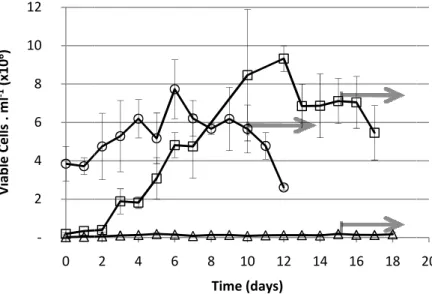
of 80 rpm and a feeding regimen of 25% of daily medium change. The images at day 17 are in serum-free conditions. Scale bar represents 100 m length. ... 30 Figure 3.6 – Effect of feeding regime on growth of HEK293-EBNA1 in spinner flask and at 80 rpm Three feeding regime were tested: 25% ( ); 50% ( ); 75% ( ) of daily medium changes. Gray arrows indicate the production of human LIF in serum-free conditions. ... 32 Figure 3.7 – Effect of feeding-regime on HEK293-EBNA1 aggregate size-distribution in suspension stirred culture in spinner flask at 80 rpm The feeding regime of (A) 25% (
); (B) 50% ( ); (C) 75% ( ) of daily fresh medium renewal are presented. Initial cell density of 2×10⁵ cells.mL-1. ... 34 Figure 3.8 – Optical microscopy observations of HEK293-EBNA1 cell aggregates at day 5, 12 and 17 of suspension stirred culture. A – feeding regimen of 25% of daily medium change; B – feeding regimen of 50% of daily medium change; C – feeding regimen of 75% of daily medium change, with an agitation rate of 80 rpm and a start inoculum of 2 × 10⁶ cells.mL-1 and with daily medium change. The images at day 17 are in serum-free conditions. Scale bar represents 100 m ... 35 Figure 3.9 – Glucose consumption and Lactate production profiles in suspension stirred culture of HEK293-EBNA1 cell aggregates in spinner flask. The initial cell density was 2×10⁵ cells.mL-1. The blue line corresponds to the growth phase in medium supplemented with FBS and the red line corresponds to the production phase under serum-free conditions. ... 36 Figure 3.10 – Glutamine and Ammonia production profiles in suspension stirred culture of HEK293-EBNA1 cell aggregates in spinner flask. The initial cell density was 2×10⁵ cells.mL-1. The blue line corresponds to the growth phase in media supplemented with FBS and the red line corresponds to the production phase under serum-free conditions. ... 38 Figure 3.11 – SDS-PAGE (A) and Western Blot (B) Analysis of the supernatants obtained at the end of the production phase of hLIF in serum-free conditions. Lane A:
monolayer static culture, Lane B: spinner flask suspension culture with FR of 25% at 80
rpm, Lane C: spinner flask suspension culture with FR of 50%.at 80 rpm. Lane 1:
monolayer static culture, Lane 2 and 3: spinner flask suspension culture with FR 50%
and at 80 rpm, Lane 4: hLIF standard (Chemicon). Lane MM: molecular markers. .. 44
Figure 6.1 - Glycolysis Pathway in Homo sapien. Adapted from Biocarta 131 ... 61
xii
xiii
L
L
i
i
s
s
t
t
o
o
f
f
T
T
a
a
b
b
l
l
e
e
s
s
Table 3.1 – Maximal growth rates, duplication time and maximal fold increase in total cell number for HEK293-EBNA1 cell growth with a feeding regimen of 25% (v/v) daily. ... 28 Table 3.2 – Maximal growth rates, duplication time and maximal fold increase in total cell number for a inoculum of 2×10⁵ cells.mL-1 at different feeding regimen in a spinner flask at 80 rpm. ... 33 Table 3.3 – Metabolic specific consumption (glucose, glutamine) and production (lactate, ammonia) rates. Maximum values were obtained to characterize growth exponential phase and average values were obtained to characterize cell culture afterwards (after day7) including production phase (the presented units are in μmol.106
xiv
L
L
i
i
s
s
t
t
o
o
f
f
A
A
b
b
b
b
r
r
e
e
v
v
i
i
a
a
t
t
i
i
o
o
n
n
s
s
aa amino acid
ADP adenosine di-phosphate
ATP adenosine tri-phosphate
bFGF basic fibroblast growth factor
BHK baby hamster kidney
BMP-4 bone morphogenetic protein- 4
CHO chinese hamster ovary
CIRP cold-inducible RNA-binding protein
CMV cytomegalovirus
CO2 carbon dioxide
COS
Acronym derived from the cells being CV-1 (simian) in Origin, and carrying the SV40 genetic material
DMEM Dulbecco's Modified Eagle Medium
DNA Deoxyribonucleic acid
EBNA1 Epstein-Barr virus nuclear antigen 1
EBV Epstein-Barr virus
EGF Epidermal growth factor
ELISA Enzyme Linked Immuno-Sorbent Assay
EPO Erythropoietin
ES embryonic stem
FI Fold Increase
FR Feeding Regimen
FBS Fetal Bovine Serum
FGF2 Fibroblast Growth Factor 2
gpl30 Glycoprotein 130
H2O water
hASCs human adipose-derived stromal/stem cells
HEK293 human embryonic kidney
HGF hepatocyte growth factor
hLIF human LIF
IL-6 Interleukin-6
K+ potassium
LC-SFM vascular endothelial growth factor
LDH-A lactate dehydrogenase-A
LIF Leukemia Inhibitory Factor
LIFRβ LIF-specific receptor subunit β
Na+ sodium
NH3 ammonia
NH4+ ammonium
O2 oxygen
PDB Protein Data Bank
qamm Specific ammonia production rate
qglc Specific glucose consumption rate
qgln Specific glutamine consumption rate
qlac Specific lactate production rate
Ras/ERK Ras/ERK signaling cascade - transduction pathway
rCHO recombinant chinese hamster ovary
r-proteins recombinant proteins
SDS-PAGE
sodium dodecyl-sulfate
polyacrylamide gel electrophoresis
STAT3 signal transducer and activator of transcription 3
SV40 Simian vacuolating virus 40 or Simian virus 40
xv
TGE transient gene expression
tPa tissue Plasminogen activator
VEGF vascular endothelial growth factor
Y’amm/glut Ammonium / glutamin yield
Y’lac/glu Lactate / glucose yield
xvi
Part of the work developed in this thesis was previously presented in the poster:
1
1
2
Over the past two decades, biopharmaceuticals like recombinant proteins (r-proteins) have gained increasing importance for therapeutic applications. The overall number of proteins either approved or launched into clinical trials has continually increased over this period, representing an annual global market that is now valued to be more than 34 billion € with an annual sales increase of about 20%. Currently, about 60% of all recombinant therapeutic proteins are produced in mammalian cell systems, due to the ability of mammalian hosts to generate high-quality proteins that are similar in their biochemical properties to the naturally occurring forms 2. This growing demand for high-quality recombinant therapeutics is driving the research and development of mammalian-cell-based technological systems for enhanced production yields.
In 1997, sales of biotherapeutics produced by cell culture were 2.2 billion € whereas E. coli based biotherapeutics amounted to 1.8 billion € 3. By 2006, production
of therapeutic proteins by mammalian systems reached 14 billion € 4.
(original currencies in USA dollar, converted to Euro in November 2009)
1
1
.
.
1
1
.
.
A
A
n
n
i
i
m
m
a
a
l
l
c
c
e
e
l
l
l
l
s
s
a
a
n
n
d
d
R
R
e
e
c
c
o
o
m
m
b
b
i
i
n
n
a
a
n
n
t
t
P
P
r
r
o
o
t
t
e
e
i
i
n
n
s
s
One major advantage of using mammalian cells in protein production is directly related to the correct assembling and folding of recombinant polypeptides, as well as additional critical post-translational modifications, that are usually strictly required for biological activity 5. Most proteins are indeed glycosylated, and all these glycosylations from the single sugar to the many branched or linear chains, exhibiting particular O- or
N-linkage 6, 7, have consequently made r-proteins more complex to engineer than
3
immunogenicity of mouse antibodies in humans was one of the major reasons why early monoclonal antibodies did not deliver the anticipated therapeutic benefits 10.
Mammalian cell cultures are particularly useful because the proteins are often made in a properly folded and glycosylated form, thus eliminating the need to renature them. Eukaryotic cells are also useful for addition of fatty acid chains and for phosphorylating tyrosine, threonine and serine hydroxyl groups 11.
In contrast to lower eukaryotes or prokaryotes, mammalian cells provide active r-proteins that possess relevant post-translational modifications. Even if necessary glycosylation for stability or proper folding (e.g. EPO and human chorionic gonadotropin) can often be provided by recombinant yeast, mold, insect or mammalian cells, only mammalian secreted proteins are properly glycosylated with D-mannose
sugars covalently bound to asparagine-linked N-acetyl-D-glucosamine molecules 12.
Although fungal excreted enzymes often show the same type of glycosylation 13, sometimes additional carbohydrates linked to the oxygen of serine or threonine are present in fungal proteins 14. Glycosylation also affects pharmacokinetics (residence time in vivo) 15. Other modifications, can as well confer stability enhancement against proteolytic attack like terminal sialic acid addition on EPO 16, human tissue plasminogen activator (tPa) 17 and interferons 18 (with regard to activity, human EPO is 1000-fold more active in vivo than its desialylated form but they both have similar in
vitro activities 19
Mammalian cells have have high productivities of 20-60 pg.cell-1.day-1 of recombinant protein. tPa was produced in Chinese Hamster Ovary (CHO) cells at
34 mg.L-1 with an overall yield of 47%. Although production in E. coli was at a much
higher level (460 mg.L-1), recovery was only 2.8% due to production as inclusion bodies and low renaturation yields 20. r-protein production in mammalian cells rose from 50 mg.L-1, in 1986, to 4.7 g.L-1, in 2004, mainly due to media improvements yielding increased growth 21. A titre of 2.5-3 g.L-1 protein in 14 day CHO fed-batch shake flask culture was achieved using Fe2(SeO3)3 as ionic carrier 22. A number of mammalian processes are producing 3-5 g.L-1 and, in some cases, protein titres have reached 10 g.L-1 in industry 23. A rather new system uses a human cell line known as PER.C6 of Crucell Holland BV, which, in cooperation with DSM Biologics, was reported to produce 15 g.L-124 and then later, 26 g.L-1 of a monoclonal antibody 25.
4
culture for long term. Cell growth in standard production culture systems can be divided into four phases, i.e. lag, exponential, stationary and decline or death phase.
Long lag phases are undesirable, therefore high growth rates are essential at the beginning of a process to achieve enough cells in order to maximize the production of the desired bio-product. Uncontrolled proliferation beyond a certain desired cell density is also undesirable due to nutrient and oxygen depletion, toxic metabolite accumulation, cell death, and degradation of the product 26-28. In Figure 1.1 is represented the effect of engineered rCHO cells for improved culture characteristics, resulting in an enhanced lifespan and production.
Figure 1.1 – Schematic depiction of the effect of engineering rCHO cells for improved culture characteristics. Engineering rCHO cells results in the enhancement of culture longevity, which reflects on the production titre. Adapted from Mohan et al29.
Proliferation control strategies are typically implemented in the mid- or late-phases of exponential growth and have been shown to improve both the productivity and duration of production processes. If cell engineering is not used in conjunction with the right conditions, no significant improvement in protein production is achieved. Strategies to extend culture longevity could be tried, such as overexpression of anti-apoptotic genes, down-regulation of anti-apoptotic effector molecules, overexpression of pyruvate carboxylase, down-regulation of lactate dehydrogenase-A (LDH-A), and down-regulation of cold-inducible RNA-binding protein (CIRP ) 29.
5
Several factors were identified to affect the proliferative capacities in different tissues, namely the vascular endothelial growth factor (VEGF), the hepatocyte growth factor (HGF), and the basic fibroblast growth factor (bFGF) 32-35. More recently,
Herbert et al 36 reported that human adipose-derived stromal/stem cells (hASCs) in vitro cells supplemented with EGF and bFGF significantly increased proliferation by up
to three-fold over 7-8 days.
1
1
.
.
2
2
.
.
M
M
e
e
d
d
i
i
u
u
m
m
f
f
o
o
r
r
m
m
u
u
l
l
a
a
t
t
i
i
o
o
n
n
Although serum is a common component of culture medium containing a set of important nutrients and other elements as anti-apoptotic factors that protect cells from apoptosis 37, strict regulatory requirements restrict the use of serum- or protein-free media for the large-scale culture of cells. Hence strategies have been developed to fulfil these requirements. The apoptosis modulation is a variable intensively studied and several strategies have been proposed, like the manipulation of external cellular environment through media supplementation or by manipulation of intracellular environment using genetic engineering 29. Serum-free suspension processes are often the preferred mode for the production of animal recombinant proteins due to its easy in scale-up process and operation, simplicity in downstream processing and reduced risk of virus contamination.
A major allocation of resources in culture lifespan enhancements has been used for anti-apoptosis cell engineering to tackle the problem of programmed cell death occurring under stressful conditions. Several studies have already demonstrated the successful adaptation of Human Embryonic Kidney cells (HEK293) cells growth in
6
1
1
.
.
3
3
.
.
C
C
e
e
l
l
l
l
m
m
e
e
t
t
a
a
b
b
o
o
l
l
i
i
s
s
m
m
Glucose and glutamine are the main nutrients of animal cells and both can interchangeably be used as energy sources. Glucose is either utilized trough the pentose phosphate pathway to supply nucleotides for biosynthesis 39, 40 or through the glycolysis pathway to provide metabolic intermediates, such as pyruvate, and energy. Pyruvate is preferably converted to lactate and fatty acids, but it can also become oxidized in the tricarboxylic acid (TCA) cycle 41, 42 originating H2O and CO2, followed by the formation of high-energy phosphate bonds by phosphorylation of ADP to ATP (coupled to the transfer of electrons from reduced coenzymes to molecular oxygen) via the electron transport chain. On the other hand, glutamine is oxidized to CO2 and is a key aminoacid, since it is consumed at a higher rate than other amino acids 43. Glutamine can be used to produce other amino acids or to be incorporated into the biomass; however the majority is converted to glutamate. Then glutamate can be converted to
α-ketoglutarate and enter the TCA via one of the two next pathways: production of alanine or by a more efficient process that results in the production of an additional molecule of ammonia 44.Also the overall amino acids in media composition is important in product formation
7
Figure 1.2 – Schematic diagram of simplified reaction network for animal cell metabolism. F1 to F26 are respective to mediating enzymes involved in the metabolism. Adapted from Xie and Wang 50
Considering metabolic engineering as a tool to overcome these limitations 29, indirect increases in cell growth and volumetric production had been achieved, mainly by inhibiting the accumulation of these toxic metabolic by-products, lactate and ammonium, which showed significant results. The strategies are generally based on:
- reducing the accumulation of lactate in cell culture media; lactate accumulation acidifies the medium and hence requires the addition of more base (increasing the osmolality and adversely affecting the cell growth and product quality); - improving the efficiency of the primary metabolism, by redirecting cells into pathways using energy more efficiently.
8
These examples demonstrate the potential to overcome, in large-scale production of recombinant heterologous proteins, toxic metabolic by-product accumulation, inhibitors of cell growth.
1
1
.
.
4
4
.
.
S
S
y
y
s
s
t
t
e
e
m
m
s
s
f
f
o
o
r
r
R
R
e
e
c
c
o
o
m
m
b
b
i
i
n
n
a
a
n
n
t
t
P
P
r
r
o
o
t
t
e
e
i
i
n
n
E
E
x
x
p
p
r
r
e
e
s
s
s
s
i
i
o
o
n
n
Traditionally, in order to obtain sufficient amounts of protein for structure and biological activity analysis in high-throughput screenings, one needs to go to through the long, costly and time-consumption process of stable transfectoma isolation and characterization 54, 55.
Gene expression by large-scale transfection of mammalian cells is becoming an established technology for the fast production of r-proteins. However, efforts are still needed to optimize production parameters in order to maximize productivities while maintaining product quality 56.
Until 2001, transient gene expression (TGE) have been exploited only for the synthesis of smaller quantities of r-proteins using different cell lines, e.g., COS1 cells 57, HEK293 58, and Baby Hamster Kidney (BHK) cells 59. However, this technique has
recently begun spreading to a large-scale as a powerful technology to generate large amounts of r-proteins within a few days 54, 55, 59-64.
Moderate quantities (1-500 mg) of complex r-proteins for functional and structural analysis 65, 66 can now be easily obtained through TGE in animal cells, mostly because of its cost-effectiveness and speed compared to the time-consuming and laborious establishment of stable cell clones 59. Furthermore, when a large number of different proteins or variants of the same protein need to be tested, the transient system can be efficiently applied in a high-throughput approach for parallel evaluation 54, 67.
1 COS is an acronym, derived from the cells being CV-1 (simian) in Origin, and carrying the SV40
9
For an optimal large-scale transient transfection and r-protein expression on mammalian cells, four key aspects need to be taken into account, namely:
- the cell line;
- the expression vector; - the transfection vehicle; - the culture medium.
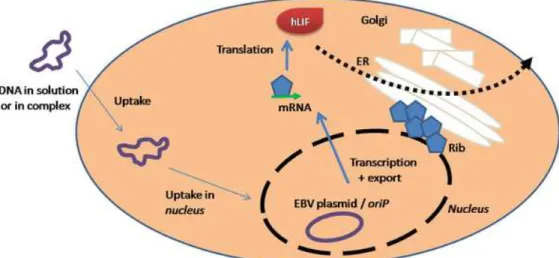
The human embryonic kidney 293, HEK293 68 cell line, and the subclone 293 expressing the Epstein-Barr virus (EBV) nuclear antigen 1 (EBNA1) cell lines, became important for production of viral vectors for gene therapy and also for expression of r-proteins, e.g. using extra chromosomal EBV based vectors 69. The HEK293(EBNA1) expression system exhibits many advantages compared to CHO or BHK systems. For example, it is of human origin, it exhibits high transfection efficiency, have autonomous replicating vectors available, it is useful for expressing human proteins and, finally, the cells are relatively easy to grow in serum-free suspension culture 70, 71. Moreover, two genetic variants, the 293E and the 293T cell lines, expressing the EBNA1 or the SV40 large-T antigen, respectively, allow episomal amplification of plasmids containing the viral EBV (293E) or SV40 (293T) origins of replication. Thus, they are expected to increase r-protein expression levels by permitting more plasmid copies to persist in the transfected cells throughout the production phase 72.The second important issue for high level r-protein expression is to use vectors with promoters that are highly active in the host cell line, such as the human cytomegalovirus (CMV) promoter 73. This promoter is particularly powerful in HEK293 cells where it has been shown to be strongly transactivated by the constitutively expressed adenovirus E1a protein 74. A highly efficient expression cassette using this promoter was recently described that provides adenovirus-mediated transgene expression levels reaching up to 20% of total cell proteins 75, 76. HEK293-EBNA1 cells and oriP plasmid constitute a powerful transient
expression system in which the episomal replication of plasmid is initiated by EBNA1 binding to oriP 77. HEK293-EBNA1 expression system is schematically represented
10
Figure 1.3 – Schematic representation of the HEK293-EBNA1 transient expression system. The plasmid is inserted into cell, migrating to nucleus, where the target sequence is transcript and subsequently expressed as peptide by cytoplasm machinery, processed and secreted.
Durocher el al formulated an oriP plasmid pTT, derived from a commercially
available pCEP4, which was able to enhance expression of protein by several folds 54. The third aspect is related to gene transfer reagent efficacy. Even though many highly effective gene transfer reagents are commercially available, only a few are cost effective when considering operations at the multi-litre scale.
The stability of the e be critical. As reviewed by viral elements necessary and the cell. This stable episom efficient segregation to the would be an advantage, on TGE owing to their high tr density in growth in suspens
1
1
.
.
5
5
.
.
C
C
u
u
l
l
t
t
u
u
r
r
e
e
s
s
y
y
s
s
t
t
Depending on the na they grow in suspension, industrial scale, as shown in cell adhesion and retention scale-up 86, 87, but with th aggregates.
Figure 1.4 – Cell cultivation m Adapted from Ulloa-Montoya et
11
e episomal vectors might be questioned, but it d by Van Craenenbroeck et al. 72, oriP and EBN
and sufficient for stable episomal maintenance omal maintenance reflects the sum of plasmid the daughter cells. The better understanding o once that HEK293, as well as CHO, are the p
transfectability and the ability of these cells t ension 55, 85.
t
t
e
e
m
m
s
s
nature of cells in culture, if they are anchorage n, some culture systems are available for l in Figure 1.4. There are numerous immobiliza on in suspension cultures, like microcarriers, b
the disadvantage of being more expensive
n methods applicable for expansion and differentiat
et al.88
it does not seem to NA1 are the only ce of viral DNA in id replication and g of this cell line preferred cells to ls to support
high-ge-dependent or if r laboratorial and lization options for , being possible to than culture as
12
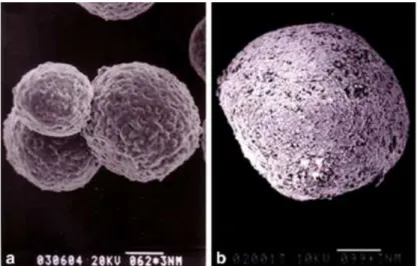
The HEK293 cell line was adapted to growth in suspension 70, forming cell aggregates as a self-immobilization strategy, as presented in Figure 1.5. This can be considered as an alternative approach to producing bioactive cellular products 89-91. Whereas in perfusion culture systems more complex strategies must be adopted to perform cell retention (as spin filters and others) 92, in fed-batch systems, cell sedimentation can be easily used regarding medium change. HEK293 cells were already setup until 100 litre scale transient transfection in a standard stirred bioreactor, demonstrating not only the scale-up availability of cellular aggregates suspension, but also the robustness of large scale transient gene expression 64.
Figure 1.5 – Scanning electron microscopic observations of the HEK 293 cell aggregates in perfusion culture. a) 5 days after inoculation, b) 17 days after inoculation. The scale bars in a) and b) indicate 62 and 99 m, respectively. Adapted from Liu et al.93.
13
In laboratory scale, spinner flasks, simple stirred vessels, operating as fed-batch cultures are a simple and economic way to study basic parameters before undergo scale-up strategies at higher volumes. Their relatively homogenous nature makes them uniquely suited for investigations of different culture parameters (e.g. dissolved O2, pH, temperature, agitation rate, serum components medium exchange rates, etc) that may influence the viability and turnover of cells in culture 42, 96. Another important parameter to control is the particle size and their density in suspension, because it must be considered for large-scale cell retention 92 during feeding and other operations.
Agitation rate is also an important variable to consider in suspension stirred culture. Despite the high agitation rate promotes frequent collisions between cells or cells and microcarriers favouring proliferation and avoiding sedimentation, this could be a critical factor to consider in terms of hydrodynamic shear stress, because higher stirring velocities may affect cell membrane integrity, as well as cell function 97. In order to better control the culture environment, to minimize shear stress and bursting bubbles, some authors have studied the possibility of add protective agents such as surfactants (and also serum, which besides its nutritional role, has some cell protective effects, despite the technical disadvantages of its use, as previously mentioned) 98.
1
1
.
.
6
6
.
.
L
L
e
e
u
u
k
k
e
e
m
m
i
i
a
a
I
I
n
n
h
h
i
i
b
b
i
i
t
t
o
o
r
r
y
y
F
F
a
a
c
c
t
t
o
o
r
r
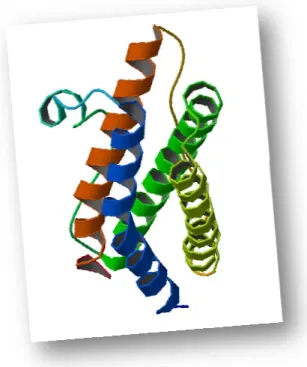
The Leukemia Inhibitory Factor (LIF) is a variably glycosylated, 38-67 kDa polypeptide originally identified as a proliferation inhibitor and differentiation inducer of the mouse M1 myeloid leukemia cell line 99-101. The mature LIF molecule measures 179 amino acid (aa) residues in length with multiple potential N-linked and O-linked
Figure 1.6 – 3D structure of hu
LIF appears to be mediated via stem cells or p tissues 104, 105. For example stem cells in spleen and b monocytic series, embryon lymphocytes, myoblasts, he 107. Partially, the transductio 6 (IL-6) 108 which also us immediate early response The mechanism of action association of LIF with its receptor subunit β (LIFRβ) several intracellular signall of transcription 3 (STAT3) 111. However, the differentia shared by IL-6 class cytokin
14
human Leukemina Inhibitory Factor (PDB entry 1em
e a generalized stem cell factor as many of r progenitor cells rather than by a direct effect o ple, LIF-deficient mice have dramatically redu
bone marrow 106. Receptors for LIF are pres onic stem cells, embryonic carcinoma cells, o hepatocytes, osteoblasts, adipocytes and adren ction mechanism of LIF on these cells is shared uses gpl30 for signal transduction 109 and tri e during induced differentiation of murine leu ion of LIF is presented schematically in its heterodimeric receptor, which consists on
) and IL-6 signal transducer gp130, results in t alling pathways, including the signal transduc 3) pathway, the Ras/ERK pathway and the PI3 ntiation inhibitory effect of LIF on embryonic s
ines.
emr)
of its actions are ct on differentiated duced numbers of resent on cells of , on a majority of renal cortical cells red by triggers the same
Figure 1.7 – Intracellular signa
The cytokine LIF maintenance of pluripotenc transcription factor Oct3/4 documented. However, LIF suggesting that other p importance of other signal protein) and Wnt signaling now being recognized 111 involved in the intracellul pluripotent mouse and huma
15
naling pathways activated by LIF. Adapted from Okita
IF and its downstream effector STAT3 ar ncy in mouse embryonic stem cells. The requ /4 for embryonic stem cells (ES) cell pluripote LIF is not involved in self-renewal of hum
pathways must play an important role in th al transduction pathways, including BMP (bone ings, as well as novel transcription factors suc 11. Figure 1.8 briefly overviews the comple lular signalling pathways that contribute to
man ES cells.
kita et al111.
are essential for equirement for the otency is also well human ES cells, this process. The
Figure 1.8 – Potential crosstalk Adapted from Okita et al111.
About LIF action in the org - it can inhibit the leukemic M1 cells 112, w embryonic stem cells 113;
- it inhibits the ind carcinoma cells 115 selectiv permit the differentiation of
- during embryonic cylinder 106 and might play
Overall, the establis production of hLIF will all
house, avoiding the need
cytokines/growth factors) to adapted for the production culture, but also molecules
16
lk between intracellular signalling pathways in mous
rganism development, it is known that:
he growth and induce macrophagic differentia while preventing the differentiation in norm
induced differentiation of mouse F9 114 and ctively inhibiting the formation of primitive e
of primitive endoderm 116;
nic development, LIF is expressed in blastoc y a crucial role in implantation process 117.
blishment of an effective and reproducible p allow to produce large amounts of a well-def d to acquire large amounts of this costly pr to commercial sources. Moreover, this platfor on of other cytokines/growth factors to be us es with a therapeutic potential in clinical setting
use ES cells.
ntiation in murine rmal totipotential
d P19 embryonal e ectoderm, while
tocyst and in egg
platform for the defined product in
product (as other form can be easily used in stem cell
17
2
18
2
2
.
.
1
1
.
.
C
C
e
e
l
l
l
l
l
l
i
i
n
n
e
e
HEK293-EBNA1 cells were a kind gift from W. Mueller and M. Hafner, GBF, Braunschweig – Germany. These cells were previously transfected and contain copies of a pCMV plasmid encoding for human Leukemia Inhibitory Factor (hLIF) and containing a resistance marker for purymicin. HEK293-EBNA1 cells were kept frozen at – 80 ºC until further use.
2
2
.
.
2
2
.
.
H
H
E
E
K
K
2
2
9
9
3
3
e
e
x
x
p
p
a
a
n
n
s
s
i
i
o
o
n
n
i
i
n
n
s
s
t
t
a
a
t
t
i
i
c
c
c
c
o
o
n
n
d
d
i
i
t
t
i
i
o
o
n
n
s
s
HEK293 were passed routinely and expanded as adherent monolayer cultures in T-flasks (75 cm2) at 37 °C in a humidified 5% CO2 atmosphere. Cells were cultivated in Dulbecco's modified Eagle's medium (DMEM, glucose at 22 mM) supplemented with 10% (v/v) fetal bovine serum (FBS) (Gibco®), 1% (v/v) penicillin (50 U/mL)/streptomycin (50 U/mL) (Gibco®) and 1% glutamine 200 mM (Gibco®). Trypsinization was performed using a 0.25% (w/v) trypsin-phosphate buffered saline (trypsin/PBS) solution, and the cells were passaged every 4–5 days (confluence of 80-90%) at a seeding density of 2×10⁵ cells.mL-1 in T-flasks of 75 cm2. In each passage, cell viability was determined in a hemocytometer using the trypan blue dye exclusion test under an optical microscope (Olympus CK40).
2
2
.
.
3
3
.
.
H
H
E
E
K
K
2
2
9
9
3
3
e
e
x
x
p
p
a
a
n
n
s
s
i
i
o
o
n
n
u
u
n
n
d
d
e
e
r
r
d
d
y
y
n
n
a
a
m
m
i
i
c
c
c
c
o
o
n
n
d
d
i
i
t
t
i
i
o
o
n
n
s
s
2
2
.
.
3
3
.
.
1
1
.
.
S
S
p
p
i
i
n
n
n
n
e
e
r
r
f
f
l
l
a
a
s
s
k
k
c
c
u
u
l
l
t
t
u
u
r
r
e
e
s
s
y
y
s
s
t
t
e
e
m
m
glass surface of the spinner the adhesion of cells and a culture, spinner flasks were
Figure 2.1 – Sp
Cells were grown replenished daily with fr Agitation rate was set at 80
2
2
.
.
3
3
.
.
2
2
.
.
F
F
e
e
e
e
d
d
i
i
n
n
g
g
Spinner flask mediu changed on a daily routine regimen were tested: 25% 2×10⁵ cells.mL-1 and 2×10⁶ step of sedimentation of 30 fraction according with the 100 mL.
2
2
.
.
3
3
.
.
3
3
.
.
S
S
a
a
m
m
p
p
l
l
i
i
n
n
Duplicate samples Samples were centrifuged 5 minutes at 37º C with ha
19
er flask was siliconized (Sigmacote, Sigma) in d aggregates to the glass walls. Before and af
re washed with Milli-Q water and sterilized
Spinner flasks used for HEK293 culture, from Bellco
wn at 37° C in a 5 % CO2 humidified a fresh medium beginning on the third day 80 rpm, value previously optimized at BERG/IB
g
g
r
r
e
e
g
g
i
i
m
m
e
e
dium was replaced in function of the chosen ne starting on the second day of culture growth
5%, 50% and 75%, either in the initial 6 cells.mL-1. Each time, medium was remove 30-40 minutes, being replaced by fresh sterile he feeding regime in order to keep a constant
n
n
g
g
s of 1 ml of evenly mixed culture were ta ed at 1500 rpm for 3 minutes. Cells were re half of initial volume of a 0.25% trypsin solu
order to prevent after use for cell d by autoclaving.
lco
d atmosphere and day of the culture.
/IBB-IST.
feeding regime, th. Three feeding l cell density of ved after a simple ile medium, in the nt final volume of
20
occurring larger aggregates than 150 m), followed by addition of ½ of initial volume of medium (with FBS) to stop enzymatic activity. Cells were then ressuspended for counting viable and dead cells in suspension using the trypan blue exclusion method. The supernatants were kept at -20º C for metabolite analysis.
Cell viability across experiments and trypan blue exclusion method robustness was tested, as presented in Appendix, 6.2.
2
2
.
.
3
3
.
.
4
4
.
.
A
A
g
g
g
g
r
r
e
e
g
g
a
a
t
t
e
e
-
-
s
s
i
i
z
z
e
e
d
d
i
i
s
s
t
t
r
r
i
i
b
b
u
u
t
t
i
i
o
o
n
n
a
a
s
s
s
s
a
a
y
y
The average diameter of the HEK293 cell aggregates in the spinner flasks was determined by optical analysis of 10 to 20 aggregates (essentially spherical in shape) recurring to a graduated ocular lens (Olympus NCWHK10X) on a optical microscope (Olympus CK40). Images were obtained directly from an eyepiece reticule and one inverted light microscope (Leica DMI 3000B) using Nikon Act-1 analysis software.
2
2
.
.
3
3
.
.
5
5
.
.
D
D
a
a
t
t
a
a
a
a
n
n
a
a
l
l
y
y
s
s
i
i
s
s
The growth kinetics of HEK293 cells cultured under stirred conditions on microcarriers was also characterized. Specific growth rates were calculated according to Equation 2.1, from Melero-Martin et al.118:
μ = 1 X
dX dt ≈
2 X + X
X − X
t − t (2.1)
where (day−1) corresponds to the value of specific growth rate at any given time point,
t (days) the culture time and X (cells) the value of viable cell number for a specific t.
From this, the doubling time (td) was calculated using the following Equation 2.2, = ln(2) / (2.2)
For a more rigorous calculation of , a curve fitting was calculated using Origin software (under a test licence) within a 100 points non linear regression, using Logistic function, in order to reduce operator and sampling variability. This simulation data was plotted in Microsoft Excel and a linear regression was obtained for the exponential phase of growth, where the is obtained by the slope (m) in the linear
21
2
2
.
.
3
3
.
.
6
6
.
.
L
L
a
a
c
c
t
t
a
a
t
t
e
e
D
D
e
e
h
h
y
y
d
d
r
r
o
o
g
g
e
e
n
n
a
a
s
s
e
e
a
a
c
c
t
t
i
i
v
v
i
i
t
t
y
y
Lactate dehydrogenase (LDH) is an enzyme present in the cells that catalyses the interconversion of pyruvate and lactate. The activity of this enzyme is a quantitative measurement of loss of cell viability as dead or dying cells release this enzyme. For determination of LDH activity levels during time in culture, a LDH analysis kit from Promega was used (CytoTox96 non-radioactive cytotoxicity assay). A calibration curve using several dilutions of cells, which were submitted to lysis, was performed according to manufacturer’s instructions. This test was used to confirm the accuracy of trypan blue assay in measuring dead cell number (see Appendix, 6.2).
2
2
.
.
4
4
.
.
D
D
e
e
t
t
e
e
r
r
m
m
i
i
n
n
a
a
t
t
i
i
o
o
n
n
o
o
f
f
m
m
e
e
t
t
a
a
b
b
o
o
l
l
i
i
t
t
e
e
p
p
r
r
o
o
f
f
i
i
l
l
e
e
s
s
d
d
u
u
r
r
i
i
n
n
g
g
t
t
i
i
m
m
e
e
i
i
n
n
c
c
u
u
l
l
t
t
u
u
r
r
e
e
Glucose, lactate, glutamine and ammonia concentrations were determined in the supernatant samples collected throughout the experiments by using an automatic analyzer (YSI 7100MBS, Yellow Springs Instruments). The specific metabolic rates (qMet., mol.106 cells.h-1) were calculated for every time interval using the following equation: qMet.= ∆Met./(∆t.Xv), where ∆Met. is the variation in metabolite concentration during the time period ∆t and ∆Xv the average viable cell number during the same time period. The apparent lactate from glucose (Y’lac/glu) yield was also calculated as the ratio between qlac and qglu
2
2
.
.
5
5
.
.
R
R
e
e
c
c
o
o
m
m
b
b
i
i
n
n
a
a
n
n
t
t
h
h
L
L
I
I
F
F
e
e
x
x
p
p
r
r
e
e
s
s
s
s
i
i
o
o
n
n
a
a
n
n
a
a
l
l
y
y
s
s
i
i
s
s
2
2
.
.
5
5
.
.
1
1
.
.
C
C
e
e
l
l
l
l
s
s
e
e
l
l
e
e
c
c
t
t
i
i
o
o
n
n
a
a
t
t
p
p
r
r
o
o
d
d
u
u
c
c
t
t
i
i
o
o
n
n
p
p
h
h
a
a
s
s
e
e
i
i
n
n
s
s
t
t
a
a
t
t
i
i
c
c
c
c
u
u
l
l
t
t
u
u
r
r
e
e
For hLIF expression, after becoming confluent, cells were split into another flash