Vol.59: e16160299, January-December 2016 http://dx.doi.org/10.1590/1678-4324-2016160299
ISSN 1678-4324 Online Edition
BRAZILIAN ARCHIVES OF BIOLOGY AND TECHNOLOGY
A N I N T E R N A T I O N A L J O U R N A L
The Dynamic of some Biochemical Indicators at Species of
Medicinal Plants from Areas of Suceava County, Romania,
Emerged under the Mining Pollution Influence
Elena Todirascu-Ciornea
1; Gabriela Dumitru
1*.
1Alexandru Ioan Cuza University, Biology Bvd. Carol I, Romania.
ABSTRACT
It is known the fact that the mining causes huge damages on the environment having negative biologic effects extremely severe on some groups of organisms of the food chain. The pollutants causes major damages at the level of leaves’ cuticles, the vegetation reacting through irreversible modifications at the tissue’s level and at substances and energy metabolism, like a riposte to the apparition of the stress induced by the ROS, stress that creates real disturbances on physiological and biochemical processes. Considering the fact that, on the one hand, the activity of oxidoreductases is strongly influenced by the presence of the pollutants factors, with direct effect on the oxidative’s stress production, and on the other hand that the plants react at ROS accumulation, through self-protection and adaptability mechanisms, the aim of this study consisted in monitoring the activity of some oxidoreductases in the leaves of plantain and mint species harvested in 2015 from different mining areas of Suceava County. In parallel was determined the dehydrogenase activity of the soil, the samples being collected from the same areas subdued to anthropic pollution, using like reference swatch, samples from Putna. The obtained results signalize the accumulation of some quantities highly arisen by free radicals of oxygen at investigated species, the enzymatic activity being significantly higher in the mining plant comparatively to the control areal. The microbial dehydrogenases from the soil samples were remarked through different activities based on the types of heavy metals that pollute each harvesting area and on the deepness profile.
Key words: oxidative stress; mint; plantain; pollution
*Authors for correspondence: [email protected]
INTRODUCTION
The Plantago major L. ssp. major and Mentha longifolia L. species belong to Lamiales order, the
Plantaginaceae and Lamiaceae families, having a series of unique properties that recommend them for their using in the alternative traditional and
modern medicine. Plantago major (plantain) is a
semi-harvested plant originary from North
America, Europe and Asia 1, the cultivations from
the hole world making use for, long millennia, the plantain leave to help to the amelioration for different types of diseases.
The main components of the plantain are the iridoides glycosides (specially the aucubin), the mucilages and the tans, which have the role to reduce irritation and to „burke” the harmful organisms, conferring to it, in the same time, also
expectorant properties 2. Moreover, the specie is
rich in polysaccharides, emulsions, pectin, saponin,
salicylic acid 3, carboxylic phenolic acids (derivates
of the caffeic acid), rutin, morin, quercetin 4,
minerals (calcium, magnesium, zinc, sodium,
potassium) 5, alkaloids, terpenoids 6, vitamin C,
antioxidant and anti-inflammatory agents 3,7-10.
The plantain leaves present significant anti-inflammatory, antihemorrhagic, hematopoietic,
analgesic 3, antioxidant, anti-carcinogen 11,12,
anti-tumoral 8,9, anti-febrile, immuno-modulators and
anti-hypertensive 13-16, anesthetic, antiviral,
astringent, antihelmintic, analeptic, antihistaminic,
antireumatic and diuretic effects 17,18.
The specialty literature highlights, in the same time, the particular role that plantain has in the hypercholesterolemia, hyperglycemia’s treatment
and as laxative agent 19, in the treatment of flues,
hepatitis, skin diseases and infectious, in the problems related to digestive organs, respiratory
organs, of reproduction and circulation 3. Other
authors 20-23 signalize the using with success of
these species in the neutralizing of intern and extern toxins, the ethanolic extracts being able to generate anti-cough effects comparatively with those of the
codeine 24. Studying the commercial aspects of the
Plantago gender species, Weryszko-Chmielewska
25 highlighted the particular antiviral effect of the
phenolic compounds, isolated from the Plantago
major leaves, especially on the multiplication stages of HIV-1, HIV-2 and ADV-3.
Mentha longifolia L. is an aromatic evergreen nectarifer plant, significant rich in essential oils
(piperitone, piperitenone oxide, piperitone
epoxides, 1,8-cineole, pulegone, sabinene and
α-pinene) that confer to this one an antimicrobial, antioxidant, antispasmodic and high citotoxic potential 26.
Numerous studies indicate the antioxidant role 27,
antimutagenic, anticarcinogen, digestive, antiviral and anti-inflammatory of respiratory pathways, the species being used in the pharmaceutical industry,
of the tobacco, alimentary and cosmetically 28,29.
Alamgeer Akhtar et al.30emphasize the significant
antihypertensive role of the wild mint extracts, but also in the treatment of cardiac and stomachal affections, diarrhea and dysenteries, while,
Al-Bayati 31 and Al-Rawashdeh 28 signalize
antipruritic, antiseptic and stimulatory properties, as well as the role of this plant in the minor pains of the mouth up to the neck’s irritations, nasal decongestive, wrenches, rheumatism, dyspnea, hysteria and menstrual pain.
Ghasemi et al. 32 highlight the influence of essential
oils obtained from mint in the preventing of growth of some bacteria and recommend, in the same time, their using in the treatment of different types of
diseases. In the same time, Heydari et al. 33advance
the problem of the bacteria increasing resistance to synthetic antibiotics and propose the possibility of
their substitution with natural products, the Mentha
longifolia essential oils being an example in this sense.
A worthily remark to keep in mind would be the one that a lot of medicinal plants have the ability of stockpiling and translocating at the root, stem and leaves level, toxic metals as Cr, Mn, Fe, Cu, Zn and Pb, putting into danger therefore the consumers’
health 34, the literature data 35 signalizing,
furthermore the fact that the heavy metals are accumulated in the soil, sediments and, from here, in plants and animals, including the human organism. In this sense, in the last years the deposing of heavy metals in plants, as a result of anthropical activities, it was increased more and more the attention on inorganic pollution assigning
the plants the role of passive bio-monitors 36.
The aim of this study was the evaluation of the anthropic impact on the activity of some oxidoreductases from leaves and soil, at species of plants harvested from different mining areas of the Suceava County (Mountain County with a
8553.5km2 surface, situated in the north-eastern of
Romania at the frontier with Ukraine).
Sample Collection
The investigations were done on samples of foliar tissue taken in May, July and September 2015, from
Mentha longifolia and Plantago major ssp. major
exemplarsemerged under the anthropic pollution’s
influence. The sampling was done in the
approachement of the mining plant of the uranium Crucea-Botuşana, Oiţa-Ciocăneşti area (manganese exploitation), in the vicinity of the preparation factory of the cupriferous ores Fundu Moldovei and Putna area (control area). As well, in the aim of determining the dehydrogenase’s potential of the soil, were taken samples from two deepness profiles (0-20 cm and 20-40 cm) from the four areas anterior mentioned.
The Determination of Biochemical Parameters The dosage of the superoxid-dismutase activity (SOD, E.C. 1.15.1.1) was done through the Winterbourn method which consists in the capacity of this enzyme to inhibit nitroblue tetrazolium reduction by superoxide anions generated after
riboflavin photo reduction 37. Catalase (CAT, E.C.
1.11.1.6) and the peroxidase (POX, E.C. 1.11.1.X.)
were determined through Sinha
spectophotometrical method and the
orto-dianisidine method, while, for the activity of foliar dehydrogenases was used the trifenil-tetrazolium method. For the evaluation of specific enzymatic activity, which restores in the most thrusty way the real catalytical capacity of the enzymes, was dosed apart the concentration of soluble total proteins
through Bradford method 37. The soil’s
microbiological activity, evaluated through the actual and potential dehydrogenasic activity, was
highlighted through Casida method 38.
Statistical Analysis
For each specie and biochemical parameter apart, were realized each three parallel determinations, and the results drowned graphically represent the average of those repetitions ± standard deviation. The differences between control and the samples obtained from polluted areas were compared with the Student t-test using standard statistical packages
(the results being considered significant if the p
value was less than 0.05).
RESULTS AND DISCUSSION
The mining activity represents one of the human preoccupations with negative impact on the
environment quality, the natural ecosystems being deeply affected, mostly through the destruction of the flora and of the fauna with preponderance in the vicinity of the sterile dumps, but also of the ponds
39. The mining impact varies from the physical
destruction of the habitat, accompanied by the biodiversity resources reduction, up to the pollutants accumulation in different areals of the
environment 40.
It is known that the environment pollution exerts a permanent stress on the vegetable tissues, to counteract the harmful action of the stressor factors, the plants being under the necessity of developing firm protection systems, enzymatic and non-enzymatic. Furthermore, the impact of the heavy metals’ toxicity at vegetable level is due to generating of the oxygen reactive species (ROS)
and to induction of the so called oxidative stress 41,
this one’s debut in plants imposing a reorganization of the cellular metabolism in its assembly. The inchoate stages of the answer determine the so called „the alarm phase”, and the later stages (the
acclimatization phase) are associated with the de
novo biosynthesis of some proteins with protective
role against the stress (the antioxidant enzymes) and
other compounds (carotenoids, tocoferols,
osmoprotectors-prolin), following that, in the recovery period, to be activated the degradation processes of these protector compounds and a
stabilization of the new cellular homeostasis 42.
SOD is an oxidoreductase implied in the
antioxidant defensive which catalyze the
dismutation reaction of the superoxidic radicals, having a crucial role in the removal of the toxic effect of free radicals 43.
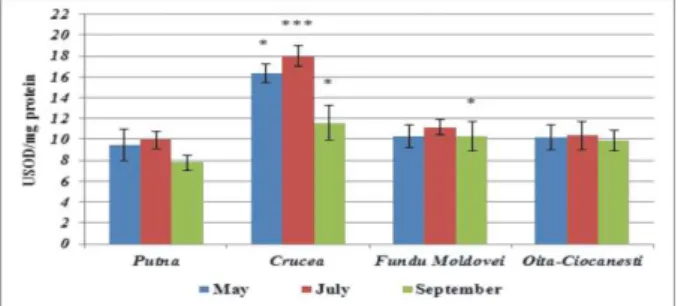
the lowest activity, reaching values of 8.235±0.82 USOD/mg protein and 8.551±0.85 USOD/mg protein.
Figure1. SOD activity in Plantago major.
***p < 0.001 (very significant); ** 0.001<p<0.005 (significant);
* 0.01<p<0.05 (less significant); 0.05 <p<0.5 (not significant)
Significant differences (0.001<p<0.005) and less significant (0.01<p<0.05) by comparison with the reference, are ascertained in the case of the samples harvested from the vicinity of the uranium mining
from Crucea-Botuşana, the enzyme activity
reaching the maximum level of activity in July (12.659±1.008 USOD/mg protein). Besides, the
specialty literature 44 signalizes the fact that the
uranium may be translocated from the environment at the plants level, where it glitches the mechanism of the antioxidant defensive, the effect of this metal at foliar level being translated through the increasing of SOD and CAT activity.
At Mentha longifolia L., the SOD activity is, commonly, higher comparatively with that
decelated at Plantago major L. (Fig. 2), at the
samples harvested from Crucea area the enzyme laying out medium values between 11.561±1.664 USOD/mg protein (September) and 18.1±1.008 USOD/mg protein (in July). In the areas of manganese exploitation and of cupriferous ores, the mint presents a comparable SOD activity. In May, the enzyme reaches the level of 10.339±1.074 USOD/mg protein at Fundu Moldovei and 10.227±1.222 USOD/mg protein in Oiţa-Ciocăneşti area, while, in July and September there are ascertained values slightly higher at the samples from the vicinity of the copper mining exploitation
(11.188±0.702 USOD/mg protein and
10.343±1.398 USOD/mg protein, comparatively with 10.376±1,35 and 9.906±1.017 USOD/mg
protein).The apply of the t statistical signification
test emphasized the existence of some differences less significant (0.01<p<0.05) between the reference samples and those from Crucea area
harvested in May and September, respectively strongly significant (p < 0.001) at those harvested in July from the same areas.
Fig. 2. SOD activity in Mentha longifolia
***p < 0.001 (very significant); ** 0.001<p<0.005 (significant);
* 0.01<p<0.05 (less significant); 0.05 <p<0.5 (not significant)
The CAT is a key enzyme in the induction of the plants’ tolerance to stress, recent studies showing that the high activity of this one is essential for the survival of the vegetable organisms in moderate metallic stress conditions, at values strongly increased, the deterioration of the enzyme being irreversible 45.
Our results show the fact that the presence of the uranium wastes, cupriferous ores and of the manganese in the soil determine a strong oxidative
stress at the level of the foliar apparatus of Plantago
major L. species, the CAT activity being considerable increased in the polluted areas comparatively with the reference area. If in the Putna areal (Fig. 3), where the mineral resources are
represented with preponderance of spa 46, the
activity of this oxidoreductase varies between 9.347±0.994 UC/mg protein (September) and 11.691±1.144 UC/mg protein (July), at Oiţa-Ciocăneşti the enzyme reaches a level of 2.5 times approximately higher, at Fundu Moldovei of 1.4 times higher in September and of 2.6 times higher in May and July, while, at the samples taken from the vicinity of the uranium mine from Crucea, CAT lays out an activity of 4 times higher (no matter the period of harvest). The Student test indicated significant differences (0.001<p<0.005) and strongly significant (p<0.001) between the
controlsamples and those harvested from the areas
bended to the mining pollution, excepting the harvested plot in September, from the vicinity of the
cupriferous ores exploitation from Fundu
Moldovei. The specialty literature 47,48 signalizes
main elements), but also Cu, Zn, Pb, Cd, Cr, As, Ni, Co and Ca, the risks particularly high, after the closing of the mine, being dued to the fragility of
the tailing pondDealu Negru.
Fig. 3. CAT activity in Plantago major
***p < 0.001 (very significant); ** 0.001<p<0.005 (significant);
* 0.01<p<0.05 (less significant); 0.05 <p<0.5 (not significant)
To explain the results it must be taken into account the fact that the CAT activity is influenced by different environmental conditions as the low temperature or excessive, the intensity too high of light, the drought stress and the presence of heavy metals etc., which have as results the intensification
of ROS production in the plants tissues 49. In the
same time, in the temperate areas, the environmental factors vary in large limits fact that determines that the antioxidant system of the species from these areas to play an essential role in
their acclimatization 50. Nandita and Prasant Kumar
51signalize the direct influence of the manganese on
the CAT and POX increase activity in plants, and
Karimi et al. 52 highlights the manganese and
copper effect, in different concentrations, on the SOD, CAT and POX intensification at the leaves and roots level.
The literature data 53,54 show the antioxidant
properties of the wild mint which confer to this one a significant account both for human as for the pharmaceutical industry.
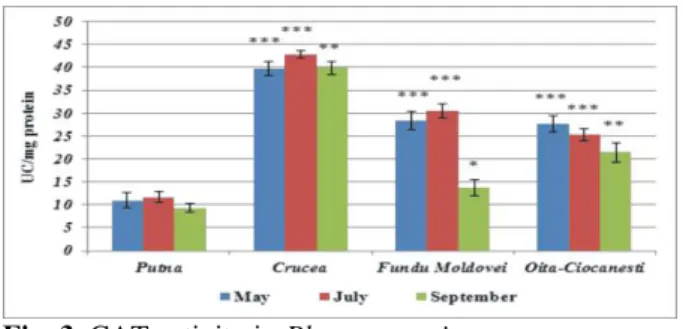
Also at this species it can be remarked significant differences in what concerns the CAT activity between the polluted areas and that of reference (Fig. 4), the maximal medium values registering, also this time, at the samples taken from the vicinity of the uranium mine exploitation (35.428±2.061 UC/mg protein in May, 38.121±1.938 UC/mg protein in July and 32.141±1.926 UC/mg protein in September 2015). Also in the case of the samples derived from Fundu Moldovei and Oiţa-Ciocăneşti, CAT follows the same trend, excepting the harvested plot, in September, from the vicinity of
the manganese mine from Oiţa, where the enzyme lays out values more approached whit those decelated in the control area 12.004±1.842 UC/mg protein, respectively 9.961±1.541 UC/mg protein). The statistical analyze highlights prominent differences between the reference samples and those derived from the mining plots.
Fig. 4. CAT activity in Mentha longifolia
***p < 0.001 (very significant); ** 0.001<p<0.005 (significant);
* 0.01<p<0.05 (less significant); 0.05 <p<0.5 (not significant)
Our results concords with those from the scientific literature that signalize a strong ROS accumulation and, implicitly, a CAT activity’s increase at species
derived from uranium polluted environments 55. In
the same time, the prominent differences of enzymatic activity could be explain by the seasonal variations, but also zonals, of the hydric level, the hydric regime potencying the forming process of the superoxidic radical, fact that has as consequence a sustained SOD activity and, implicitly, of CAT
that block the hydrogen peroxide accumulation 56,57.
On the other hand, the lower catalasic activity
signalized at Mentha longifolia L., comparatively
with Plantago major L., can be explained by the
genetic background and the species specificity, but also by the epigenetic adjustment through the
interaction with environmental factors 58.
POX is an oxidoreductase with mainly role in the defense of the vegetable organisms against the biogenic stress and the abiotic stress, it being able to be associated with a high number of essential metabolic processes like the cells’ elongation, their lignification, the phenolic oxidation, the growth and
the morphogenesis processes 59-62, modifications of
this enzyme’s activity taking place in the modulation processes of cellular differences and of
tissues’ development 63.
represents 52.68% from this one, at Oiţa-Ciocăneşti 60.16%, and at Putna, only 43.29% (Fig. 5). Remarkable is the fact that the maximal enzymatic values are registered at Crucea in May (19.341±2.01 UP/mg protein), at Fundu Moldovei in July (12.091±1.636 UP/mg protein), and at Oiţa-Ciocăneşti in September (12.463±1.305 UP/mg protein) in strongly correlation with the thermal regime and of the precipitations from the respective zones.
Fig. 5. POX activity in Plantago major
***p < 0.001 (very significant); ** 0.001<p<0.005 (significant);
* 0.01<p<0.05 (less significant); 0.05 <p<0.5 (not significant)
If in the CAT case, the statistic signification’s test
emphasized differences strongly significant
between the mining areas and that of control, POX manifests a behavior slightly different, between these areas observing significant differences (Crucea area May and September - 0.001<p<0.005) and less significant or even insignificant for the rest.
Džamić et al. 64 and Bahtiti 65 demonstrate the
antioxidant and antifungal capacity of Mentha
longifolia, the different extracts and essential oils being of big interest both for the fundamental scientist as well for the food industry, due to the possibility of their using as natural additives which may replace the synthetic antioxidants.
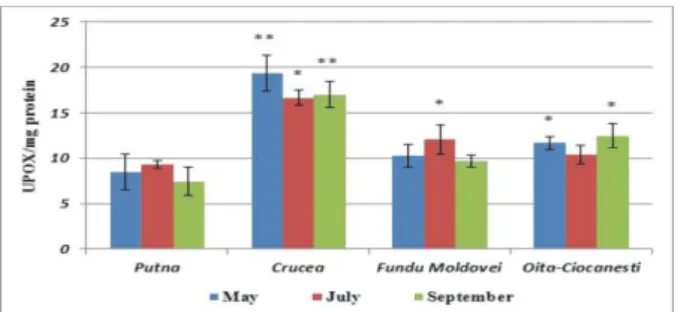
In the Crucea mining area, POX lays out values that oscillate between 14.887±1.259 UP/mg protein (in September) and 19.797±1.118 UP/mg protein (in May), while, at the samples harvested from the reference area, the enzymatic activity is a lot lower, the variation interval being contained between 8.204±0.496 UP/mg protein (at the beginning of the autumn) and 10.384 ±1.046 UP/mg protein (during the summer). The statistical analyze of the experimental data obtained shows significant and
strongly significant differences (p=0.0005)
between the activity of this oxidoreductase from the samples taken from the two areas. At the taxons derived from the vicinity of the cupriferous ores and
manganese exploitations, the enzymatic activity presents slightly variations from month to month, reaching levels of the same order of size for each area in part (8.826±1.02 UP/mg protein -
11.748±2.212 UP/mg protein, respectively
8.781±1.716 UP/mg protein and 11.458 ±0.854 UP/mg protein).
The differences enough significant available in function of the harvest period of the vegetable tissues, may be put on the fact that the activity of the different types of POX izoenzymes are in direct correlation with the growth stage, the seasonal period in which, the temperature and other stress parameters like flowering, go pale and the fall of the
leaves 49. Moreover, the increase of POX activity
was proved to be a prompt answer to the accumulation of free radicals formed as a consequence of the induced stress by the presence of the environmental pollution, thus insuring the cells resistance against to this one’s accumulation and mediating the plants adaptability to the stressor factors 66.
Complementary to the tests related to the antioxidant defense was opted in favor of determining the main enzymes activity of Krebs cycle, being known the fact that an acclimatization of the plants to the stressor factors’ presence is associated with deep changes at the level of substances’ and energy’s metabolism, with role in the increasing of the vegetable organisms’ resistance at the stress induced by the metalliferous excess.
In what concerns the izocitrat-dehydrogenase (IDH) activity in the samples derived from the
Crucea-Botuşana area, there are observed medium
values which oscillate between 45.271±0.917 and 54.16±0.99 µg formazan/g vegetable tissue at
Plantago major, respectively 37.805±1.28 and 52.744±2.292 µg formazan/g vegetable tissue at
Mentha longifolia (Figs. 7-8), these values being strongly significant (p<0.001) to comparison with those registered in the reference area (between 13.424±1.194 and 24.001±2.36 µg formazan/g
vegetable tissue at plantain, respectively
hydric level registered in this month. On the other hand, there must be taken into account the fact that
the IDH – NADPH dependent is implied in the
cellular senescence 67, the NADPH present in the
peroxizoms being adjusted by this enzyme, fact that confers it a direct role in the supplying with the reduced form of the nicotine-amidic coenzyme,
necessary in the mitochondria antioxidant
protection.
Fig. 6. POX activity in Mentha longifolia
***p < 0.001 (very significant); ** 0.001<p<0.005 (significant);
* 0.01<p<0.05 (less significant); 0.05 <p<0.5 (not significant)
Fig. 7. IDH activity in Plantago major
***p < 0.001 (very significant); ** 0.001<p<0.005 (significant);
* 0.01<p<0.05 (less significant); 0.05 <p<0.5 (not significant)
Fig. 8. IDH activity in Mentha longifolia
***p < 0.001 (very significant); ** 0.001<p<0.005 (significant);
* 0.01<p<0.05 (less significant); 0.05 <p<0.5 (not significant)
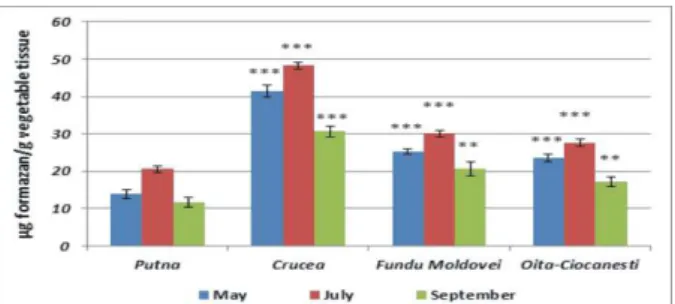
The α-ketoglutarat dehydrogenase (KDH) is the enzyme responsible of the conversion of α-ketoglutarat into succinil-CoA, at the species analyzed by us, the IDH activity being secondated by much lower KDH activity, both at the plantain as at the mint. Thus, in the Crucea areal, the enzyme
reaches, at Plantago major (Fig. 9), values
contained between the variation limits of 30.628 – 48.249 µg formazan/g vegetable tissue, at Fundu Moldovei between 20.641 – 30.142 µg formazan/g vegetable tissue, while, in the reference areal (Putna) the activity doesn’t overtake 20.56±0.847 µg formazan/g vegetable tissue (in July).
Fig. 9. KDH activity in Plantago major
***p < 0.001 (very significant); ** 0.001<p<0.005 (significant);
* 0.01<p<0.05 (less significant); 0.05 <p<0.5 (not significant)
This fact could be explain through that a part of the substratum there is possible to enter in the anabolism channels connected in this point, in function of the vegetable tissue’s necessities. More than this, the α-ketoglutarat may be a target for ROS generated at mitochondrial level, the vegetable cell being able to run away an oxidative anti-stress strategy, so as to maintain the cellular mitochondria integrity for the proper intermediary metabolism and for the extension of the cellular viability. Excepting the values registered for the KDH
activity in September, at Mentha longifolia, for the
plots derived from the vicinity of the copper and manganese mines from Fundu Moldovei and Oiţa-Ciocăneşti, where the differences of activity towards the control area are less significant (0.01<p<0.05), at all the samples the apply of the Student test demonstrated, for the two species, the
existence of some significant differences
(0.001<p<0.005) and strongly significant (p<0.001)
comparatively with the areal considerate
unpolluted.
At Plantago major, the succinat dehydrogenase activity (SDH) is slightly increase, comparatively
literature 68 signalizing the fact that, besides the succinic acid resulted or degraded on the Krebs cycle way, this compound can be generated or catabolized also on other metabolic ways, the succinat, alongside with the citrate, ftalat, tartrat, salicylat and acetate proving to be excellent chelators due to their fast mobility and to metals’ assimilation by the plants from the polluted areas. The plantain lays out, in May (Fig. 11), values of
the SDH activity which oscillates from
16.014±1.509 µg formazan/g vegetable tissue (Putna), at approximately 26 µg formazan/g vegetable tissue (Fundu Moldovei and Oiţa-Ciocăneşti) and, respectively, 32.798±2.531 µg formazan/g vegetable tissue (Crucea), while, in September, the minimum activity was decelated, also this time, in the reference area (11.463±0.753 µg formazan/g vegetable tissue), value approached with that one highlighted in the vicinity of the Oiţa manganese mining plant (13.845±1.652 µg formazan/g vegetable tissue). In July, SDH reaches major values at the Fundu Moldovei plot (31.997±1.663 µg formazan/g vegetable tissue) and Crucea (38.058±2.384 µg formazan/g vegetable tissue).
Fig. 10. KDH activity in Mentha longifolia
***p < 0.001 (very significant); ** 0.001<p<0.005 (significant);
* 0.01<p<0.05 (less significant); 0.05 <p<0.5 (not significant)
Fig. 11. SDH activity in Plantago major
***p < 0.001 (very significant); ** 0.001<p<0.005 (significant);
* 0.01<p<0.05 (less significant); 0.05 <p<0.5 (not significant)
The analyze of experimental results concerning the
SDH activity highlights at Mentha longifolia (Fig.
12) the same distribution of the value palette from an area to another, the activity being only slightly
lower comparatively with the Plantago major
species, only in the Oiţa-Ciocăneşti samples case ascertaining differences more ample in May and September (16.337±1.991 and 20.773±2.04 µg formazan/g vegetable tissue at mint, comparatively
with 26.674±2.516 and 13.845±1.652 µg
formazan/g vegetable tissue at plantain).
Fig. 12. SDH activity in Mentha longifolia
***p < 0.001 (very significant); ** 0.001<p<0.005 (significant);
* 0.01<p<0.05 (less significant); 0.05 <p<0.5 (not significant)
The values levels of the malat dehydrogenase’s activity (MDH) at the studied taxons show a balanced deployment of the tricarboxilic acids’ cycle, the enzyme presenting variation limits rather ample, the registered activity being approached of that one remarked in the SDH case. The high threshold of MDH, especially in the Crucea areal, certifies a significant toxicity of the uranium and of the radionuclides from the area upon the foliar material, being known the fact that a high quantity of malat is strongly correlated with a high activity
of phosphoenolpiruvat carboxilase, enzyme
implied in the main cellular metabolism during the stomatal opening and in the malic acid input as a
respiratory substratum 69,70 in the vegetable tissues
exposed at the different stress conditions.
If in the Putna area the MDH activity varies, at the plantain (Fig. 13), between 13.679 and 17.116 µg formazan/g vegetable tissue, in the vicinity of the mines from Fundu Moldovei and Oiţa-Ciocăneşti
reaches maximal valoric thresholds of
approximately 25 µg formazan/g vegetable tissue (in July), while, in the Crucea areal, the activity is extremely high in May (35.631±1.224 µg
formazan/g vegetable tissue) and July
(36.025±2.054 µg formazan/g vegetable tissue). At
differences, the maximum enzymatic activity being remarked at the taken plot from Fundu Moldovei (29.315±0.762 µg formazan/g vegetable tissue), followed by the one from Crucea (25.439±1.808 µg formazan/g vegetable tissue) and Oiţa-Ciocăneşti (21.551±1.35 µg formazan/g vegetable tissue).
Fig. 13. MDH activity in Plantago major
***p < 0.001 (very significant); ** 0.001<p<0.005 (significant);
* 0.01<p<0.05 (less significant); 0.05 <p<0.5 (not significant)
Fig. 14. MDH activity in Mentha longifolia
***p < 0.001 (very significant); ** 0.001<p<0.005 (significant);
* 0.01<p<0.05 (less significant); 0.05 <p<0.5 (not significant)
The statistical analyze highlights significant
strongly differences between the Plantago major
taxons harvested in May (p=0.00034) and July
(p=0.00038) from Crucea area comparatively with
the reference sample and between the Mentha
longifolia plots taken in July, from Fundu Moldovei
comparatively with the control plot (p=0.00008).
The literature data 71 signalize the fact that the
enzymatic activity of the soil and the proliferation of the microorganisms from soil constitute the most efficient indicators of the stability and fertility of the ecosystems from the soil’s level, the enzymes reacting immediately at any perturbation appeared at this level. From all the types of enzymes existing in the soil, the dehydrogenases (DH) constitute the most representative oxidoreductases, assuring the correct order of all the anabolic and catabolic
reactions of the biogeochemical cycles of the soil 72.
Taking into account the fact that the global microbiologic activity of the soil, and implicitly the DH activity – as biomarker of the degradation and reparation processes, are strongly influenced by a series of biotic and abiotic factors as the mining, the time and the temperature of incubation, the type of soil, the season, the loosening/aeration degree of the soil, its pH, the humidity, the management and
maintenance practices 73-77, the soil’s fertilization,
the deepness profile of the soil, the presence of
different heavy metals etc. 78-82, we resorted at the
actual (Dha) and potential (Dha) dehydrogenase activity determination in soil samples taken from two different deepness profiles.
As it is ascertained in Figure 15, in May, DHa varies from 1.272±0.244 µg formazan/g soil in Fundu Moldovei area, at 1.351±0.11 µg formazan/g soil in the vicinity of the uranium mine from Crucea and up to 3.238±0.289 µg formazan/g soil in the reference zone, respectively 4.836±0.463 µg formazan/g soil at Oiţa-Ciocăneşti. In the soil samples taken in May from the superficial stratum (0-20 cm), the maximum threshold of activity was reached in Putna area (3.459±0.504 µg formazan/g soil) and Oiţa-Ciocăneşti (3.422±0.36 µg formazan/g soil), while, in autumn, DHa reached lower levels of activity, in Fundu Moldovei area, for example, the enzyme presenting a value of only 0.959±0.066 µg formazan/g soil.
Fig. 15. Microbian DH activity in soil (0-20 cm) ***p < 0.001 (very significant); ** 0.001<p<0.005 (significant);
* 0.01<p<0.05 (less significant); 0.05 <p<0.5 (not significant)
To highlight more trusty the maximum potential of soil dehydrogenation, we determined the DHp activity as an index of the productivity and of the
soil’s microbial activity 83. Thus, in the reference
8.36±0.234 µg formazan/g soil (September), respectively 5.593±0.813 µg formazan/g soil (September) and 9.658±0.331 µg formazan/g soil (May).
The application of the Student test highlighted
significant differences (0.001<p<0.005) and
strongly significant (p<0.001) between the reference area and the mining areals Crucea-Botuşana and Oiţa-Ciocăneşti.
A series of authors specify the fact that the dehydrogenasic activity varies in function of the soil’s deepness profile, in correlation with the aeration degree and the type of microbial colonies 75, 84-86.
Our results concords with the specialty literature in the sense that, the dehydrogenasic activity decrease once with the deepness of the soil, values found, both for Dha as for DHp being visible smaller. Thus, at the samples harvested from Putna area (Fig. 16), DHa and DHp reach the maximum activity threshold in May (1.984±0.124 µg formazan/g soil, respectively 3.23±0.297 µg formazan/g soil), while the minimum level was marked out at Oiţa-Ciocăneşti, in September
(0.647±0.092 µg formazan/g soil – DHa and
1.581±0.238 µg formazan/g soil – DHp).
Fig. 16. Microbian DH activity in soil (20-40 cm) ***p < 0.001 (very significant); ** 0.001<p<0.005 (significant);
* 0.01<p<0.05 (less significant); 0.05 <p<0.5 (not significant)
To explain the obtained results it must be taken into account the multitude of factors which influence the DH activity, the type of soil, the thermal and hydric level, the aeration degree, the organic matter’s availability and the anthropic activity’s influence, having a marked impact on the bacteria that colonize the soils in case. Moreover, we used the glucose as a supplementary nutritive source, existing the possibility that certain microorganisms types to requires for the development another nutritive substratum that the one in case.
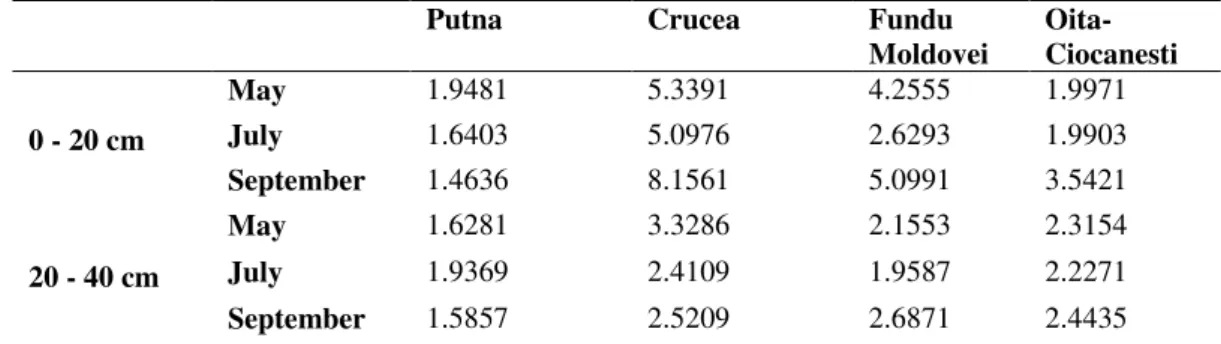
Accounting the DHp/Dha rapport comes out the fact that, both in the deep stratum as well in the superficial one, there are significant differences between the maximum action capacity of the microbial biomass and the dehydrogenasic activity at the determination moment (without nutritive substratum supplementary add), in the reference area the difference being of maximum 1.9 times higher in favor of the potential one (the superficial
stratum – May). At the other pole there is the
Crucea mining area, where the difference between the DHa and DHp activity is even of 8.15 times bigger for the surface stratum and of 3.22 times bigger in the one of profundity, while, at Fundu Moldovei the difference is of 5.09 times, respectively 2.68 times bigger (Tabel 1).
The specialty literature mentions the strong correlation that there is between the DH activity from the soil and the type of metals which pollute the respective areas, the uranium, the cadmium, the lead, the arsenium and the copper being through the
most destructive ones on the microbiota 86,87.
Table 1. Ratio DHp/DHa
Putna Crucea Fundu Moldovei
Oita-Ciocanesti
0 - 20 cm
May 1.9481 5.3391 4.2555 1.9971
July 1.6403 5.0976 2.6293 1.9903
September 1.4636 8.1561 5.0991 3.5421
20 - 40 cm
May 1.6281 3.3286 2.1553 2.3154
July 1.9369 2.4109 1.9587 2.2271
CONCLUSIONS
Forasmuch the mining exploitation causes enormous damages at the environmental level, with extremely severe negative biologic effects on some important groups of organisms of the food chain, the phytoremediation process supposes, among others, the monitoring of some biochemical parameters at species from the contaminated sites, the vegetation reacting by irreversible physiological and biochemical modifications at the stress induced by the ROS.
The heavy metals’ presence and of miscellaneous
wastes resulted after the mining exploitation had a negative impact on the plants taken in study, the highest level of the oxidative stress being highlighted in the proximity of the uranium mine, SOD, POX and CAT having strongly significant activities comparatively with the harvested samples from the reference area (Putna), no matter the sampling period of the foliar material.
In what concerns the Krebs cycle’s DH activity
from the foliar tissues of Plantago major L., we can
mention the existence of some strongly significant and significant differences between the harvested plots from the reference area and the mining areas
Crucea-Botuşana, Fundu Moldovei and Oiţa
-Ciocăneşti, while, at Mentha longifolia L.,
prominent differences in function of the sampling place there are in the case of SDH (excepting May - Oiţa-Ciocăneşti area), while at IDH and KDH, the mining area Crucea stands out through activities all-important comparatively with the control sample. The analyze of experimental results concerning the dehydrogenasic activity of the soil, shows a
different manner of behavior of these
oxidoreductases, in function of the deepness profile, on the one hand, but also of the sampling place on the other hand, in strong correlation with the aeration degree of the soil, the different heavy metals which pollute a harvesting zone or another, but also the type of bacteria which colonize the soils in case and the possible differences in the bacterial physiology.
REFERENCES
1- Velasco-Lezama R, Tapia-Aguilar R, Roman-Ramos R, Vega Avila E, Perez-Gutierrez Ma S. Efffect of Plantago major on cell proliferation in vitro. J Etnopharmacol. 2006; 103(1): 36-42.
2- Sarić-Kundalić B, Dobes C, Klatte-Asselmeyer V, Saukel J. Ethnobotanical study on medicinal use of wild and cultivated plants in middle, south and west
Bosnia and Herzegovina. J Ethnopharmacol. 2010; 131(1): 33-55.
3- Haddadian K, Haddadian K, Zahmatkash M. A review of Plantago plant. Indian J Tradit Know. 2014; 13(4): 681-685.
4- Vardapetyan H, Hovhannisyan D, Tiratsuyan S, Chailyan G. Quercetin content and antioxidant activity of armenian Crataegus Laevigata, Plantago Major and Artemisia Absinthium plants extracts. Journal of Experimental Biology and Agricultural Sciences. 2014; 2(2S): 220-225.
5- Ştef DS, Gergen I, Ştef L, Hărmănescu M, Pop C,
Drugă M, Bujancă G, Popa M. Determination of the
macro elements content of some medicinal herbs. Scientific Papers: Animal Science and Biotechnologies. 2010; 43(1): 122-126.
6- Chiang LC, Ng LT, Chiang W, Chang MY, Lin CC Immunomodulatory activities of flavonoids, monoterpenoids, triterpenoids, iridoid glycosides and phenolic compounds of Plantago species. Planta Med. 2003a; 69(7): 600-604.
7- Samuelsen AB. The traditional uses, chemical constituents and biological activities of Plantago major L. A review. J Etnopharmacol. 2000; 71: 1-21. 8- Pourmorad F, Hosseinimehr SJ, Shahabimajd N. Antioxidant activity, phenol and flavonoid contents of some selected Iranian medicinal plants. African J Biotechnol. 2006; 5(11): 1142-1145.
9- Souri R, Amin G, Farsam H, Barazandeh Tehrani M. Screening of antioxidant activity and phenolic content of 24 medicinal plant extracts. DARU. 2008; 16(2): 83-87.
10- Nazaizadeh A, Mikaili P, Moloudizargari M, Aghajanshakeri S, Javaherypour S. Therapeutic uses and pharmacological properties of Plantago major L. and its active constituents. Journal of Basic and Applied Scientific Research. 2013; 3(9): 212-221. 11- Galvez M, Cordero MC, Cortes F, Ayus MY.
Cytotoxic effect of Plantago spp. Oncanceralllins. J Etnopharmacol. 2003; 88: 125-130.
12- Srivastava V, Negi AS, Kuma JKR, Gupta MM, Khanuja SPS. Plant based anticancer molecules: A chemical and biological profile of some important leads. Bioorganic Med Chem. 2005; 13: 5892-5900. 13- Nunez-Guillen M, da Silva Emim J, Souccar C, Lapa
A. Analgesic and antiinflammatory activities of the aqueous extract of Plantago major L. Int J Pharmacogn. 1997; 35: 99-104.
14- Park K, Chang I. Anti-inflammatory activity of aucubin by inhibition of tumor necrosis factor-alpha production in RAW 264.7 cells. Planta Med. 2004; 70: 778-779.
15- Shim K, Choi S, Jeong M, Kang S. Effects of aucubin on the healing of oral wounds. In Vivo. 2007; 21: 1037-1042.
temperature on polyphenol contents in the leaves. Sci Hortic-Amsterdam. 2011; 128(4): 523-529.
17- Matev M, Angelova I, Koichev A, Leseva M, Stefanov G. Clinical trial of a Plantago major preparation in the treatment of chronic bronchitis. Vitr. Boles. 1982; 21: 133-137.
18- Franca F, Lago EL, Marsden PD. Plants used in the treatment of leishmanial ulcers due to Leishmania (Viannia) braziliensis in an endemic area of Bahia. Brazil Rev Soc Bras Med Trop.1996; 29: 229-232. 19- Jin CB, Noor HM. The hypoglycaemic effect of
Plantago major leaf extract on alloxan-induced diabetic rats. Journal of Tropical Medicinal Plants. 2006; 7(2): 175-178.
20- Mc Cutcheon AR, Roberts TE, Gibbons E. Antiviral screening of British Colombian medicinal plants. J Etnopharmacol. 1995; 49: 101-110.
21- Chiang LC, Chiang W, Chang MY, Lin CC. In vitro cytotoxic: antiviral and immunomodulatory effects of Plantago major and Plantago asiatica. Am J Chinese Med. 2003b; 31: 225-234.
22- Beara IN, Lesjak MM, Jovin ED, Balog KJ, Anackov GT, Orcic DZ et al. Plantain (Plantago L.) species as novel sources of flavonoid antioxidants. J Agric Food Chem. 2009; 57: 9268-9273.
23-Beara IN, Orcic DZ, Lesjak MM, Mimica-Ducik NM, Pekovik BA, Popovic MR, Liquid chromatography/tandem mass spectrometry study of antiinflamatory activity of plantain (Plantago L.) species. J Pharm BioMED Anal. 2010; 52: 701-706. 24- Boskabady MH, Rakhshandah M, Afiat Az, Aelami-Amiri S. Antitussive effect of Plantago lanceolata in Guineea Pigs. IJMS. 2006; 31:3.
25- Weryszko-Chmielewska E, Matysik-Woźniak A, Sulborska A, Rejdak R. Commercially important properties of plants of the genus Plantago. Acta Agrobot. 2012; 65(1): 11-20.
26- Abedi R, Golparvar AR, Hadipanah A. Identification of the essential oils composition from four ecotypes of Mentha longifolia (L.) Huds. growing wild in Isfahan province, Iran. J BioSci Biotechnol. 2015; 4(2): 117-121.
27- Yumrutas O, Saygideger SD. Determination of antioxidant and antimutagenic activities of Phlomis armeniaca and Mentha pulegium. J Applied Pharmaceut Sci. 2012; 2: 36-40.
28- Al-Rawashdeh IM. Molecular taxonomy among Mentha spicata, Mentha longifolia and Ziziphora tenuior populations using the RAPD technique. Jordan Journal of Biological Sciences. 2011; 4(2): 63-70.
29- Al-Ali K, Abdelrazik M, Alghaithy A, Diab A, El-Beshbishy H, Baghdadi H. Antimutagenic and anticancer activity of Al Madinah Alhasawy mint (Mentha longifolia) leaves extract. Pakistan Journal of Biological Sciences. 2014; 17(12): 1231-1236. 30- Alamgeer Akhtar MS, Jabeen Q, Bashir S, Malik
MNH, Khan HU, Rahman MSU et al.
Antihypertensive and toxicity studies of aqueous methanolic extract of Mentha longifolia L. The Journal of Animal & Plant Sciences. 2013; 23(6): 1622-1627.
31- Al-Bayati FA. Isolation and identification of antimicrobial compound from Mentha longifolia L. leaves grown wild in Iraq. Annals of Clinical Microbiology and Antimicrobials. 2009; 8: 20. 32- Ghasemi M, Radjabalizade K, Gharari K, Yaghoobi
H, Asgarpoor D. Chemical composition and in vitro antibacterial activity of native Mentha longifolia essential oil from Ardabil, Iran on Streptococcus mutans, Lactobacillus rhamnosus and Actinomyces viscosus. Infect Epidemiol Med. 2016; 2(1): 11-14. 33- Heydari F, Saeedi S, Hassanshahian M.
Antibacterial activity of Mentha longifolia against Salmonella typhimurium. Advanced Herbal Medicine. 2015; 1(3): 42-47.
34- Jena VK, Gupta S, Patel KS, Patel SC. Evaluating heavy metals contents in medicinal plant Mentha longifolia. J Mater Environ Sci. 2013; 4(3): 384-389.
35- Yabanlı M, Yozukmaz A, Sel F. Heavy metal
accumulation in the leaves, stem and root of the invasive submerged macrophyte Myriophyllum spicatum L. (Haloragaceae): An example of Kadın Creek (Mugla, Turkey). Braz Arch Biol Technol. 2014; 57(3): 434-440.
36- Monaci F, Moni F, Lanciotti E, Grechi D, Bargagli R. Biomonitoring of airborne metals in urban environments: new tracers of vehicle emission, in place of lead. Environ Pollut. 2000; 107(3):321-327. 37- Cojocaru D. Enzimologie practică. Iasi: Ed.
Tehnopress; 2009.
38- Drăgan-Bularda M. Microbiologie Generală. Lucrări
practice. Cluj-Napoca: Universitatea Babeş-Bolyai; 2000.
39- Chibuike GU, Obiora SC. Heavy metal polluted soils: effect on plants and bioremediation methods. Applied and Environmental Soil Science. 2014; Article ID 752708, 12 pages, http://dx.doi.org/10.1155/2014/752708
40- Abdul-Wahab SA, Marikar FA. The environmental impact of gold mines: pollution by heavy metals. Cent Eur J Eng. 2012; 2(2): 304-313.
41- Schützendübel A, Polle A. Plant responses to abiotic stresses: Heavy metal-induced oxidative stress and protection by mycorrhization. J Exp Bot. 2002; 53: 1351-1365.
42- Kosova K, Vítámvás P, Prasil IT, Renaut J. Plant proteome changes under abiotic stress - Contribution of proteomics studies to understanding plant stress response. J Proteomics. 2011; 74(8): 1301-1322. 43- Lee MK, Arasu MV, Park S, Byeon DH, Chung SO,
44- Saenen E, Horemans N, Vanhoudt N, Vandenhove H, Biermans G, Van Hees M, et al. Effects of pH on uranium uptake and oxidative stress responses induced in Arabidopsis thaliana. Environ Toxicol Chem. 2013; 32(9): 2125-2133.
45- Sharma I, Ahmad P. Catalase: A Versatile Antioxidant in plants. In: Ahmad P, editor. Oxidative damage to plants: antioxidant networks and signaling. Elsevier Inc. 2014. p. 131-138.
46- Cocerhan C. Bazinul râului Suceava pe teritoriul României - Valorificarea potenţialului turistic. PhD. University of Bucharest: Romania. 2012.
47- Balaban SI, Iancu OG, Bulgariu D. The geochemical distribution of heavy metals for some mine tailings from the Fundu Moldovei area, Romania. Carpath J Earth Env. 2011; 6(2): 279-288.
48- Stumbea D. the flanks of the Dealul Negru tailings pond (Fundu Moldovei) – pollution risk factors. Carpath J Earth Env. 2013; 8(3): 103-112.
49- Zolfaghari R, Hosseini SM, Korori SAA. Relantionship between peroxidase and catalase with metabolism and environmental factors in Beech (Fagus orientalis Lipsky) in three different elevations. International Journal of Environmental Sciences. 2010; 1(2): 243-252.
50- Tuteja N, Gill SS. Plant acclimation to environmental stress. New York: Springer Science and Business Media; 2015.
51- Nandita J, Prasant Kumar B. Evaluation of biochemical indicators of iron and manganese contamination for sunflower plants: chlorophyll content, catalase and peroxidase. Asian Journal of Microbiology, Biotechnology & Environmental Sciences Paper. 2012; 14 (2): 305-307.
52- Karimi P, Khavari-Nejad RA, Niknam V, Ghahremaninejad F, Najafi F. The effects of excess copper on antioxidative enzymes, lipid peroxidation, proline, chlorophyll, and concentration of Mn, Fe, and Cu in Astragalus neo-mobayenii. The Scientific World Journal. 2012; http://dx.doi.org/10.1100/2012/615670.
53- Elansary HO, Ashmawy NA. Essential oils of mint between benefits and hazards, J Essent Oil Bear Pl. 2013; 16(4): 429-438.
54- Ertaş A, Gören AC, Haşimi N, Tolan V, Kolak U. Evaluation of antioxidant, cholinesterase inhibitory and antimicrobial properties of Mentha longifolia subsp. noeana and its secondary metabolites. Rec Nat Prod. 2015; 9(1): 105-115.
55- HoremansN, Van HeesM, Van HoeckA, SaenenE, De MeutterT, NautsR, et al. Uranium and cadmium provoke different oxidative stress responses in Lemna minor L. Plant Biol. 2015; 17 (s1): 91-100. 56- Kumar Kar R. Plant responses to water stress. Role
of reactive oxygen species. Plant Signal Behav. 2011; 6(11): 1741-1745.
57- Bolat I, Dikilitas M, Ercisli S, Ikinci A, Tonkaz T. The effect of water stress on some morphological,
physiological, and biochemical characteristics and bud success on apple and quince rootstocks. The Scientific World Journal. 2014; Article ID 769732, http://dx.doi.org/10.1155/2014/769732.
58- Samokhvalov V, Ignatov V, Kondrashova M. Inhibition of Krebs cycle and activation of glyoxylate cycle in the course of chronological aging of Saccharomyces cerevisiae. Compensatory role of succinate oxidation. Biochimie. 2004; 86(1): 39-46. 59- Passardi F, Cosio C, Penel C, Dunand C. Peroxidases
have more functions than a Swiss army knife. Plant Cell Rep. 2005; 24: 255-265.
60- Marjamaa K, Kukkola ME, Fagerstedt VK. The role of xylem class III peroxidases in lignification. J Exp Bot. 2008; 60(2): 367-376.
61- Díaz-Tiaels Carla, Graña Elisa, Reigosa J. Manuel, Sánchez-MoreirasM. Adela. The role of peroxidases on the mode of action of chalcone in Arabidopsis roots. Plant Signal Behav. 2012; 7(10): 1274-1276. 62- Zhang Y, Chen B, Xu Z, Shi Z, Chen S, Huang X,
et al. Involvement of reactive oxygen species in endosperm cap weakening and embryo elongation growth during lettuce seed germination. J Exp Bot. 2014; http://dx.doi.org/10.1093/jxb/eru167.
63- Kawano T. Roles of the reactive oxygen species-generating peroxidase reactions in plant defense and growth induction. Plant Cell Rep. 2003; 21: 829-837.
64- Džamić AM, Soković MD, Ristić MS, Novaković M,
Grujić-Jovanović S, Tešević V, Marin PD.
Antifungal and antioxidant activity of Mentha longifolia (L.) Hudson (Lamiaceae) essential oil. Botanica Serbica. 2010; 34(1): 57-61.
65- Bahtiti NHAl. Biological activities of the methanol extract of cultivated jordanian fresh and dried mint species (Mentha Longifolia). International Journal of Research Studies in Biosciences. 2015; 3(1): 205-210.
66- Bansal N, Kanwar SS. Peroxidase(s) in environment protection. The Scientific World Journal. 2013;
Article ID 714639,
http://dx.doi.org/10.1155/2013/714639.
67- Del Rio LA, Sandalio LM, Corpas FJ, Romero-Puertas MC, Palma JM. Peroxisome as a acellular source of ROS signal molecule. In: Del Rio LA, Puppo A, editors. Reactive oxygen species in plant signaling. Springer. 2009. p. 100-102.
68- Vara Prasad MN, De Oliveira Freitas HM. Metal hyperaccumulation in plants - Biodiversity prospecting for phytoremediation technology. Electron J Biotechn. 2003; 6(3): 285-305.
70- O’leary B, Park J, Plaxton WC. The remarkable diversity of plant PEPC (phosphoenolpyruvate carboxylase): recent insights into the physiological functions and post-translational controls of non-photosynthetic PEPCs. Biochem J. 2011; 436: 15-34.
71- Kaczyńska G, Borowik A, Wyszkowska J. Soil
dehydrogenases as an indicator of contamination of the environment with petroleum products. Water Air Soil Pollut. 2015; 226: 372.
72- Kumar S, Chaudhuri S, Maiti SK. Soil dehydrogenase enzyme activity, in Natural and mine soil – a review. Middle-East Journal of Scientific Research. 2013; 13 (7): 898-906.
73- Subhani A, Changyong H, Zhengmiao Y, Min L, El-ghamry A. Impact of soil environment and agronomic practices on microbial/dehydrogenase enzyme activity in soil - A Review. Pakistan Journal of Biological Sciences. 2001; 4: 333-338.
74- Ghaly A, Mahmoud N. Optimum conditions for measuring dehydrogenase activity of Aspergillus niger using TTC. American Journal of Biochemistry & Biotechnology. 2006; 2: 186-194.
75- Levyk V, Maryskevych O, Brzezińska M,
Włodarczyk T. Dehydrogenase activity of
technogenic soils of former sulphur mines(Yvaoriv and Nemyriv, Ukraine). Int Agrophys. 2007; 21: 255-260.
76- Trasar-Cepeda C, Gil-Sotres F, Leiros M. Thermodynamic parameters of enzymes in grassland soils from Galicia, NW Spain. Soil Biol Biochem. 2007; 39: 311-319.
77- Xie W, Zhou J, Wang H, Chen X, Lu Z, Yu J, Chen X. Short-term effects of copper, cadmium and cypermethrin on dehydrogenase activity and microbial functional diversity in soils after long-term mineral or organic fertilization. Agriculture, Ecosystems & Environment. 2009; 129: 450-456.
78- Błońska E. Enzyme activity in forest peat soils. Folia
Forestalia Polonica. 2010; 52: 20-25.
79- Fernandez-Calviño D, Soler-Rovira P, Polo A, Diaz-Raviña M, Arias-Estevez M, Plaza C. Enzyme activities, In Vineyard soils long-term treated with copper-based fungicides. Soil Biol Biochem. 2010; 42: 2119-2127.
80- Macci C, Doni S, Peruzzi E, Masciandro G, Mennone C, Ceccanti B. Almond tree and organic fertilization for soil quality improvement in southern Italy. J Environ Manage. 2012; 95: 215-222. 81- Ciornea E, Dumitru G, Dumitrascu S. The enzymatic
activity of soil’s dehydrogenases in Tasca and Tarcau
areas. An. Şt. Univ. „Alexandru Ioan Cuza”Iaşi, s. II
a Genetică şi Biologie Moleculară. 2014; 15(2):
65-70.
82- Park K, Jung W, Park J. Decontamination of uranium-contaminated soil sand using supercritical CO2 with a TBP–HNO3 complex. Metals. 2015; 5: 1788-1798.
83- Dick RP, Breakwill D, Turco R. Soil enzymes activities and biodiversity measurements as integrating biological indicators. In: Doran JW, Jones AJ editors. Handbook of methods for assessment of soil quality. Ed. Soil Sci. Soc. Am: Madison. 1996. p. 247-272.
84- Agnelli A, Ascher J, Corti G, Ceccechrini M, Nannipieri P, Pietramellara G. Distribution of microbial communities in a forest soil profile investigated by microbial biomass, soil respiration and DGGE of total and extracellular DNA. Soil Biol Biochem. 2004; 36: 859-868.
85- Wolińska A. Dehydrogenase activity of soil
microorganisms and oxygen availability during reoxidation process of the selected mineral soils from Poland. Acta Agrophys. 2010; 180-188.
86- Wolińska A, Stępniewska Z. Dehydrogenase activity in the soil environment. In: Canuto RA, editor. Biochemistry, Genetics and Molecular Biology "Dehydrogenases". 2012. p. 183-210. 87- Irha N, Slet J, Petersell V. Effect of heavy metals and
PAH on soil assessed via dehydrogenase assay. Environ Int. 2003; 28(8): 779-782.