UNIVERSIDADE DA BEIRA INTERIOR
Ciências
Disposable sensor for the determination and
quantification of analytes with interest in health
Development of a screen-printed electrochemical
sensor for Bisphenol A detection
Cláudia Caçador Peralta
Dissertação para obtenção do Grau de Mestre em
Biotecnologia
(2º ciclo de estudos)
Orientador: Profª. Doutora Ana Cristina Dias-Cabral
Co-orientador: Filipa Andreia Velez Pires
Acknowledgements
As a consequence of the work involving this master’s dissertation, there are several people to whom I would like to express gratitude.
First, I would like to thank professors Dra. Ana Cristina Dias-Cabral and Dra. María Julia Arcos Martinez for all the support, dedication, effort and patience, knowing that their help was key in achieving what was proposed.
Secondly, special thanks to Filipa Pires and Hugo Silva, which helped me in many ways throughout the development of this work, providing guidance in times of need. Also, this special thanks is extended to all of the laboratory coworkers, both in Covilhã and in Burgos, for helping ever so often and for proving a cheerful environment, which made work a lot easier.
This work is also dedicated to all my friends, whose support and friendship will be forever esteemed, and to the 9gag community, proving a source for laughter in much needed times. Finally, to the most important people in my life, goes a thank-you from deep within.
To Miguel, for being so kind, supportive, loving, patient and understanding, being there even when times were rough, with his constant cheering and belief that all will come to a good end. To my parents, for putting up with all the efforts necessary to put me through university, with the support, patience and unconditional love that will forever be cherished.
At last, a special thank-you to my big brother, knowing that without him none of this would be possible, and for that reason I thank his belief in the capabilities of his litter sister.
Resumo
Num mundo em que a procura por uma maior comodidade levou a que os plásticos fizessem parte do nosso dia-a-dia, surgiu uma nova classe de poluentes que está a causar um grande impacto na saúde humana.
Dentro desta nova classe de poluentes encontra-se o Bisfenol A (BPA), um disruptor endócrino que era usado inofensivamente como monómero na produção de plásticos, até descoberta a sua capacidade de mimetizar as hormonas naturalmente presentes no corpo, ligando-se aos seus recetores e causando um desequilíbrio hormonal que pode levar a vários problemas de saúde.
Desde que foi classificado como perigoso para a saúde humana, estudos envolvendo BPA aumentaram, especialmente procurando métodos alternativos mais baratos para a sua deteção, tentando manter a sensibilidade associada a métodos mais tradicionais de como a cromatografia, mas acrescentando portabilidade e uma mais simples operabilidade.
Os métodos eletroquímicos respondem adequadamente a esta necessidade, sendo ainda mais promissores quando usados elétrodos serigrafados (SPE), isto é, dispositivos contendo o sistema de três elétrodos serigrafados e miniaturizados na superfície de um substrato. Isto faz com que estes sensores tenham elevada portabilidade, sejam fácies de usar e que a sua produção seja de baixo custo, permitindo o seu descarte após uso único.
Mesmo existindo estudos para a deteção eletroquímica de BPA, poucos são aqueles que usam SPE como o sistema de elétrodos. Assim sendo, depois de uma cuidada otimização de vários parâmetros, foi desenvolvido um sensor para a deteção de BPA usando modificadores de superfície como nanotubos de carbono (CNT) e uma rede metalo-orgânica de cobre (Cu-MOF), sendo o último pouco estudado como modificador na área da eletroquímica.
Combinado 60% de CNT e 40% de Cu-MOF na superfície do elétrodo, foi conseguido um limite de deteção de 1.20 × 10⁻⁷ M em tampão, comparável e ainda mais baixo que alguns sensores tradicionais descritos na literatura para este analito. Estudando o sensor em meios mais complexos como a urina sintética e humana, foram conseguidos limites de deteção de 2.52 × 10⁻⁷ M e 8.91 × 10⁻⁷ M, respetivamente, mostrado a natureza promissora do sensor desenvolvido.
Palavras-chave
Resumo Alargado
Considerando o estilo de vida cada vez mais agitado da sociedade dos dias de hoje, o uso de recipientes de plástico tornou-se uma prática comum no dia-a-dia.
Das muitas substâncias usadas como monómeros na produção de plástico e seus derivados, o Bisfenol-A (BPA) encontra-se entre os mais usados, tanto como componente principal na produção de policarbonato e resinas de epóxi (usadas para revestimento do interior de latas), como parte do processo de produção de materiais como polisulfunato, poliacrilato, resinas insaturadas de poliéster e retardantes de chama, sendo um inibidor na síntese de poli(vinil cloreto) e atuando como antioxidante no fabrico de colas, tintas e plásticos. Com o uso destes materiais em áreas com a alimentação e bebidas, saúde, indústria e comércio, o BPA tornou-se ubíquo na vida dos tornou-seres humanos.
Quando se encontra na forma de polímero, o BPA não apresenta qualquer problema, contudo, quando é liberto dos materiais do qual é constituinte, seja por ação de processos de aquecimento, aumento ou diminuição de pH ou ainda por contacto com a pele, no caso de recibos ou notas, o BPA torna-se uma substância perigosa para a saúde humana.
O motivo pelo qual o BPA pode ter efeito danosos na saúde humana deve-se ao facto deste possuir a capacidade de mimetizar as hormonas naturalmente presentes no corpo humano. A este tipo de substâncias, dá-se o nome de disruptores endócrinos, e podem exercer a sua ação de diferentes formas, como agonista, em que se ligam aos recetores hormonais e os ativam, ou antagonista, em que se ligam ao recetor e impedem que a hormona endógena se ligue. Dependendo do tipo de recetor, o BPA exerce a sua ação de ambas as formas.
Como consequência desta alteração endócrina, muitos problemas de saúde estão associados ao consumo de BPA, como patologias do foro neurológico, imunológico, cardiovascular, hepático, entre outras. Contudo, e apesar de ter sido considerado, em janeiro de 2015, seguro para consumo pela Autoridade Europeia para a Segurança Alimentar, mais estudos serão necessários para melhor averiguar as consequências do consumo desta substância na saúde humana e meio ambiente.
Dado a grande importância que se tem dado a este tipo de poluentes nos últimos anos, vários métodos comuns existem para a deteção de BPA como cromatografia líquida e gasosa, ensaios de imuno-afinidade mediados por enzimas (ELISA) e sensores de ressonância plasmónica de superficie (SPR) que, apesar de demostrarem elevada afinidade para BPA permitindo a sua deteção a baixas concentrações, têm como desvantagens o elevado custo de operação e/ou de equipamentos, requerendo pessoal especializado para a sua operação, elevado tempo de
operação e/ou possuírem reduzida portabilidade, impossibilitando assim a medição da amostra no local de recolha.
Como forma de combate às desvantagens associadas às técnicas de deteção e quantificação anteriormente referidos, os métodos de deteção eletroquímica têm sido bastantes estudados nesta área, com particular ênfase para o uso de elétrodos serigrafados, isto é, elétrodos miniaturizados e impressos na superfície de um substrato, recorrendo a tintas especializadas que são passadas por um molde e curadas com a forma de cada um dos componentes do sensor. Este tipo de técnica permite o fabrico de elétrodos de baixo custo, que podem ser descartados após uso, possuindo um elevada reprodutibilidade e eliminado problemas como a morosa limpeza de elétrodos nas convencionais técnicas eletroquímicas.
Visto que o uso de elétrodos simples nem sempre oferece a sensibilidade e especificidade para o analito desejada, recorre-se muitas vezes a modificação da sua superfície para aumentar estes dois parâmetros. Para isso podem ser usados elementos biológicos ou elementos químicos, sendo parte integrante destes últimos os nano materiais, como os nanotubos de carbono (CNT) e as nano partículas de ouro (AuNP) que conferem um aumento da área superficial e condutividade, incrementando assim a sensibilidade para com o analito.
Ainda dentro dos modificadores de superfície está um conjunto de compostos que começam a dar os primeiros passos na área da deteção eletroquímica, denominados de redes metalo-orgânicas, das quais é exemplo a rede metalo-orgânica de cobre (Cu-MOF). Este tipo de redes, como o nome indica, são compostas por um elemento metálico, que neste caso é o cobre, ligados por um ligando orgânico, sendo que o ligando orgânico da rede sintetizada possui elevada afinidade para com o BPA, havendo assim uma possibilidade de aumentar a especificidade do sensor desenvolvido.
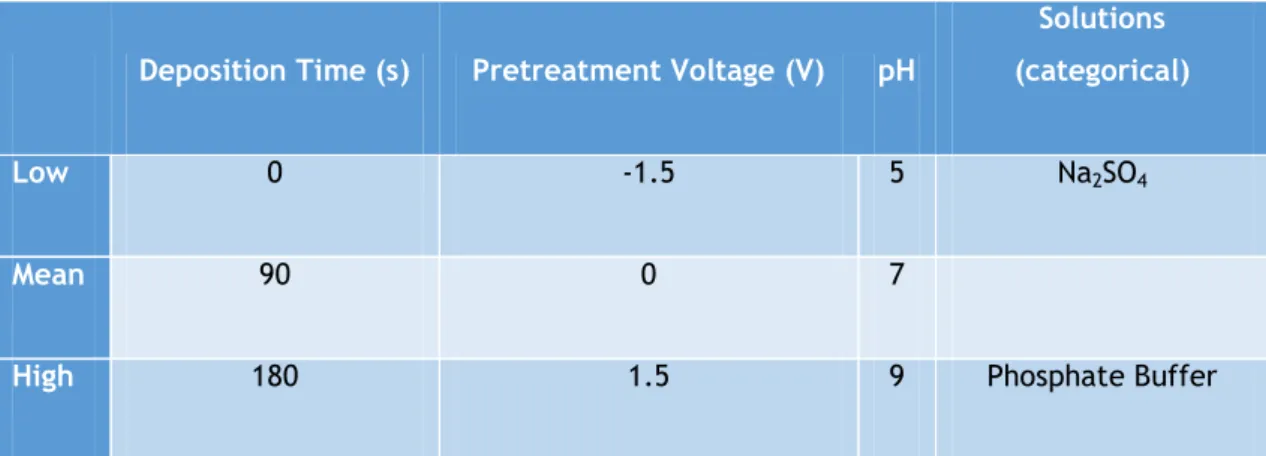
Sendo que o objetivo do presente trabalho era o desenvolvimento de um sensor eletroquímico em elétrodos serigrafados para a deteção de BPA, vários passos foram necessários para atingir o sensor ideal. Para isso, diversas condições de ensaio foram estudadas, nomeadamente pH do tampão, tipo de tampão, voltagens e tempos de pré-tratamento, método eletroquímico, bem como o tipo de modificador de superfície, sendo que para alguns dos parâmetros estudados se recorreu ao planeamento de experiências por design fatorial.
Com as condições de ensaio ideais adquiridas (pH entre 8 e 11, não usar voltagem no pré-tratamento, devido a stress causado no elétrodo, agitar durante 60s, medindo depois com o método eletroquímico de voltametria de pulsos diferenciados) foram conjugadas várias proporções de CNT e Cu-MOF até atingir a proporção ótima.
O melhor resultado em termos de limite de deteção foi de 1.20 × 10⁻⁷ M, em tampão fosfato pH 11, sendo comparável ou ainda melhor que muitos resultados previamente descritos na
literatura para a deteção eletroquímica de BPA. Este resultado foi possível graças a conjugação de 60% de nanotubos de carbono e 40% de Cu-MOF.
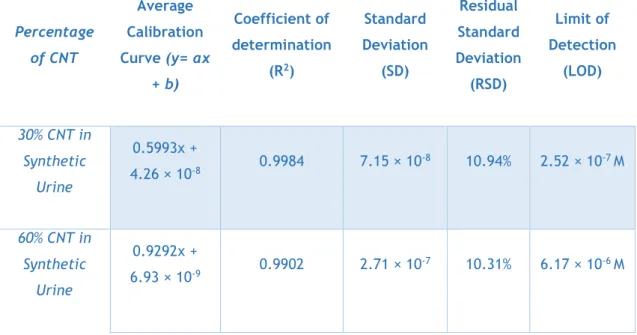
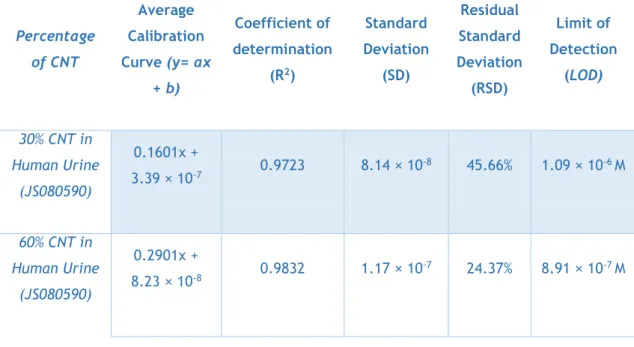
Quando se fez a tentativa de passar para análises em meios mais complexos, urina sintética e urina humana diluídas foram usadas como meios. Nestas condições, foi possível detetar BPA com um limite de 2.52 × 10⁻⁷ M (com 30% CNT e 70% Cu-MOF) para a urina sintética e um limite de 8.91 × 10⁻⁷ M (usando 60% CNT e 40% Cu-MOF) para amostras de urina humana, provando a potencialidade do sensor desenvolvido.
Abstract
In a world where the search for commodity has lead for plastic based materials to be part of our everyday life, a new class of pollutants with great impact on human health is emerging. Part of that class of pollutants is Bisphenol-A (BPA), an endocrine disruptor that was used harmlessly as a monomer in the production of plastics, until its found action in mimicking natural hormones in the body, binding to their receptor and causing a hormone imbalance that can lead to several health issues.
Since being classified as threatening to human health, studies involving BPA have increased, especially in searching alternative low cost methods for BPA detection, maintaining the sensitivity of the more traditionally employed ones such as chromatography, but adding portability and a simple operability.
Fitting in to this need are electrochemical methods, made even more promising by the use of screen-printed electrodes (SPE), that are miniaturized devices containing a three electrode system printed on a substrate. This makes these sensors extremely portable, easy to use and with very low production cost, allowing their disposal after single use.
Even though studies have already been made for BPA using electrochemical methods, few used SPE as an electrode system. As so, after careful optimization of several parameters, a sensor for BPA detection was developed using surface modifiers such as carbon nanotubes (CNT) and a copper metal-organic frame (Cu-MOF), the latter being a new and little studied modifier in electrochemical sensing.
By combining 60% CNT and 40% Cu-MOF on the surface of the electrode, a limit of detection of 1.20 × 10⁻⁷ M in buffer was obtained, comparable or even lower than some traditional electrochemical sensors already described in the literature. When studying the sensor for more complex mediums such as synthetic and human urine, detection limits of 2.52 × 10⁻⁷ M and 8.91 × 10⁻⁷ M, respectively, were attained, showing the promising nature of the developed sensor.
Keywords
Table of Contents
Acknowledgements ... v Resumo ... vii Resumo Alargado ... ix Abstract... xiii Table of Contents ... xvList of Images ... xix
List of Tables ... xxi
Abbreviations ... xxiii
1. Introduction ... 1
1.1 BPA implications on human health ... 2
1.2 BPA detection ... 4
1.2.1 Sensing and biosensing methods ... 5
1.2.2 Electrochemical sensing and biosensing ... 6
1.2.3 Electrode modifiers ... 9
1.2.4 State of the art on BPA electrochemical sensing and biossensing. ... 13
1.3 Experimental planning ... 18
2. Aim of Study ... 19
3.1 Reagents ... 21
3.2 Material and Methods ... 22
3.2.1 Methods ... 22
3.2.1.1 Electrochemical measurements ... 23
3.2.1.2 Solutions ... 23
3.2.1.3 Disposable Screen-Printed Electrochemical Sensors (SPES)... 25
3.2.1.4 Modification of electrochemical sensor surface ... 26
3.3 Material and Software ... 29
4. Results and Discussion ... 31
4.1 Bare homemade electrodes ... 31
4.1.1 Homemade screen-printed sensors with silver conducting lanes ... 31
4.1.2 Homemade screen-printed sensors with carbon conducting lanes ... 31
4.1.3 Stirring time ... 32
4.1.4 Pretreatment time and voltage ... 33
4.1.5 pH influence ... 35
4.1.6 Working electrode regeneration ... 36
4.2 Design of Experiments ... 38
4.3 Optimization after design of experiments ... 42
4.4 Bare DropSens sensors ... 46
4.5 Modified electrodes ... 47
4.5.1 Gold Nanoparticles on homemade screen-printed sensors with carbon conducting lanes 47 4.5.2 Carbon Nanotubes ... 48
4.5.3 CNT on commercial DropSens sensors ... 48
4.5.4 Cu-Metal Organic Frame (MOF) on commercial DropSens sensors ... 50
4.5.4.1 Cu-MOF ... 50
4.5.4.2 Cu-MOF and CNT ... 50
4.5.4.3 Reuse of sensors used both in cell and single drop experiments ... 58
4.6 Synthetic urine ... 59
4.6.1 Repetitions for 30% and 60% CNT ... 61
4.7 Human urine samples ... 64
4.7.1 Repetitions for 30% and 60 % CNT ... 66
6. Conclusions and Future Work ... 71
7. Bibliography ... 73
List of Images
Image 1.1 – Synthesis of polycarbonate polymer using BPA monomer and breakdown of PC to BPA monomers. Adapted from [2]. ... 1 Image 1.2 – A - Natural hormones which BPA mimics [2]; B – Agonistic (left) and antagonistic (right) effect of BPA on hormone receptors [7]. ... 3 Image 1.3 – Classification of different types of sensing, based on both the transducer and the receptor [24]. ... 6 Image 1.4 - Oxidation of BPA on electrode surface [2,25]. ... 6 Image 1.5 – Screen-Printing technique overview. a) The substrate is placed and aligned under the stencil which has the desired pattern for the component that is being printed; b) The correct ink is placed near the squeegee in order to start the printing process; c) The squeegee sweeps the ink from one side to the other, forcing it to pass though the apertures in the stencil; d) The ink is deposited on the surface of the substrate with the correct design for the selected component. Following this step, thermal curing takes place and when dry, a new component is printed and the process repeats itself. Adapted from [27]. ... 7 Image 1.6 - Differences between most used electrochemical detection techniques [30,31] .... 8 Image 1.7 - Different materials used in working electrode modifications [2]. ... 9 Image 1.8 – Representation of the Cu-MOF network. a) Chemical structure of the paddle wheel building unit of Cu-MOF; b) Representation of six building units of Cu-MOF; c) Representation of network structure of Cu-MOF (from [36]). Color scheme: Red – Oxygen atoms; Gray – Carbon atoms; Green – Copper atoms; Blue – Nitrogen atoms. ... 12 Image 1.9 – Representation of modification of the working electrode with Cu-MOF with entrapped modifiers (CNT). Unscaled image. ... 13 Image 3.10. – Overview of sensors, methods and mediums used in BPA detection. ... 22 Image 3.11 – Method of Silver Lanes Screen-Printed Electrode fabrication. a. PVC substrate; b. Deposition of silver ink (Electrodag 418 ) to produce conducting lanes; c. Deposition of Ag/AgCl ink (Electrodag 6037SS) to form the reference electrode; d. Deposition of carbon ink
(C10903P14) to form both working and counter electrodes; e. Deposition of dielectric ink (D2071120D1) as the final isolating layer; f. Finished sheet of Screen-Printed electrodes. ... 25 Image 3.12 - Method of fabrication of Carbon Lanes Screen-Printed Electrode. a. PVC substrate; b. Deposition of carbon ink (C10903P14) to produce conducting lanes, working electrode and counter electrode.; c. Deposition of Ag/AgCl ink (Electrodag 6037SS) to form the reference electrode; d. Deposition of dielectric ink (D2071120D1) as the final isolating layer; e. Finished sheet of Screen-Printed electrodes. ... 25 Image 3.13 – Synthesis process of Cu-MOF frame. a) solution of Cu-MOF; b) crystalline powder formed on vessel walls after 48h in an oven ate 120ºC; c) powder obtained after washing with DMF and letting dry overnight. ... 27 Image 4.14 - Design Expert 3D graph for the response Position (Potential), with pretreatment voltage on the low level (-1.5 V) and using Phosphate buffer. ... 39 Image 4.15 - Design Expert 3D graph for the response Height of peaks, with pretreatment voltage on the low level (-1.5V) and using Phosphate buffer. ... 39 Image 4.16 - Design Expert 3D graph for the response “Area”, with pretreatment voltage on the low level (-1.5V) and using Phosphate buffer. ... 40
List of Tables
Table 1.1 – Detection limits for more traditionally used detection techniques. Adapted from [2,8] ... 5 Table.1.2 Table with some of the known work for sensors and biosensors for BPA detection. 14 Table 3.3 - Proportions of CNT (1mg/mL) and Cu-MOF (2.33mg/mL) deposited upon homogeneous combination of both. ... 28 Table 4.4 – Studied variables when using DOE and values corresponding to each level. ... 38 Table 4.5 - Comparison of Limits of Detection (LOD), calculated by DETARCHI software (α=β=0.05), for assays performed in buffer, using different CNT percentages. ... 57 Table 4.6 - Comparison of Limits of Detection (LOD), calculated by DETARCHI software (α=β=0.05), for assays performed in sythetic urine, using CNT percentages of 30 and 60%. .. 63 Table 4.7 - Comparison of Limits of Detection (LOD) for assays performed in real human urine samples (JS080590), using CNT percentages of 30 and 60%. ... 68
Abbreviations
AuNP – Gold Nanoparticles BPA – Bisphenol ACE – Counter Electrode CNT – Carbon Nanotubes
Cu-MOF – Copper Metal-Organic Frame CV – Cyclic Voltammetry
DMF - N,N-Dimethylformamide DOE – Design of experiments DP – Differential Pulse
EDC – Endocrine Disrupting Chemical EFSA - European Food Safety Authority
ELISA - Enzyme-Linked Immunoabsorbent Assay GC-MS - Gas Chromatography- Mass Spectrometry HPLC - High Performance Liquid Chromatography LMS - Least Median of Squares
LOD – Limit of Detection
LSV – Linear Sweep Voltammetry
MECK - Micellar Electrokinetic Chromatography MIP - Molecularly Imprinted Polymer
MOF – Metal-Organic Frame MS - Mass Spectrometry
MWCNT – Multi-Walled Carbon Nanotubes NP – Nanoparticle
QD – Quantum Dots RE – Reference Electrode
SPES – Screen-Printed Electrochemical Sensors SPR - Surface-Plasmon-Resonance
SWCNT – Single Walled Carbon Nanotubes SWV – Square Wave Voltammetry
TED - Triethylenediamine UBI – University of Beira Interior UV – Ultraviolet
1. Introduction
With the industrialization of modern society, and the need for more convenient and practical solutions to keep up with the busy lifestyle of today’s families, plastic took over as a preferred material for food and water containers. Confirming this, is the fact that, in 2014, 311 million metric tons of plastic were produced worldwide, which compared to the 1950’s is 207 times the volume of plastic produced (1.5 metric tons for 1950) [1].
As one of the major components in plastic production, being used as a monomer in the production of polycarbonate plastic (PC) and epoxy resins, Bisphenol A (BPA), also known as 4,4'-Isopropylidenediphenol, has become, in the latest years, interest of study of many scientists worldwide (Image 1.1) [2–10].
Image 1.1 – Synthesis of polycarbonate polymer using BPA monomer and breakdown of PC to BPA monomers. Adapted from [2].
In 2012, global production of BPA was of 4.6 million tons, Europe being responsible for 25% of said production, with estimated volume of 5.4 million tons in 2015 [11]. These numbers are justified by the broad uses of BPA, not only as a monomer and main constituent, but also as part of the synthesis process in the production of polysulfonate, polyacrylate, unsaturated polyester resins and flame retardants, as well as being a polymerization inhibitor for poly(vinil chloride) and acting as an antioxidant in glues, inks and plastics [2,8,12]. Application for these BPA-including products can be found in household products (baby bottles, kitchenware, water
bottles), medical equipment (for dialysis and blood oxygenation,), dentistry, electronics, automobiles, corrective and protective eyewear, thermal printing paper, currency and for storage of food, beverages and pharmaceuticals in cans or other recipients lined with an epoxy coating [2,6,8,12–14].
1.1 BPA implications on human health
The main concern associated with BPA-based products, besides its discharge into the environment, due to wastewater from the plastic-producing industry, is the leaching of BPA monomer from everyday products [2,14–16]. Whether it is from thermal processes, either from food production or heating processes associated to food consumption, acidic or basic pH of liquids, or even from dermal contact with receipts or currency, BPA is released as result of hydrolysis of the ester bonds that link BPA monomers (Image 1.1) [8,14,16]. The reason why BPA leakage into food, beverages, water and soil is concerning is because BPA is thought to be persistent pollutant with endocrine disrupting activity [2,5–7,12,14–17].
An endocrine disrupting chemical (EDC) is defined by the World Health Organization (WHO) as “an exogenous substance or mixture that alters function(s) of the endocrine system and consequently causes adverse health effects in an intact organism, or its progeny, or (sub)populations” [18]. Besides BPA, many known substances are classified as EDC: man-made chemicals (for example pesticides, polychlorinated bisphenols, dioxins, synthetic hormones for contraceptive effects) and natural chemicals such as human hormones and phytoestrogens [19]. EDC act by disturbing the endocrine system, which can be via receptor mediated mechanisms, hormone synthesis, metabolism and transport; being the receptor mediated mechanism the one with prevalent attention and the mechanism responsible for BPA’s endocrine disrupting effect [7,18].
With a structure analogous to natural hormones present in the body (Image 1.2.-A), there is the possibility of BPA to bind to several hormone receptors, causing both agonistic (activation of the receptor, leading to a unwanted response, similar to that would be caused by the natural hormone) and antagonistic (binding to the receptor with no activation, but preventing the binding of endogenous hormones) responses in receptors such as nuclear estrogen receptors and thyroid receptors, in these cases having both agonistic and antagonistic effects, and to androgen receptors, demonstrating only an antagonistic effect (Image 1.2. - B) [2,7,19]. These alterations in hormone recognition are thought to be associated to reproductive issues, as, for example ovary problems, infertility and low sperm count, as well as abnormal thyroid and sex hormone concentrations [2,7,10,14,20].
Image 1.2 – A - Natural hormones which BPA mimics [2]; B – Agonistic (left) and antagonistic (right) effect of BPA on hormone receptors [7].
Not only has BPA been related to problems directly associated with the endocrine system, but has also been linked to issues that may or may not be in relation with hormone receptors, such as neurological pathologies, immune related diseases, cardiovascular diseases, altered liver functions, oxidative stress and inflammation, type-2 diabetes and altered epigenetic and gene expression, needing some of these possible consequences of BPA absorption further studies [2,7,21].
In a recent press release, from January, 2015, European Food Safety Authority (EFSA) declared that there is no consumer health risk associated to BPA exposure, stating that even after lowering the recommended BPA daily intake to 4µg/kg of bodyweight/day (previously 50 µg/kg of bodyweight/day) that the combination of all possible exposer to this chemical is three to five time lower than the new recommended value, thus not representing any risk for human beings [21]. Notwithstanding, the new attributed safety of BPA products remains uncertain, and BPA’s toxic effects have yet to be clarified, mainly due to the unpredictability of this EDC at lower concentrations, owing to its non-monotonic behavior, i.e. the expected response is not proportional to the quantity of BPA, being undetermined which can be the effects at lower
A
and higher doses [7,21]. For this reason, and for its ubiquitous nature, BPA is still interest of study of many scientists [2,7,22].
1.2 BPA detection
Detection of BPA has been performed recurring to analytical methods, from the more conventional, such as High Performance Liquid Chromatography (HPLC), with various methods of detection (Ultraviolet (UV), Mass Spectrometry (MS), fluorescence and Gas Chromatography-Mass Spectrometry (GC-MS), to the less conventional, such as Micellar Electrokinetic Chromatography (MECK), biosensors (which include microbial biosensors, immunosensors and electrochemical cell-based chip sensors), and chemical electrochemical sensors [2,5,8,10,12,15,20,22].
Chromatography based methods, though very sensitive and with excellent detection limits (Table 1.1.), involve highly trained operators and instruments that are sophisticated, expensive and with low portability. Also, due to the non-polar nature of the analyte and its low concentration in samples, pretreatment steps are often necessary, leading to a time consuming, lack of on-site applicability technique [2,8,20,23].
The more traditional bio-sensing techniques, namely Enzyme-Linked Immunoabsorbent Assay (ELISA) and Surface-Plasmon Resonance (SPR)-based sensors, though reporting good sensitivity and reliability (Table 1.1), especially for less complex matrices, they face similar problems to those associated to chromatographic methods [2,10,20,23].
Table 1.1 – Detection limits for more traditionally used detection techniques. Adapted from [2,8]
Detection Method Real Sample/Matrix
Limit of
Detection Reference Gas Chromatography -Mass
Spectrometry Drinking water 1.38×10
-13 M Table II number 8 [8]
Gas Chromatography -Mass
Spectrometry Urine 4.38×10
-10 M Table II number 13 [8]
HPLC-Flourescence Plastics 3.50×10⁻¹⁰ M Table III number 8 [8]
HPLC-UV Urine 4.38×10⁻¹⁰ M Table III number 3 [8]
ELISA – Monoclonal antibodies Canned
vegetables 2.20×10
-11 M Table 1 [2]
SPR – Self assembled monolayer
polyclonal antibodies Drinking water 1.75×10
-11 M Table 1 [2]
1.2.1 Sensing and biosensing methods
In sensing based methods, the analyte communicates with a specific receptor for its detection, and, by interacting with a transducer, generates a signal which can be, among other, chemical, thermal, difference in mass or optical. This signal is later on communicated to a signal processor which is responsible for converting it to an interpretable reading [24]. Differences in the type of transducer and receptor may be a way to distinguish sensing methods, being this information summarized in Image 1.3.
Image 1.3 – Classification of different types of sensing, based on both the transducer and the receptor
[24].
1.2.2 Electrochemical sensing and biosensing
Electrochemical sensors have gained, in the past years, great importance in BPA detection. essentially derived from the electrochemical-active nature of this EDC [2]. When detected by electrochemical means, BPA is oxidized on the electrode surface as shown in Image 1.4. [2,25].
Image 1.4 - Oxidation of BPA on electrode surface [2,25].
The high sensitivity, low cost, low time consumption, reusability, simplified operation as well as simplicity and possibility of modification of electrode surface, makes electrochemical detection a promising candidate to complement or even substitute more traditional methods [2,5,16,20].
Even more promising than the conventional electrochemical sensors are Screen-Printed Electrochemical Sensors (SPE), where the electrochemical system is miniaturized on to the surface of a selected substrate [26]. This is done by passing ink though a stencil with the appropriate design for each component of the electrode system, using thermal curing between layers (Image 1.5) [26,27]. Using different types of stencils allows for a more flexible sensor
design in terms of spatial distribution, form and area of the components in the sensor, thus being possible to make sensors adequate for different needs [27]. This type of manufacturing is denominated by “thick-film” technology [28].
Image 1.5 – Screen-Printing technique overview. a) The substrate is placed and aligned under the stencil which has the desired pattern for the component that is being printed; b) The correct ink is placed near the squeegee in order to start the printing process; c) The squeegee sweeps the ink from one side to the other, forcing it to pass though the apertures in the stencil; d) The ink is deposited on the surface of the substrate with the correct design for the selected component. Following this step, thermal curing takes place and when dry, a new component is printed and the process repeats itself. Adapted from [27].
By using Screen-Printing as a fabrication technique, a more reproducible, stable, low cost and portable system of electrodes is obtained, ideal for in situ analysis. Low energy requirements, linear output, high sensitivity, quick response, ability to operate at room temperature with minimum material necessary and disposable nature of the sensors, avoiding tedious electrode cleaning, only add to the factors making SPEs a promising electrochemical system [13,20,26,27].
Electrochemical sensing, both conventional and Screen-Printed, is based on differences in current measured in the reaction cell or drop, being a result of either the oxidation or reduction of the analyte present in solution. Present in the reaction medium, besides electrolyte solution, that allows current passage by the movement of ions, are the electrodes, each responsible for a different action. The counter electrode (CE) is responsible for closing the electric circuit, and usually doesn’t directly participate in the electrochemical reaction [29]. The CE is normally made of an inert material, such as platinum, gold, graphite or glassy carbon
(the latest used in conventional electrochemical system) [29]. The reference electrode (RE), usually constituted of materials such as silver, hydrogen, mercury, and copper, (only some of these used on SPE) is an electrode which has a stable and well known potential, and is used as a point of reference for the potential measurement and control [29]. Lastly, the working electrode (WE) is defined by the electrode in which the chemical reaction takes place [29]. This electrode is mostly made of inert materials such as gold, silver, platinum and carbon and can be modified to suit the detection application or to enhance sensitivity or specificity [2,29]. Differences in the material that constitutes each electrode involved in the electrochemical reaction is an important part of electrochemical analysis of BPA, though also important is the electrochemical method applied for that detection. Image 1.6 illustrates the difference between each method.
Image 1.6 - Differences between most used electrochemical detection techniques [30,31]
Electrochemical detection tecniques Potentiometric Reaction generates a measurable potential or charge acumulation Amperometric Reaction generates a measurable current Current is measured at a constant potential Amperometry Current is measured at controlled variations of potential Voltammetry Cyclic Voltammetry
Voltage is swept between two values at a fixed rate, being reversed to return
to the starting value
Linear Sweep Voltammetry
Current is measured while potential is varied linear
over time
Square Wave Voltametry
Current is measured while potential is varied linear
and squared over time
Differential Pulse Voltammetry
Current is measured while potential is varied linear , combined with a series of regular voltage pulses Conductometric
Reaction alters the conductive properties of a
1.2.3 Electrode modifiers
To induce and enhance the electrochemical oxidation of BPA in order to selectively detect this EDC, various modifications can be conducted to the working electrode surface [2]. These modifications are summarized in Image 1.7., divided into chemical or biological.
Image 1.7 - Different materials used in working electrode modifications [2].
Mo
d
if
ica
tio
n
s
to
th
e
Wo
rki
n
g
Elect
ro
d
e
Su
rface
Chemical Nanomaterials Metal nanoparticles Gold Nanoparticles Silver Nanoparticles Magnetic nanoparticles Quantum Dots Nanocomposites Carbon Nanomaterials Carbon Nanotubes Cabon Nanowires Fullerene Graphene Molecular Imprinted Polymers Biological Enzymes Antibodys Receptors Organells CellsBiosensors, which possess as a recognition element biological material (namely, enzymes, tissues, organelles, whole cells and immunosystems) are highly sensitive, extremely selective, and provide, not only quantitative information, but also qualitative data, allowing clarification about the pollutants eco-effects in organisms [2,20]. However, the use of biological material as a recognition element can lead lack of stability of the sensor in non-ideal conditions (such as pH, temperature and medium differences), which is considered a major drawback in this type of sensing [2,20].
Chemical modifiers, similarly to the biological modifiers, are used on the electrode surface as a conducting and sensing material. Although sometimes less selective, compensate in general stability in harsh environments, lower cost, simple preparation and storage stability, in comparison to biological modifiers [2,22]. Among the most popular chemical modifiers used for BPA detection are Molecularly Imprinted Polymers (MIPs) and nanomaterials [2,20,22].
MIPs are a somewhat recent class of materials that combine selectiveness similar to biological material with the stability of a chemical modifier [2,20,22]. This is achieved by using a template similar in physical parameters to the analyte, and by removing the template after polymerization of the MIP, leaving a gap that is specific to the target molecule [2,20,22]. In the chemical modifiers class are also included nanomaterials that, due to their reduced size, acquire different properties from those they’re derived from. Classified as nanomaterials are, for example, quantum dots (QD), magnetic nanoparticles (MNP), Gold Nanoparticles (AuNP) and carbon based nanomaterials, such as Carbon Nanotubes (CNT), Carbon Nanowires (CNW), graphene and fullerene. Combining these nanomaterials with polymers leads to the creation of nanocomposites that acquire the unique properties of both classes of materials [2]
Quantum Dots are semiconductor structures that possess luminescent properties depending on their size, making them great candidates in dye substitution and in designing nanoprobes. Also, these types of nanoparticles have shown to enhance catalytic activity and adsorption capacity of electrochemical sensors [2,32].
Magnetic nanoparticles (MNP) that, as said in the name, possess magnetic properties that prove to be useful in separation and immobilization, greatly simplifying the electrode modification, and also having as advantages biocompatibility, low toxicity, high adsorption area and easy preparation [2,33].
In the nanomaterial class of chemical modifiers, gold nanoparticles (AuNP) and carbon nanotubes (CNT) are those to which most focus has been paid. Gold Nanoparticles are one of the most used type of metal NP, being considered easy to prepare, enhancing electrochemical signal due to their conducting and catalytic properties and being easily modified [34].
Included in the carbon-based nanomaterials, CNT possess unique properties in comparison to the macro scale material from which they are derived. Higher surface area, chemical and thermal stability, excellent electrical and optical properties, relatively low cost and enhanced electrochemical signals, obtained by electron-transferring and anti-fouling surface which make them a material widely used in electrochemical sensing [2,4,20,34].
Besides these commonly used modifiers, a new class of composites is emerging in the electrochemical sensing area as promising new structures: Metal-Organic Frameworks (MOF) [15,35]. These crystalline molecular materials are formed by coordinating metal centers or clusters with polydentate-bridging organic ligands, forming a well-defined, low density network (Image 1.8.) [15,35]. Possessing great properties such as ultrahigh and permanent porosity, high thermal and chemical stability, tunable pore structure and dimension, and adjustable internal surface properties, they have been applied to numerous areas of study, like catalysis, separation, biomedical imaging, clean energy, drug delivery and gas storage and separation [15,35,36].
a) b)
c)
Image 1.8 – Representation of the Cu-MOF network. a) Chemical structure of the paddle wheel building unit of Cu-MOF; b) Representation of six building units of Cu-MOF; c) Representation of network structure of Cu-MOF (from [36]). Color scheme: Red – Oxygen atoms; Gray – Carbon atoms; Green – Copper atoms; Blue – Nitrogen atoms.
The fact that most of MOFs are insulating materials has lead their little exploration in electrochemical sensing [35]. This can be countered by modifying MOFs structure by using, for example, conducting materials such as CNT and MNP, by entrapping them within the framework (Image 1.9.) [35]. Besides this strategy of modification, it is also possible to insert specific organic ligands or dope metal ions in the frame and to apply post-synthesis modifications on MOF, conferring them unique sensing properties, demonstrating the versatility of these composites [35].
Image 1.9 – Representation of modification of the working electrode with Cu-MOF with entrapped modifiers (CNT). Unscaled image.
More important than all the extraordinary properties already referred to, MOF, in particular the MOF that will be employed in this work (Copper Metal-Organic Frame (Cu-MOF)), is the fact that it has in its constitution the organic ligand bezenedicarboxilate (BDC). This component of the Cu-MOF promotes π-π interactions between the composite and the phenol groups in BPA, allowing a pre-enrichment and an increase in specificity towards this analyte [15].
1.2.4 State of the art on BPA electrochemical sensing and biossensing.
With endocrine disruptors being of great interest to the scientific community, due to their little know impact on human and the environment, it is natural that several methods for BPA detection have already been accessed, especially in the area of electrochemical detection, considering all the advantages associated to them.
As so, a revision of the literature for BPA electrochemical detection is present in the following table, containing limits of detection associated to each sensor.
Table.1.2 Table with some of the known work for sensors and biosensors for BPA detection.
Detection Method Type of electrodes
Real Sample/Matrix
Limit of
Detection Reference
Molecularly-Imprinted-Polymers (MIPs)-Based Sensor TiO2 nanotubes and
polypyrrole-based MIP
Conventional Five different water samples
LOD:
2.0×10⁻⁹ M [37]
MIPs and chitosan
Conventional Acetylene Black paste Infant nursing bottles, water bottles LOD: 6.0×10⁻⁸M [38] 2-aminophenol monomer/AuNPs Conventional Glassy Carbon Electrode (GCE) Aqueous extract of plastic materials LOD: 1.38×10⁻⁷M [39]
Magnetic MIPs and surfactant CTAB Conventional Glassy Carbon Electrode (GCE) Drinking bottles and lake water
LOD:
1.0×10⁻⁷M [22]
Carbon Based Nanomaterials
MWCNT-AuNP Conventional
GCE Plastic Wares
LOD:
7.5×10⁻⁹M [4]
MWCNT-melamine complex
Conventional
GCE Plastic samples
LOD:
5.0×10⁻⁹M [40]
SWCNT/β-cyclodextrin
Conventional
GCE Plastic Samples
LOD: 1×10
-9M [41]
SWCNT/Tyrosinase Conventional Polluted surface water LOD: 2.0×10⁻⁸ M [42] Fullerene (C60) Conventional GCE Waste water samples LOD: 3.7×10⁻⁹M [43]
Graphene Conventional GCE Mineral water in plastic wares LOD: 4.68×10⁻⁸M [44] Exfoliated Graphene Conventional Exfoliated Graphene
Water samples LOD:
7.6×10⁻⁷M [16]
Nitrogen-doped graphene sheets with
chitosan
Conventional
GCE Water Samples
LOD: 5.0×10⁻⁹M [45] Platinum-Graphene-CNT nanocomposite Conventional GCE Thermal printing paper LOD: 4.2×10⁻⁸M [46] Graphene nanofibers-AuNP composite Conventional
GCE Baby Bottles
LOD:
3.5×10⁻⁸M [47]
Graphene-Arginine nanocomposite
Conventional
GCE Plastic products
LOD:
1.1×10⁻⁹M [48]
Reduced Graphene-BPA binding peptide
Conventional Thin film
reduced graphene
Plastic products LOD:
5.0×10⁻¹⁵M [5] Quantum-dot-based sensors CoTe QDs-Poly(amidoamine) (PAMAM) dendrimer Conventional GCE Real water samples LOD: 1.0×10⁻⁹M [32] Nanocomposites Cobalt phthalocyanine Conventional
GCE Plastic wares
LOD:
1.0×10⁻⁸M [49]
Mg-Al layered double hydroxide
Conventional
GCE Plastic wares
LOD:
5.0×10⁻⁹M [50]
Amorphous hydroxy-iron composites with
β-cyclodextrin
Conventional
GCE Beer samples
LOD: 2×10
Boron doped diamond Conventional Boron doped diamond electrode Bottled drinking water LOD: 3×10 -8M [52]
Boron doped diamond
Conventional Boron doped
diamond electrode
Tap and lake water LOD: 2.1×10⁻⁷M [53] PAMAM-Fe3O4 magnetic nanoparticles Conventional
GCE Milk samples
LOD:
5.0×10⁻⁹M [33]
Chitosan- Fe3O4
Conventional
GCE Plastic samples
LOD: 8.0×10⁻⁹M [54] MWCNTs-AuNPs-Imprinted sol-gel polymers Conventional Gold Electrode Honey, tap water and grape
juice LOD: 3.6×10⁻⁹M [55] PAMAM-AuNP-Silk fibroin Conventional
GCE Water samples
LOD:
5.0×10⁻¹⁰M [56]
Peptide Modified Conventional
Gold Electrode Plastic Products
LOD: 7.0×10⁻¹⁰M [12] Tyrosinase and MWCNTs-cobalt phthalocyanine-Silk fibroin-composite Conventional
GCE Plastic Products
LOD: 3.0×10⁻⁸M [57] Magnetic nanoparticles-exfoliated graphene Conventional
GCE Plastic Samples
LOD: 1.7×10⁻⁸M [58] Polyclonal Antibodies-Conducting nanoparticles Conventional
GCE Human serum
LOD: 1.31×10⁻⁹M [10] Polyacrilamid hydrogel-cytochrome P450 2C9 Conventional GCE Buffer LOD: 5.8×10⁻⁷M [6] Cu-MOF-Tyrosinase Conventional
GCE Plastic samples
LOD:
Tyrosinase-NiNPs
Screen-Printed Carbon Working Electrode
Buffer solution LOD:
7.1×10⁻⁹M [13] Tyrosinase-AuNPs Screen-Printed Carbon Working Electrode
Buffer solution LOD:
1.0×10⁻⁸M [13] Tyrosinase-Fe3O4NPs Screen-Printed Carbon Working Electrode
Buffer solution LOD:
8.3×10⁻⁹M [13]
The already developed methods show promising results, with some of them having comparable sensitivity to the more traditional employed methods (Table 1.1), such as peptide modified electrodes [12] and PAMAM-AuNP-Silk fibroin [56], and with reduced graphene-BPA binding peptide [5] having even better detection limits than GC-MS (position 1 – Table 1.1).
Though numerous studies on electrochemical sensing of BPA have been performed with promising results, only one known work has been done using MOF, differing from the present work by the use of tyrosinase, by not possessing a conductive element and by being performed using conventional electrochemical methods, instead of SPEs [15]. Furthermore, only few of these studies have been completed using SPEs, some of them using only the working electrode screen-printed, while using conventional CE and RE [17].
1.3 Experimental planning
When working with BPA as the analyte in study, it is quite essential to minimize waste generated, due to the pollutant nature of this chemical. Planning the experiments is a good way to address this problem, as it reduces number of experiments needed to obtain reliable results [59].
Design of experiments (DOE) is one of the methods applied to planning and conducting experiments, in order to perform the analysis of multiple inputs in response to values of output, instead of the typical approach of one variable at a time [59,60]. Though several factorial designs are considered, composite central design is highlighted for being able to consider central points, leading to a more accurate estimate of optimal values in case of having low number of variables [59]. Planning the experiment by using DOE allows studying the interaction between variables, conjointly reducing the number of experiments needed, reducing time and chemical waste generated [59,60].
2. Aim of Study
Even though many sensors and biosensors for BPA have already been successfully constructed and applied, with results comparable to the more traditionally employed methods, the aim of the following work is to design an electrochemical BPA sensor using Screen-printed Electrodes. Targeting to enhance selectivity and sensitivity of the sensors without compromising the stability, practicality and on-site use, an array of chemical modifiers with conducting properties will be tested and conjugated with a Copper-Metal-Organic framework that possesses unique properties, such as specificity towards BPA, without unstableness of biological recognition elements.
In order to evaluate the potentiality of the BPA sensor, it is also our objective analyte detection in more complex mediums, such as synthetic urine and real urine samples.
To achieve what is proposed, the sensor development process was divided into six target stages: Testing of different types of SPEs (both commercial and home-made);
Study of ideal conditions using design of experiments;
Testing SPEs with various surface modifications, such as carbon nanotubes, gold nanoparticles and Cu-MOF
Examining the combination of several surface modifiers;
Measuring BPA in synthetic urine samples with the optimized sensor; Measuring BPA in real urine samples with the optimized sensor.
3. Experiments
3.1 Reagents
In order to execute the necessary experiments, some chemical products were acquired. From Sigma-Aldrich (Steinhem, Germany) were purchased Bisphenol A (C15H16O2), Potassium Phosphate (K2PO4), Creatinine (C4H7N3O), Hydrogen tetrachloroaurate(III) hydrate (HAuCl4), Terephthalic acid (1,4 – H2BDC), Triethylenediamine (TED)(C6H12N2), N,N-Dimethylformamide (DMF)(C3H7NO) and Ascorbic Acid (C6H8O6).
Sodium Chloride (NaCl), Methanol (CH3OH), Citric Acid (C6H8O7) and Sodium Bicarbonate (NaHCO3) were obtained from Fisher-Scientific (Loughborough, UK).
Merck Chemicals (Darmstadt, Germany) provided Copper Nitrate Trihydrate (Cu(NO3)2.H2O), Acetonitrile (C2H3N) and Sodium Phosphate Tribasic (Na3PO4).
From Panreac-Apllichem (Darmstadt, Germany) was purchased Sodium Phosphate Dibasic (Na2HPO4), Sodium Phosphate Monobasic (NaH2PO4) and Sulfuric Acid (H2SO4).
Urea (CH4N2O) was obtained from VWR BDH Prolabo (Leuven, Belgium) and Sodium Hydroxide (NaOH) was obtained from JMGS (Odivelas, Portugal)
From DropSens (Oviedo, Spain) Screen Printed Carbon Electrodes (DRP-110), constituted by conducting silver lanes, reference electrode printed with silver ink, and a working (4mm) and counter electrode printed with carbon ink. Also purchased from DropSens, was the solution of Multi Walled Carbon Nanotubes (MWCNT) (DRP-CNTSOL) and powdered MWCNT (DRP-MWCNT). To produce Screen-Printed Electrochemical Sensors with silver lanes, several different inks were used, namely C10903P14 (carbon ink) and D2071120D1 (dielectric ink), from Gwent Electronic Materials (Torfaen, UK); and Electrodag 418 (Ag ink) and Electrodag 6037SS (Ag/AgCl ink) from Acheson Colloiden (Scheemda, The Netherlands). The same inks were used when producing Screen-Printed Electrochemical Sensors with Carbon lanes, with exception of Electrodag 418 (Ag ink).
Water used in solution preparation, as well as in washing the electrodes prior to functionalization and use, was obtained from Milli-Q Integral Water Purification System (Millipore Iberica, Madrid, Spain). All used reagents were analytical grade.
3.2 Material and Methods
3.2.1 Methods
In order to access optimal conditions for BPA detection, several conditions varied in the way measurements were performed, such as sensor type, if experiments were performed in a cell or using a single drop and which medium was used. This information is summarized in image 3.10.
An overview of the method used to detect BPA is presented in the following image.
3.2.1.1 Electrochemical measurements
Several electrochemical techniques were tested in the present work. Since parameters such as scan rate and step potential influence the final result, these values were maintained constant for each technique.
Cyclic Voltammetry; Linear Sweep Voltammetry; Square Wave Voltammetry: o Scan rate – 0.05 V/s
o Step Potential – 0.009 V
Differential Pulse Voltammetry o Modular amplitude – 0.05 o Step Potential – 0.009 V
3.2.1.2 Solutions
3.2.1.2.1 General solutions and buffers
Phosphate buffer with pH below 9 was prepared by adding to a solution of Na2HPO4 (0.1M) a solution of NaH2PO4 (0.1M), in order to achieve the desired pH for each trail. For phosphate buffer with pH higher than 9, Na3PO4 (0.1M) was added, in needed quantity, to a solution of Na2HPO4 (0.1M).
Besides Phosphate Buffer, a solution of Na2S04 of pH’s 5, 7 and 9 was used as a medium in trials involving Design of Experiments. These pH were attained by adding, to a solution of Na2SO4 (0.1M), either NaOH (0.01 M) or H2SO4 (0.01M). The volume of the initial solution was then corrected.
3.2.1.2.2 Bisphenol A (BPA)
Knowing that BPA is moderately soluble in water (300 mg/L at room temperature [8]), at first, a solution of this compound was prepared by a method suggested by Ndlovu et al. [16]. For this, BPA, was weighed and dissolved in acetonitrile (1:100 proportion), adding phosphate buffer until achieving the right volume. For better dissolution of BPA, the preparation was sonicated for as much time as needed to eliminate BPA precipitates and was kept refrigerated when not in use. This method was latter on discarded, since precipitates tended to reappear. A better method of BPA dissolution was proposed by Alkasir et al. [13], which consisted in dissolving this compound in methanol. As so, the required quantity of BPA to obtain a
concentration of 0.01M was added to a certain volume of methanol, being this stock solution stored at 4ºC. When needed, a working solution was prepared using phosphate buffer or a Na2SO4 solution at pH corresponding to that in use.
3.2.1.2.3 Synthetic urine
Synthetic urine was prepared as described in CDC Laboratory Procedure Manual [61]. To prepare this medium, reagents listed below were added in the shown sequence: 500 mL of deionized water; 3.8g of Potassium Chloride (KCl); 8.5g of Sodium Chloride (NaCl); 24.5g of Urea (CH4N2O); 1.03g of Citric Acid (C6H8O7); 0.34g of Ascorbic Acid (C6H8O6); 1.18g of Potassium Phosphate (K2PO4); 1.4g of Creatinine (C4H7N3O); 0.64g of Sodium Hydroxide (NaOH), added slowly; 0.47g of Sodium Bicarbonate (NaHCO3) and 0.28mL of Sulfuric Acid (H2SO4). Finally the volume was corrected to 1 Liter. Synthetic urine was stored at 4ºC until needed.
3.2.1.2.4 Human urine samples
Human urine samples were collected from male donors, analyzed (Appendix images A1 and A2) and stored at -20ºC. When needed, samples encoded GS120390 and JS080590, were defrosted overnight and stored at 4ºC. When in use, urine samples were homogenized and diluted as needed.
3.2.1.3 Disposable Screen-Printed Electrochemical Sensors (SPES)
Screen-Printed Electrochemical Sensors were fabricated by a successive deposition and curing of inks, passing through a stencil which had the shape of the different components in the electrochemical sensor (Image 3.11 and 3.12).
Image 3.11 – Method of Silver Lanes Screen-Printed Electrode fabrication. a. PVC substrate; b. Deposition
of silver ink (Electrodag 418 ) to produce conducting lanes; c. Deposition of Ag/AgCl ink (Electrodag
6037SS) to form the reference electrode; d. Deposition of carbon ink (C10903P14) to form both working
and counter electrodes; e. Deposition of dielectric ink (D2071120D1) as the final isolating layer; f. Finished sheet of Screen-Printed electrodes.
Image 3.12 - Method of fabrication of Carbon Lanes Screen-Printed Electrode. a. PVC substrate; b.
Deposition of carbon ink (C10903P14) to produce conducting lanes, working electrode and counter electrode.; c. Deposition of Ag/AgCl ink (Electrodag 6037SS) to form the reference electrode; d. Deposition of dielectric ink (D2071120D1) as the final isolating layer; e. Finished sheet of Screen-Printed electrodes.
a. b. c. d. e.
f.
a. b. c. d.
3.2.1.4 Modification of electrochemical sensor surface
3.2.1.4.1 Gold Nanoparticles
Gold Nanoparticles (AuNP) were directly deposited on the three electrode system by electrochemical deposition. In order to do so, 100 µL of a HAuCl4 solution (1mM of HAuCl4 in H2SO4 500 mM) was placed on the three electrodes. By Amperometry (Energy applied 0.18V; Duration 20s; Sample time 0.01 s) AuNP were deposited on the electrodes, which was confirmed by a scan performed by Cyclic Voltammetry (from -0.5V to 1V, Estep -0.012V and Scan Rate 0.1V/s).
3.2.1.4.2 Carbon Nanotubes
Besides Carbon Nanotubes (CNT) bought in a commercial solution with unknown concentration (Dropsens, Spain), a suspension of CNT, derived from their solid form (Dropsens, Spain), was also used.
To synthetize this dispersion, CNT were weighed and N,N-Dimethylformamide (DMF) was added to achieved a concentration of 3.5g/mL, as suggested by Asturias et al.[27]. The solution was sonicated until homogeneity was achieved. While working with this dispersion, it was noticed some difficulties in the drop formation when depositing CNT on the working electrode surface. After searching for DropSens CNT commercial solution product information, it was observed that it has in its constitution deionized water, however, with an unspecified proportion. As so, 1/3 of the content of CNT dispersion was added in water, obtaining a new concentration of 2.33mg/mL of CNT.
To immobilize the CNT on SPE’s, working electrode was washed with deionized water and was air dried. After re-suspending CNT by using a vortex, 3 µL of CNT commercial solution or synthetized solution were deposited on the surface of the working electrode and were let air dry until solvent evaporation or overnight. Prior to use, electrode system was washed with deionized water, being the excess removed with a paper towel.
3.2.1.4.3
Copper Metal-Organic Frame
3.2.1.4.3.1 Synthesis
A Metal-Organic Frame (MOF), with the metal element being Copper (Cu-MOF) was synthetized by solvothermal reaction, based on a method suggested by Lee et al. [36]. Copper Nitrate Trihydrate (Cu(NO3)2.H2O) (0.074g), Terephthalic acid (1,4 – H2BDC) and TED (Triethylenediamine - 1,4-Diazabicyclo[2.2.2]octane) (0.048g) were dissolved in 15 mL of DMF. After sonication, the blue solution was transferred to a ceramic vessel that was left at 120ºC for 48h in an oven (Image 3.13). After cooling down to room temperature, a blue crystalline powder was scraped from the ceramic vessel, washed with 3×5mL of DMF and was let to dry overnight. MOF powder was transferred into an eppendorf and weighed, being the total Cu-MOF synthesis yield 20.78%.
Image 3.13 – Synthesis process of Cu-MOF frame. a) solution of Cu-MOF; b) crystalline powder formed on vessel walls after 48h in an oven ate 120ºC; c) powder obtained after washing with DMF and letting dry overnight.
3.2.1.4.3.2 Deposition of Cu-MOF
A suspension of Cu-MOF powder was prepared by weighing the compound and dissolving it in DMF, achieving a final concentration of 1mg/mL. This was done by sonicating the solution for as much time needed to dissolve the powder and to achieve homogeneity. A suspension of 2mg/mL was also tried, although results were not better as the first concentration, therefore the latter suspension was discarded.
To deposit Cu-MOF on the surface of the working electrode, SPE was washed with deionized water and let to dry, being deposited on the working electrode 3µL of the suspension, after its homogenization. SPE was left to dry until solvent evaporation or overnight and was washed with deionized water and dried with a paper towel prior to use.
3.2.1.4.4 Copper Metal-Organic Frame and Carbon Nanotubes
The suspension of Cu-MOF (1mg/mL) was then combined with the CNT (2.33mg/mL) previously synthetized [35].
Cu-MOF and CNT were either combined homogenously, and deposited using the same technique described for Cu-MOF deposition, or were sequentially immobilized. For the last method, three approaches were used, with previous and after care to the electrode similar to those already described:
Appling 3µL of CNT, allowing solvent complete evaporation, then depositing 3µL of Cu-MOF and leaving it to dry completely;
Combining, at the same time, on working electrode surface, 3µL of CNT and 3µL of Cu-MOF;
Combining simultaneously on electrode surface 1.5µL of CNT and 1.5µL (similar to the previous method, but half the volume).
For homogeneous combination of CNT and Cu-MOF, the needed volume of each suspension was measured in order to obtain following relation (Table 3.3).
Table 3.3 - Proportions of CNT (1mg/mL) and Cu-MOF (2.33mg/mL) deposited upon homogeneous combination of both. 5% CNT 95% Cu-MOF 10% CNT 90% Cu-MOF 30% CNT 70% Cu-MOF 60% CNT 40% Cu-MOF 90% CNT 10% Cu-MOF
Upon combination of different proportions of both components, each suspension was sonicated for the amount of time needed to combine both. Deposition of each proportion was carried out by first washing and air drying each electrode, measuring on to working electrode surface 3µL of the suspension, allowing solvent evaporation or letting it dry overnight. Prior to the use of each suspension, vortex homogenization was needed.
3.3 Material and Software
To print SPEs, polyester screens were used on a DEK 248 screen-printing system (DEK, Weymouth, UK). The screens were mounted on a 45º angle to the printer stroke and the printing process was carried out as shown in Images 1.6., 3.11. and 3.12.
To perform electrochemical measurements µAutolab Type III and Autolab PGSTAT128N electrochemical system were used, associated to General Purpose Electrochemical System (GPES) (software version 4.9) from Metrohm-Autolab, Utrecht, the Netherlands.
Design of experiments was planned using Design-Expert software version 7.0 (Stat-Ease, Inc., Minneapolis, USA). Calculation of the detection limits of the sensors were performed by using DETARCHI software, acquired from the University of Burgos, Spain.
4. Results and Discussion
4.1 Bare homemade electrodes
4.1.1 Homemade screen-printed sensors with silver conducting lanes
Since the aim of this work is to develop a sensitive sensor towards Bisphenol-A (BPA), in order to improve the sensors performance, some optimizations were necessary. At first, to determine BPA’s electrochemical activity, its detection was carried out on bare working electrodes, with silver conducting lanes and an Ag/AgCl pseudo - reference electrode. Electrochemical measurements were done both in a cell and on a drop, which was deposited on the three electrode system. These two measurement methods allow to better understand if the difference in diffusivity when working at different volumes could play an important role in BPA detection. In each method, measurements of different BPA concentrations were done using the same sensor for each of the analyzed concentrations.
When using the same sensor, it was noticed that current decreased with each measurement performed. This happens due to the BPA polymerization on the electrode surface, which forms a polymeric film and therefore causes electrode fouling [16]. In order to try and minimize this phenomenon, virgin electrodes were used, both for the cell and drop experiments. The best results were obtained for measurements carried out in a cell, leaving us to adopt this procedure in the experiments performed from now on, if nothing said in contrary.
Considering the moderate BPA solubility in aqueous solutions, as previously mentioned and described by Alkasir et al. [13] BPA was dissolved in methanol. Because of this, methanol’s influence in BPA detection was studied and proven to not interfere with the analyte’s detection.
4.1.2 Homemade screen-printed sensors with carbon conducting lanes
To see if the composition of the conducting ink had any influence on the signal detected for BPA, sensors with carbon lanes instead of silver lanes were tested. Since the noise was minimized for this type of sensor, it was used hereinafter for homemade sensors.
For carbon conducting lanes sensors, experiments were carried out on the same electrode and also using one sensor for each BPA concentration, procedure justified, as mentioned before, by the polymerization of BPA on the electrode. When using new sensors for each concentration (Graph 4.1), a linear relation between BPA concentration and current intensity was observed, on the other hand, when using the same sensor (Graph 4.1), no linearity was achieved, essentially due to BPA polymerizationand consequent accumulation on the working electrode
surface [46]. When using the same sensor, at a given BPA concentration, current intensity is reduced when compared to intensity presented when a virgin sensor is used.
Graph 4.1 - Height of peaks for different BPA concentrations (1×10⁻⁵M to 8×10⁻⁵M) using the same and
new SPE. Cyclic Voltammetry was performed in presence of phosphate buffer pH 8.
4.1.3 Stirring time
In order to evaluate the stirring effect on peak height, and therefore in BPA detection, a range of stirring times were studied using virgin sensors. This variable is important to be studied in electrochemical sensing since it promotes homogeneity of the solution and could influence BPA pre-concentration on the electrode surface, and, therefore the quality of analyte detection. As seen in Graph 4.2., the maximum peak height is achieved for a stirring time of 2 minutes, being unnecessary any further homogenization, as peak heights decrease from there on. Since peak heights were expected to be maintained constant after its maximum, the observed decrease in intensity is believed to be related with the fouling of the working electrode due to excessive accumulation of polymerized BPA.
y = 0,0517x + 1E-07 R² = 0,9674 y = 0,0289x + 3E-07 R² = 0,6878 0,0E+00 5,0E-07 1,0E-06 1,5E-06 2,0E-06 2,5E-06 3,0E-06 3,5E-06 4,0E-06 4,5E-06
0E+00 1E-05 2E-05 3E-05 4E-05 5E-05 6E-05 7E-05 8E-05 9E-05
Curr
en
t
(A)
BPA concentration (M)
Graph 4.2 - Height of peaks for a constant concentration of BPA of 5×10⁻⁴M, using different SPE for
each stirring time (0, 2, 4 and 8 minutes). Cyclic Voltammetry was performed in presence of phosphate buffer pH 8.
4.1.4 Pretreatment time and voltage
Tested the influence of stirring time prior to electrochemical measuring of BPA, a series of experiments were conducted to determine if the application of a constant potential before measurements would influence BPA detection by allowing its pre-concentration on the electrode surface. To perform this, virgin electrodes were used, maintaining constant the concentration of BPA (5×10⁻⁴M) and the pretreatment time period (30s) (Graph 4.3). A maximum on the oxidation current was attained at a pretreatment voltage of -1V, with no experiments done for potentials bellow that value. When using positive potentials, BPA accumulation and detection was severely reduced.
9,6E-06 9,8E-06 1,0E-05 1,0E-05 1,0E-05 1,1E-05 1,1E-05 1,1E-05 1,1E-05 1,1E-05 0 1 2 3 4 5 6 7 8 9 Curr en t (A)
![Table 1.1 – Detection limits for more traditionally used detection techniques. Adapted from [2,8]](https://thumb-eu.123doks.com/thumbv2/123dok_br/18187946.875111/31.892.150.786.154.695/table-detection-limits-traditionally-used-detection-techniques-adapted.webp)