AR
TICLE
1 Programa de Mestrado em Hebiatria, Universidade de Pernambuco. R. Geraldo Estrela 100, Centro. 56300-000 Petrolina PE Brasil. michelle_katherineft@ hotmail.com 2 Departamento de Educação Física, Universidade Federal Rural de Pernambuco.
Prevalence of headache in adolescents
and association with use of computer and videogames
Abstract The aim of this study was to determine the prevalence of headache in adolescents and its association with excessive use of electronic devices and games. The sample comprised 954 adoles-cents of both sexes (14 to 19 years) who answered a questionnaire about use of computers and elec-tronic games, presence of headache and physical activity. The binary and multinomial logistic re-gression, with significance level of 5% was used for inferential analysis. The prevalence of head-ache was 80.6%. The excessive use of electronics devices proved to be a risk factor (OR = 1.21) for headache. Subjects aged between 14 and 16 years were less likely to report headache (OR = 0.64). Regarding classification, 17.9% of adolescents had tension-type headache, 19.3% had migraine and 43.4% other types of headache. The adolescents aged form 14 to 16 years had lower chance (OR
≤ 0.68) to report the tension-type headache and other types of headache. The excessive use of dig-ital equipment, electronic games and attending the third year of high school proved to be risk fac-tors for migraine-type development (OR ≥ 1.84). There was a high prevalence of headache in ad-olescents and high-time use of electronic devices. We observed an association between excessive use of electronic devices and the presence of headache, and this habit is considered a risk factor, especially for the development of migraine-type.
Key words Headache, Adolescent, Computer,
Video games
Michelle Katherine Andrade Xavier 1
Ana Carolina Rodarti Pitangui 1
Georgia Rodrigues Reis Silva 1
Valéria Mayaly Alves de Oliveira 1
Natália Barros Beltrão 2
X
a
v
ie
r MK
Introduction
Daily activities related to work, education and leisure are changing due to the insertion of elec-tronic devices into human life and society. This process is affecting all age groups, including teen-agers, who are increasing their use of these de-vices1,2. Television, cell phones, video games and
computers are among the media teenagers use most, especially the latter two3, which are used
for socializing, leisure, learning, work, social in-clusion and acceptance.
In education, technological innovation is re-lated to the prospect of continuous progress and improvement. Public policies have been devel-oped to ensure digital inclusion for all students, regardless of socioeconomic class. In many state public schools, laptops have been distributed to teachers and students in an effort to enhance quality of education and the process of digital inclusion. This project has been implemented in various countries around the world, including Brazil, where it is entitled Um Computador por Aluno [One Laptop per Student]. Pernambuco, in the northeast, was the first Brazilian state to adopt this policy and implement the program4.
Digital inclusion programs increase the time teenagers spend using electronic devices, and some studies have shown that excessive use of electronic devices by teenagers is associated with reduced levels of physical activity, obesity, fatigue, stress, difficulty concentrating, develop-ment of musculoskeletal pain, and headache5,6.
These data indicate that although the goal of digital inclusion may be attained, the insertion of digital technologies into the daily life of ado-lescents can cause adverse effects to the health of this population, and that it is a potential factor for the emergence of several health problems2,6.
Potential health complaints associated with excessive use of electronic devices among teen-agers include headache6,7, one of the most
im-portant health problems worldwide due to its association with increased rates of depression and anxiety8. There are several classifications for
headache, and among the teenage population, the most prevalent is primary, which includes migraine and tension-type headaches9.
Primary headache is defined as head pain that does not present a temporal relationship with any other disorder that could be considered the cause. Migraine can be divided into two main subtypes: migraine without aura, characterized by headache with specific characteristics and associated symptoms; and migraine with aura,
characterized by focal neurological symptoms that precede or accompany the headache. While the physiopathology of migraines is still not com-pletely understood, it is known to be influenced by genetic factors, eating habits, and physical and psychological stress. These factors trigger a brain dysfunction that in turn causes transient changes in neuronal activity that lead to pain10.
Tension-type headache is the most common, and can be subdivided into episodic and chronic, the latter usually resulting in greater impact on quality of life. As with migraine, the pathophys-iology of tension-type headache is not well un-derstood, although the mechanisms appear to be similar. Localized pain in the myofascial tissue is capable of activating other pain pathways, there-by sensitizing and destabilizing the pain centers10.
Studies have shown that headache has in-creased considerably in recent years, with a 70% prevalence rate of at least one episode of head-ache every three months being observed among teenagers. In Brazil, one population-based study conducted in the city of Campinas, in the south-eastern state of São Paulo, showed that 24.83% of adolescents complained of frequent headache, which is the second most reported health prob-lem after allergy11.
Considering the high prevalence of headache in adolescents and the risk factors that predispose them to this condition, in particular frequent use of electronic media, it is necessary to investigate groups at risk for headache in order to formulate policies that guarantee digital inclusion of teenag-ers that simultaneously protect their health. The present study aimed to verify the prevalence of headache in teenage students at public state high schools in the city of Recife, the capital of the northeastern state of Pernambuco, as well as the association of headache with excessive use of com-puters, video games, and other associated factors.
Methods
aúd
e C
ole
tiv
a,
20(11):3477-3486,
2015
The sample selection procedure followed a sequence of steps, in an attempt to obtain a rep-resentative sample of students, distributed ac-cording to geographic region and size of schools. In the first step, the total number of schools with high school grades was observed. The schools were then divided into each of the educational management regions in the state, with the city of Recife divided into northern and southern regions. With the aim of assisting the sampling plan, the schools were divided into three catego-ries according to size: small (200 students or less), medium (201 to 499 students) and large (more than 500 students)12.
In the second step, cluster sampling was car-ried out in two stages, considering school and grade as sampling units in the first and second stages, respectively. In the first stage of the second step, the stratification criterion was applied con-sidering the proportionality of schools by size. In the second stage of the second step, the strat-ification criterion was applied considering the proportionality of grade size12. After all steps, the
minimum number of 23 schools and 96 classes, totaling 954 teenagers, was attained.
Study participants were teenage students from the selected schools, aged between 14 and 19 years. A free and informed consent form (FICF) was obtained from each participant, and when under the age of 18 years, the FICF was signed and dated by a legal guardian. Exclusion criteria were inadequate filling out of the ques-tionnaire, absence on the date of application of the instrument, and/or refusal to undergo an-thropometric measurements. Pregnant teenage girls and students who had musculoskeletal pain or injuries from recent infectious, hematological, oncological or genetic diseases or trauma were also excluded from the study. The study was ap-proved by the Human Research Ethics Commit-tee of the University of Pernambuco.
Data were collected by means of a question-naire and anthropometric measurements. Just prior to application of the questionnaire, the stu-dents were instructed on how to properly fill it out and the meaning of some terms, in an effort to ensure their understanding and its proper use.
The questionnaire was then applied by a re-searcher and filled out by students during school hours. The students then individually underwent anthropometric assessment by means of a porta-ble electronic personal weight scale (Camry Elec-tronic brand, model G-THEC- Glass 6, China) with a capacity of 150 kilograms (kg), and a por-table stadiometer (Cardiomed Comercio de
Eq-uipamentos Medicos Ltda. brand, model Wood-WCS, Brazil). These data were used to calculate body mass index (BMI) and classify overweight and obese students according to the criteria sug-gested by Cole et al.13
The questionnaire was developed and adapt-ed with the aim of assessing socio-demographic variables (age, sex, level of education, presence of remunerated professional activity, family income in minimum wages), data on the use of comput-ers and video games, presence of musculoskeletal pain and level of physical activity.
For measurement of use of computer and video games and the presence of musculoskel-etal pain, questions were adopted from a ques-tionnaire on musculoskeletal syndromes and injuries in children and adolescents and their relationship with computers and video games14.
The short version of the International Physical Activity Questionnaire15 was used to assess level
of physical activity.
To diagnose headache, the questionnaire developed by Lima et al.16 was applied. This
in-strument assesses the presence of headache, and classifies headache according to the criteria of the International Classification of Headache Disor-ders (ICHD)10.
Nine independent variables (sex, age, socio-economic status, occupation, level of physical activity, nutritional status, computer use time, electronic gaming time, and total screen time use) were evaluated along with one dependent variable (presence of headache). For differentia-tion of different types of headaches, three more dependent variables were considered: migraine, tension-type and others.
Data analysis
Data analysis was performed using the soft-ware Statistical Package for the Social Sciences (SPSS) version 20. Descriptive analysis included frequency distribution (relative and absolute) for categorical variables and confidence inter-vals (95%) for proportions. Values of mean and standard deviation were calculated for numeric variables.
regres-X
a
v
ie
r MK
sion analysis was used by estimating the odds ratio, and 95% confidence intervals were used to express the degree of association between inde-pendent variables and the presence of headache, and adjusting for potential confounding factors. In addition, a multinomial multiple regression model was used to verify the association of in-dependent variables and different types of head-ache.
After obtaining the predictive variables, the occurrence of interaction was tested on both models. In the final multiple model, variables with a significance of p less than 0.20 in the univariate regression were selected. In all tests applied, a p value of <0.05 was considered sta-tistically significant. Considering the sampling design used in the study (cluster sampling in two stages), it was decided to perform inferential sta-tistics in the complex sample mode of SPSS in order to apply the correction of estimates for the design effect.
Results
Initially, 1020 adolescents were included in this study, however, 66 subjects were excluded due to filling out questionnaires incorrectly or not completely. Thus, the final sample of this study was 954 adolescents. Sociodemographic, anthro-pometric, and nutritional data of the study par-ticipants, as well as data on their level of physical activity and occupation, are shown in Table 1.
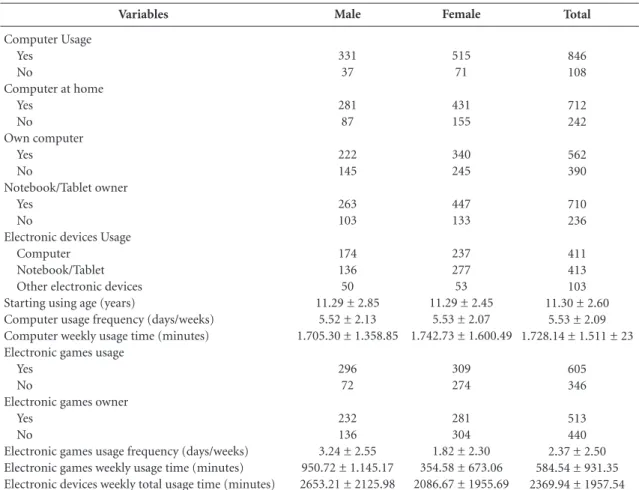
Table 2 presents data relating to the subjects’ use of electronic devices. Data on the presence of complaints of headache and their classification are presented in Table 3.
By multiple regression analysis, the variables age, grade, socioeconomic status, occupation, computer use time and total sreen time remained in the final model. However, only age (p = 0.029) and total screen time use (p = 0.042) were signifi-cantly associated, and younger subjects were less likely to have headache, whereas the high use of electronic devices proved to be a risk factor for complaint of headache (Table 4).
Multinomial regression analysis showed that only the variable age was associated with ten-sion-type headache, and younger subjects (14-16 years) were less likely to have this type of head-ache. Migraine was associated with the variables grade, use of video games and total screen time use. In this case, it was possible to observe that teenagers in the third year of high school, and
who reported high weekly use of video games and other electronic devices, were more likely to report symptoms of migraine.
For other types of headache, it was observed that high use of electronic devices is a risk factor, and that younger subjects were likely to report symptoms (Table 5).
Discussion
This study initially aimed to determine the prev-alence of headache in adolescents. The results showed that 80.6% of students from state public high schools in Recife reported the presence of headache. These data corroborate the findings of Blaschek et al.17, who found a prevalence of
83.1% among subjects in the age range of 12 to 19 years. Straube et al.18 found a lower rate,
rang-ing between 66% and 71%; however, the subjects evaluated in this study were between 12 and 15 years, and can be characterized as young teenag-ers. Considering the results of the present study, which showed that younger subjects had a lower chance of presenting headache, it is possible that the lower rate of prevalence reported in the study by Straube et al.18 is explained by the age of the
sample.
According to the literature, tension-type and migraine are the most common types of primary headache among teenagers17. The present study
found a prevalence of 17.9% of adolescents with tension-type, 19.3% with migraine, and 43.4% with other types of headache, regardless of sex. In the literature, the prevalence reported is distinct. Genizi et al.19 found a prevalence of 44% for
migraine and 47.7% for tension-type headache among individuals aged between 6 and 18 years, as well as a positive association of migraine-type headache with the female sex. Yet Tonini and Fre-diani20 found 45% of individuals with migraine
and 27% with tension-type among teenagers aged between 17 and 20 years. The variation of rates of prevalence of the different types of head-ache found in literature are probably due to dif-ferences in the population studied, sampling cri-teria and diagnostic parameters adopted by each study21.
In the evaluation of the use of electronic de-vices, it was observed that 88.7% of the teenage subjects confirmed computer use, and 63.4% used electronic games. Specifically in regard to computer use, the prevalence, although high, confirms previous findings14,22-24. These data
aúd
e C
ole
tiv
a,
20(11):3477-3486,
2015
Total
16.5 (1.3) 59.45 (12.64)
1.64 (0.08)
697 185
754 200
723 231
170 784
Variables
Age (years) Body Mass (kg) Height (m) Family Income
1 to 2 minimum wages Over 2 minimum wages Nutritional Status
Eutrophic
Overweight and Obese Physical Activity Level Active
Inactive Occupation Yes No
Male
16.61 (1.35) 64.68 (13.60)
1.71 (0.07)
236 94
295 73
282 86
64 304
Table 1. Sociodemographic and anthropometric characteristics, nutritional status, physical activity level, and occupation of adolescents from state schools of Recife, stratified by sex.
Female
16.40 (1.23) 56.15 (10.79)
1.60 (0.06)
461 91
459 127
441 145
106 480
Categorical dichotomous variables are presented with absolute frequency. Continuous numeric variables are presented with mean and standard deviation.
Total
846 108
712 242
562 390
710 236
411 413 103 11.30 ± 2.60
5.53 ± 2.09 1.728.14 ± 1.511 ± 23
605 346
513 440 2.37 ± 2.50 584.54 ± 931.35 2369.94 ± 1957.54
Variables
Computer Usage Yes
No
Computer at home Yes
No
Own computer Yes No
Notebook/Tablet owner Yes
No
Electronic devices Usage Computer
Notebook/Tablet Other electronic devices Starting using age (years)
Computer usage frequency (days/weeks) Computer weekly usage time (minutes) Electronic games usage
Yes No
Electronic games owner Yes
No
Electronic games usage frequency (days/weeks) Electronic games weekly usage time (minutes) Electronic devices weekly total usage time (minutes)
Male
331 37
281 87
222 145
263 103
174 136 50 11.29 ± 2.85
5.52 ± 2.13 1.705.30 ± 1.358.85
296 72
232 136 3.24 ± 2.55 950.72 ± 1.145.17 2653.21 ± 2125.98
Table 2. Characteristics of electronic devices use among adolescents from state schools of Recife, stratified by sex.
Female
515 71
431 155
340 245
447 133
237 277 53 11.29 ± 2.45
5.53 ± 2.07 1.742.73 ± 1.600.49
309 274
281 304 1.82 ± 2.30 354.58 ± 673.06 2086.67 ± 1955.69
X
a
v
ie
r MK
development through the state-sponsored pro-gram to encourage use of electronic equipment in public high schools has enabled use of these technologies by teenagers, whereas before they were only accessible to families of a higher socio-economic status. Yet in regard to the use of elec-tronic games, the prevalence found was higher than that reported in previous studies, which re-ported rates varying between 27%5 and 50.3%23.
Such differences may be explained by a possible correlation between frequency of use of electron-ic develectron-ices among teenagers and the rate of eco-nomic and technological growth of Brazil.
Concomitant to this economic growth, there is an accelerated process of urbanization of cit-Total
(n)
769 185
171 184 414 185
Variables
Headache Yes No
Headache classification Tension-type Migraine Other types Without headache
Male (n)
303 65
65 73 165 65
Table 3. Absolut frequency description of headache occurrence, and its classification among male and female adolescents from state schools of Recife.
Female (n)
466 120
106 111 249 120
n – Absolut values.
Adjusted OR [IC95%]
0.64 [0.34 – 0.98]*
1.05 [0.51 – 2.18]
0.72 [0.36 – 1.47]
0.88 [0.76 – 1.09]
0.86 [0.53 – 1.08]
1.21 [1.02 – 8.30]* Variables
Sex Female Male Age
14 to 16 years 17 to 19 years Grade
1st Grade 2nd Grade 3rd Grade
Socioeconomic Status Up to 2MW More than 2 MW Occupation Woks Does not work
Nutritional Status Overweight and Obesity Eutrophic
Physical Activity Level Inactive
Active
Computer Use Time Long Time (> 3 hours/day) Short Time (< 3 hours/day) Electronic Gaming Time Long Time (> 1 hour/day)
Short Time (< 1 hour/day) Total Screen Time
Long Time (> 4 hours/day) Short Time (< 4 hours/day)
With Headache (n)
466 303
361 403
261 226 282
555 156
134 635
161 608
185 584
385 384
398 371
401 368
Table 4. Absolut frequency values and association between independent variables and presence and absence of headache among adolescents from state schools of Recife, PE.
Without Headache (n)
120 65
109 81
63 43 79
142 29
36 149
39 146
46 139
81 104
79 106
76 109
n – Absolut frequency values. * Significant association - p < 0.05.
OR [IC 95%]
0.83 [0.35 – 1.99] 1
0.72 [0.19 – 2.79] 1
0.86 [0.49 – 1.52] 1.27 [0.43 – 3.76]
1
0.73 [0.48 – 1.10] 1
0.87 [0.70 – 1.10] 1
0.99 [0.94 – 1.05] 1
0.96 [0.46 – 1.99] 1
1.79 [0.20 – 8.29] 1
1.44 [0.36 – 5.74] 1
aúd
e C
ole
tiv
a,
20(11):3477-3486,
2015
ies that is often accompanied by increased rates of violence, which, over the years, have reshaped the lifestyle and leisure activities of children and adolescents, and made use of electronic games increasingly common, especially in large urban centers3. The predominance of the use of video
games by male subjects was also observed, and affected the total time of use of electronic equip-ment by these participants, thereby corroborat-ing previous results23,25.
As a second objective, this study sought to verify the association between headache and ex-cessive computer use and video games and other associated factors. It was found that excessive use of electronic devices (>4 hours/day) was asso-ciated with the presence of headache. It is likely that the high amount of time spent using these devices leads to reduced free time for leisure ac-tivities, encourages maintaining unhealthy body postures for prolonged periods, and increases overload of the visual system as a result of the high screen time, which trigger episodes of head-ache2,7,26.
Association was not verified between the variables sporadic computer use and headache. Although these data corroborate the results of Smith et al.26, they disagree with the findings of
Torsheim et al.6 and Shantakumari et al.27. In the
study by Torsheim et al.6, the differences may
be related to the lack of control of intervening variables that can trigger a headache, and, in the study by Shantakumari et al., to the high age range of subjects assessed (17 to 31 years), since the greater age increases the prevalence of head-ache.
The present study also showed no association between the presence of headache and excessive use of electronic games (> 1 hour/day). Howev-er, in analyzing the different types of headache, the results revealed that the excessive use of elec-tronic games was associated with the presence of migraine-type headache, and is considered a risk factor that increases the chance of this affliction in teenagers by about two times. Although there is a paucity of data on the influence of electron-ic games on the symptoms of headache, the data from this study underscore the findings in the literature, which report that the excessive use of videogames is one of the main triggers of epi-sodes of migraine in children and teenagers28.
In this study, it was possible to observe that in the bivariate analysis, although several vari-ables presented association with the presence of headache, only age (14-16 years) and total screen time use remained in the final statistical models. These data indicate that younger individuals who are usually in the first years of high school are less likely to complain of headache. In addition, in the
p
0.041*
0.148 0.141 0.067
0.031*
0.183 0.123 0.037*
0.048*
0.040*
0.108 0.165 0.160 0.049* Variables
Tension-type Headache Age (14 – 16 years)
Socioeconomic Status (up to 2 MW) Nutritional Status (Overweight/Obesity) Computer Usage (High use)
Migraine Headache
Grade (3rd grade of secondary education)
Socioeconomic Status (up to 2 MW) Computer Use Time (High use) Electronic Gaming Time (High Use) Total Screen Time (Long Time > 4 hours) Other types of headache
Age (14 – 16 years)
Professional Activity (Works)
Nutritional Status (Overweight/Obesity) Computer Use Time (High use)
Total Screen Time (Long Time > 4 hours)
OR
0.44 0.63 0.59 0.88
1.84 0.74 0.78 1.86 2.03
0.68 0.83 1.34 0.74 1.42
Table 5. Factors associated to the occurrence of different types of headache among adolescents from state schools of Recife - PE.
Reference variable for the multinomial model: No headache complaints. * Significant Association – p < 0.05. [IC 95%]
0.10 – 0.97 0.26 – 1.50 0.23 – 1.53 0.63 – 1.29
1.02 – 3.13 0.39 – 1.41 0.43 – 1.24 1.01 – 3.67 1.17 – 6.25
X
a
v
ie
r MK
analysis of specific types of headache, it was veri-fied that studying in the third year of high school and excessive use of digital equipment are risk factors for migraine. These results are supported by the findings of Neutrino et al.28, who
demon-strated association between headache and stress in children and adolescents, and that this is the main cause of bouts of migraine. Thus, younger students, as is the case of those in the first year of high school, by being subject to a lower level of stress in comparison to those in their final years29,
have a chance to express complaints of headache. Alternatively, students in the third year of high school or pre-entry college examination courses tend to have higher levels of stress because they are in the process of choosing and preparing for their profession29, which is most likely reflected
in the higher rate of headache in this age group. In addition, depression and anxiety disorders, frequent among older teenagers, are among the major neurological diseases and psychiatric dis-orders associated with migraine30.
The other variables, including nutritional status, occupation, socioeconomic status and level of physical activity, were not relevant to the main findings of this study. Although population studies have identified an association between being obese or overweight and31,32 headache, this
study found no association between the presence of headache (and its different types) and being overweight or obese. This result can be explained by the fact that the majority of the sample (79%) was classified as eutrophic. Similarly, the litera-ture points to physical inactivity24 and low
socio-economic levels33 as risk factors for the presence
of headache. However, no association was iden-tified between the factors physical inactivity, low socioeconomic status and presence of headache. Again, these results may have been influenced by the characteristics of the population studied in the present study, in which 75.8% of subjects were classified as active or very active, and 73.1%
had low socioeconomic status (up to 2 monthly minimum salaries).
In summary, the results of this study suggest that technological development and changes of behavior in society can have significant effects, and constant monitoring of health indicators and their associated factors is necessary. It is im-portant to note, however, that the fact that the study was carried out in only one Brazilian capi-tal city, and that only public school students were evaluated, hinders generalization of the data. In addition, the use of self-applied questionnaires to diagnose headache may have submitted the mea-surement to memory bias.
Finally, it is suggested that further studies be undertaken to longitudinally assess the impact of the use of electronic devices and its relationship with the presence of headache. Clarification of such questions will enable taking advantage of the full potential of these resources to facilitate processes of education, communication and lei-sure, without necessarily being associated with adverse effects to the health of teenagers.
Conclusion
The results of this study showed a high preva-lence of headache among the teenage subjects, with the most prevalent primary type being mi-graine, followed by tension. Furthermore, it was observed that most adolescents evaluated spend an excessive amount of time using electronic de-vices, and this behavior is higher in boys due to their increased use of electronic games.
aúd
e C
ole
tiv
a,
20(11):3477-3486,
2015
References
Costigan AS, Barnett L, Plotnikoff RC, Lubans DR. The health indicators associated with screen-based seden-tary behavior among adolescent girls: a systematic re-view. J Adoles Health 2013; 52(4):382-392.
Hakala PT, Saarni LA, Punamaki RL, Wallenius MA, Nygard CH, Rimpela AH. Musculoskeletal symptoms and computer use among Finnish adolescents pain in-tensity and inconvenience to everyday life: a cross-sec-tional study. BMC Musculoskel Disord 2012; 13:41. Barbosa Filho VC, De Campos W, Lopes ADS. Epide-miology of physical inactivity, sedentary behaviors, and unhealthy eating habits among Brazilian adolescents: a systematic review. Cien Saude Colet 2014; 19(1):173-193.
Carvalho AB, Alves TP. Apropriação tecnológico e cul-tura digital: O programa “ Um computador por alu-no ” alu-no interior do alu-nordeste brasileiro. LOGOS 2011; (34):88-101.
Milde-Busch A, Heinrich S, Thomas S, Kuhnlein A, Radon K, Straube A, Bayer O, Von Kries R. Quality of life in adolescents with headache: results from a popu-lation-based survey. Cephalalgia 2010; 30(6):713-721. Torsheim T, Eriksson L, Schnohr CW, Hansen F, Bjar-nason T, Valimaa R. Screen-based activities and phys-ical complaints among adolescents from the Nordic countries. BMC Public Health 2010; 10:324.
Oksanen A, Metsahonkala L, Anttila P, Aromaa M, Jap-plia E, Viander S, Salminen J, Helenius H, Sillanpaa M. Leisure activities in adolescents with headache. Acta Paediactr 2005; 98(1):609-615.
Edwards RR. Individual differences in endogenous pain modulation as a risk factor for chronic pain. Neu-rology 2005; 9(65):437-443.
Rho Y, Chung HJ, Lee KH, Eun BL, Eun SH, Man SO, Kim WS, Kim YO, Park HJ, Kim HS. Prevalence and Clinical Characteristics of Primary Headaches Among School Children in South Korea: A Nationwide Survey.
Headache 2012; 52(4):592-599.
Headache Classification Committee of Internationl Headache Society (IHS). The International Classifica-tion of Headache Disorders, 3rd edition (beta version). Cephalalgia 2013; 33(9):629-808.
Braz M, Barros Filho AA, Barros MBA. Saúde dos adolescentes: um estudo de base populacional em Campinas, São Paulo, Brasil. Cad Saude Publica 2013; 29(9):1877-1888.
Tenório MCM, Barros MV, Tassitano RM, Bezerra J, Te-nório JM, Hallall PC. Atividade física e comportamen-to sedentário em adolescentes estudantes do ensino médio. Rev Bras Epidemiol 2010; 13(1):105-117. 1.
2.
3.
4.
5.
6.
7.
8.
9.
10.
11.
12. Collaborations
X
a
v
ie
r MK
Cole TJ, Bellizzi MC, Flegal KM, Dietz WH. Estab-lishing a standard definition for child overweight and obesity worldwide: international survey. BMJ 2000; 320(7244):1240-1243.
Jannini SN, Dória-Filho U, Damiani D, Silva CAA. Musculoskletal pain in obese adolescents. J Pediatr
2011; 87(4):329-335.
Matsudo S, Araújo T, Marsudo V, Andrade D, Andrade E, Oliveira LC, Braggion G. Questionário Internacional de Atividade Física (IPAQ):Estudo de Validade e Re-produtibilidade no Brasil. Rev Bras Ativ Fis Saude 2001; 6(2):5-18.
Lima AS, De Araújo RC, Gomes MRA, Almeida LR, Souza GFF, Cunha SB, Pitangui ACR. Prevalence of headache and its interference in the activities of daily living in female adolescent students. Rev paul pediatr
2014; 32(2):256-261.
Blaschek A, Decke S, Albers L, Schroeder AS, Lehmann S, Straube A, Landgraf MN, Heinen F, von Kries R. Self-reported neck pain is associated with migraine but not with tension-type headache in adolescents. Cepha-lalgia 2014; 34(11):895-903.
Straube A, Heinen F, Ebinger F, von Kries R. Headache in school children: prevalence and risk factors. Dtsch Arztebl Int 2013; 110(48):811-818.
Genizi J, Gordon S, Kerem NC, Srugo I, Shahar E, Ravid S. Primary headaches, attention deficit disorder and learning disabilities in children and adolescents. J Headache Pain 2013; 14(1):54.
Tonini MC, Frediani F. Headache at high school: clinical characteristics and impact. Neurol Sci 2012; 33(1):185-187.
Steiner TJ, Stovner LJ, Al Jumah M, Birbeck GL, Gu-ruaj G, Jensen R, Katsarava Z, Queiroz LP, Scher AI, Tekle-Hairmanot R, Wang SJ, Martelletti P, Dua T, Chatterji S. Improving quality in population surveys of headache prevalence, burden and cost: key meth-odological considerations. J Headache Pain 2013; 14(1):87.
Lopes AS, Silva KS, Barbosa-Filho VC, Bezerra J, de Oli-veira ES, Nahas MV. Trends in screen time on week and weekend days in a representative sample of Southern Bra-zil students. J Public Health (Oxf) 2014; 36(4):608-614. Mathers M, Canterford L, Olds T, Hesketh K, Ridley K, Wake M. Electronic media use and adolescent health and well-being: cross-sectional community study. Acad pediatr 2009; 9(5):307-314.
Vasconcellos MB, Anjos LA, Vasconcellos MTL. Estado nutricional e tempo de tela de escolares da Rede Públi-ca de Ensino Fundamental de Niterói, Rio de Janeiro, Brasil. Cad Saude Publica 2013; 29(4):713-722.
Milde-Busch A, Blaschek A, Borggrafe I, Heinen F, Straube A, von Kries F. Associations of diet and lifestyle with headache in high-school students: results from a cross-sectional study. Headache 2010; 50(7):1104-1114. Smith L, Louw Q, Crous L, Grimmer-Somers K. Prev-alence of neck pain and headaches: impact of comput-er use and othcomput-er associative factors. Cephalalgia 2009; 29(2):250-257.
Shantakumari N, Eldeeb R, Sreedharan J, Gopal K. Computer use and vision-related problems among university students in ajman, United arab emirate. Ann Med Health Sci Res 2014; 4(2):258-263.
Neut D, Fily A, Cuvellier JC, Vallee L. The prevalence of triggers in paediatric migraine: a questionnaire study in 102 children and adolescents. J Headach Pain 2012; 13(1):61-65.
Eustáquio E. Frequência do uso de psicofármacos entre jovens estudantes que cursam. Adolescência & Saúde
2012; 9(4):27-36.
Bellini B, Arruda M, Cescut A, Saulle C, Persico A, Ca-rotenuti M, Gatta M, Nacinovich R, Piazza FP, Termine C, Tozzi E, Lucchese F, Guidetti V. Headache and co-morbidity in children and adolescents. J Headache Pain
2013; 14(1):79.
Chai NC, Scher AI, Moghekar A, Bond DS, Peterlin BL. Obesity and headache: part I a systematic review of epedemiology of obesity and headache. Headache
2014; 54(2):219-234.
Peterlin BL, Rosso AL, Williams MA, Rosenberg JR, Haythornthwaite JA, Merikangas KR, Gottesman RF, Bond DS, He JP, Zonderman AB. Episodic migraine and obesity and the influence of age, race, and sex.
Neurology 2013; 81(15):1314-1321.
Molarius A, Tegelberg A, Ohrvik J. Socio-econom-ic factors, lifestyle, and headache disorders - a pop-ulation-based study in Sweden. Headache 2008; 48(10):1426-1437.
Article submitted 08/09/2014 Approved 29/09/2014
Final version submitted 01/10/2014 13.
14.
15.
16.
17.
18.
19.
20.
21.
22.
23.
24.
25.
26.
27.
28.
29.
30.
31.
32.