Review
0103 - 5053 $6.00+0.00
*e-mail: [email protected]
Analytical Chemistry in Brazil: Healthy and Growing
Fábio R. P. Rocha,a Edenir R. Pereira-Filhob and Joaquim A. Nóbrega*,b
aInstituto de Química, Universidade de São Paulo, 05513-970 São Paulo-SP, Brazil
bDepartamento de Química, Universidade Federal de São Carlos, CP 676,
13560-970 São Carlos-SP, Brazil
A química brasileira está crescendo rapidamente, sendo um dos principais alicerces para o contínuo desenvolvimento do país. Inspirados no 15º Encontro Nacional de Química Analítica, ENQA, com um número recorde de participantes e comunicações, decidiu-se revisar os recentes desenvolvimentos em química analítica no Brasil. Foram escolhidas as mesmas áreas de aplicação adotadas para a organização temática do ENQA e selecionados artigos publicados por autores brasileiros em 7 periódicos de ampla penetração na área. Os dois periódicos cientíicos editados pela Sociedade Brasileira de Química também foram pesquisados. Esta revisão não é exaustiva, porém os trabalhos selecionados após 2008 mostram uma signiicativa visão geral da área. Pode-se concluir que a química analítica brasileira está saudável, em crescimento e certamente atenderá as demandas do país como uma potência emergida.
Chemical sciences in Brazil are growing fast and being one of the main supports for the continuous development of the country. Inspired on the 15th Brazilian Meeting on Analytical Chemistry, ENQA, with a record number of participants and communications, we have decided to review recent developments in analytical chemistry in Brazil. We have chosen the same application areas used for the thematic organization of the ENQA and have searched papers published by Brazilian authors in 7 major and general journals in analytical chemistry. The two scientiic journals published by the Brazilian Chemical Society were also searched. This review is not comprehensive, but the selected papers published after 2008 shown an impressive overview of the area. We may conclude that analytical chemistry is healthy and growing in Brazilian scenario and certainly will attend the demands of Brazil as an emerged power.
Keywords: food analysis, material analysis, pharmaceutical analysis, environmental analysis, chemometry, instrumentation, biological materials, fuels, Analytical Chemistry, Brazil
1. Introduction
The goal of this review is to highlight selected papers in several application areas to illustrate the fast and continuous development of analytical chemistry in Brazil. This evolution was discussed in two recent review papers,1,2 so the focus was to search papers published after 2007. The authors have not tried to be comprehensive. They selected the following journals for glancing recent developments: Journal of the Brazilian Chemical Society, Química Nova, The Analyst, Analytical and Bioanalytical Chemistry, Analytical Chemistry, Analytica Chimica Acta, Analytical Letters, Microchemical Journal, and Talanta. The goal was to work with journals with a general scope and also
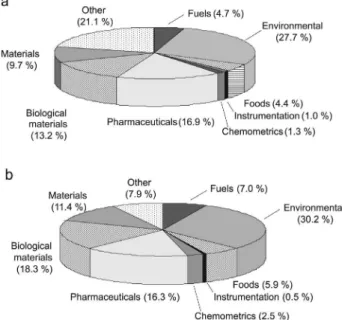
but the search was restricted to the journals above cited (Figure 1b). It can be seen that there is a correlation between the percentage of papers published in those topics when searching either all journals or the selected ones. It means that the selected journals properly represent the area and they cover 29% of all published papers according to the chosen keywords. The number of papers published by Brazilian researchers in chemistry and in analytical chemistry is shown in Figure 2 and it is impressive the growth of analytical chemistry area during this decade. The following topics will discuss selected papers highlighting their contribution to the analytical sciences.
2. Biological Materials
The development of new and innovative strategies for sample preparation is a well-established research area in
Brazil. One of the main focuses is related to the advance of microwave-assisted procedures aiming inorganic analysis. In this context an outstanding contribution dealt with the proposal of microwave-induced combustion, MIC, for fast and effective sample digestion.12 Barin et al.13 have extended the capability of this system by coupling MIC and lame furnace atomic absorption spectrometry (FF-AAS). In the experimental setup, an oxygen low was used to assist the sample combustion and also to transport the products towards the heated FF positioned above an air-acetylene lame. The hyphenated MIC-FF-AAS was applied for Cd and Pb determination in botanical samples.13 Another relevant topic being investigated is digestion methods using diluted nitric acid solution in closed vessels with microwave-assisted heating. The eficiency of this procedure and the reaction mechanism involved with were discussed in two recent papers with emphasis in the observed effects for coffee samples14 and the identiication of reaction products by proton nuclear magnetic resonance (1HNMR) and ion pair reversed-phase liquid chromatography.15 It was demonstrated that the process is critically dependent on the temperature gradient inside the closed vessel in the beginning of the digestion process14 and the main residual carbon compounds are nitrobenzoic acid isomers when digesting animal and vegetal tissues.15
Microwave radiation was also applied for rapid extraction of iber in animal feedstuffs using ilter bags to contain the samples.16 The procedure was optimized using a factorial design and recoveries from 93 to 110% were obtained. The main advantages of the proposed procedure were the 7-fold increment in sample throughput (i.e. from 40 to 280 per day) and reduction of both energy and reagents consumption.16
Chemometric strategies, such as Doehlert design, simplex, and principal component analysis, were applied for optimizing block digestion of beans17 and oyster tissue.18 It was experimentally demonstrated that the temperature is the most important parameter to promote eficient oxidation of organic compounds.17
Sample preparation based on the application of ultraviolet radiation was also investigated for voltammetric determination of Al(III), Cd(II), Cu(II), Fe(III), Pb(II), and Zn(II) in water and biological luids. The authors demonstrated that using a high power ultraviolet radiation source (400 W) it was possible to liberate metals bound to the organic matrix for the determination of the total contents of elements in the samples.19
Preliminary steps before sample digestion are also important. Santos et al.20 investigated the effects of grinding and sieving of bivalves, coffee and cowpea beans
Figure 1. (a) Papers published in the selected topics according to the Web of Science database. (b) Papers published in the selected topics and selected journals.
before multi-element analysis. It was demonstrated that both cryogenic grinder and ball mill were effective for promoting rapid sample homogenization and generating small particle sizes. However, contamination may be critical for some elements.
Other sample preparation strategy being intensely investigated is cloud point extraction, CPE. An innovative two-step sequential CPE was developed for determination of Cd, Cu, Co, Ni and Pb in human serum, animal blood and food diet.21 The irst CPE procedure was performed using o,o-diethyldithiophosphate for extracting Cd, Cu and Pb. The second CPE was made using 4-(2-pyridylazo) resorcinol for extracting Co and Ni. In both cases Triton® X-114 was employed as non-ionic surfactant and all analytes were determined by inductively coupled plasma mass spectrometry (ICP-MS). A more conventional CPE procedure was applied for the determination of Cd and Pb in tobacco samples using thermospray lame furnace atomic absorption spectrometry, TS-FF-AAS.22 A nickel tube atomizer was used for improving the eficiency of atom cloud formation after sample introduction by thermospray employing a capillary ceramic tube. The eficiency of nickel and titanium tubes was compared for determination of Cu in biological samples and foods.23 It was demonstrated that the insertion of a titanium tube inside a nickel tube improved the sensitivity by a factor of 4 and this effect was explained considering the formation of TiO2 inside the Ti tube, additionally this strategy increased the titanium tube lifetime.
In another work, a tungsten coil atomic absorption spectrometer was employed for Cd determination in urine after applying a CPE procedure for sample pretreatment.24 This is a challenging analytical task because Cd levels in urine are typically below 1 ng mL-1. Cloud point extraction reduced matrix interferences and an enrichment factor of 15. The partial removal of the matrix was operative for background correction based either on the measurement of absorption at a nearby wavelength or by temporal separation of background and atomic signals.
A novel approach in atomic absorption spectrometry was also proposed for mercury determination in biological samples.25 According to the proposed procedure mercury vapor can be generated at pH 13 in a medium containing sodium hydroxide or other base without any further addition of another reducing agent, such as sodium borohydride and stannous chloride. The simple and innovative procedure seems also applicable for speciation because only Hg2+ in solution generated a signal and organomercury species were not detected.
Mercury speciation in tropical dolphins was also studied using classical procedures for extraction and
measurement. Inorganic mercury, methylmercury, total organic mercury, and insoluble mercury, supposedly to be mercury selenide, were determined in the livers of dolphins from the Brazilian coast.26
The previously described studies demonstrated the use of modern sample preparation strategies and instrumental techniques for determination of trace concentrations of inorganic constituents. Despite all the evolution of atomic absorption spectrometry for simultaneous determination of elements,27,28 it can be observed a trend towards the use of ICP-MS. This is an important step forward and Brazil still must create a critical mass of research groups in this area. In this sense, Barbosa Jr. and co-workers have published interesting papers related to the applications of ICP-MS to biological samples. For instance, a dynamic reaction cell ICP-MS, so called DRC-ICP-MS, was applied for determination of trace elements in blood using a simple dilute-and-shoot procedure. A 100 µL volume of blood was diluted 1:50 v/v using a solution containing 0.01% v/v Triton® X-100 and 0.5% v/v nitric acid. A DRC operated with ammonia as reaction gas was necessary for correcting isobaric interferences for Cr, Cu, V and Zn.29 In another work it was proposed the determination of trace elements in biological tissues by simple dissolution of the samples in 50% v/v tetramethylammonium hydroxide at room temperature. Complete dissolution was achieved in 12 h and the resulting solutions were diluted in the above mentioned diluent.30 Recently, this same group has directed efforts to establish reference values for trace elements in urine for the Brazilian population using a dilution procedure before ICP-MS determinations.31 The relevance of this study is in the lack of reference data for biological luids of the Brazilian population and the use of ICP-MS for performing these measurements is highly recommended. The study dealt with 412 ordinary urine samples from Brazilian healthy and non-exposed subjects to establish reference values.
Advancements are also observed for determination of organic compounds in biological samples. The area of chromatography is well-established in Brazil and there are consolidated groups in different regions. The cited papers are only selected examples of relevant applications.
combined for the simultaneous analysis of the enantiomers of meloquine and its main metabolite carboxymeloquine in plasma.33 The procedure was applied for plasmas of rats after oral administration of the racemic drugs to the animals.
Molecularly-imprinted polymers (MIP) are also being developed for organic analysis. Figueiredo et al.34 have developed an on-line molecularly-imprinted solid-phase extraction (MISPE) method for spectrophotometric determination of nicotine in urine samples of smokers. Nicotine promotes the reduction of Mn(VII) to Mn(VI) in an alkaline medium and this is the basis of the spectrophotometric method. Santos et al.35 have prepared a MIP for selective catalytic determination of serotonin. The procedure is based on the synthesis of polymers with hemin introduced as the catalytic center to mimic the active site of peroxidase. No interference was observed by structurally similar compounds and the procedure was applied for the determination of serotonin in spiked blood serum samples.
An extraction procedure based on stir bar sorption followed by liquid chromatography was developed for determination of antidepressants in plasma samples from elderly depressed patients.36
Electroanalysis has also been applied for organic compounds determination, as demonstrated by the continuous monitoring of ascorbate transport through neuroblastoma cells with a ruthenium oxide hexacyanoferrate modiied microelectrode. It was also demonstrated that the ascorbate uptake by control human neuroblastoma SH-SY5Y cells and also in others cells was in agreement with the level of oxidative stress in these cells.37
The state of the art of electrochemistry and electroanalytical chemistry in Brazil was demonstrated by a recent issue of the Journal of the Brazilian Chemical Society dedicated to the XVI Brazilian Symposium of Electrochemistry and Electroanalytical Chemistry as discussed by Kubota and Torresi in the editorial section.38 This is one of the most traditional symposia in Brazil and this last edition reached 478 attendees coming from 56 different institutions.
3. Foods
Brazil is a major world player in agriculture dedicated to food and energy production. The plantations of sugarcane for sugar and ethanol large scale production are a worldwide recognized success in sustainability.39
The agriculture and food areas are critically dependent on analytical sciences for plant and soil analysis, and also for food safety. The international commerce is increasingly regulated and legislation is based on both the presence of essential nutrients and undesirable contaminants.
There are typical tropical products, such as Brazil nuts, babassu nuts and sapucaia, which require the development of tailored procedures for determining chemical forms of a speciic element, such as barium in Brazil nuts,40 and arsenic, cadmium and lead in diverse products.41
Demands imposed by legislation may be exempliied by the determination of folic acid and minerals in corn and wheat lours.42-44 There is a speciic legislation in Brazil enforcing the addition of folic acid and iron to corn and wheat lours. It is known that folic acid is one of the most important vitamins for normal human metabolic function.42 It was pointed out based on analysis of 70 samples that the Brazilian population seems to be exposed to inadequate concentrations of folic acid and iron when consuming enriched corn and wheat lours. Other inorganic constituents, such as Ca, Mg, K, P, Cu, Fe, Mn and Zn, eventually present in wheat lours were determined by ICP OES in 54 samples collected in 15 Brazilian cities.43 Folic acid was also determined in wheat flour using liquid chromatography-andem mass spectrometry.44 Araujo et al. 45 also worked with wheat lour analysis, but in this case solid and slurry sampling were employed for the determination of cadmium by electrothermal atomic absorption spectrometry (ETAAS). Both procedures led to agreeable results; however solid sampling was the method of choice due to faster analysis and better igures of merit. Direct solid analysis was also associated with high-resolution continuum source electrothermal atomic absorption spectrometry for determination of Cd and Fe in grain products.46 Again, it was concluded that most of the products did not contain the required minimum amount of iron. Finally, an interesting study was devoted to the calibration of direct solid analysis graphite furnace atomic absorption spectrometry (DSA-GFAAS) using spiked ilter papers with Cu and Zn cryogenically ground as synthetic calibrating standards.47 The feasibility of this strategy was convincingly proved.
determining fatty acids with emphasis on trans isomers. The effects of thermal treatment applied to soybean oil during the deodorization step were investigated.
Brazil is the major world producer of coffee, which is the most popular beverage in the world and its value as a commodity depends on the variety and processing. An electrospray ionization mass spectrometry ingerprinting was developed for green and roasted coffees for differentiating them by different stages of ripeness (green, ripe, and overripe), post-harvesting process (dry, wet, and semi-wet) and cup quality.51 The quality of coffee was also investigated by the determination of fatty acid proile52 and by evaluating the prediction of sensory properties by solid phase microextraction-gas chromatography and partial least squares.53 In the irst work it was shown that the fatty acid methyl ester composition could not be used to detect corn adulteration in commercial coffees.52
In a completely diverse application but also related to food control, Medeiros et al.54 developed a voltammetric procedure for the determination of sodium cyclamate in dietary products using a boron-doped diamond electrode. Milk is an important source of nutrients and vitamins for infants. Soares et al.55 have determined retinol concentration in seven ultra-high temperature milks and have found that only one product had a concentration below the normal requirement for humans. On the other hand, residues of veterinary products and pesticides are a critical issue for milk. Different strategies have been applied for determination of these undesirable constituents, such as gas chromatography (GC) with electron capture detection for the determination of pyrethroids,56 HPLC with fluorescence detection for the simultaneous determination of abamectin and ivermectin,57 and HPLC with amperometric detection using a boron-doped diamond electrode for the simultaneous determination of sulfomethoxazole and trimethoprim.58 All these procedures are important for applying regulative legislation and public health. Another signiicant application is the control of the composition of juices. In this sense, Scherer et al.59have applied HPLC with ultraviolet detection for the determination of tartaric, malic, ascorbic, and citric acids in tropical juices. It was shown that acerola pulp presented the highest ascorbic acid concentration and that occur a small decrease of organic acids contents during storage. Malic and citric acids seem to be more stable than tartaric and ascorbic acids. In other studies, inorganic constituents were determined for evaluating potential nutritional and toxicological effects. Boa Morte et al.60have developed a sequential injection luorimetric procedure for the determination of tin in canned fruit juices. Trace elements and sodium
were determined in grape juice and it was found that the concentrations of all tested contaminants, i.e. As, Cd, Cr, Cu, Ni, Pb, Sb, and Zn, complied with maximum tolerable levels according to the Brazilian legislation.61 Copper was also determined in tropical juices using two different strategies in atomic absorption spectrometry.62,63 The irst one was based on fast sequential lame atomic absorption spectrometry (FS-FAAS) and the accuracy was improved using indium as internal standard.62 The second one employed thermospray lame furnace atomic absorption spectrometry (TS-FF-AAS) for direct determination of copper, cadmium and lead in grape juices and wines.63 Despite not requiring previous digestion of the samples, calibration must be performed using the standard additions method for correcting matrix interferences. ETAAS was also applied for the determination of cadmium64 and lead65 in wines. Iron and manganese were also determined in wines using FS-FAAS and adding cobalt and indium as internal standards, respectively.66
Tea is also a major staple and the determination of its chemical composition and additives are important. Two recent papers have investigated the development of sensors for the determination of catechin67 and saccharin68 in teas. The former proposed a catechol oxidase biomimetic sensor based on a novel Cu(II) complex for the determination of catechin in green tea.67 The biomimetic sensor was stable for 800 determinations. The latter proposed an easily constructed potentiometric sensor using mercurous saccharinate on a Pt,Hg electrode. The electrode was characterized by fast response time (10-30 s) and long lifetime (10 months).68 In other approach, a multicommuted low system was employed for determination of tannin in tea and wine samples, exploiting Cu(II) reduction and complex formation with 4,4′-dicarboxy-2,2′-biquinoline.69
and it could be used as a marker for the occurrence and evaluation of carcinogenic potential of PAH in beverages and foods.71 The three extraction procedures tested were eficient, although SPE was the cheapest, fastest and least solvent-consuming. Twenty samples of cachaça were tested and concentrations ranged from below the limit of detection (0.03 µg L-1) to 0.49 µg L-1.
Another critical constituent with carcinogenic potential that may be present in cachaça is ethyl carbamate. Studies have investigated the chemical factors that can lead to its production during storage, but no correlation was found with copper content,72,73 pH and alcohol content73 of the samples. All determinations were performed using gas chromatography-mass spectrometry (GC-MS).
Fingerprinting pattern recognition based on two-dimensional GC and GC associated with time-of-light mass spectrometry was applied for cachaça samples during the fermentation process and after ageing in different wood materials.74 It was demonstrated for quality control purposes that a simple observation of the contour plots allows the identiication of the type of wood used in the ageing process. Additionally, it was shown that along progression of the distillation process, 70 compounds appear to visually discriminate between samples. Finally, control of other possible constituents such as formaldehyde and acetaldehyde, and arsenic, copper and lead in cachaças was performed by using HPLC75 and GFAAS,76 respectively.
Research papers dealing with beer were less common. Lowinsohn and Bertotti have developed an amperometric lactate biosensor with lactate oxidase immobilized into a Prussian Blue modified electrode and applied this biosensor in an amperometric low injection procedure for the determination of lactate in beer.77 In another study the efficiency of different silica-based materials was evaluated for extraction of volatiles of beer.78 It was shown that the modiication of silica with alkyl groups affected the preconcentrated amount of the target molecules in the headspace, and this effect was more pronounced than the addition of sodium chloride or the use of ultrasound.
Analytical procedures for characterization of Brazilian honeys were also investigated. Selected studies have aimed to establish the physico-chemical characteristics of honeys obtained in Brazil northeast,79 the antioxidant action of the bee pollen produced in the southern region of Brazil,80 and the concentration of hydrogen peroxide in honeys as a product of biological reactions catalyzed by several oxidase enzymes.81 This latter aspect is relevant for the characterization and selection of honey samples for its use as an antimicrobial agent. The determination of the hydrogen peroxide was performed using differential amperometry associated with low injection analysis.
Another fundamental research area is the determination of drugs and pesticides in foods. Recently Jardim et al.82 have emphasized that the residues of pesticides in foods is a global environmental problem and there is an increasingly demand for the validation of analytical methods of multiresidue pesticide determination in these samples. Most research works found in literature have applied chromatography frequently associated with mass spectrometry. These works investigated different types of residues and products, such as sulfonamides83 and streptomycin84 in honey, buprofezin, tetradifon, vinclozolin, and bifenthrin in propolis,85 glyphosate in soybeans,86 chlorpyriphos, λ-cyhalithrin, cypermethrin, and deltamethrin in tomatoes,87 chlorothalonil in tomatoes and cucumbers,88 fenitrothion in tomatoes,89 dimethoate, malathion, lufenuron, trichlorfon, carbofuran, 3-hydroxycarbofuran, difenoconazole, and thiabendazole in coconut pulp,90 chlorpyriphos, cypermethrin, and ipronil in bovine plasma.91 A non-chromatographic procedure was also developed for the determination of toxic arsenic species in vegetables using hydride generation-atomic luorescence spectrometry.92
This strong research activity in analytical chemistry applied to food analysis demonstrated that research laboratories and human resources in Brazil are capable of delivering trustable analytical results for supporting internal consumption and exportation of agricultural and food products according to national and abroad legislations.
4. Environmental
groundwater using HPLC with diode array detection and the samples were collected in cotton growing areas.
Organophosphate and pyrethroid pesticides were determined in water samples by Pinheiro and De Andrade.99 The authors used single-drop microextracton (SDME) and the pesticides were determined using GC with lame ionization detector (GC-FID). Sabin et al.100 proposed a multiresidue determination of pesticides in drinking water using GC-mass spectrometry after solid-phase extraction. The proposed method was developed and validated for determination of 20 pesticides regulated by the Brazilian legislation for drinking water. Rodrigues et al.101 proposed a green and sensitive method to determine phenols in water and wastewater samples using a liquid-liquid extraction technique. Santos and Masini102 determined methyl parathion in water samples using square wave adsorptive cathodic stripping voltammetry. Voltammetric techniques are suitable for redox speciation and Nascimento et al.103 proposed a method for Se(IV) and Se(VI) determination in saline samples like seawater, hydrothermal and hemodialysis fluids. Borba et al.104 determined total and As species in groundwater based on the different rates of arsine formation. Duarte et al.105 developed a sensitive amperometric sensor for oxygen in pond and tap water with relative standard deviation of 2.0%. Another amperometric sensor was developed by Souza et al.106 for nitrite determination in water samples. Santos et al.107 presented a systematic comparison among spectrophotometric low injection procedures for sulide determination based on phenothiazine dye production from diverse aromatic p-substituted amines. Melchert and Rocha108 presented a low-based procedure for turbidimetric sulfate determination in waters. The mixing conditions were improved with the help of solenoid micro-pumps and sensitivity was increased by coupling a long-pathlength low cell based on a liquid core waveguide.
Fortes et al.109 proposed an expert flow system for sequential turbidimetric determination of chloride and sulfate in natural waters. The system was computer-controlled and presented enhanced igures of merit when compared with reference methods. Infante et al.110 proposed a green low-based procedure for luorimetric determination of acid-dissociable cyanide in natural waters exploiting multicommutation. The determination was based on the reaction among cyanide, o-phthalaldehyde and glycine yielding a highly fluorescent isoindole derivative. The herbicide paraquat was also determined in natural waters using a multicommuted low system with solenoid micro-pumps.111 Eberlin and Silva112 proposed a method combining solid phase microextraction (SPME) and direct mass spectrometric analysis for chlorophenols determination
in water. Carletto et al.113 used a hollow iber for Cd(II) preconcentration in water samples and the enrichment factor was 120. Menegário et al.114 performed an on-line redox speciation analysis of Sb using L-proline immobilized on controlled pore glass and hydride generation ICP OES. The authors observed that Sb(V) was not retained by the column and the retained Sb(III) was determined after elution. Matos et al.115 used a cloud point extraction procedure for determination of the chromium species in natural water samples. A hydrophobic Cr(III) complex was formed with 1-(2-pyridilazo)-2-naphtol (PAN) and separated using Triton® X-114. Goveia et al.116 proposed a cellulose bag and an ion exchanger to understand environmental phenomena related to the complexation, transport, stability, and lability of metal species in aquatic systems rich in organic matter. The cellulose base was organomodiied with p-aminobenzoic acid groups. Pimentel et al.117 determined 10 elements in water samples from an oil ield in Rio Grande do Norte (Brazil) using synchrotron radiation total relection X-ray luorescence (SR-TXRF). Brum et al.118used Doehlert design to optimize a liquid-liquid extraction of PAH’s (polycyclic aromatic hydrocarbons) from natural contaminated waters prior to determination by liquid chromatography with fluorescence detection. Fernandes et al.119 used a light emitting diode (LED) spectrometer for mechanized multi-pumping determination of Se in natural waters. The method was based on the reaction of the analyte with KI in acid medium to liberate iodine, which oxidizes variamine blue forming a violet-color species which absorb at 530 nm.
Some research groups studied alternative materials to retain metal ions. Gonzáles et al.,120 for example, used peat as natural solid-phase for Cu preconcentration. This approach was used for in-line Cu concentration prior to FAAS determination. Multi-walled carbon nanotube has been used for electrodes preparation and Moraes et al.121 proposed a method for direct determination of carbaryl using multi-walled carbon nanotube/cobalt phthalocyanine. São Paulo city is nowadays one of the biggest cities of the world and its rainwater quality for samples collected in 2003 was evaluated by Fontenele et al.122 by determining Cd, Pb, Cu and some anions concentrations. They observed that the predominant species were NO3-, SO42- and Ca2+. Pacioni et al.123 avoided degradation or derivatization reaction adding macrocyclic host such as
p-sulfonatocalix(6)arene (C6S) on the luorescence of benzoimidazolic fungicides (benomyl and carbendazim). The interaction between the fungicides and C6S was strong and attributed to electrostatic forces.
Maltez et al.124 used single drop micro-extraction with
due to iniltration of the organic drop into the pyrolytic graphite platform and W was thermally deposited onto the surface to overcome this problem.
Sediment analysis is an important ield in the environment because this compartment can carry information about contaminations in the aquatic body.125 Several research groups have investigated this sample in Brazil and Hg is one of the most frequently determined analyte. Guanabara Bay in Rio de Janeiro State (Brazil) was studied in relation to the accumulation of Hg in sediment cores and concentrations up to 7500 ng g-1 were observed.126 Others investigated areas were Santos and Cubatão (São Paulo State) due to the high industrial activity. Luiz-Silva et al.127 determined 38 elements in sediments from the Santos-Cubatão estuarine system using ICP-MS and they observed that Cr, Mn, Ni, Zn, Ga, Ag, Cd, Sn, Sb, Pb and Bi were associated with steel plant-derived Fe concentrations. In another study Hortellani et al.128evaluated 6 elements in 41 sediment samples from Santos-São Vicente estuarine system. Zn, Ni, Pb, Cd, Cr and Hg concentrations were high and seemed to be associated with human activities. Silva et al.129 determined organochlorine pesticides in Piracicaba river basin (São Paulo State) in sediment, bivalve and ish samples. They observed that the isomer α and γ of HCH (hexachlorocyclohexane) and heptachlor were most frequently detected in samples of sediments and specimens of bivalve and fish. Garcia et al.130 evaluated regional geochemical baselines and controlling factors for trace metals in sediments from the Poxim River (Sergipe State, Brazil). The authors did not observe a correlation among organic matter and the metals determined. Cavalcante et al.131 compared extraction techniques and clean-up procedures for PAH’s analysis in sediments of the Ceará State (Brazil) coast and they observed that the highest recoveries were obtained with soxhlet and ultrasonic techniques. Hatje et al.132 investigated trace elements extractions with hydrochloric acid using factorial design. The authors concluded that the ultrasound-assisted leaching could reduce the conventional extraction time from 12 h to 50 min or even less (for Pb, for example). Lopes et al.133 applied multivariate techniques in the optimization of a procedure for the determination of bioavailable concentration of Selenium and As in estuarine sediments by ICP OES. Se and As were determined employing a hydride generator and the interferences were minimized using high HCl concentration. Felizzola et al.134 determined butyltin in sediments from Todos os Santos bay (Bahia State, Brazil) using gas chromatography with pulsed lame photometric detection.
Another parameter to be considered is the quantity of the element that is really available for biological system interaction.135 In this way, selective extraction procedures are useful to identify if a given element is presented
in an inert or bioavailable form.136 Bevilacqua et al.137 applied a selective extraction procedure for toxic metals determination in bottom sediments from Tietê river (São Paulo State) and they observed high concentrations of heavy metals at Pirapora reservoir, which is closer to the metropolitan area of São Paulo. Matos and Arruda138 proposed a derivatization strategy for Co determination using TS-FF-AAS. As this technique is suitable for volatile elements, the authors presented a procedure to generate volatile Co, producing a complex between this element and sodium diethyldithiocarbamate (DDTC). Mangrich
et al.139 combined several techniques, such as electron paramagnetic resonance (EPR), near-infrared spectroscopy and chemical elemental analyses, for pollution level monitoring in mangrove sediments. Using EPR it was possible to nondestructively assess the environmental pollution level of coastline. Araujo et al.140 determined Sb in sediment reference materials using direct solid sampling using high-resolution continuum source ETAAS and Ir as permanent modiier.
Biological samples can be used as biomarkers for trace elements exposure and Torres et al.141determined an organochlorine insecticide (DDT) in human breast milk. Even after 12 years that DDT was considered forbidden for vector controls programs its concentration was relatively elevated in the studied samples. Batista et al.142 determined Cd, Cu, Mn, Ni, Pb and Zn in nail by ICP-MS. The samples were solubilized using tetramethylammonium hydroxide avoiding acid digestion prior to determinations. Seixas
speed and the main source of PAH’s in the studied area was vehicular emission. In other works Marques et al.150 and Rocha et al.151 studied particle-associated PAH’s in Rio de Janeiro and Salvador (Bahia State, Brazil), respectively. Loyola et al.152 collected total particulate matter samples in a bus station and determined Ca, Mg, Fe, Al, Co, Ni, Cd, Cr and Pb using ICP OES concluding that the sources of Zn and Cu were probably fuel and oil composition.
The sugar cane production can be a source for herbicides contamination in soils and Lourencetti et al.153 proposed a method for three herbicides determination in soils cultivated with this crop. The authors combined SPE-HPLC-UV method for the simultaneous determination. Raposo Jr.
et al.154 evaluated alternative lines of Fe for sequential multi-element determination of Cu, Fe, Mn and Zn in soil extracts by HR-CS FAAS. Matos et al.155 determined Cr(VI) and Cr(III) in soils accidentally contaminated with sulphochromic solution. Oliveira et al.156investigated non-looded and non-looded soils through the calculation of stability and activation energies associated with the dehydration and thermal decomposition of humic substances using TGA (thermogravimetric analysis) and DTA (differential thermal analysis), EPR and C/H, C/N and C/O atomic ratios.
Several types of samples were also monitored by Brazilian research groups, such as workplace environments of cement industries processing organic residues.157 This type of workplace presents a potential risk for producing PAH’s. Suchara et al.158 presented a method for quantiication of pharmaceutical residues in sewage efluents and the analytical parameters were evaluated with statistical methods. Souza et al.159 developed an integrated low injection system for the electro-oxidative leaching of uranium from geological samples followed by its spectrophotometric determination with arsenazo III. Pontes
et al.160 also analyzed geological samples and proposed a simpliied version of the total Kjeldahl nitrogen method using an ammonia extraction ultrasound-assisted purge-and-trap system and ion chromatography. Macedo et al.161 determined total As and As(III) in phosphate fertilizers and phosphate rocks using HG-AAS and the operational conditions were optimized using multivariate approach.
5. Fuels
Biofuels such as ethanol and biodiesel are alternatives to replace fossil fuels, with a number of economical and environmental advantages. Brazil is one of the major players in this ield and the development of analytical procedures has followed this trend. The main aim has been simpler and faster methodologies for determination of quality control parameters and contaminants. Review
articles describing analytical procedures for biodiesel characterization162 and evaluation of quality parameters163 were recently published.
Biodiesel is usually produced by a base-catalyzed transesteriication reaction of a vegetal oil or animal fat and methanol or ethanol. Determination of the residual alcohol content and the concentration of glycerol, formed as sub-product, are thus important to evaluate the quality of the biofuel. A low-based enzymatic procedure was proposed for determination of methanol after analyte separation in a PTFE membrane.164 Methanol in the acceptor stream yielded hydrogen peroxide in a reaction catalyzed by immobilized alcohol oxidase, being the reaction product quantiied by spectrophotometry. The detection limit was estimated as 0.0002% (m/m) with a coeficient of variation lower than 5.0%. The electrooxidation of the analyte on platinum electrodes was proposed for determination of free glycerol in biodiesel by the potential cycling technique.165 The analyte was determined after extraction with water and the procedure presented linear response within 15 and 150 mg L-1. In other approach, the raw materials used to produce biodiesel were identiied by mass spectrometry with selective ion monitoring coupled to gas chromatography.166 This study indicates the predominance of biodiesel produced from soybean oil and methanol in the analyzed commercial mixtures diesel/biodiesel.
Fast and reliable analytical procedures to estimate the biodiesel content and detection of adulterations by addition of vegetal oils are required in view of the increased use of this alternative fuel. A procedure for evaluation of biodiesel quality was developed exploiting chemometrics and nuclear magnetic resonance spectroscopy (1H NMR).167 Partial least squares regression (PLS) and principal components regression (PCR) algorithms were effective for quantiication of both biodiesel and vegetable oil in mixtures with mineral diesel. Another work proposed the synchronous spectroluorimetry and data processing by PLS, PCR or linear discriminant analysis to quantify the residual vegetal oil content in biodiesel or diesel/biodiesel blends.168 In other work, a procedure based on multivariate control charts using data obtained by NIR was proposed to evaluate the quality of commercial blends with diesel.169 The proposed model was suitable to identify unconformities in relation to biodiesel content, contamination of biodiesel with vegetal oil and of diesel with naphtha. Guarieiro
et al.170 developed a procedure based on mid-infrared spectroscopy (C=O bands at 1750 and 1735 cm-1) to estimate the biodiesel content in commercial blends, with a detection limit of 0.1% and relative error lower than 10%.
in-line concentration in low-based systems was applied for determination of Cd in µg L-1 range in ethanol fuel by FAAS. The studies explored analyte retention in biosorbents such as Moringa oleifera171 or vermicompost used as garden fertilizer.172 Cadmium and Pb were also determined in ethanol fuel by GFAAS, exploiting a ilter furnace to avoid using chemical modiiers, stabilize the volatile analytes and to short the pyrolysis step.173 Detection limits were 0.1 µg L-1 Cd and 0.3 µg L-1 Pb, with recoveries in the 90 to 120% range.
Formation of microemulsions has been exploited as an alternative for sample nebulization in atomic spectrometric techniques, such as FAAS, FAES and ICP OES. A microemulsion formed from n-pentanol, water and biodiesel in the presence of Triton® X-100 was proposed for determination of Na and K in biodiesel by FAAS.174 Results for biodiesel from different fat sources agreed with those obtained by the procedures recommended by the European norms EN14108 and EN14109 based on sample dilution in organic solvents, but samples and reference solutions prepared by the proposed procedure were more stable (3 days against 1 h for the oficial procedure). Other advantages include a 2-fold lower detection limit and better precision (lower than 1.0%). Flame AES with sample introduction as a microemulsion formed from sample, n-propanol and a diluted acid solution was also applied for determination of Na and K in biodiesel, with a detection limit of 0.1 µg g-1.175 Determination of Ca, Cu, Fe, Mg, Mn, Na and P in biodiesel by ICP OES with axial and radial views was also feasible from samples emulsiied with an aqueous Triton® X-100 solution and yttrium as internal standard.176 Calibration was carried out with aqueous solutions, avoiding the use of unstable mixtures with organic solvents, yielding recoveries in the 90 to 109% range. An ion-selective electrode modiied with nickel hexacyanoferrate was also proposed for potentiometric potassium determination in the range 4.0 × 10⁻⁵ to 1.0 × 10⁻² mol L-1 in biodiesel, after liquid-liquid extraction with 0.1 mol L-1 HCl.177
Different sample preparation strategies have been explored for element determination in complex samples such as lubricating oils, petroleum coke and coal. Sample pretreatments based on microwave-assisted acid decomposition, direct dilution in kerosene and formation of an oil-in-water emulsion with sonication were compared for determination of Cu, Cr, Fe, Ni, Pb, Sb and Zn in lubricating oils by high resolution continuum source FAAS.178 The emulsion strategy yielded better results except for chromium, in view of sample contamination by the metal ion released from the ultrasound probe. Aiming to avoid the previous sample treatment, the solid sampling
strategy was adopted for direct determination of Cr and Ni in lubricating oils by GFAAS with Zeeman-effect background correction. An in-situ digestion step with a mixture of HNO3, H2O2 and Triton® X-100 was used to minimize the organic content before atomization.179 The previously mentioned microwave-induced combustion technique in closed vessel12,13 was also applied for sulfur determination in petroleum coke180 and halogens in coal.181
Sulfate and chloride are undesirable species in ethanol fuel, which can intensify corrosion of metallic parts of engines and fuel pipes. An ingenious procedure was developed for indirect determination of these anions in ethanol, exploiting the precipitation reactions with Ba(II) and Ag(I). Measurements of the solids retained in a ilter paper were carried out by energy dispersive X-ray luorescence, resulting in detection limits of 25 µg L-1 Cl−
and 30 µg L-1 SO 4
2−, with coeficients of variation better
than 7%.182
Fast and green procedures were also developed for determining parameters of interest for quality control of gasoline. A procedure for determination of both ethanol and speciic gravity was developed by means of processing data of distillation curves by multivariate analysis (PLS).183 For the successful determination of these parameters, the calibration model needs to include samples representative of the variety of composition of this fuel in the market. Near-infrared spectroscopy was exploited by Fernandes
et al.184 for the simultaneous determination of methanol and ethanol in gasoline, with spectral data processing by PLS-2. Composition of gasoline and the spectral range were critical aspects, because toluene and o-xylene interfere in ethanol determination while isooctane and xylene isomers affected methanol determination.
6. Pharmaceuticals
A search in the literature reveals a large number of analytical procedures devoted to determination of pharmaceuticals and their metabolites. In spite of this, there is a clear demand for procedures for the determination of new drugs as well as non-destructive, inexpensive and fast alternatives for quality control of medicines used in large scale. This trend has been followed by Brazilian researchers, as indicated by relevant recent applications. On the other hand, new analytical approaches or characteristics of electrodes designed with new materials have been demonstrated by means of applications related to pharmaceuticals.
carried out by Brazilian authors include determination of losartan,185 nadolol,186 sotalol hydrochloride187 and pancuronin bromide188 by HPLC. GC-MS was employed for the simultaneous determination of amphetamines and ephedrines in urine with an alternative chemical derivatization.189 In other work, the determination of toluene in urine aiming evaluation of occupational exposure to the solvent was carried out by GC with detection by lame ionization.190
The number of applications of capillary electrophoresis, including pharmaceutical analysis, has rapidly increased in view of fast separations and higher resolution, also avoiding the use of toxic solvents. A capillary zone electrophoresis (CZE) procedure was developed and validated for determination of 7 antimicrobials exploiting experimental design and calculations of effective mobility.191 Results agreed with those attained by the HPLC procedure recommended by the United States Pharmacopoeia. Validation of a CZE procedure for the determination of luoroquinolones was also carried out.192
Several strategies have been exploited for simultaneous determination of drugs by electroanalytical procedures. For the determination of ascorbic acid, dopamine and uric acid, a pyrolytic graphite electrode was modiied with a melanin polymeric ilm produced by anodization in dopamine medium. In view of the modiied surface, peak separation better than 138 mV were achieved and surface poisoning effects were avoided.193 Simultaneous voltammetric determination of dypirone and paracetamol with a carbon paste electrode was also feasible by means of multivariate calibration based on PLS.194 In other approach, the cationic surfactant cetylpyridinium bromide was used to separate the oxidation peaks of ascorbic and uric acids by 282 mV, aiming simultaneous determination of the analytes in urine samples by differential pulse voltammetry.195
Boron-doped diamond electrodes show properties notably different from those presented by electrodes of conventional materials, such as stability in aggressive alkaline and acidic media, low and stable background current and working potential range larger than 3.5 V. Electrodes of this material were applied for the simultaneous voltammetric determination of aspartame and cyclamate196 and paracetamol and caffeine,197 in view of the separation of the oxidation peak potential of 400 and 550 mV, respectively.
Other electrodes based on new materials have been also employed for the determination of pharmaceuticals. A graphite-polyurethane composite electrode was proposed for the flow-based amperometric determination of paracetamol, achieving a detection limit of 18.9 µmol L-1 and an analytical throughput of 180 determinations per hour.198
For voltammetric determination of verapamil with an electrode of this material, the detection limit was estimated as 0.7 µmol L-1.199 Paracetamol was also determined by a biomimetic sensor prepared by a glassy carbon electrode with the surface modiied with a Naion membrane doped with FeTPyPz, which shows catalytic properties similar to the P450 enzyme.200 Electrodes prepared from mercury salts of lufenamate201 or furosemide202 were applied for potentiometric determination of the drugs in pharmaceutical preparations, clinical samples and milk. The ion-selective electrode presented fast (< 25 s) and Nernstian responses, detection limits in the 10-7 mol L-1 range and lifetime of 5-6 months. A material prepared from immobilization of methylene blue on cellulose acetate modiied with titanium dioxide was used in a carbon paste electrode to investigate the electrocatalytic oxidation of ascorbic acid by cyclic voltammetry and chronoamperometry.203 The voltammetric determination of pyridoxine was carried out with a glassy carbon electrode modiied with chromium(III) hexacyanoferrate(II) salt.204
Rutin acts as radical scavenging and chelating for metal ions, being used as antiviral, allergic and anti-inlammatory. Two biosensors were developed for the determination of this lavonoid, based on hydrophobic ionic liquid containing laccase 205 or a MnIII MnII complex as manganese peroxidase mimetic.206 Linear ranges obtained by square wave voltammetry were in the 10-5 to 10-6 range, with recoveries in the 96 to 104% interval for commercial pharmaceutical samples.
of applications of spectrophotometric detection for drug analysis in low systems are presented next.
Flow-based procedures have been developed for the determination of several species of pharmaceutical and clinical interest. A sequential injection analyzer coupled to a low-batch chamber was used for the development of an analytical procedure for the spectrophotometric determination of cocaine.212 The procedure exploited the formation of a blue complex between the analyte, cobalt and thiocyanate which is extracted in chloroform and detected directly in the separation chamber. Detection limit, coeficient of variation and analytical throughput were estimated as 29 mg L-1, 4.9% and 12 determinations
per hour, respectively. The low-batch approach was also employed for the simultaneous enzymatic determination of levedopa and carbidopa by means of data processing by PLS and the successive projections algorithm.213 The procedure was based on oxidation of the analytes to the respective dopaquinones catalyzed by polyphenol oxidase from Ipomoea batatas.
Inhibition of chemiluminescence (CL) of the luminol/ hypochlorite system by the formation of cloramines was exploited for salbutamol determination in a low injection system.214 A liquid-core waveguide was used as reactor and low cell in order to constrain the emitted radiation, minimizing losses during transport to detector. Detection limit, coeficient of variation and analytical throughput were estimated as 1.0 ×10⁻⁷ mol L-1, 2.8% and 164 determinations per hour, respectively, consuming only 50 µg luminol per determination. Inhibition of CL of the luminol/hypochlorite system was further exploited for determination of paracetamol.215
Photochemical derivatization and detection by luorescence was adopted for determination of cyclofenil216 and erythromycin217 in pharmaceuticals. The detection limits were estimated as 0.011 µmol L-1 and 25 µg L-1, respectively, with linear dynamic ranges extended up to 4 concentration decades. Luminescence was also used for determination of harmol in the presence of other carboline alkaloids by room-temperature phosphorimetry.218
A simple, fast (72 determinations per hour) and inexpensive (US$ 2.50 per 1000 determinations) low-injection procedure was proposed for spectrophotometric determination of captopril in pharmaceutical preparations.219 The procedure explored the on-line formation of the triiodide reagent, which is consumed by the analyte generating a transient signal, and the zone sampling approach for on-line dilutions. Reagent consumption was estimated as 18 µg of KMnO4 and 10 mg of KI per determination. Another low-based procedure for determination of the anti-hypertensive used a solid-phase reactor with silver
chloranilate immobilized in polyester resin and detection of the chloranilate released in the presence of the analyte by complex formation with Fe(III).220
A low injection system with pulsed amperometric detection was used for simultaneous determination of paracetamol and dypirone with an analytical throughput of 45 determinations per hour.221 Simultaneous determination was carried out by fast sequentially applying potential pulses: +0.40 V for detection of dypirone and +0.65 V to generate the oxidation product N-acetyl-p-benzoquinoneimine, whose reduction at 0 V is used for indirect determination of paracetamol.
Other applications of flow-based procedures to pharmaceuticals include the turbidimetric determination of the antidepressant amitriptyline exploring ion-pair formation with sodium lauryl sulfate,222 the expectorant agent ambroxol using a carbon ilm resistor electrode for amperometric detection223 and luorimetric determination of the anti-hypertensive and diuretic furosemide in micelar medium.224
7. Materials
The search for new and inexpensive materials used as adsorbents is a research topic in several Brazilian research groups, mainly due to the development of new and stable stationary phases for chromatographic applications,225 pH electrodes, the concern about environmental protection226 and material at nanoscale.227 Pereira et al.,228 for example, prepared active carbon from coffee waste. The material was activated by FeCl3 at 280 oC and the main observed advantage was the lower temperature when compared with those procedures described in the literature. Cardoso
et al.229 developed an immobilized enzyme reactor for
Trypanosoma cruzi (Chagas’ disease vector) metabolic studies. Glyceraldehyde-3-phosphate dehydrogenase (GAPDH) plays an important role in the life cycle of the
Trypanosoma cruzi, and the authors immobilized human GAPDH for on-line screening for enzyme inhibitors. Vaz
et al.230 prepared photopolymerized sol-gel monolithic columns for capillary electrochromatography and tested for separation of standard mixture containing thiourea, propylbenzene, phenanthrene and pyrene. Collins et al.231 developed a more pH stable stationary phase using silica layered with a metal oxide (zirconia or titania). This approach increased the HPLC column lifetime by making the stationary phase less susceptible to dissolution. Pilau
silica (NIS) and the imprinting factor (IF), measured as the ratio between phenobarbital peak areas in MIS and NIS, was estimated as 58. Silva et al.233presented a low-cost metal oxide pH electrode based on the polymeric precursor method. Iridium oxide was used as the main pH sensitive material and it was reduced with addition of TiO2, forming a binary system IrOx-TiO2. The proposed electrode presented Nernstian and fast response in the pH range from 1 to 13 and high selectivity even in presence of alkali ions as Li+, Na+ or K+.
Quintino et al.234 proposed a hydrazine sensor obtained by electropolymerization of meso-tetra(4-sulphonatephenyl) porphyrinate manganese (III) complex in alkaline solutions containing sub-micromolar concentrations of silver chloride. The use of nanostructured membranes was proposed by Crespilho et al.235 for glucose measurements in natural samples. The authors modiied indium tin oxide glass electrodes and combined it with gold nanoparticles and poly(vinylsulfonate). Moreira et al.236 described the construction and application of two amperometric sensors for sensitive determination of p-aminobenzoic acid (a UV-ilter) and the sensor surface characteristics was observed using atomic force microscopy (AFM).
Another scientiic ield being investigated is to add value to common materials like those obtained from biofuels production and commodities.237 The biomass obtained during ethanol production is an alternative for carbon sequestration being used for fuel or raw materials production.238 In this way, Cordeiro et al.239 presented a study showing morphological and physico-chemical characteristics of sugar cane bagasse ash and they suggested that this material has adequate properties to be used as pozzolan cement in construction materials. Pauliukaite
et al.240 immobilized functionalized carbon nanotubes into chitosan using different cross-linking agents for hydrogen peroxide determination. The nanotube modiied electrodes were characterized by cyclic voltammetry and electrochemical impedance spectroscopy. Gonçalves et al. 241studied colloidal particles that have been used to template electrosynthesis of several materials, such as semiconductors, metals and alloys. Rippel and Galembeck242 reviewed the knowledge on natural rubber and opened the way to develop a host of new nanocomposites.
The development of analytical strategies for determination of toxic elements in several materials is also an important research topic. Polymeric materials play an important role because its use in several daily products.243 Matoso and Cadore244 developed a digestion method for As, B, Cd, Cr, Cu, Fe, Hg, Ni, Pb and Sb determination in polyvinyl acetate water emulsions. They compared classical methods like calcination, acid digestion and
microwave-assisted digestion, and the most appropriate results were obtained with microwave-assisted digestion due to the lowest residual carbon content (RCC) obtained (0.1%). Melquiades et al.245 determined titanium dioxide (TiO
2) in sunscreen formulation using energy dispersive X-ray luorescence (EDXRF) without sample preparation and two aspects were observed: the obtained TiO2 concentrations were 10% lower than the nominal one and non cited elements like K, Zn, Br and Sr were also detected. Eguiluz
et al.246 combined polymer-modiied luorine tin oxide electrodes and multiple nanoparticle labels as biosensor for
Alicyclobacillus acidoterrestris in industrialized foods and beverages and it was possible to detect 2 colony forming units per mL. Gaona-Galdos et al.247 proposed a method for determination of econazole nitrate preservatives and its main impurities in cream formulation using HPLC. Guimarães
et al.248 determined free luoride and monoluorophosphate (MFP) in toothpaste by capillary electrophoresis. The limits of detection obtained for free luoride and MFP were 0.17 and 0.70 mg L-1, respectively. Silvério et al.249 characterized synthetic polymers and speck impurities in cellulose pulp using pyrolysis-gas chromatography-mass spectrometry (Py-GC/MS) and Fourier transform infrared spectroscopy (FT-IR). Authors concluded that Py-GC/MS was more eficient in the differentiation between impurities when compared to FT-IR.
The development of methods for quality control of pharmaceuticals is also an area with important contributions from Brazilian analytical chemistry. Cervini and Cavalheiro250 proposed a bare graphite-polyurethane composite as an amperometric detector for determination of atenolol in pharmaceutical formulations. Paracetamol was molecularly imprinted (MIP) in methacrylate polymer and after paracetamol extraction, the MIP’s were incorporated into a graphite-polyurethane matrix.251 The resulting composites were used to prepare modified electrodes intended to be used in paracetamol determination. The obtained results were compared with HPLC and no statistical difference was observed at a conidence level of 95%.
8. Chemometrics
Bueno studied the antagonic effect of Fe and Zn in formulations of feeding diets employing mixture design and RSM.256 The combination of factorial design and Varimax factor optimization can lead to interesting results in chromatographic parameters investigation. Soares
et al.,257 for example, used this approach to optimize a mixture of dichloromethane, hexane, ethanol and acetone in compounds extracted from Erythrina speciosa Andrews leaves. Paim et al.258 optimized a UV spectrophometric method for the determination of entacapone in tablets and the results were compared with HPLC. A preconcentration and speciation method for Sb(III) and Sb(V) was proposed by Souza and Tarley.259 Cloud point extraction was used and the analytical parameters were optimized by multivariate design.
When a large number of variables need to be screened a fractional factorial design is alternative combining a small number of experiments and a quick identiication of the most signiicant variables. Uliana et al.260 used fractional factorial design for development of an amperometric biosensor for detection of the hepatitis C virus. Santos and Masini used RSM to study four variables for optimization of Cu phthalocyanine photo-Fenton degradation.261 In spectroanalysis field Lara et al.262 optimized GFAAS parameters for direct Mn determination in breast milk.
Nowadays it is possible to obtain a great variety and quantity of analytical data and exploratory analysis is a useful way to have a global vision from the data set. Andrade et al.263 used principal component analysis (PCA) and hierarchical cluster analysis (HCA) to evaluate physico-chemical parameters in samples of red wines. They concluded that pH, chloride concentration, color and ammonium content were the most important variables for sample classiication. Santos et al.264 determined several metals using ICP OES and ETAAS in water and sediments and the results were analyzed using exploratory statistical tools. The authors observed that the aquatic system presented suitable conditions to move Cd2+ and Pb2+ from the water column to the sediment. Godinho et al.265 proposed a classiication model of carbonated soft drink based on image analysis and PCA. Using this approach it was possible to correlate pH, sorbic acid and sucrose concentrations with the images. Soft drinks were also investigated by Froes et al.266 using ICP OES and PCA. The operational conditions of the ICP were optimized using factorial design and 13 elements were determined. Using PCA these authors identiied 4 clusters related to lavor, light, diet and low calorie. Honey samples from semi-arid, Atlantic and transitional forest zones in Bahia (Brazil) were characterized based on their mineral and trace elements, ash content and electrical conductivity.267 Reche and Franco268 used chemometric tools to analyze
chromatographic and metal composition of cachaças distilled in pot stills and in columns. Panero and Silva269 applied PCA and HCA to characterize groundwater used for the public supply of potable water in the Roraima State (Brazil). The authors observed a clear distinction between groundwater with and without bicarbonate. Zimmermann et al.270 evaluated water samples obtained from Tibagi River (Paraná State, Brazil) using PCA and observed that the industrial activity contributed to raise the total concentration of amoniacal nitrogen and the reduction of dissolved oxygen in the studied region. Pontes et al.271 proposed classiication models to study Brazilian soils using LIBS (laser-induced breakdown spectroscopy) and linear discriminant analysis (LDA). The authors compared three techniques for variable selection: successive projection algorithm (SPA), genetic algorithm (GA) and stepwise formulation (SW). Exploratory analysis can be also combined with chromatographic data set and Risticevic et al.272 studied the geographical origin of coffee samples using headspace solid-phase microextraction and gas chromatographic-time-of-light mass spectrometry. Schiozer et al.273 used PCA to predict the number of
Arrabidaea chica species presented in liquid extracts. This substance is rich in compounds that are potential alternative natural pigments for food and cosmetics. Moreira et al.274 used near-infrared relectance spectrometry (NIRS) and successive projections algorithm to propose a cigarettes classiication model. Using this combination the authors were able to differentiate the cigarettes in four brands.
Spectrometric techniques like NIR are able to produce in a short period of time a huge quantity of spectra that usually are processed by multivariate calibration. Determination of gasoline quality parameters, for example, are time consuming and Pereira et al.275 proposed a combination of NIR and chemometric tools for naphthenes and RON (research octane number) determination. In addition, the authors made a comparative study of calibration transfer methods using three different near-infrared spectrometers. Valderrama and Poppi276 proposed a method using molecular luorescence for quantiication of propranolol enatiomers. The authors compared two chemometric techniques and observed that bilinear least squares (BLLS) presented low relative mean error than parallel factor analysis (PARAFAC). Trevisan et al.277 monitored biodiesel production using mid-infrared spectroscopy and PLS. Evolving factor analysis (EFA) was used to overcome the sensor time delay due to the on-line analysis. Godoy et al.278proposed a method for kerosene quantification in gasoline using two-dimensional gas chromatography and the best results were obtained using