Deepithelialized thoracodorsal lap: a new concept for
autologous breast reconstruction
Retalho toracodorsal desepitelizado: um novo conceito para a reconstrução
autóloga da mama
This study was performed at private clinics of the principal author, Brussels, Belgium. Article submitted to SGP (Sistema de Gestão de Publicações/ Manager Publications System) of RBCP (Revista Brasileira de Cirurgia Plástica/Brazilian Journal of Plastic Surgery). Article received: January 8, 2013 Article accepted: March 22, 2013
Marwan abboud1 dibo Saad2 ricardo baroudi3
ABSTRACT
Background: The association the thoracodorsal muscular lap with a thoracic
fascio-cu-taneous extension results in a large lap, that allowed to cover the mastectomy residual skin defect. The purpose of this study is to share 11 year experience with a new concept in autologous breast reconstruction using a deepithelialized thoracodorsal skin lap pedicle with the latissimus dorsi muscle as vector. Methods: A retrospective study of 247
opera-ted patients from 1999 to 2009 was performed. Parameters of interest included age, body mass index, smoking, radiation and chemotherapy histories, breast size, lap dimensions, operative time, breast tissue expansion and complication rates. The thoracodorsal lap design under an ellipse shape extends from near the mid dorsal line extended up to the mid-infra-mammary line with maximal width at the mid axillary line. The deepithelialized fascio-cutaneous extension is lumped together with the latissimus dorsi as its vehicle and blood supply pedicle, together are brought to the neo-mammary previous dissected skin area. Gradual as a tissue expansion the breast shape and projection are restored. Results:
Immediate and delayed breast reconstructions were done in 14.5% and 85.5%, respectively. Bilateral breast reconstruction was done in 9% of the patients. Implants were not used for reconstruction purposes in any of the 77% of the patients received breast radiotherapy. The average operative time was 2 hours and 20 minutes. Expansion of non irradiated breast skin occurred over a three months period, whereas that of irradiated skin took an average of ive months following delayed reconstruction. The complication rate was 11.4%. No total lap loss was reported. The seroma rate was 7% after the drains had been removed. The mean hospital stay was 3 days. Contra lateral breast remodeling was performed in 92% of the cases and fat grafting in 14% of the cases. With an average follow-up of 4 years, patient satisfaction was rated high by the patients. Conclusions: The thoracodorsal lap is a safe and
reliable surgical option for autologous breast reconstruction. Its main advantages achieving large breast volumes circumventing the use of prosthetic material, avoiding the patch look on the reconstructive breast, achieving tissue expansion, while insuring acceptable donor site morbidity.
Keywords: Breast/surgery. Mammaplasty/methods. Surgical laps. RESUMO
Introdução: A associação de retalho muscular toracodorsal com uma extensão
fasciocu-tânea resulta em um amplo retalho, que permite recobrir o defeito cutâneo residual da mastectomia. O objetivo deste estudo é compartilhar 11 anos de experiência com um novo conceito em reconstrução autóloga da mama, utilizando um retalho cutâneo toracodorsal
1. Plastic surgeon, head of the Plastic Surgery Department of the Centre Hospitalier Universitaire de Tivoli, La Louvière, Belgium.
2. Plastic surgeon of the American University of Beirut, Surgery Department, Division of Reconstructive and Aesthetics Plastic Surgery, Beirut, Lebanon. 3. Plastic surgeon, full member of the Sociedade Brasileira de Cirurgia Plástica/Brazilian Society of Plastic Surgery, editor-in-chief of the Revista Brasileira
desepitelizado pediculado com músculo grande dorsal como vetor. Método: Foi realizado
um estudo retrospectivo com 247 pacientes operadas de 1999 a 2009. Os parâmetros de interesse incluíram idade, índice de massa corporal, história de tabagismo, radioterapia e quimioterapia, tamanho da mama, dimensões do retalho, tempo cirúrgico, expansão do tecido mamário e índice de complicações. O desenho do retalho toracodorsal em formato de elipse se estende da região da linha dorsal média até a linha inframamária média, com largura máxima na linha axilar média. A extensão fasciocutânea desepitelizada é colocada dissecada juntamente com o músculo grande dorsal como seu veículo e pedículo responsá-vel pelo suprimento sanguíneo, que são levados em monobloco até a área de pele da nova neomama previamente dissecada. O formato e a projeção da mama são restaurados gradu-almente como uma expansão de tecido. Resultados: Reconstruções imediata e tardia da
mama foram realizadas em 14,5% e 85,5% das pacientes, respectivamente. A reconstrução bilateral da mama foi realizada em 8,9% das pacientes. Nenhuma das pacientes submetidas a radioterapia mamária (76,7%) recebeu implantes para reconstrução. O tempo cirúrgico médio foi de 2 horas e 20 minutos. A expansão da pele mamária não irradiada foi realizada em um pe ríodo de 3 meses, enquanto a expansão da pele irradiada levou um período médio de 5 meses após a reconstrução tardia. A taxa de complicações foi de 11,3%. Não houve perda total do retalho. A taxa de seroma foi de 7% após a remoção dos drenos. O tempo de hospitalização médio foi de 3 dias. Foi realizado remodelamento da mama contralateral em 92% dos casos e enxerto de gordura em 14% das pacientes. Em um período médio de acompanhamento de 4 anos, a taxa de satisfação das pacientes foi elevada. Conclusões: O
retalho toracodorsal é uma opção cirúrgica segura e coniável para a reconstrução autóloga da mama. As principais vantagens são a obtenção de grandes volumes de mama contornando o uso de material protético, evitando-se a aparência de retalho na mama reconstruída, obtendo--se expansão tecidual e, ao mesmo tempo, garantindo morbidade aceitável no sítio doador.
Descritores: Mama/cirurgia. Mamoplastia/métodos. Retalhos cirúrgicos.
INTRODUCTION
Following the irst description of the latissimus dorsi lap by Tansini, in 1896, its use luctuated with renewed en thusiasm in the 1970s after the improved understanding of cutaneous-muscle laps1,2. The latissimus dorsi remained the
workhorse lap in breast reconstructive surgery until the intro-duction of the transverse rectus abdominus myocutaneous (TRAM) lap in 1982, couplet with the increased exploitation of free and perforator laps3-6. Becoming a secondary choice
for breast reconstruction, modiications of the latissimus dorsi muscle lap, in order to revive its use, reemerged over
the last three decades5-17. Despite different modiications
that were brought to the latissimus dorsi muscle lap, major limitations included the persistence of patch look, in delayed reconstructions, due to the restricted amount and pliability of available skin over the treated breast. Moreover, the limited bulk volume provided by harvested lap dictated the need for alloplastic implants in order to achieve the desired volumes. Based in this context, combining the thoracodorsal muscular lap with a thoracic fascio-cutaneous extension, a large lap allowed to cover the mastectomy residual skin defect. The major key point is to avoid the use of addition implant.
The purpose of this study is to share 11 year experience with a new concept in autologous breast reconstruction using a deepithelialized thoracodorsal skin lap pedicle with the latissimus dorsi muscle as vector.
METHODS
We performed a retrospective review of the database to identify patients who underwent thoracodorsal flap recons-truction following mastectomy between 1999 to 2009. All cases were performed by the same senior surgeon. Para-meters of interest included age, body mass index (BMI), smoking as well as radiation and chemotherapy history, breast size, flap dimensions, operative time, breast tissue expansion and different complications were considered and evaluated.
The patients ranged from 38 to 70 years old, with an average of 51 years, the BMI varied between 20 kg/m2 to
35 kg/m2 (average 26 kg/m2). Forty three (19%) of the patients
were active smokers.
rejection for the patch look over the reconstructed breast, failed previous treatment modalities including other types of autologous reconstruction in addition to prosthetic implants. Patient population included those who underwent imme-diate or delayed, uni or bilateral reconstruction in addition to prosthetic implants, with or without radiotherapy and or breast implants.
Exclusion criteria included severe skin damage secondary to breast radiotherapy, whereby damaged breast skin had to be excised, and lost follow-up before one year postoperati-vely. Data was integrated and analyzed in a computerized database (Table 1).
Flap Skin Demarcation
The lap is designed in an elliptical transverse shape with the patient standing. The ellipse extends two to three centi-meters lateral to the back midline up to the mid infra-mam-mary fold. The upper half segment of the skin demarca tions remains on the latissimus dorsi projection and the lower half at the serratus and oblique muscles projections. The largest lap dimension is at the mid axillary line (Figure 1). The pinch test is used to estimate the width of the lap.
The neurovascular supply to the cutaneous and latissi mus dorsi laps receives from the terminal branch of the sub-scapular artery, which itself is a branch of the third portion of the sub-scapular artery. This sub-scapular artery also divides into the scapular circumlex and thoracodorsal arteries. The last one, once penetrate the muscle and run parallel to the muscle ibers and their perforating vessels, supply the entire skin over it. The tendon insertion of the latissimus can be sectioned at the humerus insertion without damage of the bundle.
Surgical Technique
The patients are operated on lateral position with the upper-arm abducted 90 degrees, under general anesthesia
with tracheal intubation. Skin incision is performed all along the previous demarcations and deepitheliazation in all its extension, except in the cases of immediate breast reconstruc-tion in order to preserve a small skin segment for the nipple areola complex reconstruction in the same stage.
Skin dissection expose the latissimus dorsi witch is dis sected in all the extension and in all cases its tendon is sec tioned. Latissimus dorsi muscle and the deepithelia-lized skin flap remain connected with the vascular frame preserved and the nerve also intact. The two dermal flap extremities and the latissimus dorsi segments containing its tendon are sutured together by two to three isolated non absorbable stitches in a lumped aspect and rotated 180 degrees. From the same donor site incision, access dissec-tion to the breast is performed and the pocket created for the flap be inserted. Scoring of the scar tissue and or capsulec-tomy is performed when necessary at this stage. The flap is
Table 1 – Patient’s demographics and distribution of thoracodorsal reconstructions.
Parameters Total Unilateral Bilateral
Number of patients 227
Number of TD laps 247
Average age 51 years (range 38-70 years)
Average BMI 26 (range 20-35) kg/m2
Smokers 43 (19%)
Radiotherapy 174 (77%)
Immediate reconstruction 33 (14.5%) 28 (12.3%) 5 (2.2%)
Delayed reconstruction 142(62.5%) 134 (59%) 8 (3.5%)
Tertiary reconstruction 52 (23%) 45 (19.8%) 7 (3.1%)
BMI = body mass index; TD = thoracodorsal.
A B C
D E
Figure 1 – In A, B and C, schematic aspects of the demarcation
of the latissimus dorsi muscle lap and latissimus dorsi integrated into a monoblock. The cutaneous lap is deepithelialized along its
entire length, about 35 cm in length, and the “pinch test” in the transverse direction varies between 12 cm and 15 cm. In D and E, extent of resection of the latissimus dorsi muscle near
then inserted into the pocket and fixed to the inframammary fold using simple suture. The apex of the flap containing the muscular tendon is also pulled towards and fixed at the tail of the breast to avoid possible tension. Three suction drains are placed at the thorax, axillary and thoracic regions. The donor wound edges are sutured by isolated stitches in multilayer planes. The patients are turned to supine posi-tion and the flap skin paddle is exteriorized to reconstruct the nipple areola complex. Final skin suture is applied at the lateral aspect of the beast, and a sterile dressing covers it. Patients are asked to wear a compressive bra 48 hours following the surgery and a usual type for 1 to 3 months.
Figures 2 to 7 illustrate the technique described in the present article.
RESULTS
The total number of thoracodorsal laps was 247 per -formed for 227 patients, after excluding lost follow-up before the irst postoperative year (9 patients, 3.9%) , as well as patients with severe skin problems by secondary breast radiotherapy, whereby damaged skin had to be excised (7 patients, 3.1%). The patients’ population was a combination of those who underwent immediate reconstruction (14.5%), delayed reconstruction (85.5%), unilateral (91%) or a total of 20 (8.8%) bilateral breast reconstruction. 52 patients had been previously reconstructed with breast implants. The latter were removed in all the cases and replaced by the tho -racodorsal laps. A total of 174 (77%) patients had received breast radiotherapy.
The lap dimensions ranged between 11 cm to 16 cm for the vertical with and 32 cm to 43 cm for the horizontal lengthening, with an average of 13 and 38 respectively. The majority of the obtained breasts were of cup C, ranging from B to D. The average time of the surgery was 2 hours and 20 minutes, ranging 2 hours to 3 hours (Table 2).
The overall complication rate was 11.4% in this series. No lap losses were recorded. The complications comprised 16 (7%) seroma, 6 (2.6%) wounds infection, 3 (1.3%) hema-tomas and one (0.44%) donor wound dehiscence, all treated conservatively (Table 3). The hospital stay duration varied between two and ive days with a mean of three days. The thoracic and axillary drains were removed between day 3 and 7 post operatively (average 4 days). The dorsal drain was kept for 8 days to 22 days postoperatively (average 10 day). The average follow-up period was 4 years, ranging between 1 to 10 years. Contra lateral breast remodeling in the form of mastopexy, reduction or simple breast liposuction was performed in 92% of the cases, lipo-iling of the reconstructed breast was done in 14% of the cases.
No prosthesis was used for reconstructive purposes. Ho -wever bilateral breast implants were placed for 41 (18%)
Table 2 – Results.
Parameters Average (range)
Operative time 140 (120-180) minutes
Length of stay of drains (dorsal) 10 (8-22) days
Hospital stay 3 (2-5) days
Table 3 – Complications data.
Complication Number (%)
Seroma 16 (7%)
Surgical site infection 6 (2.6%)
Hematoma 3 (1.3%)
Donor site wound dehiscence 1 (0.44%)
Total 26(11.4%)
patients upon patients’ desire, only to augment their breast volumes as a secondary cosmetic procedure after autologous reconstruction.
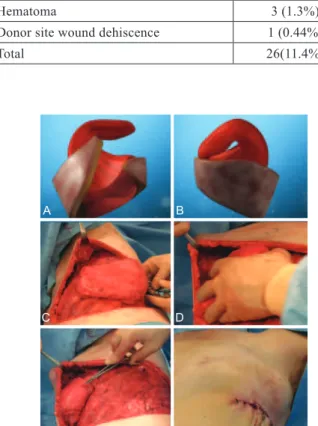
Figure 2 – In A and B, schematic and anatomical aspect of the
dermo-muscular lap and the free segment of the dorsal muscle in
monobloc, sutured the edges. In C, aspect of the lap rotated 180°, followed by its inclusion in the region of cutaneous pocket of the neomama previously dissected in its entire area. In D, introduction
of lap mobilized in the recipient bed. In E, isolated points with
non-absorbable thread set to dermal face of the lap to the
serratus muscle. In F, the appearance of cutaneous suture and placement of 3 suction drains, one in the axilla and
the other two in the dissected chest region.
A
C
E
B
D
DISCUSSION
The latissimus dorsi lap remains a versatile tool in breast reconstructive surgery, nonetheless the limited bulk as well as the persistence of the patch effect over the reconstructed breast constitute its main pitfalls. Many authors tried to resolve this by bringing modiications to the latissimus dorsi lap6-18. In 1983, a procedure was described with the
latissimus dorsi total lap muscle was harvested with a large
Figure 3 – Case of breast cancer on the left, 4 years after
reconstruction with TRAM lap for treatment of cancer of the right
breast. In A, preoperative appearance of a patient underwent to
reconstruction with TRAM lap on right breast, front view.
In B, postoperative aspect 1 year after the procedure, front view. In C to H, postoperative aspect of patient underwent to reconstruction
with thoracodorsal lap in left breast in the 5-year follow-up,
front view (C), with raised arms (D), in right proile (E),
in left proile (F, G), and oblique left position (H).
A B C D
E F G H
Figure 4 – In A to C, preoperative aspect of a patient underwent to bilateral delayed breast reconstruction using implants with history of radiation therapy in both breasts. In D to F, appearance 3 years
after removal of 2 implants and breast reconstruction with
bilateral thoracodorsal laps, without implants.
In G and H, intraoperative aspect showing the volume provided
by the lap doubling the size of the implant. A
D
G H
B
E
C
F
Figure 5 – In A and B, preoperative aspect of patient that had failure of the right breast reconstruction with free bilateral
gluteal laps, prosthetic reconstruction with secondary capsular
contracture. Patient underwent to radiotherapy to the right breast. In C, appearance of the donor site for irst reconstruction. In D to G, aspect 4 years after implant removal and right breast
reconstruction with thoracodorsal lap, followed by bilateral
increase with prosthesis subsequently performed.
A
D E F G
B C
Figure 6 – In A to E, preoperative aspect of patient underwent to
delayed reconstruction of the right breast with thoracodorsal lap in
breast cancer previously treated with radiotherapy. In F to J, 5 years postoperative aspect. In K to M, comparison between preoperative (K) and postoperative (L and M) aspects,
demonstrating that the donor site scar is hidden in the bra line.
A
F G H I J
K L M
skin paddle8. Completely or partially detaching the latissi
mus dorsi tendon from its humeral attachment facilitates the rotation and position of the lap with less bulkiness at the axilla9,13,19,20. We have observed that by lumping the muscle
together intra-operatively using simple stitches; we do not only insure a bulkier breast but also decrease the forces of muscular contractions. We agree with others authors who have advocated for ixing the lap to the chest wall to decrease the tension on the pedicle13,20. In fact, we didn’t observe any
sequels such as twisting or excessive tension affecting the viability of the lap. Pitfalls to this maneuver certainly exist and comprise bothersome muscular contraction, that will ho wever decrease with time13,19,21.
Our seroma rate was low compared to that of the lite-rature9,10,11,13. This is explained by the fact that seroma we
recorded when occurring after removal of the drains. Despite the use of several known maneuvers to decrease the seroma rate, including quilting sutures and multilayer tension free closure of the donor site, the drains had to be kept for an average of 10 days, and seroma still occurred.
Similar to other surgical techniques, the latissimus dorsi lap presents its own drawbacks. The extended donor site scar and the slight back contour deformity constitute the main limitations to this surgical modality. In addition, burial of the totality of the lap in delayed reconstruction hampered monitoring of parameters such as venous congestion among other short term complications. This did not constitute a ma jor obstacle, since there weren’t any total lap losses in the study group. Contraindications to this technique include previous thoracotomy at the side of reconstruction, as well as severely damaged skin secondary to considerable radiation doses hampering proper tissue expansion.
CONCLUSIONS
The thoracodorsal flap is a safe and reliable surgical technique with a wide range of applications in breast recons-truction following mastectomy with or without radiation. Besides it imposing as a salvage flap when other treatment modalities fail, its main advantages include achieving ade quate breast volumes avoiding the use of prosthetic ma terial, improving the skin quality mainly following radia-tion and achieving considerable tissue expansion without the need of expanders while insuring minimal donor site mobility. The thoracodorsal flap is a good surgical option for breast reconstruction following mastectomy mainly for the irradiated breast.
REFERENCES
1. Mathes SJ, Nahai F. Clinical atlas of muscle and musculocutaneous laps. St Louis: Mosby; 1980.
2. Schneider WJ, Hill HL Jr., Brown RG. Latissimus dorsi myocutaneous lap for breast reconstruction. Br J Plast Surg. 1977;30(4):277-81. 3. Fujino T, Harashina T, Enomoto K. Primary breast reconstruction after
a standard radical mastectomy by a free lap transfer. Case report. Plast Reconstr Surg. 1976;58(3):371-4.
4. Koshima I, Soeda S. Inferior epigastric artery skin laps without rectus abdominis muscle. Br J Plast Surg. 1989;42(6):645-8.
5. Marshall DR, Anstee EJ, Stapleton MJ. Soft tissue reconstruction of the breast using an extended composite latissimus dorsi myocutaneous lap. Br J Plast Surg. 1984;37(3):361-8.
6. Barnett GR, Gianoutsos MP. The latissimus dorsi added fat lap for natural tissue breast reconstruction: report of 15 cases. Plast Reconstr Surg. 1996;97(1):63-70.
7. Hokin JA. Mastectomy reconstruction without a prosthetic implant. Plast Reconstr Surg. 1983;72(6):810-8.
8. Hokin JA, Silfverskiold KL. Breast reconstruction without an implant: results and complications using an extended latissimus dorsi lap. Plast Reconstr Surg. 1987;79(1):58-66.
9. Papp C, Zanon E, McCraw J. Breast volume replacement using the de-epithialized latissimus dorsi myocutaneous lap. Eur J Plast Surg. 1988;11(3):120-5.
10. McCraw JB, Papp CT. Latissimus dorsi myocutaneous lap: “leur-de-lis” reconstruction. In: Hartrampf CR, ed. Breast reconstruction with living tissue. Norfolk: Hampton Press; 1991. p.221.
11. Aitken ME, Mustoe TA. Why change a good thing? Revisiting the leur-de-lis reconstruction of the breast. Plast Reconstr Surg. 2002; 109(2):525-38.
12. Germann G, Steinau HU. Breast reconstruction with the extended latis-simus dorsi lap. Plast Reconstr Surg. 1996;97(3):519-26.
13. Chang DW, Youssef A, Cha S, Reece GP. Autologous breast recons-truction with the extended latissimus dorsi lap. Plast Reconstr Surg. 2002;110(3):751-61.
14. Rifaat MA, Amin AA, Bassiouny M, Nabawi A, Monib S. The exten-ded latissimus dorsi lap option in autologous breast reconstruction: a report of 14 cases and review of the literature. Indian J Plast Surg. 2008;41(1):24-33.
15. Heitmann C, Pelzer M, Kuentscher M, Menke H, Germann G. The extended latissimus dorsi lap revisited. Plast Reconstr Surg. 2003; 111(5):1697-701.
16. Hudson DA, Ndobe E. Using two laps to achieve aesthetic autologous breast mound reconstruction. Ann Plast Surg. 2002;49(2):189-92.
Figure 7 – In A to D, preoperative aspect of patient underwent to
delayed reconstruction of the left breast with thoracodorsal lap.
The patient had undergone radiotherapy to the left breast. In E to J, 2 years postoperative aspect.
17. Delay E, Jorquera F, Pasi P, Gratadour AC. Autologous latissimus breast reconstruction in association with the abdominal advancement lap: a new reinement in breast reconstruction. Ann Plast Surg. 1999;42(1): 67-75.
18. Menke H, Erkens M, Olbrisch RR. Evolving concepts in breast re-construction with latissimus dorsi laps: results and follow-up of 121 consecutive patients. Ann Plast Surg. 2001;47(2):107-14.
Correspondence to: Marwan Abboud
Rue du Magistrat, 7 – Bruxelles, Belgique – 1000 E-mail: [email protected]
19. Delay E, Gounot N, Bouillot A, Zlatoff P, Rivoire M. Autologous la-tissimus breast reconstruction: a 3-year clinical experience with 100 patients. Plast Reconstr Surg. 1998;102(5):1461-78.
20. McCraw JB, Papp C, Edwards A, McMellin A. The autogenous latissi-mus breast reconstruction. Clin Plast Surg. 1994;21(2):279-88. 21. Slavin SA. Improving the latissimus dorsi myocutaneous lap with tissue