ISSN 0104-6632 Printed in Brazil
www.abeq.org.br/bjche
Vol. 30, No. 02, pp. 197 - 229, April - June, 2013
Brazilian Journal
of Chemical
Engineering
VALORIZATION OF AGROINDUSTRIAL SOLID
RESIDUES AND RESIDUES FROM BIOFUEL
PRODUCTION CHAINS BY THERMOCHEMICAL
CONVERSION: A REVIEW, CITING BRAZIL
AS A CASE STUDY
E. Virmond
1*, J. D. Rocha
1, R. F. P. M. Moreira
2and H. J. José
21
Brazilian Agricultural Research Corporation, Embrapa Agroenergy, Parque Estação Biológica (PqEB), Phone: + (55) (61) 3448-2290, Fax: + (55) (61) 3448-1589, Av. W3 Norte (final),
Asa Norte, 70770-901, Brasília - DF, Brazil. E-mail: [email protected]
2Laboratory of Energy and the Environment, Department of Chemical Engineering and Food Engineering,
Federal University of Santa Catarina, Trindade, 88040-900, Florianópolis - SC, Brazil.
(Submitted: January 20, 2012 ; Revised: July 5, 2012 ; Accepted: July 28, 2012)
Abstract - Besides high industrial development, Brazil is also an agribusiness country. Each year about 330 million metrics tons (Mg) of biomass residues are generated, requiring tremendous effort to develop biomass systems in which production, conversion and utilization of bio-based products are carried out efficiently and under environmentally sustainable conditions. For the production of biofuels, organic chemicals and materials, it is envisaged to follow a biorefinery model which includes modern and proven green chemical technologies such as bioprocessing, pyrolysis, gasification, Fischer-Tropsch synthesis and other catalytic processes in order to make more complex molecules and materials on which a future sustainable society will be based. This paper presents promising options for valorization of Brazilian agroindustrial biomass sources and residues originating from the biofuel production chains as renewable energy sources and addresses the main aspects of the thermochemical technologies which have been applied.
Keywords: Biomass-to-energy; Residues; Biofuels; Pyrolysis; Gasification.
INTRODUCTION
According to the EIA’s International Energy Outlook (U.S. EIA, 2011), world marketed energy consumption is expected to increase strongly, rising by nearly 50 percent from 2009 through 2035. Most of the growth occurs in emerging economies outside the Organization for Economic Cooperation and Development (OECD), especially in non-OECD Asia. Non-OECD nations account for 84 percent of growth in world energy use compared with a 14-percent increase in the developed OECD nations.
Unless the world energy matrix is altered, fossil fuels will account for 90% of the increase.
subject (Demirbas, 2004a, 2005; Obernberger et al., 2006; Werther et al., 2000).
Brazil has been a world leader in agroenergy for the last decades. The internal offer of energy in Brazil in 2011 was 272,380 million tons of petro-leum equivalents. Renewable sources of energy were responsible for 44.1% of this amount, while 14.7% came from hydraulic and electricity, 9.7% from firewood and charcoal, 15.7% from sugarcane derived products and 4.0% from other renewable sources (Brasil, 2012).
Status of Biofuel Production
Since the mid-1970s several governments have implemented energy policies to increase the use of biofuels. The Brazilian Fuel Ethanol Program (Pró-Álcool) was a successful example to stimulate the use of ethanol as automotive fuel. Ethanol is consolidated in the Brazilian biofuel market, where gasoline contains 20–25% anhydrous alcohol by volume. Hydrated alcohol is consumed pure or mixed with any percentage of gasoline in flexible-fuel automobiles. The demand varies depending on the gasoline prices and on the motor vehicle fleet. Worldwide, fuel ethanol production is expected to hit 85.2 billion liters in 2012 according to the Global Annual Ethanol Production Forecast released by the Global Renewable Fuels Alliance in cooperation with F.O. Licht (RFA, 2012). Still according to this source, the United States and Brazil continue to be the largest producers of ethanol, with production continuing at a steady pace in 2012. Although production levels in Africa remain relatively low, this region will see the largest increase in production for 2012, which is expected to grow by 36%.
Another example of these policies is the National Program of Biodiesel Production and Use (PNPB), which was created in 2004. With the purpose of creating a market for biodiesel, since 2008 the blend of pure biodiesel in diesel oil has become mandatory through Law 11.097/2005. Between January and June 2008, the mix was 2%, between July 2008 and June 2009 it was 3%, between July and December 2009 it was 4%, and since January 2010, the B5 blend has been mandatory. According to the research report entitled “Biofuels Regain Momentum” conducted by the Worldwatch Institute’s Climate and Energy Program for the website Vital Signs Online (Shrank and Farahmand, 2011), global biodiesel production increased by 12 percent between 2009 and 2010, reaching an estimated production level of 19 billion liters. The EU remained the world’s largest biodiesel producing region in 2010,
accounting for approximately 53 percent of global production, while the world’s top biodiesel producing countries were Germany and Brazil, with respective production levels of 2.9 billion liters and 2.3 billion liters. The U.S. biodiesel industry reached a key milestone by producing more than 1 billion gallons of fuel in 2011, according to year-end numbers released by the EPA in January 2012 (U.S. EPA, 2012).
Second Generation Biofuels and Other Products from Biomass
Besides ethanol and biodiesel programs, the production and use of charcoal is also a known example of Brazilian success in bioenergy, even though optimization of the conversion process and reduction of associated social and environmental impacts are still required. Most of the charcoal produced in Brazil is used in the iron and steel industry, the country being one of the world's largest producers of fused iron, steel and iron based products.
Research on second generation biofuels that can be produced from a variety of biomass residues and non-food crops through various process routes (e.g., chemical and biochemical hydrolysis, thermochemi-cal) have been extensively carried out worldwide. Second-generation biofuels are not yet produced commercially, but a considerable number of pilot and demonstration plants have been announced or set up in recent years, with research activities taking place mainly in North America, Europe and a few emerging countries (e.g., Brazil, China, India and Thailand). Current IEA projections see a rapid increase in biofuel demand, in particular for second-generation biofuels, in an energy sector that aims at stabilizing the atmospheric CO2 concentration at 450 parts per million (ppm) (IEA, 2010).
This sector has been developed in Brazil mainly driven by the potential of the sugarcane plant (Dias
relatively low yield, low solids loading on hydrolysis and the lack of pentose fermentation to ethanol are the main issues (Cardona et al., 2010; Dias et al., 2011a, 2011b). The conversion process relies heavily on major technological innovations centered on effective and low cost enzymes, feedstock and efficient process design (Menon and Rao, 2012). Additionally, the search for more robust models for cellulose hydrolysis is a very important task. The related trends were extensively reviewed by Sousa Jr. et al. (2011) from the perspective of the application of kinetic models within a bioreactor engineering framework, where reactor design and process optimization are the ultimate goals, includ-ing scale-up, design and process optimization.
The production of liquid fuels through synthesis gas (produced through biomass gasification) is also an alternative. Ethanol production through hydrolysis and/or gasification using bagasse (and/or trash) as raw material can impact the potential of surplus electricity production. There is a tendency for enlarging electricity production from sugarcane residual biomass and investors believe that, in the short to mid-term, electricity could become a product as important as ethanol or sugar (the traditional products of this industrial branch) (Walter and Ensinas, 2010). With the development and commercialization of alternative biomass conversion technologies, there might be a tendency to drive the application of the available biomass sources to the most value added scenario. This is becoming a reality for sugarcane bagasse in Brazil, which does not constitute a costless material anymore. When no on site application is available, it has been sold as feedstock for electricity production. The decision regarding second generation ethanol production, for example, has considered the opportunity prices for the different biomass derived products (ethanol and other biofuels, bioelectricity and sugar, among others) (Dias et al., 2011b), which can promote competition for the use of lignocellulosic biomass.
For the future rearrangement of a sustainable economy based on biological raw materials, completely new approaches to research and develop-ment, production, and economy are necessary. Enhancement of biomass utilization requires tremendous efforts to develop new biomass systems in which production, conversion and utilization of bio-based products are carried out efficiently in near harmony with nature, thus constituting and implementing the biorefinery concept.
Agricultural energy comes from four biomass sources: carbohydrate- or starch-rich crops; vegetable oils or animal fat; wood; and agroindustrial residues.
Brazil has comparative advantages worldwide in the production of all biomass sources and can create competitive advantages to lead the international renewable energy market. In addition, the size of the Brazilian market can guarantee the success of the biomass energy initiatives and a foreign market is beginning to emerge (Brasil, 2006). However, the use of biomass residues as an energy source has not had the same success as the ethanol and biodiesel programs, partly due to the lack of a dedicated and adequate governmental program, which demands immediate attention, and also because of the inherent difficulties in the use of these residues.
In 2006, the Brazilian Federal Government created the National Agroenergy Plan (PNA 2006– 2011). The overall purpose of the National Agroenergy Plan was to ensure: the sustainability of the energy matrix; job and income generation; rational use of areas affected by anthropic actions; Brazilian leadership in biomarkets; energy autonomy at the community level; support to public policies; energy savings along agribusiness chains; and elimination of health risks. The Research, Develop-ment and Innovation (RD&I) program should unfold along the four principal areas of the main agroenergy production chains: ethanol and the co-generation of energy from sugarcane and other alternative biomass sources; biodiesel from animal and plant sources; forest biomass; and residues and wastes from agriculture and agroindustry.
Among the objectives of this plan was the creation of Embrapa Agroenergy (in 2006), a section of the Brazilian Agricultural Research Corporation (Embrapa), constituting a decentralized research unit focusing on agroenergy topics and support for the development of the country's agroenergy research system. In executing this plan, Embrapa joined multi-institutional and multidisciplinary RD&I networks, as well as started carrying out its own research, development and innovation activities in the field of agroenergy.
Biomass sources have become the basis of renewable energy and a valuable input for the chemical industry. The experts believe that energy from biomass will account for the better part of the revenues from international agricultural transactions beginning in 2050. However, the economic viability of bioenergy necessarily depends on an evaluation of its cost when compared to the price of petroleum, even though social (employment, income, migration flows) and environmental (climate changes, pollution) pressures can bring the timetables forward (Brasil, 2006).
identifying the potential biomass sources from the Brazilian agroindustrial sector and from the Brazilian biofuel (ethanol and biodiesel) production chains. The main aspects of the biorefinery concept and of the thermochemical technologies and processes which have been considered and applied to add value to residues have been addressed.
BIOMASS PROPERTIES
The fuel properties often form the basis for the selection of the most appropriate conversion technology. Depending on these properties, a biomass source may not be suitable for specific options, partially for technical and sometimes for environmental reasons. The characteristics of the biomass are influenced by its origin and also by the entire processing system preceding any conversion step.
Biomass is similar to other fuel types in the need for standardized analytical methods leading to accurate and consistent evaluations of fuel properties. Bahng et al. (2009) have presented detailed knowl-edge ranging from structural information of raw biomass, elemental composition, gas-phase reaction kinetics and mechanisms, and product distributions (both desired and undesired). Additionally, the various analytical methods of biomass pyrolysis/ gasification processing are discussed, including reactor types, analytical tools, and recent examples in the areas of compositional analysis, structural analysis, reaction mechanisms, and kinetic studies on biomass thermochemical processing, which are of great importance for technology development and scale up.
Summarized below are the major properties of biomass fuels frequently assessed and some examples of analytical tools and methodologies applied:
Thermal behavior: isothermal and non-isothermal TGA analysis (e.g., Borrego et al., 2009);
Proximate composition (moisture, ash, volatiles and fixed carbon): DIN 51718-20 (DIN, 1997, 2001, 2002);
Ultimate elemental (carbon, hydrogen, nitrogen, oxygen and sulfur): ASTM 3176 (ASTM, 1997), oxygen by difference;
Presence of sulfur and chlorine: selective ion electrodes and colorimetric methods, respectively;
Higher Heating Value (HHV) and Lower Heating Value (LHV): ASTM D5865 (ASTM, 2004b) and DIN 51900 parts 1 and 3 (DIN, 2000, 2005);
Ash elemental composition and ash fusibility: DIN 51729-10 (DIN, 1996) and ISO 540 (ISO, 1995)
and ASTM D1857 (ASTM, 2004a);
Presence of polycyclic aromatic hydrocarbons (PAH), polychlorinated biphenyls (PCB), polychlori-nated dibenzo-p-dioxins (PCDD) and dibenzofurans (PCDF): according to DEV (1999), US EPA 8310 (U.S. EPA, 1986) and through high resolution gas chromatography mass spectrometry (GC-MS), such as described by Fytianos and Schröeder (1997), respectively;
Trace elements: DIN 51719 (DIN, 1997);
Reactivity: isothermal and non-isothermal TGA analysis (e.g., Cousins et al., 2006).
Biomass presents wide variation in physical and chemical properties. Demirbas (2004a, 2005), Jenkins et al. (1998), van Paasen et al. (2006) and Werther et al. (2000, 2007) related the biomass properties relevant to thermal conversion processes to their effects on the conversion process.
In a recent publication, the potential for application of various agroindustrial solid residues as alternative energy sources in thermochemical processes was assessed by characterizing their properties – including proximate and ultimate com-position, energy content, thermal behavior, composi-tion and fusibility of the ashes – and correlating them to the characteristics required for the optimal operation of pyrolysis, gasification and combustion processes (Virmond et al., 2012).
Existing conversion systems require modifica-tions in order to accommodate the nature of the thermal behavior of biomass materials. Greater understanding of the physical and chemical processes occurring in the biomass during heating will aid the design and optimization of practical conversion systems.
The high moisture and ash contents generally found in biomass fuels can cause ignition and combustion problems and also influence the biomass pyrolysis behavior (the first step of gasification and combustion processes) and affects both the physical properties and the quality of the products (Demirbas, 2004b).
and chlorine can also be found in quantities usually lower than 1 wt.% (db), but occasionally well above this (Jenkins et al., 1998).
The sulfur in plants can be bound as inorganic sulfur or as organic sulfur. The roots of the plants assimilate S as SO42-. The inorganic sulfate can be converted into amino acids for the production of protein. The sulfur content in biomass can range from 0.05 wt.% to more than 3 wt.%, depending on its origin. A rough distinction between (biologically) processed biomass like manure and sludge and unprocessed biomass can be made. The relatively high sulfur and nitrogen contents could be explained by the relatively high protein content in manure and sludge (van Paasen et al., 2006).
The chlorine in plants is mainly bound as inorganic salt in the form of potassium chloride (KCl) and quaternary ammonium chloride ((NH4)Cl). Chloride ion is important in osmoregulation, the maintenance of electrochemical equilibrium in cells/ compartments and in the regulation of enzyme activity. The chlorine content in biomass can range from 0.01 wt.% to 2.4 wt.% on a dry and ash free basis (Phokawat, 2005).
These constituents are directly related to the gaseous emissions of compounds such as sulfur oxides (SOx), hydrogen sulfide (H2S), and carbonyl sulfide (COS); nitrogen oxides (NOx); hydrochloric acid (HCl) and the occurrence of fouling and slagging in thermal conversion systems (Senneca, 2007).
The typically high reactivity of biomass is a consequence of its physical and chemical charac-teristics. The volatile content (80–90 wt.%) is at least twice that of mineral coals. The hydrogen/ carbon and oxygen/carbon molar ratios range between 1.3– 1.5 and 0.5–0.6, respectively. These are higher values than those of mineral coals, which generally range between 0.8–0.9 and 0.1–0.3, respectively (Encimar
et al., 2001).
The thermal processing of biomass containing different chemical and mineralogical compositions plays an important role in biomass reactivity and can create various problems that can affect the reactor operation. This can even make the conversion of biomass in conventional systems unprofitable depending on process conditions such as temperature and velocity distribution, reducing or oxidizing atmosphere and others (Jenkins et al., 1998; Masiá
et al., 2007; Vamvuka and Zografos, 2004; Vamvuka and Kakaras, 2011).
The ash-forming constituents found in biomass fuels are quite diverse, depending on the type of biomass, type of soil and harvesting. The latter has special importance given that soil can be
incorporated into the biomass and can potentially change the biomass ash composition and properties. One of the important features of biomass materials is the presence of significant amounts of alkali and alkaline earth metal species (mainly K, Na, Mg and Ca), which tend to volatilize during pyrolysis, gasification and combustion (Virmond et al., 2012). The alkali metals can be easily converted to new compounds during combustion, may interact with fuel gases (typically sulfur and chlorine) and with the reactive parts of the other materials inside the furnace. Thus, slagging, fouling and corrosion of surfaces are ash-related problems (Masiá et al., 2007; Vamvuka and Zografos, 2004; Vamvuka and Kakaras, 2011).
Llorente and García (2005) and Pronobis (2005, 2006) have presented ash fusibility correlations to evaluate the influence of biomass conversion on furnace fouling and wall slagging. Some control methods for mitigating these biomass ash-related problems have been tested (Vamvuka et al., 2008). Further studies on biomass ash composition con-cerning environmentally relevant heavy metals (especially Cd and Zn) (Obernberger et al., 1997; Singh et al., 2011d; Vamvuka and Kakaras, 2011) and on diverse possibilities for biomass ash application have also been conducted (Esteves et al., 2012; Kwong and Chao, 2010; Park et al., 2005; Pérez-Villarejo et al., 2012; Tan and Lagerkvist, 2011).
BIOMASS TYPES AND AVAILABILITY
The general definition of biomass was published in Directive 2009/28/EC of the European Parliament and of the Council, relative to the promotion of the energy exploitation from renewable sources (Euro-pean Union, 2009). According to it, “Biomass: means the biodegradable fraction of products, waste and residues from biological origin from agriculture (including vegetal and animal substances), forestry and related industries including fisheries and aquaculture, as well as the biodegradable fraction of industrial and municipal waste”.
forestry residues are available for bioenergy production. In the most ambitious scenario (Smeets
et al., 2007), the bioenergy potential could reach roughly 1500 EJ per year in 2050. This scenario assumes the availability of 72% of current agricul-tural land for biofuel production, mainly through increased yields and more intensive animal farming. It has been reported that Brazil currently seems to be the only country amongst eight (Mexico, Brazil, China, India, South Africa, Cameroon, India, Tanzania and Thailand) with considerable potential to produce energy crops for second-generation biofuel production sustainably, mainly on underuti-lized pasture land.
Each year about 330 million metrics tons (Mg) of biomass residues (crop wastes and agroindustrial residues) are generated in Brazil (Felfli et al., 2005a, 2005b, 2011; Suárez et al., 2003). With an average heating value of 4324.45 kcal.kg-1 on a dry basis (Virmond et al., 2012), the annual fuel value is estimated at 1.427x10⁹ kcal.
The constraints related to the availability of additional land suggest that second-generation biofuel industries and biorefineries should focus on currently available feedstock sources in the initial phase of the industry. Agricultural and forestry residues form a readily available source of biomass and can provide feedstock from current agricultural and forestry activities without the need for additional land cultivation (IEA, 2010). However, there is an ongoing debate on the effective possibilities of crop residue removal from agricultural fields. According to Felfli et al. (2011), only a small fraction of this amount would be practically recoverable even under conditions of highly mechanized harvesting. On the other hand, the crop wastes have other important uses such as animal feed and bedding, as well as the soil fertility factor. Even a partial removal (30–40%) of crop residue from land can exacerbate the soil erosion hazard, deplete the soil organic carbon pool, accentuate emission of CO2 and other greenhouse gases from soil to the atmosphere, and exacerbate the risks of global climate change (Lal, 2005, 2008).
All the possible benefits and disadvantages of crop residue collection for bioenergy use are still under discussion (Lal, 2008; Mann et al., 2002; Wilhem et al., 2004).
The crop wastes include the residues which remain in the field after harvesting, for instance, paddy straw, bean straw, soya straw, maize straw and wheat straw. The agroindustrial residues include rice husk, coffee husk, sugarcane and fruits bagasses, soybean husk and wood wastes, which are generated
during the processing of the crops or logwood. Virtually all of these residues could be used for briquetting as they are homogeneous and present moisture contents below 15 wt.% (Felfli et al., 2011).
Forest and wood residues are important sources. The Brazilian forest sector is one of the most developed and competitive in the world. According to the Brazilian Association of Planted Forest Producers (ABRAF), the country holds a relevant global planting share: 6.5 million hectares is the total area of forest plantations growing Eucalyptus (74.8%) and Pine (25.2%), (ABRAF, 2012). Firewood is an important source of thermal energy. Its importance in Brazil is perceived in industry, trade and rural housing. In 2011, Brazil produced 44.7 million cubic meters of firewood from planted forests. The Brazilian southern region consumed 69% of this total, as presented in Figure 1, corresponding to 35.2 million cubic meters of firewood. In the period between 2001 and 2011, the consumption of firewood grew at an average annual rate of 5%; the southern and southestern regions accounted for around 90% of the total volume consumed (ABRAF, 2012).
Forestry residues are generated by operations such as thinning of plantations, clearing for logging roads, extracting stem-wood for pulp and timber, and natural attrition. Wood processing also generates significant volumes of residues, usually in the form of sawdust, off-cuts, bark and woodchip rejects. This waste material is often not utilized and often left to rot on site, constituting a great opportunity as an energy source and as feedstock for high valued product production.
Figure 1: Distribution of regional firewood consumption in 2011 and total national consumption 2001-2011 (ABRAF, 2012)
Increasing volumes of byproducts from biofuel production require knowledge for sustainable utilization and for the development of new uses. Quantity, quality and concentration of wastes are factors that will impact the competitiveness of biofuels in the future.
Production of biodiesel is a promising application of biomass and its production is expected to grow rapidly in the future. Considering the many potential species with high edible and non-edible oil yield for biodiesel production in Brazil, a large variety and quantity of residues are to be generated.
Byproducts such as the press cake from seeds, fruit bodies, empty fruit bunches as well as the leaves of the plant (with low or no commercial value) offer additional opportunities for interesting product outlets (Kumar and Sharma, 2008; Manurung
et al., 2009; Openshaw, 2000). Examples are the applications of the press cake proteins as a source of animal feed (after detoxification) (Haas and Mittelbach, 2000) and/or industrial applications like glues, coatings and films (Patel et al., 2008). The lignin as well as the fibers may be applied for making construction materials, while the carbohydrates could be applied as a source for bio-ethanol (Demirbas, 2007).
Crude glycerol is a major byproduct in biodiesel production from vegetable oils and animal fats through transesterification, with an average yield of about 10 wt.% (Adhikari et al., 2008; Lin et al.,
2009). The tremendous growth of the biodiesel industry created a glycerol surplus that has caused some concerns. Nowadays, glycerol is often regarded as a waste stream with associated disposal costs. Hence, as more and more crude glycerol is generated by the biodiesel industry, it becomes important to develop an economical way for converting this low-grade byproduct to more useful products.
As presented by Yoon et al. (2010), crude glycerol derived from biodiesel production has generally been processed into more valuable compo-nents or burnt as a fuel owing to the low value of crude glycerol, the excess production of crude glycerol relative to commercial demand for purified glycerol, and the high cost to refine or purify it. The production of a variety of products derived from glycerol through different routes can be found in the literature (Chi et al., 2007; Garcia et al., 1995; Imandi
lique-faction for liquid fuel production (Kržan and Zăgar, 2009). This byproduct originates from biomass and could be included in the renewable category and could also constitute a feedstock for the production of a variety of products through gasification and syngas processing.
Besides terrestrial crops and derived residues, extensive research has been conducted to investigate the utilization of algae as an energy feedstock, with applications being developed for the production of biodiesel, bioethanol, biohydrogen, other products and coproducts (Brennan and Owende, 2010; John
et al., 2011; Levine et al., 2010; Mata et al., 2010; Melis and Happe, 2001; Singh and Olsen, 2011). On the basis of current scientific knowledge and technology projections, third-generation biofuels specifically derived from microorganisms and microalgae are considered to be a viable alternative energy resource that is devoid of the major drawbacks associated with first and second-generation biofuels (Nigam and Singh, 2011; Singh et al., 2011a, 2011b, 2011c). However, this subject has not been addressed in this review.
THE BIOREFINERY CONCEPT
Internationally, research, development and inno-vation programs are looking at ways to improve the use of different feedstocks and byproducts on pilot and industrial scales for the production of a wide range of products.
As presented by Lyko et al. (2009), in the currently propagated concept of the European Biorefinery it is planned to use seeds like wheat, rape, soya, lupines, rice, rye or peas, which are to be processed in industrial plants to obtain food oils, valuable food ingredients like gluten-free starch and pure gluten and derivatives for functional food, bioethanol, biogas and biodiesel. The shells of the cereals are to be processed to produce energy and even the incidental carbon dioxide is proposed to be used within the process chains as cover gas or to be sold. The European Biorefinery concept is supported by a pool of companies, which specialize in the engineering of biochemical conversion plants, in flour milling, bioethanol production, the production of food ingredients and the production of industrial gases. Currently no plant operating on this concept is known (Lyko et al., 2009).
As sugar, starch or oil containing raw materials are high value feedstock for the production of many valuable chemicals on the one hand, and the growing demand for fuels should be satisfied by non-food
biomass on the other hand, the integrated (two-platform) biorefinery seems to be a very promising future model for processing different kinds of whole crops. Here fuels and building block chemicals are to be produced by thermochemical conversion of ligno-cellulose parts, while sugar, starch or oil containing kernels and fruits are reserved for biochemical/ chemical conversion to valuable platform chemicals such as succinic acid or mono and diacylglycerols. Residues and waste from both conversion processes should be used to produce energy.
The two-platform refinery has not been realized at any large-scale production site yet (Lyko et al., 2009). However, integrated production sites can be realized in existing bioethanol or biodiesel plants, as well as in starch factories, paper mills or food processing industries.
The biorefinery concept incorporates the more efficient use of chemicals and materials at all stages in the supply chain, including growth and harvest, production and conversion, and final disposition of products. Biorefineries aim to use biomass for synthesis processes – for (co-)production of base chemicals, platform chemicals, transportation fuels, gaseous energy carriers – and energy production (heat, power, combined heat and power). By means of co-production of relatively (high) added value chemicals, the production costs of secondary energy carriers could potentially become market competitive (Zwart, 2006).
In essence, the biorefinery parallels the petroleum refinery: an abundant raw material consisting pri-marily of renewable polysaccharides and lignin enters the biorefinery and, through an array of processes, is fractionated and converted into a mixture of products, including transportation fuels, co-products, and direct energy. The biorefinery concept is sup-ported by economies of scale and by efficient use of all incoming bioresources (Ragauskas et al., 2006).
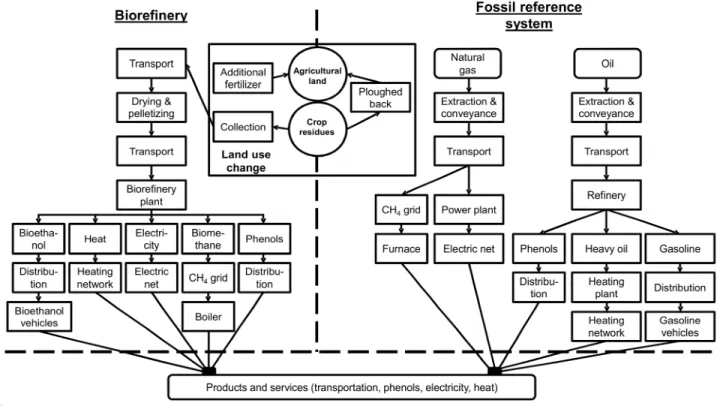
Figure 2: Comparison between the production chains of the biorefinery and the fossil reference system (Cherubini and Ulgati, 2010)
Where biorefineries operate at present, the product range is still limited to simple materials (i.e., cellulose, ethanol, biofuels and chemicals). Second generation biorefineries need to be built on the concept of sustainable chemical products through modern and proven green chemical technologies such as bioprocessing, thermochemical conversion including pyrolysis, Fischer-Tropsch, and other catalytic processes in order to make more complex molecules and materials on which a future sustainable society will be based (Naik et al., 2010).
Future biorefinery operations will first extract high-value chemicals already present in the biomass, such as fragrances, flavoring agents, food-related products, cosmetics related products, and high-value nutraceuticals.The availability of phenolic compounds with antioxidant activity from agricultural and industrial residues, for example, has been studied. Rodrigues et al. (2008) investigated phenolic com-pounds from coconut shell, which is similar to the woods used to store and age alcoholic beverages. During the ageing process phenolic compounds are extracted by lignin ethanolysis from the wooden
casks. Sousa and Correia (2012) evaluated the phenolic content, the antioxidant activity and the antiamylolytic activity of extracts obtained from bioprocessed pineapple and guava wastes for producing biologically active products and enhance the value of fruit residues by providing a source of health relevant compounds. Phenolics are also used in the food industry as anti-microbial agents and food stabilizers (Martins et al., 2011).
of these materials. Several of these residues, including coffee pulp and husk, sugarcane and agave bagasses, fruit pulps and peels, corn cobs, among others, have been used as supports and/or substrates for the production of valuable compounds by solid-state fermentation, including enzymes (Guimarães
et al., 2009; Mamma et al., 2008; Oliveira et al., 2006), organic acids (John et al., 2006; Sharma et al., 2008; Vandenberghe et al., 2000), antibiotics (Adinarayana et al., 2003; Ellaiah et al., 2004), flavor and aroma compounds (Medeiros et al., 2006; Rossi
et al., 2009; Sarhy-Bagnon et al., 2000), and bioactive compounds (Hernández et al., 2008; Vattem and Shetty, 2003).
Once these relatively valuable chemicals are extracted, the biorefinery will focus on processing plant polysaccharides, lignin and residues from biochemical processes into feedstock for bio-based materials and fuels (Ragauskas et al., 2006).
There is increasing interest in the development of biodegradable plastics, biobased polymer products and plant derived composite materials, also referred to as “green” composites (Khalil et al., 2012; La Mantia and Morreale, 2011; Rosa et al., 2010; Spagnol et al., 2012), which may perfectly fit into the biorefinery scenario. The biorefinery concept has been applied to a variety of biomass sources, such as forest residue biorefinery (Mabee et al., 2005), wheat straw biorefinery (Deswarte et al., 2008), palm oil and oil palm biomass-based biorefinery (Chew and Bhatia, 2008), and corn biorefinery (Haung et al., 2008). Naik et al. (2010) presented part of a research program aimed at the integrated utilization of Jatropha in India and cereal crop residues in Canada, attempting to contribute to the first generation biofuels production (e.g., biodiesel) and parallel use of the residues for energy, second generation biofuels and related chemicals production from non-food crops. In addition, some biorefinery concepts based on different biomass feedstocks for second generation biofuels and their bioproducts were discussed.
Research institutions and industries in Brazil have been promoting and supporting the development of biorefineries as a great opportunity for expansion of the national bioenergy sector. The development of biorefineries is starting with sugarcane residues from sugar and ethanol production, which already represent a successful example of sustainable utiliza-tion of residues from biofuel producutiliza-tion. The primary use of the fibrous byproduct (sugarcane bagasse) today is as an energy source in sugar/ethanol mills, providing the heat and electricity requirements for sugar and ethanol production and some electricity
surplus to the national grid, electricity being currently consolidated as an additional product of the Brazilian sugarcane sector.
Since the feedstock is already available at the plant site (bagasse), or close to it (sugarcane trash), second generation biofuel production may share part of the infrastructure where first generation ethanol production takes place (Dias et al., 2012a). Electricity production has a great potential for expansion as mills adopt modern, commercial high pressure-temperature co-generation systems and integrated biomass gasification combined cycle systems (Botha and von Blottnitz, 2006; Lora and Andrade, 2009; Seabra et al., 2010), from which a range of new products can be produced through catalytic synthesis, besides electricity.
Thus, biorefineries should integrate thermochemi-cal routes to the biochemithermochemi-cal (ethanol from ligno-cellulosic biomass), chemical (transesterification for biodiesel production) and physical (briquetting and pelletization) processes, which may result in a much bigger and more diverse range of products compared to what is obtained nowadays from the same feedstock (Demirbas, 2009; Lyko et al., 2009; Menon and Rao, 2012; Seabra et al., 2010). This implies more efficient use of renewable sources.
Regardless of which process technologies are incorporated into a biorefinery, almost all will generate some waste products. These spent biomass residues will contain fragments from lignin, residual carbohydrates, and other organic matter, requiring treatments that are environmentally compatible, with the smallest ecological footprint. Such wastes and residues offer important energy sources within the biorefinery, given their chemical energy content, and are an ideal candidate for thermochemical conversion to syngas (Sricharoenchaikul et al., 2002) and derived products, which is further discussed in the following sections.
Logistics and Biomass Pretreatment for Thermo-chemical Processing
Portability, storage capacity and energy density are important attributes that help consolidate and broaden the share of an energy source in the energy matrix. Ethanol and biodiesel, for example, have portability, which facilitates their transportation to and storage in foreign countries, as opposed to electric power, which has transmission limitations. Biodiesel has the same characteristics as ethanol, but greater density, which reduces the relative transportation and storage costs (Brasil, 2006).
are not used as energy sources because they have poor energy characteristics (low density, low heating value, and high moisture content), causing high costs during transportation, handling, and storage. Some of these drawbacks could be overcome if physico-chemical technology was applied to improve physi-cal and chemiphysi-cal properties of biomass residues.
Biomass feedstock logistics encompass all of the unit operations necessary to move biomass feedstock from the land to the energy plant and to ensure that the delivered feedstock meets the specifications of the conversion process. The packaged biomass can be transported directly from farm or from stacks next to the farm to the processing plant. Biomass may be minimally processed (i.e., ground) before being shipped to the plant, as in the case of biomass supply from the stacks. Generally the biomass is trucked directly from farm to biorefinery if no processing is involved. Another option is to transfer the biomass to a central location where the material is accumulated and subsequently dispatched to the energy conversion facility. While in the depot, the biomass could be preprocessed minimally (ground) or extensively (pelletized). The choice of any of the options depends on the economics and cultural practices (Zafar, 2012).
Physical pretreatments are the most commonly applied for thermochemical biomass conversion. Comminution of lignocellulosic materials is usually carried out through a combination of chipping, grinding, and/or milling. The size of the materials is usually 10–30 mm after chipping and 0.2–2 mm after milling or grinding.
The usual practice is that the harvested biomass is naturally dried before being transported by truck to a pretreatment plant. The first step of the pretreatment is size reduction and further active drying, after which the actual pretreatment conversion takes place. Other configurations need to be proposed for other biomass types (e.g., industrial residues). Biomass forms which are suitable for cost-effective transport over longer distances and allow transship-ment with bulk handling processes are chips, pellets, bio-slurry, and torrefied pellets. To take advantage of the conversion of the biomass into an easily transportable form, the pretreatment plant should evidently be located preferentially near the production location of the biomass (Zwart et al., 2006).
The final particle size and biomass characteristics determine the power requirement for mechanical comminution of agricultural materials. The energy consumption for size reduction of hardwoods and agricultural wastes as a function of final particle size
and comminution ratio (size reduction) was quantified by Cadoche and Lopez apud Kumar et al. (2009). It was proposed that, if the final particle size is held to the range of 3–6 mm, the energy input for comminution can be kept below 30 kWh per ton of biomass.
Zwart et al. (2006) have presented biomass pretreatment as an important part of the Biomass-to-liquid (BTL) route, both to allow feeding of the biomass into the selected entrained-flow gasifier and to reduce transport costs by densification. To determine the technological and economic potential of BTL routes, integrated systems from overseas biomass to the Fischer-Tropsch product were assessed on the basis of different pretreatment options: chipping, pelletization, torrefaction, and pyrolysis.
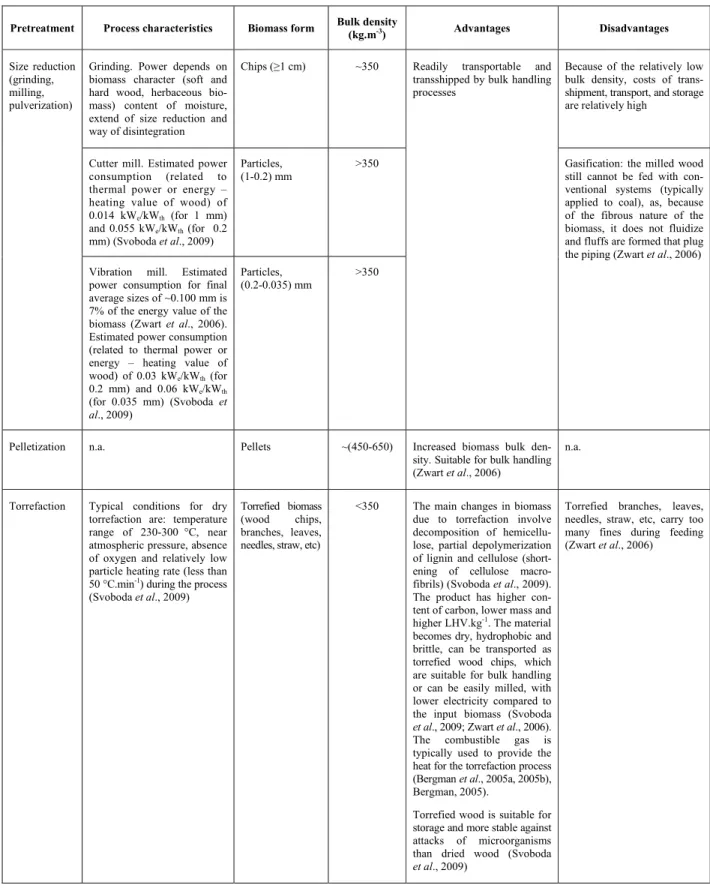
Svoboda et al. (2009) have compared advantages and disadvantages of different methods for biomass (wood) thermal pretreatment (drying, torrefaction, flash pyrolysis and dissolution of wood in organic solvents) and grinding for feeding of the biomass-fuel to a pressurized entrained flow gasifier. The resulting fuels after pretreatment were compared in terms of heating value, grinding energy needed, overall efficiency of conversion (from raw biomass to fuel), auxiliary energy needed, fluidization properties, pneumatic feeding properties, pumping, viscosity and possible changes of properties of liquids/slurry, storage, microbial attack, emissions from thermal pretreatment and overall integration with pressurized entrained flow gasification. Advan-tages and disadvanAdvan-tages of individual methods for biomass pretreatment, grinding and feeding were summarized and important information relating to these biomass pretreatment processes are summa-rized in Table 1.
Biomass residues can be densified into pellets or briquettes in order to provide more energy per unit of volume, to improve transportation, storage and thermochemical processing (Felfli et al., 2005a, 2005b, 2011; Suárez and Luengo, 2003).
Table 1: Characteristics of biomass pretreatment for thermochemical processing
Pretreatment Process characteristics Biomass form Bulk density (kg.m-3
) Advantages Disadvantages
Grinding. Power depends on biomass character (soft and hard wood, herbaceous bio-mass) content of moisture, extend of size reduction and way of disintegration
Chips (≥1 cm) ~350 Because of the relatively low
bulk density, costs of trans-shipment, transport, and storage are relatively high
Cutter mill. Estimated power consumption (related to thermal power or energy – heating value of wood) of 0.014 kWe/kWth (for 1 mm)
and 0.055 kWe/kWth (for 0.2
mm) (Svoboda et al., 2009)
Particles, (1-0.2) mm
>350 Size reduction
(grinding, milling, pulverization)
Vibration mill. Estimated power consumption for final average sizes of ~0.100 mm is 7% of the energy value of the biomass (Zwart et al., 2006). Estimated power consumption (related to thermal power or energy – heating value of wood) of 0.03 kWe/kWth (for
0.2 mm) and 0.06 kWe/kWth
(for 0.035 mm) (Svoboda et al., 2009)
Particles, (0.2-0.035) mm
>350
Readily transportable and transshipped by bulk handling processes
Gasification: the milled wood still cannot be fed with con-ventional systems (typically applied to coal), as, because of the fibrous nature of the biomass, it does not fluidize and fluffs are formed that plug the piping (Zwart et al., 2006)
Pelletization n.a. Pellets ~(450-650) Increased biomass bulk
den-sity. Suitable for bulk handling (Zwart et al., 2006)
n.a.
Torrefaction Typical conditions for dry torrefaction are: temperature range of 230-300 °C, near atmospheric pressure, absence of oxygen and relatively low particle heating rate (less than 50 °C.min-1
) during the process (Svoboda et al., 2009)
Torrefied biomass (wood chips, branches, leaves, needles, straw, etc)
<350 The main changes in biomass due to torrefaction involve decomposition of hemicellu-lose, partial depolymerization of lignin and cellulose (short-ening of cellulose macro-fibrils) (Svoboda et al., 2009). The product has higher con-tent of carbon, lower mass and higher LHV.kg-1
. The material becomes dry, hydrophobic and brittle, can be transported as torrefied wood chips, which are suitable for bulk handling or can be easily milled, with lower electricity compared to the input biomass (Svoboda
et al., 2009; Zwart et al., 2006). The combustible gas is typically used to provide the heat for the torrefaction process (Bergman et al., 2005a, 2005b), Bergman, 2005).
Torrefied wood is suitable for storage and more stable against attacks of microorganisms than dried wood (Svoboda
et al., 2009)
Continuation Table 1
Pretreatment Process characteristics Biomass form Bulk density (kg.m-3
) Advantages Disadvantages
Suitable temperature for torrefaction (from the point of view of possible autothermal torrefaction process and low energy consumption in subse-quent milling) is between 270–280 °C, sufficient holding (residence) time about 0.5 h (Svoboda et al., 2009)
Pellets of torrefied biomass (Bergman
et al., 2005a)
~850 The energy consumption for milling of torrefied wood from cm pieces to size fraction below 0.4 mm is approximately 3 to 7 times lower (depending on temperature and time of torre-faction) than for untreated, partly dried wood with moisture content 12-16 wt.% (Svoboda
et al., 2009). Pellets present increased energy and material density. This also happens in normal pellets; however, because of the resilient nature of fresh biomass, the increase in density is much smaller (Zwart et al., 2006)
Approximately 10-20% of the energy content of original dry wood is lost in production of torrefied wood. For straw and grass the energy loss is moderately higher (Svoboda
et al., 2009)
Slow pyrolysis Char ~(100-200) Contains only approximately
50% of the energy of the biomass (Antal and Grønli, 2003). The remainder is contained in the (tar-rich) pyrolysis gas, which has to be used on site and is not avail-able for Biomass-to-liquid production if the Fischer-Tropsch process is located elsewhere. Not considered to be a feasible general option because of the low efficiency (Zwart et al., 2006)
Bio-oil, char and pyrolysis gas (70%, 20% and 10% of biomass energy, respectively) (Wang et al., 2005)
~1200 (bio-oil)
The gas can be used to generate the electricity for the plant, and about half of the char is required to produce the heat for the pyrolysis process. The other half is surplus. However, in most cases, it is burned inside the process as well (Zwart et al., 2006)
The efficiency of bio-oil production is considered low for large-scale BTL production; therefore, it is not considered to be a feasible option (Zwart
et al., 2006) Pyrolysis
Fast pyrolysis
Bio-slurry (mix-ture of bio-oil and char). Content of char between 10-25 wt.%
~1200 It can be transported and handled as a liquid (compara-ble to heavy oil). Therefore, bio-slurry, unlike bio-oil, is considered to be a feasible candidate option (Zwart et al., 2006). It can be fed to a pres-surized entrained flow gasifier by suitable pumping with pos-sibility to avoid consumption of an auxiliary gas (Svoboda
et al., 2009)
Health, safety, and environ-mental aspects of bio-slurry are not yet clear (Zwart et al., 2006). For better spraying in a pressurized entrained flow gasifier some auxiliary gas is often needed. The fast pyrolysis technology for bio-oil produc-tion is more sophisticated than the production of torrefied wood. Long term storage of bio-oil and corrosion properties (due to high content of organic acids) is problematic (Svoboda
et al., 2009)
The use of pellets in the industrial sector is more common in countries where electricity production or central heating plants rely on the burning of biomass, as in the case of Sweden, Denmark, Holland, Belgium and the United Kingdom. Countries such as
operation, as well as new projects announced, most of them located in the South. Among the factors that lead to the consolidation of the pellet market in the national scenario, the reduced dependency on fossil fuels, the availability of waste generated by the wood sector, and growing demand stimulated by governmental incentive mechanisms have been highlighted. Brazilian production, consumption, import and export of pellets are still incipient; however, in the medium and long terms, the demand will tend to grow and stimulate production, domestic consumption and exports (ABRAF, 2012).
Biomass briquettes are not widely produced in Brazil yet. The expansion of this sector depends basically on three factors: residue availability for briquetting, adequate technologies and the market for briquettes, as presented in a study of the status of biomass briquetting and its perspectives in Brazil conducted by Felfli et al. (2011), which included determination of the availability and characteristics of the agroresidues for briquetting.
Brazil accounts for approximately one third of the charcoal production worldwide. Around ninety percent of that is destined to the Brazilian production of pig-iron, alloy iron, fused iron, steel and iron-based products, pure silicon, among others. Almost 75% of the charcoal is still produced through traditional processes (handcraft method) which have very low recovery of derivatives with a very negative environmental and social impact, given that powerful greenhouse gases like methane are released during charcoal production (Kammen and Lew, 2005; Rosillo-Calle et al., 1996).
The wood used for carbonization comes, in its majority, from reforested eucalyptus plantations. Reduced growth of reforested areas compared with the rate at which the demand increases, as well as the increase in the distances between charcoal production and final consumers are the main causes for an existing perception of lack of wood, popularly known as “forest shortage”. The development of a controlled, flexible, multi-product and integrated carbonization industry is a pressing need. Based on these premises, Peláez-Samaniego et al. (2008) explored several alternatives to improve the Brazilian carbonization industry in the context of the creation of a global biomass economy. The alterna-tives presented were based on the present charcoal needs and the potential advantage of other products derived from biomass carbonization.
Besides the use in the process of iron reduction, charcoal has many other uses which are poorly explored in Brazil, for example, in sugar refinement, as absorbent, in agriculture for soil amendment, etc. Charcoal is also an excellent feedstock for
gasification. It can be gasified in conventional single step gasifiers to produce a synthesis gas with very low tar content. Different arrangements were proposed by Peláez-Samaniego et al. (2008), such as alternatives in which pyrolysis or carbonization units are located as part of the primary conversion or densification units in a biorefinery.
The production of pellets or briquettes of charcoal produced through modern pyrolysis technologies (fast pyrolysis) applied to forest residues would allow the obtention of bio-oil besides the charcoal and consequently reduce the atmospheric emissions usually associated with the traditional process, since heat would also be recovered from the gaseous product. A more detailed discussion of biomass pyrolysis as a pretreatment step in a biorefinery for bio-oil and char/bio-oil slurry production is presented below.
Integrating Thermochemical Processes Into the Biorefinery
Technologies for the thermochemical conversion of biomass to energy have recently received increased interest from the scientific community, governments, and industry. Biomass has the potential to displace petroleum-derived fuels and countries might be able to decrease their reliance on foreign petroleum significantly by deriving more energy from renewable feedstock. Thermochemical biofuels can often be produced locally, improving a country’s trade balance and its national security. Local agricultural industries can be supported and, since these approaches typically use the lignocellulosic materials contained in agricultural residues, forest byproducts or municipal waste, the impact on food production can be minimized.
The first step to implement the biorefinery concept is providing proper and dedicated logistics for the biomass supply. In this context, an extensive discussion on decentralized versus centralized processing plants has been conducted aiming at defining the most feasible options for biomass thermochemical conversion.
Figure 3: Proposed scenario for integrated biomass pyrolysis, bio-oil gasification and catalytic synthesis (Rocha, 2008, modified)
Among the thermochemical biomass conversion routes, combustion constitutes a well-established technology which has been applied to biomass residues for thermal energy generation (e.g., Floriani
et al., 2010; Virmond et al., 2010, 2011), but biomass pyrolysis and gasification have attracted the highest interest as they can potentially offer higher efficiencies compared to combustion.
To truly understand and model these processes, detailed knowledge is required, ranging from structural information of raw biomass, elemental composition, gas-phase reaction kinetics and mecha-nisms, and product distributions (both desired and undesired). Considering the wide range of biomass sources, technology and products which can be obtained through biomass thermochemical conver-sion, it becomes important to integrate all these related aspects in order to optimize them and make them commercially available.
The thermochemical approach is largely based on existing technologies that have been in operation for a number of decades for conversion of coal-to-liquid
(CTL) and gas-to-liquids (GTL) fuels and chemicals through the Fischer-Tropsch processes, which consist of technologies commercially available for obtaining a wide range of long chain hydrocarbon products such as gasoline, naphtha, diesel and wax. The long chain hydrocarbons produced are finally distilled, hydrocracked or upgraded before being used as a liquid transportation fuel (IEA, 2008; Laohalidanond et al., 2006; Zwart, 2006). These conversion routes have currently been applied to conversion of biomass-to-liquid (BTL).
The BTL approach combines elements of pyrolysis, gasification, and catalytic conversion. The potential product range can be increased if the entire platform is implemented in a biorefinery (IEA, 2008), as illustrated in Figure 4.
Figure 4: Upgrading of bio-oil to biofuels and chemicals (Bridgwater, 2012, modified)
Biomass Fast Pyrolysis and Bio-Oil Upgrading Routes
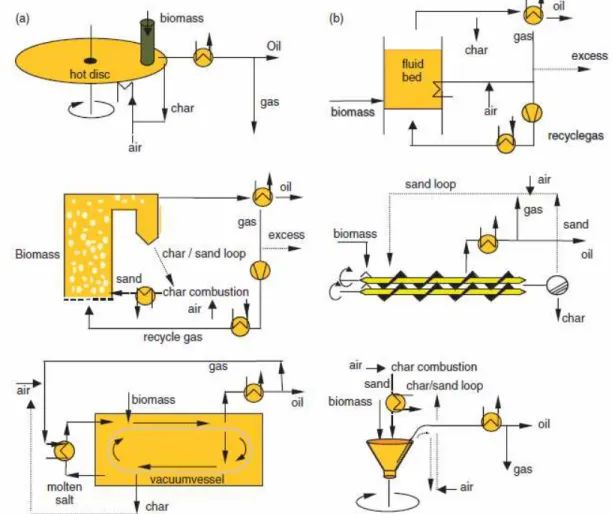
Fast pyrolysis of biomass with optimized yield of bio-oil is a possibility for biomass pretreatment. Essential features of a fast pyrolysis process are (Bridgwater and Peacocke, 2000; Zhang et al., 2007):
Very high heating and heat transfer rates, requiring feeding of relatively small biomass particles;
Carefully controlled temperature, usually between 450 °C and 550 °C;
Rapid cooling of the produced gases and vapors for bio-oil recovery.
As extensively reviewed by Bridgwater (1999b, 2012), Demirbas and Arin (2002) and Di Blasi (2009), pyrolysis of lignocellulosic materials can give rise to three product fractions: gases, vapors that give a pyrolytic liquid (bio-oil) and char. These products can result from both primary decomposition of the solid fuel and secondary reactions of volatile condensable organic products as they are transported through the particle and the reaction environment, also originating low-molecular weight gases and char.
This pyrolysis approach to biofuels is being pursued with biomass in general, with and without a catalyst. The main desirable product, bio-oil, is produced in yields typically between 60 wt.% and 80 wt.% (related to dry biomass feed). The byproducts are char (12–20 wt.%) and gas (10–20 wt.%) (Mohan
et al., 2006). The energy yield in bio-oil and char (heating value 24–32 MJ.kg-1) together is about 90% (Bridgwater and Peacocke, 2000; Mohan et al., 2006); for bio-oil derived from wood, it has been reported to be approximately 55–65% (Venderbosch and Prins, 2010). Some research results have shown that the oil yield is much less dependent on biomass particle size and vapor residence times than originally assumed (Wang et al., 2005, 2006), although the oil composition is sensitive to these parameters (Venderbosch and Prins, 2010).
and fractions derived from extractives (if present) (Venderbosch and Prins, 2010). Cellulose, hemi-cellulose, and lignin all have different thermal decomposition behaviors, which individually depend on heating rates and the presence of contaminants. Generally, the pyrolysis of any biomass can be considered as the superposition of these three main components (Orfao et al., 1999; Rao et al., 1998; Raveendran et al., 1996).
Hemicellulose is the first component to decom-pose, starting at about 220 °C, being complete around 400 °C. Cellulose appears to be stable up to approximately 310 °C, with almost all cellulose being converted to non-condensable gas and condensable organic vapors at 320–420 °C. Though lignin may begin to decompose already at 160 °C, it appears to be a slow, steady process extending up to 800–900 °C. At fast pyrolysis temperatures of around 500 °C, the conversion of lignin is probably limited to 40%. In general, a solid residue remains from fast pyrolysis, which is mainly derived from lignin and some hemicellulose fractions, respectively 40 wt.% and 20 wt.% of the original sample (Yang et al., 2007; Venderbosch and Prins, 2010). It can be concluded that the oil is derived mainly from cellulose, and only partially from hemicellulose (depending on the heating rate up to approximately 80% conversion to oil and gas) and lignin (roughly 50% conversion to oil and gas) due to differences in the inherent structures and chemical nature of the three components. Lignin and hemicellulose are linked through covalent bonds (ester and ether) and cannot be released that easily upon pyrolysis; cellulose and hemicellulose are linked by much weaker hydrogen bonds (Vaca-Garcia, 2008). Indirect evidence for this hypothesis is given by the composition of the pyrolysis-derived char, which has an elemental composition close to that of lignin (Venderbosch and Prins, 2010).
Crude pyrolysis liquid or bio-oil is a dark brown, free flowing liquid which approximates to biomass in elemental composition. It is composed of a very complex mixture of oxygenated hydrocarbons with an appreciable proportion of water from both the original moisture and reaction product (ranging from about 15 wt.% to an upper limit of about 30–50 wt.% water, depending on the feed material, the process conditions and the way it was subsequently collected). Solid char may also be present (Bridgwater, 2012).
According to Bridgwater (2012), who presented the particular characteristics of bio-oil in detail, typical bio-oil can be considered to be a micro-emulsion in which the continuous phase is an
aqueous solution containing a wide variety of low molecular weight oxygenated organic compounds (such as acetic acid, methanol, acetone), which stabilizes the discontinuous phase of pyrolytic lignin macro-molecules through mechanisms such as hydrogen bonding. Aging or instability is believed to result from a breakdown in this emulsion. In some ways it can be considered to be analogous to the asphaltenes found in petroleum. The non-aqueous phase contains oxygenated compounds (such as aliphatic alcohols, carbonyls, acids, phenols, cresols, benzenediols, guaiacol and their alkylated derivatives), aromatic hydrocarbons (single ring aromatic compounds such as benzene, toluene, indene and alkylated derivatives) and polycyclic aromatic hydrocarbons (PAH, such as naphthalene, fluorene and phenanthrene, and alkylated deriva-tives) (Bridgwater, 1994, Williams and Nugranad, 2000).
Researchers at Aston University have discovered an innovative technique for suppressing the phase separation of bio-oils. The use of certain additives during pyrolysis of lignin-rich biomass results in a bio-oil which does not separate into distinct phases. The additives consist of high boiling point isoparaffinic liquid solvents acting as coolants, and an alcohol acting as a phase separation suppression agent.
While the liquid is widely referred to as “bio-oil”, it will not mix with any hydrocarbon liquids due to its highly oxygenated nature (35–40 wt.%), but it can be emulsified with diesel oil with the aid of surfactants (Bridgwater, 2012).
Upgrading bio-oil to a conventional transport fuel such as diesel, gasoline, kerosene, methane and liquefied petroleum gas requires full deoxygenation and conventional refining, which can be accom-plished either by integrated catalytic pyrolysis or by a decoupled operation such as hydrotreating or hydrodeoxygenation to remove the oxygen as water under high pressures of hydrogen and in the presence of a catalyst (Bridgwater, 2012; Elliott, 2007; Mercader et al., 2010a, 2010b), catalytic vapor cracking using zeolites (Sharma and Bakhshi, 1993; Bridgwater, 2012), esterification and related processes, gasification to syngas followed by synthesis of hydrocarbons or alcohols (Bridgwater, 2012). There is also interest in partial upgrading to a product that is compatible with refinery streams in order to take advantage of the economy of scale and experience in a conventional refinery (Mercader
Bridgwater (2012).
The application of catalysis could be of major importance in controlling the oil quality and its chemical composition (Mihalcik et al., 2011; Mullen and Boateng, 2010; Mullen et al., 2011). Without any catalyst involvement, the bio-oil derived from fast pyrolysis is a mixture of hundreds of different, highly oxygenated chemical compounds. Catalysis could be applied for a number of reasons, and at a number of different positions in the process. Lower pyrolysis temperatures, a higher chemical and physical stability, high yields of target components, and an improved miscibility with refinery streams are all goals strived for. Bio-oils can be upgraded by either applying catalysts in the production process (catalytic pyrolysis), or by post-treatment of the bio-oil over a catalyst bed. This post-treatment may be the thermal cracking of re-evaporated bio-oil in a hot fluidized bed of Fluidized Catalytic Cracking (FCC) catalyst particles (bio-oil FCC), or the catalytic hydrodeoxygenation at elevated temperatures and hydrogen pressures (hydrotreatment) (Venderbosch and Prins, 2010).
The applicability of hydrodeoxygenation was studied by Mercader et al. (2010a) as a pyrolysis oil upgrading step to allow fluid catalytic cracking processing. The process proposed consists of co-processing upgraded pyrolysis oil from lignocellu-losic biomass in standard refinery units, offering the following advantages: the use of decentralized pyro-lysis plants near the biomass production site where only the oil is transported, reducing transportation costs due to the increase of the volumetric energy of the oil compared to the original biomass; after pyrolysis, most of the minerals from biomass are not transferred to the oil but remain as ash, thus resulting in a pyrolysis oil containing less inorganic material that could poison subsequent catalytic processes and in an ash that can be returned to the soil as fertilizer; because the upgrading plant would be next to (or inside) the refinery, all the necessary utilities would be already available and the product obtained after co-processing could use the existing distribution network.
These authors presented and discussed the results of the batchwise hydrodeoxygenation of pyrolysis oil produced from forest residues and the subsequent co-processing in a lab scale fluid catalytic cracking fluidized bed reactor. They showed that co-processing hydrodeoxygenated pyrolysis oils having an oxygen content up to 28 wt.% (on a dry basis) under standard lab scale fluid catalytic cracking conditions gave gasoline and light cycle oil range bio-hydrocarbons from a lignocellulosic feed source with
similar product yields as were obtained from the base fluid catalytic cracking feed.
At the Technical University of Munich Lercher proposed a “one pot” approach based on aqueous-phase hydrodeoxygenation of phenolic monomers using bifunctional catalysis that couples precious metal catalyzed hydrogenation and acid-catalyzed hydrolysis and dehydration (Zhao et al., 2009). There is a significant hydrogen requirement in all hy-drotreating processes to hydrogenate the organic constituents of bio-oil and remove the oxygen as water. The hydrogen could in principle be derived from processing an additional amount of biomass, for example by gasification. Alternatively, if only the organic fraction of bio-oil after phase separation is hydrotreated, the hydrogen required can be produced by steam reforming the aqueous phase (Huber and Dumesic, 2006). In all cases the upgraded product needs conventional refining to produce marketable products and this would be expected to take place in a conventional refinery (Bridgwater, 2012).
The first commercial production site for process-ing biomass to liquid was recently put into operation in Freiberg in Germany (capacity: 65,000 ton per year of biomass) by Choren Industries. It produces synthetic gasoline from lignocellulosic biomass by gasification and Fischer-Tropsch synthesis (Lyko
et al., 2009).
Virtually no waste is generated in the biomass pyrolysis process as the bio-oil and solid char can both be used as fuel and the gas can be recycled back into the process as fuel for the generation of the required process heat, including feedstock drying (Bridgwater, 1999a; Bridgwater and Peacocke, 2000; Venderbosch and Prins, 2010). The byproducts left could also be applied otherwise. Active carbon, carbon black, or a pelletized fuel could be produced from the char. The char has also been proposed as a soil improver (biochar) (CSIRO, 2011; Kameyama
grown originally (Venderbosch and Prins, 2010). The small particle size and high volatility of char, made in fast pyrolysis, cause it to be very flammable (auto ignition temperature between 200–250 °C), similar to powdered coal; hence, hot char must be properly handled. The ash content of the char is about6–8 times greater than in the original feed and, as its alkali content is high, it may cause slagging, deposition and corrosion problems in combustion (Vamvuka, 2011).
For biomass types with high ash content, which is generally the case for the technologically interesting low-valued residues, the oil-yield can sometimes drop to values below 50 wt.%. Though extremely relevant for both the oil yield and oil quality, limited research has been carried out to understand the effects of ash on the pyrolysis reactions (Venderbosch and Prins, 2010).
Research on utilization of grape residues (redundant skins, stalks and seeds that remain once the juice has been extracted) for bio-oil production through flash pyrolysis was published by Xu et al. (2009). The authors presented the composition of the aqueous phase and an organic phase, showing that the organic phase is an attractive fuel with significant energy content, whereas the aqueous phase must undergo wastewater treatment. Therefore, the conversion of such residues to renewable energy would be attractive since it would solve pollution problems, reduce greenhouse gas emissions and provide a clean, low sulfur fuel. It is important to stress that the feedstock to be applied to thermochemical processes can be residues remaining from any processing type. In the case of grape residues, before subjecting the grape residue to pyrolysis, high value added products such as antioxidants can be initially extracted. It would definitely add value to the entire process and may be the key factor to make the entire process economi-cally feasible.
Xiu et al. (2010) performed a series of laboratory scale experiments in a high-pressure batch reactor fed with mixtures of swine manure and crude glycerol (added as a co-substrate) at various ratios to produce bio-oil. The results indicated that co-hydrothermal pyrolysis of manure with crude glycerol or free fatty acid makes it possible to obtain a relatively high yield of bio-oil at a moderately high temperature. Even though laboratory scale research on pyrolysis of different biomass sources have been carried out, it is necessary to extrapolate them to the pilot scale so as to be able to technically and economically evaluate the feasibility for industrial application.
Biomass and Bio-Oil Gasification
Biomass gasification is generally a complex thermochemical process in which a solid fuel reacts with an oxidizing agent such as air, oxygen, steam, carbon dioxide, hydrogen or a mixture of these at temperatures in general above 700 °C, being converted into a gas mixture which contains carbon monoxide, carbon dioxide, hydrogen, methane, trace amounts of higher hydrocarbons such as ethane and ethene, water, nitrogen (if air is used as the oxidizing agent) and undesired impurities, such as tars, ammonia, sulfur-containing compounds, acidic species, and metals, depending on the biomass composition (Bridgwater, 2003).
As a renewable carbon source, biomass can be used as an alternative to fossil fuels for the produc-tion of “synthesis gas” (or syngas) – a mix of mainly CO and H2 with some CO2, methane and higher carbon compounds – by gasification with oxygen, CO2 and/or steam.
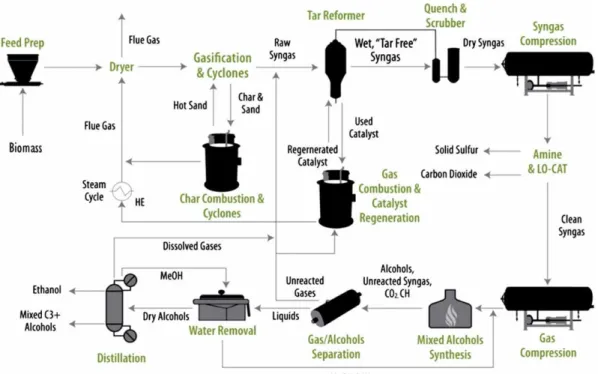
The gaseous products composition is influenced by many factors such as the feed composition, water content, reaction temperature, and the extent of oxidation of the pyrolysis products (Bridgwater, 1995). A schematic process flow diagram for thermochemi-cal conversion of sugarcane bagasse to ethanol, based on the 2007 NREL design report (Phillips
et al., 2007) for hardwood conversion to mixed alcohols using indirect steam gasification, developed by Seabra et al. (2010), is presented in Figure 5.
The gases generated are cleaned by removing the tars, and then filtered and the clean gas collected ready for use. Each syngas component (CO, CO2, CH4, H2 etc.) could be recovered, separated and utilized. The volatile tar component, which can act as a technical barrier to large-scale production, has been exploited as a feedstock for value-added chemicals by companies such as Choren, Ensyn and Enerkem (Branca and Di Blasi, 2006).