ISSN 0104-6632 Printed in Brazil
www.abeq.org.br/bjche
Vol. 30, No. 04, pp. 711 - 720, October - December, 2013
Brazilian Journal
of Chemical
Engineering
SCREENING AND SELECTION OF WILD STRAINS
FOR L-ARABINOSE ISOMERASE PRODUCTION
R. M. Manzo
1, A. C. Simonetta
2, A. C. Rubiolo
1and E. J. Mammarella
1*1
Grupo de Ingeniería de Alimentos y Biotecnología, Instituto de Desarrollo Tecnológico para la Industria Química, Universidad Nacional del Litoral (UNL), Consejo Nacional de Investigaciones Científicas y Técnicas (CONICET),
Phone: + (54) (342) 451 1546, (Ext. 1077), Fax: + (54) (342)-451 1170, Colectora RN n° 168 Km. 472, “Paraje El Pozo” S/N (S3000GLN) Santa Fe, Argentina.
E-mail: [email protected]
2
Cátedras de Microbiología y Biotecnología, Departamento de Ingeniería en Alimentos, Facultad de Ingeniería Química (FIQ), Universidad Nacional del Litoral (UNL), Phone/Fax: + (54) (342) 457 1164, (Ext. 2541)/ 4571164 (Int. 2535),
Santiago del Estero 2829, (S3000AOM) Santa Fe, Argentina.
(Submitted: May 29, 2012 ; Revised: October 16, 2012 ; Accepted: December 4, 2012)
Abstract - The majority of L-arabinose isomerases have been isolated by recombinant techniques, but this methodology implies a reduced technological application. For this reason, 29 bacterial strains, some of them previously characterized as L-arabinose isomerase producers, were assayed as L-arabinose fermenting strains by employing conveniently designed culture media with 0.5% (w/v) L-arabinose as main carbon source. From all evaluated bacterial strains, Enterococcus faecium DBFIQ ID: E36, Enterococcus faecium DBFIQ ID: ETW4 and Pediococcus acidilactici ATCC ID: 8042 were, in this order, the best L-arabinose fermenting strains. Afterwards, to assay L-arabinose metabolization and L-arabinose isomerase activity, cell-free extract and saline precipitated cell-free extract of the three bacterial cultures were obtained and the production of ketoses was determined by the cysteine carbazole sulfuric acid method. Results showed that the greater the L-arabinose metabolization ability, the higher the enzymatic activity achieved, so Enterococcus faecium
DBFIQ ID: E36 was selected to continue with production, purification and characterization studies. This work thus describes a simple microbiological method for the selection of L-arabinose fermenting bacteria for the potential production of the enzyme L-arabinose isomerase.
Keywords: L-arabinose isomerase; D-galactose; D-tagatose; Cheese whey; Microbiological method.
INTRODUCTION
The dairy industry is one of the most important and relevant industries in Argentina. According to the 2009 dairy secretary report, our industries have re-ceived more than 1.0×10¹⁰ liters of raw cow milk. Approximately 75% of the total production is destined to the production of solid milk products. Cheese, in all its varieties, is the most important and popular dairy product, with more than 508,000 tons being produced, equivalent to 5.0×10⁹ liters of raw milk (Indicadores Lácteos 2009). However, indus-trial cheese elaboration has some economic and downstream difficulties, mainly related to cheese
industry for producing food additives (Tunick 2008). Although many products are elaborated from cheese whey, none of them substantially increase the economic and technological value of the raw mate-rial (namely commodities) and advantage is not taken of a great quantity of cheese whey. Therefore, it is important to develop and apply combined research and development strategies in order to achieve value-added products, given the importance of the Argentinean dairy industry. Besides, it is relevant to highlight that whey protein exploitation has been extensively studied by the scientific community. In this sense, lactose, besides its low water solubility and intolerance to a part of world’s population (Schaafsma, 2002; Gänzle et al., 2008; Wilt et al., 2010), is currently under an increased interest of research for achievement of value-added products, because it is only used for obtaining some foods, pharmacological-grade lactose and glucose-galactose syrup (Schaafsma, 2008).
Therefore, lactose conversion is an interesting alternative for obtaining value-added products. In fact, D-tagatose, one of the most valued and promising nutraceuticals, is a ketohexose monosaccharide sweetener, which is an isomer of D-galactose. It occurs naturally in Sterculia setigera gum, and is also found in small amounts in several foods such as sterilized and powdered cow milk, hot cocoa, and a variety of cheeses, yogurts, and other dairy products (Levin et al., 1995; Mendoza et al., 2005). D-Tagatose has unique properties as a functional sweetener because its sweetness profile is similar to that of sucrose and possesses no cooling effect or aftertaste. Its bulk value is also similar to that of sucrose, while its humecting properties are close to those of D-sorbitol. D-Tagatose, recognized as a GRAS sub-stance by FAO/WHO since 2001, can be used as a low-calorie sweetener (1.5 kcal g-1), as an intermedi-ate for synthesis of other optically active compounds, and as an additive in detergent, cosmetic, and phar-maceutical formulations (Levin 2002; Kim 2004; Jørgensen et al. 2004).
Actually, D-tagatose is obtained chemically from D-galactose (Beadle et al., 1992; Kim et al., 2003) in an unspecific isomerization procedure that, though cheap, has many disadvantages, including sub-product formation, extremes conditions, sweetness reduction and generation of chemical wastes. Thus, an enzymatic process provides a feasible alternative for this ketohexose production. Besides, although several patented enzymatic processes exist (Ibrahim and Spradlin, 2000; Bertelsen et al., 2001), to date none of them are operational. Therefore, the development of enzymatic technologies employing
the enzyme L-arabinose (D-galactose) isomerase (EC 5.3.1.4) is necessary for constructing a significant and feasible D-tagatose manufacturing process.
In this work, we report a microbiological method for the selection of wild-type L-arabinose isomerase producing strains using both the ability of bacteria to produce acids and evaluation of cell growth with L-arabinose. This will allow the identification of new sources of the enzyme L-arabinose isomerase and the establishment of a simple, reproducible and adequate process for strain selection. Finally, this methodol-ogy will permit selection of the best pentose isomerase to be studied and allow preliminary comparisons between different L-arabinose isomerases through evaluation of the enzymatic activity of cell-free extracts.
MATERIALS AND METHODS
Bacterial Strains
Table 1 shows the group of 29 bacterial strains used in this study. All of them were species or sub-species previously identified employing the taxonomic keys given by the 2nd Edition of Bergey’s Manual of Systematic Bacteriology Volume 2 Part B (Brenner et al., 2005) and Volume 3 (De Vos et al., 2009) except for Enterococcus faecium DBFIQ ID: E36, which was also PCR-identified by partial sequencing of 16S rDNA. In the case of E. faecium DBFIQ ID: E36, vancomycin resistance and β-hemolysis tests were also performed. The collection was chosen based mainly on their previously reported ability to metabolize L-arabinose as the main carbon source, including technologically interesting bacteria that had not yet been characterized and identified as potential L-arabinose isomerase producing strains.
Bacterial DNA Isolation, PCR Conditions, Primers and Nucleotide Sequence Analysis for Enterococcus Strain Identification
template. The PCR reaction mixture included 2.5 U of Taq polymerase (GE Healthcare, Little Chalfont, United Kingdom), 200 nM of dNTPs and 400 nM of each primer (Sigma-Genosys, The Woodlands, TX, USA) in a 50 µL final volume. A negative reaction control without DNA was conducted. Amplification was performed in a GeneAmp PCR System (Applied Biosystems, Foster City, CA, USA) under the following conditions: 3 min at 94 °C, 36 cycles of 1 min at 94 °C, 2 min at 51 °C and 2 min at 72 °C, and a final step of 7 min at 72 °C. PCR products were visualized on 1.5% agarose gels in TBE buffer, with added GelRed (Biotium, Hayward, CA, USA), and visualized by UV light (Sambrook and Russell 2001). The PCR amplification product was purified using the GenEluteTM PCR clean-up kit (Sigma,
St Louis, MO, USA) and the nucleotide sequences were determined by primer extension at the DNA Sequencing Service of Macrogen Inc. (Seoul, Korea). Sequence data were assembled and compared using a sequence analysis software package available from the EMBL Spanish node (CNB, CSIC, Spain). The strain-identity was evaluated by nucleotide-nucleotide BLAST sequence alignment and comparison using the NCBI database (http://www.ncbi.nlm.nih.gov/blast).
Culture Preservation
Long-term preservation was done by lyophiliza-tion, in order to have safe and stable stock cultures. First, cells were collected from cultures, suspended in 10% skimmed milk and frozen at -20 °C. Then,
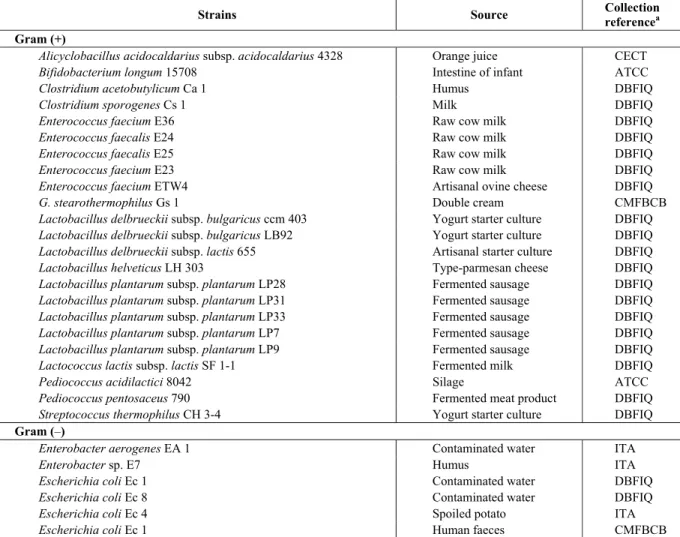
Table 1: Bacterial strains used in this study.
Strains Source Collection
referencea Gram (+)
Alicyclobacillus acidocaldarius subsp. acidocaldarius 4328 Orange juice CECT
Bifidobacterium longum 15708 Intestine of infant ATCC
Clostridium acetobutylicum Ca 1 Humus DBFIQ
Clostridium sporogenes Cs 1 Milk DBFIQ
Enterococcus faecium E36 Raw cow milk DBFIQ
Enterococcus faecalis E24 Raw cow milk DBFIQ
Enterococcus faecalis E25 Raw cow milk DBFIQ
Enterococcus faecium E23 Raw cow milk DBFIQ
Enterococcus faecium ETW4 Artisanal ovine cheese DBFIQ
G. stearothermophilus Gs 1 Double cream CMFBCB
Lactobacillus delbrueckii subsp. bulgaricus ccm 403 Yogurt starter culture DBFIQ Lactobacillus delbrueckii subsp. bulgaricus LB92 Yogurt starter culture DBFIQ Lactobacillus delbrueckii subsp. lactis 655 Artisanal starter culture DBFIQ Lactobacillus helveticus LH 303 Type-parmesan cheese DBFIQ Lactobacillus plantarum subsp. plantarum LP28 Fermented sausage DBFIQ Lactobacillus plantarum subsp. plantarum LP31 Fermented sausage DBFIQ Lactobacillus plantarum subsp. plantarum LP33 Fermented sausage DBFIQ Lactobacillus plantarum subsp. plantarum LP7 Fermented sausage DBFIQ Lactobacillus plantarum subsp. plantarum LP9 Fermented sausage DBFIQ Lactococcus lactis subsp. lactis SF 1-1 Fermented milk DBFIQ
Pediococcus acidilactici 8042 Silage ATCC
Pediococcus pentosaceus 790 Fermented meat product DBFIQ Streptococcus thermophilus CH 3-4 Yogurt starter culture DBFIQ
Gram (–)
Enterobacter aerogenes EA 1 Contaminated water ITA
Enterobacter sp. E7 Humus ITA
Escherichia coli Ec 1 Contaminated water DBFIQ
Escherichia coli Ec 8 Contaminated water DBFIQ
Escherichia coli Ec 4 Spoiled potato ITA
Escherichia coli Ec 1 Human faeces CMFBCB
a
cultures were placed in the stand and allowed to freeze at -30 °C. After that, vacuum was applied at an inner pressure of 0.026 mbar for 12 hours, keeping the stand temperature at -30 °C. Next, a ramp temperature from -30 °C to 25 °C in 12 hours was applied in order to eliminate strongly-attached mois-ture. Finally, tubes were heat-sealed under vacuum and stored as reference cultures or until use. Besides, all bacterial strains were frozen at -20 °C and -80 °C in: MRS Broth (Biokar Diagnostic, Beauvais, France) for lactic acid bacteria except for enterococci, M17 Broth for Enterococcus, Trypticase Soy Broth for Geobacillus stearothermophilus, Nutrient Broth for Gram (-) bacteria (all from Difco Laboratories, Detroit, MI, USA) and Bacillus acidocaldarius medium (BAM; Darland and Brock 1971) for Alicyclobacillus acidocaldarius subsp. acidocaldarius. Moreover, Clostridium acetobutylicum was preserved as spores at -20 °C and -80 °C in Thioglycollate Broth with Resazurin (Biokar Diagnostic, Beauvais, France). Clostridium sporogenes was also conserved as spores in UHT milk and B. longum was preserved in MRSC broth [MRS Broth (Biokar) supplemented with 0.1% (v/v) L-cysteine (Sigma Chemical Co., St. Louis, MO, USA)] in an anaerobic jar (Oxoid, Cambridge, UK) under a 80% (v/v) N2, 10% (v/v) CO2 and 10% (v/v) H2 atmosphere employing an anaerobic cultivation system (AnaeroPack-Anaero, MGC, Japan). All preservation media were supple-mented with 20% (v/v) glycerol (Heckly 1978).
Culture Medium Design and Production
In order to evaluate conveniently L-arabinose consumption, culture media were designed by modi-fication of preexisting ones or created for this specific purpose. Therefore, for lactic acid bacteria, MRS medium without meat extract, peptone and D-glucose and with the addition of 0.002% (w/v) Chlorophenol Red (Fluka, pH range: 4.8-6.7) was prepared. For B. longum, the same modified medium that was used for lactic acid bacteria with extra addition of 0.1% (w/v) cysteine was employed (Kimmel et al. 1998). On the other hand, a medium for Enterobacteriaceae, identified as MPE, with the following composition (g L-1): yeast extract, 2.5, and peptone, 5.0, was created. For Bacillus species, a medium described in Volume Three of Bergey’s Manual of Systematic Bacteriology (De Vos et al., 2009) was used, whereas for clostridia, modified reinforced clostridial medium (MRC medium) without starch, meat extract and D-glucose was employed. Lastly, BAM medium without D-glucose was used for A. acidocaldarius subsp. acidocaldarius. All
basic culture media were sterilized at 1 atm for 15 minutes and L-arabinose, sterilized by filtration using 0.22 μm pore diameter membranes (Sartorius), was added separately to all media at a 0.2% (w/v) final concentration.
Fermentation Assay
From stock cultures, two successive culturing procedures were made in order to achieve exponential phase growth cultures. Solid-phase assay was realized by spreading each bacterium into its corresponding agar-added (20 g L-1) culture medium. Liquid-phase trials were done by transferring 0.1 mL of the previous culture to 5 ml of each designed medium (Zamudio and Zavaleta 2003). Cultures were incubated at 37 ºC for 24-48 hours (lactic acid bacteria), 37 ºC for 24 hours (Enterobacteriaceae), 45 ºC during 72 hours (A. acidocaldarius subsp. acidocaldarius) and 55 ºC during 4-6 days (G. stearothermophilus). Clostridial species and B. longum were grown anaerobically in a modified atmosphere at 37 ºC during 24-48 hours employing an anaerobic jar (Oxoid). Lactic acid bac-teria were grown in culture media with a pH indica-tor in their composition, so that acid production from L-arabinose metabolization could be detected by the pH indicator color change. The principal criterion related to lactic acid bacteria was thus an indicator color change; otherwise the assay was considered negative. Finally, considering Gram (-) and the rest of the Gram (+) bacterial strains, only a cell growth equal or higher than 1 × 10⁹ CFU mL-1 in the corre-sponding media was utilized as a positive selection criterion.
For each experiment, control medium, which consisted of base medium without added L-arabinose was inoculated with the corresponding bacterium in order to check for unspecific cell growth or color shift.
Cell-Free Extract Production
hours (Zhang et al. 2007). Cells obtained were har-vested by centrifugation at 5000 rpm for 15 minutes at 4 ºC, resuspended in 500 mL of 50 mM phosphate buffer, pH 7.0 (activity buffer), and treated with 1 mg mL-1 lysozyme for 3 hours at 37 ºC. Then, the cell suspension was disrupted by pulsed sonication (20 W, pulse on, 4 s; pulse off, 3 s) for 40 min at 4 ºC and, afterwards, remaining cell debris was removed by centrifugation at 20,000×g for 30 min at 4 ºC. Then, cell-free extract was sterilized by filtration using 0.22 μm pore diameter membranes (Sartorius) and stored at -20 °C. Subsequently, the cell-free extract obtained was aliquoted in two halves where one was stored at -20 °C and the other was saline-fractionated by adding solid (NH4)2SO4 at 80% saturation, followed by 24 hours of incubation at 4 ºC with periodic stirring. Finally, this fraction was centrifuged at 12,000×g during 30 minutes at 4 ºC and the pellet was redissolved in 100 mL of activity buffer.
In a subsequent study, in order to recover more enzyme activity, a protein precipitation assay using the same conditions described above but employing different ammonium sulfate concentrations (40, 60, 80, 85, 90 and 100% saturation) was performed.
Enzyme Assay and Protein Quantification
L-Arabinose isomerase activity was calculated by measurement of the amount of generated L-ribulose or D-tagatose. The reaction mixture contained 1mM MnCl2, 250 mM L-arabinose or D-galactose (Sigma-Aldrich; St. Louis, MO, USA), 0.1 mg of properly diluted enzyme preparation and 50 mM pH 7.0 phosphate buffer to bring the final volume to 1 mL. The assay was done by first incubating the mixture without the enzyme at the test temperature; the enzyme was then added and incubated at 50 °C for 1 hour. Subsequently, the enzymatic reaction was stopped by cooling the samples on ice. The generated L-ribulose or D-tagatose was determined by the cysteine carbazole sulfuric acid method (Dische and Borenfreund, 1951). Standard calibra-tion curves with L-ribulose or D-tagatose (Sigma-Aldrich, St. Louis, MO, USA) were elaborated in order to quantify the ketoses produced. One unit of L-arabinose isomerase activity was defined as the amount of enzyme catalyzing the formation of 1 µmol keto-sugar per minute under above specified conditions. Protein concentration was assessed by the Bradford method employing Bovine Serum Albumin (Sigma-Aldrich; St. Louis, MO, USA) as a standard protein (Bradford, 1976).
RESULTS
Strain Identification and PCR Identification of the Selected Enterococcus Strain
PCR identification was performed in order to confirm the genotypic characteristics of Enterococcus faecium DBFIQ ID: E36. This strain was previously identified as Enterococcus sp., so full identification was performed by combining phenotypic and geno-typic tests, given the importance of this strain for our study. Partial sequencing of the 16S rDNA gene revealed more than 99% homology with the strain E. faecium according to Genbank access number Y 18294. All results from the phenotypic tests per-formed match up with E. faecium taxonomic keys given in volume 3 of Bergey’s Manual. In particular, E. faecium DBFIQ ID: E36 strain turned out to be both non-β-hemolytical and sensitive to the vanco-mycin resistance test.
All other strains were previously identified em-ploying the taxonomic keys provided in volumes 2 and 3 of the 2nd edition of Bergey’s Manual of Systematic Bacteriology and they are not shown in this work.
Fermentation Assay
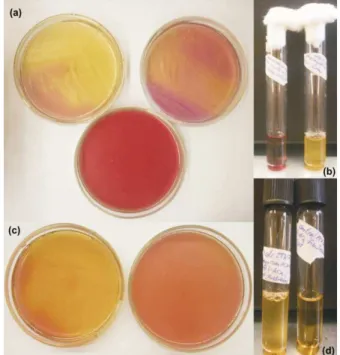
Table 2 shows L-arabinose fermentation results obtained after growing each bacterial strain in their corresponding differential culture medium. L. plantarum species behaved disparately, while DBFIQ ID: LP9 and DBFIQ ID: LP28 did not produce a color shift and DBFIQ ID: LP7 generated an interest-ing shift change. L. delbrueckii subsp. bulgaricus 92, L. helveticus 303 and B. longum ATCC ID: 15708 barely showed the ability to ferment L-arabinose, but the results were considered as positive [Fig. 1 (b)]. Enterococcus strains presented several disparities between each other. E. faecalis DBFIQ ID: E25 and E. faecium DBFIQ ID: E23 were negative in the microbiological test while E. faecalis DBFIQ ID: ETW4 gave a very positive test result, as can be seen in Figure 1 (a). In between, E. faecalis DBFIQ ID: E24 only covered from 25 to 50% of the total area of the Petri dish, but E. faecium DBFIQ ID: E36 proved to be the best L-arabinose fermenting strain, covering almost 100% of the total area, as can be seen in Fig. 1 (c).
ID: CH 3-4 and L. delbrueckii subsp. bulgaricus DBFIQ ID: ccm 403 also were negative in the fermentation test, although they experienced a slight cell growth. P. pentosaceus DBFIQ ID: 790 and L. delbrueckii subsp. lactis DBFIQ ID: 655 grew in both media, but no color change was evidenced, so the results were considered negative. P. acidilactici ATCC ID: 8042 behaved as one of the best L-arabinose metabolizing strains by color shifting up to 75% of the Petri dish area.
Table 2: Results of L-arabinose bacterial fermen-tation assays obtained after growing each bacterial strain in their corresponding differential culture medium.
Strains Percentage area shifted/Cell Growtha Gram (+)
A. acidocaldarius subsp.
acidocaldarius 4328 -
B. longum 15708 + C. acetobutylicum Ca 1 +
C. sporogenes Cs 1 -
E. faecium E36 +++
E. faecalis E24 +
E. faecalis E25 -
E. faecium E23 -
E. faecium ETW4 ++
G. stearothermophilus Gs 1 - L. delbrueckii subsp. bulgaricus
ccm 403 -
L. delbrueckii subsp. bulgaricus 92 +
L. delbrueckii subsp. lactis 655 - L. helveticus LH 303 +
L. plantarum LP28 -
L. plantarum LP31 +
L. plantarum LP33 +
L. plantarum LP7 ++
L. plantarum LP9 -
L. lactis subsp. lactis SF 1-1 - P. acidilactici 8042 ++ P. pentosaceus 790 - S. thermophilus CH 3-4 -
Gram (–)
E. aerogenes EA 1 +
Enterobacter sp. E7 +
E. coli Ec 1 +
E. coli Ec 8 +
E. coli Ec 4 +
E. coli Ec 1 +
a
Positivity of assay was evaluated by measuring the percentage area that shifted the indicator color relative to the total area of the Petri dish [for Gram (+) bacteria except for clostridia] or by testing cell growth [for Gram (-) bacteria and clostridia]. Color changed area (in quartiles): (-), 0-25%; (+), 25-50%; (++), 50-75%; (+++), 75-100%.
A. acidocaldarius CECT ID: 4328 did not grew in Bacillus medium because the pH was not acidic enough, which is essential for an adequate strain growth. However, employing BAM medium, it was
possible to achieve a faint and slow cell growth in liquid medium, although not in a solid culture, because acid pH caused agar hydrolysis, which made it impossible to see growth results. For these reasons, results were ascribed as negative. Another Bacillus species, G. stearothermophilus DBFIQ ID: Cs 1, was assayed. This strain, in relation to A. acidocaldarius, showed a vague color change due to pH in solid medium and turbidity in liquid medium; neverthe-less, the results were considered negative.
Finally, C. sporogenes was negative in the fermentation test, which coincides with volume 3 of Bergey’s Manual, whereas for C. acetobutylicum L-arabinose turned out to be a good substrate for fermentation (from 25 to 50% of the total Petri dish area covered) and the results were taken as positive.
Gram (-) bacteria were assessed according to their growth ability in the corresponding culture media. Due to the slow acid production rate, pH variation from sugar fermentation was not be evaluated and only cell growth was assessed. As shown in Table 2, all enterobacterial strains developed in solid and liquid culture media with added L-arabinose. Fig. 1 (d) shows E. coli ITA ID: Ec 4 cell growth in the above specified L-arabinose modified medium.
Each result showed in Table 2 is a combination of three independent tests. In all tests, the controls turned out to be negative.
Cell-Free Extract Enzyme Assay
The best four L-arabinose fermenting strains, E. faecium DBFIQ ID: E36, E. faecium DBFIQ ID: ETW4, P. acidilactici ATCC ID: 8042 and L. plantarum DBFIQ ID: LP7 were selected for cell-free extract production. Table 3 shows the enzymatic activity results after assaying the isomerization ability of each cell-free extract employing L-arabinose and D-galactose as substrates. It can be seen that the cell-free extract from both Enterococcus strains produced L-ribulose as the ketohexose product from L-arabi-nose, but D-tagatose production could not be detected in the three cell-free extracts assayed. However, saline precipitated cell-free extract produced D-tagatose from D-galactose after enzymatic assay of the three strains. In addition, the selected L. plantarum strain did not produce D-tagatose from D-galactose, but showed a reasonable production of L-ribulose from L-arabinose, indicating that the enzyme produced by this bacterium would not be suitable for D-galactose exploitation. These results demonstrate that E. faecium DBFIQ ID: E36 is one of the most active strains in L-arabinose fermentation and L-arabinose isomerase production, showing proportionality between the fermentation assay and enzymatic activity results. Therefore, E. faecium DBFIQ ID: E36 was selected as the first producer strain, followed by E. faecium DBFIQ ID: ETW4 and P. acidilactici ATCC ID: 8042, respectively, in concordance with the two experiments. The other strain was discarded for this study, but could be interesting for its potential use as L-ribulose producer, a precursor for the synthesis of antiviral drugs (Cho et al., 2005).
DISCUSSION
Over the last ten years, many authors have described the biological production of D-tagatose from D-galactose employing the enzyme L-arabinose isomerase isolated from several bacterial sources. Different technological criteria concerning a higher isomerization rate and conversion yield and de-creased viscosity of the substrate in the product stream, have highlighted enzymes with increased thermal stability and optimum temperature (Prabhu et al. 2008; Lee et al. 2005). However, this does not benefit other important technological aspects related to the process such as the low-growth kinetics of the isolated thermophilic or hyperthermophilic organisms (such as A. acidocaldarius CECT ID: 4328 and G. stearothermophilus CMFBCB ID: Gs1), the unsafe and harmful environments where they were obtained (Lee et al. 2004; Kim et al. 2002) and the already mentioned undesirable effects, such as browning and unwanted by-product formation (Kim, 2004; Liu et al., 1996). The absence of these characteristics makes it very difficult to obtain, in a non-recombinant way, enough quantity of the target enzyme. This compels, as described by many authors, the use of molecular biology techniques for recombinant enzyme expression, purification and characterization, such as gene extraction, fitting-out, cloning and protein expression in heterologous vectors. This means that all hygienic and sanitary consequences of manipulation of DNA sequences and utilization of non-GRAS host microorganisms such as E. coli must be considered, so a direct technological applicability remains uncertain when a food product for human use is to be designed (Burdock and Carabin, 2004). These limitations can be avoided by producing L-arabinose isomerase in a non-recombinant mode using generally regarded as safe (GRAS) wild-type organisms. For this aim, we
Table 3: Enzymatic activity results after assaying the isomerization ability of each cell-free extract employing L-arabinose and galactose as substrates. Specific enzymatic activity expressed as µmol of D-tagatose produced min-1µg protein-1.
Strains E. faecium DBFIQ ID: E36
E. faecium DBFIQ ID: ETW4
P. acidilactici ATCC ID: 8042
L. plantarum DBFIQ ID: LP7
Cell-free extract
L-ribulose 51.8 15.2 0.0 8.9
D-tagatose 0.0 0.0 0.0 0.0
80% saline precipitated cell-free extract
L-ribulose 131.6 97.7 10.0 65.2
D-tagatose 7.2 6.9 4.9 0.0
have focused on lactic acid bacteria because they are GRAS bacteria, possess a high cell growth rate, are employed in numerous food products and are meso-phile organisms, so culture conditions are cheaper, more reproducible and feasible to be carried out in food industries. In this sense, our L-arabinose isomerase does not possess the highest conversion yield but, as indicated by Hugenholtz and Smid (2002) and Hugenholtz et al. (2002), may permit a more viable technological process for obtaining a human food product or additive.
This is the first scientific work that describes a simple, fast and reliable methodology to identify fast-growing L-arabinose fermenting bacteria. This assay was designed by assuming the following considerations: a) that the expression of the enzyme L-arabinose isomerase and the entire L-arabinose metabolic pathway is induced by the addition to cultures of the pentose L-arabinose (Dobrogosz and DeMoss, 1963); b) that bacteria which can metabolize L-arabinose, isomerize it to L-ribulose because they possess the enzyme L-arabinose isomerase as the first enzyme in the L-arabinose metabolic pathway (Heath et al. 1958). This methodology probably has an important disadvantage of low sensibility because a negative result does not mean the absence of L-arabinose fermenting activity. However, with the development of the assay, only bacteria with a good ability of cell-growing and L-arabinose metaboliza-tion stand out. Besides, it could be used as an initial step for L-arabinose fermenting strain selection before applying recombinant DNA techniques.
Non-lactic acid bacteria were employed in order to study a wide spectrum of bacteria, analyze the behavior of the corresponding methodology in the presence of previously characterized L-arabinose isomerase producing bacteria and compare them with lactic acid bacteria. In this sense, all Gram (-) bacteria grew in their corresponding modified L-arabinose fermenting medium, which matches up with the information given in volume 2 of Bergey’s Manual of Systematic Bacteriology and with scientific publications (Yamanaka and Wood, 1966; Patrick and Lee, 1975; Yoon et al., 2003). However, growth in modified medium was not as good as lactic acid bacteria performance and, furthermore, all the desired requirements were not fulfilled, so they were not considered as potential L-arabinose isomerase producers. Finally, A. acidocaldarius CECT ID: 4328 and G. stearothermophilus CMFBCB ID: Gs1 also did not show the preferred technological characteristics and they were not selected as potential producers of the mentioned enzyme.
However, studies were focused on lactic acid bacterial strains, considering both the technological characteristics above and results obtained with the acid-carbohydrate fermentation technique. From the results, it can be said that the L-arabinose fermenta-tion ability is strain-dependent, as shown by the results obtained with several L. plantarum strains tested, which must be understood as a variable phenotypic characteristic of each strain, depending primarily on its isolation source. Between different enterococci, we have also evidenced the same behavior as lactobacilli. In fact, E. faecium DBFIQ ID: E23 and DBFIQ ID: E24 strains did not show a considerable L-arabinose fermenting ability, while DBFIQ ID: ETW4 and DBFIQ ID: E36 strains were evaluated and selected as two of the best L-arabinose fermenting bacteria in this assay.
From the results, it can be affirmed that there exists a correlation between the microbiological and the enzymatic activity assays. In that way, E. faecium DBFIQ ID: E36, E. faecium DBFIQ ID: ETW4 and P. acidilactici ATCC ID: 8042 were, in this order, the best L-arabinose fermenting strains, a connection that was still maintained in the cell-free extract and redissolved saline precipitated enzymatic assays. Furthermore, this means that L-arabinose fermenting ability is directly related to L-arabinose isomerase produced by each bacterium, so the greater the L-arabinose fermenting ability, the more L-arabinose isomerase produced.
After analyzing Table 3, cell-free extract concen-tration by saline precipitation was necessary in order to detect D-tagatose production. Although D-tagatose biosynthesis remained low, it was always above the colorimetric assay detection limit. Besides, even if D-tagatose production was higher in E. faecium DBFIQ ID: E36 than in E. faecium DBFIQ ID: ETW4, both quantities remained close to each other, so it was not possible to categorically select only one strain according to this criterion. D-Tagatose production could be increased by optimization of cell-free extract production and enzymatic assay.
techno-logical potential if used in fermented foods or as an additive.
Thus, from this study, E. faecium DBFIQ ID: E36
strain was selected to produce the enzyme L-arabinose isomerase, which had not yet been studied
in this genus. This strain belongs to the lactic acid bacteria which are considered by FAO and WHO as GRAS organisms. Consequently, it can be directly employed in industrial bioprocesses for production of value-added products from cheese whey or other industrial by-products (Rhimi et al., 2007). Finally, current studies are centered on non-recombinant L-arabinose isomerase production, purification and characterization from chosen wild-type strains.
ACKNOWLEDGEMENTS
This work was partially sponsored with funds of the projects CAI+D 2009 Tipo II PI-64-325 (Universidad Nacional del Litoral, Santa Fe, Argentina), PIP Nº 112-200801-01331 (Consejo Nacional de Investigaciones Científicas y Técnicas, Buenos Aires, Argentina) and PICT-2004 Nº 20152 (Agencia Nacional de Promoción Científica y Tecnológica, Buenos Aires, Argentina).
REFERENCES
Beadle, J. R., Saunder, J. P., Wajada, T. J., Process for manufacturing tagatose. US Patent 5,078,796 (1992).
Bertelsen, H., Eriknauer, K., Bottcher, K., Christensen, H. J., Stougaard, P., Hansen, O. C., Jørgensen, F., Process for manufacturing of tagatose. US Patent 6,991,923 (2001).
Bradford, M. M., A rapid and sensitive method for the quantitation of microgram quantitites of protein utilizing the principle of protein-dye binding. Anal. Biochem., 72, 248-254 (1976). Brenner, D. J., Krieg, N. R., Staley, J. T., (Eds.)
Bergey’s Manual of Systematic Bacteriology, Volume Two: The Proteobacteria. Part B: The Gammaproteobacteria.2nd Ed. Springer Science+ Business Media, LLC, 233 Spring Street, New York, NY 10013, USA (2005).
Burdock, G. A., Carabin, I. G., Generally recognized as safe (GRAS): History and description. Toxicol. Lett., 150, 3-18 (2004).
Cho, B. H., Kim, J. H., Jeon, H. B., Kim, K. S., A new efficient and practical synthesis of 2-deoxy-l-ribose. Tetrahedron, 61, 4341-4346 (2005).
Darland, G., Brock, T. D., Bacillus acidocaldarius, and acidophilic thermophilic spore-forming bac-terium. J. Gen. Microbiol., 67, 9-15 (1971). De Vos, P., Garrity, G., Jones, D., Krieg, N. R., Ludwig,
W., Rainey, F. A., Schleifer, K. H., Whitman, W. B., (Eds.) Bergey’s Manual of Systematic Bacte-riology, Volume Three: The Firmicutes. 2nd Ed. Springer Science+Business Media, LLC, 233 Spring Street, New York, NY 10013, USA (2009). Dische, Z., Borenfreund, E., A new
spectropho-tometric method for the detection and determina-tion of keto sugars and trioses. J. Biol. Chem., 192, 583-587 (1951).
Dobrogosz, W. J., DeMoss, R. D., Pentose utilization by Pediococcus pentosaceus. J. Bacteriol., 85, 1356-1364 (1963).
Edwards, U., Rogall, T., Blöcker, H., Emde, M., Böttger, E. C., Isolation and direct complete nu-cleotide determination of entire genes. Charac-terization of a gene coding for 16S ribosomal RNA. Nucleic Acid Res., 17, 7843-7853 (1989). Gänzle, M. G., Haase, G., Jelen, P., Lactose:
Crystallization, hydrolysis and value-added derivatives. Int. Dairy J., 18, 685-694 (2008). Heath, E. C., Horecker, B. L., Smyrniotis, P. Z.,
Takagi, Y., Pentose fermentation by Lactobacillus plantarum: II. L-arabinose isomerase. J. Biol. Chem., 231, 1031-1037 (1958).
Heckly, R. J., Preservation of microorganisms. Adv. Appl. Microbiol., 24, 1-53 (1978).
Hugenholtz, J., Smid, E. J., Nutraceutical production with food-grade microorganisms. Curr. Opin. Biotechnol., 13, 497-507 (2002).
Hugenholtz, J., Sybesma, W., Groot, M. N., Wisselink, W., Ladero, V., Burgess, K., van Sinderen, D., Piard, J. C., Eggink, G., Smid, E. J., Savoy, G., Sesma, F., Jansen, T., Hols, P., Kleerebezem, M., Metabolic engineering of lactic acid bacteria for the production of nutraceuticals. Antonie van Leeuwenhoek, 82, 217-235 (2002).
Ibrahim, O. O., Spradlin, J. E., Process for manufac-turing D-tagatose. US Patent 6,057,135 (2000). Indicadores lácteos, Subsecretaría de lechería.
Secretaría de agricultura, ganadería y pesca, Ministerio de agricultura, ganadería y pesca, Presidencia de la Nación, República Argentina. http://www.minagri.gob.ar/SAGPyA/ganaderia/le cheria/index.php (2009). (Accessed: February 24, 2011). (In Spanish).
Thermoanaerobacter mathranii. Appl. Microbiol. Biotechnol., 64, 816-822 (2004).
Kim, B. C., Lee, Y. H., Lee, H. S., Lee, D. W., Choe, E. A., Pyun, Y. R., Cloning, expression and characterization of L-arabinose isomerase from Thermotoga neapolitana: Bioconversion of D-galactose to D-tagatose using the enzyme. FEMS Microbiol. Lett., 212, 121-126 (2002).
Kim, H. J., Ryu, S. A., Kim, P., Oh, D. K., A feasible enzymatic process for D-tagatose production by an immobilized thermostable L-arabinose isomerase in a packed-bed bioreactor. Biotechnol. Prog., 19, 400-404 (2003).
Kim, P., Current studies on biological tagatose production using L-arabinose isomerase: A review and future perspective. Appl. Microbiol. Biotechnol., 65, 243-249 (2004).
Kimmel, S. A., Roberts, R. F., Ziegler, G. R., Optimization of exopolysaccharide production by Lactobacillus delbrueckii subsp. bulgaricus RR grown in a semidefined medium. Appl. Environ. Microbiol., 64, 659-664 (1998).
Lee, D. W., Hong, Y. H., Choe, E. A., Lee, S. J., Kim, S. B., Lee, H. S., Oh, J. W., Shin, H. H., Pyun, Y. R., A thermodynamic study of mesophilic, thermo-philic, and hyperthermophilic L-arabinose isom-erase: The effects of divalent metal ions on protein stability at elevated temperatures. FEBS Lett., 579, 1261-1266 (2005).
Lee, D. W., Jang, H. J., Choe, E. A., Kim, B. C., Lee, S. J., Kim, S. B., Hong, Y. H., Pyun, Y. R., Characterization of a thermostable L-arabinose (D-galactose) isomerase from the hyperthermo-philic eubacterium Thermotoga maritima. Appl. Environ. Microbiol., 70, 1397-1404 (2004). Levin, G. V., Tagatose, the new GRAS sweetener and
health product. J. Med. Food, 5, 23-36 (2002). Levin, G. V., Zehner, L. R., Saunders, J. P., Beadle, J.
R., Sugar substitutes: Their energy values, bulk characteristics and potential health benefits. Am. J. Clin. Nutr., 62, 1161S-1168S (1995).
Liu, S. Y., Wiegel, J., Gherardini, F. C., Purification and cloning of a thermostable xylose (glucose) isomerase with an acidic pH optimum from Thermoanaerobacterium strain JW/SL-YS 489. J. Bacteriol., 178, 5938-5945 (1996).
Mendoza, M. R., Olano, A., Villamiel, M., Chemical indicators of heat treatment in fortified and special milks. J. Agric. Food Chem., 53, 2995-2999 (2005). Patrick, J., Lee, N., L-arabinose isomerase. Methods
Enzymol., 41, 453-458 (1975).
Prabhu, P., Tiwari, M. K., Jeya, M., Gunasekaran, P., Kim, I. W., Lee, J. K., Cloning and characteriza-tion of a novel L-arabinose isomerase from Bacillus licheniformis. Appl. Microbiol. Biotechnol., 81, 283-290 (2008).
Rhimi, M., Messaoud, E. B., Borgi, M. A., Khadra, K. B., Bejar, S., Co-expression of L-arabinose isomerase and D-glucose isomerase in E. coli and development of an efficient process producing simultaneously D-tagatose and D-fructose. Enzyme Microb. Technol., 40, 1531-1537 (2007).
Sambrook, J. F., Russell, D., Molecular Cloning: A Laboratory Manual. 3rd Ed. Cold Spring Harbor Laboratory Press, Cold Spring Harbor, NY (2001). Schaafsma, G., Nutritional significance of lactose
and lactose derivatives. In: Roginsky, H., Fuquay, J. W., Fox, P. F., (Eds.), Encyclopedia of Dairy Sciences. Academic Press, London, UK, pp. 1529-1533 (2002).
Schaafsma, G., Lactose and lactose derivatives as bioactive ingredients in human nutrition. Int, Dairy J., 18, 458-465 (2008).
Tunick, M. H., Whey Protein Production and Utilization. In: Onwulata, C. I., Huth, P. J., (Eds.) Whey Processing, Functionality and Health Benefits. Blackwell Publishing and IFT Press, Ames, IA, pp 169-184 (2008).
Wilt, T. J., Shaukat, A., Shamliyan, T., Taylor, B. C., MacDonald, R., Tacklind, J., Rutks, I., Schwarzenberg, S. J., Kane R. L., Levitt, M., Lactose Intolerance and Health. Agency for Healthcare Research and Quality. No. 192 (Prepared by the Minnesota Evidence-based Practice Center under Contract No. HHSA 290-2007-10064-I.) AHRQ Publication No. 10-E004. Rockville, MD (2010).
Yamanaka, K., Wood, W. A., L-arabinose isomerase. Methods Enzymol., 9, 596-602 (1966).
Yoon, S. H., Kim, P., Oh, D. K., Properties of L-arabinose isomerase from Escherichia coli as biocatalysis for tagatose production. World J. Microbiol. Biotechnol., 19, 47-51 (2003).
Zamudio, K. L., Zavaleta, A. I., Estudio del potencial probiótico de lactobacilos aislados de fuentes naturales. Ciencia e Investigación, 6, 30-35 (2003). (In Spanish).
Zhang, H., Jiang, B., Pan, B., Purification and characterization of L-arabinose isomerase from Lactobacillus plantarum producing D-tagatose. World J. Microbiol. Biotechnol., 23, 641-646 (2007).