E
ff
ect of organic additives on mechanical properties of SiC ceramics
prepared by a modified gelcasting method
Feng Wang
∗,Jinwei Yin
,Kaihui Zuo
,Yongfeng Xia
,Dongxu Yao
,Yuping Zeng
∗ Shanghai Institute of Ceramics, Chinese Academy of Sciences, Shanghai 200050, ChinaReceived 26 August 2016; Received in revised form 19 October 2016; Accepted 14 November 2016
Abstract
A novel and simple gel system of isobutylene and maleic anhydride (PIBM) was used to prepare SiC ceramics. The rheological behaviour of the SiC slurries was investigated as function of organic additives. The SiC slurries with 0.2 wt.% PIBM and 0.2 wt.% tetramethylammonium hydroxide (TMAH) showed low viscosity, which was favourable for casting SiC green bodies. In order to obtain homogeneous green bodies, polyvinyl alcohol (PVA) was used to assist the dispersion of carbon black in the slurries, and polyethylene glycol (PEG) was added to inhibit the surface exfoliation of green bodies. The content of PVA was controlled carefully to avoid the warpage of green bodies during the drying process. Finally, homogeneous defect-free SiC green bodies were successfully fabricated via aqueous gelcasting. The SiC ceramics sintered at 2100 °C (prepared from slurries with solid content of 60 wt.%) showed an average flexural strength of 305.7 MPa with porosity of 19.92%.
Keywords: gelcasting, PIBM, SiC slurries, SiC green bodies, rheological behaviour
I. Introduction
Silicon carbide (SiC) ceramics possess a unique combination of desirable properties, such as excel-lent high temperature strength, high chemical stability, high heat shock stability, and outstanding wear resis-tance [1–4]. SiC ceramics is a potential candidate for high-temperature structural applications such as in ad-vanced heat engine parts, heat exchangers, friction and wear-resistant components, etc. [5–7]. Many process-ing technologies, such as dry-pressprocess-ing, isostatic press-ing and injection mouldpress-ing, have been used to fabri-cate SiC ceramics [8–10]. However, these traditional forming methods are not suitable for preparing com-plicated shaped ceramic parts. Gelcasting technique has exhibited many advantages for fabricating complicated shaped and large sized ceramic parts with homogeneous microstructure since the first development in 1991 by Omateteet al.[11,12].
The gelcasting process is generally based on poly-merization of organic monomers. However, the com-monly used monomer like acrylamide exhibits neu-ral toxicity [13], which limits its application. Recently,
∗Corresponding author:+86 021 5241 5232,
e-mail:[email protected](Feng Wang) e-mail:[email protected](Yuping Zeng)
Yanget al.[14] reported a novel and simple gelcasting method by the use of a water-soluble nontoxic copoly-mer of isobutylene and maleic anhydride (PIBM), the commercial name of PIBM is Isobam. The copolymer is a promising candidate that acts as both dispersing and gelling agent for gelcasting of ceramics at room temper-ature. PIBM has been successfully applied in fabrication of Y2O3 ceramics [15], YAG ceramics [16], AlON ce-ramics [17], and Si3N4ceramics [18]. However, SiC ce-ramics fabricated through the gel system of PIBM have rarely been reported until now. In addition, the compre-hensive research on the SiC slurries and SiC green bod-ies of this gel system is necessary for preparing SiC ce-ramics with good performance.
after the green bodies were sintered.
II. Experimental
The starting powder was commercially available SiC powder (d50 = 0.5µm, α-phase, FCP15C, Sika Tech., Lillesand, Norway). B4C powder (d50=1±0.2µm, Mu-danjiang Jingangzuan Boron Carbide Co., Ltd, China) and carbon black (CB) powder (d50 = 0.5µm,
Shang-hai Coking & Chemical Development, ShangShang-hai, China) were used as the sintering additives in the solid-state-sintering process. The weight percentages of CB and B4C powder based on the SiC powder were 2.5 wt.% and 0.5 wt.%, respectively. PIBM 104# (Kuraray Co., Ltd., Osaka, Japan) was used as gelling agent. Tetram-ethylammonium hydroxide (TMAH, TaixingHaoshen Chemical Trading CO., Ltd, China) was used as dis-persant. Polyvinyl alcohol (PVA, Sinopharm Chemical Reagent Co., Ltd, China) was used to improve the dis-persibility of CB [19]. PVA was dissolved in deionized water to make a solution with concentration of 5 wt.% at first. Polyethylene glycol (PEG, Sinopharm Chemical Reagent Co., Ltd, China) was used to inhibit the surface exfoliation of silicon carbide green bodies. The weight percentages of PIBM, TMAH, PVA and PEG based on the SiC powder were 0.2–0.6 wt.%, 0.2 wt.%, 0.1– 0.3 wt.% and 2.0 wt.%, respectively. The above mix-tures with different solid loadings (55–65 wt.%) and organic amounts were milled with SiC balls for 3 h at 300 rpm. The obtained homogeneous slurries were casted into plastic moulds and then consolidated. After demoulding, the green bodies were dried at 60 °C for 12 h. Finally, the samples were sintered at 2100 °C for 2 h in Ar atmosphere to obtain the SiC ceramics.
Zeta potential of SiC powders with organic addi-tives was examined by Zetaplus (Brookhaven Instru-ments Corp., USA). Rheological measureInstru-ments were performed on a stress controlled rheometry (SR-5 Rheo-metric Scientific Instrument Company, USA), the mea-surement was carried out at 25 °C. The densities of the green bodies were calculated from the mass and
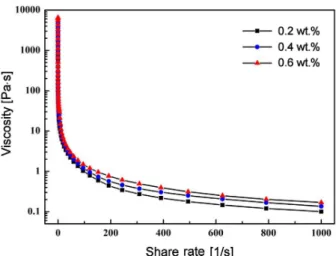
Figure 1. Effect of PIBM content on the viscosity of 55 wt.% SiC slurries
the volume. The porosities of sintered SiC ceramics were measured by the Archimedes method. Specimens were machined to a dimension of 3.0×4.0×36.0 mm3to test the flexural strength at room temperature via the three-point bending test (Model AUTOGRAPHAG-I, Shimadzu Co. Ltd., Japan) with a support distance of 30.0 mm and a cross-head speed of 0.5 mm/min; 4 bars of each kind of sample were tested. The linear shrink-age was calculated by measuring the width of the sam-ple before and after sintering. The fracture surface of the fabricated SiC green bodies and sintered specimen were observed by scanning electron microscopy (SEM, JSM-6700F, JEOL, Akishima, Japan).
III. Results and discussion
3.1. Effect of PIBM content on rheology of SiC slur-ries
Yanget al. [14] have reported the molecular struc-ture of PIBM where the copolymer has the active −COO–NH4
+ and
−CONH2 groups. The copolymer
molecule containing multi-functional groups can act as both dispersant and gelling agent. The gel mechanism of the slurry with PIBM might be the cross-linking through ionic interaction and/or hydrogen bonding among dif-ferent functional groups of PIBM molecules absorbed on the surface of SiC particles [20].
The rheological properties of 55 wt.% SiC slurries with different PIBM content (without other organic ad-ditives) are shown in Fig. 1. All slurries exhibited a shear-thinning behaviour. The viscosity of the slurry in-creased apparently with changing the PIBM contents from 0.2 wt.% to 0.6 wt.% due to the hydrodynamic coupling between free PIBM molecules and SiC parti-cles [21]. In addition, without the addition of PIBM, the 55 wt.% SiC slurries showed no fluidity and could not be operated. Thus, 0.2 wt.% PIBM was more suitable in preparing slurries with better casting performance.
3.2. Effect of TMAH on rheology of SiC slurries
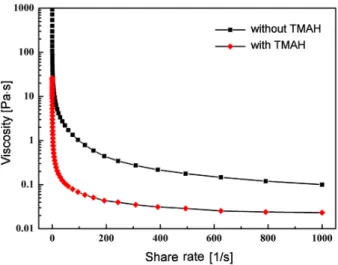
Figure 2. Effect of 0.2 wt.% TMAH on the viscosity of 55 wt.% SiC slurries with 0.2 wt.% PIBM
Figure 3. Effect of TMAH on the Zeta potential of SiC powder with PIBM
The zeta potentials of SiC particles in the absence and presence of TMAH are shown in Fig. 3. The addition of TMAH did not show obvious effect on the pHIEPof SiC
particles (with PIBM), suggesting no specific adsorp-tion of TMAH in this pH range. It is proposed that the adsorption of TMAH is driven by a non-electro-static force (around pHIEP), similar to that reported by Paiket al.[22].
3.3. Effect of PVA on properties of SiC slurries and green bodies
Figure 4 shows the dispersibility of carbon black (CB) in the 55 wt.% SiC slurries, the width of the square plastic moulds was 50 mm. In Fig. 4a, poor dispersion of CB was clearly observed in the initial slurry because of the bad wettability of CB in water. The addition of TMAH showed limited effect on the dispersion of CB in the slurry. However, with the addition of 0.1 wt.% PVA, the CB was dispersed homogeneously in the slurry, and uniform slurry was obtained in Fig. 4c. This demon-strated that small addition of PVA can assist the disper-sion of CB in SiC slurries.
CB particles typically contain 90–99% element car-bon, with oxygen and hydrogen as the other major con-stituents. Thus, CB particles are strongly hydrophobic and tend to aggregate when dispersed in water [23]. The surface modification has great effects on the dis-persion of CB. One of the strategies is physical adsorp-tion modificaadsorp-tion by encapsulating CB particles with surfactants and polymers. The experimental result has proved that highly hydrolysed PVA is suitable to pre-pare hydrophilic modified CB particles [24]. Molecu-lar dynamics simulation has also showed that the PVA molecules can form incomplete single-layer, complete single-layer, defective double-layer, double-layer and triple-layer film through physical adsorption [25]. The interaction energy of CB particles changes greatly with the adsorption of PVA molecules onto the CB parti-cles, which makes the CB/water interface more stable and significantly improves the dispersion stability of CB particles.
However, the content of PVA needs to be controlled carefully. By increasing the PVA content from 0.1 wt.% to 0.3 wt.%, warpage occurred in the SiC green body as shown in Fig. 5. Therefore, the PVA content should be controlled below 0.3 wt.% to avoid warpage of the SiC green bodies. During the drying process of green bod-ies, warpage can be caused by inner stresses due to non-symmetrical shrinkage, and warpage can arise even in a wet cast material with a high homogeneity [26]. If the shrinkage throughout the process is uniform, the green body will not deform or wrap. The liquid water in the wet green body is transported to the surface of the part
Figure 5. Effect of PVA content on the warpage of SiC green bodies prepared from the 55 wt.% slurries: a) with 0.1 wt.% PVA and b) with 0.3 wt.% PVA
primarily by capillary forces, and the large compressive stresses caused by the capillary forces lead to the bend of the gel matrix [27]. The SiC particles that firmly at-tach to the gel network move towards each other when the network collapses, which in turn causes bulk shrink-age of the green body. The added PVA molecules ad-sorb on the particles and partly dissolve in the water, which will change the capillary forces between the SiC particles. Thus, the warpage might be caused during the drying process if the content of PVA cannot be appro-priately controlled.
3.4. Effect of PEG on the surface exfoliation of SiC green bodies
Figure 6 shows the photos of the green bodies pre-pared by gelcasting of 55 wt.% SiC slurries in the ab-sence and preab-sence of PEG. The green body without PEG had an obvious exfoliation layer, and the surface exfoliation would restrict the application of this gel sys-tem. The exfoliation of SiC green bodies has also been found in other paper [28]. No exfoliation layer was ob-served in the green body from SiC slurry with 2 wt.% PEG, which meant that PEG could inhibit the surface exfoliation of SiC green bodies prepared through the
gelcasting with PIBM. Liet al.[28] have systematically studied the effect of PEG on the surface exfoliation of SiC green body prepared by gelcasting. The green body with rigid surface without exfoliation layer in their gel system was obtained at PEG content of 3.0 wt.%. In this work, we can obtain the fine green body with PEG con-tent of 2.0 wt.%. More PEG addition should be avoided because the PEG will deteriorate the mechanical prop-erties of green bodies at the same time [29].
3.5. The properties of SiC green bodies
The densities of the SiC green bodies were calculated through the mass and volume. Table 1 summarizes the densities of the SiC green bodies with different organic additives. The SiC green bodies were obtained from 55 wt.% slurries, the content of PIBM, TMAH, PEG and PVA were 0.2 wt.%, 0.2 wt.%, 2.0 wt.% and 0.1 wt.%, respectively. The density of the green bodies after the addition of PVA changed a little in Table 1, which meant that the 0.1 wt.% PVA did not affect the package of the SiC powders. In addition, the density of the green bod-ies changed negligibly with the addition of PEG, even though the PEG might partly inhibit the contact of the gelling agent [28]. Taking the error values in the
Table 1. The average densities of SiC green bodies prepared from slurries with different organic additives SiC green body from
55 wt.% slurry with 0.2 wt.% TMAH
With 0.1 wt.% PVA
and 2.0 wt.% PEG With 0.1 wt.% PVA only With 2.0 wt.% PEG only
Average density [g cm-3] 1
.22±0.04 1.26±0.02 1.22±0.03
Figure 7. Densities of the SiC green bodies with different solid contents
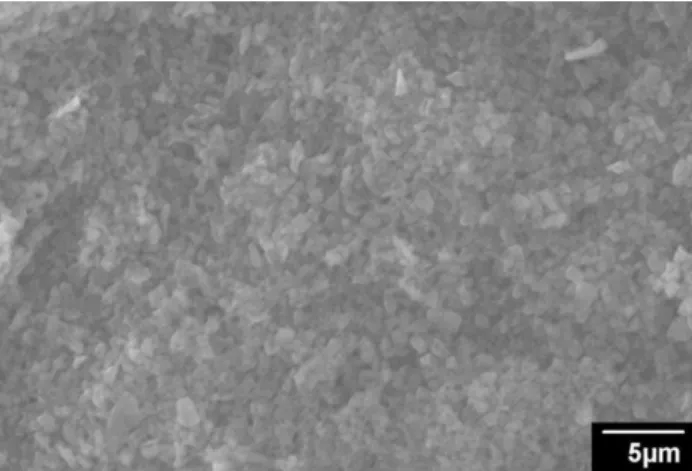
Figure 8. SEM micrograph of SiC green body fabricated from slurry with solid content of 55 wt.%
surements into consideration, the addition of 0.1 wt.% PVA and 2.0 wt.% PEG had negligible effect on the den-sity of SiC green bodies. Figure 7 shows the densities of the green bodies with different solid contents. With increasing the solid contents from 50 wt.% to 65 wt.%, the densities increased from 1.18 to 1.34 g/cm3. Higher
solid loading could lead to higher green density due to the packing behaviour in the slurries as well as in the gelcasting procedure.
The fracture surface of the SiC green body fabricated from slurry with solid content of 55 wt.% is shown in
Fig. 8. The fracture surfaces showed a rather uniform SiC particles distribution, and no obvious defects or big pores were observed in the well packed body.
3.6. Effect of solid content on properties of SiC ce-ramics
The homogeneous SiC green bodies were sintered at 2100 °C to obtain SiC ceramics. Table 2 shows the flex-ural strength, porosity and linear shrinkage of the sin-tered SiC ceramic samples. With the increasing of solid content from 55 wt.% to 65 wt.%, the porosity of SiC ceramics varied from 26.29% to 19.40%, and the flex-ural strength was in the range of 131.3–305.7 MPa. For the samples sintered from 60 wt.% solid content slurry, a high average flexural strength of 305.7 MPa was ob-tained. Figure 9a shows the microstructure of the SiC ceramics fabricated from slurry with solid content of 60 wt.%. The distribution of SiC grains was uniform and no defects existed. However, the ceramics prepared from 65 wt.% solid content slurry exhibited lower flex-ural strength of 161.7 MPa with a similar porosity. The linear shrinkage of SiC ceramics after sintering at dif-ferent solid contents was almost the same, which meant the low flexural strength was not caused by the sintering procedure. Comparing with the slurry at 60 wt.% solid content, the slurry with 65 wt.% solid content had rela-tively high viscosity.
Figure 10 shows viscosity of the SiC slurries with solid contents of 60 wt.% and 65 wt.%. In the slurry with solid content of 65 wt.%, the viscosity reached high value both at higher and lower shear rate. Air bubbles in the high viscosity slurry were hard to eliminate com-pletely, and the residual air bubbles were entrapped into the green bodies in the gelling process, which acted as the defects in the ceramics and deteriorated the mechan-ical properties. The defects caused by residual air bub-bles are shown in Fig. 9b. The results indicate that the sintered SiC ceramics are not fully dense and the further experiment is under investigation to improve density and mechanical properties. To obtain SiC ceramics with densities above 90 %TD, we might need to increase sin-tering temperature or increase the holding time. In addi-tion, a better combination of different dispersing agents to obtain green bodies with higher densities will also lead to ceramics with higher densities. The SiC ceramics
Table 2. Flexural strength, porosity and linear shrinkage of SiC ceramics after sintering
Solid content [wt.%] 55 60 65
Porosity [%] 26.29 19.92 19.40
Figure 9. SEM micrographs of the fracture surface of SiC ceramics: (a) high magnification shows the microstructure of ceramic fabricated from 60 wt.% slurry; (b) shows the defects caused by the residual air bubbles
in ceramic fabricated from 65 wt.% slurry
Figure 10. Effect of solid content on the viscosity of SiC slurries
with 19.40% porosity showed a high flexural strength of 305.7 MPa, which was higher than the SiC ceramics sin-tered at 2100 °C with density above 97 %TD reported by Weiet al.[30].
IV. Conclusions
Homogeneous SiC slurries and green bodies were prepared by the gel system of PIBM. The effects of PIBM and organic additives on the SiC slurries and SiC green bodies were studied. The PIBM content of 0.2 wt.% was proved to be suitable for preparing SiC slurries with fine rheological properties. TMAH acting as dispersant can lower the viscosity of the slurries with-out damaging the stability of SiC particles in the slur-ries. The experimental results also showed the addition of 0.1 wt.% PVA can promote the dispersion of CB in the slurries, but the content of PVA should be controlled below 0.3 wt.% to avoid the warpage of SiC green bod-ies. The role of PEG in this system was to eliminate the surface exfoliation of SiC green bodies gelled in air. After gelcasting and drying, green bodies with homo-geneous microstructure were obtained. The SiC ceram-ics fabricated from slurry with solid content of 60 wt.% showed a flexural strength of 305.7 MPa. This study provides the overall modified design of the gel system
of PIBM in fabricating homogeneous SiC slurries and green bodies, which is helpful for preparing SiC ceram-ics by the PIBM gel system.
References
1. Y.-W. Kim, Y.-S. Chun, T. Nishimura, M. Mitomo, Y.-H. Lee, “High-temperature strength of silicon car-bide ceramics sintered with rare-earth oxide and alu-minum nitride”,Acta Mater.,55[2] (2007) 727–736. 2. M. Woydt, J. Schwenzien, “Dry and water-lubricated slip-rolling of Si3N4- and SiC-based ceramics”, Tri-bol. Int.,26[93] (1993) 165–173.
3. S. Ding, Y.-P. Zeng, D. Jiang, “Thermal shock resis-tance of in situ reaction bonded porous silicon car-bide ceramics”,Mater. Sci. Eng. A - Struct.,425 [1-2] (2006) 326–329.
4. K.H. Zum Gahr, R. Blattner, D.H. Hwang, K. Pöhlmann, “Micro-and macro-tribological proper-ties of SiC ceramics in sliding contact”, Wear,250 [1-2] (2001) 299–310.
5. S. Asanabe, “Applications of ceramics for tribologi-cal components”,Mater. Design.,9[6] (1988) 253– 262.
6. F. Monteverde, L. Scatteia, “Resistance to thermal shock and to oxidation of metal diborides-SiC ce-ramics for aerospace application”, J. Am. Ceram. Soc.,90[4] (2007) 1130–1138.
7. R.R. Naslain, “SiC-matrix composites: Nonbrittle ceramics for thermo-structural application”, Int. J. Appl. Ceram. Techol.,2[2] (2005) 75–84.
8. H. Kodama, T. Miyoshi, “Fabrication and frac-ture behavior of novel SiC ceramics having rodlike grains”, J. Am. Ceram. Soc., 75 [6] (1992) 1558– 1561.
9. D.F. Wang, J.H. She, Z.Y. Ma, “Effect of microstruc-ture on erosive wear behavior of SiC ceramics”, Wear,180[1-2] (1995) 35–41.
Menchhofer, “Gelcasting of alumina”,J. Am. Ceram. Soc.,74[3] (1991) 612–618.
12. O.O. Omatete, M.A. Janney, S.D. Nunn, “Gelcast-ing: from laboratory development toward industrial production”,J. Euro. Ceram. Soc., 17[2-3] (1997) 407–413.
13. P. Spencer, H. Schaumburg, “A review of acrylamide neurotoxicity”, Can. J. Neurol. Sci., 1 [2] (1974) 143–150.
14. Y. Yang, S. Shimai, S. Wang, “Room temperature gelcasting of alumina with a water-soluble copoly-mer”,J. Mater. Res.,28[11] (2013) 1512–1516. 15. Y. Sun, S. Shunzo, X. Peng, G. Zhou, H. Kamiya,
S. Wang, “Fabrication of transparent Y2O3ceramics via aqueous gelcasting”,Ceram. Int.,40[6] (2014) 8841–8845.
16. X. Qin, G. Zhou, Y. Yang, J. Zhang, X. Shu, S. Shi-mai, S. Wang, “Gelcasting of transparent YAG ce-ramics by a new gelling system”,Ceram. Int.,40[8] (2014) 12745–12750.
17. J. Wang, F. Zhang, F. Chen, H. Zhang, R. Tian, M. Dong, J. Liu, Z. Zhang, J. Zhang, S. Wang, “Fabri-cation of aluminum oxynitride (γ-AlON) transparent ceramics with modified gelcasting”,J. Am. Ceram. Soc.,97[5] (2014) 1353–1355.
18. T. Wan, Y. Dongxu. H. Hu, Y. Xia, K. Zuo, Y. Zeng, “Fabrication of porous Si3N4 ceramics through a novel gelcasting method”, Mater. Lett., 133 [10] (2014) 190–192.
19. Y.-C. Tsai, J.-D. Huang, “Poly(vinyl alcohol)-assisted dispersion of multiwalled carbon nan-otubes in aqueous solution for electroanalysis”, Elec-trochem. Commun.,8[6] (2006) 956–960.
20. Y. Yang, S. Shimai, S. Wang, “Room-temperature gelcasting of alumina with a water-soluble copoly-mer”,J. Mater. Res.,28[11] (2013) 1512–1516.
21. V.A. Hackley, “Colloidal processing of silicon ni-tride with poly (acrylic acid): II, rheological proper-ties”,J. Am. Ceram. Soc.,81[9] (1998) 2421–2428. 22. U. Paik, V.A. Hackley, H.W. Lee, “Dispersant binder interactions in aqueous silicon nitride suspensions”, J. Am. Ceram. Soc.,82[4] (1999) 833–840.
23. Y. Lin, T.W. Smith, P. Alexandridis, “Adsorption of a rake-type siloxane surfactant onto carbon black nanoparticles dispersed in aqueous media”, Lang-muir,18[16] (2002) 6147–6158.
24. H.Y. Li, H.-Z. Chen, W.-J. Xu, F. Yuan, J.-R. Wang, M. Wang, “Polymer-encapsulated hydrophilic car-bon black nanoparticles free from aggregation”, Col-loid. Surface. A,254[1-3] (2005) 173–178.
25. S. Dong, J. Yan, N. Xu, J. Xu, H. Wang, “Molecular dynamics simulation on surface modification of car-bon black with polyvinyl alcohol”,Surface Sci.,605 [9-10] (2011) 868–874.
26. G.W. Scherer, “Theory of drying”, J. Am. Ceram. Soc.,73[1] (1990) 3–14.
27. S. Ghosal, A. Emami-Naeini, Y.P. Harn, B.S. Draskovich, J.P. Pollinger, “A physical model for the drying of gelcast ceramics”,J. Am. Ceram. Soc.,82 [3] (1999) 513–520.
28. F. Li, H.-Y. Chen, R-Z. Wu, B.-D. Sun, “Effect of polyethylene glycol on the surface exfoliation of SiC green bodies prepared by gelcasting”, Mater. Sci. Eng. A - Struct.,368[1-2] (2004) 255–259.
29. J. Ma, Z. Xie, H. Miao, Y. Huang, Y. Cheng, “Gelcasting of ceramic suspension in acry-lamide/polyethylene glycol systems”, Ceram. Int., 28[8] (2002) 859–864.