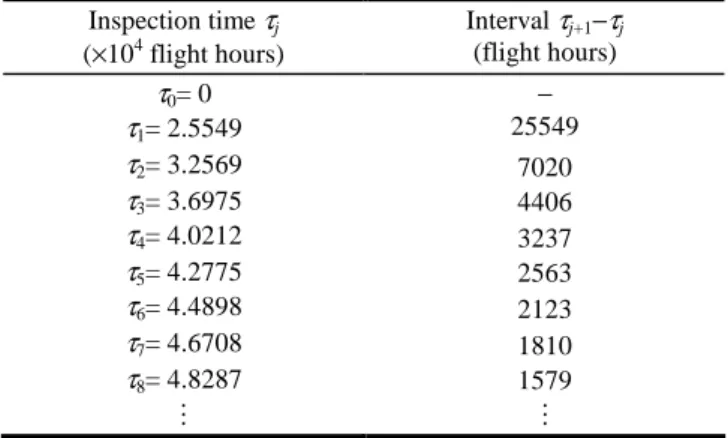
Abstract — A prediction is a statement that someone makes about what they think is going to happen. It is often very helpful to know what is going to happen to help prepare for these future events. Predictions are based on the idea that two beginning positions that are like each other will have similar results. This paper describes technique for using censored life data from extreme value distributions to construct prediction limits or intervals for future outcomes. In particular, new-sample prediction based on a previous new-sample (i.e., when for predicting the future failure time of an unit in a new sample there are available the failure data only from a previous sample), within-sample prediction based on the early-failure data from a current experiment (i.e., when for predicting the future failure time of an unit in a sample there are available the early-failure data only from that sample), and new-within-sample prediction based on both the early-failure data from that sample and the data from a previous sample (i.e., when for predicting the future failure time of an unit in a new sample there are available both the early-failure data from that sample and the data from a previous sample) are considered. In order to construct prediction limits or intervals for future outcomes, the invariant embedding technique representing the exact pivotal-based method is used. Numerical examples are given to illustrate applications of the results obtained in this paper to k-out-of-n systems and planning in-service inspections of fatigued structures.
Index Terms— Extreme value distribution, type II censored
data, pivotal quantities, k-out-of-n system, predictive inferences
I. INTRODUCTION
TATISTICAL prediction is the most prevalent form of statistical inference. It is the provision of an estimate, usually in the form of prediction limits or intervals, for future observations based on the results obtained from past observations. To develop appropriate probabilistic models in many areas, business analysts and engineers frequently use the extreme value distributions comprising the following three families: Gumbel distribution, Frechet distribution, and Weibull distribution. These models are widely used in risk management, finance, insurance, economics, hydrology, material sciences, telecommunications, and many other industries dealing with extreme events.
Manuscript received March 06, 2011. This work was supported in part by Grant No. 06.1936, Grant No. 07.2036, Grant No. 09.1014, and Grant No. 09.1544 from the Latvian Council of Science and the National Institute of Mathematics and Informatics of Latvia.
N.A. Nechval is with the Statistics Department, EVF Research Institute, University of Latvia, Riga LV-1050, Latvia (e-mail: [email protected]).
K.N. Nechval is with the Applied Mathematics Department, Transport and Telecommunication Instutute, Riga LV-1019, Latvia (e-mail: [email protected]).
M. Purgailis is with the University of Latvia, Riga LV-1050, Latvia (e-mail: [email protected]).
Practical problems often require the computation of pre-dictions and prediction limits for future values of random quantities. Consider the following examples: 1) A consumer purchasing a refrigerator would like to have a lower limit for the failure time of the unit to be purchased (with less interest in distribution of the population of units purchased by other consumers); 2) Financial managers in manufacturing companies need upper prediction limits on future warranty costs; 3) When planning life tests, engineers may need to predict the number of failures that will occur by the end of the test or to predict the amount of time that it will take for a specified number of units to fail.
Some applications require a two-sided prediction interval that will, with a specified high degree of confidence, contain the future random variable of interest, say Z. In many applications, however, interest is focused on either an upper prediction limit or a lower prediction limit (e.g., the maximum warranty cost is more important than the minimum, and the time of the early failures in a product population is more important that the last ones).
Conceptually, it is useful to distinguish between sample” prediction, “within-sample” prediction, and “new-within-sample” prediction.
For new-sample prediction, data from a past sample are used to make predictions on a future unit or sample of units from the same process or population. For example, based on previous (possibly censored) life test data, one could be interested in predicting the time to failure of a new item, time until l failures in a future sample of m units, or number of failures by time t• in a future sample of m units.
For within-sample prediction, the problem is to predict future events in a sample or process based on early data from that sample or process. For example, if m units are followed until tk and there are k observed failures, t1, …, tk, one could be interested in predicting the time of the next failure tk+1; time until l additional failures, tk+l; number of additional failures in a future interval.
For new-within-sample prediction, the problem is to predict future events in a sample or process based on early data from that sample or process as well as on a past data sample from the same process or population.
Various solutions have been proposed for the prediction problem, that is, the problem of making inferences on a random sample {Yj; j = 1, …, m} given independent observations {Xi; i=1, …, n} drawn from the same distri-bution. The Yj’s and the Xi’s are commonly featured as "future outcomes" and "past outcomes" respectively. Inferences usually bear on some reduction Z of the Yj’s − possibly a minimal sufficient statistic − and consist of either
Prediction of Future Values of Random
Quantities Based on Previously Observed Data
Nicholas A. Nechval, Member, IAENG, Konstantin N. Nechval, and Maris Purgailis
prediction intervals or likelihood or predictive distribution for Z, depending on different authors.
Kaminsky and Nelson [1] discussed point and interval prediction of order statistics. Best linear unbiased predictors based on location-scale family of distributions are reviewed. Prediction intervals based on such predictors as well as those based on pivotals are studied. A brief discussion of Bayesian prediction is also given.
Methods presenting frequentist prediction intervals basically stem from the theory of similar tests. See for instance Fisher [2], Faulkenberry [3], and Cox [4], who gives an approximate and more general asymptotic solution. Predictive distributions are found in the Bayesian framework (see Aitchison and Sculthorpe [5]), and likelihood concepts have been considered by Fisher [2], in a somewhat ungrounded manner, and by Hinkley [6], who establishes links with frequentist and Bayesian views. Lawless [7] applied the conditional method, which was first suggested by Fisher [8] and promoted further by a number of others (Nechval et al. [9]; Murthy et al. [10]), to different problems relating to the Weibull and extreme value distributions. In practice the proposed methods have limited applications and it is the purpose of this paper to obtain predictive inferences concerning Z via the simple invariant embedding technique [11−19]. The obtained results are given below.
II. PREDICTION UNDER CERTAINTY
In this section, we consider the determination of prediction limits under certainty. The following results hold.
Theorem 1 (Lower (upper) one-sided prediction limit h on the lth order statistic Yl in a sample of m observations from
a known distribution (continuous or discrete)). Let Y1≤ ... ≤
Ym be the m ordered observations in a sample of size m from a known distribution (continuous or discrete) with density function g(y), distribution function G(y). Then a lower one-sided (1−α) prediction limit h on the lth order statistic Yl,
l∈{1, …, m}, in a set of m ordered observations Y1 ≤ … ≤ Ym is given by
{
}
[
> = −α]
=argPrY h 1h l
+ − + = =
− + − 1),2;1α
( 2
) 1 ( ) ( arg
l l m
f l m l
l h
G , (1)
where f2(m−l+1),2l;1−α is the quantile of order 1−α for the F distribution. (Observe that an upper one-sided α prediction limit h on the lth order statistic Yl from a set of m future ordered observations Y1 ≤ … ≤ Ym may be obtained from a lower one-sided (1−α) prediction limit by replacing 1−α by
α.)
Proof. If there is a random sample of m ordered
observations Y1≤…≤Ym from a known distribution (continuous or discrete) with density function g(y), distribution function G(y), then for the lth order statistic Yl it is well-known that
j m j
m
l j
l G h G h
j m h
Y −
=
−
=
≤ }
∑
[ ( )] [1 ( ]Pr{
=IG(h)(l.m−l+1)
. )
1 ( ) 1 ,
(
1 ( )
0
1 ) 1 ( 1
∫
− − −+ −+ − Β =
h G
l m l
du u
u l
m
l (2)
It follows from (2) that
∫
−+ ++ −
− +
Β
− +
= ≤
) (
0
2 2 ) 1 ( 2 2 / ) 1 ( 2
2 ) 1 ( 2 , 2 2
2 ) 1 ( 2 } Pr{
h
G m l l
l m
l u
l m l
l l m
h Y
− + − −
+ − − ×
− + −
2 1
2 / ) 1 ( 2
) 1 ( 2
2 )
1 ( 2
2 1
u du l
m l l
m l u
u m l
− +
Β
− +
=
+ −
2 2 , 2
) 1 ( 2
2 ) 1 (
2 2( 1)/2
l l m l
l
m ml
∫
∞+ − −
+ + − − −
+
− − +
+ ×
) 1 ( 2
2 ) (
) ( 1
2 2 ) 1 ( 2 1
2 ) 1 ( 2
, )
2 ) 1 ( 2 1 ( l
m l h G
h G
l l m l
m
df f
l l m f
where
, ) 1 ( 2
2 1
+ − − =
l m
l u
u
f (3)
Thus,
+ − −
> =
≤ −+
) 1 ( 2
2 ) (
) ( 1 Pr
}
Pr{ 2( 1),2
l m
l h
G h G F
h
Yl ml l
=1−
+ − −
≤
+
− 1 (())2( 2 1)
Pr 2( 1),2
l m
l h
G h G
F m l l , (4)
where F2(m-l+1),2l has the F distribution with 2(m−l+1) and 2l degrees of freedom. It follows from (4) that
] 1 } arg[Pr{ > = −α
= Y h
h l =arg[Pr{Yl ≤h}=α]
=
− =
+ − −
≤
+
− 1 α
) 1 ( 2
2 ) (
) ( 1 Pr
arg 2( 1),2
l m
l h
G h G
F m l l
=arg
(
Pr{
F2(m−l+1),2l≤ f2(m−l+1),2l;1−α}
=1−α)
. (5)Since (from (5))
, )
1 ( 2
2 ) (
) ( 1
1 ; 2 ), 1 (
2 −+ −α
= + − −
l l m
f l m
l h
G h G
(6)
α − + −
+ − + =
1 ; 2 ), 1 ( 2
) 1 ( ) (
l l m
f l m l
l h
G . (7)
This ends the proof.
Theorem 2 (Lower (upper) simultaneous one-sided prediction limit). Let (X1 ≤ X2 ≤ ... ≤ Xr) be the r smallest observations in a random sample of size n from the cdf F(.), and let (Y1j,...,Ymj) be the jth random sample of mj “future” observations from the same cdf, j∈{1, ..., k}. Assume that (k+1) samples are independent. Let H=H(X1, ..., Xr) be any statistic based on the preliminary sample and let ( , )
j jm r
Y
denote the rjth order statistic in the jth sample of size mj. Then a lower simultaneous one-sided (1−α) prediction limit
H may be obtained from
≥ ≥ ≥
H Y
H Y
H Y
k m k r m
r m
r1, 1) ( j, j) ( , )
( ,..., ,...,
Pr
∑
∑
∑
−= −
= −
=
=
k k
j j r
i r
i r
i i
m i m
i m k k j j
... ... ...
...
1 1 1
0 1
0 1
0 1 1
1 ,
Pr
Pr ( 1, ) ( , )
α − =
≥
−
≥
×
Σ Σ
Σ Σ Σ
+ Σ
i m
H Y
H
Yi m i m
(8)
where
∑
∑
= Σ
Σ= =
k
j j k
j
j m m
i i
1 1
=
.
, (9)
(Observe that an upper simultaneous one-sided α prediction limit H may be obtained from a lower simultaneous one-sided prediction limit by replacing 1−α by α.)
Proof.
≥ ≥
≥H Y H Y H
Y
k m k r m
r m
r1, 1) ( j, j) ( , )
( ,..., ,...,
Pr
∏
=
≥ = k
j j
m j
r H
Y
1
) , ( Pr
−
= −
−
=
=
∑
∏
j j j
j j
i m i
r
i j
j k
j
H F H
F i m
E [ ( )] [1 ( )]
1
0 1
∑
∑
∑
−= −
= −
=
=
k k
j j r
i r
i r
i i
m i m
i m k k j j
... ... ...
...
1 1 1
0 1
0 1
0 1 1
−
× iΣ mΣ−iΣ H F H
F
E [ ( )] [1 ( )] . (10)
Since
Σ − Σ−iΣ
)] ( 1 [ )] (
[F H i F H m E
−
= Σ Σ−
= Σ −
Σ
Σ
∑
[ ( )][1 ( )]0 1
i m i
i
i
H F H F i m E i m
−
−Σ− Σ−
= Σ
∑
i m ii
i
H F H
F i m
)] ( 1 [ )] ( [ 1
0
,
Pr Pr
) , ( )
, 1 (
Σ Σ
Σ Σ Σ
+
Σ
≥
−
≥
=
i m
H Y
H Y
m i m
i
(11)
the joint probability can be written as
≥ ≥
≥H Y H Y H
Y
k m k r m
r m
r1, 1) ( j, j) ( , )
( ,..., ,...,
Pr
∑
∑
∑
−= −
= −
=
=
k k
j j r
i r
i r
i i
m i m i m
k k j j
... ... ...
...
1 1 1
0 1
0 1
0 1 1
, Pr
Pr
) , ( )
, 1 (
Σ Σ
Σ Σ Σ
+
Σ
≥
−
≥
×
i m
H Y
H Y
m i m
i
(12)
This ends the proof.
Corollary 2.1. If rj= 1, ∀j=1(1)k, then
≥ ≥
≥H Y H Y H
Y
k m m
m1) (1, j) (1, )
, 1
( ,..., ,..., Pr
. 1 Pr
)
(1, = −α
≥
=
Σ H
Y
m (13)
III. PREDICTION UNDER PARAMETRIC UNCERTAINTY Having defined the three prediction situations, we consider now the determination of prediction limits under parametric uncertainty. The following results hold.
A. New-Sample Prediction
Theorem 3. (Lower (upper) one-sided conditional prediction limit h on the lth order statistic Y1 in a new
(future) sample of m observations from the Gumbel distribution on the basis of the previous data sample). Let X1≤ ... ≤ Xr be the first r ordered past observations from a previous sample of size n from the Gumbel distribution
−
− = >
b a x x
X } exp exp
Pr{ , −∞ < x < ∞, (14)
prediction limit h on the lth order statistic Yl in a set of m future ordered observations Y1≤…≤Ym also from the distribution (14) is given by
,
b s a
h= + h (15)
where sh satisfies the equation
} | Pr{
} |
Pr{ () l h (r) r
l h Y a s b
Y > s = > + s
2 1
0 2 2
2 1
0 1
0 0
2 2
2 2
1 2
2 2
2 1 2
) (
) ( )
(
) 1 (
du e
r n e e
u
du e
r n e e
j k m
j k k m e
u
r u s r
i u s s u r
r u s r
i u s u
s
j k
j l
k s u r
r i
r i i
r i
h r i i
−
=
∞ ∑
−
−
= = −
=
∞ ∑
−
− +
− + +
+ − ×
−
=
∑
∫
∑
∑
∑
∫
= =
, 1−α
= (16)
) ..., , , ( 1 2 )
(
r r
s s s
=
s , (17)
, ..., , 1
, i r
b a X
Si = i− = (18)
are ancillary statistics, any r-2 of which form a functionally independent set (for notational convenience we include all of
s1, …, sr in (17); sr-1 and sr can be expressed as function of
s1, …, sr-2 only), a and b are the maximum likelihood estimators of a and b based on the first r ordered past observations (X1≤ ... ≤ Xr) from a sample of size n from the Gumbel distribution, which can be found from solution of
ln ( ) ,
1
/ /
− +
=
∑
=
r e r n e b
a
r
i
b x b
xi r
(19)
and
− + =
∑
=
b x r r
i
b x
ie i n r x e r
x
b /
1 /
) (
( ) 1 .
1 1
1
/
/
∑
∑
= −
=
−
− +
× r
i i r
i
b x b
x
x r e
r n
ei r (20)
(Observe that an upper one-sided conditional α prediction limit h on the lth order statistic Yl from a set of m future ordered observations Y1 ≤ … ≤ Ym may be obtained from a lower one-sided conditional (1−α) prediction limit by replacing 1−α by α.)
Proof. The joint density of X1≤ ... ≤ Xr is given by
) , | ..., ,
(x1 x ab
f r
∏
=
−
− − −
= r
i
i i
b a x b
a x b r n
n
1
exp exp
1 )! (
!
. exp
) (
exp
−
− − ×
b a x r
n r (21)
Let a, b be the maximum likelihood estimates of a, b, respectively, based on X1≤ ... ≤ Xr from a complete sample of size n, and let
,
1 b
a a
U = − 2 ,
b b
U = and , i 1(1)r.
b a X
Si i =
− =
(22) Parameters a and b in (22) are location and scale parameters, respectively, and it is well known that if a and b are estimates of a and b, possessing certain invariance properties, then U1 and U2 are the pivotal quantities whose distributions depend only on n. Most, if not all, proposed estimates of a and b possess the necessary properties; these include the maximum likelihood estimates and various linear estimates.
Using the invariant embedding technique [11−19], we then find in a straightforward manner, that the joint density of U1, U2, conditional on fixed s(r)= (s1,s2,...,sr), is
1 1 2 2 2 )
( 2
1, | ) ( ) exp
( ru
r
i i r
r
e s u u
u u
f
=
∑
= −
s s ϑ
, ) exp( ) ( ) exp(
exp 2
1
2 1
− + −
×
∑
=
u s r n u s
e r
r
i i u
u1∈(−∞, ∞), u2∈(0, ∞), (23) where
1
2 1
2 2
0 1
2 2 2 )
(
) exp( ) ( ) exp(
exp )
( ) (
−
−
= ∞
= −
− + ×
Γ =
∑
∫
∑
du u s r n u s
s u u
r
r r
i
r i
z
i i r
r
s ϑ
(24) is the normalizing constant. Writing
k m k
l
k
l F h a b F h a b
k m b
a h
Y −
−
=
−
=
> | , }
∑
[ ( | , )] [1 ( | , )] Pr{1
0
k m k
l
k b
a h b
a h k
m −
−
=
−
−
−
− −
=
∑
1 exp exp exp exp1
0
)] exp( ) (
exp[ ) 1
( 2
0 1
0
1 m k j s u
e j
k k m
h u
j k
j l
k
+ − − −
=
∑
∑
= −
}, , | Pr{Yl>h u1 u2
= (25)
where
,
b a h sh
−
= (26)
we have from (23) and (25) that
. ) | , ( } , | Pr{ }
|
Pr{ 1 2
) ( 2 1 0
2 1 )
(
du du u
u f u u h Y h
Y l r
r
l s
∫ ∫
s∞ ∞
∞ −
> =
>
(27) Now u1 can be integrated out of (27) in a straightforward way to give
} | Pr{Yl >h s(r)
2 1
0 2 2
2 1
0 1
0 0
2 2
2 2
1 2
2 2
2 1
2
) (
) ( )
(
) 1 (
du e
r n e e
u
du e
r n e e
j k m
j k k m e
u
r u s r
i u s s u r
r
u s r
i u s u
b a h
j k
j l
k s u r
r i
r i i
r i
r i i
−
=
∞ ∑
−
−
=
−
= −
=
∞ ∑
−
− +
− + +
+ − ×
−
=
∑
∫
∑
∑
∑
∫
= =
.
(28) This completes the proof.
Corollary 3.1. . If l = 1, then a lower one-sided
conditional (1−α) prediction limit h on the minimum Y1 in a sample of m future ordered observations Y1 ≤ … ≤ Ym is given by
h=a+shb, (29)
where sh satisfies the equation
} | Pr{
} |
Pr{Y1>h s(r) = Y1>a+shb s(r)
2 1
0 2 2
2 1
0 2 2
2 2
1 2
2 2
2 1 2
) (
) (
du e
r n e e
u
du e
r n e me
e u
r u s r
i u s s u r
r u s r
i u s u s s u r
r i
r i
i
r i
h r i i
−
=
∞ ∑
−
−
=
∞ ∑
−
− +
− + +
=
∑
∫
∑
∫
= =
.
. 1−α
= (30)
Theorem 4 (Lower (upper) one-sided conditional prediction limit h on the lth order statistic Y1 in a new
(future) sample of m observations from the two-parameter Weibull distribution on the basis of the previous data sample). Let X1 ≤ ... ≤ Xr be the first r ordered past observations from a previous sample of size n from the
two-parameter Weibull distribution
− = >
δ
β
x x
X } exp
Pr{ , x ≥ 0, (31)
where both distribution parameters (β - scale, δ - shape) are positive. Then a lower one-sided conditional (1−α) prediction limit h on the lth order statistic Yl in a set of m future ordered observations Y1≤…≤Ym also from the distribution (1) is given by
, / 1δβ h
z
h= (32)
where zh satisfies the equation
} | Pr{
} |
Pr{ ( ) l 1h/ (r)
r
l h Y z
Y > z = > δβ z
2 1
0 1
2 2
2 1
0 1
0
0 1
2 2
2 2
2
2 2
2 2
) (
) ( )
(
) 1 (
dv z r n z z v
dv z r n z z
j k m
j k k m z v
r r
i
v r v
i r
i v i r
r r
i
v r v
i v h
j k
j l
k r
i v i r
−
= ∞
= −
−
= = −
= ∞
= −
− +
− + +
+ − ×
−
=
∑
∫
∏
∑
∑
∑
∫
∏
=1−α, (33)
where
) ..., , , ( 1 2 )
(
r r
z z z
=
z , (34)
, ..., , 1
, i r
X
Z i
i =
=
δ
β (35)
are ancillary statistics, any r−2 of which form a functionally independent set (for notational convenience we include all of
z1, …, zr in (34); zr-1 and zr can be expressed as function of
z1, …, zr-2 only), β and δ are the maximum likelihood estimators of β and δ based on the first r ordered past
observations (X1≤ ... ≤ Xr) from a sample of size n from the two-parameter Weibull distribution, which can be found from solution of
, )
(
/ 1
1
δ δ
δ
β
− + =
∑
=
r x r n x
r
i
r
i (36)
and
, ln 1 )
(
ln ) ( ln
1
1 1
1 1
−
= −
= =
−
− + ×
− + =
∑
∑
∑
r
i i r
i
r i
r r r
i
i i
x r x r n x
x x r n x x
δ δ
δ δ
(Observe that an upper one-sided conditional α prediction limit h on the lth order statistic Y1 from a set of m future ordered observations Y1 ≤ … ≤ Ym may be obtained from a lower one-sided conditional (1−α) prediction limit by replacing 1−α by α.)
Proof. The joint density of X1≤ ... ≤ Xr is given by
) , | ..., ,
(x1 xr β δ
f
∏
=
−
−
− = r
i
i
i x
x r
n n
1
1
exp )!
(
! δ δ
β β
β δ
. ) (
exp
− − ×
δ
βr
x r
n (38)
Let β, δ be the maximum likelihood estimates of β, δ, respectively, based on X1≤ ... ≤ Xr from a complete sample of size n, and let
,
1
δ
β β
=
V 2 ,
δ δ =
V and Zi Xi , i=1,...,r,
=
δ
β
(39) Parameters β and δ in (39) are scale and shape parameters, respectively, and it is well known that if β and δ are estimates of β and δ, possessing certain invariance properties, then V1 and V2 are the pivotal quantities whose distributions depend only on n. Most, if not all, proposed estimates of β and δ possess the necessary properties; these include the maximum likelihood estimates and various linear estimates.
Using (39) and the invariant embedding technique [11−19], we then find in a straightforward manner, that the joint density of V1, V2, conditional on fixed z=
) ..., , ,
(z1 z2 zr , is
) | , ( 1 2 ( )
r
v v
f z
− + −
=
∏
∑
= −
= −
• r
i
v r v
i r
r
i v i r r
z r n z v v
z v
1 1 1
1 1 2 2 )
( ) 2 exp 2 ( ) 2
(z
ϑ
v1∈(0, ∞), v2∈(0, ∞), (40) where
, )
( )
( ) (
1
2
0 1 1
2 2 )
( 2 2 2
−
∞ −
= = − •
− + Γ
=
∫
rv∏
z∑
z n r z dvr r
i
v r v
i r
i v i r r
z ϑ
(41) is the normalizing constant. Writing
k m k
l
k
l F h F h
k m h
Y −
−
=
−
=
> | , }
∑
[ ( | , )] [1 ( | , )] Pr{1
0
δ β δ
β δ
β
k m k
l
k
h h
k m
− −
=
−
− −
=
∑
δ δ
β β exp
exp 1 1
0
] ) (
exp[ ) 1
( 2
1 0
1
0
v h j
k
j l
k
z j k m v j
k k m
+ − − −
=
∑
∑
= −
=
=Pr{Yl >h|v1,v2}, (42) where
,
δ
β
= h
zh (43)
we have from (40) and (42) that
. ) | , ( } , | Pr{ }
|
Pr{ 1 2
) ( 2 1 0 0
2 1 )
(
dv dv v
v f v v h Y h
Y l r
r
l z
∫∫
z∞ ∞
> =
>
(44) Now v1 can be integrated out of (44) in a straightforward way to give
} | Pr{Yl>h z(r)
. )
(
) ( )
(
) 1 (
2 1
0 1
2 2
2 1
0 1
0
0 1
2 2
2 2
2
2 2
2 2
dv z r n z z v
dv z r n z h
j k m
j k k m z v
r r
i
v r v
i r
i v i r
r r
i
v r v
i v
j k
j l
k r
i v i r
−
= ∞
= −
−
= = −
= ∞
= −
− +
− + +
+ − ×
−
=
∑
∫
∏
∑
∑
∑
∫
∏
δ
β
(45)
This completes the proof.
Corollary 4.1. If l = 1, then a lower one-sided conditional
(1−α) prediction limit h on the minimum Y1 in a sample of m future ordered observations Y1 ≤ … ≤ Ym is given by
h=z1h/δβ, (46) where zh satisfies the equation
} | Pr{
} |
Pr{Y1>h z(r) = Y1>z1h/δβ z(r)
2 1
0 1
2 2
2 1
0 1
2 2
2 2
2
2 2
2 2
) (
) (
dv z r n z z v
dv z r n z mz
z v
r r
i
v r v
i r
i v i r
r r
i
v r v
i v h r
i v i r
−
= ∞
= −
−
= ∞
= −
− +
− + +
=
∑
∫
∏
∑
∫
∏
. 1−α
= (47)
on the lth order statistic Yl in a new (future) sample of m
observations from the two-parameter Weibull distribution, with δ=1, on the basis of the previous data sample). Let X1 ≤ ... ≤ Xr be the first r ordered observations from a previous sample of size n from the two-parameter Weibull distribution (31), where the parameter δ=1. Thus, we deal with the exponential distribution. Then a lower one-sided conditional (1−α) prediction limit h on the lth order statistic
Yl from a set of m future ordered observations Y1 ≤ … ≤ Ym also from the above distribution is given by
h=zhβ, (48)
where zh satisfies the equation
} Pr{
}
Pr{Yl>h = Yl >zhβ
r h j
k
j l
k r
z j k m j
k k
m −
= −
=
+ − + −
=
∑
∑
( 1) 1 ( )0 1
0
= 1−α, (49)
. ) (
1 r
X r n
X r
r
i
i+ −
=
∑
=
β (50)
Proof. It follows from (40) that
) , | ( 1 2 ( )
r
v v
f z
− + −
Γ
− +
=
∑
∑
= −
= r
i
v r v
i r
r r
i
v r v
i
z r n z v v
r z r n z
1 1 1
1
1 2 2
2 2
) ( exp
) (
) (
,
v1∈(0, ∞). (51)
Since δ=1, it follows from (51) and (42), respectively, that
exp
(
)
,) ( )
( 1
1 1
1 v rv
r r v
f r
r
− Γ
= − v
1∈(0, ∞), (52) and
] ) (
exp[ ) 1 ( }
|
Pr{ 1
0 1
0
h j
k
j l
k
l v m k j z
j k k m h
Y − − − +
=
>
∑
∑
= −
=
β
}, | Pr{Yl >h v1
= (53)
where
,
β
h
zh = (54)
Thus, we have from (52) and (53) that
Pr{ } Pr{ | } ( 1) 1.
0 0
1 f v dv v
h Y h
Yl
∫ ∫
l∞ ∞
> =
> (55)
Now v1 can be integrated out of (55) in a straightforward way to give
r j
k
j l
k l
r h j k m j
k k m h
Y
−
= −
=
+ − + −
=
>
∑
∑
β
) (
1 ) 1 ( }
Pr{
0 1
0
.
(56) This completes the proof.
B. Within-Sample Prediction
Theorem 5 (Lower (upper) one-sided prediction limit h on the lth order statistic Yl in a sample of m observations from
the Gumbel distribution on the basis of the early-failure data Y1≤ ... ≤ Yk from the same sample). Let Y1≤ ... ≤ Yk be the first k ordered early-failure observations from a sample of size m from the Gumbel distribution (1). Then a lower one-sided conditional (1−α) prediction limit h on the lth order statistic Yl (l > k) from the same sample is given by
,
b t y
h= k+ h (57)
where th satisfies the equation
} | Pr{
} |
Pr{ ( ) l k h (k) k
l h Y y t b
Y > s = > + s
, 1
) (
) 1 ( 1 )
(
) 1 ( 1
2 1
1 1
0 0
2 2
2 1
) (
1 1
0 0
2 2
2 2
1 2
2 2
2 1 2
α − =
+ −
×
− − −
− −
+ + −
− ×
− − −
− −
=
−
=
− − − −
−
=
∞ ∑
−
−
= +
− − − −
−
=
∞ ∑
−
∑
∑
∫
∑
∑
∫
= =
du e
e k m
j k m j k l e
u
du e
je e
j k m
j k m j k l e
u
k k
i s u s u
j k l k
l
j s u k
k k
i s u s
u s t u
j k l k
l
j s u k
i k
k i i
i k
k h k i i
(58) (1,..., ),
) (
k k
s s
=
s (59)
, i 1,...,k,
b a Y
S i
i =
−
= (60)
,
b y h
th = − k (61)
a and b are the maximum likelihood estimators of a and b
based on the first k ordered early-failure observations (Y1≤ ... ≤ Yk) from a sample of size m from the Gumbel distribution, which can be found from solution of
ln ( ) ,
1
/ /
− +
=
∑
=
k e
k m e
b a
k
i
b y b
and
− + =
∑
=
b y k k
i
b y
ie i m k y e k
y
b /
1 /
) (
( ) 1 ,
1 1
1
/
/
∑
∑
= −
=
−
− +
× k
i i k
i
b y b
y
y k e
k m
e i k (63)
(Observe that an upper one-sided conditional α prediction limit h on the lth order statistic Yl based on the first k ordered early-failure observations Y1≤ ... ≤ Yk, where l > k, from the same sample may be obtained from a lower one-sided conditional (1−α) prediction limit by replacing 1−α by
α.)
Proof. The joint density of Y1≤ ... ≤ Yk and Yl is given by
) , | , ..., ,
(y1 y y a b
f k l
∏
=
−
− − −
− −
= k
i
i i
b a y b
a y b l m k l
m
1
exp exp
1 )! ( )! 1 (
!
1
exp exp
− − − −
− −
− ×
k l
b a y b
a
yk l
e e
×
−
− b−
a y l
l
e b
a y bexp
1
− −
−
b a yl
e l
m )
(
exp . (64)
Let a , b be the maximum likelihood estimates of a, b,
respectively, based on Y1≤ ... ≤ Yk from a complete sample of size m, and let
,
1 b
a a
U = − 2 ,
b b
U =
b y Y
T= l− k , (65)
andSi=(Yi−a)/b,i=1(1)k. Using the invariant embedding
technique [11−19], we then find in a straightforward manner, that the joint density of U1, U2, T, conditional on fixed
) ..., , ( 1 ) (
k k
s s
=
s , is
1 2( ) ( 1) 1
2 1 2 ) ( ) ( 2
1, , | ) ( ) exp
( u t s k u
k
i i k
k k
e e s u u t
u u
f +k +
= −
= s
∑
s
ϑ
j k l k
l
j j
k
l − −−
− −
=
−
− −
×
∑
1 10
) 1 ( 1
, )
( exp
1 )
( 2 2
2 1
+ + −
− −
×
∑
=
+ k
i s u s
u s t u
u k k i
e je
e j k m e
u1∈(−∞, ∞), u2∈(0, ∞), t∈(0, ∞), (66)
where
1
2 1
1 1
0 0
2 2 )
(
2 2
1 2
) (
) ( )
1 ( 1 )
(
−
−
=
− − − −
−
=
∞ ∑
−
+ −
×
− −
Γ −
− −
=
∑
∑
∫
=du e
e k m
j k m
k j
k l e
u
k k
i s u s
u
j k l k
l
j s u k
k
i k
k i i
s ϑ
(67) is the normalizing constant.
Using (66), we have that
−
> − =
> ( ) ( )
Pr } |
Pr{l k l k k k
b y h b
y Y h
Y s s
∫ ∫ ∫
∞ ∞ ∞
∞ −
= >
=
0
2 1 ) ( 2 1 )
(
) | , , ( }
| Pr{
h t
k k
h f u u t dudtdu
t
T s s
=
+ −
×
− − −
− −
+ + −
− ×
− − −
− −
−
=
− − − −
−
=
∞ ∑
−
−
= +
− − − −
−
=
∞ ∑
−
∑
∑
∫
∑
∑
∫
= =
2 1
1 1
0 0
2 2
2 1
) (
1 1
0 0
2 2
2 2
1 2
2 2
2 1 2
) (
) 1 ( 1 )
(
) 1 ( 1
du e
e k m
j k m j k l e
u
du e
je e
j k m
j k m j k l e
u
k k
i s u s
u
j k l k
l
j s u k
k k
i s u s
u s t u
j k l k
l
j s u k
i k
k i i
i k
k h k i i
,
(68) and the proof is complete.
Theorem 6 (Lower (upper) one-sided prediction limit h on the lth order statistic Yl in a sample of m observations from
the two-parameter Weibull distribution on the basis of the early-failure data Y1≤ ... ≤ Yk from the same sample). Let Y1 ≤ ... ≤ Yk be the first k ordered early-failure observations from a sample of size m from the two-parameter Weibull distribution (31). Then a lower one-sided conditional (1−α) prediction limit h on the lth order statistic Yl (l > k) in the same sample is given by
, / 1
k h y
w
h= δ (69)
where wh satisfies the equation
} | Pr{
} |
Pr{Yl >h z(k) = Yl >wh1/δyk z(k)
+ + −
− ×
− − −
− −
= −
= − − − −
−
= ∞
= −
∑
∑
∫
∏
2 1
1 1
0
0 1
2 2
2 2
2 2
) )( (
) 1 ( 1
dv z jz
z w j k m
j k m j k l z
v
k k
i v i v k v k h
j k l k
l
j k