Universidade do Algarve – Faculdade de Ciências e Tecnologias
Heterotrophic cultivation of Thraustochytrids using glycerol
and saline medium from a dairy effluent
Luís André Roque Fortes
Thesis to obtain the Master Degree in Biological Engineering
2016
Thesis elaborated under the guidance of Professor Tomáš Brányik and co-supervised by Professora Sara Isabel Cacheira Raposo
Institute of Chemical Technology – Department of Bioengineering
Heterotrophic cultivation of Thraustochytrids using glycerol
and saline medium from a dairy effluent
Luís André Roque Fortes
Thesis to obtain the Master Degree in Biological Engineering
2016
Thesis elaborated under the guidance of Professor Tomáš Brányik and co-supervised by Professora Sara Isabel Cacheira Raposo
III
Certify to be the author of this work, which is original and unpublished. Authors and works consulted are properly cited in the text and listed in the
list of references included.
_______________________ Luís Fortes
The University of Algarve is entitled, perpetual and no geographical limits, filing and publicizing this work through printed copies reproduced on paper or digital form, or by any other known or to be invented medium, through the promotion of scientific and admit your copy and distribute for educational or research purposes, non-commercial, as long as credit is given to the author and publisher repositories.
IV
Acknowledgments
I would like to thank to my supervisor, Dr. Tomás Brányik, for all the support and the opportunity given to conduct my research under his guidance. I also would like to thank to my co-supervisor Drª. Sara Raposo for all the availability and support demonstrated while I performed research at ICT-Prague and while I was writing my thesis.
I am grateful to all the members of my laboratory for their help and friendship. My special Thanks goes to Tomás Humhal for all the valuable orientation and amazing knowledge provided during my research.
My deepest gratitude goes to my family for their support, patient and love. To my mother, my father and my sister who always encourage me to look further and never give up.
Finally, I want to thank to all my friends who always supported me through this journey, thanks to their advice and teachings I became a better person.
V
Abstract
Microalgae are a promising source of biofuels and other valuable chemicals. The reduced economic feasibility of microalgal cultures is due to low cell density and slow growth rate of these cultures. Thus, it is necessary to develop sustainable processes that will be able to increase the productivity, maximize the production yield and reduce production costs. To achieve this goals, it is necessary to improve the understanding of the behavior of microalgal cultures.
A robust method was developed for the growth of Thraustochytrids in saline waste medium using glycerol as carbon source. The first study case was the heterotrophic cultivation of Schizochytrium limacinum in order to achieve the highest growth and DHA content possible using alternative raw materials. In the second study case, the temperature profiles of Japanochytrium sp. were analyzed to identify the optimal temperature for growth and PUFAs production.
The first case study, Schizochytrium limacinum was grown in saline waste medium using glycerol as carbon source. After 216 hours of fermentation the values obtained were the following: biomass concentration of 40.4 g.L-1, DHA content of 48.5% and a DHA productivity of 424 mg.L-1.d-1. The results obtained proved that Schizochytrium limacinum. is able to grow and produce high levels of DHA using saline waste medium and glycerol as carbon source. Besides, it was made the economic balance of the used media for biomass and DHA production. In standard medium to produce 1 kg of biomass and 1 kg of DHA will cost 105 € and 1.235 €, respectively. While in saline waste medium to produce 1 kg of biomass and 1 kg of DHA will cost 17.16 € and 180.7 €, respectively.
The second case study, Japanochytrium sp. was cultivated at different temperatures of 15, 20, 25 and 30 ˚ C. The highest value of biomass, 22 g.L-1, was obtained at 25 ˚C whereas the lowest value of biomass, 11 g.L-1, was obtained at 15 ˚C. For 20 ˚C and 30 ˚C the biomass concentration was 19 g.L-1 and 16 g.L-1, respectively. These
VI
results are in agreement with the literature, where the optimal temperature to the growth of thraustochytrids range between 22-28 ˚C.
Glycerol is the major byproduct of the biodiesel industry and since it is expensive to purify, biodiesel producers must seek alternative methods for its disposal. Hence using glycerol as a carbon source for fermentation is an alternative use for this product.
Keywords: Algal fermentation, biodiesel, docosahexaenoic acid, thraustochytrids, biomass composition, lipid characterization
VII
Resumo
Com o decorrer do tempo as microalgas têm vindo a tornar-se uma fonte promissora no ramo dos biocombustíveis e industrias relacionadas. A baixa viabilidade económica no cultivo de microalgas deve-se a uma fraca densidade celular e baixa taxa de crescimento. Deste modo, é necessário desenvolver processos sustentáveis capazes de aumentar a produtividade, maximizar o rendimento e reduzir os custos de produção. Para atingir estes objetivos é necessário aprofundar conhecimentos para a compreensão do comportamento em culturas de microalgas.
Neste trabalho, foi desenvolvido um meio de cultura para o crescimento de Thraustochytrids em meio salino, proveniente do efluente de uma fábrica de lacticínios e usando glicerol como fonte de carbono. O primeiro caso de estudo foi o cultivo heterótrófico de Schyzochytrium limacinum de modo a atingir uma elevada taxa de crescimento desta microalga bem como o conteúdo de ácido docosahexaenoico (ADH) associado usando matérias-primas alternativas. O segundo caso de estudo teve como objectivo identificar os perfis de temperatura da microalga Japanochytrium sp. de modo a identificar a temperatura ideal para o seu crescimento e para a produção de ácidos gordos polinsaturados.
A microalga Schizochytrium limacinum foi cultivada em meio salino usando glicerol como fonte de carbono. Após 216 horas de fermentação obtiveram-se os seguintes resultados: concentração de biomassa de 40,4 g.L-1, conteúdo em ADH de 48,5% e a produtividade de ADH atingiu 424 mg.L-1.d-1. Os resultados obtidos provaram que a microalga em questão tem uma boa capacidade de crescimento aliado a uma produção elevada de ADH. Foi feito um balanço económico entre o meio salino standard e o meio salino do efluente para a produção de biomassa e ADH. Em meio standard para produzir 1 Kg de biomassa e 1 Kg de ADH custa 105 € e 1.235€, respectivamente.
No segundo caso de estudo, o Japanochytrium sp. foi cultivado a diferentes temperaturas: 15, 20, 25 e 30 ˚C. O valor mais elevado de biomassa, 22 g.L-1, foi obtido a 25 ˚C e o valor mais baixo de biomassa, 11 g.L-1 foi obtido a 15 ˚C. Para 20 ˚C e 30 ˚C a concentração de biomassa obtida foi, 19 g.L-1 e 16g.L-1, respectivamente. Os resultados obtidos neste estudo
VIII
estão de acordo com a literatura, onde a temperatura ótima de crescimento para o crescimento de thraustochytrids varia entre 22-28 ˚C.
O glicerol é o principal subproduto na indústria do biodiesel e uma vez que os custos de purificação para uso na indústria farmacêutica e alimentar são demasiado elevados, os produtores devem procurar métodos alternativos para a sua utilização. Provou-se que utilizando o glicerol como fonte de carbono para fermentações é uma alternativa bastante atrativa para o uso deste produto.
Palavras-Chave: Fermentação, biodiesel, Schizochytrium sp., Japanochytrium sp., ácido docosahexaenoico, thraustochytrids, composição da biomassa, caracterização lípidica
IX
Contents
Acknowledgments ... IV Abstract ... V Resumo ... VII List of Figures ...XII List of Tables ... XIV Nomenclature ... XVI
Chapter 1: Introduction ...1
Framework of the project ...1
Objective of the project ...2
Chapter 2: Background and Literature topics ...3
2.1 About Biodiesel ...3
2.1.1 Environmental Overview ...3
2.1.2 Biodiesel production within Portugal ...4
2.1.3 Regulatory Framework ...5
2.1.4 Global Legislation ...5
2.1.5 European Legislation ...5
2.1.6 Portuguese Legislation ...6
2.1.7 Biodiesel Standards ...7
2.1.8 Pathway of Biodiesel production ...8
2.1.9 Glycerol composition and applications ...9
2.2 Microalgal biotechnology ...11
2.2.1 Applications of microalgae ...12
2.2.2 Microalgae in human and animal nutrition ...12
2.2.3 Microalgae in Pharmaceutical and Cosmetic industries ...14
2.2.4 Environmental applications of microalgae ...15
2.3 Microalgal growth ...16
2.3.1 Nutritional routes ...16
2.3.2 Systems for mass microalgal cultures ...18
X
2.3.4 Enhancing biomass and product formation ...20
2.3.5 Carbon and Nitrogen sources ...21
2.4 Lipid Accumulation ...24
2.5 Omega-3 Polyunsaturated fatty acids (PUFA’S) ...26
2.5.1 Biosynthesis of Omega-3 Fatty Acids ...28
2.5.2 Sources of Omega-3 Fatty Acids ...30
2.5.2.1 Traditional Sources ...30
2.5.2.2 Alternative Sources ...30
2.6 Schizochytrium limacinum ...32
2.6.1 Culture conditions ...32
2.7 Types of Fermentation processes ...33
2.7.1 Submerged cultivation ...33
2.7.2 Batch cultivation ...33
2.7.3 Fed-batch cultivation ...35
2.7.4 Continuous cultivation ...36
2.8 Objective ...36
Chapter 3: DHA production by Schizochytrium limacinum in dairy saline waste medium using glycerol as carbon source ...38
3.1 Materials and methods ...38
3.1.1 Microalgae strains and medium pre-treatment ...38
3.1.2 Preparation of inoculum ...38
3.1.3 Cultivation in Stirred Tank Bioreactor (STR) ...38
3.2 Analytical Methods ...40
3.3 Growth kinetic ...42
3.4 Yields and Productivities ...42
3.5 Economic Balance ...44
3.6 Results and Discussion ...45
3.6.1 Medium selection and cell growth in fed-batch bioreactor ...45
3.6.2 Fatty Acid composition and DHA yields ...48
3.7 Conclusions ...53
Chapter 4: The optimal temperature for the growth of Japanochytrium ...54
XI
4.1.1 Microalgae strains, medium and culture conditions ...54
4.1.2 Preparation of inoculum ...54
4.1.3 Cultivation in Stirred Tank Bioreactor (STR) ...55
4.2 Analytical methods ...55
4.3 Results and Discussion ...56
Chapter 5: Final conclusions and future prospects ...58
Chapter 6: References ...59
XII
List of Figures
Figure 1. Transesterification reaction to produce biodiesel. (Adapted from Srivastava et al., 1999)... 8
Figure 2. Glycerol as raw material for chemical compounds production which can be applied in the chemical industry... 10
Figure 3. Proportion of taxonomic groups of algae. (Adapted from BioResource Newsletter Vol.3 No.10, http://www.shigen.nig.ac.jp/)... 11
Figure 4. Diagram for a microalgal-based carbon capture and sequestration scheme developed by Mera Pharmaceuticals. (Adapted from Olaizola M. 2003)... 15
Figure 5. Molecular composition of Chlorella sp. biomass on the left and macro and micro elements on the right. The lower and upper limits were determined at low and high nitrogen availability. (Adapted from Oh-Hama and Miyachi 1988)... 20
Figure 6. Summary steps of lipid biosynthesis in oleaginous microorganisms under nitrogen exhaustion. (Adapted from Papanikolaou et al. 2011)... 25
Figure 7. Scheme to show how the citrate/malate cycle and the cytosolic transhydrogenase cycle could provide sufficient precursors of acetyl-CoA and NADPH for lipogenesis in oleaginous microorganisms. PC – pyruvate carboxylase, MDH – malate dehydrogenase, ME – malic enzyme. (Adapted from Ratledge 2004)... 26 Figure 8. Chemical structure of α-linolenic acid (18:3), EPA (20:5) and DHA (22:6), respectively... 27
Figure 9. Biosynthetic pathway for formation of PUFAs. Enzymes Δ9 Δ12 Δ15 are fatty acid desaturases. (Adapted from Wen, 2001)... 29
XIII
Figure 10. Schematic representation of a batch cultivation. (Adapted from Paulová et al. 2014)... 33
Figure 11. Schematic representation of fed-batch cultivation. (Adapted from Paulová et al. 2014)... 35
Figure 12. Schematic representation of continuous cultivation. (Adapted from Paulová et al. 2014)... 36
Figure 13. Comparison of Schizochytrium limacinum biomass growth in standard medium and diary waste saline medium in Erlenmeyer flask... 45
Figure 14. Time course fermentation profiles of Schizochytrium limacinum in dairy saline waste medium. Cell growth and glycerol consumption. The green bars represent pulsed ammonia addition at different stages of fermentation... 47
Figure 15. (a) Display of Japanochytrium growth. Be aware, growth can never start at OD = 0 (which would mean that there are no cells to begin with). (b) This plot gives the biomass values obtained for each represented temperature……… 56
XIV
List of Tables
Table 1. Leading biodiesel producers in Portugal with its raw material, production capacity, total investment and the year when the factory started the production... 4
Table 2. Biodiesel Standards EN 14214... 7
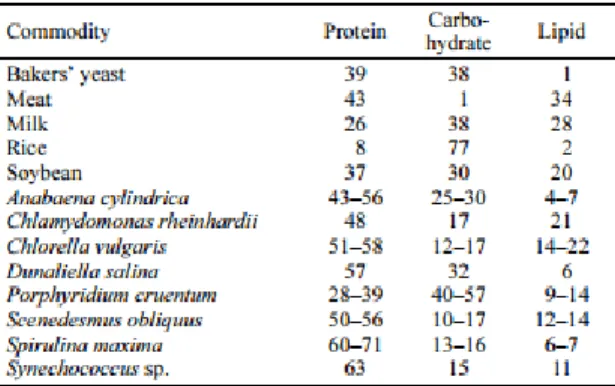
Table 3. Composition of different human food sources and algae (% dry matter) (Adapted from Spolaore et al., 2005)... 12
Table 4. Amino acid profile of different algae as compared with conventional protein sources and the WHO/FAO reference pattern (g per 100g protein) (Adapted from Becker, W., 2004)... 13
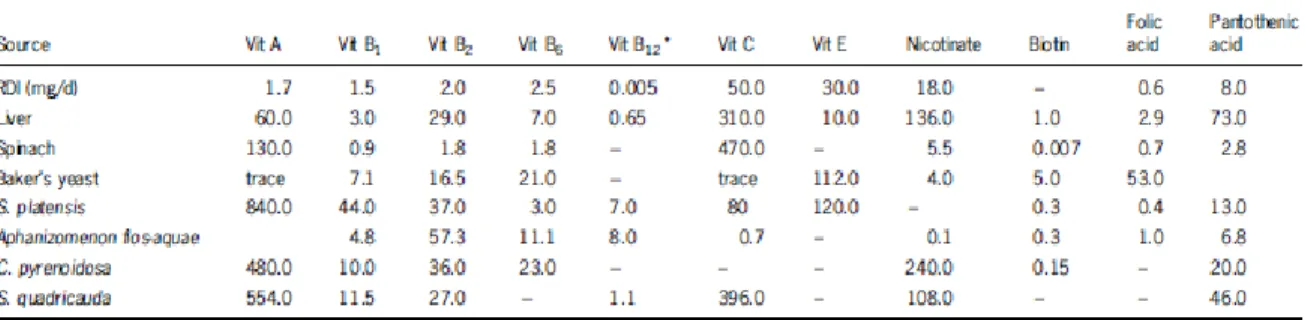
Table 5. Vitamin content of different algae in comparison with common foodstuffs and the recommended daily intake (values in mg.kg.1 dry matter) (Adapted from Becker, W., 2004)... 14
Table 6. Current and alternatives sources of PUFA (Adapted from Alonso and Maroto, 2000)... 31
Table 7. Composition of saline wastewater used for fermentation (in g/kg)…... 39
Table 8. Kinetic parameters of growth of Schizochytrium limacinum under heterotrophic conditions………. 46
Table 9. Fatty acid composition (g/kg) of Schizochytrium limacinum……… 48
Table 10. Lipids and DHA productivity by Schizochytrium limacinum………. 49
Table 11. Comparison of DHA production by Schizochytrium limacinum in fed-batch with a kLa of 143 h-1 and 72 h-1 for Chang et al., 2013 and for this study, respectively………. 50
XV
Table 12. Economic balance using different media (Saline waste medium and standard medium) for biomass and DHA production……….. 52
XVI
Nomenclature
ACL ATP-citrate Lyase
AMP Adenosine Monophosphate
ATP Adenosine Triphosphate
BOD Biochemical Oxygen Demand
DCW Dried cell weight
DHA Docosahexaenoic Acid
FAME Fatty Acid Methyl Ester
FAS Fatty Acid Synthetase
GHG Green House Gas
kLa Volumetric Mass Transfer Coefficient
NADPH Nicotinamide Adenosine Dinucleotide Phosphate
OD Optical Density
PBR Photobioreactor
PUFA’s Polyunsaturated Fatty Acids qp Product Formation
SM Standard Medium
STR Stirred Tank Reactor
SWM Saline Waste Medium
SWW Saline Wastewater
SCO Single Cell Oil
XVII TFA Total Fatty Acids
Td Doubling time
Yx/s Maximal Yield of Cell Mass from Substrate. μmax Maximum specific growth rate
1
Chapter 1: Introduction
Framework of the project
With the current amount of biodiesel produced worldwide over the years, the unrefined glycerol from transesterification of lipids has been increasing. As biodiesel production increases, so does production of the primary co-product, glycerol. Since the existing glycerol supply and demand market was tight, recent increases in glycerol production from biodiesel refining has created a glut in the glycerol market 1. As result of this the price of glycerol decreased significantly. Since it is expensive to purify glycerol into compounds that can be used in food, pharmaceutical and cosmetic industries it is necessary to develop new strategies to utilize this material to get profit.
Microalgae are a rather underexplored group of microorganisms and considered attractive as natural sources of valuable bioactive molecules since they have the potential to produce a variety of chemical and biological compounds, including long-chain polyunsaturated fatty acids, carotenoids and phycocolloids. The microalgal species which are currently attracting commercial interest grow under heterotrophic conditions and perform efficiently in conventional bioreactors in a similar manner to bacteria or yeast2.Thus in the last decades a lot of efforts have been made to explore this organisms to obtain high-value bio products at lower costs 3.
The microalgae-like marine protists used for this project was Schizochytrium limacinum since this specie can use glycerol as energy and carbon source to produce docosahexaenoic acid (DHA) 4 in heterotrophic regime 5.
From a variety of polyunsaturated fatty acids, docosahexaenoic acid (DHA, 22:6 n-3) have attracted increased attention due to its properties in human health. It was shown to have an important role in aging, memory, macular degeneration, neurodegenerative diseases like neuroinflammation, Alzheimer, Parkinson disease and contributes to cardiovascular health too 6, 7.
Currently, the most usual source of 3 is fish oil. The efforts to obtain omega-3 polyunsaturated fatty acids from algal biomass bring advantages compared to fish oil. Some of this advantages include solving the problem of overfishing, omega-3 from algal biomass
2
is odorless compared to the odor from fish oil and its advantageous for the aquaculture industry to use in fish feed to produce fish rich in omega-3 8, 9.
Objective of the project
The main objective of this project is to develop microbial technologies focused on conversion of alternative sources of carbon and energy.
Glycerol and Saline Waste Medium (SWM), provided by dairy industry, will be used as an alternative for Schizochytrium limacinum cultivation to obtain biomass with a high biotechnological potential. The production yields of biomass and DHA as well as the production costs of the process using glycerol and saline waste medium against glycerol and standard waste medium will be compared.
In the second case-study, the microalgae used will be Japanochytrium sp. The goal was to find the optimal temperature for growth of the model microalgae.
3
Chapter 2: Background and Literature topics
2.1 About Biodiesel
Biodiesel is a promising renewable energy resource which has the potential to reduce the world’s dependence on fossil fuels whilst lessening the environmental impact associated with these.
Thus it is expected that renewable fuels will gradually replace fossil fuels and so mark a historic transition into a sustainable society in which biological feedstock’s, processes and products constitute the main pillar of the fuels economy 10
.
The important criteria are: the fuel should be effective in propelling a car, should not be harmful to the engine and/or auxiliary parts, should be according to legislation and sustainable, when we talk about sustainability it means that fuel must be environmental friendly with minimum greenhouse gas (GHG) reduction potential, protection of biodiversity and food versus fuel should always be in mind 11,19.2.1.1 Environmental Overview
The combustion of biodiesel does release CO2 into the atmosphere, however the fuel sources range from wastes to crops and algal products. This means that although carbon dioxide is uptaken during the production, no new CO2 is being released or the fuel is derived from a source that was going to be disposed of anyway. Nitrogen and sulphur impurities are almost completely removed when compared to normal diesel; this means that there is a decrease of nitrogen dioxide and sulphur dioxide emissions, which reduces instances of acid rain 14, 15.
In this way biodiesel policy aims to promote the use of fuels made from biomass as well as other renewable fuels. Provide the prospect of new economic opportunities for developing countries, concerns job creation and greater efficiency in the protection of the environment. The use of biodiesel is expected to minimize greenhouse gas emissions, dependence on imported petroleum, and revitalize the economy by increasing demand and prices for agricultural products 16.
4
2.1.2 Biodiesel production within Portugal
In Portugal biodiesel production started in 2005 with a production of 1000 tons per year and currently are produced about 500 000 tons per year 17.
There are four main producers of biodiesel in Portugal, Prio (Martifer Group), Iberol, Biovegetal (SGC Group) and Sovenna Group. These groups use waste cooking oil, rapeseeds, soybean seeds and other kind of oilseeds as feedstock’s 18,19. Other important data related to these industries is in the Table 1.
Table 1 – Leading medium-large size biodiesel plants in Portugal with its raw material, production capacity, total investment and the year when the factory started the production. Accessed through Portugal biofuels
standing report 2015 18, 19
Producers Raw materials Capacity (ton/year) Investment (M€) Start of Production (Year) Prio Palm oil Soybean oil Rapeseed oil 100 000 32 2007 Iberol Soybean Vegetable oil Palm oil Rapeseed oil 125 000 30 2006 Biovegetal Palm oil Soybean oil Rapeseed oil 125 000 29 2007 Sovena Palm oil Soybean oil Rapeseed oil 95 000 23.4 2007 Bioportdiesel Palm oil Soybean oil Rapeseed oil 31 536 - 2011
Enerfuel Animal fats
Used cooking oil 27 000 - 2013
Valourodiesel
Palm oil Soybean oil Rapeseed oil
5
2.1.3 Regulatory Framework
When the biofuels are used commercially, there is an uncertainty in the economic analysis as the cost of the feedstock will fluctuate and the cost of petroleum will vary to compete with the biofuel. The growth of oil prices in the market, the pressure to reduce atmospheric emissions of CO2 and the concerns to promote the use in transport of biofuels is reflected in the legal obligation to set up policies by the governments 16, 20.
2.1.4 Global Legislation
The Kyoto Protocol is a worldwide environmental treaty for developed countries to decrease their GHC emissions. In 2012 GHG emissions were down by at least 18% compared with 1990 levels approaching the headline target to reduce emissions by 20% by 2020 21.
2.1.5 European Legislation
Within the European Union (EU), the European Commission (EC) is the entity responsible for setting the legislation and guidelines to treat climate change and promote biofuels use in the EU. In this way the EU issued the Renewable Energies Directive (2009/28/EC), Biofuel Directive (2003/30/EC) and Energy Tax Directive (2003/96/EC).
Renewable Energies Directive (RED) (2009/28/EC)
This is one of the most important EU Directives and it declares that the proportion of renewable energies is to be increased to a mandatory 20% in the EU by the year 2020. In the transport sector, the proportion of renewable energies is to rise to 10% of total fuel consumption over the same. The Renewable Energies Directive contains rules on the sustainable production of biofuels as the precondition for official support and for recognition under the EU biofuel targets. With the introduction of sustainability criteria the EU is also ensuring that in future only sustainably produced biofuels are used in the transport sector. It is required that biofuels reduce greenhouse gas emissions by at least 35 %, and from 2017 by as much as 50 %. New biofuel plants constructed after 2017 must achieve greenhouse gas reductions of 60 % 22.
6
2.1.6 Portuguese Legislation
The DL nr. 117/2010 of 25th October establishes the framework for biofuels in Portugal until
2020 23.
Transposition of European Directive 2009/28/EC (RED)
Defines the national mandatory targets for incorporation of biofuels in transport 2011 and 2012 – 5,0% 2013 and 2014 – 5,5% 2015 and 2016 – 7,5% 2017 and 2018 – 9,0% 2019 and 2020 – 10%
7
2.1.7 Biodiesel Standards
To allow the biodiesel to be sold in the European Union it is necessary to meet standard criteria limits. The chart below displays EN 14214 biodiesel standards.
8
2.1.8 Pathway of Biodiesel production
Biodiesel is made through transesterification also known as alcoholysis, is the displacement of alcohol from an ester by another alcohol in a process similar to hydrolysis, except than an alcohol is used instead of water. This process has been widely used to reduce the viscosity of triglycerides. This catalyzed chemical reaction (transesterification) is represented by the general equation:
𝑅𝐶𝑂𝑂𝑅′+ 𝑅′′𝑂𝐻 ⇄ 𝑅𝐶𝑂𝑂𝑅′′+ 𝑅′𝑂𝐻 (Reaction 1)
The reaction of a triglyceride with an alcohol (usually methanol) is represented by the general equation in Fig.1
In this reaction the fatty acids are released from glycerol and react with methanol to form fatty acid methyl esters (FAME) and glycerol. The stoichiometry of the transesterification reaction requires 3 mole of alcohol per mole of triglyceride to yield 3 mole of fatty esters and 1 mole of glycerol. The stepwise reactions are reversible and an excess of alcohol is used to shift the equilibrium towards the products side. When 100% excess methanol is used, the reaction rate is at its highest. A molar ratio of 6:1 is normally used in industrial processes to obtain methyl ester yields higher than 98% by weight. Methanol is usually used because of its low cost, physical and chemical advantages (polar and shortest chain alcohol) and has a great reaction efficiency. It can quickly react with triglycerides and
Figure 1 – Transterification reaction to produce biodiesel (Adapted from Srivastava et al., 1999)25
9
NaOH is easily dissolved in it. It was also observed that transesterification is faster when catalyzed by alkali and is most often used commercially 25, 26.
2.1.9 Glycerol composition and applications
Glycerol, also known as glycerin is the principal by-product of biodiesel production. Such crude glycerol possesses very low value because of the impurities contained. As the demand and production of biodiesel grows, the quantity of crude glycerol generated will be considerable, and the utilization of it will become an urgent topic. But before the crude glycerol could be considered as value-added utilization, is necessary to characterize his physical and chemical properties. As reported earlier biodiesel producers use excess methanol in transterification and do not recover all the methanol what makes methanol an impurity present in the glycerol layer (≈ 80% methanol), it also contains other elements like magnesium, calcium, phosphorous or sulfur. Thompson et al. 27 have characterized glycerol produced from various feedstock like soybean, rapeseed, waste vegetable oil, canola, mustard seeds and crambe seeds. In that study the crude glycerol from those feedstock is between 60% and 70% glycerol, where waste vegetable oil had the highest level of glycerol (76,6%) and mustard seed had the lower level (62%). These authors also investigated the elemental composition of crude glycerol and the elements present are calcium, magnesium, phosphorous, sulphur, sodium, potassium, carbon and nitrogen. Besides being produced by different feedstocks, the elements content is similar. Biodiesel producers with high economic capacity can refine the crude glycerol by filtration and fractional vacuum distillation and move it to food, cosmetic and pharmaceutical industries. Small producers who can’t afford the high cost of purification find crude glycerol utilization to be a problem 27.
It is known as biodiesel production increases, so does the production of the primary co-product, glycerol. Since the existing glycerol supply and demand market was tight, recent increases in glycerol production from biodiesel refining has created a glut in the glycerol market. In this way it’s necessary to find processes to convert this glycerol into commercially valued products 28.
Pagliaro et al.29 describes a variety of catalytic conversion methods for glycerol that will play an important role as raw material in chemical industries. For example by selective oxidation it is possible to obtain glyceric acid, tartronic acid and dihydroxyacetone which
10
can be used in food and cosmetic industries. By hydrogenolysis it’s possible to obtain propylene glycol which is used as antifreeze product, lubricant and food additive. By dehydration it’s possible to obtain acrolein a chemical largely employed by the chemical industry for the production of acrylic acid esters, super absorber polymers, and detergents. It is possible to see in the Fig.2 the glycerol as a raw material for functional chemicals.
Furthermore Johnson et al.1 proposed promissory options for biological conversion of glycerol into value products. Yeasts like Yarrowia sp., Candida sp., and Rhodotorula sp.
has focused on the production of citric acid, sophorolipids, and single cell oil using glycerol as carbon source, but at the moment there are no commercially applications for these products. These authors mention that the most promising option for biological conversion using glycerol is in the fermentative production of 1,3-propanediol a common component used in polymer synthesis, acetic acid, butyric acid, butanol, acetone, ethanol, 2,3-butanediol, lactic acid, succinic acid and format. Lactic acid, butanol and succinic acid are very important in biorefinery platform chemicals, they can be used for the production of new chemical products as well as bio-based alternatives to petroleum chemicals. Butyric acid is commonly used in the food industry as additive.
11
There have been major efforts developing alternatives strategies for the glycerol uses in chemical and biological processes to create valuable industrial products. With the current increase in biodiesel production and a glut in the market for glycerol this processes should continue to be investigated and commercialized if possible.
2.2 Microalgal biotechnology
Algae covers a diverse group of prokaryotic or eukaryotic photosynthetic microorganisms that can grow rapidly and live in harsh conditions due to their unicellular or simple multicellular structure. Ranging in size from giant kelps to the unicellular microalgae (a group of protists which are only a few microns in size) and the prokaryotic cyanobacteria (blue-green algae) 28. The diversity of algae are illustrated in Fig. 3, referring the taxonomic groups 29.
The interest in these group of organisms lies in their potential to produce biomass for food, feed for aquaculture and chemicals. Microalgae are found all over the world, mainly distributed in the waters, but also in the surface of soils 30. It is important to mention that even though microalgae are seen as photosynthetic, there are other groups that can be heterotrophs.
Figure 3 – Proportion of taxonomic groups of algae
12
2.2.1 Applications of microalgae
Microalgae have a great potential as source of biotechnological products due to their adaptability to extreme environmental condition, and flexibility to use different sources of energy and carbon. These microorganisms possess the advantage of a metabolic flexibility. Similarly, their secondary metabolism, which have a huge interest for biotechnology, can be easily triggered applying stress (e.g., lack of a nitrogen source) 31.
Microalgae are being used for the production of human and animal food, aquaculture feed, pharmaceutical and cosmetic products, biofuels and wastewater treatment 28, 32, 33, 34, 35, 36.
One of the experiments in this work was focused on the fed-batch cultivation of Schizochytrium limacinum, considered a high producer of DHA (Docosahexaenoic acid, C22:6 n-3), on a mixture of saline waste medium from a dairy effluent and glycerol as carbon source. A second case study was developed to analyze the effect of the temperature on the growth of Japanochytrium sp. as well as the temperature that gives the higher content of biomass. Both model organisms are microalgae-like marine protists.
2.2.2 Microalgae in human and animal nutrition
Microalgae can be used in the production of biofuels, but they are mainly cultivated to obtain highly valuable compounds due to the chemical composition of those species (Table 3) 37.
Table 3 – Composition of different human food sources and algae (% dry matter)
13
Microalgae for human nutrition are marketed in different forms like food or food supplement and are commonly sold in tablets, capsules or liquids 37.
It is relevant to know that the composition from microalgae varies from strain to strain and depends of parameters like pH, temperature, medium content, CO2 supply etc.
The high protein content is one reason to consider microalgae as an unconventional source of proteins. Humans and animals are limited to the biosynthesis of certain amino acids only, the remaining needs to be given trough food. The amino acid profile of microalgae was compared with the proteins in the food and it was reported that there are similarities in the content (Table 4), in this way, since this cells can synthesize all the amino acids, microalgae can be used to provide this essential amino acids to humans and animals 37, 38.
Carbohydrates in microalgae can be found in the form of starch, cellulose, sugars and other polysaccharides. Their overall digestibility is high, so there is no limitation to use microalgae in foods or feeds.
The lipid content of microalgae is about 1% to 70% of the dry weight but in certain cases can reach 85-90% of dry weight. The algal lipids are mainly composed of glycerol, sugars or bases esterified to saturated or unsaturated fatty acids. The common fatty acids of particular interest are ω3, ω6, ω9 families.
Another important constituent of microalgae are the vitamins. They represent a source of almost all essential vitamins (Table 5) what makes them more attractive to use as nutritional supplement 39, 40.
Microalgae are also rich in pigments like chlorophyll (0.5 – 1.5% of dry weight), carotenoids (0.1 – 0.2% of dry weight) and phycobiliproteins.
Table 4 - Amino acid profile of different algae as compared with conventional protein sources and the WHO/FAO reference pattern (g per 100 protein)
14
All this compounds has a wide range of commercial applications, however, before being commercialized this algal material must be subjected to analysis in order to detect the presence of toxic compounds 37.
Table 5 - Vitamin content of different algae in comparison with common foodstuffs (values in mg/kg dry matter) (Adapted from Becker 37)
2.2.3 Microalgae in Pharmaceutical and Cosmetic industries
Many desirable chemicals are the product of secondary metabolism triggered under certain conditions. In this way, microalgae have become extremely important microorganisms because once a chemical is discovered and characterized it might be produced synthetically and the biochemical pathway of the chemical can be transferred to a easily cultivable organism, in this way the microalgae potential could attract the attention of biopharmaceutical companies.
Guedes et al.36 showed in their research that microalgae are great producers of bio-compounds with beneficial properties to human health like antioxidants, anti-inflammatory, antimicrobial, antiviral and antitumoral compounds.
Plaza et al.41 reported that Chlorella vulgaris produce astaxanthin, Dunaliella salina produces β-carotene and Haematococcus pluvialis produce lutein, all of them with antioxidant effects where astaxanthin has anti-inflammatory and antitumoral effects too. Eicosapentaenoic acid, α-Linolenic acid, Goniodomin A produced by Phaeodactylum tricornutum, Chlorococcum HS-101, and Goniodoma pseudogoniaulax, respectively, are known to have antimicrobial actions 36.
Compounds with antiviral actions are p-KG03 exopolysaccharide produced by Gyrodinium impudieum and allophycocianin produced by Cryptomonads 36, 42.
15
In the cosmetics field, microalgal can be mainly found in face and skin care products like anti-aging cream, algal clay masks, algal beauty oil, anti-irritant products, sun protection and hair protection with the main specie being Chlorella. Chlorella vulgaris extract is commercialized as a skin conditioning agent and protecting agent that can be used in anti-aging products to prevent the breakdown the skin’s collagen and elasticity.40
2.2.4 Environmental applications of microalgae
Besides the uses in human health and animal feed industry, microalgae had a strong impact in the environmental area. For example, the company Mera Pharmaceuticals studied the utilization of microalgae for carbon sequestration. The objective was combining the CO2 from the fossil fuel combustion system and nutrients in a photobioreactor (PBR) where microalgae photosynthetically convert the CO2 into compounds of high value in this way it is possible to lower the effective cost of sequestration and generate valuable byproducts 43. Schematic diagram of the process is shown on Figure 5.
Abdel-R. et al.44 showed that microalgae can also be used in the wastewater treatment. In this process it is intended to decrease biochemical oxygen demand (BOD), suspended solids, ions, coliform bacteria and toxicity in order to obtain the higher level of wastewater
Figure 4 – Diagram for a microalgal-based carbon capture and sequestration scheme developed by Mera Pharmaceuticals
16
purification. It is necessary a combination of successive steps to accomplish these objectives. The problem is the associated cost with each successive step, in this way it is possible to introduce photobioreactors where microalgae can replace some of these steps since this microorganisms have the possibility to incorporate nutrients, they have photosynthetic capabilities and are able to remove toxic compounds without leading to pollution 44.
Among the 42.000 species 45 only a few are investigated and cultivated in industrial quantities. The development of microalgae biotechnology has not the attention of larges companies, this may be due to the shortage of investment in this area or the lack of success at the industrial production so far. Future research aimed at improvement of cultivation methods and appeal to genetic engineering in order to use genetically modified strains can lead to an interesting development in this field 40, 43.
As stated before, microalgae have high flexibility, they are photoautotrophic but can perform heterotrophy and mixotrophy. In this way it is possible to use a wide arrangement of cultivation systems. The microalgal production system will be presented in the section 2.7.
2.3 Microalgal growth
It is relevant to understand the factors that determine algal growth rate and product yield. The different cultivation systems plays an important role in the algal growth rate and product yield as well the carbon and nitrogen metabolism, oxygen and others macro- and micronutrients.
2.3.1 Nutritional routes
There are a variety of possible nutritional routes for algae being autotrophy, heterotrophy and various combinations are possible between these two major forms of nutrition.
Autotrophic organisms capture the energy trough absorption of light energy and reduction of CO2 by the oxidation of substrates (e.g. water). Autotrophic organisms can be chemoautotrophs too if they utilize electrons donors as a source of energy, from organic or inorganic sources.
17
Heterotrophic organisms can’t fix carbon so they obtain their energy from organic compounds, (e.g. glucose, glycerol). Since there are algal species that can grow on organic substrates, heterotrophic regime has become a viable option in bioreactors systems, always under specific growth conditions. Photoheterotrophic organisms require light as energy source to use organic compounds as nutrients.
For the last, mixotrophic organisms can use a mix of different sources of energy and carbon, some of them have incomplete Calvin cycles so they can’t fix carbon dioxide and need to use an organic carbon source 46, 47, 48.
Several research studies were made to understand which nutritional mode could give the highest biomass growth, cell density and lipid productivity.For example, Ratha et al. 48 studied the biomass and lipid productivity under photoautotrophic, heterotrophic and mixotrophic routes. Under photoautotrophic conditions lipid productivity ranged from 2 - 13 %, under mixotrophic 1.7 - 32% and 0.9 - 20% under heterotrophic conditions. Furthermore, Santos et al.49 compared heterotrophic, autotrophic and mixotrophic using Chlorella
protothecoides for lipid production, they achieved the highest biomass productivity and lipid content (>22%) under heterotrophic conditions. Li et al.108 compared the effects of autotrophic and mixotrophic growth regime on the cell growth and lipid productivity for biodiesel production. They achieved a biomass production 14x higher and a lipid productivity 5.6x higher under mixotrophic than autotrophic conditions. Despite that, under mixotrophic conditions the culture assimilated 99.7% more nitrogen and 75.9% phosphorous from piggery wastewater reducing the nutritional requirements for culture, hence the associated costs.
Despite mixotrophic and heterotrophic conditions showed to be the most attractive way for cultivation, it should be taken into account that the cultivation of microorganisms depends from several factors like the product desired, type of microorganisms, microorganism strains, nutrients, fermentation conditions and systems for microalgal cultures.
18
2.3.2 Systems for mass microalgal cultures
Open ponds
Open ponds are the oldest and simplest systems where algae are cultivated under conditions similar to the external environment. The biggest advantage of these ponds is their simplicity, resulting in low production costs and low operation costs. However, it has some drawbacks owing to the fact that the contaminations are not under control, and the biomass productivity is low due to light limitation.
Photobioreactors
Photobioreactors were developed to overcome the problems encountered in open ponds. These reactors possess artificial illumination (optional), CO2 addition, stirring and cooling facilities. They offer many advantages over open ponds such as a better control of culture, large surface-to-volume ration, reduced fouling and better protection from outside contamination. However there are disadvantages associated with PBRs, such as, capital and production cost are very high, light limitation cannot be totally overcome since light penetration is inversely proportional to the cell concentration and the accumulation of oxygen is still another unsolved problem.
Heterotrophic systems
Sugars or organic acids are used as carbon and energy sources instead of CO2 and light. In this way, microalgae species need to be isolated in the presence of organic carbon substrates and from sources rich in organic materials 50.Heterotrophic systems offer the possibility of greatly increase cell density and productivity since they eliminates light dependence and the culture conditions can be controlled. A heterotrophic culture process may be further intensified by using cultures techniques such as fed-batch leading to high cell densities 2, 34, 51, 54.
Chen et al. 51 listed the required initial characteristics that microalgae species must fulfill to be used in heterotrophic cultivation: (a) Ability to grow in culture media with
19
to-sterile organic substances where energy required for heterotrophic growth must be supplied by oxidation of part of the organic substrate. (b) Cell division and active metabolisms in absence of light. (c) Ability to adapt to fast environmental changes. (d) Capacity to resist hydromechanical stress inside the fermenters. In addition to these parameters for heterotrophic cultivation, the main practical key issues in large-scale for heterotrophic cultures of microalgae are: a) Good survival of the strain during cultivation, b) Overall low cultivation costs reflected as the ability of the strain to efficiently use inexpensive carbon sources, tolerate environmental changes and generate economically valuable metabolites and d) At industrial level, the strain must be easy to handle and should produce high density biomass 51, 52.
2.3.3 Composition of culture medium and microalgal biomass
The culture media for growing microalgae have been developed using the stoichiometric composition of the microbial biomass grown under regular physiological conditions 53.The information about the composition of microbial biomass in relation to the formation of a product depend on the microalgal specie and culture conditions.
A suggested molar ratio of C106N16P1 was described by Falkowski109. Recently has been extended to include other important elements such as K+, Mg2+, Na+, Ca2+, SO4- and Cl -46, 54.For a recipe to algal cultivation it is also important to consider the total salt content, which is determined by the habitat from where the algae originates, nitrogen sources, like nitrate, ammonia and urea, carbon source either CO2 or HCO3-, pH, vitamins and chelating agents (EDTA). It’s important to realize the purpose for which the algae will be cultivated, this means, they can be kept in culture collection, can be grown for optimal biomass yields or can be grown in stress conditions for the biosynthesis of value biocompounds 46.
In medium for heterotrophic cultures that support optimal growth, all of the constituents are supplied in stoichiometric excess to the organic carbon source 54.
In Fig.7 it is shown the biomass composition and macro and micro-elements of one of the most known species capable of heterotrophic growth, Chlorella sp.
20
Figure 5 – Molecular composition of Chlorella sp. biomass on the left and macro and micro elements on the right. The lower and upper limits were determined at low and high nitrogen availability
(Adapted from Oh-Hama and Miyachi 1988)
2.3.4 Enhancing biomass and product formation
The development of appropriate strategies for enhancing biomass or product formation is exploring the flexibility of biomass composition within its upper and lower limits as defined by different culture conditions or with the supply of chemical elements in the culture medium.
The objective for any microalgal process it is to achieve the highest product concentration in the shortest possible time. Maintaining the growth at the maximum specific growth rate (μ, in h-1) does not often correlate with the highest attainable rate of specific product formation (qp, in g g-1 h-1). When product formation is not correlated with maximal growth, i.e. more cells doesn’t mean more product, it is advantageous to have control over the specific growth rate and this can usually be achieved in fed-batch cultivation. The culture can be increasing the biomass production at the expense of a decrease in product formation. In fed-batch it is possible to control the substrate concentration, with this particularity we can control the specific growth rate.Different species showed to have different product rates. For example there are species where we can achieve higher productivities with higher substrate concentration and lower productivities with lower substrate concentrations.
21
Fed-batch cultivation it is believed to be the most effective technique to achieve the highest product concentration in the shortest time controlling the addition rate of the organic carbon and energy source and where osmotic or toxic effects due to high substrate concentrations can be avoided 54.
Pulsed and continuous addition of organic carbon source is a frequently applied strategy in fed-batch cultivation. Pulsed fed-batch strategies are appropriate to species where growth is inhibited by very high substrate concentrations but where residual substrate concentrations can be tolerated.Combined production strategies can be applied to systems where rapidly built biomass is essential during the first process, prior to a subsequent differently controlled phase that promotes product formation 55.
2.3.5 Carbon and Nitrogen sources
All organisms, including microalgae, use the same metabolic pathways for respiration. However, it is hard to predict which specific substrates can be used or preferred by any given microalgae 56.
Glucose is the most commonly used carbon source for heterotrophic cultures. Glucose promote physiological changes in certain species of microalgae, which strongly affects the metabolic pathways of carbon assimilation, size of the cells, volume densities of storage materials, such as starch, lipids, protein, chlorophyll and vitamin contents 59. However, pure glucose would be very expensive at commercial production scale.
Glycerol is another promising carbon source for heterotrophic cultivation, it’s an economical carbon source for energy supply and carbon requirements and it’s a very compatible solute for enzymes and membranes, with almost no toxic effects even at high concentrations 57. Several species can assimilate glycerol from the medium increasing their growth rate and inducing specific biochemical and structural changes in their photosynthetic systems, such as, reduction of cell phycoerythrin content, degree of thylakoid, packing, number of thylakoids per cell, and the size of Photo System II particles, suggesting that in glycerol-growth there’s an enhancement of heterotrophic potential 60. The conversion threshold of glycerol, (0.10 ± 0.02 g/g), into single cell oil is generally lower than that of
22
glucose, presumably due to poor regulation of the enzymes involved in the primary metabolic steps of glycerol assimilation, such as glycerol kinase and 3-p-glycerol dehydrogenase 67, 102. Nowadays one of the most promising alternative organic carbon substrates is wastewater derived from industrial sources due to the dual advantage of pre-treating an existing waste stream while providing free organic carbon source for microalgae growth. For example, acetate can be used as a glucose alternative. Acetate can be metabolized by microalgae cells via acetyl-coA in the glyoxylate cycle and converted to ATP in the Krebs cycle 110. Perez et al. 57 investigate nutrient removal from sterilized municipal wastewater by Chlorella vulgaris and it was found that sodium acetate resulted in the greatest cell growth as well as ammonia removal 57. Acid acetic has also been investigated as a carbon source and it showed to have positive results. De Swaaf et al.111 obtained biomass yields of 109 g L-1 with a lipid content of 55 % in the heterotrophic cultivation of Crypthecodinium cohnii using acid acetic.
Monosaccharides like fructose, galactose, mannose, xylose and even some disaccharides (sucrose, lactose) have been investigated as organic carbon sources for the cultivation of microorganisms. There are several studies regarding to these carbon sources. Sharma et al.112 studied the effect of sucrose over glucose and glycerol on Chlorella sp. growth and lipid production. Sucrose showed to have a biomass productivity of 69.38±9.2 mg L-1 day-1 and lipid yield of109.04±10.8 mg.L-1 however the values obtained for glucose and glycerol were slightly higher. Vidotti et al.113 used low cost carbon sources for the cultivation of two different strains of microalgae, Chlorella vulgaris and Scenedesmus bijugus. The carbon sources used were cassava wastewater, sugarcane molasses, glycerol, sucrose, fructose, glucose and sodium acetate. Glucose produced the higher biomass growth rates in both Chlorella vulgaris and Scenedsmus bijugus cultivation. The lowest growth rates were associated when fructose was used as carbon source. However, the cultivation of Chlorella vulgaris with fructose resulted in cell death, indicating that this strain was unable to consume fructose. Velu et al.114 studied the effect glucose, fructose, sucrose, lactose and galactose in three different species of marine microalgae, Nannochloropsis salina, Dunaliella tertiolecta and Tetraselmis suecica. Among the carbon sources tested these species showed a higher growth and higher lipid production in the order of glucose, sucrose, fructose,
23
galactose and lactose treated culture. It should be noted that the carbon sources behave differently depending on the type of microorganism utilized due to the enzymatic complexes. Following carbon, nitrogen is the most important nutrient contributing to the growth of biomass. The nitrogen content of biomass can range from 1% to 10% and may vary between different groups and species. Carbon and nitrogen metabolism are linked in microalgae because they share the carbon supplied directly from respiration of fixed CO2 (autotrophic growth) or assimilated organic carbon (heterotrophic growth) and the energy generated in the TCA cycle and in the mitochondrial electron transport chain 46, 57.
A variety of organic N compounds like ammonia (NH4+), nitrate (NO3-), urea, yeast extract, peptone and amino acids are utilized by algae 46, 51, 55. Ammonia is often the preferred N-source for algae since it requires less energy for its uptake, what makes the more energetically efficient source 46, 61, 62.
Typical responses to nitrogen limitation is discoloration of the cells (decrease in chlorophylls and increase in the carotenoids) and accumulation of organic carbon compounds such as polysaccharides and lipids.The metabolic pathways involved in carbon assimilation for glucose and glycerol, and in nitrogen assimilation for ammonium are annexed depicted.
Growth rates are enhanced by higher levels of aeration what makes oxygen a key factor in heterotrophic cultivation 57.
For instance, Wu et al.58 made a study where the limitation of oxygen in a culture may reduce the specific growth rate of Chlorella sp. and consequently lower the productivity of biomass at high cell density.
The requirement of oxygen depends on the culture mode, i.e., in photoautotrophic conditions in which CO2 is used as carbon source, oxygen is toxic for the cells and should be removed out of the culture system. While in heterotrophic conditions, oxygen is crucial for cell growth. Oxygen is also important to the PUFAs formation in microalgae because the enzymes involved in desaturation and elongation of PUFAs are oxygen dependent.
24
2.4 Lipid Accumulation
Several species of microalgae can be induced to overproduce particular fatty acids through simple manipulations of the physical and chemical properties of the culture medium. This makes microalgae a valuable source of lipids and fatty acids 63.
The accumulation mechanism of lipids in the microalgae and oleaginous microorganisms depends on diverse factors like growth temperature, pH, nutrient intake (carbon, nitrogen and other components), nutritional mode (autotrophic, heterotrophic or mixotrophic), the age of the culture and the microorganism strain. However, it is also important to realize that not every parameter will affect fatty acid content in every algal species. The extent to which fatty acid content responds to a particular parameter can be known only trough practical experimentation. However, the most popular strategy for lipid accumulation is nitrogen limitation 4, 63, 64, 65.
Under the same conditions (nitrogen-limiting) non-oleaginous microorganisms tend to cease cell proliferation or, if they continue to assimilate the available substrate, it will lead to the formation of polysaccharides. In view of the foregoing it can be concluded that the ability of an organism to accumulate oil does not depend of the lipid biosynthesis mechanism as this biosynthetic machinery is common to all microorganisms. So, the reasons for oleaginicity could come from two pathways (a) supply of acetyl-CoA in the cytosol of the cell that works as precursor for fatty acid synthetase (FAS) and, (b) large supply of NADPH as reductant used in fatty acid biosynthesis. Formation of acetyl-CoA comes from the action of ATP-citrate lyase (ACL) (Reaction 2).
𝐶𝑖𝑡𝑟𝑎𝑡𝑒 + 𝐶𝑜𝐴 + 𝐴𝑇𝑃 → 𝑎𝑐𝑒𝑡𝑦𝑙 − 𝐶𝑜𝐴 + 𝑜𝑥𝑎𝑙𝑜𝑎𝑐𝑒𝑡𝑎𝑡𝑒 + 𝐴𝐷𝑃 + 𝑃𝑖 (Reaction 2)
Citric acid in cytosol is important for efficient synthesis of fatty acids. This component is synthesized in tricarboxylic acid cycle (TCA) 66.
Oleaginous microorganisms accumulate citric acid, when the intra-mitochondrial citric acid concentration reaches a critical value and citrate enters the cytoplasm 67. Citric acid accumulation comes from the activity of isocitrate dehydrogenase that is part of the TCA
25
cycle and is dependent on the presence of adenosine monophosphate (AMP). AMP concentration is regulated by the activity of AMP deaminase (reaction 3).
𝐴𝑀𝑃 → 𝑖𝑛𝑜𝑠𝑖𝑛𝑒 5′− 𝑚𝑜𝑛𝑜𝑝ℎ𝑜𝑠𝑝ℎ𝑎𝑡𝑒 + 𝑁𝐻3 (Reaction 3)
Nitrogen exhaustion induces a reaction chain leading to the formation of acetyl-CoA. At the beginning of nitrogen privation occurs an increase of AMP deaminase activity about five times higher than in cells before nitrogen privation. The increased activity of AMP diaminase will contribute to a fall in the cellular content of AMP. Lower content of AMP stops isocitrate dehydrogenase activity. Once isocitrate cannot be metabolized, it accumulates and is then equilibrated with citric acid by enzyme aconitase. Subsequently citrate will be transferred to cytosol. In cytosol citrate is cleaved by ACL and form acetyl -CoA and oxaloacetate (Reaction 2). Acetyl--CoA is used for fatty acid biosynthesis and oxaloacetate is integrated in the citrate/malate cycle. This cycle consists in recycling the oxaloacetate that is converted via malate dehydrogenase to malate and then malate via citrate synthase is converted to citrate 66, 67. A summary and a scheme of lipid biosynthesis is shown in Fig. 6 and Fig. 7 respectively.
Figure 6 – Summary steps of lipid biosynthesis in oleaginous microorganisms under nitrogen exhaustion (Adapted from Papanikolaou
26
Figure 7 - Scheme to show how the citrate/malate cycle and the cytosolic transhydrogenase cycle could provide sufficient precursors of acetyl-CoA and NADPH for lipogenesis in oleaginous microorganisms. PC – pyruvate carboxylase, MDH –
malate dehydrogenase, ME – malic enzyme (Adapted from Ratledge 66)
Once fatty acids are highly reduced materials, to achieve their synthesis other enzymes can be required to achieve lipid accumulation. Malic enzyme (malate dehydrogenase) catalyze the decarboxylation reaction of malate to pyruvate with the formation of NADPH that is essential in fatty acids synthesis. So the major supplier of NADPH for fatty acid biosynthesis is considered to be malic enzyme (Reaction 4) 64, 66, 67.
𝑀𝑎𝑙𝑎𝑡𝑒 + 𝑁𝐴𝐷𝑃+→ 𝑃𝑦𝑟𝑢𝑣𝑎𝑡𝑒 + 𝐶𝑂2+ 𝑁𝐴𝐷𝑃𝐻 (Reaction 4)
2.5 Omega-3 Polyunsaturated fatty acids (PUFA’S)
Omega-3 polyunsaturated fatty acids are fatty acids containing two or more double bonds, with the last double bond located at the 3rd carbon atom from the methyl end of the fatty acid chain. PUFAs are the important components of all cell membranes and precursors of eicosanoids that are essential bioregulators of many cellular processes 68. α-Linolenic acid
27
(18:3), eicosapentaenoic acid (EPA, 20:5) and docosahexaenoic acid (DHA, 22:6) are the most common omega-3 fatty acids and the interested on this PUFA’s has increased significantly due to their recognition as being beneficial for human health 68, 69.
Omega-3 fatty acids have proven beneficial effects in prevention of cancers, Alzheimer, cardiovascular diseases, infant brain and vision development 68, 70, 71. Once human body cannot synthesize PUFAs, they must be obtained from the diet to sustain homeostasis 68, 70.
Omega-3 fatty acids have beneficial effects on cardiovascular system. Simopulos 72 reported that increasing the consumption of omega-3 could decrease the risk of suffering from diseases such as diabetes, obesity and asthma. Mozaffarian et al. 71 and Saravanan et al. 73 stated that omega-3 PUFAs consumption lower the resting hearth rate, blood pressure, lower inflammation, improve vascular function and experimental studies demonstrate direct anti-arrhythmic effects. Regulatory entities assume that the recommendations for general population consumption to maintain a health hearth should be at least 250mg/day of omega-3 PUFAs 71, 73.
Omega-3 fatty acids have been shown to possess anti-carcinogenic properties. The number of studies from the use of omega-3 fatty acids in cancer has increased. The
Figure 8 – Chemical structure of α-linolenic acid (18:3), EPA (20:5) and DHA (22:6), respectively
28
mechanisms are not fully understood, but great efforts have been undertaken to further explore the beneficial effects on the treatment of various cancers 74, 75.
Sharma et al.76 showed that Omega-3 fatty acids had anti-proliferative effect on epithelial ovarian cancer cells. This effects can be associated to p53 gene 76.
Lou Y-R et al. 77 studied the effects of high-fat diets rich in either omega-3 on UVB-induced skin carcinogenesis in SKH-1 mice. Their results showed that omega-3 fatty acids in diet of the mice increased latency for the development of UVB-induced skin tumors, decreased the formation of papilloma, keratoacanthoma and carcinoma by 64, 52 and 46% respectively and decrease the size of papilloma, keratoacanthoma and carcinoma by 98, 80 and 83%, respectively. Summarizing, the results indicate that omega-3 fatty acid diet have beneficial effects against UVB-skin carcinogenesis and these effects may be associated with an inhibition on UVB-induced inflammatory response.
Hardman W. 78 has shown that mice implanted with human breast tumor consumed canola oil (high content in α-linolenic acid), resulting in slower growth of cancer cells.
Besides having positive effects on cardiovascular diseases and cancer, studies have also shown beneficial effects on the treatment of schizophrenia79-82 and Alzheimer84, 85. DHA is a major structural component of neuronal membranes, and changing the fatty acid composition of neuronal membranes leads to functional changes in the activity of receptors and other proteins embedded in the membrane phospholipid 81, 85. It has also be shown that schizophrenia patients have reduced cell membranes levels of PUFA’s particularly DHA 80, 82, 83. This leads the researchers to believe that the mechanism behind these beneficial effects can be due to changes in brain membrane fluidity, more exactly due to alteration in the fatty acid composition of brain membranes.
2.5.1 Biosynthesis of Omega-3 Fatty Acids
The biosynthetic pathway of omega-3 Fatty Acids is divided in two stages. The first stage is the de novo synthesis of oleic acid from acetate. The second stage comprehend a series of desaturation and elongation reactions from oleic acid to form a family of longer chain polyunsaturated fatty acids (ω-9, ω-6, ω-3 PUFAs) 86. In Fig. 9 are shown the two stages of PUFAs synthesis.
29
Once oleic acid (C 18:1 ω-9) was synthesized it was further desaturated by Δ12 and Δ15 fatty acid desaturases to form linoleic acid (LA C18:2 ω-6) and α-linolenic acid (ALA C18:3 ω-3), respectively. After the three fatty acids are formed (oleic acid, LA, ALA), they will compete for Δ6 desaturase, for which generally ALA has the highest affinity 86. Several microorganisms like algae, fungi, bacteria and insects possess these enzymes required to the synthesis of PUFAs. However, humans do have the ability to produce EPA and DHA, but the conversion rates are very low 87. Thus it is of extremely importance to include in human diet Omega-3 through the dietary sources.
Figure 9 – Biosynthetic pathway for formation of PUFAs. Enzymes Δ9 Δ12 Δ15 are fatty acid desaturases. (Adapted from Wen86)
30
2.5.2 Sources of Omega-3 Fatty Acids
It is clearly understood that omega-3 fatty acids are of extreme importance to human health, so it necessary to elucidate and develop new strategies and economical sources to obtain omega-3 fatty acids.
2.5.2.1 Traditional Sources
The main source of omega-3 fatty acids is mostly from marine fish oil. Blue fish, white fish, cephalopods and crustaceans are a natural source of EPA and DHA and can provide 100% of the daily requirements of Omega-3 to humans. It is believed that fish do not synthesize this fatty acids themselves, they acquire them from the phytoplankton that they eat 88.
The annual global production of fish oil is around one million and seventy thousand tonnes and it is expected to reach around two million tonnes in 2022 89. Significant problems of using this traditional sources may include variation of fish oil due to different species, climatic and seasonal change, which can affect the quality of the fish oil, complex and expensive purification methods for raw fish oil, peculiar taste and odor and another concern is the sustainability of this natural source, since the global fish oil demand continues to grow year after year 90.
Hereupon it’s clearly that PUFA production from traditional sources it can become a problem in the future. So to supply the growing PUFA market it is necessary to seek for alternative sources to compete in cost with current sources.
2.5.2.2 Alternative Sources
The problems stated above lead to an extensive research of potential alternative sources of PUFAs such as microalgae, fungi, bacteria and mosses (Table 6).
Fish do not have the de novo mechanism to produce omega-3. Microorganisms such as algae and fungi have the necessary biosynthetic pathway to produce PUFAs. This microorganisms have been extensively studied due to this particularity what makes them potential sources of PUFAs.