ISSN: 1809-4430 (on-line)
_________________________
2 University of Northern Paraná/ Cascavel - PR, Brazil. 3 Western Paraná State University/ Cascavel - PR, Brazil.
4 Federal University of Technology - Paraná/ Curitiba - PR, Brazil.
HYDROGEN PRODUCTION AND PERFORMANCE OF ANAEROBIC FIXED-BED REACTORS USING THREE SUPPORT ARRANGEMENTS FROM CASSAVA STARCH
WASTEWATER
Doi:http://dx.doi.org/10.1590/1809-4430-Eng.Agric.v37n1p160-172/2017
DOUGLAS G. B. TORRES1*, SHAIANE DAL’ MASO LUCAS2,
CRISTIANE L. ANDREANI3,KARINA Q. DE CARVALHO4,
SILVIA R. M. COELHO3, SIMONE D. GOMES3
1*Corresponding author. SENAI College of Technology and Western Paraná State University/ Cascavel - PR, Brazil.
E-mail: [email protected]
ABSTRACT: Fixed-bed reactors have been considered promise alternatives for hydrogen
production due to their simple construction and increase in the biomass retention. The purpose of this study was to investigate the biological production of hydrogen in anaerobic fixed-bed reactors with cassava starch wastewater used as substrate. Different support materials and arrangements of fixed-bed were used to evaluate the biological production of hydrogen in anaerobic continuous fixed-bed reactors, with cassava starch wastewater as substrate - recycled low-density polyethylene scraps, in packed bed (R1), recycled low-density polyethylene cylinders, in ordained bed (R3) and bamboo stems, in vertical arrangement (R2 and R4). In R1 the initial pH was adjusted for 6.0, with hydraulic retention time (HRT) of 4 h and organic loading rate (OLR) of 9.5 g.L-1.d-1. In R2 the
initial pH was maintained in 4.5, with HRT of 4 h and OLR of 9.5 g.L-1.d-1. R3 and R4 were
operated with initial pH of 4.5, HRT of 4 h and OLR of 13.5 g.L-1.d-1. The volumetric hydrogen
production (VHPR) was favored by lower OLR applied, evenin different pH ranges (6.0 and 4.5). VHPR values of 229 mL H2.L-1.d-1and 248 mL H2.L-1.d-1 were obtained in R1 and R2, respectively.
Both in the bamboo stems bed as in the polyethylene cylinders bed, the increase of OLR and the reduction of the initial pH resulted in a diminishing of VHPR to 175 mL H2.d-1.L-1 (R3) and 145 m
LH2 .d-1.L-1 (R4). Higher concentrations of butanol (821.32 and 1,529.22 mg.L-1) and ethanol
(915.41 and 924.41 mg.L-1) were verified in the reactors with bamboo stems. In R4, the increase of
OLR and the reduction of the initial pH contributed to the increase of butanol concentration in 1.8 times, diminishing the VHPR in 41.68%, yield in 63.95% and H2 in 37.6%, and indicating that the
effect of pH is more pronounced with the increase of OLR, leading to the solventogenesis.
KEYWORDS:bio-energy, fermentative processes, bamboo, polyethylene, agro-industrial effluent.
INTRODUCTION
The increase in global demand for energy, reduction in fossil fuel reserves and environmental impacts has motivated the search for alternative fuels. In this context, hydrogen is a promising substitute, a clean and efficient source, because it is its burning results in zero emissions of greenhouse gases and with energy potential three times higher than that of gasoline (141.8 kJ.g-1)
(SRIRANGAN et al., 2012; ARIMI et al., 2015). Considerable amounts of bio-hydrogen can be produced from renewable resources.
To achieve the industrial scale and compete with the hydrogen produced by means of fossil fuels, different approaches have been extensively studied in the fermentative production of bio-hydrogen with different configurations of reactor, operational parameters and the choice of suitable substrates (ARIMI et al., 2015).
Fixed-bed reactors have been considered as a promising alternative for the production of hydrogen from wastewaters due to their simple construction and the enhancement in the cell retention time, which is essential for hydrogen production (REIS & SILVA, 2014). Anaerobic fixed-bed reactors have many advantages compared to other types of reactors that use suspended cells, including the possibility of achieving a higher cell concentration and a longer cell retention time (FERRAZ et al., 2014). The improvement in retention cellular increases the resistance of reactor to organic shock loads, inhibitory compounds and changes in substrate concentration (SIVAGURUNATHAN et al., 2016; KESKIN et al., 2012). In addition, the support operating as a separator mechanism of gas and solid, increases the contact between wastewater and biomass, leading to a uniform flow rate and improvement in the mass transfer phenomenon (KASSUWI et al., 2013).
Several reactors have been tested for biohydrogen production, being the fixed-bed bioreactor a promising technology due to its capacity to retain biomass in a wide spectrum of support material and bed porosity (LIMA et al., 2013). Low-density polyethylene has been used successfully as support material in fixed-bed reactors applied to the production of hydrogen from different substrates: vinasse (FERRAZ et al., 2014), saccharose (FERNANDES et al., 2013), soft-drink (PEIXOTO et al., 2011).
In reactors, bamboo has been applied in the immobilization of microorganisms for different uses as biogas production and organic matter removal (KUNZLER et al., 2013; WENPING et al., 2012); quinoline biodegradation (ZHUANG et al., 2015), nitrate removal (LIU et al., 2012) and biohydrogen production (ANDREANI et al., 2015).Among the advantages of these reactors are the availability, low cost, higher superficial area, adsorption capacity and physical-chemical stability (LIN et. al., 2010).
Wastes rich in organic matter have a high potential for boosting bio-hydrogen production by dark fermentation processes. The successful use of raw material, cheaper and abundantly available, is one of the main factors for an efficient production of bio-hydrogen (ARIMI et al., 2015). The cassava starch processing wastewater is a carbohydrate-rich waste and thus ischaracterized as a potential substrate for the fermentative production of hydrogen, ensuring the sustainability of the process.
This application presents the advantage of adding value to a highly pollutant wastewater converting it to aclean energy source (CAPPELLETTI et al., 2011). The wastewater of starch production contains carbohydrates as well as nitrogen and phosphorus, among other nutrients (LUCAS et al., 2015). According to URBANIEC & BAKKER (2015), the identification of substrates for future economic applications in industrial scale is a priority task at the present stage of the development of hydrogen fermentation technology.
Therefore, this paper sought to evaluate anaerobic fixed-bed reactors using three support arrangements in hydrogen production from cassava starch wastewater. Additionally, the effects of the organic loading rate increasing and pH values adjustment were tested.
MATERIALS AND METHODS
Reactors
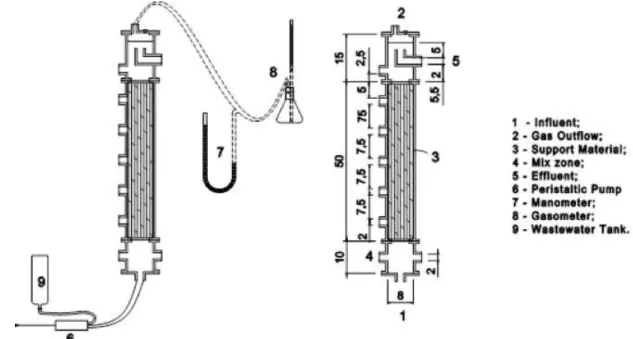
Figure 1 shows the constructive characteristics of the reactor. Three support materials were evaluated in hydrogen production: i) recycled-low polyethylene scraps with particle size of ¾”; ii) recycled-low polyethylene cylinders with 3.0 cm of length and 2.5 cm of diameter, iii) bamboo stems with 40 cm of length, 1.5 cm of width and 79% of porosity. The reactors were kept in a heated chamber at temperature of 36 °C.
FIGURE 1. Scheme of the upflow anaerobic fixed bed reactor, with dimensions in cm.
Inoculum
The sludge used as inoculum was collected from bamboo pieces used as support material in a pilot scale anaerobic reactor, treating effluent from starch production. The sludge was pre-treated by boiling at 95 °C for 15 min (SREETHAWONG et al., 2010), to suppress the activities of hydrogen-consuming bacteria. The reactors were inoculated with 300 mL of anaerobic sludge with Total Volatile Solids (TVS) of 25 g.L-1 and the working volume was completed with cassava starch
wastewater. The sludge was then recirculated into the reactor in a closed circuit, providing a batch operation system for 96 h to activate the hydrogen-producing biomass (SIVAGURUNATHAN et al., 2016).
Wastewater
TABLE 1. Characterization of cassava starch wastewater.
Parameter Average values SD Min. Max.
COD (mg.L-1) 8,152 3,659 3,471 15,662
Total Carbohydrates (mg.L-1) 2,119 930 881 3,508
pH 4.34 0.30 3.88 4.76
TS (mg.L-1) 2,252 2,457 527 6,497
VTS (mg.L-1) 2,832 3,267 606 8,530
VTS/TS 0.8 0.1 0.7 0.9
N (mg.L-1) 212 92 76 391
P (mg.L-1) 31 14 12 51
C/N 51 37 9 106
Ca (mg.L-1) 33 20.3 17.4 70.8
Fe (mg.L-1) 10.9 3.2 6.7 15.7
Arithmetic average; SD – standard deviation; Min. – minimum value; Max. – maximum value; COD – Chemical Oxygen Demand; pH – Hydrogenionic Potential; TS – Total Solids; VTS – Volatile Total Solids; C/N – carbon/nitrogen ratio.Number of samples used to calculate the mean values and standard deviation = 12.
Reactor operation
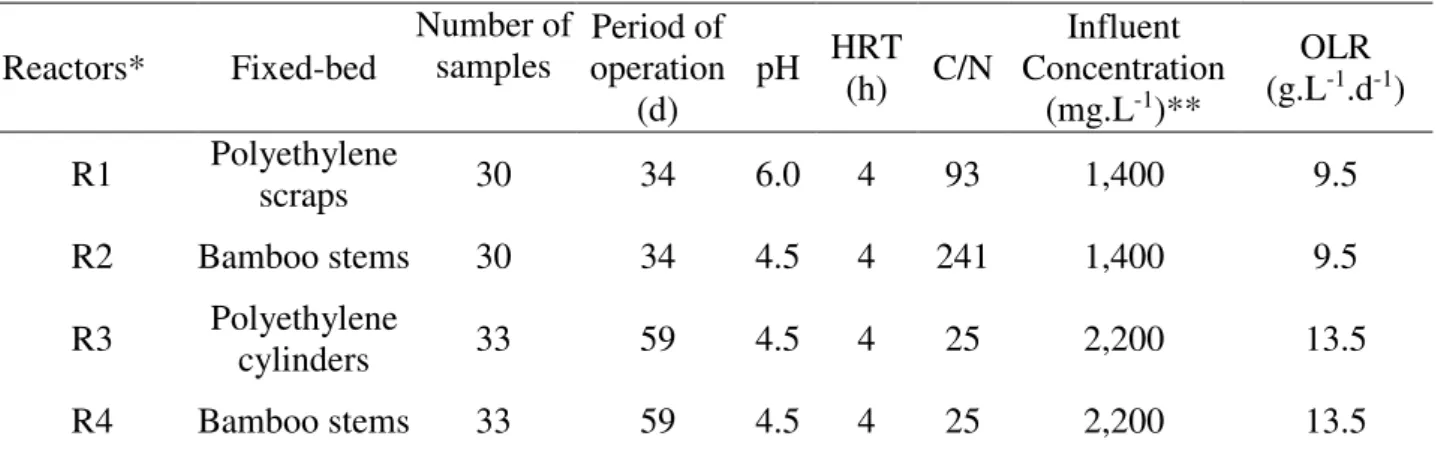
Two series of experiments were carried out to investigate the effect of support materials in the hydrogen production. In the first series two reactors with beds of recycled low-density polyethylene scraps (R1) and bamboo stems (R2) were operated with hydraulic retention time (HRT) of 4 h, organic loading rate (OLR) of 9.5 g.L-1.d-1. Initial pH was adjusted to 6.0 in R1 and maintained in
4.5 in R2. In the second series two reactors were operated with beds of polyethylene cylinders (R3) and bamboo stems (R4), both conduced in HRT of 4 h, OLR of 13.5 g.L-1.d-1 and initial pH of 4.5.
The reactor was fed using a peristaltic dosing pump connected to a tank of 18 L that stored the substrate at temperature of 7 °C. At the top of the reactor, a gasometer and the effluent output were set up. Table 2 shows the operational conditions of the upflow anaerobic fixed-bed reactors.
TABLE 2. Operational conditions of the upflow anaerobic fixed-bed reactors.
Reactors* Fixed-bed
Number of
samples operation Period of (d)
pH HRT (h) C/N
Influent Concentration
(mg.L-1)**
OLR (g.L-1.d-1)
R1 Polyethylene
scraps 30 34 6.0 4 93 1,400 9.5
R2 Bamboo stems 30 34 4.5 4 241 1,400 9.5
R3 Polyethylene cylinders 33 59 4.5 4 25 2,200 13.5
R4 Bamboo stems 33 59 4.5 4 25 2,200 13.5
*Working volume R1 (2.9 L); R2 (2.9 L); R3 (2.9 L); R4 (3.0 L); **In terms of total carbohydrates; HRT – Hydraulic retention time; C/N – carbon (C) and nitrogen (N) ratio; OLR – organic loading rate.
(APHA, 2005). Volatile organic acids concentrations were measured using a high performance liquid chromatograph (HPLC Shimadzu Prominence) equipped with an Aminex® HPX-87H column
according to PENTEADO et al. (2013). The composition of the biogas (carbon dioxide, hydrogen and methane) was determined by gas chromatography (GC 2010 Shimadzu) with a Carboxen® 1010
Plot capillary column according to ANZOLA-ROJAS et al. (2015). The volume of biogas produced was quantified based on the methodology of CAPPELLETTI et al. (2011).
The response variables used to assess the performance of the reactors under different conditions included: total carbohydrates conversion efficiency (%); COD removal efficiency (%); biogas flow rate (Qbiogas, mL.h-1); volumetric hydrogen production rate (VHPR, mL H2.d-1. L-1),
molar hydrogen flow rate (MHFR, in mmol H2.h-1) and hydrogen yield (HY, mol H2.mol-1
carbohydrates). Student’s t-test was used to compare averages values of biogas flow rate,
volumetric hydrogen production rate and hydrogen yield between R1, R2, R3 and R4 reactors operated at the same conditions (p < 0.05).
RESULTS AND DISCUSSION
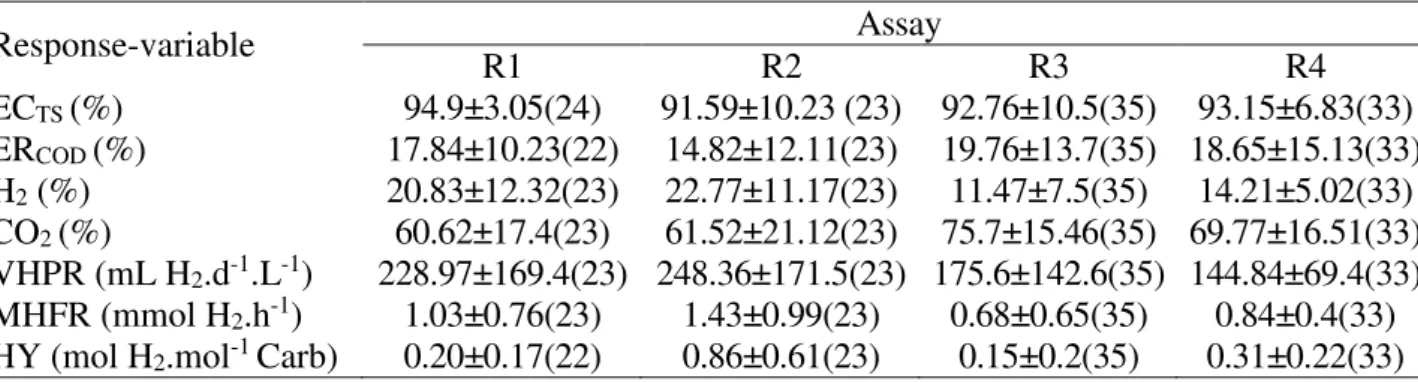
The average results for the carbohydrate conversion, COD removal, percentage of hydrogen and carbon dioxide, volumetric hydrogen production rate, molar hydrogen flow rate and hydrogen yield verified to the reactors are provided in Table 3.
TABLE 3. Reactors performance in terms of carbohydrates conversion efficiency, COD removal efficiency, biogas composition, production rates and hydrogen yields.
Response-variable Assay
R1 R2 R3 R4
ECTS (%) 94.9±3.05(24) 91.59±10.23 (23) 92.76±10.5(35) 93.15±6.83(33)
ERCOD (%) 17.84±10.23(22) 14.82±12.11(23) 19.76±13.7(35) 18.65±15.13(33)
H2 (%) 20.83±12.32(23) 22.77±11.17(23) 11.47±7.5(35) 14.21±5.02(33)
CO2 (%) 60.62±17.4(23) 61.52±21.12(23) 75.7±15.46(35) 69.77±16.51(33)
VHPR (mL H2.d-1.L-1) 228.97±169.4(23) 248.36±171.5(23) 175.6±142.6(35) 144.84±69.4(33)
MHFR (mmol H2.h-1) 1.03±0.76(23) 1.43±0.99(23) 0.68±0.65(35) 0.84±0.4(33)
HY (mol H2.mol-1 Carb) 0.20±0.17(22) 0.86±0.61(23) 0.15±0.2(35) 0.31±0.22(33) Notes: ECTS = carbohydrate conversion efficiency; ERCOD = COD removal efficiency; H2= percentage of hydrogen in biogas; CO2=
percentage of carbon dioxide in biogas; VHPR = volumetric hydrogen production rate; MHFR = molar hydrogen flow rate; HY = hydrogen yield. Values between parentheses indicate the number of samples considered in the calculation of each response variable.
In all assays the carbohydrate conversion efficiency has reached values above 90%. This higher conversion observed is closely related to the biodegradability of cassava starch wastewater, explained by TVS/TS ratio of 0.82. Higher values of substrate conversion may be attributed to cellular immobilization, which guarantees longer periods of solids retention and greater resistance to hydraulic shock loads (SIVAGURUNATHAN et al., 2016; KESKIN et al., 2012).
According to ANTONOPOULOU et al. (2008), the process of fermentative hydrogen production does not significantly reduce the organic content of affluent. Usually, the chemical
oxygen demand removal is below 20% during this process, as observed in this work. Glucose metabolism by acidogenic microorganism generates organic volatile acids, alcohols, hydrogen and dioxide carbon, therefore, the initial COD is converted into COD of the degradation products. Thus, these carbohydrates are consumed while low reductions in COD values are verified, once that the intermediate metabolites remained in the system (MADIGAN et al., 2010; REIS & SILVA, 2011; THANWISED et al., 2012).
The average values of molar hydrogen flow rate (MHFR) were 1.03±0.86; 1.43±0.99; 0.8±0.65 and 0.84±0.4 mmol H2.h-1 to the reactors R1, R2, R3 and R4, respectively. In R1 and R3,
the maximum value of MHFR was similar (2.4 and 2.3 mmol H2.h-1), however, in different stages
of operation, on the 21th and 51th day, respectively. In R2, the MHFR achieved 3.37 mmol H 2.h-1
(22th day), and after this peak a negligible value (0.04 mmol H
noted on the 26th day. In R4 the maximum value of MHFR was 1.8 mmol H
2.h-1 (44th day) and the
minimum value was 0.12 mmol H2.h-1. PENTEADO et al. (2013) also observed high variability in
the values of MHFR, with minimum value of 3.08, average value of 7.73 and maximum value of 28.18 mmol H2.h-1 in fixed-bed reactor using sucrose as substrate.
Yield of 0.86 mol H2.mol-1ofcarbohydrate was verified in R2, five times higher than the
others assays, possibly justified by the higher nitrogen concentrations verified in the effluent used in R1, R3 and R4 (Table 2). No statistical difference was observed in the hydrogen yield among R1 and R3 reactors (p-value = 0.318). ANZOLA-ROJAS et al. (2015) obtained 1.7 and 3.5 mol H2.mol -1 of saccharose with the increase of C/N ratio from 40 to 140, an increase of 3.5 times in the yield.
Yield decreasing can be possibly caused by changes in the metabolic pathway of the microorganisms due to the excess of nitrogen that leads to cellular growth rather than the biogas production, and collaborates to the production of reduced compounds, using hydrogen to the production of acids and solvents (PEIXOTO et al., 2011).
In starch-based synthetic wastewater, the reduced activity of α-amilase enzyme can compromise the yields in the hydrogen production. In Clostridium genera bacteria, the biosynthesis of the enzyme is inhibited due to the catabolic repression caused by the glucose concentration in the medium (CHOJECKI & BLASCHEK, 1986). In assays with mutant microorganisms able to do simultaneous saccharification and fermentation of cassava starch, JIANG et al. (2013) obtained yield of 3.2 mol H2.mol-1 of glucose, 1.65 times higher than the results verified in the strains of
those microorganisms that did not hydrolyse starch.
Bed porosity obtained was 79% in packed-bed of polyethylene scraps (R1), ordered-bed with polyethylene cylinders (R3) and bamboo stems (R2 and R4) reactors. As it was verified biomass accumulation in the reactor with polyethylene scraps, the ordained bed with polyethylene cylinders could be an alternative to prevent this.In R1 and R2 reactors the average volumetric hydrogen production rates of 229 and 248 mL H2.d-1.L-1 were similar (p-value = 0.702); however, the
hydrogen yield in R2 was 4 times higher than in R1. Concentrations of VSS in the effluent of R2 and R4 (406 and 607 mg VSS.L-1, respectively) were up to 5.5 times higher than those observed in
the effluent of R1 and R3 (110 and 280 mg VSS.L-1, respectively, p-value = 0.259). Although the
same porosity of the beds, the higher concentration of VSS in the effluent of R2 and R4 can be attributed to the arrangement of the bamboo stems that favoured the biomass washout and the maintenance of the porosity in R2, justifying the yields verified in this reactor.
Reduction in the values of volumetric hydrogen production rate (VHPR) in R3 and R4 is related to the biomass accumulation in the system, once higher concentrations of nitrogen were noted in the affluent of these reactors, causing reduction of the bed porosity and loss of the working volume of the reactors. FERNANDES et al. (2013) verified diminishing of the working volume in reactors with bed porosity between 50 and 75% due to the greater biomass accumulation among the interstices of the support material. However, beds with higher porosity (91%) caused the washing out of the excess of biomass from the system, collaborating with the maintenance of the void spaces. Increasing the porosity from 75 to 91% increased the VHPR from 0.80 to 1.11 L H2.h-1 and
resulted in the cyclic production of hydrogen during longer periods. The authors verified that the bed porosity affects more hydrogen production rather than the support material used in bed.
An increase in the concentrations of organic acids and alcohols occurred with the accumulation of biomass (Table 3) and decrease of the hydrogen production. According to JUNG et al. (2011) significant increases in the concentrations of the intermediates lead to inhibition of the metabolic pathways and the microbial activity. SREETHAWONG et al. (2010) observed an increase of the concentration of total organic acids from 5,450 to 15,570 mg.L-1 with the decrease in
the C/N ratio from 45 to 22, leading to a diminishing of 40% in the hydrogen production rate, from 990 to 590 mL.h-1.
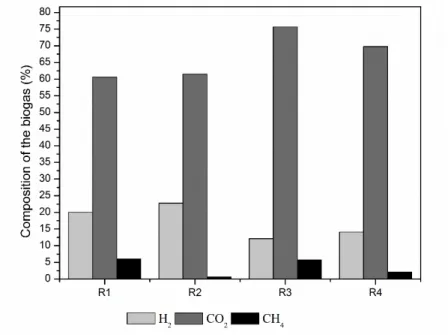
FIGURE 2. Composition of the biogas in R1, R2, R3 and R4.
The biogas generated in the assays consisted mainly of dioxide carbon and hydrogen, with lesser amounts of methane. Hydrogen percentage in the biogas were up to 44.5, 45.5, 32.4 and 22.4% in R1, R2, R3 and R4, respectively, indicating no statistical differences between R1 and R2 (p-value = 0.579) and R3 and R4 (p-value = 0.080).The proportion of hydrogen in the biogas was higher at the beginning of the operation and decreased during its conduction, probably due to the growth of the biomass that also contributed to the diminishing of the theoretical HRT of the reactor. The reduction in the percentages of hydrogen can be verified by the lower average values of 20.8±12.32; 22.77±11.2; 13.7±7.49 and 14.2±5.0% obtained for R1, R2, R3 and R4 reactors, respectively. According to CHANG et al. (2002), the increase in organic loads can decrease the hydrogen production rate and percentage of hydrogen into biogas in fixed-bed reactors. The aforementioned authors observed reduction of 85% in the hydrogen content when the HRT decreased from 3 to 1 h, diminishing also the production rate of this gas.
In the first phase of the experiment, the initial pH of the cassava wastewater was adjusted to 6.0 (R1) and maintained at 4.5 (R2) and in the second phase (R3 and R4), the pH was kept at 4.5, characteristic value of this residue. In R1 the pH of the effluent remained between 5.0 and 5.5, whereas in R2, R3 and R4 it was observed pH of the effluent around 4.5 and 5.0. Usually, the pH of the effluent in fermentative systems for hydrogen production from starch-based substrates varies in the range of 5.0 to 6.0 (THANWISED et al., 2012). Reductions to a pH below 4.5 can change the metabolic pathway, leading to the production of solvents (PHOWAN & DANVIRUTAI, 2014).
TABLE 4. Average concentrations of soluble metabolites.
Soluble Metabolites Reactors
(mg.L-1) R1 R2 R3 R4
Acetic 209.85±79.66(30) 179.62±96.31(30) 388.53±195.67(33) 586.15±232.21(33)
Propionic 139.32±58.67(30) 138.72±66.78(30) 233.08±95.52(33) 360.01±139.81(33)
Butyric 252.81±114.84(30) 275.41±165.71(30) 467.72±184.66(33) 672.10±175.78(33)
Lactic 46.62±45.36(30) 83.64±178.50(30) 62.05±83.42(33) 51.65±34.77(33)
Ethanol 118.98±37.05(30) 915.41±578.04(30) 96.78±66.86(33) 924.41±467.51(33)
Butanol 134.33±43.49(30) 821.32±852.51(30) 146.56±43.66(33) 1,529.22±725.06(33)
Values between parentheses indicate the number of samples considered in the calculation of each response variable.
Butyric and acetic acids were the metabolites verified with higher concentrations in R1 and R3 reactors. According to LEE et al. (2008) in starch-based substrate is common to verify the development of the butyric pathway when pH of the medium is kept in the range of 5.0 to 6.0. The pattern of distribution of the soluble metabolites in R2 and R4 was marked by concentrations of ethanol and butanol higher than those to acetic, propionic, butyric and lactic during the entire experimental period. Except by ethanol in R1 and R3 and lactic acid in R2 and R4, the increase in the concentration of acids and alcohols was proportional to the increase of OLR from 9.5 to 13.5 g.L-1.d-1 (Table 3). Variations in the concentration of the metabolites suggest that the system
presented changes among the fermentative pathways that were established in accordance with the operational conditions imposed to the reactor or even by the growth of different microbial communities (KOSKINEN et al., 2007; GUO et al., 2008).
Both in R2 and R4 the production of ethanol was favoured until the 15th day of operation;
from this period the main metabolite produced was the butanol with average concentrations of 821.32 and 1,529.22 mg.L-1, respectively. In accordance with MOREIRA et al. (1981) the presence
of butanol in concentrations between 0.1 and 0.5 M can inhibit up to 50% the cellular growth and the sugar assimilation rate due to the limitations of the ATPase enzyme activity. With the increase of butanol concentration in R4, even in concentrations lower than those previously cited, decreases of 41.68% in the volumetric production, 63.95% in the yield and 37.6% in the content of H2 in the
biogas were observed in relation to R2.
According to ANZOLA-ROJAS et al. (2016) and ZHU et al. (2009), hydrogen and ethanol can be produced concomitantly without competition between the two metabolites (Equation 1), while acetic and butyric acids can be generated additionally, by other metabolic pathways (Equations 2 and 3).
C6H1206→ C2O5OH + CH3COOH + 2H2 + 2 CO2 (1)
C6H1206→ 2H2 + 2CO2 + ½ CH3COOH + ¾ CH3(CH2)2COOH (2)
According to REN et al. (1997), the proportion of NADH/NAD+ ratio and the accumulation
of fermentative products are among the main factors responsible for the direction of the metabolic pathways. When the hydrogen is produced from the ethanol pathway, the balance between NADH/NAD+ is maintained. Since ethanol is a neutral product, the production of acids is reduced,
accelerating the fermentation in a quickly and efficient manner.
R1 and R2 achieved volumetric production of hydrogen of 228.97 and 248.36 mL H2.d-1.L-1,
respectively, similar to those obtained by distinct metabolic pathways, when submitted to the same OLR and HRT, but with different initial pH values. These results are due to the fact that the yields achieved in the ethanol pathway are the same observed when the fermentation product is the butyric acid (2 mol H2/mol glucose). However, the pathway of butyrate production also can be directed to
the butanol production with consumption of hydrogen (XIA et al., 2015). These alterations in the metabolic pathway can justify higher concentrations of butyric acid and butanol and lower volumetric production of 144.84 mL H2.d-1.L-1 and yield of 0.31 mol H2.mol-1 carbohydrates
verified in R4.
BARROS & SILVA (2012) evaluated the use of different support materials in the production of hydrogen and ethanol from glucose. Polyethylene terephthalate (PET) was the best support to the production of ethanol with concentrations of 1,359.24 mg.L-1. Hydrogen production was favoured
in the reactor with grounded tyre, achieving yield of 2.11 mol H2 mol-1 glucose and 60% of H2 in
the biogas. These results are attributed to the porosity of the bed that favoured the accumulation of the biomass and the presence of H2-producers microorganisms.
The fermentation of butyric/acetic acids has predominated in R1 and R3. This metabolic pathway is characteristic from systems operated in the pH range from 5.0 to 6.0 from starch-based substrates (LEE et al., 2008; SREETHAWONG et al., 2010; LUCAS et al., 2015). Even at pH values up to 4.5 a slight change in the metabolic pathway was verified for acetate/ethanol route. According to MADIGAN et al. (2010), few species of Clostridium shift the metabolic pathway to the production of neutral products, such as alcohols, in response to the decrease in pH. However, concomitant production of ethanol and hydrogen are reported in continuous systems in some studies (KIM et al., 2006; XIA et al., 2015). Propionic acid was observed throughout the experimental period at average concentrations of 139.3±58.7 and 233.0±95.5 mg.L-1 in R1 and R3.
About the support material, the most promising results were verified in the reactor with immobilized biomass in bamboo stems (R2), followed by polyethylene scraps (R1) and polyethylene cylinders (R3). The bamboo stems and polyethylene cylinders showed higher porosities in bed, which improved the mass transfer phenomenon and enhanced the degree of mixing in the fixed-bed reactor.
CONCLUSIONS
The hydrogen yield from cassava wastewater was favored for bamboo stems arrangement (0.86 and 0.31 mmol H2.mol Carb in R2 and R4, respectively), followed by polyethylene
cylinders(0.2mmol H2.mol Carb) and polyethylene scraps(0.15 mmol H2.mol Carb) in the anaerobic
fixed-bed reactor. Highest hydrogen yield was favored by OLR, lower C/N ratios and maintenance of bed porosity of bamboo stems in R2. The biomass accumulation in fixed-bed, due to the higher nitrogen concentrations in the wastewater, could lead to changes in the metabolic pathways decreasing both hydrogen yields and hydrogen molar flow rates in R1 and R3.
In the reactors with bamboo stems and fed with cassava wastewater, better results of hydrogen production were obtained with initial pH of 4.5; and also with initial pH of 4.5 and 6.0 when applying organic loading rate of 9.5 g.L-1.d-1. The increase of OLR in R4 (9.5 to 13.5 g.L-1.d-1)
resulted in solventogenesis, leading to the production of higher concentrations of butanol (from 821.32 to 1,529.22 mg.L-1) and to the decrease in the yield, molar flow rate and hydrogen
ACKNOWLEDGEMENTS
The authors would like to thank the Western Paraná State University, National Council for the Improvement of Higher Education (CAPES) and National Council for Scientific and Technological Development (CNPq) for the financial support.
REFERENCES
ANTONOPOULOU, G.; GAVALA, H. N.; SKIADAS, I. V.; ANGELOPOULOU, K.;
LYBERATOS, G. Biofuels generation from sweet sorghum: Fermentative hydrogen production and anaerobic digestion of the remaining biomass. Bioresource Technology, Essex, v.99, p.110-119,
2008.
ANDREANI, C. L.; TORRES, D. G. B.; SCHULTZ, L.; CARVALHO, K. Q.; GOMES, S. D. Hydrogen production from cassava processing wastewater in an anaerobic fixed bed reactor with bamboo as a support material. Engenharia Agrícola, Jaboticabal, v.35, n.3, p.578-587, 2015.
ANZOLA-ROJAS, M. P.; FONSECA, S. G.; SILVA, C. C.; OLIVEIRA, V. M.; ZAIAT, M.The use of the carbon/nitrogen ratio and specific organic loading rate as tools for improving
biohydrogen production in fixed-bed reactors.Biotechnology Reports, Amsterdam, v.5, p.46-54,
2015.
ANZOLA-ROJAS, M. P.; ZAIAT, M.; WEVER, H. Improvement of hydrogen production via ethanol-type fermentation in an anaerobic down-flow structured bed reactor. Bioresource Technology, Essex, v.202, p.42-49, 2016
APHA. Standard methods for examination of water and wastewater. New York: American
Public Health Association, 2005.
ARIMI, M. M.; KNODEL, J.; KIPROP, A.; NAMANGO, S. S.; ZHANG, Y.; GEIßEN, S. U. Strategies for improvement of biohydrogen production from organic-rich wastewater: A review.
Biomass and Bioenergy, Oxford, v.75, p.101-118, 2015.
AZWAR, M. Y.; HUSSAIN, M. A.; WAHAD, A. K. A. Development of biohydrogen production by photobiological, fermentation and electrochemical processes: A review. Renewable and Sustainable Energy Reviews, Amsterdam, v.31, p.158-173, 2014.
BARROS, A. R.; SILVA, E. L. Hydrogen and ethanol production in anaerobic fluidized bed reactors: Performance evaluation for three support materials under different operating conditions.
Biochemical Engineering Journal, New York, v.61, p.59-65, 2012.
CAMPOS, A. T.; DAGA, J.; RODRIGUES, E. E.; FRANZENER, G.; SUGUY, M. M. T.; SYPERRECK, V. L. G.Residuary water treatment of fecularia by means of stabilization lagoons.
Engenharia Agrícola, Jaboticabal, v.26, p.235-242, 2006.
CAPPELLETTI, B. M.; REGINATTO, V.; AMANTE, E. R.; ANTÔNIO, R. V. Fermentative production of hydrogen from cassava processing wastewater by Clostridium acetobutylicum.
Renewable Energy, Oxford, v.36, p.3367-3372, 2011.
CHANG, J.S.; LEE, L.S.; LIN, P.J. Biohydrogen production with fixed bed
bioreactors.International Journal of Hydrogen Energy, Oxford, v.27, p.1167-1174, 2002.
CHOJECKI, A.; BLASCHEK, H. P. Effect of carbohydrate source on alpha-amylase and glucoamylase formation by Clostridium acetobutylicum SA-1. Journal of Industrial Microbiology, Amsterdam, v.1, p.63-67, 1986.
DUBOIS, M.; GILLES, K. A.; HAMILTON, J. K.; REBERS, P. A.; SMITH, F. Colorimetric method for determination sugars and related substance. Analytical Chemistry, Washington, v.28,
FERNANDES, B. S.; SAAVEDRA, N. K.; MAINTINGUER, S. I.; SETTE, L. D.; OLIVEIRA, V. M.; VARESCHE, M. B. A.; ZAIAT, M. The effect of biomass immobilization support material and bed porosity on hydrogen production in an anaerobic packed-bed reactor. Applied Biochemistry and Biotechnology, Totowa, v.170, p.1348-1366, 2013.
FERRAZ, A. D. J.; WENZEL, J.; ETCHEBEHERE, C.; ZAIAT, M. Effect of organic loading rate on hydrogen production from sugarcane vinasse in thermophilic acidogenic packed bed reactors.
International Journal of Hydrogen Energy, Oxford, v.39, p.16852-16862, 2014.
GUO, W. Q.; REN, N. Q.; WANG, X. J.; XIANG, W. S.; MENG, Z. H.; DING, J.; QU, Y.Y.; ZHANG, L. S. Biohydrogen production from ethanol-type fermentation of molasses in an expanded granular sludge bed (EGSB) reactor. International Journal of Hydrogen Energy, Oxford, v.33,
p.4981-4988, 2008.
JIANG, L.; ZHU, L.; XU, X.; LIN, M.; LI, Y.; LI, X.; CUI, H.; HUANG, H. Bioproduction of hydrogen by simultaneous saccharification and fermentation of cassava starch with 2-deoxyglucose-resistant mutant strains of Clostridium tyrobutyricum. International Journal of Hydrogen
Energy, Oxford, v.38, p.6349-6356, 2013.
JUNG, K. W.; KIM, D. H.; KIM, S. H.; SHIN, H. S. Bioreactor design for continuous dark fermentative hydrogen production. Bioresource Technology, New York, v.102, p.8612-8620,
2011.
KASSUWI, S. A.; MSHADETE, A. M.; KIVAISI, A. K. Nile perch fish scales a novel biofilm carrier in the anaerobic digestion of biological pre-treated nile perch fish solid waste. Journal of Engineering and Applied Sciences, Pakistan, v.8, n.2, p.117-127, 2013.
KESKIN, T.; GIUSTI, L.; AZBAR, N. Continuous biohydrogen production in immobilized biofilm system versus suspended cell culture. International Journal of Hydrogen Energy, Oxford, v.37,
p.1418-1424, 2012.
KIM, S.H.; HAN, S.K.; SHIN, H.S. Effects of substrate concentration on hydrogen production and 16S rDNA-based analysis of the microbial community in a continuous fermenter. Process
Biochemistry, New York, v.41, p.199-207, 2006.
KOSKINEN, P. E. P.; KAKSONEN, A. H.; PUHAKKA, J. A.The relationship between instability of H2 production and compositions of bacterial communities within a dark fermentation fluidized-bed bioreactor. Biotechnology and Bioengineering, New York, v.97, p.742-758, 2007.
KUNZLER, K. R.;GOMES, S. D.; PIANA, P. A.; TORRES, D. G. B.; VILAS BOAS, M. A.; TAVARES, M. H. F. Anaerobic reactors with biofilter and different diameter-length ratios in cassava starch industry wastewater treatment. Engenharia Agrícola, Jaboticabal, v.33, n.4,
p.612-624, 2013.
LEE, K. S.; HSU, Y. F.; LO, Y. C.; LIN, P. L.; LIN, C. Y.; CHANG, J. S. Exploring optimal environmental factors for fermentative hydrogen production from starch using mixed anaerobic microflora. International Journal of Hydrogen Energy, Oxford, v.33, p.1565-1572, 2008.
LIMA, D. M. F.; MOREIRA, W. K.; ZAIAT, M. Comparison of the use of sucrose and glucose as a substrate for hydrogen production in an upflow anaerobic fixed-bed reactor. International Journal of Hydrogen Energy, Oxford, v.38, p.15074-15083, 2013.
LIN, Q.; DONGHUI, W.; JIALONG, W. Biodegradation of pyridine by Paracoccus sp. KT-5 immobilized on bamboo-based activated carbon. Bioresource Technology, New York, v.101,
p.5229-5234, 2010.
LIU, Y.; GAN, L.; CHEN, Z.; MEGHARAJ, M.; NAIDU, R. Removal of nitrate using Paracoccus sp. YF1 immobilized on bamboo carbon. Journal of Hazardous Materials, Amsterdam,
LUCAS, S. D. M.; PEIXOTO, G.; MOCKAITIS, G.; ZAIAT, M.; GOMES, S. D. Energy recovery from agro-industrial through biohydrogen production: kinetic evaluation and technological
feasibility. Renewable Energy, Oxford, v.75, p.496-504, 2015.
MADIGAN, M. T.; MARTINKO, J. M.; DULLAP, P. V.; CLARK, D. P. Microbiologia de brock.
Porto Alegre: Artmed, 2010.
MOREIRA, A. R.; ULMER, D. C.; LINDEN, J. C. Butanol toxicity in the butylic fermentation.
Biotechnology and Bioengineering Symposium Journal, New York, v.11, p.567-579, 1981.
PEIXOTO, G.; SAAVEDRA, N. K.; VARESCHE, M. B. A.; ZAIAT, M. Hydrogen production from soft-drink wastewater in an upflow anaerobic packed-bed reactor. International Journal of Hydrogen Energy, Oxford, v.36, p.8953-8966, 2011.
PENTEADO, E. D.; LAZARO, C. Z.; SAKAMOTO, I. K.; ZAIAT, M. Influence of seed sludge and pretreatment method on hydrogen production in packed-bed anaerobic reactors. International Journal of Hydrogen Energy, Oxford, v.38, n.14, p.6137-6145.2013.
PHOWAN, P.; DANVIRUTAI, P. Hydrogen production fron cassava pulp hydrolysate by mixed seed cultures: Effect of initial pH, substrate and biomass concentration. Biomass and Bioenergy,
Oxford, v.64, p.1-10, 2014.
REIS, C. M.; SILVA, E. L. Effect of upflow velocity and hydraulic retention time in anaerobic
fluidized-bed reactors. Chemical Engineering Journal, New York, v.172, p.28–36, 2011.
REIS, C. M.; SILVA, E. L. Simultaneous coproduction of hydrogen and ethanol in anaerobic packed-bed reactors. BioMed Research International, New York, v.2014, p.1-10, 2014.
Disponível em: <http://dx.doi.org/10.1155/2014/921291>. Acesso em: 4 jan. 2016.
REN, N.; WANG, B.; HUANG, J. C. Ethanol-type fermentation from carbohydrate in high rate acidogenic reactor. Biotechnology and Bioengineering, Berlin, v.54, p.428-433, 1997.
SIVAGURUNATHAN, P.; KUMAR, G.; BAKONYI, P.; KIM, S.; KOBAYASHI, T.; XU, K. Q.; LAKNER, G.; TÓTH, G.; NEMESTÓTHY, N.; BÉLAFI-BAKÓ, K. A critical review on issues and overcoming strategies for the enhancement of dark fermentative production in continuous system. International Journal of Hydrogen Energy, Oxford, v.41, n.6, p.3820-3836, 2016.
Disponível em: <http://dx.doi.org/10.1016/j.ijhydene.2015.12.081>. Acesso em: 4 jan. 2016. SREETHAWONG, T.; CHATSIRIWATANA, S.; RANGSUNVIGIT, P.; CHAVADY, S.
Hydrogen production from cassava wastewater using an anaerobic sequencing batch reactor: Effects of operational parameters, COD:N ratio, and organic acid composition. International Journal of Hydrogen Energy, Oxford, v.35, p.4092-4102, 2010.
SRIRANGAN, K.; AKAWI, L.; YOUNG, M. M.; CHOU, C. P. Towards sustainable production of clean energy carriers from biomass resources. Applied Energy, Amsterdam, v.100, p.172-186,
2012.
THANWISED, P.; WIROJANAGUD, W.; REUNGSANG, A. Effect of hydraulic retention time on hydrogen production and chemical oxygen demand removal from tapioca wastewater using
anaerobic mixed cultures in anaerobic baffled reactor (ABR). International Journal of Hydrogen Energy, Oxford, v.37, p.15503-15510, 2012.
URBANIEC, K.; BAKKER, R. R. Biomass residues as raw material for dark hydrogen
fermentation – A review. International Journal of Hydrogen Energy, Oxford, v.40, p.3648-3658,
2015.
WENPING, C.; HOUHU, Z.; WANG, W.; PAN, J. Bioremediation of polluted surface water by using biofilms on filamentous bamboo. Ecological Engineering, Amsterdam, v.42, p.146-149,
XIA, A.; JACOB, A.; HERRMANN, C.; TABASSUM, M. R., MURPHY, J. D. Production of hydrogen, ethanol and volatile fatty acids from theseaweed carbohydrate mannitol. Biotechnology and Bioengineering, New York, v.193, p.488-487, 2015.
ZHU, H.; PARKER, W.; BASNAR, R.; PROKACKI, A.; FALLETA, P.; BÉLAND, M.; SETO, P. Buffer requirements for enhanced hydrogen production in acidogenic digestion of food wastes.
Bioresource Technology, Essex, v.100, p.5097-5102, 2009.
ZHUANG, H.; HAN, H.; XU, P.; HOU, B.; JIA, S.; WANG, D.; LI, K. Biodegradation of quinoline by Streptomyces sp. N01 immobilized on bamboo carbon supported Fe3O4 nanoparticles.