*Correspondence: B. Mandal. Pharmaceutics Research Laboratory-II, Depart-ment of Pharmaceutical Technology, Jadavpur University, Kolkata 700032, India. E-mail: [email protected]
A
rti
Pharmaceutical Sciences vol. 45, n. 3, jul./sep., 2009
Development and
in vitro
evaluation of Letrozole loaded
biodegradable nanoparticles for breast cancer therapy
Sanjoy Kumar Dey, Bivash Mandal*, Manas Bhowmik, Lakshmi Kanta Ghosh
Pharmaceutics Research Laboratory-II, Department of Pharmaceutical Technology, Jadavpur University, India
The objectives of our study were to prepare and evaluate a biodegradable nanoparticulate system of Letrozole (LTZ) intended for breast cancer therapy. LTZ loaded poly(lactide-co-glycolide) nanoparticles (LTZ-PLGA-NPs) were prepared by emulsion-solvent evaporation method using methylene chloride and polyvinyl alcohol. Percentage of drug (with respect to polymer) was selected as formulation variable. LTZ-PLGA-NPs were characterized by particle size, zeta potential, infrared spectra, drug entrapment eficiency and in vitro release. Sonication was done with an ultrasound pulse sonicator at 70 W, 30 kHz for 90 sec to produce stable NPs of mean size range from 64 nm to 255 nm with high entrapment eficiency (68% to 82%). Percentage of drug signiicantly inluenced particle size, entrapment eficiency and release (p <0.05). The system sustained release of LTZ signiicantly and further investigation could exhibit its potential usefulness in breast cancer therapy.
Uniterms: Breast cancer/therapy. Letrozole. Biodegradable nanoparticles.
Os objetivos de nosso estudo foram preparar e avaliar o sistema de nanopartícula biodegradável de letrozol na terapia de câncer mamário. Nanopartículas de poli(lactídeo-co-glicolídeo) carregadas com LTZ (LTZ-PLGA-NPs) foram preparadas pelo método de emulsão-evaporação de solvente, utilizando dicloro metano e álcool polivinílico. A porcentagem do fármaco (com relação ao polímero) foi selecionada como variável da formulação. LTZ-PLGA-NPs foram caracterizadas pelo tamanho da partícula, potencial zeta, espectros no infravermelho, eiciência de inclusão e liberação in vitro. A sonicação foi realizada com sonicador de ultrassom, de pulso a 70W e 30 kHz por 90 segundos para produzir NPs estáveis, de faixa de tamanho médio de 64 nm a 266 nm, com alta eiciência de inclusão (68% a 82%). A porcentagem do fármaco foi signiicativamente inluenciada pelo tamanho da partícula, eiciência de inclusão e liberação (p<0,05). O sistema controlou signiicativamente a liberação de LTZ e estudos posteriores poderiam mostrar sua utilidade potencial na terapia de câncer de mama.
Unitermos: Câncer de mama/terapia. Letrozol. Nanopartícula biodegradável.
INTRODUCTION
Worldwide, breast cancer is the second most com-mon type of cancer after lung cancer. It is the primary cause of cancer death among women globally, responsible for about 40000 US women deaths in 2001 (James et al., 2002). The use of Letrozole, which inhibits estrogen bio-synthesis, is an attractive treatment for postmenopausal women with hormone-dependent breast cancer (Geisler
et al., 2008). The most important goal of cancer
of disappearing gradually while releasing the drug to the site of action. Additionally, the administration of NPs will also provide the advantage of facilitating their injection through standard iniltration needles. So far, there was one published literature on Letrozole NPs prepared by direct precipitation technique (Mondal et al., 2008). These workers reported 146-267 nm particle size with very low entrapment eficiency (12-27%). The drawback of direct precipitation method is extremely low drug entrapment efficiency. On the other hand, emulsification-solvent evaporation method is interesting for many reasons: the use of pharmaceutically acceptable organic solvents, high yields, good reproducibility, and easy scaling up (Nguyen
et al., 2006). It is a very popular method because it mainly allows eficient encapsulation of numerous compounds of lipophilic nature (Song et al., 1997).
We have prepared Letrozole-loaded poly(lactide-co-glycolide) nanoparticles (LTZ-PLGA-NPs) by emulsion-solvent evaporation technique utilizing dichloromethane as organic solvent and polyvinyl alcohol as colloid stabilizer to obtain smaller particle size with high entrapment eficiency and sustained release proile. Particle size, morphology, entrapment eficiency, drug-polymer interaction and in vitro
release of LTZ-PLGA-NPs were evaluated. The inluence of % of drug (relation to polymer mass) on formulation per-formance including particle size, zeta potential, entrapment eficiency, in vitro release were investigated.
MATERIALS AND METHODS
Materials
Poly (D, L-lactide-co-glycolide), PLGA 75:25 having molecular weight 15000 gifted by Sun Pharma-ceutical Advanced Research Center (SPARC), Baroda, India. Letrozole was donated by Dr.Reddy’s Laboratories Limited (Hyderabad, India). Polyvinyl alcohol (PVA) & Dichloromethane were supplied by S.D. Fine Chemicals Ltd (Mumbai, India) & Merck Ltd (Mumbai, India) res-pectively. All other chemicals and solvents used were of analytical grade.
Preparation of Nanoparticles
LTZ-PLGA-NPs were prepared by emulsion-solvent evaporation method (single emulsion technique) proposed first by Gurny et al. (1981) and based on the classical procedure patented by Vanderhoff et al. (1979). Briely, LTZ (10–40% w/w) was dissolved in 2 mL of the Dichlo-romethane, containing 25 mg of PLGA. The organic phase solution was slowly poured into 10 mL of aqueous 0.75%
(w/v) PVA solution with moderate stirring by magnetic bar (Remi Magnetic stirrer, Mumbai, India). The formed o/w type emulsion was further sonicated using a pulse sonicator itted with a round 3-mm diameter probe (model Labsonic M, B. Braun Biotech International; Melsungen, Germany) at 70% amplitude and 0.7 sec pulse cycle for 90 seconds. A following slow stirring by magnetic stirrer at room temperature for 4 hrs ensured the complete evapo-ration of the organic solvent. The resulting dispersion of LTZ-PLGA-NPs was centrifuged at 25,000 rpm (44,800 g) at 5 0C and freeze-dried for 24 hrs using sucrose (2% w/w) as cryoprotectant. Blank NPs without LTZ were also pre-pared using same technique.
Measurement of particle size and zeta potential
Mean diameter and polydispersity index of NPs were determined by photon correlation spectroscopy (PCS) using a Malvern Zetasizer 3000 (Malvern Instru-ments, GB) at a fixed angle of 900, and temperature of 27 0C. Aliquot samples in which LTZ-PLGA-NPs were uniformly dispersed in double distilled water was kept in cuvette and analyzed. Each reported value is the average of 30 measurements. A suitably diluted aqueous dispersion of NPs was mounted in a Malvern Easier 3000 (Malvern Instruments, GB) and mean zeta potential was calculated by the instrument software.
Scanning Electron Microscopy (SEM)
A drop of concentrated aqueous suspension (20 mg freeze-dried LTZ-PLGA-NPs in 10 mL double distilled water) was spread over a slab and dried under vacuum. The sample was shadowed in a cathodic evaporator with a gold layer 20 nm thick. The diameters of all the particles in each ield were calculated using JSM-5200 scanning electron microscope (Tokyo, Japan) operated at 15 kV.
Field Emission Scanning Electron Microscopy (FE-SEM)
A concentrated aqueous suspension was spread over a slab and dried under vacuum. The coating was done with platinum. The diameters of all the particles in each ield were calculated using JEOL JSM-6700F scanning electron microscope. (Tokyo, Japan) operated at 5.0 kV.
Transmission Electron Microscopy (TEM)
after deposition, the grid was tapped with a ilter paper to remove surface water. The samples were air dried before measurement. Transmission electron microscopy (TEM) was performed on a TECNAI SPIRIT, model FE1 electron microscope, Netherlands.
Fourier transform infra-red spectroscopy (FTIR) study
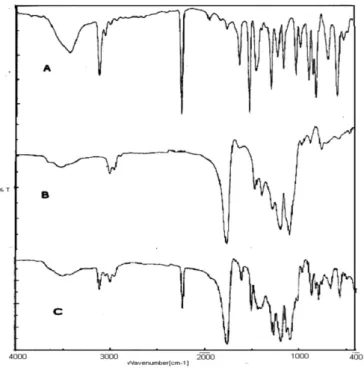
The Fourier transform infrared (JASCO-FTIR, Mo-del-8300) analysis was conducted to verify the possibility of chemical bonds between drug and polymer. Samples of pure LTZ, pure PLGA and LTZ /PLGA physical mixture 1:1 were scanned in the IR range from 400–4000 cm-1 with carbon black as reference. The detector was purged carefully by clean dry helium gas to increase the signal level and reduce moisture.
Drug entrapment eficiency
Drug entrapment efficiency was determined by centrifuging (with Centrifuge-3K30, Sigma Laboratory) aqueous dispersion of LTZ-PLGA-NPs at 25,000 rpm (44,800 g), 5 0C for 25 min and measuring the amount of LTZ in the supernatant with the help of double beam UV-VIS Spectrophotometer (UV-2450, Shimadzu, Japan), set at 238 nm. The amount of LTZ was subtracted from initial amount of LTZ taken to calculate drug entrapment eficiency of NPs. The experiment was performed in tripli-cate for each batch and average drug entrapment eficiency was calculated.
In vitro release study
In vitro release study of LTZ-PLGA-NPs was con-ducted in Franz Diffusion Cell. The diffusion cell model adapted to the spectrophotometer cuvette, with 1 cm of optic way and 1 mL of volume, was used for the in vitro release of LTZ. A cellulose acetate membrane (Dialysis membra-ne with Molecular weight cut off value of 5,000-10,000, Himedia-60) was adapted to the terminal portion of the glass cylinder of the Franz Diffusion cell by a rubber ring. 5 mL of LTZ-PLGA-NPs aqueous dispersion was loaded to cylinder and coupled to the diffusion cell containing the receptor phase (60 mL of 0.2 M Phosphate buffer solution pH 7.4) at 37 °C. The dissolution media was agitated at 25 rpm using magnetic stirrer. At different time intervals, aliquots of 2 mL were withdrawn and immediately restored with same volume of fresh Phosphate buffer. The amount of LTZ released was assessed by double beam UV spectropho-tometer (UV-2450, Shimadzu, Japan) set at 238 nm versus
a calibration curve prepared in the same buffer. Cumulative
percentage released at different time points were itted into different release models: zero order, irst order (Gibaldi et al., 1967), Higuchi (Higuchi, 1963), Hixson-Crowell (Hi-xon et al., 1931), Korsemeyer-Peppas (Korsemeyer et al., 1983) semi empirical model. The release rate constants (k) and correlation coeficients (R2) were calculated by diffe-rent mathematical models. The model giving a correlation coeficient close to unity was taken as the order of release. From the presented data, it was evident that drug release best itted with Zero order release model.
Statistical analysis
Experimental results were expressed as mean ±SD. Student’s t-test was applied to determine the level of sig-niicance. One-way analysis of variance was also applied to check signiicant difference in formulations. Differences were considered statistically signiicant when p<0.05.
RESULTS AND DISCUSSION
A more viscous organic phase provides a higher mass transfer resistance, the diffusion of polymer-solvent phase into external aqueous phase is reduced and larger NPs are formed. Moreover, evaporation of organic solvent using magnetic stirrer should be slow for 4 h. Otherwise, rapid evaporation under vigorous stirring resulted in formation of iber like agglomerates, which eventually separated from aqueous phase. Figure 1, Figure 2 and Figure 3 showed the Scanning Electron microscopy (SEM), Field Emission (FE-SEM) Transmission Electron Microscopy (TEM) images of LTZ-PLGA-NPs respectively. There were no signiicant differences in morphology, as can be observed in batches prepared with different percentage of drug (images of all batches not shown). All NPs were almost irregularly shaped, polymorphic in nature, without any signiicant aggregation or adhesion.
All formulations showed a negative zeta potential value and no signiicant statistical differences were obser-ved among formulations (Table I). Negative zeta potential values are due to free carboxyl end groups of PLGA expo-sed on NP surface. Compared to blank NPs, the presence of LTZ into NPs did not inluence the zeta potential in a signiicant way. Zeta potential value is directly proportional to electrophoretic mobility (ratio of velocity of migration
over potential gradient), as described by Helmholtz-Smolu-chowski equation (Egorova et al., 2005). Therefore, higher the average NP size, slower the velocity of migration of charged particles in a known applied electric potential and thus resulted in decreased zeta potential value compared to smaller mean size NPs, which has higher velocity of migration and higher zeta potential value.
In the present work, sample of pure PLGA, pure LTZ and LTZ/PLGA physical mixture 1:1 were characterized by the FTIR. The obtained spectra were illustrated in Fig. 4. It showed that no signiicant differences on shape and TABLE I. Characterization of blank NPs and LTZ-PLGA-NPs
Formulation Drug
(wt% of polymer) Encapsulation eficiency (%) Mean diameter (nm) Poly-dispersity index Zeta Potential (mV)
Blank --- 60.4±25.1 0.27±0.01 -28.4±1.1
10% 68.43±0.22 64.0±15.4 0.34±0.03 -25.0 ± 0.4
20% 74.14±3.1 101.9±39.4 0.42±0.01 -22.5 ± 2.5
30% 79.52±4.3 145.5±80.4 0.45±0.07 -19.8 ± 0.7
40% 82.38±6.2 255.3±40.5 0.66±0.11 -14.3 ± 0.5
FIGURE 1 - SEM picture of LTZ-PLGA-NPs (40% LTZ).
FIGURE 2 - FE-SEM of LTZ-PLGA-NPs with 10% LTZ.
position of the absorption peaks could be clearly observed for A, B and C. LTZ showed major peaks at 2250 cm−1 for C≡N stretching, 3010 cm−1 for sp2 CH stretching, 690-900 cm−1 for out-of-plane CH bending. PLGA sam-ple showed peaks such as –CH, –CH2, –CH3 stretching (2850-3000 cm−1), carbonyl –C=O stretching vibrations (1700-1800 cm−1), C–O stretching (1050-1250 cm−1) and –OH stretching vibrations (3200-3500 cm−1) which were broad. Most of the absorption peaks from pure LTZ & pure PLGA overlapped with the absorption peaks from LTZ-PLGA-NPs. It can be concluded that no strong chemical interaction occurred between drug and polymer.
It has been reported that the encapsulation eficiency of LTZ-PLGA-NPs increases from about 68% to 86% with the increment of their mean diameter from 64 nm to 255 nm). The lower encapsulation eficiencies obtained with the smaller particles could be explained by the larger surface area of smaller droplets for a given volume of organic phase. Hence, during the emulsiication step, a more direct contact between internal and external phases occurred, resulting in a higher drug loss by diffusion to-wards the external medium. Similarly, for a given volume of organic phase, there was comparatively smaller surface area for larger droplets, resulted in lesser drug loss towards aqueous phase and higher drug entrapment eficiency.
Batches of four different compositions (10%, 20%, 30% and 40% of LTZ) were studied and the results of
cumulative percentage released over 15 h were shown in Fig. 5. The results showed that there was a pronounced time prolongation of drug release from LTZ-PLGA-NPs. Only 10, 13, 15 and 18% of LTZ were released only after 15 hrs from batches containing 10, 20, 30 and 40% of drug, respectively. Batch with 10% LTZ showed the slowest release and batch with 40% LTZ showed highest release. Hence, a progressive increase of drug release rate was observed as a function of LTZ (% wt of polymer). Diffe-rent release proiles can be correlated with entrapment efficiency. Formulation (40% drug) with highest LTZ entrapment (82.38%) showed highest drug release rate and cumulative drug release (18% after 15 h) while formula-tion with 10% drug and lowest LTZ entrapment (68.43%) showed lowest release rate and only 10% cumulative drug release after 15 h. The increase in drug entrapment incre-ases the amount of drug close to the surface as well as the drug in the core of NPs and is responsible for an increased release of drug from NPs (Buchman et al., 2008). Lower amount of drug in polymer matrix is more homogenously distributed than higher amount of drug distributed in same amount of polymer. Thus difference in drug release proi-les of four batches of LTZ-PLGA-NPs can be explained.
The release rate constant (k) calculated by different mathematical models and correlation coefficient (R2) between observed release data and fitted profiles were summarized in Table II and Table III. From the presented data, it was evident that drug release best itted with zero order release model as evident from correlation coeficient value. Corresponding release constant (k) and release FIGURE 4 - Infrared spectra of pure LTZ (A), pure PLGA (B),
LTZ /PLGA physical mixture 1:1 (C).
FIGURE 5 - In vitro release data of LTZ –PLGA-NPs (n=3, Std.
exponent (n) for the four formulations were calculated. From Table II, it was observed that release rate constant gradually increased when drug in formulation was incre-ased from 10% to 40% in formulation. All four batches of polymeric matrix NP systems of LTZ followed non-Fickian diffusion or anomalous mechanism of drug release (0.5 < n < 1) as shown in Table III. Anomalous transport occurs due to a coupling of Fickian diffusion through hydrated layers of the matrix and polymer chain relaxation or erosion. Drug release from LTZ-PLGA-NPs takes place by several mechanisms including surface and bulk erosion, disintegration, diffusion, and desorption. In this experi-ment, release of drug from PLGA matrix has been found to occur predominantly by its diffusion from the polymer matrix. During the later phases, the release is mediated through both diffusion of therapeutic agent and degrada-tion of polymer matrix itself. The acidic monomers and the oligomers formed catalyzed the further degradation of the polymer. The later phase was not observed during our only 15 hrs of in vitro release study. It is generally anticipated from a bulk eroding polymer such as PLGA 75:25 to give an initial burst release followed by a controlled release. In contrast, there was no initial burst effect observed with all four formulations, which indicated a homogeneous encapsulation of drug in PLGA matrix. In this case, the release pattern can be explained by the dissolution of this poorly soluble drug from the polymer-drug matrix, which
involves not only the erosion of the polymer entity but also the solubility of the drug into the surrounding media before its diffusion out of the dialysis membrane.
CONCLUSIONS
These indings demonstrate that Letrozole can be entrapped into PLGA NPs, which can provide sustained drug release with high drug entrapment eficiency. NPs were successfully developed by emulsion/ solvent eva-poration method using dichloromethane and polyvinyl alcohol resulting in smaller mean particle size range. Size distribution, entrapment eficiency, release characteristics were inluenced by drug to polymer ratio in formulation. However, determination of long-term stability and in vivo
studies are in progress in order to determine the feasibility of drug delivery system in clinical practice.
ACKNOWLEDGEMENT
The authors gratefully acknowledge University Grants Commission, India for providing fellowship. Spe-cial thanks to Dr. K. Chandrasekhar, oncology product development, IPDO, Dr.Reddys Laboratories (Hyderabad, India) for Letrozole gift sample, Dr. Subhas Bhowmik, SPARC (Baroda, India) for PLGA gift sample and Mr. Vishal Patole for assistance.
TABLE II - Release rate constants k, Correlation coeficients (R2), mean ± SD, (n=3) calculated after itting the release proiles to
mathematical models
LTZ
(% of PLGA) k0Zero orderR2 k First order Higuchi Hixon-Crowell
1 R2 kH R2 kHC R2
10% 0.629±0.021 0.881±0.021 0.002±0.0005 0.872±0.032 2.441±0.521 0.713±0.016 0.010±0.001 0.875±0.051 20% 0.802±0.034 0.864±0.032 0.003±0.0009 0.853±0.061 3.088±0.725 0.689±0.054 0.012±0.007 0.857±0.036 30% 0.908±0.064 0.868±0.018 0.004±0.001 0.855±0.037 3.504±0.850 0.695±0.028 0.014±0.008 0.859±0.021 40% 1.088±0.095 0.886±0.043 0.005±0.002 0.871±0.051 4.230±0.675 0.720±0.31 0.017±0.006 0.876±0.045
TABLE III - Fittings of release proiles to Korsemeyer-Peppas semi-empirical model
Drug (% wt of polymer) n k R2 Release Mechanism
10% 0.8849 0.2675 0.8091 Non-ickian diffusion
20% 0.9677 0.2795 0.8058 Non-ickian diffusion
30% 0.917 0.1612 0.7980 Non-ickian diffusion
REFERENCES
BIBBY, D.C.; TALMADGE, J.E.; DALAL, M.K.; KURZ, S.G.; CHYTIL, K.M.; BARRY, S.E.; SHAND, D.G.; STEIERT, M. Pharmacokinetics and biodistribution of RGD-targeted doxorubicinloaded nanoparticles in tumor-bearing mice.
Int. J. Pharm., v.293, n.1-2, p.281-290, 2005.
BIRNBAUM, D.T.; KOSMALA, J.D.; BRANNON-PEPPAS, L. Optimization of preparation techniques for poly(lactic acid-co-glycolic acid) nanoparticles, J. Nanoparticle Res., Virginia, v.2, n.2, p.173-181, 2000.
BUDHIAN, A.; SIEGEL, S.J.; WINEY, K.I. Controlling the
in vitro release proiles for a system of haloperidol-loaded PLGA nanoparticles. Int. J. Pharm., v.346, n.1-2, p.151-159, 2008.
GEISLER, J.; HELLE, H.; EKSE, D.; DUONG, N.K.; EVANS, D.B.; NORDBO, Y.; AAS, T.; LONNING, P.E. Letrozole is Superior to Anastrozole in Suppressing Breast Cancer Tissue and Plasma Estrogen Levels. Clin. Cancer Res., v.14, n.19, p.6330-6335, 2008.
GIBALDI, M.; FELDMAN, S. Establishment of sink conditions in dissolution rate determinations: theoretical considerations and application to nondisintegrating dosage forms. J. Pharm. Sci., v.56, n.10, p.1238-1242, 1967.
GURNY, R; PEPPAS, N.A.; HARRINGTON, D.D., BANKER, G.S. Development of biodegradable and injectable latices for controlled release of potent drugs. Drug Dev. Ind. Pharm., v. 7, p.1-25,1981.
HIGUCHI, T. Rate of release of medicaments from ointment bases containing drugs in suspension. J. Pharm. Sci., v.50, n.10, p.874-875, 1963.
HIXON, A.; CROWELL, J. Dependent of reaction velocity upon surface and agitation. Ind. Eng. Chem., v 23, p. 923, 1931.
JAMES, V.; LACEY, J.; SUSAN, S.D.; LOUISE, A.B. Recent trends in breast cancer incidence and mortality. Environ. Mol. Mutagen., v.39, n.2-3, p.82-88, 2002.
KORSEMEYER, R.W.; GURNY, R.; DOCLER, E.; BURI, P.; PEPPAS, N.A. Mechanisms of solute release from porous hydrophilic polymers. Int. J. Pharm., v.15, n.1, p.25-35, 1983.
LEROUX, J-C; ALLEMANN, E; DE JAEGHERE, F; DOELKER, E; GURNY, R. Biodegradable nanoparticles-From sustained release formulations to improved site speciic drug delivery. J Control Release, v.39, p.339-350, 1996.
MAINARDES, R. M.; EVANGEUSTA, R. C. Praziquantel-loaded PLGA nanoparticles: preparation and characterization. J. Microencapsulation, v.22, n.1, p.13-24, 2005.
MONDAL, N.; PAL, T.K.; GHOSAL, S.K. Development, physical characterization, micromeritics and in vitro release kinetics of letrozole loaded biodegradable nanoparticles.
Pharmazie, v.63, n.5, p.361-365, 2008.
NGUYEN, C. A.; KONAN-KOUAKOU, Y.N.; ALLÉMANN, E; DOELKER, E.; QUINTANAR-GUERRERO, D; FESSI, H; GURNY, R.Preparation of Surfactant-free Nanoparticles of Methacrylic Acid Copolymers Used for Film Coating.
AAPS PharmSciTech., v.7, n.3, p.e1-e7, 2006.
EGOROVA, E.M. The validity of the Smoluchowski equation in electrophoretic studies of lipid membranes. Electrophoresis.
v.15, n.1, p.1125-1131, 2005.
SONG, C. X.; LABHASETWAR, V.; MURPHY, H.; QU, X.; HUMPHREY, W. R.; SHEBUSKI, R. J.; LEVY, R. J. Formulation and characterization of biodegradable nanoparticles for intravascular local drug delivery J. Control Release, v.43, n.2-3, p.197-212, 1997.
VANDERHOFF, J.W.; EL-AASSER, M.S.; UGELSTAD, J. Polymer emulsiication process. U.S. Patent 4,177, 177, 1979.
Received for publication on 9th December 2008