Artigo
*e-mail: [email protected]
VOLATILE CONSTITUENTS OF Aristolochia trilobata L. (Aristolochiaceae): A RICH SOURCE OF SULCATYL ACETATE
Darlisson de Alexandria Santosa, Péricles Barreto Alvesa,*, Emmanoel Vilaça Costaa, Clovis Roberto Pereira Francob, Angelita Nepelc and Andersson Barisonc
aDepartamento de Química, Universidade Federal do Sergipe, Av. Marechal Rondon, S/N, Campus Universitário, 49100-000 São Cristóvão – SE, Brasil
bDepartamento de Biologia, Universidade Federal do Sergipe, Av. Marechal Rondon, S/N, Campus Universitário, 49100-000 São Cristóvão – SE, Brasil
cDepartamento de Química, Universidade Federal do Paraná, 81530-900 Curitiba – PR, Brasil
Recebido em 12/09/2013; aceito em 25/03/2014; publicado na web em 17/06/2014
Analysis of the volatile fraction of Aristolochia trilobata stem led to the identification of 6-methyl-5-hepten-2-yl acetate (23.31 ± 0.28%), limonene (15.43 ± 0.030%), linalool (8.70 ± 0.29%), p-cymene (7.81 ± 0.12%), bicyclogermacrene (4.21 ± 0.11%), and spathulenol (4.17 ± 0.14%) as the major constituents of the essential oil. Linalool (29.51 ± 0.49%), 6-methyl-5-hepten-2-ol (19.54 ± 0.82%), 6-methyl-5-hepten-2-yl acetate (8.92 ± 0.16%), and α-terpineol (4.62 ± 0.05%) were identified as major constituents of the hydrolate. The compound 6-methyl-5-hepten-2-yl acetate was isolated for the first time from this plant and was identified as the major component of the volatile fraction.
Keywords: Aristolochia trilobata; essential oil; 6-methyl-5-hepten-2-yl acetate.
INTRODUCTION
The genus Aristolochia consists of ∼500 species distributed mainly in Asia, Africa, South America, and North America.1 In recent studies, many of these plants have shown diuretic, analgesic, anti-inflammatory, and anti-cancer activity.2
Several species of Aristolochia,which present similarities both in terms of their botanical characteristics and their properties, can be found in Brazil. The species most commonly used in folk medicine are A.triangularis, A.esperanzae, A.ridicula, A.brasiliensis, A. arcu-ate, and A. gigantea. Considering the above-mentioned similarities, these species share the same common names in Brazil, which include jarrinha, cipó-mil-homens, mil-homens, milone, papo-de-peru, erva-de-urubu, and jiboinha.3
Extensive research has been carried out on the plants of this genus, mainly on extracts of the leaves, stems, and roots. A variety of activities have been attributed to them, these include bactericidal, anti-inflammatory, anti-trypanosomal, and anti-tumoral.4-7
Chemical compounds that have been identified in these plants, both in the essential oils and in organic solvent extracts, include aporphines, amides, quinolines, lignanes, diphenyl ethers, flavonoids, benzenoids, steroids, and terpenoids.1
The essential oils of the species belonging to the genus Aristolochia are comprised mainly of monoterpenes and sesqui-terpenes, the commonly occurring terpenes being germacrene and caryophyllene, which are the major compounds in most cases.
Aristolochia trilobata L. is a species of Aristolochia found in Central and South America, and has several applications in traditional medicine in these regions.8
One such medicinal use in treating injured dogs has been reported by Lans et al.,9 who carried out a study on hunters in Trinidad and Tobago. According to this study, species of the genus Aristolochia, in particular A. trilobata and A. rugosa, are widely used in treatment
for dogs that have been bitten by snakes or scorpions.9 In the same country, A. trilobata is used for treating stomach ache, colic, poison-ing, and diabetes in human patients, as well as to facilitate the removal of the placenta and abortion.10-12
The use of this plant for treating snake bites is not restricted to Trinidad and Tobago. Studies have revealed that A. trilobata has also been used for this purpose in Brazil and Nicaragua.13,14 In Brazil, it has been reported that A. trilobata is also used as a fungicide.15
Studies reveal that A. trilobata is used as an antimalarial agent in French Guiana.16 In Dominica, this plant is used for treating in-testinal problems.17
An infusion (tea) or a plant extract of A. trilobata is used in folk medicine. One study determined the chemical composition of the methanolic extracts of the root and stem; four aristolochic acids and one aristolactam were identified.18
The stem is found in markets and fairs in Aracaju, Sergipe State, Brazil, and is commonly used by the population in cachaça (sugar cane spirit) infusions and ingested in this form.
In this paper, the first study on the chemical composition of the essential oil of the stem of A. trilobata is reported. The analysis of the hydrolate is also reported.
RESULTS AND DISCUSSION
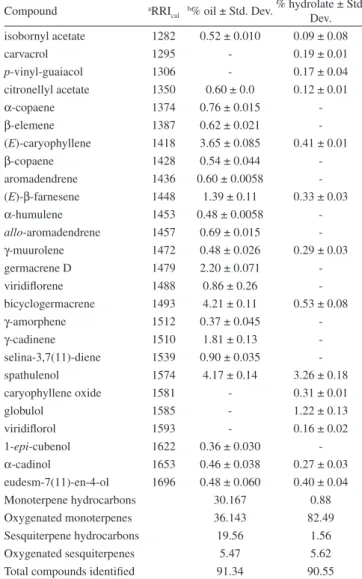
The average yield of the oil (oil mass/plant mass) was 0.22%, with a standard deviation of 0.05%. The chemical constituents of the essential oil are shown in Table 1. The main constituents of the essential oil were 6-methyl-5-hepten-2-yl acetate (sulcatyl acetate) (23.31 ± 0.28%), limonene (15.43 ± 0.03%), linalool (8.70 ± 0.29%), p-cymene (7.81 ± 0.12%), bicyclogermacrene (4.21 ± 0.11%), and spathulenol (4.17 ± 0.14%).
be noted that oxygenated compounds constituted 88.11% of the total hydrolate composition (Table 1).
In this study, sulcatyl acetate (Figure 1) was identified by nuclear magnetic resonance (1H and 13C NMR; both 1D and 2D), gas chro-matography coupled with mass spectrometry (GC-MS), and infrared (IR) analyses (spectra are included in supplementary material). In addition, there are only a few reports of this compound in the litera-ture. The absolute configuration of the chiral center was determined by polarimetry and by comparison with the data in literature. The compound was determined to be (R)-(–)-sulcatyl acetate.19
There is only one report of sulcatyl acetate from a plant source, by Makholela and Manning,20 who studied the volatile compounds associated with the aroma of the flowers of the species Struthiola ciliate. The percentage of sulcatyl acetate was only 0.04%.20 Two other papers have reported on the presence of sulcatyl acetate in nature. In the first of these studies, the authors analyzed the volatile compounds present in the venom of five species of wasp of the genus Polistes, a genus found in the Mediterranean region of Europe. The percentages of sulcatyl acetate present in the analyzed wasp venom samples were 4.14% (P. dominulus), 0.34% (P. gallicus), 4.30% (P. nimphus), 0.86% (P. sulcifer), and 1.78% (P. olivaceus).21 In the second study, the
volatile compounds present in the venom of only one wasp species, P. dominulus, was investigated, and the percentage of sulcatyl acetate was 1.78%.22 In other publications, sulcatyl acetate is cited as a partici-pant in the enzymatic resolution of 6-methyl-5-hepten-2-ol (sulcatol), an enantiomerically pure pheromone of ambrosia beetles.23,24 Thus, the identification of this compound as a major component of the volatile compounds originating from a plant source, in this case A. trilobata, is of great relevance. Other compounds with significant presence in essential oils of other species of the same genus have been reported.
Figure 1. (R)-6-methyl-5-hepten-2-yl (sulcatyl acetate), essential oil isolated from Aristolochia trilobata
Table 1. Constituents of essential oil and hydrolate of A. trilobata
Compound aRRI
cal b% oil ± Std. Dev.
% hydrolate ± Std. Dev.
α-pinene 926 1.26 ± 0.021
-camphene 938 0.70 ± 0.015
-β-pinene 971 0.57 ± 0.092
-1-octen-3-ol 973 0.073 ± 0.13 1.93 ± 0.01 6-methyl-5-hepten-2-one 979 - 0.53 ± 0.09
myrcene 985 0.74 ± 0.010
-6-methyl-5-hepten-2-ol 988 0.91 ± 0.064 19.54 ± 0.82
α-phellandrene 1005 0.18 ± 0.012
-δ-3-carene 1006 0.077 ± 0.067
-p-cymene 1022 7.81 ± 0.12 0.40 ± 0.01
limonene 1027 15.43 ± 0.030 0.40 ± 0.01
1,8-cineole 1030 0.24 ± 0.12 1.08 ± 0.02
benzene acetaldehyde 1041 - 0.08 ± 0.05
(E)-β-ocimene 1044 3.40 ± 0.020 0.08 ± 0.01 cis-linalool oxide (furanoid) 1069 - 0.82 ± 0.04 trans-linalool oxide
(furanoid)
1085 - 0.70 ± 0.02
linalool 1098 8.70 ± 0.29 29.51 ± 0.49
1-octen-3-yl acetate 1105 0.043 ± 0.075
-phenylethyl alcohol 1110 - 0.17 ± 0.02
6-methyl-5-hepten-2-yl acetate
1124 23.31 ± 0.28 8.92 ± 0.16
camphor 1146 0.48 ± 0.0058 2.73 ± 0.06
cis-linalool oxide (pyranoid) 1168 - 0.30 ± 0.06
borneol 1170 0.20 ± 0.0058 2.00 ± 0.12
terpinen-4-ol 1178 0.057 ± 0.098 2.89 ± 0.14
p-cymen-8-ol 1185 - 0.49 ± 0.07
α-terpineol 1193 0.45 ± 0.021 4.62 ± 0.05
cis-piperitol 1198 - 0.23 ± 0.07
verbenone 1206 - 3.22 ± 0.12
trans-carveol 1217 - 0.33 ± 0.04
citronellol 1224 0.10 ± 0.10 0.60 ± 0.08
thymol methyl ether 1236 0.46 ± 0.015
-carvone 1242 - 1.10 ± 0.01
geraniol 1248 - 0.13 ± 0.14
Compound aRRI
cal b% oil ± Std. Dev.
% hydrolate ± Std. Dev. isobornyl acetate 1282 0.52 ± 0.010 0.09 ± 0.08
carvacrol 1295 - 0.19 ± 0.01
p-vinyl-guaiacol 1306 - 0.17 ± 0.04
citronellyl acetate 1350 0.60 ± 0.0 0.12 ± 0.01
α-copaene 1374 0.76 ± 0.015
-β-elemene 1387 0.62 ± 0.021
-(E)-caryophyllene 1418 3.65 ± 0.085 0.41 ± 0.01
β-copaene 1428 0.54 ± 0.044
-aromadendrene 1436 0.60 ± 0.0058
-(E)-β-farnesene 1448 1.39 ± 0.11 0.33 ± 0.03
α-humulene 1453 0.48 ± 0.0058
-allo-aromadendrene 1457 0.69 ± 0.015 -γ-muurolene 1472 0.48 ± 0.026 0.29 ± 0.03
germacrene D 1479 2.20 ± 0.071
-viridiflorene 1488 0.86 ± 0.26
-bicyclogermacrene 1493 4.21 ± 0.11 0.53 ± 0.08
γ-amorphene 1512 0.37 ± 0.045
-γ-cadinene 1510 1.81 ± 0.13
-selina-3,7(11)-diene 1539 0.90 ± 0.035
-spathulenol 1574 4.17 ± 0.14 3.26 ± 0.18
caryophyllene oxide 1581 - 0.31 ± 0.01
globulol 1585 - 1.22 ± 0.13
viridiflorol 1593 - 0.16 ± 0.02
1-epi-cubenol 1622 0.36 ± 0.030
-α-cadinol 1653 0.46 ± 0.038 0.27 ± 0.03
eudesm-7(11)-en-4-ol 1696 0.48 ± 0.060 0.40 ± 0.04
Monoterpene hydrocarbons 30.167 0.88
Oxygenated monoterpenes 36.143 82.49
Sesquiterpene hydrocarbons 19.56 1.56
Oxygenated sesquiterpenes 5.47 5.62
Total compounds identified 91.34 90.55
aRRI
For examples, limonene, a monoterpene frequently found in several plants of a wide variety of genera, is present in high concentrations in the following species of this genus: A. gibertii (38.5%), A. arcuata (8.7%), A. galeata (10.5%), A. malmeana (10.3%), A. melastoma (34.5%), A. debilis (7.3%), and A. indica (6.9%).25-30
Another compound previously identified in Aristolochia is lina-lool. This compound is also found in the volatile fraction of plants of other genera, but has a significant presence (16.6%) in A.gigantea in this genus.29
Bicyclogermacrene and spathulenol are also frequently found in species of Aristolochia. In particular, bicyclogermacrene is one of the major compounds in several species, including A. arcuata (10.0%), A. chamissonis (24.0%), A. cynanchifolia (38.8%), A. esperanzae (22.7%), A. paulistana (40.3%), A. gigantea (18.9%), A. cymbifera (8.5%), A. elegans (15.2%), A. galeata (11.9%), A. macroura (15.3%), A. melastoma (9.2%), and A. triangularis (10.7%).31
EXPERIMENTAL
Plant material
The plant material was collected in October 2011 from the muni-cipality of Estância, Sergipe State, Brazil (geographical coordinates: S = 11º 14′ 22.4′′ and W = 37º 25′ 00.5′′). The plant was identified by Diogo Araújo (MSc) and a voucher specimen was deposited at the herbarium of the Federal University of Sergipe (ASE) under voucher number ASE 23.161.
Steam distillation of essential oil
Samples of dry A. trilobata stem were cut into small pieces and triturated in a four-knife mill (Marconi, model MA680). The essential oil was obtained through the steam distillation process in a Clevenger device. In this method, triturated stem (200 g) and distilled water (1500 mL) were placed in a 2 liter flask, and distillation initiated after coupling with the Clevenger device. Distillation was continued for 180 min after the start of the condensation in the Clevenger device. The yield of essential oil was expressed as a percentage (oil mass/ plant mass). The essential oil obtained was stored in a refrigerated amber flask until further analysis.
Liquid-liquid extraction of hydrolate
The hydrolate was obtained by extraction of the distillate collec-ted during steam distillation of volatile components of A. trilobata. Initially collected distillate (500 mL) was extracted with diethyl ether. The liquid-liquid extraction was performed by washing 250 mL of the distillate with diethyl ether (3 × 50 mL) at room temperature. The hydrolate extract obtained (100 mg from 1 L of distillate) was evaporated after drying on Na2SO4.
General experimental procedures
Gas chromatography-mass spectrometry
The oil sample was analyzed on a Shimadzu QP5050A (Shimadzu Corporation, Kyoto, Japan) system equipped with an AOC-20i auto--sampler and the gas chromatograph was interfaced to a mass spectro-meter (GC/MS) with a J&W Scientific DB-5MS (Folsom, CA, USA) fused-silica capillary column (30 cm × 0.25 mm i.d., composed of 5% phenylmethylpolysiloxane). Helium (99.999%) was used as carrier gas at a constant flow of 1.2 mL min−1 and an injection volume of 0.5 µL was employed (split ratio of 1:83). The injector temperature was 250 °C and the ion-source temperature was 280 °C. The oven
temperature was programmed to increase from 50 °C (isothermal for 2 min) to 200 °C with a rate of 4 °C/min, and then at 10 °C/min to 300 °C, where it was maintained for 10 min. Mass spectra (40-550 Da; EI) were acquired at 70 eV with a scan interval of 0.5 s.
Chiral gas chromatography (GC-FID)
Enantioselective GC analysis of (±)-sulcatyl acetate was per-formed on an Agilent fused-silica capillary column (cyclodex-B; 30 m × 0.25 mm i.d., 0.25 µm film thickness) using a gas chromato-graph (Shimadzu model GC 17A), equipped with a flame-ionization detector (FID). The temperature of the oven was programmed to increase from 50 °C (isothermal for initial 1.0 min) to 80 °C at 3 °C/min; after being held at 80 °C for 10 min, the temperature was allowed first to increase at 0.5 °C/min to 95 °C and then at 15 °C/min to 170 °C, where it was maintained for the final 5 min. Helium was used as the carrier gas at a constant flow of 1.2 mL/min, and the injector and detector temperatures were 200 °C and 280 °C, respectively. The injection volume was 0.5 µL (ethyl acetate) with a split ratio of 1:10.
Identification of essential oil constituents
Individual components of the essential oil were identified by computerized matching of the acquired mass spectra with those stored in WILEY8, NIST107, and NIST21 mass spectral libraries of the GC-MS data system. A mixture of hydrocarbons (C9H20–C19H40) was injected under the same conditions and constituents were identified by comparing the spectra obtained with those in the databank and considering the relative retention index (RRI), calculated for each constituent as previously described.32
Nuclear magnetic resonance (NMR)
1D and 2D NMR data were acquired at 293 K in CDCl3 on a Bruker AVANCE III 400 NMR spectrometer operating at 9.4 Tesla observing 1H and 13C at 400.13 and 100.61 MHz, respectively. The spectrometer was equipped with either a 5-mm multinuclear direct detection probe (1D NMR experiments) or a 5-mm multinuclear inverse detection probe (1D NOE and 2D NMR experiments), both with z-gradient. One-bond and long-range 1H-13C correlations from HSQC and HMBC NMR experiments were optimized for average coupling constants of 1J
(C,H) and LRJ(C,H) of 140 and 8 Hz, respectively. All 1H and 13C NMR chemical shifts (δ) are reported in ppm relative to the TMS signal at 0.00 ppm, as internal reference, and the coupling constants (J) in Hz.
Infrared (IR) spectroscopy
A Perkin Elmer infrared spectrometer with Fourier transform, model BX, was used. The spectra were obtained in the region from 4000 cm−1 to 400 cm−1.
Optical rotation
Optical rotation was determined using a Perkin Elmer po-larimeter (model P-2000) at the Department of Organic and Inorganic Chemistry of the Federal University of Ceará, Brazil. The measurements were taken using monochromatic sodium light at a wavelength of 589 nm and were expressed using the notation [α]T
D, where T (in oC) is the temperature at which the measurement was recorded. Chloroform (CHCl3) was used for the dissolution of the samples.
Isolation of sulcatyl acetate
silica gel 60 in 80 mL of distilled water on glass sheets (20 × 20 cm). After evaporation of the water at ambient temperature, the TLC plates were activated in an oven at 110 °C for 30 min. For visualization, a solution of anisaldehyde in acid and ethanol (ethyl alcohol (90 mL) + sulfuric acid (5 mL) + anisaldehyde (5 mL) + acetic acid (1 mL)) was used, followed by heating at 110 °C. For each preparative TLC, 300 mg of oil was applied and eluted twice using the appropriate solvent system. The average yield of sulcatyl acetate was 15% and had a purity of 85%, as determined by GC-FID.
(2R)-(–)-6-methyl-5-hepten-2-yl acetate
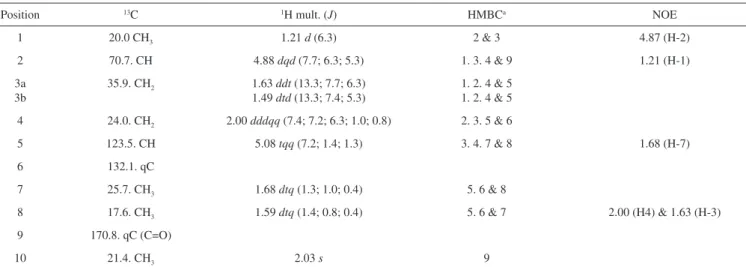
The isolation gave a colorless oil, [α]19D −3.01 (c 0.2, 4 mL, CHCl3). 1H and 13C NMR data of the same are shown in Table 2.21
CONCLUSIONS
Analysis of the volatile fraction of Aristolochia trilobata allowed for the isolation and identification of (2R)-(–)-6-methyl-5-hepten-2-yl acetate (sulcatyl acetate), limonene, linalool, p-cymene, bicycloger-macrene, and spathulenol as the major constituents of the essential oil. Linalool, 6-methyl-5-hepten-2-ol (sulcatol), 6-methyl-5-hepten-2-yl acetate (sulcatyl acetate), and α-terpineol were the main constituents of the hydrolate. Sulcatyl acetate was identified for the first time in the genus Aristolochia, where it is present as a major component of the volatile fraction of the plant.
SUPPLEMENTARY MATERIAL
1H and 13C NMR spectra (including 1D and 2D spectra), IR spectra, MS, and GC-FID chiral chromatogram of sulcatyl acetate, along with the total ion chromatogram (TIC) of the essential oil and the hydrolate of A. trilobata are available at http://quimicanova.sbq. org.br in the form of a PDF file, with free access.
ACKNOWLEDGEMENTS
We are grateful to CNPq and CAPES for the financial support, including grants. We thank Prof. Dr. André L. M. Porto of USP/São Carlos for kindly supplying the samples of (2R)-(-)-sulcatyl acetate and the racemic mixture. We also thank Prof. Gilvandete Maria P. Santiago (UFC) for the use of the polarimeter.
REFERENCES
1. Wu, T.-S.; Damu, A. G.; Su, C.-R.; Kuo, P. C.; Studies In Natural Prod-ucts Chemistry, Atta-Ur-Rahman, ed.; Elsevier: Amsterdam, 2005. 2. Yu, J. Q.; Liao, Z. X.; Cai, X. Q.; Lei, J. C.; Zou, G. L.; Environ. Toxicol.
Pharmacol. 2007, 32, 162.
3. Lorenzi, H.; Matos, F.J.A.; Plantas Medicinais No Brasil: Nativas e Exóticas, 5ª ed., Plantarum: Nova Odessa, 2009.
4. Navarro-Garcia, V. M.; Luna-Herrera, J.; Rojas-Bibriesca, M. G.; Álvarez-Fitz, P.; Ríos, M. Y.; Molecules 2011, 16, 7360;
5. Chung, Y. M.; Chang, F. R.; Tseng, T. F.; Hwang, T. L.; Chen, L. C.; Wu, S. F.; Lee, C. L.; Lin, Z. Y.; Chuang, L. Y.; Su, J. H.; Wu, Y. C.; Bioorg. Med. Chem. Lett. 2011, 21, 1792;
6. Sartorelli, P.; Carvalho, C. S.; Reimão, J. Q.; Tempone, A. G.; Planta Med. 2010, 76, 1455;
7. Hegde, V. R.; Borges, S.; Patel, M.; Das, P. R.; Wu, B.; Gullo, V. P.; Chan, T.-M.; Bioorg. Med. Chem. Lett. 2010, 20, 1345.
8. Heinrich, M.; Chan, J.; Wanke, S.; Neinhuis, C.; Simmonds, M. S. J.; J. Ethnopharmacol. 2009, 125, 137.
9. Lans, C.; Harper, T.; Georges, K.; Bridgwater, E.; BMC Complementary Altern. Med. 2001, 1, 10.
10. Lans, C.; Journal of Ethnobiology and Ethnomedicine 2007a, 3, 13. 11. Lans, C.; Journal of Ethnobiology and Ethnomedicine 2007b, 3, 3. 12. Mahabir, D.; Gulliford, M. C.; Revista Panamericana de Salud Pública
1997, 1, 178.
13. Coe, F. G.; Anderson, G. J.; J. Ethnopharmacol. 2005, 96, 307; 14. Houghton, P. J.; Osibogun, I. M.; J. Ethnopharmacol. 1993, 39, 3. 15. Fenner, R. Betti, A. H.; Mentz, L. A.; Rates, S. M. K.; Rev. Bras. Cienc.
Farm. 2006, 42, 373.
16. Vigneron, M.; Deparis, X.; Deharo, E.; Bourdy, G.; J. Ethnopharmacol. 2005, 98, 356.
17. Quinlan, M. B.; Quinlan, R. J.; Nolan, J. M.; J. Ethnopharmacol. 2002, 80, 78.
18. Jou, J. H.; Li, C. Y.; Schelonka, E. P.; Lin, C. H.; Wu, T. S.; J. Food Drug Anal. 2004, 12, 43.
19. Liang, S.; Paquette, L. A.; Tetrahedron: Asymmetry 1990, 1, 449. 20. Makholela, T.; Manning, J. C.; S. Afr. J. Bot. 2006, 72, 601.
21. Bruschini, C.; Dani, F. R.; Pieraccini, G.; Guarna, F.; Turillazzi, S.; Toxicon 2006, 47, 815.
22. Bruschini, C.; Cervo, R.; Protti, I.; Turillazzi, S.; The Journal of Experi-mental Biology 2008, 211, 2444.
Table 2. NMR data (400 MHz, CDCl3) for 6-methyl-5-hepten-2-yl
Position 13C 1H mult. (J) HMBCa NOE
1 20.0 CH3 1.21 d (6.3) 2 & 3 4.87 (H-2)
2 70.7. CH 4.88 dqd (7.7; 6.3; 5.3) 1. 3. 4 & 9 1.21 (H-1)
3a 3b
35.9. CH2 1.63 ddt (13.3; 7.7; 6.3) 1.49 dtd (13.3; 7.4; 5.3)
1. 2. 4 & 5 1. 2. 4 & 5
4 24.0. CH2 2.00 dddqq (7.4; 7.2; 6.3; 1.0; 0.8) 2. 3. 5 & 6
5 123.5. CH 5.08 tqq (7.2; 1.4; 1.3) 3. 4. 7 & 8 1.68 (H-7)
6 132.1. qC
7 25.7. CH3 1.68 dtq (1.3; 1.0; 0.4) 5. 6 & 8
8 17.6. CH3 1.59 dtq (1.4; 0.8; 0.4) 5. 6 & 7 2.00 (H4) & 1.63 (H-3)
9 170.8. qC (C=O)
10 21.4. CH3 2.03 s 9
The experiments were carried out at 295 K and the chemical shifts are expressed in ppm in relation to the TMS signal at 0.00 ppm, as the internal reference, and the coupling constants (J) in Hz. The exact multiplicities of the signal were determined with the aid of the first-order multiplet simulator/check FOMSC3. a The long range 1H-13C correlations (HMBC) were optimized for J
23. Nakamura, K.; Kinoshita, M.; Ohno, A; Tetrahedron 1995, 51, 8800. 24. Ferreira, H. V.; Rocha, L. C.; Severino, R. P.; Viana, R. B.; Da Silva, A.
B. F.; Porto, A. L. M.; Journal of the Iranianian Chemical Society 2010, 7, 886.
25. Kanjilal, P. B.; Kotoky, R.; J. Essent. Oil Res. 2009, 21, 25. 26. Hayashi, N.; Sugiyama, Y.; Komae, H.; J. Nat. Prod. 1987, 50, 769. 27. Canela, N.; Ferro, E.; Alvarenga, N.; Vila, R.; Cañigueral, S.; J. Essent.
Oil Res. 2004, 16, 567.
28. Priestap, H. A.; Van Baren, C. M.; Lira, P. D. L.; Prado, H. J.; Neugebauer, M.; Mayer, R.; Bandoni, A. L.; Flavour Fragrance J. 2002, 17, 70.
29. Francisco, C. S.; Messiano, G. B.; Lopes, L. M. X.; Tininis, A. G.; De Oliveira, J. E.; Capellari Jr., L.; Phytochemistry 2008, 69, 170. 30. Marchesini, A. M.; Prado, G. G.; Messiano, G. B.; Machado, M. B.;
Lopes, L. M. X.; J. Braz. Chem. Soc. 2009, 20, 1603.
31. Silva-Brandão, K. L.; Solferini, V. N.; Trigo, J. R.; Biochem. Syst. Ecol. 2006, 34, 297.
Supplementary Material
*e-mail: [email protected]
VOLATILE CONSTITUENTS OF Aristolochia trilobata L. (Aristolochiaceae): A RICH SOURCE OF SULCATYL ACETATE
Darlisson de Alexandria Santosa, Péricles Barreto Alvesa,*, Emmanoel Vilaça Costaa, Clovis Roberto Pereira Francob, Angelita Nepelc and Andersson Barisonc
aDepartamento de Química, Universidade Federal do Sergipe, Av. Marechal Rondon, S/N, Campus Universitário, 49100-000 São
Cristóvão – SE, Brasil
bDepartamento de Biologia, Universidade Federal do Sergipe, Av. Marechal Rondon, S/N, Campus Universitário, 49100-000 São
Cristóvão – SE, Brasil
cDepartamento de Química, Universidade Federal do Paraná, 81530-900 Curitiba – PR, Brasil
Figure 1S. 1H NMR spectrum (400 MHz, (CDCl
Figure 2S. 13C{1H} and DEP 135 NMR spectra (100 MHz, CDCl
3) for 6-methyl-5-hepten-2-yl
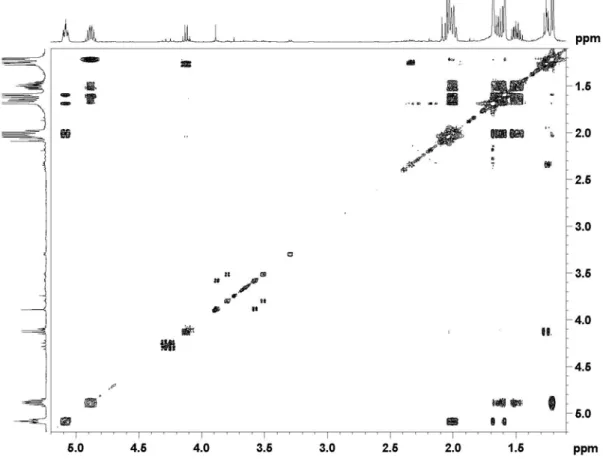
Figure 3S. 1H-1H correlation map from COSY NMR experiment (400 MHz ,CDCl
Figure 5S. Long-range 1H-13C correlation map from HMBC NMR experiment (400/100 MHz, CDCl
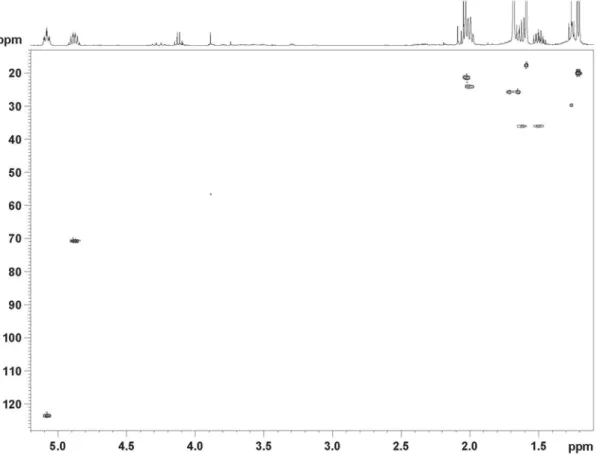
3) for 6-methyl-5-hepten-2-yl Figure 4S. One-bond 1H-13C correlation map from HSQC NMR experiment (400/100 MHz, CDCl
Figura 10S. Total ion chromatogram (TIC) of the hydrolate stem essential oil of Aristolochia trilobata L. Figura 9S. Total ion chromatogram (TIC) of the stem essential oil of Aristolochia trilobata L.