0
Universidade de Lisboa
Faculdade de Farmácia
The Influence of Preservative Systems in
Cosmetic Gel Formulations prepared from
Natural Rheological Modifiers
Cláudia de Matos João Pádua Santos
Mestrado Integrado em Ciências Farmacêuticas
1
Universidade de Lisboa
Faculdade de Farmácia
The Influence of Preservative Systems in
Cosmetic Gel Formulations prepared from
Natural Rheological Modifiers
Cláudia de Matos João Pádua Santos
Monografia de Mestrado Integrado em Ciências Farmacêuticas apresentada à Universidade de Lisboa através da Faculdade de Farmácia
Orientadora: Doutora Paola Perugini, Professora Associada
Co-Orientadora: Doutora Aida Duarte, Professora Associada com Agregação
2
Università di Pavia
Dipartimento di Scienze del Farmaco
The Influence of Preservative Systems in
Cosmetic Gel Formulations prepared from
Natural Rheological Modifiers
Cláudia de Matos João Pádua Santos
Monografia de Mestrado Integrado em Ciências Farmacêuticas apresentada à Universidade de Lisboa através da Faculdade de Farmácia
Esta monografia foi realizada no âmbito do programa Erasmus+
Orientadora: Doutora Paola Perugini, Professora Associada
Co-Orientadora: Doutora Aida Duarte, Professora Associada com Agregação
3
Resumo
Os geles são preparações semissólidas para uso farmacêutico com efeito protetor, terapêutico ou profilático. Os geles são sistemas semirrígidos de dois componentes, nos quais a fase contínua líquida é imobilizada por uma rede tridimensional reticulada constituída por partículas ou macromoléculas solvatadas na fase dispersa. As propriedades de coesão dos sólidos e as propriedades de difusão dos líquidos estão combinadas nos geles.
Os modificadores reológicos são adicionados às formulações com o objetivo principal de aumentar a viscosidade ou conferir um determinado perfil reológico. Também podem ter outras funções, como por exemplo, agentes gelificantes e emulsionantes.
Os conservantes são químicos naturais ou sintéticos que são adicionados às formulações para prevenir a contaminação microbiológica ou alterações químicas indesejáveis e também para aumentar o tempo de estabilidade do produto. Os sistemas de conservantes consistem na associação de dois ou mais conservantes para obter ao mesmo tempo uma atividade antibacteriana e antifúngica, originando, portanto, um espectro de ação mais alargado.
A estabilidade é referida como a ausência de separação da dispersão ao longo de um período de tempo. Na estabilidade de um produto cosmético, as propriedades dos produtos devem ser mantidas de forma a que o conjunto de características físico-químicas, organoléticas, microbiológicas e funcionais sejam adequadas ao fim a que se destinam. A estabilidade torna-se, portanto, um requisito essencial porque depende de outras condições essenciais que definem a qualidade do produto cosmético: segurança, conveniência, conformidade e eficácia para uso num sentido amplo.
Multiple light scattering é uma técnica utilizada para determinar o fluxo de luz transmitido e
a retrodifusão de uma amostra. O valor obtido fornece informações sobre a homogeneidade da amostra. Além disso, este método permite detetar, compreender e prever fenómenos de instabilidade que ocorrem durante o envelhecimento ou tempo de prateleira.
O presente trabalho dedica-se ao estudo da influência dos sistemas de conservantes na estabilidade das formulações de geles para uso cosmético preparadas a partir de modificadores reológicos naturais. O objetivo é prever pelo método multiple light scattering se as formulações são estáveis no tempo. Se não forem estáveis, a finalidade é determinar o fenómeno de instabilidade.
Assim, foram preparados geles com diferentes concentrações de modificadores reológicos, conservantes e tensioativos. Os modificadores reológicos utilizados foram Cellulose Gum (CMC), Sodium Carboxymethyl Betaglucan (Beta-glucan) (Beta), Carrageenan (Car), Acacia
Senegal Gum & Xanthan Gum (SolagumTM AX) (SAX), Caesalpina Spinosa Gum (SolagumTM
4 e Xanthan Gum (XG), nas concentrações de 0,5%, 1% e 2%. Utilizou-se Phenoxyethanol &
Caprylyl Glycol (Verstatil® PC) (PC), Triethyl Citrate & Glyceryl Caprylate & Benzoic Acid
(Verstatil® TBG) (TBG) e p-Anisic Acid (dermosoft® 688 eco) (688) como conservantes e
Decyl Glucoside (DG) e Polysorbate 60 (PS) como tensioativos. Após a preparação, todos os
geles eram homogéneos. Alguns eram claros e outros opalescentes devido aos componentes utilizados. Geralmente, a presença de Verstatil® TBG, decil glucosídeo, SolagumTM AX,
SolagumTM Tara e Sucrathix VX tornam o gel opalescente.
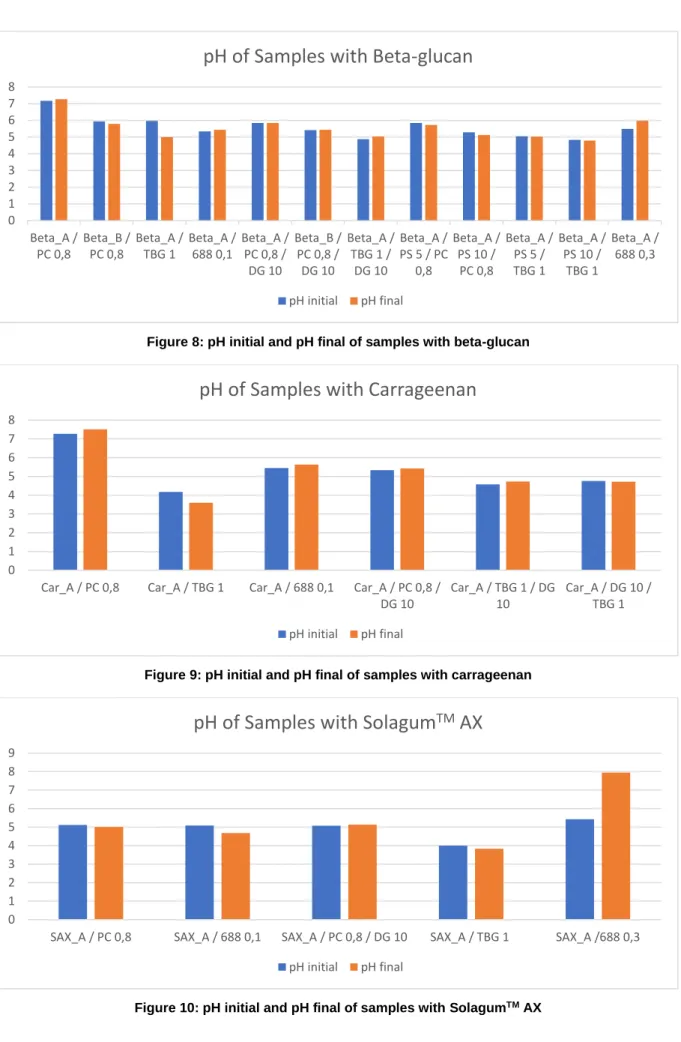
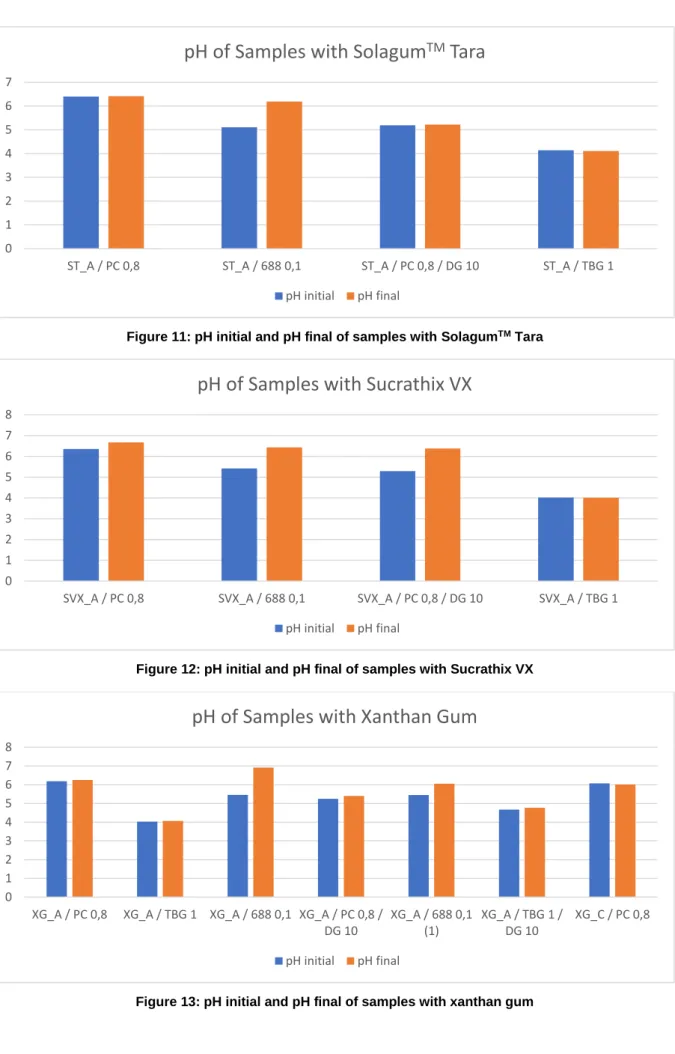
Parâmetros como o pH e a viscosidade foram analisados. O pH foi medido no tempo zero (logo após a preparação) e após um mês, de forma a verificar se não houve alteração do valor de pH. O pH da maioria das amostras não alterou significativamente (variação de pH inferior ou igual a 0,5). A alteração de pH pode influenciar a eficácia dos conservantes que dependem do pH e a estabilidade do gel. A viscosidade foi medida por um viscosímetro rotacional com a agulha número 3 a 20°C. O valor de viscosidade foi obtido multiplicando o valor de leitura pelo fator e a curva de viscosidade traçada através do aumento da velocidade de 0,5 para 100 rpm. O perfil tixotrópico dos geles foi representado. As amostras com goma de celulose (CMC), SolagumTM AX (SAX), Sucrathix VX (SVX) e goma xantana (XG) têm um fluxo
pseudoplástico, pois a viscosidade diminui quando a taxa de cisalhamento aumenta. Por outro lado, as amostras com beta-glucano (Beta), carragenina (Car) e SolagumTM Tara (ST),
apresentam um fluxo dilatante, porque a viscosidade aumenta quando a taxa de cisalhamento aumenta.
A estabilidade dos geles foi monitorizada por avaliação organolética e pelo método multiple
light scattering através do equipamento Turbiscan Tower. O Turbiscan é um inovador
analisador ótico automatizado, trabalhando na região do infravermelho próximo com um modo de deteção dupla: transmissão e retrodifusão. Os geles foram transferidos para tubos de vidro cilíndricos e submetidos à análise de estabilidade pelo Turbiscan Tower. Para uma avaliação ótima, é importante que não existam bolhas de ar dentro da amostra e a amostra esteja homogeneamente distribuída. Para cada amostra foi realizado um ciclo a 20°C durante 6 horas, um ciclo a 4°C durante 6 horas e finalmente um terceiro ciclo a 20°C durante 6 horas. Para amostras transparentes, os valores de transmissão foram medidos; e para amostras opalescentes, o perfil de retrodifusão foi avaliado. De acordo com os resultados obtidos, a sedimentação, a separação de fases com clarificação e floculação são os fenómenos de instabilidade mais comuns nas amostras. As amostras tornam-se mais instáveis na presença de tensioativo e dermosoft® 688 eco. Além disso, amostras com menor concentração de tensioativo são mais estáveis. A maioria das amostras com Verstatil® TBG torna-se instável na presença de tensioativo. Amostras com beta-glucano e polisorbato 60, carragenina e decil glicosídeo, SolagumTM AX e decil glucosídeo, SolagumTM Tara e decil glucosídeo e goma
5 xantana e decil glucosídeo são instáveis. Todas as amostras com goma de celulose e tensioativo são instáveis. Por outro lado, as amostras com Sucrathix VX são as mais estáveis. O controlo microbiológico foi realizado um mês após a data de preparação das amostras com a finalidade de avaliar se durante um mês, após a preparação da formulação, não houve desenvolvimento microbiano. Ao fim deste tempo, o conservante foi neutralizado com a adição de 9 ml de Eugon LT100 a 1 ml de amostra, retirou-se 1 ml e adicionou-se ao meio de crescimento para bactérias e outro 1 ml ao meio de crescimento para fungos. As culturas foram a incubar 48 horas a 37°C para bactérias e a 20°C por 3-5 dias para os fungos. Em todas as amostras não se verificou crescimento para os fungos, no entanto as amostras com o conservante dermosoft® 688 eco apresentaram crescimento bacteriano, um resultado esperado dado que, este conservante não é recomendado como eficiente para bactérias Gram+ e Gram-.
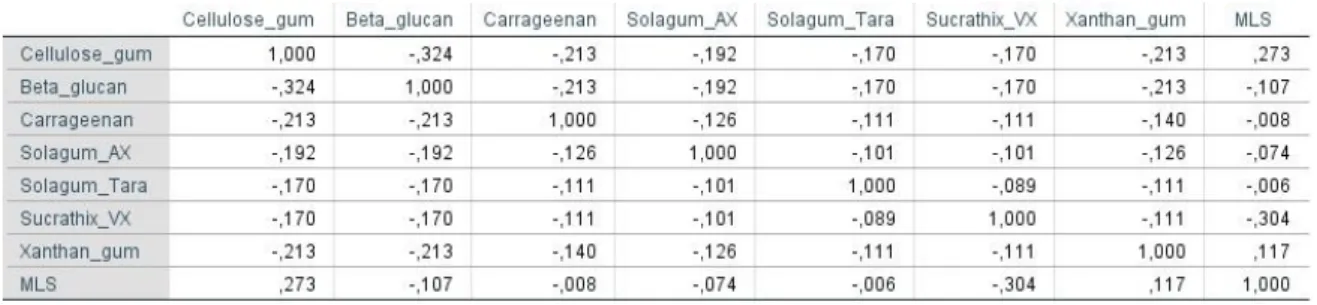
A análise fatorial é uma técnica estatística multivariada de dados exploratórios. O objetivo deste método é descobrir e analisar a estrutura de um conjunto de variáveis inter-relacionadas para construir uma escala de medição para fatores que de alguma forma controlam as variáveis originais. Variáveis com o valor do módulo maior que 0,15 têm significância na estabilidade do gel. Um valor de correlação negativa mostra que a variável contribui para a estabilidade do gel e um valor de correlação positivo causa a instabilidade do gel. A presença de goma de celulose, dermosoft® 688 eco, decil glucosídeo, polisorbato 60, combinação de Verstatil® TBG e decil glucosídeo, a combinação de Verstatil® TBG e polisorbato 60 e a variação do pH contribuem para a instabilidade do gel. No entanto, a presença de Sucrathix VX e Verstatil® PC contribui para a estabilidade do gel. Os resultados da análise fatorial são consistentes com os resultados observados.
O presente trabalho permitiu concluir que os sistemas de conservantes, utilizados nas formulações em estudo, têm influência na estabilidade dos geles, sendo que a presença de tensioativo foi o fator que mais contribuiu para a instabilidade do gel.
Palavras-chave: geles, modificadores reológicos naturais, conservantes, estabilidade,
6
Abstract
Gels are two-component semi-rigid systems in which the liquid continuous phase is immobilized by a cross linked three-dimensional network consisting of particles or solvated macromolecules in the disperse phase. Gel have protective, therapeutic, or prophylactic effect. Rheological modifiers are additives which are primarily used to increase the viscosity or impart a desired rheological profile to a formulation. They can sometimes be multifunctional and perform secondary roles such as gelling agents, emulsifiers, conditioners or film formers.
Preservatives are natural or synthetic chemicals which are added to several products as pharmaceuticals, cosmetics and food to prevent microbial contamination or undesirable chemical changes. Another purpose of the preservative addition is to prolong shelf life of the products. Preservative systems consist in an association of two or more preservatives to give a broader spectrum of activity.
Stability is referred as the absence of separation of the dispersion over a period of time. The stability of a cosmetic product is defined as the properties of the product to maintain the set of physico-chemical characteristics, organoleptic, microbiological and functional that made it responsive to its purpose of use. Stability becomes therefore an essential requirement because it depends on other key requirements that define the quality of the cosmetic product: security, agreeableness, compliance and effectiveness for use in a broad sense.
Multiple light scattering is a technique used to determine light flux transmitted through and backscattering from a product. The value obtained with this measurement gives information on the homogeneity of the sample and is characteristic of the dispersion. It enables to detect, to deep understand and to predict destabilization phenomena which take place during ageing or shelf-life tests.
The aim of the work is to evaluate the influence of preservative systems in cosmetic gel formulations prepared from natural rheological modifiers. In order to study this influence, it was prepared gels in different combinations of rheological modifier, preservative and surfactant. Then, organoleptic aspect, pH, rheology, stability and microbiological control were analysed.
The gels were prepared with different concentrations of rheological modifiers, preservatives and surfactants. After preparation, all gels were homogenous. Some were clear and other opalescent because of the components used. Generally, the presence of Verstatil® TBG, decyl glucoside, SolagumTM AX, SolagumTM Tara and Sucrathix VX becomes the gel opalescent.
Parameters as pH and viscosity were analysed. pH was measured at time zero and after 1 month. The pH of most of the samples did not change significantly (pH variation less than ±0,5). The pH change can influence the efficacy of the preservatives which are pH-depended and the gel stability. Viscosity was measured by rotational viscometer. For all viscosity
7 measurements, spindle number 3 was used. The viscosity values were obtained by multiplying the dial reading for factor. By increasing speed from 0,5 to 100 rpm., it is possible to trace a viscosity curve and thus obtain a rheological profile. All measurements were performed at 20°C. Samples with cellulose gum (CMC), SolagumTM AX (SAX), Sucrathix VX (SVX) and
xanthan gum (XG) show a pseudo-plastic behaviour. Samples with beta-glucan (Beta), carrageenan (Car) and SolagumTM Tara (ST) show a dilatant flow.
The stability of the gels was monitored by organoleptic evaluation and by multiple light scattering by Turbiscan Tower. Turbiscan is an innovative automatized optical analyser, working in the near-infrared region with a double detection mode: transmission and backscattering. Gels for multiple scattering measurement were transferred into cylindrical glass tubes and submitted to Turbiscan Tower stability analysis. For each sample was performed one cycle at 20°C for 6 hours, one cycle at 4°C for 6 hours and finally a third cycle at 20°C for 6 hours. For clear samples transmission values were measured; for opalescent samples backscattering profile was evaluated. According with the results, sedimentation, phase separation with clarification and flocculation are the most common instability phenomena in the samples. The samples become more instable in the presence of surfactant and dermosoft® 688 eco.
Microbiological assay aims to evaluate if there is no microbial growth inside the sample and consequently if the preservative system has not been inactivated. Eugon LT100 broth (9 ml) was added to 1 ml of sample (9:1 broth:sample) in order to neutralize the preservative system. 1 ml of the previous mixture were transferred into culture medium: Tryptic Soy Agar for bacterial and Sabouraud Chloramphenicol Agar for fungi. Samples for bacteria were incubated at 37ºC for 48 hours and for fungi at 20°C for 3-5 days. For all samples tested, there were no fungal growth. On the other hand, samples with the dermosoft® 688 eco preservative showed bacterial growth because this preservative is fair for Gram+ and Gram- bacteria.
The factorial analysis is multivariate statistic technique of data exploratory. The purpose of this method is to discover and analyse the structure of a set of interrelated variables to construct a measurement scale for factors which somehow control the original variables. The factorial analysis calculates the correlation between the variables. Thus, variables with the modulus value greater than 0,15 have significance in the gel stability. A negative correlation value show that the variable contributes for the gel stability and a positive correlation value causes the gel instability. According to the results, the factors which the most influence the gels stability are the presence of cellulose gum, Sucrathix VX, Verstatil® PC, dermosoft 688® eco, decyl glucoside, polysorbate 60, the combination of Verstatil® TBG and decyl glucoside, the combination of Verstatil® TBG and polysorbate 60 and the pH variation.
8
Acknowledgments
During the monograph, I counted on with the trustworthy and help of diverse people and institutions. Without them, the research would not be possible.
To Faculdade de Farmácia da Universidade de Lisboa, I want to thank all the teachers, researchers and staff for the knowledge and availability. To my mates, for all the help, camaraderie and sharing the good and bad moments during these five years.
To Professora Doutora Aida Duarte, I am very grateful for the orientation shown, the help and availability. Here I show my gratitude.
To Università di Pavia, I want to thank the opportunity to take part in Erasmus+ programme. To Dr. Paola Perugini from Univeristà di Pavia, I want to thank the availability to develop a research work, write my monograph about this and the integration in a city and country that I did not know.
To Dr. Priscilla Capra from Università di Pavia, I am very grateful for all knowledge about the work, help in the research, orientation, incentive, support and integration in Pavia and university.
To other researchers and mates of Università di Pavia, I want to thank for the integration, help and the availability. For 3 months, Pavia was my home, a city that left a lot of milestones that I will never forget and will not regret.
To my family, I am very grateful their support and help when I needed the most, patience and comprehension.
To my friends and boyfriend, I want to thank for all the support, comprehension and camaraderie in the good and bad moments.
9
Index
1. Introduction ...13 1.1. Gels ...13 1.1.1. Definition ...13 1.1.2. Physico-Chemical Characterization ...13 1.1.3. Classification ...151.1.4. Preparation of the Gel ...17
1.1.5. Application ...19
1.1.6. Advantages and Disadvantages ...19
1.2. Rheological Modifiers ...20 1.2.1. Definition ...20 1.2.2. Classification ...22 1.3. Preservatives ...22 1.3.1. Definition ...22 1.3.2. Chemico-physical Characterization ...23 1.3.3. Classification ...24 1.3.4. Mechanism of Action ...25 1.3.5. Microbiological Control ...25 1.4. Stability ...27 1.5. Rheology ...31
1.6. Multiple Light Scattering ...33
2. Aim of the Work ...34
3. Materials ...35
3.1. Rheological Modifiers ...35
3.1.1. Cellulose Gum (CMC) ...35
3.1.2. Sodium Carboxymethyl Betaglucan (Beta-glucan) (Beta) ...35
3.1.3. Carrageenan (Car) ...35
3.1.4. Acacia Senegal Gum & Xanthan Gum (SolagumTM AX) (SAX) ...36
3.1.5. Caesalpina Spinosa Gum (SolagumTM Tara) (ST) ...36
3.1.6. Microcrystalline Cellulose & Cellulose Gum & Xanthan Gum (Sucrathix VX) (SVX) ...37
3.1.7. Xanthan Gum (XG) ...37
3.2. Preservatives ...38
3.2.1. Phenoxyethanol & Caprylyl Glycol (Verstatil® PC) (PC) ...38
3.2.2. Triethyl Citrate & Glyceryl Caprylate & Benzoic Acid (Verstatil® TBG) (TBG) ...38
10 3.3. Surfactants ...38 3.3.1. Decyl Glucoside (DG) ...38 3.3.2. Polysorbate 60 (PS) ...38 4. Methods ...39 4.1. Formulation of Gels ...39 4.2. Measure of pH ...39 4.3. Rheology Measurements ...39
4.4. Multiple Light Scattering ...40
4.5. Microbiological Tests ...41
4.6. Factorial Analysis ...41
5. Results and Discussions ...43
5.1. Formulation of Gels ...43
5.2. Measure of pH ...44
5.3. Rheology Measurements ...47
5.4. Multiple Light Scattering ...48
5.5. Microbiological Tests ...53 5.6. Factorial Analysis ...54 6. Conclusions ...56 References ...57 Annex ...62
Index of Figures
Figure 1: Gels structure (2) ...14Figure 2: Newtonian and non-Newtonian flows (15) ...21
Figure 3: Types of Flow Behaviour (16) ...22
Figure 4: Variation in energy of the interaction between two particles as a function of distance (26)...29
Figure 5: Simple Newtonian shear model (14) ...32
Figure 6: "Apparent" and "Differential" Viscosity (16) ...32
Figure 7: pH initial and pH final of samples with cellulose gum ...44
Figure 8: pH initial and pH final of samples with beta-glucan ...45
Figure 9: pH initial and pH final of samples with carrageenan...45
Figure 10: pH initial and pH final of samples with SolagumTM AX ...45
11
Figure 12: pH initial and pH final of samples with Sucrathix VX ...46
Figure 13: pH initial and pH final of samples with xanthan gum ...46
Figure 14: Beta_A / PC_0,8 vial sample: gel formulation was homogenous ...50
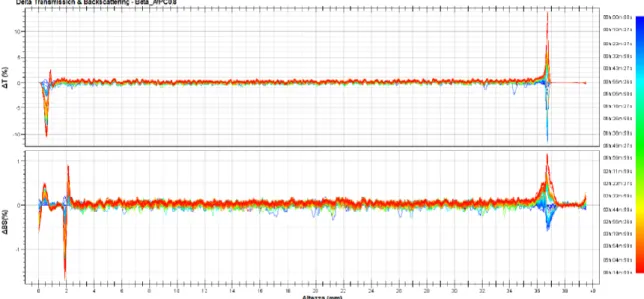
Figure 15: ΔBS and ΔT profiles of Beta_A / PC_0,8 ...50
Figure 16: Beta_A / PS_10 / PC_0,8 with sedimentation ...50
Figure 17: ΔBS and ΔT profiles of Beta_A / PS_10 / PC_0,8: sedimentation/flocculation phenomena was observed ...51
Figure 18: CMC_A / PS_10 / PC_0,8 with sedimentation and flocculation ...51
Figure 19: ΔBS and ΔT profiles of CMC_A / PS_10 / PC_0,8: a sedimentation and flocculation phenomena was reported ...51
Figure 20: CMC_A / TBG_1 / DG_10 with phase separation ...52
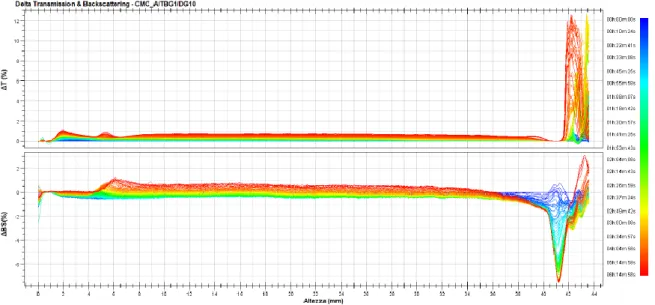
Figure 21: ΔBS and ΔT profiles of CMC_A / TBG_1 / DG:10: phase separation was observed ...52
Figure 22: Car_A / DG_10 / TBG_1 with phase separation with clarification ...52
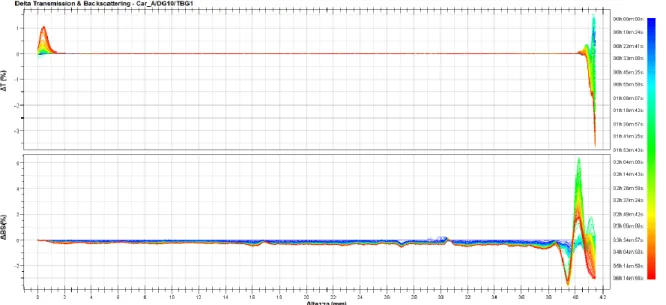
Figure 23: ΔBS and ΔT profiles of Car_A / DG_10 / TBG_1: phase separation with clarification was observed ...53
Figure 24: Microbiological test of XG_A / 688_0,1 ...54
Figure 25: Correlation between rheological modifiers and results of multiple light scattering 54 Figure 26: Correlation between preservatives, surfactants and combinations of preservative and surfactant and results of multiple light scattering ...55
Figure 27: Correlation between pH variation, viscosities and rheology and results of multiple light scattering ...55
Index of Tables
Table 1: Gel Classification (2,4) ...17Table 2: Advantages and disadvantages of a topical gel (2,13) ...20
Table 3: Properties of Ideal preservative or preservative system (19) ...23
Table 4: Composition of a neutralizing solution ...26
Table 5: Stability parameters and methods for the gels (29) ...31
Table 6: Recommendation relatively to the factorial analysis based on the KMO values (60,62) ...42
12
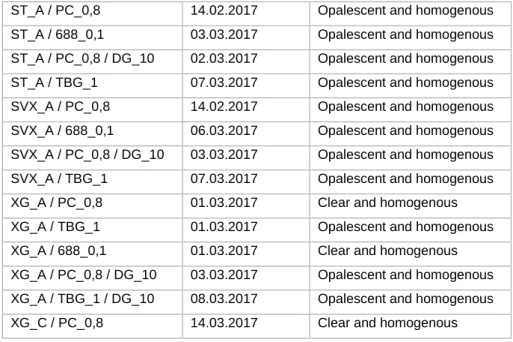
Table 7: Organoleptic Aspect of samples ...43
Table 8: Viscosity values of gels ...47
Table 9: Instability phenomena of samples predicted by multiple light scattering ...49
Table 10: Results of microbiological tests ...54
Table 11: Aspect of Samples with Cellulose Gum ...62
Table 12: Results of Multiple Light Scattering for Samples with Cellulose Gum ...62
Table 13: Aspect of Samples with Beta-glucan ...64
Table 14: Results of Multiple Light Scattering for Samples with Beta-glucan ...65
Table 15: Aspect of Samples with Carrageenan ...66
Table 16: Results of Multiple Light Scattering for Samples with Carrageenan ...67
Table 17: Aspect of Samples with SolagumTM AX ...67
Table 18: Results of Multiple Light Scattering for Samples with SolagumTM AX ...68
Table 19: Aspect of Samples with SolagumTM Tara ...68
Table 20: Results of Multiple Light Scattering for Samples with SolagumTM Tara ...69
Table 21: Aspect of Samples with Sucrathix VX ...69
Table 22: Results of Multiple Light Scattering for Samples with Sucrathix VX ...69
Table 23: Aspect of Samples with Xanthan Gum ...70
13
1. Introduction
1.1. Gels
1.1.1. Definition
The word ‘‘gel’’, introduced in the late 1800, is derived from ‘‘gelatin’’. (1,2)
According to the United States Pharmacopeia (USP), gels are defined as “semisolid systems consisting of either suspensions made up of small inorganic particles or large organic molecules interpenetrated by a liquid”. (1–3)
Gels are also defined as two-component semi-rigid systems in which the liquid continuous phase is immobilized by a cross linked three-dimensional network consisting of particles or solvated macromolecules in the disperse phase. (3,4) This disperse phase can be constituted by inorganic particles or organic macromolecules, primarily polymers. The inorganic particles are not dissolved but merely dispersed into the continuous phase; large organic particles are dissolved in the continuous phase, randomly coiled in the flexible chains. (4) The cross linking of the disperse phase in the gels can be established by via physical or chemical interactions. (3,4)
1.1.2. Physico-Chemical Characterization
Gels are systems with a crosslinked three-dimensional network of polymers dispersed in the liquid. After topical application, the liquid evaporates thereby leaving the drug in a thin gel film: forming matrix. (2) The presence of the crosslinked three-dimensional network gives the rigidity of gels. The structure of the network and the properties of the gels result from the nature of the particles and the type of the forces which are responsible for the linkages. (2,4) Spherical or isometric aggregates of small molecules or even single macromolecules constitute the individual particles of hydrophilic colloid. In linear macromolecules, the system is characterized from entangled macromolecules. The purpose of contact between which may either be generally small or consist of several particles aligned in a crystalline order. The force of attraction responsible for the linkage between gelling agent particles may range from strong primary valences to weaker hydrogen bonds and Van der Waals forces. A slight increment in temperature show the weak nature of the hydrogen bonds and Van der Waals forces because frequently causes liquefaction of gel. (4) Figure 1 represents the gels structure.
14
Figure 1: Gels structure (2)
Some gels are clear and others turbid because of the ingredients used. These ingredients have different solubility in the liquid of the continuous phase. (3) The appearance is like an elastic solid. Then, cohesive properties of the solids and diffusional properties of the liquids are combined in the gels. (5) In the steady state, the gel needs to be stressed or tense to flow. That is, the elastic modulus of gel, G’, is greater than viscous modulus, G’’. Thus, the gel is a solid but soft and squishy. Even though the polymeric network can be very dilute, it is enough to support shear stresses and thus gives the gel its solid-like material properties. (6)
Gels have several properties that will be described below. Ideally, gels should have a gelling agent for pharmaceutical or cosmetic application which should be inert and safe and it should not react with other components of the formulation. In addition, the solid-like nature of the gelling agent should be suitable to allow easy breaking when subjected to shear force either by agitation or topical application. Gels should also have preservatives to prevent microbial contamination. Regarding to topic gels, these should not be tacky and concerning to ophthalmic gels, these should be sterile. (2,4)
Gels have some characteristics such as swelling, syneresis, ageing, structure and rheology. Firstly, swelling occurs when the solvent penetrates the matrix of the gel and is characterized by the absorption of the solvent by the agent, increasing the volume of the gel. Gel solvent interactions replace gel-gel interactions. The number of linkages between individual molecules of gelling agent and the strength of these linkages influence the degree of swelling.
Secondly, syneresis is the phenomenon which happens when gels contract spontaneously on standing and exude some fluid medium. The degree to which syneresis occurs, increases as the concentration of gelling agent decreases. The presence of syneresis shows the thermodynamic instability of the original gel. The contraction mechanism has been related to the relaxation of elastic stress developed during the setting of the gels. As these stresses are relieved, the interstitial space available for the solvent is reduced, forcing the liquid out.
Regarding to ageing, this process is related to the slow spontaneous aggregation performed by the colloidal systems. A gradual denser network of the gelling agent is formed by ageing. (2,4) Ageing is like the original gelling process and continues after the initial gelation, since fluid medium is lost from the newly formed gel. (2)
15 As regards the structure, as already mentioned, the cross-linking of the particles of the gelling agent forms a network that gives the rigidity to the gel.
Lastly, gels show rheological characteristics. Solutions of the gelling agents and dispersion of flocculated solid are pseudo-plastic because the viscosity decreases as shear rate increases, exhibiting a Non-Newtonian flow behaviour. By applying a shear force, the tenuous structure of the inorganic particles dispersed in the water is suppressed due to the breakage of the interparticulate association, exhibiting a greater tendency to flow. In the same way, if a shear force is applied in the macromolecules, the molecules align in the direction of the organic (single-phase system). (2,4)
1.1.3. Classification
The gels can be classified based on five parameters: colloidal phases, nature of solvent, physical nature, rheological properties and network configuration. (4,6) Table 1 summarize the gel classification.
According to the colloidal phases, there are single-phase gels and two-phase gels. Single-phase gels are characterized by organic macromolecules such as proteins, polysaccharides, and synthetic macromolecules, uniformly distributed on the continuous phase in such a way which no clear limits exist between the dispersed macromolecules and the liquid. (1,7) These type of gels is composed by natural gums or synthetic macromolecules, mentioned as gel formers. (7,4) They entangle randomly or bound by Van der Waals forces. (4) Mucilages are latter preparations. Although the continuous phase of the gels is usually water, oil and alcohol can also constitute this phase. For example, mineral oil can be combined with a polyethylene resin to form an oleaginous ointment base. Two-phase gels are characterized by a network of small discrete particles. The gel mass is mentioned as magma when the particle size of dispersed phase is relatively large. Two-phase gels may be thixotropic, forming semisolids on standing and becoming liquid on agitation. If gels and magmas have particles of colloidal dimension, they can be considered as colloidal dispersions. The accepted size range for colloidal particles is between 1 nm and 0,5 µm. The larger particle size of the dispersed phase in colloidal system is one difference between colloidal dispersions and true solutions. Other difference is in optical properties. True solutions look clear because do not scatter light and colloidal dispersions contain discrete particles scatter light. (7)
Concerning to the nature of solvent it is possible to classify gels as hydrogels, organic gels or xerogels. Hydrogels are composed by water on the continuous phase and a three-dimensional network of polymers or colloids as discontinuous phase. (4,6,8) Examples of these type of gels are bentonite magma, gelatin, cellulose derivatives, carbomer, and poloxamer gel. Organic gels contain a non-aqueous solvent, generally oil. Examples of organic gels are
16 plastibase (low molecular weight polyethylene dissolved in mineral oil & short Cooled), Olag (aerosol) gel and dispersion of metallic stearate in oils. Xerogels are solid gels with low solvent concentration. They are produced by evaporation of solvent or freeze drying, leaving the gel framework behind on contact with fresh fluid. They swell and can be reconstituted. Examples of these types of gels are tragacanth ribbons, acacia tear β-cyclodextrin, dry cellulose and polystyrene.
Related to the physical nature, the gels can be classified into elastic or rigid gels. Elastic gels show an elastic behaviour. The bonds which linked the fibrous molecules at the point of junction are relatively weak. Examples of these weak bonds are hydrogens bonds and dipole attraction. If the molecule possesses free –COOH group, then additional bonding takes place by salt bridge of type –COO-X-COO between two adjacent strand networks. Examples of elastic gels are alginate, Carbopol, pectin, agar and Guar gum. On the other hand, rigid gels can be composed by macromolecules in which the system linked by primary covalent bonds. Example of these type of gels is silica where silica acid molecules are held by Si-O-Si-O bond to give a polymer structure with a porous network.
According to the rheological properties, the gels generally exhibit a non-Newtonian flow and can be classified into plastic, pseudo-plastic and thixotropic gels. The rheogram of plastic gels is characterized from a yield value above which the elastic gel distorts and begins to flow. Bingham bodies and flocculated suspensions of Aluminium hydroxide are classified as plastic formulations. Pseudo-plastic gels show a pseudo-plastic profile. Viscosity decreases with increasing of shear rate, since long chain molecules of the polymers begin to align their long axis in the direction of flow with release of solvent from gel matrix. Dispersion of tragacanth, sodium alginate and Na-CMC are examples of pseudo-plastic gels. Thixotropic gels are characterized by weak bonds between particles which can be broken simply down by shaking. The resulting solution will revert back to gel due to the particles colliding and linking together again. Kaolin, bentonite and agar are examples of rheological modifiers with thixotropic behaviour. (4,8)
Gels can be characterized by chemical or physical interactions. Chemical gels are linked by permanent covalent inter-molecular bonds between cross-linked polymeric molecules. (5,6) Chemical gels are not affected by the time and/or temperature but it is affected by the electrolytes. (5) On the other hand, physical gels are connected by entanglements, ionic, hydrogen bonds, electrostatic interactions, dipole-dipole interactions, Van der Waals forces and hydrophobic interactions which are reversible secondary intermolecular forces relatively weak. (4,6). Some environment, as heating, can destroy gel structure, breaking inter-molecular interactions between polymeric chains. An example of physical gels is jellies. (5)
17
Table 1: Gel Classification (2,4) Gel Classification
Colloidal Phases Single-phase Gel
Two-phase Gel
Nature of Solvent Used Hydrogel
Organic Gel Xerogel
Physical Nature Elastic Gel
Rigid Gel
Rheological Properties Plastic Pseudo-plastic Thixotropic
How Network is Held Together Chemical Gel Physical Gel
1.1.4. Preparation of the Gel
Gels are relatively easier to prepare compared to emulsions. (9,10)
Gels are formed by aggregation of colloidal sol particles where the semisolid system is interpenetrated by a fluid (liquid or gas). The particles have between 1 nm and 0,5 µm of diameter and they link together to form a polymeric and colloidal network imparting rigidity to the structure and it is filled by a fluid. (5,11)
In order to formulate a gel, it is necessary the presence of the gelling agent in the aqueous phase that is the solid phase which form complexes composed by many molecules and are attached to each other. The gelling agents are natural or synthetic polymers which form linear (low yield gelling) and crosslinked structures. The keystone of all the proceedings is the polymerization of the gelling and the type of gelling agent. The system which obtains when a polymer is dissolved in a solvent is composed by individual macromolecules completely surrounded by solvent molecules with which are established more or less strong interactions. The more concentrated the solution, the more viscous it is. In concentrated solutions the further solvent addition forces the molecules to approach and the solution begins to show a transition from a concentrated solution to a gel because the branched chains (network) origin strong inter-molecular bonds (for example hydrogen bonds) in some places and then the opaque and rigid system becomes soft and transparent like the gels. (5)
On the other hand, there are other components necessary to produce a medicated gel such as actives, preservatives, stabilizers, dispersing agents and permeation enhancers. (10)
Generally, gels are prepared in industrial scale under room temperature. There are three methods for gel preparation: thermal changes, flocculation and chemical reaction.
18 Some gels are produced by thermal changes depending on the solubility of gelling agents. A gelling agent more soluble in hot water than in cold water when subjected to a decrease in temperature, undergoes a decrease in its degree of hydration, thus forming the gel. Examples of gels obtained by this procedure are gelatin gel, agar sodium oleate, guar gum and cellulose derivatives. On the other hand, the more soluble gelling agents in cold water than in hot water have hydrogen bonds with the water and when increasing the temperature, some hydrogen bonds may be broken which will cause the formation of the gel. This method cannot be used in all cases; therefore, it cannot be a general method.
Moreover, gels can be obtained by flocculation. In this method, the amount of salt added should be such as to cause precipitation leading to a state of age to form the gel and not an amount causing a complete precipitation. A rapid mixing must occur to avoid high local concentration of precipitant. The gels formed by flocculation have thixotropic profile. An example is ethyl cellulose: polystyrene in benzene is gelled by rapid mixing with suitable amounts of a non-solvent such as petroleum ether. However, adding salts to hydrophobic solutions don’t form gels because coagulation occurs. Examples of these cases are gelatin, proteins and acacia gum which are not affected by the high concentration of electrolytes because of the salt out effect.
On the other hand, other gels are obtained by chemical interaction between solute and solvent. Examples are aluminium hydroxide gel, PVA, cyanoacrylates with glycidol ether (Glycidol), toluene diisocyanates (TDI), methane diphenyl isocyanine (MDI) that cross-links the polymeric chain. The aluminium hydroxide gel is obtained by interaction in aqueous solution of an aluminium salt and sodium carbonate: an increased concentration of reactants produces a gel structure. (4,8)
Generally gels are formulated by natural vegetable polymers such as gum arabic (from
Acacia senegal exudate), Karaja gum (from Sterculia urens exudate), locust bean gum
(extracted from seeds of Ceratonia siliqua), guar gum (extracted from seeds of Cyamopsis
tetragonolobus), carrageenan (extracted from red algae Chondrus crispus), alginates
(extracted from the family of Laminarie algae), xanthan gum (obtained from the fermentation of corn starch by the bacterium Xanthomonas campestris) and gellana gum (obtained from the fermentation of cultures of microorganisms of Pseudomonas elodea). These gelling agents are now much used in the food and more and more in small quantities in the cosmetic sector. However, cosmetic gel obtained with these natural polymers are not very pleasing to the customer due the sensory profile that it is not suitable for cosmetics. Furthermore, polymers have some disadvantages as gelling power and sensibility to the pH and electrolytes.
On the other hand, gels obtained by modified natural gelling agents (derivatives of cellulose modified as cellulose gum, hydroxyethylcellulose, hydroxypropylcellulose, hydroxypropyl methylcellulose), but also modified derivatives from guar gum (guar hydroxipropyl) show
19 particular lubricant properties. For this reason, this type of products is used in products for man (beard shaving products). In this group, there is also modified castor oil (hydrogenated castor oil) used for lipid gel.
Furthermore, the gelling agents include also synthetic acrylic derivatives (carbomer with different molecular weights 940-941-934), hydrocarbon derivatives (ethylene/propylene/styrene copolymer), and inorganic (smectite, clays, silicas). These gelling agents can be as liquid phase or solid powder. These gelling agents are technically better, with a compact and transparent structure, ease of preparation and good ability to deliver functional ingredients. (5)
1.1.5. Application
Gel represents a semisolid physical form for medical or pharmaceutical use, especially in the areas of cosmetics and food. (5) Gels are applied to the skin or mucosa with protective, therapeutic, or prophylactic effect. (12)
Gels are considered delivery systems which allow to administer drugs orally, topically or into body cavities and intramuscularly. (2,7,4) Gels can be used as long acting forms of drug injected intramuscularly.
Moreover, gelling agents are useful binders in tablet granulation, protective colloids in suspensions, thickeners in oral liquids, and suppository bases.
Cosmetically gels have been employed in wide variety of products, including shampoos, fragrance products, dentifrices, skin and hair care preparations. (2,4)
The gel containing anti-inflammatory steroids is used to treat scalp inflammations because the creams and ointments are too greasy for this location.
Gels have better potential as a vehicle to administer drug topically in comparison to ointment, because they are non-sticky, requires low energy during formulation, are stable and have aesthetic value. (2)
In according to gelling agent, it is possible to obtain different type of gels, such as soft/sliding, solid and siliceous-glyceric-gel (characteristics of toothpastes). The gels are contained in tubes or bottles.
In cosmetics field, gels as emulgel, hydrogel, hydroglicerin pastes and sticks have seen significant expansion for several applications, such as for the skin (face and body), for the tooth, for the hair and, nowadays, for the reconstruction of the nails. (5)
1.1.6. Advantages and Disadvantages
20
Table 2: Advantages and disadvantages of a topical gel (2,13)
Advantages of a topical gel Disadvantages of a topical gel
No gastrointestinal drug absorption and consequently no subjected to enzymatic activity and no drug interactions with food, drink, and drugs
Poor permeability of some drugs through the skin
No first-pass effect, possibly avoiding the deactivation by digestive and liver enzymes
Can be used only for drugs which require very small plasma concentration for action A substitute for other routes of administration in cases as
vomiting, swallowing problems, resistant children and diarrhoea
Larger particle size drugs not easy to absorb through the skin
Patient acceptability since is non-invasive and avoids the inconvenience of parenteral therapy
Vulnerable to microbial contamination and for this requires preservative addition
Reduction of doses as compare to oral dosage forms Short duration of action due to rapid absorption
Ability to dissolve a wide range of medications with different chemical properties, making combination therapy with one transdermal cream possible
Possibility of allergenic reactions
Cooling effect due to evaporation Enzyme in epidermis may denature the drugs Can be used on macerated skin Less stable, can crack
Drug therapy may be terminated rapidly by removal of the application from the skin surface
Localized effect with the minimum side effects Gels have less additives
Less greasy in nature and can be easily removed from the skin Cost effective
1.2. Rheological Modifiers
1.2.1. Definition
Rheological modifiers are additives which are primarily used to increase the viscosity or impart a desired rheological profile to a formulation. (14) Furthermore, rheological modifiers are also commonly known as thickeners and they are added in limited proportion to another substance or mixture of substances in order to modify the rheological behaviour. (5,14) On the other hand, they can sometimes be multifunctional and perform secondary roles such as gelling agents, emulsifiers, conditioners or film formers. (14) Rheological modifiers are used to increase viscosity of suspensions and avoid particle sedimentation, and to increase the dispersion of insoluble substances and physical stability of emulsions and tensiolites. For example, a polymer can be used to stabilize a shower gel with exfoliate effect: polymer increases the viscosity of the system slowing down the surfacing or sedimentation of the exfoliating particles In particular polymer modifies rheological behaviour by nearly Newtonian
21 to pseudo-plastic profile with sliding threshold, in order to prevent the movements of the particles. (5)
A rheological profile can be classified as Newtonian or non-Newtonian. These last ones can be divided, according to shear, in pseudo-plastic, plastic and dilatant flow. (14) Figure 2 represents Newtonian and non-Newtonian flows.
Figure 2: Newtonian and non-Newtonian flows (15)
A Newtonian flow has a constant viscosity independently from shear rate an ideal behaviour. (14) If graphically represented, with shear rate vs shear stress, it obtains a straight line through the origin of the Cartesian axes. The value of the coefficient represents the rate of viscosity. Since the viscosity is constant and independent of shear rate, is enough one measurement to completely characterize the system. (15) This type of flow is characteristics of water, glycerol, olive oil, and others solvents and mineral oils. (14,15)
Non-Newtonian flow is represented by the majority of the fluids. Plotting shear stress vs shear rate it obtains a curve. So, the coefficient of viscosity is different at each point on the shear stress versus shear rate curve. In this case it is possible to speak about “apparent” viscosity, determined at each point of the curve, using the tangent of the angle ɸ. The evaluation of apparent viscosity can be particularly important when the “thickening” behaviour of two high molecular weight water-soluble polymers are compared. One polymer may have a higher apparent viscosity than the other one at a low shear rate, but a lower apparent viscosity at higher rate. For this reason, the measurement of a single apparent viscosity has little significance for non-Newtonian fluid. It is not only necessary to measure the viscosity at more than one shear rate, but the values must be in the range which is important for the particular application. (16)
A pseudo-plastic flow behaviour is characteristic of many cosmetic products where viscosity decreases with increasing of shear rate. However, when the shear force is removed, the fluid immediately reverts back to its original viscosity. If the fluid returns to original structure with dilated time, it speaks about thixotropic behaviour time dependent.
Dilatant or shear thickening polymers show an increasing viscosity with increasing shear rates. Dilatant flow can be verify in dispersions with high solids content or high polymer concentrations. (14)
22
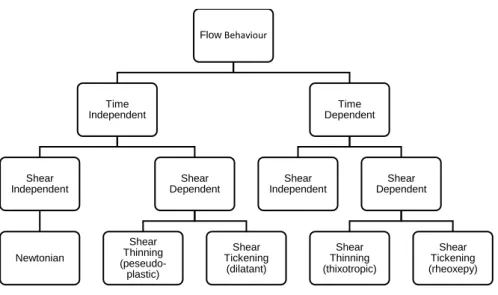
Figure 3: Types of Flow Behaviour (16)
1.2.2. Classification
The classification of the rheological modifiers can be based on a variety of schemes, including their ionic charge (anionic, cationic, non-ionic or amphoteric), their application in aqueous or solvent-based formulations, and their thickening mechanisms. Traditionally, these components are classified by their chemical nature and origin. Concerning to chemical nature, rheological modifiers can be organic or inorganic and related to the origin they can be natural, semisynthetic and synthetic.
Natural polymers are originated from plants, animals or microorganisms; they have larger chemical structures based on proteins or polysaccharides. (14) There are two types of problems related to the use of natural rheological modifiers: reproducibility, microbiological contamination and environmental contaminants. (5)
Semisynthetic rheological modifiers include modified celluloses such as carboxymethyl cellulose, methyl cellulose, hydroxyethyl cellulose, and hydroxypropyl cellulose. (15)
Synthetic rheological modifiers include more and more products, different for structure such as polyelectrolytic acrylic polymers and maleic anhydride copolymers. (5,15) It is possible to classify in acrylic derivatives, hydrocarbon derivatives, and amorphous silicas and silicates. (5)
1.3. Preservatives
1.3.1. Definition
Preservatives are natural or synthetic chemicals which are added to several products as pharmaceuticals, cosmetics and food in order to prevent microbial contamination or undesirable chemical changes. (17) The Regulation nº 1223/2009 defines preservatives as “are substances exclusively or mainly intended to inhibit the development of microorganisms
FlowBehaviour Time Independent Shear Independent Newtonian Shear Dependent Shear Thinning (peseudo-plastic) Shear Tickening (dilatant) Time Dependent Shear Independent Shear Dependent Shear Thinning (thixotropic) Shear Tickening (rheoxepy)
23 in the cosmetic product”. (18) Another purpose of the preservative addition is to prolong shelf life of the products. It is essential to add preservatives to several products, specially to those that have higher water content, because this addition avoids the alteration and the degradation by microorganisms during storage. (17)
Preservative systems consist in an association of two or more preservatives in order to obtain at the same time an antifungal and antibacterial activity to give a broader spectrum of activity.
Some preservatives, due to their limited solubility in water, are difficult to add to formulations. For this reason it is better to pre-dissolve the preservative in an opportune solvent or use liquid preservative. (19)
1.3.2. Chemico-physical Characterization
Preservatives should have ideal properties. These type of formulation components should not be irritant or toxic. They should be physical and chemical stable and compatible with other ingredients used in formulation. Preservatives should be act as good antimicrobial agent and should exert wide spectrum of activity. They should be potent in order to use small concentration. Preservatives should maintain activity throughout product manufacturing, shelf life and usage. (17)
In addition, in order to be an ideal cosmetic preservative, it should have lack of irritation and lack of sensitization, should be stable at a wide range of temperatures, pH and dilated time, should be compatible with numerous ingredients and packaging materials, should be effective against numerous microorganisms and should not have odour or colour. (20)
In Table 3, the properties of an ideal preservative are reported. However, an ideal preservative does not exist. It is always better to use an association of preservatives. (19,20)
Table 3: Properties of Ideal preservative or preservative system (19)
Property Explanation
Broad-spectrum activity The preservative kills all types of microorganisms (yeast, mould, Gram-positive and Gram-negative bacteria). In general, molecules active against bacteria are not active again yeasts and moulds and vice versa.
Effective at low concentrations Preservatives do not add a marketing value to products. In fact, they are really a form of insurance. Lower concentration levels reduce the irritation or other toxicity effects.
Water-soluble and oil-insoluble Preservatives must be actives in the water phase since microorganisms grow in the water phase or at the water-oil interface.
Stable The preservative should be stable under all temperature and pH conditions
that it could encounter during the manufacturing of our cosmetics. However, no organic compound is stable in elevated heat or extreme pH conditions.
24
Colourless and odourless Preservatives have not to add colour or odour to the product or react with other ingredients to form colours or odours.
Compatible They should be compatible with all ingredients and not lose activity in their presence.
Shelf-life activity The ideal preservative would function during the manufacturing and throughout the all life of the cosmetic.
Safety It would be safe to use.
Easy to analyse The preservative should be easy to analyse by popular analytical common methods. It would be even better to analyse for its anti-microbial activity this way. For example, it is easy to analyse paraben levels by HPLC. However, HPLC does not tell if parabens are totally inactive in the presence of Polysorbates or other inactivators.
Easy to handle The ideal preservative would be easy to handle: liquids are easier to handle than solids; flakes or non-dusting or non-caking powders are easier than solid chunks. It also should be non-flammable or non-toxic as it is shipped.
1.3.3. Classification
The classification is based on mechanism of action and source. Related to mechanism of action, preservatives can be classified as antioxidants, antimicrobial agents and chelating agents.
Firstly, antioxidants prevent oxidation of actives. Examples of these type of preservatives are vitamin E, vitamin C, butylatedhydroxyanisole (BHA) and butylatedhydroxytoluene (BHT).
Secondly, antimicrobial agents are active against Gram-positive and Gram-negative microorganisms, reason of degradation of the formulation. In addition, they are active at low concentration. Examples of antimicrobial agents are benzoates, sodium benzoate and sorbates.
Lastly, chelating agents prevent the degradation of formulation by forming a complex with other ingredients. Examples of these type of preservatives are disodium ethylenediamine tetracetic acid (EDTA), polyphosphates and citric acid.
Preservatives can also be classified as natural or artificial. In one hand, natural preservatives are obtained by natural sources such as plants, minerals, animals and others natural sources. Examples of these type of preservatives are neem oil, salt (sodium chloride), lemon and honey. Artificial preservatives are obtained by chemical synthesis and are active against various microorganisms in small concentration. Examples of these type of preservatives are benzoates, sodium benzoate, sorbates, propionets and nitrites. (17)
25
1.3.4. Mechanism of Action
The mechanism of action of a preservative is multiple and it is not always clearly identified. The bacteriostatic or bactericidal action could be affected by: destruction of the cell wall, modification of the cell membrane permeability or its destruction, denaturation of cytoplasmic or membrane proteins or enzymatic inactivation. (5)
The ethylenediaminetetra-acetic acid (EDTA) is a chelating agent which modifies the cell membrane permeability. This preservative acts in synergy with other chemical preservatives and this synergy interruptes the outer lipid layer of the cell membrane of Gram-negative bacteria. Then, the stability dependent of calcium and magnesium ions is altered, allowing more penetration of other antimicrobial agent into the bacteria cell.
A “self-preserved” formula is another method to preserve a product by using raw materials which not support the microbiological growing and optimize their relative content. Humectants like glycerin and sorbitol at specific levels decreses the water activity, increasing the formula resistance. Other ingredients have inherently antibacterial properties, contribuiting for a self-preservation of the product. Examples of these ingredients are alcohols, cationic detergents, fragance components, lipophilic acids (lauric and myristic acids), essential oils like tea tree oil or geraniol or eucalyptol. These ingredients are frequently used in cosmetic formulations. The physical factors which contribute to build a self-preserved product are pH and water activity. For example, the most of the microorganism living at pH around 5 to 8 and if the pH of the product is out of this range it is more difficult for bacteria to live. On the other hand, since water is essential for bacterial growth the decrease of water activity avoids bacterial contamination of the product. (21)
1.3.5. Microbiological Control
The microbiological control is described in Portuguese Pharmacopeia. There are five methods: microbiological examination of non-sterile products: microbial enumeration tests, microbiological examination of non-sterile products: test for specified microorganisms, efficacy of antimicrobial preservation, efficacy test of antimicrobial preservatives and microbiological quality of non-sterile pharmaceutical preparations and substances for pharmaceutical use.
In microbiological examination of non-sterile products: microbial enumeration tests, the determination of the total viable aerobic germs is performed by the membrane filtration method or by plaque determination. However, there are samples which cannot be analyzed by the membrane filtration method or by plaque determination samples. In these cases, the 'most likely number' method is used. The choice of the method depends on several factors, such as product nature and the expected number of microorganisms. All these methods are conventionally validated. These tests allow the determination of mesophilic bacteria and fungi
26 and yeasts that grown in aerobiosis. If the sample has antimicrobial activity, it is conveniently neutralized. If antimicrobial inactivators are used for this purpose, their efficacy and toxicity to the microorganisms in question is demonstrated.
For microbiological examination of non-sterile products: test for specified microorganisms, the selective media are used to specified search microorganisms. The microorganisms that have undergone subtheal lesions are not detected in any selective media. When using selective media, the procedures encompass a revival stage, since these microorganisms have an impact on the quality of the product. If the sample has antimicrobial activity, it is conveniently neutralized. The selective media for Enterobacteria and other Gram-negative bacteria,
Escherichia coli, Salmonella, Pseudomonas aeruginosa and Staphylococcus aureus. The
neutralizing agents may be added to the product in order to neutralize any antimicrobial activity. These agents may be added to the buffered peptone solution with sodium chloride, pH 7,0, preferably before sterilization. In Table 4, there is an example of a composition of a neutralizing solution. Sterilize by autoclaving at 121°C for 15 minutes. If the neutralizing power of the solution is not sufficient, the polysorbate 80 or lecithin content may be increased, or other neutralizing agents may be added, such as sodium lauryl sulfate and sodium thioglycolate.
Table 4: Composition of a neutralizing solution
Composition Quantity
Polysorbate 80 30 g
Egg yolk lecithin 3 g Histidine hydrochloride 1 g Meat or casein peptone 1 g
Sodium chloride 4,3 g
Monopotassium phosphate 3,6 g Disodium phosphate dihydrate 7,3 g
Purified water 1000 ml
In efficacy of antimicrobial preservation, preservatives are added to pharmaceutical preparations when these preparations don’t have appropriate antimicrobial activity. They have the goal to avoid microbial proliferation under normal conservation conditions because microbial contamination could present a risk of infection for the patient and deterioration of the preparation, particularly in multi-dose containers. The effectiveness of a preservative depends on the active compound of the preparation, the composition of the preparation in which it is incorporated or the container and the mode of closure adopted. In the period of validity, the antimicrobial activity is evaluated to ensure that during that period there is no change in the antimicrobial activity. During the development stage of a pharmaceutical preparation, the antimicrobial activity of the preparation itself is checked or, if necessary, demonstrated that, when added with 1 or more suitable preservatives, it provides adequate protection against the
27 harmful effects which may result from microbial contamination or proliferation during the shelf-life and use of the preparation.
The efficacy test of antimicrobial preservatives consists of the artificial contamination of the preparation, if possible in the final recipient, by the inoculation of appropriate microorganisms, keeping the seeded preparation at a suitable temperature, collecting samples from the recipient at certain time intervals and carrying out a count of the microorganisms. Preservative properties are considered appropriate when, under the test conditions and after prescribed intervals of time and temperatures, there is a significant decrease or absence of an increase in the number of microorganisms in the inoculated preparation. As regards the reduction in the number of microorganisms as a function of time, the acceptance criteria vary for the various categories of preparations according to the desired degree of protection. The tests are carried out with 1 strain at a time. The specified microorganisms are supplemented with strains or species which constitute potential contaminants of the preparation.
In microbiological quality of non-sterile pharmaceutical preparations and substances for pharmaceutical use, the manufacture, packaging, storage and distribution of pharmaceutical preparations shall be conducted in such a way as to ensure a satisfactory microbiological quality. Gels as they are local application belong to category 2. The acceptance criteria for category 2 are: a maximum of 102 viable aerobic germs (bacteria, fungi and yeasts) per gram
or milliliter; a maximum of 10 Enterobacteria or other Gram-negative bacteria per gram or milliliter; absence of Pseudomonas aeruginosa in 1,0 g or 1 ml; and absence of
Staphylococcus aureus in 1,0 g or 1 ml. (22)
1.4. Stability
Stability is referred as the absence of separation of the dispersion over a period of time. It is necessary to distinguish between colloidal stability from physical/mechanical instability. In colloidal stability, particles do not aggregate over the time and in physical/mechanical instability, the particles or droplets tend to sediment or cream under gravity over a period of storage. In this case, the particles or droplets may show no aggregation and the gravity force exceeds the Brownian motion.(23)
There are several theories which explain the stability of formulations. Firstly, it is necessary to define Stern layer. In the Stern layer, ions with opposite charge stay together around the charged surface. However, since the charge on the surface is not completely balanced, a second region, called the diffuse layer, balances the surface charge. (24)
In the 1940’s, some scientists developed a theory about the stability of a colloidal system. This theory was called DLVO based on the attractive and repulsive forces present in a dispersion. (11,25,26) The total force between colloidal particles is obtained by adding together
28 the Van der Waals and electrical double layer forces. (25) The DLVO theory supposes that the dispersion as a diluted sample and that only two forces affect the dispersed particles: attractive and repulsive electrostatic forces. The electric charge and other properties are uniformly distributed over the solid surface and electrostatic forces, Brownian motion and entropy considerations determine the distribution of charged domains. Therefore, the DLVO theory explains the interaction between two particles as they approach each other.
Moreover, colloidal stability is then influenced by the energy of the attractive interaction due to Van der Waals forces and the energy of the repulsive electrostatic interaction. The particle energy can be expressed in according to Equation 1:
𝑉𝑇 = 𝑉𝐴+ 𝑉𝑅 (1)
where 𝑉𝐴 represents the attractive forces, 𝑉𝑅 the repulsive electrostatic interaction and 𝑉𝑇 the
particle energy. (11,26)
For spherical particles, the Van der Walls attractive energy is inversely related to the distance between the particles, while the electrostatic repulsive energy declines exponentially with distance. Usually, when the particles are at long distances from each other, a permanent phenomenon of coalescence/aggregation of the droplets/particles does not occur because the particles experience a minimal attraction. When the particles undergo an attraction at defined distances from 10 to 20 nm, form aggregates (secondary minimum in Figure 4) known as flocs, occurring then flocculation, reversible phenomenon.
The particles begin to experience some repulsion as they approach each other (primary maximum in Figure 4). The intensity of the force in the maximum primary determines whether the system will stay flocculated as it is. If the interaction energy at the primary maximum is high, the colloidal particles are stable and show no tendency to flocculate. If the energy of the interaction at the primary maximum is low, the particles can be forced together. This barrier may be overcome if the kinetic energy of the dispersion resulting from the normal thermal motion is sufficient for such. The particles will coalesce/aggregate permanently if the interaction energy reaches the primary minimum due to the separation of the particles sufficient for such (Figure 4). (24,26)
Summering, the balance of attractive and repulsive forces between the dispersed particles will determine whether flocculation/aggregation will occur. Repulsive interactions (which may be of electrostatic origin) between dispersed particles, which can be electrostatic origin, should be introduced in order to form a stable colloid. (26)
29
Figure 4: Variation in energy of the interaction between two particles as a function of distance (26)
DLVO theory are not able to explain all coagulation phenomena in natural colloidal systems because interactive forces and electrostatic repulsion, such as hydration, contribute also to maintain the system stability. Moreover, Gregory et al separated DLVO forces, such as Van der Waals force and electrostatic repulsion, from non-DLVO forces, such as hydration and hydrophobic interaction.
According to the DVO theory, before the collision and aggregation occur the potential energy barrier between particles must be reduced or removed. The addition of coagulant in water is a possible strategy to increase the concentration of counterions, which compresses the diffused electrical double-layer, lowering the surface potential and the energy barrier. The charge valence of the metal ions of the coagulant and the dosage are related to the compression of the electrical double-layer. The higher charge valence of the coagulant ion, less required dosage. Consequently, Al+3 and Fe+3 are better than Ca+2 and Na+ in the electrical
double-layer compression. (27)
Similarly, Schulz-Hardy rule claims that the valence of ions having a charge opposite that of the hydrophobic particle determines the efficacy of the electrolyte on the aggregated particles. The value of aggregation for the efficiency increases with the increasing of the ions valence. The divalent ions are ten times more effective than monovalent ions whereas trivalent ions are thousand times more efficient than monovalent ions. Schulz-Hardy rule is only valid for systems in which there is no chemical interaction between the electrolyte that aggregates and the ions of the double layer of the surface of the particle. It should be noted that the forces promoting the aggregation are enough to overcome the electrostatic repulsion between the particles having identical charges. Concerning to the electrolyte solutions, a satisfactory aggregation is achieved at approximate concentrations of ions: from 25 to 150 mmol/l for monovalent ions, from 0,5 to 2 mmol/l for divalent ions and from 0,01 to 0.1 mmol/l for trivalent ions. The influence of ion valence and concentration on the aggregation of a suspended lyophobic particle can be determined experimentally by measuring the zeta potential change