Corresponding Author: www.eerp.usp.br/rlae
Corresponding Author: Silvia Rita Marin da Silva Canini
Universidade de São Paulo. Escola de Enfermagem de Ribeirão Preto Departamento de Enfermagem Geral e Especializada
Av. dos Bandeirantes, 3900 Bairro: Monte Alegre
CEP: 14040-902, Ribeirão Preto, SP, Brasil E-mail: [email protected]
Evaluation of the sensitivity and specificity of criteria for isolation of
patients admitted to a specialized cancer hospital
Caroline Cataneo
1Silvia Rita Marin da Silva Canini
2Paulo de Tarso Oliveira e Castro
3Miyeko Hayashida
4Elucir Gir
5Early isolation of patients possibly colonized by multi-resistant microorganisms can minimize
their spread, reducing cases of hospital infection and the related costs. This study aimed to
identify the sensitivity and specificity of the criteria for isolation of patients admitted to a
specialized cancer hospital. Cross-sectional study with a population of 61 patients coming from
other hospitals who were admitted to the hospital between March 1st and August 31th, 2009. At
the moment of admission, a data collection instrument was filled out and nasal and anal swabs
were collected for microbiological culture. Of the 56 patients who met the isolation criteria, 30
(49.2%) presented positive cultures for multi-resistant microorganisms and methicillin-resistant
Staphylococcus aureus was the most frequently identified microorganism. Most patients colonized
by multi-resistant microorganisms were isolated at the moment of admission. The sensitivity of
the isolation criteria was 90% and the specificity was 6.5%.
Descriptors: Hospital Infection; Drug Resistance, Microbial; Patient Isolation; Nursing.
1 RN, Hospital de Câncer de Barretos, SP, Brazil. Master’s Student, Escola de Enfermagem de Ribeirão Preto, Universidade de São Paulo, WHO
Collaborating Centre for Nursing Research Development, SP, Brazil. E-mail: [email protected].
2 RN, Ph.D. in Nursing, Professor, Escola de Enfermagem de Ribeirão Preto, Universidade de São Paulo, WHO Collaborating Centre for Nursing
Research Development, SP, Brazil. E-mail: [email protected].
3 Infectious Disease Physician, Hospital de Câncer de Barretos, Brazil. E-mail: [email protected].
4 RN, Ph.D. in Nursing, Escola de Enfermagem de Ribeirão Preto, Universidade de São Paulo, WHO Collaborating Centre for Nursing Research
Development, SP, Brazil. E-mail: [email protected].
5 RN, Ph.D. in Nursing, Full Professor, Escola de Enfermagem de Ribeirão Preto, Universidade de São Paulo, WHO Collaborating Centre for
Avaliação da sensibilidade e da especiicidade dos critérios para
isolamento de pacientes admitidos em um hospital especializado em oncologia
O isolamento precoce de pacientes, possivelmente colonizados por microrganismos multirresistentes, pode minimizar sua disseminação, reduzindo os casos de
infecção hospitalar e os custos associados. O objetivo deste estudo foi identiicar a sensibilidade e especiicidade dos critérios para isolamento de pacientes admitidos num hospital especializado em oncologia. Como método, usou-se o estudo transversal.
A população foi composta por 61 pacientes, admitidos no período de 1º março a 31 de agosto de 2009, e procedentes de outros hospitais. Foi preenchido instrumento de coleta de dados no momento da admissão e colhidas amostras da região nasal e anal para cultura microbiológica. Os resultados mostraram que, dos 56 pacientes que
preencheram os critérios de isolamento, 30 (49,2%) tiveram culturas positivas para
microrganismos multirresistentes e o Staphylococcus aureus resistente à oxacilina foi
o mais frequentemente identiicado. A maioria dos pacientes colonizados foi isolada no momento da admissão. Conclui-se que a sensibilidade dos critérios para isolamento foi de 90% e a especiicidade de 6,5%.
Descritores: Infecção Hospitalar; Resistência Microbiana a Medicamentos; Isolamento de Pacientes; Enfermagem.
Evaluación de la sensibilidad y especiicidad de los criterios para
aislamiento de pacientes admitidos en un hospital especializado en oncología
El aislamiento precoz de pacientes posiblemente colonizados por microorganismos multirresistentes puede minimizar su diseminación, reduciendo los casos de infección
hospitalaria y los costos asociados. El objetivo de este estudio fue identiicar la sensibilidad y especiicidad de los criterios para aislamiento de pacientes admitidos en un
hospital especializado en oncología. Se trata de un estudio transversal cuya población fue compuesta por 61 pacientes admitidos en el período de 01 marzo a 31 de agosto de 2009 y procedentes de otros hospitales. Fue llenado un instrumento de recolección de datos en el momento de la admisión y recogidas muestras de la región nasal y anal para cultura microbiológica. De los 56 pacientes que llenaron los criterios de aislamiento, 30(49,2%) tuvieron culturas positivas para microorganismos multirresistentes y el Staphylococcus aureus resistente a la oxacilina fue el más frecuentemente identiicado. La mayoría de los pacientes colonizados fue aislada en el momento de la admisión. La sensibilidad de los criterios para aislamiento fue de 90% y la especiicidad de 6,5%.
Descriptores: Infección Hospitalaria; Farmacorresistencia Microbiana; Aislamiento de Pacientes; Enfermería.
Introduction
The gradual increase in microorganisms’ resistance to antimicrobials used in clinical practice has effectively contributed for hospital infection to be considered a public health problem, not only in Brazil, but in most countries around the world(1).
Risk factors for catching hospital infections can be endogenous, such as age, use of immunosuppressors, antimicrobials and chemotherapy, nutritional status, presence of chronic illness, prolonged hospitalization, baseline disease, among others: or exogenous factors like cross-infection, invasive procedures, use of contaminated materials and equipment, low adherence to hand washing, inadequate environmental cleaning and disinfection, presence of vectors like insects and rodents(3).
In cancer patients, risk factors can overlap as, besides the immune suppression the disease itself causes, they are submitted to surgical treatment, chemotherapy and/or radiotherapy. Chemotherapy-induced neutropenia represents one of the main infection risks in this population(4).
According to the National Health Surveillance Agency (ANVISA), about 10% of hospitalized patients are infected due to invasive procedures and/or immune suppressing therapy. Patients with a positive culture
for resistant microorganisms deined according to
each hospital’s criteria and who do not give signs of an infectious process are considered colonized by multi-resistant microorganisms, while patients with a positive culture and infectious signs are considered infected(5).
The bacteria that commonly cause illnesses in immune suppressed patients are the same that affect immune competent people. Gram-positive bacteria are responsible for 60 to 70% of infection episodes microbiologically documented in neutropenic patients and the most frequent microorganisms are coagulase-negative staphylococcus and vancomycin resistant enterococcus(6).
Infectious complications in oncology patients
tend to be severe and potentially fatal, which justiies
prevention and control measures. According to the Guideline “Management of multidrug-resistant organisms in healthcare settings”(7), the interventions recommended for multi-resistant microorganism control in health services are grouped in seven categories, which are: administrative support, judicious use of antimicrobials, routine surveillance, use of standard and contact precautions, environmental measures and decolonization.
Active surveillance has been appointed as an important component of multi-resistant microorganism control programs, as it permits the early detection of emerging microorganisms, monitoring of epidemiological
trends and verifying the eficacy of the adopted
interventions. Various strategies have been used to
detect asymptomatic colonization, including material
collection for surveillance culture and, more recently, the use of predictors, aka clinical criteria, such as hospitalization time, use of antibiotics therapy and previous hospitalization at an intensive care unit(7-8).
Surveillance culture has been appointed as the most sensitive approach to identify colonized patients. Some studies recommend its accomplishment in all
hospital-admitted patients, independently of risk criteria assessments(9-10). The time spent on microbiological tests and the high cost of this procedure, however, have hampered the practice of this routine at most hospitals. Therefore, the use of clinical criteria is a promising and less costly option in comparison with surveillance cultures(8).
In view of this panorama, the present study was
accomplished to identify the sensitivity and speciicity
of isolation criteria for patients admitted to a specialized cancer hospital. The researchers hope this kind of studies can contribute to put in practice contact precautions during patient admission to health institutions.
Material and Method
A cross-sectional study was developed at Hospital de Câncer de Barretos -São Paulo, which is a specialized cancer hospital and considered a national referral institution for cancer treatment.
Approval for the research project was obtained from the hospital’s Institutional Review Board (process No
180/2008). Subjects who agreed to participate signed the Informed Consent Term.
The study population comprised 61 patients aged 18 years or older, hospitalized between March 1st and August 31st 2009, who were previously hospitalized in other institutions.
Two instruments were elaborated for data collection,
the irst to collected demographic data (age and
gender), clinical data like hospitalization type, baseline illnesses and presence of invasive procedures, besides the following clinical criteria: previous hospitalization at another health institution and/or intensive care center and/or previous use of antimicrobials at the hospital
of origin and/or cutaneous injury or surgical wound containing purulent exudate. The second instrument served to collect microbiological data.
of multi-resistant microorganisms. The protocol involves the establishment of contact precautions and nasal and anal swab collection for patients who attended to one of the above described clinical criteria. Nurses at the institution have been trained to apply the protocol and are responsible for assessing each patient, upon admission, for the indication of contact precautions and for swab collection.
The microbiology laboratory and the HICS deined
the following resistant microorganisms: methicillin resistant Staphylococcus aureus, Extended-Spectrum
Beta Lactamase (ESBCL) producing Escherichia coli and ESBL producing Klebsiella spp, Pseudomonas aeruginosa and Acinetobacter spp resistant or sensitive to meropenem or imipenem only, vancomycin resistant
Enterococcus faecalis and Enterococcus faecium. The primary researcher collected demographic and clinical data and microbiological results. The database was structured and analyzed through Statistical Package Social Science (SPSS), version 17.0 for Windows. To check the accuracy of isolation conducts upon admission,
sensitivity and speciicity ratios were calculated for the
clinical criteria. Sensitivity refers to the test’s ability to correctly identify individuals with a certain condition or
illness and speciicity to the test’s ability to correctly
identify individuals without a certain condition or illness.
Results
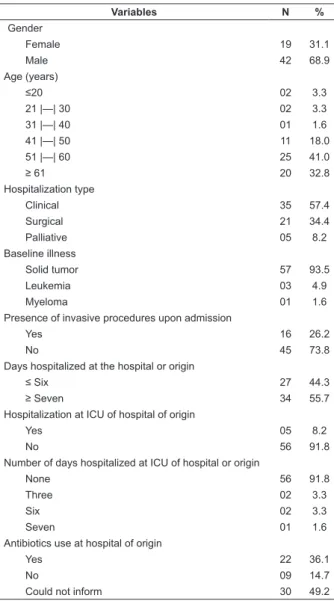
Table 1 shows the patients’ distribution according to demographic and clinical variables. Out of 61 patients, 42 (68.9%) were male. The mean age was 56.8 years (sd=15.1), median 56 years, range from 18 to 86 years. Most patients (57.4%) were hospitalized for clinical reasons, with a solid tumor (93.5%) and, in some patients (26.2%), invasive procedures were present upon admission.
Regarding the clinical criteria, 55.7% had been hospitalized for seven days or more at common wards, 8.2% at intensive care units and 36.1% had been taking antibiotics therapy. It is highlighted that 49.2% of patients could not tell whether they had taken antibiotics or not and/or their health records showed no record of these.
Table 1 – Distribution of patients admitted to Hospital de Câncer de Barretos, coming from other hospitals (n=61), according to clinical and demographic characteristics and clinical criteria, Barretos, SP, Brazil, 2009
Variables N %
Gender
Female 19 31.1
Male 42 68.9
Age (years)
≤20 02 3.3
21 |—| 30 02 3.3
31 |—| 40 01 1.6
41 |—| 50 11 18.0
51 |—| 60 25 41.0
≥ 61 20 32.8
Hospitalization type
Clinical 35 57.4
Surgical 21 34.4
Palliative 05 8.2
Baseline illness
Solid tumor 57 93.5
Leukemia 03 4.9
Myeloma 01 1.6
Presence of invasive procedures upon admission
Yes 16 26.2
No 45 73.8
Days hospitalized at the hospital or origin
≤ Six 27 44.3
≥ Seven 34 55.7
Hospitalization at ICU of hospital of origin
Yes 05 8.2
No 56 91.8
Number of days hospitalized at ICU of hospital or origin
None 56 91.8
Three 02 3.3
Six 02 3.3
Seven 01 1.6
Antibiotics use at hospital of origin
Yes 22 36.1
No 09 14.7
Could not inform 30 49.2
Table 3 shows data for nasal swab results when the patient was admitted to hospital. The most prevalent microorganism was Staphylococcus aureus, present in 19 (31.1%) patients, only one (1.6%) had been
colonized with ESBL producing Klebsiella spp.
As for anal swab results, the most frequently
identiied microorganisms were Staphylococcus aureus
in 20 (32.8%) patients, followed by ESBL producing
Escherichia coli in four (6.6%), ESBL producing
Klebsiella spp in three (4.9%) and vancomycin resistant
Enterococcusfaecalis in one (1.6%).
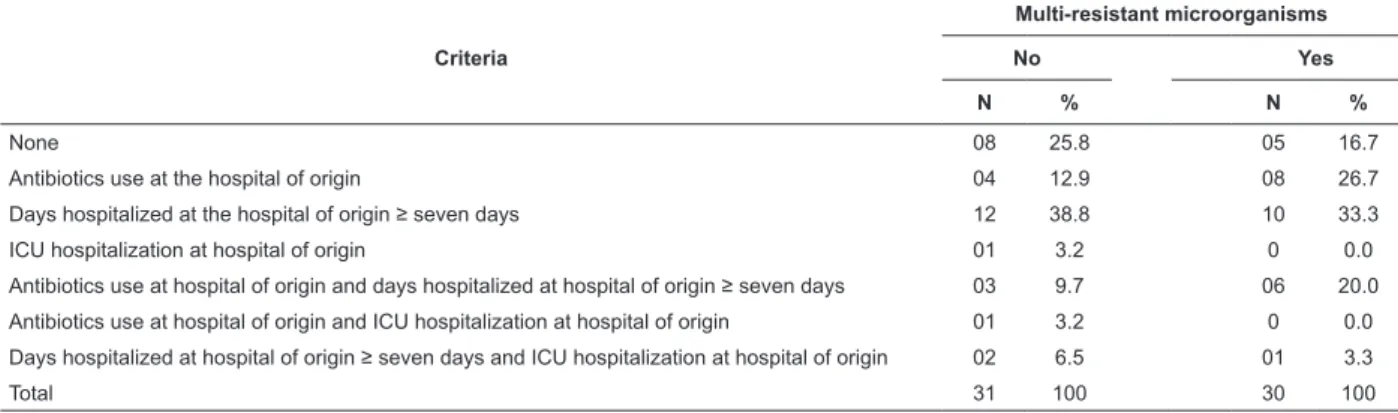
Table 2 – Distribution of patients admitted to Hospital de Câncer de Barretos, coming from other hospitals with a positive culture or not for multi-resistant microorganisms, according to clinical criteria for the establishment of contact precautions, Barretos, SP, Brazil, 2009
Criteria
Multi-resistant microorganisms
No Yes
N % N %
None 08 25.8 05 16.7
Antibiotics use at the hospital of origin 04 12.9 08 26.7
Days hospitalized at the hospital of origin ≥ seven days 12 38.8 10 33.3
ICU hospitalization at hospital of origin 01 3.2 0 0.0
Antibiotics use at hospital of origin and days hospitalized at hospital of origin ≥ seven days 03 9.7 06 20.0
Antibiotics use at hospital of origin and ICU hospitalization at hospital of origin 01 3.2 0 0.0
Days hospitalized at hospital of origin ≥ seven days and ICU hospitalization at hospital of origin 02 6.5 01 3.3
Total 31 100 30 100
Table 3 – Distribution of patients admitted to Hospital de Câncer de Barretos, coming from other hospitals (n=61), according to presence of multi-resistant microorganism isolated from nasal and/or anal swab, Barretos, SP, Brazil, 2009
Microorganism
Nasal swab Anal swab
N % N %
Methicillin resistant Staphylococcus
aureus 19 31.1 20 32.8
ESBL producing Klebsiella spp 01 1.6 03 4.9
ESBL producing Escherichia coli 0 0.0 04 6.6
Vancomycin/teicoplanin resistant
Enterococcus faecalis 0 0.0 01 1.6
As observed in Table 4, the sensitivity and
speciicity of the clinical criteria adopted to establish
contact precautions for patients coming from other health institutions who were admitted to Hospital de Câncer de Barretos corresponded to 90.0% and 6.5%, respectively.
Regarding the ive patients who did not attend to the
criteria to establish contact precautions upon admission,
three patients showed a positive swab for multi-resistant microorganisms, requiring the establishment of contact precautions.
Table 4 – Sensitivity and speciicity of clinical criteria for
the establishment of standard precautions for patients admitted to Hospital de Câncer de Barretos coming from other hospitals, Barretos, SP, Brazil, 2009
Clinical criteria upon admission
Multi-resistant microorganisms
Yes (n=30) No (n=31)
N % N %
No 03 10.0 02 6.5
Yes 27 90.0 29 93.5
Discussion
The control of multi-resistant microorganisms is a current and pertinent theme, given the increasing
evolution of microbial resistance, turning it into an increasing global problem, as the pharmaceutical industry does not manage to accompany the evolution
in this resistance. The clinical criteria investigated in this study are appointed as risk factors for catching multi-resistant microorganisms(11-12).
The criterion previous use of antimicrobials
is an important risk factor to catch multi-resistant microorganisms. The effect of this variable could not be assessed though, as 30 (49.2%) patients could not
inform whether they took antibiotics at the hospital or origin or this information had not been registered in the
health ile upon admission.
(55.7%) attended to this criterion. This data conirms
that previous hospitalization is an important risk factor for colonization by multi-resistant microorganisms as, the longer the person stays in the hospital environment, the greater the possibility of catching and/or disseminating these microorganisms(13).
A study(12) that investigated risk factors for colonization by vancomycin resistant Enterococcus
(VRE) identiied that exposure to hospital environments,
prolonged hospitalizations, ICU hospitalizations, presence of an onco-hematological disease, chemotherapy, kidney failure patients undergoing hemodialysis, transplanted, immune suppressed patients and patients using intravenous catheters were the most frequent factors.
It is highlighted that the risk factor hospitalization at an intensive care unit in the hospital of origin was
identiied in ive (8.2%) patients, one of whom showed a
positive culture for multi-resistant microorganisms. Intensive care units concentrate the highest incidence rates of hospital infections and are considered epicenters for the emergence of microbial resistance due to the hospitalization of severe patients. In most cases, those patients take broad-spectrum antibiotics and are submitted to countless invasive procedures.
A study(14) that investigated risk factors for hospital infection at an intensive care unit of a teaching
hospital identiied that patients previously hospitalized
at ICU were at a 1.93 (CI: 1.48-2.49) higher risk of developing infections in comparison with patients coming from the community. Patients colonized by resistant microorganisms developed high infection rates (61.6%) and a Relative Risk of 9.5 (CI: 7.7-11.7; p<0.05) in comparison with patients not colonized by resistant microorganisms. The most frequently isolated microorganisms were Acinetobacter baumanni (36.3%),
Pseudomonas aeruginosa (21.9%), methicillin resistant
Staphylococcus aureus (14.7%), Klebsiella pneumonia
(11%) and Escherichia coli (7.8%). Hence, patients from this unit continue as an important reservoir of multi-resistant microorganisms and can disseminate them to other patients at the same unit, to other hospital sectors or, also, to other health institutions.
As for invasive procedures, 11 patients (18%) were using a peripheral venous catheter and four (6.6%) an indwelling urinary catheter upon admission. Although these were not part of clinical criteria for the establishment of contact precautions, intravenous catheter use was appointed as one of the most frequent risk factors for colonization by vancomycin resistant
Enterococcus (VRE)(15).
Regarding patients’ nasal and anal swab results during hospitalization, it is highlighted that methicillin resistant Staphylococcus aureus (MRSA) was the most frequent in both nasal (31.1%) and anal sways (32.8%),
followed by ESBL producing Klebsiella spp. (1.6% in nasal and 4.9% in anal swabs), vancomycin/teicoplanin resistant Enterococcus faecalis (1.6%) in anal swabs and E.coli in anal swabs (6.6%)
In the last two decades, MRSA turned into the most prevalent and important resistant microorganism causing hospital infections. Besides the persistent trend, it also involves additional classes of antimicrobials, such as glycopeptides(16).
Patients colonized by MRSA are at greater risk of developing an infection by this microorganism at a later stage. A study(17) that investigated colonization upon admission and during hospitalization evidenced that 19% of patients colonized by MRSA upon admission and 25% of those colonized during hospitalization developed infection by this microorganism.
In this study, only one patient (1.6%) tested positively for vancomycin/teicoplanin resistant
Enterococcus faecalis (VRE). A study that investigated risk factors for rectal colonization by VRE showed that, although immune suppression, neutropenia and cancer as the baseline disease were more frequent in the colonized group, these variables showed no statistically
signiicant relation with the colonization status. Previous
use of antibiotics therapy, however, was associated with the acquisition of this microorganism, mainly the use of vancomycin and third-generation cephalosporins(12).
Nevertheless, the prevalence of ESBL producing Klebsiella has been low, corresponding to 1.6% and 4.9% in nasal and anal swabs, respectively. A case-control study(18) identiied that 55.6% of isolated cultures of Klebsiella pneumoniae and 9.4% of isolated cases of
E.coli were ESBL producing and that total mortality within 60 days was signiicantly higher among ESBL producing
isolated cultures, evidencing the need for measures to prevent these micro-organisms.
The prevention and control of multi-resistant microorganisms represents one of the main challenges for Hospital Infection Control Services. Health institutions have used different control measures and some European countries have managed to maintain low MRSA prevalence rates through the adoption of active surveillance cultures and the establishment of contact precautions(19).
90% and the speciicity 6.5%. It is highlighted that, out of eight patients who did not attend to isolation criteria
upon admission, ive (16.5%) showed positive results for
multi-resistant microorganisms. Thus, it can be inferred that, probably, these patients used antibiotics but could
not inform this.
The introduction of a set of intervention, particularly
active surveillance, the establishment of standard precautions and rapid testing to detect colonization reduced MRSA-caused bacteremia cases by 70%(20). The
surveillance culture for MRSA was considered effective
though, and its cost justiied, when adopted at
high-risk units, which contributes to decrease MRSA infection rates at the hospital(21). On the other hand, the use of
clinical criteria to isolate patients colonized by MRSA and VRE showed to be effective and cheaper in comparison
with the surveillance culture(8).
It is highlighted that the early identiication of
colonized patients enhances the adoption of preventive
measures to avoid multi-resistant microorganism dissemination in hospitals. Contact precaution
measures are very well-deined, but still have not been
fully incorporated into different health institutions’
practice(22).
Knowledge deiciencies on transmission
mechanisms of multi-resistant microorganisms can contribute to low adherence to isolation measures(23).
A study(24) that investigated professionals’ knowledge and behavior at an intensive care center regarding the
adoption of contact precautions identiied that nursing
professionals presented approximately four times more chance (OR=3.58; CI 1.48-8.68) of adequate behaviors
in comparison with other health professionals and that
no statistically signiicant association existed between
knowledge and behavior (p=0.196).
Not only the nursing team should adopt preventive
measures for multi-resistant microorganisms, as other professional categories have actively participated in care delivery to hospitalized patients.
Despite limitations regarding the non-assessment of the antibiotic spectrum the patients used, previous
hospitalization within six months before the current one, neutropenia intensity and duration, type of chemotherapy
and presence of co-morbidities, the study permitted identifying that the sensitivity of the hospital’s criteria for
the establishment of contact precautions was 90%, i.e. most patients with positive cultures for multi-resistant
microorganisms were isolated upon admission.
Conclusion
This study reinforces the importance of adopting clinical criteria to admit patients from other hospital with a view to the prevention and control of multi-resistant microorganisms, as the sensitivity of the hospital’s criteria for the establishment of contact precautions was 90%. Also, further research is needed on other possible
risk factors for this speciic clientele’s colonization.
References
1.Organização Mundial de Saúde (OMS). Vencendo a resistência microbiana. World health report on infections disease - 2000.[acesso 20 março 2010].Disponivel em:http://www.ccih.med.br/vencendoresistencia.html 2. Wernitz MH, Keck S, Swidsinski S, Veit SK. Cost analysis of a hospital-wide selective screening programme for methicillin-resistant Staphylococcus aureus (MRSA) carriers in the context of diagnosis related groups (DRG) payment. Clin Microbiol Infect. 2005;11(6):466-71.
3. Ministério da Saúde (BR). Portaria nº 2.616 de 26 de
maio de 1998, que regulamenta as ações de controle de
infecção hospitalar no país. Brasília(DF): Ministério da
Saúde;1998.
4.Cavalcante NJF. Infecção em paciente imunologicamente comprometido. In: Fernandes AT. Infecção hospitalar e suas interfaces na área da saúde. São Paulo (SP): Atheneu; 2000. p. 670-82.
5.Agência Nacional de Vigilância Sanitária (ANVISA) (BR).
Investigação e controle de bactérias multirresistentes.
Brasília (DF); 2007. 21 p.
6. Mendes AV, Sapolnik R, Mendonça N. New guidelines for the clinical management of febrile neutropenia and sepsis in pediatric oncology patients. J Pediatr.2007;63(2): 54-63.
7. Siegel JD, Rhinehart E, Jackson M, Chiarello L.
Management of multidrug-resistant organisms in heslthcare settings. 2006. [acesso 6 jun 2009]. Disponível em: http://www.cdc.gov/ncidod/dhqp/pdf/ ar/mdroGuideline2006.pdff.
8. Morgan DJ, Day HR, Furuno JP, Young A, Johnson JK, Bradham DD et al. Improving efficiency in active surveillance for methicillin-resistant Staphylococcus aureus or vancomycin-resistant Enterococcus at hospital admission. Infect Control Hosp Epidemiol. 2010;31(12):1230-5.
9. Lucet JC, Chevret S, Durand-Zaleski I, Chastang C;
to the intensive care unit: results of a multicenter study. Arch Intern Med. 2003;163(2):181-8.
10. Furuno JP, McGregor JC, Harris AD, Johnson JA,
Langenberg P, Venezia RA, et al. Identifying groups at
high risk for carriage of antibiotic-resistant bacteria. Arch Intern Med. 2006;166(5):580-5.
11. Hidron AI, Kourbatova EV, Halvosa JS, Terrel B
J, McDougal LK, Blumberg HM et al. Risk factors for
colonization with methicillin-resistant Staphylococcus aureus (MRSA) in patients admitted to an urban hospital: emergence of community-associated MRSA nasal carriage. Clin Infect Dis. 2005;41(2):159-66. 12. Askarian M, Afkhamzadeh R, Monabbati A, Daxboeck F, Assadian O. Risk factors for rectal colonization with vancomycin-resistant enterococci in Shiraz, Iran. Int J Infect Dis. 2008;12(2):171-5.
13. Ferrareze MVG, Leopoldo VC, Andrade D, Silva
MFI, Haas VJ. Multi-resistant Pseudomonas aeruginosa among patients from an intensive care unit: persistent challenge? Acta Paul. Enferm.2006;20(1):7-11.
14. Oliveira AC, Kovner CT, Silva RS. Infecção hospitalar em unidade de tratamento intensivo de um hospital
universitário brasileiro. Rev. Latino-Am. Enfermagem.
2010;18(2):233-9.
15. Centinkaya Y, Falk P, Mayhall G. Vancomycin-resistant enterococci. Clin Microbiol Rev. 2000;13(4):686-707. 16. Solberg CO. Spread of Staphylococcus aureus
in hospitals: causes and prevention. Scand J Infect Dis.2000;32(6):587-95.
17. Davis KA, Moran KA, McAllister CK, Gray PJ. Multidrug-resistant Acinetobacter extremiliy infections in soldiers. Emerg Infect Dis.2005;1(8):1218-24.
18. Superti S V, Augusti G, Zavascki AP. Fatores de risco
e mortalidade de infecções da corrente sanguínea por Klebsiella pneumoniae and Escherichia coli produtores de beta-lactamase de espectro estendido. Rev Inst Med Trop São Paulo. 2009;51(4):211-6.
19. Muto CA, Jernigan JA, Ostrowsky BE, Richet HM, Jarvis WR, Boyce JM, Farr BM. SHEA guideline for preventing nosocomial transmission of multidrug-resistant strains of
Staphylococcus aureus and enterococcus. Infect Control Hosp Epidemiol. 2003; 24(5):362-86.
20. Chowers MY, Paitan Y, Gottesman BS, Gerber B, Ben-Nissan Y, Shirit P. Hospital-wide methicillin-resistant
Staphylococcus aureus control program: a 5 year follow-up. Infect Control Hosp Epidemiol. 2009;30(8):778-81. 21. Clancy M, Graepler MT., Wilson M, Douglas I, Johnson J, Price CS. Active screening in high-risk unitis is an efecctive and cost-avoidant method to reduce
the rate of methicillin-resistant Staphylococcus aureus
infection in the hospital. Infect Control Hosp Epidemiol. 2006;2(10):1009-17.
22. Nichiata LYI, Gir E, Takahashi RF, Ciosak SI.
Evolução dos isolamentos em doenças transmissíveis: os saberes na prática contemporânea. Rev Esc Enferm USP. 2004;38(1):61-70.
23. Moura JP, Gir E. Conhecimento dos profissionais de enfermagem referente à resistencia bacteriana a múltiplas drogas. Acta Paul Enferm. 2007;20(3):351-6. 24. Oliveira AC, Cardoso CS, Mascarenhas D. Conhecimento e comportamento dos profissionais de um centro de terapia intensiva em relação à adoção das
precauções de contato. Rev. Latino-Am. Enfermagem.
2009;17(5):625-31.
Received: June 7th 2010