_____________________________ *)
Corresponding author: [email protected]
doi: 10.2298/SOS0802207L
UDK 66.09:57.012.3:662.785
Effect of Cu Addition and Heat Treatment Self-Propagating
High Temperature Synthesis Reaction in Al-Ti-C System
Y.X. Li, J.D. Hu, Y.H. Liu, Z.X Guo
*)Jilin University, College of Materials Science and Engineering, The Key Lab of
Automobile Materials, Ministry of Education, Renmin Street No.5988, Changchun
130025, PR China
Abstract:
Effect of Cu addition and heat treatment on the self-propagating high temperature synthesis reaction have been investigated. The results show that Cu reacts with Al to form Al2Cu phase. With the addition of Cu, the combustion temperature of the system decreases and the porosity of the products is reduced, the size of TiC particulate decreases in the SHS reaction products. Specially, when heat treatment is carried out for the sintering products at 800 ◦C, the rigid framework (sintering neck) between TiC particles was formed.
Keywords: Laser ignition; SHS; Combustion temperature; Microstructure; Densification;
Heat treatment.
1. Introduction
of the Al-Ti-C system by using a water-quenched experiment and suggested that the synthesis of TiC is a solution-precipitation mechanism. Due to its high electrical and thermal conductivities, Cu has been used in the power industry, electric industry and engineering industry. Ceramic particulate reinforced Cu matrix composites have attracted wide interest in recent years [13]. These materials exhibit a combination of excellent thermal and electrical conductivities, high strength retention at elevated temperatures, and high microstructural stability [14]. However, research efforts on the effect of Cu addition on the SHS reaction in the Al-Ti-C system are rather limited. The purpose of the present work is to investigate the effect of Cu addition and heat treatment on porosity, microstructure and phase analysis of Ti-C-Al reacting product.
2. Experimental
The characteristics of the powders used in the present study are listed in tab. I. The green compacts were made from commercial powders of 30 wt. % aluminum, 0, 6wt. % Cu, and titanium and graphite powders at a ratio corresponding to that of stoichiometric of TiC. First, the powders were mixed by dry milling with steel balls for 2h and the blends were pressed into compacted samples. The length of the compact was 65 mm, the width was 10 mm and the thickness was 10 mm. The compacts were pressed at pressures of 100 MPa to give densities of (65 ± 5) % theoretical density, and a small hole was drilled against outside of the compact, and one end of the thermocouple (W-5% Re/W-26Re) of 0.005 inches in diameter (welded under flowing argon atmosphere) was inserted into the hole and the other end was linked to the temperature recorder equipment. The compacts were ignited at one end by laser irradiation using 5 kW CO2 laser (HJ-4) with a fixed wavelength of 10.6 μm, then shut off immediately and a combustion wave self-propagated through the compact, at the same time, the temperature-time profiles of the combustion reaction were recorded with one temperature recorder equipment. The laser processing parameters in this study were selected as follows: laser power 1.4 kW, rectangular laser beam 10×10mm.
Tab. I.Characteristics of Al, C, Ti and Cu powders.
Reagent Density (g/cm3) particle size (μm) Purity (%)
Al
2.7
29
C
2.62
38Ti
4.5
15Cu
8.96
3898.00 99.99 99.50 99.50
3. Results and Discussion
3.1. Reaction temperature-time profiles
On account of the strong exothermic heat and high combustion temperature of Al-C-Ti system, combustion can be initiated by heating one side of the compacts. The temperature–time profiles were obtained by placing a thermocouple at the center-line of the compact during the combustion wave propagation. When the combustion wave approaches the thermocouple, the curve indicates a very small increase, once the exothermic reaction propagates near to the location of the thermocouple, an abrupt rise in temperature is noticed. Actually, the time scale in the temperature–time profiles corresponds to two stages (the ignition time and the combustion time). The time from heating to the occurrence of SHS reaction which corresponded to a large numbers of TiC is called ignition time. Therefore, the time through the plateau in the temperature–time profiles is the ignition time.
Fig.1 Temperature-time history of the center of compacts during laser induced self propagating high temperature synthesis reaction.
During this time, the preforms are heated by the heat source without the occurrence of a reaction. The abrupt increase of the temperature represents the arrival of the flame-front. The time corresponding to the abrupt increase of the temperature is the combustion time. During this time, the exothermic reactions occur and the combustion wave propagates. After that, the sample cools down as indicated by the decrease in temperature with increasing time. Fig.1 shows the temperature-time history of the center of compacts during the laser induced self-propagating high temperature synthesis reaction. The results show that the addition of Cu to the reactants increases the ignition temperature, and decreases the combustion temperature. The ignition time increases with the addition of Cu. This is due to the decreased heat generation rate.
3.2. Effect of Cu addition on densification
%,
100
1
0×
⎟⎟
⎠
⎞
⎜⎜
⎝
⎛
−
=
ρ
ρ
θ
31 0 / 1 cm g f n i i i
∑
= =ρ
ρ
(1)where θ is the total porosity; ρ is the sintered density (g·cm-3); ρ0 is the theoretical density of
the alloy (g·cm-3); is the weight percentage of the elements used for the powder mixtures;
ρ
i
f
i is the theoretical density (g·cm-3) of the elements, n is the number of the elements.
Tab. II. Effects of Cu content on sintered density and porosity after sintering.
Cu content Sintered density porosity after sintering (g/cm3)
(wt.%) (%)
0 6 1.770 2.238 56.8 37.2
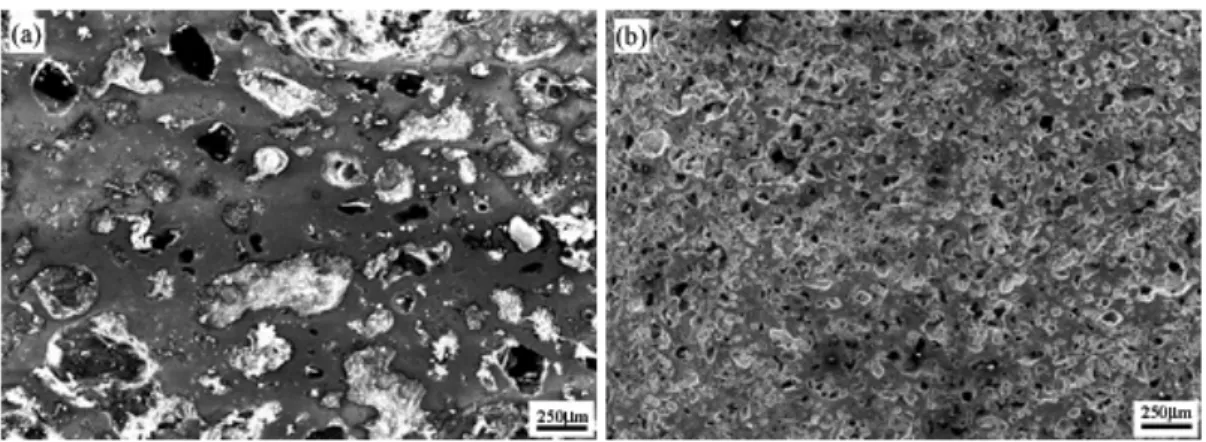
Tab.II shows effects of the Cu content on sintered density and porosity after sintering.
Fig. 2 Micrographs of the LISHS reaction products synthesized by green compacts with a molar ratio of Ti : C= 1.0 mixed with 30 wt. % Al, and (a) 0, (b) 6wt. % Cu. (showing pores (dark spots) in section view without any erosion)
The density of sintered sample increases with increasing Cu content while the porosity revises, the reason of the improvement of densification is that the addition of Cu decreases drastic degree of SHS reaction, leading to the decreasing of volatilization and vaporization.
3.3 Effect of Cu addition on microstructure and XRD analysis
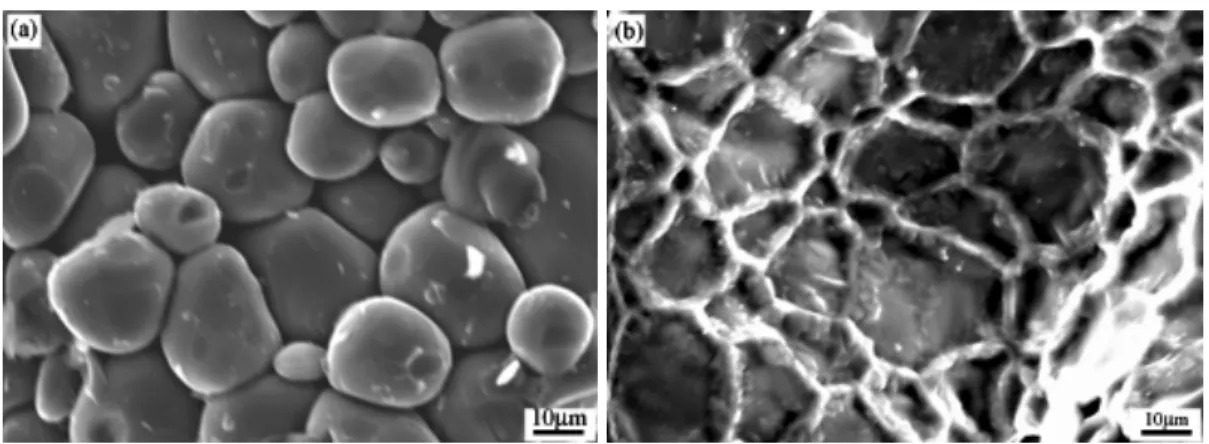
Figs 3 and 4 show the SEM micrographs and XRD patterns of the SHS reaction products synthesized by green compacts with a molar ratio of Ti : C = 1.0 mixed with 30 wt.% Al, and (a) 0, (b) 6 wt. %Cu, respectively. According to the XRD patterns, when the Cu content is 0 wt. % in the compacts, the products only consist of TiC, Al and C, as shown in Fig. 4a. As the Cu content is further increased to 6 wt. %, however, in addition to TiC, Al and C phases, the TiAl3, Al2Cu and are also found in the final products, as shown in Fig. 4b.
particles are observed when the Cu content is 0 wt. %. However, as the Cu content is increased to 6wt. %, it is difficult to distinguish TiC particulate in the SEM micrographs of the master alloys due to their fine size (see Fig. 3b).
Fig. 3 SEM microstructures of the LISHS reaction products synthesized by green compacts with a molar ratio of Ti:C=1.0 mixed with 30 wt.% Al, and (a) 0, (b) 6 wt.% Cu.
Fig. 4XRD patterns of the LISHS reaction products synthesized by green compacts with a molar ratio of Ti:C=1.0 mixed with 30 wt.% Al, and (a) 0, (b)6wt.% Cu.
3.4 Effect of heat treatment on microstructure
In order to further reveal microstructural structure of synthesized products of the Al-C-Ti system, heat treatment is very necessary for the sintered products at 800 ◦C (>the melting point of Al), as shown in Fig.5. (the purpose of using a carburizing agent is to protect the samples from oxidizing).
Fig. 5 Schematic diagram of heat treatment.
Fig. 6 SEM micrographs of synthesized products after heat treatment at 800 ◦C for 2h.
Fig.6. shows the microstructure of products after heat treatment at 800 oC for 2h. Compared with Fig. 3(a) on Fig. 6(a), it can be seen that heat treatment has a great effect of TiC particle size, the particle size of TiC after heat treatment obviously increases. Specially, from Fig. 6(b), it is interesting to note that the rigid framework (sintering neck) between TiC particles was formed.
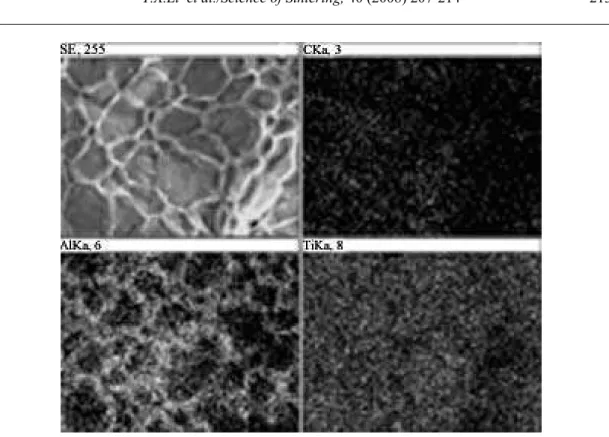
Fig. 7 Elemental distribution maps of Fig. 6(b).
The reason for the formation of the rigid framework distributed on the grain boundary may be the result of Al flowing into pores during sintering.
4. Conclusions
The effect of Cu addition and heat treatment on the self-propagating high-temperature synthesis reaction of the Al–Ti–C system was investigated. The combustion temperature of the system decreased whith the addition of Cu in the compacts. Microstructural characterization shows that the Cu content in the system had a significant effect on the presence of porosity and the size of TiC particulates in the composites. Furthermore, the particle size of TiC after heat treatment at 800 ◦C obviously increases and the boundary of TiC forms the rigid framework.
References
1. J. J. Moore, H. J. Feng, Prog. Mater. Sci. 39 (1995) 243.
2. J. Subrahmanyam, M. Vijayakumar, J. Mater. Sci. 27 (1992) 6249. 3. S.C. Tjong and Z.Y. Ma, Mater. Sci. Eng. R 29 (2000) 49.
4. Y. Choi, S. W. Rhee, J. Mater. Sci. 28 (1993) 6669. 5. Y. Khoptiar, I. Gotman, Mater. Lett. 57 (2002) 72.
6. W. C. Lee, S. L. Chung, J. Am. Ceram. Soc. 80 (1997) 53.
7. G. Wen, S. B. Li, B. S . Zhang, Z. X. Guo, Acta. Mater. 49 (2001) 1463.
8. H.Y. Wang, Q.C. Jiang, Y.Q. Zhao, F. Zhao, B.X. Ma, Y. Wang, Mater. Sci. Eng. A 372 (2004) 109.
1147.
11. H.Y. Wang, Q.C. Jiang, X.L. Li, F. Zhao, J. Alloy. Compd. 366 (2004) L9.
12. Q.C. Jiang, H.Y. Wang, J.G. Wang, Q.F. Guan, C.L. Xu, Mater. Lett. 57 (2003) 2580. 13. X.H. Zhang, J.C. Han, X.D. He, J. Am. Ceram. Soc. 88 (2005) 89.
14. P. Yin, D.D.L. Chung, J. Mater. Sci. 32 (1997) 1703.
Са р а: П
ј ј (СХС). Д ј
ј ј ј Al2Cu. Д
ј ј
, TiC СХС ј ј .
800С ј
( ) ђ TiC.
К учн р чи: , СХС, ,