A Model for the Management of Female Sexual
Dysfunctions
Modelo para abordagem das disfunções sexuais
femininas
Lúcia Alves da Silva Lara
1Sandra Cristina Poerner Scalco
2Júlia Kefalás Troncon
1Gerson Pereira Lopes
31Human Reproduction Sector, Department of Gynecology and Obstetrics, Faculdade de Medicina de Ribeirão Preto, Universidade de São Paulo, Ribeirão Preto, São Paulo, Brazil
2Medical Outpatient of Gynecology, Violence and STDs, Sexology Ambulatory, Gynecology Department, Hospital Materno Infantil Presidente Vargas–PMPA, Porto Alegre, Rio Grande do Sul, Brazil 3Department of Sexual Medicine, Hospital Mater Dei, Belo Horizonte,
Minas Gerais, Brazil
Rev Bras Ginecol Obstet 2017;39:184–194.
Address for correspondence Lúcia Alves da Silva Lara, MD, PhD, Faculdade de Medicina de Ribeirão Preto, Universidade de São Paulo, Av. Bandeirantes, 3900, CEP 14049-900 Ribeirão Preto, SP, Brazil (e-mail: [email protected]).
Keywords
►
sexuality
►
sexual dysfunction
►
female sexual
response
Abstract
Introduction
Sexual pleasure is fundamental for the maintenance of health and
well-being, but it may be adversely affected by medical and psychosocial conditions. Many
patients only feel that their health is fully restored after they resume normal sexual
activities. Any discussion of sexuality in a doctor
’
s of
fi
ce is typically limited, mainly
because of a lack of models or protocols available to guide the discussion of the topic.
Objectives
To present a model designed to guide gynecologists in the management
of female sexual complaints.
Methods
This study presents a protocol used to assess women
’
s sexual problems. A
semi-structured interview is used to assess sexual function, and the teaching, orienting
and permitting (TOP) intervention model that was designed to guide gynecologists in
the management of sexual complaints.
Results
The use of protocols may facilitate the discussion of sexual issues in
gynecological settings, and has the potential to provide an effective approach to
the complex aspects of sexual dysfunction in women. The TOP model has three phases:
teaching
the sexual response, in which the gynecologist explains the physiology of the
female sexual response, and focuses on the three main phases thereof (desire,
excitement and orgasm);
orienting
a woman toward sexual health, in which sexual
education is used to provide information on the concept and healthy experience of
sexuality; and
permitting
and stimulating sexual pleasure, which is based on the
assumption that sexual pleasure is an individual right and is important for the physical
and emotional well-being.
Conclusion
The use of protocols may provide an effective approach to deal with
female sexual dysfunction in gynecological of
fi
ces.
received
November 15, 2016
accepted after revision
January 13, 2017
DOI http://dx.doi.org/ 10.1055/s-0037-1601435.
ISSN 0100-7203.
Copyright © 2017 by Thieme-Revinter Publicações Ltda, Rio de Janeiro, Brazil Original Article
Introduction
Sexual activity is important to the overall health and well-being of an individual.1Sexual dysfunction leads to negative effects on interpersonal and social relationships, and on the well-being and the quality of life of women.2 Numerous clinical, psychological and social conditions may affect this important aspect of life, and patients may report full recov-ery only if normal sexual activities are restored. Female sexuality and sexual relations also depend heavily on the mores of each era and society.3–6
A Brazilian survey showed that 49% of women experience sexual dysfunction, and hypoactive sexual desire is the most prevalent disorder.7Paradoxically, the discussion of sexuali-ty with doctors is limited,8both because of perceived ta-boos9,10 and because most residents in Obstetrics and Gynecology (Ob-Gyn) are poorly equipped to address sexual problems. In addition, few models are available to guide a doctor in the discussion of sexual dysfunction. Thus, doctors are aware of less than 50% of the patients’sexual problems,11 even though the patients recognize the importance of dis-cussing such topics with their doctors.12
Even though female sexual dysfunction is prevalent, after it is identified, few protocols are available for the manage-ment of organic and non-organic sexual complaints. This topic was recently discussed in the context of the lack of effective treatment programs; the gap makes it difficult for
gynecologists to discuss possible sexual problems with female patients.13Therefore, most patients have relatively little education and low level of access to information on healthy sexuality; this is a common situation, especially in developing countries.14,15
Several validated self-reported and clinician-administered instruments are available for assessing female sexual function in clinical research trials; however ,a lack of protocol for practicing clinicians who are neither trained nor specialized in female sexual dysfunction exists.16Even in countries where physician training includes sexology programs,8most physi-cians still feel ill-equipped to address sexual problems.17The scarcity of technical and human resources useful in dealing with sexual problems has negative implications for the health of the patients. There is a need for a model to guide gynecol-ogists in their attempts to improve the sexual health of their patients. However, not all populations and healthcare institu-tions openly discuss sexuality.18Thus, it is essential for health-care professionals to consider the consequences of sexual repression19in their patients. Many sexual problems can be addressed if a gynecologist provides information on sexuality and the psychological, social, and biological mechanisms of the sexual response. Several types of sexual complaints that do not fulfill the criteria for the diagnosis of sexual dysfunction can be addressed with basic assistance from professionals.
The present work shows step-by-step the protocol used to manage female sexual dysfunction in a gynecologic setting,
Palavras-chave
►
sexualidade
►
disfunção sexual
►
resposta sexual
feminina
Resumo
Introdução
O prazer sexual é fundamental para a manutenção da saúde e do
bem-estar da mulher, mas pode ser afetado negativamente por condições médicas e
psicossociais. Em muitos casos, a mulher sente que sua saúde geral é restaurada
após retomar sua vida sexual. Porém, a discussão sobre função sexual no consultório do
ginecologista é limitada devido à falta de modelos ou protocolos disponíveis para
orientar a intervenção neste tema.
Objetivos
Apresentar um modelo de intervenção nas disfunções sexuais femininas
para ser utilizado pelo ginecologista.
Métodos
Foi realizada uma revisão da literatura com levantamento de estudos sobre
o manejo das disfunções sexuais femininas nas diferentes culturas. A partir desta
revisão, foi elaborado um protocolo que consiste da história clínica e de um modelo de
intervenção para orientar os ginecologistas no tratamento das queixas sexuais
femininas.
Resultados
O uso de protocolos pode facilitar a discussão sobre questões sexuais pelo
ginecologista, e pode fornecer uma abordagem e
fi
caz para lidar com os aspectos
complexos da disfunção sexual feminina. O modelo proposto, ensinar, orientar e
permitir (EOP), tem três fases:
ensinar
sobre a resposta sexual, na qual o ginecologista
explica a
fi
siologia da resposta sexual feminina, e se concentra nas suas três principais
fases (desejo, excitação e orgasmo);
orientar
sobre saúde sexual para fornecer
informações sobre vivência saudável da sexualidade; e
permitir
a estimulação do prazer
sexual, que é um direito individual e importante para o bem-estar físico e emocional do
indivíduo.
an interdisciplinary service formed by a team of gynecolo-gists, psychologynecolo-gists, a psychiatrist, and physiotherapists, all experts in sexology. An interdisciplinary approach is re-quired for the appropriate assessment of the sexual dysfunc-tion of a person, due to a complex interacdysfunc-tion of psychological, social, cultural and physiological processes and one or more factors that may impact on any stage of the sexual response cycle.
Methods
Assessment of Sexual Dysfunction
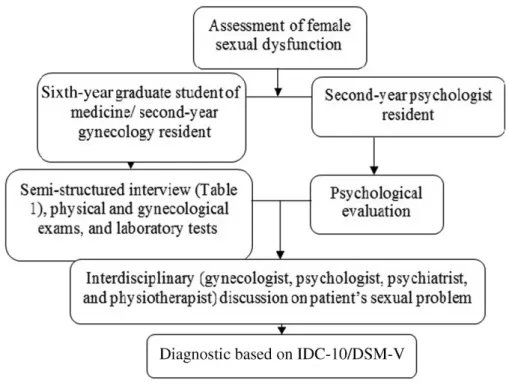
In our Institution, Ob-Gyn residents receive training on female sexual problems, and 5th and 6th-year medical students also receive education on female sexual issues in the gynecologic setting. A systematic approach involving an empathic history-taking, a general physical examination, and a detailed local examination, as well as a prescription of rational investigation is used to manage women with sexual complaints, as shown in►Fig. 1. A semi-structured
interview developed based on the female sexual response model20is used to assess female sexual problems (►Table 1).
However, a brief validatedfive-question, self-administered instrument may be useful for physicians to screen pre and postmenopausal women regarding hypoactive sexual desire disorder.21
The diagnostic of sexual dysfunction is based on the International Statistical Classification of Diseases and Relat-ed Health Problems (ICD-10) criteria,22and on the Diagnos-tic and StatisDiagnos-tical Manual of Mental Disorders, 5th edition (DSM-5).23The TOP model, an acronym for teaching (T) the sexual response, orienting (O) women toward sexual health,
and permitting (P) and stimulating sexual pleasure is used to promote education. This model is based on dimensions derived from the permission, limited information, specific suggestions, and intensive therapy (PLISSIT) model.24
Management of Female Sexual Dysfunction
General Measures to Treat Female Sexual Problems
The TOP model could help physicians better manage patients who have sexual complaints. In regions where doctors are not trained in sexology, the TOP model can help physicians provide patients with basic information on sex, so that women can become familiar with their sexuality. This model also permits doctors to understand the extent to which a patient comprehends sexual function to a level beyond basic knowledge on reproduction. The use of the TOP model also encourages a doctor to provide information about the sexual response at the physical, psychological, social, and emotional levels, without the use of sex therapy, afield in which not all gynecologists are trained. The TOP model involves interven-tion at three levels, as shown below.
Teaching (T) the Sexual Response
At this level, patients are given an explanation on genital anatomy, and on the mechanism of some components of the sexual response; desire, arousal, and orgasm. This strategy has been employed in other studies to treat different health problems:25,26i)sexual desireis an appetite or drive that motivates us to engage in sexual behavior. A woman feels sexual desire in three situations: spontaneously (reflecting the natural sexual instinct), when she receives sexual stim-ulation from her partner, and when engaging in sexual
Fig. 1 Proposed algorithm for the management of female sexual dysfunction.
fantasies.27 There are many reasons women agree to or instigate sexual activity, and desire may be experienced once the sexual stimuli have triggered arousal; thus, arousal and desire co-occur and reinforce each other.28It is necessary to think about sex to generate sexual fantasies that can lead to desire. Such desire makes a woman receptive to sex, and can cause her to search for sexual relations or to masturbate to obtain sexual pleasure.29ii)Sexual arousalis a pleasurable sensation in the vulva and vagina that causes intumescence of the female genitals because of increased bloodflow to this region, and wetness attributable to lubrication of the
vagi-na.30 If this complex state of arousal is accompanied by positive emotions and thoughts, then sexual desire, along with further arousal, is triggered. Positive sexual experiences provide further motivation to be sexual again.31iii)Orgasm
consists of multiple pleasurable contractions of the genitalia, with thefirst being intense, and the subsequent contractions becoming weaker until they cease.32,33The clitoris becomes erect, and the heartbeat and breathing rate accelerate. An orgasm is reached after stimulation by the movement of the penis inside the vagina, by stimulation of the clitoris, or both. Such stimulation can be caused by sexual activity,
Table 1 Semi-structured interview used for the approach of women’s sexual complaints
Date: / /
Patient identification: name, age, place of birth, schooling, profession, marital status, time of relationship, religion, current medications, presence of co-morbidities
Partner: age, place of birth, schooling, profession, religion, mood, health status, use of drugs, sexual functioning (erectile dysfunction, premature ejaculation)
Quality of their relationship
Main sexual complaint
History of the current sexual complaint: When the problem started, in which situation it occurs, how it evolved, does the partner know about the complaint?
Previous treatments, use of medication
Gynecological and obstetrical history: menarche, menstrual cycles, parity, route of delivery, contraception, presence of genital dystopias, genital infections, previous surgeries of the genital tract
Sexual history: age of sexarche, number of partners, quality of thefirst sexual experience, frequency of sexual relations, homosexual relations, extra conjugal relations, sexual repression, sexual abuse
Current emotional status
Current conditions of the sexual response (in the context of the relationship and/or individual practice)
•Desire () preserved () impaired
•Arousal () preserved () impaired
•Orgasm () preserved () impaired
•Sexual impulse () yes () no
•Sexual fantasies () yes () no
•Masturbation practices () yes () no
•Satisfaction with sexual life () yes () no
Male partner sexual function assessment
•Affective relationship () yes () no
•Affectionate () yes () no
•Premature ejaculation () yes () no
•Erectile dysfunction () yes () no
Female partner sexual function assessment
•Affective relationship () yes () no
•Affectionate () yes () no
Diagnosis
Laboratory tests: blood count, TSH, prolactin and specific tests according to clinical signs and symptoms
Interventions (personalized gynecological intervention, general intervention regarding sexual complaints following the TOP protocol, psychotherapy, sexual therapy)
masturbation, oral sex, a vibrator, or other means. It is likely that all women have the ability to reach orgasm,34but some who do not attain orgasm spontaneously35may be helped by sex therapy.36Women exhibit a gradual resolution of sub-jective sexual arousal and sexual satiation, but they maintain subjective sexual arousal and desire longer than men after orgasm.37
Orienting (O) Women toward Sexual Health
At this level, information is provided to improve a woman’s understanding of the genital anatomy, the physiology of the female sexual function, sexuality and the sexual response,38 as well as a description of sexually transmitted diseases (STDs) and contraceptive methods, as follows:i) sexuality involves affectivity and the search for emotional and physical interactions with partners to achieve sexual pleasure, which can also be attained by sexual self-stimulation, or masturba-tion;ii) sexuality is formed at an early age, and continues through childhood to adolescence, developing further throughout life;iii) with the aid of a drawing of the genitalia, the professional shows the location of the genital structures, and provides the following explanation: the female genitals consist of the mons pubis, which is covered with hair, the outer labia majora, which are covered with hair, the internal labia minora, which has no hair, and the clitoris, a promi-nence forming the continuation of the labia minora. The orifice of the urethra and the vaginal introitus are located below the labia;26iv) the genitals have nerve endings that, if touched, generate a pleasurable sensation and, if the nerves are properly stimulated, sexual pleasure may result;39,40v) a woman does not always reach orgasm with penetration and the movement of the penis inside her vagina. She can attain orgasm by manipulation of the clitoris during or outside of intercourse;41,42vi) all women have the potential to reach orgasm, but some women need to learn how to reach it. Additionally, variations in hormonal receptors, and the levels of neurotransmitters and neuropeptides, may make orgasm difficult for some women;43 vii) a woman can feel sexual satisfaction even without reaching orgasm;viii) the most common sex practices are vaginal sex, oral sex, and anal sex;
ix) it is important for a woman to explore her own body and her genital area, especially the clitoris, to better understand the regions associated with sexual pleasure;44x) in sexual relationships, increase the time spent together as a couple, innovate the sexual repertoire (with different sexual posi-tions, using vibrators, playing out sexual fantasies, etc.), and concentration is important for the woman to reach or-gasm;45xi) the use of a condom protects against STDs and unwanted pregnancies; andxii) contraceptive methods are discussed.
Permitting (P) and Stimulating Sexual Pleasure
Historically, female sexuality has been repressed,46,47and many women thus feel guilty about engaging in sexual activities. Some previous studies have emphasized the im-portance of appropriate discourse facilitated by teaching,48 and health care institutions have sought to prevent STDs without compromising the healthy expression of sexuality.49
The following arguments have been developed to deal with this problem50:i) the human body is endowed with physical mechanisms that cause an individual to feel pleasure when eating, having sex, and taking care of him or herself, among other activities. Such pleasures are important for overall health;ii) sex is an important biological and biopsychological function, and everyone has the ability to feel sexual pleasure;
iii) sexual pleasure is everyone’s right;iv) all humans deserve sexual satisfaction; andv) the experience of sexual satisfac-tion (sexual fulfillment) is important for the emotional and physical well-being, independent of age and some health conditions.51,52
The learning session allows the gynecologist to deal with sexual myths and mistaken beliefs about sex, and to refor-mulate concepts on affectivity and the sharing of sexual experiences.53 Successful treatment of sexual complaints suggests that the enjoyment of sexuality increases after women learn that sexuality is healthy. Also, the learning session may equip women to reformulate their attitudes to embrace the full experience of sexuality in regard to sexual pleasure.
Speci
fi
c Measures
Management of Female Sexual Desire/Arousal Dysfunction
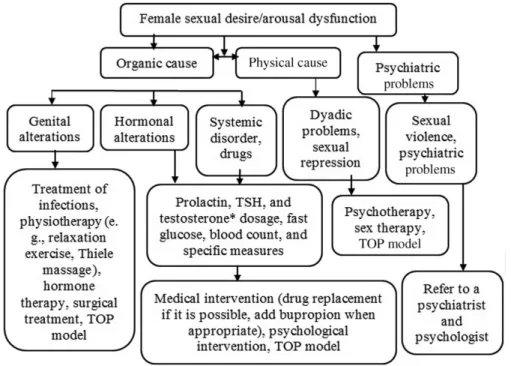
Medical interventions should be supported by evidence-based data. The management of women with sexual de-sire/arousal dysfunction must take into account that this disorder may arise from organic and/or psychical factors45 (►Fig. 2). Sexual desire disorder is the most frequent
com-plaint among women with sexual problems.54Obstetricians and gynecologists should stress the fact that a creative and romantic dyadic relationship motivates couples to engage in sexual relations and correlates with sexual satisfaction.55 However, long-term relationships may reduce the spontane-ous sexual desire and sexual thoughts in women.56In our experience, this condition is highly prevalent in women with sexual complaints in the gynecology setting.
Testosterone Use for Sexual Desire Disorder
The problem is that physiological testosterone prepara-tions are not available for women, testosterone preparation is off-label59,60 (►Table 2), and the possibility of overuse
exists. Thus, the assessment of testosterone levels at baseline is recommended to identify possible overuse. As recom-mended previously, baseline lipid profile, baseline liver enzyme levels, and mammography should be taken. Testos-terone measures after 3 to 6 weeks of the initial treatment, and every 6 months, are also recommended to assess patient overuse.59
Management of Orgasm Disorder
The clitoris seems to be the most important anatomic structure to female orgasm (FO),65 which can occur in women when the clitoris is effectively stimulated during masturbation, oral sex, anal intercourse, partner masturba-tion, or during vaginal intercourse.66 Orgasm disorder is defined as a persistent or recurrent delay in, or absence of, orgasm following a normal sexual excitement phase.67 As many as 20–30% of women reported an inability to orgasm
during sexual intercourse.68 Anorgasmia can occur after prolapse and urinary incontinence, and after surgical treat-ment due to alteration in sensitivity of the distal posterior and distal anterior parts of the vaginal wall.69 Moreover, predictors of orgasmic difficulty in women within the con-text of a partnered sexual experience include arousal issues, levels of distress, and latency to orgasm.70
The clinical holistic medicine is an effective intervention to treat sex orgasm disorder.71 At this level, women with anorgasmia can receive education that involves knowledge on genital anatomy, acceptance through touch and sexual fantasies, masturbation techniques, as well as acceptance of a clitoral vibrator. The use of testosterone as well as tibolone72 may improve orgasm domains23(►Fig. 3).
Management of Genito-Pelvic Pain/Penetration Disorder
The DSM-5 brought dyspareunia and vaginismus under the common heading of genito-pelvic pain/penetration disorder. The diagnosis criteria for this disorder require at least six
Fig. 2 Proposed algorithm for the management of female sexual desire/arousal dysfunction.
Abbreviations: TOP, Teaching (T) the sexual response, Orienting (O) women toward sexual health, Permitting (P) and stimulating sexual pleasure; TSH, thyroid stimulating hormone.
Baseline testosterone dosage for women eligible for testosterone therapy.
Table 2 Testosterone schema associated with systemic/local estrogen therapy for women with hypoactive sexual desire disorder
Formulation Frequency of use
Testosterone propionate 2% in petrolatum or pentravan 0.5 mg Vaginal; daily61 Testosterone propionate 2 mg in 0.5 g of a neutral cream Vaginal; daily62 Testosterone cream 1 g per application containing 300μg
tes-tosterone propionate prepared using testes-tosterone micronized powder in an emollient cream with silicone
Vaginal; three times a week63
months of duration of persistent or recurrent difficulties with one or more of the following: marked vulvovaginal or pelvic pain during vaginal intercourse or penetration at-tempts; marked fear or anxiety about vulvovaginal or pelvic pain in anticipation of, during, or as a result of vaginal penetration; and marked tensing or tightening of the pelvic
floor muscles during attempted vaginal penetration that causes significant distress in the individual. Some conditions should be excluded, such as: nonsexual psychiatric disor-ders; medical conditions (lichen sclerosus, pelvic infl amma-tory disease, endometriosis, and vulvovaginal atrophy, for example), substance abuse, and the use of certain medications.74,75
A thorough evaluation should be made by an experienced gynecologist, including the history of duration and charac-teristics of the pain, as well as a physical examination to differentiate superficial dyspareunia and deep dyspareunia. If the diagnosis of vulvodynia is likely, general measures, such as genital care and hygiene, as well as the use of local anesthetics and some antidepressants and anticonvulsants, should be taken.76 In cases of deep dyspareunia, organic causes such as endometriosis and pelvic inflammatory dis-ease should be taken into consideration,77 as mentioned before.
There is an important relationship between pelvicfloor muscle dysfunction and genital pelvic pain penetration. The pelvic floor is formed by the lifter muscles of the anus (pubococcygeus, puborectalis and iliococcygeus) and the ischiococcygeus muscles, which are responsible for main-taining urinary and fecal continence;78,79they also partici-pate in sexual intercourse and the partum.80,81 Biomechanical changes, in turn, lead to overload of the pelvic
floor muscles, favoring the onset of tender points, stiffness (spasm), contraction and inability of relaxation,82
contribut-ing to the manifestation of genitourinary pelvic pain. Surgical intervention such as the combination of Burch colposuspen-sion and posterior colporrhaphy is likely to result in dyspareunia.83
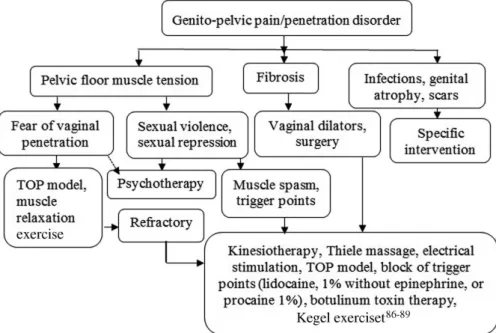
The management of genito-pelvic pain/penetration disor-der may include digital palpation to allow the women to become aware of their pelvicfloor muscles,84muscle relax-ation intervention,81 treatment of medical conditions, as well as a biopsychosocial approach and psychotherapy,75,85 especially for victims of sexual violence (►Fig. 4).
Discussion
Doctors who routinely ask about sexual complaints in their offices state that 50% of their female patients refer sexual problems.90 Thus, Ob-Gyn professionals should routinely assess female sexual problems.91 However, a previous re-search has indicated that both patients and doctors experi-ence difficulties when talking about sexuality, and that the doctor often feels ill-equipped because of the lack of estab-lished protocols valuable for the treatment of sexual com-plaints and dysfunctions.13Moreover, most physicians argue about the lack of time to obtain relevant information for the clinical practice and to deal with sexual health issues; they were perceived as barriers in initiating a discussion with the patient.35 Effective training is needed for professionals, to encourage dialogue about sexual health and to identify women who have sexual dysfunctions and offer them treat-ment.2Additional evidence-based educational and didactic activities would enhance the Ob-Gyn professionals’ knowl-edge and confidence in treating sexual issues.17
It is strongly recommended that health professionals should include a sexuality approach in their routine engage-ment with patients, as sexual health problems are prevalent
in women attending primary care clinics, where one in four women are at high risk of female sexual dysfunction.92It is recommend that the sexual history be based on three main topics, which serve as underpinning for the management of sexual problems:i)an approach centered on the person;ii)
evidence-based recommendations for diagnosis and treat-ment; andiii)use of a managed and unified approach.93This approach is essential to enable the early diagnosis of female sexual dysfunction, as well as to guarantee sexual rights for women.
Various validated instruments for the diagnosis of sexual dysfunction are available, and can help physicians identify it according to the classifications of the American Psychiatric Association (DSM-5).20,94 However, most instruments are complex and designed to be applied by professionals with expertise in the area of sexuality, for specific situations, time or post treatment controls.95Nevertheless, doctors should ask at least one or two questions, such as: How is your sex life? Do you have a problem you would like to discuss?93
The use of protocols makes it easier to overcome certain barriers, since they provide the beginning of a dialogue. These can potentially provide more sensitive and accurate measure-ments of the complex and subjective aspects of the sexual function of women.93Information provided by the gynecolo-gist on the biological, psychological, and social aspects of sexual function may help the patient better assess her sex life and verbalize complaints that can be addressed by the gynecologist. Additionally, many women with sexual complaints, but who do not fulfill the criteria for the diagnosis of sexual dysfunction can be helped by basic measures taken by a professional. The model presented here may guide gynecologists in their attempts to improve the sexual health of their patients.
It is important to highlight that some conditions related to female sexual dysfunction deserve a more appropriate inter-vention. For example, taboos concerning sexuality are
common and prevent women from seeking professional help if sexual problems are encountered;96 such taboos even permeate the clinical environment, resulting in signifi -cant negative effects on both general and sexual health.19,97,98Moreover, in some modern societies,99sexual activity remains associated with immorality, resulting in the continued repression of sexual expression,100especially for women, and in cases of gender violence.101 Furthermore, some religions associate sexual activity with sin, and discourage the free expression of sexual relations, except as required for procreation.19,102,103 All of these patients should be offered an interdisciplinary approach with a physiotherapist and a psychotherapist.
Cardiovascular disease, dyslipidemia, or diabetes mellitus may also be considered as early symptoms of the underlying disease, in which case the diagnosis serves as sentinel com-plementary actions.104Drugs, depression, surgery and trau-ma in the pelvic region are factors that are frequently associated with sexual difficulties in women.105Sexual abuse may have physical and emotional implications for women,106 who are at high risk for depression, anxiety, worries, loneli-ness, low quality of life,107as well as sexual problems.108The interventions in these cases may require an interdisciplinary approach.
Conclusion
The use of protocols may provide an effective approach to deal with female sexual dysfunction in gynecological offices.
References
1 Hedelin H, Abramsson L. [Sexuality–an important factor for quality of life. Who should treat erectile dysfunction?] Lakar-tidningen 1997;94(28-29):2548–2552
Fig. 4 Proposed algorithm for the management of genito-pelvic pain / penetration disorder in women.86–89
2 Clegg M, Towner A, Wylie K. Should questionnaires of female sexual dysfunction be used in routine clinical practice? Matur-itas 2012;72(02):160–164
3 Benagiano G, Carrara S, Filippi V. Social and ethical determinants of human sexuality: 1. The need to reproduce. Minerva Ginecol 2010;62(04):349–359
4 Benagiano G. Joseph W. Goldzieher and the birth of hormonal contraception. Contraception 2010;82(02):119–124
5 Gupta GR, Weiss E, Whelan D. Male-female inequalities result in submission to high-risk sex in many societies. Special report: women and HIV. AIDS Anal Afr 1995;5(04):8–9
6 Dialmy A. Sexuality and Islam. Eur J Contracept Reprod Health Care 2010;15(03):160–168
7 Abdo CH, Oliveira WM Jr, Moreira ED Jr, Fittipaldi JA. Prevalence of sexual dysfunctions and correlated conditions in a sample of Brazilian women–results of the Brazilian study on sexual beha-vior (BSSB). Int J Impot Res 2004;16(02):160–166
8 Lara LA, Coelho Neto MdeA, Martins WdeP, Ferriani RA, Navarro PA. Assessment of sexual function in infertile women in a gynecological care setting. J Sex Med 2016;13(06):938–944 9 Higgins A, Barker P, Begley CM. Sexuality and mental health
nursing in Ireland: weaving the veil of socialised inhibition. Nurse Educ Today 2009;29(03):357–364
10 Sohn W. [Pleasure and pain in sexual relations. The basis and reasons for sex counseling by the general practitioner]. MMW Fortschr Med 2003;145(46):37–40
11 Nusbaum MR, Gamble G, Skinner B, Heiman J. The high pre-valence of sexual concerns among women seeking routine gynecological care. J Fam Pract 2000;49(03):229–232
12 Nusbaum MR, Singh AR, Pyles AA. Sexual healthcare needs of women aged 65 and older. J Am Geriatr Soc 2004;52(01):117–122 13 Abdolrasulnia M, Shewchuk RM, Roepke N, et al. Management of female sexual problems: perceived barriers, practice patterns, and confidence among primary care physicians and gynecolo-gists. J Sex Med 2010;7(07):2499–2508
14 Laski L, Wong S. Addressing diversity in adolescent sexual and reproductive health services. Int J Gynaecol Obstet 2010;110 (Suppl):S10–S12
15 Glasier A, Gülmezoglu AM, Schmid GP, Moreno CG, Van Look PF. Sexual and reproductive health: a matter of life and death. Lancet 2006;368(9547):1595–1607
16 Simon JA. Low sexual desire–is it all in her head? Pathophysiol-ogy, diagnosis, and treatment of hypoactive sexual desire dis-order. Postgrad Med 2010;122(06):128–136
17 Pancholy AB, Goldenhar L, Fellner AN, Crisp C, Kleeman S, Pauls R. Resident education and training in female sexuality: results of a national survey. J Sex Med 2011;8(02):361–366
18 Gilmer MJ, Meyer A, Davidson J, Koziol-McLain J. Staff beliefs about sexuality in aged residential care. Nurs Prax N Z 2010; 26(03):17–24
19 Hourton J. [The Christian ethic and sexuality]. Enfoques Aten Prim 1991;6(01):3–6
20 Basson R, Berman J, Burnett A, et al. Report of the international consensus development conference on female sexual dysfunc-tion: definitions and classifications. J Urol 2000;163(03): 888–893
21 Clayton AH, Goldfischer ER, Goldstein I, Derogatis L, Lewis-D’Agostino DJ, Pyke R. Validation of the decreased sexual desire screener (DSDS): a brief diagnostic instrument for generalized acquired female hypoactive sexual desire disorder (HSDD). J Sex Med 2009;6(03):730–738
22 World Health Organization (Internet). International Statistical Classification of Diseases and Related Health Problems: ICD-10 Version: 2016. 10th Rev. 2016 [cited 2016 Jan 23]; Available from: http://apps.who.int/classifications/icd10/browse/2016/en 23 American Psychiatric Association. Diagnostic and Statistical
Manual of Mental Disorders - DSM-V. 5th ed. Arlington: APA; 2013
24 Annon J. Behavioral treatment of sexual problems. New York: Harper & Row; 1976. vol. 1
25 Aslan E, Komurcu N, Beji NK, Yalcin O. Bladder training and Kegel exercises for women with urinary complaints living in a rest home. Gerontology 2008;54(04):224–231
26 Kingsberg SA, Woodard T. Female sexual dysfunction: focus on low desire. Obstet Gynecol 2015;125(02):477–486
27 Carvalheira AA, Brotto LA, Leal I. Women’s motivations for sex: exploring the diagnostic and statistical manual, fourth edition, text revision criteria for hypoactive sexual desire and female sexual arousal disorders. J Sex Med 2010;7(4 Pt 1):1454–63 28 Basson R. Women’s sexual dysfunction: revised and expanded
definitions. CMAJ 2005;172(10):1327–1333
29 Basson R, Leiblum S, Brotto L, et al. Definitions of women’s sexual dysfunction reconsidered: advocating expansion and revision. J Psychosom Obstet Gynaecol 2003;24(04):221–229
30 Jayne C, Gago BA. Diagnosis and treatment of female sexual arousal disorder. Clin Obstet Gynecol 2009;52(04):675–681 31 Basson R, Wierman ME, van Lankveld J, Brotto L. Summary of the
recommendations on sexual dysfunctions in women. J Sex Med 2010;7(1 Pt 2):314–326
32 Kratochvíl S. [Vaginal contractions in female orgasm]. Cesk Psychiatr 1994;90(01):28–33
33 Meston CM, Hull E, Levin RJ, Sipski M. Disorders of orgasm in women. J Sex Med 2004;1(01):66–68
34 Georgiadis JR, Kortekaas R, Kuipers R, et al. Regional cerebral bloodflow changes associated with clitorally induced orgasm in healthy women. Eur J Neurosci 2006;24(11):3305–3316 35 Ishak IH, Low WY, Othman S. Prevalence, risk factors, and
predictors of female sexual dysfunction in a primary care set-ting: a surveyfinding. J Sex Med 2010;7(09):3080–3087 36 Reisinger JJ. Effects of erotic stimulation and masturbatory
training upon situational orgasmic dysfunction. J Sex Marital Ther 1978;4(03):177–185
37 Paterson LQ, Jin ES, Amsel R, Binik YM. Gender similarities and differences in sexual arousal, desire, and orgasmic pleasure in the laboratory. J Sex Res 2014;51(07):801–813
38 Levin RJ, Both S, Georgiadis J, Kukkonen T, Park K, Yang CC. The physiology of female sexual function and the pathophysiology of female sexual dysfunction (Committee 13A). J Sex Med 2016; 13(05):733–759
39 O’Connell HE, Eizenberg N, Rahman M, Cleeve J. The anatomy of the distal vagina: towards unity. J Sex Med 2008;5(08): 1883–1891
40 O’Connell HE, Sanjeevan KV, Hutson JM. Anatomy of the clitoris. J Urol 2005;174(4 Pt 1):1189–1195
41 Salmani Z, Zargham-Boroujeni A, Salehi M, Killeen TK, Merghati-Khoei E. The existing therapeutic interventions for orgasmic disorders: recommendations for culturally competent services, narrative review. Iran J Reprod Med 2015;13(07):403–412 42 de Lucena BB, Abdo CH. Personal factors that contribute to or
impair women’s ability to achieve orgasm. Int J Impot Res 2014; 26(05):177–181
43 Perlis RH, Laje G, Smoller JW, Fava M, Rush AJ, McMahon FJ. Genetic and clinical predictors of sexual dysfunction in citalo-pram-treated depressed patients. Neuropsychopharmacology 2009;34(07):1819–1828
44 Schober JM, Meyer-Bahlburg HF, Ransley PG. Self-assessment of genital anatomy, sexual sensitivity and function in wo-men: implications for genitoplasty. BJU Int 2004;94(04): 589–594
45 Goldstein I. Current management strategies of the postmeno-pausal patient with sexual health problems. J Sex Med 2007;4 (Suppl 3):235–253
46 Ruether RR. Sex and the body in the Catholic tradition. Con-science 2000;20(04):2–12
48 Kirby D, Korpi M, Barth RP, Cagampang HH. The impact of the Postponing Sexual Involvement curriculum among youths in California. Fam Plann Perspect 1997;29(03):100–108
49 Few C. The politics of sex research and constructions of female sexuality: what relevance to sexual health work with young women? J Adv Nurs 1997;25(03):615–625
50 World Health Organization. Sexual and reproductive health: defining sexual health. Geneva: WHO; 2008
51 Pujols Y, Seal BN, Meston CM. The association between sexual satisfaction and body image in women. J Sex Med 2010;7(2 Pt 2):905–916
52 Taylor TN, Munoz-Plaza CE, Goparaju L, et al.“The pleasure is better as I’ve gotten older”: sexual health, sexuality, and sexual risk behaviors among older women living with HIV. Arch Sex Behav 2016; [Epub ahead of print]
53 Opara PI, Eke GK, Akani NA. Mothers perception of sexuality education for children. Niger J Med 2010;19(02):168–172 54 Bronner G, Etran E, Schachter B, Lavee S, Galin A, Raviv G.
[Contribution of psychosexual approach to assessment and treatment of sexual dysfunction: a working model]. Harefuah 2009;148(09):595–599, 658
55 Pascoal PM, Narciso IdeS, Pereira NM. What is sexual satisfac-tion? Thematic analysis of lay people’s definitions. J Sex Res 2014;51(01):22–30
56 Rosen RC, Maserejian NN, Connor MK, Krychman ML, Brown CS, Goldstein I. Characteristics of premenopausal and postmeno-pausal women with acquired, generalized hypoactive sexual desire disorder: the Hypoactive Sexual Desire Disorder Registry for women. Menopause 2012;19(04):396–405
57 Lowenstein L, Shechter A, Porst H, Tripodi F, Reisman Y. Physi-cians’attitudes towards androgen replacement therapy for male and female sexual dysfunction. Int J Impot Res 2016;28(02): 57–60, quiz 60–61
58 Davis SR, Worsley R, Miller KK, Parish SJ, Santoro N. Androgens and Female Sexual Function and Dysfunction–Findings From the Fourth International Consultation of Sexual Medicine. J Sex Med 2016;13(02):168–178
59 Wierman ME, Arlt W, Basson R, et al. Androgen therapy in women: a reappraisal: an Endocrine Society clinical practice guideline. J Clin Endocrinol Metab 2014;99(10):3489–3510 60 Phillips NA. Female sexual dysfunction: evaluation and
treat-ment. Am Fam Physician 2000;62(01):127–136, 141–142 61 Emhardt E, Siegel J, Hoffman L. Anatomic variation and orgasm:
Could variations in anatomy explain differences in orgasmic success? Clin Anat 2016;29(05):665–672
62 Apperloo M, Midden M, van der Stege J, Wouda J, Hoek A, Weijmar Schultz W. Vaginal application of testosterone: A study on pharmacokinetics and the sexual response in healthy volun-teers. J Sex Med 2006;3(03):541–549
63 Fernandes T, Costa-Paiva LH, Pinto-Neto AM. Efficacy of vaginally applied estrogen, testosterone, or polyacrylic acid on sexual function in postmenopausal women: a randomized controlled trial. J Sex Med 2014;11(05):1262–1270
64 Simon J, Braunstein G, Nachtigall L, et al. Testosterone patch increases sexual activity and desire in surgically menopausal women with hypoactive sexual desire disorder. J Clin Endocrinol Metab 2005;90(09):5226–5233
65 Puppo V, Puppo G. Anatomy of sex: Revision of the new anato-mical terms used for the clitoris and the female orgasm by sexologists. Clin Anat 2015;28(03):293–304
66 American Psychiatric Association. Diagnostic and statistical manual of mental disorders: DSM-IV-TR. 4th ed. Washington, DC: APA; 2000
67 Harris JM, Cherkas LF, Kato BS, Heiman JR, Spector TD. Normal variations in personality are associated with coital orgasmic infrequency in heterosexual women: a population-based study. J Sex Med 2008;5(05):1177–1183
68 Lakeman MM, van der Vaart CH, Laan E, Roovers JP. The effect of prolapse surgery on vaginal sensibility. J Sex Med 2011;8(04): 1239–1245
69 Rowland DL, Kolba TN. Understanding orgasmic difficulty in women. J Sex Med 2016;13(08):1246–1254
70 Struck P, Ventegodt S. Clinical holistic medicine: teaching or-gasm for females with chronic anoror-gasmia using the Betty Dodson method. Sci World J 2008;8:883–895
71 Wu MH, Pan HA, Wang ST, Hsu CC, Chang FM, Huang KE. Quality of life and sexuality changes in postmenopausal women receiv-ing tibolone therapy. Climacteric 2001;4(04):314–319 72 Davis SR, Moreau M, Kroll R, et al; APHRODITE Study Team.
Testosterone for low libido in postmenopausal women not taking estrogen. N Engl J Med 2008;359(19):2005–2017 73 Ishak WW, Bokarius A, Jeffrey JK, Davis MC, Bakhta Y. Disorders
of orgasm in women: a literature review of etiology and current treatments. J Sex Med 2010;7(10):3254–3268
74 Faubion SS, Rullo JE. Sexual dysfunction in women: a practical approach. Am Fam Physician 2015;92(04):281–288
75 Haefner HK, Collins ME, Davis GD, et al. The vulvodynia guideline. J Low Genit Tract Dis 2005;9(01):40–51
76 Binik YM. The DSM diagnostic criteria for dyspareunia. Arch Sex Behav 2010;39(02):292–303
77 Shishido K, Peng Q, Jones R, Omata S, Constantinou CE. Influence of pelvic floor muscle contraction on the profile of vaginal closure pressure in continent and stress urinary incontinent women. J Urol 2008;179(05):1917–1922
78 Thompson JA, O’Sullivan PB, Briffa NK, Neumann P. Assessment of voluntary pelvicfloor muscle contraction in continent and incontinent women using transperineal ultrasound, manual muscle testing and vaginal squeeze pressure measurements. Int Urogynecol J Pelvic Floor Dysfunct 2006;17(06):624–630 79 Meyer S, Salchli F, Bettaieb H, et al. [The peripheral sexual
response ... from urogynecology to sexology]. Rev Med Suisse 2015;11(498):2320–2325
80 Kolberg Tennfjord M, Hilde G, Staer-Jensen J, Siafarikas F, Engh ME, Bø K. Effect of postpartum pelvicfloor muscle training on vaginal symptoms and sexual dysfunction-secondary analysis of a randomised trial. BJOG 2016;123(04):634–642
81 Strauss C, Lienemann A, Spelsberg F, Bauer M, Jonat W, Strauss A. Biomechanics of the female pelvicfloor: a prospective trail of the alteration of force-displacement-vectors in parous and nullipar-ous women. Arch Gynecol Obstet 2012;285(03):741–747 82 Weber AM, Walters MD, Piedmonte MR. Sexual function and
vaginal anatomy in women before and after surgery for pelvic organ prolapse and urinary incontinence. Am J Obstet Gynecol 2000;182(06):1610–1615
83 Amuzu BJ. Nonsurgical therapies for urinary incontinence. Clin Obstet Gynecol 1998;41(03):702–711
84 Thomas HN, Thurston RC. A biopsychosocial approach to women’s sexual function and dysfunction at midlife: A narrative review. Maturitas 2016;87:49–60
85 Abdo CHN, Oliveira WM Junior. O ginecologista brasileiro frente às queixas sexuais femininas: um estudo preliminar. RBM Rev Bras Med 2002;59(03):179–186
86 Alvarez DJ, Rockwell PG. Trigger points: diagnosis and manage-ment. Am Fam Physician 2002;65(04):653–660
87 Fageeh WM. Different treatment modalities for refractory vagi-nismus in western Saudi Arabia. J Sex Med 2011;8(06):1735–1739 88 Kegel AH. Early genital relaxation; new technic of diagnosis and
nonsurgical treatment. Obstet Gynecol 1956;8(05):545–550 89 Kegel AH. Stress incontinence of urine in women; physiologic
treatment. J Int Coll Surg 1956;25(4 Part 1):487–499
90 Collier F, Cour F. [How to manage a woman with a sexual complaint in clinical practice?] Prog Urol 2013;23(09):612–620 91 Alarcão V, Ribeiro S, Miranda FL, et al. General practitioners’
of sexual dysfunction-results of the Portuguese SEXOS study. J Sex Med 2012;9(10):2508–2515
92 Althof SE, Rosen RC, Perelman MA, Rubio-Aurioles E. Standard operating procedures for taking a sexual history. J Sex Med 2013; 10(01):26–35
93 Vroege JA, Gijs L, Hengeveld MW. Classification of sexual dys-functions: towards DSM-V and ICD-11. Compr Psychiatry 1998; 39(06):333–337
94 Giraldi A, Rellini A, Pfaus JG, et al. Questionnaires for assessment of female sexual dysfunction: a review and proposal for a standardized screener. J Sex Med 2011;8(10):2681–2706 95 Berman L, Berman J, Felder S, et al. Seeking help for sexual function
complaints: what gynecologists need to know about the female patient’s experience. Fertil Steril 2003;79(03):572–576 96 Allen D. Sexuality and patients: breaking the last taboo. Nurs
Stand 2000;14(32):23
97 Ramirez S. Early sexual experience and traditional values in Colombia. Newsl Womens Glob Netw Reprod Rights 1991; 36(36):30–31
98 Hendrickx K, Lodewijckx E, Van Royen P, Denekens J. Sexual behaviour of second generation Moroccan immigrants balancing between traditional attitudes and safe sex. Patient Educ Couns 2002;47(02):89–94
99 Goodson P, Edmundson E. The problematic promotion of absti-nence: an overview of Sex Respect. J Sch Health 1994;64(05): 205–210
100 Pai HC, Lee S, Chang T. Sexual self-concept and intended sexual behavior of young adolescent Taiwanese girls. Nurs Res 2010; 59(06):433–440
101 Benagiano G, Carrara S, Filippi V. Social and ethical determinants of human sexuality: 2. Gender-based violence. Eur J Contracept Reprod Health Care 2010;15(04):220–231
102 Benagiano G, Mori M. The origins of human sexuality: procreation or recreation? Reprod Biomed Online 2009;18(Suppl 1):50–59 103 Campbell MM, Stein DJ. Sexual dysfunction: A systematic review
of South African research. S Afr Med J 2014;104(06):440–444 104 Clayton AH, Balon R. The impact of mental illness and psychotropic
medications on sexual functioning: the evidence and manage-ment. J Sex Med 2009;6(05):1200–1211, quiz 1212–1213 105 Ben-Amitay G, Kimchi N, Wolmer L, Toren P. Psychophysiological
reactivity in child sexual abuse. J Child Sex Abuse 2016;25(02): 185–200
106 Kamiya Y, Timonen V, Kenny RA. The impact of childhood sexual abuse on the mental and physical health, and healthcare utiliza-tion of older adults. Int Psychogeriatr 2016;28(03):415–422 107 Khan N. Sexual and physical abuse: a threat to reproductive and
sexual health. Sex Health Exch 1998;1(01):1–3