ABSTRACT:Background: Knowing the reasons for seeking HIV testing is central for HIV prevention. Despite the availability of free HIV counseling and testing in Brazil, coverage remains lacking. Methods: Survey of 4,760 respondents from urban areas was analyzed. Individual-level variables included sociodemographic characteristics; sexual and reproductive health; HIV/AIDS treatment knowledge and beliefs; being personally acquainted with a person with HIV/AIDS; and holding discriminatory ideas about people living with HIV. Contextual-level variables included the Human Development Index (HDI) of the municipality; prevalence of HIV/AIDS; and availability of local HIV counseling and testing (CT) services. The dependent variable was client-initiated testing. Multilevel Poisson regression models with random intercepts were used to assess associated factors. Results: Common individual-level variables among men and women included being personally acquainted with a person with HIV/ AIDS and age; whereas discordant variables included those related to sexual and reproductive health and experiencing sexual violence. Among contextual-level factors, availability of CT services was variable associated with client-initiated testing among women only. The contextual-level variable “HDI of the municipality” was associated with client-initiated testing among women. Conclusion: Thus, marked gender diferences in HIV testing were found, with a lack of HIV testing among married women and heterosexual men, groups that do not spontaneously seek testing.
Keywords: AIDS serodiagnosis HIV testing. Vulnerability. Gender.
Individual- and contextual-level factors
associated with client-initiated HIV testing
Fatores individuais e contextuais associados à realização do teste anti-HIV
por busca espontânea
Claudia Renata dos Santos BarrosI, Eliana Miura ZucchiI, Lilia Blima SchraiberII, Ivan França JuniorIII
IGraduate Program in Public Health, Universidade Católica de Santos – Santos (SP), Brazil. IISchool of Preventive Medicine, Universidade de São Paulo – São Paulo (SP), Brazil. IIISchool of Public Health, Universidade de São Paulo – São Paulo (SP), Brazil.
Corresponding author: Cláudia Renata dos Santos Barros. Universidade Católica de Santos. Avenida Conselheiro Nébias, 300, Vila Mathias, CEP: 11015-002, Santos, SP, Brasil. E-mails: [email protected]; [email protected]
Conlict of interests: nothing to declare – Financial support: Coordenação de Aperfeiçoamento de Pessoal de Nível Superior.
INTRODUCTION
Early diagnosis of HIV infection is a priority for controlling the HIV epidemic, but diag-nosis can often be delayed, especially among men1. Strategies to promote client-initiated HIV testing have been instrumental to shortening the time between diagnosis and treat-ment initiation, thereby reducing morbidity/mortality and the risk of HIV transmission due to undetectable viral load2,3.
Delays are primarily owed to a lack of coverage in HIV testing and diferences in reasons for testing between men and women4. In Brazil, a national household survey (n = 11,052; age 15 – 64 years) showed that 55.3% of females and 72.7% of males had never been tested for HIV. As for their reasons for testing, 53% of women reported being tested during routine prenatal care, i.e., provider-initiated, whereas 53% of men said they spontaneously sought testing, i.e., client-initiated4.
In Canada, there were diferent reasons for HIV testing between men and women. Higher rates of client-initiated testing were found among men who have sex with men (MSM), in low-income populations and individuals living in large urban centers. Single, separated, divorced or widowed women were more likely to seek testing spontaneously5,6.
Some multi-level studies have also shown association between HIV testing at individual level and at contextual levels. A study conducted with men and women in Los Angeles, USA, found higher testing rates, regardless of the reasons for testing, among people from areas with high-perceived risk, as assessed by contextual-level variables. Areas with high-perceived risk were deined as those with a greater proportion of respondents who reported not always
RESUMO:Introdução: O motivo da busca pelo teste anti-HIV é questão central para a prevenção do HIV. Apesar da realização do teste e aconselhamento ser gratuito no Brasil há lacunas na cobertura do teste. Esse estudo analisou a associação entre os fatores individuais e contextuais e a realização do teste anti-HIV na população brasileira. Métodos: Inquérito populacional, com 4.760 residentes em áreas urbanas. As variáveis do nível individual foram sociodemográicas; saúde sexual e reprodutiva; conhecimento sobre HIV/AIDS; conhecer pessoas com HIV/AIDS; ideias discriminatórias sobre pessoas vivendo com HIV. As variáveis contextuais: índice de desenvolvimento humano (IDH) do município de moradia; prevalência municipal de HIV/AIDS e presença de Centro de Testagem e Aconselhamento no município de moradia (CTA). A variável dependente foi realização do teste por busca espontânea. Na análise dos fatores associados utilizou-se modelo multinível de Poisson com intercepto aleatório. Resultados: Foram observadas variáveis individuais comuns e discordantes associadas ao teste entre homens e mulheres. As variáveis individuais comuns foram o conhecimento de alguém com HIV/AIDS e idade; as discordantes incluíram as relativas à saúde sexual e reprodutiva e violência sexual. Entre os fatores do nível contextual, a presença de CTA e o IDH alto foram associados positivamente com a busca espontânea do teste somente entre as mulheres. Conclusão: A busca espontânea pelo teste anti-HIV é marcada pelas diferenças de gênero, com lacunas de testagem entre mulheres casadas e homens heterossexuais.
using condoms and having more than one sexual partner in the past year. Gender was not associated with HIV testing7.
This study aimed to analyze the association between client-initiated HIV testing and individual- and contextual-level factors among men and women in Brazil.
METHOD
A population-base survey was conducted in 2005 in a sample of the Brazilian population comprising 5,040 people living in urban areas. This interview survey was part of a larger study entitled “Sexual Behavior and Perceptions of the Brazilian Population concerning HIV/AIDS”8.
A stratiied multi-stage sample with unequal probabilities based on census tracts according to the Brazilian Institute of Geography and Statistics9 was used. Four geographic areas were deined: North/Northeast; Midwest/Southeast excluding the state of São Paulo; South; and the state of São Paulo. Stratiication was carried out in four stages for the States (primary sampling unit: microregion; secondary sampling unit: urban census tract deined by IBGE for the 2000 Demographic Census; tertiary sampling unit: private household; quaternary sampling unit: individual aged between 16 and 65 years), excluding capital cities, and in three stages for the microregions of capital cities8.
INDEPENDENT INDIVIDUAL- AND CONTEXTUAL-LEVEL VARIABLES
INDIVIDUAL-LEVEL
1. Sociodemographic characteristics: gender (for stratiied sampling), age; self-reported skin color; marital status; religion; and literacy and schooling level;
2. Variables related to sexual and reproductive health, and experiencing sexual violence: age at irst intercourse; Condom use during irst intercourse and type of partnership: condom use during last intercourse; type of sexual partnership; number of sexual partners in lifetime; history of STIs; biological children; sexual violence;
3. Variables related to knowledge of and attitudes toward HIV/AIDS: self-perceived risk; HIV/AIDS treatment knowledge and beliefs; being personally acquainted with a person with HIV/AIDS; and holding discriminatory ideas about people living with HIV: attitudes of apartheid and exclusion of people with AIDS;
The dependent variable (HIV testing) was categorized as “no testing”, “client-initiated” regarding last test.
Client-initiated testing was deined as: self-motivated or motivated by fear of infection, injection drug use, free testing available at health facilities, partner’s tattooing or request, and sexual abuse. This classiication was based on the guidance on voluntary HIV testing issued by the Joint United Nations Program on HIV/AIDS10.
STATISTICAL ANALYSIS
Data were adjusted for primary sampling units and strata. The variables were described using absolute and relative frequencies. The hypothesis test employed was Pearson´s Chi-squared test. Poisson regression models with random intercepts were designed to esti-mate associated factors for women and the multiple Poisson regression model or complex sample data was devised for men. In the multilevel analysis of factors associated with cli-ent-initiated testing among women, the null model was (rho = 2.3 p < 0.05) and among men the multilevel analysis was not conducted because there was no signiicant contextual-level variance in the null model (rho = 0.02; p = 0.108). The reference dependent variable in all models was “no testing.”
The independent variables with p < 0.20 in the bivariate analysis were included in the multiple model of hierarchical context data. Each group of individual-level variables was analyzed separately and mediation and confounding variables were identiied. The variables that were not signiicant and did not adjust for any other variables were removed from par-tial models. Speciically, within the group of individual-level variables, sociodemographic variables were entered irst, followed by those related to sexual and reproductive health and knowledge. After the partial analyses, four multiple models were constructed with level-1 variables (individual-level) entered irst — in which the large number of variables ensures more accurate measures, followed by the contextual-level (municipality of residence) vari-ables. Individual-level variables were included in groups, as described for partial mod-els. The signiicance level was set at 5%.
Finally, the likelihood ratio test for adjustment was used in all models. The variance it the null model for other models successively, with intraclass correlation coeicient being close to 0 in the inal model.
This study was approved by the Research Ethics Committee of the School of Public Health, Universidade de São Paulo.
RESULTS
Of all sexually active individuals (4,760), half were women, 70.3%, aged ≥ 45 years, 87.5% white or brown-skinned, whereas 45.1% had elementary school and 33.4% had high school education. Most respondents (61.6%) were married or living with a partner and predomi-nantly (64.2%) reported being Catholic.
Regarding sexual and reproductive health, the majority (60.2%) reported having irst unforced sexual intercourse sexual at the age of > 15 years, being heterosexual (98%), not having had STI (82.1%) or experienced a situation of violence (93.6%). 32.1% did not use a condom at the irst and 60.2% at the last sexual intercourse, 62.3% had more than 3 sexual partners, and 45.1% had biological children aged ≥ 6 years.
The majority (65.8%) did not perceive themselves as being at risk for HIV, 78% had knowledge about AIDS treatment, and 72.2% did not hold discriminatory ideas about ple living with HIV/AIDS. Most respondents (54.5%) were not acquainted with other peo-ple living with HIV/AIDS.
Lastly, most lived in a municipality with a high HDI (62.5%), high HIV/AIDS prevalence (78.9%) and CT services (75.5%).
Most respondents had never been tested for HIV (2,969, 62.4%). Of those who had been tested (n = 1,791), 30.8% had undergone client-initiated testing and 78% reported the rea-son was self-motivated.
A comparison between men and women showed testing was more prevalent among individuals who were male, younger (≤ 35 years), single, divorced or widowed, with no reli-gion or Spiritist, did not use a condom during the irst sexual intercourse, had a non-steady partner, used a condom at the last sexual intercourse, had a higher number of sexual part-ners in lifetime, were homosexual or bisexual and had biological children aged > 6 years.
FACTORS ASSOCIATED WITH TESTING
WOMEN
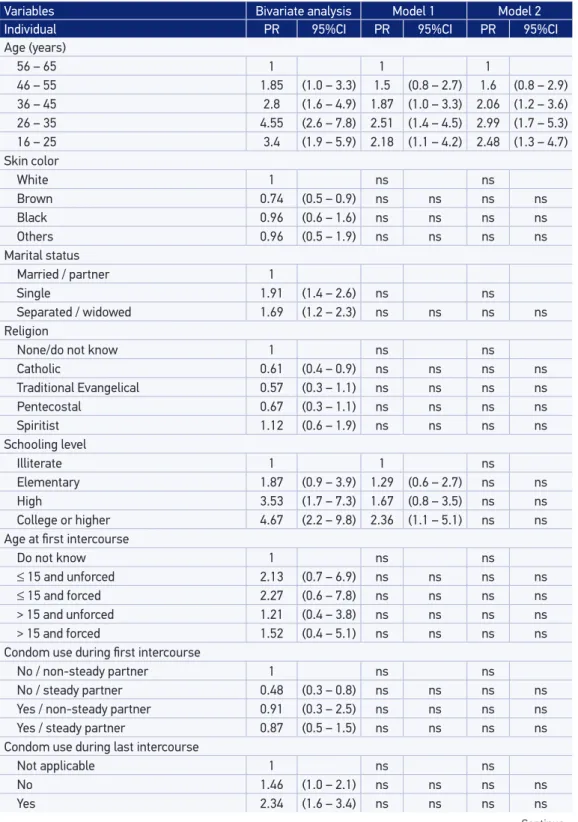
Table 1. Crude and adjusted prevalence ratios of variables associated with client-initiated HIV testing among women. Brazil. 2005 (n = 1710).
Continue...
Variables Bivariate analysis Model 1 Model 2
Individual PR 95%CI PR 95%CI PR 95%CI
Age (years)
56 – 65 1 1 1
46 – 55 1.85 (1.0 – 3.3) 1.5 (0.8 – 2.7) 1.6 (0.8 – 2.9) 36 – 45 2.8 (1.6 – 4.9) 1.87 (1.0 – 3.3) 2.06 (1.2 – 3.6) 26 – 35 4.55 (2.6 – 7.8) 2.51 (1.4 – 4.5) 2.99 (1.7 – 5.3) 16 – 25 3.4 (1.9 – 5.9) 2.18 (1.1 – 4.2) 2.48 (1.3 – 4.7)
Skin color
White 1 ns ns
Brown 0.74 (0.5 – 0.9) ns ns ns ns
Black 0.96 (0.6 – 1.6) ns ns ns ns
Others 0.96 (0.5 – 1.9) ns ns ns ns
Marital status
Married / partner 1
Single 1.91 (1.4 – 2.6) ns ns
Separated / widowed 1.69 (1.2 – 2.3) ns ns ns ns Religion
None/do not know 1 ns ns
Catholic 0.61 (0.4 – 0.9) ns ns ns ns
Traditional Evangelical 0.57 (0.3 – 1.1) ns ns ns ns
Pentecostal 0.67 (0.3 – 1.1) ns ns ns ns
Spiritist 1.12 (0.6 – 1.9) ns ns ns ns
Schooling level
Illiterate 1 1 ns
Elementary 1.87 (0.9 – 3.9) 1.29 (0.6 – 2.7) ns ns
High 3.53 (1.7 – 7.3) 1.67 (0.8 – 3.5) ns ns
College or higher 4.67 (2.2 – 9.8) 2.36 (1.1 – 5.1) ns ns
Age at irst intercourse
Do not know 1 ns ns
≤ 15 and unforced 2.13 (0.7 – 6.9) ns ns ns ns
≤ 15 and forced 2.27 (0.6 – 7.8) ns ns ns ns
> 15 and unforced 1.21 (0.4 – 3.8) ns ns ns ns
> 15 and forced 1.52 (0.4 – 5.1) ns ns ns ns
Condom use during irst intercourse
No / non-steady partner 1 ns ns
No / steady partner 0.48 (0.3 – 0.8) ns ns ns ns
Yes / non-steady partner 0.91 (0.3 – 2.5) ns ns ns ns
Yes / steady partner 0.87 (0.5 – 1.5) ns ns ns ns
Condom use during last intercourse
Not applicable 1 ns ns
No 1.46 (1.0 – 2.1) ns ns ns ns
Table 1. Continuation.
Variables Bivariate analysis Model 1 Model 2
Individual PR 95%CI PR 95%CI PR 95%CI
Number of sexual partners in lifetime
1 1 1 1
2 1.69 (1.1 – 2.5) 1.53 (1.0 – 2.3) 1.58 (1.0 – 2.4) 3 – 5 2.63 (1.9 – 3.7) 1.9 (1.4 – 2.7) 1.97 (1.4 – 2.8)
> 5 3.56 (2.5 – 5.1) 2.36 (1.6 – 3.4) 2.47 (1.7 – 3.6) Type of sexual partnership
Homosexual / bisexual 1 ns ns
Heterosexual 0.32 (0.1 – 0.7) ns ns ns ns
History of STIs
No / do not know 1 ns ns
Yes 1.49 (1.1 – 2.0) ns ns ns ns
Children
No 1 1
Yes. ≤ 6 years 1.48 (1.0 – 2.1) 1.67 (1.1 – 2.4) 1.56 (1.1 – 2.2)
Yes. > 6 years 0.67 (0.5 – 0.9) 1.15 (0.8 – 1.7) 1.02 (0.7 – 1.5) Sexual violence
No 1 1 1
Yes. before the age of 15 years 2.61 (1.7 – 4.0) 1.68 (1.1 – 2.6) 1.57 (1.0 – 2.4) Yes. ater the age of 15 years 1.33 (0.9 – 1.9) 1.09 (0.8 – 1.6) 1.03 (0.7 – 1.5)
Perceived risk
No 1 1 ns
Yes 1.88 (1.4 – 2.4) 1.17 (0.9 – 1.5) ns ns
Personally acquainted with a person with HIV/AIDS
No 1 1 1
Yes, family 2.8 (1.8 – 4.3) 2.24 (1.4 – 3.5) 2.17 (1.4 – 3.3) Yes, friends / acquaintances 2.16 (1.6 – 2.8) 1.75 (1.3 – 2.3) 1.81 (1.4 – 2.4)
HIV/AIDS treatment
No 1 1 1
Yes, it makes no diference 1.69 (0.6 – 4.8) 1.34 (0.5 – 3.8) 1.18 (0.4 – 3.3)
Yes, it cures 2.1 (0.9 – 5.1) 2.17 (0.9 – 5.3) 1.91 (0.8 – 4.7)
Yes, it improves health 3.19 (1.8 – 5.6) 2.15 (1.2 – 3.8) 2.28 (1.3 – 4.0)
Discriminatory ideas
Yes 1 ns ns
No 1.63 (1.2 – 2.1) ns ns ns ns
HDI
Low–medium 1 1
High 1.69 (1.2 – 2.3) 1.59 (1.2 – 2.1)
HIV/AIDS prevalence
Low 1 ns
High 1.34 (0.9 – 1.9) ns ns
CT services
No 1 1
Yes 2.08 (1.4 – 3.0) 1.64 (1.1 – 2.4)
In the multiple analysis, marital status was no longer signiicant. The other sociodemo-graphic variables (age ≤ 55 years and schooling level (high school and college education) and those related to sexual and reproductive health remained positively associated with test-ing, as did HIV/AIDS treatment knowledge and beliefs, and being personally acquainted with a person with HIV/AIDS. HDI and availability of CT services were associated with client-initiated HIV testing among women. No relevant adjustments of the magnitude of prevalence ratios of the variables in the inal model were evident (Table 1).
Table 1 shows variance it in the null model for other models successively, with intra-class correlation coeicient being close to 0 in the inal model. Furthermore, the null model likelihood ratio test for the inal model was statistically signiicant. The random coeicient model indicated a good it with independent variables and can largely explain the outcome.
MEN
In Table 2, the variables positively associated with HIV testing among men included socio-demographic characteristics (age 26 – 35 years, high school and college education), sexual
Variables Bivariate analysis Multiple analysis
Sociodemographic PR 95%CI PR 95%CI
Age (years)
56 – 65 1 1
46 – 55 1.71 (0.9 – 3.1) 1.52 (0.8 – 2.7) 36 – 45 1.72 (0.9 – 3.1) 1.53 (0.9 – 2.6) 26 – 35 2.3 (1.3 – 3.9) 1.98 (1.2 – 3.4)
16 – 25 0.89 (0.5 – 1.7) 0.72 (0.4 – 1.4)
Skin color/ethnicity
White 1 1
Brown 0.71 (0.5 – 0.9) 0.87 (0.6 – 1.2)
Black 1.29 (0.9 – 1.9) 1.51 (0.9 – 2.3)
Others 1.87 (0.9 – 3.6) 2.34 (1.4 – 3.9)
Schooling level
Illiterate 1 1
Elementary school 1.85 (0.7 – 4.9) 1.67 (0.6 – 4.4)
High school 2.93 (1.1 – 7.8) 2.72 (1.0 – 7.2)
College or higher 4.83 (1.8 – 13.1) 4.17 (1.6 – 11.0)
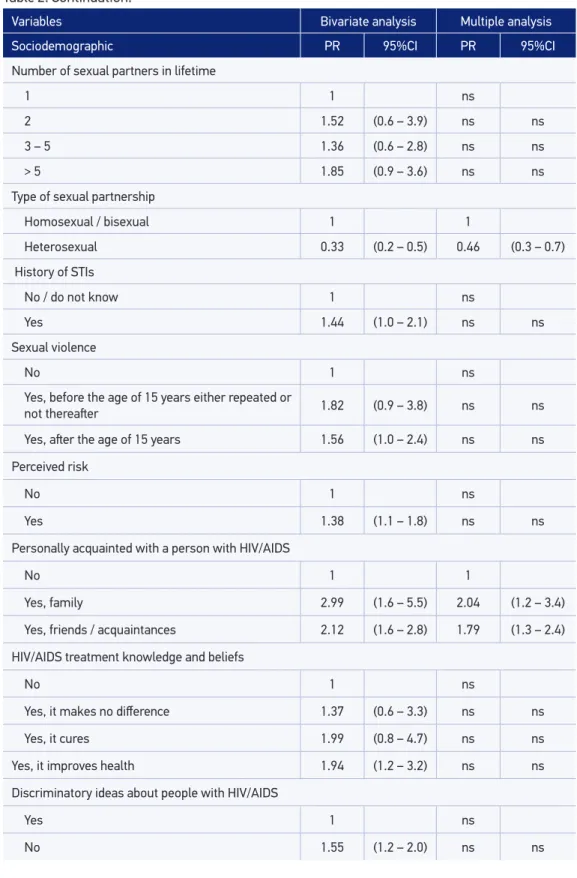
Table 2. Crude and adjusted prevalence ratios of variables associated with client-initiated HIV testing among men. Brazil. 2005 (n = 1771).
Variables Bivariate analysis Multiple analysis
Sociodemographic PR 95%CI PR 95%CI
Number of sexual partners in lifetime
1 1 ns
2 1.52 (0.6 – 3.9) ns ns
3 – 5 1.36 (0.6 – 2.8) ns ns
> 5 1.85 (0.9 – 3.6) ns ns
Type of sexual partnership
Homosexual / bisexual 1 1
Heterosexual 0.33 (0.2 – 0.5) 0.46 (0.3 – 0.7) History of STIs
No / do not know 1 ns
Yes 1.44 (1.0 – 2.1) ns ns
Sexual violence
No 1 ns
Yes, before the age of 15 years either repeated or
not thereater 1.82 (0.9 – 3.8) ns ns
Yes, ater the age of 15 years 1.56 (1.0 – 2.4) ns ns
Perceived risk
No 1 ns
Yes 1.38 (1.1 – 1.8) ns ns
Personally acquainted with a person with HIV/AIDS
No 1 1
Yes, family 2.99 (1.6 – 5.5) 2.04 (1.2 – 3.4)
Yes, friends / acquaintances 2.12 (1.6 – 2.8) 1.79 (1.3 – 2.4)
HIV/AIDS treatment knowledge and beliefs
No 1 ns
Yes, it makes no diference 1.37 (0.6 – 3.3) ns ns
Yes, it cures 1.99 (0.8 – 4.7) ns ns
Yes, it improves health 1.94 (1.2 – 3.2) ns ns
Discriminatory ideas about people with HIV/AIDS
Yes 1 ns
No 1.55 (1.2 – 2.0) ns ns
and reproductive health (history of STIs, experiencing sexual violence after the age of 15), knowledge of and attitudes toward HIV/AIDS (perceived risk, personally acquainted with a person with HIV/AIDS, HIV/AIDS treatment knowledge and beliefs and discrimina-tory ideas). Brown skin color and being heterosexual were negatively associated with testing. In the multiple model, age (26-35 years) and schooling (high school and college educa-tion) remained positively associated with testing. Brown and black skin color were no longer signiicant and other skin colors were positively associated with the condition. Being bisex-ual or homosexBeing bisex-ual and being personally acquainted with a person with HIV/AIDS was also positively associated with testing (Table 2).
DISCUSSION
Being personally acquainted with a person with HIV/AIDS, i.e., being close to an HIV-infected person at any point, from infection to AIDS development, was associated with greater rates of testing, irrespective of gender or reason for testing. This life experience may contribute to individuals perceiving themselves at risk for HIV infection, leading them to seek more knowledge about treatment and to improve self-care practices. Such inding was also observed among adult men and women in Italy11.
Age was another major factor found to be associated with higher testing in men (26-45) and women (16-55). We can conclude that client-initiated testing is more frequent during life stages in which people are more sexually and reproductively active. Conversely, younger males (16-25) and older men (> 45 years) and women may be less likely to seek testing and beneit from early diagnosis11,12. In a population-based survey carried out in nine sub-Sa-haran African countries, lower testing rates were found among older (aged 50 or above) respondents, irrespective of reasons for testing, as well as lower levels of knowledge about testing, AIDS treatment, and condom use13. These indings point to poorer knowledge and lower use of services promoting sexual health, which may have a negative impact on STI and/or HIV prevention and testing among older adults.
Among women, the positive association for client-initiated testing can be explained by reproductive age (15–45 years) and a stronger focus on general health prevention compared to men. Among younger males, lower rates of client-initiated testing may be a result of fear of getting tested, as noted by Nel et al. (2013)16 after examining reasons for the nonadher-ence to testing for HIV among MSM aged 16–25 years.
Also regarding reproductive health, higher testing rates among women who have children younger than 6 years-old and more than one sexual partner highlight the social construction of greater concern with reproductive health, resulting in regular visits to health services and in cases of perceived risk. In addition, women’s care for their children and family explains the greater proportion of women seeking testing among those with young children14.
Another factor encouraging self-care and care for one’s family is the knowledge about the AIDS treatment. Being aware of the AIDS treatment is also a determining factor for client-initiated testing among women. Other studies have also observed an association of good knowledge about HIV/AIDS with client-initiated testing6,17. Having knowledge about HIV infection and treatment can reduce fear of death in case of positive test results and help overcome psychological barriers to testing.
Gender roles are key for understanding sexual violence experienced before the age of 15 years, repeated or not thereafter, through adult life among women. Female victims of violence during childhood are more vulnerable in their adult life. They are more likely to engage in unprotected sex, which may be attributed to diiculties in negotiating condom use with male partners. They are also repeatedly exposed to violence perpetrated by their partners17-21, and may use more health care services22. Client-initiated testing may relect health concerns as these women perceive themselves at risk for HIV exposure because they have a history of non-consensual sex and use of health services as part of self-care.
Understanding the inluence of contextual-level aspects on individual-level factors among women, and of schooling among men, helps to inform HIV prevention and treatment, improving knowledge and increasing HIV testing rates. Pharris et al. (2011)17 reported a positive association of testing with high income, living in urban areas and having a high schooling level. Living in a neighborhood with good basic education and socioeconomic conditions may have a positive impact on health-related attitudes at an individual level and promote women’s empowerment.
The context-individual mechanism for seeking testing involves factors other than school-ing level and socioeconomic conditions in the area of residence, which may be similar to social constructions of AIDS.
Finally, client-initiated testing among women was found to be positively associated with local availability of CT services. Such services provide access to testing, especially among low-income groups, and improve access to information about HIV during prevention cam-paigns. Leibowitz et al. (2007)12 reported higher testing rates among people living near test-ing facilities.
to information about prevention, including the importance of getting tested for HIV, and easier access to testing.
The discussion of our data posed a challenge because of the heterogeneity of contexts in which HIV transmission occurs. The AIDS pandemic comprises diferent regional sub-epi-demics. In Africa, for instance, the HIV epidemic is widespread, with a prevalence of HIV infection of 1-5% among pregnant women and over 5% in the general population23. Brazil has a concentrated epidemic with a prevalence of HIV infection of less than 1% in the gen-eral population and 5% or higher in speciic subpopulations24.
In addition to the heterogeneity of the AIDS epidemic, male and female sexual behaviors vary depending on cultural contexts and social constructions. Thus, comparability across studies and generalization of results are limited.
Few studies7,12 have used similar methods of analyzing clusters and related variables, hampering comparisons of the inluence of contextual-level variables on individual-level variables across regions. However, the current indings were comparable to those of other studies with regard to individual- and contextual-level variables.
This study was based on data from a large survey that primarily examined sexual behav-iors and secondarily investigated HIV testing. Thus, one of the main limitations of the pres-ent study was that the date of HIV testing — the dependpres-ent variable — and test results were not available. This information would allow the determination of the testing timeline, esti-mation of the prevalence of AIDS by area of residence, in addition to potential comparisons between sexual behaviors and HIV-positive results, enabling causal inferences to be drawn.
Moreover, limited data on condom use was available, making it diicult to examine con-sistent condom use by type of sexual partnership.
The sample selection used in this study made it diicult to assess proximity of the area of residence to CT services in each municipality. The selection of smaller segments of clusters might have provided more details on the area of residence in the multilevel analy-sis. However, despite this limitation, we were able to identify an association of higher test-ing rates with availability of CT services in the municipality.
Finally, although our data was collected in 2005, the associations of factors identiied in the present study proved to be similar to those reported in recent international studies, despite diferences in methods and scope. This highlights the relevance of our study in describing the proile of sexually active individuals undergoing client-initiated or provider-initiated HIV testing and identifying contextual-level factors in the multifaceted HIV epidemic in Brazil.
CONCLUSIONS
AIDS encourages testing. Client-initiated testing motivated by high perceived risk (MSM, more sexual partners and sexual violence) is in line with the particularities of the concentrated epi-demic in Brazil. Conversely, there is a lack of testing among heterosexual men and married women. Finally, health service availability is a facilitator for seeking testing among women.
Importantly, health-related behaviors built upon social constructions of gender roles are key for understanding factors that directly or indirectly inluence client-initiated testing.
1. Mukolo A, Villegas R, Aliyu M. Wallston KA. Predictors of late presentation for HIV diagnosis: a literature review and suggested way forward. AIDS Behav. 2013;17(1):5-30.
2. Grangeiro A, Escuder MM, Menezes PR, Alencar R, Ayres de Castilho E. Late Entry into HIV Care: Estimated Impact on AIDS Mortality Rates in Brazil, 2003–2006. PLoS ONE. 2011 Jan 25;6(1):e14585. 3. UNAIDS. UNAIDS/WHO Policy Statement on
HIV Testing [Internet]. 2004 [cited on 2017 Sep 12]. Available from: http://data.unaids.org/una-docs/ hivtestingpolicy_en.pdf
4. Brasil. Ministério da Saúde. Secretaria de Vigilância em Saúde. Departamento de DST, Aids e Hepatites Virais. Pesquisa de conhecimento, atitudes e práticas na população brasileira de 15 a 64 anos [Internet]. 2016 [cited on 2017 Sep 12]. Available from: http://www.aids. gov.br/pt-br/pub/2016/pesquisa-de-conhecimentos-atitudes-e-praticas-na-populacao-brasileira-pcap-2013 5. Kaii S, Bullock S, Burchell AN, Major C. Factors that affect HIV testing and couseling services among heterosexuals in Canada and the United Kingdom: An integrated review. Patient Educ Couns. 2012;88:4-15. 6. Ziraba A, Madise N, Kimani J, Oti S, Mgomella G,
Matilu M, et al. Determinants for HIV testing and counselling in Nairobi urban informal settlements. BMC Public Health. 2011;11(1):663.
7. Taylor SL, Leibowitz A, Simon PA, Grusky O. Zip code correlates of HIV-testing: a multilevel analysis in Los Angeles. Aids Behav. 2006;10(5):578-86. 8. Bussab WO, Grupo de estudos em populações,
sexualidade e aids. Plano amostral da pesquisa nacional sobre comportamento sexual e percepções sobre HIV/ Aids, 2005. Rev Saúde Pública. 2008;42(Suppl. 1):12-20. 9. Brasil. Instituto Brasileiro de Geograia e Estatística.
Censo Demográico 2000: Características da População e dos Domicílios: Resultados do universo [Internet]. 2000 [cited on 2015 Jun 20]. Available from: http:// www.ibge.gov.br/home/estatistica/populacao/ censo2000/
10. The UN Refugee Agency, World Health Organization, Joint United Nations Programme on HIV/AIDS. Policy Statement on HIV Testing and Counselling in Health Facilities for Refugees, Internally Displaced Persons and other Persons of Concern to UNHCR [Internet]. 2009 [cited on 2014 June 22]. Available from: http:// www.unhcr.org/4b508b9c9.pdf
11. Renzi C, Zantedeschi E, Signorelli C, Osborn JF. Factors associated with HIV testing: results from na Italian general population survey. Prev Med. 2001;32:40-8. 12. Leibowitz AA, Taylor SL. Distance to Public test sites
and HIV testing Med Care Res Rev. 2007;64:568-84. 13. Negin J, Nemser B, Cuming R, Lelerai E, Amor YB,
Pronyk P. HIV Attitudes, Awareness and Testing among older adults in Africa. Aids Behav. 2012 Jan;16(1):63-8. 14. Coutenay WH. Constructions of masculinity and their inluence on men’s well-being: a theory of gender and health. Soc Sci Med. 2000;50:1385-401.
15. Parker CM, Garcia J, Philbin MM, Wilson PA, Parker RG, Hirsch JS. Social risk, stigma and space: key concepts for understanding HIV vulnerability among black men who have sex with men in New York City. Cult Health Sex. 2017;19(3):323-37.
16. Nel JA, Yi H, Sandfort TGM, Rich E. HIV-untested men who have sex with men in South Africa: The perception of not being at risk and fear of being tested. Aids Behav. 2013;17(01):51-9.
17. Pharris A, Chuc NTK, Tishelman C, Brugha R, Hoa NP, Thorson A. Expanding HIV Testing Eforts in Concentrated Epidemic Settings: A Population-Based Survey from Rural Vietnam. PLoS One. 2011 Jan 11;6(1):e16017. 18. Roberts AL, McLaughlin KA, Conron KJ, Koenen KC.
Adulthood Stressors, History of Childhood Adversity, and Risk of Perpetration of Intimate Partner Violence. Am J Prev Med. 2011 Feb;40(2):128-38.
19. Selic P, Pesjak K, Kersnik J. The prevalence of exposure to domestic violence and the factors associated with co-occurrence of psychological and physical violence exposure: a sample from primary care patients. BMC Public Health. 2011;11(1):621.
20. Sunday S, Kline M, Labruna V, Pelcovitz D, Salzinger S, Kaplan S. The Role of Adolescent Physical Abuse in Adult Intimate Partner Violence. J Interpers Violence. 2011 May 20;26(18):3773-89.
21. Teixeira SAM, Taquette SR. Violence and unsafe sexual practices in adolescents under 15 years of age. Rev Assoc Med Bras. 2010;56(4):440-6.
22. Schraiber LB, Barros CRS, Castilho EA. Violência contra as mulheres por parceiros íntimos: usos de ser viços de saúde. Rev Br as Epidemiol. 2010;13(2):237-45.
23. UNAIDS. Global Aids update. 2016 [cited on 2016 Jun 10]. Available from: www.unaids.org
24. Brasil. Ministério da Saúde. Secretaria de Vigilância em Saúde. Boletim Epidemiológico HIV/AIDS. 2016 [cited on 2016 Jun 25]. Available from: www.aids.gov.br 25. Scott J. Gênero: uma categoria útil para a análise
histórica. Educ Realidade. 1995;20:71-99.
Received on: 09/09/2016