Article
J. Braz. Chem. Soc., Vol. 26, No. 8, 1656-1663, 2015. Printed in Brazil - ©2015 Sociedade Brasileira de Química 0103 - 5053 $6.00+0.00
A
*e-mail: [email protected]
The Inhibition of Sodium Oleate for Pitting Corrosion of Aluminum Alloy 2024 in
0.1 mol L
-1NaCl Solution
Yu Zuo, Shiwen Wang, Yuming Tang* and Yong Zhou
Beijing Key Laboratory of Electrochemical Process and Technology for Materials, College of Materials Science and Engineering, Beijing University of Chemical Technology, 100029 Beijing, China
The inhibition mechanism of sodium oleate (C17H33COONa) for pitting corrosion of aluminum alloy (AA) 2024 in 0.1 mol L-1 NaCl solution was investigated using potentiodynamic polarization, electrochemical impedance spectroscopy (EIS), scanning electron microscopy with energy dispersive spectrometer (SEM-EDS) and X-ray photoelectron spectroscopy (XPS). C17H33COONa showed good inhibition effect on uniform corrosion of AA2024 in 0.1 mol L-1 NaCl solution by promoting surface passivity of aluminum alloy. But in NaCl solution with high concentration (3.5 wt.% NaCl), C17H33COONa could not promote passivity of aluminum alloy. C17H33COONa also suppressed the tendency of pitting initiation and reduced the pitting corrosion sensitivity of aluminum alloy. The addition of 0.1 g L-1 C17H33COONa showed good inhibition performance but further concentration increase had little effect on the inhibition efficiency. The C17H33COO− groups adsorbed on the surface of aluminum alloy by chemical adsorption effect, which promoted oxidation of the aluminum alloy surface.
Keywords: corrosioninhibition, sodium oleate, pitting corrosion, aluminum alloy
Introduction
The application of inhibitors is one of the most practical methods for protection against corrosion of metals.1 Many
inhibitors including organic and inorganic compounds have good corrosion inhibition efficiency, but the majority of them are more or less toxic to both human being and the environment.2 Among various inhibitors, surfactants are
widely recognized and well accepted due to their high inhibition efficiency, low toxicity and relatively low price.3-5
Surfactants can adsorb on the surface of metals and form hydrophobic films that impede the charge or substance exchange which is related to corrosion process. Meanwhile, surfactants can change the charge state of metal surface and the interfacial properties, decrease the surface energy, and increase the activation energy, thus reducing the corrosion rate of metals.6,7
Aluminium alloy (AA) 2024 is a commonly used alloy. But it is vulnerable to pitting corrosion when the surrounding environment contains aggressive ions such as chloride ions. Pitting corrosion usually occurs at the edges of intermetallic inclusions such as the Al2CuMg particles (S-phase) on the
aluminium alloy surface. The S-phase is usually active with
respect to the matrix, and Al and Mg would preferentially dissolve and the Cu-rich phases remain. As a cathode Cu can accelerate corrosion of the surrounding Al matrix and cause serious pitting corrosion.8,9 When the dissolution of the
S-phase particles is suppressed, the corrosion of aluminium alloy would be reduced effectively.10 Sodium oleate
(C17H33COONa) is an environmental friendly and cheap anionic surfactant and can be derived from saponification of oleic acid which is widely existed in nature.5 Amin11
investigated the corrosion inhibition of copper in NaCl solution using sodium oleate as an anionic surfactant, and found that the inhibition process was due to the formation of an adsorbed film on the metal surface that protected the metal against corrosive species. The author also investigated the inhibitory effect of sodium oleate on the corrosion of Al and Al-Cu alloys in H3PO4 solution and reported that the
protection efficiency increased with increasing surfactant concentration.12 Li et al.13 reported that sodium oleate showed
good corrosion inhibition effect for cold rolled steel in 1.0 mol L-1 HCl solution, and the adsorption of sodium oleate
on steel surface obeyed the amended Langmuir adsorption isotherm equation. It was pointed out that sodium oleate was a moderate effective corrosion inhibitor for cold rolled steel in 3.0 mol L-1 H
3PO4 solution, while incorporation of sodium
performance.2 Wang et al.14 studied the inhibition effect of
sodium oleate on corrosion of Al alloy in 3.5 wt.% NaCl solution, and concluded that sodium oleate is a mixed-type inhibitor but it mainly suppresses the anodic reaction of Al alloy. Zhou et al.15 investigated the synergistic inhibiton effect
of sodium oleate and sodium vanadate on the corrosion of pure Al in NaCl solution, and found that these two inhibitors play the major inhibition role at different corrosion stages respectively.At present, most studies have paid attention to the uniform corrosion and there were few studies focused on the effect of sodium oleate on pitting corrosion prevention of aluminum alloy. In this paper, sodium oleate was added into 0.1 mol L-1 NaCl solution and its inhibition effect for
pitting corrosion of aluminum alloy 2024 was studied. The related mechanism was discussed.
Experimental
The experimental material was aluminum alloy 2024. The nominal composition (wt.%) is 3.8-4.9 Cu, 1.2-1.8 Mg, 0.3-0.9 Mn, 0.5 Fe, 0.5 Si, 0.25 Zn, 0.1 Cr, 0.15 Ti, 0.15 others, and balance Al.
The size of the aluminum alloy specimen was 13 mm × 13 mm × 10 mm. The specimen surface was manually abraded with 240, 600 and 1000 grit silicon carbide papers successively, and cleaned with deionized water and alcohol. Then the working surface was coated with a single-component room-temperature curing silicon rubber to avoid crevice corrosion, leaving an area of 0.09 cm2 exposed. The samples were kept in a drier before
electrochemical tests.
Polarization measurements for aluminum alloy were carried out in 0.1 mol L-1 NaCl solution. The pH value of the
original solution was 6.3. Were added into the NaCl solution 0.05, 0.1, 0.2and 0.4 g L-1 sodium oleate (C
17H33COONa),
respectively. The sodium chloride and sodium oleate were all reagent-grade and all solutions were prepared using deionized water at room temperature, without deaeration. The pH values of the solutions were measured with a pH meter (Ray Magnetic Company, Shanghai, China). In addition, a 0.1 mol L-1 NaCl with 0.2 g L-1 C
17H33COONa
solution was prepared and the pH value was adjusted to 6.3 by using HCl solution. A 3.5 wt.% NaCl with 0.2 g L-1
C17H33COONa solution was also prepared to study the effect
of NaCl concentration.
Potentiodynamic polarization curves were measured using a CS350 electrochemical workstation (Corrtest Company, China). A three electrode system was used in the test, with the aluminum alloy specimen as working electrode, a platinum electrode as counter electrode, and a Ag/AgCl electrode (SSC) as the reference electrode.
Before polarization tests the open circuit potential of the working electrode was monitored in the test solutions for 20 min until it was stable. The polarization test was begun from −0.2 V to the open circuit potential, at a potential scanning rate of 0.1 mV s-1 to anodic direction
until the current density reached 200 µA cm-2, then the
scanning was reversed to the cathodic direction. The data acquisition rate was 5 times per second. Because of the stochastic characteristic of pitting corrosion, under each experimental condition at least five tests were employed. Corrosion current density (icorr) was obtained by fitting
the cathodic polarization curves using CView software. During the potentiodynamic polarization process the potential from which the current increased continually was denoted as the pitting potential (Eb), and the potential
at which the reversed polarization curve intersected the positive polarization curve was denoted as the repassivation potential (Ep).
1 Electrochemical impedance spectroscopy
(EIS) measurements were performed at the corrosion potentials in the frequency range from 100 kHz to 10 mHz with an AC voltage amplitude of ±10 mV. The instrument was PARSTAT 2273 system.
Before and after polarization tests in the testing solutions, the surface morphologies of the samples were observed with a scanning electronic microscope (SEM, Hitachi S4700). Energy disperse spectroscopy (EDS) was used to analyze the composition of the corosion products on the sample surface.
After the potentiodynamic polarization tests, X-ray photoelectron spectroscopy (XPS, ESCALAB 250) was employed to analyze the corrosion products on the aluminum alloy surface. All the binding energy values were calibrated according to C1s peak at 285 eV. The narrow scan spectra were fitted with XPSPEAK 4.1 software.
Results and Discussion
Figure 1 shows the pH values tested after the addition of different concentrations of C17H33COONa in 0.1 mol L-1 NaCl
solution. Each error bar represents a 95% confidence limit. It can be seen that the pH value of the solution increased with the increase of C17H33COONa concentration. The pHincrease
is because that sodium oleate is a salt with strong acidity and weak alkalinity. C17H33COO
− ions undergo partial hydrolysis
in the solutions according to equation 1, producing some OH− ions and lead to increased pH value. It was reported
that the increase in solution pHcould cause the corrosion potential of aluminum alloy move towards negative direction, but have little effect on pitting potential Eb.10,16
17 33 2 17 33
C H COO− H O C H COOH OH−
Figure 2 shows typical cyclic anodic polarization curves of aluminum alloy 2024 in 0.1 mol L-1 NaCl
solution with different contents of C17H33COONa. Without
C17H33COONa, AA2024 showed typical characteristics
of active dissolution. When C17H33COONa was added,
the corrosion potential was obviously shifted to the negative direction, passivity range was observed and pitting corrosion occured at higher anodic potential. With increasing sodium oleate concentration, the pitting potential increased. However, the concentration of sodium oleate had no effect on the passive current density and the corrosion potential.
Figure 3 shows the Nyquist diagrams for AA2024 in 0.1 mol L-1 NaCl solution with different contents
of C17H33COONa. It can be seen that the diameters of
the capacitance loops in the presence of inhibitor are clearly bigger than that in the absence of inhibitor, and the diameters increase with increasing concentration of inhibitor, suggesting that sodium oleate can apparently improve the film stability on the electrode surface.
Because the addition of sodium oleate resulted in the increase of pH solution. In order to understand if the passivation of aluminum alloy was induced by the pH rising, potentiodynamic polarization behavior of AA2024 in NaCl solutions with 0.2 g L-1 C
17H33COONa and different pH
values was studied. The pH value of 0.1 mol L-1 NaCl with
0.2 g L-1 C
17H33COONa solution was adjusted to the original
pH value of 0.1 mol L-1 NaCl solution (pH 6.3). In Figure 4,
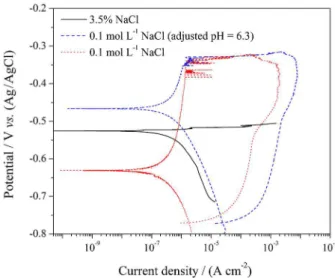
it is seen that the passivity state of the aluminum alloy still could be observed and the corrosion potential moved positively, while the pitting potential showed no change. This result indicates that the passivation of aluminum
Figure 1. Effect of sodium oleate (C17H33COONa) concentration on the
pH value of solution.
Figure 2. Potentiodynamic polarization curves for AA2024 in 0.1 mol L-1
NaCl solution with different concentrations of C17H33COONa.
Figure 3. Nyquist diagrams for AA2024 in 0.1 mol L-1 NaCl solution in
different concentrations of C17H33COONa.
Figure 4. Effects of pH and Cl− concentration on the potentiodynamic
alloy was induced not by the increased pH value but by the presence of C17H33COONa. As an anodic corrosion
inhibitor, C17H33COONa can improve the passivation of
aluminum alloy.14 The pH solution decrease could cause
corrosion potential (Ecorr) to move to the positive direction,
which is consistent to the literature results.10,16 In addition,
in 3.5 wt.% NaCl with 0.2 g L-1 C
17H33COONa solution,
there was no obvious anodic passive state observed on the polarization curve, which is also consistent with a previous report.14 This shows that in solution with high Cl−
concentration, 0.2 g L-1 C
17H33COONa could not improve
the passivity of aluminum alloy.
The corrosion current density icorr was determined by
fitting the cathodic part of the potentiodynamic polarization curves using Tafel extrapolation and the inhibition efficiency η was calculated. Table 1 shows the changes of icorr and η with C17H33COONa concentration. It can
be seen that after 0.05 g L-1 C
17H33COONa was added,
icorr apparently decreased and η showed a high value.
With the C17H33COONa concentration further increasing,
both icorr and ηremained basically stable, indicating that
C17H33COONa has good corrosion inhibition effect for
aluminum alloy in the whole studied concentration range.
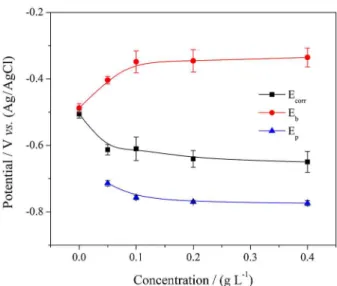
Figure 5 shows the influence of C17H33COONa
concentration on the corrosion potential (Ecorr), the pitting
potential (Eb) and the repassivation potential (Ep) of AA2024
in 0.1 mol L-1 NaCl solution. The addition of sodium oleate
raised Eb apparently, but when the concentration was
higher than 0.1 g L-1, E
b remained basically stable. With
the increase of C17H33COONa concentration, the separation
between the corrosion potential and the pitting potential increased, which is indicative of improved passivity and decreased tendency for pit initiation.16 The main reason of
the decrease in Ecorrmay be ascribed to the increase of OH−
concentration in solution. According to Nernst equation 2:
( 2)
eOH / O
E − = − 1.229 0.0591 pH (2)
the pH variation from 6.3 (0.1 mol L-1 NaCl solution) to 9.5
(0.2 g L-1 C
17H33COONa with 0.1 mol L-1 NaCl solution)
would lead the equilibrium potential of the cathodic reduction reaction to move about 0.19 V negatively thereby the corrosion potential would decrease accordingly. The above results indicate that, considering both uniform corrosion and pitting corrosion, the lowest inhibition concentration of C17H33COONa for aluminum alloy 2024
in 0.1 mol L-1 NaCl solution is about 0.1 g L-1.
As an anionic surfactant, the molecule of sodium oleate is composed of both polar hydrophilic group and nonpolar hydrophobic group. The polar group adsorbs on the surface of aluminum alloy to form a barrier film which shows hydrophobicity and can retard or block direct adsorption of the aggressive ions on aluminum alloy surface,12 so as to
inhibit the onset of pitting attack. In addition, the variation of the repassivation potential (Ep) with C17H33COONa
concentration shows that the addition of sodium oleate had little effect on the repassivation process of the pits already occurred. This result is consistent with the result in Figure 4, showing that sodium oleate had no apparent inhibition effect in high salty and acidic environments, such as the condition within developed pits.
Figure 6 shows the surface morphology of aluminum alloy 2024 after polarization test in 0.1 mol L-1 NaCl
solution with 0.2 g L-1 C
17H33COONa. There are some
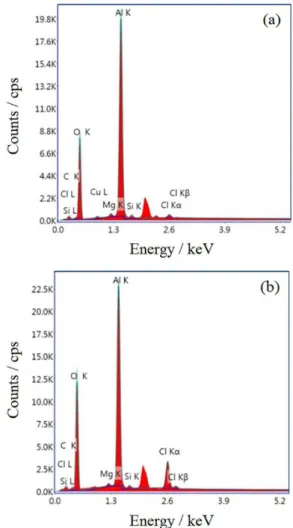
micro-pits on the sample surface with deposits similar to corrosion products around the pits. Some pits are open but most of them are covered or partially covered with the products. Figure 7 shows a scanning electron microscopy with energy dispersive spectrometer (SEM-EDS) analysis of selected areas A and B in Figure 6. Chlorine element is detected at both site A and B, revealing that the deposits are the build-up of the corrosion products. It was reported
Table 1. Effects of C17H33COONa concentration on corrosion current
density (icorr) and inhibition efficiency (η)
Concentration/ (g L-1) i
corr / (µA cm-2) η / %
0 5.4950 –
0.05 0.2569 95.32
0.1 0.3739 93.20
0.2 0.5750 89.54
0.4 0.4791 92.26
Figure 5. Effect of C17H33COONa concentration on corrosion potential
that in alkaline solutions containing Cl−, Al(OH) 2Cl and
Al(OH)Cl2 species would exist on aluminum alloy surface, 17
which is consistent with the EDS analysis result in Figure 7. For aluminum alloy 2024, pitting corrosion is usually associated with the intermetallic particles Al2CuMg. Al and
Mg are selectively dissolved, leaving Cu-rich remnants. Accompanying the dissolution process, Cu may migrate to the vicinity of the pits to form larger cathodic areas, which would accelerate corrosion of the surrounding aluminum alloy matrix and therefore result in the formation of more pits around the Cu-rich areas.9,18-21 The EDS analysis in
Figure 7a shows that Cu is present in the corrosion products around the pit. Above results indicate that the addition of sodium oleate increased the pitting potential of aluminum alloy, but the initiation mechanism of pitting on aluminum alloy was unchanged.
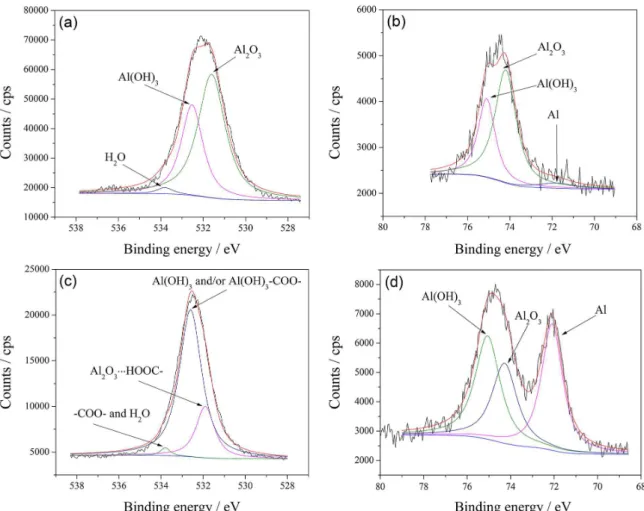
Figure 8 shows the X-ray photoelectron spectroscopy (XPS) spectra for AA2024 surface after polarization exposure in 0.1 mol L-1 NaCl solutions with and without
C17H33COONa. Figures 8a and 8b show the O1s and Al2p
spectra without C17H33COONa, and Figures 8c and 8d are
the O1s and Al2p spectra with C17H33COONa respectively.
In Figure 8a, the peaks at 532.6, 531.6 and 533.8 eV could be respectively ascribed to Al(OH)3, Al2O3 and H2O adsorbed on
aluminum alloy surface.22,23 In Figure 8c, the peaks at 533.8,
531.9 and 532.6 eV may be attributed to –COO– or adsorbed H2O, Al2O3–OCO–, and Al(OH)3 or Al–O–CO−.
22-24
The changes of O1s and Al2p peaks indicate that after the addition of C17H33COONa, the peak intensity of Al(OH)3
and Al2O3 increased. Therefore, sodium oleate promoted the
formation of the aluminum oxide/hydroxideon the surface, thereby enhancing the passivity. In Figure 8d, the binding energy of Al2p corresponds to the Al matrix at 72.1 eV and the binding energy of Al2p corresponds to Al2O3 at
74.1 eV.13 Comparing the Al2p peak at 71.8 eV in Figure 8b
and the literature values,25 there is a 0.3 eV shift for the
binding energy of Al after addition of C17H33COONa. The
reason probably is that when C17H33COO− is adsorbed on
the alloy surface, the action between O in the –COO– group and Al would induce the outer electron density of the Al atoms to decrease, leading to increase binding energy. This means that C17H33COO− groups could adsorb on aluminum
Figure 6. Scanning electron microscopy (SEM) morphology of pitting corrosion for AA2024 after corrosion in 0.2 g L-1 C
17H33COONa with 0.1 mol L-1 NaCl solution: (a) morphology; (b) enlarged view around a pit.
Figure 8. X-ray photoelectron spectra for AA2024 surface exposure in 0.1 mol L-1 NaCl solution with and without C
17H33COONa. Spectra without C17H33COONa (a) O1s and (b) Al2p; and with C17H33COONa (c) O1s and (d) Al2p.
Figure 9. Effects of immersion time on electrochemical impedance of AA2024 in 0.1 mol L-1 NaCl solutions with 0.1 g L-1 C
17H33COONa. alloy surface by a chemical adsorption effect.26 Amin12 also
pointed out that after oleate anions are adsorbed on the Al surface by electrostatic forces, they may still react with Al to form chemical bonds.
The effect of immersion time on AA2024 was analyzed with EIS method. Figure 9 shows the diagrams for AA2024 in 0.1 mol L-1 NaCl solutions containing 0.1 g L-1
C17H33COONa. It can be seen that the impedance decreased
gradually with the extension of immersion time. According to the literature,12,15 the oleate ions (C
17H33COO−) in alkaline
solution will first adsorb on the positively charged Al alloy electrode surface by electrostatic attraction force. There is also a possibility that some sodium oleate transforms into oleic acid, so the chemisorptions of oleic acids on the surface should also take place at the same time. The decrease of impedance by immersion time is probably related to the orientation change of the adsorbed oleate ions or oleic acid over the immersion time. That is, when more C17H33COO
− ions adsorb on the surface, interaction
between tails of C17H33COO− will occur through van der
Waals force. The hydrocarbons chains of many adsorbed ions leave the surface and aggregate to form hemimicelles,
causing the reduction of the effective area covered by C17H33COO− ions to some extent.7
Figure 10 shows the influence of the solution temperature on the impedance spectra of AA2024 in 0.1 mol L-1 NaCl
solution containing 0.1 g L-1 C
17H33COONa. It is seen
Figure 10. Effects of solutions temperature on impedance spectra of AA2024 in 0.1 mol L-1 NaCl solution with 0.1 g L-1 C
17H33COONa.
temperature increasing, indicating that high temperature causes desorption of sodium oleate. This is in agreement with the literature results.2,7
Conclusions
In conclusion, the corrosion inhibition of C17H33COONa
for aluminum alloy in 0.1 mol L-1 NaCl solution includes
two sides: on one side, C17H33COO
− ions are partially
hydrolyzed in solutions to produce OH−, increasing the
cathodic reaction rate and enhancing the Al(OH)3 formation
on the alloy surface. On the other side, C17H33COONa
adsorbed on the aluminum alloy surface through electrostatic adsorption or chemisorption form barrier films, preventing the corrosion process and impeding the adsorption and ingress of chloride ions. With the two parts working together, C17H33COONa could facilitate the
passivity of aluminum alloy surface effectively and inhibit the initiation of pits, thereby showing good inhibition effects for both uniform corrosion and pitting corrosion.
In 0.1 mol L-1 NaCl solution, surfactant sodium oleate
as an anodic inhibitor could promote the passivity of aluminum alloy and shows good inhibition for uniform corrosion of allunimum alloy. While in high concentration of Cl− solution (3.5 wt.% NaCl) sodium oleate could not
promote the passivity of allunimum alloy.
For aluminum alloy in 0.1 mol L-1 NaCl solution,
sodium oleate suppresses the pitting initiation tendency and reduces the sensitivity of pitting corrosion. The addition of 0.1 g L-1 C
17H33COONa shows good inhibition performance
but further concentration increases has little impact on the inhibition efficiency. For the pits which have already developed, the addition of C17H33COONa has little effect
on the repassivation process.
Besides electrostatic forces, the polar hydrophilic group in sodium oleate may chemically adsorbs on aluminum
alloy surface, which would promote oxidation of the aluminum alloy surface.
Acknowledgement
The authors are thankful to the National Natural Science Foundation of China (Contract 51171014 and 51210001) for financial supports to this work.
References
1. Zhou, Y. H.; Tian, X. L.; Han, X. J.; Zhou, D. R.; Corros. Sci. Prot. Technol. 2010, 22, 52.
2. Li, X. H.; Deng, S. D.; Fu, H.; Mu, G. N.; Corros. Sci. 2010,
52, 1167.
3. Xie, X. Z.; Li, Y.; Sun, X. J.; Chem. Clean. 1999, 15, 25. 4. Zhang, G. H.; Gu, L.; Lu, F. J.; J. Shanxi Univ. Sci. Technol.
2003, 15.
5. Song, B. L.; Shang, S. B.; Song, Z. Q.; Biomass Chem. Eng. 2010, 43.
6. Zhao, J. G.; Peng, Y. L.; Corros. Sci. Prot. Technol. 2008, 20, 353.
7. Ma, H. Y.; Chen, S. H.; Yin, B. S.; Zhao, S. Y.; Liu, X. Q.;
Corros. Sci. 2003, 45, 867.
8. Shao, M. H.; Lin, C. J.; Corros. Sci. Prot. Technol. 2002, 14, 147.
9. Buchheit, R. G.; Grant, R. P.; Hlava, P. F.; Mckenzie, B.; Zender, G. L.; J. Electrochem. Soc. 1997, 144, 2621.
10. Lopez-Garrity, O.; Frankel, G. S.; Electrochim. Acta 2014, 130, 9.
11. Amin, M. A.; J. Appl. Electrochem. 2006, 36, 215. 12. Amin, M. A.; J. Appl. Electrochem. 2009, 39, 689.
13. Li, X. H.; Deng, S. D.; Bai, W.; Fu, H.; Mu, G. N.; J. Yunnan Univ., Nat. Sci. Ed. 2009, 31, 177.
14. Wang, C.; Jiang, F.; Lin, H. C.; Yu, G.; Ding, H.; Mater. Prot.
2001, 34, 8.
15. Zhou, Y. H.; Chen, S. Q.; Li, C. H.; Adv. Mat. Res. 2012, 518-523, 249.
16. Lopez-Garrity, O.; Frankel, G. S.; J. Electrochem. Soc. 2014,
161, C95.
17. Emregül, K. C.; Aksüt, A. A.; Corros. Sci. 2003, 45, 2415. 18. Shao, M. H.; Fu, Y.; Hu, R. G.; Lin, C. J.; Mater. Sci. Eng. A.
- Struct. 2003, 344, 323.
19. Li, S. M.; Zhang, H. U.; Liu, J. H.; T. Nonferr. Metal Soc. 2007,
17, 318.
20. Szklarska-Smialowska, Z.; Corros. Sci. 1999, 41, 1743. 21. Lacroix, L.; Blanc, C.; Pébère, N.; Thompson, G. E.;
Tribollet, B.; Vivier, V.; Corros. Sci. 2012, 64, 213. 22. Do, T.; Mcintyre, N. S.; Surf. Interface Anal. 1999, 27, 1037. 23. Gredelj, S.; Gerson, A. R.; Kumar, S.; Cavallaro, G. P.; Appl.
24. Shi, H. W.; Han, E. H.; Liu, F. C.; Corros. Sci. 2011, 53, 2374. 25. Vast, L.; Delhalle, J.; Mekhalif, Z.; Int. J. Adhes. Adhes. 2009,
29, 286.
26. Nazarov, A. P.; Thierry, D.; Prot. Met. Phys. Chem. Surf. 2003,
39, 55.
Submitted: January 9, 2015