A
r
ti
c
le
0103 - 5053 $6.00+0.00
*e-mail: [email protected]
Liquid Phase Photooxidation of Toluene in the Presence of Transition
Metal Oxide Doped Titania
S. Riyas,
aG. Krishnan
band P. N. Mohan Das*
,aaRegional Research Laboratory (CSIR), Trivandrum- 695 019, India
bReader and Head, Department of Chemistry, University College, Trivandrum, India
O tolueno é um composto orgânico muito tóxico utilizado para a preparação de muitos outros compostos. A fotoxidação do tolueno em fase líquida foi realizada utilizando-se amostras policristalinas do TiO2dopado com óxidos de metais de transição, contendo diferentes fases de dióxido de titânio conhecidas como anatase, rutilo e a mistura de anatase e rutilo. O objetivo principal desse estudo foi investigar a conversão de tolueno a ácido benzóico e como cada fase modificada do TiO2 afeta a velocidade da reação. As diferentes fases foram caracterizadas com base em difração de Raios X. Outros métodos, tais como, análises químicas, medidas de área de superfícies e cálculo do tamanho do cristal também foram utilizados para a caracterização das amostras. A fase da anatase dopada com metais de transição gerou maior rendimento do que a do rutilo dopado. A mistura de anatase e rutilo não apresentou efeito significativo.
Toluene is a very noxious organic compound used for the preparation of many compounds. Liquid phase photo-oxidation of toluene was carried out using poly crystalline samples of transition metal oxide doped TiO2 containing different phases of titania, namely anatase, rutile and mixture of anatase and rutile. The main objective was to find out the conversion of toluene to benzoic acid and how the phase modification of doped TiO2 affects the reaction rate. The different phases of TiO2 were determined using powder X-ray diffraction. Other methods such as chemical analysis, Surface area measurements and Crystallite size calculation were also used for the characterization of the samples. Anatase doped with transition metal oxides gives higher yield than doped rutile. Mixture of anatase and rutile has no significant effect.
Keywords: toluene, doped TiO2, photo-oxidation, transition metal oxides, benzoic acid, titania
Introduction
Benzoic acid has many industrial applications. The first change in benzoic acid preparation came in 1850s when
hippuric acid (C6H5CONHCH2COOH), from the urine
of horses and cattle, replaced gum benzoin as the starting material. Hippuric acid was used extensively until 1870,
when coal tar raw materials were utilized for the first time.1,2
Phthalic acid was also used as the raw material until 1890, when the hydrolysis of benzotrichloride took over the bulk production. This route and the one employing chlorination of toluene to benzyl chloride and subsequent oxidation with
HNO3 to benzoic acid remained as the major production route
until after World War I. After World War II, another change started in manufacturing technique of benzoic acid, as the air
oxidation of toluene was started in Germany and after the war, this method was carried over to the US. The air oxidation in liquid phase using cobalt catalysts has now become the main manufacturing method in the US. Considering the present and future petrochemical economic factors, it is difficult to foresee any commercial raw material other than toluene for
benzoic acid production.1,2 Benzoic acid has many industrial
applications such as, in medicines, veterinary medicines, food
and industrial preservatives, dye stuffs, synthetic fiber.1
Most metal oxides, when used in the technical applications are functionalized through doping or used in combination with other oxides. Titania is to date the most suitable photocatalyst semi conducting material due to its high stability towards photocorrosion and its relatively favorable bandgap energy. Doping can have a variety of consequences as it may alter the structure, electronic properties and thermal
that one can confidently introduce in a well controlled way
impurities and dopants. Surface investigations on doped TiO2
show that the local variations of electronic structure.3 Doping
TiO2 with transition metal oxides increases the quantum
yield in photocatalytic degradation process and TiO2in gas
sensors is usually doped with noble metals. Dopant increases
the photocatalytic activity of TiO2 films. The mechanism
can be attributed to as the anatase grain sizes decrease with
doping and the specific surface areas of doped TiO2 films
increase, the charge transfer in TiO2 film is promoted also by
enhancing the electron–hole pair separation and inhibiting their recombination, the dopant enhances the charge pair
separation efficiency for doped TiO2 films.3 Heterogeneous
photocatalysis in the presence of semi conductor oxides is a fast growing field of basic and applied research, especially
for the oxidation of organic pollutants in water.4-6
Ibusuki and Takeuchi7carried out the complete
photooxidation of toluene on TiO2 at room temperature.
They found that the presence of water vapour was beneficial in order to achieve the almost complete mineralization of toluene, benzaldehyde having been detected only in very small amounts. However, the product distribution and catalyst stability strongly depend on the nature of the catalyst and the experimental conditions. Furthermore, Obee and
Brown8studied the influence of the competitive adsorption
of water and toluene vapours on the photooxidation rate.
Luo and Ollis9 and Einaga et al.10 by studying the toluene
degradation in humidified air, report that the influence of water is complex in the sense that an optimum water concentration was found for which maximum reactivity was observed. In any case no significant amounts of intermediate species were detected. Recently the selective photooxidation
of gaseous toluene to benzaldehyde on TiO2 powder has
been reported as an effective method to transform this
compound to a valuable chemical.11,12 Moreover, Cao and
co-workers13 reported the photo catalytic oxidation of toluene
by using nano structured TiO2 catalysts. They found a sever
deactivation of TiO2 due to the accumulation of partially
oxidized intermediates. The complete recovery of catalytic activity required a thermal treatment of the photocatalysts at a temperature above 420 °C.
Fujihira et al.14,15 studied the photooxidation of
toluene in aqueous aerated suspensions containing various powdered semiconductors. They reported the formation of cresols, benzaldehyde and benzyl alcohol, depending on the pH of the solution and on the used semiconductor. The formation of benzaldehyde was also confirmed by Navio
et al.,16 which used acetonitrile as solvent and investigated
the influence of the presence of water on the product distribution. Recently the use of a surfactant to enhance the photocatalytic reaction rate for toluene degradation
has been reported.17 TiO
2 is the most used and popular
photocatalyst for various reasons, but unfortunately, although a large shift of light absorption in the visible region has been observed in almost all cases, the presence of dopant metal species has not been reported beneficial when photooxidation reactions of organic substrates in aqueous
systems were carried out.18-21 Numerous investigations are
in progress for the improvement of the catalytic activity
of TiO2. TiO2 can crystallize in different structures, rutile
being the stable one. The anatase to rutile transformation does not have a transition temperature because there is no
phase equilibria involved.22Anatase transforms irreversibly
and exothermally to rutile in the range 880-1200 K.23,24
Some authors have reported that the recombination rate of the electron-hole pairs increases for chromium doped
TiO2 with respect to undoped TiO2. The photocatalytic
oxidation of acetic acid over TiO2 was markedly enhanced
by dissolved copper ions.25 Several authors have studied the
TiO2photocatalytic oxidation of benzene and toluene in
air or oxygen. Formation of CO2 was reported in all these
studies.26-38 Analysis of the products showed the formation
of benzyl alcohol, benzaldehyde27 and also benzoic acid28,29
in the case of toluene oxidation. Similarly it was reported that the photocatalytic decomposition of toluene in aqueous
TiO2 suspension was significantly promoted in the presence
of copper, ferrous and manganese ions.39 However there is
no promoting effect on the photocatalytic decomposition
of phenol in the presence of silver ion.40,41 Moreover
many other dopants are available on metal doped TiO2
preparations to efficiently decompose toxic compounds. The objective of this work is to study of influence of
different phase compositions of TiO2 on the liquid phase
photooxidation of toluene using different transition metal
oxides of Fe, Cr, Ni, Cu and Mn-doped TiO2. During the
heat treatment, these metal oxides diffuse to the TiO2
lattice to form doped TiO2. Irradiations were done for
different hours and the samples collected after particular duration was analyzed for the benzoic acid content. The reaction was carried out after calcination of the samples at different temperatures and time for obtaining different
phase compositions of TiO2. The samples so prepared were
subjected to powder XRD, in order to investigate the phase transformation in presence of above transition metal oxides. The results obtained are summarized in this paper.
Experimental
Chemicals used for sample preparation
TiO2 pulp (uncalcined pure hydrated TiO2 containing
factory, Travancore Titanium Products Ltd. Trivandrum, India, ferric nitrate (s.d.fine-chem Ltd), chromium trioxide (s.d.fine-chem. Ltd), nickel nitrate (MERCK), copper nitrate (A.R. s.d.fine-chem. Ltd.), manganous sulfate (A.R. s.d.fine-chem. Ltd.), hydrazine hydrate (L.R, s.d. fine-chem Ltd), sulfuric acid (98%, s.d. fine-chem), ammonium sulphate (L.R, s.d.fine-chem), toluene (99% -Ranbaxy)
Sample preparation
TiO2 doped with different transition metal oxides were
prepared as follows: 15% transition metal oxide doped
TiO2 was prepared by taking 35.29 g TiO2 pulp, 660 g
(NH4)2SO4, 825 mL conc: H2SO4. The mixture was heated
until a clear solution was obtained. It was then cooled and diluted to about 1 L. Transition metal salt dissolved in distilled water was added to the clear solution and mixed well. Titanium and metal ions were then precipitated together by the addition of hydrazine hydrate until the pH
was ca.9. The precipitate so obtained was washed with
distilled water till it was free from sulphate ions. Then filtered with Whatman No. 42 filter paper and dried in an oven at 110 °C for 3 h and calcined in a muffle furnace at different temperatures for 5 h for converting anatase to rutile
and to get doped TiO2. According to the nature of transition
metal oxide present anatase to rutile transformation
temperatures are different.23,24,42,43
Characterization of the samples
The calcined samples were subjected to chemical analysis using standard procedures. Titanium was estimated
by Aluminium reduction method,44 iron by titration against
0.01 mol L-1 K
2Cr2O7 and chromium and manganese by
titration against standard KMnO4 solution.45 Nickel and
copper were estimated gravimetrically using dimethyl
glyoxime and thiocyanate respectively.44 XRD studies
were carried out by the powder diffraction technique. The percentage of rutile formed was calculated from XRD patterns using the equation
% Rutile = 1 × 100 / 1+0.794 IA/IR
where IA and IRare the peak intensities of [101] and [110]
planes for anatase and rutile respectively. The ‘d’ values were compared with standard ASTM values. Philips automatic powder X-ray diffractometer (PW 1710 with
CuKA wavelength) was used for XRD studies.41Ordinary
muffle furnace with a temperature programmer was used for calcination purpose. Surface area measurements were done
using a Gemini 2360 V4.01 Surface area analyzer (Micro Meritics Instrument Corporation, USA). These were done by BET method of nitrogen adsorption at liquid nitrogen temperature using Gemini 2360 V4.01 instrument by taking
accurately 0.5 g of the sample.46
Photocatalytic oxidation of toluene
Figure1 represents the geometry of catalytic reactor used, which was made of pyrex glass and had 25 cm height and 30 mm and 18 mm outer and inner diameters respectively. It was fitted with annular water cooling jackets fabricated from glass not transmitting light of wave length < 300 nm. The toluene oxidation activity studies were
carried out using Fe-doped TiO2, Ni-doped TiO2, Cr-doped
TiO2, Mn-doped TiO2, and Cu-doped TiO2 samples with
different phase compositions of TiO2 as per the following
procedure.
0.250 g metal oxide doped TiO2 sample (with different
phase content) was taken in photoreactor and 247.3 mL distilled water was added. It was then kept on a magnetic stirrer and oxygen was bubbled continuously. 2.7 mL of toluene was then added and the photooxidations were done by using UV-A (365 nm) irradiation for different durations. After each hour, sample was taken and analyzed for benzoic acid formation. The benzoic acid formed was estimated by
titrating against standard 0.1 mol L-1 NaOH solution using
phenolphthalein as indicator. The proposed reaction is C7H8 + 3/2 O2l C7H6O2+ H2O.
Results and Discussion
Material characterization
To establish the amount of dopants, chemical analysis of
transition metal oxide doped TiO2 samples were performed.
The chemical and phase compositions of doped samples are given in Table 1.
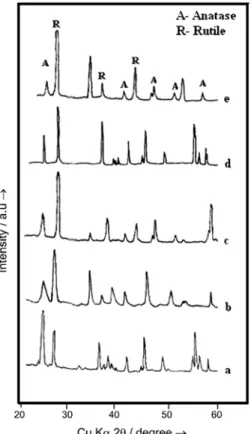
Figure 2 represents the XRD patterns of calcined
samples of transition metal oxide doped TiO2 heated at
different temperatures for 5 h. It is found that on heating
anatase-rutile transformation in TiO2 takes place. The peak
at 2Q = 25.30° corresponds to anatase and the peak 27.48°
is that of rutile phases of TiO2. The extent of rutilation
depends on the nature of transition metal oxide present. Since there is no peak corresponding to metal oxide in any
XRD pattern, formation of doped TiO2 can be confirmed.
Surface area of all the samples decreased drastically up on rutilation and the crystallite size of doped titania samples increased with rutilation (Table 2). The lowering of surface area depends on the nature of metal oxide doped since the diffusion of dopant to the oxygen vacancy concentration
in the TiO2 lattice during rutilation temperature different
for different ions, which breaks the Ti-O bond in anatase lattice and rearranges to the rutile structure. The decrease in surface area could also originate from a coalescence process
since sintering is favored by the presence of dopants.47,48
The anatase to rutile transformation is accompanied by
a crystallographic re- arrangement in TiO2 lattice. How this
phase transformation affects the photooxidation using the above catalysts is discussed in the following section.
Photooxidation of toluene using doped titania
With undoped TiO
2
To compare and ascertain the role of transition metal oxides, experiments were carried out using undoped anatase
phase TiO2. Figure 3 represents benzoic acid formed
during irradiation and it was observed that the benzoic acid formation increases with irradiation time. Sample collected after irradiation for 6 h contained 7.3% benzoic acid and for 12 h it was 28.7%.
Table 1. Chemical and phase compositions of transition metal oxide doped TiO2 heated at different temperatures for 5 h used for photooxidation
Sample Metal Oxide/(%) TiO2/(%) Calcination
Temperature/(ºC)
Phase Composition Anatase/(%) Rutile/(%)
Fe2O3doped TiO2 14.39 84.4 800 47 53
Cr2O3doped TiO2 14.89 84.9 700 28 72
NiO doped TiO2 14.72 84.89 800 54 46
CuO doped TiO2 14.92 84.88 750 50 50
MnO2doped TiO2 14.87 84.93 700 48 52
Figure 2. XRD patterns transition metal oxide doped TiO2 heated at different temperatures for 5 h. (a) Fe2O3/TiO2heated at 800 ºC. (b) Cr2O3/ TiO2heated at 700 ºC. (c) NiO/TiO2heated at 800 ºC. (d) CuO/TiO2heated at 750 ºC. (e) MnO2/TiO2heated at 700 ºC.
Table 2. Surface area and crystallite size of transition metal oxide doped TiO2 used for photooxidation
Sample
Surface area / ( m2 g-1)
Crystallite size / (nm) ( After rutilation) Before
rutilation
After rutilation
Fe2O3/TiO2 109.5 4.3 18.8
Cr2O3/TiO2 178.6 9.1 7.3
NiO/TiO2 192.7 1.9 31.6
CuO/TiO2 132.2 6.1 14.3
With Fe-doped TiO2
Figure 4 represents the variation in toluene oxidation
activity of 15% Fe-doped TiO2.It is found that toluene
oxidation is considerably affected by the phase
transfor-mation in TiO2. The conversion obtained with Fe2O3on
anatase TiO2 was 92.4% for 10 h irradiation. But the
conversion obtained was 36.4% when anatase phase was replaced with rutile. The oxidation was found to
be lowered by the phase transformation in TiO2support.
Rutilation reduced the oxidation process and also
percentage conversion was low (28.6%) with Fe-doped TiO2
containing both anatase and rutile phases as compared to one containing anatase phase alone.
The lowering of activity can be ascribed to the decrease in surface area of these samples during the phase transformation. Anatase has got better activity, as expected, due to its enhanced properties compared to rutile. The presence of rutile along with anatase also reduces the
catalytic activity of Fe-doped TiO2.
As compared to undoped TiO2, the toluene oxidation
activity is increased on doping oxide of Fe. 12 h irradiation
produced 98.8% benzoic acid in presence of Fe- doped TiO2
while in presence of undoped TiO2 only 28.7% benzoic acid
was formed at the same conditions. Hence it is clear that Fe-doping has some enhancing effect on photooxidation of
toluene and hence Fe-doped TiO2 can be used as a better
catalyst for the reaction than pure TiO2. Decrease in the
catalytic activity of the system with rutilation may also be due to the changes in distribution of metal oxide on
the surface of TiO2 with the crystal transformation as well
as metal titanate formation at higher temperature where rutilation occurs. So, the reaction is influenced by the phase changes occurring in the support material.
With Cr-doped TiO2
Benzoic acid formation using 15% Cr-doped TiO2 with
anatase, rutile and mixture of anatase and rutile phases is given in Figure 5. The photooxidation activity of Cr-doped
TiO2 is affected by the rutilation in TiO2. The conversion
obtained with Cr- doped with anatase TiO2 was 100% for
10 h irradiation. But the conversion obtained was 33.3% when anatase phase was replaced with rutile. Benzoic
acid formation was 30.8% with Cr2O3/TiO2 containing
Figure 3. Variation in benzoic acid formation with irradiation time in undoped TiO2.
Figure 4. Variation in benzoic acid formation with phase composition of 15% Fe2O3 doped TiO2 systems. a. Containing anatase; b. Containing rutile; c.Containing both anatase and rutile.
both anatase and rutile phases. Thus change in the phase
composition of TiO2 affects the photooxidation of toluene
using Cr-doped TiO2.
Cr-doped TiO2is also a good catalyst for the reaction
compared to undoped TiO2 since 10 h irradiation produced
100% conversion of toluene to benzoic acid and this
system is better than Fe-doped TiO2. Anatase is the best as
expected, due to its better properties compared to rutile. Also there is a drastic decrease in surface area at the completion of rutilation. This reaction is also influenced by the phase changes in the support material on which oxide of Chromium is present.
With Ni-doped TiO2
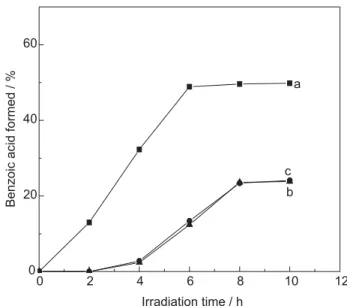
Figure 6 represents the different percentages of benzoic acid formed during irradiation of aqueous suspension of
toluene containing Ni-doped TiO2 with different phases.
It is found that the conversion to benzoic acid is very low as compared to other catalyst systems under investigation.
On irradiation for 8 h with Ni-doped on anatase TiO2, only
6.5% benzoic acid was formed.
Ni-doped on rutile TiO2 for 8 h irradiation gave only
1.6% benzoic acid formation while Ni supported on mixture of anatase and rutile form converted almost the same amount at same conditions. It is clear that doping oxide of
nickel with TiO2, reduces significantly the photooxidation
activity of undoped TiO2. Nickel oxide affect negatively the
photoreactivity of TiO2 by reducing the number of active
sites and the life times of the hole-electron pairs generated by band gap irradiation. Moreover the specific surface area of Ni-doped sample is higher than other samples
which reduces the absorption of H2O by TiO2surface and
generation of hydroxyl radicals.49
Thus Ni-doped TiO2 is not a catalyst for the
photochemical oxidation of toluene to benzoic acid even with anatase phase. The nominal conversion to benzoic acid
may be due to the photocatalytic activity of TiO2.
With Cu-doped TiO2
Using 15% Cu-doped TiO2 containing anatase phase of
titania, toluene conversion to benzoic acid reached 49.6% for 8 h irradiation. Here also the photochemical oxidation of toluene is affected by rutilation. The percentage conversion dropped to 24.1% for 10 h irradiation, when oxide of Cu is supported on rutile phase. 49.8% benzoic acid was formed with anatase supported Copper for the same irradiation time. Figure 7 gives the variation in benzoic acid formation with irradiation
time using different phases of TiO2 support. Here also the
oxidation activity of the catalyst is decreased by the presence
of rutile. The required properties of TiO2 to act as a good
catalyst support decreases on rutilation. The surface area of
Cu-doped TiO2decreased drastically on rutilation. Decrease in
the catalytic activity of the system with rutilation may also be due to the changes in distribution of metal oxide on the surface of titania, which may decrease with the crystal transformation and metal titanate formation at higher temperature where rutilation occurs. These may be the reasons for the decrease in photooxidation activity. So, this reaction also is influenced by the phase changes occurring in the support material.
With Mn-doped TiO2
Figure 8 represents the variation in benzoic acid percentage with time of irradiation using oxide of Mn Figure 6. Variation in benzoic acid formation with phase composition
of 15% NiO doped TiO2 systems. a. Containing anatase; b. Containing rutile; c. Containing both anatase and rutile.
supported on different phases of TiO2. Very interesting result is obtained for the photooxidation of toluene using
Mn-doped TiO2. Here the anatase phase TiO2 supported on
oxide of manganese produced 45.5% benzoic acid from toluene for 2 h irradiation. At 4 h irradiation, 50.3% benzoic acid was formed. On further increase of irradiation, the percentage of benzoic acid dropped slowly reaching 13.2% at 10 h. This may be due to decomposition of benzoic acid to carbon dioxide and water.
As in the case of other systems, here also, rutilation lowered the oxidation activity as expected but the extent of lowering is higher as compared to others. Thus the photo oxidation of toluene is affected by the phase modification
in the TiO2 support. The surface area of samples decreases
drastically with rutilation, which may reflect in lowering the properties than anatase, which may be one of the reasons for lower reaction rate.
In the case of Mn-doped TiO2, prolonged irradiation
resulted in the degradation since toluene layer disappeared showing the conversion of toluene but benzoic acid quantity decreased, which shows that benzoic acid is getting decomposed. The optimum time of irradiation is found to be 4 h where around 50% benzoic acid conversion is
obtained. Thus it is clear that the Mn-doped TiO2 can act
as a catalyst for the decomposition of benzoic acid and it may decompose organic pollutants.
Carbon balances were determined by measuring the amounts of consumed carbon in reactant and was recovered
as carbon in C6H5-COOH. Benzoic acid formed has carbon
recovery value of ca.99.5%, which confirms that there is
no carbon deposition. After irradiation, the concentration
of TiO2 remains the same and no intermediate by products
were detected. A yellowish discolouration of TiO2 during
photocatalytic treatment was observed due to the formation
of polymeric species as reported in the literature.50 Titania
particles were separated by filtration and benzoic acid is crystallized from the filtrate after concentration.
Reaction conducted in liquid phase photooxidation of
toluene using the transition metal oxide doped TiO2 shows
that the oxidation activity of the catalyst is sensitive to the phase modification. Higher conversions for toluene photooxidation were obtained by using the anatase phase
TiO2.The degradation of 4-nitrophenol using transition
metal ions impregnated on TiO2 has improved activity than
bare TiO2 as reported by Di Paola et al.49Severe decrease
in photooxidation activity was observed with rutilation.
Order of photooxidation activity for toluene is anatase
rutile > mixture of anatase and rutile.
Table 3 represents the variation in benzoic acid formation on irradiation for 6 h with phase composition
of doped TiO2. Different metal oxide doped TiO2 exhibit
different conversions for toluene photooxidation. Oxides
of Fe and Cr supported on TiO2 produced more yield of
benzoic acid from toluene during irradiation. The yield of
benzoic acid is less with Cu-doped TiO2. Mn-doped TiO2
is acting as a catalyst for the decomposition of the formed benzoic acid at higher irradiation time. Nickel Oxide
supported on TiO2 is not a catalyst for photooxidation
of toluene. The photocatalytic activity decreases in the
order Cr-doped TiO2 > Fe-doped TiO2 > Cu-doped TiO2 >
undoped TiO2 > Mn-doped TiO2 > Ni-doped TiO2.
Mechanism of photochemical oxidation of toluene
The mechanism of toluene degradation during irradiation is believed to be as follows. The photocatalytic reaction starts with the exposure of aqueous suspension
of toluene in presence of metal oxide supported on TiO2
to UV light. After exposure to light two reaction starters
are generated; one is electron (e-) and the other is positive
Figure 8. Variation in benzoic acid formation with different phase composition of 15% MnO2/TiO2 systems. a. Containing anatase; b. Containing rutile; c. Containing both anatase and rutile.
Table 3. Variation in benzoic acid formation on irradiation for 6 h with phase composition of doped TiO2
Sample Benzoic acid formed/(%)
With anatase With rutile With anatase and rutile mixture
Fe2O3/TiO2 53.4 18.6 16.3
Cr2O3/TiO2 63.6 17.8 22.0
NiO/TiO2 4.8 0 0
CuO/TiO2 48.9 13.4 12.4
electron holes (h+). One of the notable characteristics of
TiO2 is that the oxidizing power of the holes is greater
than the reducing power of the excited electrons. Now
TiO2absorbs H2O on to its surface and generates hydroxyl
radicals, which have strong oxidation capacity. In this
reaction TiO2 is regenerated to original form as follows:
TiO2(h+) + H
2Ol
uOH + H+ + TiO
2.
The hydroxyl radical can abstract the hydrogen from the methyl group leading to a benzyl radical.
The benzyl radical can then react with O2 to form a
benzylperoxy radical.
The benzyl peroxy radical can couple to form a tetroxide
The tetroxide decomposes to benzaldehyde, benzyl alcohol and molecular oxygen.
The benzyl peroxy radical can also react with a hydroperoxy radical (formed in the reaction system) to form a monoalkyl tetroxide that decomposes to benzaldehyde, molecular oxygen and water.
Benzaldehyde is easily oxidized into benzoic acid,
especially in the presence of O2 and UV irradiation.
The difference in photocatalytic activity between TiO2
and doped TiO2 can be attributed to the characteristics such
as the higher particle size or the lower anatase/rutile ratio of
doped TiO2. Powders with more rutile could be less active
due to the dehydroxylation caused by the anatase to rutile phase transformation since hydroxylation reduces hole trapping by surface hydroxyls, enhancing recombination and oxygen or organic species adsorption. A decrease in specific surface area can also affect the photo activity.
Dopants can affect the photoactivity of TiO2 by changing
the number of active sites, surface groups and the acid-base properties. The different behavior of the various samples is also related to the solubility of the transition metal oxide
in the TiO2 support, which depends strongly on the radius
and the charge of the corresponding ion. The present study
confirms that metal oxide dispersed TiO2 is better catalyst
than pure TiO2. The reasons for the enhanced activity and
efficiency may be due to various factors like change in the number of active sites, surface groups, acid base properties
and solubility of metal oxide in TiO2.
Conclusions
Reaction conducted in liquid phase photooxidation of
toluene using the transition metal oxide doped TiO2 shows
that the oxidation activity of the catalyst is sensitive to the phase modification. Higher conversions for toluene photooxidation were obtained by using the anatase phase
TiO2.Severe decrease in photooxidation activity was
observed with rutilation. Cr and Fe-doped TiO2 can give
about 100% conversion in photo oxidation of toluene to
benzoic acid as compared to undoped TiO2 and with Cu
and Mn-doped TiO2 the yield of benzoic acid is less. On
irradiation for more time, in presence of Mn-doped TiO2
degradation of benzoic acid formed takes place. Ni-doped
TiO2 is not a catalyst for photooxidation of toluene to
benzoic acid. Undoped TiO2 gives more yield of benzoic
acid than Ni-doped TiO2. Titania particles were separated
by filtration and benzoic acid is crystallized from the filtrate after concentration.
The difference in photocatalytic activity between TiO2
and doped TiO2 can be attributed to the characteristics such
as the higher particle size or the lower anatase/rutile ratio of
doped TiO2. Powders with more rutile could be less active due
organic species adsorption. Nickel oxide affects negatively
the photoreactivity of TiO2 by reducing the number of active
sites and the lifetimes of the hole-electron pairs generated by band gap irradiation. A decrease in specific surface area can also affect its photoactivity.
Acknowledgments
We express our sincere thanks to Director, Regional Research Laboratory (CSIR), Trivandrum for providing necessary facilities for the investigations; to Dr. Suresh Das and Mr.Robert Philip, photochemistry research unit RRL(T), for providing necessary facilities to do the photooxidation and to all the members of BSMR section, RRL, Trivandrum.
References
1. Snell, F. D.; Hilton, C. L.; Encyclopedia of Industrial Chemical Analysis, Wiley: New York, 1968.
2. Mark, H. F.; Othmer, D. F.; Overberger, C. G.; Seaborg, G. T.;
Encyclopedia of Chemical Technology, 3rd ed. , Wiley: New
York, 1978.
3. Diebold, U.; Surf. Sci. Rep.2003,48, 53.
4. Schiavello, M.; Heterogeneous Photocatalysis, Wiley: New York, 1995.
5. Serpone, N.; Pelizzetti, E.; Photocatalysis: Fundamentals and Applications, Wiley: New York, 1989.
6. Fujishima, A.; Hashimoto, K.; Watanabe, T.; TiO2 Photocatalysis: Fundamentals and Applications, BKC: Tokyo, 1999.
7. Ibusuki, T.; Takeuchi, K.; Atmos. Environ.1986,20, 1711. 8. Obee, T. N.; Brown, R. T.; Environ. Sci. Technol. 1995,20,
1223.
9. Luo, Y.; ollis, D. F.; J. Catal. 1996,163, 1.
10. Einaga, H.; Futamura, S.; Ibusuki, T.; Appl. Catal. B. 2002,38, 215.
11. Augugliaro, V.; Coluccia, S.; loddo, V.; Marchese, L.; Martra, G.; Palmisano, L.; Schiavello, M.; Appl. Catal. B. 1999,20, 15. 12. Martra, G.; Augugliaro, V.; Coluccia, S.; Garcia Lopez, E.;
loddo, V.; Marchese, L.; Palmisano, L.; Schiavello, M.; Stud. Surf. Sci. Catal. 2000,130, 665.
13. Cao, L.; Gao, Z.; Suib, S. L.; Obee, T. N.; Hay, S. O.; Freihaut, J. D.; J. Catal.2000,196, 253.
14. Fujihira, M.; Satoh, Y.; Osa, T.; Nature1981,293, 206. 15. Fujihira, M.; Satoh, Y.; Osa, T.; J. Electroanal. Chem.1981,
126, 1053.
16. Navio, A.; Garcia Gomez, M.; Pradera Adrian, M. A.; Fuentes Mota, J.; J. Mol. Catal. 1996,104, 329.
17. Augugliaro, V.; Loddo, V.; Marci, G.; Palmisano, L.; Sbriziolo, C.; Schiavello, M.; Turco Liveri, M. L.; Stud. Surf. Sci. Catal. 2000,130, 1973.
18. Palmisano, L.; Augugliaro, V.; Sclafani, A.; Schiavello, M.; J. Phys. Chem. 1998,92, 6710.
19. Palmisano, L.; Schiavello, M.; Sclafani, A.; Martin, C.; Martin, I.; Rives, V.; Catal. Lett. 1994,24, 303.
20. Martin, C.; Martin, I.; Rives, V.; Palmisano, L.; Schiavello, M.;
J. Catal. 1992,134, 434.
21. Litter, I.; Navio, J. A.; J. Photochem. Photobiol. A: Chem. 1996,
98, 171.
22. Dachille, F.; Roy, R.; Am. Ceram. Soc. Bull. 1962,41, 225. 23. Riyas, S.; Ahmed Yasir, V.; Mohan Das, P. N.; Bull. Mater. Sci.
2002,25, 267.
24. Riyas, S.; Mohan Das, P. N.; Br. Ceram. Trans. 2004, 103, 23.
25. Larson, S. A.; Falconer, J. L.; Catal. Lett. 1997,44, 57. 26. d‘Hennezel, O.; Ollis, D. F.; J. Catal.1997,167, 118. 27. d‘Hennezel, O.; PhD Thesis, North Carolina State University/
Ecole Centrale de Lyon, 1998.
28. Luo, Y.; Ollis, D. F.; J. Catal.1996,1, 163.
29. Sauer, M. L.; Hale, M. A.; Ollis, D. F.; J. Photochem. Photobiol. A:Chem.1995,88, 169.
30. Ibusuki, T.; Takeuchi, K.; Atmos. Environ.1986,20, 1711. 31. Larson, S. A.; Falconer, J. L.; Catal. Lett.1997,44, 57. 32. Blanco, J.; Avila, P.; Bahamonde, A.; Alvarez, E.; Sanchez, B.;
Romero, M.; Catal. Today1996,29, 437.
33. Atkinson, R.; Aschmann, S. M.; Int. J. Chem. Kinetics1989,
21, 355.
34. Seuwen, R.; Warneck, P.; Comm. Eur. Communities1994,1, 137.
35. d’Hennezel, O.; Ollis, D. F.; Hightower, J. W.; Delgass, W. N.; Iglesia, E.; Bell, A. T.; Surf. Sci. Catal.1996,101, 435. 36. Jacoby, W. A.; Blake, D. M.; Fennell, J. A.; Boulter, J. E.; Vargo,
L. M.; George, M. C.; Dolberg, S. K.; J. Air Waste Manag.
Assoc.1996,46, 891.
37. Fu, X.; Zeltner, W. A.; Anderson, M. A.; Appl. Catal.1995,B6, 209.
38. Sitkiewitz, S.; Heller, A.; New J. Chem.1996,20, 233. 39. Blanco, J.; Avila, P.; Bahamonde, A.; Alvarez, E.; Sanchez, B.;
Romero, M.; Catal. Today1996,29, 437.
40. Atkinson, R.; Aschmann, S. M.; Int. J. Chem. Kinetics1989,
21, 355.
41. Gennari, F. C.; Pasquevich, D. M.; J. Am. Ceram. Soc.1998,
33, 1571.
42. Riyas, S.; Krishnan, G.; Mohan Das, P. N.; Ceram. Int.2006,
32, 593.
43. Riyas, S.; Krishnan, G.; Mohan Das, P. N.; J. Ceram. Proces. Res.2006,7, 301.
44. Kolthoff, I. M.; Elving, P. J.; Sandell, E. B.; Treatise on Analytical Chemistry, Interscience, Wiley, 1961.
45. Jeffery, G. H.; Bassett, J.; Mendham, J.; Denney, R. C.;
Textbook of Quantitative Chemical Analysis, Longman, London,
46. Hiemenz.; Principles of Colloids and Surface Chemistry, Marcel Dekker, Inc: New York and Basel, 1986.
47. Marci, G.; Palmisano, L.; Sclafani, A.; Venezia, A. M.; Campostrini, R.; Carturan, G.; Martin, C.; Rives, V.; Solana, G.;J. Chem. Soc., Faraday Trans. 1996,92, 819.
48. Navio, J. A.; Colon, G.; Bitter, M. I.; Bianco, G. N.; J. Mol. Catal. A:Chem.1996,106,267.
49. Di Paola, A.; Marci, G.; Palmisano, L.; Schiavello, M.; Uosaki, K.; ikeda, S.; Ohtani, B.; J. Phys. Chem. B2002,106, 637. 50. Sitkiewitz, S.; Heller, A.; New J. Chem. 1996,20, 233.
Received: July 1, 2007