António Paulo Moreira
·
Aníbal Matos
Germano Veiga
Editors
CONTROLO’2014
-Proceedings of the 11th
Portuguese Conference on
Automatic Control
Editors
António Paulo Moreira Faculty of Engineering University of Porto Porto
Portugal
Aníbal Matos
Faculty of Engineering University of Porto Porto
Portugal
Germano Veiga
INESC Porto Campus da FEUP Porto
Portugal
ISSN 1876-1100 ISSN 1876-1119 (electronic)
ISBN 978-3-319-10379-2 ISBN 978-3-319-10380-8 (eBook) DOI 10.1007/978-3-319-10380-8
Library of Congress Control Number: 2014947128
Springer Cham Heidelberg New York Dordrecht London
c
Springer International Publishing Switzerland 2015
This work is subject to copyright. All rights are reserved by the Publisher, whether the whole or part of the material is concerned, specifically the rights of translation, reprinting, reuse of illustrations, recitation, broad-casting, reproduction on microfilms or in any other physical way, and transmission or information storage and retrieval, electronic adaptation, computer software, or by similar or dissimilar methodology now known or hereafter developed. Exempted from this legal reservation are brief excerpts in connection with reviews or scholarly analysis or material supplied specifically for the purpose of being entered and executed on a computer system, for exclusive use by the purchaser of the work. Duplication of this publication or parts thereof is permitted only under the provisions of the Copyright Law of the Publisher’s location, in its cur-rent version, and permission for use must always be obtained from Springer. Permissions for use may be obtained through RightsLink at the Copyright Clearance Center. Violations are liable to prosecution under the respective Copyright Law.
The use of general descriptive names, registered names, trademarks, service marks, etc. in this publication does not imply, even in the absence of a specific statement, that such names are exempt from the relevant protective laws and regulations and therefore free for general use.
While the advice and information in this book are believed to be true and accurate at the date of publication, neither the authors nor the editors nor the publisher can accept any legal responsibility for any errors or omissions that may be made. The publisher makes no warranty, express or implied, with respect to the material contained herein.
Printed on acid-free paper
Preface
CONTROLO 2014 – 11th Conference on Automatic Control in Porto, Portugal, July 21th to 23th, 2014, was organized by INESC TEC, in partnership with FEUP (Fac-uldade de Engenharia da Universidade de Porto), ISEP (Instituto Superior de Engen-haria do Porto) and APCA the Portuguese Association of Automatic Control which is a national member organization of the International Federation of Automatic Control (IFAC).
The conference is Sponsored by APCA the Portuguese Association of Automatic Control with three partner institutions SBA - Sociedade Brasileira de Automática, CEA - Comité Español de Automática and SPR - Sociedade Portuguesa de Robótica.
We would like to thank the invaluable contribution of the International Program Committee Members, External Reviewers, Keynote Speakers, Sessions Chairs and Au-thors. We would also like to acknowledge Easychair for their Conference Management System, which was freely used for managing the paper submission and evaluation pro-cesses of CONTROLO 2014.
These proceedings present peer-reviewed papers from a wide range of topics includ-ing different areas of control compiled in the first 6 chapters, Decision, Estimation and Modelling in chapters 7, 8 and 9, Robotics and Sensing in Chapters 10 and 11 and finally Education in chapter 12.
XVI Contents
Robust Robot Localization Based on the Perfect Match Algorithm . . . . 607
Héber Sobreira, Miguel Pinto, António Paulo Moreira, Paulo Gomes Costa, José Lima
3D Map and DGPS Validation for a Vineyard Autonomous Navigation
System . . . . 617
Olga Contente, José Aranha, José Martinho, José F.M. Morgado, Manuel Reis, Paulo Jorge Ferreira, Raul Morais, Nuno Lau
New Approach to the Open Loop Control for Surgical Robots
Navigation . . . 627
Pedro M.B. Torres, Paulo J.S. Gonçalves, Jorge M.M. Martins
Streaming Image Sequences for Vision-Based Mobile Robots. . . . 637
Andry Maykol Pinto, António Paulo Moreira, Paulo Gomes Costa
Visual Signature for Place Recognition in Indoor Scenarios . . . . 647
Filipe Neves dos Santos, Paulo Cerqueira Costa, António Paulo Moreira
Part XI: Sensing
Online Vision-Based Eye Detection: LBP/SVM vs LBP/LSTM-RNN. . . . 659
Djamel Eddine Benrachou, Filipe Neves dos Santos, Brahim Boulebtateche, Salah Bensaoula
Fully-Automated “Timed Up and Go" and “30-Second Chair Stand” Tests Assessment: A Low Cost Approach Based on Arduino and
LabVIEW . . . 669
José Gonçalves, José Batista, André Novo
Kalman Filter-Based Yaw Angle Estimation by Fusing Inertial and
Magnetic Sensing . . . . 679
Pedro Neto, Nuno Mendes, António Paulo Moreira
Electronic Nose . . . . 689
Edmundo R. Soares, Samuel Cabete, Nuno Miguel Fonseca Ferreira, Fernando J.T.E. Ferreira
Modeling of a Low Cost Laser Scanner Sensor. . . . 697
José Lima, José Gonçalves, Paulo J. Costa
Part XII: Education
A Virtual Workbench Applied to Automation: Student’s Response
Analysis . . . 709
© Springer International Publishing Switzerland 2015 607 A.P. Moreira et al. (eds.), CONTROLO’2014 - Proc. of the 11th Port. Conf. on Autom. Control,
Lecture Notes in Electrical Engineering 321, DOI: 10.1007/978-3-319-10380-8_58
Robust Robot Localization Based on the
Perfect Match Algorithm
Héber Sobreira1, Miguel Pinto1, António Paulo Moreira1, Paulo Gomes Costa1, and José Lima2
1
INESC TEC (formerly INESC Porto) and Faculty of Engineering, University of Porto, Portugal
{dee09025,dee09013,amoreira,paco}@fe.up.pt
2
INESC TEC (formerly INESC Porto) and Polytechnic Institute of Bragança, Portugal
Abstract. Self-localization of a robot in an indoor plant is one of the most im-portant requirement in mobile robotics. This paper addresses the application and improvement of a well known localization algorithm used in Robocup Midsize league competition in real service and industrial robots. This new robust ap-proach is based on modeling the quality of several measures and minimizing the maching error. The presented innovative work applies the robotic football knowledge to other fields with high accuracy. Real and simulated results allow to validate the proposed methodology.
Keywords: AGV, Mobile Robot, Service Robots, 2D Matching, Laser Range Finder.
1
Introduction
Robust self-localization is one of the main requirements for autonomous mobile ro-bots in industry. It can be defined as the task of estimating the robot's position and orientation in a map of the environment. This has been a research topic over the last years and many different solutions for these localization problems have been pre-sented [1].
608 H. Sobreira et al.
estimated localization by the developed system is stable even with closer objects. Our example uses a precision and high range specifications laser scanner NAV 350 from SICK. It is desired to pick a palette of material from one side to another in a laborato-ry with 8 x 25 m. As further presented, precision is good enough to perform that task. The system is developed in ROS [3], a well known Robot Operating System that pro-vides libraries and tools to help software developers create robot applications. The main topic of this work is the robustness of the algorithm to the obstacles (other ro-bots, people and objects) that can affect the localization.
This paper is organized as follows: Section 1 presents a small introduction about laser scanner. Then, section 2, presents some related work in the community. Section 3, describes the algorithm whereas section 4 addresses the results of the developed tests. Finally, section 5 finishes the paper with conclusions and future work direction of the developed system.
2
Related Work
In the matching algorithms the pose estimation is commonly fused with dead reckon-ing data, usreckon-ing for that purpose, probabilistic methods such as the Kalman Filter fami-ly and the Particle Filters [6, 8, 15, 18].
There are matching algorithms that require prior knowledge on the navigation area. This prior knowledge can be an environment map, natural landmarks or artificial beacons.
There are other types of matching algorithms, which compute the overlapping zone between consecutive observations, to obtain the vehicle displacement. One possible matching algorithm to estimate the quantity of angular and linear displacement of a vehicle between two different and consecutive configurations is the Iterative Closest Point (ICP). This type of matching, known as point to point matching, analyses the contribution of each point of the laser scan, in the cost function.
The algorithm is composed of two fundamental steps, which are iterated until the solution convergence: the matching and optimization. The result is the distance be-tween consecutive scans, corresponding to the vehicle configuration that minimizes the cost function.
The problem of this approach is the huge amount of data to be processed. The process of finding the correct correspondence between points (matching) is a difficult and time-consuming task.
Examples of works where the scan alignment is used to perform the registration between consecutive scans are described in the papers [12, 13, 14].
Robust Robot Localization Based on the Perfect Match Algorithm 609
and consequently reduces the computational cost. Nevertheless, is still a heavy algo-rithm when compared with the present work.
The presented work was based on [4], with some different approaches, such as: stopping criteria, sensors, Kalman filter [5] and the application type (from RoboCup environments [7] to a shop floor automation field). Authors address the match algorithm, which is a time saver algorithm [6] and it has a large potential to be im-plemented in the service robots localization systems. By using a Kalman filter, it is possible to acquire signal from several sensors and implement a sensor fusion strategy [5]. Furthermore, the innovative algorithm approach improves the processing time, robustness and accuracy.
3
Algorithm
The developed localization system uses the result of a Matching algorithm as an ob-servation measurement to be fused with the vehicle's odometry data. There are several sensors and techniques used in mobile robot positioning [11]. The presented work uses laser scanner information instead of image processing data [4].
This algorithm of Matching is based on the light computational Perfect Match al-gorithm, described by M. Lauer et al in [4]. In this algorithm the vehicle pose is com-puted using 2D distance points from the surrounding environment. These points are acquired with a Laser Range finder, and are matched with the map of the building previously computed. Therefore, the vehicle pose is calculated by trying to minimize the fitting error between the data acquired and the building's map.
The Perfect Match is based on the steps: 1) matching error and gradient computa-tion; 2) optimisation routine Resilient Back-Propagation (RPROP); and 3) co-variance estimation using the second derivative.
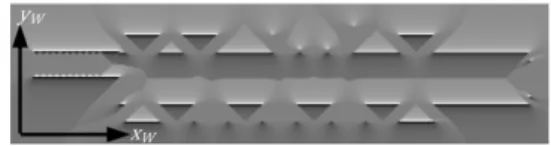
Through the building occupancy grid (based in a SLAM algorithm [10, 19]) it is possible to obtain the distance and gradient matrices. The distance matrix at each cell gives the distance to the closest obstacle. There are two gradient matrices, in order to the x direction and in order to the y direction. The first gives the direction variation of the distance matrix with the variation of the x position. The second shows the direc-tion variadirec-tion with the y posidirec-tion variadirec-tion. These three matrices, shown in the follow-ing figures (Figure 1, Figure 2 and Figure 3) for a corridor, can be pre computed and so they can speed up the completion of the Perfect Match algorithm. For more details about these matrices see [6] and [8].
610 H. Sobreira et al.
Fig. 2. Maps on a corridor where experiments were conducted: Gradient Matrix. Distance variation in direction y
Fig. 3. Maps on a corridor where experiments were conducted: Gradient Matrix. Distance variation in direction x.
Consider now that the list of points of a Laser Range Finder scan
PntList
. Thepoint i of this list in the world frame, is
PntList
(
i
)
=
(
x
i,
y
i)
. The cost value isgiven by:
2 2
2 .
1
1
,
i c
c i
Count PntList
i i
d
L
L
E
E
E
+
−
=
=
=
(1)
where
d
i andE
i represent the distance matrix and cost function values of the point i.The parameter
L
c is used to discard points with large errorE
i, increasing thero-bustness of the algorithm to the outliers. The resulting state/pose
X
Match is given bythe RPROP algorithm. The co-variance
P
Match is computed using the secondderiva-tive of the algorithm of the quadratic matching error. For more details about the Per-fect Match algorithm see [6].
Another improvement of the algorithm presented in this work, relatively to the au-thors’ previous work [6] is the stop criterion used to stop the RPROP iterations. In-stead of a fixed iterations number (ItN), the process can be stopped earlier if RPROP step is small enough meaning that a minimum has been reached.
In non-linear optimization problems, ItN depends on initial solution and cost func-tion, among others. Furthermore, ItN shouldn’t be a fixed value: on the one hand, increasing ItN increase processing time and the quality of solution. On the other hand, a few ItN decreases the solution quality. The criterion used is the RPROP step.
Robust Robot Localization Based on the Perfect Match Algorithm 611
3.1 Kalman Filter Update
The Kalman filter [16] update stage combines the estimated state using the odometry, equal to 1| and the Perfect Match resultant state, 1 . The Kal-man Filter equations can be seen in [5].
The observation model , in the update stage is equal to the vehicle state :
, (2)
where is modeled as white noise, with a Gaussian distribution with zero mean ( ̂ 0) and covariance matrix .
Therefore, in the update stage the observation is equal to the state obtained after the application of the Perfect Match:
1 1 (3)
The estimated observation is equal to the present estimative of the vehicle state, propagated during the Kalman Filter Prediction stage:
, ̂ 1 1| (4) In that way, the innovation of the Kalman filter ( 1 ) is equal to:
1 1 , ̂ 1 (5) In this stage, the propagated covariance matrix, using odometry ( 1| ), and the covariance matrix computed in the Perfect Match procedure ( 1 ), are used to determine the Kalman Filter gain ( 1 ):
1 1| 1| 1 (6)
The gradient of the observation module, in order to the vehicle state and the obser-vation noise, and respectively, are identity matrices. Therefore, the previous
equation can be re-written as the following:
1 1| 1| 1 (7)
Therefore, after the update stage the new estimated state ( 1| 1 ), is giv-en by the expression:
612 H. Sobreira et al.
1| 1 1 · 1| (9) where is the square identity matrix with the dimension 3x3.
The rejection of data from obstacles that are not present in the map is a key to the localization algorithm robustness. A histogram of measures errors is processed and a threshold allows to select the valid data to the localization algorithm.
4
Results
Firstly, the time requirements are validated: 7 ms to process 1440 beams of laser with an Intel T4300 processor with 1.2 GHz clock speed. This is a compatible time to per-form decision tasks and control. Robot could reach a repeatability of position in stop procedures of 5 mm (in the laboratory environment).
The assembled robot was used to perform all measurements and tests. The tests were conducted in the laboratories of the Faculty of Engineering of Porto, as presented in next subsection 4.1, and in the EMAF exposition in Exponor (Porto International Fair), as presented in next subsection 4.2. As it can be seen in next subsection, the developed filter allows rejecting closest objects that could interfere in localization. Moreover, the presented algorithm ensures precision and fast computation time (4 ms).
As we can see in [15], with a number of points acquired by the LRF equal to 682 points, the maximum time spent in the matching localization algorithm is limited. This limit time was measured and is equal to 17 milliseconds. The average execution time is about 12 milliseconds. Both the maximum and mean time spent, allows the algorithm to be used online, in a low computational power computer (these tests were executed in a Mini ITX, EPIA M10000G with a processor of 1.0GHz).
The ROS platform provides a package of mapping called gmapping. Using this package, a 2D grid map can be obtained. Another ROS' package, the adaptive Monte Carlo localization (amcl) algorithm, uses the 2D map grid built by the gmapping package to locate the vehicle, using 2D data. In comparative tests (same conditions than the last referred test), the execution time of the localization provided by the amcl package (with 1000 particles, the accuracy is similar to the proposed algorithm) has a maximum value of 42 ms and an average time of 32ms, almost 3 times more than the proposed algorithm.
4.1 Laboratory
Robust Ro
Figure 5. This Figure is an a wrong position of the ma correctly localized in the m
Fig. 4. Algorithm estimate
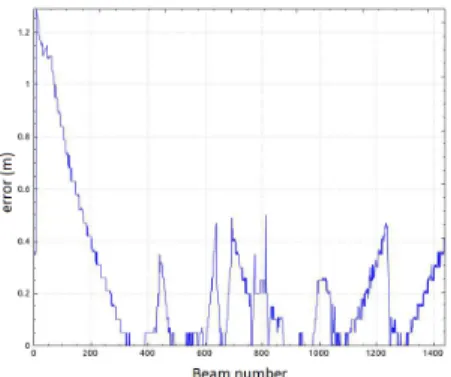
Red colored dots are the Figure 6 shows the laser er other words, the distance b match with robot posture.
Fig. 6
With the developed algo of our algorithm it is shown ible the robot to be localize
The rejection of data fro modeled as a function (see in Figure 8 (adapted from [ that are present in the meas like the number and dimens the maximum dimension of
obot Localization Based on the Perfect Match Algorithm
example of a bad localization. The robot localizes itsel ap. The developed threshold method allows the robot to map as further presented in this paper.
ed location Fig. 5. Robot localization failure
e measures used for localization. The graphic presented rror in measurements for the map presented in Figure 4
etween laser measure and the closest obstacle that doe
6. Error in measure (without thresholding)
orithm to reject error measures and as a good demonstrat n in Figure 7 green beams that are rejected and makes po
d.
om some obstacles that are not present in the map can Equation (1)) with a threshold (A) operation as presen [4]). By this way, it is possible to drop completely outl sures. Threshold value depends on several map conditi sions of the expected objects that can generate outliers f the map.
613
lf in o be
d in 4. In sn’t
tion
614 H. Sobreira et al.
Fig. 7. Algorithm estimated lo threshold, position 1)
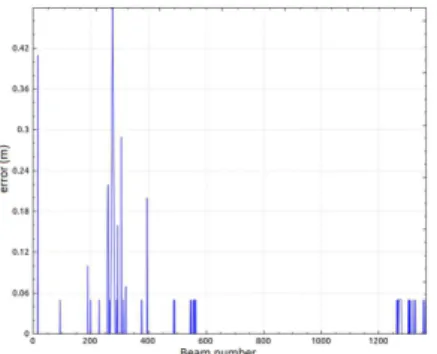
Figure 9 shows the erro map presented in the Figure
Fig. 9. Error in measure (with ing filter)
It is possible to notice th with the lean object, it is without error, as presented
4.2 Professional Robot
The experiments executed The robot navigated during path was planned so that th environment becomes a va and far walls.
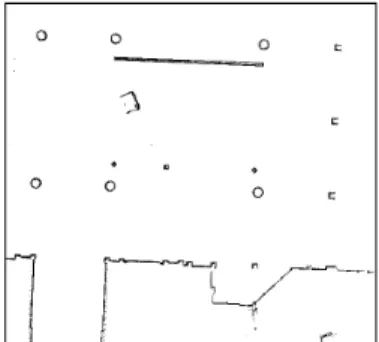
Figure 11 shows the de of Figure 12). Of course, The same experiments were Figure 12 shows the acquire
ocation (with Fig. 8. Error function with threshold (A)
or in measurements, with an error limitation of 0.5 for e 7.
h 0.5 threshold- Fig. 10. Algorithm estimated location (w threshold, position 2)
hat our algorithm rejects the fault measurements. Moreov possible to notice that algorithm obtains the localizat in Figure 10.
ics Event
in the EMAF event were the final test of our algorith g three days, with several people moving around it and he robot should cross areas with 1 cm of gap. The EM alidation place different from laboratory with larger ar
eveloped robot moving around the EMAF fair (see m there was security plans to avoid collision with huma e done (as subsection 4.1) and the results were compatib ed map to plan the path.
the
with
ver, tion
hm. the MAF reas
Robust Robot Localization Based on the Perfect Match Algorithm 615
Fig. 11. Robot moving in the EMAF Fig. 12. Acquired map of EMAF
5
Conclusions and Future Work
The localization method is applied in the AGV of test from the robotics laboratory. The localization method used the occupancy grid of indoor environments.
The experiments conducted made it possible to confirm that there are advantages to the proposed localization algorithm: the used observation modules are affordable and the localization algorithm used here works in structured mapped environments, without the need for any kind of artificial landmarks – this is the main advantage of this work.
The Extended Kalman Filter was applied as a multi fusion sensor system in order to combine the odometry information and the result of the Perfect Match. The experiments conducted by M. Lauer et al [4], which elects the Perfect Match as the faster algorithm comparatively to the Particle Filter algorithm [9][12], remain valid. As conclusion, the presented algorithm ensures precision and fast computation time (4 ms).
As a future work direction, enhancing the outlier’s rejection is a promising re-search area since robot moves in a map with several obstacles. Moreover, handling more outliers and with bigger dimensions (such as people moving or layout changing) is a challenge to future work.
Acknowledgments. The work presented in this paper, being part of the Project PRODUTECH PTI (num-ber13851) - New Processes and Innovative Technologies for the Production Technologies Industry, has been partly funded by the Incentive System for Technology Re-search and Development in Companies (SI I&DT), under the Competitive Factors Thematic Operational Program,of the Portuguese National Strategic Reference Framework, and EUs European Regional Development Fund.
References
[1] Wulf, O., Lecking, D., Wagner, B.: Robust Self-Localization in Industrial Environ-mentsbased on 3D Ceiling Structures. In: Proceedings of the 2006 IEEE/RSJ Internation-al Conference on Intelligent Robots and Systems (2006)
616 H. Sobreira et al.
[3] Quigley, M., Gerkey, B., Conley, K., Faust, J., Foote, T., Leibs, J., Berger, E., Wheeler, R., Ng, A.Y.: ROS: an open-source Robot Operating System. In: Proc. Open-Source Software workshop of the InternationalConference on Robotics and Automation, Kobe, Japan (May 2009)
[4] Lauer, M., Lange, S., Riedmiller, M.: Calculating the perfect match: An efficient and ac-curate approach for robot self-localization. In: Bredenfeld, A., Jacoff, A., Noda, I., Taka-hashi, Y. (eds.) RoboCup 2005. LNCS (LNAI), vol. 4020, pp. 142–153. Springer, Heidelberg (2006)
[5] Thrun, S., Burgard, W., Fox, D.: Probabilistic Robotics. Massachusetts Institute of Tech-nology (2006)
[6] Pinto, M., Moreira, A., Matos, A., Sobreira, H.: Novel 3D Matching Self-Localisation Algorithm. International Journal of Advances in Engineering & Technology 5(1), 1–12 (2012)
[7] Schulz, H., Behnke, S.: Utilizing the structure of Field Lines for efficient Soccer Robot Localization. Advanced Robotics 26(14), 1603–1621 (2012)
[8] Pinto, M., Paulo Moreira, A., Matos, A., Sobreira, H., Santos, F.: Fast 3D Matching Lo-calisation Algorithm. Journal of Automation and Control Engineering 1(2), 110–115 (2013) ISSN 2301-3702
[9] Grisetti, G., Stachniss, C., Burgard, W.: Improved Techniques for Grid Mapping with Rao-Blackwellized Particle Filters. IEEE Transactions on Robotics 23(1), 34–46 (2007) [10] Kohlbrecher, S., Meyer, J., von Stryk, O., Klingauf, U.: A Flexible and Scalable SLAM
System with Full 3D Motion Estimation. In: Proceedings of IEEE International Sympo-sium on Safety, Security and Rescue Robotics (SSRR), pp. 155–160. IEEE (2011) [11] Borenstain, J., Everett, H.R., Feng, L., Wehe, D.: Mobile Robot Positioning and Sensors and
Techniques. Journal of Robotic Systems, Special Issue on Mobile Robots 14(4), 231–249 [12] Aghamohammadi, A., Jensen, B., Siegwart, R.: Scan Alignment With Probabilistic
Dis-tance Metric. In: IEEE/RSJ International Conference on Intelligent Robots and Systems (IROS 2004), Sendai, Japan, September 28-October 2, vol. 3, pp. 2191–2196 (2004) [13] Minguez, J., Lamiraux, F., Montesano, L.: Metric-Based Scan Matching Algorithms for
Mobile Robot Displacement Estimation. In: Proc. of the IEEE International Conference on Robotics and Automation (ICRA), Barcelona, Spain, April 18-22, pp. 18–22 (2005) [14] Minguez, J., Lamiraux, F., Montesano, L.: Metric-Based Iterative Closest Point Scan
Matching for Sensor Displacement Estimation. IEEE Transactions on Robotics (October 2006)
[15] Migueis Pinto, M.: SLAM for 3D Map Building to be used in a Matching Localization Algorithm, PhD Electrical and Computer Engineering, Faculty Engineering of University of Porto (2012)
[16] Gouveia, M., Paulo Moreira, A., Costa, P., Reis, L.P., Ferreira, M.: Robustness and Preci-sion Analysis in Map-Matching based Mobile Robot Self-Localization. In: IROBOT – 14th Portuguese Conference on Artificial Intelligence, EPIA 2009, Aveiro, Portugal, October 12-15, pp. 243–253 (2009)
[17] Ronzoni, D., Olmi, R., Secchi, C., Fantuzzi, C.: AGV global localization using indistin-guishable artificial landmarks. In: IEEE International Conference on Robotics and Auto-mation, pp. 287–292. IEEE, Shanghai (2011), doi:10.1109/ICRA.2011.5979759
[18] Jensfelt, P., Kristensen, S.: Active Global Localization for a Mobile Robot Using Mul-tiple Hypothesis Tracking. IEEE Transactions on Robotics and Automation 17(5) (Octo-ber 2001)