www.scielo.br/aabc
Apoptotic cell and phagocyte interplay: recognition
and consequences in different cell systems
MARIA ELISABETE C. MOREIRA1 and MARCELLO A. BARCINSKI1,2
1Divisão de Medicina Experimental, Instituto Nacional de Câncer, 20231-050 Rio de Janeiro, RJ, Brasil 2Instituto de Ciências Biomédicas, Universidade de São Paulo, 05508-900 São Paulo, SP, Brasil
Manuscript received on December 1, 2003; accepted for publication on December 3, 2003; contributed byMarcello A. Barcinski*
ABSTRACT
Cell death by apoptosis is characterized by specific biochemical changes, including the exposure of multiple ligands, expected to tag the dying cell for prompt recognition by phagocytes. In non-pathological conditions, an efficient clearance is assured by the redundant interaction between apoptotic cell ligands and multiple receptor molecules present on the engulfing cell surface. This review concentrates on the molecular inter-actions operating in mammalian and non-mammalian systems for apoptotic cell recognition, as well as on the consequences of their signaling. Furthermore, some cellular models where the exposure of the phos-phatidylserine (PS) phospholipid, a classical hallmark of the apoptotic phenotype, is not followed by cell death will be discussed.
Key words: cell death, apoptosis, apoptotic cell recognition, apoptotic mimicry, phagocyte, intracellular signaling.
INTRODUCTION
Programmed cell death (PCD), as part of the nor-mal cell physiology as are proliferation and differ-entiation, has been recognized for more than three decades. The concept of ‘‘programmed’’ cell death was first utilized by development biologists who used the term to refer to a predictable onset of cell death during tissue remodeling in development and metamorphosis. It referred to cellular changes in response to hormone levels oscillation and growth factor withdrawal, but did not refer at all to the pre lethal changes that we now use to characterize the different types of cell death (Zakeri 1998). Recently, advances in the field of cellular and molecular
biol-*Member of Academia Brasileira de Ciências Correspondence to: Maria Elisabete C. Moreira E-mail: [email protected]
apopto-sis is thus a morphological phenotype of PCD char-acterized by rapid condensation of cytoplasm and nuclear chromatin, resulting in DNA fragmentation and membrane blebbing followed by fragmentation of the cells in apoptotic bodies, constituted by con-densed cytoplasm, nuclear material and/or whole organelles surrounded by intact plasma membrane. The concomitant biochemical changes experienced by apoptotic cells, starting from their initial injury by an appropriate stimulus to their recognition and clearance by phagocytes, are not in the scope of this review and have been widely reviewed elsewhere (Hengartner 2000, Geske and Gerschenson 2001).
Type II autophagic or lysosomal cell death starts with the sequestration of cytoplasmic material, including organelles, by a multilayer membrane to form an autophagosome, which in turn can receive inputs from the cellular endocytic pathway to form a hybrid organelle called amphisome. The expansion of the lysosomal system followed by selective clear-ance of specific cell organelles by the autophagic vacuoles, plays an important role in cytoplas-mic homeostasis (for reviews see Ogier Denis and Codogno 2003, Wang and Klionsky 2003). It has been suggested that autophagy can somehow mod-ulate the intracellular pool of active mitochondria, and thus be involved in mitochondria-dependent processes such as the execution of type I apoptotic cell death. A role of autophagy in helping cells to escape from apoptosis via the sequestration of cy-tochrome c has been suggested in the maturation of erythroid cells (Takano Ohmuro et al. 2000). The molecular machinery that regulates autophagy was first described in the yeastSaccharomyces cere-visiae, with the discovery of the APG (autophagy) and AUT (autophagocytosis) genes (Thumm et al. 1994), and is partially conserved in humans.
Type III PCD or cytoplasmic cell death is less frequently observed and poorly understood at the molecular level, but it has been related mainly to the neuronal cell death (Cunningham 1982, Oppen-heim 1991, Bursch 2001). Indeed it became clear that the distinction between the three types of cell death here described is not always clear-cut. Dying
cells may display a mixture of some morpholog-ical and/or molecular features associated to more than one of the mentioned types of PCD (Amarante Mendes et al. 1998, Sperandio et al. 2000). Further characterization of the distinct forms of apoptotic and non-apoptotic PCD will certainly lead to new insight into cell death programs and their roles in development and on the evolutionary relationship between them.
During the last thirty years, since the first men-tion of the apoptotic cell phenotype and its physio-logical implications in tissue development by Kerr et al. (1972), a lot has been added to our current knowl-edge about the molecular and cellular events that contribute to the apoptotic morphological features and to the exposure of cell-killing signals that shape apoptotic cell to further phagocyte recognition. The present review will mainly concentrate on the in-teractions between the ‘‘eat-me’’ signals displayed by apoptotic cells and their respective recognition molecules on phagocytes, eventually mediated by bridging molecules. The evolutionary conservation of some apoptotic cell ligands, receptors and signal-ing molecules will also be discussed.
APOPTOTIC CELL RECOGNITION IN MAMMALIAN SYSTEMS: REDUNDANCY
The importance of apoptotic cell recognition and clearance by phagocytes to tissue homeostasis is corroborated by the vast redundancy of ligands and receptors involved. Since the identification of the macrophage vitronectin receptor (αvβ3integrin) as
in-ability of some individual deletions to efficiently im-pair apoptotic cell clearancein vivo. It has also been observed some tissue-specific differences between the recognition molecules. For example, the pres-ence of the bridging molecule C1q, the first compo-nent of complement, can be crucial for apoptotic cell clearance in the kidney (Taylor et al. 2000) but not in the skin (Pickering et al. 2001) of C1q-deficient mice. These findings point out to the need of detailed
in vitrostudies of different tissues, from mouse with genetic deletions of the different molecules involved in apoptotic cell clearance.
The receptors involved in target cell recogni-tion have been mainly characterized by inhibitory studies ofin vitrophagocytosis and the assays are made with relatively purified populations of phago-cytes. Some of the receptors can act in concert to improve uptake efficiency (Pradhan et al. 1997) and can also interact with different ligands, trigger-ing distinct intracellular signaltrigger-ing. The membrane glycoprotein CD14, present on the surface of mam-malian macrophages, for example, can generate both inflammatory or anti-inflammatory responses after interaction with ‘‘non-self’’ lipopolysaccharide (LPS) or ‘‘self’’ apoptotic cells, respectively (Devitt et al. 1998). One of the most important questions relates to thein vivorelevance of data obtained from
in vitro studies. One must have in mind that the cell culture models used in apoptotic cell clearance studies may not be physiological since they might lack neighboring alternative phagocytes or bridging molecules presentin vivo. It has been suggested that due to its high efficiency, one can only notice apop-totic cell clearancein vivowhen it is defective (P.M. Henson, personal communication). Indeed, there have been few descriptions of defective clearance of apoptotic cellsin vivothat corroboratein vitro stud-ies (Botto et al. 1998, Taylor et al. 2000, Hamon et al. 2000, Scott et al. 2001, Teder et al. 2002, Vandivier et al. 2002). Taylor et al (2000) made the first description ofin vivoimpairment of apop-totic cell phagocytosis, analyzing the phagocytic ca-pacity of C1q-deficient mouse macrophages. Other C1q-related molecules, known as collectins,
nor-mally involved in non-self pattern recognition and consequent host protection from infectious organ-isms (Holmskov et al. 1994, Hansen and Holmskov, 1998), also play an important role inin vivo clear-ance of apoptotic cells. The abundclear-ance of the col-lectin surfactant protein D (SP-D) in the lung (Ma-son et al. 1998) probably justifies its role in the clear-ance of apoptotic cells from the naive murine lung (Vandivier et al. 2002). The transmembrane ad-hesion protein CD44, receptor for the non-sulfated glycosaminoglycan hyaluronan (HA) (Aruffo et al. 1990), was found to be also important for the reso-lution of lung inflammation, which was impaired by persistent accumulation of apoptotic neutrophils and decreased activation of transforming growth factor -β1(TGF-β1)in CD-44 deficient mice (Teder et al.
2002). A very elegant combination ofin vivo loss-of-function andin vitrogain-of-function approaches was made by Hamon et al. (2000), showing that the ATP-binding-cassette transporter 1 (ABC1) modu-lates the rearrangement of the phospholipid phos-phatidylserine (PS) in both the dying cell and the phagocyte membranes and also promotes engulf-ment of apoptotic cells.The modulation of apoptotic cell clearance has been shown to also be mediated by the Mer receptor tyrosine kinase, in macrophages from Mer-deficient mouse (Scott et al. 2001). How-ever of course thein vitrostudies allows for an in-depth analysis of the molecular and cellular interac-tions involved in apoptotic cell recognition, signal-ing and clearance, as will be described below.
The characterization of receptor molecules and the intracellular signaling displayed by and transmit-ted to phagocytes from collectins and collectin-like bridging molecules (denoted as defense collagens), have progressed by virtue of some very elucidative
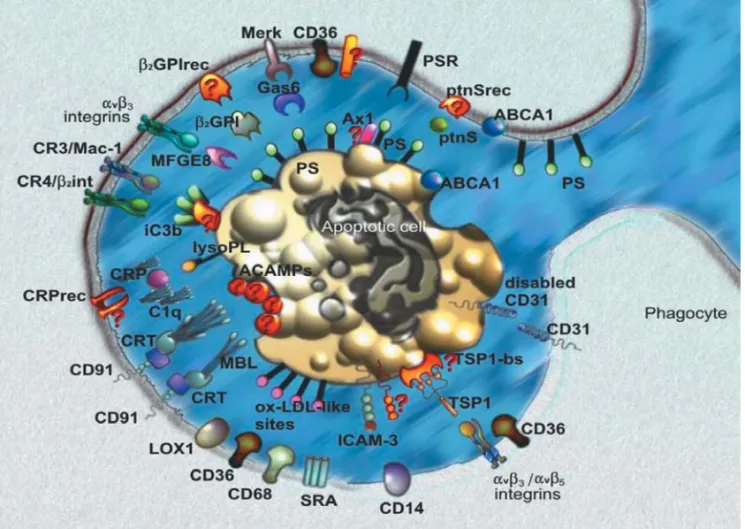
Fig. 1 – Redundancy in apoptotic cell and phagocyte interplay. Both cells display the proteins CD31 and ATP-binding cassete transporter (ABC A1) and the PS phospholipid on their external surface. Apoptotic cell PS can be recognized by a specific receptor (PSR) displayed by phagocyte, and also by the bridging molecules milk-fat globule epidermal growth factor 8 (MFGE8), growth arrest specific gene 6 (Gas6),β2-glycoprotein I (β2-GP I) and protein S, which bind respectively to theαvβ3integrin, Merk,β2-GP
I and protein S receptor molecules. Annexin I and CD36 seem also to be involved in PS recognition. Several scavenger receptors (oxidized low-density lipoprotein receptor 1 (LOX1), CD36, CD68 and SRA) recognize oxidized-LDL-like sites on apoptotic cell surface. The C1q and Mannose Binding Lectin (MBL) collectins modulate the recognition of Apoptotic Cell Associated Molecular Patterns (ACAMPs) via calreticulin (CRT) and CD91; C1q also participate in the interaction between lysophospholipids (lysoPLs) exposed by the dying cell and the reactive C protein. iC3b molecules are distributed in patches on the dying cell are recognized by the CR3/CD11b-CD18/Mac-1 and CR4/CD11c-CD18/β2integrin glycoproteins. Theαvβ3/αvβ5integrins associate to CD36 and interact
with trombospondin 1 (TSP 1), which is recognized by still uncharacterized binding sites on apoptotic cell surface. The membrane glycoprotein CD14 interacts with, but not only, the intercellular adhesion molecule 3 (ICAM-3). The surface protein CD31 signaling is disabled in apoptotic cells, promoting their tethering to and engulfment by phagocytes. Still uncharacterized surface molecules are indicated with a question mark. See details in the text.
non-apoptotic cells and the apparent need of high local concentration of ligands in order to attain opti-mal interaction with the phagocyte receptor (Ogden et al. 2001). The surface ligands involved in apop-totic cell binding to collectins are still uncharacter-ized, although surface structures on membrane blebs
MBL binding on the macrophage surface, which in turn is bound to the multifunctional receptor CD91, also known as theα2-macroglobulin(α2m) recep-tor or LDL receprecep-tor related-protein (LRP). It has been suggested that this molecular association sig-nals for engulfment of apoptotic cells, through the transmembrane domain of CD91 phagocyte recep-tor. Furthermore, the phagocytic process occurs with the concomitant uptake of extracellular fluid originating spacious vacuoles, characterizing itself as macropinocytosis (Ogden et al. 2001). The C1q molecule has also been described to play an adjuvant role in apoptotic cell clearance along with another serum protein, the C-reactive protein (CRP); it has been suggested that, in the presence of C1q, CRP binds to lysophospholipids on apoptotic cells and promotes an anti-inflammatory cytokine response. Once necrosis occurs, or in the absence of C1q, ele-vated serum CRP fails to opsonize and protect apop-totic cells from lysis (Gershov et al. 2000). More recently, CRP has been proposed to be part of an innate immune response to the phosphorylcholine motifs, exposed on apoptotic cells as a result of phospholipid hydrolysis by phospholipase A2 and
further oxidation; the authors (Chang et al. 2002) suggested that the phosphorylcholine motif is a cryp-tic epitope on viable cells and becomes available for CRP binding, after disturbance of surface molecular organization.
The defense collagens can thus function as op-sonins to apoptotic cell recognition by phagocytes. Beyond the described roles for the C1q, MBL and SP-D molecules, others have to be considered as contributors to the redundancy of the system (re-viewed by Fishelson et al. 2001). Verbovetski et al. (2002) showed that opsonization of apoptotic Jurkat T cells by autologous iC3b increased signif-icantly their clearance by immature dendritic cells. To date, little is known about complement activat-ing molecules on apoptotic cells or acceptors onto which activated complement components are de-posited. PS exposure has been associated to com-plement activation and iC3b deposition on apoptotic cells (Mevorach et al. 1998, Mevorach 2000).
In-deed both molecules are distributed in patches on the dying cell surface, although they do not seem to co-localize. CR3/CD11b-CD18/Mac-1 and CR4/CD11c-CD18/β2 integrin glycoproteins have
been described as receptors for phagocytosis after efficient opsonization of apoptotic cells by iC3b (Ross 2000).
The most well characterized system of apop-totic cell recognition is the interaction between ex-ternalized phosphatidylserine phospholipid (PS) and its specific recognition molecules, present on the phagocyte surface. PS was first characterized as an ‘‘eat-me-signal’’ on the surface of apoptotic lym-phocytes (Fadok et al. 1992). Since then, the impor-tance of PS recognition has been shown in several
in vitroandin vivosystems. The milk fat globule-EGF-factor 8 glycoprotein (MFG-E8), secreted by thioglycollate-elicited peritoneal macrophages, binds to apoptotic cells and tethers them to phago-cytes for engulfment via the vitronectin integrin re-ceptor. In this situation MFG-E8 carrying a point mutation in the RGD motif inhibits the phagocytosis of apoptotic cellsin vitroandin vivo(Hanayama et al. 2002). The 50-kDa serumβ2-glycoprotein I (β2
cells (Nakano et al. 1997) was made almost imme-diately after its identification as a ligand for the Mer receptor tyrosine kinase (Chen et al. 1997). The same authors were able to show that the uptake of PS liposomes and of apoptotic cells by macrophages was enhanced in approximately twofold in the pres-ence of the Gas6 bridging molecule (Ishimoto et al. 2000). The only described direct interaction be-tween PS and the phagocyte implicates a specific receptor molecule (PSR), present on the surface of different cell types (Fadok et al. 2000). PS/PSR is a low affinity interaction which may justify the ag-gregated distribution of PS on apoptotic cell surface prior to its recognition and engulfment (Henson et al. 2001). The fact that only aggregated PS/PSR interaction can trigger a functional response in the phagocyte explains the failure of macrophage recog-nition of PS evenly distributed on the surface of non-apoptotic cells. In addition, a two-step mechanism for the internalization of apoptotic cells by phago-cytes has been described: first, the apoptotic cells are tethered to phagocyte surface by different mem-brane receptors, including CD36,αvβ3 andαvβ5 integrins, CD14 and CD68 and then PS/PSR inter-action promotes their uptake by macropinocytosis (Hoffmann et al. 2001, Somersan and Bhardwaj 2001). This can prevent some inadvertent uptake of many cell types that can transiently expose PS on their external surfaces (Henson et al. 2001). It has been proposed that distinct receptor complexes for PS recognition exist on phagocytes to warrant recognition of the different signals displayed by dy-ing cells, durdy-ing the progression of apoptotic cell death (Pradhan et al. 1997). Unexpectedly, PS ex-posure has also been reported to occur on the exter-nal surface of phagocytes. Although pre-treatment of macrophages with Annexin V inhibited apoptotic lymphocytes uptake, it is still not clear if PS plays the same role when exposed on the outer leaflets of dying cells and/or phagocytes (Callahan et al. 2000). The molecular and biochemical mechanisms involved in PS exposure by apoptotic cells are just beginning to be elucidated, but changes on the activity of phospholipids transporters has been
re-ported (Daleke 2003). The transbilayer distribution of membrane phospolipids is asymmetric, with the choline-containing ones (phosphatodylcholine (PC) and sphingomyelin (SM)) preferentially exposed on its external surface, and the amine-containing ones (phosphatidylethanolamine (PE) and PS) on the cytoplasmic leaflet. Loss of transmembrane phos-pholipid asymmetry may occur in both normal and pathological conditions, including activation of blood clotting factors (Chiu et al. 1981) and cell death by apoptosis. PS exposure is induced by the activation of scramblase transporters, which en-hances bidirectional lipid transport across plasma membrane and is externally maintained as a con-sequence of the inhibition of ATP-dependent fli-pase aminophospholipid translocases, which nor-mally brings PS back to the inner membrane (Fadok et al. 1998, Daleke and Lyles 2000). It has been sug-gested that, due to its accumulation in the plasma membrane lipid rafts (Sun et al. 2002), the phos-pholipid scramblase 1 (PLSCR1) may play a role in apoptotic cell signaling in addition to its role in membrane lipid distribution (Daleke 2003). The in-volvement of floppase aminophospholipid translo-cases has also been related to PS exposure, empha-sizing the role of the adenosine triphosphate (ATP)-binding cassette protein 1 (ABC A1) on the engulf-ment of apoptotic cell corpses fromC. elegans (Lu-ciani and Chimini 1996). Another pathway that may be additionally important for the modulation of PS exposure on apoptotic cells is the polyamine metabolism. It is well known that polyamines are essential for cell survival and proliferation and the decrease of their intracellular levels correlates with apoptosis (Nitta et al. 2002). Polyamines can also modulate PS exposure in tumor cells lines (Bratton et al. 1999, Fadok et al. 2001) as well as apoptotic tumor cell fate when recognized by intra-tumoral macrophages (Mills et al. 1992).
inner leaflet of the plasma membrane and then PS translocation occurred, with its gradual appearance as discrete patches on the external cell surface. The translocation of Annexin I requires caspase activa-tion and elevaactiva-tion of intracellular calcium levels. It is important to mention that the above cited ABC A1 floppase transporter has been related to the surface exposure of Annexin I on pituitary folliculo-stellate cells (Chapman et al. 2003). Furthermore, the au-thors implicated the functional role of Annexin I and PSR in the same pathway for apoptotic cell engulf-ment. Three possibilities were suggested for PS, An-nexin I and PSR interaction: first, AnAn-nexin I could somehow modify PS structure for PSR recognition, second, both ligand molecules could be recognized as a complex by PSR and finally Annexin I could act as a bridging molecule between PS and PSR (Fadok and Henson 2003). Anyway, these very exciting data open new insights and perspectives on the role of Annexin I in apoptotic cell engulfment and on its putative contribution to the generation of anti-inflammatory signals in phagocytes.
The scavenger receptors (SRs) were described in the context of lipoprotein metabolism, but can be distinguish from other lipoprotein receptors by their broad ligand binding properties (Platt et al. 1998). They bind to a wide range of anionic lig-ands and, as a consequence, have been implicated in functioning as pattern-recognition molecule in host defense and innate immunity and in the clearance of apoptotic cells (Pearson 1996, Platt et al. 1998, Peiser et al. 2002). The oxidation and/or glyco-sylation of membrane proteins, as well as the sur-face exposure of anionic phospholipids such as PS, can generate ligands for SRs. Six major classes of SRs were characterized, according to their se-quences and properties of the predicted proteins. The Class B CD36 SR was the first one to be demon-strated to play a role in apoptotic cell engulfment, after being transfected into a vitronectin-expressing phagocytically deficient cell (Ren et al. 1995). In-deed CD36 has been described as a required acces-sory molecule for the functional activity of some of the phagocyte receptors and/or apoptotic
bridg-ing molecules (Fadok et al. 1998); the cooperation between the vitronectin receptor (VnR) and throm-bospondin 1 (TSP1) bridging molecule in phago-cyte recognition of apoptotic neutrophils was found to be CD36-dependent in some systems (Savill et al. 1992) but not in others (Hughes et al. 1997). These data suggests that it is the phagocyte rather than the lineage of the apoptotic cell which defines at leastin vitro, which recognition mechanism will be employed in dying cell clearance. On the other hand, apoptotic cell ligands for TSP1 have not been yet characterized. CD36 can also recognize oxi-dized sites on apoptotic cells that mimic oxioxi-dized low-density lipoproteins (oxLDL), in the same way that others SRs do, like the Class E LOX-1 (oxidized low-density lipoprotein receptor 1), the human ho-mologue CD68 and the Class A SRs (Sambrano and Steinberg 1995, Ramprasad et al. 1996, Platt et al. 1996). It has been suggested that the SRs family can act sinergistically or alternatively for thein vivo
phagocytic activity, since the frequency of apoptotic thymocytes in SR-A deficient mice is not different than in control animals (Platt et al. 2000).
judged by in vitro assays of the engulfment abil-ity of inactivated macrophages (Devitt et al. 2003). By contrast, a putative candidate for CD14 recog-nition on apoptotic cell surface is the highly gly-cosylated Ig-superfamily member, the Intercellular adhesion molecule 3 (ICAM-3), constitutively ex-pressed on leukocytes (Fawcett et al. 1992). It was demonstrated that, when induced to undergo apop-tosis, leukocytes display altered ICAM-3 molecules so that they become able to be recognized by CD14 and cleared by phagocytes. However it seems that the role of CD14 in dying cell clearance is not limited to its interaction with the adhesion molecule ICAM-3, since it also functions in the clearance of ICAM-3 negative apoptotic cells (Moffatt et al. 1999).
A recent work on other adhesion molecule, made by Brown et al. (2002), showed us that phago-cytes can not only recognize ‘‘eat-me’’ signals on dying cells surface, but also a ‘‘leave-me-away’’ sig-nal, displayed by living cells. This property has been attributed to the surface protein CD31, also known as platelet endothelial cell adhesion molecule-1 (PECAM-molecule-1), a member of the Ig gene super-family normally expressed on the surface of leuko-cytes, macrophages, platelets and endothelial cells. CD31 plays an important role in vascular cell bi-ology, including its participation in the adhesion cascade leading to extravasation of leukocytes dur-ing inflammatory processes (Newman 1997); ho-mophilic interaction between two CD31 molecules can operate as a molecular ‘‘handshake’’ (Chimini 2002) and regulates leukocyte motility and active movement across endothelial cell surfaces. The in-tracellular signaling triggered on viable target cells probably involves tyrosine phosphorylation of CD31 cytoplasmic tail and further interaction with the protein-tyrosine phosphatases 1 and SHP-2 (Jackson et al. 1997, Pumphrey et al. 1999) and somehow ‘‘instructs’’ the phagocyte to let living cells escape the phagocytic process. What has been shown in addition, is that CD31 signaling is disabled in apoptotic cells, promoting their tethering to and engulfment by phagocytes. The interpretation of the detachment signal on living cells may represent an
important mechanism to prevent macrophage inges-tion of viable self-cells (Brown et al. 2002).
It is relevant to mention that some, if not most, of the molecules described above, as important to allow apoptotic cells/ phagocytes interplay in mam-malian systems, were identified from their homol-ogy with genes and proteins first characterized in non-mammalian systems, that will be discussed below.
APOPTOTIC CELL RECOGNITION IN NON-MAMMALIAN SYSTEMS
requires other partners to assemble in a phagocytic complex remains to be explored. Two other recep-tors may play a role in the recognition of apoptotic cells byDrosophilaembryo: the PS receptor homo-logue, which displays considerable homology with the predicted protein sequences found inC. elegans
and mammals (Fadok et al. 2000), and the scavenger receptor DSR-C1 (Pearson et al. 1995).
In C. elegans, there is still a black box be-tween the activation of caspases (four of them have been identified until now – CED-3, CED-9, CED-4 and CED-7), and the displaying of ‘‘eat-me’’ sig-nals by the dying cells. CED-3 (caspase 3 homo-logue) and CED-4 (Apaf-1 homohomo-logue) are execu-tioner caspases, which activities can be inhibited by CED-9 (BCL-2 homologue). The caspases seem not to be entirely responsible for apoptosis trigger-ing, since nematodes with inactivated CED-3 still have very low levels of cells death (Gumienny et al. 1999). It has been suggested that CED-7 can par-ticipate in PS exposure and recognition in worms (Gumienny and Hengartner 2001), due to its homol-ogy with the aminophospholipid translocase ABC1, which promotes PS exposure in mammals (Hamon et al. 2000). Differently from what is observed in
Drosophila, the clearance of dying cells inC. ele-gans(Gumienny and Hengartner 2001), as well as inDictyostelium discoideum(Arnoult et al. 2001), is performed by non specialized neighboring cells. Only a few reports have been made on phagocytosis of dying cells in theD. discoideum(Arnoult et al. 2001), the more recent being the involvement of the adaptor complex-1 (AP-1), normally participating in the budding of clathrin-coated vesicles from the trans-Golgi network and endosomes (Lefkir et al. 2003); the authors generatedDictyosteliummutant cells, disrupted for AP-1 medium chain, and found impaired phagocytosis, mainly for large particles. There are no evidences, until now, of circulating molecules important for the process of engulfment inC. elegans. The putative receptor displayed by the engulfing cell is the transmembrane molecule CED-1, with some similarity to the scavenger receptor expressed by endothelial cells, SREC (Zhou et al.
2001a, Adachi et al. 1997). The predicted protein sequence F29B9.4 (Fadok et al. 2000) had just been identified as the open reading frame of theC. ele-gansPSR homolog, the PSR-1 (Wang et al. 2003). The intracellular signaling triggered on the engulf-ing cells, by their recognition of non-mammalian dy-ing cells, will be discussed in the next section, since the molecules and pathways involved are equivalent to the ones described for mammalian systems.
THE MEANING OF CELL DEATH: FUNCTIONAL CONSEQUENCES OF APOPTOTIC
CELL SIGNALING AND OF ENGULFMENT BY PHAGOCYTES
Several hallmarks of apoptosis have been described in the last years (reviewed by Geske and Gerchen-son 2001), but some of them – caspase activation, loss of mitochondrial membrane potential or PS ex-posure – are not specific in that they can also be observed in viable cells and in various degrees of necrotic cell death. Thus one must consider a range of techniques to reach the diagnosis ofin vitro apop-tosis and the observation of cell morphology at the electron-microscope level still remains as the best parameter to be observed. But the most relevant matter to consider relates to thein vivodiagnosis of apoptosis. The crucial feature to be analyzedin vivo
is the capacity of the dying cell or apoptotic bodies to be recognized and engulfed by phagocytes, with still intact membranes (Savill et al. 2002). There-fore it is the efficiency of apoptotic cell signaling, recognition and uptake that will define the actual meaning of cell death.
homologues. Worm mutants for any of these genes showed non engulfed cell corpses remaining for hours or even days. Double mutant studies in the worm have resulted in the isolation of several muta-tions that affect engulfment and the severity of their phenotypic consequences defined two pathways for phagocytosis of dying cells (Gumienny and Hen-gartner 2001).
One group of genes includesced-2,ced-5, ced-10and ced-12(standing for Cell Death abnormal genes), defined as members of the Rac1 GTPase pathway (Wu and Horvitz 1998a, Chung et al. 2000, Reddien and Horvitz 2000). Their mammalian counterparts are, respectively, the small adaptor pro-tein CrkII (Kiyokawa et al. 1997), its interactive neighbor Dock180 (Hasegawa et al. 1996), the Rho-like GTPase Rac1 (Van Aelst and D’Souza Schorey 1997) and ELMO1 and ELMO2 (Gumienny et al. 2001). The observed homology at protein level be-tween these molecules is corroborated by the strict correspondence of their roles on the modulation of phagocytosis in worms and mammals (Figure 2). The CED-2/CrkII protein is composed of three Src-homology domains (one SH2 and two SH3) and CED-5/Dock180 binds to the first SH3 domain of CrkII (Hasegawa et al. 1996). It has been recently shown that the evolutionary conserved CED-12/ ELMO protein physically interacts with 5/Dock180, forming a ternary complex with CED-2/CrkII (Zhou et al. 2001b, Wu et al. 2001), that in turn stimulates a Rac-GEF activity (standing for Guanine nucleotide Exchange Factor) (Gumienny et al. 2001). The activity of Rho GTPases cy-cles between an inactive GDP-bound state and an active GTP-bound state and the GEFs enhance the exchange of bound GDP for GTP. Brugnera et al. (2002) identified a specific domain within CED-5/Dock180 (denoted Docker), able to mediate GTP loading of CED-10/Rac1in vitro; since the binding of Dock180 to Rac1 was dependent of Dock180-ELMO1 interaction, the authors proposed that this dimeric complex functions as an exchange factor (GEF) for CED-10/Rac1. Rac1 activation leads to cytoskeletal rearrangements and affects engulfment
and cell migration from worms to mammals (Gumi-enny et al. 2001). What happens between the recog-nition of apoptotic cells by specific phagocyte re-ceptors and the recruitment and activation of the cy-toplasmic molecular complexes described above is still a black box. On the other hand, we already know some of the phagocyte receptors that function up-stream of this black box. It has been suggested that the mammalian PSR (Fadok et al. 2000) recruits the CED-5/Dock180 – CED-2/CrkII – CED-12/ELMO protein complex before CED-10/Rac1 activation, in-creasing apoptotic cell uptake by phagocytes (S. Gardai and P.M. Henson, personal communication). Indeed, this is the operating pathway inC. elegans
engulfing cells after PSR-1 triggering (Wang et al. 2003). The αvβ5 integrin present on the surface
membrane of a human epithelial cell line, is en-dowed with the ability to capture apoptotic cells in a manner akin to that of dendritic cells; addi-tionally the integrin heterodimer uses a kinase signaling pathway to recruit the tyrosine-phosphorylated p130cas – CrkII – Dock180
com-plex and trigger Rac1 activation and phagosome for-mation (Birge et al. 1992, Albert et al. 2000).
The second group of evolutionary conserved genes important for dying cell phagocytosis includes
Fig. 2 – Ligands and receptors involved in the ELMO/DOCK180/CrkII pathway. Still unidentified apoptotic cell associated molec-ular patterns (ACAMPs) are recognized by C1q and MBL collectins, that in turn bind to calreticulin and transmenbrane protein CD91. Following the interaction between CD91 cytoplasmic tail and the enGULfment adaPtor protein (GULP), the ternary complex ELMO/DOCK180/CrkII is recruited, as well as after the activationαvβ5integrin. ABC1 and PS receptor molecules seem also to be
engaged in the proteic complex activation, which converts inactive GDP bound-Rac1 in its active form (GTP bound-Rac1). Activation of the Rho-like GTPase Rac1 leads to cytoskeletal rearrangements and increased engulfment from worms to mammals. The homologue proteins characterized in worms are shown in brackets. See details in the text.
Horvitz 1998b). It has been observed thatced-7 de-fective mutants fail to show CED-1 membrane clus-tering around neighboring cell corpses, suggesting a role for CED-7 protein in dying cell recognition
The phagocyte receptors described above, as well as the intracellular signaling pathways triggered after their recognition of target cells, were character-ized in macrophages and also in epithelial cell lines (Savill et al. 2002, Albert et al. 2000). There are only a few descriptions of the receptor molecules used by dendritic cells (DCs) to interact with apop-totic cells, and these relate mainly to a protein of the integrin family. The participation of theαvβ5
integrin receptor in apoptotic cell engulfment dis-tinguishes DCs (Albert et al. 1998a) from macro-phages, which lack this integrin molecule and use the vitronectin receptorαvβ3to the same end
(Al-bert et al. 1998b). On the other hand, theαvβ3
inte-grin heterodimer has been suggested to also mediate apoptotic cell uptake by immature DCs (Rubartelli et al. 1997), which may reflect the existence of cell subpopulations using different integrin recep-tors (Nouri Shirazi et al. 2000). DCs not only inter-nalize the apoptotic material but also generate pep-tide epitopes for presentation by MHC I and MHC II molecules (Albert et al. 1998a, Inaba et al. 1998). These data led to a very important aspect of inves-tigation, towards the understanding of the differen-tial behavior of both professional phagocytes in the face of apoptotic material (Green and Beere 2000). Apoptotic cell clearance by macrophages has been related to anti-inflammatory and immunosuppres-sive responses (Voll et al. 1997, Savill and Fadok 2000, Savill et al. 2002), although they can produce pro-inflammatory mediators in transient experimen-tal conditions (Kurosaka et al. 2001). It is clear thatin vivo, inflammation does not persists in tis-sue in which cell turnover is high; two mechanisms have been described to explain this fact (Geske et al. 2002). One is the removal by macrophages of late apoptotic and/or secondary necrotic cells, which carry potentially harmful intracellular con-tents, without causing an inflammatory response (Ren et al. 2001, Fadok et al. 2001). The other i is the increase on the release of anti-inflammatory mediators, such as interleukin-10 (IL-10) (Voll et al. 1997) and TGF-β1(Fadok et al. 1998, McDonald
et al. 1999). In addition, it has been suggested that
the amount of TGF-β1 produced by murine
peri-toneal macrophages correlates with the levels of PS receptor (PSR) on the phagocyte surface, since thioglycollate-elicited macrophages stain strongly for the receptor molecule and produce 5 times more TGF-β1than the resident ones, which display low
levels of PSR (Geske et al. 2002). Phagocyte re-ceptors, others than PSR, can actually be involved in TGF-β1 releasing by macrophages and in their
autocrine anti-inflammatory suppression, like CD36 andαvβ3integrin (Voll et al. 1997, Freire de Lima
et al. 2000).
Dendritic cells loading with apoptotic cells was first associated with the triggering of inflammatory responses (Albert et al. 1998a). Soon after, the same group gave more light to this matter, when they showed that only immature DCs have the ability to phagocytose apoptotic cells, via theαvβ5and CD36
receptors (Albert et al. 1998b); in this stage of de-velopment, DCs express low levels of MHC and cos-timulatory molecules needed for T cell stimulation (Banchereau and Steinman 1998). After apoptotic cell uptake, if exposed to maturation signals (Sauter et al. 2000) and to CD4+ T helper cells, DCs are
able to cross-prime antigen-specific CD8+T cells,
which produce IFN-γand develop into effector cy-totoxic T lymphocytes (CTLs). On the other hand, DCs also mediate T cell tolerance in the absence of CD4+T cells: in this situation even mature DCs do
not do cross-prime, but instead they recognize apop-totic cell via CD40 and further mediate CD8+T cells
APOPTOTIC MIMICRY: UNCOUPLING PS EXPOSURE AND RECOGNITION FROM CELL DEATH
The molecular machinery involved in programmed cell death has now been investigated in four phyloge-netic branches of metazoans (cnidaria, nematodes, insects and mammals) and also in four groups of unicellular eukaryotes (protozoans parasites, flagel-lates, yeasts and the slime moldDictyostelium dis-coideum) (Williams and Smith 1993, DosReis and Barcinski 2001, Arnoult et al. 2002, Al Olayan et al. 2002, see Ameisen 2002 for a complete re-view). It is however not yet established what pur-poses PCD serves on all those different species. In-deed, PS exposure has been observed in several uni-cellular organisms (Table I), but only in the case of the protozoan parasiteLeishmania amazonensis (L. amazonensis), it has been related to recogni-tion, signaling and inhibition of microbicidal ac-tivity of host cells (De Freitas Balanco, Moreira et al. 2001). As a matter of fact, Leishmaniaspp is the only microorganism included in Table I that is an obligatory intramacrophagic parasite. Indeed al-most 20 years ago Gilbreath et al. (1985) observed that lipid molecules could somehow downregulate macrophage effector function against Leishmania majoramastigotes. We have shown that the anti-PSR specific monoclonal antibody (previously de-scribed by Fadok et al. 2000 and kindly donated to us) actually inhibits the interaction between the amastigote form ofL. amazonensisand its only host cell within vertebrates, the macrophage; the major-ity of amastigote population displays PS on the outer leaflet of its plasma membrane and the consequences of signaling by this phospholipid are exacerbation of infection and upregulation of the production by in-fected macrophages of anti-inflammatory cytokines such as TGF-β1and IL-10 (Balanco, Moreira et al.
2001). When maintained in axenicin vitrocultures, lesion-derived amastigotes display oligonucleosso-mal DNA degradation while their plasma membrane remains intact (Figure 3). Since this parasite sur-vives when inside the cell, these data suggest that a)
Leishmaniaamastigotes possesses the PCD
machin-ery and b) host macrophages have the potential for rescuing parasites from apoptotic cell death. Leish-maniapromastigotes have been also shown to dis-play PS exposure, loss of mitochondrial transmem-brane potential loss, cytochrome C release, caspase-3-like activity, oligonucleossomal DNA degradation and nuclear chromatin condensation and fragmenta-tion (Moreira et al. 1996, De Freitas Balanco et al. unpublished data, Arnoult et al. 2002). These find-ings implicate in the evolutionary conservation of components of the apoptotic machinery and of apop-totic cell recognition between unicellular and mul-ticellular organisms. The importance of PS recog-nition to the establishment of parasitic diseases has been recently corroborated by the characterization of a specific interaction between the lysophos-phatidylserine (lyso-PS) present in the worm Schis-tosoma mansoniand the Toll-like receptor 2 (TLR2) on mammalian host DCs; theS. mansonilyso-PS triggers DCs maturation via TLR2, resulting in the development of IL-10-producing regulatory T cells (Van der Kleij et al. 2002).
TABLE I
Phosphatidylserine exposure in the plasma membrane outer leaflet of single-celled eukaryotes.
Species Inducing agent Reference
Peridinium gatunense CO2depletion / ROS Vardi et al. 1999
Blastocystis hominis Cytotoxic antibody Nasirudeen et al. 2001
mAb (1D5)
Dictyostelium discoideum starvation Arnoult et al. 2001
Tatischeff et al. 2001
Leishmania amazonensis none De Freitas Balanco, Moreira et al. 2001
Leishmania major staurosporine Arnoult et al. 2002
Plasmodium berghei none (cell suicide) Al Olayan et al. 2002
Trichomonas vaginalis staurosporine Chose et al. 2002
Fig. 3 – DNA analysis ofLeishmania (L) amazonensis amastig-otes. Parasites were purified from Balb/c mice footpad lesions and incubated axenically for 1, 2 or 5 days at 34◦C. After thein vitroculture, the parasite samples were incubated for 15 minutes with or without 0.5µg/ml Annexin V-FITC (AnV) and 0.7µg/ml propidium iodide (PI) and analysed by flow cytometry (FACScan, Becton and Dickinson). DNA were extracted from the incubated parasites and analysed by electrophoresis in a 1.8% % agarose gel.S:molecular size standard: 123bp ladder (Invitrogen).
macrophages even support tumor growth and angio-genesis (Crowther et al. 2001, Bingle et al. 2002), displaying suppression of inflammatory responses (Reiter et al. 1999, Fadok et al. 2000) and pro-ducing increased amounts of non-inflammatory cy-tokines (Fadok et al. 2000, Hoffmann et al. 2001, Voll et al. 1997).
As well as the mentioned parasites, tumor cells certainly display different and efficient mechanisms of escaping from innate immune response and we can suggest that apoptotic tumor cells and probably PS phospholipids may be important pieces of this game. PS molecules ability to downregulate phago-cyte responses is well known (Aramaki 2000); Mat-suno et al. (2001) showed that PS-liposomes de-crease NO production by macrophages through the induction of TGF-β1. We have evidences that
malig-nant melanoma cells expose PS when viable and pro-duce high amounts of PS-positive vesiclesin vitro
is also clear that melanoma cells express PSR, can ingest apoptotic cells and can secrete TGF-β1in
re-sponse to apoptotic cells or to triggering PSR with the anti-PSR receptor antibody (Geske FJ and Fadok VA, unpublished data). We can suggest that malig-nant tumor cells have learned to subvert immune response exploiting, like some unicellular parasites, the PS/PSR interaction and that the process of vesic-ulation could function as an amplifying mechanism to phagocyte inactivation after PS recognition and signaling.
CONCLUSIONS
Our take-home message is that the apoptotic cell and phagocyte interplay does not necessarily end with the death of the former; instead, cells, like parasites or tumors, can benefit from apoptotic cell phenotype to inactivate phagocytes and subvert host immune response against them.
We propose that several alterations on target cells surface are phylogenetically conserved, al-though there may be differences in molecular dis-tribution and/or associations among different cell types. Furthermore, the vast number of receptor molecules, which way-of-action is already well characterized in mammalian phagocytes, may as-sociate differentially or act synergistically to im-prove the recognition of and signaling from non-mammalian target cells.
In this context, we think that further studies on the evolutionary aspects of PS exposure, recognition and signaling mechanisms will be of extreme impor-tance to clarify the fate of inflammatory, infectious and tumoral processes, the establishment of para-sitic infections (Freire de Lima et al. 2000) and the suppression of antitumor local reactions (Reiter et al. 1999).
ACKNOWLEDGMENTS
We are most grateful to Peter M. Henson for valu-able comments and to our undergraduate student Fernando Real ([email protected]), for the creation of the exemplary cartoons depicted on this review.
RESUMO
A morte celular por apoptose é caracterizada por alte-rações bioquímicas e moleculares específicas, incluindo a exposição de diversos ligantes, responsáveis pelo seu reconhecimento imediato por fagócitos. Em situações não patológicas, a remoção eficiente da célula apoptótica é assegurada pela redundância do sistema, onde ocorre a interação dos diversos ligantes por ela expostos com as moléculas receptoras presentes na superfície da célula fagocítica. A presente revisão enfatisará as interações moleculares operantes em sistemas celulares de mamí-feros e não mamímamí-feros, assim como as consequências do seu reconhecimento e sinalização. Além disso, serão dis-cutidos alguns modelos celulares nos quais a exposição do fosfolipídeo fosfatidilserina (PS), característica do fenó-tipo apotótico, não é obrigatoriamente seguida da morte celular.
Palavras-chave:morte celular, apoptose, reconhecimen-to da célula apoptótica, mimetismo apoptótico, fagócireconhecimen-to, sinalização intracelular.
REFERENCES
Abrams JM, White K, Fessler LI and Steller H.
1993. Programmed cell death duringDrosophila em-bryogenesis. Development 117: 29-43.
Adachi H, Tsujimoto M, Arai H and Inoue K.1997. Expression cloning of a novel scavenger recep-tor from human endothelial cells. J Biol Chem 272: 31217-31220.
Al Olayan EM, Williams GT and Hurd H. 2002. Apoptosis in the malaria protozoan,Plasmodium ber-ghei: a possible mechanism for limiting intensity of infection in the mosquito. Int J Parasitol 32: 1133-1143.
Albert ML, Sauter B and Bhardwaj N.1998a. Den-dritic cells acquire antigen from apoptotic cells and induce class I-restricted CTLs. Nature 392: 86-89.
Albert ML, Pearce SF, Francisco LM, Sauter B,
Roy P, Silverstein RL and Bhardwaj N.1998b. Immature dendritic cells phagocytose apoptotic cells via αvβ5 and CD36, and cross-present antigens to
cytotoxic T lymphocytes. J Exp Med 188: 1359-1368.
Albert ML, Kim JI and Birge RB.2000.αvβ5integrin
Albert ML, Jegathesan M and Darnell RB.2001. Dendritic cell maturation is required for the cross-tolerization of CD8+T cells. Nat Immunol 2: 1010-1017.
Amarante Mendes GP, Finucane DM, Martin SJ,
Cotter TG, Salvesen GS and Green DR.1998. Anti-apoptotic oncogenes prevent caspase-dependent and independent commitment for cell death. Cell Death Differ 5: 298-306.
Ameisen JC.2002. On the origin, evolution, and nature of programmed cell death: a timeline of four billion years. Cell Death Differ 9: 367-393.
Anderson HA, Maylock CA, Williams JA, Paweletz
CP, Shu H and Shacter E.2003. Serum-derived protein S binds to phosphatidylserine and stimulates the phagocytosis of apoptotic cells. Nat Immunol 4: 87-91.
Aramaki Y.2000. Liposomes as immunomodulator in-hibitory effect of liposomes on NO production from macrophages. Biol Pharm Bull 23: 1267-1274.
Arnoult D, Tatischeff I, Estaquier J, Girard M,
Sureau F, Tissier JP, Grodet A, Dellinger M,
Traincard F, Kahn A, Ameisen JC and
Pe-tit PX.2001. On the evolutionary conservation of the cell death pathway: mitochondrial release of an apoptosis-inducing factor duringDictyostelium dis-coideumcell death. Mol Biol Cell 12: 3016-3030.
Arnoult D, Akarid K, Grodet A, Petit PX,
Es-taquier J and Ameisen JC.2002. On the evolution of programmed cell death: apoptosis of the unicel-lular eukaryoteLeishmania majorinvolves cysteine proteinase activation and mitochondrion permeabi-lization. Cell Death Differ 9: 65-81.
Aruffo A, Stamenkovic I, Melnick M, Underhill
CB and Seed B.1990. CD44 is the principal cell sur-face receptor for hyaluronate. Cell 61: 1303-1313.
Arur S, Uche UE, Rezaul K, Fong M, Scranton V,
Cowan AE, Mohler W and Han DK.2003. An-nexin I is an endogenous ligand that mediates apop-totic cell engulfment. Dev Cell 4: 587-598.
Balasubramanian K and Schroit AJ.1998. Char-acterization of phosphatidylserine-dependent β2
-glycoprotein I macrophage interactions. Implica-tions for apoptotic cell clearance by phagocytes. J Biol Chem 273: 29272-29277.
Banchereau J and Steinman RM.1998. Dendritic cells and the control of immunity. Nature 392: 245-252.
Bangs P, Franc N and White K.2000. Molecular mechanisms of cell death and phagocytosis in Dro-sophila. Cell Death Differ 7: 1027-1034.
Bingle L, Brown NJ and Lewis CE.2002. The role of tumour-associated macrophages in tumour progres-sion: implications for new anticancer therapies. J Pathol 196: 254-265.
Birge RB, Fajardo JE, Mayer BJ and Hanafusa H.
1992. Tyrosine-phosphorylated epidermal growth factor receptor and cellular p130 provide high affinity binding substrates to analyze Crk-phosphotyrosine-dependent interactionsin vitro. J Biol Chem 267: 10588-10595.
Botto M, Dell Agnola C, Bygrave AE, Thompson
EM, Cook HT, Petry F, Loos M, Pandolfi PP and
Walport MJ.1998. Homozygous C1q deficiency causes glomerulonephritis associated with multiple apoptotic bodies. Nat Genet 19: 56-59.
Bratton DL, Fadok VA, Richter DA, Kailey JM,
Frasch SC, Nakamura T and Henson PM.1999. Polyamine regulation of plasma membrane phospho-lipid flip-flop during apoptosis. J Biol Chem 274: 28113-28120.
Brown S, Heinisch I, Ross E, Shaw K, Buckley
CD and Savill J.2002. Apoptosis disables CD31-mediated cell detachment from phagocytes promot-ing bindpromot-ing and engulfment. Nature 418: 200-203. Brugnera E, Haney L, Grimsley C, Lu M, Walk SF,
Tosello Trampont AC, Macara IG, Madhani H,
Fink GR and Ravichandran KS.2002. Uncon-ventional Rac-GEF activity is mediated through the Dock180-ELMO complex. Nat Cell Biol 4: 574-582.
Bursch W.2001. The autophagosomal-lysosomal com-partment in programmed cell death. Cell Death Dif-fer 8: 569-581.
Callahan MK, Williamson P and Schlegel RA.
2000. Surface expression of phosphatidylserine on macrophages is required for phagocytosis of apop-totic thymocytes. Cell Death Differ 7: 645-653. Chang MK, Binder CJ, Torzewski and Witztum JL.
Chapman LP, Epton MJ, Buckingham JC, Morris JF
and Christian HC.2003. Evidence for a role of the adenosine 5’-triphosphate-binding cassette trans-porter A1 in the externalization of annexin I from pituitary folliculo-stellate cells. Endocrinology 144: 1062-1073.
Chen J, Carey K and Godowski PJ.1997. Identi-fication of Gas6 as a ligand for Mer, a neural cell adhesion molecule related receptor tyrosine kinase implicated in cellular transformation. Oncogene 14: 2033-2039.
Chimini G.2002. Apoptosis: repulsive encounters. Na-ture 418: 139-141.
Chiu D, Lubin B, Roelofsen B and van Deenen
LL.1981. Sickled erythrocytes accelerate clottingin vitro: an effect of abnormal membrane lipid asym-metry. Blood 58: 398-401.
Chose O, Noel C, Gerbod D, Brenner C, Viscogliosi
E and Roseto A.2002. A form of cell death with some features resembling apoptosis in the ami-tochondrial unicellular organismTrichomonas vagi-nalis. Exp Cell Res 276: 32-39.
Chung CY, Lee S, Briscoe C, Ellsworth C and
Fir-tel RA.2000. Role of Rac in controlling the actin cytoskeleton and chemotaxis in motile cells. Proc Natl Acad Sci USA 97: 5225-5230.
Crowther M, Brown NJ, Bishop ET and Lewis CE.
2001. Microenvironmental influence on macrophage regulation of angiogenesis in wounds and malignant tumors. J Leukoc Biol 70: 478-490.
Cunningham TJ. 1982. Naturally occurring neuron death and its regulation by developing neural path-ways. Int Rev Cytol 74: 163-186.
Dahlback B. 2000. Blood coagulation. Lancet 355: 1627-1632.
Daleke DL.2003. Regulation of transbilayer plasma membrane phospholipid asymmetry. J Lipid Res 44: 233-242.
Daleke DL and Lyles JV.2000. Identification and pu-rification of aminophospholipid flippases. Biochim Biophys Acta 1486: 108-127.
De Freitas Balanco JM, Moreira ME, Bonomo A,
Bozza PT, Amarante Mendes G, Pirmez C and
Barcinski MA.2001. Apoptotic mimicry by an obli-gate intracellular parasite downregulates macrophage microbicidal activity. Curr Biol 11: 1870-1873.
Devitt A, Moffatt OD, Raykundalia C, Capra
JD, Simmons DL and Gregory CD. 1998. Hu-man CD14 mediates recognition and phagocytosis of apoptotic cells. Nature 392: 505-509.
Devitt A, Pierce S, Oldreive C, Shingler WH and
Gregory CD.2003. CD14-dependent clearance of apoptotic cells by human macrophages: the role of phosphatidylserine. Cell Death Differ 10: 371-382.
DosReis GA and Barcinski MA.2001. Apoptosis and parasitism: from the parasite to the host immune re-sponse. Adv Parasitol 49: 133-161.
Ellis RE, Jacobson DM and Horvitz HR.1991. Genes required for the engulfment of cell corpses during programmed cell death inCaenorhabditis elegans. Genetics 129: 79-94.
Fadok VA and Henson PM. 2003. Apoptosis: giv-ing phosphatidylserine recognition an assist – with a twist. Curr Biol 13: R655-657.
Fadok VA, Voelker DR, Campbell PA, Cohen JJ,
Bratton DL and Henson PM.1992. Exposure of phosphatidylserine on the surface of apoptotic lym-phocytes triggers specific recognition and removal by macrophages. J Immunol 148: 2207-2216. Fadok VA, Bratton DL, Konowal A, Freed PW,
Westcott JY and Henson PM. 1998.
Macro-phages that have ingested apoptotic cellsin vitro in-hibit proinflammatory cytokine production through autocrine/paracrine mechanisms involving TGF-β, PGE2, and PAF. J Clin Invest 101: 890-898. Fadok VA, Bratton DL, Rose DM, Pearson A,
Ezeke-witz RA and Henson PM.2000. A receptor for phosphatidylserine-specific clearance of apoptotic cells. Nature 405: 85-90.
Fadok VA, de Cathelineau A, Daleke DL, Henson
PM and Bratton DL.2001. Loss of phospholipid asymmetry and surface exposure of phosphatidylser-ine is required for phagocytosis of apoptotic cells by macrophages and fibroblasts. J Biol Chem 276: 1071-1077.
Fawcett J, Holness CL, Needham LA, Turley H,
Gatter KC, Mason DY and Simmons DL.1992. Molecular cloning of ICAM-3, a third ligand for LFA-1, constitutively expressed on resting leuko-cytes. Nature 360: 481-484.
Ferrero E, Jiao D, Tsuberi BZ, Tesio L, Rong GW,
lipo-polysaccharide. Proc Natl Acad Sci USA 90: 2380-2384.
Fishelson Z, Attali G and Mevorach D.2001. Com-plement and apoptosis. Mol Immunol 38: 207-219.
Franc NC, Dimarcq JL, Lagueux M, Hoffmann J
and Ezekowitz RA.1996. Croquemort, a novel
Drosophilahemocyte/macrophage receptor that rec-ognizes apoptotic cells. Immunity 4: 431-443.
Franc NC, White K and Ezekowitz RA. 1999a.
Phagocytosis and development: back to the future. Curr Opin Immunol 11: 47-52.
Franc NC, Heitzler P, Ezekowitz RA and White K.
1999b. Requirement for croquemort in phagocytosis of apoptotic cells inDrosophila. Science 284: 1991-1994.
Freire de Lima CG, Nascimento DO, Soares MB,
Bozza PT, Castro Faria Neto HC, de Mello
FG, DosReis GA and Lopes MF.2000. Uptake of apoptotic cells drives the growth of a pathogenic try-panosome in macrophages. Nature 403: 199-203.
Gershov D, Kim S, Brot N and Elkon KB. 2000. C-Reactive protein binds to apoptotic cells, protects the cells from assembly of the terminal complement components, and sustains an antiinflammatory innate immune response: implications for systemic autoim-munity. J Exp Med 192: 1353-1364.
Geske FJ and Gerschenson LE.2001. The biology of apoptosis. Hum Pathol 32: 1029-1038.
Geske FJ, Monks J, Lehman L and Fadok VA.2002. The role of the macrophage in apoptosis: hunter, gatherer, and regulator. Int J Hematol 76: 16-26. Gilbreath MJ, Nacy CA, Hoover DL, Alving CR,
Swartz GM and Meltzer MS.1985. Macrophage activation for microbicidal activity against Leish-mania major: inhibition of lymphokine activa-tion by phosphatidylcholine-phosphatidylserine lipo-somes. J Immunol 134: 3420-3425.
Ginestra A, La Placa MD, Saladino F, Cassara D,
Nagase H and Vittorelli ML.1998. The amount and proteolytic content of vesicles shed by human cancer cell lines correlates with their in vitro inva-siveness. Anticancer Res 18: 3433-3437.
Ginestra A, Miceli D, Dolo V, Romano FM and
Vit-torelli ML.1999. Membrane vesicles in ovarian cancer fluids: a new potential marker. Anticancer Res 19: 3439-3445.
Green DR and Beere HM.2000. Apoptosis. Gone but not forgotten. Nature 405: 28-29.
Gregory CD.2000. CD14-dependent clearance of apop-totic cells: relevance to the immune system. Curr Opin Immunol 12: 27-34.
Gumienny TL and Hengartner MO.2001. How the worm removes corpses: the nematodeC. elegansas a model system to study engulfment. Cell Death Differ 8: 564-568.
Gumienny TL, Lambie E, Hartwieg E, Horvitz HR
and Hengartner MO. 1999. Genetic control of programmed cell death in the Caenorhabditis eleganshermaphrodite germline. Development 126: 1011-1022.
Gumienny TL, Brugnera E, Tosello-Trampont AC,
Kinchen JM, Haney LB, Nishiwaki K, Walk SF,
Nemergut ME, Macara IG, Francis R, Schedl
T, Qin Y, Aelst LV, Hengartner MO and
Ravichandran KS. 2001. CED-12/ELMO, a novel member of the CrkII/Dock180/Rac pathway, is re-quired for phagocytosis and cell migration. Cell 107: 27-41.
Hamon Y, Broccardo C, Chambenoit O, Luciani MF,
Toti F, Chaslin S, Freyssinet JM, Devaux PF,
Mc-Neish J, Marguet D and Chimini G.2000. ABC1 promotes engulfment of apoptotic cells and transbi-layer redistribution of phosphatidylserine. Nat Cell Biol 2: 399-406.
Hanayama R, Tanaka M, Miwa K, Shinohara A,
Iwa-matsu A and Nagata S.2002. Identification of a factor that links apoptotic cells to phagocytes. Nature 417: 182-187.
Hansen S and Holmskov U.1998. Structural aspects of collectins and receptors for collectins. Immuno-biology 199: 165-189.
Hasegawa H, Kiyokawa E, Tanaka S, Nagashima K,
Gotoh N, Shibuya M, Kurata T and Matsuda
M.1996. DOCK180, a major CRK-binding protein, alters cell morphology upon translocation to the cell membrane. Mol Cell Biol 16: 1770-1776.
Hengartner MO.2000. The biochemistry of apoptosis. Nature 407: 770-776.
Hengartner MO. 2001. Apoptosis: corralling the corpses. Cell 104: 325-328.
Henson PM, Bratton DL and Fadok VA.2001. The phosphatidylserine receptor: a crucial molecular switch? Nat Rev Mol Cell Biol 2: 627-633.
Hoffmann PR, deCathelineau AM, Ogden CA,
Lev-errier Y, Bratton DL, Daleke DL, Ridley AJ,
Fadok VA and Henson PM.2001. Phosphatidylser-ine (PS) induces PS receptor-mediated macropinocy-tosis and promotes clearance of apoptotic cells. J Cell Biol 155: 649-659.
Holmskov U, Malhotra R, Sim RB and Jensenius JC.
1994. Collectins: collagenous C-type lectins of the innate immune defense system. Immunol Today 15: 67-74.
Horvitz HR.1999. Genetic control of programmed cell death in the nematodeCaenorhabditis elegans. Can-cer Res 59: 1701s-1706s.
Hughes J, Liu Y, Van Damme J and Savill J.1997. Human glomerular mesangial cell phagocytosis of apoptotic neutrophils: mediation by a novel CD36-independent vitronectin receptor / thrombospondin recognition mechanism that is uncoupled from chemokine secretion. J Immunol 158: 4389-4397.
Inaba K, Turley S, Yamaide F, Iyoda T, Mahnke
K, Inaba M, Pack M, Subklewe M, Sauter B,
Sheff D, Albert M, Bhardwaj N, Mellman I
and Steinman RM.1998. Efficient presentation of phagocytosed cellular fragments on the major histo-compatibility complex class II products of dendritic cells. J Exp Med 188: 2163-2173.
Ishimoto Y, Ohashi K, Mizuno K and Nakano T.
2000. Promotion of the uptake of PS liposomes and apoptotic cells by a product of growth arrest-specific gene, gas6. J Biochem 127: 411-417.
Jackson DE, Kupcho KR and Newman PJ.1997. Char-acterization of phosphotyrosine binding motifs in the cytoplasmic domain of platelet/endothelial cell ad-hesion molecule-1 (PECAM-1) that are required for the cellular association and activation of the protein-tyrosine phosphatase, SHP-2. J Biol Chem 272: 24868-24875.
Jiang Q, Akashi S, Miyake K and Petty HR.2000. Lipopolysaccharide induces physical proximity
be-tween CD14 and toll-like receptor 4 (TLR4) prior to nuclear translocation of NF-kappa B. J Immunol 165: 3541-3544.
Kerr JF, Wyllie AH and Currie AR.1972. Apoptosis: a basic biological phenomenon with wide-ranging implications in tissue kinetics. Br J Cancer 26: 239-257.
Kiyokawa E, Mochizuki N, Kurata T and Matsuda
M.1997. Role of Crk oncogene product in physio-logic signaling. Crit Rev Oncog 8: 329-342.
Kornbluth RS.1994. The immunological potential of apoptotic debris produced by tumor cells and during HIV infection. Immunol Lett 43: 125-132.
Kurosaka K, Watanabe N and Kobayashi Y.2001. Production of proinflammatory cytokines by resident tissue macrophages after phagocytosis of apoptotic cells. Cell Immunol 211: 1-7.
Lefkir Y, Malbouyres M, Gotthardt D, Ozinski A,
Cornillon S, Bruc F, Aderem AA, Soldati T,
Cosson P and Letourneur F.2003. Involvement of AP-1 adaptor complex in early steps of phagocy-tosis and macropinocyphagocy-tosis. Mol Biol Cell Nov 14 (Epub ahead of print).
Liu QA and Hengartner MO.1998. Candidate adaptor protein CED-6 promotes the engulfment of apoptotic cells inC. elegans. Cell 93: 961-972.
Liu QA and Hengartner MO.1999. Human CED-6 encodes a functional homologue of the Caenorhab-ditis elegansengulfment protein CED-6. Curr Biol 9: 1347-1350.
Luciani MF and Chimini G.1996. The ATP binding cassette transporter ABC1, is required for the engulf-ment of corpses generated by apoptotic cell death. EMBO J 15: 226-235.
Mason RJ, Greene K and Voelker DR. 1998. Surfac-tant protein A and surfacSurfac-tant protein D in health and disease. Am J Physiol 275: L1.
Matsuno R, Aramaki Y and Tsuchiya S.2001. In-volvement of TGF-β in inhibitory effects of nega-tively charged liposomes on nitric oxide production by macrophages stimulated with lps. Biochem Bio-phys Res Commun 281: 614-620.
McDonald PP, Fadok VA, Bratton D and Henson
en-dogenous TGF-βin macrophages that have ingested apoptotic cells. J Immunol 163: 6164-6172. Mevorach D.2000. Opsonization of apoptotic cells.
Implications for uptake and autoimmunity. Ann NY Acad Sci 926: 226-235.
Mevorach D, Mascarenhas JO, Gershov D and
Elkon KB.1998. Complement-dependent clearance of apoptotic cells by human macrophages. J Exp Med 188: 2313-2320.
Miller YI, Viriyakosol S, Binder CJ, Feramisco JR,
Kirkland TN and Witztum JL.2003. Minimally modified LDL binds to CD14, induces macrophage spreading via TLR4/MD-2, and inhibits phagocytosis of apoptotic cells. J Biol Chem 278: 1561-1568. Mills CD, Shearer J, Evans R and Caldwell MD.
1992. Macrophage arginine metabolism and the in-hibition or stimulation of cancer. J Immunol 149: 2709-2714.
Moffatt OD, Devitt A, Bell ED, Simmons DL and
Gregory CD. 1999. Macrophage recognition of ICAM-3 on apoptotic leukocytes. J Immunol 162: 6800-6810.
Moreira ME, Del Portillo HA, Milder RV, Balanco
JM and Barcinski MA.1996. Heat shock induc-tion of apoptosis in promastigotes of the unicellular organismLeishmania (Leishmania) amazonensis. J Cell Physiol 167: 305-313.
Nakano T, Ishimoto Y, Kishino J, Umeda M, Inoue
K, Nagata K, Ohashi K, Mizuno K and Arita H.
1997. Cell adhesion to phosphatidylserine mediated by a product of growth arrest-specific gene 6. J Biol Chem 272: 29411-29414.
Nasirudeen AM, Tan KS, Singh M and Yap
EH. 2001. Programmed cell death in a human in-testinal parasite, Blastocystis hominis. Parasitology 123: 235-246.
Newman PJ.1997. The biology of PECAM-1. J Clin Invest 99: 3-8.
Nitta T, Igarashi K and Yamamoto N. 2002.
Polyamine depletion induces apoptosis through mitochondria-mediated pathway. Exp Cell Res 276: 120-128.
Nouri Shirazi M, Banchereau J, Bell D,
Burke-holder S, Kraus ET, Davoust J and Palucka KA.
2000. Dendritic cells capture killed tumor cells and present their antigens to elicit tumor-specific immune responses. J Immunol 165: 3797-3803.
Ogden CA, deCathelineau A, Hoffmann PR,
Brat-ton D, Ghebrehiwet B, Fadok VA and Henson
PM.2001. C1q and mannose binding lectin engage-ment of cell surface calreticulin and CD91 initiates macropinocytosis and uptake of apoptotic cells. J Exp Med 194: 781-795.
Ogier Denis E and Codogno P.2003. Autophagy: a barrier or an adaptive response to cancer. Biochim Biophys Acta 1603: 113-128.
Oppenheim RW.1991. Cell death during development of the nervous system. Annu Rev Neurosci 14: 453-501.
Pearson A, Lux A and Krieger M.1995. Expression cloning of dSR-CI, a class C macrophage-specific scavenger receptor fromDrosophila melanogaster. Proc Natl Acad Sci USA 92: 4056-4060.
Pearson AM.1996. Scavenger receptors in innate im-munity. Curr Opin Immunol 8: 20-28.
Peiser L, De Winther MP, Makepeace K,
Hollin-shead M, Coull P, Plested J, Kodama T, Moxon
ER and Gordon S.2002. The class A macrophage scavenger receptor is a major pattern recognition re-ceptor forNeisseria meningitidiswhich is indepen-dent of lipopolysaccharide and not required for se-cretory responses. Infect Immun 70: 5346-5354.
Pickering MC, Fischer S, Lewis MR, Walport MJ,
Botto M and Cook HT.2001. Ultraviolet-radia-tion-induced keratinocyte apoptosis in C1q-deficient mice. J Invest Dermatol 117: 52-58.
Platt N, Suzuki H, Kurihara Y, Kodama T and
Gor-don S.1996. Role for the class A macrophage scav-enger receptor in the phagocytosis of apoptotic thy-mocytesin vitro. Proc Natl Acad Sci USA 93: 12456-12460.
Platt N, da Silva RP and Gordon S.1998. Rec-ognizing death: the phagocytosis of apoptotic cells. Trends Cell Biol 8: 365-372.
Platt N, Suzuki H, Kodama T and Gordon S.2000. Apoptotic thymocyte clearance in scavenger recep-tor class A-deficient mice is apparently normal. J Immunol 164: 4861-4867.
Pradhan D, Krahling S, Williamson P and
Pumphrey NJ, Taylor V, Freeman S, Douglas MR,
Bradfield PF, Young SP, Lord JM, Wakelam MJ,
Bird IN, Salmon M and Buckley CD.1999. Dif-ferential association of cytoplasmic signalling mole-cules SHP-1, SHP-2, SHIP and phospholipase C-γ1 with PECAM-1/CD31. FEBS Lett 450: 77-83.
Ramprasad MP, Terpstra V, Kondratenko N,
Que-henberger O and Steinberg D.1996. Cell surface expression of mouse macrosialin and human CD68 and their role as macrophage receptors for oxidized low density lipoprotein. Proc Natl Acad Sci USA 93: 14833-14838.
Reddien PW and Horvitz HR.2000. CED-2/CrkII and CED-10/Rac control phagocytosis and cell migration inCaenorhabditis elegans. Nat Cell Biol 2: 131-136.
Reiter I, Krammer B and Schwamberger G.1999. Cutting edge: differential effect of apoptotic versus necrotic tumor cells on macrophage antitumor activ-ities. J Immunol 163: 1730-1732.
Ren Y, Silverstein RL, Allen J and Savill J.1995. CD36 gene transfer confers capacity for phagocy-tosis of cells undergoing apopphagocy-tosis. J Exp Med 181: 1857-1862.
Ren Y, Stuart L, Lindberg FP, Rosenkranz AR,
Chen Y, Mayadas TN and Savill J.2001. Non-phlogistic clearance of late apoptotic neutrophils by macrophages: efficient phagocytosis independent of β2integrins. J Immunol 166: 4743-4750.
Ross GD.2000. Regulation of the adhesion versus cy-totoxic functions of the Mac-1/CR3/alphaMbeta2-integrin glycoprotein. Crit Rev Immunol 20: 197-222.
Rubartelli A, Poggi A and Zocchi MR.1997. The selective engulfment of apoptotic bodies by dendritic cells is mediated by theαvβ3integrin and requires
in-tracellular and exin-tracellular calcium. Eur J Immunol 27: 1893-1900.
Sambrano GR and Steinberg D.1995. Recognition of oxidatively damaged and apoptotic cells by an oxidized low density lipoprotein receptor on mouse peritoneal macrophages: role of membrane phos-phatidylserine. Proc Natl Acad Sci USA 92: 1396-1400.
Sauter B, Albert ML, Francisco L, Larsson M,
Som-ersan S and Bhardwaj N.2000. Consequences of cell death: exposure to necrotic tumor cells, but not
primary tissue cells or apoptotic cells, induces the maturation of immunostimulatory dendritic cells. J Exp Med 191: 423-434.
Savill J and Fadok V.2000. Corpse clearance defines the meaning of cell death. Nature 407: 784-788.
Savill J, Dransfield I, Hogg N and Haslett C.1990. Vitronectin receptor-mediated phagocytosis of cells undergoing apoptosis. Nature 343: 170-173.
Savill J, Hogg N, Ren Y and Haslett C.1992. Throm-bospondin cooperates with CD36 and the vitronectin receptor in macrophage recognition of neutrophils undergoing apoptosis. J Clin Invest 90: 1513-1522.
Savill J, Dransfield I, Gregory C and Haslett C.
2002. A blast from the past: clearance of apoptotic cells regulates immune responses. 2: 965-975.
Schweichel JU and Merker HJ.1973. The morphol-ogy of various types of cell death in prenatal tissues. Teratology 7: 253-266.
Scott RS, McMahon EJ, Pop SM, Reap EA,
Caric-chio R, Cohen PL, Earp HS and Matsushima GK.
2001. Phagocytosis and clearance of apoptotic cells is mediated by MER. Nature 411: 207-211.
Somersan S and Bhardwaj N.2001. Tethering and tickling: a new role for the phosphatidylserine re-ceptor. J Cell Biol 155: 501-504.
Sperandio S, de Belle I and Bredesen DE.2000. An alternative, nonapoptotic form of programmed cell death. Proc Natl Acad Sci USA 97: 14376-14381. Su HP, Nakada Tsukui K, Tosello Trampont AC,
Li Y, Bu G, Henson PM and Ravichandran KS.
2002. Interaction of CED-6/GULP, an adapter pro-tein involved in engulfment of apoptotic cells with CED-1 and CD91/low density lipoprotein receptor-related protein (LRP). J Biol Chem 277: 11772-11779.
Sun J, Nanjundan M, Pike LJ, Wiedmer T and Sims
PJ. 2002. Plasma membrane phospholipid scram-blase 1 is enriched in lipid rafts and interacts with the epidermal growth factor receptor. Biochemistry 41: 6338-6345.
Takano Ohmuro H, Mukaida M, Kominami E and
Morioka K.2000. Autophagy in embryonic ery-throid cells: its role in maturation. Eur J Cell Biol 79: 759-764.
Tatischeff I, Petit PX, Grodet A, Tissier JP, Duband