Article
–––––––––––––––––––––––––––––––––––––––––––
* Mailing address: Rua Carlos Mariani, 399, Bairro Rio Branco, Caxias do Sul, RS, Brazil 95097-640. E-mail: [email protected], [email protected] and [email protected]
Interventions of the Psychoanalytic Therapist
in the Psychotherapeutic Process of a Patient
with Borderline Personality Disorder
Liliam Simoni
*, 1Orcid.org/0000-0003-3978-639X
Silvia Pereira da Cruz Benetti
1Orcid.org/0000-0001-8557-2216
Aline Alvares Bittencourt
1Orcid.org/0000-0002-7121-145X
–––––––––––––––––––––––––––––––––––––––––––––––––––––
1
Universidade do Vale do Rio dos Sinos, São Leopoldo, RS, Brasil
Abstract
This study aimed to identify the types of interventions of a psychoanalytic therapist in the psychotherapy of a patient with Borderline Personality Disorder, during a period of treatment prior to psychiatric hospitalization. The Systematic Case Study procedure was adopted with a quantitative design. For the data analysis, twelve sessions of psychotherapy were transcribed and analyzed and the interventions of the therapist were classifi ed based on the Modifi ed Multidimensional Classifi cation of Psychotherapeutic Interventions (CMIP-M), which identifi es types of interventions in clinical material. Pairs of independent judges trained in the methodology of the instrument evaluated and classifi ed each of the interventions of the therapist at the descriptive level. The results were presented by means of descriptive statistics of frequency and percentage and indicated predominance of empathic (27.3%), closed exploratory (24.1%) and psychoanalytical examination (15.1%) interventions throughout the investigation process. The results showed similarities with previous studies, indicating the emphasis on closed exploratory interventions in the treatment of personality disorders. However, there were differences in relation to the previous investigations carried out with patients diagnosed with Borderline Personality Disorder, in which expressive interventions predominated.
Keywords: Psychoanalytic psychotherapy, psychological intervention, Borderline Personality Disorder.
Intervenções do Terapeuta Psicanalítico no Processo
Psicoterapêutico de uma Paciente com Transtorno
de Personalidade
Borderline
Resumo
anterior à sua internação psiquiátrica. O procedimento adotado foi o Estudo de Caso Sistemático com delineamento quantitativo. Para análise dos dados, foram transcritas e analisadas doze sessões de psicoterapia, sendo as intervenções do terapeuta classifi cadas com base na Classifi cação Multidimensional de Intervenções Psicoterapêuticas Modifi cada (CMIP-M), que identifi ca tipos de intervenções em um material clínico. Duplas de juízes independentes e treinados na metodologia do instrumento avaliaram e classifi caram cada uma das intervenções do terapeuta ao nível descritivo. Os resultados foram apresentados por meio de estatísticas descritivas de frequência e percentual e apontaram predominância das intervenções empáticas (27,3%), exploratórias fechadas (24,1%) e examinativas psicanalíticas (15,1%) ao longo do processo investigado. Por um lado, os resultados mostraram semelhanças com estudos anteriores, indicando destaque às intervenções exploratórias fechadas no tratamento de transtornos de personalidade. Por outro lado, evidenciou-se diferenças em relação às investigações anteriores realizadas com pacientes diagnosticados com Transtorno de Personalidade Borderline, nas quais predominaram intervenções expressivas.
Palavras-chave: Psicoterapia psicanalítica, intervenção psicológica, Distúrbio de Personalidade Borderline.
Intervenciones del Terapeuta Psicoanalítico
en el Proceso Psicoterapéutico de uno Paciente
con Trastorno de Personalidad Limítrofe
Resumen
Este estudio ha tenido como objetivo identifi car los tipos de intervención de un terapeuta en la psicoterapia psicoanalítica de un paciente con trastorno de personalidad limítrofe, en un recorte del tratamiento previo a su hospitalización psiquiátrica. El procedimiento adoptado fue el estudio de caso sistemático con un diseño cuantitativo. En el análisis de datos, se ha transcripto y analizado doce sesiones de psicoterapia, y las intervenciones del terapeuta clasifi cadas basadas en la Clasifi cación Multidimensional de Intervenciones Psicoterapéuticas, versión modifi cada (CMIP-M), que identifi ca los tipos de intervenciones en un material clínico. Un par de jueces independientes y entrenados en la metodología del instrumento de evaluación y clasifi cación de cada una de las intervenciones del terapeuta para el nivel descriptivo. Los resultados se presentaron mediante estadística descriptiva y el porcentaje de frecuencia y revelaron predominio de intervenciones empáticas (27,3%), exploratorios cerrada (24,1%) y examinativas psicoanalíticas (15,1%) en el proceso de investigación. Por un lado, los resultados sugirieron similitudes con estudios previos que indican énfasis en intervenciones cerradas exploratorias en el tratamiento de trastornos de la personalidad. Por otro lado, mostró diferencias en relación a las investigaciones llevadas a cabo con los pacientes diagnosticados con el trastorno de personalidad limítrofe, en la que predominaban las intervenciones expresivas.
Palabras clave: Psicoterapia psicoanalítica, intervención psicológica, trastorno de personalidad limítrofe.
Research into the psychotherapeutic process is a fertile fi eld for investigation and a challenge for researchers and clinical psychotherapists. The clinical practice based on scientifi c evi-dence, through the analysis of psychotherapeutic processes and results, improves the clinical work with patients and allows a better understanding
of the psychotherapies (Brum et al., 2012; Peu-ker, Habigzang, Koller, & Araujo, 2009).
with symptoms associated with the diagnosis of Borderline Personality Disorder (Eizirik & Fon-agy, 2009; Fonagy & Bateman, 2007; Jordão & Ramires, 2010). These patients, due to attitudes of impulsivity and aggressiveness, may present diffi culties in adherence to the treatments (Tane-si, Yazigi, Fiore, & Pitta, 2007). Psychotherapy, although diffi cult to perform and associated with high evasion rates in these cases, is considered appropriate for the treatment of Borderline Per-sonality Disorder (Madeddu, Aquaro, & Petri, 2012).
For the improvement of psychotherapies in general, one of the aspects extensively investi-gated in different theoretical models refers to the study of the mechanisms of therapeutic ac-tion, in which the contribution of the therapist, the patient and the interaction are highlighted in relation to various aspects that affect the psy-chotherapies (Peuker et al., 2009). Among the mechanisms of therapeutic action, the variables of the therapist constitute one of the elements relevant for investigation (Goodman, Ander-son, & Diener, 2014), as they can infl uence the psychotherapy process and its results (Cordioli & Giglio, 2008).
Some authors understand that the personal characteristics of the therapist have meaning regarding the treatments (Heinomen, Knekt, Jääskeläinen, & Lindfors, 2014; Lambert, 2013). Lambert (2013) proposed that among the vari-ables of the therapist that can affect the psy-chotherapies are sex, age, ethnicity, experience, personality, emotional well-being, values, be-liefs and theoretical orientation, among others. Another aspect considered relevant among the variables of the therapist is the characteristics of the interventions performed during the psycho-therapeutic process (Goodman et al., 2014). This study focuses on the types of interventions asso-ciated with the improvement or alteration of the process, thus identifying the so-called “active ingredients” of the therapeutic change (Banon et al., 2013; Roussos, Waizmann, & Etchebarne, 2010).
It has been verifi ed that therapists have a great infl uence on the results of the treatment (Owen, Drinane, Idigo, & Valentine, 2015).
Despite advances in international literature and research in psychotherapy, studies based on the psychoanalytic model are still scarce. There are few Brazilian studies that have sought to inves-tigate the variables of the therapists involved in the treatments (Quadros & Yoshida, 2012).
It is possible to observe that over the years different emphases occurred in the understand-ing of the therapeutic action in the psychoana-lytic approach. Although the interpretation, the insight and the aspects of the therapeutic inter-action between analyst and patient are central methods in the therapeutic action, these ele-ments are not identifi ed as unique in the peutic process. Currently, psychoanalytic thera-pists recognize that there are multiple modes of therapeutic action that vary from patient to patient (Clarkin, Fonagy, & Gabbard, 2013; Gabbard, 2005; Gabbard & Westen, 2003). In this sense, there have been changes in the man-agement of the psychotherapeutic technique for certain patients, especially in the treatment of patients with severe pathologies (Pasini & Dametto, 2010). Quagliatto and Santos (2004) highlighted modifi cations in the management of the psychotherapeutic technique for certain patients, mainly those characterized as having severe psychopathologies: psychoses, border-line disorder, narcissistic disorder and psychop-athies, among others.
Regarding the technical aspect of the inter-ventions of the therapist, it has been verifi ed that the basic techniques of psychoanalytic psycho-therapy with BPD patients are the same as those of psychoanalysis: interpretation, transference analysis and technical neutrality. However, these techniques are used differently by the therapist (Kernberg, 2003; Kernberg, Selzer, Hoenigs-berg, Carr, & Appelbaum, 1991).
Only in the more advanced stages of treatment are interpretations beyond the “here and now” introduced, so as to relate past behavior to the present. In addition, interpretations are most ef-fective when presented to an emotionally pre-pared patient. Thus, the sequential use of
clari-fi cation and confrontation opens the way for the interpretation itself.
Another basic technique of psychoanalysis, according to Kernberg (2003), is that of transfer-ence analysis, which constitutes the main focus of the interpretation in classical psychoanalysis. It is modifi ed with patients with severe personal-ity disorders when considering any transference interpretation in the context of what is occurring in the current life of the patient (Kernberg et al., 1991). Negative and positive transference of these patients should only be worked on in the “here and now” without attempting to achieve complete genetic reconstructions, since the lack of differentiation and individualization of the objects interferes in the ability to differentiate the present and past object relationships (Kern-berg, 1995).
The technical neutrality of the therapist is also considered to be an essential element of the psychoanalytic method, which is highlighted as an ideal state of work. However, in patients with serious personality pathologies, the need to de-termine limits imposes temporary modifi cations in the technique to allow for the control of acting out that threatens the life of the patient or the treatment (Kernberg, 2003).
Despite the increase in knowledge regard-ing clinical work with severe patients, studies on the psychotherapeutic process in relation to the interventions of the therapist are still needed (Lambert, 2013; Quadros & Yoshida, 2012). According to Banon et al. (2013), studies of the psychotherapy process require a descriptive ba-sis for the characteristics of the technique of the therapist. Therefore, identifying interventions of the therapist facilitates studies of the process by elucidating connections between types of in-terventions and their effects on the process of change.
With regard to research, many of the stud-ies investigate the interventions of therapists
considering different theoretical approaches. A study by Banon et al., using the Psychodynamic Intervention Rating Scale (PIRS), aimed to eval-uate the frequency and depth of the interventions of the therapist in psychodynamic, psychoana-lytic and cognitive behavioral psychotherapies. Among the various results, it was mentioned that the proportions of interpretations increased over time, as did their depth. Defense interpretations were more common than transference interpreta-tion, which were more prevalent in the psycho-analysis.
Some authors have devoted themselves to analyzing the interventions of the therapist regarding the psychoanalytic and cognitive behavioral theoretical frameworks. A study by Waizmann, Jurkowski and Roussos (2006), with the aim of verifying the mode of interventions of psychoanalytic and cognitive therapists, investigated the types of interventions they used in terms of specifi c and nonspecifi c interventions. Among the results, the authors observed that the therapists used specifi c interventions from another theoretical framework of reference, however, they remained faithful to their own framework in relation to the interventions they used most.
Conversely, a subsequent study by Roussos et al. (2010), using the Modifi ed Multidimen-sional Classifi cation of Psychotherapeutic Inter-ventions (CMIP-M), found contradictory results. This instrument presents a methodology for the construction of a classifi catory scheme for the psychoanalytic and cognitive behavioral inter-ventions and aims to identify types of interven-tions in clinical material. The CMIP-M considers four levels of analysis of the interventions, these being: (1) strategic, (2) descriptive, (3) content and (4) space-temporal (Roussos, Etchebarne, & Waizmann, 2005).
explanatory, indicative, examination, with third parties (people outside the dyad) and unclassifi -able. In addition, they investigated whether the interventions of the therapist were directly asso-ciated with their theoretical foundation, as well as the proportion of common, nonspecifi c and specifi c interventions. In the latter case, common interventions are those used by both theoretical frameworks, nonspecifi c interventions are those used by another theoretical framework other than that of the treating therapist and, specifi c interventions are those specifi c to the theoreti-cal line of the psychotherapist (Roussos et al., 2005). The results showed that both treatments were highly impregnated by nonspecifi c inter-ventions. A mean of 17% of the interventions in the psychoanalytic treatment and 16% in the cognitive treatment were specifi c to the respec-tive theoretical frameworks. Differences found in the proportions of specifi c and common inter-ventions can be justifi ed by the assumption that both types of interventions interact and comple-ment each other. Thus, common interventions may be paving the way for specifi c interven-tions, that is, their role in psychotherapy may be to generate the context and timing for specifi c interventions (Roussos et al., 2010).
It should be noted that the studies focus on the identifi cation of therapeutic interventions ac-cording to the theoretical models, however, few investigate the psychotherapeutic interventions in the different clinical conditions. In relation to severe patients, there have been limited scientifi c investments that were dedicated to the study of psychotherapeutic interventions. Koenigsberg, Kernberg, Appelbaum, and Smith (1993) devel-oped a method for analyzing the interventions of the therapist in Borderline patient psychother-apy, which monitors the use of the expressive technique and support in the sessions. Among the results found, the total percentage of expres-sive interventions (explanations, confrontation and interpretation) ranged from 68% to 98% throughout the 12 sessions analyzed, except for in one isolated case (43%). The indices of
clari-fi cation, confrontation and interpretation were uniform, without clear discrepancies. These sessions were conducted by ten therapists, who
varied in length of experience and time since for-mation in psychoanalysis, and were a mixture of early and late sessions.
Some authors state that according to the symptoms of the patient in the course of the care, the therapists modify their interventions. In this case, Goodman et al. (2014) found that psy-choanalytically oriented therapists, faced with severely impaired patients, require a temporary
fl exibility in the technique and adopt more struc-tured interventions that serve to stabilize the treatment.
It has been observed that psychotherapies have been shown to be effective through differ-ent approaches and for differdiffer-ent disorders, with both common factors and specifi c factors having been investigated and related to therapeutic suc-cess (Brum et al., 2012; Isolan, Pheula, & Cordi-oli, 2008). However, there is a need for a greater number of studies aimed at identifying the in-terventions of the therapist in order to contrib-ute to the advancement of knowledge regarding therapeutic action based on different theoretical approaches and clinical conditions.
Thus, this study aimed to identify the types of interventions used by a psychoanalytic thera-pist during the psychotherapy process of a pa-tient with Borderline Personality Disorder, in a period of the treatment prior to her psychiatric hospitalization. The proportion of each type of intervention was verifi ed throughout the process and, subsequently, in the three divided stages of the treatment. The proportion of common inter-ventions and specifi c psychoanalytic interven-tions throughout the treatment analyzed was also investigated.
Method
Participants
that she had performed psychotherapy at vari-ous moments in her life, with a history of early abandonment of the treatments. After a period of time following the screening the patient was referred to individual psychoanalytic psycho-therapy with frequency of twice a week and also for psychiatric evaluation. The diagnosis made by the psychiatrist during the initial stage of the psychotherapeutic treatment was of Borderline Personality Disorder. The patient started antide-pressant drug treatment and, during the period of the psychotherapeutic process investigated, there was no change in the dosage or medication.
The therapist was trained in psychoanalytic psychotherapy and had psychodynamic authors as the reference. Her practice was based on threefold training: theoretical seminars, supervi-sion and personal treatment. She had ten years of experience in psychotherapeutic care. It should be noted that the researcher was not the therapist in the case under study.
Instrument
In this study, the Modifi ed Multidimension-al Classifi cation of Psychotherapeutic Interven-tions (CMIP-M), developed by Roussos et al. (2005) was used. The instrument was translated from Spanish into Portuguese by a professional profi cient in Spanish with a background in Psy-chology, with the back-translation then carried out by another bilingual professional.
The CMIP-M presents a methodology for the construction of a classifi catory scheme of psychoanalytic and cognitive-behavioral psy-chotherapeutic interventions. It aims to construct a comprehension scheme to identify types of in-terventions in clinical material (Roussos et al., 2005).
According to these authors, the CMIP-M considers four levels of analysis of the interven-tions, these being: (1) strategic, (2) descriptive, (3) content and (4) space-temporal. The levels present interactions among themselves, how-ever, can be evaluated independently, since they represent different aspects of the same event. In the present study, the interventions of a psycho-analytic therapist were evaluated considering only the descriptive level.
The descriptive level evaluates the verbal-izations performed by the therapist that are in-tentionally directed towards the patient. It is the exclusive study of the different types and forms of interventions. In order to classify the descrip-tive level of the interventions, the conceptualiza-tion of the theoretical framework of the treating therapist, psychoanalytic or cognitive behav-ioral,should always be respected, as the CMIP-M presents subtypes of groups of interventions common to both theoretical frameworks, psy-choanalytic subtypes, cognitive subtypes and behavioral subtypes (Roussos et al., 2005).
Regarding the descriptive interventions specifi c to the psychoanalytic framework and common to both frameworks, seven groups of interventions can be considered. These are: (1) Exploratory (open information request, closed information request, application of scales and questionnaires); (2) Empathic (anticipation, rep-etition, synthesis, phatic order, acquiescence, support); (3) Explanatory (general explanation, psychological explanation, meta intervention, interpretation, transference interpretation); (4) Indicative (suggestion or advice, defi nition of limits, framing instructions, free association); (5) Examination (recapitulation, signaling, con-frontation); (6) With third parties (people out-side the dyad) and (7) Unclassifi able. Three of these groups involve psychoanalytic specifi c interventions, with interpretation and transfer-ence interpretation, within the group of explana-tory interventions, free association, within the group of indicative interventions and signaling and confrontation, within the group of examina-tion intervenexamina-tions, being psychoanalytic specifi c (Roussos et al., 2005). It is emphasized that sig-naling is understood as the enlightenment
(clari-fi cation) interventions.
Data Collection Procedures
All the psychotherapy sessions were re-corded on video. For this study, 12 sessions, of a total of 34 that preceded the psychiatric hospital-ization of the patient, were transcribed and ana-lyzed. This period corresponds to the fi rst year of the treatment of the patient, and included the following sessions: 1, 4, 7, 10, 13, 16, 19, 22, 25, 28, 31 and 34. The sessions were chosen ran-domly, considering 1 in every 3 sessions, aiming to accompany the evolution of the case without losing specifi city.
Data Analysis Procedures
Pairs of independent judges, trained in the CMIP-M evaluation methodology, watched the recordings of the sessions and, in possession of their transcripts and the instruction manual of the instrument, evaluated the psychotherapy ses-sions in order to classify each of the interven-tions of the therapist at the descriptive level. In order to verify the reliability of the classifi ca-tions, the author of the instrument supervised a session and the coeffi cient of variability among the judges (Kappa) was calculated, showing a concordance higher than 0.7 in all the sessions investigated. Three duly trained judges partici-pated in the classifi cation procedures, with a ro-tation in the formation of the pairs.
The types of interventions were evaluated quantitatively and all analyses were performed using the Statistical Package for the Social Sci-ences (SPSS) version 20.0. The results are pre-sented through descriptive statistics of frequency and percentage.
In addition, three treatment steps were identifi ed, these being: (1) initial, (2) intermediate and (3) prior to hospitalization. The fi rst four sessions (1, 4, 7 and 10) corresponded to the initial stage of treatment, the four following sessions (13, 16, 19 and 22) corresponded to the second or intermediate stage and the later sessions investigated (25, 28, 31 and 34) corresponded to the third stage of the treatment, which preceded the psychiatric hospitalization of the patient.
Finally, the interventions were analyzed for their specifi city, and the proportion of specifi c psychoanalytic interventions common to both theoretical frameworks was verifi ed. The verbalizations performed by the therapist that are specifi c to the psychoanalytic theoretical framework (Waizmann, Etchebarne, & Roussos, 2004) were termed “psychoanalytic specifi c interventions”. According to the designation of these authors, those verbalizations of the therapist that are not an explicit part of their theoretical orientation but are used in both forms of psychotherapy (Psychoanalytic and Cognitive-Behavioral) were considered to be “common interventions”.
Ethical Procedures
The patient and the therapist read and signed the consent form. All the ethical guidelines of Resolution No. 466/2012 of the National Health Council were followed (2012), with the therapist and patient agreeing to the video recording of the sessions.
Results
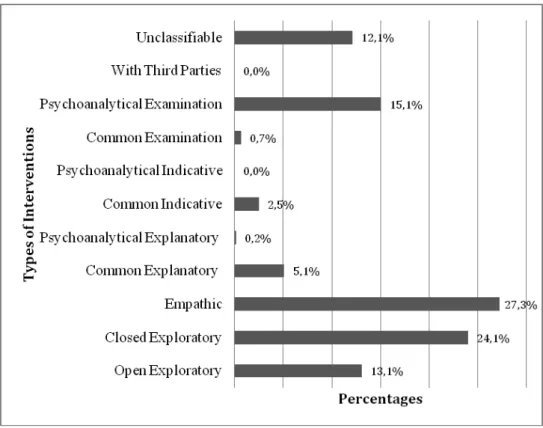
Figure 1. Proportion of each type of intervention throughout the process investigated.
therapy process of a patient with Borderline Per-sonality Disorder.The evaluation of the propor-tion of each type of intervenpropor-tion throughout the process investigated revealed that empathic and closed exploratory interventions predominated. The third type of intervention more used by the therapist of the case was the psychoanalytic ex-amination intervention.
The types of interventions employed by the therapist in greater proportions seem to be consis-tent with the model of BPD patient functioning. This is characterized by serious self-aggression behaviors and suicidal attitudes (Madeddu et al., 2012), frequent acting out, tendency toward im-pulsivity and aggressiveness (Bleichmar, 1992; Hallquist & Pilkonis, 2012) and diffi culties in adherence to treatment (Tanesi et al., 2007).
In considering these characteristics, the therapist more frequently used empathic inter-ventions, since this therapeutic posture contrib-utes to adaptation of the patient and the estab-lishment of the bond. Some authors highlight that establishing a therapeutic alliance with se-vere patients is very important for the manage-ment of the treatmanage-ment, since these patients have particular characteristics that infl uence their ad-herence and also the decision regarding the use of the technique by the psychotherapist (Owen & Hilsenroth, 2011). It was observed that the therapist was focused on establishing a thera-peutic alliance, since the quality of the bond is a strong predictor of results (Elliot, 2012).
The empathic attitude of the therapist, cording to Ablon and Jones (1998), is in ac-cordance with the therapeutic techniques of the psychoanalytic approach. The authors state that the psychoanalytic based model stands out due to the position of the therapist being neutral, em-pathic and sensitive to the feelings of the patient. The second type of intervention most used was the closed explorative, when the therapist requests information, introducing discussion topics. In general, the use of interrogative inter-ventions characterize a more active and direc-tive posture of the therapist. Generally, these are more commonly used in the cognitive model of treatment. However, in the case of patients with serious psychopathologies, psychoanalytic ther-In this study three stages were also
iden-tifi ed, which were explored in relation to the predominant interventions. Figure 2 shows that empathic and closed exploratory interventions predominated in all stages. Thus, in the fi rst stage of the psychotherapeutic process, closed exploratory interventions (23%) were followed by the empathic (22%), in the second stage em-pathic interventions (26%) were followed by the closed exploratory (25%) and in the third stage, the maximum frequency occurred for empathic interventions (32%) followed by closed explor-atory (24%).
The specifi c analysis of these proportions indicates that the maximum oscillation of each type of intervention per stage was 10%. This change in frequency occurred between the fi rst and third stages in relation to empathic inter-ventions. The other types of intervention main-tained equivalent proportions throughout the three stages of the process investigated. In ob-serving the work of the therapist throughout the treatment in relation to empathic interventions, it was verifi ed that the increase of this type of intervention in the third stage corresponded to work focused more on the situation of the patient in crisis, since these sessions correspond to the period prior to hospitalization.
Finally, when analyzing the proportion of common interventions and psychoanalytic specifi c interventions throughout the psycho-therapeutic process investigated, 15% of the in-terventions were specifi c to the psychoanalytic orientation, while 85% were common tions. Thus, it was observed that the interven-tions were characterized, for the most part, as common, that is, they are used in psychoanalytic and cognitive-behavioral treatments.
Discussion
psycho-apists make the technique more fl exible in order to stabilize the treatment (Goodman, Edwards, & Chung, 2013).
In this sense, Goodman et al. (2013) ana-lyzed the psychotherapeutic process of fi ve BPD patients associated with different therapeutic models. In this study, the empathic posture cor-related with symptomatic reduction. Similarly, the therapist actively exercising control of the interaction, questioning and requesting more information, was associated with symptomatic reduction. According to the researchers, the use of these strategies by psychodynamic therapists indicates the effort to maintain the stability of se-vere patients and the therapeutic alliance, when faced with symptomatic intensifi cation.
Thus, the prevalence of the empathic and closed exploratory interventions in the inves-tigated process can be related to the symptom-atology of the patient and to the diagnosis of the case. On the other hand, the preponderance of such interventions may also be associated with the particularities of the therapist. Therefore, it is possible to question how much the results re-fer to the Borderline diagnosis and its symptom-atology or the therapist, since authors such as Fernández-Alvarez, Gomez, and Garcia (2015) and Lambert (2013) verifi ed that the psycho-therapist can infl uence the development and the results of the psychotherapeutic process.
Considering these questions, in relation to the studies already performed, different results have been observed. On one hand, similar to the present study, Roussos et al. (2010), using the CMIP-M as the instrument, analyzed the in-terventions in a psychoanalytic treatment with a diagnosis of unspecifi ed personality disorder and verifi ed a higher proportion of closed in-terrogation interventions. On the other hand, a study by Koenigsberg et al. (1993), using the Therapist Verbal Intervention Inventory (TVII) and aiming to analyze the interventions of the therapist in the psychotherapy with Borderline patients and to monitor the use of the expressive technique (explanations, confrontation and inter-pretation) and support, found a predominance of expressive interventions, which varied uniform-ly from 68% to 98% throughout the 12 sessions
analyzed, except for one isolated case of 43%. These results contradict those found in the pres-ent study, in which psychoanalytical examina-tion intervenexamina-tions (signaling and confrontaexamina-tion) ranked third in the classifi cation of those most used in the treatment, reaching a percentage of 15.1%, and psychoanalytic explanatory inter-ventions (interpretation) reaching a percentage of 0.2% in the process investigated.
However, even in lower proportions than the study by Koenigsberg et al. (1993), in the present study the percentage of psychoanalytical examination interventions (15.1%) was signifi -cantly higher than the psychoanalytic explanato-ry interventions (0.2%). According to Kernberg (2003), in psychoanalytic psychotherapy with patients with Borderline Personality Disorder, interventions such as signaling and confronta-tion occupy a much wider space than interpreta-tion.
The results of the present study are in agree-ment with the literature, which, in the case of pa-tients with fewer resources, suggests supportive psychotherapy, that is, a preference for interven-tions that are not focused on transference (Gab-bard, 1984/1998). Leichsenring and Leibing (2007) state that supportive interventions aim to strengthen skills that are temporarily unavailable to a patient due to acute stress (e.g., traumatic events) or that have not been suffi ciently devel-oped (e.g. impulse control in Borderline Person-ality Disorder).
On the other hand, analyzing the interven-tions in relation to the stages of the treatment, it is possible to verify that the types of interven-tions that predominated in the three stages of the process coincided and there was a preponderance of the empathic and closed exploratory interven-tions throughout the treatment. Thus, the thera-pist maintained the same types of interventions and appeared to strive to develop a therapeutic alliance between the two and adopt a more direc-tive posture.
psychiatric hospitalization of the patient, there was an increase in the percentage of empathic interventions. Thus, this demonstrates the abil-ity of the therapist to tune in to the situation of the patient in crisis and to make the technique
fl exible, increasing the use of empathic interven-tions. This attitude of the therapist is in agree-ment with the literature in that therapists modify their interventions according to the symptoms of the patient (Goodman et al., 2014).
The analysis of the specifi c and common in-terventions in the case of the Borderlinepatient studied indicated that 15% of the interventions used during the process investigated were psy-choanalytic specifi c, while 85% were common interventions, which are not explicitly part of the theoretical framework of the therapist and are used in psychoanalytic and cognitive behavioral treatments. The results obtained in the present study coincide with the results found by Rous-sos et al. (2010), who used the descriptive level of the same instrument (CMIP-M) to examine the interventions used in two psychotherapeu-tic treatments: one cognitive with a diagnosis of generalized anxiety disorder and one of psycho-analytic orientation with a diagnosis of
unspeci-fi ed personality disorder, and found that a mean of 17% of the interventions in the psychoana-lytic treatment and a mean of 16% in the cog-nitive treatment were specifi c to the respective theoretical frameworks.
From the results of the studies, it can be seen that the percentage of specifi c interventions of each theoretical framework remains similar in cases of personality disorder. Some authors have suggested that psychotherapies have been shown to be effective through different approaches and for different disorders, with both common factors and specifi c factors having been investigated and related to therapeutic success (Brum et al., 2012; Isolan et al., 2008). Authors such as Roussos et al. (2010) suggest that the nonspecifi c factors may be the main promoters of change in psy-chotherapy, and that nonspecifi c factors should be studied in order to fi nd their connections with specifi c factors and, through this, to establish the factors that promote change in psychotherapy. Other scholars such as Gumz, Treese, Marx,
Strauss, and Wendt (2015) and Pfammatter and Tschacher (2012) have highlighted that the tech-nique and the common factors cannot be consid-ered independently. The common factors evolve in the context of the therapeutic relationship, which, in turn, is infl uenced to a great extent by the techniques.
According to Roussos et al. (2010), a pos-sible justifi cation for the differences found in the proportions of nonspecifi c and specifi c interven-tions could be that both types of interveninterven-tions in-teract and complement each other. Considering this assumption, nonspecifi c interventions could be paving the way for specifi c interventions, that is, their role in psychotherapy would be to gen-erate the right context for specifi c interventions. The authors mention that while psychoanalysts do not interpret, signal, or confront their pa-tients, they are certainly not in complete silence all the time. They use nonspecifi c interventions - such as information requests and closed inter-rogations - to retrieve the necessary input or to generate the right moment to perform an accu-rate interpretation. Therefore, nonspecifi c ventions can be conceived as “preparatory inter-ventions” or as part of the natural environment of specifi c interventions.
Final Considerations
Given the importance of improving the psychotherapeutic work with BPD patients, this study aimed to identify the types of interven-tions of a psychoanalytic therapist in the psycho-therapy of a patient with Borderline Personal-ity Disorder. Thus, it was sought to contribute to the investigation of the therapeutic action in the psychoanalytic model of psychotherapy, specifi cally considering the contribution of the therapist in the process. Investigating the inter-ventions performed throughout the therapeutic process allows support for both the study of the diffi culties of choosing the technique and modal-ity of interventions, as well as the teaching of the performance of psychoanalytic oriented psycho-therapy with these patients.
and psychoanalytic examination interventions. In this sense, it was observed that the therapist privileged the development of the therapeutic al-liance and the support to the patient, adopting a more directive posture, even though psychoana-lytic interventions were used less frequently.
As a descriptive study, it is hoped that this paves the way for new research, since the study presents limitations especially with regard to the generalization of the data. Further studies are important to confi rm whether the choice of in-terventions used in this case was due to the char-acteristics of patients with BPD or the particu-larities of the therapist, as well as to investigate specifi c and common factors and their relation-ship with therapeutic success.
References
Ablon, J. S., & Jones, E. E. (1998). How ex-pert clinicians’ prototypes of an ideal treat-ment correlate with outcome in psychody-namic and cognitive-behavioral therapy.
Psychotherapy Research, 8(1), 71-83. doi:
10.1080/10503309812331332207
Banon, E., Perry, J. C., Semeniuk, T., Bond, M., Roten, Y., Hersoug, A. G., & Despland, J. N. (2013). Therapist interventions using the Psy-chodynamic Interventions Rating Scale (PIRS) in dynamic therapy, psychoanalysis and CBT.
Psychotherapy Research, 23(2), 121-136. doi: 10.1080/10503307.2012.745955
Bleichmar, N. M. (1992). A psicanálise depois de Freud. Porto Alegre, RS: Artes Médicas.
Brum, E. H. M., Frizzo, G. B., Gomes, A. G., Sil-va, M. R., de Souza, D. D., & Piccinini, C. A. (2012). Evolução dos modelos de pesquisa em psicoterapia. Estudos de Psicologia (Campi-nas), 29(2), 259-169. doi: 10.1590/S0103-166X2012000200012
Clarkin, J. F., Fonagy, P., & Gabbard, G. O. (2013).
Psicoterapia psicodinâmica para transtorno da personalidade: Um manual clínico. Porto Alegre, RS: Artmed.
Cordioli, A. V., & Giglio, L. (2008). Como atuam as psicoterapias: Os agentes de mudança e as prin-cipais estratégias psicoterápicas. In A. V. Cordi-oli (Ed.), Psicoterapias: Abordagens atuais (pp. 42-57). Porto Alegre, RS: Artmed.
Eizirik, M., & Fonagy, P. (2009). Mentalization-based treatment for patients with borderline personal-ity disorder: An overview. Revista Brasileira Psiquiatria, 31(1), 72-75. doi: 10.1590/S1516-44462009000100016
Elliot, R. (2012). Qualitative Methods for Studying Psychotherapy change Process: A guide for stu-dents and practitioners. Washington, DC: Wi-ley.
Fernández-Alvarez, H., Gómez, B., & García, F. (2015). Bridging the gap between research and practice in a clinical and training network: Aigle’s Program. Psychotherapy Research, 25(1), 84-94. doi: 10.1080/10503307.2013.856047
Fonagy, P., & Bateman, A. W. (2007). Mentalizing and borderline personality disorder. Journal of Mental Health, 16(1), 83-101. Retrieved from http://www.ncbi.nlm.nih.gov/pmc/articles/ PMC2816926/
Gabbard, G. O. (1998). Psiquiatria psicodinâmica: Baseado no DSM-IV (2nd Ed.) Porto Alegre,
RS: Artes Médicas. (Original work published in 1984)
Gabbard, G. O. (2005). Psicoterapia psicodinâmica de longo prazo: Texto básico. Porto Alegre, RS: Artmed.
Gabbard, G. O., & Westen, D. (2003). Repensando a ação terapêutica. Revista Psiquiatria, 25(2), 257-273. doi: 10.1590/S0101-81082003000200003
Goodman, G., Anderson, K., & Diener, M. J. (2014). Processes of therapeutic change in psychody-namic therapy of two inpatients with border-line personality disorder. Journal of Psycho-therapy Integration, 24(1), 30-45. doi: 10.1037/ a0035970
Goodman, G., Edwards, K., & Chung, H. (2013). The relation between prototypical processes and psy-chological distress in psychodynamic therapy of fi ve inpatients with borderline personality dis-order. Clinical Psychology and Psychotherapy,
22(1), 83-95. doi: 10.1002/cpp.1875
Gumz, A., Treese, B., Marx, C., Strauss, B., & Wendt, H. (2015). Measuring verbal psycho-therapeutic techniques: A systematic review of intervention characteristics and measures.
Frotiers in Psychology, 6(1705). doi: 10.3389/ fpsyg.2015.01705
disor-der: Diagnostic criteria and beyond. Personality Disorders: Theory, Research, and Treatment, 3(3), 228-246. doi: 10.1037/a0027953
Heinomen, E., Knekt, P., Jääskeläinen, T., & Lind-fors, O. (2014). Therapists` professional and personal characteristics as predictors of outcome in long-term psychodynamic psychotherapy and psychoanalysis. European Psychiatry, 29, 265-274. Retrieved from http://www.ncbi.nlm.nih. gov/pubmed/24060629
Isolan, L., Pheula, G., & Cordioli, A. V. (2008). Fa-tores comuns e mudanças em psicoterapia. In A. V. Cordioli (Ed.), Psicoterapias: Abordagens atuais (pp 58-73). Porto Alegre, RS: Artmed.
Jordão, A. B., & Ramires, V. R. R. (2010). Ado-lescência e organização de personalidade bor-derline: Caracterização dos vínculos afetivos.
Paidéia (Ribeirão Preto), 20(47), 421-430. doi: 10.1590/S0103-863X2010000300014
Kernberg, O. F. (1995). Transtornos graves de per-sonalidade: Estratégias psicoterapêuticas. Por-to Alegre, RS: Artes Médicas.
Kernberg, O. F. (2003). Psicanálise, psicoterapia psi-canalítica e psicoterapia de apoio: Controvérsias contemporâneas. In A. Green (Ed.), Psicanálise contemporânea: Revista Francesa de psi-canálise (pp. 23-49). Rio de Janeiro, RJ: Imago.
Kernberg, O. F., Selzer, M. A., Koenigsberg, H. W., Carr, A. C., & Appelbaum, A. H. (1991). Psico-terapia psicodinâmica de pacientes borderline. Porto Alegre, RS: Artes Médicas.
Koenigsberg, H. W., Kernberg, O. F., Appelbaum, A. H., & Smith, T. (1993). A method for analyz-ing therapist interventions in the psychotherapy of borderline patients. Journal of Psychotherapy Practice and Research, 2(2), 119-134. Retrieved from http://www.ncbi.nlm.nih.gov/pmc/articles/ PMC3330333/
Lambert, M. (2013). Bergin and Garfi eld’s handbook of psychotherapy and behavior change. In K. A. Tompkins & J. K. Swift (Eds.), Psychotherapy Process Outcome Research. Hoboken, NJ: John Willey & Sons.
Leichsenring, F., & Leibing, E. (2007). Psychody-namic psychotherapy: A systematic review of techniques, indications and empirical evi-dence. Psychology and Psychotherapy: Theo-ry, Research and Practice, 80, 217-228. doi: 10.1348/147608306X117394
Madeddu, F., Aquaro, P., & Preti, E. (2012). Psico-terapia per il disturbo borderline di personal-ità: revision della letteratura sull’effi cacia di quattro trattamenti manualizzati. Journal of Psychopathology, 18, 196-209. Retrieved from http://www.jpsychopathol.it/issues/2012/vol18-3/02Madeddu.pdf
Owen, J., Drinane, J. M., Idigo, K. C., & Valentine, J. C. (2015). Psychotherapist effects in meta-analyses: How accurate are treatment effects?
Psychotherapy, 52(3), 321-328. Retrieved from http://psycnet.apa.org/journals/pst/52/3/321.pdf
Owen, J., & Hilsenroth, M. J. (2011). Interaction between alliance and technique in predicting patient outcome during psychodynamic psy-chotherapy. The Journal of Nervous and Men-tal Disease, 199(6), 384-389. doi: 10.1097/ NMD.0b013e31821cd28a.
Pasini, T. F., & Dametto, J. (2010). Abordagem psi-codinâmica do paciente borderline. Perspec-tiva, 34(128), 133-149. Retrieved from http:// pt.slideshare.net/cinthyabretas/paciente-border-line-e-seu-tratamento-pdf
Peuker, A. C., Habigzang, L. F., Koller, S. H., & Araujo, L. B. (2009). Avaliação de processo e resultado em psicoterapias: Uma revisão. Psico-logia em Estudo, 14(3), 439-445. doi: 10.1590/ S1413-73722009000300004
Pfammatter, M., & Tschacher, W. (2012). Wirkfak-toren der Psychotherapie: eine Übersicht und Standortbestimmung. Zeitschrift für Psychiatrie Psychologie und Psychotherapie, 60, 67-76. doi 10.1024/1661- 4747/a000099
Quadros, E. A., & Yoshida, E. M. P. (2012). Variáveis do terapeuta: Análise em periódicos brasileiros (1998-2007). Interação Psicologia, 16(1), 63-72. Retrieved from http://ojs.c3sl.ufpr.br/ojs/ index.php/psicologia/article/view/11546/19716
Quagliatto, H. S. M., & Santos, R. G. (2004). Psi-coterapia psicanalítica e acompanhamento ter-apêutico: Uma aliança de trabalho. Psicologia Ciência e Profi ssão, 24(1), 74-81. doi: 10.1590/ s1414-98932004000100009
Resolution No. 466. (2012). Diretrizes e normas reg-ulamentadoras de pesquisas envolvendo seres humanos. Retrieved from http://conselho.saude. gov.br/resolucoes/2012/Reso466.pdf
psico-__________________________________________________________________________________________
© The Author(s), 2018. Open Access. This article is distributed under the terms of the Creative Commons Attribution 4.0 International License (http://creativecommons.org/licenses/by/4.0/), which permits unrestricted use, distribution, and reproduction in any medium, provided you give appropriate credit to the original author(s) and the source, provide a link to the Creative Commons license, and indicate if changes were made.
analítica. Anuario de Investigaciones, 8, 41-48. Retrieved from http://www.scielo.org.ar/pdf/ anuinv/v13/v13a05.pdf
Roussos, A. J., Waizmann, V., & Etchebarne, I. (2010). Common Interventions in two single cases of cognitive and psychoanalytic psy-chotherapies. Journal of Psychotherapy
In-tegration, 20(3), 327-346. Retrieved from
http://psycnet.apa.org/index.cfm?fa=buy. optionToBuy&id=2010-17586-004
Tanesi, P. H. V., Yazigi, L., Fiore, M. L. M., & Pitta, J. C. N. (2007). Adesão ao tratamento clínico no transtorno de personalidade borderline. Estudos de Psicologia (Natal), 12(1), 71-78. Retrieved from http://www.scielo.br/pdf/epsic/v12n1/ a09v12n1.pdf
Waizmann, V., Etchebarne, I., & Roussos, A. J. (2004). La interacción entre las intervenciones psicorapéuticas de distintos marcos teóricos y los factores comunes a las psicoterapias. Revista
Argentina de Clínica Psicológica, 13(3), 233-244. Retrieved from: http://www.academia. edu/3996581/La_interacci%C3%B3n_entre_ las_intervenciones_psicorap%C3%A9uticas_ de_distintos_marcos_te%C3%B3ricos_y_ los_factores_comunes_a_las_psicoterapias_ Waizmann_Etchebarne_and_Roussos_2004_
Waizmann, V., Jurkowski, L., & Roussos, A., J. (2006). Descripción de las intervenciones elegi-das por psicoterapeutas psicoanalíticos y cog-nitivos. Anuario de Investigaciones, 14, 41-48. Retrieved from http://www.scielo.org.ar/pdf/ anuinv/v14/v14a04.pdf