Randomized Controlled Trial on the Effect of
Channa striatus
Extract on Measurement of
the Uterus, Pulsatility Index, Resistive Index
of Uterine Artery and Superficial Skin Wound
Artery in Post Lower Segment Caesarean
Section Women
Mohd Rizal Abu Bakar1☯, Azidah Abdul Kadir2☯*, Siti Zubaidah Abdul Wahab2☯, Ahmad
Helmy Abdul Karim2‡, Nik Hazlina Nik Hussain2‡, Norhayati Mohd Noor2‡, Julia Omar2‡,
Saringat Bin Bai @ Bae3‡, Wan Haslindawani Wan Mahmood2‡, Asrenee Abdul Razak2‡, Rohaizan Yunus4‡
1Advanced Medical and Dental Institute, Universiti Sains Malaysia, Kubang Kerian, Malaysia,2School of Medical Sciences, Universiti Sains Malaysia, Kubang Kerian, Malaysia,3School of Pharmaceutical Sciences, Universiti Sains Malaysia, Kubang Kerian, Malaysia,4International Medical University, Seremban, Malaysia
☯These authors contributed equally to this work. ‡These authors also contributed equally to this work.
Abstract
Aim
To compare the mean of anteroposterior (AP) measurements of the uterus in longitudinal and oblique transverse planes, and the pulsatility index (PI) and resistive index (RI) of the uterine artery and superficial skin wound artery between patients takingChanna striatus
and placebo.
Background
Channa striatus, also known as haruan, is a fresh water snakehead fish consumed in many
parts of Southeast Asia.Channa striatusis also normally consumed by women postpartum
to promote wound healing as well as to reduce post-operative pain.
Methodology
This study is a randomised, double blind, placebo-controlled study conducted in women after Lower Segment Caesarean Section (LSCS). Subjects were randomised to either a
Channa striatusor a placebo group and were given a daily dosage of 500 mg ofChanna
striatusextract or 500 mg maltodextrin, respectively, for six weeks post LSCS. The
antero-posterior measurements of the uterus in the longitudinal and oblique transverse planes, and
OPEN ACCESS
Citation:Abu Bakar MR, Abdul Kadir A, Abdul Wahab SZ, Abdul Karim AH, Nik Hussain NH, Mohd Noor N, et al. (2015) Randomized Controlled Trial on the Effect ofChanna striatusExtract on Measurement of the Uterus, Pulsatility Index, Resistive Index of Uterine Artery and Superficial Skin Wound Artery in Post Lower Segment Caesarean Section Women. PLoS ONE 10(7): e0133514. doi:10.1371/journal. pone.0133514
Editor:Elizabeth W Triche, St Francis Hospital, UNITED STATES
Received:February 22, 2015
Accepted:June 29, 2015
Published:July 29, 2015
Copyright:© 2015 Abu Bakar et al. This is an open access article distributed under the terms of the
Creative Commons Attribution License, which permits unrestricted use, distribution, and reproduction in any medium, provided the original author and source are credited.
Data Availability Statement:All relevant data are within the paper and its Supporting files.
the pulsatility index (PI) and resistive index (RI) of the uterine and superficial skin wound arteries were assessed using pelvic Gray-scale ultrasound and Doppler ultrasound at base-line (Day 3) and at two weeks, four weeks and six weeks post-operatively.
Results
Sixty-six subjects were randomised into the study with 33 in theChanna striatusgroup and 33 in the placebo group. No significant differences were detected in terms of the pulsatility index (PI) and the resistive index (RI) of the uterine and superficial skin wound arteries between theChanna striatusand placebo groups. However, in theChanna striatusgroup, the AP measurements of the uterus on the longitudinal and oblique transverse planes were significantly lower compared to the placebo group (p<0.05 and p<0.001, respectively).
Conclusion
Daily intake ofChanna striatusextract results in marked differences compared to placebo in
terms of uterine involution and recovery in women post LSCS.
Trial Registration
www.isrctn.com 11960786
Introduction
Channa striatusis a fresh water snakehead fish well known in the Southeast Asian region for
its protein and as a traditional remedy. Locals believe this fish is efficacious in treating wounds, relieving pain and boosting energy in the sick and elderly [1]. In addition, this fish is synony-mous with use in a postnatal diet [2] and recuperation from illness or surgery [3]. In postpar-tum mothers,Channa striatusis consumed to accelerate the wound healing process [2,4].
Animal studies have shown thatChanna striatusextract influences the different phases of
wound healing by enhancing dermal wound healing [4,5]. It has also been proven to contain all the essential amino acids required for wound healing, particularly glycine and polyunsaturated fatty acids, which can promote prostaglandin synthesis [6,7]. High levels of these specific amino acids, fatty acids and arachidonic acid are effective in wound healing by promoting the initiation of a series of reactions: remodelling of collagen, re-epithelisation of the wound and induction of wound contraction [1,8,9].
Although extensive studies have been conducted on the biomedical properties ofChanna striatus, most of these studies were performed on animals and limited clinical data in humans
is available [10]. To our knowledge, there are no published reports on the effect ofChanna striatusextract on uterus involution assessed by conventional or Doppler ultrasound in women
post LSCS. In the present study, post LSCS women were chosen as the subjects because they are the main group ofChanna striatusconsumers in our population.
The use of ultrasound in this study allowed objective assessment of uterus involution during the puerperium. Moreover, it has been suggested that ultrasound is useful in assessing uterine scarring following LSCS [11]. We hypothesised that measurement of resistance flow indices, pulsatility index (PI) and resistive index (RI) from the flow velocity waveforms of the uterine artery postpartum would provide new information on the effect ofChanna striatusextract on
hemodynamic events during the postpartum involution process. Thus, the present study was Competing Interests:The authors have declared
designed to compare measurements of the uterus, PI and RI of the uterine artery and superfi-cial skin wound artery betweenChanna striatusand placebo groups of women who had
under-gone LSCS.
Materials and Methods
Study design and setting
This study was a randomised, double blind, two-arm parallel comparative study ofChanna striatusextract versus placebo. The study was conducted in women who had undergone LSCS
at the Universiti Sains Malaysia Hospital (HUSM). The date range for patients recruitment and follow-up were from 15 March 2011 to 14 March January 2014.
Study population
Inclusion criteria were women aged between 18 and 40 years who had undergone LSCS and who had no present active medical, surgical or gynaecological problems. The exclusion criteria were women who had taken any form of herbal extract in the previous three months prior to study entry or during the study period. Women with a history of drug or alcohol abuse, those taking fresh Channa striatusduring the study period, those on warfarin or heparin, and
women who had been diagnosed with clinically relevant cardiovascular, gastrointestinal, hepatic, neurological, endocrine, haematological or connective tissue disease or another major systemic disease that would influence the interpretation of the results were also excluded. In addition, women with a medical disorder requiring steroid or immunosuppressive therapy, a chronic cough or other condition that may cause an increase in intra-abdominal pressure or any congenital anterior abdominal wall defects were not eligible for inclusion in the study.
Data collection procedure
The orally administered freeze driedChanna striatusextract and placebo (maltodextrin) were
prepared by a certified laboratory at the School of Pharmaceutical Sciences, Universiti Sains Malaysia. Both the freeze driedChanna striatusextract and placebo were available as 250 mg
capsules. The treatment group was prescribed 500 mg (2 capsules) per day of freeze dried
Channa striatusextract while the placebo group was given 500 mg (2 capsules) per day of
maltodextrin. The women took the study medication for a total of 6 weeks starting from the three days after LSCS. Subject numbers were allocated strictly sequentially, as generated by a computer (blocks of four) that provided allocation of subject numbers in a ratio of 1:1 to either
Channa striatusextract or placebo. Only two co-investigators who had prepared the product
and a statistician knew the randomisation scheme. As the study was double blind, once a sub-ject had been randomised, the study treatment was not known by either the subsub-ject or the investigators.
Written informed consent was obtained from the women 24–72 hours after elective or emergency LSCS. The researchers ensured that all women were fully conscious and comfort-able before informed consent was taken. Information on demographic data and past and cur-rent medical history was obtained by interviewing the women.
On Day 3 post LSCS, the women underwent Gray-scale ultrasound and Doppler ultrasound pelvic examination. Day 3 was chosen for the ultrasound because wound inspection was done at this time and the abdominal bandage that covered the wound was removed. Then, the sub-jects were randomised to either theChanna striatusor placebo group. The ultrasounds were
and concomitant medications were recorded. In addition, the women’s compliance was mea-sured at each visit according to the number of capsules taken.
Assessment of liver function, renal function and full blood count were conducted at baseline and at the last visit (postoperative Week 6) to measure the safety profiles ofChanna striatus
and placebo. In this study, all the women underwent standard procedures for LSCS and received standard postoperative pain management.
Outcome measures
The outcome measures used in this study were longitudinal and oblique transverse measure-ment of the uterus, and PI and RI of the uterine and superficial skin wound arteries. All ultra-sound examinations were performed using the Acuson X300 ultraultra-sound machine from Siemens, which was manufactured in 2011. The 3.5MHz and 7.5–13.5MHz ultrasound probes were used in this study. In order to ensure the most accurate data collection, only one co-researcher performed all the ultrasound examinations.
Gray-scale ultrasound for uterine assessment
Ultrasound was performed using real time Acuson (X300), an ultrasound machine with a high resolution linear transducer of 3.5 MHz frequency. The patient is required to have a full blad-der before the ultrasound of the uterus is performed. A gentle compression with the probe was performed and the measurements were made between uterine contractions. The uterus was assessed in two planes comprising the longitudinal and oblique transverse planes due to the anatomical position of the uterus, which cannot be evaluated in the true transverse plane in an ultrasound study. In the longitudinal and oblique transverse sections, the maximum anteropos-terior (AP) diameter was measured with three readings in each. The average of these three readings was then calculated. This method of measurement was similar to that used in the study by Al-Bdouret al. 2004 [12].
Doppler ultrasound for assessment of the uterine artery
The uterine artery is identified by colour Doppler, directing the transducer to the lateral wall of the uterus in the region of the lower uterine segment. The RI and PI measurements were taken at the point where the uterine artery crossed the external iliac artery. Either right or left uterine artery RI or PI values were recorded in this study. This is because the study by Van Schou-broecket al. in 2006 showed there is no significant difference between right and left uterine
artery RI and PI values [13]. Only single RI and PI measurements were taken once the best Doppler shift waveform was achieved.
Doppler ultrasound for assessment of the superficial skin wound artery
The ultrasound was performed using the real time Acuson (X300), high end ultrasound machine with a high resolution linear transducer of 7.5–13.5 MHz frequency. The superficial LSCS skin wounds were identified and RI and PI of the superficial skin wound artery were measured. Only single RI and PI measurements were taken at a single site at the superficial LSCS skin wound once the best Doppler shift waveform was achieved.
Statistical analysis
size calculated was based on the study by Nakaiet al. on the RI of the superficial wound artery
[15]. By using a standard deviation of 0.08, taking the power of 80%, detectable difference of 0.1 and level of significance of 0.05, the calculated sample size for each group was 26. However after considering of 30% drop-out, the sample size for each group is 34.
The study used a (modified) intention-to-treat (ITT) analysis approach where all subjects who took at least one dose of study drug and had at least one post-baseline efficacy evaluation are analysed based on their original randomisation. Subjects were omitted for analysis if they had no baseline data and/or were without at least one post-baseline evaluation. In case of miss-ing data due to drop-outs, the data was imputed accordmiss-ing to the Last Observation Carried For-ward (LOCF) principle. Repeated measures for analysis of variance (ANOVA) were used to compare AP measurements of the uterus in longitudinal and oblique transverse planes, and the PI and RI of the uterine and superficial skin wound arteries throughout the 6 week interven-tion. Per protocol analysis was done to 49 subjects who completed all the study visits for com-parison. Statistical analyses were performed using the Statistical package Social Sciences (SPSS) (PASW 20.0) under license of the Universiti Sains Malaysia.
Ethics statement
The research proposal was approved by the Human Research Ethics Committee, Universiti Sains Malaysia (Reference number: USMKK / PPP/JEPeM [220.3(04)]. The date of approval was 31stDecember 2009. Written informed consent was used in this study.
This trial is registered in the ISRCTN registry. The ISRCTN Registration number is 11960786. The registry website:www.isrctn.com/. The authors confirm that all ongoing and related trials for this drug/intervention are registered. The registration was done after comple-tion of the study in order to fulfill the criteria for this journal. It is not a standard protocol or legislation in this country to register a clinical trial study for any trial registry.
Results
Eighty-four subjects consented to the study but 18 of these later refused to participate. Finally, sixty-six subjects were successfully randomised into the study. However, at post LSCS Day 3 another three patients were excluded from the study as they had been transferred out of the state (Fig 1). A total of 49 patients completed all the study visits i.e. 25 inChanna striatusand
24 in the placebo groups. The baseline characteristics of the all the subjects are presented in
Table 1. There was no significant difference in baseline characteristics between theChanna striatusand placebo groups.
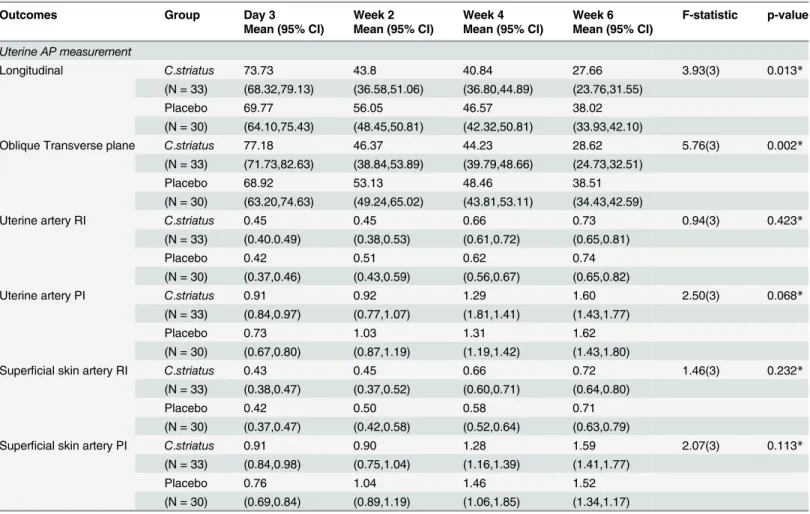
Table 2shows the group differences based on time for the longitudinal, oblique transverse plane of uterine AP measurements, and RI and PI measurements of the uterine and the superfi-cial arteries for 63 subjects based on (ITT) analysis. Decreases were seen in AP measurements of the uterus from Day 3 to Week 6 post LSCS in both theChanna striatusand placebo groups.
There were significant differences in the AP measurements of the uterus on the longitudinal plane and oblique transverse plane between the groups based on time throughout the study period (F = 3.93, p = 0.013). However, no significant differences were detected in terms of PI and RI of the uterine and superficial skin wound arteries between theChanna striatusand
pla-cebo groups.
Overall compliance with the study medication was 98%. No adverse effects (AEs) were reported and there were no changes in the safety profile parameters (full blood count, renal profile, and liver function test) before or after treatment.
Discussion
In this study, we found thatChanna striatusextract had a significant effect on uterine
involu-tion post LSCS compared to placebo. To our knowledge, this is the first study on this topic; Fig 1. Flowchart of the study.
doi:10.1371/journal.pone.0133514.g001
Table 1. Baseline characteristics of the subjects.
Demographic characteristics Channa striatus(N = 33) Placebo (N = 30) p-value
Mean(SD) N (%) Mean(SD) N (%)
Age 30.58(4.45) 28.10(5.56) 0.144*
Parity 2.52(1.72) 2. 20(1.69) 0.480*
Types of LSCS
Elective 2(6.06) 2(6.67) 0.582**
Emergency 31(93.94) 28(93.33)
Uterine AP measurement
Longitudinal plane 73.73(6.30) 77.18(0.12) 0.316*
Oblique transverse plane 77.18(6.77) 68.92(21.56) 0.507*
Uterine artery RI 0.45(0.25) 0.42(0.16) 0.357*
Uterine artery PI 0.91(0.12) 0.73(0.24) 0.143*
Superficial skin artery RI 0.43(0.10) 0.42(0.15) 0.778*
Superficial skin artery PI 0.91(0.15) 0.76(0.25) 0.141*
*Determined by Independent-t test
**Determined by Simple logistic regression
LSCS, Lower Segment Caesarean Section; AP, anterior posterior; RI, resistive index; PI, pulsatility index.
therefore, we could not compare our results with those of with any other studies. Our data implied thatChanna striatusis effective in facilitating uterine recovery in the postpartum
period. A similar finding was also found in the study by Hoet al. on the effect of traditional
Chinese herbal medicines on the process of uterus involution in women post LSCS and normal vaginal delivery [16]. In the study, ultrasound indices on 127 postpartum women and retro-spectives questionnaire were used to query women about their frequencies of taking herbal medicines. They reported that consumption ofEucommia ulmoidesnegatively correlated with
the AP diameter of the uterus and the cavity [16]. They speculate that increasing contractile activity of the uterus could explain the rapid uterus involution.
Uterine involution process in the puerperium involves massive remodelling of the extracel-lular matrix in association with cell proliferation and apoptosis [17]. Some of the remodeling events that occur naturally in the uterus, parturition, endometrial regeneration and uterine involution, have features in common with events of tissue injury and wound healing process, where they may occur after injury or in association with various pathologies [18].
Table 2. Between group differences based on time for longitudinal, oblique transverse planes of uterine AP measurements or RI and PI measure-ments of the uterine and superficial arteries (ITT analysis, N = 63).
Outcomes Group Day 3 Week 2 Week 4 Week 6 F-statistic p-value
Mean (95% CI) Mean (95% CI) Mean (95% CI) Mean (95% CI)
Uterine AP measurement
Longitudinal C.striatus 73.73 43.8 40.84 27.66 3.93(3) 0.013*
(N = 33) (68.32,79.13) (36.58,51.06) (36.80,44.89) (23.76,31.55)
Placebo 69.77 56.05 46.57 38.02
(N = 30) (64.10,75.43) (48.45,50.81) (42.32,50.81) (33.93,42.10)
Oblique Transverse plane C.striatus 77.18 46.37 44.23 28.62 5.76(3) 0.002*
(N = 33) (71.73,82.63) (38.84,53.89) (39.79,48.66) (24.73,32.51)
Placebo 68.92 53.13 48.46 38.51
(N = 30) (63.20,74.63) (49.24,65.02) (43.81,53.11) (34.43,42.59)
Uterine artery RI C.striatus 0.45 0.45 0.66 0.73 0.94(3) 0.423*
(N = 33) (0.40.0.49) (0.38,0.53) (0.61,0.72) (0.65,0.81)
Placebo 0.42 0.51 0.62 0.74
(N = 30) (0.37,0.46) (0.43,0.59) (0.56,0.67) (0.65,0.82)
Uterine artery PI C.striatus 0.91 0.92 1.29 1.60 2.50(3) 0.068*
(N = 33) (0.84,0.97) (0.77,1.07) (1.81,1.41) (1.43,1.77)
Placebo 0.73 1.03 1.31 1.62
(N = 30) (0.67,0.80) (0.87,1.19) (1.19,1.42) (1.43,1.80)
Superficial skin artery RI C.striatus 0.43 0.45 0.66 0.72 1.46(3) 0.232*
(N = 33) (0.38,0.47) (0.37,0.52) (0.60,0.71) (0.64,0.80)
Placebo 0.42 0.50 0.58 0.71
(N = 30) (0.37,0.47) (0.42,0.58) (0.52,0.64) (0.63,0.79)
Superficial skin artery PI C.striatus 0.91 0.90 1.28 1.59 2.07(3) 0.113*
(N = 33) (0.84,0.98) (0.75,1.04) (1.16,1.39) (1.41,1.77)
Placebo 0.76 1.04 1.46 1.52
(N = 30) (0.69,0.84) (0.89,1.19) (1.06,1.85) (1.34,1.17)
AP, anterior posterior; RI, resistive index; PI, pulsatility index.
*Repeated measure ANOVA was applied followed by pairwise comparison with Bonferroni confidence interval adjustment. Assumption of normality, homogeneity of variances and compound symmetry were checked and fulfilled.
We postulate that there are possible reasons for these findings. The effect ofChanna striatus
extract in rapid uterus involution rate could be due to an enhanced wound healing process and increased contractile activity of the uterus. As mentioned earlier, studies have shown that
Channa striatusextract has wound healing properties [1,8,9]. Baie and Sheikhet al. conducted
a study usingChanna striatusextract cream to assess its wound healing effects in rats [8]. In
this study, the researchers found that theChanna striatusextract enhanced the wound healing
process by increasing the tensile strengths of the wound [8]. Rezqa and Syed Hassan in 2012 evaluated the effect of oral and topicalChanna striatuson tensile strength, epithelisation,
fibro-blast count and hydroxyproline level in the healing of a laparotomy wound in malnourished rats [19,20]. The results demonstrated that the group treated with oral and topicalChanna striatushad significantly higher tensile strength and epithelial and fibroblast cell counts
(P-value<0.001).
We also postulate that the increased tensile strength may be attributed to the polypeptide formation produced by a combination of glycine with aspartic and glutamic acid in the pres-ence of leucine, methionine, alanine and arginine [4]. The effectiveness ofChanna striatusas a
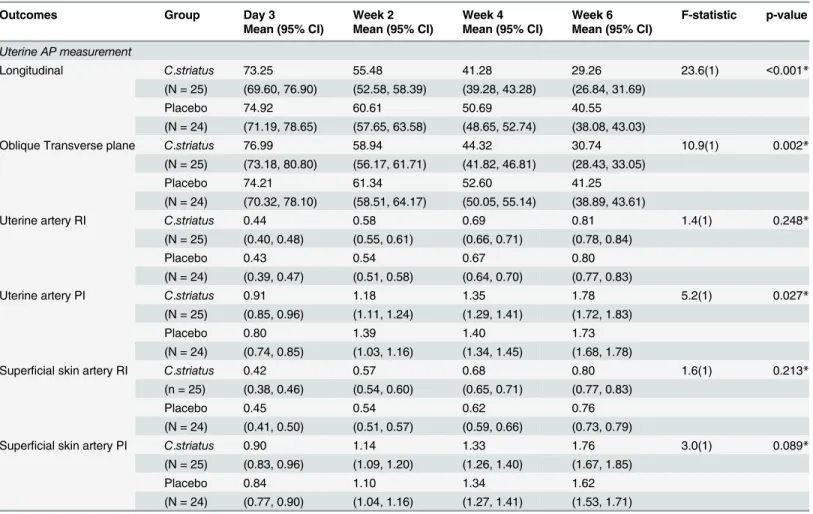
Table 3. Between group differences based on time for longitudinal, oblique transverse planes of uterine AP measurements or RI and PI measure-ments of the uterine and superficial arteries (per protocol analysis, N = 49).
Outcomes Group Day 3 Week 2 Week 4 Week 6 F-statistic p-value
Mean (95% CI) Mean (95% CI) Mean (95% CI) Mean (95% CI)
Uterine AP measurement
Longitudinal C.striatus 73.25 55.48 41.28 29.26 23.6(1) <0.001*
(N = 25) (69.60, 76.90) (52.58, 58.39) (39.28, 43.28) (26.84, 31.69)
Placebo 74.92 60.61 50.69 40.55
(N = 24) (71.19, 78.65) (57.65, 63.58) (48.65, 52.74) (38.08, 43.03)
Oblique Transverse plane C.striatus 76.99 58.94 44.32 30.74 10.9(1) 0.002*
(N = 25) (73.18, 80.80) (56.17, 61.71) (41.82, 46.81) (28.43, 33.05)
Placebo 74.21 61.34 52.60 41.25
(N = 24) (70.32, 78.10) (58.51, 64.17) (50.05, 55.14) (38.89, 43.61)
Uterine artery RI C.striatus 0.44 0.58 0.69 0.81 1.4(1) 0.248*
(N = 25) (0.40, 0.48) (0.55, 0.61) (0.66, 0.71) (0.78, 0.84)
Placebo 0.43 0.54 0.67 0.80
(N = 24) (0.39, 0.47) (0.51, 0.58) (0.64, 0.70) (0.77, 0.83)
Uterine artery PI C.striatus 0.91 1.18 1.35 1.78 5.2(1) 0.027*
(N = 25) (0.85, 0.96) (1.11, 1.24) (1.29, 1.41) (1.72, 1.83)
Placebo 0.80 1.39 1.40 1.73
(N = 24) (0.74, 0.85) (1.03, 1.16) (1.34, 1.45) (1.68, 1.78)
Superficial skin artery RI C.striatus 0.42 0.57 0.68 0.80 1.6(1) 0.213*
(n = 25) (0.38, 0.46) (0.54, 0.60) (0.65, 0.71) (0.77, 0.83)
Placebo 0.45 0.54 0.62 0.76
(N = 24) (0.41, 0.50) (0.51, 0.57) (0.59, 0.66) (0.73, 0.79)
Superficial skin artery PI C.striatus 0.90 1.14 1.33 1.76 3.0(1) 0.089*
(N = 25) (0.83, 0.96) (1.09, 1.20) (1.26, 1.40) (1.67, 1.85)
Placebo 0.84 1.10 1.34 1.62
(N = 24) (0.77, 0.90) (1.04, 1.16) (1.27, 1.41) (1.53, 1.71)
AP, anterior posterior; RI, resistive index; PI, pulsatility index.
*Repeated measure ANOVA was applied followed by pairwise comparison with Bonferroni confidence interval adjustment. Assumption of normality, homogeneity of variances and compound symmetry were checked and fulfilled.
wound healing agent is also thought to be influenced by the high level of specific amino acids such as glycine and fatty acids such as arachidonic acid [8,9]. These two compounds are believed to be involved in the promotion of wound healing through the initiation of a series of mechanisms involving the remodelling of collagen, re-epithelialisation of the wound and induction of wound contraction [8,9,21,22].
Prostaglandin has an important role in contraction of the smooth muscle of uterus [21]. As mention earlier,Channa striatushas high contents of arachidonic acid and polyunsaturated
fatty acids that can promote prostaglandin synthesis [6,7]. It is postulated that the production of these prostaglandins promote uterine muscle contraction and rapid uterus involution. This effect was also seen in studies of the traditional Chinese herbal medicines [16,22,23]. The effect of the traditional Chinese herbal medicines called Sheng-Hua-Tang has been shown in animal models that it increases the myoelectric activity of rabbit uterine smooth muscle [22] and the contraction of the uterus when co-treated with oestrogen [23].
During pregnancy, the uterine vessels are dilated to increase the blood flow. There are many new vessel growths due to increase demand of blood flow from the fetus as well as the placenta. This physiological change will lead to the dilated, low resistance uteroplacental ves-sels with markedly increased blood flow. However, after the delivery, there are dramatic regression of the uterus, uterine arteries and their branches in the physiological involution process. Studies using Doppler ultrasound have been used to measure flow resistance indices of the uterine arteries in the puerperium [24,25]. The uterine artery can evaluate by direct visualization, i.e. examining the characteristics of the waveform, or by quantifying the PI and RI value. The PI (S-D/Mean) and the RI (S-D/S) are two semi-quantitative, angle— indepen-dent indices, where S is the maximum and D is the minimum of the Doppler shift frequency through the cardiac cycle. In pregnancy, there is a high vascularity and it is expected that the RI and PI would be lower compare to puerperium or non-pregnant state. The duration of physiological returns of the hemodynamic changes to non-pregnant state is a controversial issue. Study by Tekay and Japilla showed that the values were not reached even three months after delivery [25].
We noted an increasing trend of the readings of the RI and PI from Day 3 until Week 6 postpartum. The increase in the RI and PI values reflects the healing process in both groups. These findings were similar to those of other studies conducted by Mulic—Lutvicaet al. [24] andTekay and Jouppilaet al. [25], which assessed the peripheral vascular resistance of the
uter-ine artery in postpartum women. These studies found that the PI and RI values increased sig-nificantly from Day 1 until day 56 postpartum [24,25]. Our study had showed that there was an increasing trend of the values but however these values were still lower compare to values reported for non-pregnant women, which suggest a slow return of vascular physiology to a non-pregnant state [24,25].
In the present study, no significant differences were found in the RI and PI of the uterine and superficial skin arteries between theChanna striatusand placebo groups in the ITT
analy-sis. However, interestingly, the per protocol analysis showed there was significant difference between the groups for PI of the uterine artery. The findings from Doppler velocimetric analy-sis are inconclusive. This findings explain the true biological effect of healing process by
Channa striatus. In puerperium, the physiological changes not only involves the muscle cells
and decidua at the placental site but also the uterine arteries and their branches. However, the results of the ITT analysis would reflects the effect of pragmatic trial.
TheChanna striatusextract was well tolerated in this study. There were no reported AEs
Limitations and Recommendations
This study had several limitations. The major limitation was a high number of defaulters for the follow-up in this study. This was expected since it was difficult for the postpartum women to come to the follow-up due to time and social reasons. It is recommended that animal studies should be conducted to understand the mechanism ofChanna striatuseffect on uterine
involu-tion. Future works should also place greater emphasis on identifying bioactive compounds and research on standardisation of the extract.
Conclusion
Channa striatushas a beneficial effect on uterine involution in post LSCS women and its use to
enhance wound healing is highly recommended.
Supporting Information
S1 CONSORT Checklist. CONSORT checklist. (DOC)
S1 Dataset. (SAV)
S1 Protocol. Trial protocol. (DOCX)
Author Contributions
Conceived and designed the experiments: AAK JO SBB AAR RY NHNH WHWM. Performed the experiments: MRAB SZAW AHAK. Analyzed the data: MRAB SZAW NMN. Contributed reagents/materials/analysis tools: SBB JO. Wrote the paper: AAK MRAB NHNH.
References
1. Mohd SM, Abdul Manan MJ. Therapeutic potential of the haruan (Channa striatus) from food to
medici-nal uses Malay J Nutr. 2012; 18(1):125–136.
2. Mat Jais AM. Pharmacognosy and pharmacology of Haruan (Channa striatus), a medicinal fish with wound healing properties. Boletín Latinoamericano y del Caribe de Plantas Medicinales y Aromáticas. 2007; 6(3):53–55.
3. Lee PG, Ng P K L. The snakehead fishes of the Indo-Malaysia region. Nature Malaysiana. 1991; 6 (4):113–129.
4. Mat Jais AM, Mc Cullock R, Croft K. Fatty acid and amino acid composition in haruan as apotential role in wound healing General Pharmacolog. 1994; 25:947–950.
5. Mat Jais AM, Matori MF, Kittakoop P, Sowanborirux K. Fatty Acid Compositions in Mucus and Roe of Haruan,Channa Striatusfor Wound Healing General Pharmacology: The Vascular System. 1998; 30 (4):561–63. PMID:9522175
6. Somchit MN, Solihah MH, Israf DA, Arifah AK, Mat Jais AM. Anti-inflammatory activity of Channa stria-tus, Channa micropeltes and Channa lucius extracts: chronic inflammatory modulation J Orient Pharm Exp Med. 2004; 4(2):91–94.
7. Zakaria ZA, Mat Jais AM, Goh YM, Sulaiman MR, Somchit MN. Amino acid and fatty acid composition of an aqueous extract of Channa Striatus (Haruan) that exhibits antinorciceptive activity. Clinical and Exp. Pharmacol and Physiological. 2007; 34:198–204.
8. Baie SH, Sheikh KA. The wound healing properties ofC.striatus-cetrimide cream-tensile strength
mea-surement. Journal of Ethnopharmacology.2000; 71:93–100. PMID:10904151
9. Baie SH, Sheikh KA. The wound healing properties ofC.striatus-cetrimide cream-wound contraction
10. Azidah AK, Maryam MZ, Siti Zubaidah AW, Norhayati MN, Saringat B, Juhara H. The therapeutic effect of oralChanna striatus(Haruan) extract on primary knee osteoarthritis patients Agro Food Industry Hi
Tech Journal.2014; 25(3):44–48.
11. Negishi H, Kishida T, Yamada H, Hirayama E, Mikuni M, Fujimoto S. Changes in uterine size after vagi-nal delivery and cesarean section determined by vagivagi-nal sonography in the puerperium Arch Gynecol Obstet. 1999; 263(1–2):13–6. PMID:10728621
12. Al-Bdour AN, Akasheh HF, Al-Husban NA. Ultrasonography of the uterus after normal vaginal delivery. Saudi Med J. 2004; 25(1), 41–4. PMID:14758377
13. Van Schoubroeck D, Van den Bosch T, Scharpe K, Lu C, Van Huffel S, Timmerman D. Prospective evaluation of blood flow in the myometrium and uterine arteries in the puerperium. Ultrasound in obstet-rics & gynecology.2004: 23(4), 378–381.
14. Dupont WD, Plummer WD. PS power and sample size program available for free on the Internet. Con-trolled Clin Trials.1997; 18:27.
15. Nakai Y, Imanaka M, Nishio J, Maeda T, Ozaki A, Sun T T, et al. Uterine blood flow velocity waveforms during early postpartum course following caesarean section. Eur J Obstet Gynecol Reprod Biol. 1997; 74(2), 121–4. PMID:9306102
16. Ho M, Li T-C, Su S-Y. The association between traditional Chinese dietary and herbal therapies and uterine involution in postpartum women. Evidence-Based Complementary and Alternative Medicine (2011), volume 2011 (2011), Article ID 918291, 9 pageshttp://dx.doi.org/10.1155/2011/918291 17. Takamoto N, Leppert PC, Yu SY. Cell death and proliferation and its relation to collagen degradation in
uterine involution of rat Connective Tissue Research.1998; 37: 163–175 PMID:9862218 18. Lois AS. Tissue injury and repair in the female human reproductive tract. Reproduction. 2003;
125:301–3011. PMID:12611594
19. Rezqa H, Syed Hassan SAA. The influence of oral and topicalChanna striatuson tensile strength,
epitheliazation, fibroblast count and hydroxyproline assay in laparotomy wound healing o f malnour-ished rats. Malays J Med Sci. 2012; 19(3), 87–116
20. O’Brien WF. The role of prostaglandins in labour and delivery. Clinical Perinatol. 1995; 22(4):973–984. 21. Jais AM, Matori MF, Kittakoop P, Sowanborirux K. Fatty acid compositions in mucus and roe of Haruan,
Channa striatus, for wound healing. Gen Pharmacol.1998; 30(4), 561–3. PMID:9522175
22. Hong M, Yu L, Ma C, Zhu Q. Effect of extract from shenghua decoction on myoelectric activity of rabbit uterine muscle in the latest period of pregnancy. Zhongguo Zhong Yao Za Zhi. 2003; 28(12): 1162– 1164. PMID:15617501
23. Zhao D, Zhan W H, Li L H, Nie F Z, Jiao J J, Li Y. Effects of different concentration extract from Shen-ghua decoction on contractile activity of the uterine smooth muscle isolated from normal, estrogen-treated and postpartum mice. Zhongguo Zhong Yao Za Zhi. 2006; 31(3):243–246. PMID:16573009 24. Mulic Lutvica A, Eurenius K, Axelsson O. Longitudinal study of Doppler flow resistance indices of the
uterine arteries after normal vaginal delivery. Acta obstetricia et gynecologica Scandinavica. 2007; 86 (10),1207–1214. PMID:17882552