DOI: 10.1590/0004-282X20160107
VIEW AND REVIEW
Pain characterization in Duchenne muscular
dystrophy
Caracterização da dor na distrofia muscular de Duchenne
Talita Dias da Silva1, Thais Massetti1,2, Carlos Bandeira de Mello Monteiro2, Isabela Lopes Trevizan2, Claudia Arab1,
Fatima Aparecida Caromano2, Mariana Callil Voos2, Acary Souza Bulle Oliveira3, Francis Meire Favero3
Duchenne muscular dystrophy (DMD) is an X-linked reces-sive disorder caused by mutations in the dystrophin gene, lead-ing to the total absence of or an abnormal, but partly functional,
dystrophin protein1,2. Duchenne muscular dystrophy is
charac-terized by progressive muscle weakness, ambulation loss and
premature death3. he lack of dystrophin results in degenera
-tion of muscle ibers, which are replaced by fat and connective
tissue1. Boys with DMD show an initial period of gain in motor
skills, followed by a plateau in acquisitions, which is then fol-lowed by a decline and ambulation loss4.
Historically, pain has not been considered to be a major part of the symptom manifestation of DMD. However, a grow-ing number of studies indicate that chronic pain is a common
symptom for people with neuromuscular diseases (NMD)1,5,6.
Chronic pain may be common, even though it is not
the primary concern of patients or doctors7. In some cases,
pain can be the leading problem with adverse consequences on function and quality of life. Pain is described as “an unpleas-ant sensory and emotional experience that is associated with actual or potential tissue damage or described in such terms”. Causes of pain in NMD are multifactorial, due to muscular overuse, severe contractures, vertebral fractures (caused by
osteoporosis) and/or orthopedic procedures1,5,6.
Pain in NMD may be under-assessed and underestimated because of its nature and because of the context of a disorder
that afects mobility. Expression of pain complaint also may be inluenced by various psychological factors7. he pain per
-ceived as related to NMD or therapeutic procedures may be
1Universidade Federal de São Paulo, Faculdade de Medicina, Departamento de Cardiologia, São Paulo SP, Brasil;
2Universidade de São Paulo, Faculdade de Medicina, Programa de Pós-Graduação Ciências da Reabilitação, São Paulo SP, Brasil; 3Universidade Federal de São Paulo, Faculdade de Medicina, Departamento de Neurologia, São Paulo SP, Brasil.
Correspondence: Francis Meire Favero; Rua Botucatu, 740; 04021-001 São Paulo SP, Brasil; E-mail: [email protected]
Conflict of interest: There is no conflict of interest to declare.
Received 06 March 2016; Received in final form 20 May 2016; Accepted 01 June 2016 ABSTRACT
Duchenne muscular dystrophy (DMD) is an X-linked recessive disorder, characterized by progressive muscle weakness. Historically, pain has not been considered to be a major symptom in DMD. Objective: To investigate the relationship between DMD and pain. Methods: We conducted a systematic review in Medline/PubMed and BVS (virtual library in health) databases. We searched for articles that showed the terms “Muscular Dystrophy, Duchenne” and “Pain” in all fields. All studies included boys diagnosed with DMD and the occurrence/amount of pain on this population. Results: Initially, there were 175 studies. 167 articles were excluded for not meeting the inclusion criteria. The remaining eight eligible studies, involving pain assessment in DMD, were analyzed. Conclusion: Pain is a frequent problem in this population and this symptom is potentially tractable. Studies conclude that pain can directly influence the quality of life of this population.
Keywords: Muscular Dystrophy, Duchenne; Pain; Neuromuscular Diseases. RESUMO
Distrofia muscular de Duchenne (DMD) é uma doença recessiva ligada ao X, caracterizada por fraqueza muscular progressiva. Historicamente a dor não foi considerada como um dos principais sintomas em DMD. Objetivo: Investigar a relação entre DMD e dor. Métodos: Foi realizada uma revisão sistemática nas bases de dados Medline/PubMed e BVS (Biblioteca Virtual em Saúde). Foram incluídos na busca artigos que mostravam os termos “Distrofia Muscular de Duchenne” e “Dor” em todos os campos. Todos os estudos incluíram meninos diagnosticados com DMD e a ocorrência/intensidade da dor nesta população. Resultados: Inicialmente, havia 175 estudos. 167 artigos foram excluídos por não preencherem os critérios de inclusão. Então, 8 estudos elegíveis, envolvendo a avaliação da dor em DMD, foram analisados. Conclusão:
A dor é um problema frequente nesta população e esse sintoma é potencialmente tratável. Estudos concluíram que a dor pode influenciar diretamente a qualidade de vida dessa população.
denied or seen as fate by both patient and caregiver. here are also causes that are diicult to recognize and assess that rep -resent a therapeutic problem. Such causes are a result of fears of using certain substances in patients with a potential for cardiac or respiratory risk7.
Knowledge about pain in children and adolescents with DMD is limited in terms of frequency, intensity, location,
dis-comfort and the impact on function and quality of life. his
topic is important for treatment options and understanding the impact of pain on patient compliance and the outcomes of other rehabilitation interventions1. Moreover, fatigue, pain, and
afective disorders may encourage efective treatment strategy
planning by health care providers2. herefore, this study aimed
to investigate the relationship between DMD and pain.
METHODS
his review was based on a systematic search of published
articles available in June, 2015. It was conducted according to the Preferred Reporting Items for Systematic Reviews and
Meta-Analyses (PRISMA) guidelines8,9.
he articles were searched for through Medline/PubMed
and BVS (virtual library in health) databases, with keywords
that had to be in all ields. We included articles that showed
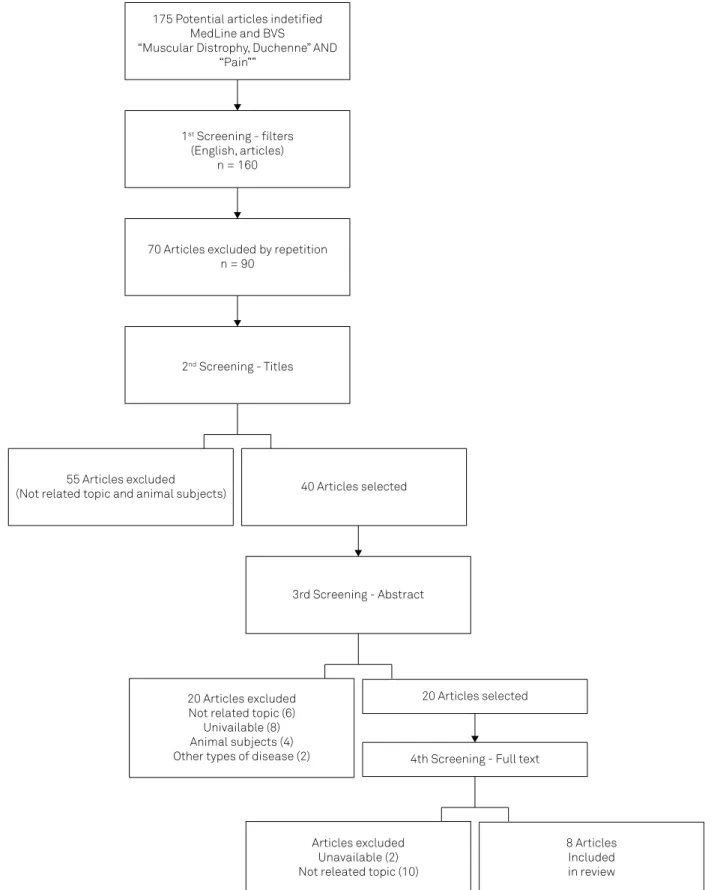
the terms: “Muscular Dystrophy, Duchenne” and “Pain”. To select the articles, we used three steps (Figure 1).
he irst step consisted of searching for articles in databases and reading the titles and abstracts. he second step was
exclusion of studies by title, abstract, and inclusion criteria analysis. Inclusion criteria included the investigation of pain in patients with DMD as the main focus of the study and/or
quantifying pain in patients with DMD. he last step was an
analysis of the full text of eligible works10,11.
To increase conidence in article selection, two researchers
reviewed all the potentially relevant articles independently.
After that, the researchers agreed which articles fulilled the
inclusion criteria10,11,12.
he abstracts of identiied articles were screened for the
following inclusion criteria (Table 1): (1) included a popu-lation with a diagnosis of DMD, and (2) pain assessment in
this population. here were no restrictions about minimum
sample size. Articles were excluded if they were: (1) not data-based (e.g. books, theoretical papers, or secondary reviews),
(2) not in English, (3) not performed with the populations identiied as having DMD diagnosis, or (4) not clearly focused on pain evaluation. We planned to pool statistical data from
quantitative studies within meta-analyses.
All identiied studies were collected in EndNote Web (homson Reuters) and duplicates were removed.
RESULTS
Initially, we found 175 studies and 167 articles were excluded
for not meeting the inclusion criteria (Figure 2). he data
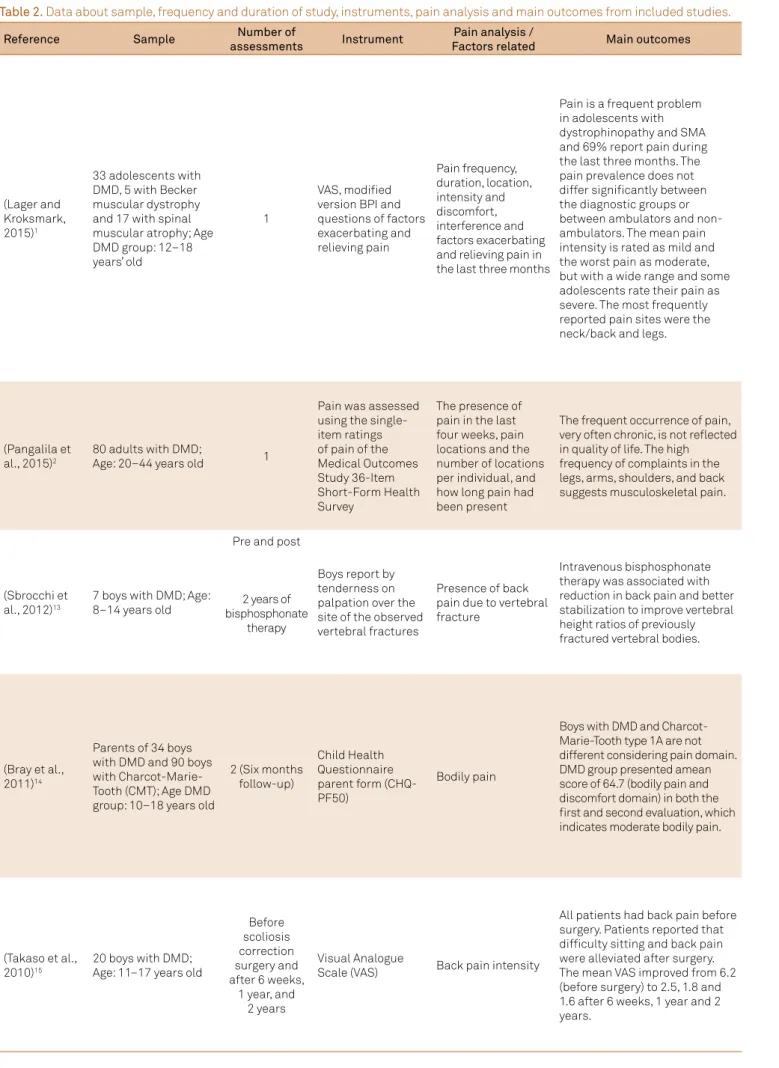
extracted from the eight selected studies are summarized in Table 2. A range of outcome measures had been used and conse-quently we were unable to pool data within meta-analyses.
DISCUSSION
According to the studies analyzed in this review, pain is a common and frequent problem in individuals with DMD, associated with their physical limitations and general aspects of the disease, vertebral fractures13 and scoliosis15. he youths
and adults with DMD experience signiicant problems with pain that negatively afect their lives. Clinicians caring for
these patients should investigate the nature of pain and its
extent6. Although pain is a common occurrence in boys with
DMD, it may still be under-recognized5.
Table 1. Representation of the search strategy – PICOs criteria for the studies included.
PICO
Population: muscular dystrophy, Duchenne Intervention: control or evaluation of pain
Comparator (control): interventions for pain control Outcome: pain reported by patients or family members
Study design(s): clinical trials, case-control, cross-sectional, case reports and case series • Search for articles
in databases • Reading titles • Reading abstracts Step 1
• Exclusion of works by title and abstract • Inclusion of work by certain criteria Step 2
• Analysis of eligible studies
Step 3
All eight reviewed studies contained distinct
partici-pants and sample sizes. he largest DMD population inves
-tigated was 80 patients2. he smallest population was in the
Sbrocchi et al. study of seven DMD patients13. he number
of participants in studies is important to adequately portray
the population. However, considering studies with disabled
patients, most samples are by convenience11.
Furthermore, Lager et al.1 and Guy-Coichard et al.7
pre-sented data from DMD and Becker muscular dystrophy
patients analyzed together (n = 38 and 128, respectively). Engel
1st Screening - filters
(English, articles) n = 160
70 Articles excluded by repetition n = 90
3rd Screening - Abstract
20 Articles excluded Not related topic (6)
Univailable (8) Animal subjects (4) Other types of disease (2)
20 Articles selected
4th Screening - Full text
Articles excluded Unavailable (2) Not releated topic (10)
8 Articles Included in review 175 Potential articles indetified
MedLine and BVS
“Muscular Distrophy, Duchenne” AND “Pain””
2nd Screening - Titles
55 Articles excluded
(Not related topic and animal subjects) 40 Articles selected
Table 2. Data about sample, frequency and duration of study, instruments, pain analysis and main outcomes from included studies.
Reference Sample Number of
assessments Instrument
Pain analysis /
Factors related Main outcomes
(Lager and Kroksmark, 2015)1
33 adolescents with DMD, 5 with Becker muscular dystrophy and 17 with spinal muscular atrophy; Age DMD group: 12–18 years’ old
1
VAS, modified version BPI and questions of factors exacerbating and relieving pain Pain frequency, duration, location, intensity and discomfort, interference and factors exacerbating and relieving pain in the last three months
Pain is a frequent problem in adolescents with dystrophinopathy and SMA and 69% report pain during the last three months. The pain prevalence does not differ significantly between the diagnostic groups or between ambulators and non-ambulators. The mean pain intensity is rated as mild and the worst pain as moderate, but with a wide range and some adolescents rate their pain as severe. The most frequently reported pain sites were the neck/back and legs.
(Pangalila et al., 2015)2
80 adults with DMD;
Age: 20–44 years old 1
Pain was assessed using the single-item ratings of pain of the Medical Outcomes Study 36-Item Short-Form Health Survey
The presence of pain in the last four weeks, pain locations and the number of locations per individual, and how long pain had been present
The frequent occurrence of pain, very often chronic, is not reflected in quality of life. The high frequency of complaints in the legs, arms, shoulders, and back suggests musculoskeletal pain.
(Sbrocchi et al., 2012)13
7 boys with DMD; Age: 8–14 years old
Pre and post
Boys report by tenderness on palpation over the site of the observed vertebral fractures
Presence of back pain due to vertebral fracture
Intravenous bisphosphonate therapy was associated with reduction in back pain and better stabilization to improve vertebral height ratios of previously fractured vertebral bodies. 2 years of
bisphosphonate therapy
(Bray et al., 2011)14
Parents of 34 boys with DMD and 90 boys with Charcot-Marie-Tooth (CMT); Age DMD group: 10–18 years old
2 (Six months follow-up)
Child Health Questionnaire parent form (CHQ-PF50)
Bodily pain
Boys with DMD and Charcot-Marie-Tooth type 1A are not different considering pain domain. DMD group presented amean score of 64.7 (bodily pain and discomfort domain) in both the first and second evaluation, which indicates moderate bodily pain.
(Takaso et al., 2010)15
20 boys with DMD; Age: 11–17 years old
Before scoliosis correction surgery and after 6 weeks,
1 year, and 2 years
Visual Analogue
Scale (VAS) Back pain intensity
(Engel et al., 2009)6
14 youths with DMD, 6 with miotonic dystrophy, 2 with Becker dystrophy, 2 with limb-girdle dystrophy, 2 with congenital muscular dystrophy, 1 with facioscapulohumeral, and 15 were classified as “other NMD”; Age total: 8–20 years old
1
11-point numerical rating scale and a modified Brief Pain Inventory (BPI) Pain frequency, intensity, location, quality, pain interference with function and quality of life, and interventions and their effectiveness.
A total of 23 (55%) of the youths reported having chronic pain. Current pain intensity was 1.3 (range=0–6), mean pain intensity over the past week was 2.4 (range = 0–7), mean pain duration was 8.7 h (SD=12.8). Pain in the legs was most commonly reported and 83% reported using pain medications. This study indicates that chronic pain is a significant problem in youths with DMD. These data strongly support making comprehensive pain assessment and
management an integral part of the standard of care for youths with NMD.
(Zebracki and Drotar, 2008)5
43 boys with DMD and 10 with BMD; Age DMD group: 8–18 years old.
1
VAS, Likert scales, body outline markings, The Child Activity Limitations Interview, form indicating medical history and pain symptoms
Pain symptoms, intensity, frequency, duration, location, emotional distress due to pain, and activity limitations due to pain
Pain typically occurred at least once a week, with a mild-moderate range of intensity. Most children experienced pain for less than a few hours and little to moderate levels of emotional distress due to pain. Pain occurred most commonly in the lower back, spine, legs, and pelvic region, and was typically described as continuous pain. Children were able to manage their pain at least sometimes using techniques such as taking over-the-counter pain medications (e.g. acetaminophen, naproxen sodium), stretching, and shifting body positions. Pain typically occurred without warning at various times throughout the day, but did not disrupt sleep. Pain is a common occurrence in children with DMD or BMD, yet may be under-recognized.
(Guy-Coichard et al., 2008)7
128* youths with DMD and BMD (total 862 patients with NMD); Age DMD and BMD group**: Mean 32.8; Standard Deviation 12.5
1
Numeric scales for pain intensity and relief, BPI, Saint Antoine Pain Questionnaire, list of physical factors, body map Pain frequency, characteristics, topography, temporal features, factors influencing pain intensity and impact
Pain is frequent in hereditary muscle disorders. From 128 patients, 85 reported pain in the last three months. The mean intensity of pain was mild and diffuse. Massage, physiotherapy and local applications of heat relieved pain. Worsening factors were vertical position, maintaining a fixed position and changes in position and physical exercise. DMD was one of the diseases with greatest impact of the pain on daily life.
et al.6 analyzed patients with neuromuscular diseases in
gen-eral. Bray et al.investigated pain in DMD patients according to their parents’ reports5.
A variety of instruments was used in the reviewed studies
to qualify and quantify pain. he most common instruments
used in these studies were the Visual Analogue Scales (VAS)1,5,15
and the Brief Pain Inventory (BPI)1,6,7. Other important factors
are pain frequency and duration. Some studies conducted only an assessment of pain1,2,5,6,7,14. Another three studies analyzed
pain at diferent times: pre and post two years of bisphospho -nate therapy13; before surgery and after six weeks, one year, and
two years15; and in six-month follow-ups14.
As the studies mentioned above evaluated patients in
diferent time scales, it was possible to notice pain relief after difering interventions or periods of time, but not to
compare intervention protocols. Takaso et al.15 observed
pain relief in DMD patients postsurgery and therapy,
respec-tively. hey showed that all patients had back pain before surgery. heir patients reported that the diiculty sitting and back pain were alleviated after surgery. he mean VAS
improved from 6.2 before surgery to 2.5, 1.8 and 1.6 after six weeks, one year and two years after surgery, respectively.
According to Sbrocchi et al.13, three boys reported
com-plete back pain resolution and the remaining reported
sig-niicant improvement at follow-up. Back pain improved
in all patients within 30 days of bisphosphonate therapy administration, and the two boys who developed incident
fractures during treatment did not report back pain13. he
DMD bodily pain score remained the same after six months, in the Bray et al.14 study, with no intervention.
Studies found in this review suggested that most of the
boys with DMD present with some level of pain. With inter -ventions, such as surgery or drug administration, the boys with DMD showed some improvement on pain reports, or even complete resolution, making this a good approach to
speciic cases of pain. With no intervention, the pain score
remained the same.
Pain assessment difered between the included stud -ies. Sbrocchi et al.13 and Takaso et al.15 observed back pain
intensity. Pangalila et al.2 and Bray et al.14 observed bodily
pain in general. Lager and Kroksmark,1 Engel et al.6, Zebracki
and Drotar5 and Guy-Coichard et al.,7 analyzed pain in
vari-ous aspects, which included symptoms, intensity, frequency, duration, location, interference and factors exacerbating the impact of pain.
Highlighting pain frequency, duration and location,
Zebracki and Drotar5 observed the occurrence of pain three
or fewer times a month with a duration less than one hour.
he pain was commonly in the lower back, spine, legs, and
pelvic region of DMD patients, and was described as
con-tinuous. Lager and Kroksmark1 observed most of the
adoles-cents with DMD/Becker muscular dystrophy (BMD) as hav-ing weekly pain, lasthav-ing at least three months or more and a duration from one to 12 hours.
Guy-Coichardet al.7 and Lager and Kroksmark1 showed
that most patients reported the occurrence of pain in the
previous three months. Lager and Kroksmark1 also showed
41% of DMD/BMD patients reporting chronic pain and, in
Pangalila et al.2, 65% of the subjects had had pain for
lon-ger than three months. Difuse pain sites were found in 36%
of patients in the Guy-Coichard et al.7 study. Lager’s and
Kroksmark’s1 results are similar to those of Zebracki and
Drotar5 with respect to the pain location. he most com
-mon body regions were neck/back and legs, and in three to
four diferent locations1. Pangalila et al.2 found more than
half of the DMD individuals had pain in more than one loca-tion such as legs, arms, shoulders, and back, concluding that many complaints were musculoskeletal.
The influence of pain on other factors was also
explored in the reviewed studies. Zebracki and Drotar5
showed little to moderate (47.8%) or not at all (39.1%) emotional upset due to pain in children with DMD. Several daily activities were impacted by pain, including sitting, sleeping, and riding in a car/bus according to reports by
the DMD children5. In children with DMD, the experience
of pain while engaging in common behaviours may con-tribute to avoidance of those activities, which may lead to poor health behaviour, social withdrawal and
isola-tion, and impaired school/work functioning5. However,
the impact of pain on the daily life of DMD/BMD patients
was small in the study by Guy-Coichard’set al.7. General
activities and mood were the areas most affected by pain, followed by mobility and schoolwork. Sleep and
relation-ships with others were the least affected7.
he main factors perceived by DMD and BMD adolescents
to exacerbate pain were sitting, too much movement/activ-ity and being lifted and transferred; some examples of other factors exacerbating pain were driving the power wheelchair, lying in bed, especially at night, and thinking about the pain1.
he most common factors that were identiied as relieving
pain were resting, changing position, massage and use of painkillers. Other factors for relieving pain were doing
some-thing fun, and thinking about somesome-thing else1.
Most studies show that pain affects the daily activi-ties of boys with DMD. However, according to Pangalila et
al.2, the frequent occurrence of pain symptoms, very often
chronic, is not reflected in their associations with qual-ity of life2. This is controversial and should be highlighted,
considering that this is the study with the largest sample size. However, these patients were older and, possibly, daily life had already been compromised by the late stage of the disease. This may be a pitfall as it may lead to the under diagnosis of pain, with patients possibly less likely
to mention it among their main complaints2.
Individual factors must be considered in these results
on pain in patients with DMD. In Zebracki and Drotar’s5
occupational therapy. All participants in the study by
Pangalila et al.2 were dependent on mechanical
ventila-tion, with 46% receiving non-invasive ventilation and 53% receiving invasive ventilation. All these participants were also wheelchair dependent, severely impaired in upper limb function and 25% used medication for pain relief.
Guy-Coichard et al.7 observed that 70% of their patients
were permanently wheelchair bound.
Pain reports on DMD patients by their parents showed DMD patients had a worse possible health state than the
gen-eral paediatric population, including bodily pain14. Children
with DMD and their parents indicated signiicantly more
intense pain than the did physician, and children who com-plained of more severe pain were viewed by parents as having poorer overall emotional functioning when compared with children with low levels of pain intensity.
Youth and parent data on pain frequency, pain duration,
and emotional distress due to pain were not signiicantly diferent. Parents reported signiicantly more limitations in
activity than the children reported, and the parents reported more intense pain than the patients5.
he assessments used in the study by Lager and
Kroksmark allow an understanding of the nature of pain,
its scope and impact on everyday life1. hey emphasize the
necessity of assessing pain in a systematic manner in this
population. he heterogeneity of factors perceived to exacer -bate and relieve pain, as well as the consequences in every-day life, highlight the importance of an individual approach
to interventions designed to reduce pain1.
Multidimensional assessments can support clinical man-agement by improving current treatment strategies
tar-geted toward fatigue and pain2. According to Pangalila et
al.2, fatigue, pain, anxiety, and depression occur frequently in
adults with DMD, often concurrently, and may be underdi-agnosed. Pain is more frequent in those with a poor quality of life, but still has a high prevalence in the group of adults with DMD who report good quality of life. Fatigue, pain and depression are more common in those with a poor quality of
life. Efective diagnosis and subsequent treatment could alle
-viate the disease burden of DMD in adult men2.
Due to the progressive nature of DMD, the needs and func-tionality of children will change over time and should be docu-mented in a prospective study. A longitudinal study would also help to determine causal relationships between variables5.
According Lager and Kroksmark1, further studies are
required to examine the treatment eicacy of cognitive and
behavioral interventions to improve the ability of adolescents to cope with, and reduce the impact of, pain. Knowledge of pain and activity limitations can be used to identify problems and barriers faced by these children and to develop interven-tions that target these areas16.
As Guy-Coichard et al.7 showed in their study, vertical
position, maintaining a ixed position and changes in posi
-tion, and physical exercise can worsen pain. his knowledge
is important, as patients can use tools such as massage, phys-iotherapy or local heat applications to relieve pain.
Pharmacological options may be beneicial in reducing pain
symptoms and, consequently, reducing activity limitations in children with DMD. In addition, cognitive-behavioral treatments designed to improve children’s ability to manage and cope with pain may help to minimize the impact of pain on daily life5.
Multimodal treatment for pain in DMD patients is neces-sary and involves pharmaceutical, surgical, physical rehabili-tation and psychosocial interventions. Future studies must analyze pain longitudinally and systematically. Longitudinal studies will help determine the causal relationships between variables. Aspects that exacerbate and relieve pain and pain consequences in daily life activities in patients with DMD must be understood in order to develop interventions to relieve pain.
FINAL REMARKS
he studies reviewed showed chronic pain as a common
and frequent problem in individuals with DMD, occurring in more than one body location, usually in the lower back and legs. Pain in patients with DMD was associated to physi-cal limitations and general aspects of the disease, vertebral fractures and scoliosis, as well as being associated with poor quality of life and emotional aspects.
References
1. Lager C, Kroksmark AK. Pain in adolescents with spinal muscular atrophy and Duchenne and Becker muscular dystrophy. Eur J Paediatr Neurol. 2015;19(5):537-46. doi:10.1016/j.ejpn.2015.04.005
2. Pangalila RF, Bos GA, Bartels B, Bergen M, Stam HJ, Roebroeck ME. Prevalence of fatigue, pain, and affective disorders in adults with Duchenne muscular dystrophy and their associations with quality of life. Arch Phys Med Rehabil. 2015;96(7):1242-7. doi:10.1016/j.apmr.2015.02.012
3. Buckner JL, Bowden SA, Mahan JD. Optimizing bone health in Duchenne muscular dystrophy. Int J Endocrinol. 2015;2015:1-9. doi: 10.1155/2015/928385
4. Glanzman AM, Flickinger JM, Dholakia KH, Bönnemann CG, Finkel RS. Serial casting for the management of ankle contracture in
Duchenne muscular dystrophy. Pediatr Phys Ther. 2011;23(3):275-9. doi:10.1097/PEP.0b013e318227c4e3
5. Zebracki K, Drotar D. Pain and activity limitations in children with Duchenne or Becker muscular dystrophy. Dev Med Child Neurol. 2008;50(7):546-52. doi:10.1111/j.1469-8749.2008.03005.x
6. Engel JM, Kartin D, Carter GT, Jensen MP, Jaffe KM. Pain in youths with neuromuscular disease. Am J Hosp Palliat Care. 2009;26(5):405-12. doi:10.1177/1049909109346165
8. Moher D, Liberati A, Tetzlaff J, Altman DG. Preferred reporting items for systematic reviews and meta-analyses: the PRISMA statement. Int J Surg. 2010;8(5):336-41. doi:10.1016/j.ijsu.2010.02.007
9. Hutton B, Salanti G, Caldwell DM, Chaimani A, Schmid CH, Cameron C et al. The PRISMA extension statement for reporting of systematic reviews incorporating network meta-analyses of health care interventions: checklist and explanations. Ann Intern Med. 2015;162(11):777-84. doi:10.7326/M14-2385
10. Massetti T, Silva TD, Ribeiro DC, Malheiros SRP, Re AHN, Favero FM et al. Motor learning through virtual reality in cerebral palsy: a literature review. MedicalExpress. 2014;1:302-6. doi:10.5935/MedicalExpress.2014.06.04
11. Menezes LC, Massetti T, Oliveira FR, Abreu LC, Herrero D, Malheiros SRP et al. Motor learning and virtual reality in down syndrome: a literature review. Int Arch Med. 2015;8:1-11. doi:10.3823/1718
12. Sampaio RF, Mancini MC. Estudos de revisão sistemática: um guia para síntese criteriosa da evidência científica. Braz J Phys Ther. 2007;11(1):83-9. doi:10.1590/S1413-35552007000100013
13. Sbrocchi AM, Rauch F, Jacob P, McCormick A, McMillan HJ, Matzinger MA et al. The use of intravenous bisphosphonate therapy to treat vertebral fractures due to osteoporosis among boys with Duchenne muscular dystrophy. Osteoporos Int. 2012;23(11):2703-11. doi:10.1007/s00198-012-1911-3
14. Bray P, Bundy AC, Ryan MM, North KN, Burns J. Health status of boys with Duchenne muscular dystrophy: a parent’s perspective. J Paediatr Child Health. 2011;47(8):557-62. doi:10.1111/j.1440-1754.2011.02022.x
15. Takaso M, Nakazawa T, Imura T, Okada T, Toyama M, Ueno M et al. Two-year results for scoliosis secondary to Duchenne muscular dystrophy fused to lumbar 5 with segmental pedicle screw instrumentation. J Orthop Sci. 2010;15(2):171-7. doi:10.1007/s00776-009-1437-5