Use of generic medicines by the Brazilian
population: an evaluation of PNAUM 2014
Andréa Dâmaso BertoldiI, Paulo Sergio Dourado ArraisII, Noemia Urruth Leão TavaresIII, Luiz Roberto RamosIV, Vera Lucia LuizaV, Sotero Serrate MengueVI, Tatiane da Silva Dal-PizzolVII, Mareni Rocha FariasVIII, Maria Auxiliadora OliveiraVI Departamento de Medicina Social. Faculdade de Medicina. Universidade Federal de Pelotas. Pelotas, RS, Brasil II Departamento de Farmácia. Faculdade de Farmácia, Odontologia e Enfermagem. Universidade Federal do
Ceará. Fortaleza, CE, Brasil
III Departamento de Farmácia. Faculdade de Ciências da Saúde. Universidade de Brasília. Brasília, DF, Brasil IV Departamento de Medicina Preventiva. Escola Paulista de Medicina. Universidade Federal de São Paulo. São
Paulo, SP, Brasil
V Departamento de Política de Medicamentos e Assistência Farmacêutica. Escola Nacional de Saúde Pública
Sérgio Arouca. Fundação Oswaldo Cruz. Rio de Janeiro, RJ, Brasil
VI Programa de Pós-Graduação em Epidemiologia. Faculdade de Medicina. Universidade Federal do Rio Grande
do Sul. Porto Alegre, RS, Brasil
VII Departamento de Produção e Controle de Medicamentos. Faculdade de Farmácia. Universidade Federal do Rio
Grande do Sul. Porto Alegre, RS, Brasil
VIII Departamento de Ciências Farmacêuticas. Centro de Ciências da Saúde. Universidade Federal de Santa
Catarina. Florianópolis, SC, Brasil
ABSTRACT
OBJECTIVE: To analyze the existence of diferences in the use of generic medicines in Brazil according to demographic and socioeconomic variables and acquisition sources of the medicines. METHODS: Population-based cross-sectional study, conducted with data from the Pesquisa Nacional de Acesso, Utilização e Promoção do Uso Racional de Medicamentos (PNAUM – National Survey on Access, Use and Promotion of Rational Use of Medicines). Data collection took place between September, 2013 and February, 2014 in homes of Brazilian cities (urban area). he use of medicines has been investigated in relation to the treatment of chronic diseases and, in the case of acute events, regarding use over the previous 15 days. Generics were identiied by visualization of packaging presented by the users of the medicines. he independent variables used were sex, age, education level, economic class, and region of the Country. he statistical signiicance of diferences between the groups was evaluated by Pearson’s Chi-squared test, considering a 5% signiicance level.
RESULTS: he prevalence of generic medicines use was 45.5% (95%CI 43.7–47.3). here was no diference considering education level. he prevalence was higher in females (47.0%; 95%CI 44.9–49.0) than in males (43.1%; 95%CI 40.5–45.8), and were higher with increasing age. Generic medicines were more used in the economic class C (47.0%; 95%CI 44.9–49.1) and in the South (50.6%; 95%CI 46.6–54.6) and Southeast (49.9%; 95%CI 46.8–53.0) regions. Generics accounted for 37.3% of the medicines provided by the Brazilian Uniied Health System.
CONCLUSIONS: Currently, there is a choice of purchase or free provision by the Brazilian Uniied Health System, characterized by quality assurance and reduced price regarding branded medicines considered as reference. In the private market, a considerable part of the population is choosing generic medicines thanks to the availability of this option for virtually all medicines most used by the population.
DESCRIPTORS: Drugs, generic. Drug Utilization. Socioeconomic Factors. Health Surveys. Correspondence:
Andréa Dâmaso Bertoldi Programa de Pós-Graduação em Epidemiologia
Universidade Federal de Pelotas Rua Marechal Deodoro, 1160 3º piso 96020-220 Pelotas, RS, Brasil E-mail: [email protected]
Received: 15 Jan 2015
Approved: 25 Feb 2016
How to cite: Bertoldi AD, Arrais PSD, Tavares NUL, Ramos LR, Luiza VL, Mengue SS, et al. Use of generic medicines by the Brazilian population: an evaluation of PNAUM 2014. Rev Saude Publica. 2016;50(suppl 2):11s.
Copyright: This is an open-access article distributed under the terms of the Creative Commons Attribution License, which permits unrestricted use, distribution, and reproduction in any medium, provided that the original author and source are credited.
INTRODUCTION
he debate on the policy formulation of generic medicines in Brazil has emerged in the early 1990s, during the process of implementation of the Brazilian Uniied Health System (SUS). Being a public health system that aims to ensure integral, universal, and free access to health-care for the entire population of the Country, it included, among its activities, the provision of integral therapeutic assistancea. In 1993, in the context of health policies in the pharmaceutical area of the Brazilian Ministry of Health (MS) and as a strategy to reduce prices, the Decree 793b was published, presenting advances such as the highlight to generic
names on packs; prescription by the generic name; mandatory presence of the pharmacist in the pharmacy; and permission to fraction the packaging.
In 1998, the National Drug Policy (PNM) was releasedc. In addition to establishing guidelines such as the organization of the health surveillance activities and the reorientation of pharmaceutical services, the PNM had among its objectives to promote the use of generic medicines. In 1999, the National Agency of Sanitary Vigilance (ANVISA) (www.anvisa.gov.br) was created, and the Generic Medicines Policy (Law 9,787/99) was institutedd.
Until then, the Brazilian pharmaceutical market was composed by two categories of medicines: the “innovators”, today known as reference medicines, which, in addition to their own brand, are registered upon proof of eicacy and safety; and the “similar” drugs, containing the same active ingredients, the same concentration, dosage form, route of administration, dosage, and therapeutic indication of the reference medicine product registered at ANVISAe.
From 1999 on, a new category, the generic medicines, entered the national pharmaceutical market. hese medicines, in addition to presenting the characteristics of the similar drugs, must prove that they are interchangeable with the reference medicines registered at ANVISA. herefore, they must present tests that show pharmaceutical equivalence, and, if necessary, bioequivalence (or relative bioavailability) regarding the reference product16.
he implementation of the generic policy fulilled its initial objectives of encouraging commercial competition, improving the quality of medicines, and facilitating the access of the population to medicines treatment16. Besides, the national industry became strong, with
signiicant increase in the number of national companies (90.0% of the generic-producing industries), and also of international companies installed in the Country, in addition to a increase of supply and variety of products. In May 2014, the participation of generic medicines on the market amounted to 28.0% of salesf.
In 2014, it was already possible to treat most of the more prevalent diseases in the Country with generic medicines, which cost up to 35.0% less than the reference products, thereby improving the afordability of the general population to medicinesf.
In this article, we analyzed the existence of diferences in the use of generic medicines in Brazil according to demographic and socioeconomic variables and acquisition sources of the medicines.
METHODS
he Brazilian Ministry of Health, to better know the range of the public policies related to access and rational use of medicines in Brazil, held, in partnership with Brazilian universities and research institutes, a national household survey, called Pesquisa Nacional sobre Acesso, Utilização e Promoção do Uso Racional de Medicamentos (PNAUM – National Survey on Access, Use and Promotion of Rational Use of Medicines).
The PNAUM, a population-based cross-sectional study, was conducted between September 2013 and February 2014. The interviews were conducted in the households and the data recorded in tablets with a software developed specifically for the application
a Brasil. Artigo 6°, de 5 de
outubro de 1988. São direitos sociais a educação, a saúde, a alimentação, o trabalho, a moradia, o transporte, o lazer, a segurança, a previdência social, a proteção à maternidade e à infância, a assistência aos desamparados, na forma desta Constituição. In: Brasil. Constituição (1988). Brasília (DF): Senado; 1988.
b Brasil. Decreto n° 793, de 5 de
abril de 1993. Altera os Decretos nºs 74.170, de 10 de junho de 1974 e 79.094, de 5 de janeiro de 1977, que regulamentam, respectivamente, as Leis nºs 5.991, de 17 de janeiro de 1973, e 6.360, de 23 de setembro de 1976, e dá outras providências. Diario Oficial Uniao. 6 abr 1993.
c Ministério da Saúde. Portaria n°
3.916, 30 de outubro de 1988. Aprova a Política Nacional de Medicamentos. Diario Oficial Uniao. 10 nov 1988;Seção 1:18-22.
d Brasil. Lei n° 9.787, de 10 de
fevereiro de 1999. Altera a Lei no 6.360, de 23 de setembro de 1976, que dispõe sobre a vigilância sanitária, estabelece o medicamento genérico, dispõe sobre a utilização de nomes genéricos em produtos farmacêuticos e dá outras providências. Diario Oficial Uniao. 11 fev 1999.
e Brasil. Decreto n° 3.961,
de 10 de outubro de 2001. Altera o Decreto no 79.094, de 5 de janeiro de 1977, que regulamenta a Lei no 6.360,
de 23 de setembro de 1976. Diario Oficial Uniao. 11 out 2001;Seção 1:15.
f Associação Brasileira das
of the questionnaires. The population under study was of individuals of all ages living in private permanent homes in the urban area of the Brazilian territory. The sample size estimates considered eight demographic domains (different sex and age groups) that were replicated to every major Brazilian geographical region, resulting in 40 sample domains and sample size of 38,400 interviews. The selection of the sample was made in three stages: city (primary unity), censitary sector, and household, and the selection of individuals within households was based on the expected proportion of each age and sex group to compose the final sample. The sampling process was complex and resulted in representative sample of Brazil and its five geographical regions, stratified by sex and age groups. Details about the sampling and logistics of data collection can be found in the methodological article of PNAUM13.
he research instrument consisted of a set of questionnaires, developed by researchers from Brazilian universities (researchers and their institutions, as well as the complete research instruments, can be found at http://www.ufrgs.br/pnaum). he use of medicines was investigated from the information on previous diagnosis and medical indication for use of medicines for the treatment of speciic chronic diseases (hypertension, diabetes, heart diseases, high cholesterol, history of stroke, chronic lung diseases, arthritis, arthrosis or rheumatism, depression). In the case of acute events, question were made regarding the use of medicines in the last 15 days for a series of symptoms or acute health problems and for any other health reason, in addition to the speciied ones (infection, sleep medicines, to the nerves, to stomach or bowel problems, pain, fever, lu, cold or allergic rhinitis, vitamin, mineral supplement, appetite stimulant, or tonic). A separated questionnaire was developed for contraceptives, because of the characteristics of this group of medicines, which is unrelated to diseases.
During the interview, it was requested that the respondent showed all the “remedies” in use. A remedy could be a compounding or industrialized medicine (sold in pharmacies and prescribed by physicians), as well as teas, homeopathic products, and medicinal plants, for example.
he team was trained to recognize generic medicines by observing their packaging and blisters. It was considered as packing the box of the medicine, pack, envelope, tube, bottle, or other container that provided information about the medicine.
his article analyses were carried out using two databases with diferent denominators. To estimate the prevalence of use of generic medicines, the database containing data of the people included in the sample was used. he prevalence of use of generic medicines was estimated considering in the numerator those who used at least one generic medicine and in the denominator those who presented at least one packing of the medicines used. he prevalence and 95% conidence intervals (95%CI) were also estimated according to the individual characteristics of the respondent: sex (male; female); age in full years (0-9; 10-19; 20-59; 60 or more); education level in complete years (0-8; 9-11; 12 or more); economic classiication (A/B; C; D; E) according to the Brazilian Economic Classiication Criterion developed by the Associação Brasileira de Empresas de Pesquisa (CCEB 2013/ABEP – http:// www.abep.org/); and geographical region of residence (North; Northeast; Southeast; South; Midwest).
he analyses were carried out in the statistical package Stata 12.0 (StataCorp LP, College Station, Texas, USA), using the appropriate svy commands for the analysis of complex samples and ensuring the necessary weighting (post-stratiication weights to correct the response rate bias). he estimated percentages were weighted to adjust the demographic distribution of the PNAUM sample to the distribution of the Brazilian population.
he medicines were classiied according to levels 1 and 2 of the Anatomical herapeutic Chemical (ATC) classiication system20. he highest frequencies were analyzed on the level
2 of the ATC classiication according to the most frequent occurrences at level 1 and, for each one of them, the proportion of generics was estimated regarding the total medicines reported in the respective groups. Medicines that do not have a generic presentation on the market may be included in this analyses, which is relected in the percentages of use of this type of medicines.
he statistical signiicance of diferences between the groups was evaluated by Pearson’s Chi-squared test, considering a 5% signiicance level.
he study was approved by Comissão Nacional de Ética em Pesquisa (CONEP – Brazilian National Commission for Ethics in Research; Opinion 398,131, of September 16, 2013) and all the interviews were conducted after the respondents or their legal guardians (in case of children under 18 or people unable to answer their own questionnaire) read and signed the informed consent form.
RESULTS
The total study sample included 41,433 individuals with distribution by sex and age compatible with the Brazilian population according to the 2010 Census (percentage weighted by sampling weights). he response rates of households were around 50.0%, including as losses the unvisited households. Individuals’ response rates were around 90.0%. he methodological article presents a detailed table of response rates by sex and age groups and by geographic regions13.
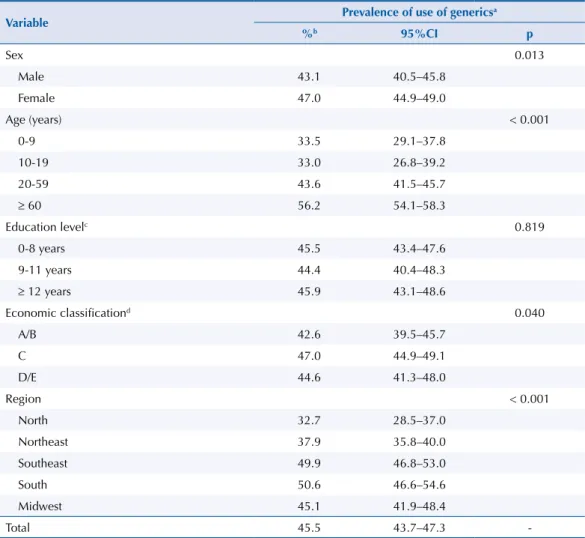
he prevalence of use of at least one generic medicine, estimated among individuals who presented at least one package of medicines (n = 16,316), was of 45.5% (95%CI 43.7–47.3). We did not observe any diferences by education level. However, the prevalence was greater in females than in males (47.0% versus 43.1%, respectively), and was higher with increasing age, with the group aged 60 years old or more using 1.7 times more generics than the group from zero to nine years old. he economic class C showed higher prevalence of generic medicines use (47.0%; 95%CI 44.9–49.1), as well as individuals residing in the South (50.6%; 95%CI 46.6–54.6) and Southeast (49.9%; 95%CI 46.8–53.0) regions (Table 1).
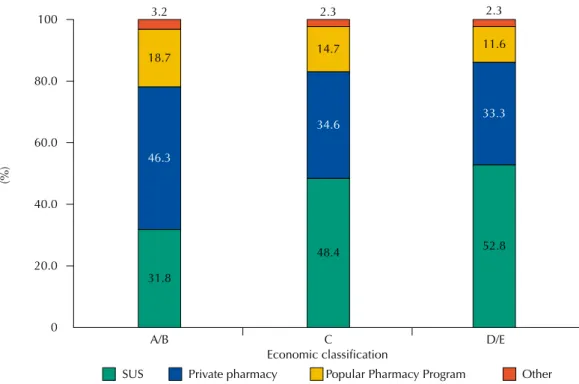
Packaging or blisters of 37,419 medicines (63.2% of the total medicines used) were presented at the time of the interviews, allowing the visualization of the characteristics that diferentiate generics from other medicines. Of these, 31.2% (95%CI 29.8–32.6) were classiied as generics. Regarding the sources for obtaining them, the classes with higher purchasing power (A/B) obtained the generic medicines, mainly, in private pharmacies (46.3%), while in classes C and D/E (less spending power), about 50.0% of generics were obtained in pharmacies from the public network (SUS) (Figure 1). We also observed (data not shown in the igure) that generics accounted for 37.3% of the medicines obtained by SUS, 53.7% of those provided by the Popular Pharmacy Program, 24.2% in private pharmacies, and 16.6% from other sources (charity institution or churches, free samples, friends, relatives, or neighbors).
However, in adults and older adults, the proportions of generics were superior, reaching approximately 40.0% higher in older people regarding children (Figure 2).
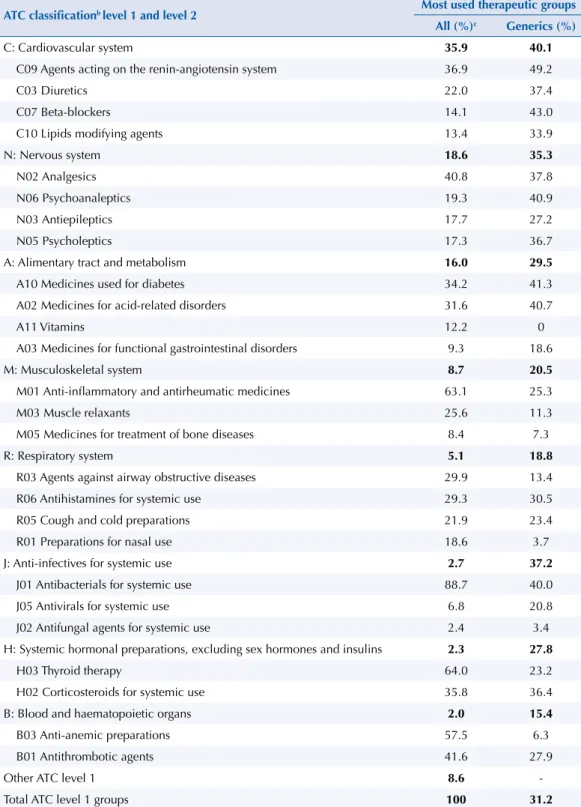
Table 2 presents the most used therapeutic groups and sub-groups in the total sample of the packagings presented. he frequency distribution of these groups is comparable to the sample that includes all medicines (regardless of the presentation of the package) (data not presented). Medicines for the cardiovascular system (35.9%), nervous system (18.6%), and alimentary tract and metabolism (16.0%) were the most used ones. Within these therapeutic groups, generics accounted for 40.1%, 35.3%, and 29.5%, respectively, of the medicines used. Regarding therapeutic subgroups, the highest proportions of generics occurred for agents acting on the renin-angiotensin system, psychoanaleptics, and drugs used for diabetes (49.2%, 40.9%, and 41.3%, respectively). In the ATC2 subgroup of vitamins (A11), which represented 12.2% of the medicines for the alimentary tract and metabolism analyzed, no generic was used, because there was no generic on the market for this type of medicine at the time of the research.
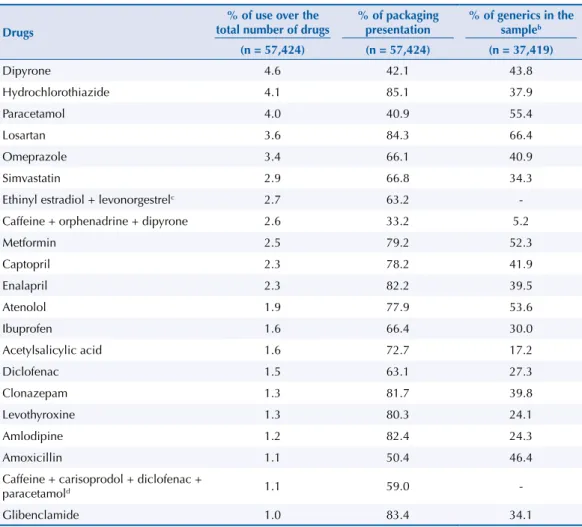
Table 3 lists the medicines, in order of frequency of use, including about 50.0% of the total sample (irst column of the table). he second column indicates the percentage of presentation of packaging for each of these medicines, allowing to visualize how much of the drugs was assessed regarding the proportion of generic indicated in the third column. he largest percentages of
Table 1. Prevalence of use of at least one generic medicine according to demographic and socioeconomic
characteristics. PNAUM, Brazil, 2014.
Variable Prevalence of use of generics
a
%b 95%CI p
Sex 0.013
Male 43.1 40.5–45.8
Female 47.0 44.9–49.0
Age (years) < 0.001
0-9 33.5 29.1–37.8
10-19 33.0 26.8–39.2
20-59 43.6 41.5–45.7
≥ 60 56.2 54.1–58.3
Education levelc 0.819
0-8 years 45.5 43.4–47.6
9-11 years 44.4 40.4–48.3
≥ 12 years 45.9 43.1–48.6
Economic classificationd 0.040
A/B 42.6 39.5–45.7
C 47.0 44.9–49.1
D/E 44.6 41.3–48.0
Region < 0.001
North 32.7 28.5–37.0
Northeast 37.9 35.8–40.0
Southeast 49.9 46.8–53.0
South 50.6 46.6–54.6
Midwest 45.1 41.9–48.4
Total 45.5 43.7–47.3
-a Only medicines whose packages were shown in the interview allowed the classification as a generic, which
corresponds to 63.2% of the medicines. The prevalence was calculated among those who presented at least one package of their medicines (n = 16,316 people).
b Percentages adjusted by sample weights and post-stratification according to age and sex. c The education level variable presents 278 missings.
0 20.0 40.0 60.0 80.0 100
SUS Private pharmacy Popular Pharmacy Program Other
A/B C
Economic classification
D/E 31.8
48.4 52.8
33.3 11.6 2.3
34.6 14.7 2.3
46.3 18.7 3.2
(%)
SUS: Brazilian Unified Health System
a Only medicines whose packages were shown in the interview allowed the classification as a generic, which
corresponds to 63.2% of the medicines. Percentages adjusted by sample weights and post-stratification according to age and sex.
b The economic classification variable according to the Brazilian Economic Classification Criterion 2013 of the Associação Brasileira de Empresas de Pesquisa (http://www.abep.org) presents 77 missings.
c Number of medicines classified as generics that have information on economic classification and
acquisition source.
Figure 1. Sources for obtaining generic medicinesa, stratified by economic classificationb of the users
of these medicines. PNAUM, Brazil, 2014. (N = 10,870 medicinesc)
0 5.0 10.0 15.0 20.0 25.0 30.0 35.0 40.0
24.7 28.3
25.9
24.9 25.1
24.3
35.1 34.7
Acute
Health problem
Chronic
(%)
0-9 years old 10-19 years old 20-59 years old ≥ 60 years old
a Only medicines whose packages were shown in the interview allowed the classification as a generic, which
corresponds to 63.2% of the medicines. Percentages adjusted by sample weights and post-stratification according to age and sex.
b Number of medicines classified as generics that have information on age and type of health problem.
Figure 2. Type of health problem treated with generic medicinesa according to the age of the users.
presentation of packaging (above 80.0%) were found for medicines used for treatment of chronic diseases, and the lowest (less than 50.0%), for those used to treat signs, symptoms, or acute afections. he percentages of generics among the most commonly used medicines that could be analyzed ranged from 5.2% (cafeine + orphenadrine + dipyrone) to 66.4% (losartan).
Table 2. Therapeutic groups and subgroups most used in the total sample considering only the medicines
that had their packages or blisters presented, and proportion of generics in the total of each group. PNAUM, Brazil, 2014. (N = 37,419)a
ATC classificationb level 1 and level 2 Most used therapeutic groups All (%)c Generics (%)
C: Cardiovascular system 35.9 40.1
C09 Agents acting on the renin-angiotensin system 36.9 49.2
C03 Diuretics 22.0 37.4
C07 Beta-blockers 14.1 43.0
C10 Lipids modifying agents 13.4 33.9
N: Nervous system 18.6 35.3
N02 Analgesics 40.8 37.8
N06 Psychoanaleptics 19.3 40.9
N03 Antiepileptics 17.7 27.2
N05 Psycholeptics 17.3 36.7
A: Alimentary tract and metabolism 16.0 29.5
A10 Medicines used for diabetes 34.2 41.3
A02 Medicines for acid-related disorders 31.6 40.7
A11 Vitamins 12.2 0
A03 Medicines for functional gastrointestinal disorders 9.3 18.6
M: Musculoskeletal system 8.7 20.5
M01 Anti-inflammatory and antirheumatic medicines 63.1 25.3
M03 Muscle relaxants 25.6 11.3
M05 Medicines for treatment of bone diseases 8.4 7.3
R: Respiratory system 5.1 18.8
R03 Agents against airway obstructive diseases 29.9 13.4
R06 Antihistamines for systemic use 29.3 30.5
R05 Cough and cold preparations 21.9 23.4
R01 Preparations for nasal use 18.6 3.7
J: Anti-infectives for systemic use 2.7 37.2
J01 Antibacterials for systemic use 88.7 40.0
J05 Antivirals for systemic use 6.8 20.8
J02 Antifungal agents for systemic use 2.4 3.4
H: Systemic hormonal preparations, excluding sex hormones and insulins 2.3 27.8
H03 Thyroid therapy 64.0 23.2
H02 Corticosteroids for systemic use 35.8 36.4
B: Blood and haematopoietic organs 2.0 15.4
B03 Anti-anemic preparations 57.5 6.3
B01 Antithrombotic agents 41.6 27.9
Other ATC level 1 8.6
-Total ATC level 1 groups 100 31.2
a Only medicines whose packages were shown in the interview allowed the classification as a generic, which
corresponds to 63.2% of the medicines. Contraceptives, despite their packaging, were not classified as generics, therefore, they are not part of this analysis.
b Anatomical Therapeutic Chemical (ATC) classification system. Only the most frequent ATC level 2 are presented
for each ATC1 group.
c Percentages adjusted by sample weights and post-stratification according to age and sex.
DISCUSSION
he generic medicines policyd is part of the PNMc, since it promotes access by stimulating competition and reduction of prices and spending with medicines. he evaluation of this policy includes studies that analyze the question of prices or that describe the pattern of use of generics. here are many examples of reduction of prices of medicines as a result of the entry of generics in the pharmaceutical market. In this research, the focus of the analyses was to show the use of this type of medicines in the national territory.
Studies indicate, especially at the beginning of the implementation of policies related to generics, some resistance to replace medicines with established brands in the market for generics. However, with time, this scenario has changed because of the beneits arising from lower price, as well as for the guarantee that these medicines are interchangeable with those of reference, by the requirement of proof of pharmaceutical equivalence and bioavailability.
he fact is that, in Brazil, after little more than 10 years from the entry of generics on the market, we have seen that the prevalence of use of this group reached 45.5% of the population – much higher than the prevalence found in previous researches, which have obtained prevalences of less than 10.0%. Approximately 1/3 of all medicines used were generic, showing the important participation of this group of medicines on the market. Generics are present in over 30.0% of the pharmacological groups of great demand, such as
Table 3. List of the most used drugsa and percentage of use of generics estimated among the medicines
that had their packaging presented. PNAUM, Brazil, 2014.
Drugs
% of use over the total number of drugs
% of packaging presentation
% of generics in the sampleb
(n = 57,424) (n = 57,424) (n = 37,419)
Dipyrone 4.6 42.1 43.8
Hydrochlorothiazide 4.1 85.1 37.9
Paracetamol 4.0 40.9 55.4
Losartan 3.6 84.3 66.4
Omeprazole 3.4 66.1 40.9
Simvastatin 2.9 66.8 34.3
Ethinyl estradiol + levonorgestrelc 2.7 63.2
-Caffeine + orphenadrine + dipyrone 2.6 33.2 5.2
Metformin 2.5 79.2 52.3
Captopril 2.3 78.2 41.9
Enalapril 2.3 82.2 39.5
Atenolol 1.9 77.9 53.6
Ibuprofen 1.6 66.4 30.0
Acetylsalicylic acid 1.6 72.7 17.2
Diclofenac 1.5 63.1 27.3
Clonazepam 1.3 81.7 39.8
Levothyroxine 1.3 80.3 24.1
Amlodipine 1.2 82.4 24.3
Amoxicillin 1.1 50.4 46.4
Caffeine + carisoprodol + diclofenac +
paracetamold 1.1 59.0
-Glibenclamide 1.0 83.4 34.1
a Corresponding to approximately 50.0% of all medicines used by the sample.
b Only medicines whose packages were shown in the interview allowed the classification as a generic, which
corresponds to 63.2% of the medicines. Percentages adjusted by sample weights and post-stratification according to age and sex.
c Contraceptives were not classified as generics.
medicines for the cardiovascular system, nervous system, and in some subgroups, such as medicines for diabetes, disturbances related to acidity of the alimentary tract, antihistamines, antibacterials, and corticosteroids of systemic use.
Analyzing the most widely used medicines in the population, it is possible to estimate the participation of generics among the total of medicines used. he most used ones in the generic version were for treating chronic diseases (losartan, metformin, atenolol), but we also observed a medication of high prevalence for acute health problems (paracetamol) and one antimicrobial (amoxicillin). It is important to note the low percentages of generics found for the treatment of bone diseases, airways obstructive diseases, and anti-anemic preparations.
Regarding the characteristics of users of generics, no diference was found regarding education level. Studies of overall use of medicines also found no diference for education level after adjusted analysis. Concerning the diferences by sex, invariably, the studies showed higher prevalence of global use of medicines among women. In fact, in general, women use more medicines than men, especially from adolescence on, regardless of the inclusion of contraceptives in the analysis. his suggests that the choice of generic medicines is not related to sex. he higher prevalence of use of generics in females can be a simple relection of the greater use of medicines in this group.
he use of generics was directly proportional to age, which is consistent with the literature on global use of medicines. Apparently, the preference for using generics occurs between adults and older adults for treatment of chronic diseases. he proportion of generics used for chronic diseases of children and adolescents may be smaller because of the proile of chronic diseases in these age groups, in which it is common for individuals to sufer from, at most, one chronic condition, as opposed to what occurs with adults and, especially, older adults.
Regarding use according to economic classes, the groups of greatest spending power (A/B) presented less frequent use, contrary to what is observed in relation to the use of all medicines in general. Economic classiication is directly related to the use of any medicine. However, considering speciically generics, it is possible that groups of greater spending power will choose known brands rather than cheaper options, which, in this case, would be the generic version of these medicines. Classes A/B get their generics, primarily, in private pharmacies, and classes C and D/E, primarily in SUS, but this procedure is expected for any type of medicine.
he richest geographic regions (South and Southeast) used more generics than the poorest ones (North and Northeast). For being a cheaper medicine, we expected the opposite. However, similar medicines can be even cheaper than generics, and the option for this type of medicine may have inluenced this result. he lack of studies at the time of PNAUM data collection comparing prices of generic medicines with others prevents conclusions on the subject to be more decisive. However, we raised the issue of price as a possibility as well as we should consider the possibility of lower availability of generics in the North and Northeast regions14. he Southeast region concentrates most of the generics market in the Country and
there is a direct correlation between the number of pharmacies in each Brazilian region and sales of genericsg. he North and Northeast regions have the lowest proportion of number of
pharmacies by population, which may indicate lower ofer of this type of medicine.
his study presents national and regional representation, which allowed, for the irst time, an overview of the use of generic medicines, focus of important government policy aimed at increasing access to medicines. On the other hand, it also presents some limitations, inherent to an investigation of such magnitude. he inal response rates included, in addition to the unvisited households, vacant households. his methodological approach may overestimate non-response rates. In addition, there may be some level of commitment of the data arising from the loss of households from the original sample, considering that the lost households, on average, were richer. A detailed discussion of this limitation can be found in the PNAUM methodological article13. Since the information depend on the respondents’ statements,
g Novaretti MCZ, Quitério LM,
a certain degree of recall error is possible when reporting the medicines used (limitation of the type of data collection, which may lead to an underestimation of the prevalence of use of medicines). Also, because it was not possible to fully obtain the packages of medicines, it was not possible to analyze all drugs used regarding packaging or blisters characteristics, which would enable to identify whether the product used was a generic or not. With this, only 63.0% of medicines could be classiied. However, we observed that the distribution of pharmacological groups and most used drugs was equivalent between medicines whose packaging were submitted and the others. Speciically in the case of contraceptives, for a methodological issue, the use of generics was not analyzed.
With this overview of the generic medicines use in Brazil, we can conclude that today there is a choice of purchase or free provision by the Brazilian Uniied Health System, characterized by quality assurance and reduced price regarding medicines of market brands considered as reference. In the private market, much of the population who can exercise their power of choice is choosing this type of medicine, made possible by the existence of a generic option for virtually all the most used medicines by the population.
REFERENCES
1. Arrais PS, Brito LL, Barreto ML, Coelho HL. Prevalência e fatores determinantes do consumo de medicamentos no Município de Fortaleza, Ceará, Brasil. Cad Saude Publica. 2005;21(6):1737-46. DOI:10.1590/S0102-311X2005000600021
2. Bertoldi AD, Barros AJ, Hallal PC. Generic drugs in Brazil: known by many, used by few. Cad
Saude Publica. 2005;21(6):1808-15. DOI:10.1590/S0102-311X2005000600029
3. Bertoldi AD, Barros AJ, Hallal PC, Lima RC. Utilização de medicamentos em adultos: prevalência e determinantes individuais. Rev Saude Publica. 2004;38(2):228-38. DOI:10.1590/S0034-89102004000200012
4. Bertoldi AD, Helfer AP, Camargo AL, Tavares NU, Kanavos P. Is the Brazilian pharmaceutical policy ensuring population access to essential medicines? Global Health. 2012;8:6.
DOI:10.1186/1744-8603-8-6
5. Bertoldi AD, Silveira MP, Menezes AM, Assuncao MC, Goncalves H, Hallal PC. Tracking of medicine use and self-medication from infancy to adolescence: 1993 Pelotas (Brazil) birth cohort study. J Adolesc Health. 2012;51(6 Suppl):S11-5. DOI:10.1016/j.jadohealth.2012.06.027
6. Carvalho MF, Pascom AR, Souza-Junior PR, Damacena GN, Szwarcwald CL. Utilization of medicines by the Brazilian population, 2003. Cad Saude Publica. 2005;21 Suppl 1:100-8. DOI:10.1590/S0102-311X2005000700011
7. Costa KS, Barros MB, Francisco PM, Cesar CL, Goldbaum M, Carandina L. Utilização de medicamentos e fatores associados: um estudo de base populacional no
Município de Campinas, São Paulo, Brasil. Cad Saude Publica. 2011;27(4):649-58. DOI:10.1590/S0102-311X2011000400004
8. Francisco PM, Bastos TF, Costa KS, Prado MA, Barros MB. The use of medication and associated factors among adults living in Campinas, Sao Paulo, Brazil: differences between men and women. Cienc Saude Colet. 2014;19(12):4909-21. DOI:10.1590/1413-812320141912.18702013
9. Galvao TF, Silva MT, Gross R, Pereira MG. Medication use in adults living in Brasilia, Brazil: a cross-sectional, population-based study. Pharmacoepidemiol DrugSaf. 2014;23(5):507-14. DOI:10.1002/pds.3583
10. Hassali MA, Shafie AA, Jamshed S, Ibrahim MI, Awaisu A. Consumers’ views on generic medicines: a review of the literature. Int J Pharm Pract. 2009;17(2):79-88. DOI:10.1211/ijpp.17.02.0002
11. Kobayashi E, Karigome H, Sakurada T, Satoh N, Ueda S. Patients’ attitudes towards generic drug substitution in Japan. Health Policy. 2011;99(1):60-5. DOI:10.1016/j.healthpol.2010.07.006
13. Mengue SS, Bertoldi AD, Boing AC, NUL Tavares, da Silva Dal Pizzol T, Oliveira MA, et al. Pesquisa Nacional sobre Acesso, Utilização e Promoção do Uso Racional de Medicamentos (PNAUM): métodos do inquérito domiciliar. Rev Saude Publica. 2016;50(supl 2):4s. DOI:10.1590/S1518-8787.2016050006156
14. Miranda ES, Santos Pinto CDB, dos Reis ALA, Emmerick ICM, Campos MR, Luiza VL et al. Disponibilidade no setor público e preços no setor privado: um perfil de medicamentos genéricos em diferentes regiões do Brasil. Cad Saude Publica. 2009;25(10):2147-58. DOI:10.1590/S0102-311X2009001000006
15. Olson LM, Wendling BW. The effect of generic drug competition on generic drug prices during the hatch-waxman 180-day exclusivity period. Washington, DC: Bureau of Economics Federal Trade Commission; 2013 (Working paper vol 317).
16. Quental C, de Abreu JC, Bomtempo JV, Gadelha CA. Medicamentos genéricos no Brasil: impactos das políticas públicas sobre a indústria nacional. Cien Saude Colet. 2008;13(Supl):619-28. DOI:10.1590/S1413-81232008000700011
17. Sousa CV, Mesquita JM, Lara JE. Análise da decisão de compra de medicamentos frente à existência de produtos substitutos: um estudo no município de Belo Horizonte, Brasil. Cienc
Saude Colet. 2013;18(11):3311-20. DOI:10.1590/S1413-81232013001100021
18. Valente V. Generics in Latin America: an analysis of the Brazilian experience. J Generic Med. 2006;4(1):30-6. DOI:10.1057/palgrave.jgm.4950045
19. Vosgerau MZ, de Souza RK, Soares DA. Utilização de genéricos em área de atuação da equipe de Saúde da Família em município do sul do Brasil. Rev Bras Epidemiol. 2011;14(2):253-63. DOI:10.1590/S1415-790X2011000200007
20. WHO Collaborating Centre for Drug Statistics Methodology. Guidelines for ATC classification and DDD assignment 2014. Oslo: WHO Collaborating Centre for Drug Statistics Methodology; 2013.
Funding: Department of Pharmaceutical Services and Strategic Health Supplies (DAF) and Department of
Science and Technology (DECIT) of the Secretariat of Science, Technology and Strategic Inputs of the Ministry of Health (SCTIE/MS – Process 25000.111834/2, Decentralization of Resources from the FNS).
Authors’ Contribution: Contributed to the design, analysis, interpretation of results, and critical review of the
intellectual content: ADB, PSDA, NULT, and MAO. All authors participated in the writing, approved the inal version of the manuscript, and declare to be responsible for all aspects of the study, ensuring its accuracy and completeness.
Acknowledgments: To the Ministry of Health, for the funding and technical support for the implementation of
the Pesquisa Nacional sobre Acesso, Utilização e Promoção do Uso Racional de Medicamentos (PNAUM – National Survey on Access, Use and Promotion of the Rational Use of Medicines) and, in particular, to the team that worked on data collection, here represented by professor Dr. Alexandra Crispim Boing; and to the statistical support team of the project, in the names of Amanda Ramalho Silva, Andréia Turmina Fontanella, and Luciano S. P. Guimarães.