Effectiveness of Selection Methods
for Improvement of Portuguese
Maize (
Zea mays
L.)
The study of fasciation
Pedro Manuel Reis Mendes Moreira
Dissertation presented to obtain the Ph.D
degree in Biology (Population Genetics)
Instituto de Tecnologia Química e Biológica
António Xavier | Universidade Nova de
Lisboa
Dr. Maria Carlota Vaz Patto (Supervisor)
Prof. Pedro Fevereiro (Co-Supervisor)
The work presented in this thesis was performed at:
Instituto de Tecnologia Química e Biológica António Xavier (ITQB)
Instituto Politécnico de Coimbra - Escola Superior Agrária de Coimbra
PhD thesis Advisory Board
Prof. Arnel R.Hallauer
Dr. Silas E. Pêgo
VASO PPB
Project
received financial support from Fundação para a Ciência e Tecnologia and Fundo Social Europeu in the scope of Quadro Comunitário de Apoio through the PhD fellowship
SFRH/BD/22188/2005
and
in the scope of programa de apoio à formação avançada de docentes do Ensino Superior Politécnico SFRH/PROTEC/50365/2009
Additional Funding:
FCT project « Analysis of the breeding potential of fasciation traits in Portuguese maize
landraces » (PTDC/AGR-AAM/70845/2006) (2007-2010)
Chapter III presentation was sponsored by Cost Action 860
Short-term grant by Zagreb University, under guidance of Zlatko Šatović
ERASMUS Program
OpenDipSA - ERASMUS 22-23 July 2013 University of Bologna
“Advances in medicine and agriculture have saved vastly more lives than have been lost in all the wars in history.”
After my stage at NUMI/BPGV since 1995 to 1997 under the guidance
of Silas Pêgo, many attempts were made to start the PhD program. In
29 March 2003 the start of this journey was initiated with the
submission of a poster to Arnel R. Hallauer International Symposium
on Plant Breeding held at the Hotel Camino Real in Mexico City from
17-22 August, 2003. At this Symposium I had the opportunity to meet
Arnel R. Hallauer, which resulted in two actions, my stage in 2004 at
Iowa State University at Kendall Lamkey maize breeding program
with a FLAD support and in the invitation to Arnel R. Hallauer to come
to Portugal that was held at same year. During this time I had the
opportunity to invite Arnel R. Hallauer as PhD. Advisor together with
Silas E. Pêgo. In parallel the project POCTI/AGR/57994/2004
“Portuguese maize bread quality: from technological aspects to controlling genes”, had started in 1st of February of 2005 with Maria Carlota Vaz Patto as Project Coordinator. Due to Maria Carlota Vaz
Patto expertise and interest on the maize breeding topic she was the
skilled and right person as PhD Supervisor together with Pedro
Fevereiro as PhD Co-supervisor on the molecular analysis that were
missing on the fasciation trait. This was also the reason that we apply
to both applications to FCT, both succeeded, throughout PhD
fellowship and later by the project «Analysis of the breeding
that were crucial for the development of this thesis.
This story gives the context to acknowledge to my Supervisors and
Advisors for their acceptance and valuable contributions, which were
crucial in each step of PhD work. Without them this work would not
be possible.
- Silas Pêgo, for his constant help motivation and availability, guidance, valuable corrections and suggestions and wisdom for starting the VASO PPB Project, one of the oldest in the world. - Arnel Hallauer, for all the support, guidance and valuable
corrections and suggestions of the manuscripts.
- Pedro Salema Fevereiro, for his acceptance and support in the PhD work.
- Carlota Vaz Patto for her constant help, support and guidance, since the lab work interpretation of results and a crucial help on the paper submissions and thesis elaboration.
My experience at Iowa State University with Arnel Hallauer is
naturally extended to Kendal Lamkey and team from Iowa State
University that kindly accepted me in his program and later he kindly
accepted to perform part of multilocation trials in USA during 2005,
described in Chapter III and Chapter IV.
To BCV, ITQB personal (Nuno Almeida, Mara Alves, Rita Caré) for
their untiring tutoring, support and teachings in the lab, constant
encouragement and meaningful advice before and after the lab.
To Zlatko Šatović, for his kind support, and fruitfull discutions at
Zagreb University via his guidance and scholarship that made possible
that were very important to create a common language of discussion
especially important for Chapter VI.
To my students and collaborators: João Santos, J.P. Santos, Marisa
Antunes, Liliana Morgado, Ralf Moura, Cláudia Brites, Manuel Paulo,
Daniel Gaspar, Graciano Spencer, Joana Laires …
To collaborators Engº Vaz Patto, Engª Rosa Guilherme from IPC-ESAC.
In memoriam to Wayne Haag (as CIMMYT director of maize breeding
in the Mediterranean area in 1985) who first supported the VASO
project.
To the farmers and specially Mr. Francisco Meireles for its critical
analysis and empirical knowledge, that made VASO project a bridge
between empirical knowledge and science… and probably a “seed”
for Socionomics in Participatory Plant Breeding.
To my friends that do not see me for a while … even the nearest
ones… but that were encouraging and supporting me all the time.
To my parents for their solid contribution to my G, E and G x E. To my
father for his constant learning encouragement and perseverance.
To Daniela, Lucas, Sara and Francisca that also started the PhD with
me…
Desde a sua introdução, pós Colombo, o milho provocou uma
revolução silenciosa sobre a região Norte e Centro de Portugal.
Revolução que se traduziu pela reformulação dos sistemas de cultivo,
agronomia, paisagem e cultura ao longo dos anos.
Na década de 1940, o sucesso das sementes híbridas americanas
iniciou o seu contributo para a erosão genética. No NUMI (Estação de
melhoramento de milho em Braga) Silas Pêgo compreendeu desde
logo esta ameaça. Assim, várias missões de colheita de germoplasma
de milho foram organizadas. Esta recolha contribuiu para a
conservação ex-situ; tendo contribuído também para as atividades in
situ / on-farm e on-station via pré-melhoramento.
O presente trabalho inicia-se com a descrição do projeto VASO (um
projeto de Melhoramento Participativo de Plantas), iniciado em 1984
na região do Vale do Sousa onde a conservação da diversidade
genética e atividades de melhoramento continuam, tendo por
objetivo a qualidade do milho para "broa" (pão de milho). O projeto
VASO representa também uma oportunidade para a adaptação do
germoplasma às áreas marginais de produção, agricultura
sustentável e integração do conhecimento tradicional.
O nosso trabalho prosseguiu com uma caracterização detalhada do
trabalho de melhoramento participativo do projeto VASO desde a sua
utilizando 'Pigarro’ "(variedade regional portuguesa de milho liso, branco) e ‘Fandango’ (uma população sintética de milho amarelo
dentado). Como resultado, os agricultores selecionaram espigas mais
curtas e largas, com aumento dos níveis de fasciação e grãos de
menor dimensão. No caso da seleção do melhorador, as espigas
tornaram-se mais compridas e menos fasciadas, com um aumento da
uniformidade da cultura. Ambos os métodos de seleção do
melhorador e agricultor foram eficazes para a conservação da
diversidade. Deste modo, a escolha do método de seleção,
dependerá dos objetivos do programa de melhoramento: seleção
fenotípica recorrente é mais fácil e potencialmente mais económica
para adotar pelos agricultores para melhoramento de OPVs
(variedades de polinização livre), enquanto que os resultados de
seleção pelo melhorador resultam numa maior uniformidade da
cultura, estando mais adaptadas para programas de desenvolvimento
de híbridos.
A análise da evolução da diversidade molecular enfatizou associações
potenciais entre determinados marcadores moleculares neutros e os
loci responsáveis pelo controlo de algumas das características
fenotípicas sob seleção (e.g., comprimento da espiga, fasciação e
características associadas à espiga como o diâmetro da espiga e
número de grãos por carreira). Estas associações precisam no
seleção de características a sistemas de agricultura sustentáveis.
O nosso trabalho permitiu ainda que os dados fenotípicos fossem
utilizados no desenvolvimento de ferramentas de seleção para os
agricultores, contribuindo para melhorar o processo de seleção. Com
este propósito, melhoramos a "fórmula do valor da espiga", como
ferramenta de seleção do agricultor, procurando aumentar a
produção com base nas características da espiga. O valor da Espiga
(EV) foi desenvolvido em 1993 no âmbito de um concurso regional de
espigas de milho (Concurso da “Melhor Espiga do Vale do Sousa”). Esta fórmula tinha dois objetivos principais, a avaliação de espigas
para o referido concurso e como ferramenta pedagógica no
melhoramento de milho por parte dos agricultores. A fórmula EV foi
baseada em correlações de características de milho publicadas na
literatura, sem que constassem dados de campo como a produção.
Para cumprir esta lacuna geramos métodos diferentes e
desenvolvemos um método de classificação para compará-los.
Utilizamos para tal os dados de um conjunto de populações de onde
as melhores espigas do Vale do Sousa provieram. A partir dos
métodos utilizados, a fórmula EVA foi a escolhida por ser facilmente
adotada pelos agricultores e associações interessadas na conservação
e no desenvolvimento de germoplasma.
Por último, sendo a fasciação da espiga uma característica
quantitativa que tem sido continuamente selecionada por
quer a nível molecular quer fenotípico da fasciação da espiga, cuja
variação morfológica, pode ter um impacto efetivo sobre a produção.
Para cumprir esta lacuna utilizamos a população F2:3, desenvolvida a
partir de um cruzamento entre linhagens divergentes (PB260 não
fasciada x PB266 fasciada) por forma a elucidar as características
genéticas da fasciação da espiga. Foi detetada variação significativa
entre linhagens parentais PB260 e PB266 e foram mapeamos uma
série de QTLs que controlam características relacionadas com a
fasciação.
O QTL constitutivo detetado para fasciação localizou-se no
cromossoma 7, indicando ramosa3 (ra3) como um gene candidato.
Além disso, este estudo de mapeamento de QTLs contribuiu para
expandir a lista de áreas genômicas potencialmente envolvidas na
fasciação da espiga de milho e características relacionadas,
especialmente nos cromossomas 1, 3, 5, 7 e 8, onde outros genes
candidatos barren inflorescence2 (bif2), ramosa2 (ra2), tasselseed4
(ts4), terminal ear1 (te1), bearded-ear1 (bde1), branched silkless1
(bd1) and compact plant1 (ct1) foram propostos, utilizando
marcadores moleculares neutros selecionados como flanqueadores.
Verificou-se que algumas das associações detetados no 'Pigarro'
ocorreram igualmente na população segregante PB260 x PB266 para
umc1907, umc1524 e umc1858, onde te1 e bde1 foram considerados
como genes candidatos, assim como defective kernel19, 28 (dek19,
mais aprofundada sobre a evolução a longo prazo do milho sob
melhoramento participativo no âmbito do projeto VASO; 2)
ferramentas para identificar as características fenotípicas que melhor
explicam a produção através do desenvolvimento de um modelo de
previsão; 3) uma compreensão adicional do papel da fasciação e
genes que a controlam, a fim de expandir a lista de áreas genômicas
potencialmente envolvidos na fasciação da espiga de milho e
Since its introduction after Columbus, maize provoked a silence
revolution on north and central region of Portugal, reshaping crop
systems, agronomy, landscape and culture along the years. In the
1940s’ the advent of American hybrid seeds success started to contribute to genetic erosion. At NUMI (Maize Breeding Station at
Braga) Silas Pêgo understood this threat and several maize collecting
missions were organized. This collecting missions, paved the way for
ex-situ conservation. In addition they feed in-situ/on farm and on
station activities via prebreeding.
The present work begins with the description of the VASO project (a
Participatory Plant Breeding project) initiated in 1984 at Sousa Valley
Region and where genetic diversity conservation and breeding
activities continues, focused maize quality for maize bread (“broa”). In addition it presents the opportunities to the adaptation to
marginal areas of production, to sustainable agriculture and
integrating traditional knowledge.
The work continued with a detailed characterization of the long term
participatory plant breeding work at VASO project. A quantitative
approach to compare the evaluation of the applied farmer’s and breeder’s selection methods, both using ‘Pigarro’ (a white flint Portuguese maize landrace) and ‘Fandango’ (a maize synthetic population). As a result farmers selected for shorter and wider ears,
overall increase of crop uniformity. Both farmer’s and breeder’s selection methods were effective for diversity conservation, but their
choice depend on maize breeding program aims: Phenotypic
recurrent selection is easier and potentially cheaper to adopt by
farmers for OPV (Open Pollinated Varieties) improvement, whereas
breeder selection results in a more uniform crop, being more
adapted to hybrid development programs.
Our molecular diversity evolution analysis emphasized potential
associations between particular neutral molecular markers and the
loci controlling some of the phenotypic traits under selection (e.g.,
ear length, fasciation and related ear traits as ear diameter and
kernel-row number). These associations need however to be better
explored and validated by future linkage or association mapping
approaches previous to their use for supporting trait selection in
sustainable farming systems.
Furthermore we also used phenotypic data to develop farmers’
selection tools, helping farmers on selection procedures. With this
purpose we improved the existent “ear value formula” as a farmer’s selection tool to increase yield based on ear traits.
Ear value (EV) formula was developed in 1993 under the scope of a
Portuguese regional maize ear competition (the “Sousa Valley Best Ear Competition”). This formula had two main purposes, ears evaluation for the ear competition and a pedagogical tool for maize
this gap we generate different methods and develop a ranking
method to compare them using a set of populations where the best
Sousa Valley ears came from. From the methods used, EVA formula
was chosen, because it can be easily adopted by farmers and
associations interested in germplasm conservation and development.
Lastly, being ear fasciation a quantitative trait that has been
continuously selected by Portuguese farmers and for which no
molecular studies existed before. It was our goal to contribute both
at phenotypic and molecular level to better understand ear fasciation
that despite its morphological variation, can have an effective impact
on yield.
To fulfill this gap an F2:3 population, was developed from a cross
between contrasting inbred lines (non fasciated PB260 x fasciated
PB266) towards the elucidation of the genetics of the fasciation trait.
We have detected significant variation among parental inbred lines
PB260 and PB266 and we mapped a number of QTLs controlling
fasciation related traits.
The constitutive QTL detected for fasciation was located in
chromosome 7, indicating ramosa3 (ra3) as a putative candidate
gene. In addition, this QTL mapping study has contributed to expand
the list of genomic areas potentially involved in maize ear fasciation
and related traits, especially in chromosomes 1, 3, 5, 7 and 8 where
other candidate genes barren inflorescence2 (bif2), ramosa2 (ra2),
selecting neutral molecular markers. We found that some of the
associations detected for ‘Pigarro’ occurred also in the segregating PB260 x PB266 population for umc1907, umc1524 and umc1858,
where te1 and bde1 were considered as candidate genes so as
defective kernel19, 28 (dek19, 28), and miniature seed3 (mn3).
The work here presented provides: 1) further insight into the
long-term evolution of maize under participatory maize breeding project
VASO; 2) tools to identify the phenotypic traits that better explain
yield and the development of a prediction model for yield; 3)
additional understanding of the role of the fasciation and genes that
control it in order to expand the list of genomic areas potentially
CART - Classification and Regression Trees
MARS -Multivariate Adaptive Regression Splines
NUMI - Maize Breeding Station (Núcleo de Melhoramento de Milho)
OPV - Open-pollinated Variety
PMB - participatory maize breeding
PPB – Participatory Plant Breeding
QTL Quantitative Trait Locus/Loci
RF - Random Forests
‘Fandango’, ‘Pigarro’, fasciation, genetic diversity, integrant philosophy, maize, mass and recurrent selection, on-farm breeding,
open-pollinated varieties, open-pollinated varieties, participatory
CHAPTER I. General Introduction ... 1
I.1. Portuguese maize facts ... 3
I.2. Some history... 4
I.3. The world context ... 6
I.4. Genetic Resources ... 8
I.5. The participatory plant breeding ... 12
I.6. Fasciation ... 16
I.7. Aims and outline of the thesis ... 18
I.8. References ... 22
CHAPTER II. Participatory maize breeding in Portugal. A case study ... 29
II.1. Abstract ... 31
II.2. Introduction ... 31
II.3. Results ... 36
II.4. Discussion ... 39
II.5. Material and Methods... 40
II.5.1 Location ... 40
II.5.2 Local germplasm... 41
II.5.3 Exotic germplasm ... 42
II.5.4 The farmer ... 43
II.5.5 Breeding methodologies ... 44
II.5.6 Phenotypic recurrent selection ... 44
II.5.7 Recurrent selection of S1 and S2 lines ... 45
II.6. Acknowledgements ... 46
II.7. References ... 46
CHAPTER III. ‘Fandango’: long term adaptation of exotic germplasm to a Portuguese on-farm-conservation and breeding project ... 48
III.3. Results ... 54
III.3.1 Response to mass selection ... 54
III.3.2 Standard North American populations ... 72
III.4. Discussion ... 73
III.5. Future perspectives ... 77
III.6. Material and Methods... 79
III.6.1 The germplasm ... 79
III.6.2 Phenotypic recurrent selection (mass selection) ... 82
III.6.3 Germplasm evaluation ... 85
III.7. Acknowledgements ... 95
III.8. References ... 95
CHAPTER IV. Comparison of selection methods on ‘Pigarro’, a Portuguese improved maize population with fasciation expression ... 99
IV.1. Abstract ... 101
IV.2. Introduction ... 102
IV.2.1 Maize introduction, expansion and genetic adaptation in Portugal 102
IV.2.2 Genetic resources and pre-breeding ... 102
IV.2.3 The VASO project ... 103
IV.2.4 Location ... 106
IV.2.5 The farmer ... 106
IV.2.6 Germplasm ... 107
IV.3. Results ... 108
IV.3.1 Response to mass selection ... 108
IV.3.2 Mass selection at Iowa ... 108
IV.3.3 Mass selection at Portugal ... 110
IV.3.4 Response to S2 recurrent selection ... 112
IV.3.7 Standard North American populations ... 116
IV.4. Discussion ... 117
IV.4.1 Response to mass selection ... 117
IV.4.2 Response to S2 recurrent selection ... 119
IV.4.3 Comparison of selection methods ... 120
IV.5. Conclusions ... 122
IV.6. Material and Methods... 125
IV.6.1 Germplasm selection ... 125
IV.6.2 Phenotypic recurrent selection (mass selection) ... 125
IV.6.3 Recurrent selection by S2 lines ... 128
IV.6.4 Germplasm evaluation ... 128
IV.7. Acknowledgements ... 136
IV.8. References ... 136
CHAPTER V. The farmers’ / breeders’ selection dilemma revisited by
long term participatory ‘Pigarro’ maize breeding analysis ... 141
V.1. Abstract ... 143
V.2. Introduction ... 144
V.3. Results ... 146
V.4. Discussion ... 153
V.5. Material and Methods... 161
V.5.1 Germplasm development ... 161
V.5.2 Phenotypic evaluation ... 162
V.5.3 Phenotypical data analysis ... 163
V.5.4 Molecular evaluations ... 164
V.5.5 Molecular data analysis ... 165
V.6. Acknowledgements ... 166
VI.1. Abstract ... 171
VI.2. Introduction ... 172
VI.2.1 Context ... 172
VI.2.2 Questions, motivations and applications ... 175
VI.3. Results ... 181
VI.3.1 Alternative interpretable regression methods to provide new ear value formulas that better estimates yield potential ... 181
VI.3.2 A new instance ranking method, to select the best new ear value formula for ear competition ... 184
VI.3.3 A set of traits to help farmers on selection toward better yield 187
VI.3.4 Ranking comparisons between the original EV formula and the newly developed one ... 189
VI.4. Discussion ... 190
VI.5. Conclusions ... 195
VI.6. Material and Methods... 198
VI.6.1 Plant material and traits information... 198
VI.6.2 Statistical methods ... 201
VI.6.3 Data analysis ... 209
VI.7. Acknowledgements ... 216
VI.8. References ... 217
CHAPTER VII. Genetic Architecture of Ear Fasciation in Maize (Zea mays) under QTL Scrutiny ... 221
VII.1. Abstract ... 223
VII.2. Introduction ... 224
VII.3. Results ... 228
VII.3.1 Genetic variation, heritabilities and phenotypic correlations 228
VII.3.4 Putative candidate genes underlying detected QTL ... 251
VII.4. Discussion ... 258
VII.5. Conclusions ... 269
VII.6. Material and Methods... 269
VII.6.1 Population development ... 269
VII.6.2 Field experiments and phenotypic evaluations ... 272
VII.6.3 Statistical analysis of phenotypic data ... 273
VII.6.4 Marker analysis and linkage map construction ... 275
VII.6.5 QTL analysis ... 278
VII.7. Acknowledgements ... 279
VII.8. References ... 280
CHAPTER VIII. General Discussion ... 289
VIII.1. Overall discussion ... 291
VIII.1.1 Evaluation of the long term participatory plant breeding . 292
VIII.1.2 Farmers’ selection tools ... 297 VIII.1.3 Fasciation... 300
VIII.1.4 Key findings and advances ... 302
VIII.2. Context, challenges and future perspectives ... 303
VIII.2.1 Context ... 303
VIII.2.2 Challenges and Future perspectives ... 306
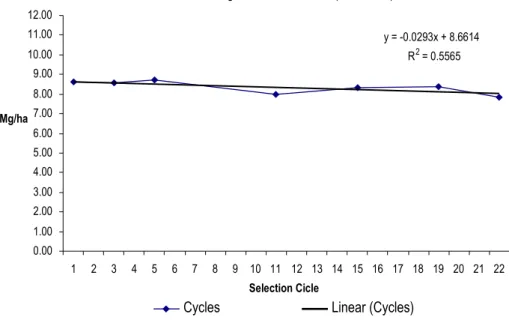
Figure III.1 Yield evolution during the 22 cycles of mass selection. ... 59
Figure III.2 Yield evolution during the 22 cycles of mass selection for Lousada. The first five cycles represent the breeder selection. ... 60
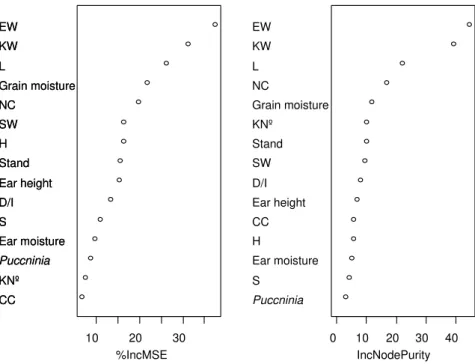
Figure III.3 Mean Decrease Accuracy (%IncMSE) and Mean Decrease MSE (IncNodePurity): there is no clear guidance on which measure to prefer (Kuhn et al., 2008). The independent variable is Yield. They are presented only the 15 most relevant dependent variables. The percentage of variation explained was 46.7%. ... 69
Figure III.4 Mean Decrease Accuracy (% IncMSE) and Mean Decrease MSE (IncNodePurity): there is no clear guidance on which measure to prefer (KUHN et al. 2008). The independent variable is Yield for Lousada. They are presented only the 15 most relevant dependent variables. The percentage of variation explained was 54.4%. ... 70
Figure III.5. Decision tree for the independent variable Yield. ... 71
Figure III.6 Decision tree for the independent variable Yield for Lousada. . 72
Figure III.7. Phenotypic recurrent selection methodology used in ‘Fandango’ by the breeder. 83
Figure III.8 Two orthogonal views of the same ear showing the way that the two sets of diameters and the two row numbers (R1 and R2) were measured and counted; in position A, the diameters D1 and D3 were measured; in position B (a 90º turn along the length axis), D2 and D4 were measured (Adapted from Pego & Hallauer, 1984) ... 90
Figure III.9 Fasciation degree (1 – without fasciation and 9 - maximum of fasciation), shape of the ear and from transversal cut view. ... 90
Figure IV.1 Phenotypic recurrent selection and recurrent selection by S2 lines methodologies. ... 126
Figure V.1 Number of alleles in each selection cycle lost or maintained from previous cycles detected using 15 SSRs markers. Negative numbers refer to alleles lost comparing with previous analysed cycle. Positive numbers refer to new alleles or alleles maintained comparing with previous analysed
cycle. 152
Figure V.2 Factorial correspondence analysis (FCA) of 179 maize genotypes belonging to the initial population (C0-84), three breeder’s selection cycles (BSC1-89, BSC2-94, BSC3-98) and two farmer’s selection cycles (FSC9-93, FSC20-04). Each individual genotype is indicated by a small symbol, while the population barycentres are represented by larger symbols. ... 153
Figure VI.1 Steps of the experimental procedure: (1) Yield prediction, 350 instances were divided into ten subsets from which 9 sets were used for training and 1 set for prediction. This process was repeated 10 times generating predictions for the 350 instances using each of the 11 methods; (2) ears ranking, each matrix composed of 350 instances were divided into 14 disjoint matrix (each one with 25 instances) per each of the eleven methods allowing the evaluation ranking using PRNDCG; (3) statistical validation of average differences between the PRNDCG results using the Friedman rank test and multiple comparisons using the Nemenyi post hoc tests; (4) final formula, after method selection we have used the initial 350 instances to determine the formula. ... 210
Figure VII.1 QTL detected for ear fasciation and related traits using 149 F2:3 families (PB260 (non-fasciated) x PB266 (fasciated)) at two environments in Portugal (Coimbra and Montemor). Bar positions indicate the locations of quantitative trait loci (QTL): outer and inner interval correspond to 1-LOD and 2-LOD support interval, and are indicated as full box and a single line respectively. QTL nomenclature was arranged by the trait name plus environment abbreviation (c = Coimbra and m = Montemor) and the order number of detected QTL for the same trait in the genome (the higher the n°, the lower the contribution of the detected QTL for the explained phenotypic variability). ... 240
Table II.1Contrasting issues and/or consequences between the two philosophical models: productivist versus integrant (Pêgo, Antunes,1997) 36
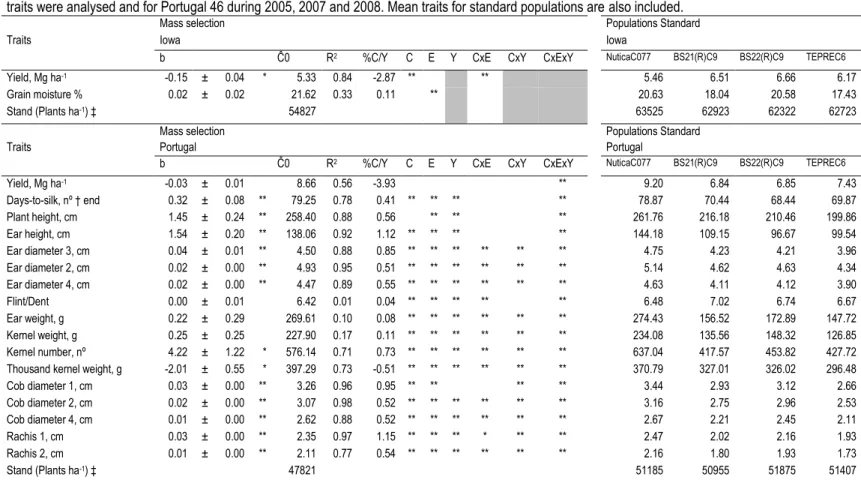
Table III.1 After positive assumption of normality, linear regression was used. Estimation of linear regression coefficient (b), their standard errors,
initial cycle prediction (Ĉ0), coefficients of correlation (R) and % of gain per
year (%Gain/Y) for mass selection (22 cycles in Portugal and 15 cycles in Iowa). For Iowa 5 traits were analysed and for Portugal 46 during 2005, 2007 and 2008. Mean traits for standard populations are also included. ... 56
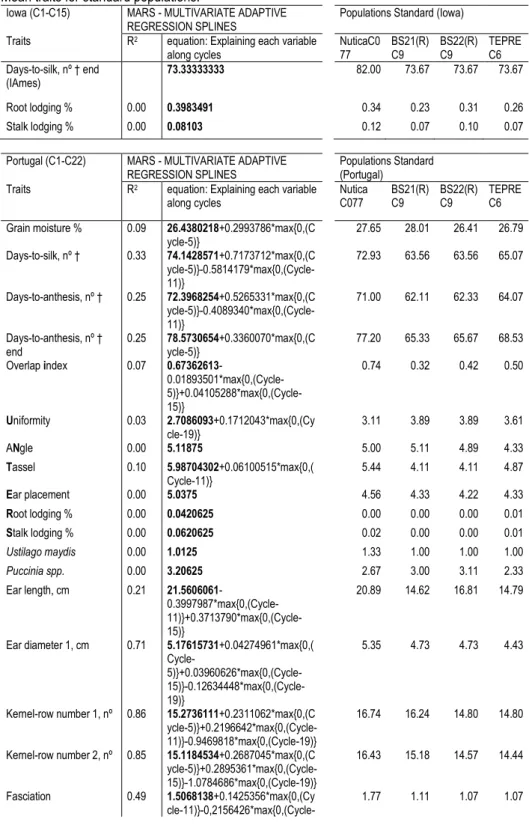
Table III.2 MARS for the rejected null hypothesis of normality when KS Lilliefors was used. Mean traits for standard populations. ... 57
Table III.3MARS for the rejected null hypothesis of normality when KS-Lilliefors was used for Lousada. Mean traits for standard populations at
Lousada. 61
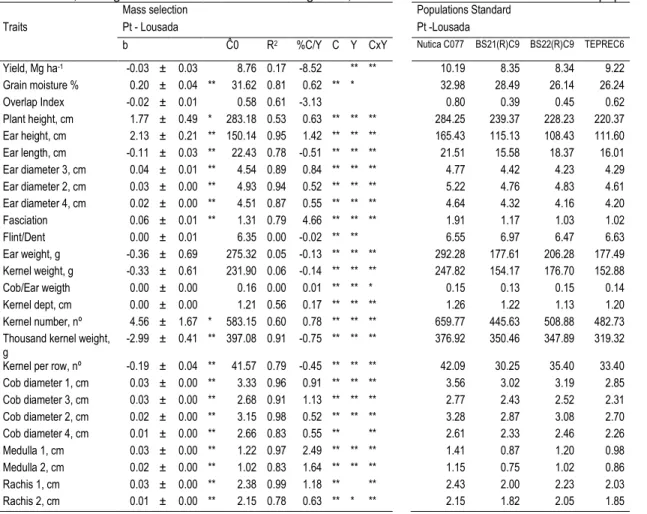
Table III.4 After positive assumption of normality, linear regression was used. Estimation of linear regression coefficient (b), their standard errors, initial cycle prediction (Ĉ0), coefficients of correlation (R) and % of gain per year (%Gain/Y) for mass selection (22 cycles in Portugal). For Lousada, Portugal 46 traits were collected during 2005, 2007 and 2008. Mean traits for standard populations are also included. ... 62
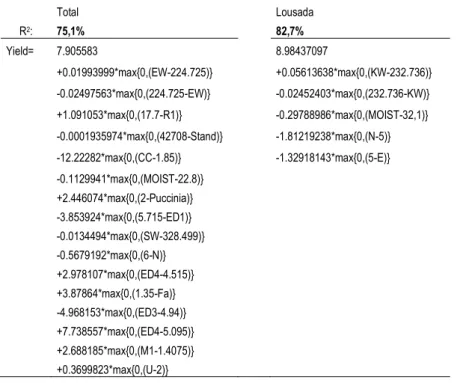
Table III.5 Using MARS to explain the variable Yield considering all the locations and Lousada. ... 68 Table III.6 Mass selection applied to ‘Fandango’ since 1985, selected cycles for trials evaluation (locations and years), seasons per cycle and standard populations used. ... 84
Table III.7 Traits measured per location and per plot, codes and respective description 88
Table IV.1 Estimates of linear regression coefficient (b), their standard errors, initial cycle prediction (Ĉ0), coefficients of correlation (R) and % of gain per year (%Gain/Y) for mass selection (20 cycles in Portugal and 15 cycles in Iowa) 109
Table IV.3 Breeding methodologies applied to ‘Pigarro’ since 1984, selected cycles for trials, evaluation (locations and years), seasons per cycle and standard populations used. ... 127
Table IV.4 Traits measured per location and per plot, codes and respective description 133
Table V.1Linear regression and analysis of variation of breeding methodologies applied to ‘Pigarro’ since 1984, based on field trials agronomical evaluation. Estimates of linear regressiofin coefficient (b), standard errors, initial cycle prediction (Ĉ0), coefficients of determination
(R2) and % of gain per year (%Gain/Y) for Farmer’s selection (20 cycles) and
for Breeder’s selection (3 cycles). ANOVA for Farmer’s (FS) and Breeder’s (BS) cycles of selection, Env-environment; Y-years. ... 147
Table V.2 Genetic variability estimates for the initial population (C0-84),
three breeder’s selection cycles (BSC1-89, BSC2-94, BSC3-98) and two
farmer’s selection cycles (FSC9-93, FSC20-04). ... 149
Table V.3 AMOVA for partitioning of SSR variation between selection
methods (Breeder’s vs. Farmer’s), among cycles within selection methods
and within selection cycles ... 150
Table VI.1 Ranking of the 11 regression methods using different measures for ranking evaluation. ... 182
Table VI.2 Frequency of the presence of each trait in the ten models resulted from the respective iterations. Frequency varies from zero to one.
183
Table VI.3 The mars.ear model using 350 instances, where 14 Terms plus A0 constant were selected from 116 Terms. 12 traits from 24 were selected.
189
Table VI.4 Maize populations’ characterization: kernel type, number of
instances per population, origin and references. ... 201
Table VI.5Traits measured per location and per plot, codes, and respective units of measure or scales. Means and Standard Deviation of the populations Fandango, Nutica and Pigarro. Correlation between yield and other traits. 202
Table VII.2 Phenotypic values (mean ± standard deviation) of the parental inbred lines PB260 and PB266, respective F2:3 families and quantitative genetic parameters for ear fasciation and related traits ... 231
Table VII.3 Refined genetic linkage map of the maize population F2 (PB260xPB266) (used for QTL mapping) ... 237
Table VII.4 Quantitative Trait Loci for fasciation and related ear traits, estimated from 149 F2:3 maize families (PB260 x PB266). ... 242
Table VII.5 Quantitative Trait Loci for the first three PCs, derived from 29 traits in the F2:3 maize families (PB260xPB266) in two environments. .... 251
CHAPTER I.
I.1. Portuguese maize facts
The world cereal production in 2013 was 1980 tera grams from
which, 972 tera grams were maize, representing 49.1% of world
cereal production (IGC 2014). Portugal, with 932 giga grams
represents 0.096% of the total production in the world in an area of
approximately 150 000 ha (146 719 ha in 2013 from which 101 766
ha were for grain production) (INE 2013). The new growing areas are
being fed especially by the new irrigated areas (e.g. Alqueva). Maize
in Portugal represents approximately 40% of the total area of the
cereals and more than 80% of the cereals production. Portugal has
been able to produce 1/3 of its needs, importing the rest 2/3, i.e.,
Portugal has a deficit in maize. However, contrary to what happens
with many other countries, Portugal has an important legacy of
traditional maize varieties specifically targeted for human
consumption, some still preserved on farm, others in national
genebanks, but usually without a strategy for long-term use. For a
country that produces around 0.1% of the world production and has
genetic resources able to establish a maize breeding program and a
good relationship with countries that use also maize for human use
(e.g. CPLP) it would be useful and strategic to support participatory
plant breeding and management research, development and
demonstration not only in Portugal but worldwide (e.g. CPLP). The
genetic resources legacy could differentiate us in the production of
maize for human consumption as a different product compared with
traditional farming systems can be adapted to different farming
systems (e.g. organic or low input farming), being also a potential
source of genes for pest and diseases and climate changes. The
national plant propagation sector (seed and plants) represented in
2013, 129.4 million euros, corresponding to 1.9% of the Portuguese
agricultural GDP. Additionally in 2013, 24.88 million euros of seeds
and plants were exported (8.43 million for seeds), but imported
125.37 million euros (Dias 2009; INE 2014 a,b). For maize 18.52
million were imported and 2.53 million were exported. These facts
should serve as a reflection on the future paths to follow, either in
research and teaching, i.e., how to connect the use of germplasm
breeding to final products, with a rural development strategy.
I.2. Some history
The Portuguese maize germplasm introduction occurred more than
five centuries ago. It is referred that maize was first cultivated in
Europe on the fields of Seville and then it was introduced in the fields
of Coimbra Region (Ferrão 1992).
Maize shaped Portuguese landscape (e.g. terraces, irrigating systems,
corn cribs) and contributed to the improvement of livelihood (e.g.
maize was available directly for human consumption as maize bread
– ‘Broa’ – and indirectly by animal consumption). These five centuries, since maize introduction, were especially relevant to
generate diversity. Diversity creation was driven by two main forces:
orography and to the Atlantic and Mediterranean influence); and (ii)
farmers’ selections (e.g. mainly plant and ear traits).
This diversity started to decrease as the American hybrids were
introduced in Portugal, after the Second World War. The FAO
programs for hybrid production in Europe were implemented in
Portugal. The tested hybrids had excellent adaptation to Portugal and
breeding stations were established along the country from north to
south, but only NUMI at Braga (NUMI – maize breeding station)
survived for a longer period. NUMI success was driven by its special
orientation for grain quality for human use as bread and
early-maturing varieties adapted to highly intense polycropping systems.
From 1982 to 1985, Silas Pêgo was responsible for the Maize National
Program and, together with his mentor, Luís Costa Rodrigues,
organized the National Breeding Program, with two main
components: 1) On-station program, 2) On-farm program, i.e. 1)
Monocrop System (hybrid program), adapted to the Productivist
Philosophy, and 2) Polycrop System (breeding populations), adapted
to the Integrant Philosophy (Pêgo, Antunes 1997). The integrant
Philosophy intended to solve the problems faced by small Portuguese
farmers, with both scarcity of land and highly populated areas.
In 1992 a grassroots competition "Sousa Valley Best Ear Competition"
started. On the first year competition, only the number of kernels per
ear was evaluated. Silas Pêgo saw the opportunity of evaluate ears in
competition and tested an empirical formula in 1993 that could
perception (e.g. What is the row number, the kernel depth and
kernel weight of an ear? but also what type of kernels, for farmers,
define the maize quality for maize bread?...); (2) understanding the
best traits combination to select for yield improvement; and (3)
providing a tool to evaluate and rank the maize ears. This provided
the empirical and scientific knowledge convergence to obtain the
best solution for farmer selection.
When our work started it was necessary to resume the VASO project
history (one of the pioneers in participatory plant breeding project).
Additionally it was also needed to evaluate VASO results, create new
selection tools for farmers and define future plans.
I.3. The world context
Plant domestication is intrinsically related with the beginning of
agriculture and it occurred in the world in different time frames,
starting in West Asia 10 500 years ago. Its success explains the
capacity to pass from 4 million when farming started to 6000 million
people presently. Malthus in “An Essay on the Principle of Population in 1798” systematizes the binomial problem of food and population growth vaticinating a human population always hungry and therefore
malnourished. This scape from Malthusianism was possible, because
XXth century brought important discoveries in agronomy (e.g.
Haber-Bosh process), plant breeding and genetics (e.g. “hybrid vigor”
concept by Schull or the dwarf genes for rice and wheat) (Trewavas
Revolution” and its results enabled cereal yields to increase threefold since 1950. “Green Revolution” saved many lives in the world, allowed that chronically famine countries started to be self-sufficient
and stalled the expansion of new farmland needs. As example in USA,
from 1944 to 2007, the total production of maize was respectively
58.42 to 332.74 Tg on approximately the same area of 34.40 million
hectares. On this area a 360% increase of yield was observed from
2069 kg/ha to 9469 kg/ha (Fraley 2009). “Green Revolution” had also its negative impacts, such as: pollution by excessive levels of nitrogen
fertilizers (7 fold increases from 1960 to 1995) and pesticides.
Furthermore, monocropping had limited genetic variability
contributing for vulnerability to pest and diseases threats (Tilman et
al. 2002).
A new “Green Revolution” is needed when in 2050 the global population reaches 9 billion with a 50% increase from the present
situation. The new “Green Revolution” needs to tackle: energy consumption, climate changes , technology, crop diversity
maintenance, ecosystems biodiversity and environmental costs
among others (Tilman et al. 2002; Tilman et al. 2009; Tilman et al.
2011; Ceccarelli 2012; Stamp, Visser 2012; Bellon et al. 2013; Ray et
al. 2013). The target is to increase yield, but other aspects cannot be
ignored such as the social component (e.g. traditional knowledge,
smalholders role in food safety) and nutrition (Morris and Sands
2006). Indeed hunger remains related with major macronutrients
other million suffer from ‘hidden hunger’, in which important micronutrients (such as vitamins and minerals) are missing with
consequent risks of physical and mental impairment (Liu 2007). In
contrast a billion people are substantially over-consuming,
developing a new public health epidemic involving chronic conditions
such as type 2 diabetes, cardiovascular disease and some cancers
(Ceccarelli 2012; Tilman, Clark 2014).
Much of the responsibility for these three billion people having
suboptimal diets lies within the global food system, which in turn is
affected by the decreased agro biodiversity and by climate changes
(Ceccarelli 2012). For this reason a new “Green Revolution” should have a holistic view, flexibility and adaptation to different
circumstances (e.g adaptation to marginal areas and to polycrop
systems). Additionally it integrates the participatory component for
farmers, breeders and other stakeholders, promoting the
participatory plant breeding and management (PPBM).
The special issue of Scientific American of August of 2013 reminded
us also that food is celebration and culture, fuel and farming. The raw
materials of food are genetic resources. And indeed the majority of
food comes from farming using genetic resources.
I.4. Genetic Resources
From his observations of crops and their wild relative diversity,
between crops and their wild relatives in unrelated crop complexes.
Harlan perceived the consequences of technological and economic
changes on crop diversity (Brush 2000; Maxted et al. 2002). Since
1970 substantial collection efforts were launched to hamper genetic
erosion and crop vulnerability. However, conservation of crop genetic
resources became independent of crop improvement.
In Portugal, Silas Pêgo understood the problem and started collection
missions for maize in 1975. In the following years, a more in-depth
collection supported by FAO/IBPGR in which Erna Bennet had
oriented the funds (Hanelt et al. 2012) for cold storage allowed Rena
Farias, as FAO consulter to cover all the country in successive
missions. The collected materials, together with the previous seed
stock of the Maize Breeding Station NUMI, gave rise to the first
long-term cold storage facilities that were the precursors of the present
Portuguese Plant Germplasm Bank (BPGV). In 2005 a collecting
mission was undertaken by ITQB and IPC-ESAC (Vaz Patto et al. 2007)
in the central region of Portugal and subsequent collecting missions
had occurred throughout IPC-ESAC students (Santos et al. 2009) and
farmers contacted under PPB research (Dinis et al. 2011).
The need of conservation led to over 1000 gene banks establishment,
holding about 6 million accessions (FAO 1998). The huge amount of
genetic resources poses the question of their application both to
plant breeding and farming and emphasizes the gap between
curators and breeders and the need of pre-breeding work. In the
the attention of scientific community. Attitudes shift from an
approach of in situ conservation versus ex situ methods to a
complementary approach. It was also understood that traditional
agriculture and genetic diversity were not inexorably linked and that
agricultural development was not incompatible with on-farm
maintenance of diversity. The awareness of scientific community for
On farm conservation praxis plus participatory research led to a
development of a European in situ (on-farm) conservation strategy
from the milestone in 1992 Earth Summit in Rio and the Convention
on Biological Diversity (CBD 1992), in which targeting sustainable
agricultural practices that preserve natural resources, including
genetic diversity, by building on enhanced agricultural research and
stronger international cooperation. The European Union (EU), as CBD
party, agreed that by 2020 the genetic diversity of cultivated plants,
farmed and domesticated animals and of wild relatives, including
other socio-economically as well as culturally valuable species, is to
be maintained, and strategies have to be developed and
implemented for minimizing genetic erosion and safeguarding their
genetic diversity. To implement these strategies some major policy
developments with impact on the conservation, use and exchange of
Plant Genetic Resources for Food and Agriculture (PGRFA) (ITPGRFA,
FAO 2001) and the 2nd Global Plan of Action (GPA, FAO 2011) are the
most important, due to their consensus among states and
cooperative nature for many European states and the European
The resolution of the European Parliament on the EU 2020
Biodiversity Strategy also indicates that the key to the EU 2020
Biodiversity Strategy is the reform of the Common Agricultural Policy
(CAP) which is “designed to support farming that ensures food safety (in a context of climate change) and promote sustainable and
balanced development across all Europe's rural areas, including those
where production conditions are difficult”. The June 2013 reform of the CAP focused on three priorities: i) viable food production, ii)
sustainable management of natural resources, and iii) balanced
development of rural areas throughout the EU. Measures or
programs in favor of agro-biodiversity conservation that need still to
be adequately addressed by the Commission. Specifically regarding
LR conservation, the Commission Directives 2008/62/EC 20 June
2008, 2009/145/EC 26 November 2009, 2010/60/EU 30 August 2010
and Commission Implementing Decision 2014/150/EU March 2014
pursuant to Council Directive 66/402/EEC on seed production and
marketing opened a new way for their conservation integrated on
seed production and marketing versus conservation per se (Negri et
al. 2015).
When this thesis started the On-farm Conservation and Management
group started as a task force. This task force becomes the On-farm
Conservation and Management Working Group of the ECPGR. This
group has contributed substantially for GPA implementation (Maxted
et al. 2011; ECPGR 2015) and at national level a contribute to
The problem of germplasm evaluation by the farmers was highlighted
during the “Best Ear of Sousa Valley Competition”. For this competition an ear value formula was proposed by Pêgo using
bibliographic data, based on high correlations with yield. The ear
value formula had two applications: 1) measure the ears that farmers
delivered for the competition and 2) helping farmers to select the
best traits for yield improvement. Before this thesis no correlations
data existed between the ears delivered for competition and their
respective yield on the field. These correlations were important to
better found the most adequate formula both for the competition
and to improve yield. With this purpose we obtain data from the ears
and respective yield, but another question occurred. What was the
rank of the best ears and the rank of the best yields? Do both ranks
match? What are the ear formulas that better converge both ranks?
I.5. The participatory plant breeding
PPB has been grown in the world slowly but steady grounded on
scientific basis. Time is need to change mentalities and attitudes in all
the participants of plant breeding, but, legislation, certification
obsolete trials and institutional barriers can be other constraints.
Ceccarelli (2013) refers that 47 countries had or have participatory
plant breeding programs in 26 crops (13 cereals and, 6 legumes, 3 in
roots or tubers, 2 in horticulture and 2 in industrial crops). It has been
observed also that PPB has improved plant breeding efficiency. PPB
problems (Ceccarelli et al. 2013), organic and low input agriculture
(Dawson et al. 2008; Dawson et al. 2013; Serpolay-Besson et al. 2014)
and to polycrop systems. In addition PPB can contribute to elevate
local knowledge to the role of science, community building, farmers
empowerment, so as food sovereignty (Ceccarelli, Grando 2007;
Machado et al. 2011). Furthermore PPB can encourage interaction
between professional plant breeders, other researchers and farmers,
with the objective of developing local cropping systems that better
meet local needs (Cleveland 1999).
Participatory plant breeding can be also very important in on farm
conservation as a source of diversity to maintain favoring dynamic
gene flow between germplasm conservation and breeding (Altieri
and Merrick 1987; Brush 2000; Sthapit, Friis-Hansen 2000; Cooper et
al. 2001). Several approaches for increasing the diversity available to
farmers have been used such as participatory varietal selection,
participatory plant breeding, collaborative plant breeding and
decentralized plant breeding (Cleveland 1999; Machado, Fernandes
2001; Sperling et al. 2001; Witcombe, Virk 2001; Chable et al. 2014).
To contextualize the importance of on-farm conservation and
participatory plant breeding (PPB) in the late 1980s, participation has
become an integrated element of sustainable development strategy
and widely accepted within the United Nations and among
international donor organizations. The participatory approach started
to change the farming systems research on agricultural research
Participatory agricultural methodologies were refined within the
CGIAR system; e.g., on-farm research methodology by CIMMYT
(Sthapit and Friis-Hansen 2000). Under this context, in 1984, Silas
Pêgo started the VASO Project, a participatory Plant Breeding Project
at Sousa Valley Region and pioneer in Europe. VASO project aims
were: “How to solve the problem of the small Portuguese farmers, with scarce land availability due to a high demographic density,
where the American agriculture model did not fit and the
multinationals had no adequate market to operate”. This scientific problem had implicitly the improvement of genetic resources
on-farm and on-station, preventing genetic erosion and development of
methodologies for population screening and improvement. The VASO
program was based on: (i) an integrant philosophy, and increasing
yield without losing the parameters defined as important by the
farmer, such as bread-making quality, potential for polycropping
systems and use in sustainable agriculture; and (ii) the concepts of
quantitative genetics in population improvement. Mass selection was
applied both to landrace populations (e.g. ‘Pigarro’) and to a
synthetic maize population (‘Fandango’). S2 lines recurrent selection was also used in the case of ‘Pigarro’. To initiate the VASO program, three main decisions had to be taken: (i) select the location that
better represented both the traditional maize area and farmers
interests. Indeed on this area previous agro/sociologic/economics
data existed as well as the commitment and interest of local elite
local germplasm versus hybrids production, at least in certain specific
circumstances; (ii) select the farmers to work with – side by side, to
whom the decision power would be allowed, and whose initial
acceptance and enthusiasm were crucial; and (iii) select the
germplasm source to start from: ‘Pigarro’ and ‘Fandango’ (Pêgo, Antunes 1997; Mendes Moreira et al. 2009). These tacit choices
implied a careful respect for the local traditional agriculture. While
the breeder would apply his breeding methodologies, the farmers
would continue a parallel program with their own mass selection
criteria. With this agreement, the breeder had to accept low input
and intercropping characteristics, as well as accept and respect the
local farmer as the decision maker.
Based on the concept and first year results of VASO project, Dr.
Wayne Haag, as member of CIMMYT, made the decision to
completely finance the VASO program that is still running.
When we started our work participatory plant breeding was mainly
used in developing countries being a curiosity for developed
countries (e.g. VASO Project in Portugal since 1984 (maize) and PPB
in France since 2001 (cabbage and broccoli) or 2003 (wheat) (Chable
et al. 2014). The farm seed opportunities FP6 and work done via
ECPGR On-farm Conservation and Management Working Group
(Veteläinen et al. 2009), COST Action 860 SUSVAR and the first
Eucarpia meeting on Organic and Low input agriculture section,
FP7 project SOLIBAM (2010-14), PGR-Secure (2010-14) and
DIVERSIFOOD (2015-2019) will continue to expand our knowledge
regarding biodiversity on farmers’ fields and participatory plant breeding and management. When our work started VASO Project
was running since 1984 and some evaluations were already done for
‘Pigarro’ maize population (Pêgo, Antunes 1997; Mendes Moreira et al. 2009). However, more recent data and with more consistency
were needed, i.e., trials with more environments (locations and
years). This led us to enlarge the network of locations in comparison
to initial VASO Project. In addition no molecular data existed that
could provide us information about either diversity maintenance
along farmers and breeder selection or possible important candidate
genes related with particular phenotypes such as ear fasciation.
I.6. Fasciation
Fasciation describes the enlargement of the plant apex by
unregulated proliferative growth (Rédei 2008; Busch, Benfey 2010)
and its early description is referred by Emerson (1912). In addition
fasciation is frequent in plant species (White 1948). Apparently
fasciation does not confer aesthetic phenotypes. However fasciation
is related with genes that alter the plant architecture and can be
involved with yield. Some of these genes are fasciated ear2 (which
control the maize kernel row number) (Taguchi-Shiobara et al. 2001;
Bommert et al. 2013), fasciated ear3 (that regulates stem cell
et al. 2013), compact plant2 (semi-dwarf plant with 1/3 height and
fasciated ear) (Eckardt 2007), double cob1 (Brewbaker 2009) and
ramosa genes (ra1, ra2, and ra3) (Neuffer et al. 1997) that control the
inflorescence branching in maize among many others (Brown et al.
2011). Other genes were recently identified, such and fasciated ear4
(that regulates shoot meristem size in maize) (Pautler et al. 2015).
Fasciation importance was understood by some Portuguese farmers
since Columbus (1492) (Ferrão 1992) till present. Indeed during the
last Portuguese maize collecting expedition in 2005 (Vaz Patto et al.
2007), 56% of the traditional enduring maize landraces collected had
some degree of fasciation versus the 10% observed during the 1980’s
previous collecting missions. This fact indicates farmers’ preferences that can be related with adaptation to their traditional agricultural
systems, i.e., a germplasm with yield plasticity for different cropping
systems. In fact, it has been observed that the level of expression of
the fasciation trait varies with the environment, i.e., more resources
(e.g. lower densities, more nutrients and space) induce higher
fasciation (Chapter IV). In addition the popular name in English,
“bearsfoot” (Kempton 1923), correspond to several traditional names in Portuguese (“pe´-de-porco”, “pata de porco”,”unha-de-porco”, “mão de morto”, “milho espalmado”, “mãozeira” or “milho das mãozinhas”) that indicates the importance of this trait for Portuguese farmers.
Embedded on Portuguese germplasm and on NUMI (Portuguese
of fasciation, starting its PhD studies (Pêgo 1982; Pêgo, Hallauer
1984). Pêgo’s studies among other materials used the Portuguese commercial hybrid HB19 (based on the recovered WF9R and 38
11/2). Using these materials Pêgo’s studies indicated that fasciation expression would be a useful trait for improving yield under specific
situations of intermediate expression. For this reason fasciation
expression should be considered in long term breeding programs,
which would permit the proper combination of genetic factors for ear
diameter, kernel row number, and ear length.
When our work started some studies on fasciation for Portuguese
germplasm where already available since 1982 (Pêgo 1982) and since
2004 molecular data existed for Portuguese inbreed lines from NUMI
(Vaz Patto et al. 2004), however there was neither knowledge about
the percentage of fasciated maize populations that were kept by
farmers nor molecular markers ever been used for Portuguese
populations and fasciated material.
I.7. Aims and outline of the thesis
The ultimate goal of this work is to better understand the Portuguese
germplasm, share knowledge with farmers in order that they
continue to maintain and use our genetic resources being proud of
them and not being poor with them. This work fits in the strategy
In addition to an introductory Chapter I, the thesis comprises 6
additional chapters where the obtained results are described and
discussed, plus a general discussion:
Chapter II. Participatory maize breeding in Portugal. A case study
The aim of this chapter was to present VASO project philosophy and
his author motivations. In addition we wanted to know what were
the main achievements’ obtained in VASO Project (e.g. germplasm, methodologies).
Chapter III. ‘Fandango’: long term adaptation of exotic germplasm to
a Portuguese on-farm-conservation and breeding project
With this chapter we described how ‘Fandango’ was created, i.e.,
from the ‘NUTICA’ development and from ‘NUTICA’ to ‘Fandango.
The other objective of this work was to survey the selection across
cycles by the breeder and farmer. With this purpose, trials were
conducted in Portugal and in the USA, monitoring morphological,
fasciation expression, and yield.
Chapter IV. Comparison of selection methods on ‘Pigarro’, a
Portuguese improved maize population with fasciation expression
With Chapter IV we compared the ´Pigarro´ maize OPV farmers’
selection response under VASO PPB Project. With this purpose,
characterization at phenotypic level plus molecular data diversity of
farmer selection obtained by Vaz Patto et al. (2008) was used.
Additionally, based on the evaluation trials conducted in Portugal and
in USA we wanted to know which of the two selection methods was
the most useful for supporting PPB in sustainable farming systems.
Chapter V. The farmers’ / breeders’ selection dilemma revisited by
long term participatory ‘Pigarro’ maize breeding analysis
Regarding the comparison of ´Pigarro´ maize OPV agronomic
selection response, Chapter V is an upgrade of Chapter IV, adding the
evolution of molecular diversity for breeder selection plus 111000
data points to the initial 48000 measured at plot and ear level.
Besides the characterization at phenotypic and molecular level,
during this long term Participatory Plant Breeding, we aim to know if
the two selection methods led to the same breeding outputs; if any
of the two selection methods significantly changed genetic diversity;
or which of the two selection methods is the most useful for
supporting PPB in sustainable farming systems.
Chapter VI. Is ear value an effective indicator for maize yield
With Chapter VI we aim to provide tools that could help farmers on
their selection, i.e., converge empirical and scientific knowledge, with
this purpose we target the following objectives: (1) how to develop
new ear value formulas that better estimates the yield potential
using ear traits. This allowed to test alternative interpretable
regression methods (namely from multiple linear regression and
multiple adaptive regression splines); (2) how to select the best new
ear value formula to be used on ear competitions, which allowed the
development of a new instance ranking method; (3) what is the
adequate set of traits to select by farmers’ under PPB toward better yield; and (4) what is the best Ear Value formula to use for “Sousa
Valley Best Ear” competition?
Chapter VII. Genetic Architecture of Ear Fasciation in Maize (Zea
mays) under QTL Scrutiny
Our objective with Chapter VII was to contribute to the elucidation of
the genetic basis of the ear fasciation trait. Fasciation is particularly
important because it is a quantitative trait that is being continuously
selected by Portuguese farmers, and despite its morphological
variation the impact on yield can be effective (Pêgo 1982). In this
chapter we aimed to: (1) determine the genetic relationships
between a comprehensive set of ear architecture traits related with
fasciation in a segregating F2 population, developed from a cross
between contrasting (non-fasciated PB260 x fasciated PB266) inbred
and effects of QTLs involved in the inheritance of those traits, across
two environments, using univariate and multivariate approaches and
(3) identify possible candidate genes associated with these QTL.
Chapter VIII. General Discussion
Finally, in Chapter VIII our aim was to integrate both phenotypic and
molecular data evaluation along participatory maize breeding
evolution under the VASO project. This integration was
complemented with the development of a formula that could be
useful for farmers’ selection in a PPB methodology towards yield
increase, and with the genetic basis elucidation of the ear trait
fasciation, a very important ear trait to PPB farmers as a way to
maintain the population resilience and yield enhancement.
I.8. References
Altieri MA, Merrick LC (1987) In situ conservation of crop genetic resources through maintenance of traditional farming systems. Econ Bot 41: 86–96. doi: 10.1007/BF02859354
Bellon MR, Van Etten J, Jackson M, Ford-Lloyd B, Parry M (2013) Climate change and on-farm conservation of crop landraces in centres of diversity. Plant genetic resources and climate change pp. 137-150
Bommert P, Nagasawa NS, Jackson D (2013) Quantitative variation in maize kernel row number is controlled by the FASCIATED EAR2 locus. Nat Genet 45:334–337. doi: 10.1038/ng.2534 PMID: 23377180
Brewbaker JL (2009) Double-cob (dbcb) on chromosome 1. Maize Genetics Cooperation Newsletter 1