Coherent Plasma Proesses in Ative Galati Nulei
V. Krishan
InstitutoNaional dePesquisas Espaiais-INPE,
C.P.515,12201-970, S~aoJosedosCampos,SP,Brazil
andIndianInstitute ofAstrophysisBangalore,560034,India
Reeivedon31May,2002
Thephysisofativegalatinulei(AGN)andrelatedobjetsisoneofthemostativelypursued
areasofastrophysis. Theirlargeluminosities overtheentireeletromagnetispetrumombined
withextremelyshorttimevariability hasstimulatedalarge numberofastrophysiiststo propose
ratherunonventionalideas. Avarietyofradiationmehanismssuhas,thermal,synhrotronand
Comptonproesseshavebeenproposedtoaountfortheomplexontinuumemission. Itisonly
reentlythattheroleofplasmaradiation mehanismshasbeenshowntobeoftheutmost
impor-tane. It is demonstrated howa ombination ofthe stimulatedRaman and Compton sattering
proessesaounts for themajor part ofthe spetrum, taking3C273 as anexample. Inaddition
plasma mehanismsfor, the heating of the emission line regions, absorption of21 m radiation,
produing time variability ondierent time salesand pair prodution and annihilation are also
disussed.
I Introdution
Quasars are the most distant and the most luminous
objetsintheuniverse. Theoptialspetraofquasars
onsist of strong and broad emission lines, some of
whih have beenidentied to be the Balmer series of
the hydrogenspetrum,shiftedto longerwavelengths.
Theamountofshiftimpliesthatmanyoftheseobjets
aremovingawayat alargefrationofthespeed()of
light. Ifthis isaosmologialred shiftthen onends
using theHubblelawoftheexpansionoftheuniverse,
thattheseobjetsareatthefarthestreahesofthe
uni-verse. Quasars radiatealmost over theentire
eletro-magneti spetrumwith atypialpower of 10 46 47
erg se 1
. The sun, for example emits 3.9 10 33
erg se 1
. Atypialgalaxyhasabout10 11
stars init.
Thus theoutput of aquasarsis muh morethanthat
of anentiregalaxy. However,onoptialimages, it
ap-pearsmorelikeastar. Hereliestheoriginofthename
Quasi-Stellarobjets. Further,theobservedrapidtime
(t
) variabilityof the radiationonstrains thesize (d)
ofthesouretobeextremelysmall(d<t
ifinternal
relativisti motionsare ignored)typiallyof theorder
of 10 14
10 15
m, omparable to thesize of the solar
system(Mushotzky, DoneandPounds, 1993).
Whatouldbethenature ofthis`littlebig'
power-house? We knowthat thestars shinedue to the
ther-monulearburningofhydrogenandotherelements. We
are also aware of the eÆieny ( 0.007) with whih
ation. It was onluded that quasars need a
meh-anism more eÆient than the thermonulear burning.
Theonsensusat present is that theenergy extrated
from the gravitational in-fall of gas on to a ompat
objet suh asa blak hole(Rees, 1977), ts the bill.
Itisakintoterrestrialhydroeletripowergeneration!
Thus, a viable model of a quasar onsists of a
mas-siveblakholearetinggasfromitsneighborhood(the
reservoir !). The gas, as it spirals in and aelerates
beomes hot and emits photons through a variety of
radiationproesses. Theluminosity L may be related
to the mass aretion rate _
M as: L = _
M 2
, where
,aneÆienyfatorisdeterminedfromthenatureof
thearetion. Itisoftheorderof0.3fordisaretion
ontoarapidlyrotatingbalkhole(NovikovandThorne,
1973),where thearetinggashasangularmomentum
andthereforesettlesdownintheformofadiskaround
themassiveentralobjet.
The massof the blak holeanbeestimated from
severalonsiderations. Forexample,oneoulddemand
that the gravitational attration of the areting gas
by the blak hole is larger than its repulsion by the
emitted radiation. This denes the well known
Ed-dington limit L
E
and an be derived as: fores due
to gravitation and radiationare dierent foreletrons
and protons, as a result of whih harge separation
takes plae and an eletri eld E is set up, the
move together and the luminosity at whih this
hap-pens is given by L
E
= 4GMm
p =
T
, where G is
the gravitational onstant, M the mass of the blak
hole, m
p
the mass of a proton and
T
is the
Thom-son ross-setion. One nds L
E
1:310 46 M 8 erg. se 1 where M 8 (M=10 8 M
). Thus blak holes of
masses10 8
M
areneededtopowerquasars. Further
theShwarzhildradiusR
s
of ablakholeis givenby
R
s
= 2GM= 2
310 13
M
8
. Thus a harateristi
timeofvariationt
whihmaybeassoiatedwitha
re-gionof this size is R
s
=' 10 3
M
8
se. This agrees
fairly well with the variability time sale observed in
theX-raypartofthespetrumofsomesoures.
Another way of estimating the mass of the blak
hole is to attribute the observedwidth of 5000{10000
Km/se of theemission lines to theKeplerian motion
ofthegas. OnendsthatatadistaneR900R
s ,the
Keplerian veloity is of 10 4
Km/se. The absene
ofbroadforbiddenlinesonstrainstheeletrondensity
in the broadline emissionregion to 10 10
m 3
and
thetemperaturetoafewtimes10 4
K.Theobserved
lu-minosityinanyoftheemissionlinesis muh lessthan
would be expeted from a regionof the size R and
furtherthat itannotexeedtheluminosityofablak
bodyatthistemperature. Thishastwofallouts: rst,
thatR>10 15
mandM>10 7
M
andseondthatthe
regionofsize Ris notuniformlylledwithgas. It
ex-istsintheformoflamentsexhibitingseveralzonesof
varyingdensityandtemperature. Partiularly,thetwo
phases with T ' 10 8
K and 10 4
K have been shown
to oexist in pressureand radiative equilibrium
(M-Cray, 1979; Rees, 1984) (for a review see Osterbrok
andMathews,1986).
Theontinuumemissionofaquasaranbe
approx-imatedby apowerlaw. Theux F
at afrequeny
goes as
onsisting of several omponents: In the
low frequeny ( < 1GHz) radio region, ' 0:1; in
the X-ray region 0:7. The entire spetrum when
tted with an average value of ' 1 shows bend in
theradio,bumps intheblue anddistintvariationsin
thehardX-rayand-rayregions. Theontinuum
orig-inatesveryneartheblakholeandtheninteratswith
thesurroundinggas,whih,asaresult,exhibitsphases
ofdiversetemperaturesanddensities.
The radio emission assoiated with quasars
typi-ally has two distint omponents: a ompat soure
oinident with the optial emission showing aat or
omplexspetrumand, extendedroughlysymmetrial
doubleradiosouresonbothsidesoftheoptialobjet
with aspetral index 0.7. This extended emission
anexist outto hundredsofKiloparseandis usually
seen as two sided lobes, though only one of the jets
feedingthelobesisusuallyvisible. Howtheentral
ob-jetfeeds and maintainsthese hugejets hasremained
II Early models of ontinuum
emission
The ore radio radiation from AGN is believed to be
produed via synhrotron proess in whih
relativis-tieletronsgyratein anambientmagnetield. The
synhrotronradiationmehanismhasbeendisussedin
variousastrophysialontextsandtheharateristisof
aradiation so produedare well doumented
(Pahol-zyk, 1970, Ginzburg and Syrovatssky, 1974; Rybiki
and Lightman, 1979). Fora power law energy
distri-butionofeletrons,synhrotronradiationuxalsohas
a powerlawspetral distribution with =( 1)=2
where istheenergyindex (f(E)/E
)of the
ele-trons. It is found that many of the aeleration
pro-essessuhasshokaeleration,aelerationby
mag-netohydrodynami waveset. produea valueof
3. This, then givesavalue of whih is lose to the
observed spetralindex to a low frequeny turn over.
Atthisturningpoint,theeletronsbegintoabsorbthe
radiation they emit and the soure is said to be
self-absorbed. The radio ux varies asf
(/
5=2
) for
fre-queniesbelowtheturningpoint. Nowthispartofthe
spetrum has not been observed, instead a at
spe-trumwith0.1{0.3iswhatisoftenobserved. This
is explained byinvoking theinhomogeneous nature of
the radio soure, wherein a tailored superposition of
5=2
spetragivesriseto aatspetrum.
The self-absorption ours when T
B (=K B )m e 2 10 10
, where is the Lorentz
fa-tor of the synhrotron emitting eletrons, K
B is the
Boltzmann onstantand m
e
is the eletronmass. T
B
thebrightnesstemperatureatafrequeny isdened
as: K B T B = 2 F =2 2 3 where F
is the radiative
ux and is the angular size of the soure. From
the observed values of F
, and at the turnover
frequeny, one an determine the Lorentz fator
of the eletrons emitting at the turnover frequeny.
Sine the synhrotron turnoverours at a frequeny
= 2
0:3eB=2m=(1+z)oneandeterminethe
mag-neti eld B for a known value of the redshift z and
thenthetotalnumberof relativistieletronsrequired
toaountfortheobservedvalueofF
. Thusfromthe
self-absorbedfeatureofthespetrum,typialvaluesof
the physial parameters of the radio emitting plasma
an be estimated. The variability aspet of the radio
emissionwillbedisussedinalatersetion.
Linear polarization as high as 75 % is predited
for the synhrotron mehanism and high linear
polar-ization is often seen in extended radio soures. The
ompatradio soures,howevershowpolarization ofa
few perent. Thus, depolarization proesses are
syn-that at least in radio-loud objets, radio to
ultravio-let (and sometimes soft X-ray) radiation is produed
bysynhrotronproess andX-raysto gammaraysare
produedthroughtheinverseomptonsatteringofthe
synhrotron produed UV photons (Hoyle, Burbidge
andSergent,1966). ThepowerP
sy
emittedpereletron
bythesynhrotronmehanismisgivenby(Rybikiand
Lightman,1979).
P
sy
=2=3(
T
2
2
B 2
); (1)
where
T
is theThomsonross-setion, is the
per-pendiular veloity of the relativisti eletron with
theLorentzfatorperpendiulartothediretion ofB,
themagnetield. ThepowerP
emittedpereletron
bytheinverseomptonproessisgivenby(Rybikiand
Lightman1979):
P
=2=3(
T
2
2
4U
rad
); (2)
where U
rad
is the energy density of the synhrotron
generatedphotons.
It was argued by Holye, Burbidge and Sergeant
(1966) that the ratio P
=P
sy
turns out to be muh
largerthan one,infat 10 5
at afrequeny =10 14
Hzfor3C273andsimilarlyforotherobjets. This
im-plied that the omptonproess generated muh more
powerbyusingsynhrotronphotonsandeletronsthan
did the synhrotron proess, leading to a divergene
in whih the inverse omptonproess ats onitself to
produehigherpowerathigherandhigherfrequenies.
This dilemma is known as the Compton atastrophe.
Jones et al. (1974),however,haveritiized this
on-lusion, for aording to them spetral power instead
ofthetotalpowershouldbeomparedsinetheformer
is whattheobservationsprovide. Further,therelative
ontributionofsynhrotronself-Compton(SSC)anbe
reduedforanisotropidistributionofrelativisti
ele-trons in ordered magneti elds. Another way outof
theomptonatastropheistoassumedierentvaluesof
theLorenztzfatorforproduingradiationatdierent
frequenies.
IfL is theluminosity andd the size ofthe soure,
L = d
2
U
rad
= 4R 2
F, where F is the ux
re-eived at the earth from the objet at a distane R .
Thus U
rad
= 4F= 2
= 8(
3
= 3
)K
B T
B < B
2
=4
gives an upper limit for the brightness temperature
T
B 10
12
10 13
K. Detetion of rapid variability
(small)insomesouresimplies,then,thatthe
bright-ness temperatures, in these soures, an exeed the
SSC limit by several order of magnitude. This
diÆ-ulty hasbeen resolvedby suggesting that the soure
isexpandingrelativistiallytowardtheobserver(Rees,
1966). The timesale forvariability in the sourerest
frame then inreasesby theKinemati Doppler fator
Æ [
o
(1
ko
)(1+z)℄ 1
and so does the angular
brightnesstemperature. Thusrelativistibeaminghas
been found handy for explaining the observed
super-luminal expansion, the low frequeny variability and
rapidhangesin polarization andintensityin addition
toprovidingaurefortheComptonatastrophe.
Thusthesenariothatispopularfortheradio-loud
and other related objets onsists of a jet like
stru-ture,emanatingfromtheore. Theradiationfrom
ra-diotoUVandsometimeseveninludingX-raysis
pro-duedthroughinoherentnonthermalsynhrotron
pro-ess. Timevariabilitystudiesprovideanestimateofthe
relativesizesoftheemissionregionsatvarious
frequen-ies.InsomeothersouresX-raysmaybegeneratedby
theinverse Comptonsattering of lowfrequeny
pho-tons. If this proess operates then oneexpets to see
orrelated variability in the seed photons at infrared
andmillimeterwavelengthsandtheComptonsattered
photonsatX-rays. Theoverallspetrumhasaspetral
indexlosetounitywithaverybroadpeakin the
mil-limeterto ultraviolet region. This feature has alarge
rangein wavelengthandprobablyreetstherangein
theparametersoftheradiatingplasma. Typialvalues
oftheparametersmaylieintherange: B10 2
{10 4
G, relativisti eletron density n 10 8
10 10
m 3
,
Lorentz fator10 3
{10 4
andthesize of the
emis-sionregiond10 15
10 17
m. Thisplasmaanprovide
aluminosity L 10 44
10 46
erg/se. The Compton
limited luminosity is also of the same order. Reent
observations from Compton GammaRay observatory
haverevealedasurprisingorrelationbetweenemission
at Gev and radio frequenies. This lends redene to
theinverseComptonsatteringproessforthe
genera-tionof gamma-rays(MarsherandBloom,1992). The
observed Gev energies of 10 48
erg/se are perhaps
the resultof relativistibeaming. Time variability of
theorder ofafew dayshas been seenat gamma-rays,
alsotypialoftheoptialand UVregion, again
point-ingtotherole ofupsatteringproesses(Knien etal,
1993).
None of the radio-quiet objets have been seen to
emit GeV photons. As mentioned already, the radio
quietobjets haveveryweak emission of theorder of
a few milli Jansky at frequenies
= 10
10
Hz and the
emission risesthousand fold to the level of Jansky at
far infrared wavelengths. This steep fall with an
av-erage slope of 3.75 (Hughes et al., 1985) towards low
frequenyannotbeaountedbysynhrotronself
ab-sorption mehanism whih an, at best produe afall
with a slope of 2.5. In addition anew omponent in
the form of a bump, between 2 - 10 m lying above
theunderlying power lawhas been identied(Robson
et al., 1986; Edelson and Malkan, 1986). It hasbeen
suggestedthat hotdustmayberesponsibleformostof
Dust isthus assumed to bepresentin soures
dis-playingtheinfraredbump. Itabsorbstheoptial
ultra-violetradiationfromtheentralontinuumandreemits
at infrared wavelengths. The power P
per unit
fre-quenyemitted by asinglegrain at atemperatureT
g
isgivenby(Barvainis,1987).
P
=4a
2
Q
B
(T
g
)ergse 1
Hz 1
; (3)
whereaisthesizeofagrainandisbelievedtobeofthe
orderof0.05m,Q
istheabsorptioneÆieny ofthe
grainsintheinfraredandB
(T
g
)isthePlankfuntion.
A grain exposed to UV radiationwill ahieve
equilib-riumwhenthe rateof absorptionin theUV equalsits
rateofemissionintheinfraredi.e.
a 2
Z
U
Q
d=
Z
P
d; (4)
where(Q
a
2
)istheabsorptionrosssetionofagrain
and U
is the energy density in the ultraviolet. This
equality determines the temperature of a grain. One
an also determine the distane from the entral
soure at whih the temperature T
g
1500 K,whih
istheevaporationtemperatureofgraphitegrains.The
optially thin radiation from graphite grains at T
g
1500 K peaks at 2 m and is suggestiveof the
in-fraredbump. Thesize ofthedustregionanbe
deter-minedbyaknowledgingthatatlargedistanefromthe
UV soure, thedust doesnot absorbenough UV and
remains old and nonradiating in the infrared. Thus
the infrared emissionis supposed to originatein a
re-gion of
=
10 p extent situated about a p from the
entral UV soure. Predominantly graphite grains of
0.05 m size, either distributed spherially
symmetri-ally orin lumps with a total mass 10 3
10 5
M
atarangeoftemperaturesanaountfortheinfrared
harateristisofamajorityoftheradio-quietobjets.
It is interesting to reall that the at radio spetrum
wasprodued by assuming that the synhrotron
self-absorbedsoureismadeupofseveraldierent
ompo-nentsandhere,thesteepinfraredspetrumisprodued
by assuming that the emission region onsists of dust
atmanydierenttemperatures? Aretheirother
inter-pretations?
Advaningtowardshighfrequeniesnext,omesthe
bigbluebumpspreadoverfrom1m-0.5KeVregion.
It is believed that this spetral region onsists of two
omponents,anonthermalpowerlawradiationwith a
spetralindex'1overwhihliessuperimposed
ther-malemissionwithablakbodyspetrummodieddue
tothespatialvariationofthetemperatureofthe
emit-tingregion. ThefuxF
a
releasedperunitareafromthe
matteraretedatarate _
M ontoablakholeofmass
M
H
isgivenby(Shields,1978).
F
a
3GM
H _
M=8r 3
: (5)
Ifmostof thispoweris radiated asiffrom ablak
body then the orresponding blak body temperature
T
a
isfoundtobe
T
a
(r)=(F
a =)
1=4
; (6)
where =5:6710 5
ergse 1
m 2
K 4
. The
fre-quenyof maximumemission at aradiusran be
de-terminedfrom:
max
(r)=2:8K
B T
a
(r)=h: (7)
IntegratingT
a
overthearea,takingr
min
asthe
in-nerradiusofthearetiondisk, onendsenergy
emit-tedperseperHz,f, tobe:
f 1=
max (r
min )
Z
1
rmin F
a
rdr=[3GM
H _
M 1=2
=8℄ 2=3
(2:8K
B =h)
4=3
1=3
max (r
min
) (8)
d
Thus theux f has aspetralindex =-1/3. Of
ourseat eahspatial pointthegas emitsaPlankian
and the(1/3)spetrumresultsfrom thespatial
varia-tionofthetemperatureandthereforeof thefrequeny
ofthe maximumemission. Forfrequenieslargerthan
max
thethermalemissionfallsoexponentially. This,
in essene, is the thermal aretion model of the big
blue bump, whihlies overthenonthermalontinuum
extendingfrom farinfraredto X-rays. Severalvariants
of this model havebeen proposed inluding
ontribu-tionsfromdust,butitappearsthatifthenearinfrared
emissionis nonthermaland isdue to dustemission, it
maybe diÆultto savethe aretion model (Malkan,
1991,1992;Czerny,1994).
III Alternative - oherent
radi-ation proesses
Theextremelyrapidvariabilityrequiringbulk
relativis-tibeamingLorentzfatorsof1000orlargernot
exhib-ited by theobservedsuperluminalexpansion,arather
ontrivedtailoring ofthe frequenyspetrumin order
to t the observations, the need to heat the emission
nismsofradiationgeneration,propagationand
absorp-tion. The Coherent radiative proesses an alleviate
some of these aveats. And plasma proesses oer a
varietyofwaystogenerateoherentradiationandheat
plasmastohightemperatures. Theexisteneofa
vari-etyoftimesalesassoiatedwithdierentwavemodes
in aplasmaanaountforthetimevariabilityofthe
radiation. Mostof alltheinferred physialparameters
in AGN are suh that they satisfy the onditions for
the ourreneoftheplasma proesses. Theinlusion
oftheseproessesinthemodelingofAGNphenomena,
in return,providesuswithseveralgooddiagnostis.
IV Novelties of a nonlinear
plasma
Inanonlinearplasma, thedensities,thetemperatures
andthetransportparameterssuhastheeletrial
on-dutivitybeomefuntions of theimposed high
inten-sity eletromagneti or eletrostati eld. For
exam-ple high intensity radiation E
o (!
o
) passingthrough a
plasma indues an osillatory motion (u(!
o
)) of the
plasmapartileswhihombinedwiththedensity
u-tuations Æn(!)produeeletriurrent density J(!
!
o
) at theside bands (!!
o
). This gives riseto the
eletri eld E
s (!!
o
) whih ouples with the
ini-dent eld E
o (!
o
) to reinfore thedensity utuations
Æn(!) and the feed bak proess ontinues as shown
in the Fig. 1. These nonlinear proesses aet the
propagation,absorptionandsatteringofradiationand
needtobedeterminedself-onsistently. Thesesoalled
stimulatedproessesanredueorenhanetheplasma
transpareny depending upon the plasma parameters
andtheinidentradiation.
Figure1. Feedbakmehanismfornonlinearplasma
instability.
In the next setions, we disuss the role of some
of these proessesin thegenerationof thenonthermal
ontinuumofAGN,heatingoftheemissionlineregion,
absorptionofthe21mradiation,thevariabilityofthe
ontinuum and the eletron-positron pair prodution
V Stimulated Raman and
Compton sattering in
quasars
There are three ways by whih the sattering of
ra-diation in a plasma an our: (1) stimulated
Ra-mansattering (SRS), whereastrong eletromagneti
wave satteres o a weakly damped eletron plasma
wave(K
e
De
1),(ii)stimulatedComptonsattering
(SCS),whereastrongeletromagnetiwaveissattered
oahighlydampedeletronplasmawave(K
e
De 1)
and(iii)theComptonortheThomsonsattering(CS),
wheretheeletromagnetiradiationissatteredby
sin-gleeletrons(Fig. 2). Althoughthestimulated
satter-ingproessesarewellknownamonglaboratoryplasma
physiists, they remained unknown to astrophysiists
until the work of Krishan (1983). Under appropriate
onditions,these plasmaproessesplayadeisive role
inthegenerationaswellasthereproessingof
eletro-magnetiradiation.
COMPTONSCATTERING(INVERSE)
STIMULATEDRAMAN SCATTERING
V.1 Nonthermal ontinuum
AombinationofthestimulatedRamanand
Comp-ton proesses has been proposed to model the entire
ontinuumradiation. Inthis piture,thegistofwhih
wasrstproposedbyKrishan(1983,1985),aregionof
suitably varying density ontaining fast partiles and
eletromagneti elds an generate the observed
on-tinuumallthewayfrom RadiotoX-rays(andeven
-rays). Theeletrodynami proessesallowpartilesto
beinastateof ontinuousaelerationastheyanbe
aeleratedbytheeldstheyemit(PainiandSalvati,
1982).
V.2 Energeti eletrons
The eletrons are aelerated by eletron-plasma
waves, whih are produed through Raman
forward-sattering(RFS). RFSis haraterizedbythe beating
of two eletromagneti waves of frequeny and wave
vetor(!
o ;
~
K
o
)and(!
1 ;
~
K
1
)respetively,sothat
!
o !
1 =!
e and
~
K
o ~
K
1 =
~
K
e
(9)
and an eletron plasma wave (!
e ;
~
K
e
) is produed.
Thetwoeletromagnetiwaves,in theontextofAGN
ould possibly arise from ylotron emission. For
!
o
!
pe
, the phase veloity of the Langmuir waves
V
p =!
e =K
e
=
(1 ! 2
pe =!
o 2
) 1=2
islose to . Suh a
wave will growin strength until its amplitudeE
e
be-omes relativisti; in other words, the quiver veloity
of the eletron V
E = eE
e =m
e !
e
approahes . Then
thewavetraps eletronsin the tailofthe distribution
andaelerates them. BeauseV
p
=
,asizeable
fra-tion of the eletronswill stay in phase with the wave
for extended periods and an thus be aelerated to
high values of Lorentz fator (Krishan and Wiita,
1990). A ritial aount of several popular
aeler-ation proesses in astrophysial situations is given in
Colgate(1994).
V.3 The sattering ageny
The energeti eletrons an radiate by being
sattered o either in the Coulomb eld of ions
(Bremsstrahlung); in a stati magneti eld
(Syn-hrotron), in aspatially periodi magneti eld,
ele-trostati wave and or eletromagneti wave through
Raman and Comptonproesses. The high amplitude
Langmuir waves produed by RFS may be
susepti-bletomagnetimodulationalinstabilities(Bel'kovand
Tsytovih, 1979, 1982; Kono, Skori and ter Haar,
1981). The plasma osillations with inhomogeneous
phase distributions produe vortial urrents whih
tendto inreasethespontaneouslyproduedmagneti
elds. The magneti modulational instability exites
magnetieldswithspatial periodspeakingat(=! ,
butrangingupto(V
e =!
pe
)withanamplitudeB
MM =
eE 2
e =(4m
e !
pe
) ). This quasi-stationary spatially
pe-riodi magneti eld will remain exited as long as
the Langmuir eletri eld ontinues to be reinfored
via thebeating ofthe twoeletromagneti waves.
In-tenseloalizedregionsofeletrostatield intheform
of soliton like strutures ould also provide a
satter-ing ageny(Weatherall and Benford, 1991; Lesh and
Pohl,1992). Thelowfrequenyeletromagnetiwaves,
sayproduedbysynhrotronproessesouldalso
sat-ter o the energeti eletrons via stimulated Raman
sattering inaddition tothemuhdisussed Compton
sattering.
V.4 Prodution of radiation
The role of stimulated sattering proesses in the
generation ofAGN nonthermalontinuumand itsfast
variabilityisbeinginvestigatedsineitwasrstpointed
out (Krishan, 1983, 1985; Krishan and Wiita 1990;
Gangadharaand Krishan,1992;Weatheeralland
Ben-ford,1991;Coppi,BlandfordandRees,1993;Levinson
and Blandford, 1995). The model onsists of an
ele-tronbeamwhihpropagatesradiallyoutwardsand
in-terats withthesoftphotoneld toprodueradiation
at high frequenies. The generation (Blandford and
Payne,1982;Wiita,KapahiandSaikia,1982)and
sta-bilityofextremelysharpeletronbeamsinquasarshas
beendisussed by Lesh and Shlikeiser(1988). The
satteringanbestudiedmoreeasilyintherestframe
oftheeletrons,asisdoneinthestudyofinverse
Comp-tonsattering. Intherestframeoftheeletronbeam,
non-relativistialulationsoftheenergytransferrates
orthegrowthratesand thesattered ux anbe
ar-ried out and these quantities an then be transferred
baktothelaboratoryframe.
Thedensityofbeameletronsanbeestimated by
demanding that therate at whih the beam eletrons
lose energy from SRS, equals the rate at whih they
gain energy from RFS. Note that, while an ambient
plasmahasanimportantrolein theaeleration,only
the relativisti beam partiles are responsible for the
emittedradiation. Further,thisansatzhasthepleasant
onsequenesthat asteady statesupply of relativisti
eletronswithsmallthermalspreadisavailable.
Thetotal poweremittedby SRSanbeestimated
bynotingthat, asthe satteredpowerrises,the
ee-tiveeletrield ( ~
i
~
B
s
)produedbythesattering
also inreases. This eld willtrapthebeameletrons,
inreasingtheirthermalspreadandhaltingtheproess.
Sine,thefrequenyofemissionsaleswiththe
ele-tronplasma frequenyandtherefore theeletron
den-sityn,highfrequenyemissionoriginatesinthedenser
regions,presumablylosetotheveryoreoftheAGN.
Itisinterestingtonotethatthepoweranbemade
in-dependentoffrequeny(Correspondingto =1,lose
andtheprodutnAareonstants. Ifthebeamshavea
onstantopening angle sothat A/r 2
, then this
spe-ial ase orresponds to n / r 2
, the familiar lawof
densityvariationinauniformlyexpandingor
ontrat-ing medium. Ingeneral,assumingapowerlawspatial
variations ofn, frequeny !
s
and luminosity L(r)et.
It wasshowninKrishanandWiita(1990),fairlygood
ts totheaverageAGNand Seyfertsspetraouldbe
obtained for veryreasonable valuesof the various
pa-rameters exept that eletron density is taken to be
higherthanwhatisusually assumed.
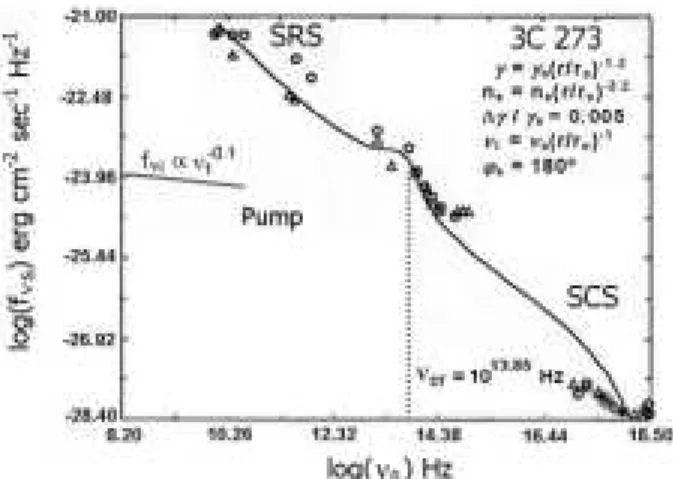
Figure3.Thespetrumofthequasar3C273. Thesolidlines
represent the alulated spetrum and the sperum ofthe
pump wave. Theobservedpoints, Æ (1984 February)and
4 (1986 February) by Courvoisier etal. (1987), are also
plotted. Theonstantsare:
o
=310 3
,n
o
=9:2410 17
m 3
,
o
=410 10
Hz.
The stimulated sattering proess for the entire
range ofplasma and radiationparameterssoasto
in-ludeSRSaswellasSCSandhenegoingthroughthe
transition regionwas studied byGangadhara and
Kr-ishan (1992). Assuming a at spetrum radio pump,
powerlawspatialvariationsofplasmadensity,Lorentz
fator,temperatureandspetrumofthepump,almost
theentirespetrumof3C273wasreprodued(Fig. 3).
At the ritial frequeny (
s 10
13:85
Hz) there is a
break in thespetrumdue to thehange ofsattering
proessfromSRStoSCS.TheSRSproessontributes
inthelowerfrequenypart(
s 10
13:85
Hz)whileSCS
ontributesinthehigherenergypart. Theslopeofthe
spetrum in the SRSregion is -0.8 and in theSCS
region,itis(-0.7). Thehardx-raypartofthespetrum
is steep due to strongollisional dampingof the
sat-tered and the eletronplasma waves and the slopeof
this partis(1.5). Thebump inthespetrumis
pro-dued atthe transitionregion (K
b
De
=0.4)between
SRSandSCSregions. Itislearthatplasmasattering
proessesan ontribute, in a major way, to the
pro-dution of nonthermalontinuum of AGN, along with
VI Heating of the emission line
region
ThestrongnonthermalradioontinuumfromtheAGN
anheattheemissionlineregionthroughtheationof
the parametri deay instability. In this proess, the
radio wave deays into an eletron-plasma wave and
an ion-aoustiwavewhih are then absorbed by the
plasma. It is found that temperature of more than
100,000K an be attained through this proess
(Kr-ishan,1987).
VII Absorption of the 21 m
ra-diation
Theabsorptionof21mradiationfromAGNis
gener-allyattributedtotheneutralhydrogenlouds. Butitis
shownthatmuhlargerabsorptionantakeplaeinthe
ionizedregionsthoughtheparametrideayinstability.
The inlusion of this absorption proess ommands a
reestimate of theneutralhydrogen omponentfor the
absorptionofthe21mradiation(Krishan,1988).
VIII Continuum variability
TheAGNontinuumshowsvariabilityondierenttime
salesinthedierentspetralregions. Ahostofplasma
and MHD waves an introdue quasi-periodi or
ape-rioditime variability in theemittedradiation.
Espe-iallythe hange of emission proess from the
Comp-tontoRamansatteringanmanifestitselfintermsof
extremelyrapidvariability. Further,theinverse
Comp-tonsatteringbyhardeletronsouldompetewiththe
Langmuir waveemissionfrom themand thereby
aus-ingvariabilityin theradio regioninsteadof theX-ray
region(Krishanand Wiita, 1994. Krishan, Wiita and
Ramadurai,2000).
IX Stimulated pair proesses
The prodution and annihilation of the eletron
positron pairs playan important role in the -ray
re-gionoftheAGNradiation. InadditiontotheCompton
proessinwhihtwophotonsandaneletron-positron
pairpartiipate,theplasmaproessinwhihoneofthe
photonshasbeenreplaedbyaneletron-plasmawave
anontributetothepairproessesinasigniantway.
Therosssetionsaremodiedinanimportant
quanti-tativeway. All theimpliationsofthese proessesstill
X Conlusion
Theroleofnonlinearfastplasmaproessesinthe
ener-getienvironsofAGNandotherrelatedobjetsisbeing
explored. Thehighbrightnesstemperaturesandrapid
variability neessitate the inlusion of olletive
pro-essesinthegenerationandpropagationof
eletromag-netiradiation. I believeastrong asehasbeenmade
infavourofthepotentialarriedbyplasmaproessesin
revealing the workings of intense soures likequasars.
But muh remains to be done. The rst thing, one
shouldtakeupistostudytheseparametriproessesin
magnetizedplasmasandthen perhapsalsoin
inhomo-geneousplasmas. Itiswellknownthattheeletrield
of aneletromagneti waveswellsin theresonane
re-gion(!
o
=!
pe
)in aninhomogeneousplasma. The
en-ergystoredinthisenhanedeldouldbetappedinthe
formofenergetipartilesandradiation. Morerealisti
treatmentsofnonlinearpropagationofbroadband
radi-ationneedstobeperformed. Astheseplasmaproesses
manifest themselves in the form of instabilities, their
saturationmehanismsneedtobeinvestigatedinorder
to determine the nal equilibrium. An uniation of
thevariousradiationmehanismslikeBremsstrahlung,
Synhrotron, Inverse Compton and Raman sattering
ould be ahieved if one desribed these proesses in
termsofwave-wavesattering,sineinamovingframe,
theoulombeldandthemagnetieldbeomevirtual
eletromagnetiwaves.Orperhaps,thereisanentirely
novelwayofmodelingtheAGNontinuum. Thisould
onstitutetheinvestigationsofradiationharateristis
ofaturbulentplasmawhihisknowntosupportaK 1
spetrumofeletrieldutuations(Kisawave
ve-tor). Howdoesthistranslateintermsoftheradiation
spetrum? The eld of plasma - radiation ouplingis
rih in sope and should beapproahedwith an open
mind towards themyriad possibilities(Krishan, 1993,
1994).
Aknowledgements
IthanktheBrazilianPlysialSoietyandin
parti-ular Prof. Maria Virginia Alves of INPE for inviting
metopartiipatein themeeting onphysisofplasma.
I thank Dr. F.C.R. Fernandes (INPE) for help with
the preparation of this manusript. Thanks are also
due to FAPESP (01/06031-8)for supporting my visit
toINPE.
Referenes
Barvainis, R., Hot Dust And The Near Infrared
BumpIntheContinuumSpetraofQuasarsandAtive
GalatiNulie,Ap. J.320,537(1987).
Belkov,S.A.and Tsytovih, V.N.,Modulation
Ex-itationofMagnetiFields,SovietPhys. JETP49(4),
Belkov,S.A.andTsytovih,V.N.,Modulation
Non-Linear Generation of the Magneti Fields in dense
plasma,Phys. Sripta25,416(1982).
Blandford, R.D., Payne, P.G., Hydromagneti
FlowsfromAretionDissand theprodutionof
Ra-dioJet,Mon. Not. R.Astr. So. 199,883(1982).
Colgate,S.A.,AelerationinAstrophysis,Physia
Sripta,T52,96(1994).
Coppi, R, Blandofrd. R.D. and Rees, M.J.,
Anisotropi Indued Compton Sattering Constraints
on Models of Ative Galati Nulei, Mon. Not. R.
Astron. So. 262,603(1993).
Courvoisier,T.J.L.etal,TheRadioToX-ray
Con-tinuumEmissionoftheQuasar3C273anditsTemporal
Variations,Astron. Astrophys. 176,209(1987).
Czerny, B., Emission of Aretion Disks, in IAU
Symp. 159: Multiwavelength Continuum emission of
AGN, Eds. T.J.L. Courvoisier andA. Belha, Kluwer
AademiPublishers,261,(1994).
Edelson, R.A. and Malkan, M.A., SpetralEnergy
DistributionsofAtiveGalatiNuleiBetween0.1and
100Mirons, Ap. J.308,59(1986).
Ginzburg, V.L.and Syrovatskii,S.I., Development
in The Theory of Synhrotron Radiation and its
Re-absorption, Annu. Rev. Astron. Astrophys. 7, 375
(1969).
Gangadhara, R.T. and Krishan V., The role of
Compton and Raman Sattering in the Quasar
Con-tinuum,Mon. Not. R.Astr. So. 256,111(1992).
Hasegawa, A., Free Eletron Laser, Bell System
Teh. J.57, 3069(1978).
Hoyle,F.,Burbidge,G.R.andSargent,W.L.W.,On
the Nature of the Quasi Stellar Soures, Nature 209,
751(1996).
Hughes, P.A.. Aller, H.D. and Aller, M.F.,
Polar-ized RadioOutburst in BL LACERTEAII: TheFlux
andPolarizationofaPistonDrivenShok,Ap. J.298,
301(1985).
Jones,T.W.,ODell, S.L. andStein, W.A., Physis
ofCompatNon-ThermalSouresII:Determinationof
PhysialParameters,Ap. J.192,261(1974).
Knien, D.A. et al. Time Variability in The
Gamma-Ray Emission of 3C279, Ap. J. 411, 133
(1993).
Kono,M.Skori,M.M.andHaar,D.,Spontaneous
Exitation of Magneti Fieldsand Collapse Dynamis
InaLangmuirPlasma,J.PlasmaPhys. 26,123(1981).
Krishan, V. Emission Mehanism of Extragalati
X-ray and Radio Soures, Astrophys. Lett. 23, 133
(1983).
Krishan, V. Aeleration and Radiation Proesses
Around Ative Galati Nulei, Astrophys. Sp. Si.
115,119(1985).
Krishan,V.TheExtraterrestrialRamanSattering,
CurrentSiene 64,301(1993).
Astro-Krishan,V.,SpaeSieneReviews,80,445(1997).
Krishan,V. andWiita, P.J.CoherentPlasma
Pro-essesandTheContinuumEmissionInAtiveGalati
Nulei, Mon. Not. R.Astr. So. 246,597(1990).
Krishan,V.,M.N.R.A.S.,226,629(1987).
Krishan,V.,M.N.R.A.S.,231,353(1988).
Krishan,V.andWiita,P.J.,Ap. J.423,172(1994).
Krishan,V.andWiita,P.J.andRamadurai,S.,
As-tron. Astrophy,356,373(2000).
Krishan,V.,IAUSymp. 195,359(1999).
Lesh,H.andPohl,M.,APossibleExplanationfor
Intraday Variability in Ative Galati Nulei,
Mag-netiReonnetion and CoherentPlasmaEmission,A
andA, 254,29(1992).
Lesh, H.Shlikeiser,R., Stabilizationand
Conse-quenesofRelativistiEletronBumpsinExtragalati
RadioSoures,Astron. Astrophys. 179,93(1987).
Levinson,A. andBlandford, R.,RamanSattering
in High-Radio-BrightnessAstrophysial Systems:
Ap-pliationto AtiveGalatiNulei, Mon. Not. R.
As-tron. So. 274,717(1995).
Malkan, M.A., Aretion Disk Models for Ative
GalatiNulei, Strutureand EmissionProperties of
AretionDisks, ed. C.Bertout,S. Collin,J.P.Lasota,
J. Tran Thanh Van (Gif Sur Yvette: Ed. Frontiers),
165(1991).
Malkan,M.A.,ExaminingAlternativestoAretion
DiskModelsfortheAGNContinuum,inPhysisof
A-tiveGalatiNulei,eds. W.J.DushlandS.J.Wagner,
Springer-Verlag,109(1992).
Marsher, A.P. and Bloom, S.D., In Compton
Ob-servatorySieneWorkshop,346(1992).
MCry, R., Spherial Aretion onto Supermassive
Blak holes in Ative Galati Nulei, Proeedings of
aNatoStudyInstituteheldat theInstituteof
Astron-omy,Univ. of Cambridge,eds. C.HazardandS.