BIOACTIVITY OF THE RED ALGAE Asparagopsis taxiformis COLLECTED
FROM THE SOUTHWESTERN COAST OF INDIA
1
Aseer Manilal, 1Sugathan Sujith, 1Balu Sabarathnam, 1George Seghal Kiran, 1Joseph Selvin*, 1
Chippu Shakir and 2Aaron Premnath LIPTON 1
Bharathidasan University - Department of Microbiology (Tiruchirappalli 620 024, India)
2
Central Marine Fisheries Research Institute (Vizhinjam 695 521, Thiruvananthapuram, India)
*Edited in the revised ms.
Correspoding author : [email protected]; [email protected]; [email protected]
A
B S T R A C TAmong the diverse variety of red algae, Asparagopsis taxiformis constitutes one of the abundant biomass in the Kollam coast (Southwest coast of India). Therefore, in the present study, A. taxiformis was collected, extracted and fractionated using column chromatography. The individual fractions were evaluated in vitro for their antifouling, anticyanobacterial, piscicidal and crustaceans toxicity assays. The fraction eluted with 2:8, petroleum ether and ethyl acetate exhibited strong and broad spectrum of bioactivity. In antifouling assay against Limnea truncatula, the active algal fraction produced 80% of foot repellency at 150 mg/L whereas in anticyanobacterial assay, the active fraction inhibited 100% growth of Trichodesmium sp. at 320 mg/L. The algal fraction showed higher piscicidal effect at the level of 60 mg/L. The crustacean toxicity of the active fraction was also evaluated to find compounds without toxicity in non target organisms, Penaeus monodon and
Macrobrachium rosenbergii. It was found that column fraction showed less toxicity against the non
target organisms. The chemical constituents of the active fraction were identified by means of chromatographic systems such as TLC, reverse phase HPLC and GC-MS. The overall activity profile envisages that the active column fraction of A. taxiformis might contain synergistic bioactive metabolites that could be utilized for the control of fouling organisms, algal bloom and herbivorous/predaceous fishes in aquaculture ponds.
R
E S U M OEntre as diversas variedades de algas vermelhas, Asparogopsis taxiformis constitui uma das que apresentam alta biomassa na costa de Kollam (Sudoeste da Índia). No presente estudo A. taxiformis foi coletada, seca e reduzida a pó, após o que foi realizada sua extração e feito o fracionamento usando-se cromatografia por coluna. As frações individuais foram avaliadas in vitro em ensaios para testar sua capacidade anti-incrustante, anticianobacteria e toxicidade para peixes e crustáceos. A fração extraída com eter de petróleo e etil acetato (2:8) apresentou o espectro de bioatividade mais forte e amplo. No ensaio anti-incrustação efetuado com com o molusco pulmonado Limnea
truncatula, a fração algal ativa produziu 80% de repelência do pé em 150 mg/l, enquanto que no
ensaio anticianobacteria a fração ativa inibiu 100% do crescimento de Trichodesmium sp., em 320 mg/l. A fração algal mostrou o efeito mais intenso contra peixes no nível de 60 mg/l. Em relação aos crustáceos, a toxicidade da fração ativa foi avaliada também visando encontrar compostos não tóxicos para organismos não alvo, tais como Penaeus monodon e Macrobrachium rosembergii. Foi visto que a fração ativa da coluna mostrou menor toxicidade para estas espécies. Os componentes químicos da fração ativa foram identificados por meio dos sistemas cromatográficos, tais como TLC, fase reversa do HPLC e GC-MS. O perfil geral de atividade aponta que a fração ativa da coluna para
A. taxiformis pode conter metabolitos bioativos sinérgicos que podem ser utilizados para o controle
de organismos incrustantes, explosão algal e peixes herbiboros/predadores em tanques de aquicultura. Descriptors: Asparagopsis taxiformis, Lipophilic compound, Antifouling activity, Anticyanobacterial activity, Piscicidal activity.
I
NTRODUCTIONBiofouling, algal blooming and herbivory pose a substantial technical, economic and ecological threat to marine habitats, shipping and mariculture industries worldwide. Biofouling alone causes an annual global loss of more than $6.5 million in the maritime domain (BHADURY; WRIGHT, 2004). Similarly, algal blooms may have many harmful effects including the development of high biomass and scums, acute toxicity to fish and shellfish, suffocation of fish and crustaceans from mucus production and gill interference (GLIBERT, 2007). It is estimated that the annual economic loss from serious water bloom events in the United States alone is usually over several billion U.S. dollars (GEOHAB, 2001). Algal bloom caused by Trichodesmium sp. has been a regular phenomenon on Indian coasts, leading to the death of fish and having other environmental and economic impacts. The herbivorous/predaceous fishes in culture pond are distributing worldwide, causing serious threat for culturing shrimps/prawns, especially in nursery ponds. The predatory fish species prey on cultured stock whereas the competitors compete for food, space and oxygen. These species are extremely harmful when present in sufficient numbers. Moreover, some of the herbivorous/predaceous fishes are vectors for many shrimp parasites including microsporidian
(FLEGEL et al., 1992).
Currently, many synthetic chemicals are widely deployed for the control of biofouling, algal blooming and herbivory/predatory, however only a few of them are of practicable use due to their high cost, secondary pollution, or impracticability and persistence in the environment. Considering the emerging issues pertaining to the use of synthetic chemicals, suitable environmentally benign substitutes are an urgent need. The use of marine natural products that are capable of deterring these noxious organisms may provide a solution to these environmental issues. Data pertaining to the antagonistic relationship of marine secondary metabolites to fouling and grazing organisms were noted as earlier as the 1980s (GERWICK; FENICAL, 1980; TARGETT et al., 1983).
Seaweeds are the most primitive group of the vegetation which came into existence in the pre-Cambrian era and contribute 90% of the existing species of marine plant, being crucial primary producers in the oceanic food web. They are able to biosynthesize secondary metabolites that can mediate a broad range of intra and inter specific ecological interactions between marine organisms, including chemical defenses against herbivores (HAY; STEINBERG, 1992; PAUL, 1992) and anti-fouling interactions (NYS et al., 1991, 1998). Although thousands of bioactive compounds have been
discovered, the need for novel bioactive compounds is still urgent as regards synthetic chemicals for managing biofouling, algal blooming and grazing.
The extensive southwestern coast of India (the Kollam coast) has been recognized as the exclusive habitat for diverse seaweeds but assessments of their biological activity have been rare and restricted to very few publications (MANILAL et al., 2009a). Among the diverse varieties of seaweeds, the red algae, Asparagopsis taxiformis constitutes the most abundant biomass on the coast. A. taxiformis releases a variety of bioactive compounds during its growth cycle, several chemical compounds, possessing various biologically relevant activities, having been isolated from it (MCCONNELL; FENICAL, 1977; WOOLARD et al., 1979; LATURNUS et al., 1996; EL-BAROTY et al., 2007; GENOVESE, 2009). However, very little is known about the functions of these metabolites in their natural environment. Moreover, in our previous work, out of fifteen red algae screened for antimicrobial activity, A. taxiformis from the southwestern coast of India was found to be the most active (MANILAL et al., 2009a). The present study was, therefore, designed to investigate the biological activity of A. taxiformis and the potential development of novel, environment-friendly formulations useful in the control of algal bloom, biofouling, herbivorous/predaceous fishes of aquaculture ponds.
M
ATERIAL ANDM
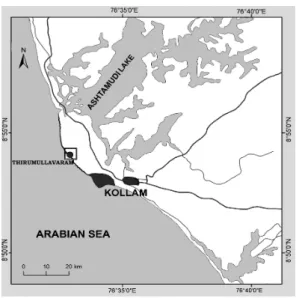
ETHODS Collection and Extraction of Seaweed BioactivesAsparagopsis taxiformis was collected from the intertidal and subtidal habitat of the Kollam (08º 54' N and 76º38'E) area (Fig. 1) located on the southwestern coast of India. The collection was performed during the period from December 2007 to April 2008 when red algal diversity remains dominant. Live and healthy plants were harvested manually and washed thoroughly in running water to remove epiphytes, animal castings, sand, and calcareous and other adhering detritus matters. Cleaned plant materials were shade dried under an air jet to prevent photolysis and thermal degradation. The completely dried material was weighed and ground coarsely in a mechanical grinder.
supernatant was collected in a round-bottomed flask and the remaining solvent was concentrated up to 5-10 ml in a rotary vacuum evaporator (Yamato). The residue collected was evaporated to complete dryness in a vacuum desiccator and stored in the refrigerator.
Fig. 1
.
Map showing the study area, southwest coast of India.Phytochemical Analysis of A. taxiformis
The methanolic extracts of A. taxiformis (200.0 gm) was applied in a silica gel (60-120 mesh) column developed with petroleum ether and eluted with petroleum ether and ethyl acetate ( 9:1 to 1:9 and 100% ethyl acetate) followed by ethyl acetate and methanol (9:1 to 1:9 and 100% methanol) yielded seven fractions. Individual fractions were collected and tested for bioassay (data not shown). The fraction that was eluted using petroleum ether and ethyl acetate (2: 8) retained the highest activity was further purified by preparative TLC using silica gel G as the stationary phase with 1% methanol in dichloromethane as the mobile phase. After the development of the chromatogram, the resolved spots were analyzed by spraying with 50% sulphuric acid for detecting the lipophilic compounds (MANILAL et al., 2009a). The TLC resolved spots were recovered by scrapping off the adsorbent at the appropriate place on the developed plate and eluted with methanol and centrifuged at 10000 x g for 5 min. The supernatant with activity was subjected to HPLC (Shimadzu chromatographic system, Kyoto, Japan) and GC-MS analysis (Hewlett Packard). The compound identification was achieved on the basis of comparison of retention indices, as well as by computerized matching of the acquired
mass spectra with those stored in the NIST Version 2.0 (2005).
Bioassay screening of A. taxiformis
Antifouling Assay
The effect of the algal fraction on foot repellent activity against the common fouler Limnea truncatula was tested as an index of antifouling activity. Snails of 3.0±0.3 mm in shell length were collected during low tide from the rocky substratum of the Kollam coast and acclimatized in a 1000 L FRP tank filled with seawater and maintained at optimum temperature (28-30ºC), salinity (35‰) and aeration, for three days. Each of the test samples of different concentrations (100, 150, 200 m/L) was evenly distributed in one half of the petridish (80 mm diam.) to obtain a uniform film of extracts and the other half was treated with methanol and dried overnight at room temperature. The assay plates were filled with 4 ml of filtered seawater and kept on an illuminated transparent glass surface for the visual observation of mobility and foot adherence of the treated snails. The mobility of the snails involves recognition of suitable surfaces and the production of biological adhesives substances that ensure attachment. Ten snails were carefully placed in the centre of each assay plate. Each experiment was carried out in triplicate. Assay plates were kept at room temperature (28±2°C) for 2 h. The number of snails on both treated and untreated halves was recorded after two hours.
Piscicidal Assay
Fingerlings of the common culturable fish, Oreochromis mossambicus (Peters) were collected from prawn ponds on the southwestern coast of India. Fingerlings (1.5-2.0 cm) of O. mossambicus were laboratory acclimatized and used for evaluating the ichthyotoxic potential. Five fingerlings were introduced into each of the experimental and control glass bowls containing 1000 ml of seawater in which a chosen concentration (20, 40, 60, 80 mg/L) of the extract had been dissolved. Immediate behavioral changes and mortality were observed continuously for six hours and at 1 h intervals for the next 12 h. After 24 h of exposure, the numbers of dead and live fish were counted. The behavioral changes of treated fishes were observed and recorded.
Anticyanobacterial Assay
containing a chosen concentration of the algal fraction in 250 ml Erlenmeyer flasks and kept at 23±2ºC with shaking at 60 rpm, 12:12 h photoperiod and 2000 lux light intensity, for seven days. On the seventh day, the cell density of cyanobacteria was calculated using a haemocytometer under a zoom stereo microscope. Untreated medium and medium with 1% ethanol served as the positive and negative controls.
Crustacean Toxicity Assay (Non-target Organisms)
A bioassay for the determination of seaweed toxicity was conducted using the culturable shrimp Penaeus monodon (Fabricius). A batch of apparently healthy shrimps of unknown sex was maintained under optimum environmental condition in a 1000 L FRP tank provided with constant aeration. Ten juvenile shrimps were introduced per experimental tank (10 L glass aquaria) containing 5000 ml of reconditioned seawater in which a chosen concentration (0.5, 1, 2, 3, 4 g/L)of the extract had been dissolved. Aeration and temperature were kept constant and physical changes of the treated shrimp were monitored and recorded at two-hour intervals. The same assay method was applied to the freshwater prawn Macrobrachium rosenbergii (de Man) using filtered rain-fed pond water.
R
ESULTS ANDD
ISCUSSION Study AreaThe study area, the southwestern coast of India, is an ideal habitat for diverse endemic marine flora and fauna. A recent survey undertaken after the 2004 tsunami by Mantri (2006) reported 31 genera represented by a total of over 45 species of seaweed at the collection sites on the Kollam coast. Among the species reported, the red algae represent a considerable part of the algal biomass present in this region throughout the year. Although much research has been carried out into their taxonomy and morphology, very few studies have, to date, examined their bioactive potentials (MANILAL et al., 2009 a, b).
Antifouling Activity
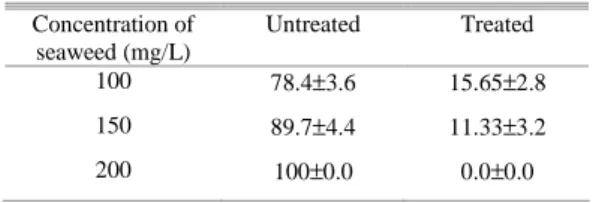
The results of the foot repellence assay demonstrated that the A. taxiformis fraction tested displayed effective repellence to L. truncatula (Table 1). The column fraction of A. taxiformis repelled the snails strongly even at very low concentration, confirming the test as a useful indicator of general toxicity against fouling organisms. During the two hours of the test period, L. truncatula showed unequal contact with both the treated and untreated
regions of the petridish. As the attachment process involves recognition of a suitable surface to spread their foot for adherences, the percentage of repellency was estimated based on the spreading of the foot. At a dose level of 150 mg/L the algal fraction exhibited 80% repellency against L. truncatula. In higher concentrations, the animal fails to spread the foot on the surface, whereas in lower concentrations even though they spread and attach their foot but immediately move to the control region of the petridish. There was a significant increase in the number of L. truncatula in contact with the solvent control region of the petridish as compared to the number of snails on the corresponding part treated with the algal fraction. The present result therefore suggests that A. taxiformis had repellent properties against rock fouling organisms. Similar results were reported for the red algae, H. musiformis by Selvin and Lipton, (2004) against Patella vulgata. Similarly, a study by Cho et al. (2001) demonstrated that the methanolic extracts of two seaweeds Ishige sinicola and I. okamurae can cause 100% foot repellant activity at 40 µg concentrations. Many marine biogenic compounds have been isolated and shown to exercise antifouling activity against marine foulers (RITTSCHOF, 2001), but their ecological role and antifouling properties have not yet been fully studied (NYS; STEINBERG, 2002). Katsuoka et al. (1990) ascertained that two compounds isolated from the seaweed Costaria costata, galactosyl and sulfo-quinovosyl-diacylglycerols, exercised activity against mussels. Therefore, based on its repellent activity, the alga A. taxiformis could be utilized as a renewable natural resource for the development of an antifouling agent. It is of great importance that the bioactivity of A. taxiformis against a large diversity of foulers should be studied, as agents with a wide spectrum of activity are sought for antifouling purposes.
Table 1. Antifouling activity of A. taxiformis against L.
truncatula.
Mean ± SD n = 6 experiments
Piscicidal Activity
Secondary metabolites from a wide variety of benthic organisms have been reported to deter feeding by natural predators (PAUL, 1992; PAWLIK, 1993; HAY, 1996). In the present study, the in
Concentration of seaweed (mg/L)
Untreated Treated
100 78.4±3.6 15.65±2.8
150 89.7±4.4 11.33±3.2
vitro ichthyotoxic potential was estimated as the ability of an algal fraction to kill fish at a particular concentration. The results meant that the algal active fraction produced its toxic effect at a lower concentration. At a dose level of 60 mg/L, A. taxiformis produced 100% mortality in tilapia after 2 h. In the highest dose levels (60, 80 mg/L), the treated fishes showed initial behavioral changes including reduced swimming endurance, hyperventilation and rapid erratic movement, began after 30 min of exposure. During the later phase (1.5-4 h), in highest dose levels, the fishes swam up with sudden surface gasping and show paralysis-like signs. Shortly thereafter, the fishes turn upside down and finally inclined to the base followed by death.The mode of action of the algal fraction may be due to its inhibition of the central and peripheral nervous system of the fish. The results suggest that piscicidal activity may be due to the presence of lipophilic algal secondary metabolites. Lara-Isassi et al. (2000) reported that, among the 58 species of Mexican seaweeds studied, genera of Rhodophytes showed potent ichthyotoxic activity. Similarly, Selvin and Lipton (2004) reported that the crude extract of Hypnea musiformis produced 20% mortality in tilapia at 2 mg/ml. The crude extract of Dictyota dichotoma from the southwestern coast of India has been reported to exercise antifeedant activity at 50 µg/ml against the fish Danio aequipinnatus (MANILAL et al., 2009). The indiscriminate usage of synthetic piscicides possess many detrimental effects such as bioaccumulation (BOYD; TUCKER, 1998; ARASTA et al., 1996), long residual life, discoloration and off flavor to the flesh (CULLEN; CONNELL, 1992). During the last few decades increasing attention has been paid to extractives from natural sources particularly botanicals, which offer an alternate strategy to the prevalent use of synthetic piscicides. The biodegradable phytoproducts such as tea cake seed and derris powder have been proposed as natural piscicides substance (SHIGUENO, 1975) in shrimp/prawn ponds but are high cost and less available in market (TIWARI; SINGH, 2005).
Based on the present findings, it may be inferred that the red alga A. taxiformis can reduce the grazing pressure of herbivorous fishes and its piscicidal defense mechanism makes it a potential candidate for the development of eco-friendly piscicides.
Anticyanobacterial Activity
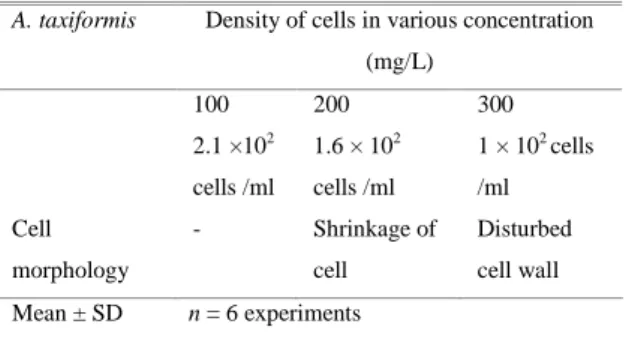
In the present study, the active column fraction of red alga A. taxiformis totally inhibited the growth of Trichodesmium sp., a nuisance cyanobacterium in shrimp ponds, at a dose level of 320 mg/L (Table 2). In a comparison with our study,
El-Baroty et al. (2007) reported antialgal activity of A. taxiformis against the cyanobacteria, Microcystis aeruginosa. It has been reported that chemicals produced by some algalspecies can inhibit the growth both of algae and invertebrates as well as slow or stop larval development of bivalves (NELSON et al., 2003). Many studies have been undertaken to evaluate the antialgal property of seaweeds (TANAKA; ASAKAVA, 1988; LUSTIGMAM; BROWN, 1991; HELLIO et al., 2002). Cho et al. (1999) reported that a methanol extract of Ishige sinicola at 200µg/ml greatly inhibited growth of Isochrysis galbana. The poly-unsaturated fatty acids from Ulva sp. showed potent algicidal activity (ALAMSJAH et al., 2005). Similarly, Jeong et al. (2000) demonstrated that at a concentration of 50µg/ml the methanolic extract of Corallina pilulifera can inhibit the growth of the toxic microalga, Cochlodinium polykrikoides. Being less toxic to the crustaceans, the result obtained in the present study suggests that the extract of A. taxiformis has the potential to eradicate noxious algal bloom in coastal aquaculture ponds.
Table 2. Anticyanobacterial activity of A. taxiformis against
Trichodesmium sp.
Mean ± SD n = 6 experiments
Crustacean Toxicity
One of the major findings of the present study relates to crustacean toxicity. The activity of the A. taxiformis column fraction was mild and showed less toxicity against the non-targeted organisms such as Penaeus monodon and Macrobrachium rosenbergii. In the toxicity assay, P. monodon and M. rosenbergii were found to be more resistant to the algal column fraction and their LD50 values were, respectively, 1.8 g/L and 2.5 g/L after 24 h. We selected both species as non-target organisms in the present study, because both of them are economically valuable species of crustaceans culturable in aquaculture systems. The literature makes it evident that the effect of algal extracts on crustacean species has scarcely yet been tested. The greater tolerance/resistance of crustaceans may be due to their exoskeleton structure. Wisepongpand and Kuniyosh (2003) reported that at a dose level of 16µg/ml a phloroglucinol compound
A. taxiformis Density of cells in various concentration (mg/L)
100 200 300
2.1 ×10² cells /ml
1.6 × 10² cells /ml
1 × 10² cells /ml Cell
morphology
- Shrinkage of cell
isolated from the alga Zonari desingiana resulted in the mortality of the shrimp M. lanchesteri after 2 hours of treatment.
Chemical Nature of Active Fraction
Fractionation and Purification of
Asparagopsis taxiformis extract
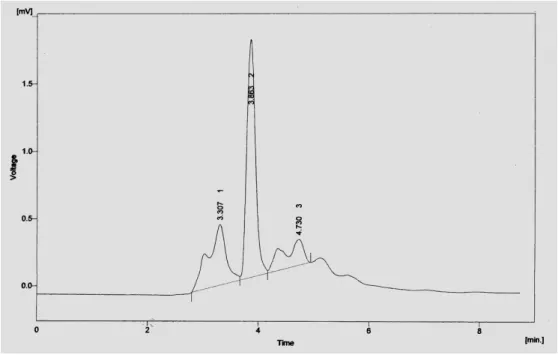
The crude extract of A. taxiformis was fractionated through column chromatography. The active fraction was purified using preparative TLC to obtain a single spot with an Rf value of 0.487. The active TLC resolved spot was again purified with reverse phase HPLC at 254 nm with methanol at a flow rate of 1 ml/min; head pressure at 25 kgf/cm2. The whole setup was maintained at room temperature (25 °C) and three peaks with retention time (min) of 3.307, 3.863 and 4.730, respectively, were attained at 254 nm (Fig. 2). The resultant major peak was subjected to GC-MS analysis.
The gas chromatogram of the A. taxiformis is characterized by an intense peak at 34.89 min retention time, the major peak in the gas chromatogram, which has been assigned to 4,5-Dimethyl-1H-pyrrole-2-carboxylic acid ethyl ester (mol. wt 167). The other peaks in the gas chromatogram, of moderate and minor intensity,
correspond to chlorobenzene (mol. wt 112); 14-methyl-pentadecanoic acid methyl ester (mol. wt 270); octadec-9-enoic acid 2,3-dihydroxy-propyl ester (mol. wt 265); 9-octadecanoic acid, methyl ester (mol.wt 255); octadecanoic acid methyl ester (mol. wt 209). The mass spectra of the compound confirmed with those available in the NIST library. In terms of GC identified chemical components, our results varied with the previous studies on A. taxiformis (Delile) Trevisan by El-Baroty et al. (2007). It could be attributed due to the different geographical region, the developmental stages and seasonal variations
.
It was found that 4, 5-Dimethyl-1H-pyrrole-2-carboxylic acid ethyl ester (56.012%) was the major chemical component followed by pentadecanoic acid and octadecanoic acid which might be involved in synergistic bioactivity. Evidence supporting the bioactivity of fatty acids has already been demonstrated in certain microorganisms and fouling organisms (RUSSEL, 1991). Earlier studies have reported that many lower and higher fatty acids from seaweeds possess antimicrobial properties (KATAYAMA, 1960). Lipophilic extracts from seaweeds have been investigated as a source of substances with pharmacological properties (CACCAMESE et al., 1985; ROBLES-CENTENO et al., 1996; ARUN KUMAR et al., 2001; LIMA-FILHO et al., 2002; MANILAL et al., 2009b).
C
ONCLUSIONThe results of the present study reveal that the marine red alga A. taxiformis is a potential source for a natural agrochemical development program as an alternative to the synthetic agrochemicals that are currently being used in fouler and weed control programs. However, nowadays no seaweed-based agrochemicals are in use for fouler and weed control. Such research work should focus on the Indian coast, where abundant unexplored algal resources exist. Therefore their mode of action and complete bioefficacy evaluation in field condition is further warranted.
A
CKNOWLEDGEMENTSWe wish to express our thanks to Dr. M.V.N Panikkar, C. K. Thankachy and Dr. M. Jayakumari Professors, Department of Botany and Zoology, Sree Narayana College, Kollam, Kerala for their encouragement. AM and SS gratefully acknowledge DBT´s help in providing SRF. This paper is a part of the DBT project (BT/PR8064/AAQ/03/290/2006).
R
EFERENCESALAMSJAH, M. A.; HIRAO, S.; ISHIBASHI, F.; FUJITA, Y. Isolation and structure determination of algicidal compounds from Ulva fasciata. Biosci. Biotech. Biochem., v. 69, p. 2186–2192, 2005.
ARASTA, T.; BAIS, V.S.; THAKUR, P. Effect of Nuvan on some biological parameters of inland catfish,
Mystus vittatus, J. environ. Biol., v.17, n. 2, p.167-169,
1996.
ARUN KUMAR, K.; SIVA KUMAR, K.; RENGASAMY, R. Fatty acids composition of Enteromorpha flexuosa (Wulf.) J. Ag. Antibacterial potential. Seaweed Res. Utiln., v. 23, p. 41-45, 2001.
BHADURY, P.; WRIGHT, P. C. Exploitation of marine algae: biogenic compounds for potential antifouling applications. Planta, v. 219, p. 561–578, 2004. BOYD, C.E.; TUCKER, C.S. Pond aquaculture water
quality management. London: Kluwer Academic Publishers, 1998.
CACCAMESE, S.; TOSCANO, R. M.; FURNARI, G.; CORMACI, M. Antimicrobial activities of red and brown algae from Southern Italy Coast. Bot. Mar., v. 28, p.505–507, 1985.
CHO, J. Y.; JIN, H. J.; LIM, H. J.; WHYTE, J. N. C.; HONG, Y. K. Growth activation of the microalga
Isochrysis galbana by the aqueous extract of the seaweed Monostroma nitidum. J. appl. Phycol., v.10, p. 561–567,
1999.
CHO, J. Y.; KWON, E. H.; CHOI, J. S.; HONG, S. Y.; SHIN, H. W.; HONG, Y. K. Antifouling activity of seaweed extracts on the green alga Enteromorpha
prolifera and the mussel Mytilus edulis. J. appl. Phycol.,
v. 13, p.117–125, 2001.
CULLEN, M. C.; CONNELL, D. W. Bioaccumulation of chlorohydrocarbon pesticides by fish in the natural environment. Chemosphere, v. 25, n. 11, p.1579-1587, 1992.
El-BAROTY, G. S.; MOUSSA, M. Y.; SHALLAN, M. A.; ALI, M. A.; SABH, A. Z.; SHALABY, E. A. Contribution to the Aroma, Biological Activities, Minerals, Protein, Pigments and Lipid Contents of the Red Alga: Asparagopsis taxiformis (Delile) Trevisan. J. appl. Sci. Res., v. 3, n.12, p. 1825-1834, 2007.
FLEGEL, T. W.; BOONYARATPALIN, S.; FLEGAN, D. F.; GUERIN, M.; SRIURAIRATANA, S. High mortality of black tiger prawns from cotton shrimp disease in Thailand. In:SHARIFF, M.; SUBASINGHE, R. P.; ARTHUR, J. R. (Ed.). Diseases in Asian Aquaculture, 1. Makiti City, Philippines: Fish Health Section Publications, Asian Fisheries Society Publications,1992. p. 181–197.
GERWICK, W. H.; FENICAL, W. Ichthyotoxic and cytotoxic metabolites of the tropical brown alga
Stypopodium zonale (Lamouroux) Papenfuss. J. Org.
Chem., v. 46, p.1, 1981.
GEOHAB. Global ecology and oceanography of harmful algal blooms, In: GLIBERT, P.; PITCHER, G. (Ed.). Science plan. SCOR/IOC. Baltimore, Md.: 200l. p. 87– 88.
GENOVESE, G.; TEDONE, L.; HAMANN, M. T.; MORABITO, M. The Mediterranean Red Alga
Asparagopsis: A Source of compounds against Leishmania. Mar. Drugs, v.7, p. 361-366, 2009.
GLIBERT, P. M. Eutrophication and harmful algal blooms: A complex global issue, examples from the arabian seas including Kuwait bay, and an introduction to the global ecology and oceanography of harmful algal blooms (GEOHAB) Programme. Int. J. Oceans Oceanogr., v. 2, p. 157–169, 2007.
HAY, M. E. Marine chemical ecology: what's known and what's next? J. expl. mar. Biol. Ecol., v. 200, p.103-134, 1996.
HAY, M. E.; STEINBERG, P. D. The chemical ecology of plant herbivore interactions in marine versus terrestrial communities, In: ROSENTHAL, G. A.; BERENBAUM, M. R. (Ed.). Herbivores – their interactions with secondary plant metabolites. New York: Academic Press, 1992. p. 371-413.
HELLIO, C.; BERGE, J. P.; BEAUPOIL, C.; LE GAL, Y.; BOURGOUGNON, N. Screening of marine algal extracts for anti-settlement activities microalgae and macroalgae. Biofouling, v. 18, p. 205-215, 2002. JEONG, J. H.; JIN, H. J.; SOHN, C. H.; SUH, K. H.;
HONG, Y. K. Algicidal activity of the seaweed
Corallina pilulifera against red tide microalgae. J. appl.
Phycol., v.12, p. 37–43, 2000.
KATAYAMA, T. Volatile constituents. In: Lewin, R. A. (Ed.). Physiology and biochemistry of algae. New York: Academic Press, 1960. p. 467-473.
KATSUOKA, M.; OGURA, C.; ETOH, H.; SAKATA, K.; INA, K. Galactosyl and sulfoquinovosyldiacylglycerols isolated from the brown algae Undaria pinnatifida and
LARA-ISASSI DE, G.; ÁLVAREZ-HERNÁNDEZ, S.; COLLADO-VIDES, L. Ichtyotoxic activity of extracts from Mexican marine macroalgae. J. appl. Phycol., v. 12, n. 1, p. 45-52, 2000.
LATURNUS, F.; WIENCKE, C.; KLÖSER, H. Antarctic macroalgae - Sources of volatile halogenated organic compounds. Mar. environ. Res., v.41, n. 2, p. 169-181, 1996.
LIMA-FILHO, J. V. M.; AFFU, C.; FREITAS, S. M. Antibacterial activity of extracts of six macro algae from the northeastern Brazilian coast. Braz. J. Microbiol. v. 33, p. 311-313, 2002.
LUSTIGMANN, B.; BROWN, C. Antibiotic production by marine algae isolated from the New York/ New Jersey coast. Bull. environ. Contam. Toxicol., v. 46, p. 329– 335, 1991.
MANILAL, A.; SUJITH, S.; SELVIN. J.; KIRAN, G. S.; SHAKIR, C.; GANDHIMATHI, R.; PANIKKAR, M. V. N. Biopotentials of seaweeds collected from southwest coast of India. J. mar. Sci. Technol., 17, p. 67-73, 2009.
MANILAL, A.; SUJITH, S.; KIRAN, G. S.; SELVIN, J.; SHAKIR, C.; GANDHIMATHI , R.; LIPTON, A. P. Antimicrobial potential and seasonality of red algae collected from the southwest coast of India tested against shrimp, human and phytopathogens. Ann. Microbiol., v. 59, n. 2, p. 1-13, 2009a.
MANILAL, A.; SUJITH, S.; SELVIN. J.; KIRAN, G. S.; SHAKIR, C. Antibacterial activity of Falkenbergia
hillebrandii (Born) from the Indian coast against human
pathogens. Phyton-Int. J. expl. Bot., v.78, p.161-166, 2009b.
MANTRI, V. A. Seaweed floristic studies along tsunami affected Indian coasts: a litmus test scenario after 26th December 2004. J. Earth Sys. Sci., v. 115, p. 371–378, 2006.
MCCONNELL, O.; FENICAL, W. Halogen chemistry of the red alga Asparagopsis. Phytochem., v.16, p.367-374, 1977.
NELSON, T. A.; LEE, D. J.; SMITH, B. C. Are green tides harmful algal blooms? Toxic properties of water-soluble extracts from two bloom-forming macroalgae,
Ulva fenestrata and Ulvaria obscura. J. Phycol., v. 39,
p. 874–879, 2003.
NYS DE, R.; COLL, J. C.; PRICE, I. R. Chemically mediated interactions between the red alga Plocamium
hamatum (Rhodophyta) and the octocoral Sinularia cruciata (Alcyonacae). Mar. Biol., v. 108, p. 315-320,
1991.
NYS DE, R.; DWORJANYN, S. A.; STEINBERG, P. D. A new method for determining surface concentrations of marine natural products on seaweeds. Mar. Ecol. Prog. Ser., v.162, p.79-87, 1998.
NYS DE, R.; STEINBERG, P. D. Linking marine biology and biotechnology. Curr. Opin. Biotechnol., v. 13. p. 244-248, 2002.
PAUL, V. J. Ecological roles of marine natural products. Ithaca, New York: Comstock Publishing Associates, 1992.
PAWLIK, J. R. Marine invertebrate chemical defenses. Chem. Rev., v. 93, p.1911–1922, 1993.
RITTSCHOF, D. Natural product antifoulants and coatings development. In: Marine chemical Ecology. MCCLINTOCK, J.; BAKER, P. (Ed.). New York: CRC Press, 2001. p. 543–557.
ROBLES-CENTENO, P. O.; BALLANTINE, D. L.; GERWICK, W. H. Dynamics of antibacterial activity in three species of Caribbean marine algae as a function of habitat and life history. Hydrobiol., v. 326-327, p. 457– 462, 1996.
RUSSEL, A. D. Mechanisms of bacterial resistance to nonantibiotics: food additives and food pharmaceutical preservatives. J. appl. Bacteriol., v. 71, p.191–201, 1991.
SELVIN, J.; LIPTON, A. P. Biopotentials of Ulva fasciata and Hypnea musiformis collected from the peninsular coast of India. J. mar. Sci. Technol., v.12, p.1–6, 2004. SHIGUENO, K. Shrimp culture in Japan. Tokyo:
Association of International Technical Promotion, 1975. p. 57.
TANAKA, N.; ASAKAWA, A. Allelophatic effect of mucilage released from a brown alga Sargassum horneri on marine diatoms. Nippon. Suisan. Gakkaishi, v. 54, p.1711–1714, 1988.
TARGETT, N. M.; BISHOP, S. S.; MCCONNELL, O. J.; YODER, J. A. Antifouling agents against the benthic marine diatoms, Navicula salinicola homarine from the gorgonians Leptogorgia virgulata and L. setacea and analogs. J. chem. Ecol., v. 9, p. 817-829, 1983. TIWARI, S.; SINGH, A. Possibility of using Latex extracts
of Nerium indicum plant for control of predatory fish
Channa punctatus, Asian Fish. Sci., v.18, p. 161-173,
2005.
WISEPONGPAND, P.; KUNIYOSH, M. Bioactive phloroglucinols from the brown alga Zonaria diesingiana. J. appl. Phycol., v.15, p. 225–228, 2003. WOOLARD F. X.; MOORE, R. E.; ROLLER P.P.
Halogenated acetic and acrylic acids from the red alga
Asparagopsis taxiformis. Phytochem., v.18, p.
617-620,1979.