UNIVERSIDADE
DE
LISBOA
FACULDADE
DE
CIÊNCIAS
DEPARTAMENTO
DE
QUÍMICA
E
BIOQUÍMICA
Analysis of Syntaxin-1 Chaperones
During Synaptic Activity
Tatiana Cerveira Tavares Dos Santos
Dissertação Orientada pelo Prof. Doutor Thomas Südhof e Prof. Doutor Carlos Farinha
MESTRADO EM BIOQUIMICA 2011
Abstract
ABSTRACT
Neuronal communication is based on synaptic vesicle exocytosis, which is strongly regulated. The release of neurotransmitters from presynaptic nerve terminals requires cycles of protein-protein interactions. SNARE and SM proteins are universally involved in all intracellular membrane fusion reactions, and reside either on the target membrane (syntaxin-1 and synaptosome-associated protein of 25kDa (SNAP-25)) or on the synaptic vesicle (synaptobrevin-2).
Recent studies have identified chaperones for two SNARE proteins: synaptobrevin-2 and SNAP-25. Since these SNARE chaperones seem essential for the long-term functioning of synapses, the question arises which molecule(s) may chaperone syntaxin-1. Previous studies have suggested that Munc-18 and SNAP-25 may chaperone syntaxin-1. Furthermore, it has been shown that chemical modification of syntaxin-1 or mutation on cysteine residue 145 increases its stability. To investigate a possible chaperone function of Munc-18 and SNAP-25 for syntaxin-1, I aimed to clarify whether this chemical modification inhibits syntaxin-1 degradation, whether the C145S mutation reproduces this modification, and whether this cysteine is normally involved in ubiquitination and degradation of syntaxin-1.
To approach these aims, HEK-293T cells and neuronal cultures from wild-type mice were used in combination with overexpression of syntaxin-1 full-length, several truncations and its mutant C145S. Chemical agents were used to monitor syntaxin-1 levels. These experiments were analyzed by immunoprecipitation, immunoblotting or immunocytochemistry.
Results suggest that munc-18 chaperones syntaxin-1, based on the following observations: 1) it increases syntaxin-1 levels and inhibits syntaxin-1 degradation in co-transfected HEK cells; 2) C145S mutation significantly stabilizes syntaxin-1 levels and results in less degradation products. C145S also dramatically reduces ubiquitination of syntaxin-1; 3) syntaxin-1 may be degraded via the lysosome. Lysosomal inhibitors revealed a trend towards stabilization of syntaxin-1 whereas proteasomal inhibitors
Abstract showed no change. Yet, further experiments are needed to understand the precise role of C145S in the degradation mechanism of syntaxin-1.
Resumo
RESUMO
O sistema nervoso apresenta como órgão central o cérebro, constituído por neurónios que comunicam entre si através de impulsos nervosos e libertação de neurotransmissores. A libertação de neurotransmissores para a fenda sináptica ocorre devido à fusão da vesícula sináptica com a membrana do neurónio pré-sináptico. Esta fusão intracelular ocorre como resposta a um potencial de acção que origina a abertura dos canais de Ca2+.
Duas famílias de proteínas estão universalmente envolvidas no processo de fusão intracelular, SNARE (Soluble N-ethyl-maleimide Sensitive Factor Attachment Protein Receptor), fonte de energia para a fusão entre as duas membranas, e SM (sec1/munc-18).
O complexo SNARE é formado por três proteínas: uma proteína vesicular (v-SNARE): vesicle-associated membrane protein-2 (VAMP-2 ou synaptobrevin-2) e duas proteínas transmembranares (t-SNARES): syntaxin-1 e synaptosome-associated protein of 25 kDa (SNAP-25). As proteínas SNAREs apresentam uma sequência conservada de ~60 a ~ 70 resíduos fortemente reactivos que formam o complexo SNARE através de uma quadrupla hélice. Syntaxin-1 e synaptobrevina-2 apresentam apenas um motivo SNARE, contrariamente, a proteína SNAP-25 é constituída por dois motivos SNARE.
As sinapses nervosas transmitem sinais a elevada frequência, assim sendo, as proteínas SNAREs alternam continuamente entre um estado fortemente reactivo e um estado menos reactivo (formação do complexo vs não formação do complexo). Estas alterações conformacionais são apontadas como a possível causa para a evolução de chaperones tais como CSPα e α-synuclein, que mantêm as proteínas SNAREs estáveis durante a vida do neurónio. Enquanto a proteína α-synuclein aumenta a formação do complexo SNARE por meio da interação com synaptobrevin-2; o complexo CSPα/Hsc70/SGT actua como chaperone da proteína SNAP-25 estabilizando-a.
Resumo A proteína synatxin-1 é constituída por: uma região transmembranar (ancoragem da proteína à membrana do neurónio); um motivo SNARE (local de ligação entre proteínas SNARES) e um domínio Habc (local de ligação à SM proteína:
munc-18). A proteína syntaxin-1 alterna entre uma conformação aberta, onde forma o complexo SNARE e uma conformação fechada onde se liga à proteína munc-18.
A descoberta de chaperones específicos para duas das três proteínas SNAREs (synaptobrevin-2 e SNAP-25) aponta para a hipótese de existir(em) chaperone(s) que estabilizem/modifiquem a proteína syntaxin-1. Assim sendo, os objectivos da presente tese incluem a: (1) identificação de possíveis chaperone(s) da proteína syntaxin-1: munc-18 e/ou SNAP-25; estudo dos domínios responsáveis pela interacção/estabilização; (2) estudo da mutação na cisteína 145 para serina (C145S). Resultados recentes apontam para a estabilização da proteína syntaxin-1 através do resíduo C145. Deste modo, pretende-se investigar se: (a) modificações químicas inibem a degradação da proteína syntaxin-1; (b) se a mutação C145S reproduz essas modificações; (c) se este resíduo está envolvido na ubiquitinação e degradação da proteína syntaxin-1.
Resultados anteriores revelaram que em cérebro homogenado NEM (N-Ethylmaleimide) aumenta os níveis de syntaxin-1, não alterando os níveis do complexo SNARE. Uma vez que o NEM actua no grupo thiol da cisteína, a mutação na cisteína 145 foi generada. De forma a dar resposta aos objectivos propostos, variantes da proteína synatxin-1 wild-type e mutante (C145S) foram clonadas em diferentes vectores (pCMV5, FUW e FSW) com diferente tags (myc e HA) e diferentes domínios presentes: 1-264, 180-288 e 180-264. As diferentes variantes da proteína syntaxin-1 foram expressas em linhas celulares HEK 293T de modo a verificar se a proteína SNAP-25 e/ou munc-18 aumentam os níveis de syntaxin-1, bem como identificar os locais de ligação. As amostras foram analisadas por immunobloting, immunoprecipitação e imunocitoquímica.
Os resultados obtidos demonstram que ambas as proteínas aumentam os níveis de syntaxin-1. Contudo, na presença de munc-18 os níveis de syntaxin-1 são
Resumo mais estável que a variante wild-type. Os níveis de expressão da variante C145S são similares aos níveis de expressão da proteína syntaxin-1 wild-type quando munc-18 está presente.
A análise das proteínas syntaxin-1 180-264 e syntaxin-1 180-288 permitiu concluir
que: (a) o domínio Habc é necessário para que a proteína munc-18 estabilize a proteína
syntaxin-1; (b) na presença do motivo SNARE os níveis de syntaxin-1 aumentam drasticamente quando SNAP-25 está presente; (c) a região transmembranar é importante para estabilizar a proteína syntaxin-1 sendo os níveis desta proteína reduzidos na ausência desta região.
De forma a avaliar se a estabilidade da proteína syntaxin-1 é alterada na presença ou ausência da proteína munc-18, bem como se esta estabilidade é diferente quando a mutação C145S está presente, células HEK 293T foram transfectadas e sujeitas a tratamento químico com cicloheximida (inibidor da tradução) às 0h, 6h, 12h e 24h. Os resultados obtidos sugerem que a proteína syntaxin-1 C145S é significativamente mais estável que syntaxin-1 wild-type. Por outro lado, quando syntaxin-1 é expressa na presença de munc-18, um aumento na estabilidade desta proteína na variante wild-type é observado.
De forma a inferir se a estabilidade da proteína syntaxin-1 é dependente da actividade sináptica, culturas neuronais foram incubadas com silenciadores (APV e TTX) e potenciadores da actividade sináptica (Ca2+ e K+). Os resultados obtidos
mostram uma tendência para a diminuição dos níveis da proteína syntaxin-1 quando a actividade sináptica é aumentada. Quando a actividade sináptica é bloqueada os níveis da proteína syntaxin-1 não sofrem alteração. O facto de, durante a actividade sináptica ocorrer a fusão de várias vesículas e consequente reciclagem, pode explicar os níveis reduzidos de syntaxin-1. Estudos em culturas neuronais que não expressem munc-18 são sugeridos como trabalho futuro, de forma a clarificar o papel de munc-18 na estabilidade da proteína syntaxin-1 durante a actividade sináptica.
A análise dos produtos de degradação da proteína syntaxin-1, demonstram que a variante wild-type apresenta níveis mais elevados de degradação do que a variante
Resumo C145S; da mesma forma, quando a proteína syntaxin-1 é transfectada com a proteína munc-18 os produtos de degradação diminuem significativamente. Assim sendo, o passo seguinte foi estudar se o resíduo C145 tem um papel activo na degradação da proteína syntaxin-1 e se está envolvido na ubiquitinação. Desta forma, ensaios de imunoprecipitação com syntaxin-1, foram efectuados e os níveis de ubiquitina analisados. Os resultados mostram que a proteína syntaxin-1 wild-type é significativamente mais ubiquitinada do que a proteína mutada. Este resultado pressupõe duas hipóteses: (1) syntaxin-1 é ubiquitinada no resíduo C145, ainda que a ubiquitinação nos resíduos de cisteína não seja termodinamicamente favorável; (2) este resíduo é importante para sinalizar à célula que a proteína deve ser degradada.
Sendo a proteína syntaxin-1 uma proteína membranar e sendo esta ubiquitinada, a questão coloca-se: é a proteina syntaxin-1 degradada via lisossoma ou proteossoma? Culturas neuronais incubadas durante 36 horas com inibidores do proteosoma (Epoxomicin, MG132, Clasto-lactocystin) e com inibidores do lisossoma (leupeptina/pepstatina; PMSF) sugerem que a proteína syntaxin-1 é degradada via lisossoma, contudo os resultados não são conclusivos.
Em suma: os resultados apresentados sugerem munc-18 como chaperone da proteína syntaxin-1, sendo os níveis desta proteína mais elevados e os produtos de degradação menores quando syntaxin-1 é transfectada na presença de munc-18. Futuras experiências em culturas neuronais que não expressem a proteína munc-18 são essenciais para confirmação dos resultados. A mutação C145S estabiliza a proteína synatxin-1, aumentando significativamente os níveis de expressão da proteína; diminuindo os produtos de degradação; bem como os níveis de ubiquitinação.
Os resultados obtidos sugerem que o mecanismo de degradação da proteína syntaxin-1 se processa via lisossoma, contudo futuras experiencias são necessárias.
Acknowledgments
ACKNOWLEDGMENTS
Firstly, I express my gratitude towards the host institutions, Stanford University ‒ School of Medicine, Stanford Institute for Neuro-Innovation and Translational Neurosciences; and Faculty of Sciences University of Lisbon represented by Professor Carlos Farinha. I also thank the Fulbright Commission, which enrolled me in their grant program. Without the grant, this work would not have been possible.
My thanks go directly to Doctor Thomas Südhof for welcoming me in his laboratory during this MSc; for all the hours spent in the subgroup meetings discussing my results and try to figure out the best way to approach them. Next I would like to give my most sincere thanks to Doctor Jacqueline Burré, for all the support during this MSc, for all the time she dedicated to teaching me new techniques, answer my questions, discussing results, as well as for all the support given as a friend. Last but not least, also an important person during my MSc thesis was Doctor Manu Sharma, to whom I express my most sincere thanks for helping me in so many different situations, for all the scientific discussions and all the answers that you gave me.
I also thank Doctor Rob Malenka, Doctor Lu Chen and the entire Sudhof, Malenka and Chen s laboratory group for making me feel part of the laboratory from the very beginning and for helping me in so many situations.
A special thanks to my Stanford friends for helping me to have a balance in my life. To my Portuguese friends, specially my best friend Rute, my friend Maria Joao Negrao, Barata, GPI, JO, Pina, Teresa, Helena, that even miles away, managed to be present in my life and therefore supporting me. One special thanks to my friend Nuno Raimundo for all the scientific discussions and most important for making me believe that I can do it.
Last but not least to all my family. A special thanks to my brother Edgar for all the time spent listening to me complaining about my lack of results; about my problems
Acknowledgments like to express all my gratitude to my parents, which have been supporting me in all my decisions along the years, therefore, without your help I would not be where I am today, so THANK YOU!
Contents
CONTENTS
ABSTRACT ... 3RESUMO ... 5
ACKNOWLEDGMENTS ... 9
LIST OF FIGURES ... 13
LIST OF TABLES ... 19
ABBREVIATIONS ... 20
INTRODUCTION ... 23
1.1
Nervous System ... 23
1.2
SNARE proteins ... 25
1.3
SM Proteins ... 29
1.4
SPECIFIC AIMS ... 31
MATERIALS AND METHODS ... 35
2.1 Molecular Biology ... 35
2.2 Eukaryotic Cell Culture ... 39
2.3 Recombinant protein expression in HEK 293T cells ... 40
2.4 Cortical neuronal cultures from mice ... 41
2.5 Lentivirus production ... 42
Contents
2.7 Pharmacological treatments ... 43
2.8 Protein Separation, Immunoblotting and Protein Quantification ... 45
2.9 Immunoprecipitation ... 47
2.10 Immunocytochemistry ... 47
2.11 Statistical Analyses ... 48
RESULTS ... 51
3.1 NEM ... 51
3.2 Syntaxin-‐1 wild-‐type and C145S ... 54
3.3 Syntaxin-‐1 levels in presence of Munc-‐18 and SNAP-‐25 ... 55
3.4 Interaction between syntaxin-‐1 and SNARE proteins ... 59
3.4 Interaction between syntaxin-‐1 and munc-‐18 ... 60
3.5 Syntaxin-‐1 stability ... 62
3.6 Dependance of syntaxin-‐1 levels on synaptic activity ... 64
3.7 Degradation of syntaxin-‐1 ... 65
3.8 Ubiquitination of syntaxin-‐1 ... 66
3.9 Is syntaxin-‐1 degraded via the lysosome or proteasome? ... 67
DISCUSSION AND CONCLUSION ... 71
REFERENCES ... 79
List of Figures
LIST OF FIGURES
Figure 1- Vesicle proteins (from 8). ... 24
Figure 2 - Trafficking of synaptic vesicles in the nerve terminal (from 9). ... 25
Figure 3 ‒ SNARE complex (from14) ... 26
Figure 4 - Synaptobrevin-2 structure (adapted from 17) ... 27
Figure 5 - SNAP-25 structure (adapted from 17). ... 28
Figure 6 ‒ A) Closed conformation of syntaxin-1 (from14), B) Syntaxin-1 structure; (Adapted from14). ... 29
Figure 7 ‒ A) Binding of the SM protein munc-18 to the closed conformation of syntaxin-1. B) The open conformation of a SNARE complex, consisting of a t-SNARE and its cognate SM protein bound to the N-peptide of syntaxin s Habc domain. C) SNARE and SM proteins form the universal fusion machinery (From 4). ... 30
Figure 8 ‒ A) Structure of Munc18-1; B) Structure of syntaxin-1/Munc18 complex. (From14) ... 31
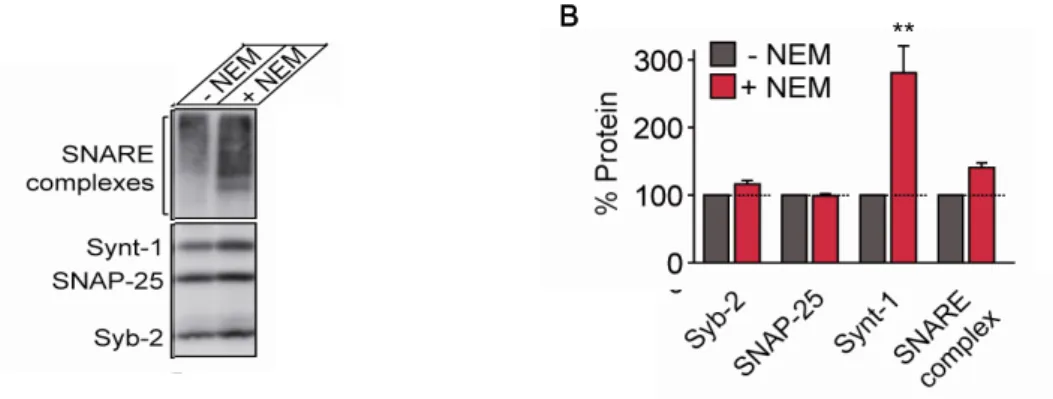
Figure 9 ‒ Effect of NEM on synaptobrevin-2, SNAP-25, syntaxin-1 and SNARE complex levels in brain homogenate. Equal amounts of brain homogenate were treated with 2 mM NEM or vehicle control (ethanol) over night at 37 C. Reaction was stopped by addition of 5x laemmli sample buffer containing DTT. A) Samples were analyzed by immunblotting for levels of SNARE-complexes, syntaxin-1 (Synt-1), SNAP-25 and synaptobrevin-2 (Syb-2). B) Protein levels were quantitated using 125I-labeled secondary antibody and were normalized to the vehicle control. ** p < 0.01 using student s T-test (n = 3). ... 51
List of Figures Figure 11 - Syntaxin-1A sequence alignment. Yellow boxes highlight the evolutionary conservation of C145 among different species. ... 52
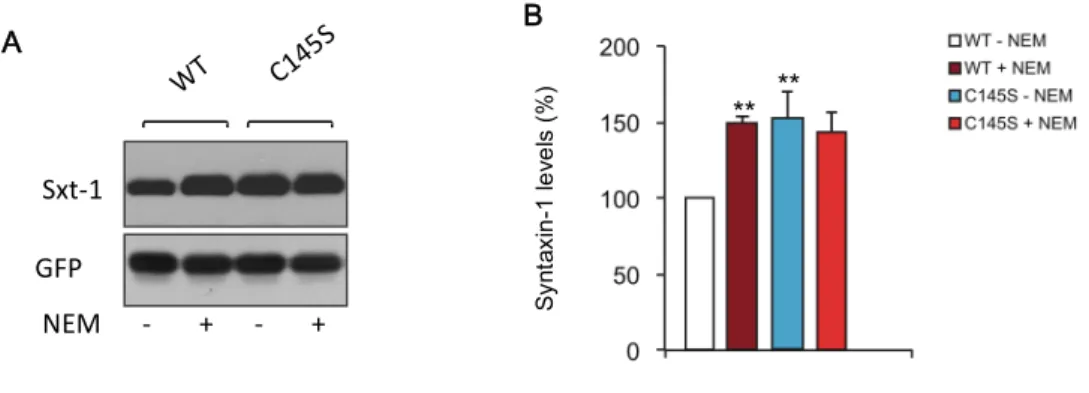
Figure 12 ‒ Effect of NEM on levels of syntaxin-1 WT and mutated C145S in transfected HEK cells treated with 5 mM NEM for 5min at 37 C. Reaction was stopped by washing cells with PBS and solubilization in 0.1% Triton-X 100 (TX-100). Insoluble material was removed by centrifugation for 20 min at 10,000g. Supernatant was collected and 5% Laemmli sample buffer containing DTT was added. A) Samples were analyzed by immunblotting for levels of syntaxin-1 WT and C145S and GFP, which was used as transfection control. B) Protein levels were quantitated using 125I-labeled secondary antibody and were first normalized
to GFP levels and then to syntaxin-1 WT without NEM treatment. ** p < 0.01 using student s T-test (n = 3). ... 53
Figure 13 - Effect of different NEM concentrations on syntaxin-1 levels in neuronal cultures treated with a NEM concentration of 10 µM to 5mM. Neuronal cultures at 14 days in vitro were incubated for 5 min with NEM or vehicle control (ethanol). Syntaxin-1 levels were analyzed by immunblotting. ... 53
Figure 14 ‒ Effect of vehicle control and 5 mM NEM on syntaxin-1 levels in neuronal culture. Neuronal cultures at 14 days in vitro were incubated for 5 min with 5 mM NEM, vehicle control or were kept untreated. B) Munc-18, syntaxin-1 (Stx-1) and rab3A levels were analyzed by immunblotting; B) Proteins levels were quantitated using 125I-labeled secondary antibodies. Syntaxin-1 levels were normalized to
rab3A levels and quantitated as percent of levels of untreated neurons. **** p< 0.0001, using Student s T-test (n = 9). ... 54
Figure 15 ‒ Targeting of syntaxin-1 wild-type and C145S mutation in transfected HEK cells. 48h after transfection, HEK cells were washed fixed for 15 min in 4% paraformaldehyde and permeabilized for 5min in 0.1% Triton X-100. Cells were then blocked in 5% BSA and were incubated with primary antibody HPC-1 in 1% BSA overnight at 4 C. Cultures were washed and blocked, and an anti-mouse Alexa-488 secondary antibody (1:500 in 1% BSA) was added for 1h in the dark.
List of Figures Coverslips were mounted on glass slides in Fluoromount-G. Laser scanning confocal microscopy was performed with excitation at 488nm on a Leica TCS SP-2 inverted microscope. ... 55
Figure 16 ‒ Syntaxin-1 levels in co-transfected HEK cells. HEK cells were transfected with syntaxin-1 (Stx-1) wild-type (WT) or C145S full length and with α-synuclein 1-95, SNAP-25 or munc-18. 48hours after transfection, cells were solubilized with
0.1% Triton-X 100 (TX-100) and insoluble material was analyzed by immunblotting for levels of syntaxin-1 WT and C145S (A). B) Protein levels were quantitated using 125I-labeled secondary antibody and were normalized to β-actin and GFP. * p
<0.05 ** p <using student s T-test (n = 3). ... 56
Figure 17 ‒ Syntaxin-1 levels in co-transfected HEK cells. HEK cells were transfected with syntaxin-1 (Stx-1) wild-type (WT) or C145S 1-264 and with α-synuclein1-95,
SNAP-25 or munc-18. 48hours after transfection, cells were solubilized with 0.1% Triton-X 100 (TX-100) and insoluble material was analyzed by immunblotting for levels of syntaxin-1 WT and C145S (A). B) Protein levels were quantitated using
125I-labeled secondary antibody and were normalized to β-actin and GFP. ** p <
0.01; **** p < 0.0001 using student s T-test (n = 3). ... 57
Figure 18 ‒ Syntaxin-1 levels in co-transfected HEK cells. HEK cells were transfected with syntaxin-1 (Stx-1) wild-type (WT) or C145S 180-288 and with α-synuclein1-95,
SNAP-25 or munc-18. 48hours after transfection, cells were solubilized with 0.1% Triton-X 100 (TX-100) and insoluble material was analyzed by immunblotting for levels of syntaxin-1 WT and C145S (A). B) Protein levels were quantitated using
125I-labeled secondary antibody and were normalized to β-actin and GFP. **** p <
0.0001 using student s T-test (n = 3). ... 58
Figure 19 ‒ Syntaxin-1 levels in co-transfected HEK cells. HEK cellswere transfected with syntaxin-1 (Stx-1) wild-type (WT) or C145S 180-264 and with α-synuclein1-95,
SNAP-25 or munc-18. 48hours after transfection, cells were solubilized with 0.1% Triton-X 100 (TX-100) and insoluble material was analyzed by immunblotting for levels of syntaxin-1 WT and C145S (A). B) Protein levels were quantitated using
List of Figures
125I-labeled secondary antibody and were normalized to β-actin and GFP. ** p <
0.01 using student s T-test (n = 3). ... 59
Figure 20 ‒ Immunoprecipitation of SNARE proteins and munc-18 in brain lysate. Solubilized mouse brain was incubated at 4 C for 1h with 15 µl syntaxin-1 antibodies. As a negative control, samples were incubated with pre-immune serum. Samples were then incubated for 2h at 4 C with 50 µl protein-A sepharose. Sepharose was washed 3x with 1% TX-100 and bound proteins were eluted with 2x Laemmli sample buffer containing DTT. Samples were analyzed by SDS-PAGE and immunoblotting for munc-18, syntaxin-1 (Stx-1), SNAP-25 and synaptobrevin-2 (Syb-synaptobrevin-2). ... 59
Figure 21 ‒ Immunoprecipitations of transfected HEK cells to map the binding domain of munc-18 and syntaxin-1. HEK cells were co-transfected with munc-18 and A) full length syntaxin-1 wild-type (WT) and C145S, B) syntaxin-1 wild-type and C145S lacking the transmembrane region, C) syntaxin-1 wild-type lacking the Habc
domain, and D) syntaxin-1 wild-type lacking the Habc domain and the
transmembrane region. Solubilized HEK 293T cells were incubated at 4 C for 1h with 15 µl primary antibodies. As a negative control, samples were incubated without antibody for immunoprecipitations in case of monoclonal antibodies, or with pre-immune serum for polyclonal antibodies. Samples were then incubated for 2h at 4 C with 50 µl protein-G sepharose (for monoclonal immunoglobulins) or 50 µl protein-A sepharose (for polyclonal rabbit sera). Sepharose was washed with 1% TX-100 and bound proteins were eluted with 2x Laemmli sample buffer containing DTT. Samples were analyzed by SDS-PAGE and immunoblotting for munc-18 and syntaxin-1 (Stx-1). ... 61
Figure 22 ‒ Analysis of syntaxin-1 stability using a cycloheximide chase experiment. HEK cells co-transfected with syntaxin-1 (Stx-1) wild-type (WT) or C145S and α-synuclein1-95 (a-syn1-95) were treated with 0.1g/L cycloheximide and analyzed 0h,
6h, 12h, and 24h after treatment. Cells were solubilized with 0.1% Triton-X 100 and soluble material was analyzed by SDS-PAGE and immunblotting for
syntaxin-List of Figures 1 (A). B) Protein levels were normalized to beta actin levels and were quantitated using 125I-labeled secondary antibody. * p < 0.03 using student s T-test (n = 3). ... 62
Figure 23 ‒ Analysis of syntaxin-1 stability using a cycloheximide chase experiment. HEK cells co-transfected with syntaxin-1 (Stx-1) wild-type (WT) or C145S, α-synuclein1-95 (a-syn1-95) and munc-18 were treated with 0.1g/L cycloheximide and
analyzed 0h, 6h, 12h, and 24h after treatment. Cells were solubilized with 0.1% Triton-X 100 and soluble material was analyzed by SDS-PAGE and immunblotting for syntaxin-1 (A). B) Protein levels were normalized to beta actin levels and were quantitated using 125I-labeled secondary antibody. p < n.s. using student s T-test (n
= 3). ... 63
Figure 24 ‒ Analysis of syntaxin-1 half-life in neuronal culture. Neuronal cultures at 11 days in vitro were incubated with 0.1g/L cycloheximide. (A) Syntaxin-1 (Stx-1) levels at 0h, 3h, 24h, 48h, and 72h were analyzed by immunblotting (B) and were quantitated using 125I-labeled secondary antibodies, normalized to the 0h levels
(n=3). ... 64
Figure 25 - Effect of synaptic activity on syntaxin-1 levels. Neuronal cultures at 12 days in vitro were incubated for 36h with 20 μM APV, 5 μM tetrodotoxin (TTX), 25 mM K+, 4mM Ca2+ or were kept untreated. Syntaxin-1 (Stx-1) and valosin-containing
protein (VCP) levels were analyzed by immunblotting (A) and were quantitated using 125I-labeled secondary antibodies (B). Syntaxin-1 levels were normalized to
vcp and quantitated as percent of levels of untreated neurons(n = 3). ... 65
Figure 26 ‒ Analysis of syntaxin-1 degradation A) Syntaxin-1 wild-type (WT), B) Syntaxin-1 C145S; C) Syntaxin-1 WT plus munc-18; were transfected into HEK cells. 48h after transfection, cells were solubilized with 0.1% Triton-X 100 and soluble material was analyzed by immunblotting for syntaxin-1. D) Full-length and degraded protein levels were quantitated using 125I-labeled secondary antibody,
with degradation products expressed as percent of total syntaxin-1 protein. * p < 0.03 and ** p < 0.01 using student s T-test (n = 3). ... 66
List of Figures Figure 27 ‒ Analysis of ubiquitination in HEK cells transfected with syntaxin-1 wild-type and C145S. Immunoprecipitations were performed with lysates from HEK 293T cells transfected with syntaxin-1 (Stx-1) wild-type (WT) or C145S. Solubilized HEK 293T cells were incubated at 4 C for 1h with 15 µl primary antibody (438B). As a negative control, samples were incubated with pre-immune serum. Samples were then incubated for 2h at 4 C with 50 µl protein-A sepharose. Sepharose was washed with 1% TX-100 and bound proteins were eluted with 2x Laemmli sample buffer containing DTT. A) Samples were analyzed by SDS-PAGE and immunoblotting for ubiquitin (top) and syntaxin-1 (bottom). B) Ubiquitination was quantitated using 125I-labeled secondary antibodies, normalized to the efficiency of
the syntaxin-1 immunoprecipitation. **** p< 0.0001 using Student s T-test (n = 3). ... 67
Figure 28 - Effect of proteases inhibitors on syntaxin-1 levels in neuronal culture. Neuronal cultures at 12 days in vitro were incubated for 36h with 10 μM Epoxomicin, 10 μM MG132, 10 μM Clasto-lactacystin, 10 mg/L Leupeptin/Pepstatin, 4 mM PMSF or were kept untreated. Syntaxin-1 (Stx-1) and β-actin levels were analyzed by immunblotting (A) and were quantitated using 125
I-labeled secondary antibodies (B). Syntaxin-1 levels were normalized to β-actin and quantitated as percent of levels of untreated neurons (n = 2). ... 68
Figure 29 - Model depicting the stabilization of syntaxin-1 by munc-18 and the C145S mutation. Syntaxin-1may be degraded via ubiquitiniation and the lysosome. Ubiquitination of syntaxin-1 may happen on the cysteine residue mutated in the C145S mutant, or this cysteine reside may signal the cell to degrade syntaxin-1. 76
List of Tables
LIST OF TABLES
Table 1 ‒ Syntaxin-1 constructs ... 35
Table 2 - Syntaxin-1 constructs (continuation) ... 36
Table 3 ‒ PCR primers, annealing temperature and number of cycles ... 36
Table 4 ‒ Sequencing primers ... 39
Table 5 ‒ Components of polyacrylamide gels ... 45
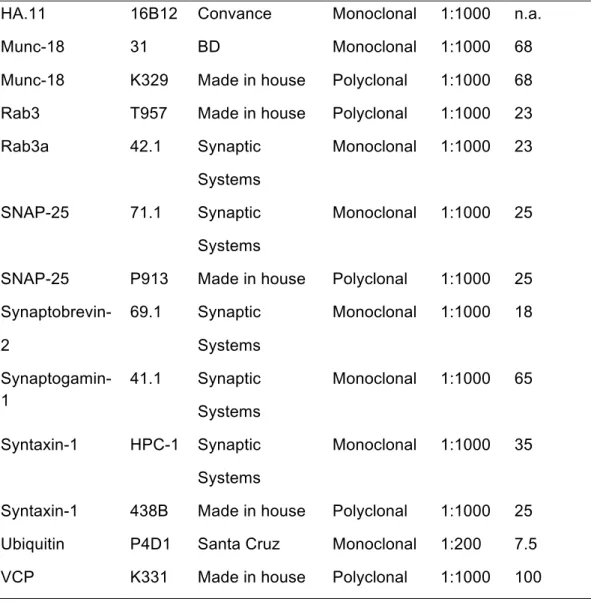
Table 6 ‒ Primary Antibodies ... 48
Abbreviations
ABBREVIATIONS
APS Amonium persulfate
APV (2R)-amino-5-phosphonovaleric acid
ATCC American Type Culture Collection
BCA Bicinchoninic acid
BSA Bovine Serum Albumin
C Cysteine
CaCl2 Calcium chloride
CO2 Carbon Dioxide
CHX Cycloheximide
C145S Cysteine 145 Serine
DIV Days in vitro
DMEM Dulbecco s Modified Eagle Medium
DMSO Dimethyl Sulfoxide
DNA Deoxyribonucleic Acid
dNTP Deoxynucleoside triphosphate
DPBS Dulbecco s Phosphate Buffered Saline
DTT Dithiothreitol
ECL Enhanced Chemiluminescence
E. coli Escherichia coli
EDTA Ethylenediamine tetraacetic acid
FBS Fetal Bovine Serum
GFP Green Fluorescent Protein
HEK Human Embryonic Kidney
HEPES 4-(2-hydroxyethyl)-1-piperazineethanesulfonic acid
HIV Humane immunodeficiency virus
HRP Horseradish peroxidase
IC Immunocytochemistry
IRES Internal ribosome entry site
IP Immunoprecipitation
KCl Potassium Chloride
Leup/Pept Leupeptin/Pepstantin
LB Lysogeny broth
MDRS Methylation-dependent restriction systems
MgCl2 Magnesium chloride
NaCl Sodium chloride
NaHCO3 Sodium bicarbonate
NEM N-Ethylmaleimide
Abbreviations
PAGE Polyacrylamide gel electrophoresis
PBS Phosphate Buffer Saline
PCR Protein Chain Reaction
PMSF Phenylmethylsulfonyl fluoride
RNA Ribonucleic Acid
RRE Rev-responsive element
RT Room Temperature
S Serine
SDS Sodium Dodecyl Sulfate
shRNA Small hairpin RNA
SM Sec/Munc-18
SNARE Soluble NSF attachment receptor
SNAP-25 Synaptosome-associated protein of 25kDa
Stx-1 Syntaxin-1
Syb2 Synaptobrevin-2
TEMED Tetramethylethylenediamin
TBS-T Tris‒buffered saline Tween- 20
TTX Tetrodotoxin
TX-100 Triton-X 100
VAMP2 Vesicle-associated membrane protein-2
VCP Vasolin containing protein
VSV-G Vesicular stomatitis virus ‒ glycoprotein
WB Western Blot
Chapter 1
CHAPTER
1
INTRODUCTION
The brain is the human body s most mysterious organ. It learns, it changes, it adapts, it tells us what we see, what we hear, it let us feel love, I think it holds our soul.
Shonda Rhimes
1.1 Nervous System
The brain is the center of the nervous system; it weighs approximately 1.3 kg in an adult human. There are about 1011 nerve cells, called neurons1. Neurons
communicate with each other through direct contacts (electrical synapses) and mostly through non-continuous connections known as chemical synapses, the principal computational unit of the nervous system2. Neurons are classified according to: 1)
function (e.g. motor, sensorial, interneuron), 2) localization (e.g. cortical, spinal), 3) shape (e.g. pyramidal, granule, mitral), and 4) nature of the transmitter synthetized and released (e.g. excitatory, inhibitory, neuromodulatory). In the human brain, neurons are connected by 1014 synapses1. Synaptic transmission occurs when an actions potential
triggers neurotransmitter release from a presynaptic nerve terminal, resulting in synaptic vesicle exocytosis3. Thus, many pre-synaptic and post-synaptic proteins are
needed to transmit the information from one neuron to another.
1.1.1 Synaptic vesicle cycle
Membrane fusion is one of the vital processes in life, and happens when two separate membranes merge into a continuous bilayer. Fusion can occur as constitutive
Chapter 1 intracellular organelle fusion, or as precisely timed fusion of synaptic vesicles (Figure 1) with the presynaptic plasma membrane in neurons4, which happens in response to
an action potential that induces the opening of Ca2+ channels5, 6. SNARE (soluble NSF
attachment protein receptor) and SM (sec1/munc-18) proteins are two conserved protein families that are universally involved in all intracellular membrane fusion reactions4, 7.
Figure 1- Vesicle proteins (from8).
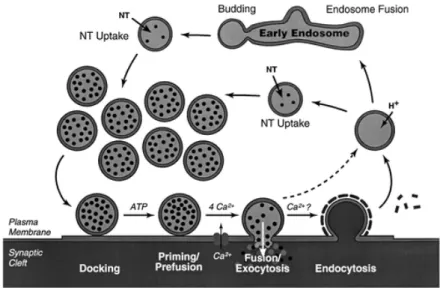
Classical neurotransmitter release is based on the synaptic vesicle cycle that starts when synaptic vesicles are filled with neurotransmitters by active transport and form the vesicle cluster. A vesicle filled with neurotransmitters docks at the active zone and becomes primed; this reaction makes the vesicles competent for Ca2+-triggered
fusion-pore opening. Following fusion pore opening, synaptic vesicles undergo endocytosis and can recycle through three different pathways: 1) local reuse (kiss-and-stay), 2) fast recycling without an endosomal intermediate (kiss-and-run) and 3) clathrin-mediated endocytosis (with recycling via endosomes)3 (Figure 2).
Chapter 1
Figure 2 - Trafficking of synaptic vesicles in the nerve terminal (from9).
1.2 SNARE proteins
SNARE (Soluble N-ethyl-maleimide Sensitive Factor Attachment Protein Receptor) proteins assemble into a tight core complex (SNARE complex), which mediates vesicle fusion with target compartments4.
The SNARE protein superfamily includes a group of small proteins, 24 in yeast and more than 35 in mammals10. These proteins mediate membrane fusion by bringing
two membranes into close proximity and thereby providing the energy for membrane fusion. SNARE proteins were identified to be receptors for NSF (N-ethylmaleimide-sensitive factor) and SNAPs (soluble NSF attachment proteins) which are required for disassembly of the SNARE complex after the fusion event has taken place5, 11.
Syntaxin-1, synaptosome-associated protein of 25 kDa (SNAP-25) and vesicle-associated membrane protein-2 (VAMP-2 or synaptobrevin-2) are the three proteins responsible for neuronal SNARE complex formation. SNARE proteins can be divided into target or t-SNAREs and vesicular or v-SNAREs according to their location within the cell. Thus, syntaxin-1 and SNAP-25 are synaptic SNARE proteins residing on the
Chapter 1 presynaptic plasma membrane; synaptobrevin-2 resides on the synaptic vesicle membrane4, 7, 11.
The importance of SNARE proteins for neurotransmission became apparent in studies using botulinum toxins (BoNT), proteins produced by the bacterium Clostridium botulinum. They are considered to be the most powerful neurotoxins ever discovered and specifically cleave SNARE proteins, preventing synaptic vesicles from docking/fusing with pre-synaptic membranes and therefore blocking neurotransmitter release12, 13.
SNARE motifs can also be structurally distinguished into R-SNAREs and Q-SNAREs. The Q encodes for the amino acid arginine; thus, Q-SNARE proteins have an arginine residue as central amino acid in the SNARE domain, whereas R-SNAREs have a glutamine residue in the center of the SNARE motif. According to the position of their SNARE motif-containing domains within the SNARE complex and by their sequence similarities, Q and R SNAREs can be distinguished into four classes: 1) R-SNARE motif (VAMPs), 2) Qa-R-SNARE motif (syntaxins), 3) Qb-R-SNARE motif (homologs of the N-terminus of SNAP-25), 4) Qc-SNARE motif (homologs of the C-terminus of SNAP-25). Since R-SNAREs correspond to v-SNAREs, and Q-SNAREs correspond to t-SNAREs, all SNARE complexes contain one member of each class4, 10.
SNARE proteins contain a conserved ~60 to ~ 70 residues SNARE repeat, a highly reactive sequence that assembles into the SNARE complex by forming a four helical bundle4, 7 (Figure 3).
Figure 3 ‒ SNARE complex (from14)
Synaptobrevin-‐ 2
Chapter 1 Most of the SNARE proteins contain one SNARE motif, except for SNAP-class SNAREs which contain two SNARE motifs4,7. Synapses transmit signals at high
frequencies. Thus, SNARE proteins continuously cycle through a highly reactive, non-assembled state, and a less reactive, non-assembled state15. These conformational
changes are probably the reason for the evolution of chaperones such as CSPα and α-synuclein, which keep SNARE proteins stable throughout the life of a neuron6. While
α-synuclein increases SNARE complex assembly by binding to the v-SNARE synaptobrevin-215, the CSPα/Hsc70/SGT chaperone complex binds to monomeric
SNAP-25 and stabilizes this protein16.
1.2.2 Synaptobrevin-2
Synapobrevin-2 is essential for fast synaptic vesicle endocytosis; absence of synaptobrevin-2 in synapses reveal an altered shape and size of synaptic vesicle, and stimulus-dependent endocytosis was delayed17.
Synaptobrevin-2 has one transmembrane region and one SNARE motif that is unfolded in the monomeric form, but forms an alpha helix upon interaction with the t-SNAREs: SNAP-25 and Syntaxin-1 to form the SNARE complex17 (Figure 4).
Figure 4 - Synaptobrevin-2 structure (adapted from 7)
1.2.3 SNAP-25
SNAP-25 (synaptosome-associated protein of 25 kDa protein) is associated with regulation of synaptic Ca2+ responsiveness. Thus, SNAP-25 knockout mice show
that Ca2+ triggering was abolished17. Heterozygous deletion of the SNAP-25 gene in
SNARE motif TMR
Chapter 1 mice results in a hyperactive phenotype similar to attention deficit hyperactivity disorder (ADHD)18.
SNAP-25 protein has two SNARE motifs and is palmitoylated at cysteine residues between the SNARE motifs, allowing SNAP-25 to anchor to the plasma membrane, since this SNARE protein does not have a transmembrane region17 (Figure
5).
Figure 5 - SNAP-25 structure (adapted from17).
1.2.3 Syntaxin-1
Syntaxin-1 (Stx-1) expression starts in early embryonic development, and its levels are intensely up-regulated during synapse formation and brain maturation19.
Syntaxin-1 has been linked to long-term potentiation, learning and memory, and it has been associated with several neurodegenerative and psychiatric diseases such as schizophrenia, Alzheimer s disease, and Creutzfeldt-Jakob disease19.
Syntaxin-1 contains an N-terminal Habc domain which has been shown to bind to
munc-184 and which is connected to the SNARE motif by a short linker sequence. The
protein is membrane-anchored by its C-terminal transmembrane region (TMR). SNARE motif and TMR occupy less than half of the sequence4, 10 (Figure 6).
The N-terminal part of the protein, with the three helix bundles is flexible and allows syntaxin-1 to alter between two conformations: a closed conformation, where the Habc domain and SNARE motif bind intramolecularly and thereby prevent its
engagement into the SNARE complex, and an open conformation where the SNARE motif is exposed and can participate in SNARE complex formation4,10.
N-‐terminus C-‐terminus
Chapter 1
Figure 6 ‒ A) Closed conformation of syntaxin-1 (from14), B) Syntaxin-1 structure; (Adapted
from14).
1.3 SM Proteins
The SM protein superfamily is composed of only a few proteins: 4 conserved subfamilies have been described in eukaryotes, which are essential for exocytosis (Sec1/Munc18); endocytosis (Vps45); protein biosynthesis (Sly1); degradation (Vps33)20. SM are highly conserved among different organisms and show a highly
conserved overall fold20.
SM proteins are hydrophilic proteins of 60-70kDa that share homology evenly throughout their sequence, indicating that no particular domain is associated with their primary function. I.e., it is not clear how specificity for vesicle attachment or fusion is mediated7,10,20. SM proteins fold into an arch-shaped clasp structure containing three
domains (called domains 1-3)20, with a large cavity on one side, and a deep groove on
the opposite side7,10,20 The arch-shape as well as the deep groove have been
implicated in interactions with SNARE proteins20.
SM proteins are part of all membrane fusion reactions and are as essential as SNARE motif TMR 1 180 264 288 Ha Hb Hc 28 62 71 104 111 144 N-‐terminus C-‐terminus Linker A B
Chapter 1 compared to SNARE proteins suggests that these proteins are versatile fusion agents that function in multiple reactions10.
SM proteins associate with SNARE proteins in several ways, including clasping both the v-SNARE and t-SNARE components of zippering SNARE complexes4 (Figure
7). It has been suggested that SM proteins organize trans-SNARE complex spatially and temporally, but it is unknown how SM proteins cooperate exactly with SNARE complexes for fusion1.
Figure 7 ‒ A) Binding of the SM protein munc-18 to the closed conformation of syntaxin-1. B) The open conformation of a t-SNARE complex, consisting of a t-SNARE and its cognate SM protein bound to the N-peptide of syntaxin s Habc domain. C) SNARE and SM
proteins form the universal fusion machinery (From4).
1.3.1 Munc-18
Munc-18 is a cytosolic SM protein and is conserved throughout the eukaryotic kingdom20. Munc-18 binds tightly to syntaxin-1 in the closed conformation, preventing
the formation of the SNARE complex11. Munc-18 was also reported to bind to the
syntaxin-1/SNAP-25 heterodimer, from which it is released upon synaptobrevin-2 binding7.
Although munc-18 stabilizes syntaxin-1 and allows proper targeting during the secretory pathway, the physiological function of the munc-18/syntaxin-1 interaction is still unknown. Yet, munc-18 may have local effects on syntaxin-1 stability or targeting within the presynaptic terminal or temporal effects on SNARE complex formation11.
Chapter 1
Figure 8 ‒ A) Structure of Munc18-1; B) Structure of syntaxin-1/Munc18 complex. (From14)
1.4
SPECIFIC AIMS
In the midst of the discovery of specific chaperones for synaptobrevin-2 and SNAP-25, it seems likely that there might be also a chaperone for syntaxin-1 that stabilizes/modifies syntaxin-1. Syntaxin-1 levels are reduced by 70% in absence of Munc-18-1, due to a strong enhancement of the stability of newly synthesized syntaxin-111. I therefore aim to clarify whether munc-18 or SNAP-25 chaperone syntaxin-1 and
which protein domains are responsible for this proposed stabilization. Furthermore, I aim to investigate if a previously identified mutation, which appears to be more stable than the wild-type (wt) version C145S inhibits syntaxin-1 degradation and if this cysteine is normally involved in degradation of syntaxin-1 by ubiquitination and proteasomal or lysosomal degradation. I also aim to investigate whether syntaxin-1 stability is activity-dependent, and whether overexpression or knockdown of munc-18 alters its stability and therefore synaptic transmission.
To approach this hypothesis, the following specific aims are proposed:
a) Do munc-18 and/or SNAP-25 chaperone syntaxin-1? I will analyze, whether each of these two proteins are able to stabilize syntaxin-1 protein levels and/or prevent degradation of syntaxin-1. I will also map the binding interface of syntaxin-1
Chapter 1 b) What are the molecular changes in syntaxin-1 caused by the C145S mutation, i.e. is syntaxin-1 C145S more stable than wild type syntaxin-1? First, I aim to analyze whether the cysteine to serine mutation of syntaxin-1 is more stable than the wild-type. Then, I aim to clarify whether degradation of syntaxin-1 happens via the ubiquitin/proteasome pathway or the lysosomal pathway, and whether expression of munc-18 alters this process. Finally, I will analyze if the cysteine 145 is involved in the degradation process of syntaxin-1, e.g. prevents or slows down degradation of syntaxin-1.
c) Does syntaxin-1 stability depend on synaptic activity? What happens to synaptic transmission in presence or absence of the postulated chaperones?
Chapter 2
CHAPTER
2
MATERIALS AND METHODS
2.1 Molecular Biology
2.1.1 Plasmid Vectors
A c-myc (EQKLISEEDL-C) epitope with a linker (AA) was added to the N-terminus of a rat syntaxin-1A cDNA to generate myc-tagged syntaxin-1 wild-type (WT) and syntaxin-1 cysteine to serine mutation (C145S), using as a template an already existing HA-tagged (YPYDVPDYA) syntaxin-1A cDNA. The two different tags are needed in order to distinguish between WT and C145S when transfected in the same cell. For syntaxin-1A truncation constructs, a stop codon was introduced at residue 265. Syntaxin-1A WT and C145S full length and 1-264 truncations were cloned into pCMV5, FUW and FSW vectors, respectively. Rat SNAP-25 cDNA and rat munc-18-1 cDNA constructs were cloned into FUW and FSW vectors. The following other constructs I used were already generated in the Sudhof lab: pCMV5 HA-syntaxin-1 WT180-264, pCMV5 HA-syntaxin-1 WT180-288, pCMV5-SNAP-25, pCMV5-munc-18-1 and
lentiviral munc-18 shRNA constructs. Syntaxin-1 constructs are shown in Table 1 and 2.
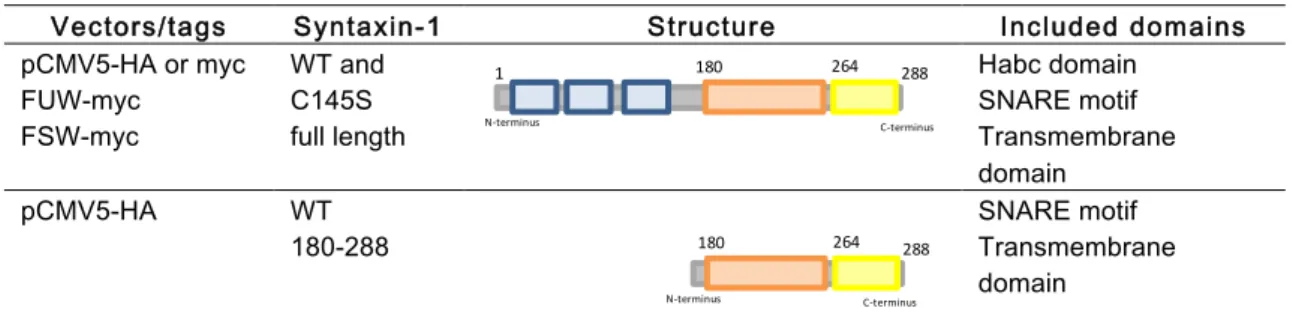
Table 1 ‒ Syntaxin-1 constructs
Vectors/tags Syntaxin-1 Structure Included domains
pCMV5-HA or myc FUW-myc FSW-myc WT and C145S full length Habc domain SNARE motif Transmembrane domain pCMV5-HA WT
180-288 SNARE motif Transmembrane
domain SNARE motif TM 1 180 264 288 N-‐terminus C-‐terminus SNARE motif TM 180 264 288 N-‐terminus C-‐terminus
Chapter 2
Table 2 - Syntaxin-1 constructs (continuation)
pCMV5-HA WT
180-264
SNARE motif
2.1.2 DNA amplification
Syntaxin-1, Munc-18 and SNAP-25 cDNA was amplified by polymerase chain reaction (PCR), using with the following reagents: 1) PfuUltra™ HF DNA polymerase (Roche); 2) Dimethyl sulfoxide (DMSO) was used in the PCR reaction in order to inhibit secondary structures within the DNA template or within the primers, minimizing interloping reactions22; 3) Bovine serum albumin (BSA) (Sigma-Aldrich) works as a
stabilizing agent in enzymatic reactions and enhances enzymatic activity23; 4)
Deoxynucleoside triphosphates (dNTPs) (NEB) are necessary for DNA polymerase to synthetize new DNA; 5) DNA template; 6) Primers. Number of cycles, annealing temperature and primers used are listed in Table 3.
Table 3 ‒ PCR primers, annealing temperature and number of cycles
Protein Primer Sense Primer Anti-sense T / cycles Myc-Stx-1A 1-288 5 GATCGCCACCATGGATGGAGCAGAAGCTGAT CAGCGAGGAGGACCTGGCCGA AAGGACCGAACCCAGCT 3 5 GTCGAATTCCTATCCAAAG ATGCCCCCGAT 3 50 C cycles: 30x Myc-Stx-1A 1-264 5 GATCGCCACCATGGATGGAGCAGAAGCTGAT CAGCGAGGAGGACCTGGCCGA AAGGACCGAACCCAGCT 3 5 GTCGAATTCCTACTTCCTG CGTGCCTT 3 52 C cycles: 33x SNAP-25 5 CTAGGAATTCACCGCCATGGCCGAAGACGCA GACATG3 5 GTCGAATTCTTAACCACTT CCCAGCATCTTTG 3 50 C cycles: 30x Munc-18 5 CTAGGAATTCACCGCCATGGCCCCCATTGGC CTC3 5 GTCGAATTCTTAACTGCTT ATTTCTTCGTC 3 50 C cycles: 30x SNARE motif 180 264 N-‐terminus C-‐terminus
Chapter 2 PCR program
1) Denaturation (hot start): melting of DNA by disruption of hydrogen bonds; hot start PCR reduces nonspecific amplifications caused by slow heating of DNA with the primers;
94 C 5 min
2) Denaturation: melting of DNA by disruption of hydrogen bound by complementary bases leading to a single stranded DNA;
94 C 30 sec
3) Annealing: annealing the primers to the single DNA strand;
* C 30 sec
4) Extension: DNA polymerase synthetizes a new DNA strand complementary to the DNA template by adding dNTPs;
72 C 90 sec
5) Final Extension: to ensure that all single-stranded DNA is amplified;
72 C 7 min
6) Final Hold: stop PCR reaction; 4 C ∞
* According to table 2
PCR products were separated on 1% agarose (Phenix Research Products) gels containing SYBR® Safe DNA Gel Stain (Invitrogen) that stains the DNA by binding to nucleic acids. Stained DNA fragments were detected using a standard UV transilluminator, a visible blue-light transilluminator (BIO-RAD). In order to confirm the presence of the right DNA, molecular markers 100bp and 1kb (NEB) were used. PCR products were purified with a QIAquick® PCR Purification Kit (QIAGEN) according to the manufacturer s protocol.
2.1.3 Ligation
Syntaxin-1A, munc-18, and SNAP-25 cDNA as well as the vectors pCMV5, FUW and FSW were digested with EcoRI (NEB) at 37°C for 2h since both, vectors and PCR fragments contain a 5 and 3 EcoRI restriction site (GAATTC), introduced by PCR. After digestion, vectors were incubated for 1h at 37°C with alkaline phosphatase (Roche) in order to dephosphorylate the 5 ends of the vector and avoid self-ligation.
Chapter 2 Products) in order to isolate the cut DNA, followed by gel extraction and purification using QIAEX II ® Gel Extraction Kit (QIAGEN) according to the manufacturer s protocol. For incorporation of cDNA into the vector, cut vector and PCR fragments were ligated for 1h at room temperature using: 1) 1 µl T4 DNA ligase (NEB); 2) 1 µl 10x DNA ligation buffer; 3) 8 µl insert plus vector at a ratio of insert:vector = 3:1.
2.1.4 Transformation
The bacterial strain used for molecular biology was Escherichia coli DH10B. This strain was designed for the propagation of large insert DNA library clones, which takes advantage of properties such as high DNA transformation efficiency and maintenance of large plasmids, the lack of methylation-dependent restriction systems (MDRS), and colony screening via lacZ-based α-complementation24-25.
Transformation, a process that allows DNA to enter the cell25, was done by
heat-shock. First, bacteria strain E. coli DH10B was incubated with DNA for 20 minutes on ice, followed by a heat-shock at 42 C for 45 sec and recovery for 2 min on ice, allowing the DNA to enter the bacteria. To allow bacteria to express the ampicillin resistance introduced by the vector, bacteria were incubated in LB medium (Lysogeny broth Medium (1% tryptone (BD); 0.5% yeast extract (BD); 0.5% NaCl (BD)) at 37 C for 1h. Bacteria were plated on LB plates containing ampicillin (1% tryptone (BD); 0.5% yeast extract (BD); 0.5% NaCl (BD); 1.5% agar (BD); 100ug/mL ampicillin (Sigma)) overnight at 37 C to select for clones carrying the ampicillin resistance introduced by transformation. Inoculation of a single colony was performed in LB medium with 10 µg/ml ampicillin (Invitrogen) over night at 37 C.
2.1.5 Analytical Restriction and DNA sequencing
In order to obtain pure DNA that can be used for expressing proteins in cells, a miniprep was done using QIAprep® spin Miniprep Kit (QIAGEN), followed by an
Chapter 2 analytical restriction to ensure that the selected colonies carry the correct DNA, and carry the DNA in the right orientation since the same restriction enzyme was used for 5 and 3 insertion. The following reagents were mixed in a total volume of 20 µl: 1) 5 µl mini-prepped DNA; 2) 1 µl restriction enzyme: BamHI (NEB) was used for syntaxin-1A and XmaI (NEB) for SNAP-25 and munc-18 restriction analysis; 3) 2 µl 10x buffer (according to NEB catalogue); 4) 2 µl 1mg/mL BSA; each performed for 1h at 37 C. (Attachment A: vector illustrations).
ElimBio Company performed DNA sequencing with primers listed in table 4.
Table 4 ‒ Sequencing primers
Name Sequence Direction Vector
C1P 5 GCAAATGGGCGGTAGGCG 3 Forward pCMV5
C2 5 CCAAGGCCAGGAGAGGCAC
3
Reverse pCMV5
FUW 5 ATTGTCCGCTAAATTCTGG 3 Forward FUW
FUGW rev 5 GCAGCGTATCCACATAGGG 3
Reverse FUW
FSW forw 5 ACTCAGCGCTGCCTCAGTCT 3
Forward FSW
FSW rev 5 AGAATACCAGTCAATCT 3 Reverse FSW
2.2 Eukaryotic Cell Culture
Human embryonic kidney (HEK) 293 T cells (ATCC ‒ American Type Culture Collection) were used as model system since these cells do not express SNARE proteins. HEK 293T were maintained in Dulbecco s Modified Eagle Medium High Glucose 1x (DMEM) (Invitrogen), containing 4.5 g/L D-glucose, L-glutamine and 110mg/L sodium pyruvate, supplemented with 10% fetal bovine serum (FBS) (HyClone) and 1% penicillin/streptomycin (Invitrogen) at 37 C in a 5% CO2
Chapter 2 For cell passaging, HEK 293 T cells were washed twice with 1x Dulbecco s Phosphate Buffered Saline (DPBS) (Invitrogen), and were then incubated with 0.05% trypsin-EDTA (Invitrogen) for 2 min to detach cells from the culture dish by digesting cellular integrins. Trypsin digestion was stopped by addition of DMEM. After dissociation, cells were resuspended and redistributed in 6 or 24 wells plate, 10cm plates or T75 flasks.
2.3 Recombinant protein expression in HEK 293T cells
HEK 293T cells were transfected using FuGene-6 (Roche), a reagent with cationic polymers that binds to negatively charged DNA, making a complex that is taken up by the cell via endocytosis. Transfection was performed at a ratio of DNA to Fugene of 1:3.
1) Syntaxin-1A expression experiments: HEK 293T cells (ATCC) were co-transfected with pCMV5-syntaxin1A (wt, C145S or truncations), pCMV5-munc-18-1, pCMV5-SNAP-25 or pCMV5-α-synuclein1-95 (α-synuclein1-95 is used to balance the
number of munc-18 or SNAP-25 plasmids transfected into HEK 293T cells (ATCC)) and pCMV5-emerald to control for transfection efficiency. Transfections were performed at a ratio of 1:3:1 for syntaxin-1:munc-18/SNAP-25/ α-synuclein1-95:emerald.
2) Cycloheximide chase experiments: HEK 293T cells (ATCC) were co-transfected with: a) pCMV5-syntaxin1A (wt or C145S) and pCMV5-α-synuclein1-95 at a
1:1 ratio; b) pCMV5-syntaxin1A (wt or C145S), pCMV5-munc-18 and pCMV5-α-synuclein1-95 at a 1:5:1 ratio.
3) Immunoprecipitations (IP): HEK 293T cells (ATCC) were co-transfected with pCMV5-syntaxin-1A (wt, C145S or truncations) and pCMV5-munc-18 at a 1:1 ratio.
4) Immunocytochemistry: HEK 293T cells (ATCC) were transfected with pCMV5-syntaxin-1 wt or C145S.
Chapter 2 HEK 239T cells (ATCC) were harvested 48 hours after transfection; except for cycloheximide experiments where cells were harvested at different time points (48h plus 0h, 3h, 6h, 12h, 24h and 36h). For harvesting, cells were washed 3x with PBS and solubilized with 0.1% Triton-X 100 (TX-100) (Sigma). After solubilization, insoluble material was removed by centrifugation for 20 min at 10,000g. The supernatant was collected and 5% Laemmli sample buffer (10% sodium dodecyl sulfate (SDS); 5% glycerol; 0.006% bromophenol blue in ethanol; 0.4M Tris-Cl pH 6.8; 77mg/ml dithiothreitol (DTT)) was added. To disrupt SNARE-complexes into SNARE protein monomers, samples were boiled for 20 min at 100 C.
2.4 Cortical neuronal cultures from mice
Mouse cortical neurons were cultured from mouse pups at P0 (< 24hours after birth). Brain regions were dissected on ice, and were incubated in ice-cold Hank s Balanced Salt Solution (HBS) with Hanks Balanced Salts without calcium chloride, magnesium sulfate and sodium bicarbonate (Sigma), pH 7.4. This buffer contains 350mg/L sodium bicarbonate (NaHCO3) and 1mM HEPES (4-(2-hydroxyethyl)-1-piperazineethanesulfonic acid) to stabilize the pH. Brains were digested in 2% papain solution with 0.5M EDTA pH 8.0 and 1M CaCl2 in HBS for 20 min at 37 C to dissociate
cells. Brains were then triturated with a pipette in plating medium (MEM) (Invitrogen) supplemented with 10% FBS (HyClone), 0.2M L-glutamine solution (Invitrogen), 0.25g/L insulin (Sigma). Cells were plated either onto a 12mm coverslip coated with 1mg/mL poly-L-lysine (Sigma) in 0.1M borate buffer (3.1g/L boric acid, 4.8g/L sodium tetraborate, pH 8.5) for imaging, or in a 24well plastic dish for biochemical experiments. After 1 day, plating medium was replaced with growth medium (0ARA-C) containing 5% FBS (HyClone), 0.2M glutamine solution (Invitrogen), 2% B-27 supplement (Invitrogen). Neuronal cultures were kept in growth medium (2ARA-C) containing 5% FBS (HyClone), 0.2M glutamine solution (Invitrogen) 2% B-27 supplement (Invitrogen), 2 uM cytosine arabinose (Sigma).
Chapter 2
2.5 Lentivirus production
Lentivirus is a class of retrovirus that can introduce a significant amount of genetic information into animal cells by insertion of their DNA into the host chromosomal DNA, thereby increasing the efficiency by which a modified gene can be stably expressed in animal cells. Lentivirus is the only one among the retrovirus class, which is able to replicate in non-dividing cells1.
Before transfection, HEK 293T cells (ATCC) were washed twice with DPBS (Invitrogen), and medium was changed to neuronal growth medium 0ARA-C. For overexpression of proteins, FUW and FSW vectors containing cDNA for munc-18 and synaxin-1A variants were co-transfected with Δ8.9 vector (human immunodeficiency virus (HIV-1) packing vectors that are highly efficient vehicles for in vivo gene delivery26
and carry all the major genes except for the major viral envelope protein1) and VSV-G
(a vector carrying the gene for the glycoprotein of the vesicular stomatitis virus, an envelope glycoprotein which can readily replace the normal lentivirus envelope protein1) in a 1:1:1 molar ratio into HEK 293T cells (ATCC) using Fugene-6 (Roche) as
described in 2.1.
A third generation lentivirus was used to generate munc-18 knockdown virus. Here, lentiviral L309 vector carrying the shRNA and the two packing vectors REV and RRE (Rev-responsive element) were co-transfected with a vector carrying the envelope protein VSV-G in a 1:1:1:1 molar ratio into HEK 293T cells (ATCC) using Fugene-6 (Roche) as described in 2.1.
Medium containing the viral particles was collected 48 hours later and centrifuged for 5min at 500rpm to remove any cellular debris. The supernatant containing the virus was added to cortical neuronal cultures at 5 days in vitro (DIV). For the L309 vector, the expression of the recombinant proteins could be monitored using GFP fluorescence since this vector contains an IRES (internal ribosome-entry site)-driven GFP.
Chapter 2
2.6 Brain Homogenate and Lysate
A 8-10 week old stripped mouse brain (Pel-Freez) was homogenized in ice-cold
phosphate buffered saline (PBS) (Sigma) with protease inhibitors and was then incubated for 2h at 4 C in 1% Triton-X 100 (Sigma) in PBS (Sigma) with protease inhibitors to solubilize membranes. The brain lysate was centrifuged for 20 min at 10,000g at 4 C to remove TX-100 insoluble material. In order to do quantitation of total protein present, a detergent-compatible formulation based on bicinchoninic acid (BCA) was used which is based on a colorimetric detection (Pierce® BCA Protein Assay Kit; Thermo SCIENTIFIC).
2.7 Pharmacological treatments
2.7.1 Protein degradation
N-ethylmaleimide (NEM) is an irreversible inhibitor of all cysteine peptidases with the capability of blocking vesicular transport. NEM was used to treat neuronal cultures for 5min at 5mM final concentration (Sigma). Neurons were then dissolved directly in 2x Laemmli sample buffer.
2.7.2 Protein turn-over
Cycloheximide (CHX), a protein synthesis inhibitor, blocks eukaryotic translation in the elongation phase, by blocking peptidil transferases27. CHX at 0.1g/L
(Sigma) final concentration was added to HEK 293T cells 12h after transfection, and cells were harvested 0h, 6h, 12h and 24h after treatment. In neuronal cultures, CHX 0.1g/L (Sigma) was added at different time points (0h, 3h, 24h, 48h, 72h) starting at 11DIV. Neurons were dissolved directly in 2x Laemmli sample buffer, HEK293T cells were washed 3x with PBS and solubilized with 0.1% Triton-X 100 (TX-100) (Sigma).
Chapter 2 After solubilization, insoluble material was removed by centrifugation for 20 min at 10,000g. The supernatant was collected, and 5x Laemmli sample buffer was added.
2.7.3 Silencing and enhancing synaptic activity
Cultured cortical neurons were incubated at 12 DIV for 36 in 0.5μM tetrodotoxin (TTX) (Calbiochem), which blocks action potentials in neurons by binding to the voltage-gated, fast sodium channels28. Alternatively, neurons were incubated in 20μM
AP5 (Sigma), a selective NMDA receptor antagonist that competitively inhibits the interaction between glutamate and NMDA receptors29. In order to enhance synaptic
activity, neurons were incubated in medium containing 25mM KCl or 4mM CaCl2.
2.7.4 Protease inhibition
Leupeptin (Sigma) is a protease inhibitor that inhibits cysteine, serine and threonine peptidases and was used at 10mg/L final concentration. Pepstatin (Sigma), is a potent inhibitor of aspartyl proteases and was used at a final concentration of 10 mg/L. MG132 (Sigma) is a specific and reversible proteasome inhibitor, which reduces the degradation of ubiquitin-conjugated proteins by the 26S complex without affecting its ATPase or isopeptidase activities, and was used at a final concentration of 10 µM. Clasto-lactacystin β-lactone (Calbiochem) is a highly specific inhibitor, does not affect cysteine or serine proteases, but appears to be the active inhibitor that reacts with the N-terminal threonine of the proteasome β-subunit X30.This chemical was added at a
final concentration of 10 µM. All chemicals were added to neuronal cultures at 12 DIV for 36h. Phenylmethylsulfonyl fluoride (PMSF) (Sigma) is a serine protease inhibitor that binds specifically to the serine residue in the active site of serine proteases. It does not bind to any other serine residues in the protein. This chemical was used at a final concentration of 4 mM. Epoxomicin, a natural occurring selective proteasome inhibitor with anti-inflammatory activity, was added at a final concentration of 10 µM.
Chapter 2
2.8 Protein Separation, Immunoblotting and Protein
Quantification
2.8.1 Protein Separation
Gel electrophoresis was used in order to perform macromolecular separation of proteins from HEK 293T cells (ATCC) and neuronal culture samples. Molecular separation is based on gel filtration and on electrophoretic mobility of proteins: proteins are separated as a function of the length of a polypeptide chain or molecular weight, due to the binding of sodium dodecyl sulfate (SDS) which gives identical charge per unit mass1. Samples were subjected to polyacrylamide gel electrophoresis (PAGE)
using the mixtures described in Table 5.
Table 5 ‒ Components of polyacrylamide gels
For 6 gels 15% separation gel 4% stacking gel
30% acrylamide (Bio-Rad) 22.5mL 2.5mL
Water 5.4mL 5.1mL
Tris-Cl pH 8.8 (Sigma) 16.8mL n.a.
Tris-Cl pH 6.8 (Sigma) n.a. 7.5mL
20% SDS (Sigma) 225 µL 75 µL
Tetramethylethylenediamin (TEMED) (Sigma)
45 µL 15 µL
10% Amonium persulfate (APS) (Sigma); 225 µL 75 µL
Protein separation occurs by application of an electric field (120milivolts) and the negatively-charged proteins migrate towards the anode (positive electrode). Each protein moves differently through the gel, according to its size: small proteins migrate more, since they fit more easily through the pores; larger proteins encounter more resistance; thus, they migrate less1.
Chapter 2
2.8.2 Coomassie Brilliant Blue Staining
Acrylamide gels were stained for 15min at RT in an orbital shaker with Coomassie Brilliant Blue R-250 solution (1g/L R-250 Comassie (Sigma); 50% methanol (Sigma); Water). Coomassie binds non-specifically to hydrophobic amino acids and thereby stains the proteins in the gel1. To decrease background staining, the gel was
destained for 1-2 days in a solution with 5% methanol (Sigma) and 7,5% acetic acid (Sigma); Water).
2.8.3 Western Blot
For western blotting, acrylamide gels were transferred onto 0.45μm pore size nitrocellulose membranes (Whatman). For experiments with pCMV5-α-synuclein1-95, a
small protein (10kDa), the nitrocellulose membrane was completely dried after transfer and then incubated for 15 min at room temperature in 0.2% glutaraldeyde (TCI America) in PBS (Sigma) in order to fix the proteins to the membrane.
After transfer, membranes were incubated with 0.5% Ponceau-S (Sigma) in 1% acetic acid (Sigma) in water to visualize that the proteins have been transferred to the membrane. In order to block non-specific binding of antibody to the nitrocellulose, membranes were incubated in an orbital shaker for 30min at room temperature in 3% non-fat dried milk in Tris‒buffered saline containing 0.1% Tween- 20 (TBS-T) (Sigma) supplemented with 2% FBS (HyClone). Three series of 5min washes were done in TBS-T. Afterwards, the blots were incubated in primary antibody in 1% BSA in PBS (Table 6 e 7) for 1h-2h at room temperature or overnight at 4 C, followed by 3 washes with blocking solution. Washed membranes were incubated in blocking solution containing either an anti-mouse or anti-rabbit horseradish peroxidase (HRP)-conjugated secondary antibody (MP biomedicals 1:5000) for 2h at room temperature. HRP catalyzes the oxidation of luminol to 3-aminophthalate via several intermediates. This reaction is accompanied by emission of low-intensity light at 428 nm. The intensity of light is a measure of the number of enzyme molecules reacting and thus of the