Divergence in planning for affordable housing: a comparative analysis of
England and Portugal
Author: Sónia Alves
Affiliations: Institute of Social Sciences, University of Lisbon; Cambridge Centre for
Housing and Planning Research, Department of Land Economy, University of Cambridge
Abstract
Academic and political debates about the extent to which planning influences the volume, type, location and affordability of new housing have not gained as much prominence in Portugal as in England, where planning obligations are aimed at providing new affordable housing, as well as a mix of housing tenures. Yet, in England, the use of Section 106 in planning agreements to secure affordable housing as a proportion of new developments has received mixed reactions: at times considered a successful public value-capture tool while, at others, as a neoliberal policy that is not generating the expected results.
The purpose of this research, which is based on literature reviews and semi-structured
interviews with government advisors, local officials, and academics, is to investigate why and how planning for affordable housing has been used in England and not in Portugal. The data shows that divergence in the adoption of planning obligations for affordable housing is the result of different but interdependent causes: path dependency (a concept which suggests that past events influence present and future ones), ideology (values, beliefs and a general
political orientation regarding how society ought to be and how to improve it), and planning cultures (collective social practices with their specific roots, legal traditions, ethos, etc.).
Keywords
1. Introduction
Comparative studies in the fields of planning and housing have shown a reasonably
significant correspondence between typologies of welfare-state systems and national planning policies. Nadin and Stead (2008), Othengrafen and Reimer (2013), Reimer et al. (2014) and Dunning et al. (2019) have shown that the form and operation of land-use planning – which they describe as coordinating disparate sectoral policies with spatial impact – is historically rooted in geography and reproduced via the political and legal systems.
Brenner et al. (2010), who have studied policy circulation processes internationally, have also verified that global processes work out differently in different regions and cities, as they are shaped by political and technical factors that influence the development and interpretation of laws and rules (Taylor, 2013).
Studies in the fields of planning have also drawn attention to the role of contingency in history, showing that ideology in the context of certain economic and political conjunctures is able to shape professional values and goals (Branco and Alves, 2020) and thus modes of thinking and acting that influence the evolution of planning policies and practices.
Comparative studies have demonstrated that the degree to which governments are concerned with tackling socioeconomic and spatial inequalities or addressing housing market failures – such as those relating to the supply of affordable housing – can vary considerably across space and over time, but current decisions are not independent from “path dependency”, or the sequences of past events (Knieling and Othengrafen 2015; Tasan-Kok, 2015; Alves, & Andersen, 2019; Alves, 2019).
Comparative studies have highlighted the importance of timing and events at the beginning of trajectories, when policies are first implemented, and also the value of the problem-solving approach for explaining differences between cases. As Haydu explains (2010, p. 35), the use of “variable-based historical questions” – Why did actors adopt these problem-solving strategies rather than other plausible ones? What were the effects of strategies in this period as compared to those in another period? – is important for understanding the effect of “independent” variables – such as the nature of political opportunities and the cultural framing of interests – on specific outcomes.
Comparative studies have also emphasized that planning ideas do flow across borders from one country to another, but they do not necessarily take root, in the sense that they often do not materialize into planning practices. Friedmann (2010) identifies political and cultural reasons for this, among which are local and national cultures, and policy priorities.
In this regard, Harris and Moore (2013) claim that processes of policy diffusion and policy transfer are “deeply structured by enduring power relations, policy norms, and local politico-institutional contexts” (1503), and Touraine (2007) emphasizes the relevance of discourse as “a mode of domination that incorporates speech, rules and classifications in a system of domination or a ‘microphysics of power’” (Idem: 5). Discourses are particularly important in the current age of globalization1, in which cities and regions are increasingly interconnected,
1 For Touraine (2007) globalization is a concept that connotes a variety of processes – including those related to the dissociation between globalized economy and institutions that only exist at lower levels and are unable to control global economies. It is also related to the increasing dominance of foreign direct investments and the narratives and practices of the markets at global scale.
ideas flow, and global policy models have significant normative power across national and local borders (Allegra, 2020; Peck, & Theodore, 2015; Theodore, 2019).
This paper focuses on two countries suffering from similar problems of housing shortage and affordability – and specifically on their capital cities. Its aim is to compare the adoption of “planning for affordable housing” tools – an “umbrella term” covering a range of activities in the fields of planning to require developers of market-rate residential developments to set aside a portion of their units for social and affordable housing – in these locations.
To do so, the paper draws on a wide range of relevant literature, secondary data and primary sources (interviews) that together offer a range of interesting insights about the trajectory of planning for affordable housing in each country.
The paper proceeds as follows. The first section sets out the conceptual framework on which the paper draws to explain divergence in the adoption of planning tools for affordable
housing, as well as the research questions and the hypothesis that guided the empirical research. The rationale for selecting these two countries and their capital cities is then presented, followed by an outline of the rest of the paper’s structure.
Conceptual Framework
Based on a systematic review of planning literature, this paper builds a conceptual framework linking land-use planning and housing policies to illustrate how governments have come up with new tools and general strategic approaches faced with declining housing affordability, and a reduction in central government financial assistance to local authorities. Besides definitions of the key terms, this section presents my interpretation of the key theoretical discussions on this topic and the main research questions and hypothesis that guided my fieldwork on the ground (in London and Lisbon).
Land-Use Planning
The supply of land is crucial for the supply of housing and there are usually rules about where and how housing can be built. “Land-use planning” refers “to the framework through which governments seek to regulate the use of urban space and to guide urban development and investment, including infrastructure investment” (Pawson et al. 2020: 299). A core goal of land use planning is to regulate residential development and to ensure an adequate supply of housing. This involves, as Pawson et al. (2020) emphasize, three essential activities (see below) that affect the costs, physical form and distribution of housing provision: the strategic spatial policy aspirations and instruments; the mechanisms for land and infrastructure
coordination and procurement; and the codified processes for managing land use and land use change.
The structure of the land-use planning system can differ considerably from country to country. For example, while in Portugal – as in most European countries and the United States – a land-use zoning model is used to regulate land use and land use change (general rules and a land-use categorization are instantiated in plans to specify what is authorized for a
specific site), the planning system in England takes a more discretionary approach. This means that a proposed development is not automatically given permission on the grounds that it fits with the plans made by local councils; each scheme is subject to a case-by-case basis assessment and negotiation before planning permission is granted. However, also in countries that use a land-use zoning model, variations to zoning restriction on a particular site can also be requested and negotiated (Pawson et al. 2020, p. 313). As Needham explains, rules can be defined related to the density and type of housing to be allowed (size, whether for rent or sale, market or affordable), the building height, and the infrastructural services to be provided. While “sometimes the rules are limited to infrastructure such as roads and public open spaces . . . they can also cover subsidised land for affordable housing, free land for primary schools, and such like” (Needham 2012, 101). Rules can include planning obligations for affordable housing that typically mandate or encourage developers to construct affordable housing units or provide land or financial payments towards a certain percentage of social and affordable housing. Planning obligations for affordable housing can be prescribed in either national, regional or local legislation. They can be prescribed in legally binding plans both for the entire municipality and for specific areas within it. Often decisions about the quantity and type of affordable units required depend on factors like local housing needs and the availability of national grants (Calavita and Mallach, 2010).
A review of the literature allows us to identify that the adoption of inclusionary housing tools has been associated with:
- the rise of urban environmentalism, public financial constraints, property price inflation, and problems of housing affordability for the middle classes (Buitelaar and de Kam 2012; de Kam et al 2014);
- the re-zoning of land for residential development, and when the planning rules are changed for particular projects or following significant infrastructure investment (Whitehead, 2007; Gurran, & Bramley, 2017).
- the search for more integrated forms of governance that go beyond sectoral approaches, disciplines and departmental boundaries (Rode, 2019)
Muñoz-Gielen et al. (2018), who have compared the adoption of different governance approaches to land development over time in different countries (comparisons range from more active operations of land readjustment to more passive approaches of private land development), and relate the use of inclusionary housing tools to goals of public land value capture, distinguish between “direct” and “indirect” rationalities of public land value capture Direct approaches are based on the rationale that planning decisions generate windfall gains, and this increase belongs either partially or totally to the community. They claim that
landowners have no moral right to the full increase of land value that arises from planning decisions, and therefore the community should capture it. Contributions for social and affordable housing, as part of their market developments are part of that effort. Indirect approaches are based on the rationale that landowners and developers should internalize the costs of mitigating the impacts of their site-specific developments.
Evidence presented by Muñoz-Gielen et al. (2017) and by Crook & Whitehead (2019), based on the English case, also indicates that when actors are informed in the early stages of their activities about the specific set of contributions that developers must make for their proposal to be accepted, developers can negotiate a lower price for the land, and thus fees and charges
are passed back to the landowner. This not only limits land speculation but allegedly also improves efficiency and equity. In this case, when developers pay less for land, planning obligations “become a de facto tax on development value borne by the landowner, locally negotiated and ‘hypothecated for local needs’” (Crook, & Whitehead 2019, p. 370).
However, the use of planning obligations for affordable housing has had a mixed reception in England. Some seem to see it as a useful mechanism to tax the windfall gains that result from discretionary planning decisions for the public benefit, to address a locally assessed
“affordability gap” that otherwise would have needed to be funded through the public purse (Crook, & Whitehead, 2019; Austin et al., 2014, Helbrecht, & Weber-Newth, 2018, Gurran et al. 2018, Hansson, 2017, Hansson, & Lundgren, 2019). Meanwhile others see it as a pressure mechanism set by central government to encourage local planning authorities to grant
planning permission even where proposals are not necessarily generating the expected qualitative results. Some developers, however, still view the provision of affordable housing as a public sector responsibility and believe that pepper potting affordable (especially rented) housing within market schemes may depress the value of adjacent market properties (see Gallent, & Carmona, 2004). According to Gallent, & Carmona (2004) planning agreements have been a source of conflict, not only between housing providers and planners, but also within authorities, namely between forward planning and development control. Cheshire (2018) has also claimed that rules that restrict the supply of new housing reduce the elasticity of land supply for new housing relative to demand and drive up prices in real terms.
Because planning obligations are based on recovering development values, they inevitably yield the highest returns in the highest-value areas. Lord et al. (2019) have identified the existence of both virtuous and vicious context-specific circles of development, but also the agency of individual planners (with knowledge and negotiating skills) in potentially
disrupting path dependence through the determination of “developer contributions” (p. 244). It is however recognized that since there is no mechanism for redistributing between areas, planning obligations have the unintended effect of reinforcing spatial inequality.
Social and Affordable Housing
The definition of concepts such as “social housing” and “affordable housing” is important because, as international comparative studies in the field of housing show, a single formal label – such as that of “social housing” – can have different meanings in different countries, or not be used at all (Alves and Andersen, 2019). That is why Hansson and Lundgren (2019) describe social housing as a floating signifier with no agreed-upon meaning, and the use of the concept of “affordable housing” has been highly criticized (Czischke and van Bortel, 2018).
While the concept of social housing is used in Denmark and Sweden to refer to a universal service potentially directed at all citizens, in countries like Portugal and England it refers to a service restricted to households in specific income bands. In both these countries, eligibility is based on means-tested income thresholds and income ceilings. It is restricted to people with low to middle incomes and other accumulated vulnerabilities, which means that the dwellings are assigned to households via an administrative procedure based on need.
However, the social housing sector has had a different history in Portugal and England vis-à-vis the size of the sector, the types of provider, and funding. While England was at the forefront in creating a system of social housing to tackle the housing shortages and rising housing costs that resulted from the destruction caused by the two World Wars, it was also at
the forefront in introducing reforms that changed the original features of the system (Malpass, 2014). The development of the sector in Portugal occurred with a considerable time lag vis-à-vis England and during a period when other countries were already
implementing several neoliberal reforms. The “Right-to-Buy” policy and the affordable housing model has been adopted in both countries.
It is useful to note that the concept of affordable housing came into vogue “as part of the retreat from public responsibility for the plight of the poor and as affordability challenges moved up the income distribution” (Stone 2006, p. 154). Gurran and Whitehead (2011), from a less critical perspective, claim that the concept reflects a semantic shift from stigmatised “public” housing towards a wider spectrum of delivery models and target groups (Gurran and Whitehead 2011). It reflects a new way of providing housing with fewer government
subsidies in the form of capital loans (Gurran and Whitehead, 2011) and often with the use of planning obligations to require the provision of social and affordable housing intertwined with market housing (Gallent 2019, Crook & Whitehead 2019).
Smyth (2019) explains that the concept of “affordable rents” was introduced in England in the 2010s at a time of a significant scaling-back of the National Affordable Homes
Programme. Since then housing associations and local authorities, who are expected to provide affordable accommodation for households whose needs have not been met by the market, have sought to invest in build-to-let and build-for-sale in the private sector to generate surplus that can cross-subsidise new affordable housing. The logic has been
straightforward: higher rents mean the ability to borrow more against the development and to minimize grant input (Reeves 2014). However, the impact of new affordable rents has been a substantial increase in the national bill for housing benefit, which has been restricted by caps and rules (Crook and Kemp 2018).
Comparative analysis
There are many varieties of comparative research in the fields of land-use planning and housing studies. For example, Flanagan and Jacobs (2019) refer to studies that compare present with past conditions, emphasizing the relevance of studies that don’t neglect longer-term social, economic and cultural changes.
Pickvance (2001), who adopts a classification set out by Tilly (1984), distinguishes more descriptive comparative studies from studies that try to go beyond description, attempting to explain and theorize differences and similarities between cases. He claims that the first of these can take two forms: individualizing comparison, in which a small number of cases are compared in order to grasp the peculiarities of each case; and universalizing comparison, which examines the presence/absence of a certain phenomenon or its intensity across cases (for example the rate of social housing across countries). Studies of the second type, which try to go beyond mere description, are “variation-finding comparisons”, attempting to explain differences or similarities between cases by referring to their underlying causes, mechanisms or conditions (Pickvance 2001). A good example of one of these studies is the work of Jim Kemeny (1995), who in the field of international comparative housing research was able to overcome the limitations of empiricist approaches that merely juxtaposed the particularities of countries, and move beyond the unilinear theories of social change and convergence that explained differences between societies as mere variations or as uneven development (Kemeny and Lowe 1998). To do so, Kemeny developed a conceptual and theoretical
framework to explain the dynamics of divergence in the long-term structuration of national housing systems. This framework uses ideology as a key element to explain how social institutions are constituted, sustained, and changed. Kemeny describes ideology as “a loosely organised set of ideas defining human nature (the individual), the principles underlying the organisation of social life (civil society), and the values that govern the political order (state). Ideologies include postulated underlying principles, assumptions concerning the nature of society, and basic values governing behaviour” (p. 87). In his view, ideology provides the motivation for action and channels that action into the creation and perpetuation of social forms in its own image (e.g. more collectivist or privatist social structures, urban form, welfare, housing, etc.).
The debate on national planning and housing systems has been characterised by two main approaches. On the one hand, a structuralist approach focusing on the underlying
legal/administrative characteristics of these systems that typically looks at structures of governance, the distribution of power and roles. On the other, a culturalist approach that looks at social practices, attempting to explain these as the result of values, norms and resources, including knowledge. Sometimes these approaches have been combined. For example, inspired by the work of Giddens (1984), researchers in the fields of land-use planning (Healey and Upton, 2010) and housing (Jacobs, 1999) have explained the
complexity of social practices by setting up a link between structure and agency empirically, examining, for example, how changes in legal and financial structures have entailed changes in the goals and strategies that come to be used (see also Dyck & Kearns 2006), or how new models of intervention are produced in the context of new social and institutional networks (Tasan-Kok et al 2019, Branco and Alves, 2020).
These studies have emphasized the wide number of structural factors that influence individuals’ action – such as those related to levels or cycles of economic development, systems of government (e.g. unitary or federal systems, those with regional or metropolitan governance), and legal and organizational frameworks (laws and regulations, administrative procedures, rules) – but also the role of agency, which is related to the knowledge and power that individual agents have in their daily activities to shape the reproduction of the social system (see Giddens, 1984).
In an attempt to explain empirical outcomes, researchers have come up with new concepts, such as that of “plural causation”, which suggests that different chains of causation – i.e. ones where different causes interact –, and on different occasions, can bring about the same value of the variable of interest in different cases (Pickvance 2001). One example of this is the size of the private rental sector in Portugal and England; the sector followed different paths of regulation and deregulation in each country within their different housing markets, but today accounts for the same proportion of 20% of all housing stock in both countries.
Finally, like Philip Booth (2011), I see comparative analysis in the field of spatial planning as “a sub-set of research in urban policy-making, which in turn can be understood as part of a general scientific endeavor in the social sciences” (Idem, p. 13) and agree with him that one of the field’s distinctive characteristics is “to look for the solutions to problems” (Idem, p. 13). That is, it has “the desire to know how others make and implement policy and to see whether there are policies and practices that might be borrowed from other places” (Booth, 2011, p.14) and even improve practice. The research questions and hypothesis that guided the empirical research presented in this paper are discussed below.
Research questions and hypothesis
This paper’s aim is to reach a better understanding of the underlying causes of divergence in the adoption of planning tools for social and affordable housing. It does so by trying to make the connection between past and present – as well as the interdependency between ideology and planning cultures – more explicit.
To this end the paper uses two different methodological perspectives: a diachronic one that looks at the development of national planning and housing systems in England and Portugal, and a synchronic one that compares current policies and practices in the cities of London and Lisbon.
The reasons for selecting these cases (these countries and their specific capital cities) is explained in the next sub-section, but here it is important to specify that the first part of the paper compares policies and initiatives at the national level, while the second part focuses on the local level, where planning and housing policies are not only formulated but actually implemented. It is also important to note that even though the paper touches upon the complex interrelations between government levels and functional levels, the paper doesn’t aim to contribute to the literature on these topics.
The focus of this paper is rather on how land-use regulation2 – and planning policy in general – has engaged with housing affordability for lower-income groups, and more specifically what interventions and/or political-legal measures have been formulated and implemented to achieve this public policy goal.
Because policies and practices are culturally bound and constructed according to the pre-existing cognitive structures and lived experience of agents and institutions, from January to May 2019, I conducted forty face-to-face interviews in Lisbon and London with developers, public-sector planners, consultants and experts.
The interviews, as well as the analysis of secondary data (official documents – laws, policies and policy reports published by government and non-government sources), were guided by the following overarching research questions:
• Have national/local public authorities attempted to mandate or encourage developers to incorporate a proportion of affordable homes into their market-driven
developments?
• What has been the relevance of requiring on-site affordable housing provision as part of general market developments, or as a condition of planning approval?
• How do municipal/metropolitan planning authorities use planning tools to promote affordable housing?
• What has been accomplished and what has been learnt so far?
A preliminary hypothesis is that divergence in the adoption of planning obligations for affordable housing – an “umbrella term” that covers a range of activities in the fields of
2 Debrunner and Hartmann (2020) use the concept of land policy to refer to “all those state decisions and measures that have an influence on the way land is used, distributed and valued to implement the politically defined spatial development goal” (Idem, p. 104993).
planning for the purpose of fostering housing affordability – is explained by a set of different but interdependent causes: path dependency (a concept that suggests that past events
influence present and future ones), ideology (that is, beliefs, opinions and values about how society ought to be and how to improve it), and planning cultures, (which express the norms, values and principles that underlie planning practice.
The justification for selecting these cases
The selection of England3 and Portugal – and their capitals London and Lisbon – as case studies can be justified on several grounds. To begin with, the decision to select only two countries and their capital cities was taken in order to enable a deeper analysis of their particularities while also offering scope for comparison.
The most important criterion for selecting the case study cities (London and Lisbon) was the existence of similar trends – intensifying demand-side pressures, rising property prices, and declining affordability (relative to earnings) across the housing market (Gallent et al., 2018). Notwithstanding the general differences in scale, demography4, density, planning and governance structures, in both capital cities rents often exceed that which low and middle income households can afford, resulting in overcrowded dwellings, insecure tenures, longer waiting lists for social housing and a higher number of vulnerable households who are either homeless, or who live in emergency or temporary accommodation (Stephen, 2017).
Another criterion for selecting the case study cities was the existence of different traditions in terms of planning cultures – the use of a discretionary planning system versus legally binding land-use plans, and of inclusionary housing tools, and different governance structures. London is governed by the Greater London Authority – that is, a mayor together with the London Assembly, who are both elected directly and manage a significant budget drawn from a mixture of central government grants, transport fares and other sources (charges, business rates and council tax). The Greater London Authority5 is responsible for the London Development Plan – a strategic plan that sets out the major guidelines that the 32 London boroughs must follow6 (see Elinbaum and Galland 2016). Without an elected regional tier, 3 The paper’s focus is on the English context, not the British context. As Gallent & Carmona (2004, p. 124) explain, because of the recent devolution of planning powers to Wales and Scotland, and the partial severing of legislative ties between the three territories, it is no longer possible to talk about a singular British planning system.
4 London is a global city of eight million people, Lisbon of two million.
5 It worth recalling, after Elinbaum and Galland (2016), that from 1965 until 1983, the Greater London Council – alongside 32 boroughs and jointly with the City of London Corporation – was held accountable for planning and development matters for Greater London. However, after discrepancies with the UK government led by Margaret Thatcher, the Greater London Council was dissolved in 1983. At the beginning of the 2000s, the New Labour government created the Greater London Authority, which is responsible for drafting the Spatial Development Strategy for Greater London. The content of the London Plan addresses conventional sectorial issues such as public transportation, environmental issues, residential growth and retail activities.
6 For example, the London Plan identifies Opportunity Areas and Housing Zones that are areas of intensification where developers can build at higher density. However, as these areas require significant investment in infrastructure, for example in terms of public transportation, schools, social infrastructure, etc., the borough can apply a higher CIL (Community Infrastructure Levy) rate in order to secure future tax revenues for investment in local infrastructure. Just to illustrate, anticipating the construction of the London
Portugal is characterized by a two-tier system of government, in which unelected regional administrative levels exist but are subordinated to a unitary national government (see Silva, & Acheapong, 2015). For example, the Regional Coordination Commission for Lisbon and the Tagus Valley (which covers the Lisbon metropolitan area) is responsible for strategic planning to harmonise municipal land-use plans and infrastructure (e.g. for public
transportation and waste management). But it has little power, lying between the central government, which deploys policy and financial instruments, and local authorities, which themselves decide whether to apply to central government for funding. Housing and planning policy and practices are from this perspective mainly a central and municipal government affair in Portugal that have only rarely been an integrated urban practice.
Three main reasons justified the selection of England and Portugal that, as in the case of Lisbon and London, can be classified as “strategic sampling” based on expectations about the information they could provide.
First, these countries have different traditions of welfare state provision. England has a liberal regime characterised by high reliance upon the market and a means-tested approach to
benefits (Esping-Andersen, 1990), but also traditionally by a strong role for the state in planning and housing provision (Harloe, 1995). Portugal has a Mediterranean regime characterised by a low level of state intervention and high reliance upon family support to compensate for the widespread insufficiencies of market activity and state intervention. Social protection is based essentially on individuals’ status in the labour market and their history of paid contributions, except for social assistance. Due to a low level of state economic redistribution, both countries have high levels of poverty and inequality (Alves, 2019).
Second, there is an essential distinction between these two countries in terms of the legal and administrative structures within which the regulatory planning system operates. Portugal, in line with most Continental European systems, uses zoning to classify the permissibility of land uses, as opposed to the discretionary English system, in which plans only have an indicative force, with planning permissions determined on a case-by-case basis. There are however similarities between them. In both countries, the public sector owns the
development rights independently of any private ownership of land, which means that planning authorities have the power to set specific obligations as a precondition for planning approval and, in general, every single development must obtain planning permission for changes of use. Similarly, in both countries, developers are required to pay for urbanization works triggered by their building plans and the free cession of the necessary land for public infrastructure (e.g. public parks, schools) or to pay financial contributions instead. However, only in England are contributions to social and affordable housing – which can be made in terms of dwelling units, land or financial contributions – considered a necessary and
reasonable obligation to mitigate the impacts of development (Gurran, & Whitehead, 2011; Crook, & Whitehead, 2019).
Third, in terms of housing structures, both countries have a “dualist” rental market regime, as access to social housing is means-tested and restricted to families with high levels of “social
Underground Bakerloo Line extension in the Old Kent Road area, the Borough of Southwark reviewed its CIL charging schedule, and set out that all future planning permissions in the area should pay a (higher) rate of £218 per square metre, in order to make contributions for archaeology, transport, and open space improvements.
need”7 (Kemeny, 1995, 2001; Hoekstra, 2009; Alves, 2017). Also, both countries implemented the “Right to Buy” policy, which gave council tenants the opportunity to purchase their home at discounts of up to 60%. Nonetheless the socioeconomic and tenure background (or point of departure) of the “Right to Buy” policy was quite different in these countries. While the size of the municipal rented stock was equivalent to 30% of all
dwellings in England (Pattison, & Cole, 2019; Elsinga et al., 2014), in Portugal it was equivalent to only 3% of all housing stock. Additionally, in both cases the Right to Buy was exercised by more affluent tenants, which led to further residualization of the social housing sector (i.e. the sector became more confined to the poorest and most vulnerable). Today the social renting sector accounts for 17% of households in England, with 10% of households living in homes owned by housing associations and 7% in homes owned by local authorities; in Portugal it makes up only 2% of all housing (see Table 1). Thus, there are different
networks of institutions and agencies involved in the provision and management of not-for-profit housing in England and Portugal, and these networks have changed in the course of time as the result of political decisions8.
Insert Table 1
Structure
The remainder of this paper is organized into two sections.
Section 2 takes a historical perspective to identify the general and specific factors that have shaped the trajectories of housing and planning systems in England and Portugal over time. It offers an analysis of the evolution of the planning regimes vis-a-vis aspects of ideology, planning cultures, and some more detailed discussion of the tools of affordable housing provision used in and beyond land-use planning systems. It is organized according to two historical phases of policy: (i) the period of the institutionalization of planning, which spanned from the 1930s in Portugal and from 1947 in the United Kingdom (UK) until the 1980s; and (ii) the period of reform under a neoliberal political agenda from the 1980s until the present. The aim of this section is, on the one hand, to help us to “think conjuncturally9” (Inch & Shepherd, 2020, p. 64) about the role of planning rules and practices in affordable housing provision. And, on the other hand, to test the hypothesis that the UK has linked planning and housing throughout the whole period, but particularly when local authorities were the providers of affordable housing in the post-war period up until the mid 1970s, while
7 Contrarily in an integrated rental market (such as in Denmark or Sweden) there is a universally oriented housing policy without any specific “social housing” sector based on individual means testing. Instead, there is the goal of offering cost-based housing to all types of household, regardless of their economic resources. This is done through the existence of cost-based rental housing.
8 For example, in Portugal, the housing cooperatives sector expanded in the 1980s, under favourable
circumstances in terms of land acquisition and fiscal and financial conditions. However, the sector opted for a system of individual ownership rather than collective ownership (cooperative tenancy, in which cooperatives would rent out the dwellings), which meant that once built, the dwellings were transferred through contracts of purchase and sale to the households, who after some years were able to sell them without caps on their price in the free housing market. This had impacts on the long-term price of this housing, supporting the interests of existing owner-occupiers, but also nearly leading to the sector’s destruction.
9 That is, “to think about planning as one site, or ‘position’, where multiple social, economic and political processes with roots in the wider historical conjuncture coalesce” (Inch & Shepherd, 2020, p. 64).
Portugal has rarely (though sometimes) seen a strong case for linking planning and housing and therefore providing land and subsidies.
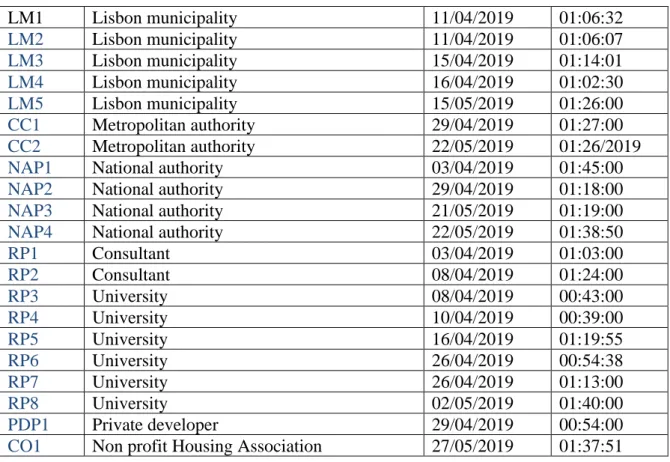
Section 3, which in terms of methods draws upon literature reviews (technical reports, recent published papers/books) and a series of semi-structured interviews (an outline of the
interviewees’ institutional affiliations is presented in Table 2), compares the different policy instruments that in London and Lisbon are used in order to promote affordable housing. In terms of the contributions that this paper tries to make to the literature, it is relevant to emphasise that the paper does not aim to develop theory in the sub-field of land-use planning or development control (for more details see Oxley, 2004; Muñoz-Gielen, & Lenferink, 2018; Crook, & Whitehead, 2019). Rather the paper aims to contribute to the literatures that, from a cultural and historical perspective tries to explore the conditions that explain differences and similarities in planning policies, practices, and outcomes. I am not concerned in explaining the limitation or possibilities of transferring planning ideas and practices across countries, but more in understanding the reasons for those differences (if it is ideological, political,
cultural). I am also interested in understanding how ideas are translated on practices on the ground, namely the conditions that facilitate that materialization and the substantive results related to it.
Somehow I think this paper tries to contribute to what Friedmann (2011, p. 224) describes as the key tasks for theory in planning: (a) the humanistic philosophical task of guiding planners in their work; (b) the task of adapting planning practices to the continuously changing course of events; and (c) the task of translating different ideas and expectations about the role of planning (see also Allmendinger 2017)
2. Policy and legislative changes in national planning
This section is structured according to two historical phases of policy:
The first part (2.1) covers the period of the institutionalization of planning systems that spanned from WW2 until the 1980s. This section demonstrates that, as explained by Needham (2012, p. 102), “in a mature and stable country, rules arise, rules are created, and organisations adapt to them”, or in other words, there is “institutionalisation”. However, as emphasized by Giddens (1984), and demonstrated by the Portuguese and English cases, rules and resources created within systems to enable and constrain social action are often unable to prevent the exercise of agency and the unintended effects of human action (Storper, 1985). The second part (2.2.) covers the period of neoliberal policies, from the 1980s until the present, in which planning moved away from its public-interest roots towards more
economic-growth-based paradigms that rely on deregulation and market forces. The evidence presented here confirms Shepherd’s (2020) claims that, on the one hand, the struggle over political ideas in the planning sphere is intimately connected with ideological conceptions of the relationship between land ownership, individual and economic freedom and the state. On the other hand, that ideas about planning are influenced by the material realities of
2.1 The institutionalization of planning
Campbell and Henneberry (2005) claim that the origins of planning “lie in the regimes of regulation introduced by governments in the twentieth century to minimize the negative externalities of urban growth and development” (p. 38). In many countries the “modern institution” of planning was established in the 1940s in the immediate aftermath of the Second World War (Shepherd, 2020). Concerns about the negative environmental and aesthetic impacts of unplanned development, and the objective of providing better homes than ordinary “working-class housing”, justified the introduction of a comprehensive planning system that in many countries evolved along different paths of housing provision (Bengtsson, & Ruonavaara, 2010; Gurran, & Whitehead, 2011).
Allmendinger (2016) recalls that the publication of Keynes’ General Theory of Employment, Interest and Money (1936) provided the intellectual and political justification for a far more significant role for the state in the economy after the Second World War. Keynes’ work enabled the political class to a “save capitalism” in a way that would maintain social stability and thus prevent revolutionary threats – a line of argument that appealed to those on the political right who were traditionally opposed to public intervention. Moreover, as Fainstein (1994) points out, “during the 1950s and 1960s, reconstruction of war-damaged property and large-scale housing programs transformed the appearance of London. The public sector bore direct responsibility for building many of the new housing estates itself” (p. 78).
The following sub-sections describe the main events related to the development of land-use planning and affordable housing provision in Portugal and England, in the context of specific socio-economic and political circumstances. It emphasizes the role of formal rules and regulations enforceable in law, but also the influence of unwritten conventions or codes of behaviour that constrain implementation.
England
This section is divided into two parts. The first part briefly identifies several important reports and pieces of legislation used to develop policy in the pre-war period, even though more attention is paid to the post-war period. The second looks at the large-scale provision of public housing that followed.
In England the role of the local authority in providing affordable housing started just before 1900, but from 1947 onwards the role of the national government in land use planning increased.
“The Housing, Town Planning, etc. Act, 1909, for the first time empowered the Local Authorities of England to prepare Town Plans” (Pepler, 1949, p. 103). The First World War caused an interruption but was quickly followed by the passing of the 1919 Housing and Town Planning Act, which obliged towns of more than 20,000 residents to draw up town planning “schemes”. The 1919 Act included a section intended to facilitate the acquisition of land for the purposes of garden cities or town planning schemes – either by local authorities, jointly or severally, or by approved authorised associations not trading for profit (Pepler 1949). It represented the first major step towards authorities preparing large-scale schemes in order to tackle the acute housing shortage caused by the virtual cessation of construction
during World War I (1914–1918) and Prime Minister Lloyd George’s promise of “Homes fit for Heroes” (Knox, & Pinch, 2014). Later, the Town and Country Planning Act 1932
extended local authorities’ planning powers to develop land and simplified some procedures. According to Pepler (1949), many local authorities that were not under an obligation to prepare schemes decided to do so voluntarily, which underlines the recognition that urbanism and planning already had then in England. He also makes reference to the slow but
progressive development of the two pioneer Garden Cities, Letchworth (1903) and Welwyn (1920), based on the pioneering idea of social reformer Ebenezer Howard. In this regard it is worth recalling that the “Garden City model” (Howard 1898) advocated by Howard was of a low-density town, surrounded by gardens and greenery in which the advantages of the city (in terms of job opportunities) were combined with the advantages of the countryside (in terms of good quality houses, access to clean air and green space, etc.). Another distinctive element of Howard’s “vision and hopes for tomorrow”, often ignored, was the community ownership of large chunks of land and the long-term stewardship of assets. He advocated that rents and other value created by planning should be used for the benefit of the community, namely to secure affordable, decent housing for ordinary people (a radical alternative to the inadequate and overcrowded row housing of the Victorian city). In 1940 the Barlow Commission
recommended the appointment of a panel of experts to investigate questions of compensation and betterment. In 1941 the Uthwatt Committee was appointed by the Minister of Works and Planning, and ultimately recommended “the nationalisation of development rights in
undeveloped land, to be purchased by the State when development was to set to occur” (see table 1, Shepherd 2020: 13).
One of the biggest advances in the evolution of the UK planning system was the passing of the 1947 Town and Country Planning Act (Couch, 2016, p. 39) in the context of efforts to rebuild Britain’s economic and social system following World War II. The 1947 Town and Country Planning Act institutionalised the English planning system into a relatively
“comprehensive and coherent form that is still recognisably in use today” (Shepherd, 2020, p. 11). It nationalised development rights and set up a system of development controls on private developers, including the collection of “betterment” (Booth, 2003; Couch, 2016). The betterment levy was initially set at 100% of the increase in land values as result of planning permission, but was later abolished in 1953. However, compensation and betterment, related to the capture of part of the increase in the value of property that was derived from a planning scheme and/or the efforts of the wider community, became two recurring elements of the English planning system.
After World War II, when the main political parties backed government intervention in the economy in the form of Keynesian macroeconomic policy (McCrone, & Stephens, 2017; Allmendinger, 2017), the planning system was used to support the desire to rebuild the country. In response to the backlog of housing needs intensified by war damage, the Labour government passed several pieces of legislation to foster the provision of social housing for the working classes. Planning policy also supported urban containment through the
establishment of a “Green Belt” around the major cities (Cowan, & MacDonald, 1980) and the construction of new towns. Patrick Abercrombie’s plan for post-war London, updated by the Greater London Development Plan of 1968, set down the principles of green-belt
preservation, peripheral manufacturing and population de-concentration (Fainstein, 1994). Meanwhile the prevailing pattern of central government subsidies favoured the construction
of high-rise housing, which gradually became a common feature of the urban environment in many municipalities over the course of the 1960s. However, the lived experience of high-rise housing turned out to be far from satisfactory (Couch, 2016, p. 41): building costs were higher than expected, schemes did not save much land, and frequent large-scale clearances and displacements of communities were criticised. Within a matter of years, it was clear that maintenance and management costs were also higher than those for traditional housing. After 1968 there was a rapid retreat from this kind of development, partly due to negative publicity about the damaging effects of high-rise living on family and social life, and partly in response to shortcomings in the design and construction of high-rise buildings (Knox, & Pinch, 2014, p. 127). There therefore followed the adoption of low-rise, small-scale housing schemes with vernacular architecture.
In my view, until the 1970s the English planning system – stimulated by several socio-economic crises such as those precipitated by the wars – exhibited a considerable degree of continuity in the framing and execution of national policy, namely in terms of principles and policy’s concerns.
Portugal
The institutionalization of the planning system occurred in Portugal during the “Estado Novo” [New State], a right-wing authoritarian regime that ruled Portugal for 41 years (1933-1974). Characterized by a strong centralization of power in the figures of Prime Minister António de Oliveira Salazar, and his Minister of Public Works Duarte Pacheco (Raimundo et al., 2009) – who was also mayor of Lisbon in the 1930s – the regime implemented a statist development strategy based on the development of a significant programme of public works. Of “empreendimentos grandiosos” (grandiose developments), as the regime called them, which included bridges, university campuses, airports, national stadiums, and new housing extensions (IST, 2011; Costa, 2012; Peralta and Domingos, 2019). To this end, the 1930s was a period of intense legislative activity in the fields of planning and land policy. The
Expropriation Act (1933) allowed for the compulsory purchase of land at existing use value, and the 1934 Town Planning Act established the legal obligation for local authorities with over 2,500 inhabitants to make plans for their consolidated urban areas and contiguous areas of expansion, the so-called Plano Geral de Urbanização [General Urbanization Plan]. Even though this was a compulsory act, the lack of technical and financial resources limited its implementation. However, in cities where the Urbanization Plan was executed (even though seldom officially approved) it regulated the alignment and height of constructions, protected areas of architectural and urban value and guided the planning of new housing schemes (Campos, & Ferrão, 2015; Ferreira, 1994). Several foreign professionals (urbanists, planners, etc.) were invited to help realize development plans in Portugal, such as the English planner Barry Parker or French professor Etienne de Groër (Groer, 1942; Costa, 2012; Marat-Mendes, & Oliveira, 2013).
Besides the plans to guide development, the Estado Novo – which proclaimed ownership as the ideal tenure for achieving social stability, and which used the neighbourhood as the basic unit of planning (to include a variety of building types and mixed uses) – launched several housing programmes to attract institutional investment in new rental housing for different income groups. The 1935–1965 Programa de Casas Económicas [Low-cost Houses
Programme] promoted the construction of detached houses with gardens for civil servants and the most qualified segments of the working class – who were the regime’s main
supporters (Alves 2017). The houses were paid for through monthly rents over a period of 25 years, eventually becoming the property of the family (Pereira, & Queirós, 2012). The 1959– 1969 Programa de Renda Económica [Low-cost Rental Houses Programme], which promoted the construction of three-storey buildings, was created to attract the accumulated investment of the Federação das Caixas de Previdência [Federation of Pension Funds]. The 1945 Programa Casas dos Pobres [Low-cost Rental Houses/ Programme for the Poor] was built and managed by municipalities for for the lowest paid workers. In most cases, the Estado Novo favoured a housing model characterised by a detached house, with garden and
backyard, in the style of nationalist Portuguese architecture. Between 1910 and 1974 around 600 neighbourhoods and 82,000 dwellings were built – a scale of intervention that was nonetheless very small in view of the magnitude of the problem. Because the large majority of low-income householders in Portugal were not able to afford or access these houses, they turned to the illegal self-built home markets (Salgueiro, 1977). A lack of enforcement and the general unwillingness to find solutions to the problem led to widespread abuse (illegal
construction). Cities grew through the illegal genesis of urban areas. These illegal
constructions expanded into the suburbs and throughout the inner-city areas (Teixeira, 1992). In 1966 there was an estimated housing shortage of 500,000 dwellings. This led to the
creation, in 1969, of the Fundo de Fomento da Habitação [Housing Development Fund], an agency which directly promoted housing but also the development of mono-functional housing projects that did not include public services, transportation or other amenities, and fostered segregation (Alves 2017).
In 1965, the Government published the Legal Regime for Urban Allotments, which was enacted to allow private developers to subdivide large parcels of land into building plots. However, this new land regime did not stop the proliferation of large-scale private
development schemes that proceeded either without urban infrastructure (whether “hard” or “soft”, such as social facilities), or without authorization and control by public authorities (Silva, & Farrall, 2016). In most cases the ownership of the plot was legal, but its division did not involve municipal licensing. Processes of urbanization outside the formal planning
system usually occurred in the urban fringes, where there were no urban facilities or public transport networks. Bingre do Amaral (2011) claims that from 1965 onwards, several legislative Acts cumulatively handed over the prerogative of urbanization rights to
individuals, and with it the privatization of capital gains generated by administrative acts of territorial planning.
In April 1974, a revolution put an end to the dictatorial regime that ruled the country for 41 years with disappointing results in terms of wages, education, life expectancy, rates of poverty and housing conditions (Branco, & Alves, 2020). As many families had to rely on self-building, a large percentage of permanent housing accommodation in 1970s Portugal still had no basic facilities, such as running water (47%), a bath or shower (32%), or sewers (60% of total housing stock).
The development of the welfare state in Portugal occurred in a very adverse international macroeconomic and ideological period, characterised by the shift from the previous post-war consensus (of Keynesian politics) to a neoliberal context of strong confidence in the market. The acute shortage of decent, affordable housing was amplified by internal and international
migration flows related to a large rural exodus and the movement of hundreds of thousands of refugees and “retornados” (returnees) fleeing from liberation struggles in the former
Portuguese colonies (e.g. Mozambique, Angola and Guinea-Bissau). In 1993, a housing survey carried out in Lisbon identified 833 shanty towns inhabited by 27,850 families, with a total of 92,450 inhabitants (Alves, 2017).
2.2 The convergence of planning and housing systems under neoliberalism
This section describes the period of relative convergence in planning ideas and practices in the context of neoliberalism’s advance over the past few decades. It shows that a new generation of arguments supported the view that strong property rights and the privatization of social functions were the best means to improve the economy. It confirms Grewal & Purdy’s claim (2014) that whether through a “rolling back” of regulation or a “rolling out” of market style governance, neoliberalism has reformed law that mediates state-economy relations and thus land and property markets.
England
Swenarton (1981) claims that the welfare-state period came to an end with the rise of neoliberalism symbolised by Margaret Thatcher’s victory in 1979. The election of Thatcher and 18 years of Conservative government instigated a decisive break with post-war statist policies, reviving the doctrines of classical economic liberalism (also termed “laissez-faire”) in all areas of government. In the fields of planning and housing, Thatcher’s government introduced a series of measures intended to reduce planning controls and promote private economic activity, for example through the introduction of enterprise zones or simplified planning zones10. As explained by Susan Fainstein (1994), central government control of local authority expenditure and limits on their revenue-raising capacity, “forced local
authorities to look to the private sector for benefits that had previously been public financed” (p. 38). This eventually pressed them to regard sales of publicly-owned land to property developers as a potential revenue source, and to grant planning permission more readily. In the field of housing, this entailed a paradigm shift from the direct public provisioning of social housing towards a plurality of approaches based on deregulation and privatization of the council housing stock, the so-called ‘Right to Buy policy’ that compelled councils to offer tenants their homes at substantial discounts. The creation of a society of homeowners was a declared political goal of Thatcher, who also used the sale of public land and council housing to stimulate a shift from local authority to housing association provision of new social
housing. Laffin (2013) and Malpass (2005, 2014) claim that this was explicitly driven by the party in order to create a Conservative-voting, house-owning democracy that would
undermine Labour’s traditional council tenant constituency.
10 For more details see Carmona (2009), who describes the establishment of the London Docklands
Development Corporation and of an enterprise zone in the Isle of Dogs. One of the most significant projects in the area was Canary Wharf, built as a major office quarter to rival the City of London.
The Conservative Government’s political rhetoric against planning delays, lack of flexibility and inefficiencies created a push away from a regulatory planning approach towards a more minimalist style, described by Carmona (2009) as “a ‘hands-off’ process” that sought to roll back the frontiers of the state. According to Parker et al. (2018), with Thatcher’s second term (1983–1987), the discourse of planning reform continued to concentrate on the need for speed and efficiency, and to give financial incentives and tax concessions to stimulate small businesses. As Fainstein (1994) notes, in the 1980s the property industry was rapidly transforming the character of London, where new developments were creating a strikingly different urban form from that of the preceding era. An explosion of speculative building for profit (cf. new larger office buildings and structures) became manifest.
It was in the 1990s that central government policy gave legal backing to enforce on-site affordable housing (Whitehead, 2007). Barker (2008, p. 35) explains that, as far as housing supply policy is concerned, key developments were the Town and Country Planning Act of 1990, and the related 1991 Act: “The first of these included at Section 106 (S106) the basis for agreeing planning obligations. An amendment in the 1991 Act made the plan the primary consideration in development control—and, perhaps surprisingly for a minister in the
Thatcher administration, Sir George Young commended this as embedding the ‘plan-led system’”.
Since then, Section 106 agreements – often referred to as Planning Obligations, which are legally enforceable obligations under Section 106 of the Town and Country Planning Act 1990 – have been the basis on which the Local Planning Authority (LPA) can negotiate with an applicant, developer or other party agreed, and establish planning agreements for the funding, or direct provision, of new infrastructure made necessary by the development in its immediate locale (Sheppard, & Ritchie, 2016). Obligations that form the agreement are based on site-specific negotiations, but LPAs’ policies for planning obligations are published and included in Local Plans. Contributions can relate to a wide range of infrastructure including: highways, public transport, education, community and cultural facilities, green infrastructure, environmental mitigation, and affordable housing.
From 1997 onwards, the New Labour government under Tony Blair – who tried to develop the ‘Third Way’ project by combining ideas from left-wing democratic socialism (placing more emphasis on aspects of social justice) and right-wing liberalism (individual liberty in the market economy) – retained elements of the agenda set by the previous Conservative governments in the planning system (Shepherd, 2020). Inch & Shepherd (2020) claim that Blair kept the promise of a “property owning democracy” that was “reinforced by long-term rises in house prices that helped maintain ‘consumer confidence’ while literally and
figuratively mortgaging people into the maintenance of the status quo” (p. 66).
Looking at the evolution of the English planning system between the Blair government’s election in 1997 and that of the coalition government in 2010, Lord and Tewdwr-Jones claim that both governments saw the planning system as a “chronic obstacle to growth” (Lord, & Tewdwr-Jones, 2014, p. 346). They also claim that the planning system was used to support the operation of the market and growth of the economy, albeit while trying to make it more transparent and locally responsive.
While Section 106 was increasingly effective in supporting affordable housing during the growth years of the early 2000s – corresponding to 68% of all newly-completed affordable
homes in England in 2016/17 (Lord et al., 2018); a greater use, since the early 2000s, of economic models for assessing the viability of affordable housing provision in new residential developments (Christophers, 2014) enabled developers to challenge local authorities’ efforts to extract development value to pay for affordable housing. Developers argued that the amount or type of affordable housing sought by local authorities was not viable on their sites anymore after the aftermath of the global financial crises.
The fact that the supply of new housing in England (particularly in areas of high demand like London and the south east) persistently failed to keep up with forecasted housing need, and that house prices increased substantially (see Bowie, 2010; Gallent et al., 2018), prompted several governments inquiries into the economics of supply and demand in the UK. The Review of Housing Supply in 2004 (2006, 2008) suggested that planning constraints were a key factor behind the long-term upward trend in house prices (though over shorter periods other factors, such as long-term real interest rates, were more important). Kate Barker, the author of the review, claimed that a weak response to rising prices was reducing affordability and creating macroeconomic instability in some regions, and recommended the introduction of a planning gain supplement to improve and in part replace the S106 planning obligations.
The Planning Act 2008 introduced the Community Infrastructure Levy (CIL), a fixed charge on development that was implemented from 2010. In each locality the local authority decides whether or not to implement CIL, and the level of charges to implement – for all or part of the local authority area (different sites) – which are calculated depending on the development type and the floor area of the completed development. As Morphet & Clifford (2017) explain, one of the reasons why central government enacted CIL was that practices for negotiating developers’ contributions across the country varied considerably, and in some areas no contributions were collected at all. It was considered that a general application with a common approach would help local authorities be more systematic and simplify the negotiation and bargaining process.
In several local authorities Section 106 has been negotiated alongside CIL, which is non-negotiable. The fact that CIL is compulsory and takes precedence over Section 106 means that, in circumstances where land value uplifts are small, affordable housing may be squeezed out (McAllister et al., 2018). Additionally, as pointed out by Morphet & Clifford (2017): “unlike a section 106 agreement, there is no requirement on the local authority to spend any CIL income either on the development on which it was levied, or any development included on its infrastructure list. While local authorities have to publish their income and expenditure from CIL, there is no legal pressure to spend this income within a set period.” (p. 117).
Empirical evidence collected by Crook & Whitehead (2019) shows that CIL has been adopted mainly by planning authorities in high-demand areas, especially in London. In low-demand areas it has rarely been adopted, “in part because the fixed charge can reduce the development value ‘left over’ for affordable housing, which continues to be a priority for many authorities” (p. 372).
The period immediately after 2010 is described by Shepherd (2020) as one of significant institutional change. The election of a Conservative-led coalition government (2010–2015) brought with it a switch in planning from regional to local tiers, through the abolition of regional planning institutions, and the introduction of a “localist” planning system that created explicit incentives to encourage local authorities to permit new housing (through the New Homes Bonus), and investment (through the sub-regional Local Enterprise
Partnerships). The Conservative-led coalition government also developed a simple, consolidated national planning framework, which set out national economic and environmental priorities, and how the planning system would deliver them.
The National Planning Policy Framework (NPPF), enacted in 2012, introduced several major changes in the system including the removal of strategies and institutions at the national and regional levels. The NPPF stipulated that planning strategies and plans should look ahead over a minimum 15-year period from adoption, in order to anticipate and respond to long-term requirements and opportunities, but should be reviewed in four-year cycles and updated as necessary. The NPPF also introduced the viability assessment, which is the framework against which Local Plans are drawn up and applications for planning permission are
determined. The NPPF highlighted that a planning obligation must only be sought where: it is necessary to make the development acceptable in planning terms; it is directly related to the development; and it is fairly and reasonably related in scale and kind to the development. The NPPF determined that developer contributions may be sought in two ways, through Section 106 agreements and through the Community Infrastructure Levy (CIL), which was brought into force on 6 April 2010 by the Community Infrastructure Levy Regulations 2010, under Section 206 of the Planning Act 2008. The idea was that local authorities could choose the rate for the levy in their area, set at a rate per square metre. Variations were to be allowed between different areas within the planning authority, as well as for different intended uses for development. It was envisaged that the CIL would create a more transparent system, whereby developer contributions could be calculated upfront (for more details see Grimwood 2019).
While the 2014 revisions to the NPPF emphasised that Section 106 agreements should not undermine the economic viability of schemes (i.e. they should not be so onerous as to mean the development could not go ahead), later High Court decisions and national guidelines stated that overpayment in relation to local-plan requirements could not be a reason for downward negotiation (Crook, & Whitehead, 2019). This was in order to avoid what Wacher (2018) describes as “the circularity problem”: where the price of land is bid up, the
affordability consequentially drops. This means that when bidding for land, developers must take into account planning obligations, and not overpay for sites, expecting to recover some or all of this overpayment via reductions in planning obligations (Wacher, 2018).
The Conservative-led coalition government also supported the creation of more homes through deregulation, enabling certain changes of use without the need to apply for planning permission, using what are known as permitted development rights (PDRs). The office to residential change of use PDR has proved controversial (see Clifford et al., 2019). It was originally a temporary three-year PDR but was put on a permanent footing from 6 April 2016. As Grimwood & Barton (2019) explain, concerns about this PDR include the quality of the schemes, the loss of office space, and a lack of developer funding for affordable housing and other local infrastructure that would have been required under planning permission.
The 2018 revisions to the NPPF maintained the emphasis on the creation of sustainable, inclusive, and mixed communities, defining mixed-income housing areas as areas for the provision of both affordable and market-price housing with good access to jobs, key services and infrastructure. Local authorities are required to calculate the number of homes needed in terms of size, type, and tenure in the local area and “where a need for affordable housing is