BGD
11, 1479–1533, 2014Perspectives of the microbial carbon
pump
H. Dang and N. Jiao
Title Page
Abstract Introduction
Conclusions References
Tables Figures
◭ ◮
◭ ◮
Back Close
Full Screen / Esc
Printer-friendly Version Interactive Discussion
Discussion
P
a
per
|
D
iscussion
P
a
per
|
Discussion
P
a
per
|
Discuss
ion
P
a
per
|
Biogeosciences Discuss., 11, 1479–1533, 2014 www.biogeosciences-discuss.net/11/1479/2014/ doi:10.5194/bgd-11-1479-2014
© Author(s) 2014. CC Attribution 3.0 License.
Open Access
Biogeosciences
Discussions
This discussion paper is/has been under review for the journal Biogeosciences (BG). Please refer to the corresponding final paper in BG if available.
Perspectives of the microbial carbon
pump with special references to microbial
respiration and ecological e
ffi
ciency
H. Dang1,2and N. Jiao1,2 1
State Key Laboratory of Marine Environmental Sciences, Xiamen University, Xiamen 361005, China
2
Institute of Marine Microbes and Ecospheres, Xiamen University, Xiamen 361005, China
Received: 30 December 2013 – Accepted: 7 January 2014 – Published: 22 January 2014
Correspondence to: H. Dang ([email protected])
BGD
11, 1479–1533, 2014Perspectives of the microbial carbon
pump
H. Dang and N. Jiao
Title Page
Abstract Introduction
Conclusions References
Tables Figures
◭ ◮
◭ ◮
Back Close
Full Screen / Esc
Printer-friendly Version Interactive Discussion
Discussion
P
a
per
|
D
iscussion
P
a
per
|
Discussion
P
a
per
|
Discuss
ion
P
a
per
|
Abstract
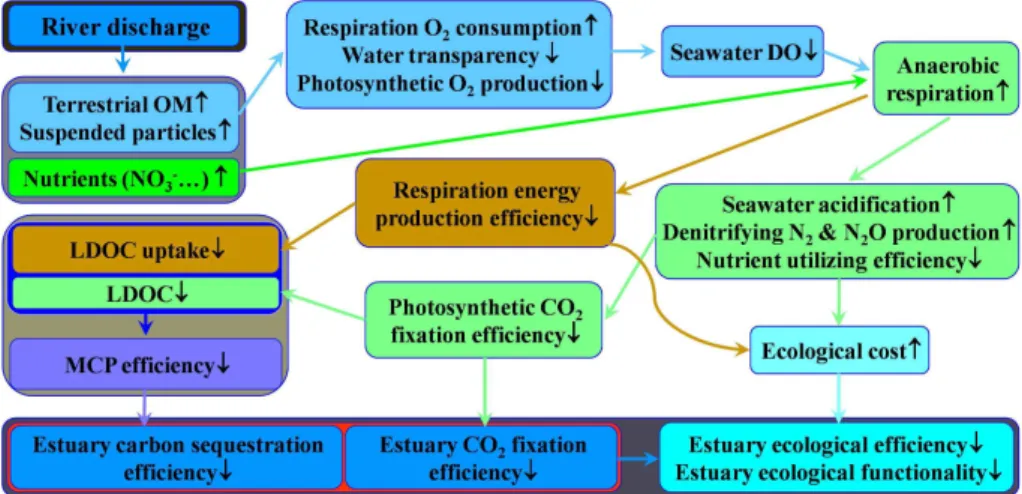
Although respiration consumes fixed carbon and produce CO2, it provides energy for essential biological processes of an ecosystem, including the microbial carbon pump (MCP). In MCP-driving biotransformation of labile DOC to recalcitrant DOC (RDOC), microbial respiration provides the metabolic energy for environmental organic substrate 5
sensing, cellular enzyme syntheses and catalytic processes such as uptake, secre-tion, modificasecre-tion, fixation and storage of carbon compounds. The MCP efficiency of a heterotrophic microorganism is thus related to its energy production efficiency and hence to its respiration efficiency. Anaerobically respiring microbes usually have lower energy production efficiency and lower energy-dependent carbon transformation effi -10
ciency, and consequently lower MCP efficiency at per cell level. This effect is masked by the phenomena that anoxic environments often store more organic matter. Here we point out that organic carbon preservation and RDOC production is different in mech-anisms, and anaerobically respiring ecosystems could also have lower MCP ecologi-cal efficiency. Typical cases can be found in large river estuarine ecosystems. Due to 15
strong terrigenous input of nutrients and organic matter, estuarine ecosystems usually experience intense heterotrophic respiration processes that rapidly consume dissolved oxygen, potentially producing hypoxic and anoxic zones in the water column. The low-ered availability of dissolved oxygen and the excessive supply of nutrients such as nitrate from river input prompt enhanced anaerobic respiration processes. Thus, some 20
nutrients may be consumed by anaerobically respiring heterotrophic microorganisms, instead of being utilized by phytoplankton for carbon fixation and primary production. In this situation, the ecological functioning of the estuarine ecosystem is altered and the ecological efficiency is lowered, as less carbon is fixed and less energy is produced. Ul-timately this would have negatively impacts on the ecological functioning and efficiency 25
BGD
11, 1479–1533, 2014Perspectives of the microbial carbon
pump
H. Dang and N. Jiao
Title Page
Abstract Introduction
Conclusions References
Tables Figures
◭ ◮
◭ ◮
Back Close
Full Screen / Esc
Printer-friendly Version Interactive Discussion
Discussion
P
a
per
|
D
iscussion
P
a
per
|
Discussion
P
a
per
|
Discuss
ion
P
a
per
|
1 Introduction
The microbial carbon pump (MCP) is a recently proposed biological mechanism for dissolved organic carbon (DOC) transformation and storage in water columns of the global oceans, which involves the production of recalcitrant DOC (RDOC) from labile DOC (LDOC) via microbial processing (Jiao et al., 2010, 2013, 2014). Approximately 5
155 Pg (1015g) of RDOC are currently sequestered via the marine MCP (Benner and Herndl, 2011), and millennial mean ages of marine DOC have been observed through-out the water column except in surface waters (Loh et al., 2004; Hansell, 2013). Soil and sediment microbial communities may play similar roles in RDOC production and carbon sequestration (Benner, 2011; Liang and Balser, 2011). Thus, the MCP concep-10
tual framework can be considered universally valid for the Earth’s major ecosystems. The MCP potential of decadal to millennial deactivation and sequestration of organic carbon on a global scale has profound impacts on the Earth’s carbon cycle and climate change.
As a major process that may control the biogeochemical cycling of carbon and par-15
ticularly its long-term storage, the MCP is a basic ecosystem property of the ocean as similarly illustrated in the soil environment (Schmidt et al., 2011). Abiotic and bi-otic factors that influence the structure, processes and functions of an ecosystem may also influence the functioning and efficiency of the MCP for RDOC production and stor-age. Accumulating evidence indicates that microbes, when growing on LDOC, produce 20
RDOC that is resistant to further biochemical degradation and utilization (Taylor et al., 1985; Brophy and Carlson, 1989; Heissenberger and Herndl, 1994; Stoderegger and Herndl, 1998, 1999; Ogawa et al., 2001; Gruber et al., 2006; Kawasaki and Benner, 2006). Furthermore, marine microbes differ substantially in their individual abilities to utilize specific DOC compounds, with some microbes being generalists and others be-25
BGD
11, 1479–1533, 2014Perspectives of the microbial carbon
pump
H. Dang and N. Jiao
Title Page
Abstract Introduction
Conclusions References
Tables Figures
◭ ◮
◭ ◮
Back Close
Full Screen / Esc
Printer-friendly Version Interactive Discussion
Discussion
P
a
per
|
D
iscussion
P
a
per
|
Discussion
P
a
per
|
Discuss
ion
P
a
per
|
2013). This also implies that changes in the composition and structure of the microbial communities may change the abundance and composition of the marine DOC pool, leading to the production and accumulation of different RDOC components with vary-ing ages of persistence in the environment.
Under natural environmental conditions, the consumed LDOC is partly used for mi-5
crobial cell growth. However, most of the environmental LDOC is used by the microbes for respiration (del Giorgio et al., 1997; Cotner and Biddanda, 2002; del Giorgio and Duarte, 2002; Carlson et al., 2007; Karl, 2007; Ducklow and Doney, 2013). Microbial respiration is a fundamental life process (Brune et al., 2000; Carlson et al., 2007; Robin-son and Ramaiah, 2011), which consumes organic carbon (usually in various forms of 10
LDOC) for cellular energy production accompanied simultaneously by the production and accumulation of by-product and/or waste-product chemical compounds (maybe in various forms of RDOC). The respiration process not only participates in the MCP via direct production and accumulation of respiratory RDOC products but also provides energy to fuel the ecosystem for running the MCP process. Thus, there is an intrinsic 15
linkage of microbial respiration and the MCP at subcellular, cellular, organism, popu-lation, community and ecosystem levels, and heterotrophic microbial metabolic rates constrain the MCP (Robinson and Ramaiah, 2011).
Microorganisms utilize a variety of respiration systems, including both aerobic and anaerobic pathways with distinctly different energy production efficiency for respira-20
tory energy metabolism (Burgin et al., 2011; Wright et al., 2012). Some microbes may harbor several different respiration pathways. For example, Richardson (2000) has re-viewed that,Paracoccus denitrificans, a common environmental bacterium, employs the cytochrome aa3 oxidase as the terminal electron acceptor in conditions of high oxygen tensions to operate a highly coupled electron-transfer pathway, while in low 25
anaero-BGD
11, 1479–1533, 2014Perspectives of the microbial carbon
pump
H. Dang and N. Jiao
Title Page
Abstract Introduction
Conclusions References
Tables Figures
◭ ◮
◭ ◮
Back Close
Full Screen / Esc
Printer-friendly Version Interactive Discussion
Discussion
P
a
per
|
D
iscussion
P
a
per
|
Discussion
P
a
per
|
Discuss
ion
P
a
per
|
bic respiration produces less metabolic energy than aerobic respiration does (Burgin et al., 2011; Wright et al., 2012). As the MCP is mainly fueled by respiration-produced metabolic energy, with the integration of microbial respiration into the MCP theoret-ical framework, the efficiency of the MCP for DOC transformation and storage may be better understood, especially by comparative analyses of the MCP processes and 5
mechanisms in contrasting environments such as oxic, suboxic and anoxic zones and their interfaces in marine waters and sediments.
The MCP has been reviewed about its major microbial processes and mechanisms (Jiao and Azam, 2011; Jiao et al., 2013, 2014), which include (1) the active mode per-taining to the release of RDOC via direct microbial secretion or environmental produc-10
tion through extracellular enzymatic activities, (2) the passive mode pertaining to the re-lease of RDOC via virus lysis and grazing, and (3) the threshold mode pertaining to the retention of environmental DOC due to its low metabolic economics under extremely low concentration conditions. Heterotrophic bacteria and archaea play a dominant role in the marine MCP process (Jiao et al., 2010; Benner and Herndl, 2011). In the active 15
mode, the secretion of cellular products and the synthesis and secretion of extracellular enzymes may need to consume metabolic energy, which is mainly produced by cellu-lar respiration in heterotrophic microbes. The MCP concept and framework have called great attention in the scientific realm since they were formulated in 2010 (Jiao et al., 2010), and many previous puzzling geochemical phenomena and questions, especially 20
those related to the marine carbon cycle, may find answers or clues by employing the MCP theoretical framework (Jiao et al., 2013, 2014). However, the MCP-related mi-crobial processes and mechanisms, especially those pertaining to cellular physiology and energy metabolism, have not yet been fully explored. In addition, as a fundamental and important biogeochemical process, the ecological efficiency of the MCP pertaining 25
inter-BGD
11, 1479–1533, 2014Perspectives of the microbial carbon
pump
H. Dang and N. Jiao
Title Page
Abstract Introduction
Conclusions References
Tables Figures
◭ ◮
◭ ◮
Back Close
Full Screen / Esc
Printer-friendly Version Interactive Discussion
Discussion
P
a
per
|
D
iscussion
P
a
per
|
Discussion
P
a
per
|
Discuss
ion
P
a
per
|
connections of the MCP, microbial heterotrophic respiration and ecological efficiency at large river estuaries, where diverse and complicated geochemical settings and pertur-bations may enrich our understanding of the MCP mechanism and its eco-engineering potentials.
2 Fundamental linkage of cellular respiration to MCP 5
Microbial respiration is a fundamental metabolic process that consumes organic carbon to produce energy for life sustaining. Many cellular and physiological processes, es-pecially in heterotrophic microorganisms, rely on respiration-produced energy, mainly in the form of adenosine-5′-triphosphate (ATP) or proton motive force (pmf), to carry
out their functions. As the key energy transfer molecule in cells, ATP is the central 10
intermediate between energy-yielding (exergonic) and energy-requiring (endergonic) reactions, serving as the “molecular unit of currency” of intracellular energy trans-fer. Oxidative phosphorylation in respiration, substrate-level phosphorylation in fer-mentation and photophosphorylation in photosynthesis are the major mechanisms of ATP biosynthesis in living organisms. However, except for obligate fermenters, all mi-15
croorganisms carry out respiration (Carlson et al., 2007). ATP molecules produced by energy metabolic processes such as respiration play critical roles in cellular carbon metabolism.
ATP is the central molecule in energy metabolism, which along with pmf provides energy for various essential cellular processes, such as (1) motility and chemotaxis in 20
sensing, signaling and response to environmental cues such as utilizable LDOC sub-strates; (2) uptake, utilization, transformation or modification of metabolic substrates such as LDOC; (3) biosynthesis and storage of cellular products; (4) cellular genetic material replication and cell reproduction; (5) secretion of extracellular compounds such as toxins, metabolic products, by-products and waste products (some maybe 25
BGD
11, 1479–1533, 2014Perspectives of the microbial carbon
pump
H. Dang and N. Jiao
Title Page
Abstract Introduction
Conclusions References
Tables Figures
◭ ◮
◭ ◮
Back Close
Full Screen / Esc
Printer-friendly Version Interactive Discussion
Discussion
P
a
per
|
D
iscussion
P
a
per
|
Discussion
P
a
per
|
Discuss
ion
P
a
per
|
carbon metabolism (Fig. 1). Thus, ATP andpmf generated by heterotrophic respiration participate in the MCP-related microbial process in several ways:
2.1 Energy-fueled cellular sensing, signaling and response
In nature, microorganisms usually live in a world with frequently changing physico-chemical environment (such as temperature, pH, oxygen tension, redox, salinity, osmo-5
larity, light, quorum sensing chemical signals, heavy metals, and other contaminants and biocides) and nutritional conditions (such as inorganic and organic substrates, N and P nutrients, oxidants (as electron acceptors), reductants (as electron donors), and trace elements). The change of these environmental conditions is most frequent and rigorous at the submillimetre spatial scale, and microorganisms have evolved the 10
mechanisms and machinery to adapt to the steep gradients of small- and micro-scale extracellular physicochemical and nutritional conditions (Stocker, 2012). In order to sur-vive in and optimally exploit or escape from the changing environment, prokaryotes (bacteria and archaea) have evolved the capability of sensing and response to various environmental signals.
15
2.1.1 Two-component signal transduction
The two-component signal transduction systems (TCS), also known as histidyl-aspartyl phosphorelay systems, are typically composed of a sensor histidine kinase that re-ceives the input stimuli and a cognate response regulator that effects an appropriate change in cellular physiology. TCS are an elegant and predominant means by which 20
BGD
11, 1479–1533, 2014Perspectives of the microbial carbon
pump
H. Dang and N. Jiao
Title Page
Abstract Introduction
Conclusions References
Tables Figures
◭ ◮
◭ ◮
Back Close
Full Screen / Esc
Printer-friendly Version Interactive Discussion
Discussion
P
a
per
|
D
iscussion
P
a
per
|
Discussion
P
a
per
|
Discuss
ion
P
a
per
|
iology and/or behavior of the microorganism in the environment (Gao and Stock, 2009; Capra and Laub, 2012).
TCS are present in>95 % of bacterial genomes and some 50 % of archaeal genomes, while the only bacteria lacking TCS are pathogens (e.g. Mycoplasma species) and endosymbionts (e.g. Amoebophilus species) with severely reduced 5
genomes (Wuichet et al., 2010). The MiST2.1 Microbial Signal Transduction Database (last accessed 14 June 2013) currently identifies 214 336 TCS proteins from a to-tal of 3075 bacterial and archaeal genomes (Ulrich and Zhulin, 2010). The P2CS (Prokaryotic 2-Component Systems) database (last accessed 14 June 2013) identifies 126 012 TCS proteins including 54 188 histidine kinases and 62 731 response regula-10
tors (Barakat et al., 2011). Bacteria that live primarily in steady environments typically harbor relatively few TCS genes, while bacteria that inhabit rapidly changing or di-verse environments typically harbor large numbers of TCS genes. Thus, the number of TCS genes appears to correlate strongly with environmental complexity and ecological niche diversity (Capra and Laub, 2012). Genome analyses have shown that a bac-15
terium usually has an average of>50 TCS (Krell et al., 2010), and a single bacterial cell may contain up to hundreds of TCS that operate in parallel for adaptive responses to changing environmental and nutritional conditions, such as those caused by the al-terations of abundance and composition of inorganic nutrients and organic substrates (Laub and Goulian, 2007).
20
The PhoR/PhoB involved in response to phosphate starvation, NarX/NarL involved in nitrate assimilation and FixL/FixJ involved in O2 adaptation and nitrogen fixation are among the most common TCS in bacteria (Gilles-Gonzalez, 2001; Galperin, 2010; Hsieh and Wanner, 2010). Some other identified TCS function as microbial sensing and response systems to environmental simple organic compounds such as sugars and 25
BGD
11, 1479–1533, 2014Perspectives of the microbial carbon
pump
H. Dang and N. Jiao
Title Page
Abstract Introduction
Conclusions References
Tables Figures
◭ ◮
◭ ◮
Back Close
Full Screen / Esc
Printer-friendly Version Interactive Discussion
Discussion
P
a
per
|
D
iscussion
P
a
per
|
Discussion
P
a
per
|
Discuss
ion
P
a
per
|
the function and efficiency of MCP for RDOC production and storage may be enhanced in the ocean, as the rate of RDOC formation may be dependent on the rate of microbial activity (Ogawa et al., 2001).
Some TCS, such as WalK/WalR, are essential to peptidoglycan metabolism, such as cell wall biosynthesis and turnover, in some bacteria (Dubrac and Msadek, 2008). Cell 5
wall remodeling may release D-amino acids into the environment (Lam et al., 2009a; Cava et al., 2011a). Diverse bacteria synthesize and release D-amino acids, which regulate cell wall remodeling in stationary phase and cause biofilm dispersal in aging bacterial communities (Cava et al., 2011b). D-amino acids may be accumulated in the ocean in several ways, including active release of D-amino acids by bacterial metabolic 10
activities, passive release of D-amino acids by viral lysis and protozoan grazing of bac-terial cells and by extracellular enzymatic degradation of bacbac-terial cell wall fragments (Kawasaki and Benner, 2006; Azúa et al., 2013). As D-amino acids are regarded as im-portant RDOC components in the ocean (Benner and Herndl, 2011; Jiao et al., 2013, 2014), the biological and environmental factors influencing their production, release 15
and accumulation in the ocean are worth further investigation.
2.1.2 Chemotaxis
The chemotaxis systems, which coordinate the sensing, signaling and responsive motility of a bacterium or archaeon in response to chemical attractants or repellents in environment (Szurmant and Ordal, 2004), are among the first and most thoroughly 20
studied TCS having been identified (Nixon et al., 1986). The MiST2.1 Microbial Sig-nal Transduction Database (last accessed 14 June 2013) currently identifies 38 772 chemotaxis proteins from a total of 3075 bacterial and archaeal genomes (Ulrich and Zhulin, 2010). Microbial chemotaxis systems are highly sensitive and efficient pro-cesses. These processes, however, result in the expenditure of a relatively high amount 25
BGD
11, 1479–1533, 2014Perspectives of the microbial carbon
pump
H. Dang and N. Jiao
Title Page
Abstract Introduction
Conclusions References
Tables Figures
◭ ◮
◭ ◮
Back Close
Full Screen / Esc
Printer-friendly Version Interactive Discussion
Discussion
P
a
per
|
D
iscussion
P
a
per
|
Discussion
P
a
per
|
Discuss
ion
P
a
per
|
In natural aquatic environments, many physicochemical conditions and nutritional sta-tuses exhibit highly dynamic small-scale and micro-scale gradients. Microbes with chemotactic capability may exploit this environmental heterogeneity much more read-ily than those without chemotactic capability (Blackburn et al., 1998; Stocker, 2012). The large energy cost of chemotaxis is ultimately compensated for with maximum 5
resource accession, utilization and optimal metabolic conditions (Taylor and Stocker, 2012). Chemotaxis not only provides chemotactic bacteria competitive advantages as-sociated with higher uptake of nutrients and metabolic substrates, but also may have substantial influences on the ecological processes and biogeochemical consequences in the ocean (Stocker and Seymour, 2012). Due to rapid response to and exploitation of 10
changes in environmental inorganic nutrients, DOC, dissolved organic nitrogen (DON) and organic sulfur compounds, such as ammonium, nitrite, nitrate, urea, phosphate, sulfate, thiosulfate, simple sugars, amino acids, peptides, carboxylic acids, dimethylsul-foniopropionate, hydrocarbons, simple aromatic compounds, extracellular products and exudates from phytoplankton, chitin monosaccharide N-acetylglucosamine and chitin 15
oligosaccharides from zooplankton, chemotactic microorganisms may play a potentially pivotal role in the marine C, N, P and S cycling (Stocker, 2012; Stocker and Seymour, 2012). Chemotaxis may not only facilitate the microbial loop that channels more carbon into particulate phase (Azam et al., 1983), but also enhance the MCP functioning and efficiency for RDOC production and storage in the ocean, as this sensing, response 20
and exploitation-enhancing mechanism for nutrients and metabolic substrates may im-prove the fueling of the MCP process (Ogawa et al., 2001).
Contrary to the stimulating effect of chemotactic attractants, repellent chemicals drive chemotactic microorganisms away from their source environment. Thus, repel-lent chemicals may have reduced potential to be accessed, degraded, and utilized by 25
BGD
11, 1479–1533, 2014Perspectives of the microbial carbon
pump
H. Dang and N. Jiao
Title Page
Abstract Introduction
Conclusions References
Tables Figures
◭ ◮
◭ ◮
Back Close
Full Screen / Esc
Printer-friendly Version Interactive Discussion
Discussion
P
a
per
|
D
iscussion
P
a
per
|
Discussion
P
a
per
|
Discuss
ion
P
a
per
|
2.1.3 Quorum sensing
Microbes utilize quorum sensing (QS) as a specialized cell-to-cell communication mechanism for population density-dependent sensing, signaling and response, to achieve coordinated gene expression and behavior, such as synchronized production and secretion of toxins (e.g. virulence factors and antimicrobials), extracellular polysac-5
charides (EPS), pigments, siderophores, biosurfactants and exoenzymes, biofilm for-mation, bioluminescence, competence, conjugation, nodulation, symbiosis, sporula-tion, antibiotic resistance, programmed cell death, and changes in motility (Redfield, 2002; Erental et al., 2012; West et al., 2012), of which many processes may contribute to the production and accumulation of RDOC or RDOCspecific in the ocean (Jiao et al., 10
2013, 2014). A typical QS process is characterized by the secretion and detection of small signal molecules collectively called autoinducers within a bacterial population, resulting in the establishment of coordinated behaviors once a sufficient quorum size is reached. The QS process is usually fueled by ATP. For example, it is estimated that the production of a QS signal peptide in Staphylococcus aureus requires 184 ATP 15
molecules (Keller and Surette, 2006). Via QS, bacteria are able to determine their pop-ulation densities and react appropriately by switching on or offspecific population phys-iology and behavior, usually via activation or deactivation of specific gene expression (Miller and Bassler, 2001). Autoinducers and QS systems have also been reported, though only occasionally, in archaeal species (Paggi et al., 2003; Tommonaro et al., 20
2012; Zhang et al., 2012), indicating QS as a universal strategy to achieve group ben-efit and social behavior in the prokaryotic world (Schuster et al., 2013).
In marine environments, high microbial population density is usually achieved via the formation of spatially structured multi-species communities, such as biofilms on sub-merged surfaces, suspended particles, detritus, aggregates, and marine snows (Azam 25
free-BGD
11, 1479–1533, 2014Perspectives of the microbial carbon
pump
H. Dang and N. Jiao
Title Page
Abstract Introduction
Conclusions References
Tables Figures
◭ ◮
◭ ◮
Back Close
Full Screen / Esc
Printer-friendly Version Interactive Discussion
Discussion
P
a
per
|
D
iscussion
P
a
per
|
Discussion
P
a
per
|
Discuss
ion
P
a
per
|
living counterparts, presumably due to the more favorable nutritive conditions of parti-cles than those in the surrounding water (Simon et al., 2002). It was hypothesized that the majority of aquatic microbes lead a particle-associated lifestyle (Grossart, 2010). Particle-associated microbes play important roles in the biogeochemical cycling of C, N, and S, particularly in estuarine and coastal areas where the abundance of organic 5
or organically enriched particles is relatively high (Dang and Lovell, 2002; Smith et al., 2013). Particle-associated microbes also dominate the deep-sea overall metabolism (Arístegui et al., 2002; Bochdansky et al., 2010; Eloe et al., 2011). They contribute much to the degradation of particulate organic matter (POM) and may account for as much as 90 % of water column heterotrophic bacterial activity (Crump et al., 1999; Tur-10
ley and Stutt, 2000; Simon et al., 2002), though sometimes they may constitute<5 % of total bacterial biomass (Cho and Azam, 1988). Particle-associated microbes pro-vide LDOC substrates, by organic polymer enzymatic decomposition, to not only the attached microbial community but also the free-living community of the surrounding wa-ter column (Cho and Azam, 1988), to fuel the MCP (Jiao et al., 2013, 2014). Microbes 15
act on seawater particles to cause quantitatively major POM to dissolved organic mat-ter (DOM) flux, some of which may become RDOC (Jiao and Azam, 2011). For ex-ample, partial hydrolysis of complex biopolymers such as polysaccharides and bac-terial cell wall peptidoglycans by microbial degradation may produce slow-to-degrade DOM, resulting in carbon storage as RDOC or semi-RDOC in the ocean (Azam, 1998; 20
Jiao et al., 2013, 2014). Interestingly, high bacterial activity could actually produce more RDOC or semi-RDOC in the form of slow-to-degrade DOM (Azam, 1998). Thus, particle-associated bacteria may have significant impacts on microbial productivity, nu-trient regeneration and carbon sequestration in the ocean (Paerl and Pinckney, 1996). Many marine Gram-negative bacteria and certain Gram-positive bacteria produce 25
BGD
11, 1479–1533, 2014Perspectives of the microbial carbon
pump
H. Dang and N. Jiao
Title Page
Abstract Introduction
Conclusions References
Tables Figures
◭ ◮
◭ ◮
Back Close
Full Screen / Esc
Printer-friendly Version Interactive Discussion
Discussion
P
a
per
|
D
iscussion
P
a
per
|
Discussion
P
a
per
|
Discuss
ion
P
a
per
|
recently found that QS controls phosphorus acquisition in Trichodesmium consortia by regulating the activity of alkaline phosphatases for dissolved organic phospho-rus degradation (Van Mooy et al., 2012). Bacterium Kordia algicida relies on a QS-dependent excretion mechanism of an algicidal protein to achieve the algicidal activ-ity towards marine diatoms such asSkeletonema costatum,Thalassiosira weissflogii 5
andPhaeodactylum tricornutum(Paul and Pohnert, 2011). Algicidal bacteria may con-tribute not only to the termination of algal blooms, but also to the release of algal DOC, thus directly influencing the MCP process. The QS mechanism may contribute vastly to marine carbon cycling as a recent study provides evidence that QS may influence the activity of extracellular hydrolytic enzymes on sinking particles (Hmelo et al., 2011). 10
Extracellular enzymatic hydrolysis is often referred to as the rate-limiting step in or-ganic matter (OM) utilization or remineralization, and thus extracellular enzymes play a central role in marine heterotrophic microbial cycling of carbon (Arnosti, 2011). These enzymes catalyze the initial step in conversion of high-molecular-weight (HMW) OM to small substrates to be transported further into a microbial cell for incorporation into 15
biomass, respiration to CO2, or transformation and excretion into the environmental RDOC pool (Arnosti, 2011). By participating in the regulation of sinking POC degrada-tion, microbial QS may impact the marine biological pump (BP) (Hmelo et al., 2011) and MCP via the release of DOC that may have varying degree of resistance to further degradation (Jiao et al., 2013, 2014).
20
2.1.4 Interwoven networks of cellular sensing, signaling and response
Bacteria and archaea employ complicated and interconnected regulatory networks for resource utilization and interspecies competition to achieve optimal survival. A meta-transcriptomic study has found that the addition of HMW DOM to marine microbial com-munities could significantly stimulate gene expressions of TCS, chemotaxis and motility 25
BGD
11, 1479–1533, 2014Perspectives of the microbial carbon
pump
H. Dang and N. Jiao
Title Page
Abstract Introduction
Conclusions References
Tables Figures
◭ ◮
◭ ◮
Back Close
Full Screen / Esc
Printer-friendly Version Interactive Discussion
Discussion
P
a
per
|
D
iscussion
P
a
per
|
Discussion
P
a
per
|
Discuss
ion
P
a
per
|
of regulations in various cell metabolic and physiological responses, such as chemo-taxis, type IV pili production (for attachment on chitin surface), biofilm formation, extra-cellular chitinase secretion, chitoporin expression (for transmembrane uptake of chitin oligosaccharides), nutrient cycling, competence induction, symbiosis, and pathogenic-ity (Li and Roseman, 2004; Meibom et al., 2004; Pruzzo et al., 2008; Blokesch, 2012; 5
Sun et al., 2013). While chitin is highly insoluble, its degradation products provide an abundant source of carbon, nitrogen and energy for marine microorganisms. Sens-ing and response to environmental cues and population density that involve the TCS, chemotaxis and QS systems provide vibrios the advantage of optimal substrate utiliza-tion and survival.Vibrio chitin utilization may also influence the carbon sequestration 10
processes and the relative contributions of the BP and MCP. In general, the cellular sensing and response network of heterotrophic bacteria and archaea, fueled primarily by respiratory energy production, may have profound impacts on the composition and sequestration of organic carbon compounds in the ocean.
2.2 Energy-fueled transmembrane transportation and secretion 15
Prokaryotes dominate the abundance, diversity and metabolic activity of the ocean (Azam and Malfatti, 2007). Heterotrophic bacteria and archaea are the most impor-tant consumers of environmental OM, driving the microbial loop, MCP and certain key biogeochemical pathways in the ocean (Azam et al., 1983; Azam and Malfatti, 2007; Jiao et al., 2010) mainly through the utilization of a variety of metabolic energy-driven 20
transport systems for the uptake of organic substrates from the surrounding environ-ment. Bacteria and archaea also utilize a variety of metabolic energy-driven transport systems for the secretion processes to achieve specific activities.
2.2.1 ATP binding cassette transporters
The ATP binding cassette (ABC) transporters, which cost energy in the form of ATP to 25
versa-BGD
11, 1479–1533, 2014Perspectives of the microbial carbon
pump
H. Dang and N. Jiao
Title Page
Abstract Introduction
Conclusions References
Tables Figures
◭ ◮
◭ ◮
Back Close
Full Screen / Esc
Printer-friendly Version Interactive Discussion
Discussion
P
a
per
|
D
iscussion
P
a
per
|
Discussion
P
a
per
|
Discuss
ion
P
a
per
|
tile transport systems in the microbial world (Lee et al., 2007; George and Jones, 2012; Rinta-Kanto et al., 2012). Interestingly, ABC importers have only been found in prokary-otes (Rees et al., 2009). Some ABC transporters may have broader substrate speci-ficity; however, most ABC transporters are highly substrate-specific (Couñago et al., 2012). High-affinity substrate-binding proteins that specifically associate with their lig-5
ands, together with their cognate ABC importers, facilitate the unidirectional translo-cation of specific substrates in prokaryotes (Couñago et al., 2012). This mechanism provides not only the coupling of substrate trafficking with ATP hydrolysis but also the substrate specificity for the prokaryotic uptake of environmental DOC compounds. Due to substrate specificity in ABC importers for OM cross-membrane transport, certain en-10
vironmental DOC compounds may not be taken up and utilized by the in situ microbial assemblage and thus may accumulate in the environment, contributing to the pool of RDOC and especially RDOCspecific(Jiao et al., 2013, 2014).
Enrichment experiments with simple DOC substrates (e.g. amino acids, glucose, acetate, pyruvate and dimethylsulphoniopropionate) in the Mediterranean Sea, Baltic 15
Sea and North Sea have shown that environmental bacteria differ substantially in their abilities to utilize specific DOC compounds, with some bacteria acting as specialists and leaving certain DOC compounds unutilized (Gómez-Consarnau et al., 2012). It has also been found that simple sugar glucose is not utilizable by any oligotrophic oceanic clades of the Sargasso Sea bacterioplankton community (Nelson and Carlson, 2012). 20
The lack of suitable membrane importers for glucose uptake in these bacteria may be the major reason for this observed ecophysiological phenomenon. Similarly, some DOC, such as carbohydrates, carboxylic acids and polyamines, may be taken up only by certain specialist bacteria (Poretsky et al., 2010).
Genomic, metagenomic, metatranscriptomic, and metaproteomic analyses provide 25
BGD
11, 1479–1533, 2014Perspectives of the microbial carbon
pump
H. Dang and N. Jiao
Title Page
Abstract Introduction
Conclusions References
Tables Figures
◭ ◮
◭ ◮
Back Close
Full Screen / Esc
Printer-friendly Version Interactive Discussion
Discussion
P
a
per
|
D
iscussion
P
a
per
|
Discussion
P
a
per
|
Discuss
ion
P
a
per
|
Zheng, 2011). On the contrary, the “oligotrophic” SAR11 clade, another important ma-rine alphaproteobacterial group, harbors a great deal more ABC importer genes for the uptake of amino acids and other nitrogenous compounds than for the uptake of car-bohydrates (Sowell et al., 2009; Poretsky et al., 2010; Jiao and Zheng, 2011; Sowell et al., 2011; Zeigler Allen et al., 2012; Ottesen et al., 2013). Many common carbohy-5
drate compounds, such as galactose, fucose, rhamnose, arabinose, ribose, mannose, maltose and trehalose, can not be utilized by SAR11 isolates (Schwalbach et al., 2010). These contrasting ABC importer machineries between theRoseobacter clade and the SAR11 clade may be closely related to their respective niches and ecophysiological adaptations to distinct living environments. The distinctly different environmental DOC 10
utilization profiles may also exemplify the potential of RDOCspecificaccumulation in dis-tinct marine environments (Jiao et al., 2013, 2014).
The cellular functions of ABC transporters go far beyond the uptake of nutrients and metabolic substrates. They also play important roles in pathogenicity and in mainte-nance of cell integrity, responses to environmental stresses, cell-to-cell communica-15
tion, and cell differentiation (Eitinger et al., 2011). Bacteria and archaea harbor diverse ABC exporters important in secretion of extracellular enzymes, polysaccharides, toxins, antimicrobial agents and other compounds (Binet et al., 1997; Omori and Idei, 2003; Davidson and Chen, 2004; Dawson et al., 2007; Cuthbertson et al., 2009; Lalithambika et al., 2012). The gene association of biopolymer degradation enzymes with ABC ex-20
porters, usually within the same operon, facilitates secretion of extracellular enzymes (Omori and Idei, 2003). Thus, ABC exporters participate in POC decomposition and DOC production, contributing to the MCP process and forming a linkage between the POC-based BP and the RDOC-based MCP. ABC transporters are also involved in the secretion of recalcitrant EPS and capsular polysaccharides and the extrusion of vari-25
BGD
11, 1479–1533, 2014Perspectives of the microbial carbon
pump
H. Dang and N. Jiao
Title Page
Abstract Introduction
Conclusions References
Tables Figures
◭ ◮
◭ ◮
Back Close
Full Screen / Esc
Printer-friendly Version Interactive Discussion
Discussion
P
a
per
|
D
iscussion
P
a
per
|
Discussion
P
a
per
|
Discuss
ion
P
a
per
|
Many Gram-negative bacteria use special ABC exporter-based Type I secretion sys-tems (T1SS) for the secretion of various extracellular proteins, including toxins and hy-drolases such as proteases, phosphatases, glucanases, nucleases and lipases (Dele-pelaire, 2004). The ABC transporter component forms a channel through the bacterial inner membrane and energizes the T1SS secretion process, which is likely involved in 5
the regeneration of nutrients and degradation of environmental POC and HMW DOC. A number of bacteria use the type VI secretion system (T6SS), which may be par-tially ATP-dependent, to kill other bacteria that co-exist in the same microhabitat to win resource competition (Basler et al., 2013; Casabona et al., 2013). For example, Pseudomonas aeruginosa utilizes the T6SS to inject cell wall lytic enzymes into the 10
periplasm of other bacterial cells to hydrolyse peptidoglycans, thus compromising the integrity of cellular function in competing bacteria (Russell et al., 2011). MarineVibrio parahaemolyticususes QS and surface sensing mechanisms to regulate the activities of its T6SS to enhance its environmental fitness via anti-bacterial activity upregulation when competing for a niche in the presence of other bacterial populations (Salomon 15
et al., 2013).Vibrio choleraecan also outcompete other bacteria via the T6SS (MacIn-tyre et al., 2010; Unterweger et al., 2012), and lipase and muramidase were identified as the relevant effectors delivered by the T6SS (Dong et al., 2013). Recently, diverse novel phospholipases from various bacteria have been identified to be T6SS effectors that specifically target and disrupt recipient bacterial cell membranes (Russell et al., 20
2013). The T6SS-mediated antibacterial activities undoubtedly cause the release of cellular LDOC and some RDOC (such as certain refractory bacterial cell wall com-ponents) into the environment from lysed bacteria, contributing to the functioning of the MCP. More than a quarter of bacteria are found to harbor the T6SS (Bingle et al., 2008), indicating its importance in bacterial survival and competition (Schwarz et al., 25
BGD
11, 1479–1533, 2014Perspectives of the microbial carbon
pump
H. Dang and N. Jiao
Title Page
Abstract Introduction
Conclusions References
Tables Figures
◭ ◮
◭ ◮
Back Close
Full Screen / Esc
Printer-friendly Version Interactive Discussion
Discussion
P
a
per
|
D
iscussion
P
a
per
|
Discussion
P
a
per
|
Discuss
ion
P
a
per
|
2.2.2 TonB-dependent transporters
TonB-dependent transporters (TBDT), another type of energy-dependent transmem-brane transportation mechanism, is powered bypmf to coordinate with specific ABC importers or secondary transporters and function in microbial uptake, from envi-ronment, of ion complexes (such as Fe, Ni, Co and Cu), vitamin B12, vitamin B1, 5
heme, carbohydrates, lipids, aromatic hydrocarbons and/or their breakdown products (Schauer et al., 2008; Miller et al., 2010; Noinaj et al., 2010; Dupont et al., 2012). Bac-teroidetes are particularly rich in carbohydrate-assimilation TBDT (Blanvillain et al., 2007; González et al., 2008; Hehemann et al., 2010; Tang et al., 2012) and biopoly-mer degradation enzymes. For example, the CAZy database (Cantarel et al., 2009) 10
putatively identifies 269 glycoside hydrolase and 16 polysaccharide lyase genes in the Bacteroides thetaiotaomicronVPI-5482 genome (Hehemann et al., 2010), 147 glyco-side hydrolase and 10 polysaccharide lyase genes in theFlavobacterium johnsoniae UW101 genome (McBride et al., 2009), 137 glycoside hydrolase and 15 polysaccharide lyase genes in theZobellia galactanivoransDsiJT genome (Thomas et al., 2012), 125 15
glycoside hydrolase genes in theZunongwangia profundaSM-A87 genome (Qin et al., 2010), and 96 glycoside hydrolase and 15 polysaccharide lyase genes in theFormosa agariphilaKMM 3901T genome (Mann et al., 2013). Many of theBacteroidetes glyco-side hydrolase genes are organized in polysaccharide utilization loci, usually clustered with genes for TonB-dependent receptors, SusD-like proteins, sensors/transcription 20
factors, transporters and frequently with genes for sulfatases (McBride et al., 2009; Hehemann et al., 2010; Qin et al., 2010; Thomas et al., 2012; Mann et al., 2013), indi-cating coordinated degradation, transportation and utilization of extracellular polysac-charides and their breakdown products.Bacteroidetesare frequently found in nutrient-rich (micro)environments and abundant and even dominant in marine algae- and 25
BGD
11, 1479–1533, 2014Perspectives of the microbial carbon
pump
H. Dang and N. Jiao
Title Page
Abstract Introduction
Conclusions References
Tables Figures
◭ ◮
◭ ◮
Back Close
Full Screen / Esc
Printer-friendly Version Interactive Discussion
Discussion
P
a
per
|
D
iscussion
P
a
per
|
Discussion
P
a
per
|
Discuss
ion
P
a
per
|
encode HMW biopolymer degradation enzymes are located in close association with the TBDT genes in Bacteroidetes genomes, suggesting an integrated regulation of surface colonization and extracellular degradation of biopolymers (Fernández-Gómez et al., 2013). In line with this, the abundance of marineFlavobacteria, a major bacterial subgroup ofBacteroidetes, was found to be significantly correlated with in situ chloro-5
phyllain seawater dilution cultures (Alonso-Sáez et al., 2010). In another study during a phytoplankton bloom, the most abundant and diverse carbohydrate-active enzymes (Cantarel et al., 2009) were found to be associated with marineFlavobacteria, and the genes that encode sulfatases, necessary for the degradation of recalcitrant sulfated algal polysaccharides such as carragenans, agarans, ulvans, fucans and other sulfate-10
modified algal cell wall polymer components (Gómez-Pereira et al., 2012), were also found to be dominated by marine Flavobacteria (Teeling et al., 2012). Furthermore, Flavobacteria TBDT dominated the expressed transport proteins during the studied algal bloom (Teeling et al., 2012). Environmental sequences of Bacteroidetes TBDT-related proteins, genes and their transcripts have been frequently found in abundance 15
in metaproteomic, metagenomic and metatranscriptomic sequences from the world oceans, especially in coastal waters (Morris et al., 2010; Ottesen et al., 2011; Tang et al., 2012).Bacteroidetesalso harbor diverse genes for the degradation of proteins, chitin, and bacterial cell wall peptidoglycans (Cottrell and Kirchman, 2000; McBride et al., 2009; Qin et al., 2010; Gómez-Pereira et al., 2012; Mann et al., 2013). Thus, 20
Bacteroidetes have been regarded as specialists for degradation of HMW biomacro-molecules in both the particulate and dissolved fraction of the marine OM pool (Bauer et al., 2006), contributing to the transformation of POC to DOC, HMW DOC to low-molecular-weight (LMW) DOC, and the accumulation of certain RDOC (such as D-amino acids) in the ocean.
25
communi-BGD
11, 1479–1533, 2014Perspectives of the microbial carbon
pump
H. Dang and N. Jiao
Title Page
Abstract Introduction
Conclusions References
Tables Figures
◭ ◮
◭ ◮
Back Close
Full Screen / Esc
Printer-friendly Version Interactive Discussion
Discussion
P
a
per
|
D
iscussion
P
a
per
|
Discussion
P
a
per
|
Discuss
ion
P
a
per
|
ties could significantly stimulate the expression of TBDT-related genes inAlteromonas and Idiomarina(McCarren et al., 2010), suggesting a role of TBDT in environmental DOM uptake and assimilation in marineAlteromonadales (Tang et al., 2012). A study showed that DOM released from mimicked jellyfish blooms ofMnemiopsis leidyi and Chrysaora quinquecirrhatremendously increased the growth ofGammaproteobacteria 5
(Condon et al., 2011). Another study showed that mimicked jellyfish blooms caused byPelagia noctilucaand Rhizostoma pulmo stimulated rapid response and growth of marinePseudoalteromonadaceae(Tinta et al., 2012). MostAlteromonadalesbacteria are copiotrophic and ubiquitous in the temperate and tropical oceans and abundant or even dominant in nutrient-rich (micro)environments (García-Martínez et al., 2002; 10
Tada et al., 2011; Smedile et al., 2013). Even in relatively oligotrophic open ocean sur-face waters,Alteromonaswas found to possess high specific activities, possibly due to its mutualistic relationship with Prochlorococcus, likely the key biogeochemical driver in the open ocean (Morris et al., 2011; Hunt et al., 2013). Alteromonadales bacteria harbor diverse extracellular hydrolytic enzymes and prefer living in a marine particle-15
associated lifestyle (Ivars-Martinez et al., 2008; Thomas et al., 2008; Oh et al., 2011), thus contributing to POC degradation and fueling of the marine microbial loop and MCP (Azam and Long, 2001; Jiao et al., 2010).
SAR86, another major marine Gammaproteobacteria subgroup, also harbor abun-dant TBDT, which may be involved in the uptake and metabolism of large polysaccha-20
rides and lipids (Dupont et al., 2012; Ottesen et al., 2013). SAR86 may also degrade peptidoglycans with D-amino acids produced as byproducts (Dupont et al., 2012). However, unlike the copiotrophic and usually particle-associated Bacteroidetes and Alteromonadales, SAR86 bacteria are predominantly free living (planktonic) (Dupont et al., 2012). Niche differentiation between SAR86 and Alteromonadales or Bac-25
BGD
11, 1479–1533, 2014Perspectives of the microbial carbon
pump
H. Dang and N. Jiao
Title Page
Abstract Introduction
Conclusions References
Tables Figures
◭ ◮
◭ ◮
Back Close
Full Screen / Esc
Printer-friendly Version Interactive Discussion
Discussion
P
a
per
|
D
iscussion
P
a
per
|
Discussion
P
a
per
|
Discuss
ion
P
a
per
|
3 Biogeochemical linkage of microbial respiration and MCP in estuaries
Due to severe anthropogenic impacts and intense interactions between the terrestrial and marine compartments of the Earth system, estuaries as land–ocean interface are usually the most complex and dynamic ecosystems on Earth. Rivers discharge huge amount of terrigenous materials, such as nutrients, organic matter, suspended parti-5
cles, wastes, and pollutants, into estuaries and coastal seas. The flow of material and energy through the estuarine system of the land-ocean continuum strongly impacts the metabolism and functioning of the in situ ecosystem, which, in turn, determines the net autotrophic or heterotrophic status of the coastal system and its role in the global carbon cycle (see Fig. 4. The impact of nutrient supply on carbon sequestration in the 10
ocean in the synthesis paper of 2014, Jiao et al., 2013). In the past, large river estu-aries sustained high marine productivity and fisheries; however, in present day, many estuaries and their associated coastal seas have been experiencing frequent and in-tense environmental and ecological perturbations, including eutrophication, blooms of harmful and nuisance phytoplankton and gelatinous zooplankton, hypoxia, anoxia, and 15
seawater acidification (Anderson et al., 2002, 2012; Xian et al., 2005; Paerl et al., 2006; Breitburg et al., 2009; Rabalais et al., 2009, 2010; Condon et al., 2011; Duarte et al., 2013). Many large river estuaries have become the net heterotrophic hotspots of the ocean and the net source of CO2to the atmosphere. Overloaded terrigenous nutrients and OM, mainly from crop fertilizer applications and wastewater discharges, gener-20
ally constitute the major contributors to the deterioration of the estuarine ecosystems worldwide.
3.1 Aerobic vs. anaerobic respirations and related shift of estuarine functioning
Estuaries are intensified areas of global carbon cycling activity due to anthropogenic eutrophication (Doney, 2010). Excessive riverine supply of nutrients and OM strongly 25
Estuar-BGD
11, 1479–1533, 2014Perspectives of the microbial carbon
pump
H. Dang and N. Jiao
Title Page
Abstract Introduction
Conclusions References
Tables Figures
◭ ◮
◭ ◮
Back Close
Full Screen / Esc
Printer-friendly Version Interactive Discussion
Discussion
P
a
per
|
D
iscussion
P
a
per
|
Discussion
P
a
per
|
Discuss
ion
P
a
per
|
ine waters are also characterized by high turbidity caused by intense input of riverine suspended particles, creating low-light habitats and suboxic and anoxic microhabitats with varying micro-scale redox and nutrient gradients (Stocker, 2012). O2-limited or O2-depleted conditions enhance the metabolic activities of anaerobic bacteria and ar-chaea, which divert the flow of energy away from higher trophic levels into microbial 5
pathways (Diaz and Rosenberg, 2008). Many anaerobic microbes are heterotrophs that utilize simple chemicals other than O2, such as NO−
3, NO
−
2, Mn 4+
, Fe3+, and SO2−
4 ,
as alternative terminal electron acceptors to carry out anaerobic respiration. These in-organic compounds have lower reduction potentials than O2, thus anaerobic respiration is less efficient and leads to lower cellular energy production than aerobic respiration 10
(Burgin et al., 2011; Wright et al., 2012). Anaerobic microbes may need to consume more organic carbon and produce more CO2or HCO−
3 to achieve similar growth rate to
that of aerobic microbes. The difference in energetic efficiency of metabolism between anaerobic respiration and aerobic respiration appears consistent with research sug-gesting that hypoxic and anoxic zones are usually the source environment of CO2that 15
further exacerbates the problem of ocean acidification (Doney et al., 2009; Cai et al., 2011; Melzner et al., 2013). Thus, eutrophied estuaries are usually net heterotrophic in nature and are acidified systems that constitute a significant source of CO2to the at-mosphere, although they represent<1 % of the total marine habitats (Heip et al., 1995; Frankignoulle et al., 1998; Cai, 2011).
20
Due to the intrinsic connection of respiratory energy production and MCP function-ing, anaerobic and aerobic microbes may have distinctly different DOC processing ef-ficiency and thus contribute differently to RDOC production and sequestration in the ocean. In hypoxic and anoxic seawater and sediments, energy flows typically follow a well-defined sequence of redox reactions determined by the amount of free energy 25
poten-BGD
11, 1479–1533, 2014Perspectives of the microbial carbon
pump
H. Dang and N. Jiao
Title Page
Abstract Introduction
Conclusions References
Tables Figures
◭ ◮
◭ ◮
Back Close
Full Screen / Esc
Printer-friendly Version Interactive Discussion
Discussion
P
a
per
|
D
iscussion
P
a
per
|
Discussion
P
a
per
|
Discuss
ion
P
a
per
|
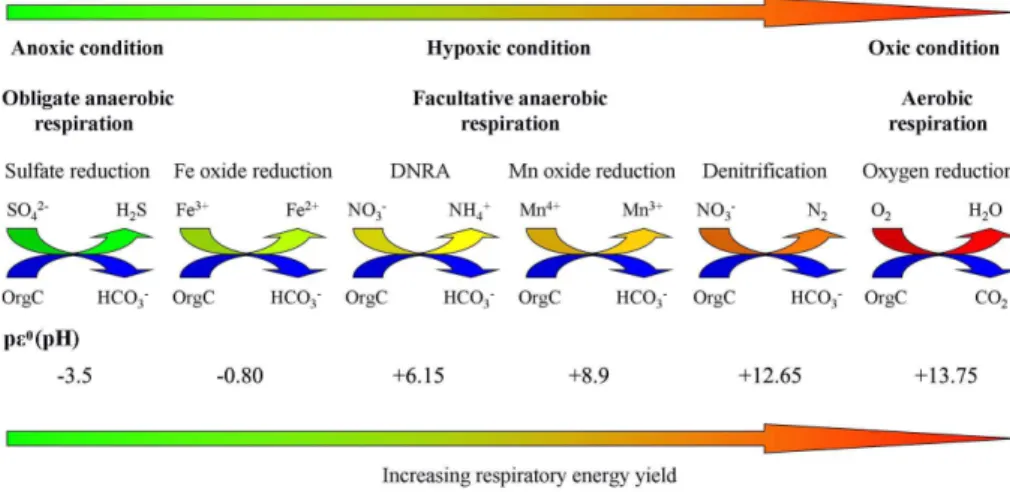
tials spanning oxic, suboxic and anoxic environmental conditions (Wright et al., 2012), but also determines the in situ microbial community respiratory energetics and thus the microbiota ecofunction. For example, different forms of anaerobic respiration, such as denitrification, manganese oxide reduction, dissimilatory nitrate reduction to am-monium (DNRA), iron oxide reduction and sulfate reduction, have distinctly different 5
and decreasing respiratory energy production efficiency (Burgin et al., 2011; Lam and Kuypers, 2011; Wright et al., 2012), which may have an impact on the MCP’s carbon sequestration efficiency in the ocean (Fig. 2). This may seemingly be contradictory to the palaeoceanographical observations that anoxic conditions might be favorable for organic carbon storage in the ocean, especially in the early Earth history (Rothman 10
et al., 2003). However, organic carbon sequestration might be caused mainly by the lack of oxidants in the ancient ocean, which was vastly ferruginous (Shen et al., 2003; Canfield et al., 2008) and thus even favorable for LDOC preservation. However, LDOC is readily remineralized in modern oceans. For marine DOC sequestration, the key is actually to store carbon as RDOC (Jiao et al., 2010). Although estuarine hypoxia and 15
anoxia have already been recognized as a major global environmental problem with significant deleterious effects (Diaz and Rosenberg, 2008), currently no relevant re-search has been proposed to link in situ microbial community respiration physiology and efficiency with MCP functioning and efficiency in different environmental states of estuarine ecosystems.
20
It has been suggested that microbial enzymatic activity plays an important role in the formation of small-molecule RDOC (Amon and Benner, 1996; Ogawa et al., 2001). Nonspecific or promiscuous enzymatic activities may produce abnormal organic molecules that may no longer be recognizable as substrates to microbial enzymes and thus no longer utilizable by microbes (O’Brien and Herschlag, 1999; Ogawa et al., 25
BGD
11, 1479–1533, 2014Perspectives of the microbial carbon
pump
H. Dang and N. Jiao
Title Page
Abstract Introduction
Conclusions References
Tables Figures
◭ ◮
◭ ◮
Back Close
Full Screen / Esc
Printer-friendly Version Interactive Discussion
Discussion
P
a
per
|
D
iscussion
P
a
per
|
Discussion
P
a
per
|
Discuss
ion
P
a
per
|
estuaries. The harmful and varying environmental conditions and the combinations of these factors may present as physiological stressors to estuarine microbes. Under such conditions, microbes may be prone to produce more abnormal compounds caused by suboptimal or even disrupted enzymatic synthesis or transformation of metabolic com-pounds. Whether this scenario represents a realistic MCP mechanism of enhanced 5
RDOC production in the estuarine microbiota remains unsolved and warrants further investigation.
Although many questions remain concerning the MCP efficiency and capacity for car-bon sequestration in estuaries, the multitude of harmful environmental effects caused by escalated anthropogenic activities and global climate change have been established 10
with high certainty. Estuarine hypoxia and repletion of nutrients such as nitrate originat-ing anthropogenically from soil and river systems may stimulate enhanced anaerobic respiration such as denitrification, which may increase the production and release of N2O and other greenhouse gases (Naqvi et al., 2000; Wright et al., 2012). Nitrogenous nutrients, such as nitrate, nitrite, and ammonium, are also consumed to produce N2 15
by marine anaerobic ammonium oxidizing bacteria in suboxic and anoxic aquatic and sediment environments, and are likely coupled to respiratory DNRA or denitrification (Jetten et al., 2009; Lam et al., 2009b; Zehr, 2009). In certain coastal oxygen minimum zones (OMZs), there exists a cryptic S cycle, coupled to intensified denitrification and organic carbon mineralization processes (Thamdrup et al., 2010). Many heterotrophic 20
microbes in general also assimilate nitrate and ammonium for biomass production (Ca-bello et al., 2004; Luque-Almagro et al., 2011; Zehr and Kudela, 2011). Thus, estuarine nutrients such as nitrate may be consumed, to varying degrees, by heterotrophic mi-croorganisms, especially by those anaerobically respiring members instead of being utilized principally by phytoplankton for carbon fixation and primary production. In this 25
BGD
11, 1479–1533, 2014Perspectives of the microbial carbon
pump
H. Dang and N. Jiao
Title Page
Abstract Introduction
Conclusions References
Tables Figures
◭ ◮
◭ ◮
Back Close
Full Screen / Esc
Printer-friendly Version Interactive Discussion
Discussion
P
a
per
|
D
iscussion
P
a
per
|
Discussion
P
a
per
|
Discuss
ion
P
a
per
|
disturbances such as those caused by wind-driven upwelling, forest fires and desert dust depositions can stimulate coastal microbial respiration significantly and thus shift coastal ecosystems strongly towards net heterotrophy (Bonilla-Findji et al., 2010). On the global scale, it has been found that the ecosystem organic carbon pool exhibits consistent and negative correlations with nitrate accrual along a hydrologic continuum 5
from soils, through freshwater systems and coastal margins, to the open ocean (Taylor and Townsend, 2010). Another study has shown that the increase of nitrogen deposi-tion in soils may negatively influence the terrestrial MCP for RDOC storage (Liang and Balser, 2012). Due to the increased overloading of nitrogenous nutrients from anthro-pogenic sources, nutrient eutrophication may also negatively influence the efficiency of 10
marine MCP for RDOC production and sequestration in estuarine environments.
3.2 Compounding anthropogenic perturbations with impacts of climate change
The massive consumption of fossil fuels since global industrialization has brought about an enormous increase in the emission of CO2 into the atmosphere, and it has caused a number of detrimental environmental effects as carbon perturbations. Global 15
warming, ocean acidification, and hypoxia, colloquially referred to as the “deadly trio”, are the major consequences of the ongoing anthropogenic carbon perturbation (Bijma et al., 2013). Due to global warming, the surface water of the ocean is becoming more and more stratified, causing ocean deoxygenation and rapid expansion and shoaling of the open ocean OMZs (Doney, 2010; Keeling et al., 2010; Wright et al., 2012). The 20
continually expanding estuarine and coastal hypoxic zones may interact with the ex-panding open ocean OMZs, potentially giving rise to even more severe environmental and ecological consequences (Gilly et al., 2013). Ocean acidification is another conse-quence of the anthropogenic carbon perturbation (Doney et al., 2009), causing signifi-cant changes to marine biota and their ecofunctions. Ocean acidification has become 25
BGD
11, 1479–1533, 2014Perspectives of the microbial carbon
pump
H. Dang and N. Jiao
Title Page
Abstract Introduction
Conclusions References
Tables Figures
◭ ◮
◭ ◮
Back Close
Full Screen / Esc
Printer-friendly Version Interactive Discussion
Discussion
P
a
per
|
D
iscussion
P
a
per
|
Discussion
P
a
per
|
Discuss
ion
P
a
per
|
new production (Hutchins et al., 2009). Ocean acidification causes the increase of res-piration and thus increased carbon loss in several studied phytoplankton (Wu et al., 2010; Li et al., 2012; Yang and Gao, 2012). pH decrease caused by ocean acidifica-tion may make the affected bacterial or archaeal cell difficult to pump the protons out, thus reducing the cellular energy production and the efficiencies of microbial sensing, 5
signaling, chemotaxis, substrate uptake and many other physiological processes and ecological functions (Danovaro et al., 2011). However, limited research data observed no clear trend for ocean acidification effect on bacterial respiration (Teira et al., 2012; Motegi et al., 2013). Thus, how ocean acidification affects the MCP remains unclear. According to Bijma et al. (2013), the current magnitude of carbon perturbation and the 10
concurrent ocean acidification are unprecedented in the Earth’s history and are occur-ring at a much higher rate than at any time in the past 55 million (Kump et al., 2009) or possibly even 300 million yr (Hönisch et al., 2012).
Furthermore, the combination of the “deadly trio” impacts, along with other severe anthropogenic environmental perturbations, including pollution, eutrophication, and 15
overfishing, exerts the strongest influence on the environment and ecosystem of the ocean and Earth (Bijma et al., 2013). How these perturbations and their combinations influence the ecophysiology (such as respiration and carbon heterotrophic assimilation or autotrophic fixation) of the estuarine microbiota and their biogeochemical function-ing (such as nutrient regeneration and MCP) is currently not clearly understood. This 20
lack of information and knowledge adds to the uncertainty in predicting the future car-bon cycling of the planet and may cause serious delay in strategy formulation and the taking of appropriate action to prevent or lessen carbon-perturbation-induced catas-trophes, which may be much more severe and urgent than what is usually perceived (Bijma et al., 2013).
25
BGD
11, 1479–1533, 2014Perspectives of the microbial carbon
pump
H. Dang and N. Jiao
Title Page
Abstract Introduction
Conclusions References
Tables Figures
◭ ◮
◭ ◮
Back Close
Full Screen / Esc
Printer-friendly Version Interactive Discussion
Discussion
P
a
per
|
D
iscussion
P
a
per
|
Discussion
P
a
per
|
Discuss
ion
P
a
per
|
Wang et al., 2012). This warming effect may have a similar impact on MCP function for organic carbon sequestration in shallow waters of the ocean, especially in estuarine and coastal areas. Elevated temperature and nutrient inputs may accelerate microbial respiration and organic carbon mineralization (Rivkin and Legendre, 2001; Wohlers et al., 2009; Danovaro et al., 2011; Yvon-Durocher et al., 2012), stimulating enhanced 5
biodegradation of semi-recalcitrant DOC (SRDOC) in estuaries. This priming effect may be an important factor in estuarine carbon cycling (Bianchi, 2011), which may not only accelerate microbial decomposition of terrestrial organic carbon but also produce RDOC via MCP for long-term storage as new organic compounds that may be struc-turally different from their terrigenous source molecules. Although marine mesocosm 10
experiments have shown that warming can shift the partitioning of organic carbon be-tween the particulate and dissolved phase toward an enhanced accumulation of DOC under both current and increased CO2 conditions (Wohlers et al., 2009; Kim et al., 2011), this hypothesis has not yet been fully investigated.
Global warming has a seemingly negligible direct impact on the MCP and its carbon 15
sequestration capacity in deep oceans and sediments, which constitute the largest ecosystem on earth (Whitman et al., 1998). However, some indirect influences, such as those via the interactions of shallow water with deep water, coastal water with open ocean water, and seawater with sediments, are entirely possible. Global warming may also influence the interactions of the heterotrophic bacteria and archaea with the ma-20
rine viral community, flora and fauna. The exchange of carbon between POC and DOC throughout the water column of the ocean (Jiao et al., 2013, 2014), presents one of the possibilities that the global warming effect may influence the deep ocean MCP, via its direct influence on the BP and the interaction of BP and MCP.
Most marine waters harbor high abundance of viruses, the majority of which are 25