Characterization of the selection of medicines
for the Brazilian primary health care
Margô Gomes de Oliveira KarnikowskiI, Dayani GalatoI, Micheline Marie Milward de Azevedo MeinersI, Emília Vitória da SilvaI, Letícia Farias GerlackII, Ângelo José Gonçalves BósIII, Silvana Nair LeiteIV,
Juliana ÁlvaresV, Ione Aquemi GuibuVI, Orlando Mario SoeiroVII, Karen Sarmento CostaVIII,IX,X, Ediná Alves CostaXI, Augusto Afonso Guerra JuniorIV,Francisco de Assis AcurcioIV
I Curso de Farmácia. Faculdade de Ceilândia. Universidade de Brasília. Brasília, DF, Brasil
II Programa de Pós-graduação em Ciências e Tecnologias em Saúde. Faculdade de Ceilândia. Universidade de Brasília.
Brasília, DF, Brasil
III Pontifícia Universidade Católica do Rio Grande do Sul. Porto Alegre, RS, Brasil
IV Departamento de Ciências Farmacêuticas. Universidade Federal de Santa Catarina. Florianópolis, SC, Brasil V Departamento de Farmácia Social. Faculdade de Farmácia. Universidade Federal de Minas Gerais. Belo
Horizonte, MG, Brasil
VI Departamento de Saúde Coletiva. Faculdade de Ciências Médicas. Santa Casa de São Paulo. São Paulo, SP, Brasil VII Faculdade de Ciências Farmacêuticas. Pontifícia Universidade Católica de Campinas. Campinas, SP, Brasil VIII Núcleo de Estudos de Políticas Públicas. Universidade Estadual de Campinas. Campinas, SP, Brasil
IX Programa de Pós-Graduação em Saúde Coletiva. Departamento de Saúde Coletiva. Faculdade de Ciências Médicas.
Universidade Estadual de Campinas. Campinas, SP, Brasil
X Programa de Pós-Graduação em Epidemiologia. Faculdade de Medicina. Universidade Federal do Rio Grande do Sul.
Porto Alegre, RS, Brasil
XI Instituto de Saúde Coletiva. Universidade Federal da Bahia. Salvador, BA, Brasil
ABSTRACT
OBJECTIVE: To characterize the process of selection of medicines for primary health care in the Brazilian regions.
METHODS: his article is part of the Pesquisa Nacional sobre Acesso, Utilização e Promoção do Uso Racional de Medicamentos – Serviços, 2015 (PNAUM – National Survey on Access, Use and Promotion of Rational Use of Medicines – Services, 2015), a cross-sectional study that consisted
of an information gathering in a sample of cities in the ive regions of Brazil. he data used
were collected by interviews with those responsible for pharmaceutical services (PS) (n = 506), professionals responsible for the dispensing of medicines (n = 1,139), and physicians (n = 1,558).
To evaluate the diference between ratios, we adopted the Chi-square test for complex samples. he diferences between the averages were analyzed in generalized linear models with F-test with Bonferroni correction for multiple comparisons. he analyses considered signiicant had p≤0.05. RESULTS: he professionals responsible for pharmaceutical services reported non-existence of a formally constituted Pharmacy and herapeutics Committee (PTC) (12.5%). hey claimed to have an updated (80.4%) list of Essential Medicines (85.3%) and being active participants of this process (88.2%). However, in the perception of respondents, the list only partially (70.1%)
meets the health demands. Of the interviewed professionals responsible for the dispensing of
medicines, only 16.6% were pharmacists; even so, 47.8% reported to know the procedures to change the list. From the perspective of most of these professionals (70.9%), the list meets the health demands of the city. Among physicians, only 27.2% reported to know the procedures to change the list, but 76.5% would have some claim to change it. Most of them reported to base their claims in clinical experiences (80.0%). For 13.0% of them, the list meets the health demands. CONCLUSIONS: As this is the irst national survey of characterization of the process of selection
of medicines within primary health care, it brings unpublished data for the assessment of policies related to medicines in Brazil.
DESCRIPTORS: Drugs, Essential, classiication. Pharmacy and herapeutics Committee. Pharmaceutical Services. National Policy of Pharmaceutical Assistance. Primary Health Care. Health Services Research. Uniied Health System.
Correspondence:
Margô Gomes de Oliveira Karnikowski
Faculdade de Ceilândia – Universidade de Brasília Campus Universitário, Centro Metropolitano 1, Conjunto A Prédio Unidade de Ensino e Doc 72.220-275 Brasília, DF, Brasil Email: [email protected]
Received: Mar 31, 2016
Approved: Jan 30, 2017
How to cite: Karnikowski MGO, Galato D, Meiners MMMA, Silva EV, Gerlack LF, Bós AJG, et al. Characterization of the selection of medicines for the Brazilian primary health care. Rev Saude Publica. 2017;51 Suppl 2:9s.
Copyright: This is an open-access article distributed under the terms of the Creative Commons Attribution License, which permits unrestricted use, distribution, and reproduction in any medium, provided that the original author and source are credited.
INTRODUCTION
Selection of medicines is a guiding axis for actions of planning and organization of pharmaceutical services (PS)6. If well conducted, it provides economic gains to the Brazilian Uniied Health System (SUS), as well as to the access to efective, safe, and cost-efective medicines for the patients of the System6. However, in Brazil, weaknesses and barriers can be observed in the selection process, which are critical for the implementation of access and rational use of medicines by the population3.
For the selection to occur adequately, it must meet certain requirements, such as the establishment of a Pharmacy and herapeutics Committee (PTC), which is responsible for the technical, political, and administrative conduction of the process4. he main product of this process is a list of essential medicines (LME), from which should derive the therapeutic form and clinical guidelines. he LME, based on an epidemiological perspective, must contain essential medicines for public health, having their efectiveness, safety, and quality assured and being prescribed and used rationally11.
he selection has the potential to produce results that guide both clinical conducts and management activities related to medicines provided by SUS11. To this end, the selection process must involve the articulation of diferent actors, especially health managers and professionals, both nationally and locally3.
According to the Política Nacional de Medicamentos (PNM – National Drug Policy)7, the existence of a Relação Nacional de Medicamentos Essenciais (Rename – National List of Essential Medicines) does not exempt the responsibility of states, cities, and Federal District to manage their own lists. herefore, the selection of medicines at local level requires managers to deine priorities and efectively allocate human and inancial resources to strengthen and qualify the decentralization of the management4.
Brazil created its irst LME over 50 years ago, and the Brazilian Ministry of Health invested on the development and publication of sequential Renames between 2002 and 2014, as well as on the reorientation of the qualiication of pharmaceutical services9. Despite this, there are still many challenges regarding the selection of medicines in the Country3.
Marques and Zucchi5, for example, mention that few publications disclose the existence of PTC in outpatient and hospital services of SUS. In another national survey, entitled Fala Essencial, in which PS managers discuss their perception of the medicine selection process, of the 20 locations visited, only two states and ive cities had LME3, in contradiction to the PNM7. hus, studies dealing with the selection of medicines in Brazil are scarce. he existing ones identiied the lack of adoption of LME in the cities and in the Federal District, the inexpressive standardization of PTC, and the low rates of use of therapeutic forms and clinical protocols in primary health care3,5,10,11.
he Pesquisa Nacional sobre Acesso, Utilização e Promoção do Uso Racional de Medicamentos – Serviços, 2015 (PNAUM – National Survey on Access, Use and Promotion of Rational Use of Medicines – Services, 2015) aimed to characterize the organization of pharmaceutical services in the primary health care of SUS, to promote the access and rational use of medicines, as well as to identify and discuss the factors that afect the consolidation of pharmaceutical services in the cities.
his article is part of PNAUM – Services and aimed to characterize the selection process in the primary health care of the Brazilian regions.
METHODS
Brazilian regions. Several study populations were considered in the sampling, with samples stratiied by the regions, which constituted the study domains. he PNAUM – Services methodology, as well as the sampling process, are described in detail by Álvares et al. (2017)1.
he data used in this study were collected from the databases of those responsible for pharmaceutical services, professionals responsible for the dispensing of medicines in
Unidades Básicas de Saúde (UBS – Basic Health Units), and physicians from the UBS. he data
were collected by interviews, adopting semi-structured scripts, via telephone or in person.
For determining the proile of respondents, we collected information on sex, age, education level, time in the position, and time of training. he characterization of the selection of medicines process was carried out by the analysis of the variables related to PTC, of the existence of standard operating procedures, List of Municipal Medicines (LMM), therapeutic form and/or clinical protocols, consensus or guidelines, and provision of non-standard medicines.
For this characterization, semi-structured questionnaires were adopted, which sought to describe the perceptions of respondents, i.e., the perception of coordinators of pharmaceutical services, of professionals responsible for the dispensation of medicines, and of physicians. he questions asked to these three actors were not coincident, but complementary, to show with greater comprehensiveness the selection of medicines scenario in the cities and Federal District.
Data analyses were performed using the SPSS 20.0 program, adopting the analysis module for complex samples. he variables were presented for Brazil and for each geographic region. he numerical variables were presented by the averages and by the 95% conidence interval (95%CI) of the averages. Categorical variables were presented by proportions and their 95%CI.
To evaluate the diference between ratios, we adopted the Chi-square test for complex samples. he assessment of the diferences between averages was performed by generalized linear models, and the F-test with Bonferroni correction was adopted for multiple comparisons. he analyses considered signiicant had p ≤ 0.05.
PNAUM was approved by the National Research Ethics Committee, under Opinion no. 398,131, September 16, 2013, with clariication of the research’s objectives to the respondents and signing of the informed consent form.
RESULTS
Among respondents, 1,558 were physicians and 1,139, professionals responsible for the dispensing of medicines in the pharmacies of the health units of the cities that composed the sample. We also conducted interviews by telephone with 506 coordinators of pharmaceutical services of the cities.
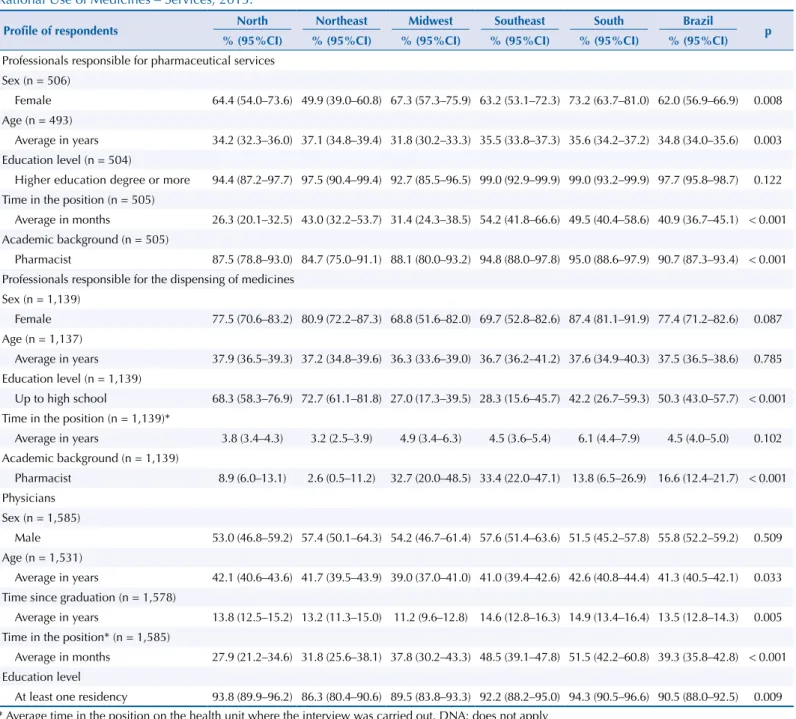
Table 1 presents the results of the proile of the professionals interviewed. Among those responsible for pharmaceutical services, the female sex prevailed (62%, 95%CI 56.9–66.9), with an average age of 34.8 years (95%CI 34.0–35.6), and higher education degree level (97.7%; 95%CI 95.8–98.7), among which 23.4% had attended a graduate course (95%CI 19.3–28.0). Almost all respondents (90.7%, 95%CI 87.3–93.4) declared to be pharmacists and with an average time in the position of over three years.
the other interviewed professionals. 90.5% (95%CI 88.0–92.5) of physicians reported to have at least one residency course.
Few coordinators of pharmaceutical services reported the existence of a formally constituted PTC (12.5%; 95%CI 9.5–16.3). his proportion was lower in the Northeast and North regions (9.5% and 10.7%, respectively) and greater in the South (15.6%), although the diference is not statistically signiicant (Table 2).
Most coordinators (85.3%; 95%CI 81.4–88.5) stated that the city had an LME, of which 80.4% (95%CI 75.6–84.5) were considered to be periodically updated. Furthermore, approximately half of them declared to adopt standard operating procedures (SOP) to perform the selection of medicines in the cities (Table 2).
Still in Table 2, most coordinators (88.2%; 95%CI 84.0–91.4) claimed to have participated in the development of a LME in the city or Federal District. he request for changing the LME (inclusion and exclusion of medicines or intended use) seems to not be very frequent
Table 1. Profile of participants of the selection process, interviewed by region in Brazil. National Survey on Access, Use and Promotion of Rational Use of Medicines – Services, 2015.
Profile of respondents North Northeast Midwest Southeast South Brazil p % (95%CI) % (95%CI) % (95%CI) % (95%CI) % (95%CI) % (95%CI)
Professionals responsible for pharmaceutical services Sex (n = 506)
Female 64.4 (54.0–73.6) 49.9 (39.0–60.8) 67.3 (57.3–75.9) 63.2 (53.1–72.3) 73.2 (63.7–81.0) 62.0 (56.9–66.9) 0.008 Age (n = 493)
Average in years 34.2 (32.3–36.0) 37.1 (34.8–39.4) 31.8 (30.2–33.3) 35.5 (33.8–37.3) 35.6 (34.2–37.2) 34.8 (34.0–35.6) 0.003 Education level (n = 504)
Higher education degree or more 94.4 (87.2–97.7) 97.5 (90.4–99.4) 92.7 (85.5–96.5) 99.0 (92.9–99.9) 99.0 (93.2–99.9) 97.7 (95.8–98.7) 0.122 Time in the position (n = 505)
Average in months 26.3 (20.1–32.5) 43.0 (32.2–53.7) 31.4 (24.3–38.5) 54.2 (41.8–66.6) 49.5 (40.4–58.6) 40.9 (36.7–45.1) < 0.001 Academic background (n = 505)
Pharmacist 87.5 (78.8–93.0) 84.7 (75.0–91.1) 88.1 (80.0–93.2) 94.8 (88.0–97.8) 95.0 (88.6–97.9) 90.7 (87.3–93.4) < 0.001 Professionals responsible for the dispensing of medicines
Sex (n = 1,139)
Female 77.5 (70.6–83.2) 80.9 (72.2–87.3) 68.8 (51.6–82.0) 69.7 (52.8–82.6) 87.4 (81.1–91.9) 77.4 (71.2–82.6) 0.087 Age (n = 1,137)
Average in years 37.9 (36.5–39.3) 37.2 (34.8–39.6) 36.3 (33.6–39.0) 36.7 (36.2–41.2) 37.6 (34.9–40.3) 37.5 (36.5–38.6) 0.785 Education level (n = 1,139)
Up to high school 68.3 (58.3–76.9) 72.7 (61.1–81.8) 27.0 (17.3–39.5) 28.3 (15.6–45.7) 42.2 (26.7–59.3) 50.3 (43.0–57.7) < 0.001 Time in the position (n = 1,139)*
Average in years 3.8 (3.4–4.3) 3.2 (2.5–3.9) 4.9 (3.4–6.3) 4.5 (3.6–5.4) 6.1 (4.4–7.9) 4.5 (4.0–5.0) 0.102 Academic background (n = 1,139)
Pharmacist 8.9 (6.0–13.1) 2.6 (0.5–11.2) 32.7 (20.0–48.5) 33.4 (22.0–47.1) 13.8 (6.5–26.9) 16.6 (12.4–21.7) < 0.001 Physicians
Sex (n = 1,585)
Male 53.0 (46.8–59.2) 57.4 (50.1–64.3) 54.2 (46.7–61.4) 57.6 (51.4–63.6) 51.5 (45.2–57.8) 55.8 (52.2–59.2) 0.509 Age (n = 1,531)
Average in years 42.1 (40.6–43.6) 41.7 (39.5–43.9) 39.0 (37.0–41.0) 41.0 (39.4–42.6) 42.6 (40.8–44.4) 41.3 (40.5–42.1) 0.033 Time since graduation (n = 1,578)
Average in years 13.8 (12.5–15.2) 13.2 (11.3–15.0) 11.2 (9.6–12.8) 14.6 (12.8–16.3) 14.9 (13.4–16.4) 13.5 (12.8–14.3) 0.005 Time in the position* (n = 1,585)
Average in months 27.9 (21.2–34.6) 31.8 (25.6–38.1) 37.8 (30.2–43.3) 48.5 (39.1–47.8) 51.5 (42.2–60.8) 39.3 (35.8–42.8) < 0.001 Education level
At least one residency 93.8 (89.9–96.2) 86.3 (80.4–90.6) 89.5 (83.8–93.3) 92.2 (88.2–95.0) 94.3 (90.5–96.6) 90.5 (88.0–92.5) 0.009 * Average time in the position on the health unit where the interview was carried out. DNA: does not apply
(sometimes 31.0%, rarely 24.1%, and never 31.1%), although the majority of coordinators assumed that the LME only partially (70.1%; 95%CI 64.6–75.0) meets the health demands of the city. Few coordinators reported the existence of therapeutic form or clinical protocols (22.9% and 26.4%, respectively). None of the results presented for these actors showed statistically signiicant diferences between the regions of the Country.
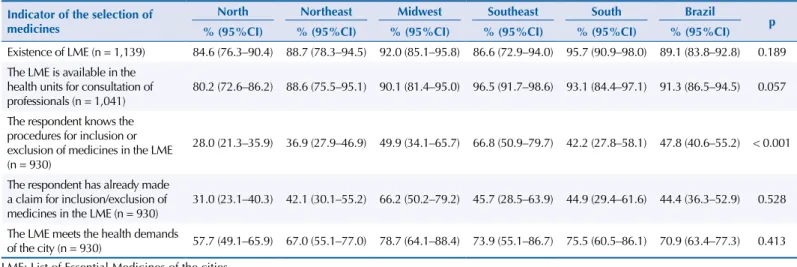
According to the perception of the professionals responsible for the dispensing of medicines, most recognized the existence of a LME in the city (89.1%; 95%CI 83.8–92.8) and stated that the LME is present in the UBS for consultation by the health team (91.3%; 95%CI 86.5–94.5), especially in the Southeast region (96.5%) (Table 3).
Table 2. Characteristics of the medicine selection process, according to the perception of coordinators of pharmaceutical services, by region in Brazil. National Survey on Access, Use and Promotion of Rational Use of Medicines – Services, 2015.
Indicator of the selection of medicines North Northeast Midwest Southeast South Brazil p % (95%CI) % (95%CI) % (95%CI) % (95%CI) % (95%CI) % (95%CI)
Existence of a formally constituted PTC
(n = 503) 10.7 (6.0–18.3) 9.5 (4.8–18.0) 13.6 (8.2–21.9) 13.3 (7.8–21.7) 15.6 (9.8–23.9) 12.5 (9.5–16.3) 0.628 Existence of standard operating
procedures (n = 491) 45.9 (35.6–56.6) 48.8 (37.7–60.0) 51.5 (41.4–61.4) 56.5 (46.5–66.1) 45.9 (36.4–55.7) 50.6 (45.3–55.8) 0.564 Existence of LME (n = 495) 70.6 (60.3–79.1) 90.8 (81.8–95.6) 82.9 (73.7–89.2) 86.9 (78.3–92.4) 82.0 (73.2–88.4) 85.3 (81.4–88.5) 0.077 Periodic update of the LME (n = 419) 82.9 (71.8–90.3) 83.8 (73.3–90.7) 83.1 (73.5–89.7) 81.2 (71.1–88.3) 73.1 (62.6–81.5) 80.4 (75.6–84.5) 0.347 Participation of the respondent in the
development of the LME (n = 418) 90.5 (80.3–95.7) 87.0 (76.9–93.1) 84.7 (74.8–91.1) 90.1 (81.3–95.0) 88.0 (79.0–93.4) 88.2 (84.0–91.4) 0.592
Professionals request changes on the LME (n = 438) 0.804
Sometimes 33.8 (23.8–45.4) 30.2 (20.8–41.6) 31.3 (22.2–42.1) 29.2 (20.5–39.8) 33.6 (24.3–44.3) 31.0 (26.1–36.4) Rarely 23.5 (16.6–36.7) 25.8 (17.0–36.9) 25.8 (17.0–36.9) 24.1 (16.1–34.4) 23.1 (15.4–33.3) 24.1 (19.6–29.3) Never 33.5 (23.5–45.1) 31.4 (21.9–42.8) 31.4 (21.9–42.8) 35.9 (26.3–46.7) 23.8 (15.8–34.1) 31.1 (26.2–36.5)
LME meets the health demands of the city (n = 426) 0.349
Completely 24.6 (15.6–36.5) 27.2 (18.1–38.7) 29.3 (20.4–40.1) 34.6 (25.1–45.5) 27.8 (19.2–38.2) 29.7 (24.7–35.1) Partially 75.4 (63.5–84.4) 72.8 (61.3–81.9) 70.7 (59.9–79.6) 65.4 (54.5–74.9) 71.1 (60.5–79.7) 70.1 (64.6–75.0) Provision of non-standard medicines
(n = 506) 48.5 (38.3–58.7) 38.4 (28.4–49.6) 31.2 (22.7–41.0) 39.0 (29.8–49.2) 48.7 (39.1–58.4) 41.1 (36.2–46.3) 0.222 Existence of criteria for provision of
non-selected medicines (n = 425) 64.8 (52.7–75.2) 56.1 (44.4–67.1) 72.8 (61.9–81.6) 73.9 (63.3–82.3) 71.1 (60.5–79.7) 67.0 (61.5–72.1) 0.081 Existence of a therapeutic form (n = 495) 21.0 (13.7–30.7) 27.9 (19.0–39.1) 16.2 (10.0–25.1) 23.8 (16.2–33.4) 18.3 (11.9–27.2) 22.9 (18.7–27.7) 0.252 Existence of clinical protocols (n = 487) 22.9 (15.3–32.9) 23.4 (15.2–34.3) 31.8 (23.3–41.8) 32.5 (23.7–42.8) 21.2 (14.2–30.4) 26.4 (22.0–31.3) 0.221 PTC: Pharmacy and Therapeutics Committee; LME: List of Essential Medicines of the cities and of the Federal District.
Source: PNAUM – Services, 2015.
Table 3. Characteristics of the medicine selection process, according to the perception of professionals responsible for the dispensing of medicines in the basic health unit, by region in Brazil. National Survey on Access, Use and Promotion of Rational Use of Medicines – Services, 2015.
Indicator of the selection of medicines
North Northeast Midwest Southeast South Brazil
p % (95%CI) % (95%CI) % (95%CI) % (95%CI) % (95%CI) % (95%CI)
Existence of LME (n = 1,139) 84.6 (76.3–90.4) 88.7 (78.3–94.5) 92.0 (85.1–95.8) 86.6 (72.9–94.0) 95.7 (90.9–98.0) 89.1 (83.8–92.8) 0.189 The LME is available in the
health units for consultation of professionals (n = 1,041)
80.2 (72.6–86.2) 88.6 (75.5–95.1) 90.1 (81.4–95.0) 96.5 (91.7–98.6) 93.1 (84.4–97.1) 91.3 (86.5–94.5) 0.057
The respondent knows the procedures for inclusion or exclusion of medicines in the LME (n = 930)
28.0 (21.3–35.9) 36.9 (27.9–46.9) 49.9 (34.1–65.7) 66.8 (50.9–79.7) 42.2 (27.8–58.1) 47.8 (40.6–55.2) < 0.001
The respondent has already made a claim for inclusion/exclusion of
medicines in the LME (n = 930) 31.0 (23.1–40.3) 42.1 (30.1–55.2) 66.2 (50.2–79.2) 45.7 (28.5–63.9) 44.9 (29.4–61.6) 44.4 (36.3–52.9) 0.528 The LME meets the health demands
of the city (n = 930) 57.7 (49.1–65.9) 67.0 (55.1–77.0) 78.7 (64.1–88.4) 73.9 (55.1–86.7) 75.5 (60.5–86.1) 70.9 (63.4–77.3) 0.413 LME: List of Essential Medicines of the cities.
he percentage of these professionals who knew the procedures for changing the LME was 47.8% (95%CI 40.6–55.2), with statistically signiicant diference between the regions (p < 0.001). According to Table 3, this proportion was lower in the North (28.0%; 95%CI 21.3–35.9) and higher in the Southeast (66.8%; 95%CI 50.9–79.7). he percentage of respondents who declared having already claimed for changes was 44.4% (95%CI 36.3–52.9), higher than the percentage of coordinators of pharmaceutical services. From the perspective of most of these professionals (70.9%; 95%CI 63.4–77.3), the LME meets the health demands of the city.
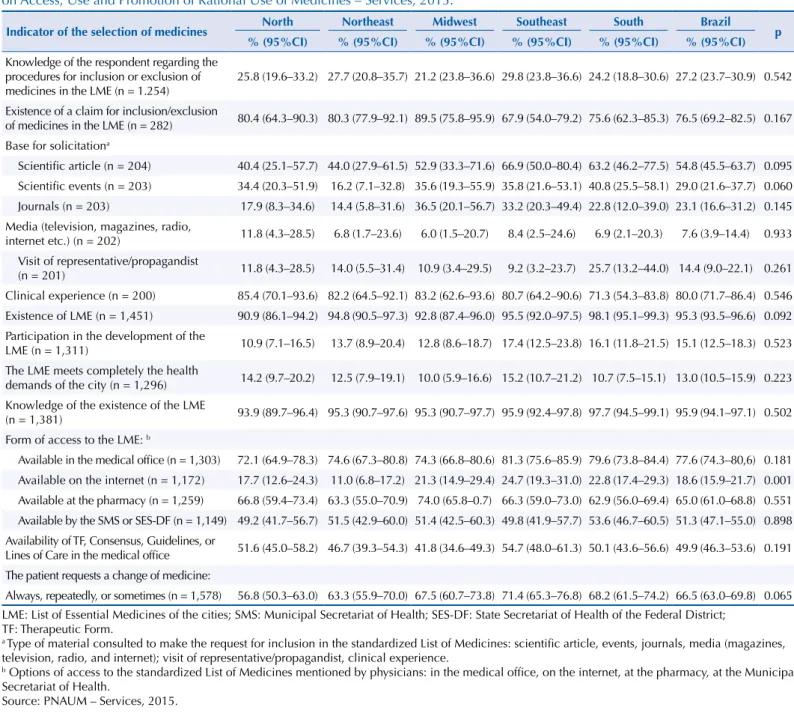
Physicians were asked about the characteristics of the selection of medicines, considering that they are the prescribers (Table 4). Only 27.2% (95%CI 23.7–30.9) of physicians reported to have knowledge of the procedures to change the LME, but 76.5% (95%CI 69.2–82.5) would have some claim to change it. Most reported to base their claims in clinical experiences (80.0%; 95%CI 71.7–86.4) or scientiic articles (54.8%; 95%CI 45.5–63.7).
Most physicians declared to know of the existence of the LME (95.3%; 95%CI 93.5–96.6), without signiicant diferences between the regions of the Country (p = 0.092) (Table 4), with lower proportions in the North and Midwest regions (90.9% and 92.8%, respectively)
Table 4.Characteristics of the medicine selection process, according to the perception of physicians, by region in Brazil. National Survey on Access, Use and Promotion of Rational Use of Medicines – Services, 2015.
Indicator of the selection of medicines North Northeast Midwest Southeast South Brazil p % (95%CI) % (95%CI) % (95%CI) % (95%CI) % (95%CI) % (95%CI)
Knowledge of the respondent regarding the procedures for inclusion or exclusion of
medicines in the LME (n = 1.254) 25.8 (19.6–33.2) 27.7 (20.8–35.7) 21.2 (23.8–36.6) 29.8 (23.8–36.6) 24.2 (18.8–30.6) 27.2 (23.7–30.9) 0.542 Existence of a claim for inclusion/exclusion
of medicines in the LME (n = 282) 80.4 (64.3–90.3) 80.3 (77.9–92.1) 89.5 (75.8–95.9) 67.9 (54.0–79.2) 75.6 (62.3–85.3) 76.5 (69.2–82.5) 0.167 Base for solicitationa
Scientific article (n = 204) 40.4 (25.1–57.7) 44.0 (27.9–61.5) 52.9 (33.3–71.6) 66.9 (50.0–80.4) 63.2 (46.2–77.5) 54.8 (45.5–63.7) 0.095 Scientific events (n = 203) 34.4 (20.3–51.9) 16.2 (7.1–32.8) 35.6 (19.3–55.9) 35.8 (21.6–53.1) 40.8 (25.5–58.1) 29.0 (21.6–37.7) 0.060 Journals (n = 203) 17.9 (8.3–34.6) 14.4 (5.8–31.6) 36.5 (20.1–56.7) 33.2 (20.3–49.4) 22.8 (12.0–39.0) 23.1 (16.6–31.2) 0.145 Media (television, magazines, radio,
internet etc.) (n = 202) 11.8 (4.3–28.5) 6.8 (1.7–23.6) 6.0 (1.5–20.7) 8.4 (2.5–24.6) 6.9 (2.1–20.3) 7.6 (3.9–14.4) 0.933 Visit of representative/propagandist
(n = 201) 11.8 (4.3–28.5) 14.0 (5.5–31.4) 10.9 (3.4–29.5) 9.2 (3.2–23.7) 25.7 (13.2–44.0) 14.4 (9.0–22.1) 0.261 Clinical experience (n = 200) 85.4 (70.1–93.6) 82.2 (64.5–92.1) 83.2 (62.6–93.6) 80.7 (64.2–90.6) 71.3 (54.3–83.8) 80.0 (71.7–86.4) 0.546 Existence of LME (n = 1,451) 90.9 (86.1–94.2) 94.8 (90.5–97.3) 92.8 (87.4–96.0) 95.5 (92.0–97.5) 98.1 (95.1–99.3) 95.3 (93.5–96.6) 0.092 Participation in the development of the
LME (n = 1,311) 10.9 (7.1–16.5) 13.7 (8.9–20.4) 12.8 (8.6–18.7) 17.4 (12.5–23.8) 16.1 (11.8–21.5) 15.1 (12.5–18.3) 0.523 The LME meets completely the health
demands of the city (n = 1,296) 14.2 (9.7–20.2) 12.5 (7.9–19.1) 10.0 (5.9–16.6) 15.2 (10.7–21.2) 10.7 (7.5–15.1) 13.0 (10.5–15.9) 0.223 Knowledge of the existence of the LME
(n = 1,381) 93.9 (89.7–96.4) 95.3 (90.7–97.6) 95.3 (90.7–97.7) 95.9 (92.4–97.8) 97.7 (94.5–99.1) 95.9 (94.1–97.1) 0.502 Form of access to the LME: b
Available in the medical office (n = 1,303) 72.1 (64.9–78.3) 74.6 (67.3–80.8) 74.3 (66.8–80.6) 81.3 (75.6–85.9) 79.6 (73.8–84.4) 77.6 (74.3–80,6) 0.181 Available on the internet (n = 1,172) 17.7 (12.6–24.3) 11.0 (6.8–17.2) 21.3 (14.9–29.4) 24.7 (19.3–31.0) 22.8 (17.4–29.3) 18.6 (15.9–21.7) 0.001 Available at the pharmacy (n = 1,259) 66.8 (59.4–73.4) 63.3 (55.0–70.9) 74.0 (65.8–0.7) 66.3 (59.0–73.0) 62.9 (56.0–69.4) 65.0 (61.0–68.8) 0.551 Available by the SMS or SES-DF (n = 1,149) 49.2 (41.7–56.7) 51.5 (42.9–60.0) 51.4 (42.5–60.3) 49.8 (41.9–57.7) 53.6 (46.7–60.5) 51.3 (47.1–55.0) 0.898 Availability of TF, Consensus, Guidelines, or
Lines of Care in the medical office 51.6 (45.0–58.2) 46.7 (39.3–54.3) 41.8 (34.6–49.3) 54.7 (48.0–61.3) 50.1 (43.6–56.6) 49.9 (46.3–53.6) 0.191 The patient requests a change of medicine:
Always, repeatedly, or sometimes (n = 1,578) 56.8 (50.3–63.0) 63.3 (55.9–70.0) 67.5 (60.7–73.8) 71.4 (65.3–76.8) 68.2 (61.5–74.2) 66.5 (63.0–69.8) 0.065 LME: List of Essential Medicines of the cities; SMS: Municipal Secretariat of Health; SES-DF: State Secretariat of Health of the Federal District;
TF: Therapeutic Form.
a Type of material consulted to make the request for inclusion in the standardized List of Medicines: scientific article, events, journals, media (magazines,
television, radio, and internet); visit of representative/propagandist, clinical experience.
b Options of access to the standardized List of Medicines mentioned by physicians: in the medical office, on the internet, at the pharmacy, at the Municipal
Secretariat of Health.
and higher in the South region (98.1%). he form of access to the lists varied signiicantly: availability in the medical oice (77.6%; 95%CI 74.3–80.6); in the UBS pharmacy (65.0%; 95%CI 61.0–68.8); or in the secretariat of health (51.3%; 95%CI 47.1–55.0); and lower internet access (18.6%; 95%CI 15.9–21.7).
he availability of therapeutic form or consensus, clinical practice guidelines or lines of care in the medical oices of the UBS was mentioned by half of physicians (49.9%; 95%CI 43.6–53.6) (Table 4).
An interesting fact was that the physicians declared that many patients request a change of medicines always, repeatedly, or sometimes (66.5%; 95%CI 63.0–69.8). Few physicians considered that the LME meets the health demands of the city (13.0%; 95%CI 10.5–15.9). Unlike the coordinators of pharmaceutical services, few physicians of the UBS declared to participate in the development of the LME (15.1%; 95%CI 12.5–18.3).
DISCUSSION
The data collected by PNAUM – Services are unseen to the Country regarding the characteristics of the medicine selection process in Brazilian cities and in the Federal District. PNAUM is a pioneer descriptive research with regional and national representativity and approach based on the perspectives of diferent professionals.
We noticed that the average age of all the interviewed professionals was 38 years, higher for physicians (as expected due to the time of undergraduate courses and residency of the professional) and lower for coordinators of pharmaceutical services. his relects that the sample represents adults in a phase of professional improvement and increase of maturity.
Working time in the position was low and quite similar between physicians and coordinators of pharmaceutical services, which could represent a certain similarity with the political-electoral cycle experienced by the Brazilian cities. he low average age of professionals responsible for dispensation could be related to other factors, such as the education level required for this occupation.
he low education level among the professionals responsible for the dispensing of medicines (50.3% up to high school) is a point that deserves relection, as it may represent a professional who is not adequately prepared to provide guidance on the correct use of medicines. his shows the weakness that the patient of SUS primary health care has to achieve safe and responsible use of medicines, as referred to in PNM7 (in its guidelines, priorities and responsibilities of each federated entity) and in the strategic axis XIII of the Política Nacional de Assistência Farmacêutica (PNAF – National Policy of Pharmaceutical Services)8.
he selection process for medicines in the context of the logistics cycle of pharmaceutical services is a fundamental and little studied stage that can inluence the promotion of a safer, more efective, and less costly use of medicines4,10.
We highlight that the PNM7 establishes that the management of pharmaceutical services must be decentralized, with the selection, programming, and procurement of medicines made based on epidemiological criteria to better meet local needs for medicines. For the Brazilian cities and Federal District, therefore, the efective and perennial selection of medicines is an important factor in the management of inancial resources and in the access to essential medicines for the patients of health services.
The results of this research show two concerning aspects regarding compliance to pharmaceutical policiesa,b. Only 12.5% of respondents described the existence of a formally constituted PTC, and only 27.2% of physicians reported to know the criteria for changing the LME, such as inclusion or exclusion of medicines.
However, the existence of a LME is quite recognized by the interviewed professionals (85.3% among those in charge of pharmaceutical services, 89.1% among those responsible for the dispensing of medicines, and 95.3% among physicians), which denotes that there is no technical process free from conlict of interest in the selection of medicines. If there is no constituted PTC, how is the process of selection of medicines conducted? he non-existence of a formalized PTC opens space for the insertion of medicines in the LME to be made without criteria of quality, safety, and efectiveness, as established by the World Health Organization2,12.
he ability of the LME to meet local needs for medicines can be considered quite low in the perspective of 13% of primary health care physicians, 29.7% of coordinators of pharmaceutical services, and 70.9% of professionals responsible for the dispensing of medicines.
This discrepancy in the results can show different views between these professionals. Physicians may be more susceptible to the propagandists of pharmaceutical companies to prescribe medicines that are not listed in the LME, as this advertising is not always accompanied by the criteria of essentiality that must guide the selection of medicines11. At the same time, these prescribers can adapt their prescription to the availability of medicines at the UBS, which can thus influence the perception of professionals responsible for the dispensing of medicines on the UBS. In addition, when prescribing a medicine that is not listed in the LME, the physician should guide patients to purchase the medicines and, therefore, this demand would not be perceived by those dispensing the medicines. Anyway, the results found for physicians and professionals who in charge of the dispensing of medicines in the UBS are antagonistic and deserve to be investigated with more depth.
Still concerning the prescribers, among those who knew the procedures for changing the LME, 76.5% had already claimed for the inclusion or exclusion of medicines, which may be natural, as they are actors who are closely related to the therapeutic choice. However, little more than half of them (54.8%) reported doing this request based on scientiic articles. Considering that the selection of medicines should be based on the best evidence, this can be considered worrisome2,4.
he small availability of therapeutic forms and consensus, guidelines and/or clinical protocols also stands out – estimated, respectively, at 22.9% and 26.4%, from the perspective of the coordinators of pharmaceutical services, and at 49.9% in the perspective of primary health care physicians. According to Wannmacher11, a LME must be complemented by a therapeutic form and clinical protocols, to inluence the rational selection and guidance for the use of medicines adopted in the prevention and treatment of diseases that are prevalent and relevant to the Country.
REFERENCES
1. Álvares J, Alves MCGP, Escuder MML, Almeida AM, Izidoro JB, Guerra Junior AA, et al. Pesquisa Nacional sobre Acesso, Utilização e Promoção do Uso Racional de Medicamentos: métodos.
Rev Saude Publica. 2017;51 Supl 2:4s. https://doi.org/10.11606/S1518-8787.2017051007027
2. Holloway K, Green T, editors. Drug and therapeutics committees: a practical guide. Geneva: World Health Organization; 2003 [cited 2016 Mar 29]. Available from: http://archives.who.int/ tbs/rational/s4882e.pdf
3. Magarinos-Torres R, Pepe VLE, Oliveira MA. Osorio-de-Castro CGS. Medicamentos essenciais e processo de seleção em práticas de gestão da Assistência Farmacêutica
em estados e municípios brasileiros. Cienc Saude Coletiva. 2014;19(9):3859-68.
https://doi.org/10.1590/1413-81232014199.12162013
4. Marin N, Luiza VL, Osorio-de-Castro CGS, Machado-dos-Santos S, organizadores. Assistência farmacêutica para gerentes municipais. Rio de Janeiro; Organização Pan-Americana da Saúde; 2003. 5. Marques DC, Zucchi P. Comissões farmacoterapêuticas no Brasil: aquém
das diretrizes internacionais. Rev Panam Salud Publica. 2006;19(1):58-63.
https://doi.org/10.1590/S1020-49892006000100014
6. Messeder AM, Osorio-de-Castro CGS, Luiza VL. Mandados judiciais como
ferramenta para garantia do acesso a medicamentos no setor público: a experiência
do Estado do Rio de Janeiro, Brasil. Cad Saude Publica. 2005;21(2):525-34.
https://doi.org/10.1590/S0102-311X2005000200019
7. Ministério da Saúde (BR), Secretaria de Políticas de Saúde, Departamento de Formulação de Políticas de Saúde. Política Nacional de Medicamentos. Brasília (DF); 2001 [cited 2017 Feb 9]. (Série C. Projetos, Programas e Relatórios, 25). Available from: http://bvsms.saude.gov.br/bvs/ publicacoes/politica_medicamentos.pdf
8. Ministério da Saúde (BR). Conselho Nacional de Saúde. Resolução nº 338 de 06 de maio de 2004.
Aprova a Política Nacional de Assistência Farmacêutica. Diario Oficial Uniao. 20 maio 2004; Seção
1:52 [cited 2016 Mar 25]. Available from: http//www.saude.gov.br/doc/ resolucaocns338/cns.htm 9. Portela AS, Leal AAF, Werner, RPB, Simões MOS, Medeiros ACD. Políticas públicas de medicamentos:
trajetória e desafios. Rev Cienc Farm Basica Apl., 2010 [cited 2017 Feb 22];31(1):9-14. Available from:
http://serv-bib.fcfar.unesp.br/seer/index. php/Cien_Farm/article/viewFile/930/930
10. Santana RS, Jesus EMS, Santos DG, Lyra Júnior DP, Leite SN, Silva WB. Indicadores da seleção de
medicamentos em sistemas de saúde: uma revisão integrativa. Rev Panam Salud Publica. 2014 [cited
2015 May 26];35(3):228-34. Available from: http://www.scielosp.org/pdf/rpsp/ v35n3/a10v35n3.pdf
11. Wannmacher L. Seleção de medicamentos essenciais: propósitos e consequências. Rev Tempus
Actas Saude Coletiva. 2010 [cited 2017 Feb 9];4(3):23-9. Available from: http://www.tempus. unb.br/index.php/tempus/article/viewFile/875/838
12. World Health Organization. WHO model list of essential medicines:18th list (April 2013). Geneva; 2013[cited 2015 May 26]. Available from: http://www.who.int/medicines/ publications/ essentialmedicines/en/index.html
Funding: Department for Pharmaceutical Services and Strategic Health Supplies and Department of Science
and Technology of the Secretariat of Science, Technology and Strategic Supplies of the Brazilian Ministry of
Health (SCTIE/MS – Process 25000.111834/2, Decentralization of FNS Resources).
Authors’ Contribution: Conception and planning of the study: MGOK, DG, LFG, AJGB. Data analysis and interpretation: DG, MMMAM, EVS. Writing of the manuscript: MGOK, DG, LFG, MMMAM, EVS. Critical review of the content and approval of the inal version of the manuscript: SNL, JA, IAG, FAA, OMS, KSC, EAA, AAG Jr., FAA. All authors declare to be responsible for all aspects of the study, ensuring its accuracy and completeness.
Acknowledgements: To the Brazilian Ministry of Health, for the funding and technical support for the conduction of PNAUM; to the researchers and their institutions of Higher Education and Research that were part of the Survey; and to the Executive Coordination of PNAUM – Services, of the Federal University of Minas Gerais.