ENVIRONMENTAL IMPLICATIONS of CO
2ABSORPTION BY PERVIOUS
CONCRETE PAVEMENT IN URBAN ROADS
de Oliveira, Evailton Arantes1*; Guerreiro, Maria João2; Abreu, Isabeu3 & Dinis, Maria Alzira
Pimenta 4
Initial submission: 2019-05-24; Definitive submission: 2019-11-06; Publication: 2019-12-21
Citation: de Oliveira, E.A. et al. (2019). CO2 Environmental Implications of CO2 Absorption by Pervious
Concrete Pavement in Urban Roads. In XIII CTV 2019 Proceedings: XIII International Conference
on Virtual City and Territory: “Challenges and paradigms of the contemporary city”: UPC,
Barcelona, October 2-4, 2019. Barcelona: CPSV, 2019, p. 8425. E-ISSN 2604-6512. DOI
http://dx.doi.org/10.5821/ctv.8425
Abstract
This research deals with a new material, made from conventional pervious concrete, but with the addition of two components in its mixture, calcium hydroxide (Ca(OH)2), to improve its carbon dioxide (CO2) absorption properties from the atmosphere, and Scrap Tyre Tubes (STT), a rubber waste from used tyres of vehicle (motorcycles and cars), which makes the new material lighter and contributes to urban sustainability by reusing industrial waste automotive. Conventional pervious concrete has a main property that benefits the environment, which is natural from its porous structure, which is the permeability of the urban pavement, which allows the drainage of rainwater from the urban pavement to the underground, contributing to the reduction of flooding in cities through the infiltration of water into the groundwater. This research sought to improve conventional pervious concrete through additives in its mix to create a new porous material, more efficient at sequestering CO2 from the atmosphere, lighter and reusing rubber waste from used tyres. The porosity of conventional pervious concrete makes this material ideal for carbon dioxide (CO2) sequestration due to the ease of CO2 penetration into its internal structure pore network, which interacts with cement and other additives, which by means of a chemical reaction called carbonation, absorbs CO2 from the atmosphere to form calcium carbonate (CaCO3) in its internal structure, which is an excellent environmental benefit for the materials used in the manufacture of urban pavements, as it makes the urban pavement contribute directly for air quality and for the control of pollution emanating from motor vehicles traveling on urban roads. In this investigation were performed laboratory tests of compressive strength and permeability, because these are the most important properties of conventional permeable concrete that make this building material a porous pavement that can be used on urban roadways, these properties are essential for the new pervious concrete material, were also CO2 volume monitoring in contact with specimens of conventional pervious concrete and specimens of new material, because this environmental benefit of CO2 absorption from the atmosphere is very important for the control of air quality in large metropolis, which have high levels of pollution that affect the life of urban citizens, causing respiratory diseases in old and children. In this research, 40 conventional pervious concrete were manufactured with limestone aggregate, to serve as a control group in the statistical analysis and 10 specimens of the new material of pervious concrete also were manufactured with proportions of 1:0.5:4 (cement:Ca(OH)2:pebble), factor water/cement (w/c) of 0.30, with 5% STT in mix, because the proportion of SST in the mix defines how much waste tyre waste can be reused in the manufacture of this new material. The STT is a non-biodegradable material that occupies a lot of urban space, so it harms the environment and the quality of life of the urban citizen, an alternative to reuse STT in the mix of new pervious concrete material is a very important sustainable solution to modern cities around the world due to the progressive annual increase of this waste tire rubber from automotive industries. In this research the results of the tests served to compare compression and permeability, as well as monitoring the absorption of CO2 from the atmosphere of the different groups. The results of the compressive strength and permeability tests and CO2 volume monitoring were analyzed statistically for normality and the t-Student test. This analysis showed that the improvement of environmental properties harms the physical properties of the new material with compressive strength of 1.25 MPa, permeability of 7.00 mm/s and 5% of STT in the mix of new material of the pervious concrete, however, this new permeable concrete material can be used in non-structural works, such as
1 University Fernando Pessoa (UFP), Porto, Portugal, https://orcid.org/0000-0001-8055-8044; 2 University Fernando Pessoa (UFP), UFP Energy, Environment and Health Research Unit (FP-ENAS), Porto, Portugal, https://orcid.org/0000-0001-6774-9348; 3 University Fernando Pessoa (UFP), UFP Energy, Environment and Health Research Unit (FP-ENAS), Porto, Portugal, http://orcid.org/0000-0001-5274-4536; 4 University Fernando Pessoa (UFP), UFP Energy, Environment and Health Research Unit (FP-ENAS), Porto, Portugal, https://orcid.org/0000-0002-2198-6740. * Contact e-mail:[email protected]
environmental benefits it produces and cannot be neglected.
Key words: sustainable pavement; air quality; urban pollution control
1. Introduction
New, cheaper and more efficient carbon dioxide (CO2) capture techniques to control urban
pollution and reduce the greenhouse effect are in high demand (Bhawna et al., 2019), so this research is important for reducing CO2 emitted by factories, industries, vehicles and other
combustion engines that promote pollution in the urban atmosphere, and this research also contributes to the recycling of waste tyres that increase each year in cities, the reuse of waste tyres from automotive factories is urgently needed because waste tyres are not biodegradable and take up a lot of urban space (Arulrajah et al., 2019), and the European Commission determines that by 2020 in Europe 50% of waste is recycled or reused (Directive 2008/98/EC, 2008). This research deals with the study of a new material, created from conventional pervious concrete, material formed by cement, aggregates and water with porous properties (Lori et al.,
2019). The new material has the addition of calcium hydroxide (Ca(OH)2) in its mixture, which
uses the porous internal structure of pervious concrete to produce the following chemical reactions: calcination, hydration and carbonation. Calcination (eq.1) is an endothermic reaction that produces calcium oxide (CaO); Hydration (eq.2) is an exothermic chemical reaction that
produces Ca(OH)2, a cheap and abundant material in nature; and carbonation (eq.3), which is
an exothermic chemical reaction that captures CO2 from the atmosphere to produce calcium
carbonate (CaCO3), (Jamrunroj et al., 2019).
CaCO3(s) CaO(s) + CO2(g) H = + 178 kJ/mol (1) CaO(s) + H2O(aq) Ca(OH)2(s) H = - 178 kJ / mol (2) Ca(OH)2(s) + CO2(g) CaCO3(s) + H2O H = - 178 kJ / mol (3)
More complex CO2 capture studies have been performed in China (Li et al., 2019), including the
use of artificial atmospheric pressure to accelerate carbonation, but it is a very expensive and energy-intensive method in urban environments. In the search for cheaper solutions, it was decided in this research to study the addition of Ca(OH)2 to the pervious concrete during the
preparation, because the high porosity of this material facilitates the penetration of external
gases of the atmosphere, which catalyze the carbonation in the process for the CO2
sequestration, as the pH within the internal structure (De Oliveira, 2018). Studies for adsorption
of CO2 by porous solid materials used techniques for CO2 capture technologies with CaO-based
sorbent, applied for high-temperature (Jamrunroj et al., 2019), but it is also a process that uses a lot of energy and is very expensive.
The new material keeps the characteristics of pervious concrete conventional of infiltrating rainwater and allowing it to infiltrate the soil, it preserves groundwater and reduces the flow of rainwater on urban roads, preventing flooding and car accidents caused by aquaplaning (Sun et al., 2019). The type of aggregate, pebble or limestone in the permeable concrete mix influences its physical and environmental properties (Kovác and Sicaková, 2018), therefore in this research we used the 2 types of aggregates, pebble and limestone, in each control group of specimens. A holistic view of the environment in which pervious concrete will be applied is required during the engineering design phase by studying the benefits and sustainability and durability of pervious concrete (Xie et al., 2019).
In addition to the environmental benefits of CO2 absorption from the atmosphere, the new
automotive industry, which could contribute to the movement of the circular waste economy already implemented in Europe. Tyre waste recovery is already becoming a trend in more developed countries, according to the European Tyre and Rubber Manufacturers Association over 3.6 million tons per year of tyre waste was reused in Europe (ETRA, 2015), despite initial resistance due to contamination of tyre waste by steel particles and rubber dust making reuse and recycling difficult (Onuaguluchi and Banthia, 2019). The European Union volume of waste generated each year, about 15 million tons per year (Eurostat, 2016) is of concern, as it tends to grow as the world fleet of vehicles also grows, knowing that the used tyre is It is a non-biodegradable material and occupies a lot of urban space, although it can be stacked (Arulrajah et al., 2019). More and more studies on tyre waste utilization are being carried out, such as the reuse in foundations of construction works, respecting the load and overload limits of infrastructure and soil (Gill and Mittal, 2019), reuse of fibers rubber in concrete strengths, called concrete reinforcement fibers (FRC), tested in the laboratory to obtain better strength of concrete, within the limits of the technical standards governing the fabrication of structural reinforced concrete (Chen et al., 2019) and the reuse of rubber waste at the base and subbase of flexible asphalt pavement as well as asphalt aggregate itself (Saberian et al., 2019). Studies are also being conducted for the use of recycled tyre polymer fibers (RTPF) as micro reinforcement in concrete mixtures (Baricevic et al., 2018). In Brazil the problem of tyre waste is more serious than in Europe, because waste management by the circular economy has not yet been implemented, and the volume per year of Construction and Demolition Waste (RCD) and other waste only tends to increase each year (Lamego Oliveira et al., 2019). In Australia, studies have shown a growing increase in landfills and solid waste generation, which has
increased CO2 emissions in that region, mainly due to burning of rubber waste (Saberian and Li,
2018). This is why the importance of recycling and reuse of construction waste materials (CCR), such as the recycling of rubber waste pavement (Li et al., 2018). Recycling and reuse of
materials can reduce CO2 emissions and according to UN environmental policy the temperature
of the planet is rising every year because of the greenhouse effect and urgent measures must be taken to reduce greenhouse gas emissions (IPCC, 2018). All of these studies prove the increasingly urgent need for reuse and recycling of used tyre waste to keep pace with the increasing volume/year of this waste, a volume that grows with the growing fleet of vehicles in the world, and so harms the environment. The new material under study in this research also allows the reuse of tyre waste through scrap tyre tubes (STT) in the mixture during its manufacture. The study conducted in this research is very important for improving air quality and for recycling and reusing tyre waste in the cities.
The main objective of this research is to verify the behavior of the physical properties of the new pervious concrete material when subject to the improvement of environmental properties by adding Ca(OH)2 and STT to the mixture during its manufacture. Secondary objectives are the
collection of data on physical and environmental properties of the new pervious concrete
material through tests of compressive strength and permeability, as well as monitoring of CO2
volume, in isolated environment, in the presence of specimens of the new pervious concrete
with Ca(OH)2 and STT additives.
2. Materials and Methods
In this research the methodology applied for the preparation of pervious concrete specimens was from ASTM C192, with the moulds made of PVC pipe, in the dimensions of 200.0 mm (height) by 100.0 mm (diameter), and the characterization of the aggregates was done by
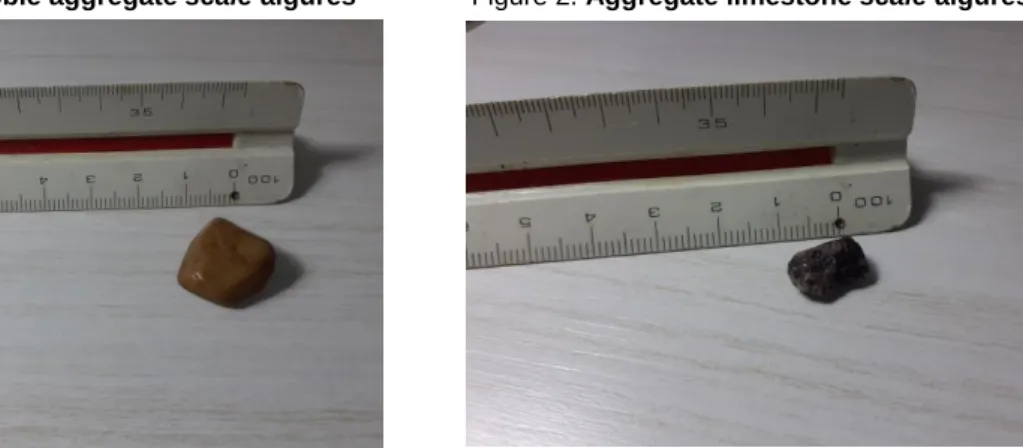
granulometry test, ASTM C136, of pebble and limestone aggregates, approximately 4.5 mm to 9.0 mm in size, through sieving. The methodology applied to the rubber tyre reuse STT specimens was the one performed by Boon et al. (2017). The pebble aggregate, Figure 1, originated from the Juruá River (Amazon), the limestone, Figure 2, originated from the crushing processing of rocks found in the neighboring cities of Manaus (Amazonia) and the STT, Figure 3, used in this research originated from discarded used tyres in the city of Manaus (Amazonia).
Figure 1. Pebble aggregate scale algures Figure 2. Aggregate limestone scale algures
Source: authors.
Recycling of used tires follows the methodology proposed by Boon et al. (2017), carried out by processing the STT which is washed to remove impurities and cut into small rectangular shaped rubber particles, with an average size of 10.0 mm by 6.00 mm, for mixing during the manufacture of permeable concrete. The proportion of tube-rubber particles is 5% of the cement mass, about 19.0 kg/m³ of STT. The value of 5% was proposed by Boon et al. (2017) after conducting tests with the proportions of 3%, 5% and 7% to verify the physical properties with the mixture of STT in pervious concrete, which concluded that when STT is added to the mass of pervious concrete the physical properties of compressive strengths are impaired. In this research we have adopted the average value of 5% STT in relation to the pervious concrete mix so as not to overly affect the compressive strength property of our new pervious concrete material with STT. Figure 4 shows the tube-rubber particles after preparation and ready for mixing into the pervious concrete mass during their manufacture.
Figure 3. Scrap Tyte Tube (STT) Figure 4. Tube-rubber particles scale algures
The tests were carried out at the Laureat Universit International Concrete Laboratory, in Manaus, Amazonas, Brazil. The methodology used followed the activity flowchart of Figure 5.
Figure 5. Activity Flowchart
Source: authors.
The pervious concrete specimen with STT is shown in the Figures 6 and 7.
Figure 6. Pervious concrete with STT Figure 7. Pervious concrete weighing with STT
Source: authors.
The granulometry tests were carried out, the following proportions of aggregates were determined in the pervious concrete mixtures, according to percentage of sieves #4.75 (30%), #6.3 (40%) e #9.5 (30%). The molds were manufactured for the preparation of pervious
concrete species in the laboratory. The molds were made of PVC, with the dimensions of 100 x 200 mm, according to ASTM C192. The methodology applied to calculate the trace of pervious concrete was the one proposed by Batezini and Balbo (2015) for the mixture ratio of Pervious Concrete. The materials used were the ordinary Portland cement CP IV 32, aggregates and water. The sand was not used in the mixture, only pebble and calcareous gravel. A 180,000 cm3 three-phase concrete mixer was the equipment used to mix the aggregates and cement at a ratio of 1: 4.4, with a water/cement factor (w/c) of 0.30. The mixing ratio of pervious concrete is composed of 380.0 kg/m³ cement, 1,700 kg/m³ coarse aggregate, factor 0.30 (w/c), and 1:4.4 (cement:aggregate) with 19.0 kg/m³ of STT. The 10 specimens of pervious concrete with 19.0 kg/m³ of STT were manufactured in this research. The 40 specimens of pervious concrete conventional were produced with limestone aggregate, according to the molding in Figure 3, and demoulding occurred in 24 h, to serve as a control group in the statistical analysis. Studies were carried out with 10 specimens new material of the pervious concrete with an increase of Ca(OH)2 during its mixture, with the proportions of 1:0.5:4 (cement:Ca(OH)2: pebble), factor
0.30 (w/c), in order to verify the ratio with better performance in the tests. In this research were carried out tests of permeability and compressive strength of specimens of pervious concrete. The permeability coefficient or hydraulic conductivity of the permeability was calculated by evaluated based on eq.4 (Batezini and Balbo, 2015). The methodology used in laboratory tests followed ASTM standards according to modern laboratory techniques and proposed technological precepts (Aliabdo et al., 2018).
k =
VL
aht
(4)Where:
k - permeability coefficient or hydraulic conductivity (mm/s) V - volume of drained water (mm3)
L - specimen length (mm)
a - permeameter PVC pipe section area (mm2)
h - water column height (mm) t - time (s)
A permeameter was built with PVC tubes ɸ50.00 mm to evaluate the permeability coefficient of
pervious concrete (Afonso et al., 2019). The Figure 8 show the equipment used in test of the permeability.
Figure 8. Permeameter equipment
The pervious concrete specimens were ruptured at compressive strength at 7, 14 and 28 days after casting, as per ASTM C-39 (2018). The equipment used for the rupture tests was a calibrated and certified Pavitest100 hydraulic press with a rupture capacity of up to 100 t and equipped with a digital display.
Figure 9. Test of Compreension Strength
Source: authors.
The monitoring of CO2 volume was performed through the equipment digital carbon dioxide
(CO2) gas meter, temperature and humidity, measuring in the range 0-9999 ppm CO2 and +/- 50
ppm CO2 accuracy. A carbon dioxide digital carbon meter and a digital timer measure the
changes in CO2 in the atmosphere in contact with the pervious concrete specimens were placed
under a 10,000 cm3 sealed acrylic chamber as shown in Figure 10. The CO2 monitoring tests
were performed with the control group of 40 samples of conventional permeable concrete and 10 samples of the new permeable concrete material with STT.
Figure 10. The monitoring of CO2 volume
Source: authors.
The statistical analysis was performed with the statistical package SPSS version 25 2019. The control groups formed by 40 specimens of the pervious concrete conventional with limestone aggregate and treated group formed by 10 specimens new material of pervious concrete. The study performed the statistical analysis to verify the normality of the data. The specimens group
of the new material with Ca(OH)2 additive in proportion 1:0.5:4 (cement:Ca(OH)2):pebble), factor
water/cement (w/c) of 0.30, and the 5% STT group in their mixture were treated for comparison with the control groups.
3. Results and Discussion
Figure 11 shows the results of the specimens of pervious concrete conventional control group and the results of the treated group of the new material pervious concrete with additives for analysis and comparison.
Figure 11. Results of Tests Compressive Strength
Source: authors.
Analyzing the data shown in Figure 12 it can be stated that when comparing the pervious concrete conventional control groups with limestone aggregate and new material with STT in the compressive strength results, about 15% to 20% reduction in compressive strength, probably due to the addition of additive in the mix of new pervious concrete material with natural aggregate of river gravel type, pebbles of limestone, quartz and various metamorphits (Kovác and Sicaková, 2018). Comparing the results of the groups formed by the new pervious concrete with addition of Ca(OH)2 and STT, it is found that the best result was the group control of
pervious concrete conventional without addition of Ca(OH)2 in the ratio of 1:0.50:4
(cement:Ca(OH)2:pebble) and without STT. The new pervious concrete group with Ca(OH)2
addition at a ratio of 1: 0.50: 4 (cement:Ca(OH)2:pebble) shows results about 15% to 20% loss
than the pervious concrete control group, probably due to the internal pore structure of the pervious concrete that has been filled by the additives to make the material more compact and durable. The worst result was the new pervious concrete group with 5% STT added, because the addition of STT impairs the mechanical strength of the material (Boon et al., 2017), which shows that the addition of Ca(OH)2 and STT additives impair the compressive strength of the
pervious concrete material. Excess additive in the pervious concrete mix impairs the pervious concrete mix making the material more fragile and poorly resistant. The results demonstrate that the amount of additives to be added to the pervious concrete mix, such that the material has acceptable loss in compressive strength without weakening it, and maintain the benefits to the
urban sequestration environment CO2 and recycling of used vehicle tires is the ratio of 1: 0.50: 4
(cement:Ca(OH)2:pebble) with an additive of 5% STT. Further future studies should be
performed to prove this hypothesis, including field experimentation of the new pervious concrete
material with additives that improve CO2 absorption and allow the reuse of used tires,
environmental benefits that offset the loss of compressive strength. This is because this new material can be used in works that do not require structural strength, such as pedestrian sidewalks, garden pavements, etc. The results of the permeability tests of the specimens of pervious concrete conventional control groups and the treated group of the new pervious concrete with additives and STT are shown in Figure 12.
Figure 12. Results of Tests Permeability
Source: authors.
The permeability coefficient or hydraulic conductivity is one of the most important property of permeability medium (Afonso et al., 2019). Analyzing Figure 12, it can be seen that the pervious concrete conventional control group presented the best result, about 20% to 30% higher than the other groups, probably due to the smooth faces structure of the river aggregate that facilitates the passage of water through the internal pore network in the pervious concrete structure. The conventional pervious concrete control group with limestone aggregate had a lower result than the pebble aggregate group, probably due to the shape and roughness of this aggregate that make it difficult for water to pass through the internal pore network of the pervious concrete. The compressive strength result and this permeability result indicate the
pebble as an efficient aggregate for the new pervious concrete material with Ca(OH)2 and STT
additives. Comparing the results of the new pervious concrete material groups with additives in the ratios of 1:0.50:4 (cement:Ca(OH)2:pebble) it is observed that as we add additive to the
pervious concrete mixture the permeability coefficient decreases in the same proportion. The explanation for this result is that the additive fills the internal voids of the internal pore structure of the pervious concrete, so the more void filling, the lower the permeabilization capacity of the
new pervious concrete with Ca(OH)2 additive. Excessive addition of additive to the new pervious
rather than porous. In the new material pervious concrete the permeability is reduced because the additive aims the porus. The group formed by the new 5% STT permeable concrete material is among the worst results in Figure 12, also due to the tube-rubber particles filling the pore voids of the internal structure of the new pervious concrete with additives, proving to be harmful to this physical property of permeability. This research seeks to improve the environmental properties of conventional pervious concrete, but it is challenging because as you enhance the environmental benefits of this material needed for quality improvement in cities and on the planet, such as improved air quality and recycling of non-biodegradable materials such as used tire rubber, physical properties are impaired, impaired and may even be negated in that material, depending on the amount of additive added to the new pervious concrete mix during its use manufacturing.
The results of tests of the monitoring CO2 volume the control group with specimens pervious
concrete conventional and treated group with new material of pervious concrete with STT
demonstrate that the CO2 monitoring results with pervious concrete conventional were null, due
to the slow absorption of CO2 through cement carbonation, but the results with the new material
showed results with an average of 7.00 ppm/s CO2 sequestration.
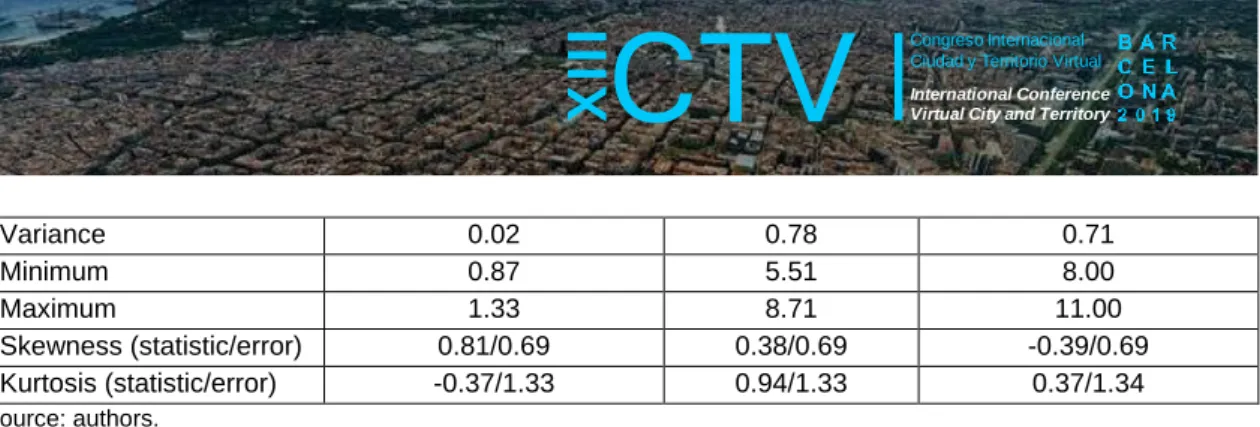
Table 1 show the statistical data from the results of the compressive strength and permeability
and CO2 sequestration tests between the control groups and the treated group. The
comparative results of the test means show that there was a reduction in the compressive strength and permeability properties due to the addition of additive in the permeable concrete mix. The gain in CO2 volume sequestration in the properties of the new material of pervious
concrete is accompanied by a loss in the main properties in compressive strength and permeability.
Table 1. Descriptive statistics for the control group (40 specimens) and treated
group (10 specimens)
CONTROL GROUP (40 Pervious Concrete Conventional with limestone aggregate)
Treated specimens Compressive Strength
(kg/cm2) Permeability (mm/s) Sequestration Volume CO2 (ppm/s) Mean 2.19 8.93 0.00 95% confidence interval 1.98- 2.40 8.62-9.24 0.00 Median 2.13 8.42 0.00 Variance 0.43 0.95 0.00 Minimum 1.14 7.80 0.00 Maximum 4.19 10.67 0.00 Skewness (statistic/error) 1.10/0.37 0.68/0.37 Kurtosis (statistic/error) 1.57/0.73 0.37/-1.09 -0.37/1.33
TREATED GROUP (10 New Pervious Concrete with additive and SST)
Treated specimens Compressive Strength
(kg/cm2) Permeability (mm/s) Sequestration Volume CO2 (ppm/s) Mean 1.06 6.97 9.60 95% confidence interval 0.95-1.17 6.34-7.60 9.00-10.20 Median 1.02 6.96 10.00
Minimum 0.87 5.51 8.00
Maximum 1.33 8.71 11.00
Skewness (statistic/error) 0.81/0.69 0.38/0.69 -0.39/0.69 Kurtosis (statistic/error) -0.37/1.33 0.94/1.33 0.37/1.34
Source: authors.
Comparing the statistical data found that control group 1 has better results than control group 2, demonstrating that in pervious concrete the pebble aggregate is more efficient than limestone aggregate. Comparing the control group 1 with the other treated groups, found a decrease in the physical properties results, showing that the additives incorporated in the new permeable concrete mixture impair their physical qualities, as the amount of additive increases.
The control group is significantly different from the treated group, as observed in Table 2. According to Figure 12 the new permeable concrete material with additives showed better results than the conventional permeable concrete control group, about 20 to 30%, but the result was due to the 1: 0.50 ratio being optimized, since the addition of Additive in the mixture causes the material to break down and its strength to resist. Figure 13 shows a negative result for the new STT additive permeable concrete group, as it shows a 5 to 15% reduction in permeability compared to the control group. The additive fills the voids in the internal pore network, which impairs the permeability coefficient or the hydraulic conductivity of the new material. Whereas in Figure 12 there is an apparent increase in resistance, probably due to the new material becoming more compact with the addition of additive in its mix, but Figure 13 demonstrates that this material compactness reduces permeability. A balance between compressive strength and permeabilide is very important and can only be found through testing.
Due to the non-normality of all the variables of the treated group, the nonparametric Mann-Whitney test was applied to all variables to compare the treated group with the control group as presented in Table 2. The results of the volume CO2 sequestration were not presented because the control group presented null results.
Table 2. Mann-Whitney U test for the treated and control groups
Process Compressive Strength Permeability
Mann-Whitney U 5.500 23.000
Significance (bilateral) 0.000 0.000
Source: authors.
Table 3 shows the normality test statistics of the Shapiro-Wilk with tests of the compressive
strength, permeability and sequestration volume CO2.
Table 3. Shapiro-Wilk normality test statistics
Control Group 1 Treated Group
Statistics df Sig. Statistics df Sig.
Compressive Strength 0.923 40 0.010 0.894 10 0.189
Permeability 0.847 40 0.000 0.975 10 0.935
Sequestration Volume CO2 0.890 10 0.172
4. Conclusions
In this research, the main objective was achieved when it was found that the addition of
Ca(OH)2 and STT in the mixture of the new pervious concrete material, during its manufacture,
presents a behavior detrimental to the physical properties of compressive strength and
permeability, despite improve their environmental benefits from CO2 sequestration and reuse of
rubber the old tires. The data obtained in this research it was found that the proportion of the
new pervious concrete material that presented better results was 1:0.5:4
(cement:Ca(OH)2:pebble), with water factor cement (w/c) of 0.3, and a 5% of STT. The new
pervious concrete material with Ca(OH)2 and STT additives can be used in non-structural works
such as pedestrian walkways, garden pavements, architectural beautification of building facades and interiors of homes. For further research suggest more tests to find an optimal balance between the improvement of environmental properties through additives in the mixing of the new pervious concrete material with loss of the physical properties of this material.
Acknowledgements: The authors are grateful to University Fernando Pessoa, Porto, Portugal
for the guidance provided. This research had no external funding sources.
Author’s contributions: The first author PhD student Evailton Arantes de Oliveira performed
the bibliographic research, the laboratory essays and wrote the manuscript, the second author Professor Doctor Maria João Guerreiro guided the methodology applied in the essays, revised the manuscript and assisted in the translation into English, the third Author Professor Doctor Isabeu Abreu performed the statistical analysis of the results and the fourth author Professor Maria Alzira Dinis reviewed the manuscript, assisted in formatting, English translation and general research orientation.
Conflicts of Interest: The authors declare no conflict of interest.
Bibliography
Afonso, M.L.; Santos, T.S.; Fael, C.S.; Dinis-Almeida, M. (2019). Hydraulic Conductivity of the Permeable Asphalt Pavement –Laboratory vs in Situ Test. IOP Conference Series: Materials
Science and Engineering, 471, 022023. DOI https://doi.org/10.1088/1757-899X/471/2/022023 Aliabdo, A. A.; Elmoaty, A. E.; Fawzy, A. M. (2018). Experimental investigation on permeability indices and strength of modified pervious concrete with recycled concrete
aggregate. Construction and Building Materials, 319, 105-127. DOI
https://doi.org/10.1016/j.conbuildmat.2018.10.182
Arulrajah, A.; Mohammadinia, A.; Maghool, F.; Horpibulsuk, S. (2019). Tire derived aggregates as a supplementary material with recycled demolition concrete for pavement
applications. Journal of Cleaner Production, 230, 129-136. DOI
https://doi.org/10.1016/j.jclepro.2019.05.084
Arulrajah, A.; Mohammadinia, A.; Maghool, F.; Horpibulsuk, S. (2019). Tyre derived aggregates and waste rock blends: Resilient moduli characteristics. Construction and Building
ASTM Standard C127. (2015). Density, Relative Density (Specific Gravity), and Absorption of Coarse Aggregate. American Society for Testing and Materials, West Conshohocken, PA ASTM Standard C136. (2014). Test Method for Sieve Analysis of Fine and Coarse Aggregates. American Society for Testing and Materials, West Conshohocken, PA
ASTM Standard C192. (2018). Standard Practice for Making and Curing Concrete Test Specimens in the Laboratory. American Society for Testing and Materials, West Conshohocken, PA
ASTM Standard C39. (2018). Standard Test Method for Compressive Strength of Cylindrical Concrete Specimens. American Society for Testing and Materials, West Conshohocken, PA Baricevic, A.; Pezer, M.; Rukavina, M.J.; Serdar, M.; Stirmer, N. (2019). Effect of polymer fibers recycled from waste tires on properties of wet-sprayed concrete. Construction and
Building Materials, 176, 135–144. DOI https://doi.org/10.1016/j.conbuildmat.2018.04.229 Batezini R. y Balbo J. T. (2015). Study on the hydraulic conductivity by constant and falling head methods for pervious concrete. Revista IBRACON de Estruturas e Materiais, 8(3),
248-259. DOI https://doi.org/10.1590/S1983-41952015000300002
Bhawna; Pandey, A.; Dhingra, D.; Pandey, S. (2019). Can common liquid polymers and
surfactants capture CO2? Journal of Molecular Liquids, 277, 594-605. DOI:
10.1016/j.molliq.2018.12.121
Boon, k.H.; Yeoh, D.; Jamaluddin, N. (2017). Properties of Pervious Concrete Containing
Scrap Tyre Tubes. MATEC Web of Conferences, 103, 01015. DOI
https://doi.org/10.1051/matecconf/201710301015
Chen, M.; Chen, W.; Zhong, H.; Chi, D.; Wang, Y.; Zhang, M. (2019). Experimental study on dynamic compressive behaviour of recycled tyre polymer fibre reinforced concrete. Cement
and Concrete Composites, 98, 95-112. DOIhttps://doi.org/10.1016/j.cemconcomp.2019.02.003 De Oliveira, E. A.; Santos, M. F.; Souza, J. A. A.; Campos, A. M. L.; Lamego Oliveira, M. P. S.; Guerreiro, M. J. C. S.; Dinis, M. A. P. (2018). Environmental implications of pH in a pervious concrete pavement on highway BR-319, Amazonas, Brazil. Current World
Environment Journal, 13, 187-193. DOI https://doi.org/10.12944/CWE.13.2.03
European Commission. (2008). Directive 2008/98/EC on waste (Waste Framework Directive).
Environment. Retrieved from http://ec.europa.eu/environment/waste/framework/
European Tyre and Rubber Manufacturers Association - ETRA. (2015). End-of-life Tyre
Report: Downloaded on 08 September, 2019. Retrieved from
http://www.etrma.org/uploads/Modules/Documentsmanager/elt-report-v9a-final.pdf
Eurostat. (2016). Packaging waste statistics. Retrieved from
https://ec.europa.eu/eurostat/statistics-explained/index.php/Packaging_waste_statistics Gill, G. y Mittal, R.K. (2019). Use of waste tire-chips in shallow footings subjected to eccentric loading-an experimental study. Construction and Building Materials, 199, 335-348. DOI
IPCC - Intergovernmental Panel on Climate Change. (2018). United Nations, Geneva, Switzerland. https://www.ipcc.ch, Accessed 20 May 2019.
Jamrunroj, P.; Wongsakulphasatch, S.; Maneedaeng; A.; Cheng, C.K.; Assabumrungrat, S. (2019). Surfactant assisted CaO-based sorbent synthesis and their application to
high-temperature CO2 capture. Powder Technology, 344, 208-221. DOI
https://doi.org/10.1016/j.powtec.2018.12.011
Kovác, M. y Sicaková, A. (2018). Pervious concrete as an environmental solution for
pavements: focus on key Properties. Environments, 5(11), 1-9. DOI
https://doi.org/10.3390/environments5010011
Lamego Oliveira, M.P.S.; De Oliveira, E.A.; Freitas, R.R.; Campos, A.M.L.S.; Fonseca, A.M. (2019). Waste Management at Construction Sites in the Municipality of Manaus, Amazonas, Brazil: Characterization of the Current Situation. Current World Environment, 14(2), 326-335. DOI:10.12944/CWE.14.2.17
Li, J., Jacobs, A.D.; Hitch, M. (2019). Direct aqueous carbonation on olivine at a CO2 partial
pressure of 6.5 Mpa. Energy, 173, 902-910. DOI https://doi.org/10.1016/j.energy.2019.02.125
Li, J.; Saberian, M.; Nguyen, B.T. (2018). Effect of crumb rubber on the mechanical properties of crushed recycled pavement materials. Journal of Environmental Management, 218,
291-299. DOI https://doi.org/10.1016/j.jenvman.2018.04.062
Lori, A.R.; Hassani, A.; Sedghi, R. (2019). Investigating the mechanical and hydraulic characteristics of pervious concrete containing copper slag as coarse aggregate.
Construction and Building Materials, 197, 130-142. DOI
https://doi.org/10.1016/j.conbuildmat.2018.11.230
Onuaguluchi, O. y Banthia, N. (2019). Value-added reuse of scrap tire polymeric fibers in cement-based structural applications. Journal of Cleaner Production, 231, 543-555. DOI
https://doi.org/10.1016/j.jclepro.2019.05.225
Saberian, M. y Li, J. (2018). Investigation of the mechanical properties and carbonation of construction and demolition materials together with rubber. Journal of Cleaner Production,
202, 553-560. DOI https://doi.org/10.1016/j.jclepro.2018.08.183
Saberian, M.; Li, J.; Setunge, S. (2019). Evaluation of permanent deformation of a new pavement base and subbase containing unbound granular materials, crumb rubber and
crushed glass. Journal of Cleaner Production, 230, 38-45. DOI
https://doi.org/10.1016/j.jclepro.2019.05.100
Sun, J.; Zhang, J.; Gu, Y; Huang, Y.; Sun, Y.; Ma, G. (2019). Prediction of permeability and unconfined compressive strength of pervious concrete using evolved support vector.
Construction and Building Materials, 207, 440-449. DOI
https://doi.org/10.1016/j.conbuildmat.2019.02.117
Xie, N.; Akin, M.; Shi, X. (2019). Permeable concrete pavements: A review of environmental benefits and durability. Journal of Cleaner Production, 210, 1605-1621. DOI