UNIVERSIDADE TÉCNICA DE LISBOA
INSTITUTO SUPERIOR DE AGRONOMIA
CHARACTERIZATION OF GENOMIC POLYPLOIDS PLASTICITY
IN THE WHEAT-RYE SYSTEM
TESE APRESENTADA PARA OBTENÇÃO DO GRAU DE DOUTOR EM BIOLOGIA
ORIENTADORA: INVESTIGADORA MANUELA GOMES DA SILVA CO- ORIENTADORA: PROFESSORA WANDA VIEGAS
JÚRI
Presidente: Reitor da Universidade Técnica de Lisboa
Vogais: Maria João Collares Pereira, professora catedrática da Faculdade de Ciências da Universidade de Lisboa;
Doutor José Eduardo Lima Brito, professor associado da Universidade de Trás-os-Montes e Alto Douro;
Doutor Jorge Alexandre Matos Pinto de Almeida, professor associado do Instituto Superior de Agronomia da Universidade Técnica de Lisboa;
Doutor Benvindo Martins Maças, investigador auxiliar da Estação Nacional de Melhoramento de Plantas do Instituto Nacional de Recursos Biológicos, I.P., na qualidade de especialista;
Doutora Maria Manuela Antunes Gomes da Silva, investigadora auxiliar do Instituto Superior de Agronomia da Universidade Técnica de Lisboa.
MIGUEL ÂNGELO MARTINS OLIVEIRA BENTO
LISBOA 2011
Aos meus pais; à minha irmã;
Abstract
Polyploidization is a remarkable driving force in plant evolution, where hybridization and chromosome doubling result in huge genomic stress. Deeper knowledge about parental genomes behaviour in a hybrid nucleus and on processes underlying genetic and epigenetic modifications induced by polyploidization is essential to understand such evolutive process.
Using triticale as model species we evaluated the impact of polyploidization through molecular and cytological approaches. Genomic rearrangements involving retrotransposons and microsatellites related sequences include both repetitive and coding sequences, and revealed a preferential loss of rye-origin bands. Chromosome distribution of such marker sequences demonstrated moreover enrichment in heterochromatic domains. Intensification of rye genome rearrangements was also disclosed in wheat lines with disomic additions of rye chromosomes, probably due to unbalanced genomic constitution.
An integrative review of genomic modulation evaluated in Triticeae hybrid/polyploidy species unravelled furthermore higher restructuring of larger parental genomes, emphasizing the importance of genome size homogenization. Epigenetic analysis of nucleolar dominance in wheat addition line with rye nucleolar chromosomes revealed an unexpected up-regulation of ribosomal genes from wheat-origin, suggesting that mutual and opposite expression patterns modifications are induced by genome interactions.
Altogether we demonstrate that heterochromatic domains are highly involved in parental genomes adjustments required to polyploids stabilization.
Key-Words: Polyploidization, Triticeae, Triticale, Wheat, Rye, Wheat-rye
trigo-centeio.
Resumo
A poliploidização é uma das principais forças evolutivas em plantas, sendo essencial um conhecimento profundo dos processos subjacentes às alterações genómicas e epigenéticas associadas a este processo evolutivo.
O triticale foi utilizado como espécie modelo para avaliar o impacto da poliploidização utilizando técnicas moleculares e citológicas. Identificaram-se rearranjos genómicos envolvendo sequências repetitivas e codificantes associadas a retrotransposões e microssatélites, afectando preferencialmente o genoma de centeio. A distribuição cromossómica dessas sequências demonstrou a sua predominância em domínios heterocromáticos. Paralelamente, em linhas de trigo com a adição dos cromossomas de centeio, observou-se uma intensificação de rearranjos nesse genoma, provavelmente resultante do desequilíbrio genómico parental.
A integração dos estudos realizados em híbridos/poliplóides pertencentes à tribo Triticeae demonstrou a reestruturação preferencial do genoma parental maior, realçando a importância da homogeneização genómica.
A análise epigenética dos genes ribossomais na linha de trigo com introgressão de cromossomas nucleolares de centeio, indica que o processo de dominância nucleolar induz modificações mútuas dos padrões de expressão genica dos progenitores.
Este trabalho enfatiza assim a importância da modulação dos domínios heterocromáticos parentais na estabilização dos organismos poliplóides.
Palavras-chave: Poliploidização, Triticeae, Triticale, Trigo, Centeio, Linhas de
Adição trigo-centeio, Retrotransposões, Microssatélites, Reestruturação Genómica, expressão de rDNA.
Preamble
Polyploidization occurred throughout the evolutionary history of all eukaryotes, especially in flowering plants including many important crops. Such process is an important speciation mechanism with profound impacts on biodiversity and ecosystems. Hybridization and chromosome doubling induce significant genetic and epigenetic modifications but underlying mechanisms need yet to be disclosed (Chen 2007; Ainouche and Jenczewski 2010).
The research project we developed intend to contribute for a deeper understanding of polyploidization consequences at the genomic and epigenetic levels, studying some hybrid genotypes of the wheat-rye system, as the synthetic polyploid triticale and the entire set of wheat lines with the disomic addition of rye chromosomes.
The major goal of this project was to disclose modifications induced by polyploidization at the genomic level through comparative analysis of triticale with the respective wheat and rye parental lines. With such purpose PCR-based techniques were adopted, namely Inter Retrotransposons Amplified Polymorphism (IRAP), Retrotransposons Microsatellite Amplified Polymorphism (REMAP), and Inter Simple Sequence Repeat (ISSR) which target repetitive elements with high copy number in plants genomes as retrotransposons and microsatellites. In this study we pretend to evaluate the rate of genomic rearrangements induced in triticale and characterize the sequences involved. The genomic effects of the introgression of smaller rye chromatin fractions in wheat background was also pursued through the analysis of the entire set of wheat-rye addition lines produced by triticale backcross to wheat parental line followed by selfing generations.
Polyploidization is known to affect also repetitive coding sequences in hybrid genotypes through epigenetic remodeling. One of the best known phenomenon of gene expression modulation in polyploid organisms is nucleolar dominance, where only one parental set of ribosomal rRNA genes are transcribed (dominant NORs), whereas rRNA genes inherited from the other parent are silent (under dominant
analyzed, that of dominant NORs was never assessed. The transcriptional activity of wheat dominant NORs in the wheat-rye system was investigated using quantitative real-time PCR in the wheat line with the addition of rye nucleolar chromosome pair 1R.
Table of contents
Abstract i Resumo iii Preamble v Chapter I - Introduction 1 1.1. Genomes organization 11.1.1 Tandem repetitive sequences 1
1.1.2. Transposable elements 4
1.2. Polyploidization as an evolutive process 6
1.2.1. Natural polyploids 8
1.2.2. Synthetic polyploids 10
1.3. Genomes remodeling in polyploids 13
1.4. Epigenetic changes in polyploids 16
Chapter II - Polyploidization as a retraction force in plant genome evolution:
sequence rearrangements in Triticale 21
2.1. Abstract 22
2.2. Introduction 23
2.3. Results 26
2.4. Discussion 37
2.5. Material and methods 41
2.6. References 43
2.7. Supporting Information 46
Chapter III - Genome merger: from sequence rearrangements in triticale
to their elimination in wheat–rye addition lines 47
3.1. Abstract 48
3.2. Introduction 48
3.3. Material and methods 50
3.4. Results 53
3.7. Electronic Supplementary Material 66
Chapter IV - Interplay of ribosomal DNA loci in nucleolar dominance:
dominant NORs are up-regulated by chromatin dynamics
in the Wheat-Rye system 71
4.1. Abstract 72
4.2. Introduction 73
4.3. Results and Discussion 75
4.4. Concluding Remarks 76
4.5. Material and Methods 77
4.6. References 79
4.7. Supporting Information 81
Chapter V - Size matters in Triticeae polyploids: larger genomes have
higher remodelling 83
5.1. Abstract 84
5.2. Introduction 85
5.3. Polyploid genomic analysis 87
5.4. Genome rearrangements events revealed by band losses 89 5.5. Genome rearrangements frequencies in triticale depend on
sequence types and wheat ploidy levels 91
5.6. Parental genomes are differently restructured during
hybridization and polyploidization 93
5.7. Size matter in triticale genome rearrangements: larger genome
are more affected 95
5.8. References 99
Chapter VI - Conclusion and Perspectives 103
References 111
List of abbreviations 121
Chapter I
1. Introduction
1.1. Genomes organization
In plants, genome size may vary as much as 1000-fold, ranging from 125 Megabases (Mbp) in Arabidopsis thaliana (The Arabidopsis Genome Initiative, 2000), to 12 000 Mbp in Triticum durum (Boyko et al., 1984) or 123 000 Mbp in
Fritillaria assyriaca (Bennett and Smith, 1976). Most of the large plant genomes
are mainly composed by repeated sequences and a small fraction of single or low copy sequences (Li et al., 2004b). Recently, an integrative view of plant genomes as systems whose architecture and organization is structured by repetitive elements was developed allowing a deeper understanding of theirs importance and roles (Morgante, 2006).
Triticeae genomes, on average, contain about 8% genes and gene related sequences and as much as 90% or even slightly more of repetitive sequences (reviewed in Dvořák, 2009). Repetitive DNA sequences were extensively studied in some large cereal genomes from three different Triticeae clades, namely
Hordeum vulgare, Triticum monococcum, and Secale cereale, representing 76%,
80%, and 92%, respectively (Flavell et al., 1974).
Repetitive sequences comprehend two basic categories: tandem repeated sequences and interspersed sequences. The first category includes satellite DNA (repeated sequences present as long uninterrupted arrays); microsatellite or simple sequence repeats (short repeats with one to six base pairs); and ribosomal DNA (45S and 5S rRNA genes). The second class consists mainly of transposable elements (TE) (Li et al., 2004a).
1.1.1. Tandem repetitive sequences
Tandem repeats may have high copy numbers but usually only account for a relatively small portion of the genome (Li et al., 2004a). Tandem repeats are mainly located in centromeric and telomeric domains of Triticeae chromosomes, but can also be present in interstitial heterocromatic domains (Dvořák, 2009).
Although it was not yet conclusively proved that tandem repeats are sufficient or necessary for centromere function, a prominent role in their correct chromatin conformation was suggested (Lamb et al., 2007). Tandem repeats presence in centromeric regions was also confirmed in several other species, such as rice and
Arabidopsis, but primary sequence and organization is highly variable even among
closely related species (Dvořák, 2009). Sequence motifs of centromeric repeats are usually distinct from those present in subtelomeric regions, although some repeat families may be present in subtelomeric regions in one species and in centromeric regions of others (Dvořák, 2009).
Telomeric regions of barley (Roder et al., 1993), rye (Schwarzacher and Heslop-Harrison, 1991) and wheat (Werner et al., 1992) chromosomes were shown to be capped with TTTAGGG sequence repeats, the most common telomeric repeat in plants (Lamb et al., 2007) first characterized in A. thaliana (Richards and Ausubel, 1988). The number of those repeats ranges between 2-5 Kbp in Arabidopsis (Shakirov et al., 2005), is higher than 25 Kbp in barley (Roder et al., 1993), varies between 8-50 Kbp in rye, and between 15-175 Kbp in wheat (Vershinin and Heslop-Harrison, 1998).
Juxtaposed to the arrays of telomeric repeats are telomere-associated sequences (TAS). The presence of TAS was detected in all Triticeae species investigated to date. Different numbers of TAS families are present in distinct Triticeae species, probably due to divergence, amplification, and deletion processes which occurred in distinct Triticeae lineages (Dvořák, 2009). TAS sequences were firstly isolated in rye and classified accordingly to repetition periodicities into the following four major families: 120 bp, 480 bp (renamed 350-family since this one was more common among Triticeae), 610 bp and 630 bp (reviewed in Dvořák, 2009). In rye, TAS are present in high copy number, representing 8 to 12% of the genome (Bedbrook et al., 1980). Arrays of the 120 bp family are often located in interstitial regions but the remaining rye TAS families are almost exclusively on sub-telomeric domains (Jones and Flavell, 1982). Later on such TAS families were also mapped in other genomes from the Triticeae tribe. For instance, the 120 bp family present in 1.5x10⁶ copies in S. cereale genome, was also detected in reduced amounts in subtelomeric domains of Triticum, Aegilops, Hordeum, and Critesion chromosomes. The 350-family present at least in 2x10⁵ copies in S. cereale, was observed in other Triticeae genera, such as Agropyron, Critesion, Australopyrum,
Pseudoroegneria, Psathyrostachys, and Leymus. New TAS families were further
identified in other Triticeae, such as in Ae. tauschii (pAS1/pTA1/Afa family with 340 bp), Leymus racemosus (pLrTai-I family with 570 bp), and Hordeum spp. (HvT01 family with 118 bp) (reviewed in Dvořák, 2009).
Microsatellites or simple-sequence repeats (SSRs) are widespread in eukaryotic genomes. Microsatellites consist of short motifs of one to six base pairs, repeated in tandem arrays up to 100 bp with identical, composite or degenerate motifs, and distributed through the whole genome (Chambers and MacAvoy, 2000). SSRs are highly abundant within genomes, and present high variation in the number of repeats in different loci and between individuals (Cuadrado and Schwarzacher, 1998). It has been estimated that on average a dinucleotide repeat longer than 20 bp in length occurs every 33 Kbp in plant genomes (Wang et al., 1994). Although microsatellites are present in both non-coding and coding regions, their frequency is higher in transcribed regions, especially in untranslated ones (UTRs) (Rakoczy-Trojanowska and Bolibok, 2004). In cereals 1.5%–7.5% of expressed sequences tags (ESTs) consist of SSRs (Li et al., 2004b). Trinucleotide repeats are the most common motifs in SSRs, followed by either dinucleotide or tetranucleotide repeats (Varshney et al., 2005). In the majority of plant species, AAG is the most frequent triplet motif, although CCG is the commonest one in cereal species (reviewed in Li et al., 2004b).
Ribosomal genes are also organized in tandem repeated sequences. 45S rRNA genes are organized in tandem arrays of rDNA units clustered at the nucleolus organizer regions (NORs). In plant genomes, each unit with approximately 10 Kb comprehends 18S, 5.8S, and 25-28S coding sequences, as well as transcribed and nontranscribed spacers (Heslop-Harrison, 2000). Hundreds or thousands of copies of 45S rRNA genes can be present in plant genomes, representing up to ~10% in some species (~8% in Arabidopsis) (Rogers and Bendich, 1987). 5S rDNA units usually consist of a highly conserved 120 bp coding region and a nontranscribed spacer of variable length. The number of 5S rDNA repeats per genome can be over 75 000 (Sastri et al., 1992) organized in tandem at one or more loci (Dvořák, 2009; Heslop-Harrison, 2000).
Transcription and processing of 45S and 5S ribosomal rRNA genes and assembly of ribosomal sub-units occurs in the nucleolus, the largest and most visible nuclear domain. The nucleolus contains rRNA transcripts at different maturation stages and a multitude of proteins required for ribosomal subunits assemble (reviewed in Brown and Shaw, 2008). The nucleolus also has functions in processing and assembly a variety of ribonucleoprotein particles associated with cell cycle control and senescence as well as stress sensors. Furthermore, nucleoli might also be involved in transcriptional gene silencing, mRNA surveillance and nonsense-mediated decay, and mRNA export (reviewed in Brown and Shaw, 2008).
In S. cereale a single 45S Nor locus is present on chromosome 1R (Appels et al., 1980), while T. aestivum has six Nor loci present on chromosomes 1A, 5A, 1B, 6B, 5D and 7D (Mukai et al., 1991; Jiang and Gill, 1994). NORs located on chromosomes 1B and 6B comprehend 90% of total wheat rDNA sequences and are responsible for 90% of rRNA transcripts, and hence are called major NORs. By opposition, the remaining are designated as minor NORs (Appels et al., 1980; Martini and Flavell, 1985). Nucleolar volume is poorly correlated with the number of ribosomal RNA genes allocated in each NOR domain, being mainly associated with the number of active rRNA genes present (Flavell and Odell, 1979; Martini and Flavell, 1985).
1.1.2. Transposable elements
Interspersed repeated sequences correspond mainly to transposable elements (TEs), which are ubiquitous in all organisms and drive the structure, function, and evolution of genes and genomes (Bennetzen, 2000). TEs were discovered by Barbara McClintock in 1944 while studying the effect of X-rays in maize chromosomes. She observed high levels of maize seedlings with bizarre phenotypes associated with distinct chlorophyll intensities and distribution patterns in defined leaf sectors. Latter on McClintock correlated such phenotypes with gene expression regulation mediated by mitotic events that lead one daughter cell to gain something that the other cell has lost. She called such elements “controlling elements” and proved that they could transpose or change position on chromosomes (McClintock, 1984).
In general terms, TEs are stretches of DNA that move throughout the genome and typically fall into two basic classes, based on their transposition intermediate: RNA (retrotransposons or class I) and DNA (DNA transposons or class II).
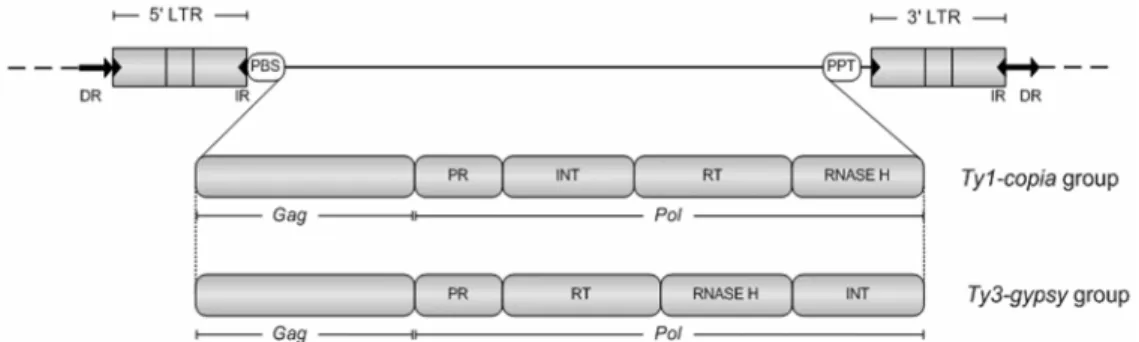
Retrotransposons move via RNA intermediates by a ‘copy-and-paste’ mechanism and are subdivided into long-terminal repeat (LTR) and non-LTR type. LTR-Retrotransposons are further divided into Copia and Gypsy accordingly with the architecture of the coding sequence (composed of GAG-Capsid protein, Aspartic proteinase, Integrase, Reverse transcriptase and RNase H genes). Terminal-repeat retrotransposons in miniature (TRIMs) also belong to LTR-Retrotransposons but lack coding sequences and thus are non-autonomous. Non-LTR retrotransposons are divided into long (LINE) and short (SINE) interspersed nuclear elements.
DNA transposons move via DNA intermediates, by either a ‘cut-and-paste’ mechanism or DNA replication. Most DNA transposons are bordered by terminal inverted repeats (TIRs) and are either autonomous (with the transposase gene) or non-autonomous (lacking the transposase gene). Miniature inverted-repeat transposable elements (MITEs) represent a heterogeneous group of very short TEs and finally Helitrons are TEs that replicate via a rolling-circle mechanism (reviewed in Wicker et al., 2007).
TEs represent a considerable fraction of plant genomes, especially in plants with big genomes. Maize is composed of approximately 50% of TEs, in a proportion of 98% retrotransposons and 2% DNA transposons (Meyers et al., 2001) and in
Aegilops tauschii genome TEs represent ~68%, corresponding 78% to
retrotransposons and 22% to DNA transposons (Li et al., 2004a). On the other hand, Arabidopsis thaliana comprehends 5.6% of retrotransposons in its genome (Peterson-Burch et al., 2004) and 16% TEs are present in the rice genome, represented by 88% of retrotransposons and 12% of DNA transposons (Mao et al., 2000).
TEs can be a source of mutations, deletions, insertions, frameshifts, inversions, translocations and duplications. Because of their properties TEs greatly contribute to structural repatterning of genomes and can also affect gene expression and function by inserting into genic regions. Furthermore, TEs expression and mobility seem to respond to specific stimuli, such as environmental stress conditions (Bennetzen, 2000).
In Arabidopsis both Copia-like and Gypsy-like retrotransposons tend to cluster within pericentromeric heterochromatin. This association is significantly pronounced for all three Gypsy-like retrotransposons identified (Metavirus, Tat and Athila), and Tat and Athila are strictly associated with pericentromeric heterochromatin (Peterson-Burch et al., 2004). In Triticeae species many TEs are non-randomly distributed along chromosomes as shown in maize (SanMiguel et al., 1996) and wheat, where several intergenic sequences are enriched in LTR retroelements, showing a complex nested insertion pattern (Wicker et al., 2001). Complete and truncated copies of Gypsy-like retrotransposons were shown to exist in primary constrictions of barley, wheat, Aegilops, and rye chromosomes (Dvořák, 2009). In A. tauschii, each TE family either has specific chromosomal territories or shares them with other families. In such regions where distinct TE families coexist, nested insertions and illegitimate recombination can occur extensively between families, probably leading to internal deletions, usually detected in a vast majority of TEs (Li et al., 2004a). In Triticeae species CACTA DNA transposons tend to be associated with genes (Wicker et al., 2003), and MITEs are usually inserted into genes or their immediate surrounding sequences (Sabot et al., 2005) and the same is observed in other cereal grasses (Bureau and Wessler, 1994). A bias insertion of TEs is responsible for nonrandom distribution observed among TE families within chromosomes. Such is the case of centromere proximal regions of Ae. tauschii chromosomes enriched in LTR retrotransposons Laura and Erica while centromere distal regions are enriched in CACTA family Caspar (Li et al., 2004a).
1.2. Polyploidization as an evolutive process
In polyploids more than two basic sets of chromosomes (genomes) share the same nucleus. Polyploidization is a natural process that occurs spontaneously and can also be artificially recreated. Accordingly with genomes origin polyploids can be classified into autopolyploids or allopolyploids and can comprehend different ploidy levels. Autopolyploids result from genome doubling within the same
species, and allopolyploids are formed by the combination of two or more distinct but usually related genomes (Ma and Gustafson, 2008).
Two prevailing models can be considered for the natural emergence of allopolyploids, namely: the “two-step” model involving interspecific hybridization followed by chromosome doubling of the F1 hybrid; and the “one-step” model based in fertilization of unreduced gametes from different diploid species or in direct interspecific hybridization between distinct autotetraploid species (Chen, 2010). As a small amount of unreduced gametes usually occur via restitution in the first or second meiotic division, the “one-step” model is considered the predominant one in natural conditions. Although spontaneous chromosome doubling is a rare event in nature (Chen and Ni, 2006), such procedure is the most common process used to produce synthetic polyploids, due to the discovery of colchicine chromosome-doubling properties (Blakeslee and Avery, 1937).
Polyploids are very common among plants and rare among animals, however some polyploid organisms exist among invertebrates (insects) and vertebrates (fish, amphibians and reptiles). The South American rodent Tympanoctomy
barrerae is the unique polyploid mammal reported until now, although its tetraploid
nature is still controversial (reviewed in Chen, 2007).
Polyploidy provides an obvious route to the rapid emergence of new species. Increased gene and genome dosages in autopolyploids and allopolyploids induce however genome instabilities and disrupting effects, such as nucleus and cell enlargement, regulatory incompatibilities, propensity for production of aneuploid cells through mitosis and meiosis, and reproductive failures (Chen, 2007; Comai, 2005). Polyploid organisms able to overcome such instabilities can become efficient competitors to the diploid relatives. Well documented polyploidy advantages are heterosis, gene redundancy, loss of self-incompatibility and gain of asexual reproduction (Comai, 2005).
Heterosis or hybrid vigor describes polyploids higher fitness of a polyploidy when compared with the parental species, encompassing higher biomass, stature, growth rate, and/or fertility. The level of heterosis in hybrids is directly dependent of the genetic distance between parents, leading higher genetic distances to greater heterosis. Heterosis major advantage in polyploids is the ability to diversify gene function by altering redundant copies of important or essential genes (Comai, 2005). Arabidopsis suecica (2n = 4x = 26) is an example of a natural allotetraploid,
formed between A. thaliana (2n = 4x = 20) and A. arenosa (2n = 4x = 32) ~12 000 to 300 000 years ago, that presents organs with higher dimensions in comparison with the parental species (Chen, 2010).
The study of circadian-mediated metabolic pathways revealed important clues regarding epigenetic regulation of growth vigor in hybrids and allopolyploids. Ni et al. (2009) studying natural A. suecica and the corresponding syntetic polyploid observed that the epigenetic repression of circadian clock genes, Circadian Clock
Associated 1 (CCA1) and Late Elongated Hypocotyl (LHY), during the day induces
the expression of reciprocal regulators, Timing of Cab Expression 1 (TOC1) and
Gigantea (GI), and also of downstream genes involved in chlorophyll and starch
metabolic pathways. The authors suggested that such alterations are correlated with the enhanced production of chlorophyll and starch detected in allotetraploids and F1 hybrids in comparison with parental lines, explaining the higher growth vigor and increased biomass.
1.2.1. Natural polyploids
Polyploidization is a frequent event throughout plant evolution. It has been estimated that 30 to 70% of plants species have a polyploid origin, assessment that reaches close to 100% if paleopolyploids are included (Wendel, 2000; Wolfe, 2001). Recent studies revealed that many species, such as maize (Zea mays L.),
Arabidopsis, soybean (Glycine max L.), cotton (Gossypium), and sorghum
(Sorghum bicolor L.), traditionally recognized as diploids, are ancient polyploids (paleopolyploids) (reviewed in Ma and Gustafson, 2005). The estimated proportion of polyploid flowering plants is higher than 70%, being the vast majority (75%) allopolyploids (Chen, 2010).
Many important crops such as Brassica, wheat, cotton, oats, canola (or oilseed rape), potato, peanuts, sugarcane, coffee, strawberry and banana are also polyploid species (Chen, 2010). The genus Brassica is the perfect example of reciprocal hybrids and allopolyploids formed between three diploid species, which is known as U-triangle. The three ancestral diploid species, B. nigra (BB, 2n=2x=16), B. oleracea (CC, 2n=2x=18), and B. campestris or rapa (AA, 2n = 2x = 20), combined and created the following contemporary allotetraploid species: B.
napus (AACC, 2n = 4x = 38), B. juncea (AABB, 2n = 4x = 34), and B. carinata
(BBCC, 2n = 4x = 36) (U, 1935).
Wheat is another classical model species in the study of evolution mediated by poliploidization. The genera Aegilops and Triticum include several diploid species (2n = 14) which produced through allopolyploidization several tetraploid and hexaploid species, most of which have been domesticated (Salse et al., 2008). Durum wheat or pasta wheat (T. turgidum, AABB, 2n = 4x = 28) is an allotetraploid formed approximately half a million years ago from crosses between two diploid wild grasses, namely T. urartu (AA, 2n = 14) and the donor of the B genome (BB, 2n = 14). The exact donor of the B genome is still unknown, although wild goatgrass Ae. speltoides is believed to be the closest known relative (Chen, 2010; Feldman and Levy, 2005; Salse et al., 2008). Approximately 8000–10 000 years ago, hexaploid wheat or bread wheat (T. aestivum, 2n = 6x = 42, AABBDD) was probably formed in farmers fields through hybridization between a domesticated tetraploid wheat and the wild diploid grass Triticum tauschii (DD, 2n = 14) (Chen, 2010).
Initially it was considered a unique origin for each polyploid species, although later evidences clearly indicated recurrent origins in several polyploids, represented by multiple lineages independently formed (Soltis and Soltis, 1999), as described in some plant taxa such as Brassica, Gossypium, Senecio, Spartina, Tragopogon and Triticum. Tragopogon miscellus and T. mirus, for instance, may have formed as many as 20 and 12 times, respectively, only in the past 60–70 years in eastern Washington and adjacent Idaho (USA), and Draba norvegica (Brassicaceae) has formed at least 13 times in a small area of Scandinavia (Soltis and Soltis, 1999). T.
aestivum has also multiple origins since at least two genetically distinct progenitors
have been proved to contribute with D genome (Caldwell et al.; 2004). Nevertheless, some polyploid species such as Arachis hypogaea, Spartina
anglica, Gossypium hirsutum, and Arabidopsis thaliana seem to result from a
single or few hybridization events (Chen, 2010; Soltis and Soltis, 1999; Soltis and Soltis, 2000).
Multiple origins may represent an enhanced source of genetic diversity and when distinct polyploid lineages come into contact and hybridize, subsequent segregation and recombination amplifies even more such variability (Soltis and Soltis, 2000). New allopolyploids may moreover cross-hybridize to diploid or
autopolyploid progenitors, leading to zones with high genetic diversity, where polyploids, progenitors and intermediate forms coexist (Chen and Ni, 2006).
Hybridization can also increase the potential of progeny invasiveness when compared with progenitors. Plants with a history of hybridization may have fitness advantage, presenting enhanced adaptiveness to new ecological niches (Ellstrand and Schierenbeck, 2000). Allopolyploid Spartina townsendii, an hybrid between S.
alternifolia and S. stricta genomes, for instance is so vigorous that replaced the
parental forms and spread all over southern England and France (Baumel et al., 2001). Increased invasiveness potential was also observed in Senecio polyploids. The diploid S. squalidus native in France, after its introduction in Britain, hybridized with native S. vulgaris originating the allopolyploid S. cambrensis that spread throughout Wales and England (Abbott and Lowe, 2004).
1.2.2. Synthetic polyploids
Many polyploids are ancient, and their exact progenitors are often unknown. Thus, newly synthesized polyploids produced with known progenitors are the best models to study processes underlying the emergence of polyploid species. This approach has been widely applied in many species, such as wheat (Triticum ssp.), triticale (X-Triticosecale Wittmack), Arabidopsis, Brassica, and cotton (Gossypium ssp.) (Dong et al., 2005; Liu et al., 2001; Ma et al., 2004; Madlung et al., 2005; Ozkan et al., 2001; Salmon et al., 2005).
Synthetic Brassica polyploids derived from reciprocal interspecific hybridizations of single plants of diploid species B. rapa (A genome), B. nigra (B genome), and B.
oleracea (C genome), designated as AB (A x B), BA (B x A), AC (A x C), and CA
(C x A), were used to identify the phase of genomic changes emergence and to evaluate the influence of cytoplasmic-nuclear interactions (Song 1995). Many other synthetic Brassica polyploids were produced to study genetic and epigenetic modifications induced by polyploidization (Albertin et al., 2007; Gaeta et al., 2007; Lukens et al., 2006). To evaluate chromosome evolution in recently formed polyploids, the synthetic allotetraploid Tragopon mirus (T. dubius x T. porrifolius) was produced and compared with natural populations (<150 years old) (Lim et al., 2008). Several other studies in Tragopon polyploids were oriented to compare
mating systems (Cook and Soltis, 2000) or expression of homoeologous loci between natural and synthetic polyploids (Tate et al., 2006).
New synthetic allotetraploids of Arabidopsis suecica (2n = 4x = 26) were produced by crossing the spontaneous autotetraploid A. thaliana line (2n = 4x = 20), isolated from tissue culture (Valvekens et al., 1988), and A. arenosa (2n = 4x = 32) (Comai, 2000). These synthetc lines were used to study genomic changes (Madlung et al., 2005), epigenetic modulation (Wang et al., 2004) and the role of small RNA in allopolyploid plants (Chen et al., 2008).
Species from the genera Aegilops and Triticum are also important models in polyploidy studies, comprising many allotetraploid and allohexaploid species with marked economic importance. Synthetic polyploid wheat species are easy to produce and already allowed relevant comparisons on nuclear DNA amount determined by flow cytometry (Eilam et al., 2008) and amplified fragment length polymorphism (AFLP) profiles (Shaked et al., 2001) between polyploids and parental species.
Due to its polyploid nature bread wheat genome is very plastic and tolerates structural and numerical chromosome changes magnificently explored by E.R. Sears (1954) to produce and select several series of aneuploid lines, such as: monosomic lines in which a pair of chromosomes is represented by only one homologue (2n=6x=41); nullisomic-tetrasomic lines in which a pair of homologous chromosomes is missing and is compensated by four copies of a homoeologous chromosome (2n=6x=42); ditelosomic lines where a chromosome pair is represented by two telocentric chromosomes, either from the short or long arms (2n=6x=40+2t); and double-ditelosomic lines in which one chromosome pair is represented by a pair of telocentrics from each arm (2n=6x=40+4t) (Faris et al., 2002).
The crossability of bread wheat with related species allows the addition of whole genomes or the introgression of individual alien chromosomes to the wheat complement. Dissecting the genome of a related species in the form of wheat-alien addition, substitution and translocation lines allows therefore the functional analysis of individual alien chromosomes or chromosome segments in wheat background. The use of gametocidal (Gc) factors allowed moreover the construction of wheat lines with deleted chromosomes. Some chromosomes that were introduced into Triticum by interspecific hybridization with related Aegilops
species have Gc genes, which guarantee their transmission maintaining chromosome stability in gametes. Plants monosomic for Gc chromosome produce normal gametes when Gc chromosome is present, or non-functional gametes with structural chromosome aberrations in its absence. However, when the damage caused by chromosome breakage is insufficient to derail the gamete, chromosome deletions can be transmitted to the offspring (Endo, 2007). The use of the described gametocidal factors (Gc) was also used to produce wheat lines carrying deleted chromosomes from related species, like rye or barley, as well as wheat-alien translocations lines (Endo, 2007).
Triticale, the first synthesized amphidiploid cereal, is a chromosome-doubled intergeneric hybrid obtained through the cross of distinct wheat species (Triticum spp., AA, AABB, and AABBDD) and rye (Secale cereale L., RR), producing various genome combinations and ploidy levels, such as tetraploid AARR, hexaploid AABBRR and octoploid AABBDDRR. When compared with other allopolyploids, triticale is a very complex genome because of its high ploidy level, large genome size and parental genomes filogenetic distance (Ma et al., 2004). Triticale is a however very useful model species to study evolutive processes mediated by polyploidization due to accumulated pedigree knowledge. Synthetic triticale has furthermore been used in the production of wheat–rye addition lines. By backcrossing triticale to parental wheat and selfing for several generations, individuals with a single chromosome pair from rye (wheat-rye addition lines) can be produced. During meiosis of plants produced by the backcross, the two sets from wheat chromosomes undergo normal pairing and segregation, whereas rye chromosomes remain as univalents and are randomly segregated. Gametes from such plants contain therefore a full set of chromosomes from wheat, and from none to a full set of rye chromosomes and further repeatedly selfing induces the reduction of rye chromosomes (O’Mara, 1940).
Polyploid formation places the hybrid under considerable genomic stress, leading to genetic and epigenetic modifications. It has been suggested that allopolyploid genomes underwent two different phases: a Revolutionary phase, occurring immediately after hybridization, responsible for rapid genetic and epigenetic changes; and an Evolutionary phase that corresponds to long term events, such as slow changes in DNA sequences and functional alterations (Feldman and Levy,
2005; Levy and Feldman, 2002). The term “diploidization” has been used to describe revolutionary alterations that occur during the formation of a newly formed polyploid, including both genetic and epigenetic events, and which facilitate the establishment of the newly formed allopolyploid (Feldman and Levy, 2009).
1.3. Genomes remodeling in polyploids
Polyploid formation generates several adjustments inducing an irreversible burst of paternal genomes reorganisation and modification (Jones and Hegarty, 2009). Cytogenetic studies provided the earliest evidences of genomic shock consequences and meiotic instabilities inherent to newly formed hybrids and polyploids (McClintock, 1929; Navashin, 1934).
Meiotic instabilities can origin aneuploid gametes, more characteristic in autopolyploids and F1 hybrids than in allopolyploids. Aneuploid frequencies vary between species and accordingly to polyploid type (Comai, 2005). Studies performed in Arabidopsis and Trapogonon polyploids support the idea that aneuploidy is a direct result of meiotic dysfunction since a variety of karyotypic changes is observed in gametes (Lim et al., 2008; Madlung et al., 2005). Analysis of reproduction in newly synthesised Tragopogon allopolyploids revealed an initial redution or absence of fertility, followed by gradual increases in the following generations (Lim et al., 2008).
The occurrence of homoeologous recombination depends on the history of allopolyploids, since it can be frequent in newly formed allopolyploids, contributing to genome restructuring, and is rare in established allopolyploids (Comai, 2000). Also in Tragopogon polyploids the study of natural populations of allotetraploids T.
mirus and T. miscellus suggest that chromosomal rearrangements are common
and emerged soon after polyploidization (Lim et al., 2008). Although homoeologous exchanges occur more frequently during early stages of allopolyploid evolution, the process may continue over millions of years like in
Nicotiana allopolyplois, where chromosomes are mosaics of homoeologous
creation of novel allele combinations, enhancing phenotypic variation in newly formed B. napus polyploids (Gaeta et al., 2007; Udall et al., 2005).
Chromosome homologous pairing in allopolyploid meiosis may however be enforced by genetic mechanisms. In Triticum turgidum and T. aestivum, Ph1 (homologous pairing) gene is required to avoid homoeologous pairing and certainly represents an important adaptation to polyploidy. In the presence of Ph1 gene chromosome pairing is restricted to homologous chromosomes leading to the diploid-like behaviour characteristic of wheat allopolyploid genome (Gaeta and Pires, 2010). A similar system was suggested to exist in allotetraploid Brassica species (Comai, 2005).
Chromosome alterations were visualized in rye-origin chromosomes of triticale through C-banding, represented by reduction of telomeric bands or absence of interstitial C-bands (Jouve et al., 1989). Subtelomeric heterochromatin deletions were also observed through fluorescent in situ hybridization (FISH) in triticale and wheat-rye addition and substitution lines, accompanied by a reduction of rye subtelomeric pSc200 sequence FISH signals (Alkhimova et al., 1999; Cuadrado and Jouve, 1994).
The study of F8 generation of tetraploid Lolium perenne x Festuca pratensis (2n=4x=28) using genomic in situ hybridization (GISH) revealed extensive recombination between homoeologous chromosomes of both genomes. Substitution of Festuca-origin chromosomes by the Lolium-origin ones resulted in a mean chromosome number of 17.9 from Lolium and 9.7 from Festuca instead of the normal 14 chromosomes for each parental genome. Concordantly, imbalanced chromatin content was also detected (62,1% from Lolium and 37,9% from
Festuca) revealing genome conflict situation throughout 8 cycles of sexual
reproduction, in favour to the dominant Lolium genome (Canter et al., 1999).
Lolium genome-dominant behaviour was confirmed more recently in a tetraploid
between F. pratensis and L. multiflorum (Jones and Hegarty, 2009), and in a tetraploid between F. pratensis and L. perenne (Zwierzykowski et al., 2006), although reasons underlying such behaviour are not yet understood (Jones and Hegarty, 2009). Similar results were also reported in Triticum (2n = 4x = 28) x
Leymus (2n = 4x = 28) hybrids, as allopolyploids stabilised with six chromosome
(Anamthawat-Jonsson, 1999). Inter-genomic invasion of chromatin segments was also observed in allotetraploid wheat Triticum dicoccoides (2n = 4x = 28, genome AABB), where part of A-genome heterochromatic clusters is replaced by satellite DNA from B genome, resulting in B-genome sequences enrichment (Belyayev et al., 2000).
Polyploidization has generally been assumed to induce a burst of transposition events, but results gathered so far revealed that it is not clear. TE-related genome restructuring events were studied through comparisons of hybrids and allopoplyploids with respective parental genomes using sequence-specific amplified polymorphism (SSAP). Polyploid-specific SSAP fragments detected in distinct polyploids and absent in parental diploids are often considered as indicative of transposition. However, since those new fragments may simply result from molecular changes of TE sequences, TEs transposition must be additionalty validated (Parisod et al., 2010). In natural allopolyploid Spartina anglica scarce evidence of transposition in natural populations was identified. Even though, few possible new TEs insertions were suggested to occur in the allopolyploid, but a transposition burst did not occur in the TE families investigated (Parisod et al., 2009). The same was concluded for the natural allopolyploid A. suecica (Hazzouri et al., 2008). In various synthetic allopolyploids of A. suecica, although TEs transcriptional activity was detected, only a few transposition events involving
Sunfish DNA transposons could probably occurred (Madlung et al., 2005).
On the other hand, evidences of amplification of Tnt1 retrotransposon (a young and active TE element) was detected in synthetic allopolyploids of N. tabacum, although interestingly TEs proliferation was only detected in the fourth generation (Petit et al., 2010). In synthetic B. napus up to 20% non-additive SSAP fragments involving MITEs were detected, being transposition events only rarely recognised (Parisod et al., 2010).
Structural rearrangements after polyploidization targeting TEs genome fraction seem to preferentially affect one parental genome. For instance, in synthetic N.
tabacum, structural changes are revealed predominantly by losses of SSAP
fragments of paternal origin (Petit et al., 2010). Contrastingly, in natural S. anglica losses of SSAP fragments from maternal origin seem to predominate, occurring mostly after hybridization (Parisod et al., 2010) rather than after genome doubling as observed in synthetic N. tabacum (Petit et al., 2010).
In the synthetic allopolyploid between Ae. sharonensis and T. monococcum the study of Wis 2-1A retrotransposon revealed no evidence of polyploidy induced transposition (Kashkush et al., 2003). The same conclusion was achieved in the first three generations of synthetic T. aestivum, in relation to seven retrotransposon and one CACTA DNA transposon (Parisod et al., 2010). Globally, the described results indicate that although TE-related restructuring events were detected in some polyploid species, a burst of transposition immediately after polyploidization is not a common phenomenon (Parisod et al., 2010).
1.4. Epigenetic changes in polyploids
Epigenetics refers to heritable changes in gene expression that occur without DNA sequence changes, but which may result in significant morphological and genetic consequences. Many processes are associated with epigenetic phenomena, such as DNA methylation, histone modification and small RNA.
The best-studied epigenetic marker is cytosine methylation, the most important post-replication modification of DNA in eukaryotes, that regulates gene expression and is implicated in chromatin organization and genomic imprinting (Finnegan et al., 1998). In plants, the most commonly methylated sites are dinucleotide CpG or trinucleotides CpNpG (Gruenbaum et al., 1981). Several evidences showed that genome methylation re-patterning is commonly induced by polyploidization (reviewed in Ma and Gustafson, 2005), although results obtained are extremely variable between different polyploid species (Doyle et al., 2008). Changes in methylation patterns are not only associated with altered gene expression but may also involve repetitive, non-coding and unknown sequences (Ma and Gustafson, 2005). Furthermore, altered patterns of genome methylation status induced through polyploidization can ultimately contribute to facilitate the process of diploidization (Ma and Gustafson, 2005).
Song et al. (1995) reported apparently random changes in polyploid genome methylation patterns in Brassica allotetraploids when compared with diploid parents, including hyper and hypomethylation at CpG or CpNpG sites. Those
results were later confirmed in 49 synthetic lines of B. napus, unraveling CpG methylation changes on 2% to 7% of the sequences analyzed by methylation-sensitive AFLP technique (Lukens et al., 2006). Reexamination of 47 of those lines after four generations showed ~3% of additional changes (Gaeta et al., 2007). The study of synthetic Arabidopsis suecica lines suggest that methylation patterns are subject to widespread modifications corresponding predominantly to DNA de-methylation events. Madlung et al. (2002) using also de-methylation-sensitive AFLP analysis, detected ~8% differences between parentals and the F3 progeny, resulting 63% of them from DNA de-methylation. In the initial F1 hybrid between
Spartina alterniflora and S. maritime ~30% of parental methylation profiles were
non-additive. Most of DNA methylation modifications detected in the F1 hybrid (~71%) were also present in the equivalent natural polyploid S. anglica, suggesting that methylation changes are mainly due to hybridization rather than polyploidy (Salmon et al., 2005).
In newly synthesized allopolyploids of Aegilops-Triticum DNA methylation analysis revealed changes in low-copy sequences corresponding preferentially to hypermethylation rather than hypomethylation (Liu et al., 1998). Subsequent studies demonstrated that cytosine methylation alterations occurred in ~13% of the
loci analyzed by methylation-sensitive AFLP analysis. Although such alterations
were observed both in F1 hybrids and allopolyploids, higher frequencies were detected in the F1 hybrid (Shaked et al., 2001). Furthermore, Dong et al. (2005) using an identical methodology found ~20% differences in banding profiles between both synthetic and natural allohexaploid wheats and parental lines. Random and nonrandom modifications in DNA methylation patterns were identified in synthetic and natural polyploids, and revealed that both types were stably inherited. A recent study in the same model system, predominantly revealed hypermethylation changes in 54% of the CCGG sites flanking distinct transposable elements families in the first four generations of newly formed allohexaploid wheats (Yaakov and Kashkush, 2011a).
Synthetic Gossypium allohexaploids and allotetraploids are the exception to the previous described changes in methylation patterns, since the first five polyploid generations studied did not displayed any alterations in banding patterns obtained with methylation-sensitive AFLP, indicating that epigenetic changes following polyploid synthesis were absent or minimal in these situations (Liu et al., 2001).
Nucleolar Dominance is an epigenetic regulated gene silencing phenomena, extensively described in hybrids or allopolyploids in which only one parental set of ribosomal RNA (rRNA) genes is transcribed (dominant species), being silenced hundreds or thousands of rRNA genes inherited from the other parent (underdominant species). Such designation is related with the fact that only transcriptionally active rRNA genes originate nucleoli, the sites of ribosomal subunits assembly (Pikaard, 2000).
Navashin (1934) was the first scientist describing the emergence of nucleolar chromosome morphological modifications in hybrids between different species from the genus Crepis. Morphological changes affecting all chromosomes from one parent, such as chromosomes thickening or shortening, were termed “amphiplasty” or “neutral amphiplasty”, whereas changes affecting only particular chromosomes were designated as “differential amphiplasty”, latter referred as Nucleolar Dominance. Navashin used the term “differential amphiplasty” to describe alterations observed in a particular chromosome group - D chromosomes - presenting at metaphase a distal small segment (the satellite), connected to the remainder of the chromosome by a thin strand of chromatin (the secondary constriction). In interspecific hybrids, only D-chromosomes from one parental species show this characteristic morphology, while those from the other progenitor failed to display the secondary constriction. Additionally, Navashin also realized that this morphological alteration always affected chromosomes from the same parental species in reciprocal crosses. Erasure of differential amphiplasty occurs after backcrossing F1 Crepis hybrids to the underdominant parental species, evidencing the reversibility of the process (Navashin, 1934). Navashin’s observations therefore demonstrated that the information for the under-dominant species needed to form nucleoli in the hybrids was suppressed rather than eliminated (Jones and Hegarty, 2009).
Barbara McClintock (1934) associated such affected chromosome domains to the
loci responsible for nucleoli formation and used for the first time the term
“nucleolar organizer” (or Nucleolus Organizer Region, NOR). McClintock also suggested that NORs might bear redundant genetic information, feature that was later confirmed when studies on NOR organization revealed a cluster of multiple copies of rRNA genes (Phillips et al., 1971; Wallace and Birnstiel, 1966).
Nucleolar Dominance was further observed in tens of others allopolyploids such as
Brassica, wheat, triticale and Arabidospis (reviewed in Viegas et al., 2002). Recent
experiments have demonstrated that Nucleolar Dominance involves epigenetic control of rRNA genes expression (Earley et al., 2006; Lawrence et al., 2004; Pikaard, 1999). This phenomenon affects hundreds to thousands of rRNA gene copies inherited from the under dominant genome and represents gene silencing on a multi-megabase level (Pikaard, 2000). Cytosine methylation and histone modifications play an important role in Nucleolar Dominance observed in Brassica (Chen and Pikaard, 1997), triticale (Neves et al., 1995) and Arabidopsis (Chen et al., 1998; Lawrence et al., 2004). Preuss et al. (2008) demonstrated that the activity of de novo cytosine methyltransferase DRM2, and methylcytosine binding domain proteins MBD6 and MBD10 are required for Nucleolar Dominance establishment in A. suecica. Furthermore this phenomenon involves siRNAs (small interference RNAs) that specify the de novo cytosine methylation patterns recognized by MBD6 and MBD10 in the large-scale silencing of rRNA gene loci. The involvement of histone deacetylase HDA6 in silencing of rRNA gene loci from
A. thaliana origin was also proved (Earley et al., 2006). Such observations support
a model whereby cytosine methylation and repressive histone modifications specify one another in a self-reinforcing cycle that maintains in hybrids/polyploids the preferential silencing of rRNA genes from one parental species (Lawrence et al., 2004). Although epigenetic regulation of rRNA genes silencing in hybrid genotypes is well characterized, the ‘selection’ of the parental genome to be silenced is still unclear (Jones and Hegarty, 2009), even though there are evidences suggesting the preferential silencing of rRNA genes from the larger parental genome (Viegas et al., 2002). These authors propose a chromatin imprinting model where heterochromatin is a key player in Nucleolar Dominance scenario. This model suggests that differences in genome size between parental species, which mainly result from distinct repetitive sequences contents, are responsible for the establishment of the new epigenetic patterns associated with the silencing of heterochromatin-rich underdominant NORs.
In addition to Nucleolar Dominance, several other gene expression changes were detected in synthetic polyploids, mostly driven by hybridization rather than genome doubling. Comai’s group (Comai, 2000) research in synthetic lines of A. suecica
revealed variable phenotypes and demonstrated that gene silencing observed in the F2 generation after hybridization affects euchromatic regions, genes and repeated sequences related to transposons. Furthermore, those authors estimate that ~0.4% of the genes in allotetraploids are silenced. Subsequently, it was proved that changes in allotetraploids expression patterns are accompanied by nonrandom modifications of parental methylation states (Madlung et al., 2002).
McClintock in 1984 suggested that widespread changes in the activity of transposable elements can result from the “genomic shock” induced by the fusion of two different genomes into the same nucleus (McClintock, 1984). Indeed, some transposons including DNA transposons and retrotransposons were proved to be reactivated in allotpolyploids. In Arabidopsis, transcriptional activity associated with remodeling of CG methylation upon allopolyploidization was detected in several transposons, although transposition of those elements needs to be further confirmed (Madlung et al., 2005). Activation of Wis 2-1A retrotransposons leads to the synthesis of new transcripts from adjacent sequences, including genes antisense or sense strands (Kashkush et al., 2003). Despite changes reported in retrotransposons transcription, the available data in wheat synthetic allopolyploids do not prove the occurrence of transposable elements movement (Kashkush et al., 2003). Additionally, in the synthetic allohexaploid wheat it was also reported in the first four generations a massive alteration of methylation patterns in sequences adjacent to transposons (Yaakov and Kashkush, 2011a). Although several evidences show that TEs are highly affected upon polyploidization, leading mainly to de-methylation and transcriptional activation, the origin and the biological significance of those modifications are still unclear (Yaakov and Kashkush, 2011b).
Chapter II
Polyploidization as a retraction force in plant
genome evolution: sequence rearrangements in
Triticale
Bento M, Pereira HS, Rocheta M, Gustafson J P, Viegas W and Silva M (2008) Polyploidization as
a Retraction Force in Plant Genome Evolution: Sequence Rearrangements in Triticale. PLoS ONE 3(1): e1402. doi:10.1371/journal.pone.0001402.
Evolution: Sequence Rearrangements in Triticale
Miguel Bento1., H. Sofia Pereira1., Margarida Rocheta1, Perry Gustafson2, Wanda Viegas1, Manuela Silva1*1 Centro de Botaˆnica Aplicada a` Agricultura, Secc¸a˜o de Gene´tica, Instituto Superior de Agronomia, Technical University of Lisbon, Tapada da Ajuda, Lisboa, Portugal, 2 Curtis Hall, University of Missouri, Columbia, Missouri, United States of America
Background. Polyploidization is a major evolutionary process in plants where hybridization and chromosome doubling induce enormous genomic stress and can generate genetic and epigenetic modifications. However, proper evaluation of DNA sequence restructuring events and the precise characterization of sequences involved are still sparse. Methodology/Principal Findings. Inter Retrotransposons Amplified Polymorphism (IRAP), Retrotransposons Microsatellite Amplified Polymorphism (REMAP) and Inter Simple Sequence Repeat (ISSR) largely confirmed the absence of any intraspecific variation in wheat, rye and triticale. The comparative analysis of banding profiles between wheat and rye inbred lines revealed 34% of monomorphic (common to both parental species) bands for the ten different primer combinations used. The analysis of triticale plants uncovered nearly 51% of rearranged bands in the polyploid, being the majority of these modifications, due to the loss of rye bands (83%). Sequence analysis of rye fragments absent in triticale revealed for instance homology with hydroxyproline-rich glycoproteins (HRGP), a protein that belongs to a major family of inducible defence response proteins. Conversely, a wheat-specific band absent in triticale comprises a nested structure ofcopia-like retrotransposons elements, namely Claudia and Barbara. Sequencing of a polyploid-specific band (absent in both parents) revealed a microsatellite related sequence. Cytological studies using FluorescentIn Situ Hybridization (FISH) with REMAP products revealed a widespread distribution of retrotransposon and/or microsatellite flanking sequences on rye chromosomes, with a preferential accumulation in heterochromatic sub-telomeric domains. Conclusions/Significance.. Here, we used PCR-based molecular marker techniques involving retrotransposons and microsatellites to uncover polyploidization induced genetic restructuring in triticale. Sequence analysis of rearranged genomic fragments either from rye or wheat origin showed these to be retrotransposon-related as well as coding sequences. Further FISH analysis revealed possible chromosome hotspots for sequence rearrangements. The role of chromatin condensation on the origin of genomic rearrangements mediated by polyploidization in triticale is also discussed. Citation: Bento M, Pereira HS, Rocheta M, Gustafson P, Viegas W, et al (2008) Polyploidization as a Retraction Force in Plant Genome Evolution: Sequence Rearrangements in Triticale. PLoS ONE 3(1): e1402. doi:10.1371/journal.pone.0001402
INTRODUCTION
Polyploidization is an evolutionary process where two or more genomes are joined into the same nucleus. There are numerous examples of polyploidization in the plant kingdom, where chromosome fusions/fissions and rearrangements occurred fol-lowing speciation. In fact, many modern day diploids are believed to have arisen from ancient polyploidization events (reviewed in [1]). Polyploidization is responsible for the emergence of genotypic plasticity, providing polyploids with the ability to tolerate genomic variations better than their diploid progenitors. This dynamic process has been explored in cereal species, which share a monophyletic origin. Although phylogenetic and molecular studies demonstrated large differences in genome size between cereal species, gene number and synteny are conserved (reviewed in[2]). Comparisons at the genetic map level show high genome colinearity conservation between cereal species, occasionally disrupted by gross chromosomal translocations [3].
Polyploid formation places the hybrid under a considerable amount of stress and/or genetic shock, which in turn can leads to a number of genetic and epigenetic modifications. Solely genetic changes include translocations and transpositions as well as sequence deletions and insertions, while epigenetic changes take into account non-additive gene regulation, transposon transcription, silencing or sub-funtionalization of homoeologous genes, and chromatin con-densation [4–6]. Previous studies on wild wheat polyploid relatives, such as Triticum and Aegilops spp., suggested that the genetic and epigenetic changes that occurred were not random, but rather directed and reproducible [7–11]. Directed and stable modifications have also been reported in Brassica [12] as well as in Arabidopsis [13]. In the allopolyploid A. suecica, a product of hybridization of A. thaliana
and A. arenosa, genetic changes involving the loss of one parental-specific rDNA locus were observed in both naturally occurring as well as synthetic polyploids [14,15]. Genome rearrangements have also been extensively studied in triticale, a man-made wheat (Triticum ssp.)/rye (Secale cereale L.) allopolyploid (X Triticosecale Wittmack) [16,17]. Amplified fragment length polymorphism (AFLP) and restriction fragment length polymorphism (RFLP) analyses have established the occurrence of genetic and epigenetic modifications in triticale, mostly attributable to the rye parental genome [17]. Moreover, most of the modifications revealed by AFLP occurred to a
Academic Editor: James Fraser, University of Queensland, Australia
Received October 16, 2007; Accepted December 3, 2007; Published January 2, 2008
Copyright:ß 2008 Bento et al. This is an open-access article distributed under the terms of the Creative Commons Attribution License, which permits unrestricted use, distribution, and reproduction in any medium, provided the original author and source are credited.
Funding: Miguel Bento is funded by a doctoral scholarship (SFRH/BD/28657/ 2006). Manuela Silva and H. Sofia Pereira are funded by postdoctoral fellowships (SFRH/BPD/20320/2004 and SFRH/BPD/14549/2003, respectively). This research was financed by Fundac¸a˜o de Cieˆncias e Tecnologia, Portugal, (Project POCI/BIA-BDE/57575/2004).
Competing Interests: The authors have declared that no competing interests exist.
* To whom correspondence should be addressed. E-mail: [email protected]. pt
2. Polyploidization as a Retraction Force in Plant Genome
Evolution: Sequence Rearrangements in Triticale
Miguel Bento1*, H. Sofia Pereira1*, Margarida Rocheta1, Perry Gustafson2, Wanda Viegas1 and Manuela Silva1#
1 Centro de Botânica Aplicada à Agricultura, Secção de Genética, Instituto
Superior de Agronomia, Technical University of Lisbon, Tapada da Ajuda 1349-017 Lisboa, Portugal; Phone +351 213653281; Fax: +351 213653238.
2 Curtis Hall, University of Missouri, Columbia, MO, 65211-7020, USA; Phone:
+573 8827318; Fax: +573 8847850.
* These authors contributed equally to the present work.
# Communicating author: e-mail address: [email protected], phone:
+351213653281, fax: +351213653238.
Running title: Polyploid genome evolution
Key words: Polyploidization, genome restructuring, retrotransposons and
2.1. Abstract
Background
Polyploidization is a major evolutionary process in plants where hybridization and chromosome doubling induce enormous genomic stress and can generate genetic and epigenetic modifications. However, proper evaluation of DNA sequence restructuring events and the precise characterization of sequences involved are still sparse.
Methodology/Principal Findings
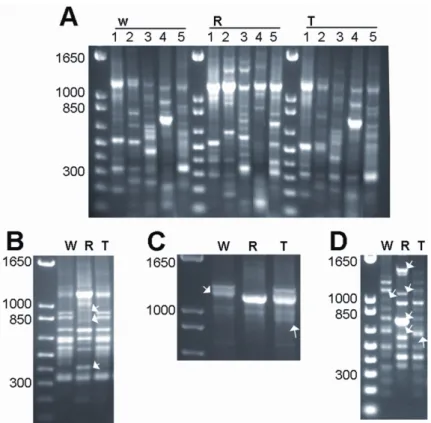
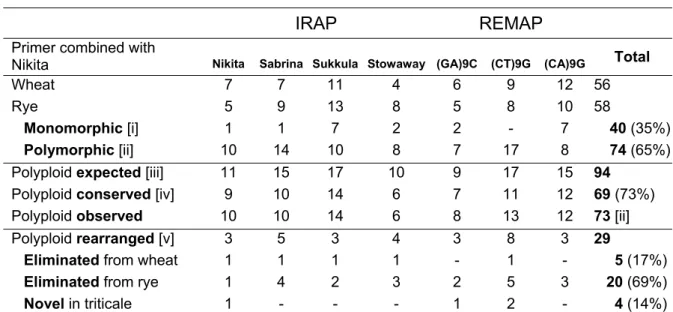
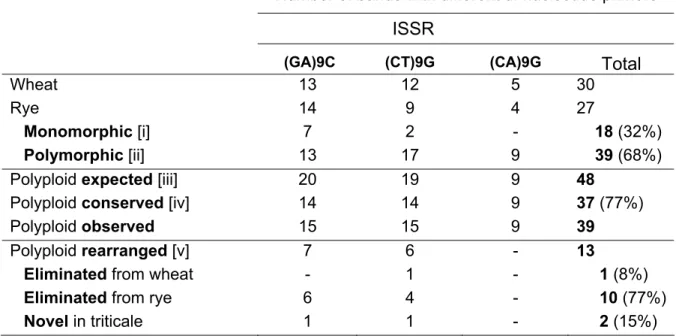
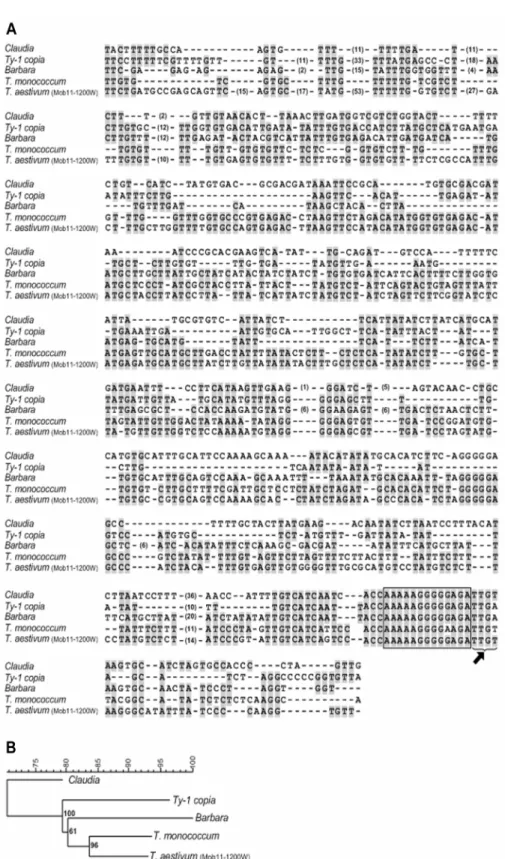
Inter Retrotransposons Amplified Polymorphism (IRAP), Retrotransposons Microsatellite Amplified Polymorphism (REMAP) and Inter Simple Sequence Repeat (ISSR) largely confirmed the absence of any intraspecific variation in wheat, rye and triticale. The comparative analysis of banding profiles between wheat and rye inbred lines revealed 34% of monomorphic (common to both parental species) bands for the ten different primer combinations used. The analysis of triticale plants uncovered nearly 51% of rearranged bands in the polyploid, being the majority of these modifications due to the loss of rye bands (83%). Sequence analysis of rye fragments absent in triticale revealed for instance homology with hydroxyproline-rich glycoproteins (HRGP), a protein that belongs to a major family of inducible defense response proteins. Conversely, a wheat-specific band absent in triticale comprises a nested structure of copia-like retrotransposons elements, namely Claudia and Barbara. Sequencing of a polyploid-specific band (absent in both parents) revealed a microsatellite related sequence. Cytological studies using Fluorescent In Situ Hybridization (FISH) with REMAP products revealed a widespread distribution of retrotransposon and/or microsatellite flanking sequences on rye chromosomes, with a preferential accumulation in heterochromatic sub-telomeric domains.
Conclusions/Significance
Here, we used PCR-based molecular marker techniques involving retrotransposons and microsatellites to uncover polyploidization induced genetic restructuring in triticale. Sequence analysis of rearranged genomic fragments
either from rye or wheat origin showed these to be Retrotransposon-related as well as coding sequences. Further FISH analysis revealed possible chromosome hotspots for sequence rearrangements. The role of chromatin condensation on the origin of genomic rearrangements mediated by polyploidization in triticale is also discussed.
2.2. Introduction
Polyploidization is an evolutionary process where two or more genomes are joined into the same nucleus. There are numerous examples of polyploidization in the plant kingdom, where chromosome fusions/fissions and rearrangements occurred following speciation. In fact, many modern day diploids are believed to have arisen from ancient polyploidization events (reviewed in [1]). Polyploidization is responsible for the emergence of genotypic plasticity, providing polyploids with the ability to tolerate genomic variations better than their diploid progenitors. This dynamic process has been explored in cereal species, which share a monophyletic origin. Although phylogenetic and molecular studies demonstrated large differences in genome size between cereal species, gene number and synteny are conserved (reviewed in [2]). Comparisons at the genetic map level show high genome colinearity conservation between cereal species, occasionally disrupted by gross chromosomal translocations [3].
Polyploid formation places the hybrid under a considerable amount of stress and/or genetic shock, which in turn can leads to a number of genetic and epigenetic modifications. Solely genetic changes include translocations and transpositions as well as sequence deletions and insertions, while epigenetic changes take into account non-additive gene regulation, transposon transcription, silencing or sub-functionalization of homoeologous genes, and chromatin condensation [4-6]. Previous studies on wild wheat polyploid relatives, such as
Triticum and Aegilops spp., suggested that the genetic and epigenetic changes
that occurred were not random, but rather directed and reproducible [7-11]. Directed and stable modifications have also been reported in Brassica [12] as well as in Arabidopsis [13]. In the allopolyploid A. suecica, a product of hybridization of
A. thaliana and A. arenosa, genetic changes involving the loss of one
parental-specific rDNA locus were observed in both naturally occurring as well as synthetic polyploids [14,15]. Genome rearrangements have also been extensively studied in triticale, a man-made wheat (Triticum ssp.)/rye (Secale cereale L.) allopolyploid (X
Triticosecale Wittmack) [16,17]. Amplified fragment length polymorphism (AFLP)
and restriction fragment length polymorphism (RFLP) analyses have established the occurrence of genetic and epigenetic modifications in triticale, mostly attributable to the rye parental genome [17]. Moreover, most of the modifications revealed by AFLP occurred to a greater degree immediately after hybridization, especially concerning sequences from rye origin, compared to the continuous variation events that occurred at a very small rate following chromosome duplication [18]. Using the same techniques on newly formed polyploids of
Aegilops and Triticum, rapid alterations of chromosome- and genome-specific
sequences were demonstrated, with the preferential loss of parental bands [8,9]. It must be emphasized here that both AFLP and RFLP analyses were performed utilizing non-methylation and methylation sensitive restriction enzymes, thereby uncovering differences which cannot be attributable solely to sequence modifications.
The exact level of DNA sequence restructuring events involved in this important evolutionary process remains to be determined. In addition, precise information regarding the actual sequences involved is scarce. In order to better understand the genomic processes underlying polyploidization, microsatellite and retrotransposon PCR-based molecular marker techniques were utilized to evaluate exclusively genetic rearrangements in triticale. Microsatellites, or Simple Sequence Repeats (SSRs), are polymorphic loci present in nuclear DNA that consist of repeating units of 1-6 base pairs in length. They are typically neutral, co-dominant and widely spread throughout the genome. Retrotransposons are ubiquitous in the plant kingdom, being the main constituent of large plant genomes [19]. These transposable genetic elements require the action of reverse transcriptase on an RNA intermediate to integrate in the host genome by a ´copy and paste´ method of transposition [20]. They are conventionally divided into groups, depending whether or not they possess long terminal repeats (LTRs). The LTR retrotransposons are further classified into the Ty1- copia and Ty3- gypsy families (Figure 1). Due to their dynamics and mobility, it is widely accepted that