Isabel Alexandra Pinto Carrilho do Rosário
Licenciatura em Bioquímica
New mechanisms that regulate the
expression of genes implicated in the
process of ketogenesis
Dissertação para obtenção do Grau de Mestre em
Biotecnologia
Orientador: Prof. Dr. Pedro F. Marrero González,
Prof. Titular, Facultat de Farmàcia, Universitat de
Barcelona
Co-orientador: Prof. Dr. Diego Haro Bautista,
Prof. Catedrático, Facultat de Farmàcia, Universitat de
Barcelona
Presidente: Prof. Doutora Isabel Maria Godinho de Sá Nogueira Arguente: Prof. Doutor Pedro Miguel Ribeiro Viana Baptista
Isabel Alexandra Pinto Carrilho do Rosário
Licenciatura em Bioquímica
New mechanisms that regulate the
expression of genes implicated in the
process of ketogenesis
Dissertação para obtenção do Grau de Mestre em
Biotecnologia
Orientador:
Prof. Dr. Pedro F. Marrero González,
Prof. Titular, Facultat de Farmàcia, Universitat de
Barcelona
Co-orientador:
Prof. Dr. Diego Haro Bautista,
Prof. Catedrático, Facultat de Farmàcia, Universitat de
i
Copyright
New mechanisms that regulate the expression of genes implicated in the process of ketogenesis ©
Isabel Alexandra Pinto Carrilho do Rosário
FCT/UNL
UNL
iii
Ninguém sabe que coisa quer. Ninguém conhece que alma tem, Nem o que é mal nem o que o bem. (Que ânsia distante perto chora?) Tudo é incerto e derradeiro. Tudo é disperso, nada é inteiro. Ó Portugal, hoje és nevoeiro…
v
Acknowledgements
First of all, I want to thank Dr. Diego Haro and Dr. Pedro Marrero, for the opportunity to work and learn in their laboratory, and for all the support they gave me throughout this year.
I also want to thank everyone in ST lab- Dr. Joana Relat, Albert, Mariona, Elena and Ana Luísa- for everything they taught me and for every time they helped me. Here, a special thanks to Ana Lu, for making feel a little bit closer to home.
To Joana Gonçalves, I want to thank all the ideas we discussed, the company in all the weekends we spent in the laboratory, and more than that, for sharing this year journey with me, all the ups and downs.
vii
Abstract
Fatty acid oxidation and ketogenesis play an important role in metabolic adaptation of the liver. Ketogenesis is a crucial process, especially in fasting. It is the last step of lipid metabolism and provides energy in the form of ketone bodies for the extra hepatic tissues, saving glucose for vital tissues, as the brain. In this project there were studied mechanisms by which genes involved in ketogenesis are regulated.
In the first part, the hypothesis was to test whether the FoxO family members, FoxO3a and FoxO1, were responsible for HMGCS2 induction by p53 activation.
HMGCS2 is a key regulator of the ketone body production, and it was published by the laboratory where this project was developed that it is a FoxO3a/FoxO1 target. P53 was described to stimulate FAO in conditions of food restriction, and that this could be a part of its effect as a suppressor gene, related to the Warburg effect.
During the development of this project, it was seen that FoxO3a and FoxO1 were not related to HMGCS2 induction, when there is p53 activation, induced by DNA damage with doxorubicin treatment.
In the second part, Fsp27, from the CIDE family, was studied. Fsp27 is a lipid droplet associated protein. Its expression is regulated by HMGCS2 activity and this gene is expressed during early fasting. Fsp27 is able to down-regulate FAO when it’s overexpressed. The objective was to seek a regulatory role of Fsp27 in mouse liver.
During the development of this project, it was confirmed that this protein had a nuclear localization and that its expression would affect PPAR signaling pathway. In AML12 cells, Fsp27 inhibited the activation of the HMGCS2 promoter by PPARα. The hypothesis was that Fsp27 would be sequestering PPARα’s endogenous ligands, since this inhibition would disappear when the cells were treated with the pharmacological agonist WY14643.
ix
Resumo
A oxidação dos ácidos gordos e a cetogénese têm um papel importante na adaptação metabólica do fígado. A cetogénese é um processo crucial, especialmente em jejum. É o último passo do metabolismo dos lípidos, fornecendo energia na forma de ácidos gordos para os tecidos extra hepáticos, guardando a glucose para os tecidos vitais, como o cérebro. Neste projecto foram estudados mecanismos pelos quais genes envolvidos na cetogénese são regulados.
Na primeira parte, a hipótese passa por testar se os membros da família FoxO, FoxO3a e FoxO1, são responsáveis pela indução de HMGCS2, por activação de p53.
O gene HMGCS2 regula a produção de corpos cetónicos, sendo publicado pelo laboratório onde este projecto foi desenvolvido que é alvo de FoxO3a/FoxO1. Foi descrito que o p53 estimula a FAO em condições de restrição de comida e que isto poderia fazer parte do seu efeito como gene supressor, relacionado com o efeito de Warburg.
Durante o desenvolvimento deste projecto, verificou-se que FoxO3a e FoxO1 não estão relacionados com a indução de HMGCS2, quando há activação de p53, induzida por danos no DNA, induzidos por doxorubicina.
Na segunda parte, a proteína Fsp27, da família CIDE, foi estudada. Fsp27 é uma proteína associada a gotas lipídicas. A sua expressão é regulada pela actividade de HMGCS2 e este gene é expresso durante o jejum. Sobre expresso, Fsp27 regula negativamente a FAO. O objectivo seria procurar um papel regulador de Fsp27 no fígado de rato.
Durante este projecto, foi confirmada a localização nuclear da proteína e descoberto que a sua expressão afecta a sinalização por PPAR. Em células AML12, Fsp27 inibe a activação do promotor de HMGCS2 por PPARα. A hipótese seria que Fsp27 estaria a sequestrar ligandos endógenos de PPARα, visto que esta inibição desaparece quando as células são tratadas com o agonista farmacológico WY14643.
xi
Index
1. Introduction ... 1
1.1 Fatty Acid Oxidation and Ketogenesis ... 1
1.2 3-Hidroxy-3-MethylGlutaryl-CoA Synthase ... 4
1.2.1 HMGCS2 Regulation ... 4
1.2.2 HMGCS2 and PPAR ... 4
1.2.3 HMGCS2 and FoxO family of transcription factors ... 5
1.3 FoxO family of transcription factors ... 6
1.3.1 The Forkhead transcription factor family ... 6
1.3.2 FoxO proteins as insulin and growth factors targets ... 7
1.3.3 Posttranslational modifications of FoxO factors ... 7
1.3.4 FoxO transcription factors and Drug Resistance ... 9
1.4 Tumor suppressor p53 ... 11
1.4.1 p53 – Stabilization and Activation ... 11
1.4.2 p53- Ubiquitination and Degradation ... 13
1.4.3 AMP-Activated Protein Kinase regulation ... 13
1.4.4 Doxorubicin induces genotoxic stress, activating p53 ... 14
1.4.5 P53 can negatively regulate IGF-1-AKT pathway ... 15
1.4.6 p53 and metabolism ... 15
1.4.7 The Warburg effect ... 16
1.4.8 FoxO and p53 ... 16
1.5 Peroxisome Proliferator-Activated Receptors ... 18
1.5.1 Trancriptional regulation by PPAR ... 18
1.5.2 PPARα ... 19
1.5.3 PPARβ ... 20
1.5.4 PPARγ ... 20
1.5.5 PPARα and Metabolism ... 20
1.6 Cell Death-Inducing DNA fragmentation factor 45-like effector (CIDE) C/Fsp27... 22
1.6.1 Fsp27 and metabolism ... 22
2. Goal of this thesis ... 25
3. Materials and Methods ... 27
3.1 DNA obtainment ... 27
3.2 Cell lines and Maintenance ... 27
3.3 Reagents used for cell line treatments ... 28
3.4 Reagents used for transfection experiments ... 28
xii
3.6 siRNA transfection ... 29
3.7 Protein extraction ... 29
3.8 Western Blot Analysis... 30
3.9 RNA extraction and analysis ... 31
3.10 Fluorescence assays ... 31
4. Results & discussion ... 33
4.1 Induction of gene expression by Doxorubicin ... 33
4.2 Regulation of HMGCS2 expression by the Fork Head Family of transcription factors ... 36
4.2.1 Regulation by FoxO1 ... 36
4.2.2 Regulation by FoxO3a ... 38
4.3 Fsp27 cellular location ... 40
4.4 Role of Fsp27 in PPAR signaling ... 41
4.4.1 PPARα ... 41
4.4.2 PPARγ ... 42
4.4.3 Interaction of PPARα agonist WY 14643 with Fsp27 ... 43
4.4.4 Future perspectives ... 44
5. Conclusions ... 45
6. Annex ... 47
6.1 Constructs ... 47
6.1.1 mHMGCS2 promoter construct ... 47
6.1.2 Fsp27 protein constructs ... 48
xiii
Figure Index
Figure 1.1-Scheme of Fatty acid synthesis pathway. ACC (Acetyl-CoA carboxylase), a regulatory enzyme of fatty acid synthesis, carboxylates acetyl-CoA, producing malonyl-CoA. Free palmitate is produced from NADPH, acetyl-CoA and malonyl-CoA. LCAS (Long chain acyl-CoA synthase)
esterifies CoA to palmitate, producing palmitoyl-CoA. Adapted from [6]. ... 2
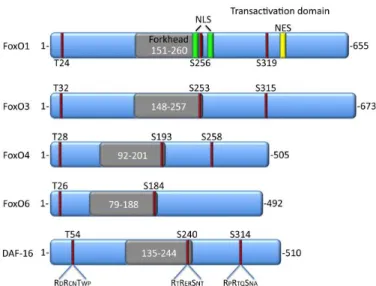
Figure 1.2- Conserved AKT phosphorylation sites in FoxO proteins. Representation of mammalian and C.Elegans FoxO isoforms and the corresponding AKT phosphorylation sites. There are also
represented the locations ofthe forkhead domain and the nuclear export (NES) and nuclear
localization sequence (NLS).[12] ... 8
Figure 1.3-Phosphorylation and regulation of nuclear export of FoxO [14]. ... 8
Figure 1.4- Mechanisms for p53 transcriptional activation. a) DNA damage induces phosphorylation and acetylation events, p53 tetramerization and transcriptional activation. b) Through unknown
mechanisms, the cell may choose a particular fate on the basis of its DNA repair status. C) When DNA repair is not complete or not repairable, the cell may choose growth arrest, apoptosis, or cellular senescence. D) On the other hand, if the repair of DNA is complete, deacetylases (such as Sir2α and PID/HDACI) may provide crucial p53 deacetylation activity to shut off p53-dependent transcription. E) Mdm2 regulates p53 levels until the next DNA damage signal is received. Nicotinamide and TSA are Sir2α and PID/HDAC1 inhibitors, respectively. A- acetylation; P- Phosphorylation; PCAF- p300/CBP associated factor; TFs- transcription factors; TSA – trichostatin A.[21] ... 12
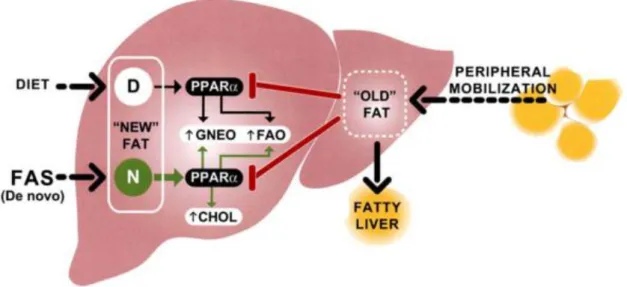
Figure 1.5- Model for differential effects of hepatic lipid." New" fat is constituted by fat absorbed from the diet or synthezised via FAS in the liver, capable of activating PPARalfa to ensure normal glucose and lipid homeostasis. The "old" fat constitutes a different hepatic compartment, derived from
peripheral mobilization of adipose stores, and it doesn’t seem to activate PPAralfa as effectively as “new” fat, leading to fatty liver. Dietary fat, contrary to de novo synthesized fat, is inadequate for the maintenance of cholesterol homeostasis, suggesting different PPAralfa pools.[32]... 21
Figure 4.1- Doxorubicin promotes p53 protein expression in AML12 cells. Western Blot of total protein extracts of AML12 cells incubated with 3 uM of doxorubicin, for 6 hours, using antibodies to p53 and actines, as control. Lane 1) Untreated cells; lane 2) Doxorubicin treated cells. ... 33
Figure 4.2-Gene induction in response to doxorubicin. AML12 cells were incubated with 3 uM of doxorubicin, for 6 hours. The RNA was then extracted and a Real Time PCR was performed, to determine the mRNA levels of FoxO1. ... 34
xiv
Figure 4.4- Gene induction in response to doxorubicin. AML12 cells were incubated with 3 uM of doxorubicin, for 6 hours. The RNA was then extracted and a Real Time PCR was performed, to determine the mRNA levels of HMGCS2. ... 35
Figure 4.5-Doxorubicin promotes p53 protein expression in AML12 cells, even in the absence of FoxO1. Western Blot of total protein extracts of AML12 cells incubated with 3 µM of doxorubicin, for 6 hours, using antibodies to p53 and actines, as control. Lane 1) transfection of 25 nM of SiCtl; lane 2) transfection of 25 nM o SiCtl and treatment with doxorubicin; lane 3) transfection of 25 nM of SiFoxO1; lane 4) transfection of 25 nM of SiFoxO1 and treatment with doxorubicin. ... 36
Figure 4.6-Gene induction in response to doxorubicin. AML12 cells were transfected with 25 nM of SiFoxO1 and 25 nM of SiCtl for 72 hours, and treated with 3 uM of doxorubicin 6 hours before the cells were recovered. The RNA was then extracted and a Real Time PCR was performed, to
determine the mRNA levels of HMGCS2. ... 37
Figure 4.7- Gene induction in response to doxorubicin. AML12 cells were transfected with 25 nM of SiFoxO1 and 25 nM of SiCtl for 72 hours, and treated with 3 uM of doxorubicin 6 hours before the cells were recovered. The RNA was then extracted and a Real Time PCR was performed, to
determine the mRNA levels of HMGCS2. ... 37
Figure 4.8-Doxorubicin promotes p53 protein expression in AML12 cells, even in the absence of FoxO3a. Western Blot of total protein extracts of AML12 cells incubated with 3 uM of doxorubicin, for 6 hours, using antibodies to p53 and tubulin, as control. Lane 1) transfection of 25 nM of SiCtl; lane 2) transfection of 25 nM o SiCtl and treatment with doxorubicin; lane 3) transfection of 25 nM of
SiFoxO3a; lane 4) transfection of 25 nM of SiFoxO3a and treatment with doxorubicin. ... 38
Figure 4.9- Gene induction in response to doxorubicin. AML12 cells were transfected with 25 nM of SiFoxO3a and 25 nM of SiCtl for 72 hours, and treated with 3 uM of doxorubicin 6 hours before the cells were recovered. The RNA was then extracted and a Real Time PCR was performed, to
determine the mRNA levels of FoxO3a. ... 39
Figure 4.10-Gene induction in response to doxorubicin. AML12 cells were transfected with 25 nM of SiFoxO3a and 25 nM of SiCtl for 72 hours, and treated with 3 uM of doxorubicin 6 hours before the cells were recovered. The RNA was then extracted and a Real Time PCR was performed, to
determine the mRNA levels of HMGCS2. ... 39
Figure 4.11- Fsp27 cellular localization. HeLa cells were co-transfected with Fsp27-DsRed-Express-N1 (500 ng) and H2B-GFP (500 ng). After 48 hours of transfection, it was seen in the fluorescence microscope a) in green the H2B-GFP-N1 in the nucleus, b) in red color the
Fsp27-pDsRed-Express-N1 and then a c) merge of the two was made with the help of a specific software. ... 40
xv
Figure 4.13-HMGCS2 promoter activity, in the presence of Fsp27 and PPARγ. The AML12 cells were co-transfected with pcDNA3, PPARγ-pcDNA3 and Fsp27-pcDNA3, and incubated for 48hours. The results of normalized luciferase activities (means+-SD), from three independent experiments, are
expressed in folds. (**P<0.005). ... 42
Figure 4.14-HMGCS2 promoter activity, in the presence of Fsp27 and PPARα. The AML12 cells were co-transfected with pcDNA3, PPARγ-pcDNA3 and Fsp27-pcDNA3, and incubated with 10µM of the pharmacological agonist WY14643 for 24 hours. The results of normalized luciferase activities (means+-SD), from three independent experiments, are expressed in folds. (**P<0.005). ... 43
Figure 6.1- pGL3- Basic Vector circle map. ... 47
Figure 6.2- pcDNA3 vector circle map.. ... 48
xvii
Table Index
Table 1.1- FoxO target genes involved in metabolism…..……….6
xix
List of Abbreviations
ABCB1–ATP-Binding Cassette sub-family B member 1
ACC- Acetyl CoA Carboxylase
ADP– Adenosine Diphosphate
AGC family- Protein Kinase A, Protein Kinase G and Protein Kinase C
AMP- Adenosine Monophosphate
AMPK- AMP-activated Protein Kinase
Atg7-Autophagy Related Protein 7
ATM- Ataxia- Telangiectasia Mutated
ATP- Adenosine Triphosphate
Bad- Bcl-2-Associated Death Promoter
BAT- Brown Adipose Tissue
BSA- Bovine Serum Albumin
C/EBPα- CCAAT- Enhancer Binding Proteins
cAMP– cyclic Adenosine Monophosphate
CBP- Creb Binding Protein
CIDE- Cell Death Inducing DFF45-like Effector
CIDEA- Cell Death Inducing DFF45-like Effector A
CIDEB- Cell Death Inducing DFF45-like Effector B
CIDEC- Cell Death Inducing DFF45-like Effector C
CK2- Caseine Kinase II
CPTI- Carnitine Acyltransferase I/ Carnitine palmitoyl Transferase I
CPTII- Carnitine Acyltransferase II/ Carnitine Palmitoyl Transferase II
DNA – Deoxyribonucleic Acid
dNTPs- Deoxynucleotide Triphosphate
Doxo- Doxorubicin
DRAM- Damage-Regulated Autophagy Modulator
DYRK1- Dual specificity tyrosine-phosphorylation-regulated kinase 1
xx
FADH2– Flavine Adenine Dinucleotide
FAO- Fatty Acid Oxidation
FAS– Fatty Acid Synthase
FFA- Free Fatty Acids
FoxO–Forkhead box ‘Other’ proteins
FoxO1- Forkhead box ‘Other’ 1
FoxO3a - Forkhead box ‘Other’ 3a
Fsp27- Fat Specific Protein 27
GADD45a – Growth Arrest and DNA Damage- inducible protein A
GLUT1-Glucose Transporter 1
GLUT4- Glucose Transporter 4
HAT- Histone Acetyl Transferase
HIPK2- Homeodomain-Interacting Protein Kinase 2
HMGCL- 3- Hydroxy-3-Methylglutaryl- CoA Lyase
HMG-CoA reductase– 3-Hydroxy-3-Methyl-Glutaryl CoA Reductase
HMGCS2- 3- Hydroxy-3-MethylGlutaryl- CoA synthase
HSL- Hormone-Sensitive Lipase
IGF-1– Insulin-Like Growth Factor I
IGF-1R- Insulin-Like Growth Factor Receptor
IKK- IκB Kinase
IRS– Insulin Response Sequences
JNK- c-Jun N-terminal Kinase
LCAS- Long Chain Acyl CoA Synthase
LKB1- Liver Kinase B1
LXR- Liver X Receptor
MAPK- Mitogen-Activated Protein Kinase
MDM2– Mouse Double Minute
MDR- Multidrug Resistance
MDR1- Multidrug Resistance Gene
xxi
mTOR- mammamial Target of Rapamycin
NAD+ - Nicotinamide Adenine Dinucleotide, oxidizing agent
NADH- Nicotinamide Adenine Dinucleotide, reducing agent
NADPH- Nicotinamide Adenine Dinucleotide Phosphate, reduced form
NFkB- Nuclear Factor kappa-light-chain-enhancer of activated B cells
NQO1-Reduced Nicotinamide Adenine Dinucleotidequinone Oxidoreductase 1
NQO2- Reduced Nicotinamide Adenine Dinucleotidequinone Oxidoreductase 2
OCTN2- Organic Cation/ Carnitine Transporter
PBS- Phosphate Buffered-Saline
PCAF- P300/CBP- Associated Factor
PCR– Polymerase Chain Reaction
PEPCK- Phosphoenolpyruvate Carboxykinase
PI-3K– Phosphoinositide-3 Kinase
PKB / Akt – Protein Kinase B
PMSF- Phenylmethylsulfonyl
PPAR- Peroxisome Proliferator Activated Receptor
PPARα- Peroxisome Proliferator Activated Receptor α
PPARβ- Peroxisome Proliferator Activated Receptor β
PPARγ- Peroxisome Proliferator Activated Receptor γ
PPRE-Peroxisome Proliferator Response Elements
PTEN- Phosphatase and Tensin Homolog
PVDF-Polyvinylidene Fluoride
RNA– Ribonucleic Acid
ROS– Reactive Oxygen Species
RT- Room Temperature
RXR- Retinoid X Receptor
Sesn1- Sestrin 1
Sesn2- Sestrin 2
SGK- Serum and Glucocorticoid inducible kinase
xxii
siRNA- Small interference RNA
SirT1- Sirtuin 1
SKP2- S-phase Kinase-Associated Protein 2
Sp1– Specificity protein 1
SREBP-1 – Sterol Regulatory Element-Binding Protein 1
SREBP-2 – Sterol Regulatory Element-Binding Protein 2
SSRP1- Structure Specific Recognition Protein 1
TAG- Triacylglycerol
TGFα- Transforming Growth Factor alpha
TIGAR- TP53-Induced Glycolysis and Apoptosis Regulator
TP53- Tumor Protein 53
TSG101- Tumor Suppressor Gene 101
VLDL- Very Low Density Lipoprotein
WAT– White Adipose Tissue
1
1. Introduction
1.1
Fatty Acid Oxidation and Ketogenesis
Fatty acids are the main energy reserve in the body, and as so they are considered fuel molecules. They are stored in triglycerides, which are highly concentrated stores of metabolic energy. They are reduced and anhydrous.
In mammals, the accumulation of triglycerides is typically in the cytoplasm of adipocytes. The synthesis, storage and mobilization of the triglycerides occurs in these adipocytes. There is also storage of triglycerides in the muscle, for its own use.
Before the peripheral tissues can use the lipid energy, it is necessary that they pass through three stages of processing. The first step is the degradation of the triglycerides into fatty acids and glycerol by lipases.[1]
Lipolysis, a process that is active during fasting, is activated by β-adrenergic cathecolamines (like epinephrine) and it can be easily suppressed by insulin signaling. The release of fatty acids from the adipocytes is mediated by HSL (Hormone-Sensitive Lipase). The transcription of this protein is activated during the final steps of adipocyte differentiation, increases during fasting and it is repressed by both insulin and glucose. The protein Perilipin is also involved in lipolysis and coats the lipid droplet that contains the triglycerides reserves of the cells.[2]
They are then released from the adipose tissue, and transported by the blood stream to the energy requiring tissues. After that, the fatty acids need activation to CoA-esters by thiokinases and transportation to the mitochondria. The short- and medium- chain fatty acids can pass directly into the mitochondria, because of the permeability of the inner mithocondrial membrane. To transport the activated long chain fatty acids it is necessary a special transport system. The fatty acids are conjugated with carnitine, catalyzed by carnitine acyltransferase I /carnitine palmitoyl transferase I (CPTI).
Acyl CoA compounds are converted to acylcarnitines by carnitine-acylcarnitine translocase and then, on the matrix membrane, are transesterified to acyl-CoA by CPTII (carnitine palmitoyltransferase type II). A carnitine transporter (OCTN2) will transport carnitine into the cells, except in the hepatocytes.
Inside the mitochondria, the fatty acids go under β-oxidation (FAO) and acyl-CoA is shortened by two carbon atoms, to generate one acetyl CoA molecule and reducing equivalents (NADH and FADH2) in
2
In cases of fasting or diabetes, the energy requirements are essentially satisfied by FAO, with the ketone bodies derived from acetyl-CoA.
Mitochondrial FAO is an essential process, especially in newborns, that have low glycogen reserves and rely mainly on fatty acids for energy.[3]
In these cases, the amounts of insulin are low, and the glucagon is high, which will lead to an augmented release of fatty acids from the adipose tissue. The energy necessary to gluconeogenesis is provided and also high amounts of acetyl-CoA are synthetized. In the liver, the acetyl-CoA is transformed into ketone bodies, by the enzymes HMGCS2 and HMGCL.[3][5]
In normal cells, except lipogenic tissues, the mammalian fatty acid synthase – a complex multifunctional enzyme that contains seven catalytic domains and a phosphopantetheine prosthetic group on a single 260 KDa polypeptide- activity is minor, because fatty acids are provided by the dietary fat. Mammalian FAS is down-regulated by dietary fat in lipogenic tissues (liver, adipose tissue), but its activity is described to be higher in many cancers.[6][7]
The predominant product of FAS is Palmitate, a saturated 16-carbon fatty acid. It is synthesized de novo from the substrates acetyl-CoA, malonyl-CoA and NADPH (Figure 1.1). It has been shown that inhibition of FAS will lead to elevated levels of malonyl-CoA, inhibition of CPTI and inhibition of fatty acid oxidation.[6]
Figure 1.1 -Scheme of Fatty acid synthesis pathway. ACC (Acetyl-CoA carboxylase), a regulatory enzyme of fatty acid synthesis, carboxylates acetyl-CoA, producing malonyl-CoA. Free palmitate is produced from
3
Ketogenesis is the last step of the lipid metabolism and it is an important process, especially in the fasted state, because it provides the energy needed for the extra hepatic tissues, and as so, glucose is reserved for vital tissues, like the brain.
4
1.2 3-Hidroxy-3-MethylGlutaryl-CoA Synthase
Mitochondrial 3-hidroxy-3-methylglutaryl-CoA synthase (HMGCS2) is a gene that regulates the ketone body production, in liver and extrahepatic tissues. It catalyzes the condensation of acetyl-CoA with acetoacetyl-CoA, to generate acetoacetate, β-hydroxibutyrate and NAD+. cAMP, insulin and dexamethasone can vary its mRNA levels. [5][8]
HMGCS2 is controlled by nutritional and hormonal effects, and its activity is modulated by posttranscriptional mechanisms of succinylation and desuccinylation.[9]
In rats, the hepatic ketogenic capacity increases during the post-natal development or fasting, and HMGCS2 expression increases in liver. This effect is also observed in high fat diets, but is suppressed by insulin.[10]
1.2.1 HMGCS2 Regulation
The rat mitochondrial HMGCS2 promoter has three main regulatory sequences. 1) an insulin-responsive sequence, at the position -211 respecting to the transcriptional start site, that binds proteins from the forkhead family of transcription factors; 2) a peroxisome proliferator-activated receptor element, at the position -104, that binds retinoid X receptor-peroxisome proliferator-activated receptor heterodimers and 3) a Sp1-binding site, at the position -56, that binds proteins from the Sp1 family of transcription factors. The Sp1 binding site and the peroxisome proliferator-activated receptor element are present in similar positions in the human promoter.[8][10]
1.2.2 HMGCS2 and PPAR
The expression of HMGCS2 is stimulated by peroxisome proliferator-activated receptor α (PPARα). PPARα is a fatty-acid activated nuclear receptor that regulates metabolic changes in the liver, associated with starvation.
5
Sirtuin-1 (SirT1) is a NAD+-dependent protein deacetylase that may also contribute to the metabolic adaptation to fasting. PPARα signaling has alterations when this protein is deleted from hepatic cells.
FAO and ketogenesis are induced by human HMGCS2, and its expression is necessary for PPARα -mediated induction of FAO.[5]
HMGCS2 mRNA levels increase in response to starvation, fat-feeding and diabetes and during the early neonatal period.
The high levels of plasma glucagon and low insulin levels may be the cause of the increased expression of the HMGCS2 gene in the liver of starved, newborn, suckling and fed rats.
The oxaloacetate is consumed in high amounts by gluconeogenesis in cases of type one diabetes, but the breakdown of fat generates large amounts of acetyl-CoA. The acetyl-CoA would normally be directed to the tricarboxylic acid cycle, condensed with oxaloacetate, but since the concentration of oxaloacetate is lowered, it is used to produce excess of acetoacetate and D-3-hydroxybutyrate –
ketone bodies.[1][8]
1.2.3 HMGCS2 and FoxO family of transcription factors
The HMGCS2 promoter transcriptional activation is mediated by a network of recruited transcription factors, and this can explain why there is an induction of this gene expression in the liver, under pathologic and physiologic conditions. In tissues that oxidize fatty acids, this gene was proposed to prevent the acetyl-CoA accumulation, which will impair the rates of the fatty acid oxidation, so a lack in the induction of HMGCS2 can impair β-oxidation.[10]
The members of the FoxO family of transcription factors, such as FoxO3a, are involved in the regulation of HMGCS2 gene by insulin, through phosphorylation by phosphoinositide-3 kinase (PI-3K)/PKB transduction pathway that regulates FoxO expression. The inhibition of the PI-3K blocks the insulin repression, and on the other hand, when an active form of PKB/Akt is overexpressed (downstream PI-3K target in the insulin signaling pathway) represses the FoxO3a/FKHRL1 induced expression of HMGCS2.[8]
6
1.3 FoxO family of transcription factors
The Forkhead box ‘Other’ proteins, are a subgroup of the Forkhead transcription factor family and they are described as having an important role in mediating the effects of insulin and also of growth factors on various physiological functions- cell proliferation, apoptosis and metabolism. They are the mammalian orthologs of Caenorhabditis elegans DAF16. [12][13]
1.3.1 The Forkhead transcription factor family
The Forkhead transcription factor family is characterized by a 100-amino acid conserved monomeric DNA-binding domain, ‘forkhead box’, and it is present in all eukaryotes. The DNA binding domain folds into a variant of the helix-turn-helix motif and is made up of three α helices and two characteristic large loops, or wings. It is called the helix-DNA binding domain. The FoxO family was initially discovered in humans at chromosomal translocations, suggesting that they can play an important role in tumor development.[14][15]
There are four mammalian FoxO members, FoxO1/FKHR/FoxO1a, FoxO3/FKHRL1/FoxO3a, FoxO4/AFX and FoxO6, and all of these share a high protein homology.[12][13]
All the FoxO members are expressed in all tissues in mammals, in different degrees. FoxO1 mRNA is mainly expressed in adipose tissue, FoxO3a mRNA is highly expressed in the brain, FoxO4 mRNA is mostly expressed in the heart and finally, FoxO6 mRNA is expressed mainly in the developing brain.[14]
These proteins can modulate the expression of several genes, which are involved in processes like autophagy, apoptosis, DNA damage repair, oxidative stress, cell differentiation, cell cycle progression and glucose metabolism (Table 1.1). An irregular pattern of FOXO activation or regulation will lead to disorders of apoptotic pathways, proliferation and cell cycle regulation.[16]
7
Their working mechanism is either to activate or repress multiple target gene expression. In the process of tumor suppression, they regulate genes that induce apoptosis such as Bim, Trail and Fas L, in cell cycle regulation they interact with p21, p27 and cyclin D1.Concerning DNA damage repair, they regulate GADD45a and in autophagy Atg7.[16]
1.3.2 FoxO proteins as insulin and growth factors targets
The FoxO proteins have been described as targets of insulin action, and also targets of growth factors. They interact with Insulin Response Sequences (IRS), similar to the ones existing in the PEPCK gene (phosphoenolpyruvate carboxykinase) through phosphatidylinositol 3-kinase (PI3K) and protein kinase B signaling.[12]
PI3K is activated through binding of insulin, IGF-1 (Insulin like growth factor I) or other growth factors to tyrosine kinase receptors, and as consequence, several serine/threonine kinases are also activated, including the Akt family protein kinases and the related serum and glucocorticoid inducible kinase (SGK). All the mammalian FoxO members share the same regulatory sites for AKT/PKB, with the exception of FoxO6. They have three consensus phosphorylation sites (RXRXXS/T) of Akt – Thr32, Ser253 andSer315 in FoxO3 sequence, Thr24, Ser256 and Ser319 in human FoxO1- but other AGC family kinases can phosphorylate in the same sites, although Akt and SGK phosphorylate a different combination of sites.[13] [14][15]
1.3.3 Posttranslational modifications of FoxO factors
Phosphorylation of FOXO factors by Akt (Figure 1.2) will provoke a relocation of FOXO proteins from the nucleus to the cytoplasm and as so, its inactivation. Ser256 (human FoxO1) functions as a
8
These phosphorylation events mediate the binding of 14-3-3 proteins, and this is described to contribute to FoxO3 accumulation in the cytoplasm (Figure 1.4).14-3-3 proteins belong to a family of evolutionary conserved modulator proteins and they regulate multiple signaling pathways in the cell. Through binding to specific Ser/Thr- phosphorylated motifs on target proteins, these proteins can modulate enzymatic activity, protein stability, cellular localization or association with other proteins. In consequence of FoxO phosphorylation by Akt and subsequent binding of 14-3-3 protein, transcriptional activity is reduced.
Figure 1.2 - Conserved AKT phosphorylation sites in FoxO proteins. Representation of mammalian and C.Elegans FoxO isoforms and the corresponding AKT phosphorylation sites. There are also
represented the locations ofthe forkhead domain and the nuclear export (NES) and nuclear localization sequence (NLS).[13]
9
Some other modifications in FoxO1 were described, as acetylation and phosphorylation by MST1 that affect DNA binding. [13]
FoxO transcription factors up-regulate genes from the glucose metabolism, like glucose-6-phosphatase, that converts glucose-6-phosphate to glucose, and PEPCK, that converts oxaloacetate to phosphoenolpyruvate. The glucose metabolism is connected with the protein stability, and this is probably mediated by AMP-activated kinase.
Another regulation pathway is given by the c-Jun N-terminal kinase (JNK) that phosphorylates Thr447 and Thr451, positively regulating FoxOs.[12] [14][15]
FoxO activity can be modulated by acetylation directly on lysine residues mediated by CBP (Creb binding protein), P300 and PCAF, but there are some controversial results. In some cases there is an increase in the activity and in others there is a decrease. The recruitment of CBP/P300 will cause histone acetylation, and this leads to a positive control for transcription. On the other hand, the FoxO acetylation also diminishes DNA-binding, and this leads to a negative control. Since this is a reversible regulation, FoxOs can be deacetylated by class-I histone deacetylases and the class-III, NAD-dependent histone deacetylases-sirtuins Sirt1-. The effect of this deacetylation vary according to the target genes, but it mainly enhances FoxO’s transcriptional activity. [13][15]
FoxO protein levels are regulated by its degradation, and it has been described that insulin decreases FoxO1 protein levels, by ubiquitination and further degradation in a PI3K-dependent manner, in HepG2 cells.The signaling for ubiquitination and degradation can be given by phosphorylation. FoxOs can be phosphorylated by Akt,ERK-1/2 and IKK. SKP2 binds AKT-phosphorylated FoxO1 at Ser256 and MDM2 binds ERK-phosphorylated FoxOs, they are both E3 ligases. MDM2 can signal FoxO for two different things, it can lead to mono-ubiquitination, that translocates FoxO to the nucleus and activates transcription, and poly-ubiquitination that targets for degradation. Also, 14-3-3 binding and Akt phosphorylation are involved in the degradation pathway.
Arginine methylation is another posttranslational modification that will lead to FoxO exclusion from the nucleus.
In human cancers, there are many tumor suppressors that can also be degraded by the ubiquitin pathway, like p53, p27KIP1,p130 and p57KIP2.[13][15]
1.3.4 FoxO transcription factors and Drug Resistance
10
drugs, as doxorubicin, that induce apoptosis by generating ROS (reactive oxygen species). Oxidative stress induces Foxo3 activation, by its nuclear translocation in mammalian cells, and it also induces the stress activated kinase p38-MAPK. It was also shown that, despite their ability to execute cell cycle arrest and death programs, FoxO can also promote cell survival by amplifying PI3-K/Akt signaling. The multidrug resistant gene (MDR1 or ABCB1- cellular membrane transporter that mediates ATP-dependent efflux of a wide variety of hydrophobic anti-cancer drugs like taxanes, anthracyclines and other chemotherapeutic drugs, that enter freely in the cells by passive diffuson) is a target of FoxO3 in leukaemic cells. The drug-resistance is probably acquired by re-programming of post-translational modifications.[18]
In paclitaxel treatments, JNK can activate FoxO3a indirectly by inhibiting PI3K-AKT or directly through FoxO phosphorylation. ERK and Akt inactivation by JNK also induces FoxO3a nuclear localization and regulation of target genes (p27kip1 and Bim). Treatment with doxorubicin induces cell cycle arrest and cell death in breast cancer cells, and subsequent p38 induction, with FoxO3a nuclear relocalization. The doxorubicin induced nuclear localization of FoxO3a was shown to be due to phosphorylation of Ser-7, by the stress activated protein kinase p38. This event is likely to exist in every cell lines. P38 can also phosphorylate and activate tumor suppressors p53 and p73, in response to UV radiation and chemotherapeutic drugs.[19]
11
1.4 Tumor suppressor p53
The tumor suppressor p53 is a 53 KDa protein. It has anti proliferative effects as growth arrest, apoptosis and cell senescence. It was discovered to be essential in cell cycle arrest, in response to irradiation and DNA-damaging agents, and also to regulate gene expression as a sequence specific transcription factor, forming a homotetramer on the target gene response elements. Induction of stress signals as oncogene assaults, chemo- or radiation-induced DNA damages, hypoxia or nucleotide depletion leads to an accumulation of p53 protein in normal cells, triggering the transcription of various p53 target genes. P53 is considered as a cellular gatekeeper. In 50% of all human cancers, p53 exhibits mutations, leading to accumulation of a dysfunctional protein. In the other 50%, there are abnormalities with the p53 pathway. In normal cells, p53 has been shown to also have a role, in homeostatic regulation of energy-producing processes, coordination of overall rate of biosynthesis and mobilization of defenses against reactive oxygen species.[21][22][23][24]
1.4.1 p53
–
Stabilization and Activation
There are two necessary processes by which p53 is induced in response to DNA-damage, stabilization and activation (from the ‘latent’ to active form).[23]
12
JNK, another E3 ubiquitin-ligase, can play two different roles when it comes to p53 stabilization. If it’s inactive, it binds to 97-116 residues and targets p53 to degradation by the proteasome. If it’s activated, it phosphorylates threonine 81 and activates p53, repressing its degradation. The signals that activate JNK are the same that lead to p53 accumulation, like UV, X-radiation and oxidative stress by hydrogen peroxide. The p53-JNK interaction is in this cases prevented by a peptide.[23]
Other post-translational modifications can be responsible for p53 stabilization. For example, acetylation can promote stabilization and also transcriptional activity, but Mdm2 can inhibit this acetylation, mediated by CBP and p300. Ubiquitination and acetylation occur ate the same sites at the carboxyl terminus.[22]
Activation of p53, that will complement its stabilization, can occur by phosphorylation and acetylation. The most important residue that undergoes phosphorylation in UV-induced apoptosis is Ser46, by p53AIP1, p53DINP1 or HIPK2. These events may be dependent of post-translational modifications on p53. Ser392 is also phosphorylated in response to UV radiation, by a protein complex containing CK2, hSpt16 and SSRP1.[22]
Figure 1.4 - Mechanisms for p53 transcriptional activation. a) DNA damage induces phosphorylation and acetylation events, p53 tetramerization and transcriptional activation. b) Through unknown
mechanisms, the cell may choose a particular fate on the basis of its DNA repair status. C) When DNA repair is not complete or not repairable, the cell may choose growth arrest, apoptosis, or cellular senescence. D) On the other hand, if the repair of DNA is complete, deacetylases (such as Sir2α and PID/HDACI) may provide crucial p53 deacetylation activity to shut off p53-dependent transcription. E) Mdm2 regulates p53 levels until the next DNA damage signal is received. Nicotinamide and TSA are
13
Acetylation is another important modification for p53 activation. It is an important modification of histones that leads to an increased transcriptional activity. The acetylation processes have three potential roles: in the first place, they contribute to p53 stabilization; they can also induce conformational rearrangements in the C-terminus that increase DNA binding capacity, and finally, these processes can regulate the compartmentalization of p53 between nucleus and cytoplasm.[23]
CBP/p300 is a co-activator of p53, and possesses a histone acetyl transferase (HAT) activity. The acetylation consequences vary from increased DNA binding, enhancement of stability and changes in protein-protein interactions, and it’s enhanced in stress situations. The residues that suffer acetylation are mainly Lys372, Lys 381, Lys 382 and also Lys320.
Acetylation can be reversed by Sirt1, and it’s crucial for p53 ubiquitination and degradation.[22]
1.4.2 p53- Ubiquitination and Degradation
In normal cells, p53 is ubiquitinated in the nucleus and the shuttled to the cytoplasm, where it’s recognized for degradation by the proteasome. When DNA damage occurs, p53 induction is triggered due to the need of increasing its levels. The ubiquitination inhibition and further degradation, is made by the tumor suppressor gene 101 (TSG101) and c-Abl.[22]
P53 can be stabilized by Mdm2-independent mechanisms, like stabilization by reduced nicotinamide adenine dinucleotide (NADH) quinone oxidoreductase 1 (NQO1) and NQO2, specific for oxidative stress and that prevents degradation of p53.[21][22]
1.4.3 AMP-Activated Protein Kinase regulation
When there are low stress signals or even none, p53 regulates the availability of nutrients, growth factors and hormones, and the overall rate of biosynthesis with energy status of the cell.[21]
For cells to undergo division it is necessary that the energy supplies are enough to produce ATP and to macromolecular synthesis. When the energy supplies are low, and so is the ATP levels, adenylate cyclase converts molecules of ADP to AMP and ATP, to compensate.
There are evidences that G1/S transition in mammalian cells depends on glucose availability by AMPK (AMP-activated protein kinase). AMPK can phosphorylate its substrates and turn off ATP consuming pathways; also it can activate energy production, by stimulating glucose uptake, fatty acid oxidation and mitochondrial repair.[21][25]
14
The AMPK has one catalytic unit (α) and two regulatory units (β and γ). When there is a signal of DNA-damage, p53 activates transcription of the genes for β-subunits of AMPK. These subunits are involved in the localization and activity of this kinase.
AMPK controls p53, by inducing modifications and activation of p53 promoter. An upstream kinase, LKB1, also control p53 activity, by forming a complex and by direct or indirect phosphorylation of the residues Ser15 and Ser392.[21]
It seems that AMPK activates a nutrient-sensitive signaling pathway that leads to a p53-dependent cell cycle arrest, when there is energy deficiency.
Although the activation of p53 by DNA-damage leads to a low rate of survival, its metabolic activation is related to enhance survival ability by the cells to glucose depletion. [25]
The cell cycle arrest proposed at G1/S transition, in the presence of low glucose levels is a metabolic checkpoint that depends on AMPK and also p53, but occurs even in conditions when mTOR pathway is not inhibited. The mTOR pathway is an important switch between catabolic and anabolic processes. Its stimulation on the presence of nutrients, growth factors and hormones will lead to a major protein synthesis, increasing cell growth and proliferation.[21][26]
As it was said, p53 regulates β-subunits of AMPK, activating TSC2, inhibition of Raptor and downregulation of mTOR kinase. It can also be downregulated by activation of AMPK by p53 modulated Sesn1 and Sesn2 (sestrins). Inhibition of the mTOR pathway by p53 can also lead to an increase in autophagy. P53 can also induce autophagy by inducing the p53-activated gene DRAM.[21]
The stabilization and transcriptional activation of p53 in this metabolic checkpoint occurs by direct phosphorylation of Ser15 by AMPK, leading to cell survival. On the contrary, it is also been described that under the same conditions, glucose depletion, AMPK activation phosphorylates Ser46, up-regulating p53 and leading to cellular apoptosis. The AMPK- and p53- dependent responses to low glucose levels can vary according to the cellular type.[21][26]
1.4.4 Doxorubicin induces genotoxic stress, activating p53
Doxorubicin, an anthracycline antibiotic, is widely used in cancer treatment, produces genotoxic stress both in carcinoma and non-carcinoma cells. Its side effects in non-carcinoma cells limit its utilization, especially in cardiomyocites. ROS have been described has having an important role in doxorubicin-induced cardiomyopathy, and some antioxidants have been shown to decrease this negative effects.
15
When there is signaling for DNA-damage, the ataxia- telangiectasia mutated (ATM) protein kinase is activated, inducing a two-phase dynamics of p53, that can be responsible for anti- or pro-apoptotic functions. When cells lack AMPK, ATM is phosphorylated, and that could be the reason for the increased sensitivity of these cells to doxorubicin-induced DNA damage. So, AMPK may play an important protective role against doxorubicin induced cellular apoptosis.
The accumulation of p53 is necessary for doxorubicin induced cellular death, and could be induced by an ATM dependent pathway. In MEF cells treated with doxorubicin, AMPK phosphorylates Ser15 of p53.
AMPK activation will interfere with p53 stability through p53 acetylation, meaning that an inhibition of AMPK increases doxorubicin induced p53 acetylation. This acetylation can be reverted by Sirt1 (class III NAD+-dependent deacetylase) as it was said here before. During doxorubicin-induced genotoxic stress in MEFs, AMPK also regulates p53 stability and function, by regulation of Sirt1 mediated deacetylation.[26]
1.4.5 P53 can negatively regulate IGF-1-AKT pathway
As it was already mentioned in the previous chapter, Akt or protein kinase B, stimulates cell proliferation by blocking p27kip1 and activating c-myc and cyclin D1. It inhibits Bad, Mdm2 and FoxO proteins through activation of NFkB, decreasing apoptosis.
IGF-1, insulin-like growth factor, and insulin regulate Akt pathway, by signaling the availability of nutrients in the organism. Its binding to tyrosine kinase receptor IGF-1R recruits PI3K.
The protein p53 can regulate in a negative manner the IGF-1-Akt pathway. The activation of p53 leads to a decrease of the activity of IGF-1/Akt pathway and several changes in metabolism. IGF-BP3 encodes an IGF1 encoding protein, and its activation by p53 inhibits IGF1. P53 also stimulates PTEN, reducing Akt activity, glycolysis, fatty acid synthesis and increased β-oxidation of lipids.[21]
1.4.6 p53 and metabolism
16
P53 can also affect the glucose metabolism. It can retard glucose uptake by repressing GLUT1 and GLUT4, that encode glucose transporters, and it can stimulate glucose uptake by increasing the transcription of Hexokinase II gene, that converts glucose to glucose-6-phosphate. An up-regulation of Hexokinase II is seen in cancer cells, but a mild activation can be a part of the pro-survival functions of p53, helping the recovery from the metabolic checkpoint.[21]
1.4.7 The Warburg effect
Cancerous cells exhibit a specific metabolic pattern, presenting a shift from respiration to fermentation. This is called the Warburg effect, and it’s characterized by a bigger production of lactate from glucose than in normal cells, performing lactic fermentation even in aerobic conditions. As for the normal cells, they present the Pasteur effect, that is characterized by inhibition of lactate production in the presence of oxygen .[27][28]
Metabolic regulation can be affected by every major oncogene and tumor suppressor, with varying mechanisms.
As it was already referred, glycolysis is suppressed by p53, by elevating expression of TP53-induced glycolysis and apoptosis regulator TIGAR- a fructose-2,6-biphosphatase. It also promotes oxidative phosphorylation, by enhancing the expression of cytochrome c oxidase-2, necessary for the assembly of the cytochrome c oxidase complex of the electron transporter chain. An inhibition/loss of p53 in tumor cells facilitates the Warburg effect, increasing glycolysis and decreasing oxidative phosphorylation.[28]
1.4.8 FoxO and p53
In situations of stress stimuli or nutrient deprivation, the FoxO3a transcription factor interacts with p53 in the nucleus, at least when both proteins are overexpressed. They also share similar target genes, as p21, GADD45, WIP1, PA26. Both p53 and FoxOs are phosphorylated and acetylated in response to stress stimuli and UV radiations, and both bind to SIRT1 deacetylase. [14]
P53 induces the activation of SGK that inhibits FoxO3a by its phosphorylation and relocalization to the cytoplasm. On the other hand, FoxO3a prevents p53 from repressing SIRT1 gene expression. SIRT1, with increased expression when insulin is low, deacetylates p53 and FoxO transcription factors.[14]
P53 regulates the expression of FoxO3a by binding to a site in the second intron of the gene.
17
gene in response to DNA-damage by doxorubicin. FoxO3 is not necessary for p53 dependent cell cycle arrest, but it may have a role in p53-dependent apoptosis.[20]
18
1.5 Peroxisome Proliferator-Activated Receptors
The peroxisome proliferator-activated receptors are ligand activated transcription factors that mediate the effect of unsaturated fatty acids and certain drugs on pathways. They belong to the nuclear receptor superfamily and have three different subtypes, PPARα (NR1C1), PPARβ/δ(NR1C2) and PPARγ (NR1C3).[30][31]
Although they share a high level of sequence and structural homology, each one of them has distinct physiological functions and different tissue expression patterns. PPARα is found mainly in brown adipose tissue, liver, kidney, heart and skeletal muscle, tissues with high rates of fatty acid catabolism. The genes controlled by this PPAR are the ones involved in reverse cholesterol transport and degradation of free fatty acids through peroxisomal and β-oxidation pathways. PPARγ is found especially in adipose tissue, and at lower levels in heart, colon, kidney, spleen, intestine, skeletal muscle, liver and macrophages. Its main role is in adipocyte gene expression and differentiation, but also as a regulator of target genes involved in glucose and lipid metabolism. PPARβ/δ is the least studied PPAR, and it’s believed to be expressed ubiquitously. It may have a role in the regulation of fatty acid catabolism, energy metabolism and reverse cholesterol transport, additionally it was also shown that it could improve insulin resistance and reduce plasma glucose in animal models of type 2 diabetes.[31]
1.5.1 Trancriptional regulation by PPAR
Transcriptional regulation by PPARs requires heterodimerization with RXR (Retinoid X Receptor), also a member of the nuclear receptor superfamily. The activation of the PPAR/RXR heterodimer requires a ligand, and then it binds to DNA response elements (PPRE), to induce transcription. These DNA response elements are present in and around the promotor of the target genes. PPARs can also repress transcription by interfering with other transcription factors- transrepression.[30]
It is described that PPARs modulate the expression of genes involved in regulating glucose, lipid and cholesterol metabolism. Interferences in these pathways can lead to obesity, diabetes and cardiovascular disease, making PPARs attractive therapeutic targets.[31]
19
1.5.2
PPARα
As it was already referred, PPARα is highly expressed in organs with a significant catabolism of fatty acids. It was seen that this member of the PPAR family is activated by natural fatty acids and the identification of target genes was centered on cellular lipid metabolism, mainly in hepatocytes. They also can attenuate inflammatory responses. The first target gene identified for PPARα was acyl CoA, involved in peroxisome fatty acid β-oxidation. After that another target genes were found, that were present on transport and cellular uptake of fatty acids, intracellular fatty acid binding and activation, microsomal ω-oxidation, peroxisomal β-oxidation and ketogenesis, synthesis of lipoproteins and glycerol metabolism.[30]
PPARα doesn’t only regulate oxidation of fatty acids, but it also regulates the metabolism of acids. It was found to interfere in the expression of genes involved in trans- and deamination of amino-acids and urea synthesis.[30]
The increase in the expression of fatty acid oxidation, ketogenic genes and also cytosolic and mitochondrial glycerol 3- phosphate was shown to be PPARα dependent, in fasting. These evidences showed that PPARα is a direct stimulator of hepatic glycerol metabolism and influences hepatic glucose production during fasting .[30]
Studies made with activation of PPARα by its pharmacological ligand, WI14643, showed that there was an increased expression of genes involved in lipid and glucose metabolism and genes associated with peroxisome biogenesis, cell surface recognition function, transcription, cell cycle and apoptosis.
20
1.5.3
PPARβ
The PPARβ isoform is the least studied of this family and it is thought to have merely a housekeeping role. Lack of PPARβ may lead to multiple developmental and homeostatic abnormalities, like decreased adipose mass, myelination defects, altered skin inflammatory responses, a shift in muscle fiber composition towards type I muscle fibers and impaired wound healing.[30]
1.5.4
PPARγ
The main role of the third member of this family, the PPARγ, is in adipogenesis and its effects have been studied in 3T3-L1 adipocyte model. It is the key transcription factor in the adipogenesis program and it is essential for adipocyte survival. PPARγ also regulates lipid metabolism, insulin sensitivity, cardiovascular disease, inflammation, organ development and tumor formation.[30][32]
1.5.5
PPARα and Metabolism
PPARα importance in energy stores was shown by experiences made with PPARα-deficient mice that developed hypoglycemia, hypoketonemia and fatty liver, in fasted states. Although fatty acids are thought to be natural ligands for PPARα, this is not fully understood .[33]
Carbohydrate and lipid metabolism is also coordinated in hepatocytes by SREBPs proteins (sterol regulatory element binding proteins). SREBP-1c stimulates fatty acid synthesis, is involved in de novo lipogenesis when carbohydrates are abundant and is affected by levels of glucagon and insulin, critical hormones in glucose homeostasis and the oxygen receptor LXR. SREBP-2 stimulates cholesterol synthesis and its expression is affected by cholesterol availability. SREBPs are both regulated by fasting/feeding and can be affected by fatty acids.
PPARα and SREBPs activation by hepatic fatty acids can have different sources. Fatty acids can come from “new” fat, if they’re synthesized from carbohydrates. The “new” fat is retained in the liver, for storage, energy production or synthesis of structural and signaling lipids, or exported in VLDL to peripheral tissues for metabolism or storage. The stored/ “old” fat is released from adipose tissue into the circulation. When fatty acids are not utilized for energy, they return to the liver. It is thought that the fate of the fatty acids may depend on their site of origin.[33]
21
knock-out mice was not dependent on diet. The serum and hepatic cholesterol, the increasing SREBP-2, decreased HMG-CoA reductase gene expression regardless the dietary fat availability can also be normalized by pharmacologically activating PPARα, so the metabolic abnormalities in FAS inhibited mice may be caused by the PPARα unavailability.[33]
The model described in literature is that the new fatty acids are PPARα endogenous activators. FAS knock-out mice are protected by the hypoglycemia/steatohepatitis when new fat is absorbed by diet activating PPARα, promoting gluconeogenesis and fatty acid oxidation. New fat produced by FAS accesses a separate pool of PPARα that stimulates cholesterol biosynthesis, gluconeogenesis and fatty acid oxidation. It was concluded that specific fatty acid pools synthesized by hepatic FAS or derived from the diet activate PPARα to impact glucose and lipid metabolism. The same doesn’t occur with the old fat, the one stored in the liver after transfer from the periphery (Figure 1.5).[33]
Since FAS is a cytosolic enzyme, and PPARα is a nuclear factor, it is necessary a mechanism to deliver the cytosolic product to the nucleus and that could make the cell distinguish between old fat and new fat. One possibility is that lipid binding proteins specific for new fat shuttles fatty acids to the nucleus. Another possibility is that PPARα can shuttle from the nucleus to the cytoplasm with the aid of chaperones, promoting an interaction with the new fat pool.[33]
Figure 1.5 - Model for differential effects of hepatic lipid." New" fat is constituted by fat absorbed
from the diet or synthezised via FAS in the liver, capable of activating PPARα to ensure normal
glucose and lipid homeostasis. The "old" fat constitutes a different hepatic compartment, derived
from peripheral mobilization of adipose stores, and it doesn’t seem to activate PPARα as effectively as “new” fat, leading to fatty liver. Dietary fat, contrary to de novo synthesized fat, is inadequate for
22
1.6 Cell Death-Inducing DNA fragmentation factor 45-like effector (CIDE)
C/Fsp27
The Cell Death-Inducing DNA fragmentation factor 45-like effector (CIDE) protein family members were identified initially as mediators of apoptotic cell death. There are three members in this family, Cidea, Cideb and Cidec (Fsp27 in mouse). Cidea is highly expressed in BAT, Cideb is expressed mainly in liver, and at lower levels in kidney, small intestine and colon. Cideb can form homo- or heterodimers with other CIDE family members, in heterologous cells like 293T and COS-7 cells, to induce caspase-independent cell death. Cidea regulate apoptosis by being induced by TGF-β, and it was found that it also regulates energy homeostasis in BAT by regulating lipolysis and thermogenesis. Cideb was also found to have an important role in metabolism, as it regulates diet-induced obesity, liver steatosis and insulin sensitivity, controlling lipogenesis and FAO in liver.[34]
1.6.1 Fsp27 and metabolism
The third member of the CIDE family is Cidec/Fsp27. It is a 27 KDa protein expressed mainly in WAT. Fsp27 was found to be a novel lipid droplet that is involved in large unilocular lipid droplets in adipocytes and is required for the accumulation of triacylglycerols, also decreasing fatty acid oxidation in these cells. The lipid droplets are composed by a core of TAG, surrounded by a phospholipid monolayer with various proteins. It is also described that the overexpression of this protein in non-adipose tissues, results in spontaneous lipid accumulation .[35][36]
When the nutritional role of FSP27 was studied, it was found that between the dietary manipulations (intermittent fasting, caloric restriction, fasting –refeeding, and fasting), the only that up-regulates Fsp27 gene expression is intermittent fasting, promoting lipid deposition on adipose tissue. It was also described that PPARγ, C/EBPα, and insulin are involved in the nutritional regulation of Fsp27.[35]
It is described that another dietary manipulation, caloric restriction, down-regulates human Cidec and that is probably involved in fatty acid metabolism in cultured adipocytes.[37]
TAG are synthesized from FFAs and glucose in WAT in fed state. These TAG are stored in large lipid droplets. In fasted state, WAT generates the hydrolysis of stored TAG, generating FFAs and glycerol, releasing them into the circulation, so they can be used as energy by other tissues. In contrast with WAT, where the cytoplasm of adipocytes is almost entirely occupied with a large (10-200 µm in diameter), unilocular, TAG-rich lipid droplet, cells of the liver, muscle, heart, kidney, intestine, BAT and mammary gland accumulate small lipid droplets.
23
prevents lipolysis by minimizing the accessibility of stored lipid to lipases, and are crucial for efficient TAG storage in WAT.[36]
In Fsp27-KO mice, it was seen a lean phenotype, an increased metabolic rate and resistance to diet-induced obesity. This is probably caused by the decreased TAG storage, the increased mitochondrial biogenesis and the increased energy expenditure in these mice’s WAT. The increase of FFAs and their metabolites in FSP27-KO mice may stimulate member of the PPAR family in WAT and induce mitochondrial biogenesis. FFAs have been described to activate PPARα and PPARδ. An increase in mitochondrial biogenesis and FFA oxidation in adipocytes may be caused by an increase in
intracellular lipolysis.[36]
Perilipin, a lipid-droplet associated protein, regulates the storage of triglycerides and it’s highly expressed in differentiated adipocytes. Its transcription is controlled by PPARγ2, one of the PPARγ isoforms. It is described that Cidec colocalizes with perilipin in the surface of lipid droplets and that cells lacking Cidec mRNA have increased lipolysis. It was shown that PPARγ2 regulates the transcriptional activity of Cidec in differentiated adipocytes. [32]
25
2. Goal of this thesis
This thesis has as main purpose to study new mechanisms that regulate genes involved in ketogenesis.
It was already known from previous studies that doxorubicin, a DNA damaging agent, induced p53 activation, and this will lead to an induction of HMGCS2. Here, the objective was to see if the FoxO family members, FoxO3a and FoxO1, were responsible for HMGCS2 induction by p53 activation. The second one implied finding a regulatory role for Fsp27 in mouse liver and its role in PPAR signaling.
After checking this hypothesis, it was decided to proceed to a different objective,
With the growing interest for the role of Fsp27, here the objective was to seek for a regulatory role for Fsp27 in mouse liver, involving PPAR signaling.
27
3. Materials and Methods
3.1 DNA obtainment
To obtain the DNA of the constructs used in this work, first a PCR was made, with Taq polymerase, dNTPS, specific primers and the DNA (genomic or cDNA) to amplify. The amplified product was run in an agarose gel to check the product size. The band of interest was cut from the gel and purified with the Wizard SV Gel and PCR Clean System kit (Promega), according to the manufacturer’s instructions.
After quantification of the purified product on Nanodrop 1000 Spectrophotometer, the product was inserted in a pGEM-T vector, according to the protocol pGEM-T and pGEM-T easy vector (Promega). The DNA was transformed into competent cells DH5α (E.coli), previously prepared by salt washes (CaCl2) to permeabilize them, and frozen at -800C, and then plated on agar plates, with ampicillin,
X-gal and IPTG, for selection.
The plates were left at 37ºC o/n, and then the positive white colonies were chosen, that can’t metabolize X-gal, having the polilynker disrupted because of the insert. The negative blue colonies have a functional LacZ.
The positive colonies were left to grow o/n in 2mL LB inoculums, with antibiotic (ampicillin).
The DNA from the inoculums was obtained with the Kit Pureyeld Plasmid Miniprep System (Promega). After quantification, the insert was released from pGEM-T, with restriction enzymes specific for the sequence amplified (Annex – 6.1 Constructs), ran in an agarose gel, the bands were purified and finally, the insert was cloned into the vector of interest (pGL3b, pcDNA3, pDS-red-N1 express).
A new transformation was made, with plates with ampicillin for pGL3b and pcDNA3 vectors, and with kanamycin for pDsRed-Express-N1 vector, and in the next day a PCR screening was made, to check which colonies were positive. The positive colonies shown in the agarose gel were sent to sequence and when the results came, the DNA was obtained with the PureLink HiPure Plasmid Filter Maxiprep Kit (Invitrogen).
3.2 Cell lines and Maintenance
To develop this project there were used two different cell lines. First, it was used the AML12 (alpha mouse liver) cell line (ATCC CRL-2254) , a cell line established from hepatocytes from a mouse (CD1 strain line MT42) transgenic for human TGFα.
Cells were cultured in DMEM/F12 (1:1) – Dulbecco’s Modified Eagle’s Medium/Nutrient F12-Ham (Gibco ref.31330-038), supplemented with 10% (v/v) Fetal Bovine Serum, antibiotics penicillin (100
units/mL) and streptomycin (100 µg/mL), 0.1 µM dexamethasone (Sigma-Aldrich D4902) and 5 µg/ml
insulin, 5 µg/mL transferrin and 0.005 µg/mL selenium (Roche- 11 074 547 001). For the doxorubicin
28
For the SiRNA transfections, the medium used was the DMEM/F12, supplemented the same way as before, but without antibiotics.
The other cell line utilized was the HeLa (Human cervical adenocarcinoma) cell line (ATTCC
NO.CCL-2), cultured in DMEM – Dulbecco’s Modified Eagle’s Medium, prepared in the laboratory, supplemented with 10% Fetal bovine serum, antibiotics penicillin (100 units/mL) and strepromycin (100ug/mL)- Gibco 15140-122, L-glutamine 200 mM – Gibco 25030-024, and sodium bicarbonate
solution 7.5%- Sigma Aldrich S8761.
The cells were incubated at 37ºC in a humidified atmosphere with 5%CO2. The culture medium was changed every 2 or 3 days, and to pass the cells, they were first rinsed twice with PBS, and then a 0,05% trypsin-EDTA (Gibco 15400-054) solution would be added. After about 4 minutes for AML12
cells, and 2 minutes for HeLa cells at 37ºC, the trypsin-EDTA was deactivated by adding complete growth medium. The cells were then plated for maintenance with dilutions according to their confluence, or counted to proceed to experiments.
For transfections, a serum-free medium was used –OptiMem I (Gibco 31985-047).
3.3 Reagents used for cell line treatments
Doxorubicin hydrochloride (Sigma-Aldrich D1515)- Anthracycline antibiotic used as a
chemotherapeutic drug. Dissolved in Ethanol for 1 mM;
WY14643 (Sigma-Aldrich,C7081)- Selective PPARα agonist. Dissolved in DMSO to 10 nM.
3.4 Reagents used for transfection experiments
Lipofectamine LTX reagent (Invitrogen, 15338-100);

![Table 1.1 -FoxO target genes involved in metabolism.[12]](https://thumb-eu.123doks.com/thumbv2/123dok_br/16672126.742764/30.892.106.755.904.1075/table-foxo-target-genes-involved-in-metabolism.webp)