Surgical treatment of pressure ulcers: a two-year
experience
Tratamento cirúrgico de úlceras por pressão: experiência de dois anos
Study conducted in private hospitals in Manaus: Hospital Santa Júlia, Hospital UNIMED, Hospital Adventista and Hospital Nilton Lins, Manaus, AM, Brazil.
Submitted to SGP (Sistema de Gestão de Publicações/Manager Publications System) of RBCP (Revista Brasileira de Cirurgia Plástica/Brazilian Journal of Plastic Surgery).
Received: March 16, 2011 Accepted: August 9, 2011
1. Plastic Surgeon, full member of the Brazilian Society of Plastic Surgery, Manaus, AM, Brazil.
RICARDO GOES FIGUEIRAS1 ABSTRACT
Background: Pressure ulcers are deined as lesions of ischemic etiology in the skin or soft tissue.
These lesions are secondary to increased external pressure and usually occur over bony
prominen-ces. Classiication of various stages of pressure ulcers is important for the development of thera -peutic strategies. The fundamental surgical treatments are debridement and excision of underlying bursa and involved bone tissue, followed by tissue coverage. This study reports our experience in repairing pressure ulcers and analyzes patient characteristics, outcomes, and complications.
Methods: A total of 33 pressure ulcers were treated in 17 patients, the most prevalent of which was sacral ulcer. The development of pressure ulcers in hospitals accounted for 82% of the cases.
Treatment options included debridement, primary synthesis, random skin laps, rhomboid skin lap, myocutaneous laps of the gluteus maximus in V-Y, classic fasciocutaneous laps of fascia lata, fasciocutaneous lap of fascia lata in V-Y, and posterior fasciocutaneous laps of the thigh
in V-Y. Results: Complications occurred in 39% of cases. Preoperative anemia was associated with complications. Conclusions: Pressure ulcers can be avoided in most cases, given suficient knowledge of their pathogenesis and correct management of patients at risk. Multi-professional
and family participation is essential for the treatment of patients with pressure ulcers since
compli-cations, recurrence, and the incidence of new ulcers are common. Complication risk factors such
as anemia should be avoided in order to provide a better prognosis and proper closure of the ulcer.
Keywords: Pressure ulcer. Surgical laps. Postoperative complications.
RESUMO
Introdução: Úlceras por pressão são deinidas como lesões cutâneas ou de partes moles de etiologia
isquêmica, secundárias ao aumento da pressão externa, predominando sobre proeminência óssea.
A classiicação em estágios é importante na elaboração de estratégias terapêuticas. Os princípios fundamentais no tratamento cirúrgico são: debridamento e exérese de bursa subjacente e tecido ósseo envolvido, seguida de cobertura tecidual. Este estudo teve por objetivo relatar a experiên
-cia em reparação de úlceras por pressão, analisando características dos pacientes, resultados e
complicações. Método: Em 17 pacientes, foram tratadas 33 úlceras por pressão, sendo a
locali-zação sacral a mais prevalente. O desenvolvimento de úlceras por pressão no ambiente hospitalar correspondeu a 82% dos casos. As opções de tratamento foram: debridamento, síntese primária, retalhos cutâneos ao acaso, retalho cutâneo romboide, retalhos miocutâneos de glúteo máximo em V-Y, retalhos fasciocutâneos de fascia lata clássicos, retalho fasciocutâneo de fascia lata em V-Y, e retalhos fasciocutâneos posteriors da coxa em V-Y. Resultados: Complicações ocorreram em 39%
dos casos. A anemia pré-operatória foi associada a complicações. Conclusões: O conhecimento da patogênese da úlcera por pressão e o correto manejo do paciente de risco podem evitá-la na maioria dos casos. É indispensável a participação multiproissional e dos familiares para o tratamento do
paciente portador de úlcera por pressão, pois complicações, recidivas e incidência de novas úlceras são comuns. Fatores de risco para complicações, como anemia, devem ser evitados, para obtenção de melhor prognóstico e fechamento adequado da úlcera.
InTRODUCTIOn
Pressure ulcers (PUs) are deined as supericial or deep lesions in the skin or soft tissue of ischemic etiology, which
are secondary to increased external pressure and are usually located on a bony prominence1,2. PUs are classiied in stages,
which is important for the development of therapeutic stra-tegies3,4.
PUs have etiological factors that are both intrinsic and extrinsic to the patient. Four extrinsic factors can lead to the appearance of these lesions: pressure, shear, friction, and moisture5. Pressure is considered the main causal factor
and the pathological effect in the tissue can be attributed to pressure intensity, pressure duration, and tissue tolerance6.
Ischemia occurs when the external pressure is greater than the pressure of tissue capillary perfusion (32 mmHg). In the supine position, the pressure ranges from 40 mmHg to 60 mmHg in the sacral, calcaneal, and occipital regions and pressure > 75 mmHg leads to PU formation in the ischial region. PUs are larger over bony prominences7. A study with
649 patients and 1,604 PUs indicated that the most affected region was the ischiatic, an area of high pressure among wheelchair users. Sacral, calcaneal, and trochanteric ulcers are more common in bedridden patients8,9.
Intrinsic factors for PU include the following: age, nutritional status, tissue perfusion, the use of drugs (central nervous system depressants and hypotensive drugs), and chronic diseases (diabetes mellitus,cardiovascular diseases,
stroke, etc.)6,10-13.
PUs may develop within 24 hours and take up to ive
days for manifestation. Medical professionals responsible
for monitoring patients should be familiar with the major risk factors. Accordingly, prophylactic measures to eliminate
continuous pressure, shear, or friction forces are essential to prevent PU formation14.
The most widely used classiication is from the National Pressure Ulcer Advisory Panel, in which four progressive
stages of tissue injury are described:
• stage I – intact skin, but with hyperemia that persists
for more than an hour after pressure relief;
• stage II – dermis injury, with or without infection; • stage III – subcutaneous injury and/or muscle; • stage IV – injury to the bone and/or joint, with or
without infection15-18.
The fundamentals of PU treatment have remained
unchanged since 1956 when Conway & Grifith19 described
ulcer debridement with excision of the underlying bursa and, when required, of the involved bony tissue, followed by tissue coverage20,21.
The lap for coverage should be as large as possible and
suture lines should be placed outside of the pressure area. The
preparation of the lap should not violate adjacent lap areas
in order to preserve future treatment options20.
Various methods can be used for reconstruction including primary closure21, dermal22 or skin23,24 grafts, and
fasciocuta-neous25-30, musculocutanous31,32, or muscle laps33,34. All are
effective but do not prevent recurrence18,35,36.
Ulcer recurrence or formation of new lesions often occurs
after major surgical procedures, despite efforts aimed at
prevention and patient education20.
The rate of recurrence after lap surgery has ranged from
3% to 82% in the last 50 years37. Ulcer recurrence in a
follow-up study of patients from one to 71 postoperative months (an average of nine months) was 69%38. The complication rate is
approximately 36%37,38.
Good nutritional status and appropriate management of blood glucose may improve the rate of surgical success.
Serum albumin levels of <3.2 ng/dl are associated with lap
dehiscence37. Although several studies have reported that
lower than normal serum protein does not necessarily result in
healing deicit, surgery is often delayed until serum albumin
levels are normal39.
This study reports the experience in PU repair by analyzing patient characteristics, complications, and results.
METhODS
From March 2008 to March 2010, a descriptive and longi-tudinal study was conducted in patients with PU admitted to private hospitals.
A protocol was prepared and assessed with the following data: gender, age, environment in which the PU developed,
location, classiication according to the National Pressure Ulcer Advisory Panel18, treatment, postoperative
complica-tions, success rate, and recurrence one month after surgery. Preoperative laboratory tests such as capillary blood glucose, serum albumin, and hemoglobin were considered for possible correlation with postoperative complications37,39.
The following aspects were considered for risk factor
assessment in PU development: age, occurrence of spinal
cord injury, urinary or fecal incontinence, and deiciency of
albumin and hemoglobin in serum.
PU was assessed for location: sacral, ischial, trochanteric, calcaneal, occipital, and ear.
Regarding the type of treatment, only the surgical option
for known techniques was described: uncoated tissue debri -dement, primary closure21, rhomboid skin laps24, random
laps23,24, myocutaneous laps of gluteus maximus in V-Y40-42,
classical fasciocutaneous laps of fascia lata43,
fasciocuta-neous laps of fascia lata in V-Y, and posterior fasciocuta
-neous laps of the thigh in V-Y20,44.
Debridement was performed after marking the ulcer with
methylene blue for complete removal of the bursa45. Suction
The treatment was assessed through success and recur-rence rates of PU. The success rate was determined by including ulcers that healed one month after surgery15.
The recurrence rate was determined by including cases in
which the injury reappeared more than one month after
healing. The presence or absence of complications was assessed during the postoperative period and the following were described: postoperative infection at the surgical site, hematoma, wound dehiscence (smaller, length < 3 cm; and larger, length > 3 cm), and total (>30%) or partial (<30%) flap necrosis.
PU was considered chronic in cases where the onset time was longer than three months15.
The Mann-Whitney test was used for statistical analysis.
RESULTS
A total of 17 patients, 10 men and 7 women with ages ranging from 21 to 89 years (an average of 64 years), were assessed.
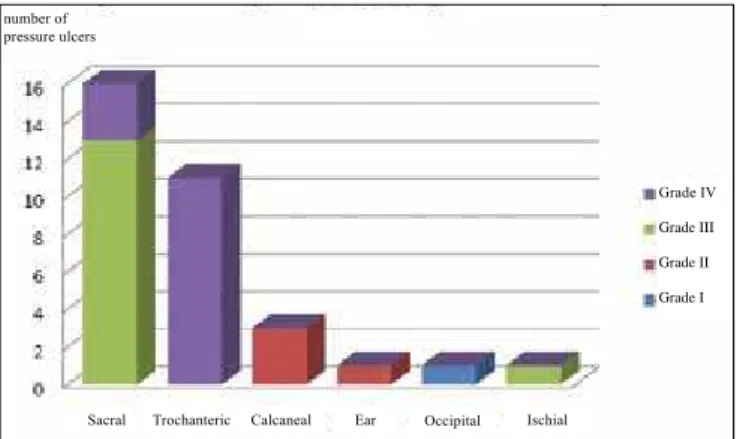
A total of 33 PUs were surgically treated. PUs were most prevalent in the sacral region (16 cases), followed by the trochanteric, calcaneal, ischial, occipital, and ear regions (Figure 1).
PU development in hospitals and at home accounted for 82% and 18% of the cases, respectively.
According to the classiication of the National Pressure
Sore Advisory Panel(1989), the prevalence of grade III and IV ulcers was 42% and the prevalence of grade II was 15%. Grade III and IV ulcers were prevalent in the sacral and trochanteric regions (Figure 2).
The surgical treatment was based on the classiication,
the area of occurrence, the patient’s general condition, and
the availability of lap donor area.
All patients who underwent surgery with the use of
laps for tissue coverage also underwent debridement of
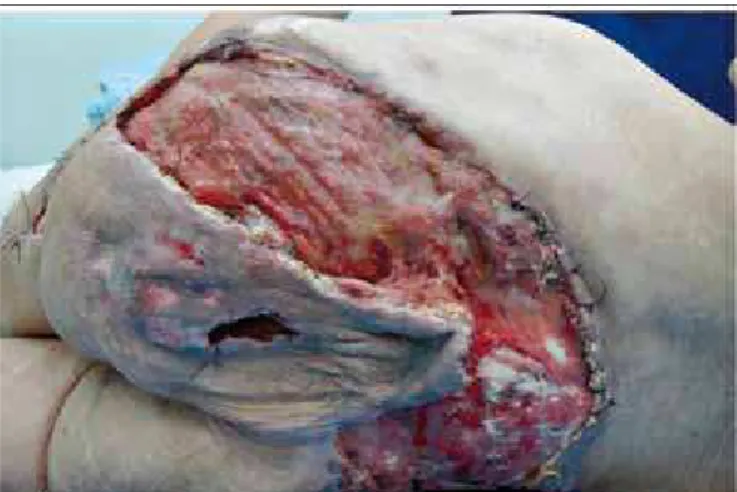
granulation tissue and bursa during the same surgical proce-dure. In the case of grade III and IV ulcers, patients underwent partial osteotomy for necrosis excision and/or reduction of bony prominences (Figure 3).
Coverage of sacral and trochanteric ulcers with a posterior
fasciocutaneous lap in V-Y of the thigh was performed in one
patient. The treatment distribution for each region affected by PU is shown in Figure 4.
Figure 1 – Graphic representation of the regions affected by pressure ulcers.
Trochanteric
Figure 3 – Distribution of treatment.
Debridement
Posterior fasciocutaneous laps of the thigh in V-Y Random skin laps
Gluteus maximus in V-Y Fasciocutaneous lap of fascia lata in
V-Primary synthesis Rhomboid
Classic fasciocutaneous
Calcaneal Ear Occipital Ischial
Sacral
Figure 2 – Distribution of ulcers according to classiication and
location.
Trochanteric number of
pressure ulcers
Calcaneal Ear Occipital Ischial
Sacral
Figure 4 – Distribution by regions affected by pressure ulcers and types of treatment.
Primary synthesis
Fasciocutaneous lap
of fascia lata in V-y
Gluteus maximus in V-Y
Debridement Posterior fasciocutaneous
laps of the thigh in V-Y
Classic fasciocutaneous Rhomboid
Random skin laps
Grade IV
Grade III
Grade II
Grade I
Troc hant
eric Sacral Cal
cane
al Ear Isch
ial
Regarding risk factors, 15 patients were bedridden without spinal cord injury and 2 had spinal cord injuries. The spinal cord injury cases included one case of paraplegia and one of hemiplegia, both of which resulted from traumatic injury from a irearm bullet. The patient with hemiplegia had an
ischial ulcer.
Only one patient was not incontinent whereas 10 patients
had fecal and urinary incontinence and 6 had only urinary incontinence.
Complications did not occur in 20 out of 33 (61%) treated PUs. Complications related to 13 (39%) ulcers are shown in Figure 5; 18% of these complications
corres-ponded to sacral ulcers with V-Y flaps of the gluteus
maximus.
Laboratory tests indicated that blood glucose was maintained within the normal level during the
preo-perative and postopreo-perative periods. Only one patient
had serum albumin and hemoglobin within the normal range. The average serum albumin level was 2.7 ng/dl, with equal distribution between complicated and uncom-plicated cases. No relationship between below normal serum protein concentration levels and postoperative
complications was found. One patient had a preoperative
hemoglobin level <10 ng/dl.
The Mann-Whitney test was applied to the variables and showed that hemoglobin levels between 10 ng/dl and 11 ng/
dl were signiicantly associated with patient complications
(P < 0.05).
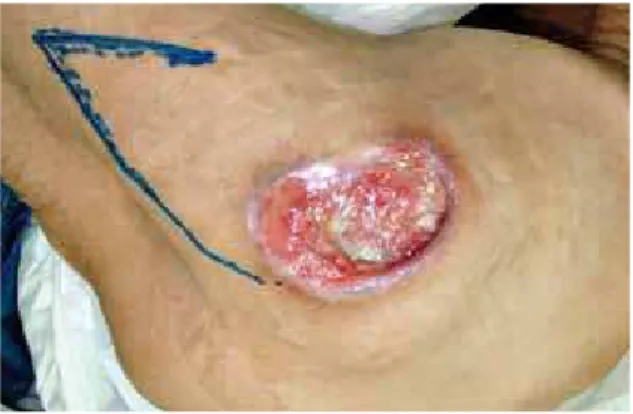
The success rate assessed per patient after one month of surgery was 53% (9 patients). PU recurrence occurred in 3 (18%) patients after an average of six months of follow-up, 2 patients could not be assessed after one month of surgery because of death from other causes, and 2 patients had chronic ulcers, one with sacral ulcer and another with ischial ulcer (Figures 6 to 29).
Figure 5 – Distribution of immediate ulcer complications after treatment.
Bleeding Necrosis
Infection
Dehiscence < 3 cm
Dehiscence > 3 cm
Figure 6 – Sacral ulcer in a 21-year-old patient with spinal
cord injury from a irearm bullet.
Figure 7 – Intraoperative sacral ulcer after debridement.
Figure 9 – Sacral ulcer in a 68-year-old stroke (CVA) patient.
Figure 12 – Posterior lap of the thigh with gluteal extension. Note
the maintenance of irrigation in the area of previous mobilization of
the gluteus maximus lap in V-Y.
Figure 10 – Recurrence in the eighth month of the postoperative period.
Figure 13 – Dehiscence of the posterior lap of the thigh in V-Y with gluteal extension. The lap’s viability can be observed.
Figure 11 – Multiple recurrences in a 43-year-old stroke patient. Several areas with surgical scars are shown.
DISCUSSIOn
The case selection mostly included chronically ill and elderly patients, with an average age of 64 years, which is consistent with the type of populations in other studies5.
Plastic surgeon assessment was only requested when there
was a total loss of skin, which explains the lack of grade I
PU reports in this study.
Isolated debridement without lap preparation for cove -rage was carried out for the patient with grade II PU because of the clinical severity and for lesions located in areas of good prognosis for healing, such as the calcaneal region. The grade II calcaneal PU that underwent debridement healed
approximately in 3 weeks.
According to a study conducted for clinical and epide-miological assessment of PU in patients admitted to Hospital São Paulo (São Paulo, SP), 68% of PU cases deve-loped in hospitals and 32% devedeve-loped at home, in nursing homes, and in other clinics5. In this study, 82% of PU cases
developed in the hospital and 18% developed at home. These findings, which suggest that these patients receive better treatment at home and in nursing homes than in the
hospital, are of great importance because they indicate the need for guidance and hospital treatment systematization
for patients with PU risk factors. The lower incidence of
PU from the household in the results herein may be related to differences between the populations studied in this research and in the aforementioned study. In this study, the population was from private hospitals with better resources for home care. The high incidence of PU in the
hospital is due to lack of knowledge about PU prevention
in nursing and medical teams, as non-surgeons did not recommend changes in position in any case.
An important factor in PU genesis is excessive mois-ture, mostly resulting from fecal and urinary inconti-nence6. Only one patient was not incontinent in this
study. Moisture macerates the skin, especially when under
friction, leading to superficial lesions that are susceptible to infection.
The highest incidence of PU was in the sacral region, resulting from the greater frequency of the supine position in a population of patients with chronic diseases and the
elderly. The lap of the gluteus maximus in V-Y was the most
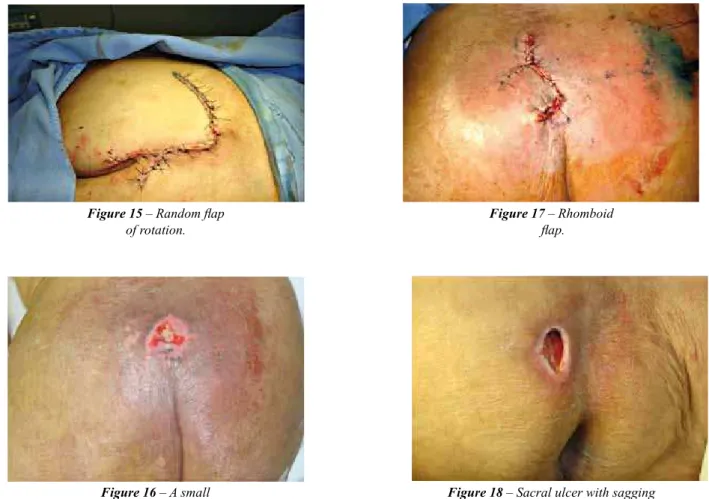
Figure 15 – Random lap
of rotation.
Figure 17 – Rhomboid
lap.
Figure 16– A small sacral ulcer.
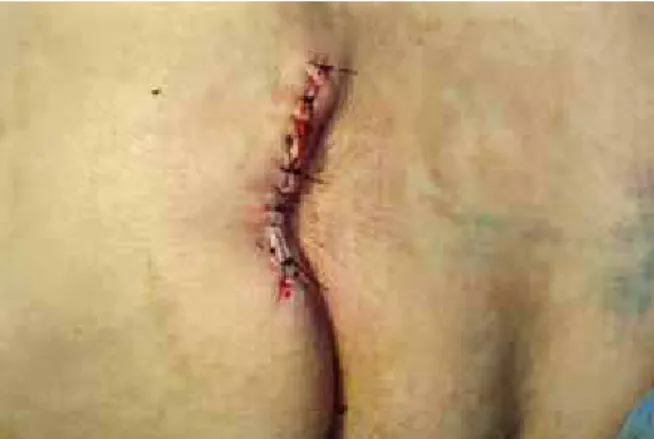
Figure 19 – Primary closure in sacral ulcer.
Figure 21 – Posterior lap of the
thigh in V-Y.
Figure 24 – Trochanteric ulcer in a 71-year-old patient.
Planning a lap of fascia lata.
Figure 23 – Trochanteric ulcer in a 71-year-old patient.
Planning a lap of fascia lata in V-Y. Figure 20 – Ischial ulcer in a 50-year-old patient with spinal cord injury
from a irearm bullet. Planning the posterior lap of the thigh in V-Y.
Figure 22 – Trochanteric ulcer in a 71-year-old patient.
frequently used, accounting for 21% of cases. This lap is easy to mobilize when unilaterally used, making it possible
Only two PU gluteus maximus musculocutaneous laps in V-Y were bilaterally prepared because of the large diameter of
the affected area. In 71.5% of sacral ulcers, a unilateral gluteus
maximus lap in V-Y was performed in order to preserve the lap donor site in case of PU recurrence in the region.
Trochanteric ulcers often occur in patients in the lateral position. Reconstructions with classical fasciocutaneous
laps of fascia lata in V-Y were performed as well as debri
-dement without laps in patients with tissue necrosis that were
clinically unstable.
PUs in the occipital and ear regions that corresponded to grade II ulcers and four grade III sacral ulcers underwent closure with primary synthesis. PUs that were not extensive
and had available adjacent tissue were primarily closed to preserve the lap donor area in case of recurrence or new ulcer.
The posterior flap of the thigh in V-Y shows good vita -lity and can be performed with the medial or lateral base. It enables repair of isolated or multiple lesions in a single surgical procedure20. Two cases were performed with this
flap: one involved repair of sacral and trochanteric ulcers in a single surgical procedure and the other was in the ischial region. This study included a single occurrence of ischial ulcers that developed with flap dehiscence < 3 cm, which corresponded with a high complication rate in this region in other studies46,47.
Figure 25 – The one-month postoperative period of the patient shown in Figures 22 to 24.
Figure 27 – Trochanteric ulcer.
Figure 29 – The nine-month postoperative period of the patient shown in Figures 27 and 28.
Figure 26 – The four-month postoperative period of the patient shown in Figures 22, 23, and 24.
Figure 28 – Flap of fascia lata associated
Random skin laps were used preferentially in areas of
ulcer recurrence with scars from previous reconstruction and in clinically unstable patients who required less surgical time.
After lap production, it is necessary to close the donor
area without tension. The selection of the reconstructive procedure depends on several factors: level of spinal cord
injury, ulcer area, history of prior ulcer and surgeries, prog -nosis, daily habits, nutritional status, and other associated medical problems.
Of the total cases with postoperative complications
(32%), half occurred in the sacral region. The high incidence in the region may have been related to contact with feces and urine near the surgical scar since all patients but one had urinary or fecal incontinence.
The attempt to correct albumin and hemoglobin to normal levels prior to surgery was not achieved in some patients
because of chronic diseases. Albumin deiciency was not
associated with postoperative complications but hemoglobin < 11 ng/dl (10.35 ng/dl on average) occurred predominantly with complications (P < 0.05).
Although a patient with sacral PU had hemoglobin < 10 ng/dl without postoperative complications, anemia is usually
associated with dehiscence and lap necrosis.
The low rate of ulcer recurrence (18% in six months) is probably related to the short follow-up time since other studies report rates above 26%48. This fact may also be
explained by the few reported cases of ischial ulcers because these have the greater recurrence rates46,47.
The success rate of 53% after one month of treatment, with complete closure of the ulcer and no recurrence, was
observed for an average of six months, conirming the results
of other studies43.
Routine assessment of impaired mobility in patients’
skin may prevent PU formation since PU presents as either mild changes in skin color or no change in its initial phase. The dificulty in assessment is due to the failure of health professionals to differentiate between skin responses that are
physiologically normal (reactive erythema) and pathological (non-reactive erythema), the latter of which will progress to later stages of PU if the causal stimulus is not eliminated.
The experience gained in this study contributed to a better surgical approach and non-surgical approach, the latter of which includes the participation of hospital staff, family members, and patients, in PU prevention.
COnCLUSIOnS
PUs can be avoided in most cases given knowledge of their pathogenesis and proper management of patients at risk.
The involvement of patients, families, and/or professio-nals is essential for the successful treatment of patients with PU because complications and recurrences are common.
Risk factors for complications such as anemia shall be
avoided for a better prognosis and proper closure of the PU.
ACKnOWLEDGMEnTS
We thank Dr. Joel Veiga Filho, full member of the Brazi -lian Society of Plastic Surgery, for guidance during the development of this study.
REFEREnCES
1. Santos LLR, Ferreira LM, Sabino Neto MS. Pressure ulcer. In: Ferreira LM, ed. Manual de cirurgia plástica. (Plastic surgery manual) São Paulo: Atheneu; 1995. p. 214-7.
2. Ferreira LM, Calil JA. Etiopatogenia e tratamento das úlceras por pres-são. (Ethiopathogeny and pressure ulcers treatment) Diagn Tratamento. 2001;6:36-40.
3. Frisoli Jr A, Haddad A, Toniolo Neto J, Ferreira LM. Pressure ulcer. Gerontologia. (Gerontology) 1995;3:193-200.
4. Shea JD. Pressure sores: classiication and management. Clin Orthop Relat Res. 1975;(112):89-100.
5. Blanes L, Duarte IS, Calil JA, Ferreira LM. Avaliação clínica e epide -miológica das úlceras por pressão em pacientes internados no Hospital São Paulo. (Clinical and epidemiological assessment of pressure ulcers in patients admitted at Hospital São Paulo) Rev Assoc Med Bras. 2004;50(2):182-7.
6. Bryant RA, Shannon ML, Pieper B, Braden BJ, Morris DJ. Pressure ulcers. In: Bryant RA, ed. Acute and chronic wounds: nursing mana-gement. St. Louis: Mosby; 1992. p. 105-63.
7. Lindan O, Greenway RM, Piazza JM. Pressure distribution on the surface of human body. I. Evaluation in lying and sitting posi-tions using a “bed of springs and nails”. Arch Phys Med Rehabil. 1965;46:378-85.
8. Dansereau JG, Conway H. Closure of decubiti in paraplegics. Report of 2000 cases. Plast Reconstr Surg. 1964;33:474-80.
9. Costa MP, Sturtz G, Costa FPP, Ferreira MC, Barros Filho TEP. Epide-miologia e tratamento das úlceras de pressão: experiência de 77 casos. (Epidemiology and treatment of pressure ulcers: experience of 77 cases) Acta Ortop Bras. 2005;13(3):124-33.
10. Bergstrom N, Braden B, Kemp M, Champagne M, Ruby E. Multi-site study of incidence of pressure ulcers and the relationship between risk level, demographic characteristics, diagnoses, and prescription of preventive interventions. J Am Geriatr Soc. 1996;44(1):22-30. 11. Dealey C. Cuidando de feridas: um guia para enfermeiras. (Wounds care:
a guide for nurses) São Paulo: Atheneu; 1992. p. 83-126.
12. Allman RM. Pressure ulcers among the elderly. N Engl J Med. 1989;320(13):850-3.
13. Pinchcofsky-Devin GD, Kaminski MV Jr. Correlation of pressure sores and nutritional status. J Am Geriatr Soc. 1986;34(6):435-40. 14. Krasner D, Margolis DJ, Ordona RU, Rodeheaver GT. Prevention and
management of pressure ulcers: treatment of chronic wounds. Number 6 in a Series.
15. Foster RD, Anthony JP, Mathes SJ, Hoffman WY, Young D, Eshima I. Flap selection as a determinant of success in pressure sore coverage. Arch Surg. 1997;132(8):866-73.
16. Powel PH. Pressure sore. In: Selected Readings in Plastic Surgery, 7(39):1-27.
17. Yarkony GM. Pressure ulcers: a review. Arch Phys Med Rehabil. 1994;75(8):908-17.
19. Conway H, Grifith BH. Plastic surgery for closure of decubitus ulcers in patients with paraplegia: based on experience with 1,000 cases. Am J Surg. 1956;91(6):946-75.
20. Calil JA, Ferreira LM, Neto MS, Castilho HT, Garcia EB. Avaliação clínica do retalho fascio-cutâneo da região posterior da coxa em V-Y. (Clinical assessment of the fasciocutaneous lap from the posterior region of the thigh in V-Y) Rev Assoc Med Bras. 2001;47(4):311-9. 21. Conway H, Kraissl CJ, Clifford III RH. The plastic surgical closure
of decubitus ulcers in patients with paraplegia. Surg Gynecol Obstet. 1947;85(3):321-32.
22. Wesser DR, Kahn S. The reversed dermis graft in the repairs of decubitus ulcers. Plast Reconstr Surg. 1967;40(3):252-4.
23. Campbell RM, Converse JM. The saddle-lap for surgical repair of ischial decubitus ulcers. Plast Reconstr Surg. 1954;14(6):442-3.
24. Luscher NJ, Kuhn W, Zäch GA. Rhomboid laps in surgery for decubital ulcers: indications and results. Ann Plast Surg. 1986;16(5):415-21. 25. Rosen JM, Mo ST, Liu A. Experience with the island inferior gluteal
thigh lap compared with other local laps for the reconstruction of the pelvic area. Ann Plast Surg. 1990;24(6):498-509.
26. Hurwitz DJ, Swartz WM, Mathes SJ. The gluteal thigh lap: a reliable, sensate lap for the closure of buttocks and perineal wounds. Plast Reconstr Surg. 1981;68(4):521-32.
27. Rubin JA, Whetzel TP, Stevenson TR. The posterior thigh fasciocuta-neous lap: vascular anatomy and clinical application. Plast Reconstr Surg. 1995;95(7):1228-39.
28. Maruyama Y, Ohnishi K, Takeuchi S. The lateral thigh fascio-cutaneous lap in the repair of ischial and trochanteric defects. Br J Plast Surg. 1984;37(1):103-7.
29. Paletta C, Bartell T, Shehadi S. Applications of the posterior thigh lap. Ann Plast Surg. 1993;30(1):41-7.
30. Yamamoto Y, Ohura T, Shintomi Y, Sugihara T, Nohira K, Igawa H. Superiority of the fasciocutaneous lap in reconstruction of sacral pressure sores. Ann Plast Surg. 1993;30(2):116-21.
31. Schelan M, Nahai F, Bostwick J 3rd. Gluteus maximus island muscu -locutaneous lap for closure of sacral and ischial ulcers. Plast Reconstr Surg. 1981;68(4):533-8.
32. Ramirez OM. The sliding plication gluteus maximus musculocutaneous lap for reconstruction of sacrococcygeal wounds. Ann Plast Surg. 1990;24(3):223-30.
33. Ger R. The surgical management of decubitus ulcers by muscle trans-position. Surgery. 1971;69(1):106-10.
34. Klein NE, Luster S, Green S, Moore T, Capen D. Closure of defects from pressure sores requiring proximal femoral resection. Ann Plast Surg. 1988;21(3):246-50.
35. Arregui J, Cannon B, Murray JE, O’Leary JJ Jr. Long-term evaluation of ischiectomy in the treatment of pressure ulcers. Plast Reconstr Surg. 1965;36(6):583-90.
36. Pers M, Snorrason K, Nielsen IM. Primary results following surgical treatment of pressure sores. Scand J Plast Surg. 1986;20(1):123-4. 37. Keys KA, Daniali LN, Warner KJ, Mathes DW. Multivariate predictors
of failure after lap coverage of pressure ulcers. Plast Reconstr Surg. 2010;125(6):1725-34.
38. Disa JJ, Carlton JM, Goldberg NH. Eficacy of operative cure in pressure sore patients. Plast Reconstr Surg. 1992;89(2):272-8.
39. Estrella EP, Lee EY. A retrospective, descriptive study of sacral ulcer lap coverage in nonambulatory patients with hypoalbuminemia. Ostomy Wound Manage. 2010;56(3):52-9.
40. Ichioka S, Okabe K, Tsuji S, Ohura N, Nakatsuka T. Distal perforator-based fasciocutaneous V-Y lap for treatment of sacral pressure ulcers. Plast Reconstr Surg. 2004;114(4):906-9.
41. Lee HB, Kim SW, Lew DH, Shin KS. Unilateral multilayered musculo-cutaneous V-Y advancement lap for treatment of pressure sore. Plast Reconstr Surg. 1997;100(2):340-5.
42. Jósvay J, Sashegyi M, Kelemen P, Donáth A. Modiied tensor fascia lata musculofasciocutaneous lap for the coverage of trochanteric pressure sores. J Plast Reconstr Aesthet Surg. 2006;59(2):137-41.
43. Maciel SC, Tavares Filho JM, Belerique M. Retalhos glúteos em V-Y para reparação de úlceras sacras, isquiáticas e trocantéricas, sem secção ou sacrifício do músculo glúteo máximo. (Gluteal laps in V-Y for repair of sacral, ischiatic and throcanteric ulcers without section or sacriice of the gluteus maximum muscle) Rev Soc Bras Cir Plast. 1999;14(2):55-64. 44. Calil JA. Aplicação clínica do retalho fáscio-cutâneo em V-Y da região
posterior da coxa [tese de doutorado]. (Clinical application of the fas-ciocutaneous lap in V-Y from the posterior region of the thigh [PhD thesis] São Paulo: Universidade Federal de São Paulo; 1999. 45. Jones NF, Wexler MR. Delineation of the pressure sore bursa using
methy-lene blue and hydrogen peroxide. Plast Reconstr Surg. 1981;68(5):798-9. 46. Relander M, Palmer B. Recurrence of surgically treated pressure sores.
Scand J Plast Reconstr Surg Hand Surg. 1988;22(1):89-92.
47. Kierney PC, Engrav LH, Isik FF, Esselman PC, Cardenas DD, Rand RP. Results of 268 pressure sores in 158 patients managed jointly by plastic surgery and rehabilitation medicine. Plast Reconstr Surg. 1998;102(3):765-72.
48. Souza Filho MVP, Cardoso DP, Girão RA. Tratamento cirúrgico das úlceras de pressão com retalhos cutâneos e musculocutâneos. (Surgi -cal treatment of pressure ulcers with skin and musclecutaneous laps) Experiência de três anos no Hospital Geral Dr. Waldemar de Alcântara. Rev Bras Cir Plast. 2009;24(3):274-80.
Correspondence to: Ricardo Goes Figueiras