Parliamentary debates in Portugal from 1821 to 1910.
Identiication of Nursing History sources
Debates Parlamentares em Portugal de 1821 a 1910: identiicação de fontes para a História
da Enfermagem
Debates parlamentarios en Portugal desde 1821 hasta 1910: identiicación de fuentes para la
Historia de la Enfermería
Paulo Joaquim Pina Queirós1
Antonio José Almeida Filho2
Ana Paula Almeida Monteiro1
Tânia Crisina Franco Santos2
Maria Angélica de Almeida Peres2
1. Escola Superior de Enfermagem de Coimbra. Coimbra, Portugal.
2. Universidade Federal do Rio de Janeiro. Rio de Janeiro, RJ, Brazil.
Corresponding author: Antonio José Almeida Filho. E-mail: [email protected]
Submited on 06/13/2016. Accepted on 09/16/2016.
DOI: 10.5935/1414-8145.20170006
A
bstrActPortuguese nursing history requires further robust evidence-based studies, particularly studies that may contribute to understanding the invisibility/visibility process of nursing in Portugal. Objective: To interpret the historical sources available from the daily sessions
of the Portuguese Chamber of Representatives between 1821 and 1910. Methods: Using nursing-sensitive descriptors, the daily sessions available in full-text at the website of the Assembly of the Republic were accessed, identiied and consulted. Results: A total of 1,317 pages from 903 daily sessions were found, which corresponded to six Chambers operating during the period under analysis. Data were chronologically organized, and then the trends, gaps and increasing references to nursing/nurse in these
documents were characterized. Conclusion: There is a clear reference to the descriptors nurse, nursing, and nursing ward in certain political periods in Portugal, particularly in moments of greater investment in the colonies, which requires further studies.
Keywords: History of Science; History; Nursing; Parliamentary Debates.
r
esumoA história da enfermagem em Portugal, necessita de estudos de aprofundamento, rigorosamente alicerçados em fontes. Em particular os que podem contribuir para a compreensão do processo de invisibilidade/visibilidade da enfermagem portuguesa.
Objetivo: Interpretar as fontes históricas disponíveis nos diários das sessões das câmaras de representantes de Portugual,
no período 1821-1910. Métodos: Utilizando-se descritores sensíveis à temática enfermagem, foi possível acessar, identiicar
a sua localização e organizar os diários das sessões disponíveis em texto integral, no endereço digital da Assembleia da República Portuguesa. Resultados: Encontrou-se 1317 páginas de 903 diários de sessões correspondentes a seis câmaras
que funcionaram nesse período. Organizou-se cronologicamente a informação e procedeu-se à caracterização das tendências, lacunas e aumento de referência à enfermagem- enfermeiro nestes documentos. Conclusão: É nítida a referência aos descritores
enfermeiro, enfermagem e enfermaria em determinados períodos políticos de Portugal, com destaques para momentos de maior investimento nas colônias, exigindo outros estudos.
Palavras-chave: História da Ciência; História; Enfermagem; Debates Parlamentares.
r
esumenLa historia de la enfermería en Portugal, requiere más estudios rigurosamente, basadas en fuentes. Particularmente los que pueden contribuir a la comprensión del proceso de la invisibilidad/visibilidad de la enfermería portugués. Objetivo: Interpretar
las fuentes históricas disponibles en las sesiones diarias de la cámara de representantes de Portugual en el período 1821-1910.
Métodos: El uso de descriptores sensible tema de enfermería, fue posible el acceso, identiicar su ubicación y organizar sesiones
diarias disponibles en texto completo en la dirección digital de la Asamblea de la República. Resultados: Se encontraron 1317 páginas de 903 sesiones diarias correspondientes a seis cámaras que trabajaban en ese período. Está organizado
cronológicamente información y procedió a la caracterización de las tendencias, brechas y aumentó referencia a enfermagem- enfermera en estos documentos. Conclusión: Existe una clara referencia a los siguientes descriptores enfermera, cuidado de
enfermería y en ciertos períodos políticos de Portugal, con toques de luz para los momentos de mayor inversión en las colonias, lo que requiere más estudios.
INTRODUCTION
Research in the area of Nursing History has been considered to be a key factor for a deeper understanding of the evolution of education and research in Nursing Science, the development of clinical pathways/health care organizational models, and longitudinal trends in health phenomena.
In Portugal, literature in this ield is scarce, especially when
compared to the academic productivity in other European countries and in Brazil. This translates into the social invisibility
of Nursing as an autonomous branch of scientiic knowledge
and a socially relevant profession.
Indeed, in a search performed in the EBSCO Platform in January 2015 using the descriptor história de enfermagem
(nursing history) and the name of several countries, we only found 481 publications available in full-text in Portugal, which was the country with less literature on this topic among a group of eight European countries. For instance, we also found 938,981 publications in Brazil and 116,686 in the United States.
The delay observed in Portuguese Nursing History research studies can be explained by the delay in those areas of knowledge which did not evolve from written tradition, unlike Medicine, Theology and Legal Sciences.1 Nursing has been
described as a practice-oriented discipline, whose perspective
is deined by its speciic aspects, professional history, and
sociopolitical context. It is characterized by a history of inferior citizenship, a history of devaluation of its mission, which is
relected in its airmation as a discipline.2 Despite this, diferent
countries, such as Portugal, Brazil, United States and Canada, show significant differences concerning Nursing visibility, societal positioning, and academic recognition.
Although some authors have recently focused on this topic, Nursing History research remains incipient in Portugal. The scarce literature is characterized by rather generalist
approaches, scattered sources, and diiculty to conduct
long-term and systematic research studies. This gap in the production
of historiographical knowledge inluences the construction of
professional identity, the epistemological articulation of nursing
science, and the redeinition of care paradigms. More structured overviews and historical approaches to speciic aspects are
needed, such as daily experiences, advances in health care, techniques and technologies, professionalization and training processes, organizations and institutions.
However, a literature review allowed identifying few, but valuable, in-depth studies of relevance to the period under analysis: Do curandeiro ao diplomado: história da proissão de
enfermagem em Portugal (1886-1955);3 A arte de enfermeiro:
Escola de Enfermagem Dr. Ângelo da Fonseca;4 A saúde pública
e os enfermeiros entre o vintismo e a regeneração (1821-1852);5
Uma história da enfermagem em Portugal (1143-1973). A
constância do essencial num mundo em evolução permanente.6
In the latter document (a Ph.D. thesis), the author reports the almost invariable presence of both male and female nurses in care practices, with only short periods of the predominance of female nurses already in the 20th century. The author also
observed that the functions already performed by nurses in the hospitals served as the basis for the early nursing training curriculum.6
Nursing history research is essential for understanding the process of professional identity construction and empowerment of Nursing knowledge. This knowledge results from a spiral-type translational movement between public and private knowledge within the scope of an epistemology of practice and leads to a historically constructed and unique body of knowledge.7
Therefore, historical studies that institutionalize memories contribute to creating a shared identity, which is key for the cohesion of social groups, and providing a sense of unity and,
consequently, statutory ailiation.8
There is a unifying axis that deines the scientiic identity of
nursing science. Nursing history holds in itself a deep sense of human ethics, both from an epistemological and anthropological perspective.9 In its academic and professional practices, nursing uses educational initiatives oriented toward its ield-speciic
knowledge and the changing historical-social context. Therefore, nursing integrates multiple care-related domains, in which it was, and still is, possible to produce knowledge that has gained
support over time in the pursuit of scientiicity.10
The possibility to retrieve historical information from memory is an important resource in historical studies aimed at the construction and preservation of professional identity and, by extension, institutional identity.8 Historical sources are
essential to understanding past events as they provide History
with a scientiic basis, legitimizing the researcher's discourse and, therefore, distinguishing between History and ictional
accounts.11
The purpose of our study was to interpret historical sources available from the daily sessions of the Portuguese Chamber of Representatives between 1821 and 1910. To this end, we
identiied, gathered and organized those historical sources
which allowed for a systemized understanding of the process of
airmation of modern nursing in Portugal based on its visibility/
invisibility in the political arena. Our methodological assumption was a longitudinal and panoramic view of history which will, inevitably, lead to new starting points emerging from the detailed analysis of the body of literature.
This study sought to analyze, systematize, and disseminate documentary sources on the political affirmation of the nursing profession and science in Portugal. Since this was an
unprecedented research efort in Portugal, our priority was
and are available at the website of the Portuguese Assembly of the Republic.
This historical period corresponds to the emergence and
airmation of nursing science, the organization of the education
network, and the creation of the first Nursing Schools in Portugal. On the other hand, from a sociopolitical perspective,
there were major scientiic, cultural and social disruptions and
changes during this period, which had a profound impact on the development of nursing as a science. In this context, the importance of the privileged relationship between Portugal and Portuguese-speaking countries, namely Brazil, remains understudied.
METHODS
We performed a systematic consultation of the scanned documents which were available at the website of the Portuguese Assembly of the Republic. These documents referred to the daily sessions of several Chambers of Representatives during the extended period from 1821 to 1910, i.e. from the Liberal Revolution of 1820 to the Republican Revolution of 1910. In order to locate all relevant sources, we performed a search in
the website's search engine using the following descriptors:
enfermeiro (male nurse), enfermeiros (male nurses), enfermeira
(female nurse), enfermeiras (female nurses), enfermagem
(nursing), enfermaria (nursing ward), and enfermarias (nursing wards).
We identiied the number of daily sessions with references
and the number of pages per year and Chamber in force during this period. We searched for trends, absences and concentrations, and determined ratios per historical period and quarter.
We opted to conduct a historical research due to its accuracy,
particularly taking into account what the methodology speciic to
this area considers being essential.
Therefore, our research process involved processes of imagination and insight since a contemplative attitude toward rigorous and in-depth observation, and a systematic, thorough, and nonrandom approach allows drawing closer to the reality reported by the speeches - the writing of History.12 It is thus
important to consider three consecutive methodological steps: data collection, analysis, and organization, to which this paper will contribute; further analysis and synthesis, building an interpretive
framework; and inally, the written discourse communication. History is associated with "the diicult task of 'writing' which, in
turn, does not imply a mere compilation and narration, rather an
active and ultimately 'public' interpretation, where imagination
blends in with accuracy, putting aside the mere opinion or the simple ideology."13:49
We ensured the scientiic rigor by the clear time and space
delimitation, the attention to time cycles, chronological periods
and gaps, synchronic and diachronic analysis, the deinition of
series and sequences based on chronological order, duration and pace, taking into account any medium-term contexts, without disregarding long-term trends which can correspond
to structuring axes, while also beneiting from the advantages
provided by comparative methodologies, where appropriate.14
We used quantitative methods in historical research to identify thematic concentrations, without neglecting the interpretive analysis.
RESULTS AND DISCUSSION
In early 19th century, almost every sphere of Portuguese
society operated according to ancient traditions.15 In the turn of
the 20th century, amidst profound economic and technological
transformations, capitalism and its changing dynamics started to undermine the foundations of oligarchical systems.16
In Portugal, the 1821-1910 period corresponds to the onset
of nursing professionalization, the ideas and inluence of Florence
Nightingale, and the foundation of nursing schools (Coimbra, in 1881; Porto, in 1896; and Lisbon, in 1901). This period was also marked by Positivism, namely by Claude Bernard, who introduced
the scientiic method to medical sciences. In the 19th century,
science emerged as the source of all possible values, and the
salvation from all human insuiciencies and diiculties.17,18 This new positivist religion provides the framework for the scientiic
transformation and social controversies, particularly in what concerns nursing, i.e. the debate between secular and religious nursing.
During this period, six Chamber of representatives were held in Portugal: General and Extraordinary Cortes of the Portuguese Nation (1821-1822); Chamber of Deputies (1822-1910); Chamber of Peers of the Realm (1826-1838); General, Extraordinary and Constituent Cortes of the Portuguese Nation (1837-1838); Chamber of Senators (1838-1842); and Chamber of Peers of the Realm (1842-1910).
The General and Extraordinary Cortes of the Portuguese Nation were held from 24 January 1821 to 4 November 1822 as a result of the Liberal Revolution of 1820. The daily sessions of these Cortes are available as minutes. In a total of 30 daily sessions, we found 38 pages including the search descriptors.
The Chamber of Deputies was held from November 1822 to the Republican Revolution of 1910. This was the longest Chamber, and the one providing more material from the legislative daily sessions. We found 681 daily sessions, including the above-mentioned descriptors, in a total of 1,011 pages.
hereditary members appointed by the King, started operating in 1821 and lasted until 1838. We found no reference to the search descriptors in the available daily sessions from the Chamber of Peers of the Realm.
After the Revolution in September 1836, the Constitutional Charter was abolished and the King appointed deputies to the General, Extraordinary and Constituent Cortes of the Portuguese Nation with the purpose of drafting a new Constitution. These Cortes were held from 1837 to 1838. Using the search descriptors, we found seven daily sessions with seven pages in
these Cortes' minutes, which were scanned and are available at
the website of the Portuguese Assembly of the Republic. The Chamber of Senators was held between 1838 and 1842 within the two-chamber system, replacing the Chamber of Peers after the new Constitution of 1938 entered into force. We found seven relevant daily sessions from the Chamber of Senators with 8 pages including the search descriptors.
Over time, a new revolution occurred in 1842 - the Costa Cabral revolution. Upon this occasion, the Constitutional Charter is restored, replacing the Constitution, and the Chamber of Peers of the Realm is again implemented, being held from 1842 to 1910. The search performed in the daily sessions of the Chambers of Peers of the Realm retrieved 178 sessions including the descriptors, which corresponded to 254 relevant
pages. The search allowed us to identify a signiicant number of daily sessions from the various chambers, except for the irst
Chamber of Peers of the Realm (1826-1838) where we found no references to the descriptors. A large amount of material was found in the Chamber of Deputies (1822-1910), which can be explained by the fact that it was the Chamber that lasted longer.
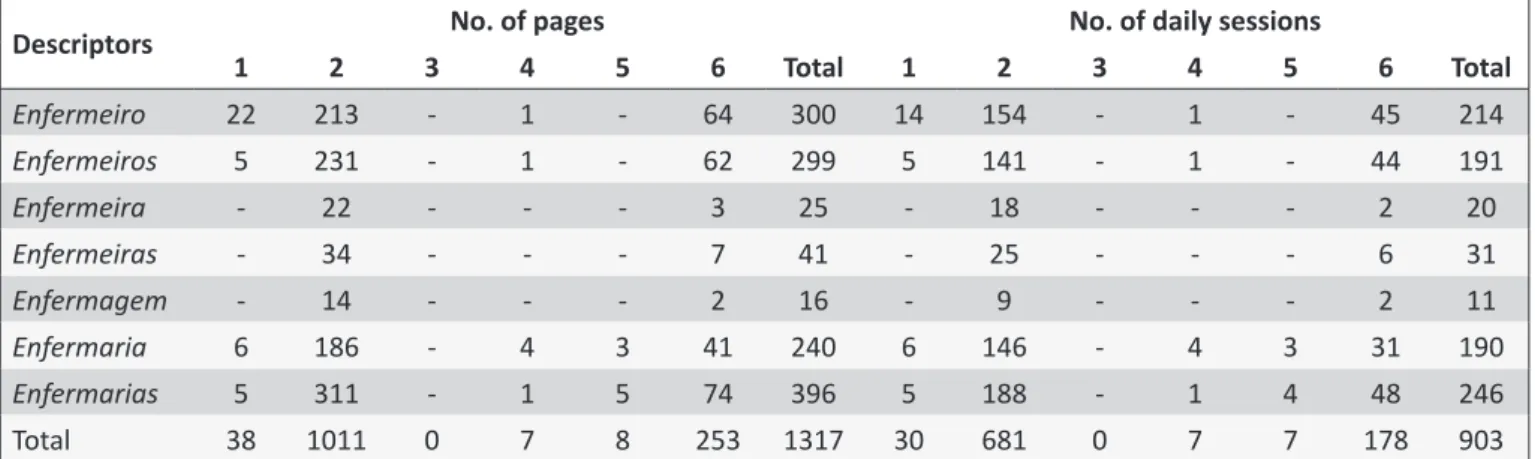
In the century ruled by the Constitutional Monarchy, we found references to the search descriptors in a total of 1,317 pages from 903 daily sessions of the six chambers held during this period (Table 1).
A more detailed analysis of the Constitutional Monarchy period showed a density ratio of 14.63 for the number of pages including descriptors/year (1317/90), and a density ratio of 10.03 for the number of daily sessions with descriptors/year (903/90). These ratios can be compared with similar data from other periods, namely the First Republic and the New State (a study, waiting for publication, reports ratios of 26.15 pages and 18.65 daily sessions for the First Republic, and 43.25 pages and 24.64 daily sessions for the New State). Therefore, the three historical periods - Constitutional Monarchy, First Republic, and New State - show an increasing trend, both for the page ratio (14.62; 26.15; 43.25) and for the daily sessions ratio (10.03; 18.65; 24.64).
The analysis of all sources available at this online catalog must take into account the distribution of information throughout the years, i.e. periods of lack, decrease, and increase of information, as illustrated in Graphic 1. These data are clearly relevant to determine trends, but above all to perform synchronic cross-sectional analyses. We observed an increase in the number of pages with descriptors, which shows a rising trend over time and is in line with the increase in the overall volume of information in the daily sessions of the several chambers. Further studies should take into account that this upward trend reached its peak (89 pages) in 1896, and continued to irregularly decrease until 1910. High amounts of information were found
between 1880 and 1885. Signiicant maximum peaks were
reached in 1832, 1858, 1872, 1883, and 1902, with periods of less amount of information from 1836 to 1856, and from 1864 to 1871. The years of 1826, 1836, 1845, 1852, and 1906 showed minimum annual values.
Throughout the 19th century and the irst decade of the 20th century, the representative bodies of the nation relect, comment,
and legislate on nursing, nurses and nursing wards. A total of 1,317 pages is available, showing an uneven distribution over
Table 1.
Number of pages and daily sessions according to the various chambers and search descriptors. Consituional
Monarchy period (1821-1910)
Descriptors
No. of pages
No. of daily sessions
1
2
3
4
5
6
Total
1
2
3
4
5
6
Total
Enfermeiro
22
213
-
1
-
64
300
14
154
-
1
-
45
214
Enfermeiros
5
231
-
1
-
62
299
5
141
-
1
-
44
191
Enfermeira
-
22
-
-
-
3
25
-
18
-
-
-
2
20
Enfermeiras
-
34
-
-
-
7
41
-
25
-
-
-
6
31
Enfermagem
-
14
-
-
-
2
16
-
9
-
-
-
2
11
Enfermaria
6
186
-
4
3
41
240
6
146
-
4
3
31
190
Enfermarias
5
311
-
1
5
74
396
5
188
-
1
4
48
246
Total
38
1011
0
7
8
253
1317
30
681
0
7
7
178
903
Table 2.
Distribuion of the number of pages with descriptors by year of publicaion of the daily sessions, and esimated
raios per quarter, throughout the period under analysis (1821-1910)
Pages/year/raio
19
thCentury
1
stquarter
2
ndquarter
3
rdquarter
4
thquarter
No. of pages
44
133
299
621
No. of years
6
25
25
25
Raio
7.30
5.32
11.96
24.84
Source: Data extracted from the website of the Assembly of the Republic, consulted in January 2015.
Table 3.
Distribuion of the number of pages with descriptors according to the clusters of descriptors
Descriptors
Consituional Monarchy
Enfermeiro(s) a(s)
665
Enfermagem
16
Enfermaria(s)
636
Source: Data extracted from the website of the Assembly of the Republic, consulted in January 2015.
Graphic 1. Distribuion of the number of pages with the descriptors by year of
publicaion of the daily sessions. Consituional Monarchy period (1821-1910). Source: Data extracted from the website of the Assembly of the Republic, consulted in January 2015.
time, with a higher concentration at the end of the 19th century,
and a mean of 14.63 pages per year.
By grouping the years into quarters, we observed that the ratio for the third quarter of the 19th century doubled in the fourth quarter. Furthermore, we found a signiicant increase in
the number of sources, with a considerably higher ratio in both quarters of the second half of the 19th century when compared to both quarters of the irst half of this century (Table 2).
New levels of interpretation emerge when we bring together
the seven initially deined and used descriptors into three clusters
of descriptors, which lead to an interesting new research hypothesis for future studies. One cluster was composed of the personal descriptors (enfermeiro, enfermeiros, enfermeira, and enfermeiras);
a second cluster consisted of the descriptor enfermagem; and,
inally, a third cluster included the descriptors enfermaria and
enfermarias. This analysis (Table 3) showed that, during the Constitutional Monarchy, both the personal (personal descriptors) and institutional (enfermaria(s) dimensions had equally high values, while the descriptor enfermagem (nursing in itself as an entity,
profession, discipline) showed signiicantly lower values.
A thorough analytical analysis should be performed to this interesting volume of available sources starting with the
clariication of "the lines of continuity and disruption between
the Old Regime and Liberalism",5:477 and exploring the many
dimensions of the evolution of thought and care policies during the Constitutional Monarchy. This research process will recover "the
igure of the nurse as someone who has been missing from the
self-explanatory historiography of certain dominant professions in the health area".5:477
CONCLUSIONS
We obtained a signiicant amount of relevant primary sources
(1,317 pages from 903 daily sessions) from searching the daily sessions of six Portuguese Chambers of Representatives, held from 1821 to 1910, which were available at the website of the Assembly of the Republic. We conducted this search in January 2015 using the descriptors enfermeiro/a, enfermeiros/ as, enfermagem and enfermaria/as.
The estimated density ratios per year and per quarter showed an overall continuous and rising trend throughout history of available primary sources which are relevant to the history of Science, Health, and Nursing. This aspect goes along with the natural increase of information and volume of topics in the
diferent daily sessions.
disruptions, and increases in the volume of information, which
conirms the need for further research.
By grouping the descriptors into three clusters, we observed that both personal and institutional descriptors were equivalent in terms of volume in the sources obtained from the Constitutional Monarchy to the detriment of the entity descriptor enfermagem. We found a remarkable corpus of primary sources referring to nearly a century of History (1820-1910), which will allow for the development of in-depth studies concerning each
diferent topic and period, taking into account synchronies and
diachronies. This will contribute to developing a historical insight and interpretation of relevance to the history of Nursing, Health, and Science.
This preliminary work of identiication and brief characteriza
-tion of sources will enable the subsequent clariica-tion of the axes
structured over time concerning the visibility/invisibility of nursing. It will also be important to consider the synchronic analysis of health care policies and institutions in Portugal and other Euro-pean countries, as well as in Brazil. The subsequent systematic
search for speciic topics and issues related to nurses and nurs -ing in the daily sessions of the various Portuguese Chambers of Representatives during the period of the Constitutional Monarchy will lead to more detailed analysis.
As an historical research process, this documentary analysis provides opportunities for a thorough methodological study of the impact of nursing in the Portuguese society, through the
identiication of issues and topics favored by the elites who
participated in representative bodies, as well as the study of the issues and topics missing over a given period of history. Therefore, based on the analysis of primary sources, we expect to create new starting points toward the development of a Portuguese Nursing History.
The analysis of nursing empowerment processes in
speciic situations contexts and long-term trends, translated
into the visibility of the political discourse and legislation, will lead to further comparative studies, and improve the worldwide historiographical debate on Nursing History, as well as to provide a valuable contribution to the study of Science History.
Therefore, this study may contribute to understanding the current visibility and invisibility of nursing in light of the process of constructing a historical narrative of presences and absences.
ACKNOWLEDGMENT
We appreciate the support of the National Council for
Scien-tiic and Technological Development (CNPq) for the development
of this study.
REFERENCES
1. Collière MF. Promover a vida. Da prática das mulheres de virtude aos cuidados de enfermagem. 5ª ed. Abecasis ML, tradutor. Lisboa (POR): Lidel Edições Técnicas, Lda; 1999.
2. Meleis AI. Theoretical nursing: development and progresso. 5th ed. Philadelphia (EUA): Wolters Kluwer Health - Lippincott Williams & Wilkins; 2011.
3. Silva HSF. Do curandeiro ao diplomado: história da profissão de enfermagem em Portugal (1886-1955) [tese]. Braga (POR): Universidade do Minho, Instituto de Ciências Sociais; 2010. 4. Silva AI. A arte de enfermeiro: Escola de Enfermagem Dr. Ângelo da
Fonseca. Coimbra (POR): Imprensa da Universidade de Coimbra; 2008. 5. Subtil CLL. A saúde pública e os enfermeiros entre o vintismo e
a regeneração (1821-1852). Porto (POR): Universidade Católica Portuguesa; 2016.
6. Santos LFL. Uma história da enfermagem em Portugal (1143-1973). A constância do essencial num mundo em evolução permanente [tese]. Lisboa (POR): Instituto de Ciências da Saúde, Universidade Católica Portuguesa; 2012.
7. Queirós P. Relections for a nursing epistemology. Texto contexto - enferm. [Internet]. 2014 Sep [cited 2016 Nov 09]; 23(3): 776-781. Available from: http://www.scielo.br/scielo.php?script=sci_ arttext&pid=S0104-07072014000300776&lng=en. doi: http://dx.doi. org/10.1590/0104-07072014002930013
8. Santos TCF, Barreira IA, Gomes MLB, Batista SS, Peres MAA, Almeida Filho AJ. A memória, o controle das lembranças e a pesquisa em história da enfermagem. Esc. Anna Nery. [Internet]. 2011 Sep [cited 2016 Nov 09]; 15(3): 616-21. Available from: http://www.scielo.br/readcube/ epdf.php?doi=10.1590/S1414-81452011000300025&pid=S1414-81452011000300025&pdf_path=ean/v15n3/a25v15n3.pdf&lang=pt. doi: http://dx.doi.org/10.1590/S1414-81452011000300025
9. Monteiro AP. O Futuro já começou: Cyborgs, Biotecnologias e Ciências de Enfermagem. Pensar Enfermagem. [Internet]. 2014 Jan-Jun [cited 2016 Nov 09]; 18(1): 3-13. Available from: http://pensarenfermagem. esel.pt/iles/Artigo1_3_13.pdf
10. Peres MA, Almeida Filho AJ, Paim L. Historicidade da enfermagem nos espaços de poder. História da Enfermagem Revista Eletrônica. [Internet]. 2014 Jan-Jun [cited 2016 Nov 09]; 5(1): 83-94. Available from: http://www.here.abennacional.org.br/here/vol5num1artigo7. pdf
11. Barros JA. A fonte histórica e seu lugar de produção. Cadernos de pesquisa do CDHIS. [Internet]. 2012 Jul-Dez [cited 2016 Nov 09]; 25(2): 407-29. Available from: http://www.seer.ufu.br/index.php/cdhis/article/ view/15209/11834
12. Mattoso J. A escrita da História. Teoria e métodos. Lisboa (POR): Editorial Estampa; 1997.
13. Torgal L. História ... Que história? Lisboa (POR): Temas e Debates - Círculo de Leitores; 2015.
14. Mendes JA. A história como ciência. Coimbra (POR): Coimbra Editora Lda;1989.
15. Bonifácio MF. A monarquia constitucional 1807-1910. 3ª ed. Alfragide (POR): Texto Editores Lda; 2010.
16. Rosas F, Rollo MF. História da primeira república portuguesa. Lisboa (POR): Tinta da China; 2009.
17. Homem AC. A ideia republicana em Portugal. O contributo de Teóilo Braga. Coimbra (POR): Livraria Minerva; 1989.